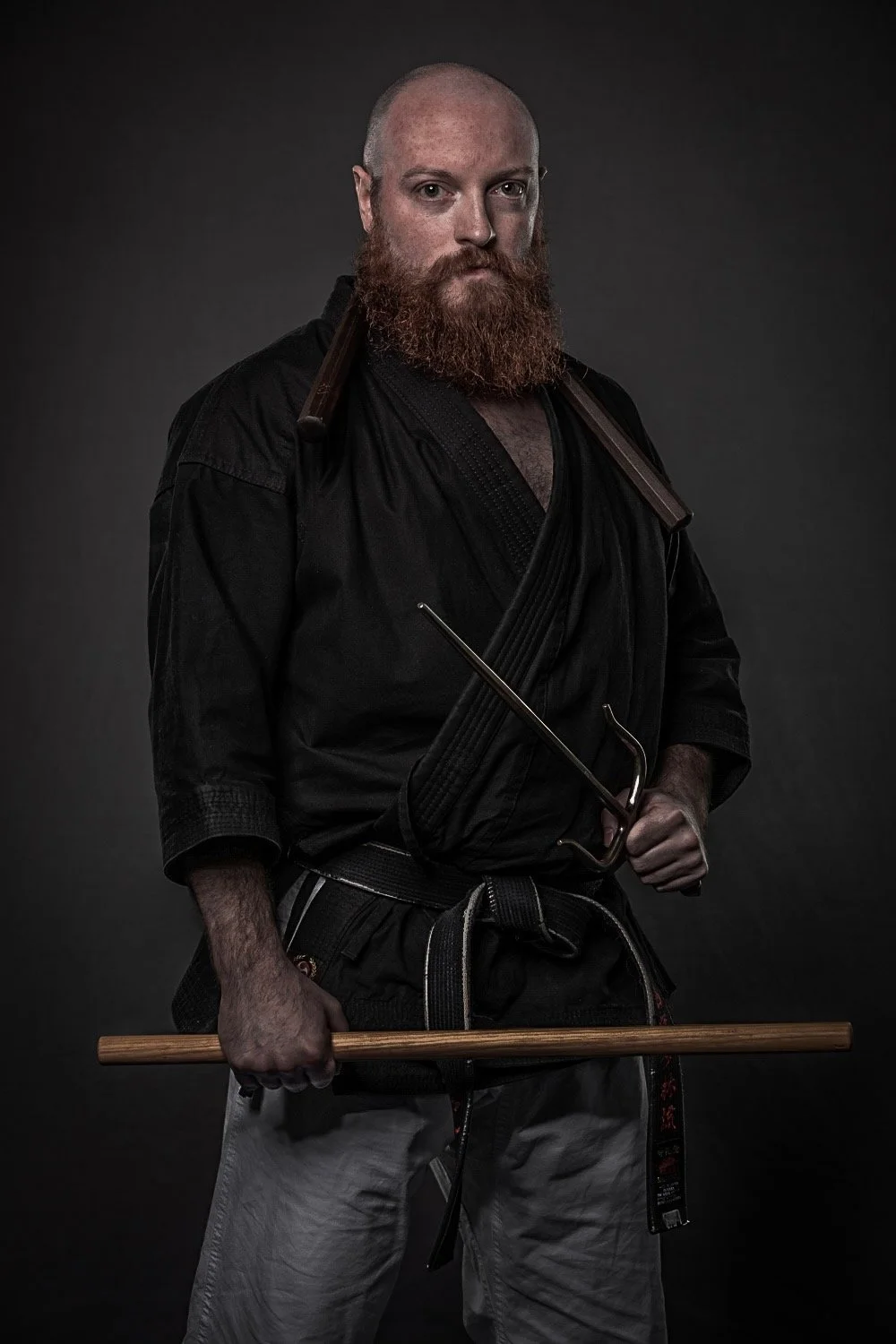
In this episode Andrew sits down and talks with Ken Knight about his training, the evolution of teaching, weapons training and more!
Ken Knight - Episode 1042
SUMMARY
In this episode of Whistlekick Martial Arts Radio, host Andrew Adams speaks with Ken Knight about his journey in martial arts, the influence of media on his passion, and the importance of finding a good instructor. They discuss the evolution of teaching and learning in martial arts, the significance of adaptability as one ages, and the value of sharing knowledge within the community. Ken also introduces his passion project, Kenfu TV, where he shares his martial arts experiences and insights. The conversation emphasizes the personal journey of martial arts and the legacy of instructors.
TAKEAWAYS
Ken's early interest in martial arts was sparked by media like Power Rangers and Ninja Turtles.
The importance of finding a good instructor and dojo for martial arts training.
Training in martial arts is not just about physical skills but also about understanding principles.
Ken emphasizes the need for adaptability in martial arts as one ages and faces physical challenges.
Teaching is a crucial part of martial arts, and everyone should have the opportunity to lead.
Kenfu TV serves as a platform for Ken to share his martial arts journey and knowledge.
The evolution of martial arts instruction is influenced by the instructor's experiences and growth.
Sharing knowledge and experiences in martial arts can greatly benefit the community.
Ken's philosophy is that martial arts should be a personal journey, not just a replication of the instructor's style.
The importance of recognizing the changes in instructors over time and adapting training accordingly.
CHAPTERS
00:00 Introduction
01:38 Ken Knight's Martial Arts Journey
04:23 The Impact of Media on Martial Arts Interest
07:22 Finding a New Dojo and Instructor
09:55 Training Experience in Traditional Martial Arts
12:40 The Influence of Ninja Turtles on Ken's Life
15:14 The Role of Technology in Ken's Career
18:07 Exploring Different Weapons in Martial Arts
20:50 The Philosophy of Filipino Martial Arts
23:34 The Evolution of Martial Arts Training
26:10 The Importance of Adaptability in Martial Arts
28:42 The Challenge of Teaching and Learning Martial Arts
33:16 The Journey of Growth in Martial Arts
41:04 Teaching as a Path to Leadership
46:44 The Birth of Kenfu TV
52:25 Leaving a Legacy Through Teaching
To connect with Ken Knight:
Ken@kenfu.tv
After listening to the episode, it would be exciting for us to know your thoughts about it.
✅Subscribe to whistlekick Martial Arts Radio on the following platforms:
🎧Apple Podcasts: https://apple.co/3mVnZmf
🎧Spotify: https://spoti.fi/3yHVdHQ
✅You can find whistlekick on all social media platforms using the handle @whistlekick or visit our website at https://www.whistlekick.com or https://www.whistlekickmartialartsradio.com
Show Transcript
Andrew Adams (01:14.114)
Welcome you're listening or watching to the next episode of Whistlekick martial arts radio. And today I'm joined by Ken Knight. Ken, how are you today?
Ken Knight (01:22.764)
Man, I am doing great. Thank you so much for having me. Super excited to be on this podcast. This is one of my favorites. You and Jeremy do such an amazing job.
Andrew Adams (01:25.686)
excellent.
thank you so much. That means a lot to us. Hopefully it will become all of the viewers and listeners favorite as well if they're new. If you are new, I want to make sure that you know about all the stuff that we do. Obviously, we've got this podcast, which you can find information at whistlekick martial arts radio.com. You can find show notes, can find transcripts, you can find photos, all of that stuff can be found there as well as our exclusive
Ken Knight (01:38.146)
Yeah.
Andrew Adams (01:56.716)
martial arts radio newsletter, there's a subscribe button at the top. And if you click that button, not only do get a free book, which is pretty cool, but you also be notified of every episode as it comes out. So you won't miss any. If you are watching us on YouTube, I encourage you please hit that like and subscribe button, the notification bell, all of those things really help the algorithm. Don't ask me what that means. I just know that it does. Right. It's just, I know it helps, but I don't know how, but
Ken Knight (02:22.488)
Hahaha.
Andrew Adams (02:23.776)
Obviously this podcast is only one piece of what Whistlekick does. You can go to Whistlekick.com to find out about all of the things we do. We have apparel that you can purchase. We've got books. We have training programs. Maybe you want to attend one of the events that we host throughout the country. All of that stuff you can find at Whistlekick.com. Ken, you already said you're having a good day. You're excited to be here. I'm excited for you to be here as well.
Ken Knight (02:46.03)
Okay. Yeah.
Andrew Adams (02:50.368)
You're someone I've been, you know, seeing on Facebook and doing stuff and heard you on other podcasts. And I said, I need to reach out and say hi and connect.
Ken Knight (02:59.329)
I'm so glad that you did.
Andrew Adams (03:02.308)
So if we're, you we are obviously a martial arts podcast, we're going to talk about martial arts. And I think the best way to start is how we typically start every episode. What was your initial foray into the martial arts?
Ken Knight (03:18.958)
Hmm. You know, I don't feel like I have a special one. I feel like I've got the same one that a lot of people had, which is I've fell in love watching the Power Rangers and the Teenage Mutant Ninja Turtles and Jean-Claude Van Damme movies. uh, my stepfather took my brother and I to a local dojo to get started, a Yoshikai Kurate dojo in Alabama. Um, and I loved that. And it's weird the things that you
that you latch onto some of the things that become nostalgic. Like it was a big long room and it was carpeted. So it had the smell of feet, you know, as they do. And it's funny how that's not a good smell, but it's become a nostalgic smell. I'm not pumping it into the air vents in our new place, but I remember it standing out in my memory. And I did that for a couple of months. It was a summer thing. I was going back and forth between Alabama and Wyoming.
And I headed back, because it was time for the school year, asked my sensei, hey, how do I keep going? And he said, find a Japanese karate school, you'll be fine. And then I didn't find one. I got back, there was a bunch of taekwondo. For whatever reason, I didn't try those. I kept practicing what he had given me and kept looking for a school. And years would go by before I would actually.
find another instructor in another place to train. so in the meantime, I just practiced the same basic few things that I had learned the terminology and the, beginning of they did a cut the, called Nijusichi no Kata and would just practice that. And it was literally a cut the of Kihon, just basic, basic stuff. And that's what I did for years. And, but that was kind of how I got started.
Andrew Adams (05:12.15)
And how old were you when you started then?
Ken Knight (05:16.558)
I'm bad with that. I'm terrible at knowing what age I am now. early, early teens maybe, probably 11, 12, something like that.
Andrew Adams (05:27.672)
And then how long had it, how many years have gone by when you then found your next school?
Ken Knight (05:32.43)
So I did not start training until about 20 years ago in 2006. So a long time. I was in my 20s or just about 20 when I started.
Andrew Adams (05:47.083)
And what do you think it was that kept you going? Like 12 to 26, that's a long period of time. And it still held that. Yeah.
Ken Knight (05:55.83)
Yeah, I never fell out of love. I never fell out of love. mean, I guess maybe that was the easy part of starting because you fell in love with a media that you could continue to consume. So, I mean, I I loved it. I was reading Black Belt magazine. I was, you know, was scouring the magazine stands every time for the new new issues of the martial arts ones that you can't find anymore. And watching every every movie, every new martial arts movie that came out, I wanted to watch and.
Just, I was reading books, was just digging in, I just loved it. So while I wasn't training, I was just ingesting, just marinating in the martial arts the whole time.
Andrew Adams (06:36.684)
And what was it like when you're in your twenties and you finally found like, where was it? Like, how did you find it? How did you come across? What was it like? I'm putting this in air quotes, starting again.
Ken Knight (06:48.398)
Yeah, I mean, realistically, in a lot of ways, I consider that my start, even though I guess I have to count all that time practicing and all and what I learned there. I still remember it. It's still there. But I consider that because it was such a small period of time, I do consider starting with my current instructor to be the beginning. And I met him through work. So I worked in a place called Computer Logic. I still work there. Actually, my wife and I now own it.
But at the time, was, I don't know, you get to talk it. was a computer repair tech early on and I was at the bench talking to the guys. We were talking about martial arts or movie or something. My boss at the time said, hey, he's like, you know that Andy does that. And I was like, what do you mean? He's like, yeah, like he's been to Japan and stuff. Like he does that stuff. I'm like, I had no idea. And so the next time he was in, Honshi Finley is his name.
The next time he was in he he had a laptop he needed a hard drive replaced it and so I had it pulled apart and he was leaned up against the bench next to me like talking and while I fixing this laptop and so you know hands deep in this laptop being like I hear you you know do like martial arts and stuff and he said he said yeah I do and I said well you know tell me about that and he told me that he has a traditional Okinawan style they train a couple days a week and
Here's where you can find us, you should come by. He was very matter of fact. He did not evangelize. Like I said, I didn't know he did it beforehand. He didn't really talk about it. He's definitely built for it. He's a large guy, he's a strong guy. But I mean, there's lots of large and strong people that don't necessarily do anything in the martial arts. So he didn't say a whole lot. He's like, yeah, come by, try it out.
And I was going to lunch with a friend who was also interested in martial arts and you know, we love watching movies and anime and all that stuff. And I said, Hey, you know, I found a place to train you. You want to go. And she's like, yeah, let's do it. So we did went to a class I've been going ever since. come to find out she already knew him because he was taking Japanese and the teacher who taught Japanese in town, slots to be sensei. She.
Ken Knight (09:06.322)
her class out of the high school. They didn't have enough people wanting it in the college. So even the college people would just go to the high school to take it. And so he was in the class with the high school students. So she already knew him. She's like, I know him. Didn't know and stuff. that was kind of how we got started. His style that he was teaching at the time was Seohyunru that he learned from Sokye Dan Housel at the University of Wyoming is where it was at the time. Currently it is in
Gilbert, Arizona. But, and they got along really well because my instructor is a geologist and Soke Housel is a geologist. So they had other mutual interests, continue to have those mutual interests. And then Hanchi Finley, prior instructor was Shihan Dorian Fox, who did Okinawa Kempo. So he had specifically a Kempo and Sir Shorin Ryu, Karate Kabuto.
lineage he had also trained with Tadashi Yamashita. So he was carrying two, you know, two styles of empty hand, the Okinawa Kempo, the Seishirō and Rū, and then two styles of Kobudo, the Yamane Rū from Seishirō and Rū, and the Maruyoshi Kobudo from Yamashita. At the time that I started training, he's continued to train. He's picked up more stuff, trained with more people, but those were his main, main people at the time. And yeah, I've been doing it ever since. And I took over for him.
a number of years ago and continue to love it.
Andrew Adams (10:40.91)
So when you started at, say 12, you know, Power Rangers, you know, Ninja Turtles, like the stuff that I was into as well. Right. But you did it for a short period of time and you had it in your head what you're going to like, what it's going to be like. And, know, for lack of a better phrase, we'll say you were in the honeymoon phase, like a few months. And then you, you stopped training, you know, traditionally. And now fast forward to in your twenties.
Ken Knight (10:49.334)
Yeah. Yeah. Yeah.
Ken Knight (11:00.684)
Yeah, sure.
Ken Knight (11:09.454)
Mm-hmm.
Andrew Adams (11:10.584)
way more mature than 12. Well, some might not agree for me, but that's right. Was it what you expected it would be when you started training in your 20s?
Ken Knight (11:12.994)
You hope so?
Ken Knight (11:25.502)
you know, I would say yes. And I, and maybe that's just because I had so much time and I was so enamored with it that I had looked into it so much that I knew that they were all different, that people did different things, different ways, and that, you know, that the things shown in movies aren't, always accurate or generally exaggerated. And, you know, I read stories, read books. And so I had a general idea that, this could look a lot of different ways. And he's going to
come at me with what whatever he thinks is the way that it needs to be taught. And it was a very traditional beginning, you know, come in bow and learn, learn the etiquette, learn. Obviously, you don't start with a gi, but eventually get your gi learn how to tie that tie your belt. As he would always say, he's like, you know, your first rank is just can you can you do a whole class without your pants falling down? And so but yeah, then you train you'd line you'd line up, you'd bow in you'd go through
Andrew Adams (12:17.23)
Hahaha
Ken Knight (12:23.906)
go through drill, which he considered to be the most important part of class because he said, is the only time that the instructor gets to work with every single student. And then from then on, you know, he might be working with a specific group or something like that. So you consider drill a very important part of class. and you know, we had katas that we learned. It was a very, application focused, self-defense focused thing. So everything was immediately attached to application of the kata.
And, and then unlike what I came to understand a lot of schools where the Kabuto would be brought in later, you might be a brown belt or something before, I know for his Kempo, I think you were a brown belt before you ever touched a weapon. But instead is like, you touched it as soon as he felt like he wanted to do it. He had a, in fact, we had a really great conversation recently. this stuff, a lot of this is kind of fresh for me, but.
that was his training time. So class was what you needed, but it was also whatever he wanted to work on. if he was feeling like working with a bow today, you were working with a bow today. And, you know, so we would started weapons right away. And I mean, as a fan of the Teenage Mutant Ninja Turtles, as soon as I had worked all four of those weapons, I was pretty pumped. I, you know, felt like I had accomplished something. But yeah, I knew it was gonna be
whatever it was, I was very open to it being what it was and I just soaked it up.
Ken Knight (13:57.74)
Almost. I don't want to go like cult, like, you know, but that's kind of, I was in, I was in. If you, if you said, there's Kool-Aid over there. I was over at the Kool-Aid station filling up my cup, you know, like, thankfully I had a good teacher who was very honest and didn't take advantage of that. feel like under the wrong instruction that could have ended much worse. but instead I'm very happy with the instructor that I found very thankful for him. And.
I've just been loving it.
Andrew Adams (14:30.626)
Okay, who's your favorite Ninja Turtle?
Ken Knight (14:33.102)
Favorite one? Donatello. Yeah, yeah. So I'm a huge nerd. So I loved, I loved that he combined the technology aspects. Like he, he augmented whatever he did. It wasn't, you know, Leonardo was kind of the purist. I loved, I love all of them. I love his arc as a leader and the challenges of being a leader. You know, but he was, he was kind of that purist. This is, I was taught to do it this way.
Andrew Adams (14:35.276)
Okay. Why?
Andrew Adams (14:39.384)
Yeah, that's OK.
Ken Knight (15:02.19)
You know, Rafael was just so angry. He was my least favorite. It's funny. I kind of have them ranked because I have a set of glass or ceramic, I guess it would be piggy banks. They had a set. They were really cool looking. So I bought one of each and I was like, well, we have in the U.S. we got four denominations of coins and we've got four Teenage Mutant Ninja Turtles. So I ended up ranking them. So Donatello gets the quarters. When Donatello is full, I'm having a good time.
Uh, Raphael gets my pennies and it's funny when I put a penny in there and I kind of think I'm like, this is, this is what you're doing to yourself. I mean, with all that anger, you're just weighing yourself down with barely anything at all. And that sucks. So I mean, Michelangelo I love, but he was, he was a little too free-spirited for me. He was very fun, but it could cause a lot of problems. And I just really gravitated towards Donatello who could still be very fun, but he, and was very exploratory.
experimenting, but he also didn't lock himself to, can only do what Splinter taught me. Instead he's like, Hey, I know that I can, I can use these other skills that I have. can use this knowledge that I haven't. and I guess that just really resonated with me because that's how I've always approached it and continue to approach it is that it's, it's never one thing. It's what you can do. And he was capable of a lot and he used it.
Andrew Adams (16:30.5)
Okay, so Donatello gets the quarters, Raphael gets the pennies, who gets the nickels and dimes?
Ken Knight (16:33.701)
Yep. All right. All right. Dimes for Michelangelo and Nichols for Leonardo.
Andrew Adams (16:40.26)
Really not. right. Now I'm curious because you mentioned Donatello doing the technology and really enjoying. Did you, do you think that had an influence on you going into IT?
Ken Knight (16:53.166)
It may have. I attribute that mostly to my father. My father had, I mean, you grow up around it at the right times. mean, technology was becoming more available at home, because prior to that it had been very expensive and prohibitive. So you might have it at work, but you wouldn't have it at home. It was becoming more available. I remember, you know, my dad spending, you know, a couple thousand dollars to get a basic home computer.
And I also grew up, my stepdad, he worked on cell phone towers, which is very cool to go inside those buildings and see how cell phone towers ran, which at the time was computers that ran on reel to reel tape. And it was very, very interesting. And they were kept in clean rooms. But probably the moment that I attribute to the technology thing is, I mean, I loved it. My dad loved it. He loved playing games, know, Doom, Wolfenstein, you know, whatever. He was also...
really big into Excel, so we would work on Excel formulas together and stuff like, huge nerds loved it. But I remember one time he came home with a one gigabyte hard drive. And this is years after we had computers. So he came home with a one gigabyte hard drive and I was like, man, that's crazy. Seriously, a gigabyte? Really? And he's going, it's yours. And I was like, what? And he says, yeah, if you can install it in that computer, you can have it.
So I had figure out how to install it into a computer. And at the time that was not just plug it in. You had to do a lot to make that just to get it physically plugged in. You then had to tell it what it was, how to do it, all of that. And I mean, I was in from then on out, you know, I continued, I, loved working on them. learned how to build them. I continued to do that stuff. I was very into the hardware for a long time. then I later got more into the software side of things. But, so I attribute that to be the strongest impact.
Which is funny because while he did that, my dad loves cars, which I don't, I love to drive cars. I think cars are pretty cool. I love that he can do all this stuff with them, but I would get so bored in the garage. And it was funny because those things he would teach me in the garage just wouldn't stick, but you could say some random thing about a computer and I couldn't forget it. so he wasn't super into it. I was way more into it than he was, but.
Ken Knight (19:16.876)
I definitely attribute him as the person of why I became so into it.
Andrew Adams (19:23.34)
And is the staff your favorite weapon?
Ken Knight (19:26.07)
Hmm. answer is I want to say that I don't have a favorite.
Andrew Adams (19:31.136)
Okay, they're all, you love them all equally, like your children.
Ken Knight (19:34.446)
So, no, because that's never true, right? You love them for different reasons. Or I guess you could say you love them equally, but for different reasons. Their pie is made up differently. Honestly, so I trained Yabari Rokubudo. I trained Maruyoshi Kubudo under two different people, two different periods of time. And that's an interesting thing with the martial arts is you can learn from the same route. So they shared the same instructor, but they shared them at different times.
Andrew Adams (19:38.007)
You
Ken Knight (20:04.62)
was done differently, thoughts were different. And I think that's a big thing we need to remember is that we can't preserve a specific moment of our instructor because he wasn't done learning either. And we've got to be able to be fluid with that and can't be like, well, but you showed it to me like this. But I mean, I liked it and I liked it a lot. Bo, Nchaku, Tonfa.
Gamma, Kusari Gamma, Hambo, Tsu-E, Kyoga. mean, the list goes on, all the different weapons that we train. And like I said, in two different lineages of that. But it wasn't maybe a year, maybe less even, after I started training with my instructor that also because of...
my job, I was working with another guy and he's like, man, he's like, you would love my uncle, he does this stuff with sticks. And I'm like, what are you talking about? He's like, yeah, he's like, I don't know what it's called, but it's really cool. was like, I'd love to meet him. And so I remember we went and he's like, yeah, we got to make a stop. He's like, we go ahead and picked up like a six pack of beer and some V8, because he liked, his uncle liked to have V8 and beer, whatever they called that combination together. And so we picked that up, we go to his apartment.
And this probably has my more like movie like kind of things, right? Here's this older guy, he's sitting there drinking beer, smoking cigarettes and talking to you and he's passionate, he loves this stuff. But it's not, you're not in a traditional dojo, he's not wearing something special, you're not calling him something special, he's just talking to you. And we start talking about it, well he did a Screama, so he did Filipino martial arts, specifically the Tabosa family lineage.
from the Philippines through Hawaii. it's Maine, Maine is in Hawaii. And I mean, he's showing me with sticks, he's showing me different things. He's showing me some, some cheese out drills and stuff like that. And I remember just being kind of blown away because we started, you know, he didn't call it cheese. I would call it sticky hands. And he kind of set into place. I, I went to adjust. cause it was kind of, it felt weird and I went to move and he's, you know, a couple beers in, he's talking to his nephew.
Ken Knight (22:30.766)
And he's just, I went to move my hand, he's just stuck to me. Like it was so natural for him to just continue to be there. And I was like, man, that's cool. That's so cool. Uh, but bringing it back to your question over time, I trained the Filipino martial arts and the Filipino martial arts. Obviously it kind of has that flip. You start with weapons, you work towards empty hand. does, it is a whole system. does.
grappling range and striking an empty hand and weapons and all this stuff. But it's primarily, I like to think that most of the arts do the same stuff. It just comes down to what they prioritize and what they emphasize. And so Escrima, I would say, emphasizes a long, especially, I can't speak for all Escrima, Tobosa Kale Escrima is a long range system. So it emphasizes utilizing
a weapon of some sort to maintain a distance from a person capable of being being in close but that's not where we'd like to be. Well over time, you know, I remember a student asking me one point after I've been training for a long time, they're like, so what's your, you know, what's your favorite weapon? I'm like, probably a stick. They're like, yeah, but I thought you loved the bow. I'm like, that's a long stick. I'm like, yeah, except what about the, but you do the nunchaku a lot. I'm like, yeah, it's a stick that bends in the middle. Like the saw, like it's a metal stick.
Andrew Adams (23:51.716)
you
Ken Knight (23:55.202)
Because Escrima, of, and I've kind of fallen out of love with Kabuto, which pains me to say because I do love it I do value lineage and I do value these things, but the kata-based approach, and I'm a huge kata fan, I love kata, but the kata-based approach and this very rigid, a lot of the stances and stuff, the movements are very rigid, it just doesn't feel very natural.
I mean, did it for years and it felt natural because I thought that's what it was supposed to feel like. But then I started training the scream and it's green, it's so loose and relaxed. And the whole concept is there are only so many ways that you can get hit. And we're going to prioritize the right side because that's most people are right-handed. That's, that's going to be the higher likelihood. And you can hit from a downward diagonal from the right side. can hit from.
horizontal on the right side, you can rise, can come straight to the middle, and then you get the same stuff on the left side. And the approach instead of well, here's a weapon, here's a technique, here's how to do that technique, here's your partner does this, you do that. And I think maybe that was the thing that made me fall out of love with it is it was always they do this, you do that. So catalog a million responses to a million stimulus.
I work in IT, I work with databases, I've worked with incredibly powerful computers that you provide them that many things to have to process and you write that query and say, okay, this is the situation, show me an answer. It still takes time to get that answer, even if it's a second, less than a second. That's not something you can really afford if you're needing it to protect yourself or others. So it's very computational.
Andrew Adams (25:36.366)
Hmm.
Ken Knight (25:47.254)
memorize all of these techniques. This movement does what? And a scream instead was, okay, it's coming from this angle. Here's how we address that angle. And then, okay, we go grab them. I mean, they work bone and jacuzzi. The Filipinos had all of that stuff too. But it was never, okay, well, you got to do this technique or that technique. was okay, angle one. So from the right side, a downward diagonal. And you're either,
in you're either dealing with it from the inside or dealing with it from the outside. You're either meeting that force or you're parrying that force. And then it didn't change our, our, the Tobos system calls it translations. So you translate that to empty hand, you translate that to flexible weapons, you translate that too. So you go to empty hand and like, you're throwing a big overhand, right? That's angle one. I deal with it the exact same way.
So because of this approach of these, it's not about the weapon, tool, or whatever it's about, how is it going to get to me and how do I manage that became so much more simple.
that I started very rapidly realizing that everything that I did with Kabuto, I didn't really have to remember. If I just remembered those principles, all of those weapons were versatile to me. And so it became very weapon, like tool agnostic, and focused more on the principle.
Ken Knight (27:20.622)
So a favorite weapon is hard to say because that becomes so, I can also be very pedantic. So I can also get into, well, that's very situationally dependent. What am I trying to do with this weapon? I trying to keep you away? Am I trying to pin you down? I might want different weapons for different things. So it's hard to have a favorite, but I would say because of the Filipino arts, the stick is probably my favorite because of the fact that they.
They call it the surrogate weapon. This is the weapon that is just in place of anything you might use. And so anything you pick up that, or don't pick up, because it's for their hand too, anything that will work will work. And this is the tool you can use to prepare yourself to use anything. I like.
Andrew Adams (28:11.19)
It's certainly very versatile, right? So I get that.
Ken Knight (28:13.453)
Yeah.
One of my instructor, my karate instructor, Hanchi Finley, of his contemporaries, I remember they also did the Escrima. So it turns out, I mean, it's funny, so I meet this guy, right? We go to his apartment, I start to find out I wanna go train. And then I find out that my instructor's trained with him and has done Escrima with him and there's all these connections.
But I remember one of the Okinawa Kempo guys, were doing something, we were doing some Escrima and he's going, this is where you'll learn your.
And in a lot of ways, I think he was right. It has that impact of climbing the mountain next to yours so that you can get a better view of your own mountain, not so that you can see what's happening on this other mountain, but so that you can see your mountain better. And it gave me a lot of perspective about what I are. mean, Karate was my foundation, and truly still is, even though I've trained a number of things since then.
pretty in depth. still right there at the root. And I think the Filipino martial arts has helped.
Ken Knight (29:32.724)
season my my art.
Andrew Adams (29:37.954)
Now, a bit ago, I want to go back to something you said a while ago, but I think it was interesting. And I think the audience might enjoy hearing your thoughts on it, but you mentioned that you've trained with, you you talked specifically Kobudo, but other things, the same lineage, but at different times and how it's changed. And I think that would be an interesting thing to delve into a little bit.
Ken Knight (29:56.995)
Mm.
Ken Knight (30:02.44)
you know, I have a very specific example in my personal life with that. And then I've obviously observed it many places. and for the people who are open to thinking about it, you'll hear them talk about, know, yeah, when he was in his nineties, he did it this way. And, you know, so, so I'm not new to this concept, but my, personal example is that. That inserted guru John. He was the guy that went and met in the.
You know, he is the person who first taught me a scream and I had a similar similar thing with that I did a screamer for a couple months They broke for the summer because a lot of the guys were retired They wanted to go float the river and you know, you know get out on the lake and do all this stuff And then they were gonna pick it back up in the fall And when they did they had changed the day to the same day that I did karate and I said, okay Well, I've already made a commitment to my instructor. I'm gonna be there. I can't make it
So I did the same thing. I took the things that I had learned and then I practiced them for years and years and years until I could finally get a chance to get back with my instructor and on a time that we could train.
Ken Knight (31:11.818)
In some ways I have to thank him for that because for this thing that I'm about to describe as a problem and I feel wholeheartedly that's a problem. I've talked to him about it. I'm very close with his instructor. His instructor is essentially my main instructor now. We've talked about it, but he, when he, everybody that I saw him teach, including myself.
He had trained up to a certain point with his instructor in Idaho. So the Tobosa school is, it started in Hawaii. that's where the Tobosa family had moved and they, had learned from his father, from the Philippines, and they learned from different people in the Philippines. And, Hawaii and California were like kind of the two main places that that stuff, migrated and spread to the U S. So it's, we have a main school in Hawaii.
But then we have the mainland schools and they're headed by Maestro Michael Mulconnery out of Idaho. And so Gurujaan lived in Idaho. He trained with Maestro Mike. And up to a certain point, then he was having to move to Casper and Maestro said, Hey, you've got, you've got enough. Start a group and teach and you know, you'll continue, you'll continue to grow. You'll continue to learn. We'll get together sometimes and we'll keep you going.
Ken Knight (32:41.44)
and Gurujan.
I really admired that, I mean, he was a note taker. I had a copy of his binder that just was, it was kind of a story that Maestro Mike told me one time. He's like, yeah, at one point I knew that people took notes. asked him to say, hey, can I see your notes? And he brings out this three inch, three ring binder that's just full. He hadn't been training for very long. He just wrote, I mean, every drill he wrote down, even if the drill we have,
Andrew Adams (33:08.964)
you
Ken Knight (33:13.324)
the drills, okay, if you're dealing with angle one, you might do, okay, this person does this with angle one, this is the counter for that, here's what do with angle one. Even if it was the exact same thing, just for angle two, he wrote it down. And then he wrote it, and then if they trained it two days later, he wrote it down again. So I mean, he had all of these notes and he had, you he paid so much attention to how it was. And so he shared what he was given.
to the best of his ability exactly as he got it.
And it was not a...
Ken Knight (33:52.664)
The way he taught it was not combatively tested. So you weren't constantly sparring and doing things like that. So if he felt like you got the skill down, then you moved on to the next skill. And I love that kind of stuff. I can learn pretty quickly. I have very strong ADHD, so my brain can run a million miles an hour. I'd soak this stuff up and, and learned it pretty quick. And I'm good with patterns. repeating patterns and forms and, and drills and
Andrew Adams (34:14.212)
you
Ken Knight (34:21.944)
breaking things into that was good for me so I could do it pretty quick. So I had covered a lot of the material before that break happened so I spent a ton of time. So in some ways, you know, I had spent all this time practicing all the stuff he had showed me.
And I mean a lot of time, I spent a lot of time doing it. And then fast forward a handful of years, I had had six months of training in class and then all the time in between of practicing and I was promoted to my black belt in that art the same day that I met the maestro. So I can be very thankful to him to give me, he gave me enough that while I was on my own, I could continue to pursue it and continue to work on it.
and be able to do what should have been difficult to do because I didn't have three things that I could practice. I had a lot that I could dig into. So, I mean, now that sounds good. So how does this become bad? Well, he was very specific. If you did it a little bit different, it'd like, that's not how I was taught. That's not how he did it. And
Okay, that happens. All right, that's not how I was taught. Do it the way, do it the way. Okay, fine. But then we'd go to Idaho and we'd train with Maestro and Maestro would show some things. We'd come back and we'd be doing it and he'd go, that's not how Maestro showed me how to do it. Okay, well, your same Maestro showed me to do it this way. But that's not how he showed me how to do it.
Andrew Adams (35:54.082)
Mm-hmm.
Ken Knight (35:59.028)
And so that same thing that had made him so capable of holding this knowledge and passing on this knowledge also became the prison of his own development because, he stopped moving forward in his own training. He had, I mean, he had his stuff down, down, down, down, but it stopped changing. And especially as more time went on, he became even more resistant to if it was, if it was different than how he did it. Well, we already have to assume and appreciate that everybody is different. Everybody is different.
Your, your own experiences, your, your own skills, your own limitations, all change how you move, how you understand how you express the art. any art should be an expression of you and not a cookie cutter of, know, you don't have this perfect model that everything gets stamped out of. So that became a challenge for him and I, I wanted to continue to go and I would train with.
with his teacher and he had another group that was frustrating him. The group that I started with later on, I would start my own group because they didn't get together as often as I wanted to. I wanted, they were a group or a club, truly. They'd get together, they'd train. They'd all been training together for years. They weren't particularly interested in taking on new people. And I really wanted to pass it to new people. we're just different parts of the family, right? We still all get together, we still train.
We still consider it exactly like that. It's a very family oriented system. So they are our sister school. are, you know, but some of your family, you like them along just great, but you don't always go do stuff with them, but you'll get together sometimes. I wanted to see that grow, so I opened a group. Well, that other group, they call them the maniacs, would try all kinds of stuff. They got very inspired by the Dog Brothers. They did different things. They'd try lots of different stuff. And he would get so frustrated with the fact that they were doing it differently than he showed them how to do it.
But he was also getting frustrated that he was not, even though he had produced over the years, multiple black belts and some of them promoted beyond their first black belt. He wasn't getting promoted.
Ken Knight (38:43.55)
And him and I of course talked about that. he was like, I'm like, where are, thankfully we had a relationship that I could be this way. I could speak this way. And that was okay. As traditional martial artists, we should feel very uncomfortable with what I'm about to say, but as you know, where's your growth? How are you growing? Not a thing you'd say to your instructor, you know, but what is the thing that I could, I had that relationship with him.
Andrew Adams (39:05.112)
Mm-hmm. Mm-hmm.
Ken Knight (39:10.56)
And like, think that it's not the fact that you're producing people, it's the fact that your growth is stagnant. You're not changing what you're doing. He's going, I'm doing it exactly what I shown. It's like, yeah, but he's not teaching it the way you teach it anymore.
And then I had those conversations with Maestro as well. And he said, yeah, you he's going, that's how I taught it at that time. Or in some cases it was, that's how I taught him, but there was more. We just didn't have time to get there. He needed to get that part down before I could take him further than that. And we lose sight of that. We lose sight of the fact that like, Hey, what I got in that moment might not have been everything. I might not have seen it all yet, but also if you're continuing to grow.
then your abilities, thoughts, and preferences will change. And you might teach it differently now because you now know more than you knew before. They say a man will never cross the same river twice because it's not the same river and he's not the same man. And I think that applies to the martial arts very often. If you meet me today and train with me today, and then you meet me in six months and train with me, I might show you the exact same thing exactly the way did it before. Or I might not even teach that thing anymore because
I've continued to expose myself to new knowledge and that new knowledge changes things, but also I've become older. Right? had a significant injury in my hand that's changed a lot of what I do. I'm dealing with a bulge disc in my back right now. You know, I don't, as you get older, you don't heal as quickly. You don't recover as fast. So what you're able to do isn't the same.
So if you train with me now versus when I was 20 and I could, you know, bounce off the walls and fly through the air, not really, but sounds cool. You know, but it felt like it felt like you could do anything. and now it's like, yeah, I probably couldn't do that. So what you teach will look different. will feel different, but then all your life experiences, your knowledge, the different people that you've taught, that you've learned from as you taught them and you learned how they embraced it and things that they did different that you liked or didn't like.
Ken Knight (41:23.064)
problems that occurred that you learned how to problem solve for or how to avoid, you teach differently. So it becomes different. so that was, you know, unfortunately, my first Screema instructor, he eventually quit training, he, he came in, and I would continue to have him come into our group. And at one point, he sat down, he's watching class, he's like, you don't need me anymore. He's like, you guys don't need me. I'm like, yeah, we do get in here. Like, you know, we need your eyes, you know, this stuff, you see it like, yeah, you
You might not be doing it, but I can catch you up on the stuff that Meister showed me. I'm like, but you know, you can see stuff in my students that I can't. yeah, but he just kind of quit coming around and then we'd get together sometimes. And then, you know, just further and further and further to where now it's been a long time since I've talked to him. became hard to get ahold of and, subsequently I've gotten a lot closer with his instructor and learned a lot of stuff and to this day. So.
You know, I now have been training that art for a long time and have now still see, we get together and he's like, okay, I want to work on this with you. And it's something that he hasn't shown me before, you know, because I think he approaches it in a very measured and traditional manner, which is I'm going to give you this and then you need time with it. And that's especially important for me.
Andrew Adams (42:45.474)
Yep.
Ken Knight (42:50.508)
because as a reasonably intelligent human with a mind that races a million miles an hour, figuring out something in concept happens quickly. That does not make me skillful. So if I choose to think that I've got it figured out because I figured it out in principle and then be like, I'm ready for the next thing. I wanna learn more things, new things, different things.
then I won't actually learn anything. And so I appreciate that. Like I've given you this, you need to go do it. You need to teach it. You need to spend time with it. You need to practice it. You need to try it. You need to spar with it. You need to do all these things. And later when I see that that's in there where it should be and you're asking the right questions and doing this, then it will be time to give you something else. And that's something that I resist wholeheartedly with the modern approaches to training. Something that I'm dealing with.
currently is.
Ken Knight (43:57.944)
I've been using the analogy of a vending machine. People treat it like, well, if I put my money in the machine, I can try that new thing that's over there. And as long as I keep putting money, you should give me whatever I punch the numbers in for. And I've had that one before, so now I want to try something different. And it becomes less about the trust of your instructor and more about feeling like, well, I've got it figured out.
I don't want to sound like the old guy in the room, but it's like, who, who says, who are you to decide if you've got it figured out? You came to me to learn it and now you're telling me that you understand it, but how do you measure? Because the person you're learning from is the only person who actually has the measurement of whether or not you have learned it from what, at least to the level that they're trying to give it to you. Doesn't mean you can't, but it means that you don't have a, you don't have a ruler to use.
You don't have this guide. So if you're telling me that you've got it, do you? Maybe you do, but also maybe you don't. So you have to have trust that if it's not time to learn something new, that you're being told you need to spend more time on this, that maybe you do, maybe you need to do that. And maybe you don't need to see something brand new every day. Maybe you don't need to be spending an hour on the mat, trading the thing you saw on Instagram this morning.
Instead of the things that you already know that you don't do well, that you've been shown, and have resources available to help you get better. And I think because of those things, because of the way our bodies age, because of the fact that we have learned from a person at a specific time that includes their specific experiences at that time, their skill level at that time, their exposure to that knowledge, their just general knowledge at that time.
that as long as they have not just completely paused and just stayed completely still until you came back to them.
Ken Knight (46:00.662)
If they've continued to train and continue to expose themselves to new ideas and new thoughts and meet new people and do new things, they will have different feelings about the stuff that they know and do. And I think it's important that we recognize that.
Because as soon as we think that it can never change and it should stay the way it's always stayed...
As soon as we kill the art, it stops growing. But also we do a disservice. Okay. So you train. This is one that gets me. People go, know, yeah, but I train. I, I'm one of his last students. Awesome. When it comes to philosophy and theories and, concepts and experience, you had access to the most recent version of his brain.
but you also have to recognize you have access to the least capable version of his body.
So when you try to match what it looked like when he did it, you're actually matching a body that is possibly encumbered. So you get people that are like, he's like this. Why'd you do that? Because he couldn't stand up straight because he had a back problems. you know, like he'd do this and then sit down and like, yeah, it wasn't because he didn't think you should do more. was because he couldn't, you know? So you can't, you can't idolize those moments of at the end of somebody's training.
Ken Knight (47:35.306)
as the way it should be done. Because if we're all trying to do it like the 90 year old version of our instructor, I don't know. Some of us might want to try to figure out how to do it as the 20 year old version of our instructor.
So you can compare those. If you were lucky enough to train with them and see how they moved when they were young, but hear how they thought and how they felt when they were old, then you got something great. But no matter what, you do a disservice if you just try to hold onto that forever and never recognize that the entire time you knew them, they were growing. They were learning, they were trying new things, they were meeting new people.
And that is the legacy you should continue. You owe it to them to take what they gave you and continue their work. Not preserve the work they had done, but continue it into the future.
At least that's how I feel.
Andrew Adams (48:36.686)
So you've clearly thought about this a lot, right? Being a student and being a teacher, what was your initial foray into teaching, like being a teacher itself?
Ken Knight (48:40.206)
Maybe a little. Yeah.
Ken Knight (48:49.198)
So my instructor was a huge proponent of people teaching.
And that was especially a necessity because with his work, he would get called out a lot. And effectively he had a standing rule, is highest belt leads class. If he's in the room, he's the highest belt, he leads class. If he's not in the room, whoever is the highest belt, they're leading class. So I mean, I think I was a blue belt, which for us would have been like eighth Q, seven Q, something like that.
And that's when I started. that blue belt, was leading classes because sometimes I was the highest rank on the mat. so anybody that was in there, it was up to me to do it, which is probably what led to everything after that of me continuing to teach, me continuing to value that part of it, for me putting in more effort, more attention, more focus.
because if I'm gonna be the person who's gotta lead the class, then I can't be the one slacking off because then what do I have to give? So him doing it that way.
forced me into being a teacher very early. Not a good one.
Andrew Adams (50:12.452)
You
Ken Knight (50:13.698)
just a person who is doing it, which is why I always really like the, really firmly planted for me the concept of sensei and the translation of those words to mean someone who's gone before, rather than, you well, you're just the teacher. I can be a teacher.
But what I want to be is your sensing. I want to be someone who is further on a path that you are trying to go. So I can give you what I have and we can both try to continue going on this path together. And I will have somebody who's further on this path than me. And they will have somebody that's further on that path than them. And that's the way that it works. And so that it firmly locked that in for me is like, no matter who you are, if you're the highest rank on class, you've got people that you are.
Effectively this person you are someone who's further than they are help them and Look after them and they will in turn do the same in kind to you, but then also continue that tradition for for them and That became very important to me and Giving back became very important. So that became the concept of of teaching something somewhat uncommon
in our school is when I got my Shodan under my instructor, at that time, he began calling me Sensei. That was the title that I was given at that time. And this was true for anybody who got to Shodan, and then he would talk about how he's like, this doesn't usually happen until third. And truth be told, wasn't until I got my third that I got a certificate that had that title on it, separate from my rank certificate.
And, the way he, the way he put it is if I've decided you're ready for showdown, then you have already done this as far as I'm concerned for me. You know, that doesn't mean you go open your own school, but it means that as far as, as far as anybody in this mat should think you are, you are an instructor for them. And so that was just a way that he approached it. He's going to recognize that. You know, third is when this will be official, but, but we start now and you own this now.
Ken Knight (52:30.67)
And so teaching has always been a part of it and it still is. incorporate that. mean, to me, it starts with something as simple as leading the warmup. Everybody should lead the warmup. It puts you in front of a group of people, puts you having to lead somebody through something. Maybe you speak while you do it. Maybe you're quiet while you do it. It depends. Whatever.
But it's giving you an opportunity to face that for a lot of people standing up in front of other people and leading is hard. But something like a warmup, well, by the time that you're asked to lead it, you've been doing it a lot. It's the same every time. So it's like low, it's a low cost burden. You're not going up and saying, okay, I want you to teach something you've never taught anybody before. You're saying, hey, do the same thing that you've done a million times, but stand up there and do it. And look, look at the results.
and adjust yourself to if you're going too fast or too slow or you need to help things or explain something, utilize that. I think that's such a powerful tool for helping someone grow into a leadership position and it can start very early.
Andrew Adams (53:40.994)
Yeah, we often talk in martial arts that it can give you X, Y, Z, like all of these other skills. But I think you bring up a very valid point of like, one of those skills we often talk about is having confidence. But if you, as an instructor, don't allow your students to have that, to take the step to be able to stand up in front of a group of people and work with them. I think that's great. That makes a lot of sense.
Ken Knight (54:06.882)
Yeah. And I've seen that continue on into my work life. And, you know, now that I own this company and I've got, I've got people who work for me and stuff like that. I, and I become one of the main engineers of the company, one of the main network engineers. And there are things that I can do that other people can't do. And it is also been something I've had to face of going as long as I keep doing it, if somebody brings it to me and then I do it, no one in this company will know how to do it.
So if they bring it to me, I need to sit down with them, walk them through it, maybe do it together. Maybe they can shadow it first and then maybe we can do, but at some point I'm going to need you to be able to do it. if I never create the opportunity for you, then how can I ever expect you to step up and do it when I need you to? And why would I ever think you'd succeed when you did?
Andrew Adams (54:58.744)
Yeah. I love it. If people want to reach out to you, if something you said resonated with them and they want to connect with you, how should people do that? Are you okay with that?
Ken Knight (55:03.523)
Mm-hmm.
Ken Knight (55:08.43)
100%. Giving back is what it's about to me. So if there's anything I can do to help people, I think the easiest is email. Ken at KenFu.tv is the easiest way to get a hold
Andrew Adams (55:21.496)
So that segues, interestingly, into the Kenfu TV. Let's chat about that for a little second there.
Ken Knight (55:27.754)
Okay, okay, sure. Yeah.
Andrew Adams (55:32.408)
Kenfu TV. What is it?
Ken Knight (55:33.816)
Kenfu TV. Yeah, Kenfu TV is a passion project.
Andrew Adams (55:39.588)
Mm-hmm.
Ken Knight (55:43.116)
So Kenfu, I decided I have a lot of different skill sets because ADHD makes you get interested in things for short bursts of time. photography, video, computers, like I've done all these kinds of different things. So I was a photographer for a long time. I really loved photography. I recognized that between my job in the IT industry, photography as a professional photographer and teaching martial arts that
I couldn't maintain all three that your skills slide if you're not doing it. So if I'm, if things are going crazy at work and we're really growing and doing a lot and I'm spending all that time and I'm spending the rest of my time in the dojo, then when I go on that photo shoot, I might be stumbling to do some basic stuff that I know how to do. I'm just not, I'm not fresh. I'm not doing it as often. And I'm definitely a person who feels like you need to maintain your standard of quality.
So when I felt that slip, was like, okay, well, I got two choices. Either I knew already that I wasn't going to quit the martial arts. That was already locked in. That wasn't happening. So was like, either I quit my job and I go full-time professional photographer, or I hang up the camera and focus on the IT industry, but I can't do all three. So I did. I hung up the camera. I mean, I still shot, but I quit doing it. I quit taking clients. I quit doing jobs.
And except for one I had done, there's a girl I had done her senior portraits and then I did her first kid and her wedding and her second kid. you know, like we kept getting together. So I was documenting her life and that was really, really cool. So that I kept going, but I always loved it. And I got interested in the video side of things, you know, shooting 60 photos per second instead of one, you know, or whatever.
and decided, I I watch a lot of YouTube, I ingest a lot of things and I like to think, I like to think, I like to take in information. So I decided, you well, maybe I try to do something on YouTube. I'll put some videos together, give me a creative outlet that's under my own control where I get to exercise my photography skills, lighting, camera operation, this kind of stuff, but also stretch into audio and, and.
Ken Knight (58:09.42)
video lighting, is different, similar principles, but works differently. And just kind of, you know, how the editing works differently. And this sounds like this is really interesting to me. like it. I got it's like, this is something I think I could do from a technical perspective. But what do I do? What do I actually want to do? And Kenfu TV came about because Kenfu is what I just started lovingly called what I do.
So my, I've trained Aikido, I've trained Tai Chi, I've trained a number of things, but karate was my foundation. Escrima, I've done almost as long and been doing Japanese and Brazilian Jiu-Jitsu for a long time. So karate, Escrima, Jiu-Jitsu, these were the main core parts of what I did. I, did, so I jokingly call it like, I do, what I do.
matches a philosophy that I have, which is no matter what style you do, no matter what art you train, no matter what organization you're in, you do what your teacher does because it's passing through them as a filter. What they prioritize, what they emphasize, that becomes what you do. So you go to another school in the same organization that teaches the same art and then wonder why it's different. It's because they're a different person. They've got different experiences. They've got a different body. They got different everything.
So I'm a big believer that you do what you do. And that's what it should be. So my students should do what they do for a time. They'll, they'll look like their teacher. They'll try to do what they see and they'll learn what I, what I give, but then they need to be able to take on and grow beyond that into their own person and have their own thing. But so I lovingly called mine Kenfu. I do Kenfu, you know. so when I decided to have a thing, was like, man, Kenfu TV sounds pretty cool.
I like that, I'm gonna do it. And I had originally brought it out as the idea of Kenfu TV specifically because I kind of pictured it having channels or programs. I had the Ken Learns Kenfu, was truly it's the main thing that's still going. It's the thing that is the core of it. And I had committed to doing an episode a week of at least that one and the other ones I would fill in. But Ken Learns Kenfu was basically kind of my...
Ken Knight (01:00:27.682)
video journal since I was so bad at taking notes, but I could get in front of a camera and talk for a while. And I have these moments like this on the mat with students. So then I would basically kind of do the same thing, but in front of a camera and with the same motivation of doing it for my students, because I don't know, maybe it's morbid, but my, I'm painfully aware of the fact that I won't be here forever. And
It became something that I'm like, Hey, I want to be able to leave something that, you know, my students can be like that. That was, that was my teacher. This is what he thought about that at the time. Or, maybe even get exposed to kind of what we talked about earlier. like, well, man, when you started the channel, you were saying this, but now three years later, you're saying that because they see that growth and it maybe it even encourages them that their own growth is acceptable, that it's okay. And they don't have to try to stay the same just because they learned it one way one.
But it became my way of recording something of myself to leave for my students.
maybe something that I wish that I would have had. You know, that I still have my instructor, but we have very little video, very little, I mean, very little pictures. We have very little any of it. I took so few notes because I was an idiot and didn't take a lot of notes. And, you know, so when I, when I look back, I'm like, man, I don't have anything. I can't, I don't have anything and I don't want it to be like that. So I take a lot of pictures of the class and stuff and videos and try to create all these memories that I wish that I had. think.
Andrew Adams (01:01:37.316)
Mm.
Ken Knight (01:02:03.534)
parents do that they know what it was like being a kid for their parents and like I'm gonna do it differently they try to do that right or wrong who knows because while you focus on that you might be leaving something else out or whatever but so it became my focus so channel one Ken learns Ken food this is my introspective philosophical here's how I feel about stuff this is what I think just put it out there it also puts it in a place that I can go back and reference later how did I feel about that what did I think of that
Ken Scherzkenfu was the idea of a channel or a program where that would be the instructional. Maybe I teach something, I teach technique or teach something like that. And then things Ken likes, because I also like random things. I have a passion for finding the best of something. Now, not the best, but like problem solving.
If I need a thing that does this, I need something that I can carry in my pocket that does this. I want to go find the best one that accomplishes that goal in the best way for that task. There might be ones way more expensive, made of better materials or whatever, but how does it solve the problem? And I just love that. So I do it in every kind of way. So I had also had this intention of having kind of just a review channel. Like, hey, I'm not going to be specifically, I do camera reviews or I do pocket knife reviews or I do this, but just what's something I like and I'll just talk about.
And so that was so Kenfu TV was brought out of this idea of maybe I have multiple programs that show on this this TV and But my I knew that I needed to have some commitment some consistency and I focused on the the Ken learns Ken food side of things So was kind of the beginning of that and how that came around
Andrew Adams (01:03:49.592)
Wow, that's really cool. And so we'll certainly encourage people to check that out and we'll link in our show notes as well. And, know, in just a couple of minutes here, I'm going to throw it back to you to close us out. But in case, again, a reminder for all of our viewers, if you're viewing on YouTube, click that like and subscribe button. That notification bell really helps us out. Something else that really helps us out if you're listening is share this episode. It costs nothing. It takes you a couple minutes.
Ken Knight (01:03:54.249)
Thank you.
Ken Knight (01:04:02.284)
Yeah.
Andrew Adams (01:04:18.308)
And maybe this episode doesn't resonate with you, which I don't know why it wouldn't. It's amazing. But maybe there's another episode. Share that with a friend. Help spread the word. Help us to connect, educate and entertain traditional martial artists of the world. It really means a lot to us. Whistlekick.com is where you can go to find out everything that we do. Our many martial arts events that we host throughout the country. have a four day event coming up in
New England, Marshall summit in November. We'd love to have you there, but all of that stuff you can find at whistlekick.com was looking martial arts radio.com for this podcast itself and everything that we do over 1000 episodes at this point all for free. And I mentioned that because if you would like to support us financially, we would certainly appreciate it. Patreon.com forward slash whistle kick to help make this show happen. We would certainly appreciate anything you can do to help, but.
Ken Knight (01:04:43.832)
Awesome.
Andrew Adams (01:05:11.598)
Ken, thank you so much for being here. I definitely want to throw it back to you. How do you want to leave our audience today? What do you want them to take away from your episode?
Ken Knight (01:05:14.008)
Thank you.
Ken Knight (01:05:20.116)
Mm-hmm two things 2.5 things three things That's right, can we break it up break it up break it up First is I mean you guys have a million episodes. So yeah, you have a wonderful backlog So if this one wasn't for people go check out some of the other ones there I've listened to a name they're incredible. So worth it do it. And so that's the that's the point five of it thing thing one is
Andrew Adams (01:05:25.764)
Can I hear 3.5?
Ken Knight (01:05:49.216)
is right, truly sharing is the most valuable way of helping something like this or anything that you care about. Your favorite YouTube or your favorite Instagram favorite, whatever it is.
Likes feel good, subscribers help, but sharing it to people that have a common interest is the most valuable thing that will ever happen when people are putting themselves out there and doing this. It's because getting in front of an audience that actually resonates with the thing that you're doing is the hardest part. And word of mouth saying, hey, you're into traditional martial arts.
I think you'd really like to listen to Whistlekick Radio. some really great stuff. In fact, I think you specifically liked this episode or that episode. You have no idea the impact that that has tenfold over any other thing. It really, really does help. So I just wanted to add that. So the actual last thing for me is maybe based on this conversation, I just encourage people to take the time to...
Andrew Adams (01:06:45.71)
Thank you.
Ken Knight (01:06:57.454)
maybe make some assessments in their own training of some of the stuff that we talked about, like how your instructor has changed over the years. Maybe you haven't even realized it and you just need to actually sit down and be like, you know what, I guess that is why that's like this or it used to be like that or maybe recognizing that maybe they don't move the way they used to and maybe I should allow myself to not try to mirror what they look like now, but how they would have done it when they were younger and get their advice and encouragement on how I can focus on.
being that version of that, that not only I think truly gives back to them, pays respect to what they gave you, but as a teacher, as a teacher who's growing into an older body with injuries and things like that, having someone on the mat who's not trying to look like me now, who is doing things in a method that I was capable of before is an invaluable resource.
and will only become more valuable as I continue to teach but also continue to get older if I want students to get the best. I've got to have other people on the mat who can do it the way that I want to see it done, not the way that I can do it now. And so, I mean, maybe think of some of the stuff we talked about today and just evaluate that into your own training and by all means.
Podcasting is easy to do. YouTube is easy to do. Share your thoughts and put your stuff out there. A lot of people don't take the time to share what they have. And I think we're only made better by hearing more perspective.
So Andrew, thank you so much. This is incredible. I think what you guys are doing is incredible. You are creating an amazing way for people to get that kind of perspective. And I think that's incredibly helpful. And I want to say thank you for the work that you guys do.