Episode 1054 - Mr. Mark Ceaser
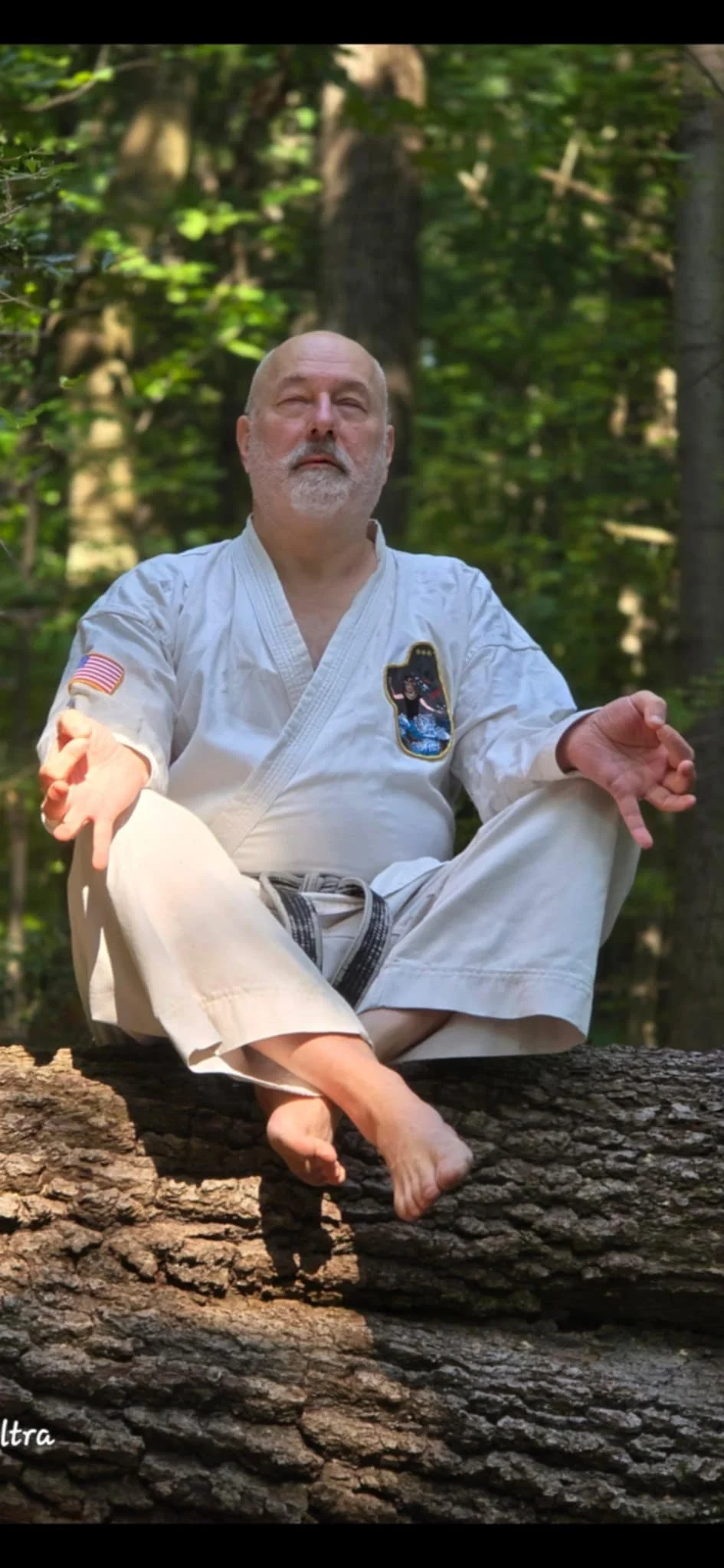
In this episode Andrew sits down and chats with Mr. Mark Ceaser about transitioning through styles, training through injury and lost loved ones.
Mr. Mark Ceaser - Episode 1054
SUMMARY
In this episode, Mark Ceaser shares his extensive journey through martial arts, detailing his beginnings, transitions between styles, and the cultural differences he has encountered. He emphasizes the importance of perseverance in overcoming personal challenges, including health issues and the loss of loved ones.
Mark also discusses his experiences with weapons training, competition, and the significance of community in martial arts. He concludes with a heartfelt message about the need to preserve traditional martial arts and the importance of personal growth and harmony.
TAKEAWAYS
Mark Ceaser considers his martial arts instructor a brother.
His journey in martial arts began after a life-threatening encounter.
Perseverance is key in both martial arts and life.
Cultural differences in martial arts training can be eye-opening.
Transitioning between martial arts styles requires discipline and focus.
Weapons training enhances understanding of martial arts techniques.
Competition experiences can be both challenging and rewarding.
Mark is being inducted into the Pennsylvania Karate Hall of Fame.
The importance of community and knowledge sharing in martial arts.
Personal growth and harmony are essential in martial arts practice.
CHAPTERS
00:00 Introduction and Background
07:05 Martial Arts Journey Begins
14:37 Transitioning Between Martial Arts Styles
22:09 Training Experiences Abroad
29:18 Reunification of Martial Arts
30:34 The Role of a Teacher
31:10 Teaching Experiences and Techniques
33:15 The Importance of Kata in Martial Arts
36:30 Overcoming Adversity Through Martial Arts
37:28 The Impact of Major Surgery on Training
43:31 Exploring Weapons in Martial Arts
47:36 The Role of Competition in Martial Arts
50:01 Induction into the Pennsylvania Martial Arts Hall of Fame
52:48 The Importance of Knowledge Sharing and Community
After listening to the episode, it would be exciting for us to know your thoughts about it.
✅Subscribe to whistlekick Martial Arts Radio on the following platforms:
🎧Apple Podcasts: https://apple.co/3mVnZmf
🎧Spotify: https://spoti.fi/3yHVdHQ
✅You can find whistlekick on all social media platforms using the handle @whistlekick or visit our website at https://www.whistlekick.com or https://www.whistlekickmartialartsradio.com
Show Transcript
Andrew Adams (07:47.212)
Welcome you're listening or watching the next episode of Whistlekick martial arts radio and today I'm joined by Mr. Mark Caesar. Mark, how are you today?
Mark Ceaser (07:56.168)
I'm doing outstanding, Andrew. Thank you very much for having me on the show tonight.
Andrew Adams (07:59.804)
I'm excited to get into chatting with you for reasons we'll talk about in a second. But before we get there, I want to make sure that all of the people listening or watching know just a little bit about Whistlekick and what we do. Obviously, we've got this podcast over 1050 episodes at this point, all of which are completely free. You can find all of those at WhistlekickMarshallArchRadio.com. You can also obviously find them on your podcast players or YouTube, all of that stuff.
And if you go to YouTube, I hope you hit the like and subscribe button and the notification bell. All of that stuff helps us. And it would really mean a lot. It takes no time whatsoever to do so. And it really would help the show. Also, if you go to the website, WhistlekickMarshallArtsRadio.com, you will find a subscribe button at the top where you can subscribe to our exclusive podcast newsletter. You'll get notified of every episode as it comes out. You'll also get a free book. It's kind of cool, free stuff. But
This podcast is one small part about what we do. Whistlekick does lots of things and you can find all of those things at whistlekick.com. Whether you want to attend one of the events that we host throughout the country, maybe you want to purchase a t-shirt or a hat, or maybe a training program, or maybe some books. There's so much stuff there. So please go to whistlekick.com and find all of that stuff there. All right, Mark, here we are to chat about.
Unsurprisingly, this should not surprise anyone listening. We're here to chat about martial arts.
Mark Ceaser (09:29.96)
So, you know, it's funny how people's journey starts. Mine was quite by accident. I was always a small kid, not necessarily bully bullied in a sense, but never really knew how to defend myself. I somehow got into ice hockey and sort of totally off tangent story, but I absolutely loved the speed and the facet of the game. could ice hockey fight, but I really didn't know how to street fight.
So my martial arts beginnings was very, very humble after my semi-pro career ended. I played very briefly in the old ACHL, which is now replaced by the ECHL from the Mohawk Valley Comets. Played a couple exhibition games didn't get any regular games, got cut, numbers game, whatever. So my father's business had not taken off at the time and he says, well, you got to get a job. So here I am, 23.
I did not have a college education. dropped out of the University of North Dakota. Hard work ethic, but no clue on, you know, I wasn't a really good student at Tuan, know, blooming swan later in life. So one night I'm working at a local gas station and I'm doing the 12 to 8 a.m. shift because no one else wanted to do it. Pumping gas. An individual pulled in with his girlfriend. Now I knew the girl from high school, but I didn't know him.
And she and I did not get along in high school. Let's just say my mouth ran a little bit. Not so much swearing, but I was very wise in my response to when they got him in, she gave me lip and outstepped the Lord Humongous. The guy was as wide as he was tall. Andrew, I've never been so terrified in my life. And again, hockey fights, you pull the curacy over the guy's head, you get a couple shots in.
The individual came up, started swearing at me. I immediately instinctively grabbed the gas nozzle and the wiper and it got it right in his face. And I'm like, well, if you're to do anything, I'm to burn you in the eyes and say you're on fire. I came home after my shift and my hand and my knees were shaking. Again, I'd never been in that situation. Even 10 years ago, I faced a life threatening disease. I had open heart surgery and fortunately I was able to survive that. That's why I'm here today. So.
Mark Ceaser (11:53.158)
I went to the gym a couple of weeks after the incident and was working out and chatting with my buddy and I made the best mistake, one of the best mistakes of my life. Told him what happened. He goes to me. He literally goes, Hey, there's a karate school down the street. So me being very analytical, I followed that line. Went to the wrong dojo. I went to the American Ishin Roo of karate, a school of karate in Washington, New Jersey.
And that started with my martial arts journey. I was there for nine years. Unfortunately, in 1996, a combination of my father's untimely passing, my mother's diagnosis with ovarian cancer, I had to step away from regular training. had to take care of my mother. So there was a number of other factors going on. had just gone back to school. I told you in one of the messages regarding being both.
a scholar and a warrior. So I just started my accounting career at that time and I was running my father's business. So I stepped away from regular dojo training, but I continued training on my own. after my mother passed, I moved here to Northeastern Pennsylvania. It was difficult to find another Ishinru school in the area. Of course, 20-some-odd years ago, the internet was definitely not the same way it is now. So knowledge and connection and whatnot, it
I had to do a lot of digging or to find the dojo that I eventually wound up in. So I have to enter. You talked about wild animals, paying a visitor in our call. This is one of my wild animals. So I eventually was able to find an Esheru school in the Stroudsburg area. And I trained there from 2012 until 2017.
There were mitigating circumstances there, including with my former sensei, which I won't get into at this time. So I able to connect eventually with, let's say Bart Ganster, I'm training now with, when I can get down to Redding, Pennsylvania. So through Ganster Sensei, who comes from the Harry Smith lineage, I've been able to connect with various individuals. have a very good friend, H.P. Henry, out of the North Carolina area that we converse, and we talk about different things.
Mark Ceaser (14:12.922)
the background of martial arts, 20 some odd years ago, you were kind of forbidden to go outside your realm and to interact with other martial arts because for whether insecurity reasons or whatnot, it was frowned upon. I had lived in Hazelton, Pennsylvania, and my first sensei, I blatantly told him, you know, regarding an interaction I had with a gentleman who trained directly with Wally J. And I wanted to find out more about jiu-jitsu.
I made the mistake of telling him and back then, of course, you know, that's the sense of his permission. The relationship went downhill after that point. I have been, my interests range from history, specifically military history, martial arts history, science fiction. You throw down a book if it's of interest, gardening, cooking, I will read it inside and out to get the knowledge of it. So I've always pursued that knowledge path within the martial arts.
That's what eventually led me into first Tang Soo Do. So my friend Vadim, who he'll enjoy when he sees this clip, I used to work with at an IT company in Stroudsburg, Pennsylvania. So we saw a yin and yang symbol I had in my desk and he goes, rock, you're funny, Tang Soo Do. And I'm like, no. Andrew, his myths are about Ye Bae. He slams it on my shoulder. Now this is my arthritic shoulder I have to mention, which is very, very painful.
You must come clean with my master." I'm like, okay, but Dean, you're crushing my shoulder there, friend, you know. I started the Tung Tzu Do journey in 2008. I first trained at Pocono Tung Tzu Do and then eventually hooked up with Master Nick due to some changes in my life, know, between jobs or whatnot. So I've been on the Tung Tzu Do journey since then. Currently now I am samdhan and hopefully next month I'll be up for asadhan assessment, which is fourth dan.
But there was always that key piece that was missing. I have to give credit to a couple of individuals, Sloan Sensei, who is now currently, I believe, on the Abraham Lincoln, as well as Hoke Sensei, who just got introduced or introduced to the Ishimura Hall of Fame a couple of weekends ago, set up program with USA Judo to get your black belt in Jiu Jitsu. I didn't feel comfortable in submitting a video. I really wanted to drill down.
Mark Ceaser (16:36.668)
whether I'm rebuilding an engine, a brake job, if I'm doing masonry, like I built my own grill, working on it, I want to be able to start from the ground up. So I started doing some digging. So was able to connect with a gentleman in New England, you may or may not have heard of, Tony Nise. So I told him, he says, what I'm looking to do. And he says, Hey, where's this, Pittston, Pennsylvania, anywhere near it? Well, it just so happens that's where my girlfriend grew up. So, I said, yeah, you know, I could be available.
He said, I'm going to be training with one of my students, Zavisak. Cool. Went down on that seminar almost five years ago, met Zavisak Sensei, met Anissa Sensei, and we got to be talking and we started going through the maneuvers of joint lock. I'm looking and I still have this to this day. It's an Akata.
That's insane, son. You know, I had these moments and like, just like you hear that record needle scratching your head. So I started to pursuing, uh, studies in Daito Aikijujitsu, which have led me to train directly with the air of, uh, our discipline and came from the founder of Daito, uh, Michio Tanaka made two trips over to Japan, one this past March and one in 2023. I believe we'll be going back over next May tentatively. Um,
But my journey has been not just about training, but it's been connecting. You know, I mentioned about Henry Sensei, I mentioned about Ganser Sensei, Dalgosak Sensei has been a great factor, Master Akri, but people like Anishi, people like Albert Mady up in Canada, these are the individuals that 20, 25 years ago you were told like, you you can't go out and coordinate and meet with. And Henry Sensei has helped me understand, especially from my Ishin Roo roots.
the core individuals, the first generation people that went over and trained with Shimabukuro Tatsuo, these former Marines, and then came back and brought it back here. And I would give my left arm to go back 25 years to train with a Nagel, to train with a Mitchum, to train with Harold Long. But I'm fortunate enough to meet people who have trained with these people and helped enhance my karate. And in itself, I think it helps advance me and enhance me as a person.
Andrew Adams (18:59.714)
Hmm. Wow. I mean, there's a lot there to go from. one of the things that I was a few things that I'm curious about, I wrote a couple of notes down here and the transition from Isshinru to Tengshu is an interesting one. And I'm wondering if you can talk a little bit about what that was like, because that's not for some people that might not be an easy transition.
Mark Ceaser (19:00.356)
I mean, what?
Mark Ceaser (19:14.311)
Yeah.
Mark Ceaser (19:25.092)
It wasn't. A couple things. If you know your Isshin-Ru, vertical punch. Tung-Sudo, horizontal. The chamber. Tung-Sudo up here. Chamber. Isshin-Ru on the hip. Stances. Heel-toe. Seisan. Very, very deep. I have an arthritic knee that sometimes I can't hit those really, really low stances. I do have those light bulb moments and I have to re-flip the switch when I'm doing it.
I have found that meditation and focus, excuse me, I have to remove a child who wants to join. I found that I literally, if I'm going to train Tung Tzu Do, Dai Ke Ru, Iki Jujutsu, or Isshin Ru, or any other art, while there is this interweaving in a certain aspect, I have to be in that mode that day. I can't have any carryover from another class. It is difficult. It takes a very disciplined, focused mind.
Um, the forms I found especially very easy on due to the patterns were not that difficult for me to pick up. Uh, and there are four kata in Isshin-ru that are very similar to Tung Tsu-do-kyungs. Sheshan and Seisan, very, very similar. Very, very similar. Kong-san-kun, Kusan-ku, very, very similar, especially with the heaven and earth. And I'll get into that in a minute because that's a move in Daito-ru.
the other one, Shinto and Jinto, they have a lot of crane stances or the knee interlock and there's one or two jumps required in both of them. But the one common ality of all of them, Nahanchi, Nahanchi Chonan and regular Nahanchi. The major differences in Isshin Ryu, you go in one direction and Kangsudo, you go in the other. And other than a Nikite strike,
or a fist when you punch, there's really not a whole lot. And this was the brilliant thing I got to know with Anisei Sensei. And Master Alan Sharp allowed me to paint the canvas when I was in Houston last November, attending an oil spill conference show, something I do on the side. He let me teach the class, do Nahanchi on your back. And if you start taking a look at the moves,
Mark Ceaser (21:52.382)
my God, this is what the MMA guys do. That's my light bulb moment. And this is the thing that I've been trying to convey to individuals. And again, hopefully maybe at whistle kick, we're different, but we're the same. And if I can convey that message and people can understand and come together, understand the nuances of our different arts, but the similarities, then I think that you have promoted the martial arts, not just as a
fighting or self-defense, but a unifying among all martial artists that we are a little bit different, but we still have the same foundations.
Andrew Adams (22:30.742)
Yeah, you know, we say here at Whistlekick all the time that there is more that connects us than separates us, regardless of what style you do, regardless of where you live in the world. Within martial arts, there's way more that connects us than divides us. So that, I mean, that completely makes sense.
Mark Ceaser (22:47.312)
Absolutely. You know, you'll see and I've dabbled in Kenjutsu as well. Kamsakusensei lives up in the Tunkanic area. When you come to your Kamae, wait a second. it looks like you're holding a sword or a joe or a boken. You know, and this is a beautiful thing of working with Kamsakusensei when we've been doing the weapon work. That's when all of sudden the empty hand into Kabuto, that's which really kicks on. So I've
been able to really, really enjoy that and to translate from ice hockey. So you're holding a stick. It's the, it's, it's the same thing. It's you're extending of the body of the action, what you're doing when you're shooting the puck. It's the same thing with the projection of the weapon. And I think those tie-ins have allowed me to really enhance and make my martial arts that much better.
Andrew Adams (23:39.534)
So here's a question. Your first school, you were told go there and you follow the straight line and you went to the wrong school. You went to an Eastern real school. Do you know what the other school, what were you quote unquote supposed to learn?
Mark Ceaser (23:43.644)
Okay.
Mark Ceaser (23:48.093)
Mm-hmm.
Mark Ceaser (23:56.69)
Quite under.
Andrew Adams (23:58.65)
really, interesting.
Mark Ceaser (24:00.242)
So how ironic that I eventually got into a Korean art at a later date. It wasn't the initial art. So who knows what my path would have been had I not literally veered off the compass a couple degrees.
Andrew Adams (24:13.078)
Yep. And, you know, you obviously would have still found if you had done Taekwondo, you would have done if you had then transitioned into Teng Shudo, obviously would have found a lot of similarities. you know, you already mentioned a bunch between Ishinru and Teng Shudo and you mentioned the heaven and earth from Kusan Kuu. Like you, you, mentioned something there you want to talk about.
Mark Ceaser (24:35.858)
So one of the techniques we do in Daito-Ru is if someone is grabbing both hands and on my avatar, on my Facebook page, you'll see me with Jeet Senthai doing the projection of the lock. It's a very simple training exercise where you make the connection with the individual. In real life, obviously, you're moving, you're upsetting, you're joint locking, you're getting the person up.
Well, the heaven and earth maneuver is one of the techniques we do where you turn the hands. You want to turn and it took me years to understand this. Turn that lower hand. Understand when you're dumping someone if they're holding you, you're turning that outer pinky and think of like if you're sitting, especially in cities that you want to push off. This hand is not doing the dump. This is the person is grabbing on. So think of it as fishy.
So you got that hook in and you're just in for you, nail the hook and bring it in. This is the hook. So the person's hanging on here. This is just a dumb hand. So in the kata, you have that. So those are the moments that I have where, you know, a block may not necessarily be a strike. It block may be something else, but a block can be a strike. A strike can be a block.
Andrew Adams (25:52.822)
And for those of you that are only listening, you're going to have to go to YouTube to check out what Mark just did. So you've obviously done a lot of travel for your training as well. mean, obviously you're in, you're in New Jersey now or Pennsylvania.
Mark Ceaser (26:10.92)
I'm in Northeastern Pennsylvania. I'm about two hours due west of New York City due north of Philadelphia. So let me tell you a little bit about my other passion. So my other passion, my dad was a chemist and a multiple patent holder. One reason why I just went to Houston two weeks ago and initially in November. He has a patent for a technology to take cellulose and make it 100 % water repellent. My good friend Lee Hunter over in Thailand is in process of setting up operations. I mentioned about the
Andrew Adams (26:12.398)
That's what we
Mark Ceaser (26:40.826)
individual we talked about earlier who did not follow through in the contract. So in my travels to find it's literally been my crusade as much if not more than the martial arts pursuing the martial arts I bring along when they go to any of these trade shows or meet with individuals to build the business. So that being said, I've probably been to 24, maybe 30 different doujins here in the United States and Canada.
in the United Kingdom and in Athens, Greece. My travels with other individuals, like I said, have taken me to Japan. So I've had this fantastic opportunity, especially this past March. mean, the Martial Arts Summit that we had in Ashikaga was phenomenal. Had multiple Daito-Ru as well as Aikido practitioners demonstrated in Iraq. Our group was first to go.
And I got to do a particular, just a single kata for Ishin-ryu, which is Sun Tzu. That's not taken from Goju-ryu or Shon-ryu, which is our influences. This is one Shimabukuro's tatoo did. To me, maybe other than getting my MBA and having a U.S. patent, this is probably one of my life highlights to have so many individuals who've never seen me before and get to perform a kata. And I believe we will be doing the same thing next May.
in our Chicago game, I highly look forward to doing.
Andrew Adams (28:11.79)
With your travel overseas to do training and stuff, how does that compare to the training that you've done here in the States?
Mark Ceaser (28:22.76)
Eye-opening. obviously, when I worked with the first time I went to the Martial Arts Expo in Canada two years ago, I trained with Maiti Sensei. Obviously, we have this same template, the same foundation, Isshin-Ru, a little bit of differences, a little bit of culture difference, not a whole lot, a little bit more warming, welcoming than, like I said, this secret society or this just, you can't train elsewhere. In Japan,
Absolutely welcome with open arms. mean, it was just we were embraced by Jet Sensei as well as all of his associates. I've trained numerous times in the United Kingdom. My very dear friend, Rangam Bronte, unfortunately passed away due to affection with COVID during the COVID pandemic. numerous times, I probably made four trips over and he always took me out. His favorite line was after hard training.
your money's not good here, mate. You know, he just wouldn't let me pick up the tab. I did pick up once. My point being is, especially Japan and the United Kingdom, going over there, welcome with open arms and, you know, and share a little bit about my background with them, even if it was only for an hour or so was, you know, icing on the cake for those trips.
Andrew Adams (29:45.87)
And what an interesting change from how, you mentioned it earlier, you 20 years ago, you had to ask permission to go train with someone else. And, you know, there are, I'm sure we both know, and I'm sure our listeners do too, know of lots of schools that, you know, if you are a student at that school, you are not allowed to train anywhere else or think about training anywhere else. And how interesting is it that you go to the birthplace, quote unquote, the birthplace of our arts,
Mark Ceaser (29:52.944)
And just something that's correct.
Andrew Adams (30:15.594)
and it's completely opposite.
Mark Ceaser (30:17.896)
It's definitely what welcomes arms. mean, I'm hoping that one day to make the proper connection, I need to either speak to Fawcett since they are a couple other people, I will get to Okinawa one way or another, either in a physical form or my ashes will wind up there. that will be obviously a very, very critical factor as well due to my Okinawan arts. But again, this knowledge sharing and that's what
to Jeff Kasai sensei, when he put together that summit last year, from what I understand, and over the years, Aikido has gone one way, Daito-ryu has gone another way, and then you have other people who learned from the Daito-ryu Aiki Jujutsu, Hapkido came from it, Judo came from it, Hapkuru Jujutsu. So this reunification, even though it's like
competing high schools merged into one unified school system. Yeah, we used to hate and detest each other, but why can't we share the knowledge and get along? And that was probably one of the most interesting things about the entire summit is, yeah, we may have come from this side of the street, but we both definitely wear the same type of shoes.
Andrew Adams (31:32.398)
And again, going full circle, there's more that connects us than divides us.
Mark Ceaser (31:38.952)
Correct. Absolutely. And as I said, both trips to Japan have been that eye opener. then again, when you start to work in the techniques and you see it, especially in Kata and you see it in Hyeong, then all of a you're kind of like, wow, where did that come from? How did that come about? And how did we go from the empty hand, you know, this warrior system to defend yourself on the battlefield? Because that's essentially what Daidu Rui, who Jiu Jitsu and enhancing karate.
And I've spoken to a number of numerous people. There's a couple people here in Pennsylvania I want to talk to. My resources have been really, really great enhancing that. My bookshelves are filled. I could do a panoramic of up here. I probably have about 150 different martial arts books. But I take a little bit of each component and I make it into my martial art. you know, Master Nick's Tung Tsu Do is not going to be my Tung Tsu Do.
Cancer Sensei's Isshin-Ru is not going to be my Isshin-Ru. Chetanasuke and Zalosak Sensei and Anisei's Daito-Ru, your Aiki Jujutsu, is not going to be mine. And you take that and you make it into not only your martial art, but into the person that you are.
Andrew Adams (33:13.43)
So all of the talking that we you've been doing has mostly been talking about you being a student, right? You are clearly a perpetual student. Has there been teaching in your past or current or in your future?
Mark Ceaser (33:37.202)
Great question. I've had the fortune of either being asked or offering my services at several world Tung Tzu camps. This past two weeks ago, I taught San Chin Kata to region four in the San Antonio area. I have taught Isshun-Ru, Seisan Kata, as well as basics, and Daito-Ru.
a little bit of the wrist lock techniques at region eight. Again, visiting master sharp last year, we went off in one direction and next thing you know, I'm like, yeah, let's let's talk about Nahanchee. Let's really drill down to it. And that's what wound up being the Nahanchee fight on your back class. So in the UK, I had an opportunity at master Ram rules, Dojang one night to show my other art, Ishin Rue.
to about 50, 60 Tung Sudo students to see not only the similarities, but the differences so they can make their own minds up on how to make their art theirs. So yeah, the opportunities presented itself in a number of my Tung Sudo Dojang travels, take a regular class and then, you know, we get to be conversing, oh, what do you have there? What you have there? What have you studied? And show me whether it be five or 10 minutes, formal.
camps I mentioned but the next thing you know you'll be sitting and you'll be chatting it's funny so there's just a couple videos I have when we got into Japan so we have a tempura sake bar not too far from a hotel and we'll be doing technique and there's one video I have where Takeuchi sensei he put me in a z lock and my chair is solid on the concrete floor and you can hear this as he's pushing me back
He's doing the technique. Here we are, we're two o'clock in the morning. And I've been able to take that back and show people how effective that technique can be. Something as simple as a Nikio in from their Kata when they do an application. And you'll see that especially like in Nahanchi. Can you tell like Nahanchi's like gotten to be one of my favorites?
Andrew Adams (35:50.414)
And it's interesting and maybe not surprising because it is the cotta or the form that probably shows up the most in most styles of martial arts.
Mark Ceaser (36:00.808)
Correct. Motobu, 10 years, if not mistaken, that's all he trained. And you hear about how he was such a heavy hitter, heavy fighter. But the thing I found, and I'm still drilling down on the Honshi, is its ground fighting capabilities.
confrontation, the cornering, if I threw somebody against the wall or vice versa, how you can use it to your advantage. You you get up and you do that stomp, you know, and you just hear my hit and forth. But imagine doing that to somebody's knee. And I never really had to use it in the sense of like a life threatening. I'll be perfectly honest, I used to work prior to where I'm working now in the local warehouse. And there was a couple of individuals who, you know, I would wear like a
martial arts t-shirt and a would just start like, we think you're tough guys. like, look, dude, don't please don't. You're only going to wind up getting hurt. And you would do like a very minor technique like, you know, they would shove you, they would physically not think about an all off. and you put somebody on our board real quick. And they're like, Whoa, the guy knows what he's doing. Yeah, don't mess because but you these
instinctive moves that you do when you train your cod over and over again. I mean, this simple move, if I'm in a grappling and I just wrap my forearm against your neck and snake it around. Next thing you know, like I almost have a part of guillotine. These are the things when you do your training. All of you start really drilling down on the applications. Then all of sudden you realize, hey, if a situation happens, so be it. I found the obviously the best application. Don't confront. Yeah.
As long as you have that confidence in yourself, which is something I did not have for many, many years growing up. Uh, again, I was, I was picked on. I'm not going to deny it. I have a nice scar across my nose when I got my glasses broken as a kid. Uh, my father was a world tour, world war two veteran and he says, well, punch him in the face the next time they do that. And of course, back then you can get away with some kind of stuff like that. Maybe a one day suspension nowadays, you know, you have your
Mark Ceaser (38:20.552)
I won't agree with some of the policies of the school system, but I think the thing of it is that bullying can be stopped in its tracks with a proper mental approach, which obviously comes from the martial arts. And you see it, especially over in the Far East in Japan, they teach the school students. I know a couple of people here that have tried to implement that into local school systems. And whether it be the Board of Education or the PTA, they don't get it. And I think if that was implemented,
on a very low grade scale, I don't think you would have half the children on medications. I think your discipline and respect would certainly be a lot better. Again, these are my opinions. I'm sure there are scientific studies, but I think that's something that can be instilled. This is a life learning art. It's not just, just made Brock Roll, you know, and then I'm to put 10 notches on it. This is something you do on a regular basis, whether it be key Kong, whether it be stretching, whether it be meditation.
I used to have horrific, and I still get them every now and then, pulsing headaches. I got a concussion. Actually, I've gotten two. One from playing soccer in high school, went up for a header, got knocked out for 20 minutes. Don't remember a thing. Lost my college scholarship potential as a result of that. Got another one playing ice hockey. And sometimes I have short-term memory loss as a result. My point being is the skill set that I've learned from the martial arts helps me get past those adversities.
18 days. This was split open. was back to training at my old Dojang. 18 days. So even though I wasn't training obviously, know, hard, I was working with children, I was teaching class, I was up on my feet, I was moving around. And I think that's one of the things, the hidden things that training the martial arts, and you can share with others that even when you're down, it helps you give that ability that tool.
Andrew Adams (39:56.27)
Mm.
Mark Ceaser (40:17.403)
to put in your life toolbox to pick yourself up.
Andrew Adams (40:20.942)
Talk a little bit about, you you mentioned twice now, you had some pretty major surgery and you didn't stop. I mean, obviously you weren't training while you're in the surgery table, right? Operating table. But you obviously had to take some time. But what was that transition like back getting into training after having major surgery?
Mark Ceaser (40:44.658)
So the first major injury that I've ever had in my life, and I've had a couple from playing ice hockey, was my shoulder got separated. think Mel Gibson in the Lethal Weapon movies, I laid somebody out in Sunbury, Pennsylvania. Next thing you know, his skates are up and he's in a penalty box. Problem is my shoulder was wound up over in Sealands Grove. So if that's like a local PDA reference, like it, banged up. I drove home like this. Thank God I had automatic transmission, because I could not lift my arm.
The same shoulder got injured about a year and a half later while bench pressing. was visiting a business contact in Minneapolis. He was busy staring at some young lady instead of watching me. I had close to 300 pounds come down on my chest. If you deer hunt and you hear that sound of when you pull the hide off of a buck or a doe after it's been frozen at tearing sound, that's what this sounded like. So this is ongoing. I remember I just had rehab this year. My range of motion is still limited. I will never be able to throw well, 20.
I was able to bench over 300 after the injury, self rehab. But it was just a matter of perseverance, diet, and just control. Torn my knee. So I was initially in a minor automobile accident, but the worst part was about a year later, I slipped in my driveway on ice and bent my leg back like Gumby. So if anybody remembers that cartoon, how I used to have the leg up, yeah, I landed on that, popped that. So I had my MCL and my cartilage removed.
I was back to squatting in about two weeks and back to ice skating 21 days. This was the big kahuna. So I was diagnosed, I believe, because I had scarlet fever as a child, which may have evolved into rheumatic fever, which attacks the heart valves. Before I went to Africa in 2012, I was diagnosed with a murmur. Now my father had a murmur too. So was it genetic? Was it because we don't know? In the span of about
18 months I was working for an individual, as I mentioned before, who I would say professionally was not of well ethics. And we'll just leave it at that. And it was put into a situation where I was forced basically to do sales. I don't do sales. I'm a subject matter expert on the materials my dad made. I do accounting very well, but I don't do sales.
Mark Ceaser (43:07.024)
And the stress that was caused plus having to pay cut exasperated this condition. I was all set to go to the clean Pacific show in Vancouver, Washington in June of, 2015. I got a call from my cardiologist just saw my latest EKG. We got to go in now. I'm like, I'm boarding a plane to go to Washington. So literally I came back. I have to give huge props to my good friend, former ice hockey teammate.
Dr. Brian Ma, Brian, you saved my life. I've been telling you that for 10 years and you say, aw shucks, it was nothing. This gentleman is Canadian. Not gonna hold that against him. There's a little inside joke I'll share in a minute. He's one of the leading robotic thoracic surgeons in North America. He literally had me in and out like a NASCAR pit stop inside of three hours. He later told me, I'm a diehard New Jersey Devils fan. He grew up in Montreal. He did say he put a little Montreal Canadians tattoo on my heart.
I told him if I ever find out about it, I will make sure that he pays dearly. But when my point is, it's funny he mentioned about the recovery. Let's just say I did not have a very good reaction to anesthesia. When I did wake up and start to be conscious, I'm strapped down like Thor in his first the first movie. Apparently, I punched down an orderly and took somebody else out. So yeah, I did not have a really good reaction to that. But I was up and moving within 48 hours. Very painful.
Um, I was walking about a mile within a week. Now I was training really, really hard up into it. As a matter of fact, the night before my surgery, I trained at Pocono Tung Tsu Do. I realized, Hey, you know what? I have a 50 50 chance of coming off the table. At least my last night, I'm going to make sure that I was training. And yeah, 18 days to the day after surgery, I was back in the doujing, working with little kids and I was back to doing basics within maybe about a month. that
Andrew Adams (45:02.85)
Hmm. So definitely some perseverance there, right? For sure. A never quit attitude. Your training, you know, 18 days after that training had to have been different. It wasn't the same as the night before the surgery.
Mark Ceaser (45:07.868)
Yes, sir.
Mark Ceaser (45:21.224)
So when they, you come out as a major surgery like that, one of the first things I remember in the first couple of days was constant x-rays of the lungs. Were you filling up with fluid? What's your lung capacity? And I don't remember the device, but you basically breathe to suspend and make sure what your lung capacity is going on. Through Keekong, through meditation, I had always maintained that I did know I tired very, very quickly. But yeah, I mean, they just cracked my chest open. I did not expect.
you know, to be doing back flips or full splits after the surgery. That being said, I did tire, but it was not a type of tiring that I was having prior to the surgery. Because the valve was not working, my oxygen levels were tanking and I was having a fair amount of regurgitation back into the chamber. So I was not properly circulating even despite doing HECON and proper breathing to enhance my oxygen level.
Then I get this thing fixed. Yeah, the first couple of weeks it was tiring, within six months I was squatting and there's a video I have on my Facebook page. I was squatting 365, four, three, no, for five, excuse me, at 208 body weight at 51, going on 52 years old. Not bad.
Andrew Adams (46:36.962)
Hmm. Yeah, yeah, for sure. Not bad. You haven't talked a ton about weapons. Is that something that you're involved with?
Mark Ceaser (46:48.018)
So in Isshin-Ru there are three basic weapons. You got the bow, got the sai, and you got the tuifa. When I was with my first sensei, I got about halfway through Tokimini no Kun, and between issues with going out with my parents, I never finished the kata. So I was able to learn that with my second sensei. I never finished the tuifa kata.
So I have to give props to Sintse Ronakimarose down in Maryland. He showed me the Tweefakata at the 2012 Day of the Masters with American Asian Roux, which I was also blessed that day. I had won the overall male black belt championship and this sits on my desk as a constant reminder of that award. So that was a very, very good day.
I've I've worked with so many individuals who have given me the opportunity to train in various arts. Tung Tzu Do is the knife, the sword and the bong slash bow. So you see a little bit of similarity, especially with the strikes, the Okinawan Kabuto, I see a lot more blocks where the Korean weaponry has a little bit more of a thrusting strike and like the more like the helicopter spins.
So there's similarities and differences. It wasn't until I started training with the Joe and with the sword with Sensei Zalasak and also with Sensei Comstock. Comstock Sensei knew an individual to train the Tung Tzu Do and came down to our Dojang and showed us that I really got an appreciation. And then when you flip the switch and you go back to something like Daijiru Aikijujitsu and you have the Kamae and all of sudden you realize, yeah, that's where...
That's where the sword cut and the little simple things like the projection of your hand, if somebody's on it comes from the sword cut. And that's the link that I'm still working on. And it'll probably take me the rest of my life. I mean, I'm 62 now. Hopefully I'll have another 20 good years of training. One of these days it's going to be, um, I got it. And then it kind of, I think of John Cleese playing, um, Beethoven.
Mark Ceaser (49:08.496)
demonic python skit when he's doing that, that, that, he's like, God, I've got it. And then probably escaped my brain, I have to go back to square one. So, Kubuto weaponry is extension of the empty hand, you just have to make the connection between the two back and forth. I know you're probably gonna ask, so I would just answer it. Probably my favorite weapon other than the sword is probably the EQ, the bow, I would, it's not part of the Ishinru, but
It's probably my favorite. The tweif is right up there as well, and I love all of them.
Andrew Adams (49:43.264)
And for those in the audience that don't know what a Twifa is.
Mark Ceaser (49:48.712)
So the Tweefa is basically like, what's the police stick, the P-19. So it's basically, it's a little, it's a baton and it has a little side handle on it. It's believed to come from being a mill grindstone, whatnot. You'll see variations of people having them and it basically, they were initially wrapped around the arm to protect themselves. You can do a tremendous amount of locks and wrist locks.
head locks a guillotine with the weapon. It's not a percussion weapon like the Psy where, you know, wraps off. But let me tell you something, anybody who's ever worked with the Tweefa and ever hit themselves in the elbow when you're doing kata, yeah, you see how painful that could be real, real quick. But it's really, really phenomenal and unappreciative, I think, weapon for those who really have never used it.
Andrew Adams (50:39.628)
Yeah, for those that don't train Isshinru, Okinawan schools would call it a tonfa. But same weapon. I know we may have listeners who are like, what is it that he's talking about?
Mark Ceaser (50:41.468)
Thank you.
Mm-hmm, correct.
Mark Ceaser (50:55.72)
Agreed. Agreed.
Andrew Adams (50:56.686)
Now you've we've we've chatted now for, you know, 45 minutes and you haven't mentioned anything about competition. Is that anything that you got into when you first started working your ishin room?
Mark Ceaser (51:10.632)
So my first sensei was not about going to tournaments. It wasn't until I met my second and I was hooked. I also saw and you're going to bring up a really touchy subject with Tung Tzu Do. In Isshin-Ru, there are a lot of techniques you can throw, especially with hands, hands to the face, hands to the head, can't with Tung Tzu Do as compared to light contact.
So again, I talked about the flipping and switch what you can and cannot do. I've been pretty lucky. must, Kata and Kabuto are probably my strongest. I've never been a great sparter. However, I was very, very lucky at Tom Brown Sensei's tournament in New York a couple of years ago where I won the grand championship against a gentleman who was probably a third of my age. I came back down four to two and I won seven to five.
And that's after getting blasted in the ribs. I mean, he had a really, really nice technique and knocked the wind out of me. I love the competition. I just have not had the ability the last couple of years due to work and just, I'm getting older. And unfortunately, a lot of times they mix the divisions, with people 10, 15, 20 years younger. And I, I'm sorry, you know, that does make a difference. I mean, you try and do your best, but
If you see somebody who can really do a really, really good and kick and they're in their late 30s, early 40s, and you see somebody maybe get high weight, it's going to result in the points being affected. My last Tung Sudo event was at Worlds last year. I was very happy with the results. got third place in empty hand, excuse me, yes, third place in empty hand and third place in sparring out of a group of 15 individuals. Not one of them was under.
60. So I was right in the middle of that group. I mean, there's like one tournament I might do this year in Ishenroo 1 in Dillsburg with Dillsburg's Ishenroo school. We'll see. I had so many other things going on. I am really at the point right now where I'm focusing more on training and honing my skills and learning new stuff. My good friend Brian Augustino, we need to connect. This guy is an Arnis Escrima outstanding master. And you'll see
Mark Ceaser (53:29.936)
not only with the cuts and the strikes, but the movement on the octagon. And it's everything that we talk about, especially in our katas, and you'll see in our weapons in the movement. And that's helped enhance my martial arts as well.
Andrew Adams (53:45.332)
And you you mentioned that that's what you're working on and you know, that's what you have coming up. What else do you have going on coming up in the future? Anything, anything cool?
Mark Ceaser (53:54.226)
So I'd like to take this moment to make an announcement. So while I was in Houston last week, I received a text from Synthate Gangster. November 2nd, I will be officially inducted into the Pennsylvania Cutout, they hold the fame. I am extremely humbled and honored by this. Shocked it was an understatement, but to be included in such a group of martial arts who came before me and will come after me, this is very humbling.
and I'm very honored. I take a moment to say, Tomo Rarigato, Gensou Sensei.
Andrew Adams (54:28.886)
Great congratulations. That's If people listening or watching and if you're not watching you definitely missed out on a bunch of cool stuff that mark did so maybe you'll have to go back and check out the YouTube video just to see the techniques he was showing or the Ferocious animal that came across the screen a couple times But if people listening or watching, know really Resonated with what you were talking about. How is there a way that they should get in touch with you?
Mark Ceaser (54:30.578)
Thank you,
Mark Ceaser (54:40.968)
and check out the video to see the totals.
Mark Ceaser (54:58.834)
So I do have Instagram and Facebook accounts. me an invite. My name's Mark A. Caesar, C-E-A-S-E-R. Always love to talk shop. I mean, I have multiple interests. mean, you can see by my t-shirt, I love open wheel racing. I love gardening. I love cooking. I love knowledge and sharing with that, whether you're ripping apart an old engine or you're breaking down a Cata or a Hyundai. So yeah, reach out to me.
willing to look for the connecting with other individuals with like-minded and are looking to share knowledge and, you experiences.
Andrew Adams (55:34.382)
Before we wrap up here, where do think that analytical mind came from, that thirst for knowledge?
Mark Ceaser (55:42.364)
So I was blessed and cursed, depending on one's point of view. My father was a self-taught chemist. He served in World War II. When he went to college, he found out he learned more in high school and just reflected the education system we talked about before. My mother started off as a journalism major and later became an English teacher. So I had two really strong disciplines.
I would have loved to have been a chemical engineer, which is why I went to North Dakota, but I couldn't balance an equation and save my neck. But I can balance a balance sheet. So I found out my strength was numbers. Well, numbers communicate in one way or another. So just as the English language communicates and just as chemistry can communicate a formula, I feel with the numbers aspect, I can communicate numbers to a business owner when they're reading their financial documents and understand, especially in the tax side of things.
you know, am I going to get whacked? Am I going to have a good year or whatnot? And I like to convey that message to others about the martial arts. It's about communications, about knowledge sharing. Take your strong point that you have and share that with others and it'll come back to you tenfold.
Andrew Adams (56:54.358)
Great, great. So, you know, we're gonna in just a moment here. I'm gonna throw it back to you to kind of close things out But again for any new people listening or watching go check out YouTube to and hit the notification bell All those buttons. They really help us out Whistlekick martial arts radio comm for this episode. You'll you'll find a transcript of this episode. You'll find photos you'll find All kinds of stuff on every episode you'll find there
You can subscribe to our newsletter there as well. Whistlekick.com to find out all of the other things that we do. Maybe you're a school learner and you'd like to learn more about Whistlekick Alliance. Maybe you'd like to one of our events like Marshall Summit or All-in Weekend or Free Training Days. All of that stuff you can find there. Or maybe you want to learn a little bit more about being a better teacher and you can attend one of our martial art teacher training certification courses. All of that stuff is at Whistlekick.com.
And I would give you one last plea. If you would like to help us connect, educate and entertain traditional martial artists of the world, the best way you can do that is to share this with a friend. This episode or one of our other hundreds and hundreds of episodes share with a friend, help spread the word so we can continue the, the, our ethos of connect, educate, entertain. Mark, thank you so much for being here. This has been great.
How do you want to close out today? What do you want the audience to take away from our chat today?
Mark Ceaser (58:26.28)
You just hit on a very, very important and again, I come from an education background, having my mother as a teacher and she taught and I like to teach. Spread the message. We need to preserve traditional martial arts. We see this, unfortunately, Hollywoodism or watering down, whatever you want to call it. My point being is don't be afraid to communicate. Try not to have any barriers. Park the ego.
We're here to protect our loved ones. We are here as martial artists to better ourselves and society in general. It's not about how many belt ranks you are, how many trophies you have in a corner. It's about personal betterment and being in harmony with others as well as in nature. I think if we could all live like that, I think the world would be a lot better place.