Episode 1056 - Mr. Paul Coffey
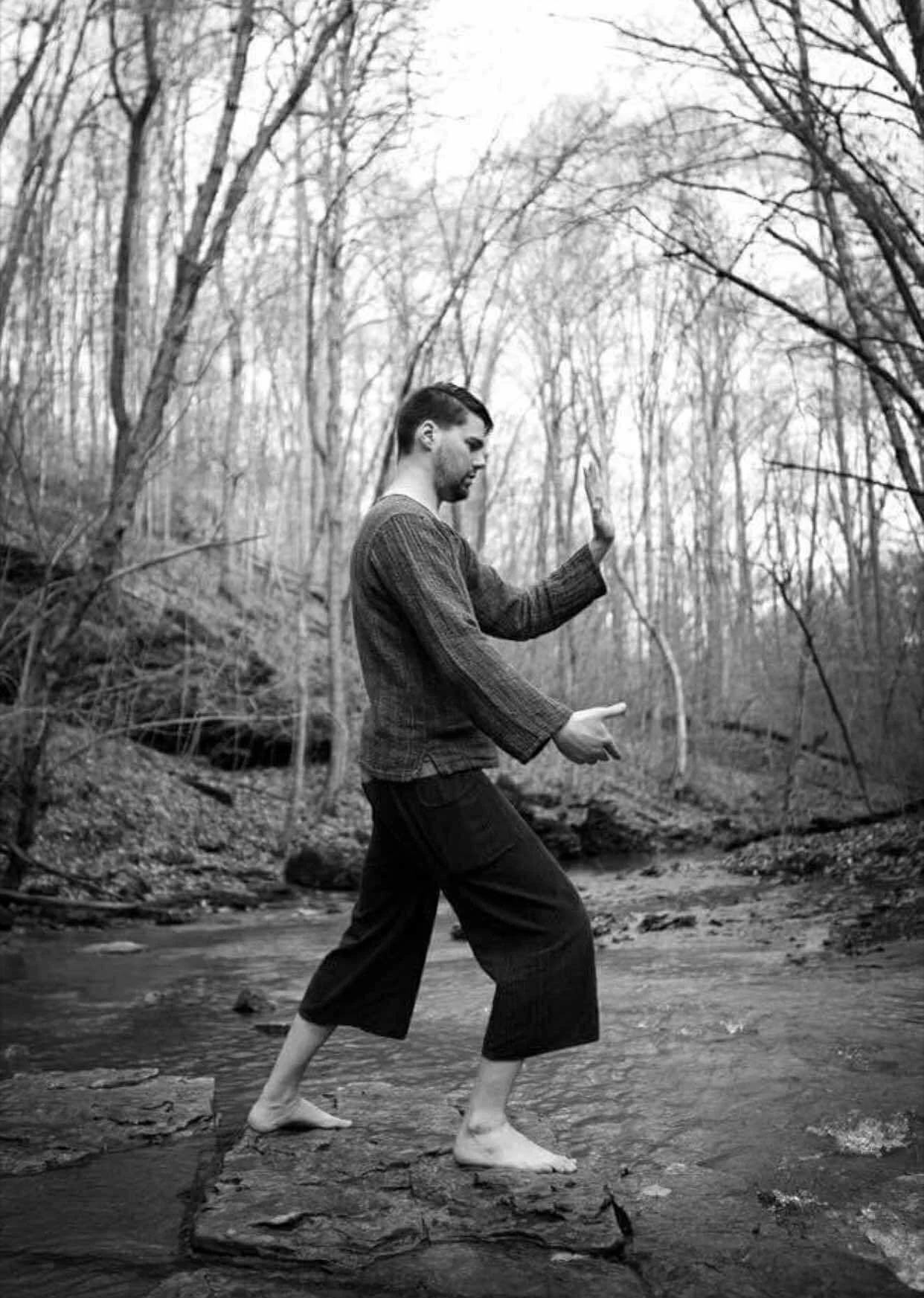
In this episode Andrew sits down and chats with Mr. Paul Coffey about training, teaching with philosophy and working with patients in rehab.
Mr. Paul Coffey - Episode 1056
SUMMARY
In this conversation, Mr. Paul Coffey shares his extensive journey in martial arts, emphasizing the importance of being a well-rounded martial artist rather than just focusing on one style. He discusses his experiences with teaching, particularly in non-traditional environments such as rehab facilities and shelters, and how his past experiences have shaped his teaching philosophy.
Mr. Coffey advocates for a philosophy in motion approach, where the focus is on personal growth and helping others overcome their struggles. He also highlights the significance of continuous learning and adapting teaching methods to meet the needs of diverse students.
TAKEAWAYS
Mr. Coffey was more interested in being a martial artist and less interested in being a Kempo artist.
Mr. Coffey has conquered demons and hopes he can also teach other people how to conquer demons.
He teaches philosophy in motion, and the student brings the philosophy.
Your past does not define your present or your future.
There is a martial art for everybody, and if you don't like it, give yourself permission to leave.
Learning martial arts is the best and the worst thing that can happen to you.
He wants to help those people who are disenfranchised.
He wants to focus on soft techniques to make them effective.
CHAPTERS
00:00 The Journey of a Martial Artist
08:51 Teaching Philosophy and Impact
18:12 Philosophy in Motion: A New Approach
27:07 Teaching in Non-Traditional Environments
35:50 Future Aspirations and Continuous Learning
After listening to the episode, it would be exciting for us to know your thoughts about it.
✅Subscribe to whistlekick Martial Arts Radio on the following platforms:
🎧Apple Podcasts: https://apple.co/3mVnZmf
🎧Spotify: https://spoti.fi/3yHVdHQ
✅You can find whistlekick on all social media platforms using the handle @whistlekick or visit our website at https://www.whistlekick.com or https://www.whistlekickmartialartsradio.com
Show Transcript
Andrew Adams (05:26.965)
Welcome, you're listening or watching to the next episode of Whistlekick martial arts radio. And today I'm excited to sit down and talk with Paul Coffey. Paul, how are you today?
Paul Coffey (05:37.078)
I'm wonderful, how are you?
Andrew Adams (05:38.769)
I am doing great. I'm excited to get into a little chat about martial arts. But before we get there, I'm just in case we have any new listeners, I want to make sure that you know about some of the stuff that we do really quickly. Whistlekick obviously produces this podcast, whistlekickmartialartsradio.com. You can go there to find show notes on every episode, transcripts of every episode, photos, everything you want on every episode we've done. You can find that there. You can also subscribe to our exclusive newsletter. Just click the subscribe button at the top.
Not only will you get a free book, you'll also be notified of every episode as it comes out. So you won't miss any, but the podcast is one small thing that we do. can also go to whistlekick.com to find out everything else that we do. Maybe you want to purchase some apparel. Maybe you want to purchase some hats or a t-shirt or sweatshirt, or maybe you want to attend one of the events that we host throughout the country. All of that stuff you can find at whistlekick.com.
And if you use the code podcast one five, you'll save yourself 15 % on most everything over there. And if you don't want to use that code and save 15%, great. Thanks. We appreciate that. So Paul, thanks for being here. I'm excited to sit down and talk. I heard of you through a mutual friend now, Tommy Given. And he said, man, Andrew.
Paul Coffey (06:48.155)
So.
Here we are. Here we are. Well, I'll just say very briefly, I started martial arts 32 years ago and I started teaching 28 years ago. I've been doing it since.
Andrew Adams (07:04.604)
You got to talk to this guy. So here we are talking.
Paul Coffey (07:22.988)
Started in Chalén Campo, I have dabbled in a plethora of other things, and I have a Shillelagh coming in the mail and I'm about to start Irish stick fighting in the Doyle system. I don't know if you've spoken with Bernard Letty, but he's the chieftain of that system and I'm going to study under him.
Andrew Adams (07:36.519)
it. That is great.
Andrew Adams (07:46.295)
I have to be honest with over a thousand episodes and I haven't been the producer since the beginning. There are hundreds of episodes that I know quote unquote nothing about. I'd have to go back and see if we've had them on, but I know that we've had multiple Doyle System members on the show. So that's really exciting that you're going to start in that. Now you mentioned that you started 20 years ago, 20, 28 years ago.
Paul Coffey (07:54.551)
Okay.
Paul Coffey (07:59.512)
Earth.
Paul Coffey (08:07.928)
Very cool.
Paul Coffey (08:12.974)
I started 32 years ago and I started teaching 28.
Andrew Adams (08:15.895)
32 years you started teaching 28. So that's the difference of four. So after four years you started teaching.
Paul Coffey (08:25.518)
Yeah, just, uh, so for after four years I was brown belt and I just started doing like leading class and stuff in the, the, in the school. It wasn't like leading the full class, just run them through exercises, warmups, stretches, have them do their kicks and their blocks, then kick it over to the other instructor and that sort of thing. Um, I was in.
It was a very unique situation because I was in Yonyan Do Karate Centers, which is a faction of Fred Valari Kempo. Okay. And, and they had, they had a program that was a tiered system of instructors. So your first was just a helper. And then it was like a junior lead and a senior lead and then like all the way up to instructors. they actually had curriculum that they taught.
Andrew Adams (09:00.138)
sure, sure.
Paul Coffey (09:21.504)
those that wanted to teach. And when I got my brown belt four years in, I was like, yeah, it's about time. So I started that process and I've been doing it since.
Andrew Adams (09:32.201)
And how old were you at that point?
Paul Coffey (09:34.968)
I was 14.
Andrew Adams (09:37.607)
okay.
Paul Coffey (09:38.542)
I was 14. I was 10 when I 10 when I was start when I started. So yeah.
Andrew Adams (09:44.275)
And you mentioned it was the offshoot kind of of the Volari system, the Kempo system. And have you stuck with that since? Like, what has your journey been since then? Like, you've started teaching 20 years ago.
Paul Coffey (09:55.296)
Yes. Absolutely. So I, I have been with Kempo the whole time, back and forth with Kempo kind of that's my, my base. go learn something. come back, workshop it in the Kempo. we did, did, Tai Chi was the next system that I have done that was in-house because most of the instructors that taught
They were around me. also did Tai Chi. So it was an easy thing for me to pick up. We had a Wing Chun practitioner who came in and did some Wing Chun for us. So I learned some Wing Chun there and then I learned other Wing Chun outside of the school. I have also done the Budo arts, know, Bushido and Aedo. The goal was always to try and round myself out as a practitioner. you know, like
If I took and I only did Kempo and I devoted myself to Kempo, which there's absolutely nothing wrong with, but then that makes me a Kempo practitioner. And I was more interested in being the martial artist and less interested in being the Kempo artist, if that makes any sense.
Andrew Adams (11:08.255)
Yeah, I get that. I'm curious why. What was it in you that said, I want to do more than just Kempo.
Paul Coffey (11:17.428)
Well, if we want to really dig deep and you get to hear the story that not very many people hear, I was being abused as a child and my abuse started when I was nine years old. When I was 10 years old, it got drastically worse. And I begged my parents to go into martial arts, not telling them why. I told them. It was because I like Batman.
So I got into martial arts when I was 11, I had enough of that martial art confidence that my attacker came up behind me and choked me in the bathroom and I put him on his ass. so that sort of, instead of that inspiring me to be a badass and to be like, I can whoop, you know, what it did instead was it inspired me because it clicked and I said, hey, I conquered that.
So what other things can I conquer? You know? And so that like is really the genesis of the trajectory of all of my martial arts, because it's like, as I'm, as I'm studying, as I'm watching, as I'm digesting technique, I am also seeing where holes are, not holes in a technique, but holes that the technique can't allow. I'm six foot five.
Okay. So I don't know how tall you are, but I'm willing to bet that most of our techniques are different, you know, because I moved different than other people. so rounding out because I solved a problem, what other problems can I solve?
Andrew Adams (13:09.993)
Now, I'm curious how that upbringing, that childhood experience, how did that affect your willingness and wantingness? Yes, I just made that word up. To teach.
Paul Coffey (13:25.688)
So I think that's twofold, you know? But one fold is the knowing that I can conquer demons means that I can also teach other people how to conquer demons. And that was definitely a drive to want to help other people in similar situations or whatever. I also, being a victim, can recognize
the victim mentality that exists in other people and kind of walk them through ways to get more comfortable and to release some of the tension and be present in the moments. Because a lot of the problems with victims is they've been hurt, they're holding onto the hurt and in holding onto the hurt, if they were to get mugged or attacked at a bar or anything else, they're already hurt. So they're going to freeze up.
So it's about using the martial arts as a therapy and getting it out so that it's no longer there in a way that it doesn't hold us back, you know? But then the other fold is I wanted to teach so that I could see other people digest these techniques because in watching other people digest the technique,
you learn more about it. Like, he's doing that kick that way. Why is he doing that? And then like from asking those questions and from understanding the whys, you break down a technique in a way that like, I can break down a front kick or I could teach a front kick to 20 strangers and watch them break it down. You know, so it's maybe cheating a little bit.
Andrew Adams (15:13.367)
That's funny. Yeah, I mean that that makes sense. I'm wondering so
How much of the, you you just, you opened up a huge like discussion topic of working with victims on, you know, how they, the victim mentality, right? It's something that we hear bandied out quite a bit. we have, Jeremy and I have done episodes on the quote unquote soft skills in martial arts self-defense or the, the non-punching and kicking things, right?
Paul Coffey (15:39.33)
Yeah, yeah, yeah.
Paul Coffey (15:51.148)
Yeah.
Andrew Adams (15:53.403)
I'm curious how much of, because you have experience that other instructors don't have, you have an experience that is very unique to you and are in a position to help others in a way that other instructors can't. I'm curious how much of those soft skills, those working with victims on how they feel and what not, make their way into your school in your regular day-to-day teaching.
Paul Coffey (16:19.672)
So I currently don't have a school. currently teach at a couple of rehab facilities that are local. And I also teach some in some private spaces for different disenfranchised groups, know, some, queer lean groups, a couple of homeless groups. And we, so all of my teaching currently is for free and is done to try and help those people.
Now, to answer the question, it's very much, I'm very much aware of the fact that a martial artist, a lifetime martial artist has a different mentality than most people. And I used to always just joke and say, in order to be a martial artist for a lifetime, you have to be both sadistic and masochistic. Because, but I'm like, it's a joke.
but there's some grain of truth to that joke. you have to be okay with pain and you have to be okay with giving pain to another human to be really genuinely successful. But I tell everybody that to say, that doesn't mean that that's what has to happen in order to defend yourself. So one of the things that I like to do is when I am teaching self-defense, I have
some people that have been students for a while, or some people that are students from another school, and they come and they take these classes with, with me, in essence, and they are, we call them allies most of the place. Okay. And what the allies are there doing, cause they're martial artists. They already know, you know, how to break chokes, how to break grabs and all that. What they're learning how to do.
is how to intervene in aggressive situations. They're learning how to get someone off of somebody else that's choking them. And I'm very, very specific in that, in that I don't want, if somebody's against the wall being choked by somebody else, I don't want to intervene in that situation in a way that I go into the space of the person being attacked.
Paul Coffey (18:44.3)
So I have to be like, this is what my victim, my victim hood, my past helps with, right? Like I am aware that that person being attacked is in a vulnerable situation. And even if I could get that attacker off of them, if I encroach into their space, I'm adding to the problem. So we learned some really interesting ways to manipulate bodies to where you pull somebody off, but also away.
And you're not in that space. also gives more space for the person that's being attacked to get away or to go get help in that capacity. and so I do think that like the allies that I do as a very wonderful layer, I do also tell most of these practitioners, I say, I'm not teaching any strikes. If you, if you personally feel like you want to learn strikes, we will learn strikes.
I am going to teach you how to do things. And I was like, the most violent thing that I request nonviolent people to do is to learn how to throw or fell, you know, because if you throw somebody they're off of you and you have enough time to get away while they're trying to get up while they're trying to regain their senses. So, that's, that's, that's the basics of that. But it's interesting that you brought that up because like, that's been an ongoing conversation now.
Andrew Adams (19:52.823)
Hmm.
Paul Coffey (20:11.694)
of how do you teach people that don't want to to hurt. And I recently had, I'm going on a tangent, I'm sorry. I recently had a very good conversation where we broke down the idea of victim mentality, okay? And if somebody was a victim, like myself, I was abused from the time I was nine to the time I was 11. So I know what it's like to have someone dehumanize me.
Andrew Adams (20:14.455)
Mm.
Andrew Adams (20:25.729)
Thanks.
Paul Coffey (20:41.646)
Right? So like, I know what that feels like. And so what, what some of my students were saying is that they like, I didn't want to dehumanize somebody. know what that's like. I don't want to do that. And so we've had to change the verbiage because you know, if you've been in martial arts long enough, you know, the person in front of you, they may have a name. Then when we start sparring, they don't have a name. We click that off and they're just a body.
Well, that's that's kind of dehumanizing. And so what we've changed is we flip the switch, but the switch goes from I'm being attacked and I have to deal with this to I'm defending myself and improving my position because and then the because is going to be different for everybody. Somebody has a cat or a dog that they want to fight for because they can't leave that cat or dog. Some people have kids. Some people have loved ones. Whatever the reason is to fight.
And some people can thankfully just do it for self preservation. But it doesn't that doesn't happen nearly as often, you know, because once a victim, the sad part about victim mentality is I've taken worse, so I should be OK. You know, I I have been in fights before where I said my uncle hit harder than that. You have to do better than that. You know, and but.
So that was a lot.
Andrew Adams (22:09.813)
Yeah. No, no, that's great. mean, I would say that it is something that most people don't have knowledge of directly firsthand. You are able to bring that experience you have to the people that are learning from you. And I think that's certainly valuable. Now, you talked about how you don't have your own, like, unquote, school, but you're still doing a lot of teaching.
Paul Coffey (22:23.0)
Right. Right.
Paul Coffey (22:37.528)
Mm-hmm.
Andrew Adams (22:38.933)
and it sounds like it's very non-traditional teaching environment. And so can you go into that a little bit and how that kind of came about?
Paul Coffey (22:43.448)
in
Paul Coffey (22:47.694)
Uh, okay. 2010 is where it started. I went from, I went from teaching to running a nonprofit. And, um, so I still have the nonprofit. We kind of do things, but COVID kind of squelched it where we weren't able to do as much. I do have plans on ramping it up and getting to a point to where we're doing scholarships again, because we were.
getting grant money and sponsorships and having that money pay for individuals, kids usually, to go to a martial arts school that was in their area that they couldn't afford to go to otherwise. So I plan on doing that. I plan on having a small brick and mortar type shop. Realistically, I just bought this house, so probably the brick and mortar first shop is gonna be the girl.
but we'll see what happens. The other thing that happened, if I back up to 2012, I denounced teaching martial arts. And this is a spiel that I give everybody every time I teach since then. I don't teach martial arts anymore, that's the bad news. The good news is that I teach philosophy in motion. And you as a student bring the philosophy.
and I show you the motion and the technique that goes with it. And the reason that I did that is because I started seeing over the course of all of my teaching years, people are like, I want to learn how to defend myself. And so then they come into your school, they're there eight months, nine months, they think they can defend themselves and then they're done. Or they want to learn, they want to do it for health. They want to get exercise out of it. So they exercise people.
unless they get bit by another part of the martial arts bug, they're like six monthers, nine monthers at best, you know? And then you had some people that were like, I want to get to black belt. And so they'd get to black belt. And then usually like the thing is, is for some reason I noticed they would get to secondary black belt and then they would fall off, you know? And it's like, you made it further than you thought you were going to make. I don't know why you. And so.
Paul Coffey (25:08.94)
What I wanted to do with the philosophy in motion was really say, I am teaching you what you need in this part of your life. And then when that need changes, I will change the way that I present the techniques for you because it's, it's a very easy ask of me. It's another, it's probably another reason why I went from style to style because
My first need was I was being attacked and I really needed to not, I needed to stop that. Well, after I stopped that, what's the next thing? well, I still have all these internal demons, all this internal muck and guck that I have to process. Well, let me use the thing that saved me and let me process through that. And so I did that and then it got to a point to where it's like, you are.
a reckless individual and we need to reel that in. so then I needed to like hone in and do the discipline of traditional Japanese martial arts. I needed, you know, that's, so that's when I like kind of converted there and I needed just solid structure and we're not going to get everything perfect, but we will get this one slice right. If it takes 20,000 repetitions, you know, and, and so like digesting
everything that's happened to me is how I alter and change my version of giving the information. And I like traditional stuff. really, I do. I love traditional stuff. When I train personally, I'm very traditional and very regimented. You know, I I have all of my forms charted out to where every two weeks I cycle through everything that I've got and like,
very organized and very traditional. It's just something about, there's a lot, there's already a lot of martial arts schools and there's a lot of really, really wonderful qualified individuals that in my humble opinion are better than me. And I've just been starting for 32 years is where I'm at with it. And I just like the idea of helping other people not be victims any longer. So that's.
Paul Coffey (27:31.042)
I give too long and I answer some stuff.
Andrew Adams (27:33.463)
No, our listeners will probably likely know what I'm about to say, which is that tangents are the hallmark of this show. You know, we're all about the tangents. Like it's totally fine. It's great. So I'm wondering if you get any, if you ever get any pushback from students who are, who don't understand the concept of you don't teach martial arts, you teach philosophy with movement.
Paul Coffey (27:41.984)
Okay, okay. Okay, good. Okay.
Paul Coffey (27:59.992)
Now, you know, they, here's how they push back. Well, do you teach any like traditional classes? Like, they'll just be like, I mean, that's great. And I'll do this. But do you do the other stuff too? And like, I've taken a couple of students here and there on privates, to where I like, fine. You want to learn Kempo. I'll teach you Kempo from the ground up and I'll teach you these forms and I'll teach you all that. But like a form is brilliant for
any martial arts practitioner, but a form is not brilliant for somebody that is not going to be a fighter. I take that back. There are two reasons for forms. over the course of my podcast and the conversations that I've had, we came to call the other type of student, the curator, because there are some people, and this is totally okay, that like martial arts for the brilliant, flowy,
flashy movement. And so they are almost like docents or curators in museums and they come in and they learn the system and they love it and they learn this punch is exactly here and this is here. And they are great because they're curating the art and maintaining it for posterity. So there's that reason. But then there's also the reason that like a martial artist of 32 years likes a form. And that to quote Ed Parker is because a martial arts form is a book.
And when I gave you this book, you can read it cover to cover. You can read it backwards. You can read it in an English language accent. If you want to, you can just read one part over and over and over again. And in studying the different parts, you'll find different things out of it. So I guess I get pushed back, but I talk my way around it.
Andrew Adams (29:53.751)
That's a very philosophical way to handle it.
Paul Coffey (29:55.726)
Right, I think.
Andrew Adams (29:59.255)
So even, go ahead, go ahead.
Paul Coffey (30:03.47)
I think me as a martial artist, because of the background that I come from, because of starting from that place of abuse, I tend to be a little bit more philosophical than most of the other. know, because it saved my life. know, like I put, without going into gross details, I put up with a whole year of abuse.
And then it turned to also sexual abuse and it became too much. And when it became too much, I knew, you know, and then a year of doing martial arts is what it took for me to have enough confidence. And I tell you the time that it happened, it was, you know, just like that. I didn't do it. It was instinctual. was techniques that we had drilled and just, into the wall. went, you know, and,
it
An experience like that makes you more philosophical. Then having to use martial arts to clear the mud away, so to speak, makes you more philosophical. So I just think I kind of lend that.
Andrew Adams (31:21.109)
Now, you mentioned the teaching you're doing now. You're teaching, I think, if I remember correctly, you said you're teaching people that are in rehab programs or in homeless shelters as well. How did that come about? How did you find that as an avenue for where you wanted to pass on your knowledge?
Paul Coffey (31:31.04)
Mm-hmm. Mm-hmm.
Paul Coffey (31:41.784)
So when I was doing my nonprofit, was, we bounced around all over the city. I had a couple of different community centers I would teach out of, and then I landed in a very more disenfranchised part of my city. I'm from Louisville, so it was a more disenfranchised part of Louisville. And we were out of a community center. One of my longtime students,
had just done a whole bunch of networking and she did networking with one of the sober living facilities that are here. She, in doing that networking, met two guys. Just two guys. And she's like, I'm asking you first, can these two guys come to class? Then I'm like, that's fine. They can come. We'll give them, we'll give them a trial run. I'll let them know if they can't come back, but it should be fine. And they were.
very respectful. were like, I saw the juxtaposition that exists between the victim mentality and the addict mentality is so very similar, like the lines blur little, a lot a bit actually. And so I just started teaching these two guys and anybody that has ever taught
people in rehab, it's extremely rewarding and it's extremely heartbreaking. And it's rewarding because you are helping these people that have had very rough lives in one of the lowest parts of their lives, you know, because they finally have hit rock bottom and admitted it and went to seek help. It's heartbreaking because I don't know if you know the statistic, but AA works on average.
Seven times so it takes seven times on average for it to work. So there's a lot of relapses There's a lot of you have students that you're expecting and then they don't show up and then they're they're gone for months and they're back starting over so it is it is heartbreaking in that capacity and Then one of those two guys is clean and sober today still and he is a COO of one of the sober living house
Paul Coffey (34:09.326)
And when he got his job, he was like, will you come teach for me? And I was like, absolutely. It wasn't a hesitation. Cause I love him to death and I can't be more proud of everything that he's accomplished. know, mean, from going from an addict in and out of jail to running the entire operation. It's amazing. It's brilliant.
Andrew Adams (34:15.242)
Hmm.
Andrew Adams (34:35.383)
And, you know, being able to see what you were able to give back to that particular student, and I'm sure hundreds of others as well, right? Obviously becomes really rewarding and kind of answers a question that I was going to bring up, which was, you know, they're not to say that there aren't others, but there are not many instructors who teach for free. Tommy Given is one. He lives
Paul Coffey (35:01.453)
Mm-hmm.
Andrew Adams (35:04.215)
You know, most of, a lot of our New England audience will have met him and, and, you know, Tommy teaches for free and you do as well. And it's just, it's not common, but now that we hear your story, it completely makes sense.
Paul Coffey (35:08.846)
Mm-hmm.
and
Paul Coffey (35:17.836)
yeah, absolutely. And I think that like, you know, so have you heard the story of the starfish?
Andrew Adams (35:28.119)
No, do tell.
Paul Coffey (35:28.718)
There's a monk and he's sitting on the beach and he's watching the tide roll in and he's watching this little girl play and one tide rolls in extra aggressive and it washes all these starfish up and she immediately stops play, stops what she's doing and runs over and starts two-handed throwing starfish back into the ocean and he says, little girl, what are you doing? You cannot save all of those starfish.
And she paused just for a moment as she has two starfish in her hands. And she goes, but to that one, it matters. And to that one, it matters. And then she went and she kept doing what she was doing. And so like, that's a story that I had often told as to like, well, why do you teach in rehabs? Why do you teach, you know, all of these disenfranchised people for free? Why are you doing that? was like, cause to that one, matters. But also it wasn't until recently until my, my Zen teacher,
He said, yeah, but what's the motivation of the girl?
You know, because the motivation of the girl is not necessarily to that one. It matters to that one. It matters. That's part of it. But the other part is for every one that I save, I come a little bit closer to saving myself. You know, because if I can, if I can help them conquer a demon that is in any way, or form close to what I have conquered.
it brushes more of the dust off.
Andrew Adams (37:06.242)
a very philosophical answer.
Paul Coffey (37:08.398)
Yeah, that's what I got. That's what I got.
Andrew Adams (37:10.327)
It makes sense. guess I should have expected an answer like that. Now, just a little while ago, you mentioned that you have your own podcast. What made you decide to go into doing a martial arts podcast? I mean, you can't tell me it was for the money.
Paul Coffey (37:15.573)
Yeah. Yeah.
Paul Coffey (37:22.51)
Mm-hmm.
Paul Coffey (37:30.782)
Man, it's not for the money. You know, there were, there was a lot of things. One, I didn't know about whistle Creek. So I didn't there whistle kick. So I didn't know that you all existed and, and we're having these conversations. And I was just like, you know, the idea of martial artists talking about martial arts is very interesting to me. And like, you could sit down and have an hour long conversation. Sometimes you talk about techniques. Sometimes you talk about philosophy. Sometimes you talk about.
Andrew Adams (37:34.199)
You
Paul Coffey (38:00.562)
teaching Tommy given, have been teaching these disenfranchised people for over a decade. Okay. Over a decade, probably closer to 15 years. And I have done everything under the sun, plenty of research on instructional techniques and everything. And he goes, you know, one of the things that I like to do, I put a hula hoop down on the floor and I tell them that's your safe spot.
And the only people that approach anybody that's in a safe spot is me. And if somebody gets uncomfortable, they go to the safe spot. They have a couple, little bit of cool down time. And then I approach them and I'm like, that's brilliant. I'm stealing that. Sorry. But you know, like I've been doing it for 15 years and I didn't come up with that. So that was one of the reasons. And another reason is a little sad is that, I started.
with a gentleman, the first guy that taught me my first lesson, his name was Mike Whiting. And I had the thought of like, man, I'd love to talk to some people. Who would I like to talk to? And I was like, Chris Gray, one of the guys that I've known the longest. And like, I just started naming off all these names and I got like five deep and I was like, and Mike Whiting who's not here. And as soon as I got to the Mike Whiting who's not here, it was like, well, I got to start tomorrow because I don't know when anybody else is going to not be here.
and I would have loved to have this conversation with Mike. So that was it. I've said it's my love letter to martial arts. And it is also, I don't know if you know this or not, but the internet is not a great place. It's not very friendly. It's not very, the level of discord and the level of conversation that exists.
I got fed up with like memes and short form content because you don't get the full picture in that capacity. And so, the idea was like, Hey, instead of you seeing a 32nd clip where you think this guy's bullshit, but I see how well he's moving his hips. Instead of you get into the comment section and berating him, why don't you come on and us have a conversation.
Paul Coffey (40:24.302)
because I'm sure we have more things in common than we do separate. And even the things that we don't agree on, we align on martial arts so we can still have a civil conversation. And that was all of it.
Andrew Adams (40:41.591)
We've often said on the show that there are definitely more things that connect us than separate us in martial arts. Martial artists in general, there's way more that connects us than separates us, regardless of what style we do, regardless of where we live in the world, regardless of what language we speak. So I suspect that's something that most of our listenership will definitely relate to, for sure.
Paul Coffey (41:04.63)
Right. I'll also say that like online, if I'm on Facebook and I make a martial artist, a martial arts post of any sort, I'll get comments that are good and I get comments that are bad. But if we are in person and I'm allowed to show you a technique, then you really understand and I can get some pushback. We can get some conversation. I do it this way. You do it this way, but it's never the same level of like.
as what it is in the fake world of social media.
Andrew Adams (41:39.991)
Now, with those, you post something martial art related online and you get good and you get bad comments. Do you invite those bad commenters to come on your show?
Paul Coffey (41:52.75)
So I, it has been probably two or three years since I have done actual martial arts content. I used to throw, I used to do a technique for every class. So every class that I was teaching, I would film one quick technique, showing how it worked, wherever it was, and just posting that out there. And that's when you get the good and the bad. I don't do that currently.
I have been thinking about doing that again, and I absolutely would invite them on. I don't have a problem with that at all. Yeah, I don't have a problem with that at all. And if anybody's watching this and I've ever pissed you off, feel free to hit me up. We'll have conversation.
Andrew Adams (42:43.349)
Now-
Paul Coffey (42:43.938)
You know, on my show, on my show, do, do intros and I do outros where I record those after the fact and kind of just talk a little bit about what we've done. And, I, I say on every episode, if you're a martial artist and you would like to be on my podcast, if you know a martial artist that you think should be on my podcast, if you have questions, thoughts, concerns, ideas, if you want to call me a prick, you could do so at this email address.
Let them have it.
Andrew Adams (43:16.179)
And we'll get that email address at the end here. sure we'll make sure that everybody can email you and hopefully not call you a prick.
Paul Coffey (43:19.392)
Absolutely. Thank you. Yeah.
Paul Coffey (43:25.326)
Well, I mean if they want to
Andrew Adams (43:28.331)
Yeah, yeah, we'll see. We'll see. You've been teaching for 28 years. Where do you go from here? Like what's on the horizon for you? What are you looking forward to doing with your, I'm not going to say martial art, with your philosophy through movement?
Paul Coffey (43:29.774)
I'm open.
Paul Coffey (43:39.33)
Mm-hmm.
Paul Coffey (43:50.112)
Right, right, right. Well, I am going to learn Irish stick fighting, Doyle stick fighting. And that is next. I told I told people like this is I always want to learn different stuff. OK. And conceptually, what I do is like there's a bubble that exists. It's martial arts and everybody is in their own personal martial arts bubble. Right. Well, what you want to do is you want to find something that's as close to the wall, but on the outside of the wall.
Andrew Adams (43:54.889)
Okay, yep.
Paul Coffey (44:19.66)
You know, and like Irish stick fighting is probably as close to my martial arts bubble currently is, but that I don't have. So I can reach through the bubble and pull it in, make my bubble a little bit bigger, you know, like, cause I I've dabbled in Kaleonese. So I've got a little bit of stick training, but it's a little different from, you know, the dabbling that I've done to try and learn this whole system and see this through. So that's definitely next.
And then the other thing that's next, I have always taught those soft techniques, but really, really, really like focusing on those at least for the next year so that I can reinforce how I am. I, one of my good martial arts friends that I had on episode like two or three of my podcast, he said, he said,
when he was learning, he was trying to figure some stuff out and he's like, I'm relying too heavy on my striking. So for an entire year, anytime he would spar, he would try not to strike. He could kick, he can elbow, he could block, but like he's trying to not throw punches because that's what he was relying on. And he's like, I'll tell you what, got hold of our Armin is a
is a martial arts friend of ours. And he's like, I gotta hold an arm and arm and started talking to me. And he's like, he blew my mind up. I was like, I'm gonna have to spend the next year not striking in order to absorb everything this man just taught me. So, but the Irish stick and I want to focus on those soft techniques. I wanna focus on, you know, because it is my responsibility as an instructor
to hone the technique as to make the technique as articulate as I can for myself so that I can then pass it along correctly. And while I might be okay with those techniques, even when I'm showing those classes, I'm like, here's where I want to hit them, you know, like I just want to hit them, you know? And so I want to try and break that if I can and get to a point to where
Paul Coffey (46:46.85)
There's a, there's a satisfaction for a martial artist of, know if I land that hit, it's going to do enough damage. And what I want to get to a point is to where those, those soft techniques are doing enough damage. And I don't know if I'm talking through that. I don't know if that means that I'm going to focus more on joint manipulation and locks in a capacity. I don't even know if some of those.
nonviolent students that I have are even willing to participate in those types of things. You know, but I don't want to teach somebody a punch and have them have like this perfect punch that they can do over and over and over again in class. And then they get in a situation and they're like, I didn't want to hurt him. You know, like that seems counterintuitive for what I'm doing.
Andrew Adams (47:23.127)
Mm.
Andrew Adams (47:42.229)
Yeah, that makes sense. makes sense. Now I have found I'm interested to know what I mean, I've never been to Louisville, but I have to imagine you're not the only school that teaches martial things.
Paul Coffey (47:56.662)
definitely not. not. Louisville, Kentucky, is a very, very rich community of martial artists. I consider myself blessed to be among the men and women that I'm-
Andrew Adams (48:08.321)
So my question then is, I have found in my experience that areas are generally, all the martial arts schools in an area are friends and they collaborate or they are not. And they are very much opposite. Now you being someone who doesn't, in your words, teach martial arts and especially given how you are teaching. And when I say how, I mean teaching at rehab centers and homeless shelters, whatever.
Paul Coffey (48:35.37)
And I'll end.
Andrew Adams (48:36.477)
I'm curious how the other martial artists in your area view that.
Paul Coffey (48:43.56)
Hopefully favorably. They don't tell me otherwise if they don't. If they view it unfavorably, they don't tell me. No, I'm. The community here is vast. Some of the people I would say that it's not a situation where every martial arts works together. I would say that it's more of like there's a click over here. There's a click over here.
and they kind of stay to themselves amongst their group. And I am kind of a lone passerby, so to speak. Do you know what I'm saying? Like, because I'm not teaching martial arts and I'm not running a traditional martial arts school, I can go around the corner from where I live is the first school that I, not the first school that I ever learned out of, but is.
the sister school of, you know, that's the Shaolin Kenpo that I learned from right around the corner. I can go there and I can work out. I can go down to the highlands and work out with some of those Tai Chi Wing Chun practitioners that are part of that group. Or I can go out to the other end of town and work out with some of the people that do like BJJ and stuff that's in other groups. And I'm, I'm, I'm more accepted as a passerby.
because I don't run a school and because I'm teaching the way that I'm teaching. And so I assume the assumption is that I am also accepted in those groups because of the way that I am welcomed in. So, but if I'm wrong and anybody's watching this and they have any problems with me, email me, we'll have a conversation.
Andrew Adams (50:30.789)
So how would if people want to get a hold of you, how would they do that?
Paul Coffey (50:35.032)
KeepKickingPodAtGmail.com. Nice and easy.
Andrew Adams (50:38.839)
There go. We'll, we'll definitely put that in the show notes as well. So people can get ahold of you. this has been super fun. This is great. You know, obviously your podcast is I'm assuming called keep kicking pod.
Paul Coffey (50:42.849)
Nice and easy. Yeah.
Paul Coffey (50:48.195)
Yeah.
Paul Coffey (50:53.388)
Yep. Yep.
Andrew Adams (50:54.935)
And so, you know, we'll put all of that stuff in the show notes as well. You know, we're going to, we're going to wind down here in just a little bit and kind of wrap up. I want to again, let the audience know whistlekickmarchelarchradio.com for this podcast and all of the other ones we do. whistlekick.com for all of the other events that we host throughout the country or training. Maybe you want to purchase a training program and become faster or stronger or
Paul Coffey (51:07.074)
and
Andrew Adams (51:23.893)
more flexible, that's what I was looking for. All of that stuff can be found at whistlekick.com. Maybe you want to buy some books from our book division, all that stuff you can find there. And if you have any interest in helping the show, we would love for you to share this episode with a friend or maybe one of our other episodes you really think your instructor would enjoy or your students would enjoy. Pass it along. It costs nothing to share the podcast with other people. And we would certainly most definitely appreciate that.
Paul Coffey (51:26.211)
Okay.
Andrew Adams (51:54.071)
And if you're on YouTube, hit that like and subscribe button and that notification bell. All of that stuff helps the algorithm. But, you know, thank you for being here, Paul. I really appreciate all your time and hearing what you have to say. How do you want to end up our talk today? Like, what do you want to leave the audience with? What do want them to take away from our conversation?
Paul Coffey (52:08.005)
Thank you, What I want people to take away
different things. Number one is your past does not define your present or your future. If you were abused or neglected or whatever horror you came from, you can still pick yourself up. You can still dust yourself off and you can have a fulfilling life. It doesn't have to be a continual cycle. And then the second thing, I say it on my podcast all the time.
is if you're interested, start. There is a martial arts for everybody. There is a way for everybody to learn. There are arts that are not inherently beat each other up. You know, there are arts that are geared toward competition, if that's your bag. Find your bag, interview instructors. And if you do and you take a class and you don't like it, give yourself permission to leave and to go some places.