Episode 1062 - Master Jenny Pless
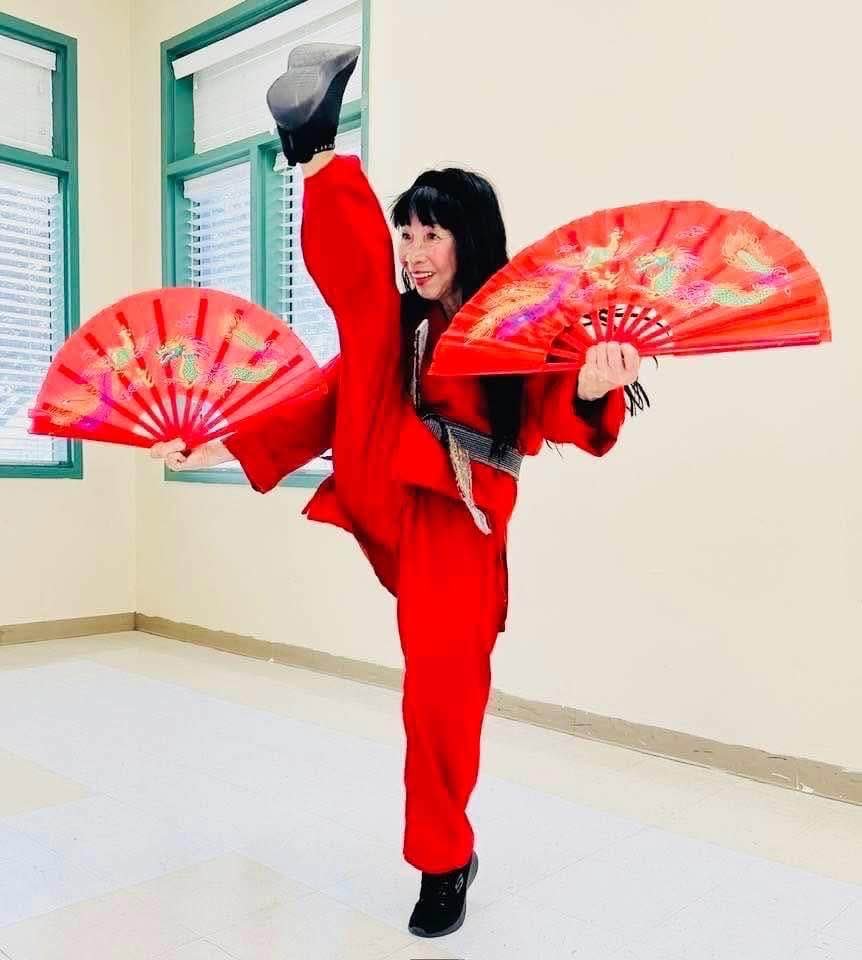
In this episode Jeremy chats with Master Jenny Pless about her training, philosophy of teaching and supporting veterans.
Master Jenny Pless - Episode 1062
SUMMARY
In this engaging conversation, Jeremy Lesniak interviews Master Jenny Pless, a seasoned martial artist and instructor, who shares her journey from starting martial arts in Malaysia to teaching in the United States. Master Pless discusses her philosophy on teaching, the importance of discipline, and the challenges of working with children and seniors.
She emphasizes the life lessons learned through martial arts, the significance of competition, and her commitment to community service, particularly in supporting veterans. The conversation highlights the transformative power of martial arts in personal development and community building.
TAKEAWAYS
Martial arts is more than just physical training; it's a way of life.
Teaching children requires a balance of discipline and fun.
The journey of martial arts is ongoing, even after achieving black belt status.
Community service is an integral part of being a martial artist.
Competition in martial arts helps build character and resilience.
Martial arts can be adapted for all ages, including seniors.
Encouragement and support are crucial for children's development in martial arts.
Discipline in martial arts translates to discipline in life.
Martial arts training fosters self-confidence and personal growth.
The impact of martial arts extends beyond the dojo into the community.
CHAPTERS
00:00 Introduction and Setting the Stage
02:11 Early Martial Arts Journey
04:53 Cultural Impact of Bruce Lee
07:30 Transition to America and Martial Arts Resurgence
10:05 Teaching Philosophy and Community Impact
15:37 Discipline and Engagement in Kids' Classes
22:52 The Challenge of Teaching Children
28:03 Transforming Fear into Confidence
31:51 The Role of Instructors in Shaping Lives
36:19 The True Meaning of a Black Belt
44:01 Life Lessons from Martial Arts
48:17 The Importance of Community and Support
After listening to the episode, it would be exciting for us to know your thoughts about it.
✅Subscribe to whistlekick Martial Arts Radio on the following platforms:
🎧Apple Podcasts: https://apple.co/3mVnZmf
🎧Spotify: https://spoti.fi/3yHVdHQ
✅You can find whistlekick on all social media platforms using the handle @whistlekick or visit our website at https://www.whistlekick.com or https://www.whistlekickmartialartsradio.com
Show Transcript
Jeremy Lesniak (02:57.221)
Those are real fish in your fish tank.
Jenny Pless (03:00.911)
now, there we are.
Jeremy Lesniak (03:02.373)
I thought you were using a background or something or they weren't real fish because they were from the time you came on to eight seconds ago. I don't think that they moved. And so at first I was like, fish. We haven't had fish in the background for a while, but now they're moving and I'm a little embarrassed that I couldn't tell they were real fish.
Jenny Pless (03:19.118)
Yeah.
Jenny Pless (03:25.196)
Yeah, I have a fish tank behind me. also my plans and everything. Yes sir. Yes sir. Yes. Yeah. Yeah.
Jeremy Lesniak (03:30.629)
Those are big fish. Those are good. I used to have a fish tank. Fish are a lot of fun. They're a lot of work. They're way more work than people think.
Jeremy Lesniak (03:40.838)
Not here to talk about fish. would probably be, at least my part of a fish conversation would be very short. I can talk about eating fish and that's really about as far as I can go. We're here, we're here to talk about martial arts. So let's, what's your earliest memory of anything martial arts related?
Jenny Pless (03:49.577)
Eat him.
Jenny Pless (03:54.584)
Yeah, another food.
Jenny Pless (04:02.606)
I started martial arts in 1974 in Malaysia where I was born like Bintanggol Sarawak Malaysia. So I remember the first class I did is actually from a Taekwondo master there. So I didn't do a lot there or they made me do extensive.
So I thought, that's very easy. But then next morning, I couldn't get out of my bed because my leg is so in pain from sitting like horse stance, forward stance and all that. So I remember that part. Yes, yes.
Jeremy Lesniak (04:53.551)
Wow. You were a kid? You said you were a kid.
Jenny Pless (04:57.358)
Maybe 17? Yeah, probably teenage years.
Jeremy Lesniak (05:00.621)
Okay. What made you want to start Taekwondo?
Jenny Pless (05:07.033)
Um, actually I watched like Boosleys and all them movies and then my uncle, my uncle is, he was a martial artist too and he always talked to me about how he can do this weapon and do that other weapons. So I said, wow, that is so cool. I hope that one day I get to do some of those weapons too, you know, so.
I think they inspire me to do martial arts.
Jeremy Lesniak (05:43.215)
You said you started in 74 and you talked about Bruce Lee. Now, I wasn't alive in 74 and I've only ever lived in the U.S. But from what I've read, from what I understand,
Jenny Pless (05:45.538)
Yeah.
Jenny Pless (05:53.699)
Yes.
Jeremy Lesniak (05:59.044)
The fact that Bruce Lee had become famous in the United States was a really big deal in Asia. As big as he was in the US, as big as he still is, he was an even bigger deal in Asia. Do you remember that part of it?
Jenny Pless (06:04.589)
exactly, exactly.
Jenny Pless (06:15.406)
Oh yeah, mean everybody say, you know, all the people say, oh, a Bruce Lee movie. So, oh, Bruce Lee this, Bruce Lee that. And say, wow, you know, he's really a very, a very famous in Malaysia and Singapore and South East Asia too, you know. Yeah, yeah. So, everybody looking, yeah.
Jeremy Lesniak (06:42.245)
So you see some Bruce Lee movies, you're seeing weapons stuff, you're family involved, and you start training in that first class, you can't walk well the next day, and you went back?
Jenny Pless (06:49.29)
Yes.
Jenny Pless (06:59.392)
Excuse me,
Jeremy Lesniak (07:00.613)
You went back? did more?
Jenny Pless (07:03.92)
yes, and then I actually moved to another town called, the name is Miri, Sarawak, Malaysia. And I start working there. And I actually go look for martial arts program, but you know, back then we don't have school everywhere, like karate, taekwondo, kung fu.
You see it everywhere. Back then, we meet outdoors, on the rooftop to train. No matter how hot it is, we don't have shoes, we train on the concrete, we sweat, whatever, you know, we sweat and sometimes we change location because we cannot train out there, it was raining, so...
We train in the warehouse somewhere, wherever we can get. So every place is our dojo. Like again, in the old days, that's how we train. So that's where I start my martial arts. Yes. And the master that trained me, his name is Bruce Wong, and he was my taekwondo master at that time. Yes.
Jeremy Lesniak (08:31.341)
And how long did you train with him?
Jenny Pless (08:34.422)
training for a few years and then at you know back then we don't have like okay you will get your belt in two months you will get your belt in three months or maybe you'll make your black belt in three years that's not not that all we do is training how much do you put in your training you know
It is not, the belt is actually not important actually. And I don't feel like, yeah, I train because I want to get above us at that time because I want to feel good about myself. I want to feel confidence. I want to be able to protect myself if I have to because I'm a woman and they think like,
choose the one that let go pick on her but that's the reason I train too. It's mainly for my for my body mind and spirit. It's really helped me get through all my advisory and my daily fights about myself you know so that that's the main thing for martial arts. Yes.
Jeremy Lesniak (09:56.432)
So you trained Taekwondo for a few years and then what? What happened next?
Jenny Pless (10:01.422)
And after that, I moved to Houston, Texas here. I came to America 1980.
So in 1980 I came to America. I didn't know anything about America at all. it hit Houston, exactly. I don't know why Houston. I don't move around a lot. 1980, it came to Houston and I still stay in Houston right now. It's been 40 some years I have been in Houston.
Jeremy Lesniak (10:24.025)
Why Houston? Why, why, why Houston?
Jenny Pless (10:44.27)
Yes. So I got here, I tried to settle down, went to school and get a part-time job and try to restart my life here, you know, and then people always say like,
chase American dream you know I said whoa that is that is really cool you know but after a while I just think like hey there is no American dream you have to chase your own dream you know it's not like oh okay people say oh America so cool and this and that but but that's not how you work you have to really
know what you want and you go for it. So I try to settle down, school, get myself a place to stay, have a part-time job. And then at that time, the martial art is out of the picture because I got to survive, to be able to survive here in a strange country. So...
So it take me a while to get back, you I got married and I have couple kids, you know, and I train here and there. It's not for the belt, it's for my body. So, no, I went to some school and train, you know, like because of my busy schedule, I train here and there a little bit for many years. And then finally I start really,
Jeremy Lesniak (12:14.501)
Training by yourself.
Jeremy Lesniak (12:18.818)
Okay.
Jenny Pless (12:30.254)
series training again 2000 at 2000 so that is When I train with Taekwondo again with master Victor Duk and master Ho Pan so I was there for a few years training WTF Taekwondo at the same time I held teaching as well
So after a few years, I actually took a program from City of Meadows Place. That is where I stay right now. And I still teaching at City of Meadows Place. I have been teaching there for 20 some years. And I have taught thousands and thousands of children at the City of Meadows Place and the adults.
whoever they join my program. You know, my mission is to help the children to get on the right path. It's not about money because there's not much money in the community center. You do your service and you say, hey, look, I'm here. Do you want to do martial arts? do you care want to learn martial arts with me and get discipline?
I'm here for you with very not expensive price, you know? So I was able to serve there for more than 25 years in CDO Merrell's place.
Jeremy Lesniak (14:11.333)
What made you want to teach?
Jenny Pless (14:14.648)
Well, make it, yeah. Well, yeah. Well, it's kind of, I can't explain this. When I train with Master Victor Dirk and I say, yeah. Well, if I make it to black belt, then I'll be good enough. You know, I tell myself I'll be good enough, you know, but then when I got that black belt, it was just like, wow.
Jeremy Lesniak (14:16.072)
Why teaching?
Jenny Pless (14:45.708)
I don't know anything. I have so much to learn. And this is what this black belt is. You have to move forward. That's a lot of things that you don't know. Because a lot of people think, I'm a black belt now, I know a lot of things, and I can teach, and I can do this. Believe me, that's not that easy.
Jeremy Lesniak (14:49.401)
You
Jenny Pless (15:15.052)
When I first teach, they gave me a few kids, right? That's how they're gonna start you teaching. They give you a few kids and your heart is like, mm, your heart is like, jumping up and all that. What I'm gonna do with all these kids, you know? And you line them up and you are watching them doing their stuff and you didn't know what they do.
Jeremy Lesniak (15:26.565)
Hmm.
Jenny Pless (15:43.148)
Because you don't know like, did I do the right kick or do the right punch? Because you were nervous. You I was very nervous. So over the years, so I got better. I got better in teaching. So I asked one of the grandmasters, like, say, hey, grandmaster, can you tell me?
how you can see like 50 kids in one gym? Like how do you know they messed up? And he say, when time comes, you'll see. You know, that's why he told me. You know, he didn't say that like, you have to teach a lot and this and that. So he say, you will see them one day. So I took a lot of program as a black belt.
I take Harmony school in Houston. They are school everywhere. I teach after school program, they have like 50 kids in the class, 50. So I teach Montessori school. I teach eight of them. Those are the children that's three years old. How do you control them?
You have to know. That's why I'm getting better with the kids because I teach a lot of students. And over the years, I keep teaching and I look up to the gym and I see all those kids. I know exactly who messed up and who's messing around. I, the grandmaster advisors, whatever,
came back to me I said, wow, I see it now. It's all through the teaching and concentrate on watching them, you finally get it, you know. So I have been teaching since that time to now. I have, I served city of Sugar Land also here in Houston for the last 15 years.
Jenny Pless (18:09.358)
and I teach at Eldridge Park and Recreation Center. So not a lot of people make through that program, but I was very thankful that I have been serving city of Sugarland for the last 15 years with the martial arts for children, mainly for the children. people always ask like, why do you teach children?
Jeremy Lesniak (18:32.005)
Hmm.
Jenny Pless (18:39.618)
I said, well, children is the future leader. You have to start them young. And like with today's new world, know, people are, the kids are having other interests, you know, they play too much on the computers and this and that, but we need to get a lot of time for them to come and train martial arts because it help them to focus, to get discipline.
Jeremy Lesniak (18:43.449)
Mm-hmm.
Jeremy Lesniak (19:02.65)
Hmm.
Jenny Pless (19:08.238)
Because I'm heavy on discipline. They asked me, how can you teach a lot of students? I said, the first thing you have to teach children is you have to be able to control them first.
Jeremy Lesniak (19:27.161)
Thank
Jenny Pless (19:29.8)
and you have to discipline them, then you can start teaching. Say, how do you teach them when they're out of control? There is no way. I remember one time, there is another master that is even higher than me. He is coming to help me with my problem. And I was late and I told him, well, the main thing is to get them.
in control till I get there. That's 50 students in one class, an hour across.
So when I got there, you know what happened. Some kid is on the tables.
I was like, what had happened? He said, well, that's too many. I cannot control them. So I say, have to learn to make sure you can control no matter how many kids. 50 kids, 100 kids, if you can control them, you have no problem.
Jeremy Lesniak (20:46.585)
I've always felt that you have to believe that the kids will listen to you, that they will follow your instructions, that if you don't believe, they can tell. And before I step on the floor with kids, I make sure that I clear my mind and I believe. And if there's doubt, I don't go out until I find a way to get rid of that doubt because I've been in situations, certainly not with a hundred kids, but with dozens of kids and all it takes is one.
Jenny Pless (20:51.182)
You
Jenny Pless (20:56.13)
Yeah, exactly.
Jeremy Lesniak (21:14.403)
And if everybody watches that one, you're in trouble.
Jenny Pless (21:18.004)
Exactly. Like I am like two-faced. Like before the class, I will kind of play with them, joke with them and let them have a fun time. You know, usually my class doesn't start, let's say five to six. I do not start my class at five, like exactly five. We had to the class. I give them a few minutes time.
I put all the kids out there, go play. You have five minutes of time to play. So for watching them how to play, you can learn from the kid what happened to the kid. During the pandemic, I have some kids, when they return, I have some kids, they just staying at the window and look out. They lost their connection with other people.
and he's very sad and then had that face mask on.
and they are behind it. So I told my, I told the parents, I say, I have a lot of work to do. I need to bring the children back to normal again, because it's nothing to do with you. It's a lot to do with the pandemic, the stay home, you know, no socializing and the loss of skill, because socializing is skill.
If I see one kid standing over there by themselves not doing anything, I start worrying about that. want kids supposed to be play, know, interact with each other and just play, have fun time, be happy, jumping around, which is kid. But if I see a kid that's not playing, I start very worried. So that's how I put them there.
Jenny Pless (23:21.016)
few minutes and I can learn from them that what I need to do for them. Yes.
Jeremy Lesniak (23:30.575)
Different instructors have different approaches for how they run a kids class. I think you didn't quite say this, but I think I'm hearing you say that go play. They start with play and it makes me wonder is your philosophy for kids class maybe a little more disciplined, a little more strict?
Jenny Pless (23:33.942)
Yes, exactly.
Jenny Pless (23:41.326)
You
Jenny Pless (23:55.79)
My class starts with that, but then when the class starts, then everybody starts training. And discipline kicks in. You have to discipline the children. And to make sure that they train, they do what they were told to do, because the parents bring them there to train martial arts, you know. You don't say, hey, let's play.
Play is only a little work. And then you need to start teaching them how to punch, how to kick, how to defend themselves, and all that stuff. It's not just play, because I know that a lot of instructors have different skills to teach the children, but this is how I teach my children. Disciplines play an important part of the teaching as well, yes. And I even tell the
parents that if you kid draw my cross and they go back and say that I am kind of mean to them or something and you understand because
I am the mother day when I start teaching you you bring your kid to me and I become the mother for an hour or two so I hope you understand that and all the parents say yeah do whatever you need to do you know you know because each each kid is different some kid you know they have you know more active some kid you know they they don't want to be there because
the parent ask them to be there. But you need to make them feel like, okay, this is fun, and we're gonna do this, and you're gonna learn, you know, stuff, and it's good for your body, make you focus, and all that stuff. Yeah, so some children will say that to the parent, and the parent will come to me and verify that. I say, yes, I already told you, I will be disciplining the children.
Jenny Pless (26:11.03)
and say, okay, that's good. Yes. Yeah. I said, you pay me to discipline your kids. So that's what it is. Yeah. Yes.
Jeremy Lesniak (26:24.197)
An instructor is really challenging becoming an instructor of children. I think is even more challenging because adults If adults don't want to be there, they're not there You can it's it's pretty straightforward that if an adult is in class They're excited to train kids aren't always excited to train and they've got other Stuff going on like the fact that sometimes they don't know how to use their bodies and that can be really challenging You know as an instructor
Jenny Pless (26:31.021)
Yes,
Jenny Pless (26:50.158)
Yes, especially children. I have one boy that came to me when he was seven years old. So he was so scared. He sat on a chair with the mother and he refused to train. The first class, he refused to train. So I say to the mother, say, okay, let him watch for this class, okay?
Jeremy Lesniak (27:00.153)
Mm-hmm.
Jenny Pless (27:19.148)
let him watch. So he sit there and watch over across. So the second day he came back, he do the same thing, sit there with the mother. I take the mother to the side, I say, look.
Can I just have your child boy for one hour? If I have problem, I'll call you. I'll call you, okay? So the mother left and I go to Max and Max, let's come. It's gonna be fun for you, I know, you know? And everybody have fun here, let's go join. So he went and then he had the best cross for that day and he was so happy. And he came back.
and back and back and he is 17 years old now and he became one of my instructor. So that's how you can make a kid change their mind because children are scared sometimes. You just have to encourage them to do it and they will have a fun time.
It's not like, go do it or you will do push-up and this and that. But I always start the kid with very soft language. Don't worry, we'll take care of you. You know, at least if he's crying, then I say, you need to stop crying because if you cry, you cannot see anybody. So, crying. So Max, Max had come a long way. Yeah.
He had trained like almost 11 years. And this is the boy that I thought he would never start his martial arts. Yes.
Jeremy Lesniak (29:15.781)
Max's story isn't uncommon. I think anybody who teaches kids is seeing kids that they are terrified to get on the floor. And I'm glad to hear that you do the same thing that I do, which is, hey, maybe you shouldn't be here right now. Maybe you need to leave the kid alone so we can do our job.
Jenny Pless (29:24.087)
Exactly.
Jenny Pless (29:33.238)
Exactly. that's my teaching over the years. When the parents are around, the kid that just started, all they do is look whether the parent is there. So I tell all the parents, I say, okay, I have been in Sugar Land or Meadows Place for 20 some years. Don't worry. My background is all Czech.
every year. So do not worry about me. Drop your kit off. Make sure you drop them at the door. Do not drop them at the parking lot. Drop at the door. They come in, train, and you pick them up in one hour. And if you want to see them train after a month, you come back and you'll see the difference. And they will feel more comfortable to train instead of looking at you, you know.
Jeremy Lesniak (30:32.983)
It's so hard because whether the parent is paying attention and the kid sees that the kid is paying attention, the kid sees the parent paying attention and now they want their approval. So that doesn't work. Or the parent isn't paying attention and now the kid feels rejected. mean, there's no good way to do that. And I know some schools, and this seems to be growing in popularity, where the parent area to watch
Jenny Pless (30:37.717)
huh.
Exactly.
Jenny Pless (30:45.998)
So.
Jenny Pless (30:51.128)
and jump.
Jeremy Lesniak (31:02.411)
is separate and either they have one you they have that special glass that one way glass or even cameras so the kids can't see the parents.
Jenny Pless (31:09.506)
Yeah, they had grass grow all along, yeah. Because some parents, they drive quite some way. They want to sit down and probably, most of them now, they sit and just do their work on the phone, whatever they're doing, which is okay. I have no problem with that. But since I'm in the community center, I have no pressure for them to sit other than they can, I tell them like, hey, I know that,
You drop your kid off, you might want to hang around because it's late, that's part where you can walk and get your exercise too at the same time. you say, everybody's happy. You get your exercise done, your kid get your exercise done. So, so let's go both ways. Yeah. And I believe it. Yeah, I believe it. Yeah. Yeah. Because not that I just taught all these
Jeremy Lesniak (31:56.614)
You mentioned Max's, I'm sorry.
Jenny Pless (32:06.552)
here at the community center. I teach here at the Women's Forebend Shelter for many years. I'm a volunteer instructor there to help the children to feel better about themselves and get them a little activities to do, know, like kicking and punching and maybe, you know, all those kids are
they really need it because they went through such a hard time. The mom is in there for all kinds of reasons and they brought the kid with them. So that's when I went in like summer, summertime, or just regular time, one day or two days a week just to work with them, you know.
It was very sad to see how the kids experienced all those rough times with their mom too. So I try to make them feel better. So that's one of my missions too.
Jeremy Lesniak (33:28.675)
Max. You said Max was now an instructor. How many, if you have 50 kids on the floor, how many assistant instructors do you have?
Jenny Pless (33:39.31)
I don't have 50 in the cross right now since it's community center. I break it out in two, three different crosses. So I have probably 20, 15 or so. But I have like three or four black belt that I train. That is two or three of them that I trained then when they were three. And they are like 15 now. So,
Two of them actually come from Matasori school. Those three years old kids. Can you believe me or not? I just can't believe they still stay with me. So they, I teach, I kind of give them a little opportunity to feel good about themselves. Okay, now you can help teaching, the paddle. It's nothing serious, just something, holding the paddle there.
Jeremy Lesniak (34:16.805)
That's great. That's great.
Jenny Pless (34:37.218)
they feel good about it, you know? Because I think it's important when they have trained like 10 years or 12 years or whatever, you need to say, hey, you are the leader. You're one of the leader. Go for it, you know? Yeah. So that's what I do for the children,
Jeremy Lesniak (34:58.309)
It's great. I think it's so important that people get opportunities to transition from student to instructor. There are so many schools where you're a student and eventually one day you go off on your own and now you're an instructor and you didn't have any transition time and it doesn't always go well.
Jenny Pless (35:23.182)
Yeah, I know it feels good that you, I had teached so many years around Sugarland and Houston area. So if I go to eat lunch or dinner, I always met somebody in my student. I said, they're going to student again. Yeah, so they're happy to see me. Some of them had grown up like getting married, had kids and stuff like that. And they're doing well, they have a good job. I always tell my student.
I'm here, I make sure you make it to high school, college, and I make sure you have a good job and you are not under the bridge asking for food. I said, I will break my heart and I'll cry my heart out when I see that. And they understand that. So they say, yes, sir, yes, ma'am, yes, ma'am. So yeah, so it's my mission for...
helping the children to get on the right path. That is more to the martial arts. I have people come and ask me like, hey, let's open a school together. But I think to myself, when you have opened a school, you start worrying about how many students you're gonna get in and cover the rent and all that stuff. I'm different.
I don't want to tie money with my passion, like martial arts. That's me. So I think that made me different. Yeah. I love teaching. So that's why I choose City of Sugar Land and City of Metal Praise. I do, I teach, and I came home, I sleep good, and go back and teach again. You know? And then I also...
not just the children. I am teaching seniors as well in City of Sugar Land Senior Center for many years. I, well, the senior and the children, it's almost the same. You you have to be careful, you have to come up with a program that's safe for them. So I've been teaching those seniors since now, I'm still there.
Jenny Pless (37:49.902)
They have fun time. They always look for me to go back and teach them basic punch, block, really basic self-defense. I say the more simple self-defense the better because when you are attacked, you do not say, oh, Master Jenny taught me like, put your leg back and then...
turn around and throw somebody down, that doesn't work. The basic self defense like one punch, chop, whatever grab is the best. I say, know, overthink. That is one of your best thing, but all the seniors can do that. I have seniors that's 50s, 60s, 70s, 80s, all in my cross.
Jeremy Lesniak (38:19.364)
Yeah.
Jeremy Lesniak (38:30.255)
I agree.
Simple stuff.
Jenny Pless (38:44.256)
And I say, I'm here to teach you so that you can have better lifestyle. know, martial arts help you to get stronger, feel better. If you're alone at home, come and train. You know, that's what Sugar Land Cine program is because some of their partner already passed away. They're alone at home. So it's not good lifestyle for them. Yeah, so I create some...
martial art that's safe for them. I also teach them the Chinese fang because they will help them to rotate and they have auto riders and all kind of joint pain. I say it will help you. At the same time fang is beautiful. Fang is a weapon. If it's too hard you can do that and it help you.
you feel good and then all those sounds that really kind of like help you to relax as well. So I teach them fan and non-chocolate. boy, we are learning non-chocolate.
Jeremy Lesniak (39:56.348)
Each nunchucks to seniors.
Jenny Pless (39:58.574)
Nancha, but we had this the the the one get it from tiger craw that had this rubber thing so I They twist around like this. So it is actually help them with their arms and stuff Yeah, so I teach them really basic move and most of them can master that very well Yeah, I teach that Nancha not because for fighting or anything. It just help them with the body
Jeremy Lesniak (40:24.825)
Yeah, yeah, for joint mobility, that makes sense. You said you have kids. Did they train or do they train?
Jenny Pless (40:33.474)
Yeah, my two kids trained until they went to high school. So they had bank and all kind of stuff, and then they start training. So, and my husband too, he got a black belt too with me also. But then not every black belt will go forward after they got the black belt. So that's the sad part about today's world.
everybody like okay here i am i want to own a black belt or i want to buy a black belt whatever they choose you know so after they have the black belt so they quit but they didn't know that
Earning the black belt is like...
the beginning of martial arts. You have to be a black belt. You don't want to have a black belt. You want to be a black belt in martial arts. You want to be a black belt in life. You want to be a black belt whatever you do in your life. That is the main part of black belt. A black belt can be applied to any part of your life.
Let's say I'm doing, let's say I'm doing a lot of yard work. I plant a lot of fruit, you can see behind me. I master it. I use the same technique of martial arts. You have to sweat, you have to put dedication in, you just have to put time in it, time in it to make your garden grow.
Jenny Pless (42:24.504)
the same technique that you apply to everything that you do. know, just like, let's say you're cooking. People say, you have kung fu. Kung fu means you have the skill because you put a lot of time in it to learn how to cook and this. So that's why the kung fu, it become like, okay, you have kung fu in this, you have kung fu in that.
because I trained Kung Fu for 15 years as well. I trained Kung Fu for 15 years and I do all kinds of weapons. My favorite weapon is the guandao. So I still compete my weapons in the tournaments. It's not because I want to the medals and trophy because I had tons of them.
I want to be out there to inspire people like, hey, this woman is not old, she can still carry the 10 pound weapons, you know? Yeah. And at the same time, I think to compete in the ring is to compete with yourself. Let's say you have 10 people compete with you. You have to be able to say, look.
I am here. I can do it. It's your mind that you are out there to compete yourself. If you say, I'm going to compete with 10 people, it's not going to work. You you have to be able to conquer yourself, your fears, you know, like, like nervous, you know, and then, then last weekend I went to a tournament. was judges there.
they are like five masters have the beautiful, beautiful weapon for. It was so cool. But at the end, what happened? They lost the weapon. They throw the weapon and they lose it. Five of them. I was there, my goodness, it was, it was so beautifully done. But
Jenny Pless (44:47.906)
the last minute they lost their turn and they lost a weapon. There's one master come to me I go I went to him I think he have he have higher high he is a higher up masters you know I say you know what sir your form was so beautifully done beautiful beautiful you will be the first place you know but he did it twice
He did it one time in a different weapon and another, but the same spot. I say, you know what? That spot that you dropped the weapon, you had to do it 100 times or 200 times to where you don't think about, oh, I'm going to drop that weapon. So that's what happened. Yeah. So that's what I mean to go out there and compete is to compete with yourself.
Jeremy Lesniak (45:34.658)
Mm-hmm.
Jeremy Lesniak (45:46.317)
Yeah. Yeah, I, I'm a big fan of competition. There's a, there's a lot of, there's a lot of good stuff that comes from it. And I think what you're saying is probably my favorite part. The fact that it forces you to compete with yourself, even if it's a, a combat division, even if you're sparring someone else, you're still competing with yourself. You still have to show up. You still have to step in. You still have to be mentally prepared to do that. If you, and that's all, that's all you.
Jenny Pless (45:46.947)
You have.
Jenny Pless (46:15.278)
Yeah, that's all. I went to a lot of tournaments over the years. I used to teach a whole lot. But now I switch it to going out and support the martial art tournament. It's not because I want to go out and compete. I'm the judges. I'm the judging too out there, judging. And I also out there to help.
mainly children. You know the children? Let's say the Kung Fu tournament and karate tournament. You can place 10 people in there and that's only three people press, right? And you know it, yeah. For the Taekwondo tournament, you know it, probably everybody get a medal, first, second, third, and third, yes? But this is what I tell my student, okay? That's two things.
If you wanna go out there, you won't have a good time.
First place, second place, third place, your choice. But if you want to be best of the best, you want the first place, train. Train it to where you separate from others, like, okay, their kid is better than a lot of other kids. You know, I say that's your choice. I'm your teacher. I want you to have a good time. Go out there and look, and don't come to me and say, I'm better than their kid.
and I supposed to get first place, I said, no, no, no, you are not coming to me at all because there's some parent coming to me over the years and I tell them, no, you have to let this kid learn out there. That's part of the learning is not getting metal. Metal is just a metal, painted with gold, silver and bronze. That's it. It's here. So over the years, I held a lot of
Jenny Pless (48:20.492)
children out there. I'm one of the judges for 10 years in TKO and AOK system in Texas.
I see kids crying and this is the first thing I do after they finish. Sheheng bow correctly. This is how we teach the kids. Me and Grandma Sudaro, we are very, very, we are very carefully watching every kid to see how they bow and how they sheheng with the judges. That's part of the learning. You know, it's not just walk away. You know, we make sure they do that. And I go to the kid that...
I said, why are you crying? And she, they still crying. I didn't press. I got third place. I said, honey, look, you are out here. You already the champion. You.
step in the ring and compete and you already a champion because there is no crying in martial arts and there's no crying in life like us Life is so tough every day we fight we have problems advisory but we are not crying we move forward same as martial arts we move forward
If you get third place, they say, okay, I got a place, but I want to train harder and I'm not crying anymore. So the kid, okay, dried a tear and left. A few months later, I saw the kid again. She rang to me, a six-year-old kid. Masujani, look, I'm not crying anymore. said, I feel, that's the best feeling I...
Jenny Pless (50:17.4)
go to tournament, I see some kid and come to me and say, no, I'm not crying anymore. First place, second place, third place, I'm not crying anymore. I help many kids with this problem, but I hope that that's a lot more people out there can help the children to help them to understand what martial arts tournament is because...
He is not out there to get like first place. Oh, my kid got first place, let him post that. Oh, my kid got second place, post that. It's not that. I'm done with that. I'm done with that. I've learned a lot over the years. I'm training, teaching and stuff. I think that people need to understand it is not what you get. Like some of the parents, I saw parents, the kid did not press.
Out of the ring, they start screaming at the children. So I had to pull a few parents to the side in a polite way. said, ma'am, I just want to help you. Your kid is in martial arts and you're competing. She's competing out here. And I would like you to support your children no matter what.
First place, second place, third place, no place. Your kid is already a champion. So if you are gonna do this and screaming at them, what happen to her? She is gonna quit on you. She's gonna not just quitting on martial art. She's gonna quit on life as well. just know that that's the two thing I tell you because...
Jeremy Lesniak (52:02.501)
See you.
Jenny Pless (52:08.418)
When they quit, they sort of start to cry because their parents are going in there. They quit. Life.
somebody scream at them, they couldn't do it, quit. You cannot do that to the children.
Yes, I just hope that this video, everybody will watch this and change the way they think about children's martial arts and support them all the time, no matter what. No matter what. Whether they're messed up, they're doing good, cheer for them. That's why I think it's really, really important.
Jeremy Lesniak (52:52.133)
I agree.
Jenny Pless (52:56.994)
I told my student, said, what are you do good? You're doing okay? You messed up? I said the way you are. I said, this is life. When you get out of martial art, when you grow up, or you get into the society, there's a lot of things that will happen. And I want you to know.
that everything is okay. You learn from martial art. That's what happened when martial art is the real meaning is martial art is a way of life. It's the way we live our lives.
I want everybody to understand this. There's not everybody understand this nowadays. Yes, yes. So that's my mission for the children. Martial arts and I will continue. A lot of people always ask me like, hey, how old are you? And how are you? Because women always keep their age, right? Like, hey, I look young. I look beautiful. You know, doesn't
Jeremy Lesniak (53:46.713)
with you.
Jeremy Lesniak (53:51.095)
They don't. Most of our audience does, but...
Jeremy Lesniak (53:59.386)
great.
Jenny Pless (54:16.523)
because I trained martial arts and I'm strong and nobody knows how old I am. Yeah but but so people will not come and ask me anymore like hey how old are you Master Jenny? you're 50? you're 60? Are you more like a kid? You know how old are you? But to share this with me it's not easy to share with you.
Jeremy Lesniak (54:22.169)
Great. Yeah.
Jenny Pless (54:44.398)
with the rest of people, IN71.
Jenny Pless (54:53.677)
Yum.
Jeremy Lesniak (54:55.819)
And I've got to guess, I've got to imagine that all the time you spend with kids helps keep you young. The way that kids act helps keep us young. The oldest people I know are the people who don't know how to play. They don't know how to be child, be kid-like. Childish, but not in a bad way. They think everything has to be serious and rigid and...
Jenny Pless (54:56.673)
And that's it for this week.
Jenny Pless (55:04.226)
Yeah, exactly!
Jenny Pless (55:23.692)
Yeah, we can learn a lot from children. You look at the children that play, and you look at children how they interact with each other. And to everybody out there, you learn a lot from children. Not just in martial arts, you watch the kid, you learn a lot from them. Yeah, so that's why when I teach the senior, 50, 60, 70, 80.
I teach them at the end of the class, maybe five minutes, I give them the pool noodles.
I use that for doing my shawarma too. You can use a pull noodle doing low block, middle block, high block and do whatever fryer you're doing. So I say to all of them, go, pray like a kid.
So you hear them screaming like a kid and I just have a lot of fun. It's just so beautiful to see them playing like little children. Yeah, so it's important. It's important to be a kid. I know that we're not a kid anymore, but we have to, you know, because life is not easy for you or for me or a lot of people. Everybody fighting.
stuff every day and they get depressed they don't know where to go and stuff like that you know but like what I say be a kid sometime you'll feel better you know don't worry about stuff I think I think things will take care of itself if your mind is strong and you try to be happy and positive
Jenny Pless (57:19.342)
That is where we learn from martial art as well. know, we need to be tough. We need to get back up when we go down. Fall down seven, get up eight, eight times. You're okay. Be a warrior, be a hero, be a champion. That's all we can do. might.
Jeremy Lesniak (57:41.389)
If people want to get a hold of you, website or social media, how do they find you?
Jenny Pless (57:47.736)
They can only find me like email, Facebook, or phone because I don't give out phone only to to y'all to somebody that I know. Yeah, I don't advertise a lot. I am not in Instagram. I'm not in anywhere else because I don't have time for that. So that Facebook is my only place that people can contact me because I'm on there for martial art purposes too. Yeah.
I'm one of the referee instructors for the Taekwondo, Houston Taekwondo Association for many years. And then UMA Taekwondo, I am the referee director, which means I had to put like 30 or 40 judges together ahead of time before this tournament start. You know, each tournament is different. Some people, they just go without, you know, they just call like, we need...
judges from ring one, need judges in ring two. We don't do that. the taekwondo, we make sure all the judges is there, referee is there, dress up in white, tie, black pants, and ready to go. Yeah, yeah. I had done that for the last 15 years. So I learned a lot from that too, yeah. I did a lot.
Jeremy Lesniak (59:13.359)
can tell. It's clear you've done a lot and that's
Jenny Pless (59:14.924)
Yeah, I did a lot. And then one more thing I want to say, I did a lot for not just the martial arts only. I did a lot for veterans too. We all did a lot. So for many years at the memorial, in May, Memorial Day, we go out and put flag on each, you know.
Jeremy Lesniak (59:19.353)
Yeah, please.
Jenny Pless (59:43.552)
each veteran and thank you then for the service and wish them happy Memorial Day and then at Christmas time we put the wreath on on they you know where they are and and say Merry Christmas and thank you so much for the service you know and stuff like that and I took that's one of my requirements for my Black Belt students.
Everybody go out there, spend your time out there and put some flag down or wreath down and thank the veterans. And that way they know freedom isn't free.
Yeah, so that's what it is.