Episode 1064 - Sempai Leyn Burrows
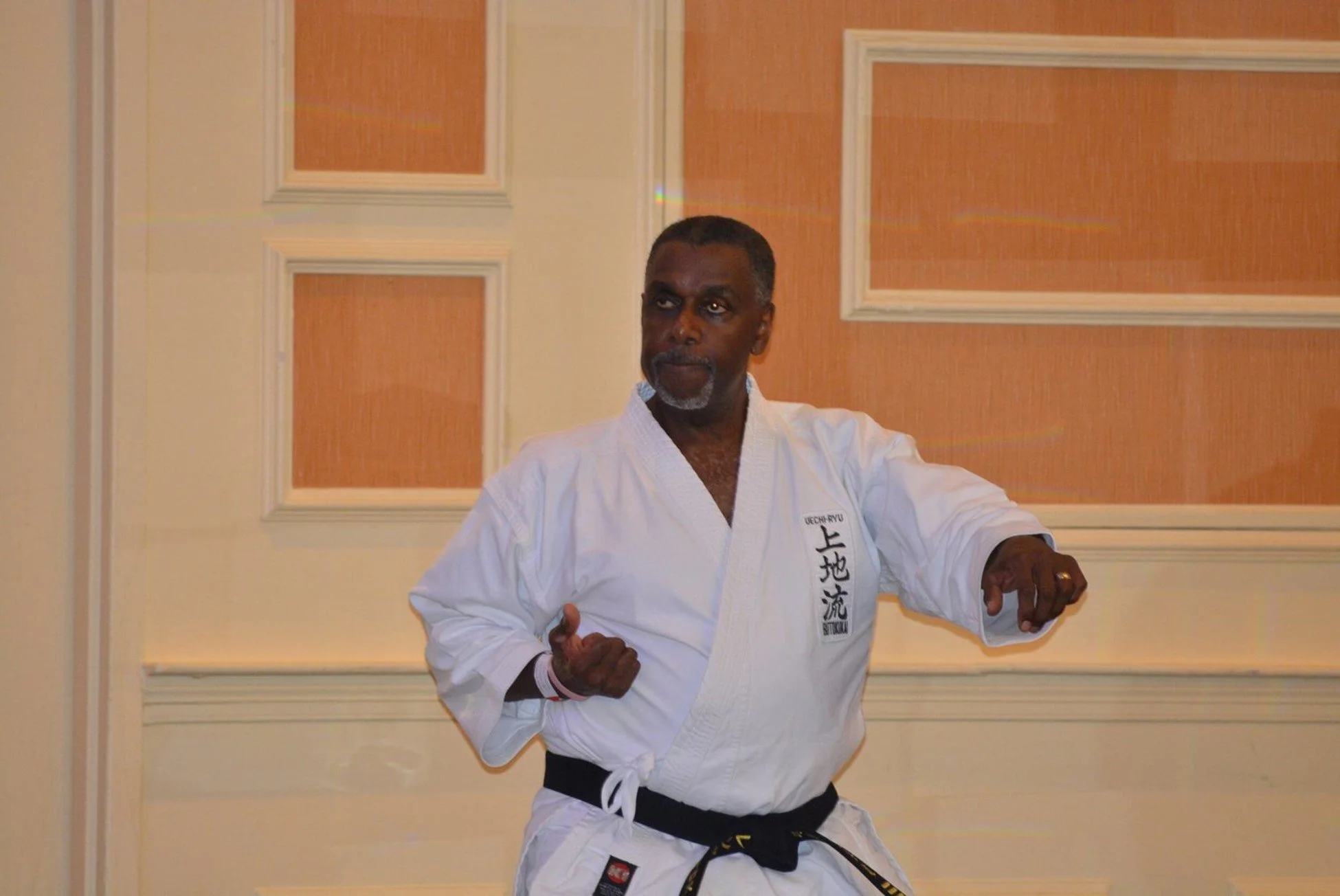
In this episode Jeremy chats with Sempai Leyn Burrows in person, at the 2025 Uechi Convention.
Sempai Leyn Burrows - Episode 1064
SUMMARY
In this conversation, Jeremy Lesniak sits down and chats with Sempai Leyn Burrows at the 2025 Uechi Convention. Listen in as Sempai Burrows explores the profound connections between martial arts, personal growth, and community.
He reflects on his life experiences, emphasizing the importance of empathy, understanding, and giving back. The discussion delves into the challenges of racial identity, the evolution of martial arts, and the impact of technology on human connection. Ultimately, Sempai Burrows advocates for a compassionate approach to leadership and the necessity of seeing others as human beings, fostering a sense of community and shared humanity.
TAKEAWAYS
Martial arts teach us about connecting with humanity.
Personal growth often comes through adversity and challenges.
Community and connection are vital for personal development.
Giving back is essential for a fulfilling life.
Racial identity can shape our experiences and perspectives.
Leadership in martial arts involves nurturing and supporting others.
Technology can hinder genuine human connection.
Flexibility and understanding are crucial in relationships.
The essence of martial arts is self-control and personal mastery.
Building bridges of empathy is key to overcoming differences.
CHAPTERS
00:00 Introduction
02:44 Martial Arts and Life Lessons
05:20 The Impact of Early Life Experiences
07:59 The Role of Giving Back
10:51 Flexibility and Acceptance in Life
13:44 Martial Arts Journey Begins
16:29 Cultural Reflections and Opportunities
19:30 The Importance of Communication
22:08 Teaching and Learning in Martial Arts
24:52 Navigating Relationships and Teamwork
29:00 Recognizing the Unsung Heroes
33:14 Navigating Racial Identity and Acceptance
36:22 The Internal Battle: Conquering Self
41:15 Building Bridges Through Empathy
43:45 The Necessity of Giving Back
49:35 Creating Sacred Spaces in Teaching
53:14 Valuing Human Connection Over Titles
This episode is sponsored by Kataaro. Please check out their site at Kataaro Custom Martial Arts Products - Kataaro. The month of October is Breast Cancer Awareness Month and Kataaro is donating 50% of profits from all breast cancer awareness products to breast cancer research!
And use the code WK10 to save 10% off your first order. And be sure to ask them about a wholesale account for school owners!
After listening to the episode, it would be exciting for us to know your thoughts about it.
✅Subscribe to whistlekick Martial Arts Radio on the following platforms:
🎧Apple Podcasts: https://apple.co/3mVnZmf
🎧Spotify: https://spoti.fi/3yHVdHQ
✅You can find whistlekick on all social media platforms using the handle @whistlekick or visit our website at https://www.whistlekick.com or https://www.whistlekickmartialartsradio.com
Show Transcript
Jeremy Lesniak (00:44.174)
Okay. Do you have any questions or? No, I guess I would think that maybe you pose a question so that and then it may be something that if you ask a question, it would trigger me to respond on or not. If I feel that there's something that's perking up, I'll respond, know, that sort of thing. That's cool. I feel like this is like a little bit of an interview. So you're asking me a few things, you know, get things going and then.
conversation. Yeah, because you know, kind of the fun part of what I get to do is I just kind of gently lay out these questions speech and they I see what you respond to. Yeah. And whatever and that's really the nature of conversation. Yeah, that's right. Yeah. Yeah. And contacts, you know, put it in some sort of contacts. Right. And you could say that that's kind of what we do in martial arts, Yeah. Well, that's what it is. You know, I'm a big proponent about on the floor and off the
bringing transitional values from what we've been practicing for almost half a century now, to working every day with people, meeting people, whether it's family, strangers, friends. are terms that you use often, I can tell, on the floor, off the floor. That's not something you just made up. no, yeah, that's a term, yeah. Because, yeah, I thought that after, if we were practicing more than
almost two thirds of our life sort of thing. How do we, it's not just about punching and kicking and being destructive. Having that confidence to how can I do that with my family, with my friends, and especially at work, in the neighborhood, when I'm driving, know, self-control, those sorts of things. That's when I think it really matters. And not that we will not make mistakes and be, you know, contrary to our values, but we're human.
But at least if I am mindful, I can adjust to that. So, well, maybe I can be a better, you know, better person. Not for the sake of being better, but to connect. I'm really big about seeing people for me as humans. And I find that if I'm upset about what you did or I did, it's easy to dehumanize. And then I realized that when I'm dehumanizing you or anybody else,
Jeremy Lesniak (03:09.344)
is something inside of me that's dehumanizing me and I don't want to be dehumanized. So whether it's mistakes or... It's such an easy response, isn't it? That someone takes some action that is contrary to our value system and we dismiss it. It is less than they are dehumanized. Where one of the things I've had a number of conversations
where I've offered this up to people, they don't like this. If you were born to the same parents, you would probably have the same beliefs, because that would be your genetics as well as your upbringing set up almost all of the things that you're going to experience in life. And they're doing the best thing, the best they can too, with what they were given just as the rest of us are. I believe a little short story that I lost my mother when I was very young, ended up in a
of somewhat of a foster home at seven and half until, you know, pretty much after that, after high school, sort of on my own. And one of the things that the matron that impacted my life from the age of eight to about 16, and then, you know, pretty much on my own after 17, 18, she talked about basic principles like don't let people define who you are. It made me habitual and do something that you could.
definitely call me accountable and maybe I'm trying my best and I can't overcome that right now. But that's not where I'm gonna land if I continue to try to improve. So I think the essence of she was talking about is that we as humans are holistic, but not just what we are, what we think, what relationship we have with our families and our friends.
all those things, the connections with family is not just your mother and father and your sister, but your aunts and uncles. And one the things that she tried to put together for us who were displaced, called displaced children, was that we all are brothers and sisters. Of course, there was a lot of frustration and anger within me during that time because my mother had died and there was no clarification. In other words, my siblings...
Jeremy Lesniak (05:31.936)
didn't have ways emotionally to explain what death was, for instance, things like that. And so there was a lot of turmoil inside of me during that period. However, after being in this environment for eight, nine years, I realized that you can disseminate with your brothers and sisters, people who you live with. And there was quite a few people, you know, during the week, at regular times, there was almost 30 kids.
were associated then on the summertime summer break it was also a place where child care would happen so people would drop their children off you know for the daycare and all of sudden it could bloom from 30 to 50 to 60 a couple of things came for me because that each of the people each of the person not just the staff and the matron and the cook and everybody else but each of the children had a different personality that became homonyms so some of us would like to
skip some of us do this, some of us do that. And it more about personalities. So I got an inkling about personalities and then that, people can change their mind. That's, you know, we've got a team. Yeah, I want to be on team. Let's do this. And then they don't show up and say, why? And you know, whatever you are. And so, um, the, word organic came up after that, that we are organic people and we have the right to say yes and no. And even after we commit to change our minds.
I'm not saying that's always, you know, like with go or it's convenient, but people have the right to decide for themselves what they want to do. And how do you work with that? And the karate in a way on the discipline, the values, camaraderie, respect, decency, know, uh, gratitude. I, I, I, reaching this rank and
even through my work life and meeting people, I realized how privileged I was even as a black man in America that I've had more opportunities than a lot of people. Not that I was looking for any favors, but maybe because I was always pretty positive, so people tap into that and so forth. But one of the touchstones has been the martial arts, having that martial arts training and riding training and having wonderful teachers.
Jeremy Lesniak (07:59.074)
that I've experienced my lifestyle, I'm at a point now where I'm retired and all I think about is giving back, giving back in everything I do, you know, whether it's here with Parajay or I mean different social groups or church groups or volunteer groups, it's all about giving, you know. People talk about giving in different ways and sometimes I hear people talk about it as a duty that...
Sometimes I hear, and I don't know that I've heard people use the word in this quite this way, but I'm gonna say blessing, right? And there's a bit of dichotomy there. What is giving back for you? Yeah, it actually is a sense of freedom. I think it's wrapped in gratitude. It's wrapped in giving and receiving. And even when you give and someone says, no, it's okay.
Now, I wasn't always, you know, these things sort of grown into, but initially those used to be sort of hard stops and being disappointed. So given is, I think it's connecting to the point that we started with, is humanity. So I'm huge about people are going to be different. People can perceive things differently. They're going to be people you know, people you love, and they have the right to change their minds all the time. I've been there for 53 years.
And every day I wake up, I don't have an idea what my wife is going to ask for because she can change her mind and she has the right to change her mind. it's, and people say, well, you know, and I realized that flexibility, compassion and understanding huge thing though is acceptance. think it's important to accept that you're sitting here except if we're videotaping, except that he's standing over there, sitting over there.
and then that becomes reality versus allowing my images, my mind and wishing things to be different than what they are. So even when things are crappy, it's okay. It's real. It's uncomfortable. It's annoying. It's frustrating, but it's real. It's loving, it's living. It's where the growth comes from. That's right. And sometimes I think I'm finding out sometimes in the disappointments.
Jeremy Lesniak (10:23.66)
there's a, you know, a rose-colored thing, there's something to learn. And some things you can, one, avoid learning, sometimes the hard ways that we're eased away, but it's all about Travis, about a lifespan of learning, doing, receiving, understanding, connecting. But I think the biggest thing is brown connecting and with through humanity eyes and ears. And...
it feels comfortable so when I when I give now it's it's unbelievable that I what I feel inside I feel a sense of peace and appreciation you know and and that's more than enough it's not about tangible so watch it's not about the money you know it's it's after all these years of training coming to my sensei's dojo and working with under-ranked students or other students I want to give
Be honest with you. When I was a younger kid, I thought about using up all parts of my body before I passed. And this is a little bit same type of thing.
if we're lucky, we can give everything back, if not more than we received during our lifetime. Sure. And that in itself, huge blessing. It doesn't matter. And then when we die, whatever we have is left behind anyway. So when you have some input on that, maybe you want to do that. You want to maybe share the wealth, share the understanding if you can by choice, not pushing on people, not
Lecturing them, not affronting them. It's trying to work with them and adjusting to, it's like a barometer, adjusting to the level of the person. So they're receiving something out of it each time. It could be there, could be there, it there. And that's the beauty of life. It's being flexible, not just like on the floor, someone's punching edge and blocking, but switching up with people. Some people feel high, some people resonate that this is the way, or some people say it's...
Jeremy Lesniak (12:35.436)
I have an experience and after the experience I'm going to be this way or I believe in Christ or whatever that is. The beauty of it is that you don't have to change your precision. You could just reflect on that person and have a little peek into their life that you normally wouldn't if you were just shut down the gates.
So if we go back and talking about the unfortunate passing of your mother early and you stepping into this environment, which.
Sounds like kind of gave you an accelerated education and how other people were because Just the sheer number of people you work Yeah, and I think the biggest thing was that in my family we grew up in the 50 I grew up in the 50 as a preteen sort of thing and I at 12 13, you know 60 So 61 I turned 13 I saw it had to be very observant because
Family members didn't tell you anything even at my mother's death. I remember at that seven and a half years going to the funeral She actually left to go to heaven babies. She actually had they thought she's having twins She had triplets and she died out on the third one because it was unexpected and this was in 1556 so anyway She she didn't come home next thing I know I get a suit and tie at the funeral where I'm watching her in a coffin
Nobody's explained to me what death is lying there. I go home thinking that she's going to come home. I'm waiting at the door. No one explained that, you what that she's not going to come. And, and similar thing, not that's drastic, but other members of the family didn't had different, you know, Mr. Burrows, which is my mother's husband, original first husband. We all were, you know, the first generation, the first four kids, my mother, 10 kids.
Jeremy Lesniak (14:36.302)
were through Mr. Barlow's, but the rest of us were at different paths and nobody knew who that was. And I didn't really meet Mr. Barlow because he was my siblings, you know, came early. I siblings that were 21, 19 years when I came along. They were much older. They were actually adults when I came along. In fact, we were, I was playing with my nieces and nephews who were one year older than me and I, and then
Also, some of them were two or three years younger. And I actually, kindergarten, first grade, I thought when I met you and said, here's your friends, and I would name my nieces and nephews, I thought everybody would have the nieces and nephews as their friends. And then it was an incident where all of them jumped on top of me and hold me down and say, uncle. the, and they made me say uncle.
to get up in other words. And I said, uncle was this old guy. And I remember that there's seven, six, seven, eight year old kids. I can't be an uncle. Uncle's a 30 year old, I'm over the age. So it was out of context and no discussion about that. So it was curious about, and it wasn't good or bad thing actually. It was the culture that they were in and what they were exposed to. Yeah. It sounds like it was a very clean slate. There was a lot of...
unsmoken, undiscussed, which can steer good or bad. And so I think now I have to pose the question of where in this timeline does martial arts start for you? Yeah, when it came here, it came here in America from Bermuda, I'm from Bermuda. Al Wharton was my first sensei. In fact, I started when Al wasn't even a black belt. He and I as friends, we went to school together in Bermuda Tech. We were school buddies. We traveled to America together.
travel to Canada together. So we've known each other from the time we were like 11 to 12 years old. So, know, long before we met pretty much in high school. And he started with George Madsen back in 69 and 70. And then on Saturdays, Al and I, Muhammad Ali was like, boxing was part of the thing. So I knew about boxing, even the...
Jeremy Lesniak (16:57.526)
training at the home on Saturdays being Boxing Day. there's many of the kids. So we knew a little bit about boxing. And then what would happen, Al started learning karate. And so I'm trying to kick at him. pardon me, I'm trying to punch at him. And he started using his feet. And he's throwing me off. said, well, so I said, I went down and looked at George's school, wonder what he's doing. Jimmy was his direct sensei. And I said, Matt, could you teach me some of that?
And the thing was that you're not supposed to teach until you were black belt. But because we were friends, he said, OK, simply because of you. And then he opened up his own school when he became black belt. And I was the first student. But I already started doing some of that stuff under wraps. then in 19, you know, when he became black belt, I was the first student anyway. But we were doing it even when he was like a green belt and brown belt. what I mean? So you're not you're not the first there. So what I'm hearing is is.
in your 20s. So you've got all this all this time of all this youthful development, all this opportunity to get steered in 1001 wrong ways.
But you didn't? Yeah, a couple of days. That's where the doors open up. was immigrating to Canada. OK, I was not. I was coming to America for vacation and then I was going to go on to Canada because actually back in 67, Alan and I and a few other friends went to Canada when they had the World's Fair, I think in 66, and they had men in his world after that. Remember, kept the provisions going because they take like five, six years to build these things for one year. So they said, you know, anyway, I went up there.
I was mesmerized by the Canadians. And in America, things were really bad because you had, honestly, the King died, you're 68 in Canada, and then riots and everything else. And actually, I came over to Syracuse for training because I was a junior mechanic with carrier air conditioning. And I remember coming over and sometimes I couldn't come because of riots coming out and stuff like that. So America was a dark place, especially for most people, especially for Blacks.
Jeremy Lesniak (19:10.702)
So when I came here on a plane ride, the president of the Unity Bank in Roxbury was sitting next to me like they were sitting next to me on a asking about what I'm going to do. said, I'm heading to Canada, because you know, things like that. So he said to me, even though things were really bad, almost similar to what it is now with the right race, he says, a young boy like yourself, young man like yourself, I was at least skilled, meaning a junior mechanic.
He said, you can come to America. You can go to school. You can work your way through it. It'd be an opportunity. Even though the things are really bad right now, there's going to be opportunities. So he says, why don't you go to Canada and tell them you're going to take an Ohioanist. Just give it a year. Come back to the States. I'll hook you up for a job. then that happened. And it's by chance that guy changed my life. Isn't that something? I've had some interesting conversations on airplanes.
I've met people I kept in touch with briefly. I don't think I've sat next to anyone who changed my life in that way. When you reflect back on that, it seem, I don't want to put words in your mouth, so I'll just kind of gesture you. Does it feel like it was intervention? Yeah, yeah, it was intervention. But I've always been a friendly guy. I'm also a little bit talker.
Because when I was growing up, kids were seen when Mary said not heard. So we couldn't have conversation in front of adults. And when we were in front of adults, I remember we had to sit properly, you had to speak properly. I remember, you know, for the home for instance, I was a student. So they bring the interview, the parents who want to bring the children to the home. And I'd be sitting there and they would ask questions and they would have it.
a of boys and girls to show that everything is okay, right? And my legs just stopped moving. They said, what's wrong with you, But involuntarily, my energy, kids used to sit in like we're sitting here, right? So it was all this body control, self-control, not to do. And I just put my hand up and said, I'm not clear. You said, don't do this, but do that. And I was just to get clarity.
Jeremy Lesniak (21:36.852)
And back then they tell you once or twice, third time they're going to hit you. So it was a lot of brutality. And I realized that it was just a culture thing. know, the kids not to ask questions. And I wasn't very inquisitive. I'm always still inquisitive. So I'm going to ask questions. So anyway, because they came up in the regiment where you can't speak unless you've spoken to them. For my personality, it was very challenging. But there's a lot of similarities in what you're talking about.
their versus at least the way I was raised in traditional martial arts, right? It was a lot of, you I might ask a question. I started pretty young. Just keep going. You'll, Right. You'll get it. Your question is premature. You're not going to understand it without the repetition. As well as the, yeah. Just sit there, just do what you're told. Well, this huge blessing in my life, buzzed her. So.
I'm always been, I have always had a very vivid imagination work well, sometimes for and against me. Okay. But I remember buzz in the early days and even later on would suggest showing a technique for instance. And he would say, you know, I was living in behavioral. says, when you go home, you know, you have a little homework. Once you work on that. I built a little medical wire and a little stuff that I had in my backyard and people thought I was crazy. was out there, you know,
look like a post in a tree and stuff like that. This crazy guy is hitting a tree and you know, mokowari strikes and other stuff here. But I played with these ideas, these concepts. And then when he, when I got back to the dojo, it's like, know, bring out the, the, put you back in the box a little bit, you know, so you can work with other people and stuff like that. But he allowed me to take that punch and maybe look at it and play with it and explore with it.
and that felt good, you know, that I could, it could be this, could be that, could be yin yang and all that stuff. And it's okay to be regiment, you know, to follow the formula. But as long as I could have an outlet that I could play around with it, that was like playing in the, I call it sandbox, then it's fine. So I could be the soldier, I could be the watchman, I could stand guard, I can do all those things. But because I know that I can have play time.
Jeremy Lesniak (24:01.664)
and play around with that, right? And be silly and or experimental. I that's a lot. I find both, you know, for myself, for my students are really important. Because it's the it's the regimented times that leads to the ideas that you go and play with. Right. If you're only ever in playtime. Right. What do you work it on? Right. Right. Right. And if you're only regimented, it misses out. mean, we've I've always heard instructors say this.
your martial arts, your karate is not going to be exactly like the person next to you. But if you're only ever doing the same drills the same way, the same time striving for that uniformity, we're not celebrating the differences. We're treating them as errors. Yeah, but I think it's organic too. Sure. I think that, you know, as we over the decades and where we're at, the ranking is important, but
connections now even more important. I really, when I go out and shake your hand, I'm really wishing you the best. There was a competitive up through the ranks, you're on down or go down or sun down, knee down. It was, you know, it was a little bit of competition, you know, especially with aspiring, coumetees and all that stuff. So you really think you've been a little selfish, you know, for your own improvement. But there's a tremendous amount of freedom that when you start to, and in fact, that's the other thing he did.
So I was doing, he thinks, he said, if you really think you're good, this is one of the things he said to me. He gave me the old ranks class, know, brown, green, brown and black belts. And the key was that you have to engage each of these ranks. So it was fun sometimes to have the black belt, know, ganku mate, sparring technique, a green belt who's just now finally learning Kachivar or something like that, needs a little bit more attention. Can you move through the meridian, right?
And I was the best thing. And here's what the deal we mentioned. We really think you're good. It's not what you can do is what you can show and what you can teach others. And that's struck. And then another thing happened after was classes were growing. People start venturing out on their own dojo. So I was like the ambassador. said, know, the senpai have Gibe will travel. So I'll be going and traveling to your dojo supporting you.
Jeremy Lesniak (26:29.784)
So that was another, would be there to support you and help you with your students as you would get on the road. That was a huge blessing. And it's funny, but it sort of worked my way into my life with working. I was project manager, project engineer, district manager, and I find out by working together, you accomplish a lot more. It's okay sometimes when you have to perform on your own, you got to...
be excellent. But I found that it was it was more of a gravity pulled together when I was working with others and showing others and all that. coming up through this thing at Wyrmachtry now was a combination of getting to that point of sharing. And that's what the matron was talking about. These are your brothers and sisters. You may not be biological, but they are. You could care for them, too. You know, and it turned out to be a blessing because when I meet different people.
I was for eight, nine years working in an environment living with 30 and 40 and 60 kids. You had to learn how to maneuver. For instance, they would have matrons and people guidance out on the grounds because it would be a big playground and stuff like that. And if some of the kids were misbehaving, what they used to do, they used to like the lobster, they used to throw a net over the kids who were misbehaving.
And if you happen to walk into that area, you'd be caught up in that net. And actually you'd be standing and being chastised or drilled about something that you didn't even know the kids behind you were misbehaving. Just in proximity. Yeah. So that we're in the vicinity and then watching where you're going, looking around, be aware became really important. know, the the the number of martial arts lessons that are coming out of this this environment.
that you were raised in is blowing my mind. And so I guess I'm. My curiosity here is how much of that? The benefit of that environment were you aware of at the time and how much of it is now years later looking back? Yeah, I think the seeds were planted and buzz planted above the old range is not no matter how good you are, how badly can you make someone else that really resume?
Jeremy Lesniak (28:54.446)
And I, you know, remember I was survival of early death. had a lot to prove. I remember as a project manager, project engineers, contracts, as you say to me, Mr. Burrows, you're just starting to build a building yet. Your service is going to be putting in like heating, air conditioning, wiring, whatever, after we get the building framed. Okay. So what'd you go away and let us do what we had to do when we came in? mean, just things hanging in the air. I want to get it done. Right.
I was just a taskmaster. We come here, we're going to focus, get all this stuff done. And I used to make people money that way. But then when it got into management, comes what Buzz said to me. The guy said to me, Mr. Barrows, if I catch you on the job, breaking out tools or having somebody do what they're supposed to do, you're paying them for it, you're going to be in trouble with me. Now, that was a mentor. He's not saying I can't assist somebody or support someone, but he says, you have to try to...
make that person invigorate them in a way that when they perform they know they're going to be supported. And then as a black guy, most of the guys that were around, I was like one of the few black people. So I was, you know, I was being exposed to white guys or white women who did not have working experiences with black people. So rather than get angry, then I adjust it and say, well,
How can they believe that I have their best interests at hand? And this goes back to the class. How do I have to show them that I'm more, despite the color difference and culture difference, I'm still for you, you're part of the team. And I then went, I got a degree in business management, but I needed, cause I was moving up the ranks and businesses and it's all about pratigrery so on. So I took this course in industrial Villanova.
industrial management and project management. I knew all the stuff technically. I didn't have the terms and names and procedures and standards. And that's where I took these two-year courses online to understand the principle behind management, industrial management, relationship, human relationship, about accounting and all this stuff here. And then...
Jeremy Lesniak (31:17.494)
I, the big thing came, I was a big stakeholder. So I was doing large jobs, a hundred million dollar job, $20 million jobs. And I would come into a room presentation and the owner would be there, the developer, the architect, the financier and everybody there. And, you know, I would put my hand up and I say, well, it's all good guys, but we need some latitude when the workers come.
They are the people who are going to do the services. We want to recognize them too. Not just the people for the titles. So they look at me. I remember that my manager called me. What the hell is wrong with you? Are you a commie or something? What's wrong with that? I want to give recognition to the people who actually doing the work. I know when all that stuff was done, when they cut the tape and all that stuff, all the big would show up and that's okay. But I want to give that recognition to the people who actually did the work.
So I built this camaraderie around called Stakeholders. Everybody who worked on the project, whether they wanted, I remember some of the contractors didn't want anything to do with it, but they always be part of the stakeholders. And I'll be honest with you, 95 % of my projects under the stakeholder process actually got adopted by the company. There was five or $10 million jobs and up. And they said, yes. And what it was,
When you were finishing your side of the work, I used to have appreciation. If you're not buying me, I'm just going to have a luncheon or something, a gouting, whatever, to appreciate your contributing. Believe me, we made money on you because we not only made money for this, but we made money on you. Then we mock up your bill on and on and on. We make lots of money. So I said, why can't we do that? Because on the other side, developers take out potential customers. They can spend $30,000. They can fly people across.
countries, take them off of outings, an excursion and all that stuff, and never get that job. I said, who are we got people who are, who we have are working with us and working for us, and we're making money on top of that, called gross profits, not just regular profit, gross profits. Why don't we show some appreciation? And the company changed the policy. They said, you know what, that's not a bad idea. Cause what they did, they came to one of these treats that I had.
Jeremy Lesniak (33:43.476)
And you couldn't believe how the contractors and architects, everybody was invited. They just the sense of it wasn't a lunch or the sense of the being recognized and being appreciated. And the downside was that when we had a problem, guess what? Man, I had people who were swam like bees that didn't, wasn't their issue. Support will come from everywhere because they said that's it. And then
When the Vice President, exactly, saw that, they said, hey, it's not a bad idea. They said, all you've got to do is treat people after these. You don't have to bend over and all that. You just treat it. And it worked. And the same thing with the martial arts. This is all about teach you with respect at your level and encourage you to keep working and find a way to encourage you to do your best. Do your best each time. And your best each time is not going to be your very best every time.
even in your worst time, do your best even when it's worse. And that way you sleep at night. I don't worry about, like Jesus said, the knock at the door, because most of the time I don't generate enemies. Now if somebody's upset with me, they have a gender that's fine, but I know that when time I get up to go back, I'm building relationships with people, forcing anything, but I'm not worried about a knock at the door. I don't owe anybody anything. Okay.
So when they come in and get a text call me now on the phone and says, in fact, Texas, I said, you don't have to worry about my back taxes is already paid. I know what debts I owe. Yeah. So you've brought a subject up a few times and it's one that I'm curious about because a lot of it, not all that, a lot of it happened before I was born. I was born in 79. You brought up
being a black man in this country. And it's a subject that I find interesting because, well, let's face it, it's never going to be my experience. And if we go way, back, I don't know if know who Victor Moore is. Yeah, I remember. So Victor Moore was on episode 20 way back. And he talked about defending his title at tournaments where they made him go in the back door to enter. And so.
Jeremy Lesniak (36:08.99)
What I'm curious of is
kind of generally this subject, but also...
because you existed in multiple countries, so that gives you a perspective that maybe not everyone's gonna have.
through the 60s through the 70s were martial artists more open and accepting than the general population? No, no, no, not at all. Because I think we like to think we were. No. There's a bit of revisionism then that's happening. So could you speak to that? Yeah, I think that one of the things that I, it was interesting that I was always a good spar fighter, I was a well-renowned practitioner.
You know, so he's learning from him. I'm learning from the best. And then way back when I became a showdown, I've actually buzzed straight and buzzed. That's early, but he was one of the most wonderful trainers that you can get. Right. It's interesting how knowledgeable he was about fighting, even though he won't think that he's fighting. And we remember they have the North America, right? For brown belts and black belt. Well, I won that championship in 76 and.
Jeremy Lesniak (37:22.19)
I was a target. The problem is that whenever you're a champion, anytime you arm-wrap in a partner, even the people in your go-joke, man, people were just hacking you. I couldn't wait for that whole year to be over. You don't want to be a champion, man.
Jeremy Lesniak (37:38.784)
the to excel at that level, you know, and it was back then was called control techniques. You had to take control, throw a punch, the hit in the body wasn't going to work. You showed to have throw a punch to the head under control. And if not, you're going to knock the person out. I mean, so they, you know, they shows that you really were impact, local impact fighting. So that was that was meaningful. But I realized that
inside of me at the same time, I was having nightmares about my mother's death. Inside of me, I was fighting myself. In fact, I was tied to my mother's lifestyle. I thought that my mother relatively died relatively young. Maybe she was 1912 to 1956.
42, 44 years old. I could look it up again. was relatively young. And she had given birth all the way up to that time, her mid 40s. the, I'm just saying in Bermuda, was like Jim Crow was over here for black people. Not everybody, but most of the black people, especially in my family, were relatively, you know, humble and didn't have a lot of needs.
So, you know, go back to your question is.
Jeremy Lesniak (39:10.074)
It's I had to put her to I had to put my mother to death, you know, that I had to reconcile her death. From this guy that came into my life on the plane to my few ministers, I'm a Unitarian, to Buzz Sturkin, to George Madison, to Jim Maloney, to people, to Al Warden, people that helped me and helped me to quiet those flames.
conquer us. So initially karate was nobody's gonna beat me up but then I realized the essence of karate is to control ourselves, is to conquer ourselves, to conquer our fears, to enjoy our aspirations. It's all about that internal stuff it's not about the outturn stuff. Now I'm sitting here as a 10 degree back row you know been to the journey but I realized that's what it is I knew I knew about that maybe even
20 years ago, the fight is with us, not with you. It's how I handle myself dictates the outcome. And I don't know if everybody gets that, know, maybe it's a blessing, but the doors that open, doors that open, guys I work with, as a black man here in this country, most of the table sitting that I'm up until today, I sit in with board of trustees and the Berkshires.
called OLLI, OSHA Lifelong Institution. There's something about learning for life that I enjoy. But I'm sitting on the board and I'm vice president of that then. I just joined it because I wanted something new after I retired. And all of a sudden within six years, you know what mean, I got really invested. So what I'm saying is that all this, the door opening, sitting at the table, fortunately for me, it's been...
advocated by most of white men and my wife is a white woman. And so I've been, can't, I have a half white brother that when my mother died, he and I went to home and it was really hard for me to try to blame white or black when you're a part of my brother or my family, biological family, it was going to be hard. And then my brother Richard was looking at me, I had sort of be like his surrogate father because he never even met his father.
Jeremy Lesniak (41:37.464)
So there was a lot of pressure to not think about the dark side and just using about racial device because I'm an integrated family. How can I disparage? I'm not saying whether it's Jim Crow or Kunkuk Clan, I'm not saying extreme things, but how can I be against white folks if those people are part of my family? I mean, biological family too, merit family. So I have to rethink about...
that I have to have some openness. Where can I build bridges? About seven years ago, I took this course called nonviolence communication. And I wanted to know how can I communicate nonviolently? And it's not pacifist. It's about skills, needs, feelings and needs, which is marketing, right? So.
I've taken a lot and I still do take a course here and there with that a little bit. Anyway, it teaches you that I can have empathy for myself.
I call it building bridges. I can build a bridge over to you and listen to your story and have all the empathy for you, even though I may not agree with yourself and hold you humbly and be respectful to you without losing myself.
And that's building bridges and that's the ambassador ship and a skill. But, you know, in the end, that's what it is. And that's how you can continue to make connections as horrible as somebody may be. You want to still see them as human, not necessarily somebody you respect. That's not necessarily you want as a whatever, but you still see them as a human as an essence. I disagree with everything they're doing or saying.
Jeremy Lesniak (43:29.582)
or capitulating or whatever, but I still see them as human beings. And then I still feel whole when I see that. Even though it's awful, I've got those feelings, I see what's going on with the actions, I see the hurt and all the anguish that that system is doing to people. Despite that, I still see the humanity in that person, even though they may not see it in themselves.
And that makes me feel hopeful. That's all. It's not gonna necessarily change anything. Hopeful. And through that hope, maybe there is a possibility of us, you know, at least respecting each other, you know, or caring for each other as a society, as a neighbor, as a community, maybe as a friend, maybe as a neighbor, you know, anything like that. That's all. It's just, you know, hope that you will give a second guess. So give me...
reprieve if I made a mistake. I give you a reprieve. You know, that's the hope that's there. And that's part of the journey. And I think it's a lot to do with the anchoring of the martial arts. I feel very comfortable with inside, not just the outside, you know, inside. And therefore giving, sharing feels good. So I'm going to do something that's
probably not happened before. was looking for a decent segue. There isn't one. Normally, so I mean, you can see the audience can't see there's a box here. And because our time has a finite period, I have to talk about what's in this box because this episode is sponsored. And normally I do that at the beginning, but we just kind of took off and ran and I've spent, you know, as I've been listening to you and saying.
Is there a way I can segue this? And no, because you've been talking about things that are absolutely wonderful. And anything that I was going to do was going to raid on somebody's parade. So, they're familiar with Kataro as a brand. They make these great belts. And you can probably guess why this one is pink. We're going to air this in October.
Jeremy Lesniak (45:48.822)
So October is breast cancer awareness month. those folks out there who've been with us for a while know that we've been working with Kataro on some things. It's great. They all made in the USA. It's great stuff. And so they're donating. This is going to drop in October of 2025. And for the month of October, they're donating 50 % of their profits on any of their breast cancer awareness items.
To breast cancer research and this is the belt I'm gonna be wearing this weekend other than when Andrew and I are teaching you've got another guitar about yeah, it's black on my side white on the other but Make sure you check out guitar. Okay, at a a ro comm use the code WK 10 to save 10 % of your first order and if you're a school Make sure you sign up for their whole program. Yeah, there's just there. They're great people to work with Yeah, and I love what you know, I love that and quite a few
students and friends giving back. know, Freddie rides for the cancer charity organization. My wife and I, we give money to a number of charitable organizations who are helping people, you know, locally and internationally. That's all part of it, you know, and it's not about blowing the horn. It's about sharing and doing what you can. think there's a point that most of us reach it as we
take our martial arts journey that we realize that, excuse me, that giving back is almost necessary. That there's a point in your personal development, you know, when we start looking beyond the punch and the kick.
that if you want to receive as much benefit from your training as possible, you have to give back. And a lot of us, yeah, we give back in class. We give back opening a school. But I've gotten to know, just as you have, a lot of martial artists who very quietly do a lot of give-up. Yeah, that's important. I think that we're...
Jeremy Lesniak (47:59.608)
connected to the whole human race. You know, it's funny that we start with the trinket, but it trickles all the way down. And then I think I have more empathy for people. I feel like we have a sense of abundant, abundant. So you want to get back. So people who are destitute, people who are striving, people in war zone, people who are just having their lives shambled and, you know, just destroy it.
You have empathy for that because you realize that how lucky and fortunate we are to do not do. I'm not saying I'm not saying it for extreme purposes. I'm just saying that if I want to touch the humanity, I have to look at those things and realize that that's part of our humanity too. You know, and what, what, what can we do? You know, that's meaningful and sometimes it's limited, but if you're giving from the heart and the mind and soul, that's okay.
don't you feel that you're giving your contributing. So right now, like for instance, I have the school of, school of variety. It's all about volunteering. It's not that I'm charging anybody tuition and mixing with different groups and all of that. And just recently, it's proving out men in general, from the age of 12 to 40, they feel left out, their loss and, you know, you say the dark side, whatever.
because they get on the Instagram and all that stuff and get caught up. And what happens when they feel left out, anger is easily to impose. So when you get angry and the other guy is angry, let's pick up a rifle, let's do this thing, it's all because they didn't have an opportunity and nobody cared. And so we're gonna make you care by the point of a gun or point of whatever, right? And sad, but it's true that to some extent,
a political system is broken in a sense that it's not really necessarily designed to help basic humans, you know what mean? I mean, there's a lot of, I'm not saying there's a lot of politicians doing lot of good work and meaningful, but it's not really designed in a sense that is for the welfare of human or humanity. If they had that as a premise,
Jeremy Lesniak (50:24.174)
and lot of more things probably happen a little better. It won't be perfect. There's going to be chaos and destruction and all that. And there's certainly, you know, without veering into politics, are plenty of data points that we could pull that we're not going to that objectively show. Yeah, that's all. There are some places that some improvement could occur. That's right. That's all. And it first starts with here. It starts with the Pujano handshake. You know, look in the eyes and...
You know, it's pleasure to you. Have a good day. Simple, right? And wishing you well for your day, for your week. Seeing someone as a human. That's it. That's all. And the other thing is the phones are killing people because they've got the phone. Everybody looks at you. I remember some people are putting hell there. Oh, it's not even you. I sort of thing. And it's you see the people might the thing that makes me the saddest because you can tell is the forward head. Yeah, this this posture.
Because it tells me if you're listening, if you're not watching, you can probably imagine what I'm doing. And I see someone like this and I say, I know what you do when you're home. You're looking at your phone the whole time. It kills me. Because what else is it likely saying about them? We can make some statistical assumptions around their physical health. We can make some assumptions around their mental health.
Yeah, it is a tool. You the phone is only a tool. It's important to remember that some of these attributes of television or monitors are tools. They're not necessary. And it's to make our life more pleasant and more efficient and helpful, but they're not people. They're just a tool, hopefully, to help us engage better with each other. And when it's not, then I want to correct you. I do. We used have a retired man's hiking group in the Berkshires.
And it felt so pleasant sometimes when I get in my car and my car said to me, the phone's not connected. And it's so good. go off for four or five hours with the guys and you're hiking in the woods and everything else and nobody's calling you. And there's no answers and there's no immediacy. Even though when you get back, people upset, you know, you didn't turn my fall, but it's, you know, we're so connected that way electronically, which is not really meaningful sometimes. Like it could have wait. could.
Jeremy Lesniak (52:48.238)
call you tomorrow on this or three hours later. I can send you this email or whatever. So this work being driven by technology in a way that's leaving a sensibility behind, leaving a humanity behind. I think you can use them both. It can come in to blend, to enhance. But if it's limiting me of connecting with you in a meaningful way, I don't know. Is it really worth that?
Jeremy Lesniak (53:16.91)
We've gone in a few different directions today, but they've all had kind of a recurring theme. So I'm going to ask you two questions on this body of knowledge you've offered up. The first one is for people out there.
whether they are running their own school or maybe they are also a senpai, they're in some position of leadership. What would you want them to think about when they are working with students? Because it is, it has probably never been more difficult as a martial artist to put the rest of the world aside and see people because let's face it, a lot of us know the politics and the opinions of a lot of the people.
in our schools. What would you encourage them to think that it's really important. The other piece is sacred space. So one of the things that Buzz does so well at times, he even in a big class of 30 or 40 people, he may bring a student up and ask anybody and he would watch them perform, you know, the kata or technique or whatever it is. And his whole attention, that whole sacred place, whole attentions on that person, every move. And then
you would do your very best. And in that space between you and the instructor, you're at your best. Not necessarily perform best, but you know that that person cares and sees all what you're doing. Now, what we try to do is that, know, nick and dime you on every little thing, but maybe do two or three things that you could take away and work on. So the hope of the instructors, senseis, is that you have a chance.
to use these morals and values and mores and virtues that we teach on the floor, that you're sending these folks out back into the families and to life that maybe on the short term, it's not really big, but on the long term. So after, like I'm sitting here after 50 years at Raleigh, man, it was one of the most important things in my life that I didn't know. I remember when I was being stressed out, flying around the country, I get up in the morning.
Jeremy Lesniak (55:34.382)
take a run, but I do a few cartes, do a few breathing exercises. So it was, so to get me present, so that when I went into the meeting or went to a visit or whatever, I could stay locked in on what's going on. So sometimes it doesn't show to work on the floor until later on. So having these kids, whether it's five, seven year old, a 25 year old, a 30 year old, keep the faith.
because it's a long-term benefit you're looking at, not just short-term. I think the ranking is okay. I got four years, got this this here. But the benefit of that person, we're all ambassadors to the Master of Arts. Blessing about George, the fact that he was a kid in Vietnam and coming back from Okinawa and sharing this thing, if it is 60, 70 years later, we wouldn't have been here if he didn't do that.
The new kids, the new students stand on our shoulders as we go forward. And if we, if they can have some virtue, something that they can align with more than just a rank, more than just a title, that they feel that they can act and give back themselves, that we all want to give back in some way, like you said earlier, then the value of a marsh waters.
would be recognized and held up in regard, not disregard. And that's important. So when people meet me and they go like this, they no, no, you're very safe. You'd be very safe. There's no intention of hurting you. That's the last thing I want to do, search. that's you got to watch out for. Yeah, right. That's right. That's That's true.
I remember doing this demonstration once. People think I'm joking. no, no. was giving white belts will always show you. Well, even even even black belt sometimes I remember teaching the old wrench class and I wanted the person to throw a kick and the guy is very strong kicker. Right. But I wanted to kick. I was going to block the kick. So I said to him, I Bill kick. And before I look at the kick is on his way. He's so nervous. He didn't. I was when I tell him to kick not when and he hit me and I'm and I
Jeremy Lesniak (57:57.772)
Somehow I sort of had to just grasp myself because I didn't want to fall on the floor. So I said to him, no, I wanted to kick when I asked you to kick, not before you kick. But the thing is that it's good. It's good that we're human too. It's instructive. That we're not going to get it all right all the time. I go back to the word organic. It's going to be.
It's going to take a little bit of the good and the bad and the ugly and the pretty and it all mixes in the salad. we find the things that we like in the salad, guess. But it's all there. Yeah, and it could be a good thing because if you talk to people and you know people who are outstanding, not by what they say but what they do, that's what's important. I remember people I worked with and they didn't like me personally.
And they left the company. worked for Siemens, Siemens at that time. They became like the director of the hospital, engineering department or whatever. So we would do service for them. I remember sitting down with them. A guy would say to me, you know, I thought you were a pain in the ass. Maybe you like my approach or whatever. But you were always respectful. Even when we disagree, it didn't, you didn't make it, you know, it was about the, you know, the adjustment, about the
the television, was about the computer. It wasn't about him. It was just a different way of looking at it. And I tell you how many people, the guy I worked with, the guy I worked under, he said, you know, your opinion, I don't know. And he's giving me raises and give me promotions. But he says, you're such a big asset to the company. And he benefit from production that I did. So even though
person who didn't like me, the value was that I helped him get raises, look good for his reports and made money for the company. That was more important than him liking me. Okay. So I'm just saying, you know, that sometimes we misplace value. You know, it's about value. So I value you as a person, as a human being, despite what you can do or what you can't do. That's really important. That's the journey.
Jeremy Lesniak (01:00:22.796)
I think that if we do that for the martial arts, we're gonna be okay.