Episode 1078 - Chip Quimby
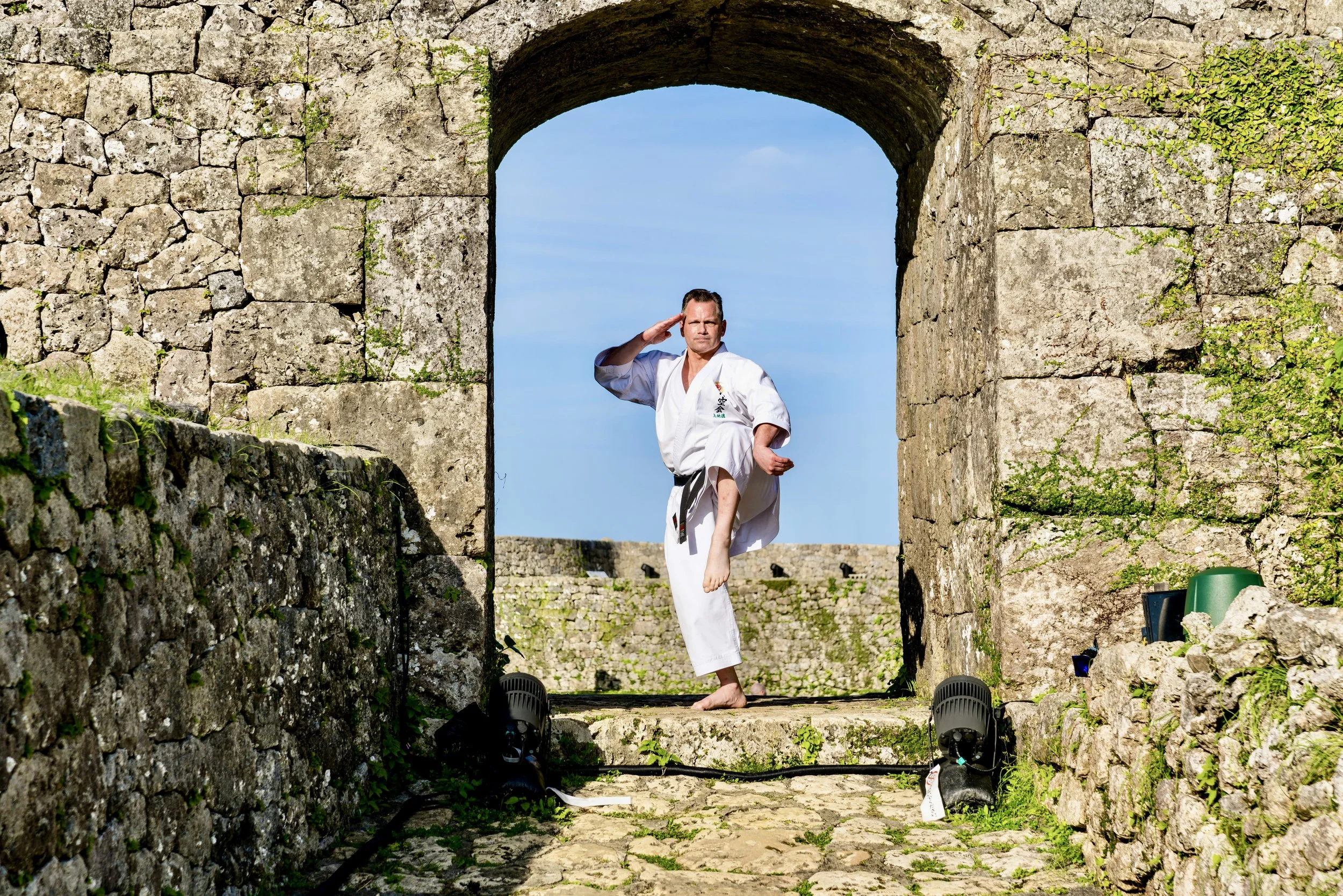
In this episode Andrew chats with Chip Quimby from Boston about his journey through martial arts, training overseas and the opening of his school.
Chip Quimby - Episode 1078
SUMMARY
In this episode of Whistlekick Martial Arts Radio, host Andrew Adams speaks with Chip Quimby about his journey in martial arts, starting from his childhood training to becoming a successful martial arts instructor. Chip shares insights on the impact of martial arts on personal growth, the challenges of teaching, and the importance of cultural understanding in martial arts training. He emphasizes the need for a well-rounded curriculum that empowers students and fosters a love for martial arts. The conversation also touches on the differences between training in the U.S. and Japan, and the evolving nature of martial arts education.
TAKEAWAYS
Chip started training at 12, seeking courage.
His stepfather became his martial arts instructor.
High school training was intense and dedicated.
College introduced him to various martial arts.
Transitioning to a martial arts career was challenging.
Building a successful school required adaptability.
Curriculum development is crucial for student engagement.
Incorporating other arts enhances training effectiveness.
Empowering students is key to their success.
Cultural differences significantly impact teaching methods.
CHAPTERS
00:00 Introduction to Whistlekick and Chip Quimby
03:10 Chip's Martial Arts Origin Story
08:55 High School and College Martial Arts Journey
11:14 Transitioning from College to Professional Life
12:41 Taking Risks: Opening a Martial Arts School
15:30 Curriculum Development and Teaching Philosophy
19:16 Cross-Training and Expanding Skills
21:51 The Journey of Martial Arts Mastery
24:34 Curriculum Development and Student-Centric Teaching
27:54 Cultural Differences in Martial Arts Training
31:25 The Role of a Martial Arts Teacher
36:04 Continuous Learning and Personal Growth
41:54 Connecting with the Martial Arts Community
After listening to the episode, it would be exciting for us to know your thoughts about it.
✅Subscribe to whistlekick Martial Arts Radio on the following platforms:
🎧Apple Podcasts: https://apple.co/3mVnZmf
🎧Spotify: https://spoti.fi/3yHVdHQ
✅You can find whistlekick on all social media platforms using the handle @whistlekick or visit our website at https://www.whistlekick.com or https://www.whistlekickmartialartsradio.com
Show Transcript
Andrew Adams (01:05.612)
Welcome, you're listening or perhaps you're watching on YouTube this episode of Whistlekick Martial Arts Radio and today I'm joined by Chip Quimby. Chip, how are you doing today?
Chip Quimby (01:14.796)
I'm doing great sir, how are you?
Andrew Adams (01:16.584)
I am great. I'm excited to get into chatting about martial arts, which is something that I'm very fortunate I get to do quite a bit. But before we get there, I want to make sure in case you're a new listener or viewer to the show, check out this podcast at whistlekick martial arts radio.com. You can find over a thousand episodes. Every episode we've done is listed there completely for free. We don't put it behind a paywall because we want to connect, educate and entertain traditional martial artists of the world.
And so, whistlekickmarshallartsradio.com, you can go there to find show notes, you can find photos of guests, you can find transcripts, contact information for them, all of that stuff you'll find there, as well as the subscribe button where you can subscribe to our exclusive newsletter so you don't miss out on any episode that we come out with. But this podcast is a small part of what Whistlekick does. If you go to whistlekick.com, you can find out all of the projects that we do, whether it's the live events that we do throughout the country.
whether you want to purchase some apparel, whether you want to buy a training program, or maybe you want to buy some books or, um, uh, attend one of our teacher training, all of that stuff you can find at whistlekick.com. And I would encourage you to do that because I can't get into everything we do. do so much. uh, Chip, thank you so much for joining me. I'm excited to chat with you. We met at WeichiCon 2025, uh, this September in
New Hampshire and I was really excited to take a class with you and from the moment I saw you start teaching I immediately knew this is someone that I want to chat with on the show because I just I feel a connection that you're gonna have some great stories to tell.
Chip Quimby (03:00.29)
Thank you. I appreciate that. I've met a lot of nice people up at Sensei Buzz's Weiji Con and he works hard to welcome everyone if they're passionate about the arts.
Andrew Adams (03:14.677)
Yeah, absolutely. Both Buzz and Judy have been on the show. We've had Marcus on the show. They do a phenomenal job with that event. And Jeremy and I are always super excited to be able to attend and present. But this being about you, let's talk about your initial foray into martial arts. How did you get started? What's your origin story when it comes to martial arts?
Chip Quimby (03:38.894)
So I started training as a child at 12 and for years I had asked my mother if I could study karate and she was against the idea. I think she didn't know really what it entailed. She just assumed it was fighting and then I was given permission to visit a school.
So we visited and like so many people, I got lucky that the school closest to my home had some very well-known and passionate instructors. And so I began training there at 12. They taught Okinawan Weichiru and the senpai of the dojo, the kind of the head student, if you will,
kind of took me under his wing. And at the time I thought he was among the most talented practitioners that I had ever met. And my mother went...
picking me up from class started to become more friendly with this individual. And then one day I came home and Sensei Joe was sitting in my living room with my mom. And what do know, a couple of years later, my mom ended up marrying him, believe it or not. So my biological dad died when I was young. And so she developed this relationship with him. So from about 13 years, 13 or 14 onward, he was my
Andrew Adams (05:04.913)
wow.
Chip Quimby (05:19.456)
my stepfather in my training so then it took a deeper, a deeper meaning because everything was taught through the martial arts and the life lessons so it was very powerful in that regard but that's how I that's how I got started.
Andrew Adams (05:38.445)
Interesting. At 12, what was it that made you say, I want to do karate?
Chip Quimby (05:46.242)
I think I wanted courage. I wanted more courage.
Andrew Adams (05:50.741)
Interesting. Yeah.
Chip Quimby (05:51.788)
Yeah, it was pretty simple, and of course the allure of martial arts. I think I was under the illusion that once I started taking karate, I'd have all these amazing skills. They would now be kind of, I would be grace with them and then I'd have all these things. But.
Of course, that's not the case, but yeah, think growing up I lacked courage and that's something that I really wanted more of. I think that was the driving factor. Outside of the, just the coolness of it, I certainly have an attraction to many Asian cultures, Japanese in particular, my wife's from Southeast Asia. So...
Andrew Adams (06:24.302)
Mm-hmm.
Chip Quimby (06:38.572)
It was always one of my dreams to learn more about Japanese culture even from a young age. And so I've been kind of pursuing that ever since.
Andrew Adams (06:48.942)
Now, it's interesting. I remember I started training at 14 and I also, my father was not in the picture either. And I remember thinking training as a kid, I wanted my mom to get together with my instructor because I saw him a bit as a father figure prior to you coming home and seeing Sensei Joe. Was that something that you had ever entertained as well?
Chip Quimby (07:19.564)
I don't know if I had. I figured, you know, I've got everything I need.
Andrew Adams (07:21.102)
Okay.
Chip Quimby (07:26.092)
God bless her was a very strong woman having gone through losing her husband and raising her three children. You know, she was a homemaker and she, she was an amazing, she is an amazing mom and very loving. But in terms of skills outside the home, she really hadn't had the opportunity to develop those. So she had to pretty much teach herself everything. So at the time I didn't think of my mom and her needs, but
She was managing that just fine, apparently.
Andrew Adams (07:57.135)
Clearly. And obviously that's not the end of your journey. didn't like you you have continued to train since then. So you started training in high school or at 12. What was high school like? You high school can be very challenging for people of that age training.
Chip Quimby (08:14.54)
Yeah, it was. I did karate throughout...
High school, I went from training, you know, what most kids did at that time, maybe three days a week to four days a week, often twice each time. I would go to class. I would then go have dinner with the teachers or the students that were still there. I'd then come back to the dojo and train again. So was really all I knew. I remember in high school when all the kids were getting their letter jackets and stuff, I remember thinking, okay, this isn't gonna happen for me.
There was this one kid who I think he played rugby but they called him ninja because he also did martial arts so that was his name on his jacket and I thought that was cool but karate was never about kind of...
Trying to make me look bigger inside. I wanted to be a bigger person, but I didn't really talk about it some people knew about it I learned much later that everyone knew about it from my From my you know what? not gonna go there
But yeah, people did know about it and for the most part, I never had any problems in school. I had to know the brother and he was a real bad boy. He got into a lot of mischief and despite no martial arts training, he was definitely into the martial arts, so to speak, maybe more martial and less art. And so I had a very protective big brother and I didn't go looking for trouble. So.
Andrew Adams (09:42.68)
Mm.
Chip Quimby (09:52.086)
So it was good, yeah, high school was good. For a short period I tried wrestling and I found out what kind of work ethic they have and to be honest, it turned out to be too much to do wrestling and karate at the same time. So karate was really my thing throughout high school.
Andrew Adams (10:03.566)
Mmm.
Andrew Adams (10:08.814)
And then what about after high school?
Chip Quimby (10:12.79)
So I went to college and I continued my training there. They had a dojo at the college, which was awesome. I met a lot of talented martial artists in college. It was an international school. And so I met people from England. studied some Muay Thai. I studied some Thai Kwon Do. They had a great padded room, walls, floor, heavy bags, and it was sweet. So all you had to do was go in there and train and someone who also liked training would inevitably come over.
and talk to you. So I learned a lot about the body during that time, mechanics, kicking especially because in my style, know, most of the people who are good kickers got there by accident. The style is not known for its kicking per se, like Korean archs, for example. So I got this information, I brought it home, I was eager to share it. Some people were very open, some people did not want to hear about it from a young, you know, 18 year old kid.
it but nonetheless it had a profound impact on me.
Andrew Adams (11:17.302)
Now, and talk about bringing that back, right? You know, as you mentioned, Weichi-ryu is not known for its explosive kicking. And so coming back to, you know, leaving college, coming back or whatever, and working with your Weichi practitioners, you mentioned it went well with some and not well with others. What was that like?
Chip Quimby (11:25.453)
Mm.
Chip Quimby (11:39.394)
interesting to say the least. Some people, I think, had challenges with their ego maybe in taking information from a young person who has a lower grade or rank than they do. Other people maybe were simply less interested in growing.
dojo they were very open to it and in the martial arts it's hard to deny the pudding so to speak when you see something and you're like well that worked it's it's hard to pretend it doesn't so so within my dojo specifically folks are very open-minded it was more outside of my dojo yet inside my organization folks were
Andrew Adams (12:22.499)
Mm.
Chip Quimby (12:29.954)
You know, they had answers apparently already.
Andrew Adams (12:32.024)
Sure. Yep. And I think all of us listening can recognize that and we get it. So you finish college, you're training Weichi, but in college getting to train lots of these different arts, is great. It's a bit of, know, college is a bit of a melting pot in many ways. And obviously martial arts was one for you. You leave school and then where?
Chip Quimby (12:46.254)
Mm.
Chip Quimby (12:56.546)
So after I left school, I became a consultant for a marketing research firm. Most people know them, Nielsen, Nielsen Ratings. So I worked there for about six years and I got to work at home a lot.
And during that time, I really discovered that martial arts is what I wanted to do. I would talk to my friends and they'd be at the dojo themselves and getting ready for classes. I was pretending to do something that I was pretending that I loved the work I did. And it was more the the the perception or
how others saw what I did. It was a large company, I traveled a lot. I got to work with very large, successful companies. I was given a lot of responsibility, but at the end of the day, it really didn't speak to me. And so many of the values in martial arts encourage us to be honest and true and...
not stop pursuing improvement. I think with regard to those qualities, I found something missing in myself. So I took some steps then that were a little risky and it all worked out fortunately.
Andrew Adams (14:30.702)
Can you talk about the risky steps? mean we talk all the time about how martial arts helps us deal with difficult situations and it sounds like this kind of was one of them.
Chip Quimby (14:33.326)
Sure.
Chip Quimby (14:42.668)
Yeah, so they're kind of crazy looking back. So I had the opportunity to join a small group and the idea was going to be to open up like this flagship self-defense.
school, if you will, based off a Krav Maga model in downtown Boston. And we were gonna have like the front of a car put in to practice like carjacking scenarios. We were gonna have padded rooms, the whole nine yards. And we struggled to find a location that really fit our business model. And then at the 11th hour it fell through. And prior to that,
I had resigned from my company and I didn't even tell my wife because I wanted this so bad. So the deal fell through and I didn't have a job any longer. And then I decided, okay.
Andrew Adams (15:35.608)
Wow.
Chip Quimby (15:48.16)
what else is there. So I teamed up with a person who became one of my best friends. I now call him my big brother, Ani in Japanese. And we started a school together. He had a school already, but he had limited resources and he was growing.
tired and challenged as well. And so we decided to join forces. I brought some capital to the plate, to the table, and we found a new location and it just exploded from there. So we worked together for five years and he's the one who really taught me how to teach large groups of people. He taught me about the business of martial arts. You know, I thought
Foolishly like so many of us do. I love martial arts. I'm pretty good at it. I can run a successful martial arts school
Andrew Adams (16:45.715)
Yeah.
Chip Quimby (16:45.952)
You know, how naive. So he taught me a lot and I was with him for five to six years. And then we got to a point where we kind of both wanted to be in charge. So there were two cooks in the kitchen and we decided that at that point,
Andrew Adams (17:04.162)
Mm.
Chip Quimby (17:06.818)
We would split and I went and I started my own school and I planted an acorn and I grew something from scratch. went and did the build it and they will come which I will never recommend to anyone either but I built this whole dojo. I spent a lot of money on a build out and I was just confident this was gonna work as my ship as my friend used to say we're gonna burn the ships at the shore and we're gonna stay here until we're successful so
Andrew Adams (17:20.098)
Yep.
You
Chip Quimby (17:36.833)
So that was 15 years ago and now I'm here now.
Andrew Adams (17:41.559)
Now when you opened this school with your big brother, you have a background in Weichi. In college you trained in a bunch of other things that clearly opened your mind to a few other things. I'm curious what his background was like and what was your curriculum like in those early days.
Chip Quimby (18:03.118)
Great question. He was... He was...
of like mind as well. He had recently returned from Japan, so he spent half a decade there training, and he was also a Ouachii stylist. He had done some other arts there. A lot of people at the time would come to Okinawa. They'd get a job doing, you know, painting or construction or manual labor. They'd do that during the day, and then they'd do surfing or karate at night.
Andrew Adams (18:18.531)
Hmm.
Chip Quimby (18:36.976)
there are a lot of passionate people, a lot of Australians who did that, and these are hardcore people. And so he developed a lot of those habits, if you will, while he was there. And then when we teamed up, he was very open to that. So he wanted to have a successful school and be a successful teacher. And we knew we might have to...
tamper some of the things that that we prefer to do or the types of training we like to do. Some of the best dojos in the world that I've trained with are not dojos I'd ever want to own or that I'd ever allow mine to smell like or I would never allow dirt to be on my bathroom floor. Actually there was no floor it was just dirt.
Andrew Adams (19:26.787)
Ha
Andrew Adams (19:34.35)
Hmm.
Chip Quimby (19:34.798)
And so I was warned before I go, you know, bring flip-flops. So we did that and it was great. It really was. But he was very open-minded. We experimented with a lot of different curricula over that time, quite honestly, because kids are a lot different today than they were just...
Andrew Adams (19:52.622)
Mm.
Chip Quimby (20:02.142)
a generation ago, think their interest span, their interest is much shorter. I always tell people we're competing with video games, you know, if you're not giving these kids a dopamine drop every 10 seconds, it's very challenging and so...
We had to find a curriculum that achieved all our goals and our goals were pretty well rounded. On the one hand, we wanted kids to have fun and on the other, we wanted to teach what we consider to be, you know, legitimate, authentic, you know, martial arts or what we knew Okinawan karate. So because without that, it's hard to to teach some of these lessons that karate can teach. You everything's sold in America and sometimes it's
packaged so beautifully that you think you're getting something or it appears to be the real thing, but maybe you discover later on that, it wasn't the real thing. I don't have that skill or I don't have this confidence or I didn't have to go through tremendous adversity to develop resilience and perseverance. so when we split, I became adamant.
that I wanted to teach a certain way and it was okay if people didn't want what I was offering. I like to say, we sell cheese but it's like gourmet cheese. A dear friend of mine used to send me a...
cheese, it was, yeah, I guess it was a plate from France every year for Christmas and this stuff was amazing but it had quite a smell and it wasn't, there were no Kraft singles in this platter, you know, this was amazing stuff but it's not for everyone and I'm totally fine with that. You know, I think cutlet can help everyone but not everyone's willing to do what it asks so that's okay.
Andrew Adams (21:42.126)
Mm-hmm.
You
Andrew Adams (21:51.256)
Sure.
Andrew Adams (22:05.198)
Yeah. Now, you end up splitting, you do, as you said, you build it and they will come, started from the scratch, or started from scratch, I should say, teaching mostly a Weichi curriculum. And how did your... go ahead. Yeah, yeah.
Chip Quimby (22:22.368)
Yes.
Chip Quimby (22:26.416)
yeah, was going to say, know, Weichi provides like so many systems, the map, you know, like this is the map, we're going to go west and then we're going to go traverse mountains. We're going to have to get over a river, but it, often doesn't get, I don't want to say it doesn't give you the granular details. For example, how to move.
Andrew Adams (22:51.054)
Mm-hmm.
Chip Quimby (22:51.892)
So after training in some boxing, I realized, okay, my footwork is non-existent. I need footwork. It's good to be able to take a hit, but it's nicer to be untouchable and then be able to weather the hit when it happens because it's going to happen. So I wanted to provide skill in all the areas that I thought were not
Andrew Adams (23:10.574)
Mm-hmm.
Chip Quimby (23:21.902)
You know, focused on as much.
You know, footwork, for example, kicking mechanics and not just for the natural athletes because they're going to be great wherever they train. But I wanted a methodology and a system, a curriculum that could make, that could share with anyone the path or provide them the tools, the methodology to be successful. And so it wasn't about monkey see, monkey do like, don't just copy chip. These are the tools. This is the procedure.
This is the layering methodology and now go to work. Kind of empowering students to be as good as they want to be. I like to ask students, know, tell me how good you want to be and I'll show you the road. I won't teach you, you'll teach yourself. I'll just let you know how to kind of negotiate that path.
Andrew Adams (24:19.36)
And you mentioned training, you started working some boxing realizing that your footwork was off. So you were clearly cross-training in these other arts.
Chip Quimby (24:29.068)
Mmm.
Andrew Adams (24:30.318)
Was there anything else? Was it just boxing or did you travel? Now we're talking you're an adult, right? You're not in college. When you're in college, you were training all these other arts because that's kind of all there was there. Now you're an adult, you're making a conscious choice. Talk about what that is like and what made you decide to do those things.
Chip Quimby (24:52.128)
Yeah, so I think it started shortly after college. I developed this.
Chip Quimby (25:07.682)
this feeling that I don't want to do anything unless it's tested and proven to work. And I want to test everything. And it's okay if I practice something that I choose not to use and I just say, okay, this is a cultural tool that I put on the shelf and I enjoy training with. And I'll...
Andrew Adams (25:16.142)
Hmm.
Chip Quimby (25:36.294)
label that okay do not use on the street you know do not try to thrust your fingers into another person's torso because you just have small hands and they're not strong enough and I have no problem with that just like music I'm sure you like some and you dislike other music or food but
I developed this intense desire to test my understanding of martial arts and to fill in the holes. And at the time, I think I had become one of the more adept practitioners in my school.
I just said, okay, I'm going out and I'm gonna surround myself with people much better than me. Like I wanna be a student of people who I would look up to and say, okay, there's no comparison. I'm gonna be a student in this person's class. so footwork, kicking mechanics, timing, distancing, all of these concepts that are thrown around.
and discussed as if they're one dimensional.
You I thought I understood those, but to go and take like a college level class on them was totally different. And they really changed me fundamentally as a practitioner and as a teacher. And it felt really good to, you know, go visit friends. Most of them were older than me, but, but, know, fellow, fellow like association members. they'd say like, Chip, what are you doing? Like you look so different the way you move, the way you.
Chip Quimby (27:18.828)
control your body and that was really cool to have them come up and say that like it's so obvious you're doing something what is it that felt really good and I loved sharing you know I love I love sharing what I'm doing sometimes I'm a bit overzealous you know I just get so excited I'm learning to I haven't figured out yet I'm trying to turn that down but I love sharing and it's
Andrew Adams (27:29.134)
Mm.
Andrew Adams (27:43.768)
Ha
Chip Quimby (27:48.842)
It's, you know, it's fun and.
Chip Quimby (27:55.18)
That just fed the process to go deeper and deeper. so like everyone, had preferences, things I'd like to do. I did some BJJ for a while and I learned that this benefits to doing things that you're really bad at and just get humbled constantly.
Andrew Adams (28:11.276)
Ha ha ha ha.
Yep.
Chip Quimby (28:16.852)
Same with the other arts that I dabbled in, so to speak. But they were enough to really open my eyes like, hey, there's a great opportunity here. yeah, so.
Andrew Adams (28:34.122)
And how much of that, those other things have you brought into your regular training that you then give to your students? Like it's one thing to, it's one thing to like take that stuff and I'm using it, but now how much of it do I want to give to my students?
Chip Quimby (28:43.032)
Great question, great question.
Chip Quimby (28:51.096)
Great question. I lost my train of thought, Andrew, sorry. So my curriculum, in 15 years, I've rebuilt my curriculum six times because I am just relentless about trying to fine tune it for the students who I have the pleasure of teaching. Not the ones I get to choose, but the ones who come to my door.
It was the closest pizza shop, so mom said, there's a pizza shop, let's go. You know, they didn't read my resume and said, yeah, that's what I wanted. They came to my dojo and I tried to give them.
the approach that I think serves them best. like students in our style, you typically model the story of the founder of the system. You'd start with Sanjin and you'd do nothing but this until you had a basic understanding of structure and power generation, so on and so forth. But it's not the most exciting thing to learn. I do enjoy it, but it's like
saying, you know, squatting, squatting is a fundamental or deadlifting. These are fundamental exercises for strength training. But, you know, at the end of the day, you know, I don't get excited to do squats or anything like I, it is what it is. Sanjian is like that in a way, but
You know, it wasn't designed to teach for children. I think you can drive yourself nuts trying to teach children if you care at all about quality. You know, it's not like...
Chip Quimby (30:27.746)
I'm Japanese or any of the teachers here are Japanese. You know, we're not preserving a cultural pastime. We're pretending in a way to be Japanese and we're doing it because that's the way they said to do it. So I've taken a different approach. I wanted them to earn.
the right to learn kata. So show me that you're willing to work hard. Show me that you're a good listener. Show me that you're trying to control your body. Show me that you're coachable. And then I'll teach you things that are more abstract and complex in nature. And then we can go from there. So I don't know how long I'll get to work with any student. So I wanted to have the greatest impact on them as fast as possible. You know, it's not like they were coming to me and saying, I want to
to your disciple and I'll cut my finger off for you. I mean, it's not that, you know, these are Americans. It's like a contract, it's contractual. You're paying a fee and you're getting a service, if you will. you know, in my dojo, it's like customer, client, student, and then disciple.
Andrew Adams (31:21.866)
You
Chip Quimby (31:41.574)
And here, I do lots for you. And then up here, it's kind of like, I do the least for you because I've taught you to no longer need me. You the goal is to teach you so well that you no longer, you outgrow me. And you've transitioned through the phases of Shuhadi and you've become your own teacher, your own guide.
So, so yeah, so footwork, punching mechanics, athletic conditioning. I'm big on just fitness for kids because we have sedentary lifestyles, you know, the, the screens and the constant, but at the same time it's a dojo. And if we're doing things that you can do in gym class, it's hard to justify that. So, but at the same time, I think to be a good martial artist,
you know, health and strength, those things are important. So they're a big focus for me as well. So.
Andrew Adams (32:44.654)
So in terms of forms then, you mentioned for kids, sanction can be really kind of boring or whatever. Do you have a different set of forms that you teach kids or do you just not teach forms to kids?
Chip Quimby (32:59.328)
No, I teach the conventional Weichi forms, it's not... First of all, when a student memorizes a form, they've memorized the form. My children play piano and for...
Andrew Adams (33:04.931)
Mm-hmm.
Chip Quimby (33:18.478)
15 years I've listened to ding ding ding all the way up to Chopin and you know at for a long time They played notes and then they began to make music because they could pour their emotion into it So It takes a day to memorize a kata. It takes you know much longer to really to really learn it. So I I try to teach the students to be to be one be proud of what you're learning and don't just think that more is better. Don't think like just memorize
Andrew Adams (33:22.798)
Sure.
Chip Quimby (33:48.385)
a new kata now provides you with all this new information. We want to learn it and go deep. students have to work for it. So no, I just spread it out much longer because I'd much rather them do fewer things really well than many things.
Andrew Adams (34:02.734)
Mm.
Chip Quimby (34:10.86)
you know, or mediocre or whatever. Because I believe that in life as well, you know, quality.
is more important than quantity. We hear that all the time, but that's harder to do in a dojo. I mean, you have access to statistics, like, okay, a student is most likely to quit here. So you're probably better off promoting them every eight weeks because then you can go through this process again and then they earn a new belt. And I get all that on a logical level, but in the real world, it doesn't work like that. So I wanted
to be.
the person who walked a different path and just said, okay, cool, but we're not doing that. And it's okay if they do that down the street. I'm not, I'm not really interested. You don't have to walk on water, but you have to earn it and you have to work for it and you can be proud of it afterwards. And it doesn't matter if you have a black belt or a yellow belt. You know, I didn't write black belt as our goal on my front wall. Not that that's a bad thing, but I wanted students to be proud of whatever they earned. And if they decided that they wanted to stop,
Andrew Adams (34:58.03)
Mm-hmm.
Chip Quimby (35:21.36)
or a certain bit of time, that was okay too. There's no shortage of people who once took a martial art and then quit. However, sometimes we try something and it's not for us. At least you got to do it properly for the amount of time you did it, whether it's karate or whether it's archery or whether it's acting. So that was really important to me.
That was the reason I decided to call my school, the English name, Authentic Karate Training Center, because I wanted to offer the most true martial arts experience from Okinawa that Americans would accept. And, you know, there's a big difference. There's a big difference.
Andrew Adams (36:10.766)
Mm.
Chip Quimby (36:12.006)
I often share stories, sometimes people either they don't believe it or they just don't get it because you know the foundation of the art is built on their culture and the cultures are so different.
Andrew Adams (36:23.918)
Well, this is the perfect place to share those stories. Everybody listening is a martial artist. So let's talk about some of those differences in training here as opposed to doing a training in the country that your art is from.
Chip Quimby (36:40.52)
Mm-hmm. Well, I think as a karate or a martial art teacher in this state, you wear lots of hats. You know, you're a teacher. You might be a coach. You might be an instructor. Some people have different, you know, it's one thing to stand up front and count. It's another thing to really impart knowledge on a young person and be a figure that they remember their entire lives. You might be part...
counselor, you might be part social worker, you might be part like father, depending on the child, you might be part, I think I said social worker, you know, a lot of the kids have mental challenges or disorders or, you know, they're dealing with certain medications or they come from families that...
Andrew Adams (37:14.126)
Mm-hmm.
Andrew Adams (37:23.982)
Mm-hmm.
Chip Quimby (37:32.045)
you know, have different sets of values than I do. And so I'm like, no, here we say please, and we say thank you. Here, the adult is in charge and not the child. I'll always be respectful to you, but when I say no, it's no, it's not a debate. And so in Japan, if you didn't show up to class, your family's honor was...
your family's honor was at stake. If the sensei came to your front door and knocked, with Takeshi, you'd lose face. You'd lose face and your child would be trembling.
And so in most cases, children do karate in Okinawa because they have to, they're told to go. Karate is not popular in Okinawa. know, basketball is popular. Baseball is popular. People could do karate anytime. so children aren't like clawing down the doors to get inside the dojo. They may have family that do it. And so, you know, if your father does it, you're doing it. No questions asked. Don't expect positive feedback.
Don't expect any accolades. Get to the dojo and train. It's probably not going to be fun, but you know what? That doesn't matter to me. That is not fun. You just have to do it. in the dojo in Japan, people just take direction. You're told to do something and you do it. There's no debating it. You know, so you'll often see children and adults in a class and they're all working hard together. And it's shocking almost to see children doing this.
the same thing adults are doing. In a way, they're very coachable. I don't necessarily agree that that's the best or most effective way to teach children, but you'd often see them doing the exact same thing, and there'd be no behavioral issues, there'd be no talking back. The teacher would say, jump, they'd jump.
Chip Quimby (39:42.957)
You know, they didn't have to manage it. They didn't have to keep looking. The children, they knew there were consequences to them not following directions. And the idea of respect in the martial arts, everyone's familiar with this, but until you spend time in Asia, you know, it's just an idea. You know, like I've spent time in Okinawa.
And I've never once had a person honk their horn at me because I make a mistake. The idea of someone doing something with their hand, you know, out a window because it did something is just, it would never happen. It would never happen.
I remember I waved to police all the time because I wanna, one, I wanna get them to wave back and two, I want them to smile. In Japan, you wave, they'll stop, they'll smile and then they'll bow as you drive by. It's just fascinating. the police cruises as they're coming by will, in Japanese, they'll say, excuse me, please move to the side, we're coming by. But it's polite, the way it's said is polite. Thank you. It's just funny. mean, from the moment you get on the airplane,
Andrew Adams (40:39.726)
Thank
Andrew Adams (40:51.118)
Mm-hmm.
Chip Quimby (40:54.896)
You feel it and then the moment coming home, getting on the airplane, when you're told to put your seat up or put your trade table back, it's different than someone asking you, know, when you're ready, sir, if you could put that up, that would mean a lot to us. We'd like to take off now. So that was the biggest.
That was the biggest difference for me that I have to win these kids over. have to inspire them to want to work hard. I need to ask for their permission to be their biggest fan and an honest coach. So when they're not being who I know they are, I can remind them and
The strength of that relationship is what allows us to do things together that, you know, we do, or they do, no place else. You know, they will push in a way that they push no place else because they know how hard we're willing to work for them and support them. It's a really special thing, as you obviously know.
Andrew Adams (41:56.173)
Yeah, for sure. Now, you talked about the training in Okinawa, Japan for children. How does that translate for you and your training over there as opposed to over here training with someone?
Chip Quimby (42:11.051)
I think.
You know, I want to be the best student I can be because as a teacher I know the more my students work to internalize what I'm teaching.
the more I wanna step up and be a better coach. It's just this continual process, symbiotic where we're feeding each other. And so, when the player, so to speak, does a great job, the coach has to up their game again, and then the student ups their game. So I try to embody that when I'm there training. I try to be that person who's in the back and slowly moves to the front, and then is selected to be the...
Assistant the the person demoing the uke with the teacher Because I want them to see my hard work. So my goal is to to absorb as much as I can Oftentimes in okinawa like you'll be asked to do something or giving correction But if you choose not to do it, that's fine. You just don't get any more feedback you get good good
Andrew Adams (43:19.757)
Mmm.
Chip Quimby (43:20.844)
And that's like a curse, like, they just don't care anymore. And I've seen countless people simply choose consciously or unconsciously, whatever their reason is to not take feedback and try to build on it. And they just let go like, okay, that's okay. You don't have to do this. Like you're choosing to be here. So I'm gonna choose not to give you anything else because you don't clearly wanna.
want to do this or want to to get better. working hard there is very special. There's always, I think there's this perception now that foreigners bring a tremendous amount of enthusiasm to training and that at least on the island, a lot of
Andrew Adams (44:06.168)
Mm.
Chip Quimby (44:11.456)
Okinawan elders perceive the children as just being not interested, like it's not cool to do karate. That's something old people do. You know, they want to do western sports. They want to be the next player on the Dodgers or they want to be the next basketball player. They love this. But karate is not high up on that list.
Andrew Adams (44:38.126)
What keeps you going and keeps you training now? I you've been doing this now decades, and you're still doing it. What keeps you going?
Chip Quimby (44:50.446)
you
Chip Quimby (45:04.14)
So today I was in Boston training with my weapons teacher, my Koboido teacher, and I am a complete beginner with him. And I feel like the luckiest person in my town to be able to go and train with this individual because...
Truth be told, I learned more from him than I would if I went to Japan and trained with someone because of his skill, of his knowledge, of his ability to communicate information, his education and his ability to properly scaffold information for me, the respect he shows me. So just being a truly honest student, putting on a white belt.
Andrew Adams (45:35.47)
you
Chip Quimby (45:57.503)
and training because it's fun and the feeling it gives you. Yeah, so like I'm totally comfortable in my skin now. I know what I know and I know there's a ton I don't know and...
The martial art world is so vast that one cannot know it all. So I know a little bit about this little area over here. And I'm eager to learn other things. And I know time's limited. I chose to be a professional school teacher, operator, owner.
Sensei if you will but running a karate school is a lot different than just training all day. You know, I don't get to train all day to run a successful school takes a lot of work. Obviously, it's like any small business. So the feeling you get from training and learning new things, you know, I'm a big believer in fundamentals, but they must be progressive.
Andrew Adams (46:38.702)
Mm.
Chip Quimby (46:57.708)
You know, it's okay to I'm constantly trying to study the process of learning and teaching. so applying that to the martial arts has been very valuable for me. But the rush of just learning new things and laughing and going, my goodness, that was so powerful or incredible. They're just laughing, knowing that that would have been the end of it right there. It's it's really neat. It's it's akin to the feeling you'd have as a kid seeing someone
going, wow, like a kid seeing Bill Wallace kick or something. It's really, really, really neat. And I think after all these years, I now have a greater appreciation for higher levels of understanding. weapons training, for example. There's more of an opportunity to train in genuine weapon arts,
in America, today than there was 30 years ago. I can hold this writing utensil, but I'm not a professional calligrapher. And So it's easy to the untrained eye to confuse those two. So.
Andrew Adams (48:06.754)
Sure.
Chip Quimby (48:13.844)
One is a profoundly deep art where everything is functional and has an application. The other just looks or seems to be the genuine way rather than being the actual way. So I'm definitely into that being. Like I don't wanna look like I know what I'm doing. I don't wanna memorize kata from the internet. want...
an honest, true relationship with a human being that I respect, that I can learn from. I think that relationship is just as important to me. We all know phenomenal martial artists who are not good people and I've just decided I don't want to be around people like that, regardless of their skill.
Andrew Adams (48:50.702)
Hmm.
Yeah, that makes sense. Now, if people want to reach out to you, if you said something that really resonates with someone and they'd like to reach out and connect with you, how would you be open to that? How can people get in touch with you?
Chip Quimby (49:05.038)
Oh yeah, yeah, my dojo's open to anyone. They can reach out through the internet, they can call me. I get lots of kind of folks reaching out to me sometimes. It's kind of funny, like, Chip, will you be my master or something? That's like, no, I can't be your master. I don't know what that means. I'm just a regular guy here training in a small town.
Andrew Adams (49:22.2)
Ha ha ha ha.
Chip Quimby (49:30.814)
So yeah, they could reach out to me. I love when people visit our school. I get to learn from them. We get to have an experience together. It kind of lifts all our boats, you know, that tide rising.
Andrew Adams (49:48.579)
Yeah, awesome. I'm going to throw it to you in just a second to kind of close us out. But for anyone that's listening,
Check out Whistlekick martial arts radio for all of the stuff that the podcast is about. Over 1000 episodes we now have all for free. One of the things you can do if you want to help us out, know, this podcast, it's free to you, the listener or the viewer. It's not free to host and put out. So if you'd like to support us, we would love for that to happen. You can do that through Patreon, patreon.com forward slash whistle kick for as little as $5 a month. That's it. Which is like less than a cup of coffee at Starbucks these days.
But we would definitely appreciate the support and maybe financially you can't help support us and that's fine Tell a friend share an episode with someone help us connect with other people Our goal is to get everyone in the world to train martial arts for six months And this podcast is one of the small ways that we do that So we would love your support in that and if you want to check out all the things that whistlekick does Whistlekick.com is where you can go to find out everything and we'd love to love for you to share that with people
as well. So Chip, thank you so much for being here. I want you to close this out. What do you want to leave our audience with? What do you want them to take away from our chat today?
Chip Quimby (51:10.264)
Well, thank you for inviting me. It was very flattering. It was great that you attended Weichi Kona. We had a chance to meet. I love your passion and your enthusiasm. And I love your mission to get everyone on the planet to study martial arts. The world would be a much more beautiful place. I'd say that...
Andrew Adams (51:31.509)
Absolutely.
Chip Quimby (51:37.357)
You know, training in martial arts is a wonderful thing. Make sure it's bringing you satisfaction and fulfillment and that change in life is the only thing that's constant. So the way you train will change and that's good. Maybe the people you train with will change and that's okay too. Be open-minded.
things change in life, whether it's you have children or your body gets older and your knees give out. These are just short-term obstacles and I think you can overcome those and still get all the benefits and enjoyment from training if you're still willing to adapt and be honest with yourself.