Episode 1102 - Sensei Ronnie Cimorosi
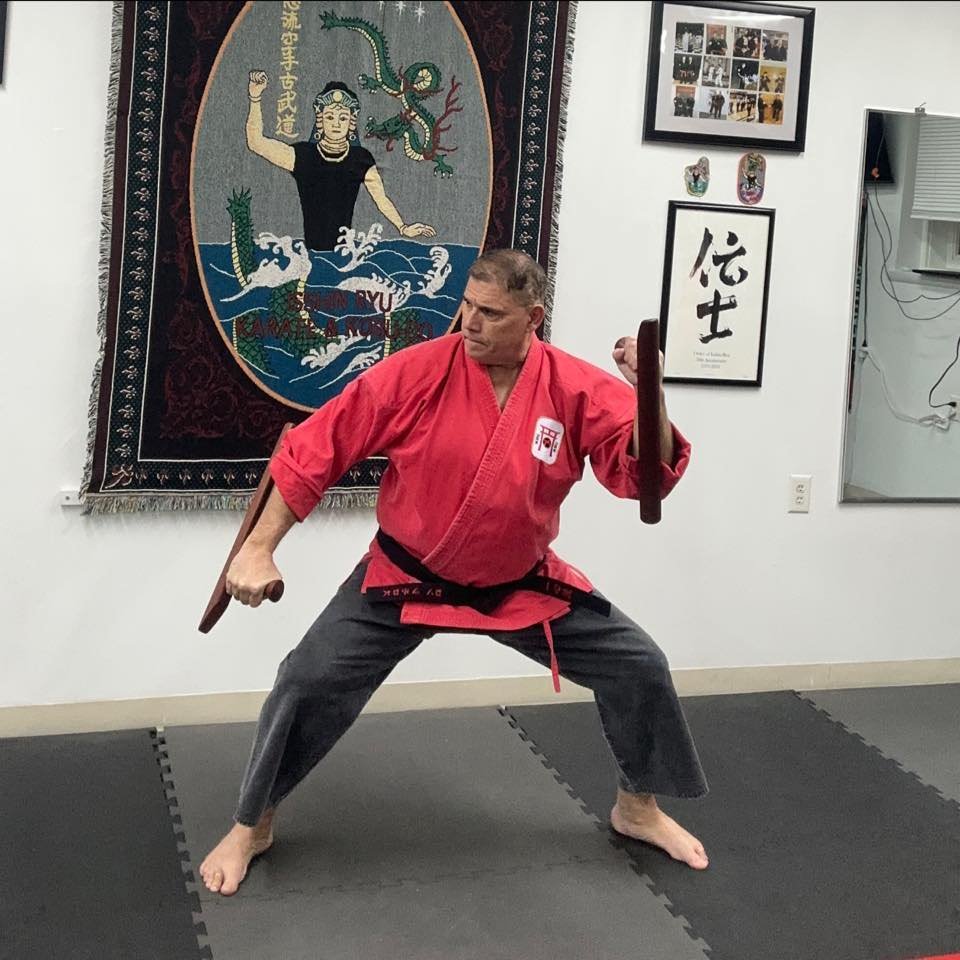
In this episode Andrew chats with Ronnie Cimorosi about getting started in karate after watching a boss defend himself as well as the importance of etiquette and respect.
Sensei Ronnie Cimorosi - Episode 1102
SUMMARY
In this episode, Sensei Ronnie Cimorosi shares his journey into martial arts, starting from his first encounter with martial arts at a VA hospital in 1984. He discusses the profound influence of his sensei, Grandmaster Toby Cooling, and emphasizes the importance of respect, etiquette, and community in martial arts training. Sensei Cimorosi reflects on his teaching philosophy, the legacy he aims to uphold, and the personal growth he witnesses in his students. Through heartfelt stories, he illustrates the impact of martial arts on life and the values he strives to pass on to future generations. He discusses the role of competition in building respect among peers and how martial arts has helped him overcome personal challenges, including health issues. Looking to the future, he expresses hope for the next generation of martial artists and the legacy of his teachings.
TAKEAWAYS
Sensei Cimorosi started martial arts in 1984 after witnessing a confrontation at work.
His first sensei was Grandmaster Toby Cooling, who passed away in 2022.
He emphasizes the importance of dojo etiquette and respect in martial arts training.
He believes that martial arts is not just about fighting but about building a community and family.
He feels a strong obligation to his students and the legacy of his sensei.
His teaching philosophy is influenced by his sensei's natural ability to teach in any situation.
He values the personal growth of his students over trophies and accolades.
He aims to pass on the values and integrity taught by his sensei to the next generation.
He shares a touching story about his sensei's support for a student recovering from a stroke.
Teaching is about more than just martial skills; it's about instilling values.
Competition can foster respect and recognition among martial artists.
Martial arts can provide a sense of purpose and community.
Overcoming adversity through martial arts can lead to personal growth.
Building a legacy through the success of students is a key goal.
The future of martial arts lies in nurturing the next generation.
CHAPTERS
00:00 Introduction
01:15 Journey into Martial Arts
03:37 The Influence of Sensei Cooling
13:01 Legacy and Teaching Philosophy
23:15 Teaching Philosophy and Etiquette in Martial Arts
30:27 The Importance of Competition and Respect
33:06 Transitioning from Student to Teacher
43:38 The Role of Martial Arts in Overcoming Adversity
52:16 Looking Ahead: The Future of Martial Arts Training
Join our EXCLUSIVE newsletter to get notified of each episode as it comes out!
Subscribe — whistlekick Martial Arts Radio
After listening to the episode, it would be exciting for us to know your thoughts about it.
✅Subscribe to whistlekick Martial Arts Radio on the following platforms:
🎧Apple Podcasts: https://apple.co/3mVnZmf
🎧Spotify: https://spoti.fi/3yHVdHQ
✅You can find whistlekick on all social media platforms using the handle @whistlekick or visit our website at https://www.whistlekick.com or https://www.whistlekickmartialartsradio.com
Show Transcript
Andrew Adams (09:15.782)
Welcome, you're listening or watching to another episode of Whistlekick martial arts radio. And today I'm joined by Sensei Ronnie Cimorosi. Ronnie, how are you today?
Ronnie Cimorosi (09:25.302)
I'm very good, thank you, I'm honored to be here.
Andrew Adams (09:27.566)
excellent. I'm so excited that you're here. Before we get into our chat, I want to make sure that anybody listening, maybe it's their first time and maybe you don't know who Whistlekick is. If you go to WhistlekickMartialArtsRadio.com, you can find out all of the stuff about this episode and every episode we've done. We've got at this point, 1,100 episodes that you can check out for free. And at WhistlekickMartialArtsRadio.com, you'll find out, you'll find show notes, you'll find photos of all of our guests.
some contact information on each of our guests on their episode page. So go there, check it out. You can also sign up for our exclusive newsletter so you don't miss out on any episode. But if you go to whistlekick.com, you can find out all of the other things we do. Maybe you want to purchase some sparring gear. Maybe you want to purchase some t-shirts. Maybe you want to come to one of the events that we host around the country. All of that stuff you can find at whistlekick.com.
And if you use the code podcast one five, you'll save yourself 15 % on just about everything that we have over there. All right, Ronnie, I'm excited to chat because as, as I mentioned before we started, before we officially started recording here, your name came to me through a past guest of the show, Andy Rodriguez. Shout out to Andy, a really good friend of mine. And every time that he has said you should check out this guy, he's got some good stuff going on.
We've always loved having that guest on. So I'm really excited that you're here.
Ronnie Cimorosi (10:57.966)
Well, I guess I would have given him 20 bucks.
Andy and have an interesting history. We've been friends for just about 30 years. We met at a karate tournament in Westchester and it just so happened my father studied Cibicon back in the mid 60s. His sensei was a guy by the name of Walter Daly and the patch is kind of a unique patch. The Cibicon patch is a little different now but I grew up knowing the patch and I see a small group of guys across
the room and in gay wearing this patch and I walked in and I said excuse me I said uh can I ask you a question he said sure I said your patch that you're wearing does that say school of the holy arts and he said yes you do you know this patch and I said well my father wore that patch
And he asked who my father was, Ronnie Samaresi Sr. He didn't know him. But his sensei was a guy by the name of Walter Daley. Shihan Daley. Well, that opened the door, and we've been friends ever since. And we've trained together. He's been to my dojo working out with his students. My students have been to his dojo working out. In fact, this past summer, I went there and did a seminar for him. And I'm having a seminar in February, and he's coming here and presenting. So we've just had a great relationship.
just a mutual respect for each other and we've been supporting each other, you know, for just about 30 years. Yeah.
Andrew Adams (12:24.102)
Wow, that's great. Now, 30 years is a long time, but obviously you had already been training before you met him. So let's go back to the very beginning. How did you start and get involved in martial arts in the first place?
Ronnie Cimorosi (12:37.858)
Good question. I started back in 1984. My first job, was freshly out of high school, was at a VA hospital and our crew was taking the windows out, another crew was putting the windows in. There was a guy by the name of Curtis Jones who was the installer. My cousin Gary Greig and I were the ones taking the windows out.
So at lunchtime they had an outside picnic area and Curtis, I heard that he was a martial artist. At that time I'd just seen a couple Bruce Lee movies and read a couple magazines and I was really interested in it but I never really pushed it. As much as my father pushed me to do it, for some reason I just didn't take that step. So we're outside and Curtis has a confrontation with a guy.
And I'll give you the rated G version of the response. Curtis turned to the guy and said, look, don't let your mouth write checks your behind can't cash. And then Curtis turned and walked away. Well, this guy jumped up from the penny table and starts running to the back of Curtis. Curtis turned around and hit him with a back kick right in the chest. And it floored him so hard and so fast.
I was like, oh, you gotta teach me that. Oh, you gotta show me how to do that. He goes, if you wanna learn that, you gotta come to karate school. I said, when, when? Friday night. I've been here ever since. I haven't stopped. I've been training consistently since that first night going into dojo. Yeah. So that's what got me started. And then of course, all through...
Andrew Adams (14:15.121)
Wow.
Ronnie Cimorosi (14:20.0)
my Q-rank years, my dad, I knew you should have listened to me. You should have went to the dojo when I told you to. I knew it would be good for you. I knew you would have fallen into it, but I was that hard-headed kid that I just had to see it for myself. And I've been here ever since.
Andrew Adams (14:32.859)
Yeah.
Yeah, and same school.
Ronnie Cimorosi (14:38.378)
Same dojo.
The dojo was the order of Isharu founded by Grandmaster Toby Cooling. He's been my sensei ever since. Unfortunately, he passed away in 2022. I'm doing my best to carry his torch. I'm doing my best to pass on his integrity, his morals, his value, and what he taught me I'm trying to pass on to my students. One of his famous lines is, we're not just punching and kicking.
So, you know, we're a family first and an organization second. We're here to support each other. We're here to train hard. And that's kind of what we do. So I've been training consistently ever since.
Andrew Adams (15:23.4)
Now you mentioned you ran into Andy Rodriguez, became really good friends training at his school. He was sent students training with you. For a long, long time, that sort of thing was kind of frowned upon, right? Training in other schools and, you right? Where did that appreciation for other arts, where did that come from?
Ronnie Cimorosi (15:47.342)
Okay.
I really think because Siba Khan, Sean Roo and Ishan Roo are so similar.
You know, Isshun-ru was a combination of two styles. It's a combination of Goju-ru and it's a combination of Shun-ru. So a lot of the kata that Andy has, we already have. So one of things that was kind of unique when I went there and taught over the summer is I went over the Nahanchen kata, Nahanchi, and I went over Wansu. And they know that kata, even though it's a little different, it's the same. You know, it's the same format. Of course, the bunkai might be
be a little different. And that's how we learn. And I think there was such a mutual respect there between Andy and I. And I think my father really opened that door without realizing that he opened that door. And I think that's what kept our relationship so strong. So we were the same, but we were different.
Andrew Adams (16:48.944)
Mmm. Yeah.
Ronnie Cimorosi (16:50.904)
So we both have the same attitude. We both are very focused. We're both very disciplined. We've both very traditional. Everything the way I do in the dojo is exactly how my sensei taught me in the dojo, and I'm trying to pass that on to the next generation. In fact, spent, it seemed like a waste at the time if you were on the outside listening, but I spent two hours just talking about dojo etiquette. About two weeks ago, we talked about
when you're walking into dojo the first thing you do is you need to bow and the bow is a show of respect you know in in Okinawa and in Japan the bow is similar to our handshake so the first thing you do when you meet somebody and you greet somebody you shake their hand but over there it's a bow I actually had a lady many years ago who because of the bowing she said we don't bow to no one but Jesus and we I'm taking my kids out of the class I couldn't
get it to understand that it isn't a worship thing, it's just a show of respect and a formal greeting and it's just a different culture. Everything that we're doing is the Japanese or Okinawan culture and it was unfortunate that they never came back. But you come across that from time to time.
Andrew Adams (18:10.728)
Yeah. Now, what was it? Because you were what I didn't get what age it was when you started training. So you're 20, right? You're still young, young guy, right? Working on this karate thing. It's new. It's exciting. What kept you there? Right? It's so easy, especially at that age, in your early 20s, you're definitely pulled in so many different directions. And I'm talking a little bit about what it was that kept you so
Ronnie Cimorosi (18:18.478)
I was 20.
Andrew Adams (18:40.751)
engaged.
Ronnie Cimorosi (18:41.996)
That's a great question. You know, I remember my sense that I have in a conversation and he says 90 % of the time when someone joins a dojo, for whatever reason they join, it'll change. Whether you join to be a good fighter, whether you join just to get in shape or somewhere down the line, it's going to change. And it definitely changed for me. For me, know, I saw Curtis, Curtis was a brown belt at the time. I saw him.
throw that back kick on that guy, and right away I'm like, I wanna be able to do that to people. I wanna be the best fighter. And then once I got into dojo, I realized, wow, I can't do half these things that these people are doing. I wanna have that kind of body control. I wanna be able to control myself. And then through the years, there's been lots of times where karate is a part of my life. It isn't something that I do three nights a week. It isn't like going to the bowl
and alley, you know, it's embedded as a part of my life. And there's been lots of opportunities or lots of times where I've went, you know what, I think this is my time to get out. This is my time to maybe change the chapter in my life. And then I look back at my students and I'm like, wow, they're depending on me. How would I have felt if Sensei left me?
So I feel an obligation to be there for them. Kind of the same thing, but not to get off page. There was a lady that came here about a year ago. She goes, I'm looking to put my children in the dojo and join a karate class, but I have to say, I don't think this is a very good school. And I'm like, I'm sorry that you feel that way. Why would you say that?
And she goes, well, I look around in your windows, and I look around, and I don't see a lot of trophies. So it must not be a very good school. I said, can you give me a minute? So I went in the back, and I got a photo album. I pulled this photo album out. I said, this is a student of mine that became a veterinarian. This is a student of mine who wrote me this letter that became a CIA agent.
Ronnie Cimorosi (20:52.706)
This is a student of mine that wrote me a thank you letter for the discipline that I've set on to him because now they're an attorney. I said, this is my trophy. I said, I don't need a trophy. They're nice and people work hard and deserve them. Don't get me wrong. But that's just not what this dojo is about. So I didn't mean to get off page, but it kind of goes hand in hand. This is a part of our life. It's what we do.
Andrew Adams (21:13.916)
Nice.
Ronnie Cimorosi (21:20.362)
And there's been many a times that I've been like, I think I'm going to, I think it's time to stop. I've been telling my father, my father passed away in 2018, but he ran a motorcycle, a custom motorcycle shop before the Orange County chopper years. He was building custom choppers. So he was like, when are you going to quit that karate school and come work for me? Tell you what, dad, when I turned 40,
I'll think about winding down and I'll dedicate myself more to your business. Okay, 40 comes. Well, I thought you were going to quit. I'm like, dang it, I'm just not ready yet. When I turn 50, I'll think about it and if that time comes. And unfortunately, I'm still here at 62.
Andrew Adams (22:01.01)
Mm-hmm.
Ronnie Cimorosi (22:01.768)
And I'm here for the students. And now I feel since Sensei's passed away, I feel that it's my job to carry on his legacy, to carry on his torch. And that's kind of what we're doing. We're preparing for the future of Ishenryu. The little kids that come in here, I don't look at them as some little kid. I look at them as, hey, that's a future Sensei, or that's a future Black Belt. That's a future representation of what we do. So the same care I put in that kid,
Andrew Adams (22:25.704)
Yeah.
Ronnie Cimorosi (22:31.642)
It's the same care I put into a black belt that's been with me for 25 years. So, I that makes sense.
Andrew Adams (22:39.226)
Yeah, no, I totally get it. You brought his name up a couple of times and we... here was because we tried to get Sensei Kouli on before he passed and unfortunately we were unable to do that. Just couldn't work it out time-wise. But talk a little bit about your relationship with him. I've heard other people talk of him and you brought his name up a couple of times. he obviously he was a very influential. Yeah, okay, there you go.
Ronnie Cimorosi (22:49.0)
Okay.
Ronnie Cimorosi (22:53.976)
He was great.
Ronnie Cimorosi (23:01.644)
Well, I called him dad. That says it all when I'm. Mrs. Artenzio, one of the best things that she ever did for me was as he was passing. She called on the phone. And he could barely speak. And I'm just like we called him Denchi and Denchi is not an Okinawan or Japanese term.
When Denchi, Grandmaster Kuling, was in Okinawa and Tatsuo Shimabuku promoted him to Rokudan, his title was Renchi. But my understanding is the Okinawans have a hard time pronouncing their R's. So when he said Renchi, Denchi heard Denchi. So when he came back to the States, he's like, I'm Denchi now. This was back in the early 70s. So everyone's calling him Denchi.
Andrew Adams (23:45.073)
Mm-hmm.
Ronnie Cimorosi (23:57.452)
So then he found out that that's not a word. That Shumabu actually meant Renchi, but by then everyone's calling him Denchi, right? So it kind of stopped. So anyway, Mr. Artenzio had Denchi call me just before he passed, and I said, love you, Dad, and I heard, huh, but he's trying to get it out, and it just brought me to tears. To this day, mean, his grave is about five
Andrew Adams (24:06.023)
it.
Andrew Adams (24:20.038)
Mm.
Ronnie Cimorosi (24:27.416)
miles from my house during the summer months and I go there every month and I turn around a stone and I make sure he has fresh flowers and he's not here but he's here and he's up here. I hear him in the dojo in the back of my mind all the time and I feel him in my heart all the time and a lot of times I say, alright Denchie what would you do in this situation? Alright Denchie how would you do this situation?
Andrew Adams (24:41.277)
Mm.
Ronnie Cimorosi (24:53.672)
And I've even heard people come up to me and say, that sounds like a Denchi move. And I take it as such a compliment. So we've been very close. We were very close. I've been very fortunate to come up through the ranks when I did and with the people that I did. I had one sense, but I had many instructors.
The order of mission was a tight group family. Everyone looked out for each other. And all the black belts, they were your instructors. So a lot of times, and that was one of the things I was talking with my students the other night about etiquette.
You know, it's the showdown's job to make sure the brown belts are taking care of the dojo. It's the brown belt's job to make sure the green belt's got the robie tied right. It's the green belt's job to make sure the orange and blue belts are saying yes sir and no sir. And that's how everyone keeps everybody in check. And I was just very fortunate to come up when I did with the people that I came up under.
Andrew Adams (25:54.76)
Mm.
Ronnie Cimorosi (25:56.154)
My sidekick, or my right hand, his name is Jesus Jimenez. He's actually a senior to me. We were both promoted pretty much the same time, but he was a senior to me as far as time goes. And he and I, unfortunately, we're not with the Order of Isher anymore, but we're both passing on Denchi standards. We're both passing on his way of teaching. And everything, in every decision that we make in a dojo, you know, we have this conversation, how would Denchi handle this? How would Denchi?
and it kind of keeps us in check.
Andrew Adams (26:28.296)
Now, one of things you said, I want to go back to, you mentioned that you had one sensei, but you had lots of instructors. What made Sensei Cooling so different from everybody else that was working with you?
Ronnie Cimorosi (26:43.736)
For one thing, he was such a natural teacher, and I'll give you an example. It didn't matter if you're out on the pistol range. He's, here, hold it this way. Make sure that you're Shosen Katsudashi. Make sure that you're breathing correctly. Make sure your stance is 50-50. Or it didn't matter, he moved to Nevada probably 30 years before he passed, and we moved him out there. So I can remember us being in Amarillo, Texas.
There was a snowstorm on the way and we were pulling a trailer that was all had all it was all open and had all his goods inside. Well, he wanted to put up a tarp over it because there was a snowstorm coming. So there was another black bundle on the other side. His name is Kirk Klein. I'm on one side. He's on the other and we're holding this tarp and this starts going like this. That's how the wind was.
Well, Densha goes, wait a minute, I'm getting the rope. I'm going to tie it down. Meanwhile, we're fighting this wind. I'm like, what's he doing? I don't know. And finally, I said, Densha, what are you doing? Well, there happened to be another black belt in the back by the name of Fred Herring. And Densha goes, wait a minute, I'll be right there. teaching Fred how to tie a bowline knot. I'm like, it's 2 o'clock in the morning. We're in the middle of a windstorm. And you're teaching how to tie knots?
He goes, never pass up an opportunity to learn. Never pass up an opportunity to teach somebody. That's just, that was him. That's how he was. So he was such a natural teacher at everything that he did. It didn't matter. One of the things he loved to do was shoot pool. So when he would come to Maryland, you know, of course I would always go pick him up at the airport and we would go out to dinner. loved to go to Cracker Barrel. It one of his favorite places to eat.
And then afterwards we'd go out to the pool hall and shoot pool. And he was constantly, the whole time we're shooting pool, he's teaching. He never stepped out of that role. And he was always professional, whether he was on the deck or whether we were in the back of Denny's parking lot where he taught me Chintokata. It didn't matter. So that was one of the things that I admired about him.
Ronnie Cimorosi (28:56.398)
And one of the things that keeps me going and one of the things that makes me feel that I need to pass on what he had. I'm not saying that I have it. If I have that much of it, I'll be tickled to death. But I would like people to know who he is and what he was about. And if you don't mind me rambling on for a second, one of the coolest things I ever saw him do.
There was a gentleman by the name of Alan Blackburn who was a fourth degree black belt and unfortunately had a stroke in an operating table. So after about a year or so of therapy and all, he ends up coming to one of our Shi'ais and wanting to call him, call my dentist whose mouth is off. It was really hard to understand him, but I can remember dentists saying, Alan, use your karate training to heal yourself. Start off slow and work your way up.
I'm going to say about two years later, we're in a Shi'i, they called for black belt weapons kata, and here comes Sensei Alan Blackburn walking out on the floor with a bow. Two years ago he could barely talk, barely walk, and now he's out on the floor with a bow. And I just remember looking and saying, wow, that's Sensei Blackburn out there. He's going to do kata. And it was incredible. So.
When it was his turn to get out on the floor, everybody in that whole building, I we were in a school gym, there must have been 200 people up in the bleachers, everybody was just focused and you could hear a pin drop. Nobody was walking around, nobody was talking, it was amazing. So there's a portion of Tokamini no Kun where you're doing a rising block and then you come around and do this strike and Sensei Blackburn got to that point and froze.
It probably to him seemed like forever, but it was just a couple seconds. Well, Denchi just happened to be standing behind me. Next thing I know, he jumps over me. He reaches down and grabs a bow, goes behind the referee, and goes right to that spot, and then continues the rest of the kata. And Alan Blackburn, Sensei Blackburn finished the kata with him. And when he was done, the judges didn't even have a clue that Denchi had done that.
Andrew Adams (31:19.944)
Mm.
Ronnie Cimorosi (31:20.002)
that he was behind them. I'm going to tell you something. I thought it was one of the coolest things I ever saw somebody do for somebody. And there wasn't a dry eye in that place. It was just amazing. But that was the effect that he had on people. And if I can emulate that that much, man, I feel like I got it. So the impact that he had, and it didn't matter where we were.
Andrew Adams (31:33.896)
Mm.
Andrew Adams (31:40.701)
Yeah.
Ronnie Cimorosi (31:44.75)
I can remember one time we went to a tournament way up in Boonton, New Jersey. It like it took forever for us to get there. But I'm looking around, I'm like, Denshi, I don't know anybody in here, just give us some time. Next thing you know, people started coming over, everybody's shaking hands. Next thing you know, we're exchanging ideas on Kata. And before you know it, two hours went by. We had a great time. That was Denshi. That was his personality. That's way he was. So that's how I try to be.
Andrew Adams (32:11.655)
Mm.
Ronnie Cimorosi (32:15.064)
I do my best to be that way anyway. I could never be him, but...
Andrew Adams (32:20.038)
Yeah. And you mentioned, you know, never lose an opportunity to teach a philosophy that he had. And it's obvious that he wasn't just, he didn't mean that just in the martial sense, right? Whether it's pool or whatever. And I think one of the things you said at the very beginning is that it's not just about punching and kicking, right? It's a family. And clearly that carried over to you, you know, teaching a two hour class on just etiquette.
Ronnie Cimorosi (32:33.76)
I don't know, no.
Ronnie Cimorosi (32:48.098)
Yes sir, I try, yes sir.
Andrew Adams (32:50.8)
Yeah. I want to shift gears just a little bit because it's an, I think it's an interesting topic, I think. And you brought up the whole, trophy thing. going up through the ranks in your twenties, I'm not going say everyone, but I think the majority of, of young guys at that age competition is all about.
Ronnie Cimorosi (32:56.174)
Cool.
Ronnie Cimorosi (33:02.53)
Okay.
Andrew Adams (33:19.3)
So where did competition fit for you at that time?
Ronnie Cimorosi (33:26.946)
Hmm. Then she was kind of, we were kind of at that time, now I'm talking in the 80s, very early 90s, we were a pretty private organization. We had a bunch of dojos, we had our own Shi'is, and it was never about the trophies. So it was about recognition. So at the Shi'is, they called out who got first, second, third, and fourth.
Andrew Adams (33:49.832)
Hmm.
Ronnie Cimorosi (33:56.586)
and everyone stepped out and everybody clapped for him. was Denchi's best friend, his name was Barry Smith, who happens to be one of my mentors. unfortunately he passed away. But, and I'll get about the patch in a second. This part of the patch is about Denchi and that part of the patch is about Barry Smith. So they were the best of friends and they both had two totally different philosophies.
But Barry Smith said to me one time, I'll never forget it, he goes, when you go to a Shi'ite and you got out on that floor and competed, do you remember who took first place last time? I'm like, no sir. He goes, it ain't about that. He goes, but do you remember after you competed on the floor and you stepped off the floor, what happened?
And there would probably be about six, seven, or eight blackbots would step out and they would either give you a high five or they would shake your hand. And he says, that's respect. That's respect amongst your peers. And if you got out there and got on the floor and they lined up to shake your hand or give you a high five, the way that you performed, you earned their respect. That's more important than any trophy that you could ever win. So that was kind of like...
Andrew Adams (34:59.048)
Hmm.
Ronnie Cimorosi (35:16.302)
how we were brought up. We were brought up, we're not a commercial dojo, although dues are important because that's how you pay your rent and pay for all your stuff. But we were brought up with the attitude of you never put the dollar ahead of the student. Funny story, my wife decides one day, I'm gonna make some cupcakes and bring them into the class. And right away I went like this, I started getting stressed.
because I knew when she come in, she takes care of all the finances and she's great at it. You God bless her, I'm the worst, but she keeps the family going. So she walks in and I'm watching her going like this and she's counting the students and she's looking down at the cupcakes and there's a lot more students than there are cupcakes. And there's a lot of students that I had at the time that they came from broken homes, the grandparents are raising them, they didn't have money, so would just, just bring them, just bring them.
They love coming here. can't afford it. Just bring them. Just bring them. I'll make them clean the mirrors. I'll make them sweep the floor or something like that. Just get them in here. So that was how we came up through the ranks. So I wasn't really competitive outside of our Shi'is until probably brown belt level.
Andrew Adams (36:33.288)
Mm.
Ronnie Cimorosi (36:33.85)
One of the first tournaments I, we live in Elkton, Maryland, and there's a place called Elkton, Virginia. And I still remember it was the Coors Silver Bull National Karate Tournament was my first open tournament that I ever went to. And in fact, I met a young, you'll know this name after I said it, but I met a young man named Billy Blanks. He was so fast. I just, I had to over and say something about how fast he was. He was just a little guy. I you watch him in the Ty Bowe stuff. He's all,
beefed up and all, but when I saw him, he was just like a little peep squeak guy, know, he was fast. And he and I were over there talking and we're playing around a little bit. If you offered him $10 million, he wouldn't know who I am, but to me, it was a big thing to get to meet him. So, and that kind of opened the door because I didn't have nothing to compare myself to. I had, you know, we probably had about 17 or 18 dojos within our organization at the time. So we would compete against the other
dojos and you kind of knew like okay that guy beat me last time I'm getting him this time or less last time he beat me out in Cotta but I beat him out this time and that's how we kind of kept school with each other but going to that tournament getting my first trophy I was like
like a big thing to me. And that kind of opened the door. And then when I talked to Danchi about it, he's like, hey, we need to get out there. And we need to compare ourselves because, and not to sound egotistical, but you don't have nothing to compare yourself to. You don't know how you're growing. You don't realize how good you are until you're comparing yourself to something. Or realize how much you need to improve until you compare yourself to something.
So that kind of opened the door for me and then it was like Master Magle had the tournaments up in Bayonne or Ralph Pesaro had the tournaments up in Bayonne. We would go up to those and we started going down to the Hall of Fame, down to the Issuing Hall of Fame, down to Tennessee and Gatlinburg and that really kind of opened the door to where we were going all up and down with pretty much the East Coast competing in tournaments then. So all the trophies that I gathered up around the years, I had my share.
Andrew Adams (38:40.68)
Hmm.
Ronnie Cimorosi (38:47.582)
I ended up starting a little thing with the kid's student of the month. So the student of the month was that kid that counted a little louder, did his pushups a little harder, punched a little harder, tried a little more. Before class he was out on floor practicing. After class he was out on the floor practicing. That's what got you student of the month.
here, let me give you this trophy. It might say 1988 or whatever, but don't worry about it here, you can have this trophy. And that's what I ended up doing, I ended up giving all my trophies out to my students, it meant more to me seeing the expression on their faces when I give it to them than it did me winning them, if that makes sense.
Andrew Adams (39:27.908)
Yeah, no, absolutely. what I've taken from our conversation so far is you love teaching. You are a teacher through and through. But I think we both can recognize that being a good teacher is not something that is just innate. It's something that you have to learn how to be a good teacher. Talk a little bit about the transition from you being a student to actually starting to teach and how that went for you.
Ronnie Cimorosi (39:37.751)
I do.
Ronnie Cimorosi (39:56.748)
Wow, great story. Little history behind that as well. So I was a new Shodan. Denshi was my sensei. But Curtis is the one that got me in the dojo. And Curtis brought me to life.
and I brought him life, if that makes sense. And what do mean by that? What I mean is Curtis was a brown belt then, but he had been a brown belt like 15 years. He was one of those guys that would come to the dojo for a month and then he'd leave. Then he'd come back to the dojo and then he'd leave. He never really stuck it out.
And with the enthusiasm that I had and him kind of taking me under his wing, that kept him into the dojo. And he ended up earning his shodan. And then it comes to the point to where he wanted to open up his own dojo.
So he went to Denchi. At that time I was a new Shodan. Denchi had, or Curtis had been a Shodan for a while. Maybe, maybe going around a second year, working around Nidan area. It's been a day or two. So I remember Curtis was the fighter. He had fast hands, he used to be a boxer. He was tough. And he had good kata, but maybe it wasn't as technical as it could have been. But.
where he lacked in his own performance, he had it up here and he passed it on to me. So I was a little more technical. So when he went to Denchi and said, Denchi, I'd to open up a dojo, he said, I'm gonna let you open up a dojo in one condition, that you take Ronnie with you, you guys work hand in hand, and you guys are gonna compliment each other. You for your fighting skills and Ronnie for his technical skills. And you guys are gonna be a good team. And that's what we did.
Ronnie Cimorosi (41:49.846)
And it was rough. You know, there was many times that I can remember looking out the window thinking, we don't have anybody here tonight. You know, am I just going to work out by myself and then go home? And I had those nights. And then there was times when we had so many students you couldn't get to everyone. And I felt bad that I didn't get to give them their one on one. I always try to be personal with them. So over time,
you know, started kind of branching off into a career and I was more and more teaching, doing the teaching. And I just kind of felt, know, Curtis was my senior, senpai, if you will. He should be here doing it, not me. He's like, no, no, no, I know, I can trust you doing it and if you're doing it, I know everything's okay. You just keep doing what you're doing.
And then what happened is Curtis found himself less and less in the dojo because of his career and going off the path that he was going. That it was just me. And there was a lot of times I couldn't make the rent. I didn't have enough students. And he would come and say, how short are we this month? He paid the difference and I felt like a little kid going to dad for allowance.
So it just got to the point to where he wasn't there as much. I wasn't really making the bills. This was one of those times in my life where this would be a good time for me to step back, go back to the dojo. I can put focus in myself and not worry about teaching. At that time, we had about five or six students.
But those five or six students were dedicated and they were there. And I just kind of felt I can't walk away. So even though Curtis was there less and less, I was there. I stuck it out for them again. I bet you if you would go back and count the times in my life where there was an opportunity for me to walk away, I didn't because I felt an obligation to the students. I felt, you're not just a sensei in the dojo.
Ronnie Cimorosi (44:06.062)
three nights a week. You're a sensei 24 seven. I get if I had a dollar for every text message I get for every phone call that I get sensei can I ask you a question? I'm doing this. Should I do this? Separate important from unimportant. What's important to you? Make your priorities. Put your priorities in order. Oh, thank you, sensei.
Andrew Adams (44:13.704)
You
Ronnie Cimorosi (44:27.542)
So I'm always doing something. I remember a mother had called me up and said, the father had passed away about a year before. She's messing up in school. Can you come talk to her? I'm like, I'm not her dad. You know, I can't punish her. What am I going to say?
So I just went there and I put myself, okay, well how would that you handle this? And I started talking to her about importance and priorities and progressing in school and being a professional and caring yourself well and how are you gonna be when you grow up and you're building your foundation now and I'm sitting there saying, what am I doing preaching to this kid about school when it's not even my kid?
You'd be amazed the kids that we raise in the dojo and not just from a martial arts perspective. It's not just punching and kicking. Bring telling kids, look, when there's two adults talking, you don't walk between them. You got to walk around them. That's disrespect. Just when someone does something for you, you need to say thank you. When you're going to ask for something, you just don't take it. May I please have that?
And I'm like, these are things that the parents should be teaching the kids, but these are the things that we're teaching in the dojo.
You know, but it's all about that discipline and it's all about that courtesy and respect. And I tell the students all the time, said, go look up a dojo on the internet or go look up the dojo in a magazine that's being advertised and you're going to see learn discipline, learn respect, be courteous. I go, there are all the attributes that make us who we are. That's what separates us from the people on the outside. And I got to tell you for a long time, I struggled with that.
Ronnie Cimorosi (46:08.686)
Because we create our own little world in this dojo. We create that, if you don't say yes sir, you're on your chest on pushups. If you don't say no sir, you're on your chest on pushups. But once you go outside those doors, you don't have that. And for me, a lot of times, it would be like, boy, it would be a totally different outcome if we were in a dojo. You wouldn't talk like that, or you wouldn't be doing that if we were in a dojo. But I think that's what separates us from
the outside world. And I think that, and I think we owe it to ourselves to continue that reputation because I think we're looked and valued more because we train the martial arts and there's a certain expectations of how we should be. And we have to carry that. We have to keep that going. There was a guy named Bobby McKittrick who was a surgeon from up around Connecticut.
And at the time my daughter was having some neurological problems, was having seizures. And then she goes, here, call this guy. Well, Bobby also happened to be a, well, he's a haunchy now, he's a ninth degree now. At the time, I think he might have been seventh or eighth time. So he goes, call him up and talk to him. Maybe he can help you out.
So I called him up and introduced myself. And after about 15 minutes into the conversation, he goes, can I stop you for a second? I said, yes, sir. He goes, that's my point. He goes, I knew you were Toby Coling student, because every time I asked you a question, you went, yes, sir, or you went, no, sir. He goes, that's his reputation, and you're carrying it on. And it me feel good. And I my students to feel the same way. So I do my best to carry a good reputation.
Andrew Adams (47:36.68)
Mm.
Ronnie Cimorosi (47:50.232)
to make my students look good and I tell them it's your job to make me look good just as much as my job to make you look good. We represent each other. So that was a long way to answer your question. I hope that wasn't.
Andrew Adams (48:03.992)
No, that's great. Jeremy and I often say that tangents are kind of the hallmark of this show.
People listening right now want to hear what you have to say. And if you go off on a tangent, it's because it's something you're passionate about. Martial arts is clearly something you're passionate about. And so we love, go off on all the tangents you want.
Ronnie Cimorosi (48:28.342)
Okay, good stuff. But to get back to your original point, what Master Smith Barry said, who also called me dad, or called me son and I called him dad, is that it's about that respect. You earned the respect of those black belts when you got out on the floor, and you can't buy that. That's what's more important.
Andrew Adams (48:54.906)
Yeah, yeah, I get it. I totally get it. Now you mentioned the patch. You wanted to say something about the patch a little bit. I didn't want you to forget about that. And it gives me a great opportunity to say if you are only listening to this, maybe you need to go to YouTube so you can see what Sensei is going to say.
Ronnie Cimorosi (49:01.96)
sure. yeah, thank you. So...
Ronnie Cimorosi (49:14.398)
Okay, so we you know the issue of patch even though I actually have a sign a sign version over here that master of vincula He's the one that invented the patch the patch all came to the issue of patch came to Tatsu, Shimabuku and a dream and and master of vincula is the one that Put it all together and informed the patch. I'm actually going out in April to train with him in, California
think he's 87 years old and he still gets out there and does coddle like you wouldn't believe. But anyway, Grandmaster Cooling made the Order of Vichy and Rue and he had the red torii. That was his symbol. And inside the symbol is an obi or a belt, karate belt if you will, and that was a tattoo that Master Smith had on his shoulder.
So he actually took that tattoo and the symbol, have a little shrine of Master Smith over there on the floor. That's actually when I made Rokodon, Master Smith passed on his red and white belt to me and that's his obi to this day still hanging in my dojo. But anyway, this symbol here is to represent him and then the tori is to represent Master Cooling.
Andrew Adams (50:22.61)
Sure.
Ronnie Cimorosi (50:41.442)
The, not the traditional Ishimu patch, it's in the shape of a fist, but the one that most people wear now is kind of like an oval that's supposed to represent the Ishimu fist. And then, which I thought was kind of cool was the original Megami patch has orange trim around it, but it should have been gold. And when you talk to Master Avincula about it, he said he wanted to use gold for purity.
But in Okinawa, you were restricted on the colors that threads you could get. And he said the gold was just way too expensive. So I said, I'm going to use orange, and then I'll change it later. Well, before he could change it, it's stock, just like the term Denchi stock.
Andrew Adams (51:28.168)
You
Ronnie Cimorosi (51:29.1)
So that's why a lot of the Megami patches have the orange around them. But if you look at Master Avinkula's patch, he has the gold around his. So I tried to keep a little bit of everything in this patch. So we have the Ishimaru behind it. We have a Grey Master Cooling's torii, red torii. I have Master Smith's symbol here. And then on the side, I have Ishimaru Kazaku. What that is, is that means family in Japanese.
So we're an Isshinru family. So we're the Elkton Dojo Isshinru Kazaku, which is the Elkton Dojo Isshinru family. we've kind of, Hanchi Jimenez and I both kind of branched off and we got the organization going. We're doing really well. We got four dojos now, getting ready to open up a fifth. And we got students that we're very proud of. as we're passing,
the torch that Grandmaster Cooling gave on to us, we're passing it on to the other senseis and they're already passing it on to their students. that's how it works and I'm really happy with the direction that we're going.
Andrew Adams (52:38.306)
That's awesome. we all know that martial arts is a life thing, right? You and I, at least, we are lifers, right? We don't do martial arts. We are martial arts, right? It's our life. Martial arts can help us through some tough times. We know that. Can you give us an example of where martial arts helped you? Maybe you were in a dark place and it helped get you out.
Ronnie Cimorosi (52:39.662)
you
Ronnie Cimorosi (52:59.72)
yeah.
Ronnie Cimorosi (53:08.366)
Wow, I can give you so many examples. So I've had both of my shoulders done and both of my knees replaced. And people are like, and you're still doing it? Are you still doing it after that? I'm like, yeah, can, I'm still doing it. I'm not doing it as well. And I heal a little longer. It takes a little longer to heal than it used to, but I'm still doing it. When COVID hit, of course it affected everything, everyone.
lot of commercial dojos. You know, at that time we were actually doing our class outside in the parking lot. But I had a student at the time who was a police officer. he came in on like a Wednesday. We had a workout and then I think it was a Saturday or Friday. We had a workout. He says, I just want to let you know I arrested a guy and he tested positive for Covid. I make okay.
He goes, why have to go get tested? He goes, and we worked out here the other night. I just wanted to give you a little awareness. Okay. Next thing you know, I get a phone call, Sensei, wanted to let you know I'm positive for COVID. Okay. So I didn't know what to expect. I didn't know. I just figured like getting the flu wasn't that big of a deal. So it was about Monday. I contacted my doctor. I started feeling bad on Monday, called my doctor up.
He's like, okay, let's keep an eye on our oxygen levels and your heart rate and if your oxygen drops down to a certain level, I want to say if it was down to 83 at that time, you needed to 911. Yes, sir. Well, next thing know I'm at 83 and by the time we dialed 911, by the time they got us to the hospital, I was, I don't remember too much about that.
Andrew Adams (55:00.519)
Hmm.
Ronnie Cimorosi (55:00.62)
I just remember being like in this state. And next thing I know, I'm in a bed. Next thing I know, there's all these people standing around me. They had me on my chest. And I remember them flipping me so hard and so fast. In my mind, I was thinking.
If my Black Belt brothers and sisters were here, you wouldn't be treating me like this. I was thinking it even though wasn't talking or anything. And at the time, the doctors had a mask, like a shield. And I remember the shield pressing my nose saying, you gotta breathe and you gotta breathe now. What I didn't know is the doctors had contacted my wife and told her that get my affairs in order. There's a chance that I'm not coming home.
Andrew Adams (55:49.032)
Mmm.
Ronnie Cimorosi (55:49.486)
And we had some friends that were nurses there and when, me a little choked up.
And they were going down to check on me. And when she looked in the glance and saw that it was me they were working on, she said, I just turned and started crying. They kept saying, he's not going to make it. He's not going to make it. By the grace of God, I made it. I prayed every day. When you're on your deathbed,
and you hear, can't take your money with you, you can't take your cars with you, can't, all you have with you is your love for your family, your love and memories of your friends, and I can remember laying there going, man, if I could just do one more cut, if I could just get out on the floor one more time. Those are the thoughts that are going through my mind. So, I started getting better, and I was in there actually 19 days.
So they didn't want to send me home, but there was so lack of rooms because there was all the people coming in, there was nowhere to put them. So they were willing to give me home, send me home, but they gave me this oxygen machine that I had to have. And that was the only way I could go home, which I did. So there I am with this oxygen machine, I got this long leash. I couldn't walk anyway, I had to learn how to re-walk. I remember looking down at my legs saying, are they my legs?
They ain't my legs. They were like that big around. I couldn't hold myself up. I couldn't do anything. So I had a respiratory therapist come every day. And when it got to the point where it wasn't just about taking medicines and it wasn't just about regulating my oxygen, it was about, okay, Mr. Cimrosi, now we have to start doing some exercising and doing stuff.
Ronnie Cimorosi (57:47.66)
So she goes, what I want you to do is I want you to think about breathing in your nose and bringing your hands in and then pressing your arms up and blowing out and then in and then out. I'm like, San Chen. And she goes, what's San Chen? I said, well, it's a kata that we do. And she goes, what's the kata? So I can remember getting on the bed and just going.
Andrew Adams (58:01.831)
Hahaha
Ronnie Cimorosi (58:14.05)
And then that would wipe me out. And then I could remember just being able to do one. Then a couple days I could do two or three. And then I was working my way up to where I could do four. And then I was doing sets here with my breathing. No dynamic tension, just like that. And then I remember how excited I was that I could stand up and I could just do a little.
Andrew Adams (58:16.016)
Hmm.
Andrew Adams (58:36.797)
Mm-hmm.
Ronnie Cimorosi (58:45.486)
And as a respiratory therapist would come, she'd go, you know, I have a bunch of patients that were released when you were released, and I'm noticing that you're progressing a lot more than they are. Whatever you're doing, keep doing it. I said, it's San Chen. And she goes, was that the thing you were showing me? And I said, yeah. She goes, keep doing it. And I did. And I got to the point to where I could just stand up and I could just step through the kata.
And then I got to the point where I could stand up and I could do a little, I could get a little bit of air in there. And then I got to where I could do the whole kata. And it became so beneficial that when I got to get back in the dojo four months later, I went to Denchi. And typically we didn't teach san-chin until i-kyu, first degree brown belt. And I said, Denchi, said, can I teach san-chin?
to the lower ranks. He goes, you can teach whoever you want, just don't expect to get the rank. I said, no, no, no, we can't do that. But it's so beneficial, we got to teach it. It's the exercise. And I became a believer in San Chen. And I believe that San Chen helped me get through that. Would I have gotten through it without San Chen? Maybe. And I probably would have. But maybe not as quick and not as strong. I can remember being on oxygen.
sitting in a chair and the students would send me videos of their kata. And then I'm sitting in a chair saying, nah, when you do that block, you gotta make sure that it's level with your shoulder and not down here and giving them the best critiques I can while I'm still bound in a chair with oxygen on me. So like you said, it's what we do. I didn't mean to be that long answering your question, but that was a big benefit to me.
Andrew Adams (01:00:35.953)
Yeah.
Ronnie Cimorosi (01:00:42.754)
that I knew San Chen to help me beat COVID.
Andrew Adams (01:00:47.272)
Yeah, that's amazing. That's great. So up until now, we've talked all over the place on your past. Let's talk about your future, right? We're recording this. It's January, 2026. We're going to put on the calendar another recording for 2036. 10 years from now, we're going to get together. We're going to have another chat. What do you think we will talk about in 10 years?
Ronnie Cimorosi (01:01:16.77)
Well, I'll tell you what I'd like to talk about was my students that were kids and now they're running my dojo. The students that were white belts are now the senseis. One of the best compliments for me.
you know, some of the students that I have, I taught their parents when they were kids, and now I'm teaching their kids. And as much as I don't like to say it, but I like to say it, I'm even teaching a grand kid of a kid of a kid that I taught. So to me, there's no better compliment. And if someone would say 20 years from now, Ishen Roo and karate and martial arts,
are a little better because of one thing that Ronnie Sumeruze did, then man, that would just make my day. So I hope to build that future, but not only build it, build it the way that Denshi would want it, build it the way his sensei, Don Nega, would want it, build it the way his sensei, Tetsuo Shimabuka, would want it. And that's what I would like to be talking about.
Andrew Adams (01:02:31.076)
Awesome. Well, we'll find out in 10 years. it just, actually I want to mention if anybody wants to reach out and connect with you, maybe they listen to your story and they really dug it and they want to chat. Is there a way that they can connect with you?
Ronnie Cimorosi (01:02:33.324)
Yeah.
Ronnie Cimorosi (01:02:49.134)
Well, we're on the Elkton Dojo Facebook page, and I also have a Ronnie Samurzy Facebook page. But my email is very easy to remember, elktondojo.yahoo.com. So we don't have a website.
And we're working on that right now. We have some black belts putting that together for us. So we will here in the near future. But I'd like to say, and I caught myself today, we're having a big storm coming.
and everyone's running around, the supermarket, all the foods are off the shelves. So I went to try to hook up my generator and there's a connection I didn't have. right away I Googled, I live in Middletown, Delaware, I Googled up electrical supplies in Middletown. I went to a place and they're like, well, we don't have electrical supplies. And I went, well, I Googled it and it said that you did. She goes, I know it says it, but we don't carry electrical supplies. And a little thing went off in my head that,
I did exactly what people are saying. They want to know about a dojo, they Google, that's their first, and we don't have a website. So all the more reason for us to have one.
Andrew Adams (01:04:01.287)
Hmm. Hmm.
Ronnie Cimorosi (01:04:06.538)
I wish somebody would lie to me and say, you know what, I saw your flyer, or I saw one of your business cards in Wawa, or we were in that diner and I remember paying money for the placemat that had our little business card on it. I remember making ads in the newspaper and no one's ever come to me and say, yeah, on that pizza box that we got, I saw your name on that. So I remember spending $700 on pizza boxes and I wish somebody would have came to me and lied and said, yeah, I see you on the pizza box.
Since I've been teaching, which we opened up that first dojo in in 1989, I've never had somebody come to me and say, yeah, I saw your ad. Or yeah, it's always been word of mouth. And I think that's why reputation is so important. So.
Andrew Adams (01:04:49.83)
Mm.
Ronnie Cimorosi (01:05:00.514)
But it's time for me to step out and get that website because I caught myself today Googling.
Andrew Adams (01:05:06.586)
Well, maybe in 10 years when we get together, you can talk all about it.
Ronnie Cimorosi (01:05:10.094)
Remember 10 years ago you were asked me what we would do? I have a website now
Andrew Adams (01:05:15.976)
So I'm going throw it to you here in just a second to close us out, but I want to make sure that people listening, you've gotten this far, first off, thank you. We appreciate you being here. Whistlekickmarchialartsradio.com is where you can go to find show notes on this episode. Maybe you couldn't remember something he said. There's a transcript there. You can search through the transcript to find what it is that he said. And we have that for every single episode, pictures, photos, all kinds of stuff you can find there.
Join our newsletter there to get notified of every single episode as it comes out. Whistlekick.com to find out about all of the things that we do. And I'll tell you, if you got this far, thank you. We appreciate you very much. And one of the things you can do to help make this podcast happen is obviously you can support us financially. You can go to patreon.com forward slash whistle kick, throw us a couple of bucks a month. It really would mean a lot, but I'll tell you one of the best things you can do. And since a you.
brought it up so eloquently just there a second ago is word of mouth. If you like this episode, share it with someone. It costs you nothing and it helps spread the word for our traditional martial arts podcast. We love traditional martial arts and we think the world would be a better place if everybody did it. So help us out by just spread the word. We'd really appreciate it. It would really mean a lot. Sensei, I'm going to throw it to you here. How do you want to close this out today? What do you want to leave our audience with today?
Ronnie Cimorosi (01:06:40.918)
One of my favorite phrases, actually I have two. There was a karate master named Kimo Wall who studied Matayoshi Kobido. And he always said, train hard, train often. I love that. And mine is, The way you train is the way you're going to react. So if you're going to train lazy, then when it comes time for you to rely on your martial arts, you're going to react lazy. If you're going to train hard, you're going to end up victorious on the street. And that's what it's all about.
Train the way you're going to react. Train hard.