Episode 1170 - Rick Faye
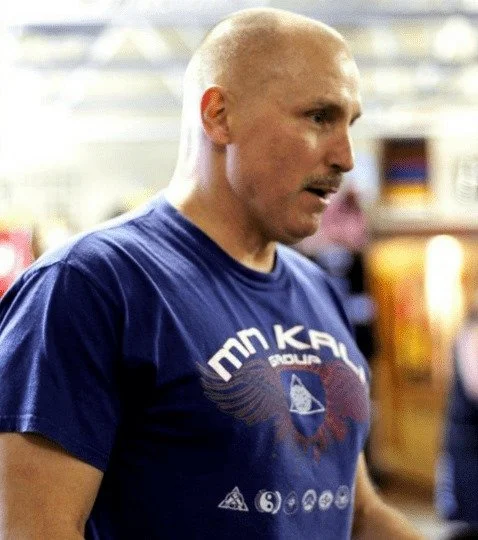
In this episode Jeremy talks with Rick Faye about his journey into martial arts, his transition from TKD to Kali and the influence of Dan Inosanto on his training.
Rick Faye - Episode 1170
SUMMARY
In this engaging conversation, Jeremy chats with Rick Faye and explores various themes surrounding martial arts, travel experiences, and personal boundaries. They share humorous and insightful stories about their journeys, including unexpected encounters on flights and the evolution of social norms in travel. Rick recounts his martial arts journey, highlighting the influence of Dan Inosanto and the transition from Taekwondo to Kali, while discussing the importance of understanding personal safety and legal implications in self-defense situations. In this conversation, Rick shares his extensive journey through martial arts, highlighting the importance of cross-training, the evolution of Thai boxing in America, and the significance of business management in running a martial arts school. He reflects on the legacy of martial arts legends, the challenges of maintaining loyalty and respect in the community, and the personal growth that comes from training with diverse styles. In this conversation, Rick and Jeremy explore the dynamics of martial arts communities, the importance of valuing one's expertise, and the influence of motivational figures like Tony Robbins. They discuss the challenges of maintaining community cohesion as groups grow, the necessity of adapting martial arts to local needs, and the significance of positive messaging in the martial arts world. The episode concludes with Rick sharing valuable insights for martial artists, emphasizing the importance of staying positive and not getting caught up in negativity.
TAKEAWAYS
Travel often leads to unexpected and interesting encounters.
Personal boundaries shift significantly during air travel.
The Overton Window concept applies to social norms in travel.
Martial artists must be aware of legal implications of self-defense.
Kali is gaining popularity in the martial arts community.
Dan Inosanto has had a profound impact on many martial artists.
Cross-training in different martial arts can enhance skills.
Understanding cultural differences is crucial when traveling.
Self-defense tools must be chosen carefully based on location.
Bruce Lee emphasized the importance of boxing in full contact training.
Good Taekwondo is often overlooked due to its Olympic sport image.
Master Chai played a pivotal role in popularizing Thai boxing in the US.
The evolution of Thai boxing has made it a favorite among students.
Business management is crucial for running a successful martial arts school.
Charismatic leaders can inspire students to push their limits.
Loyalty and respect are essential values in martial arts culture.
Teaching should focus on empowering students rather than competing with them.
It's essential to adapt martial arts to local needs and identities.
Many martial artists undervalue their skills and charge too little.
Avoid getting caught up in the negativity of ego in martial arts.
Training should focus on the art form, not the violence.
Students rely on instructors to set the value of their training.
CHAPTERS
00:00 Introduction
01:02 Travel Tales and Unexpected Encounters
07:51 Personal Boundaries and Social Norms in Travel
13:59 Martial Arts Journey: From Taekwondo to Kali
20:12 Influences and Insights from Dan Inosanto
22:02 The Legacy of Martial Arts Legends
26:02 Cross-Training: A Personal Journey
30:00 The Evolution of Thai Boxing in America
35:57 The Importance of Business Management in Martial Arts
48:00 Navigating Loyalty and Respect in Martial Arts
50:30 The 150-Person Tribe Principle
53:32 Building Martial Arts Communities
56:09 Adapting Martial Arts to Local Needs
57:58 Valuing Your Expertise
01:02:03 The Influence of Tony Robbins
01:04:58 Positive Messaging in Martial Arts
01:08:01 Final Thoughts and Takeaways
To connect with Rick Faye:
Home - MKG Martial Arts
Join our EXCLUSIVE newsletter to get notified of each episode as it comes out!
Subscribe — whistlekick Martial Arts Radio
After listening to the episode, it would be exciting for us to know your thoughts about it.
✅Subscribe to whistlekick Martial Arts Radio on the following platforms:
🎧Apple Podcasts: https://apple.co/3mVnZmf
🎧Spotify: https://spoti.fi/3yHVdHQ
✅You can find whistlekick on all social media platforms using the handle @whistlekick or visit our website at https://www.whistlekick.com or https://www.whistlekickmartialartsradio.com
Show Transcript
Jeremy (05:18.935)
Hey, what's going on, everybody? Welcome back to another episode of Whistlekick Martial Arts Radio. And on today's show, our guest is Richard Fay. Rick's here. Looking forward to talking to him. We're gonna have a good time. I can already tell, I've got a feeling. You'll see. You'll see as soon as soon as he starts chatting. I I I think you'll see what I'm talking about. If you don't know me, I'm Jeremy Lesniak. Founded Whistlekick a bunch of years ago because I love traditional martial arts. I love what martial arts does for us. I love how martial arts benefits the world.
And if you want to see all the things that we do to that end, go to whistlekick.com, find the the shirts, find the events, find the books, find the training programs, find all that stuff. If you want to go deeper on this episode or any of the other eleven hundred and sixty nine episodes that we've done of this show, go to whistlekick martial arts radio dot com and you can find full transcripts and and all that good stuff. And and with that, Rick, thanks for being on the show.
rick (06:05.644)
Wow.
rick (06:16.428)
Yes, sir. Thank you. Thank you for having me.
Jeremy (06:18.029)
Appreciate your time. Now I I cut you off so I could do that intro, because you were about to tell a good story. And I I sometimes I let that go in in kind of the pre-show stuff, but I could tell from the look on your face that this was about to be a good story. And I didn't want to make you tell it twice. So w what what it what is this story about cause you would ask me for for the audience sake
rick (06:39.798)
Okay.
Jeremy (06:47.221)
Rick it out, y you're you're a professional martial artist as well. Yes. We have an interesting job, you said, and you were about to launch into story and take it from there.
rick (06:57.74)
So I I get on a plane in Amsterdam coming home. And the guy right behind me is he's an Irish guy, and he's getting he's pouring him down. I he's getting stewed. And there's only a few of us on the plane. So this is when Delta had had a relatively few passengers on that one. And no, that's not true. This goes back far enough that it was still northwest. The the that flight. Yeah. So, anyways, he leans over the seat, he kind of pokes me. He says, Hey.
Jeremy (07:09.495)
Ha ha.
Jeremy (07:21.582)
okay.
rick (07:27.414)
What do you do? What do you do? So I think we have an interesting job, like I just told you. So I said, Well, actually, I teach martial arts. I travel around the world and and teach martial arts to the to our groups, and I I think it's it's really interesting. I said so he kind of sits back. I said, Well, what do you do? I'm a bank robber. So, excuse me? He says, Yeah, we rob banks. My dad and my brother and I rob banks. I take the money overseas, play the exchange rate. He says, I hope I this is not off color.
He goes, I get abroad in a car and I travel the country and launder the money. So, okay, and I'm thinking BS, right? The but the BS monitor is going off like crazy. And so he talks for a little bit.
Jeremy (08:03.863)
Yeah.
Because who who s who says that? And if if you do that, who admits it?
rick (08:11.168)
Right. Well that's what I'm thinking. It's it's it's just yeah. Well this gets better because he passes out at some point and comes to right as the plane's coming down, right? So and he goes up in the hold and he pulls down this bag and the bag is yay big here like that, square. And he opens it, it's full of hundred pound notes. It is literally there's gotta be two million dollars in there easy.
Jeremy (08:12.641)
Kinda hard to make that your career if you're so public.
rick (08:40.46)
And my eyes went like this. I'm like, holy cow, he's not kidding. So he puts it back up and falls right back to sleep. Falls right back to sleep. Well, I couldn't get off that plane fast enough. All I could think of was this guy's just admitted to me that he's robbing banks and I've seen the evidence. So I want nothing to do with this. So, anyways, that was my last contact with the bank robber.
Jeremy (09:07.258)
my lord that you know of.
rick (09:09.362)
Yeah, right. So yeah.
Jeremy (09:10.905)
You know of, yeah. What a trip. What a trip. That's it's amazing what travel is wild and airline travel is potentially the most wild. Of all the forms of tra I mean I haven't, you know, traveled by blimp, but of all the ways I've moved around, airplanes are the weirdest one. You know, we we end up
rick (09:14.1)
Yeah, that that was you meet interesting people.
rick (09:34.358)
Yeah.
Jeremy (09:37.908)
It is it is a requirement to abandon so many social conventions and personal boundaries on a plane. So I'll tell you my story on the opposite. I don't know where you flew into from Amsterdam, but okay, so my my flight from Boston to
rick (09:55.979)
Minneapolis.
Jeremy (10:04.065)
To Europe, my flight to Amsterdam. I'm in the middle seat. I think this is like a DC 10, something it's like 252 on the seats, big plane. And we're 10 minutes in. And this this girl to my left fall falls asleep on my shoulder. She's just passed out. I mean, just full on on my shoulder. And
rick (10:13.1)
Sure.
Jeremy (10:31.039)
It's an hour later, hour and a half later. My my dad and I were already thirty-six hours into this effort to get to Ireland. And flight attendant comes down, handed out, you know, they're giving out lunch, and my dad gets his lunch, I get my lunch. Flight attendant says, What does she want? Because she's asleep on me. So the flight attendant assumes I must know her, which is a reasonable assumption. And I'm looking at her and I'm going, you know, she's she'll have the chicken. So I sh
rick (10:37.502)
rick (10:54.124)
Right.
Jeremy (11:00.801)
They give me the tray, I put her tray down, I put her meal down. Ten minutes later she wakes up, looks down, sees food, looks at me.
Eats her meal right back to sleep on my shoulder for the rest of the flight.
rick (11:16.283)
Sh.
Jeremy (11:19.273)
It was absolutely wild. Because what else do you do? Right? Now I I could have woken her up. She she was so she was Asian, of some Asian descent. Did not assume, based on some things that I had overheard, that she spoke much, if any, English. So I wasn't gonna try to talk to her, but I could still get her a meal. I don't know if I got her the right meal.
rick (11:19.36)
Yeah.
Jeremy (11:46.871)
But she ate it.
rick (11:48.096)
Yeah. When in doubt, guess chicken.
Jeremy (11:51.628)
That's that that was my philosophy. But what what I think might be relevant, maybe this is a place we can start, is this idea of personal boundaries. If anybody else put their body on me out in the world, even in a seemingly innocent way, I'm not gonna tolerate it. But on a plane, well, I hope my shoulder's comfy. I I'm not going anywhere.
rick (12:18.251)
No, yeah. It's it's you're right. Well there's lots of things we do in air travel that there it was referred to in a book. There's a book called The Overton Window. And Overton Window is a it's an advertising concept actually. the book opens with the idea it's in the nineteen thirties, I think, or twenties, but there's a a big business tycoon and he's got this meeting with all the other business leaders. He says, Gentlemen
I'm gonna make water more expensive than gasoline. And they all laugh at him. They said, that's not possible, whatever. So fast forward to today, that bottle of water you have makes a gallon of that more expensive than in. So it's about moving the window of what people will tolerate a little bit at a time. Then you go too far and you pull it back. Then you move it again a little bit, you pull it back. It happens in every everything, from fashion to music to whatever, martial art. It happens this way. So
Jeremy (12:59.149)
Sure does.
Jeremy (13:14.635)
Mm.
rick (13:15.475)
That airport experience, taking off your shoes, being searched, all that kind thing, my parents would never have tolerated that. But we, you know, because of 9-11 and other things, we do. So we tolerate all sorts of things. You know, you see people taking their clothes off the belts and whatever else. And so yeah, it's interesting. Yeah. Travel, yeah. Travel is not not for everybody.
Jeremy (13:21.581)
Mm.
Jeremy (13:36.429)
Mm.
Jeremy (13:41.395)
No, no, and and you know as a martial artist, as someone who's looking to make sure I remain safe, because I I do a fair amount of travel to
Jeremy (13:53.934)
Countries where people do not think, speak or necessarily look like me.
I like going to Central and South America, right? I speak I I speak passable Spanish, but but I stick out. I've had I've had incidents. And the tools that I am free to travel with while I'm here in the States, I can't bring on a plane. So how do I solve that? And what I found interesting was I I traveled once with a a fairly durable one of those metal, you know, safety self-defense pens sort of things.
Only place that looked twice at it was was security in Ecuador. Everybody else just cause it was in my backpack. They just passed it through Ecuador.
rick (14:40.885)
She
Jeremy (14:42.445)
Took took two die two guys, but it's why I always travel with a belt. You know, a heavy leather belt with a with a rugged buckle.
rick (14:49.163)
Sure. I carry a walking cane wherever I go. I have for years and years. Started that in the early 80s. And so you if you see seminar pictures or whatever, then it's it's sort of, well, it used to be a prop. I'm on my second knee replacement now. In in a week I get the second one done. And so it's no longer just a prop. But it has it has come in handy and it it's something you can have in your hands. I'm a collie guy, so having something in my hands makes sense to me.
Jeremy (14:52.701)
Jeremy (15:04.711)
Okay.
rick (15:18.159)
And that that that pen idea is another good one. At least it's something. And you know, the only
Jeremy (15:22.741)
Yeah. Yeah. I I've changed now. I don't I'm looking for the one that I've been I've been using. It's it's more just a cheap generic Yeah. You know, just just a a you know, there's nothing special to it, but it's it's got some well, maybe a little less heft than it did now, but it it was for that single shot, right? But I'm out fifty cents. You know, I got a pile of them.
rick (15:40.277)
Dirty.
rick (15:48.512)
Right. Yeah. I the only caution there is for anybody viewing this. I do research the laws in the different places I go. Let's say you're in England and you strike somebody with something like that, even in a really outnumbered, terrible situation, you're in big trouble. You know, once once they figured out that you used an implement on another human being. it's true here in Minnesota too. We have a special law in Minneapolis about anything.
Jeremy (15:57.674)
Hm.
Jeremy (16:07.383)
Really.
Jeremy (16:14.965)
Interesting.
rick (16:18.571)
especially if it's been modified to be used as a weapon. But anything at all in your hand is felony assault, so you're gonna be so just that's just a caution. But when you need it, you really need it. So
Jeremy (16:22.453)
Mm.
Jeremy (16:27.745)
That's that's important. Right. Right. Where where do where's the root of of that? The the modification piece seems relevant to that too.
rick (16:30.687)
Yeah. It's funny I
rick (16:37.483)
I thought so too. But there was a case here. Now, what did he have? He had a was it a hammer? It wasn't something modified. It was just at hand. And they he got in trouble for that too. So I don't know they did time, but I know he went to trial. So yeah, be careful with that, guys. A lot of the martial art that we do, you know, I don't know how many people are involved in different martial arts that use weapons. And Kali obviously starts there. We that's where everything comes from.
Jeremy (16:54.615)
Hm. Yeah.
rick (17:07.267)
And when you use a lot of weaponry, sometimes people will take it for granted that, hey, I can I can march around with my knives on me and do all this stuff. And I am one of the instructors who cautions about it a lot. You're just gonna get yourself in trouble. And and I always ask, you know, when they go to the mall and they're gonna take out their knife or whatever, they're gonna do this. Ask yourself right in that moment, is this the answer to my problem? Whatever problem is in front of me, is this knife really?
the answer to my problem. And maybe I d I don't know. I guess it could be. I doubt it. Usually not. Usually not. So.
Jeremy (17:43.982)
And and there's also there's a there's a bystander perspective problem that if you are defending yourself and you have a knife and the person that initiated the confrontation does not have a knife, if someone walks in towards the end, you look like the aggressor. What if they're armed?
rick (17:59.893)
Yeah, absolutely. Right? Yeah, no, that's true. I I I caution quite frequently the the C Lot classes at at my school deal with a lot of lethal follow-ups. There's there the follow-ups that they use are a lot of neck breaking. There's a lot of these they're lethal follow-ups. And I will caution them, you know, I say, you know what's gonna happen here? Like you just said, you're gonna be defending yourself justly.
Jeremy (18:12.877)
Mm.
rick (18:26.116)
And right as the cop gets there, you're going to do that stomp on the head. And what he saw was you stomped on his head. He didn't see all that other stuff. And so I I always cautioned, you know, a lot of this is art for art's sake. And in a pinch, okay, you might need to do it. Let's pray we never do. Let's pray we never do. So because it's it's a mess once you start doing doing that stuff. So
Jeremy (18:30.497)
Mm-hmm.
Jeremy (18:50.797)
So Kali is an art that I I I would say is I don't know if I want to say is having its heyday, but is certainly attracting more attention over the last decade than it did when I was coming up. I mean, I I I didn't know anybody doing anything in the Filipino Indonesian martial arts world. You know, Asian martial arts stopped at, you know, stopped at the mainland, unless you considered Okinawa not mainland.
rick (19:03.09)
It is.
Jeremy (19:19.809)
But now we're seeing this this whole other body of work. Is Kali where you started or did you drift there?
rick (19:28.244)
So, okay. I was just talking to my original training partner the other day, which was really a nice we're 69 now, so it's kind of a nice old guy's get together, right? And we were talking about this, and I believe it was 76 when he we had been doing some Southern Praying Manis, Taekwondo, there was a Hapkido guy here. We were just doing whatever was around, right? And it was really we had a good judo guy here. Minnesota was a good judo town then. And
Jeremy (19:53.517)
Mm.
rick (19:58.123)
he went out to a thing called the Aspen Academy. They put this little thing together and saw Dan Anasano. And his he remembers the conversation, I don't, but he called and he said, Rick, this is what we're doing. You gotta go see this guy. We're going next weekend to Chicago. Let's go. And I said, you know, Scott, I think I'll just stick with this taekwondo thing I'm doing. And I I had no idea who Dan Anasano was, right? And I wasn't a Bruce Lee fan much. I knew him, saw the movies.
Kind of flashy for me, you know. and then I went to Chicago in the first weekend seminar he did and was sold from that day on. I said, Okay, I'm on board. Yeah, this is it. And we traveled. Luckily I had a lifestyle at that time where I could go every weekend. We went all over. So I I was blessed with a the ability to do it at that time.
Jeremy (20:44.565)
Mm.
Jeremy (20:51.147)
You are not the first person I've heard say that a single seminar with Dan and Asanto changed their lives. We we've heard that we've had that a few times over the years on the show. There's something and and and you know he he's one of the top people I'd I'd love to have on that we just haven't been able to make work. You know, he's pretty high up on the list. Because and that's what I that's what I've heard. But to when you
rick (20:58.28)
All right, okay.
rick (21:12.182)
He's busy good boy if you can get him and he's wonderful to talk to. J what a genius in Yeah. Just in any category. He's as fun to talk to about religion or he d he skirts politics a bit, but he will. But any other topic. He he he even but as far as a martial art historian, he's amazing. Just amazing. And he'll bounce from, you know, his time with Ed Parker to all the way back, you know, and and he's had
Jeremy (21:21.175)
Sure.
Jeremy (21:32.418)
Mm-hmm.
rick (21:41.181)
He's he he was given access in the Filipino martial arts because his father was the now how does this go? He's the secretary treasurer of the Philippine Farm Workers Union. And this group after World War II, anybody that fought with us could come to America, right? Any Filipino that fought with us could come. So Kali as an art form, Kali Escrima, Arnest, et cetera.
largely left the Philippines right after World War II. There was a few guys that stayed back, the Illustrissimo family, Kinetis are there, but there wasn't too many. Everybody came here. And they all had to come through the Inasano household to get their their it wasn't checks back then. He paid them cash. And so they would all come through and then Mr. Anassano, Sebastian was his name, would suggest that they train the little kid, Danny. You know, you train Danny, train the boy, you know.
Jeremy (22:34.965)
Mm.
rick (22:36.912)
And so he got access to all these people really through his father's initiation first. And then they kind of, you know, as he grew up, they saw who he was and what he was. So yeah, pretty interesting story.
Jeremy (22:39.765)
Mm.
Jeremy (22:44.097)
That's cool.
Jeremy (22:50.581)
Yeah. Yeah and
Jeremy (22:55.327)
It's hard to tell the story of martial arts in the United States for longer than a you know, a few year cycle without his name cycling through, which I find fascinating.
rick (23:05.738)
Sure, sure.
He's been on the forefront of, you know, it's not a surprise that he connected with Bruce Lee. He was going to be that anyways without Bruce. And one of the things he says about Bruce Lee, which it fascinates me every time he says it, he says, you know, Rip, Bruce is not the fastest guy I trained with by far. I thought, wow, I I saw the film. He was pretty quick. Anyways, but yeah, he he's always on the forefront of something. You know, bring in jujitsu up.
Jeremy (23:15.083)
No. Mm-hmm.
Jeremy (23:37.933)
Well I I I've got to ask you now, who who would he say is the fastest?
rick (23:43.366)
I would guess it would be one of the Filipino guys, if I had to guess. He's never said, but the the you know, he doesn't do the hierarchy thing. He this guy better than this guy better than but I would guess it would be one of his Filipino instructors, maybe Johnny Lacosto or or Leo Haron, one of one of the people that that, you know, Villabreu, maybe. So yeah, there's a long list of those guys. You know, when you train with him, when you just train in the single stick.
Jeremy (23:46.559)
Okay. Okay. all right.
rick (24:12.925)
There's 50 different instructors involved in that curriculum. And so people will say, Well, where did this come or that come or where did this come from? Who knows? You know, they they'll say, Well, this is Illustrissimo System. Okay. there's five brothers. I don't know them. I've never met them. And I got this information through Dan Inasano. So I always just say Inasano method. It's just as easy to say that. But he's he's he's got so much research and so much access.
If you can't tell I can talk about Dan Inasana for a lot. So
Jeremy (24:45.393)
Yeah, I I I can tell, but I w I wanna steer it back to you. So, you know, as as we were kind of talking about your story there, Taekwondo and and you you find
Mr. Anassanto did you drop Taekwondo? It kinda sounded like you made a full okay, you didn't, so you're now you're cr you're cross training.
rick (25:08.541)
Yeah. Yeah. And we were we had I I started my my college career up at UMD, University of Minnesota, and then transferred down here. And there was good taquando programs in both. when I got to the university here in Minneapolis, the guy running it was my roommate. So, you know, I stayed with the taekwondo and but I was a terrible taekwondo student. I only went on sparring days. there was a boxing gym up at the university connected by one door next door.
And of course the taekwondo guys didn't want to go to the boxing, and the boxing didn't want to go to Taekwondo. So I'd sneak from one. We had Tuesday, Thursday sparring. So Monday, Wednesday, I would go up there and I'd kind of sneak around the corner and go in the boxing room. And then, but back then they didn't mix like they do now. You know, that wasn't as common. you were just coming out of. So when I started that, PKA was pretty big. So you had Bill Wallace and Mike Stone, those guys, they were, they were doing the PKA. And
Jeremy (26:02.209)
Mm-hmm.
Yeah.
rick (26:09.416)
What then WKA comes after that. Cause Bill Wallace, he was he was with us out in Irvine and he was talking about how how barbaric leg kicking was, that you should never kick at somebody's legs. He just wouldn't wouldn't entertain that at all. And and he didn't need to.
Jeremy (26:26.645)
Well, you can understand why given his injury. Seems seems logical.
rick (26:30.333)
Yeah, yep. And he was so good on the high line that he kicked me in the back of the head. I still don't know how he did that. I'm you know, boom my god, I'm looking okay, which one of you guys did that? 'Cause it can't be him. It was yeah.
Jeremy (26:45.463)
He he once put his toe in not on in my ear at speed, that level of accuracy.
rick (26:55.367)
I believe it. Yeah. He could do a speed bag with that left leg.
Jeremy (26:57.513)
Anybody who's been around and believes it, he he's he's amazing.
rick (27:02.493)
And I didn't know him well. I dealt with him a few times, but what a nice man. What a nice guy. I th I thought that was he was a very good representative for his art and what he did. You know, Chuck was the same way. And I thought there, okay, so all the fame and whatever. but aside from that, they were really nice people. I thought that was that's a good thing.
Jeremy (27:07.842)
Yes.
Jeremy (27:14.445)
Mm-hmm.
Jeremy (27:26.509)
Absolutely. Okay. You you mentioned you were cross training in an era that was not big on cross training. It's it's interesting. Having people on the show, you know, when I talked to the folks who started training back in the sixties, they were all cross training, or it seems like they were all cross training. And then as we got to the late seventies and the eighties, we had that kind of identity, my martial art is better than yours sort of thing here in the US. And so you're talking about that time period.
But you were it you were bucking that trend. What was it that made you feel confident or or that it was appropriate for you to train in Taekwondo and go to the boxing gym?
rick (28:07.914)
Well, I have a brother. this explains it's all it's all his fault. Who's I always say this, he's he's taller, better athlete and better and good more good looking than I am. So he's just he's just this thing, right? And I couldn't let him get ahead of me in any one endeavor, right? So he's younger than I am, so I had to be the big brother. You know, when he started Wing Chun, I had to go do Wing Chun, you know, and and it was like that. So the boxing was part of that, you know, they had already taken him on board and
They actually wanted him to turn pro, but he was he was smart enough not to do that. But so I was sort of nudged into cross-training because I just was too stubborn to let my brother bypass me there. So and it made sense. You know, it always made sense. I I know one thing that Bruce Lee said was when you guys go full contact, you will get a boxing coach. And back then, this is Joe Lewis era.
Jean-Yves Terrier comes right after that out of Canada. But these guys, that was heresy until they went full contact. And then all of a sudden the guys with good boxing coaches were winning. And it was just that simple. And so that that mix of of influences and we didn't think of it at that time, but ranges, you know, so that you've got a long range capability. The the taekwondo, you know, people I think miss the validity of taekwondo.
because of the Olympic sport. You know, it looks kind of funny. But Good Taekwondo, which we had a couple people here, June restarted here. And you know, we had there there's some really good people around here. Moon Kim was the guy that we were under. But that was quite an art, still is quite an art. And I remember one good story. When we started our tie boxing program, the guys they were good, but they were really getting a little bit full of themselves about
Jeremy (29:36.501)
Of course.
Jeremy (29:49.996)
Mm-hmm.
rick (30:02.299)
Yeah, we're really doing the conditioning. Nobody's working as hard as we, you know, it's that kind of prideful thing, right? So I called and I had one of the fight trainers from the Taekwondo Club, Scott Storla said, Scott, I want you come over and do the fighter workout on Friday. And so he ran them through all the kicks on the wall. We kicked the bag, we kicked the kicking shield, we did all this stuff. The next day they begged me never to have him back. They said, don't let him come back. So you guys, I told you all of these arts are working just as hard as you are.
You know, it maybe a little different approach, but but all of those guys were working hard. We we had Bafasaro is here, it's a Shotokan group here. And I had a great relationship with the Shotokan group. And they were hard workers, they were tough guys. You know, so you had to you had to go from thing to thing. And I think that's what I learned from Dan most is to grant validity right up front to whatever you're looking at. So you look at the weird-looking C Lot system, he's crawling on the ground.
Jeremy (30:46.391)
Yeah.
rick (30:59.524)
It's valid, you just have to figure out when and where and why. What what what are they doing?
Jeremy (31:02.669)
Assume the positive. Mm.
rick (31:06.156)
Mm. Yeah. And he embodies that. So I I try to emulate that a bit, but so yeah.
Jeremy (31:17.549)
Where so where do we go on on your journey next? Like it it's you know, I mean I'm hearing these repeated comments that suggest cross-training remains part of your story, maybe maybe indefinitely, but
rick (31:29.522)
Yes. Yeah. And well at at that point it becomes cross-training with other people, but guided by Mr. Nassano. He would suggest, you know, there's a man, Leo Gahi, he's a Piketty Tertia guy. And Piketty Tertia's now all the rage. It used to be this weird little sideshow. But he used to come stay at my house. But he that was recommended by Mr. Nasano. You should go check Leo out. I think you like this guy.
when I connected with Larry Hartzell, that's really where my Larry Hartzell is is the beginning of my international career. And he he was nice enough to take me overseas. You know, I was a kid. I'd never been overseas before and all that. So but and Guru and Asana would say, you I you to go train with this guy, go train with this guy. And and he knew so many people and had such influence with them that it w it was pretty easy to do. You were always let in and it was good. So
But and then some of them were just people coming up out of that academy. Paul Vunak would be an example of that. Where Paul comes out of the Torrance Academy and starts to rise in his own right. He's he's a phenomenal martial artist, especially back then. And his particular take on martial art was to be able to do it in the street tonight. You know, we were bringing our mouth guards to bars and there was it was yeah, I I
Jeremy (32:51.373)
Mm.
Wow.
rick (32:56.338)
Don't think it was particularly morally correct, but but it it's phenomenal talent. And there's no accident that he got the job with the SEAL teams, because he he wanted martial art to be real down and dirty for right now. Take the art form and kind of push it to the side and let's see what works on this guy tonight. And boy, he
Jeremy (33:16.887)
How did you feel about that being being around that?
rick (33:20.456)
So I think I learned two things. one is Paul, have you interviewed Paul?
Jeremy (33:28.267)
No. No, but I would
rick (33:29.114)
Okay, he would be he would be a great interview. smart guy, very charismatic. And what I learned is that a charismatic leader can get you to do things that you wouldn't normally do. And that that I've heard other martial artists talk about leaders like that. You know, we had a guy in in Minneapolis, John C. Kim. Choong Moo Kwan was the name of the art he taught, but he was getting people to
sell possessions and give them the money. It was it was really kind of weird. But a charismatic leader can get you to do things. And then the other thing I think I got from Paul was that he brought more out of me than I thought I had. You know, there there was one of the things and I s I threaten my guys with it now. He talked about pain tolerance a lot and cultivated it. So the sparring would routine would start with he would throw you against the wall
Jeremy (34:00.046)
Mm.
rick (34:26.672)
And start slapping you. And I mean, just slap. I had big handprints all over me, right? And then you grab you and say, go spar. And so now you start your sparring where you're already in pain. That was the purpose. And if I'd have been a little brighter and a little more sane, I wouldn't have allowed it. But at that time it seemed like the thing I had to do to to learn martial art. And
Jeremy (34:48.333)
Well there there's some logic to it. I I can I can I can see how you can get there.
rick (34:54.054)
Yeah, yeah, we got there. I'm glad we don't do that now. You know, you've very few students and but yeah, but he he's an example of a guy who had his own take on the martial art and was a phenomenal talent. I mean he at that time was as good. I remember I read a thing somewhere and they were criticizing one of his kicks. It was whatever. And I said, Look, until you've been on the end of that, I don't want to hear the criticism. Because it's it's yeah, anyways.
Jeremy (35:19.222)
Yeah.
rick (35:23.688)
Pretty phenomenal. But then as we go forward, there's there's these people come into my life. Master Chai will be one of them. So Chai Sir is the Thai boxing USA. And he brought to say that he brought Thai boxing to the US is not exactly true, but it's pretty close to that. He made it popular. So the the best early Master Chai story that I know is he shows up here, he's got a very influential family.
Jeremy (35:35.277)
Okay.
Jeremy (35:44.759)
Okay.
rick (35:53.264)
It wasn't until his mother died that we found out they're actually royalty in Thailand. But yeah, so they're a lot of influence, right? Anyway, so he ends up in the US. They send him to the US, go find your way. And he's at Hollywood and Vine, because he wants to see this famous place in America. Meets a bunch of kids, finds out that they're going to some concert. And one of them says, Well, we got a bus. His last name is Dunlop from the Dunlop Tire Company. So he buys a bus, loads all these kids up.
Jeremy (36:20.311)
Mm-hmm.
rick (36:23.164)
This is his first week in America. They take him to Woodstock. So his first American experience is he goes to Woodstock. Isn't that great? And then yeah, and then but he spent his lifetime pushing tie boxing. And I I was a part of that very early because of my training partner, Greg Nelson. He was he was really pushing the tie boxing here. And we always had that.
Jeremy (36:27.041)
Ha ha!
Jeremy (36:30.551)
That's a trip. That's funny. I like that.
Jeremy (36:47.083)
So what I'm trying to remember when I first became aware of of Moy Thai, Moi Baran and it it's
Last twenty years, twenty-five years? But you're talking about far before that. You know, what as someone who had some context for what other martial arts looked like, what what were your thoughts, you know, running into Thai boxing?
rick (37:03.794)
Yeah.
rick (37:16.23)
Well, so in the JKD world, we're taught to think about different arts and what attributes they foster. So you you might do an art for flexibility, you might do an art for sensitivity, you might do an art whatever qualities it brings out. And Thai boxing, first and foremost, had conditioning. And my training partner at that time, Greg, was he was a collegiate wrestler, division one wrestler. So hit conditioning, that's what he was all about. And
Jeremy (37:24.502)
Okay.
rick (37:46.892)
He was a such a pain in the ass. But you know, One of the best things I ever did with him was I vowed that I would never let him see me tired. And I remember walking up the stairs to that gym and my legs would already be burning, just get trying to get up the stairs. And I looked down the hallway and go, shit, he's already here. But so we had a lot of conditioning. I liked the the simplicity of the structure.
Jeremy (37:49.355)
Ha ha ha.
rick (38:17.351)
you know, they call it the art of eight limbs, right? So it's you got two legs, two hands, two elbows, two knees. That's it. And so it's kicks, knees, and elbows and punches. and I liked the way it was structured. I never had any desire to fight in the ring. I was 41 before Master Chai stopped asking. I remember that. He'd ask every year, you know, okay, this year. And I I just wanted to do the art. It was part of the rest of the art that I was doing.
Just part of the training. and it started to grow. I if I would have predicted back then, I would say this will never be popular. It's too hard. It'll never be popular. Now, as it's evolved, it's our most popular class now. Thie boxing is basically
Jeremy (38:56.813)
Hmm.
Jeremy (39:02.977)
Why why is that?
Because you think because it's hard?
rick (39:08.845)
Yeah. And you know, we did a lot of the training on the tiepad. The tie pad was the big thing then. And then we do this spa what they call timing sparring. It's just a light sparring. And the plum, they they they work close range with knees and elbows, that kind of thing. now everybody's got shin pads on for one thing. That wasn't true back then. We I didn't grow up with shin pads on. And they train on the body, so they actually kick each other instead of the tiepad. And they seem to really like that.
again, I wouldn't have predicted that. I I have people that that help me now and I let them kind of guide the flow of the art. And the way it's going now, they they start drills just kicking the leg, you know, just covering and they learn right on the body. And it's very popular. So yeah, it's rare we don't have a 40 person class. So it's yeah. it's wonderful to see. Yeah. And now they're all twenty something, but okay. You know,
Jeremy (39:57.271)
Wow, that's cool.
rick (40:06.021)
It's not an art for old people necessarily.
Jeremy (40:10.283)
No, what's what it the the average career of a TIE fighter is something like two years?
rick (40:17.618)
Yeah. A twenty one year old champion would be old.
Jeremy (40:18.914)
It's it's pretty short. Mm.
rick (40:23.237)
Yeah, there's some facts about Thai boxing that was you know, they kill thirty to fifty people a year in the ring.
Yeah. And now a lot of that was that may be an old statistic, but a lot of that was these back alley or we call them back alley, but they're bar fights basically, where you could go to a bar in Thailand, a lot of our service members did that, and you could challenge the local fighter, the local champion, to a fight in the ring. And so you had a lot of untrained people going and and not really realizing what they were about. But a lot of it happened because of the knee. They would get knee to the body.
Jeremy (40:52.077)
Hm.
rick (40:58.649)
And then they would start internal bleeding, and then later that evening they would pass away because of the bleeding. So my goal here was always to make Thai boxing safe and accessible. So safe meaning we weren't getting crushed all the time. And I'll I'll cover I've I've got a background in concussive studies. I've studied concussions a lot and brain effects. And then I wanted to make it accessible because.
Jeremy (41:22.327)
Okay.
rick (41:27.279)
Not everybody was, I wasn't as good as my training partners. You know, I'm training with a Division I wrestler. Eric Paulson had come in by then, and the other guys were better than that. You know, they were they were all superior athletes to me. And which was a challenge every day. I learned a lot about that. If I could if I could give advice to any instructor, it would be to not compete with your students. Teach them, but don't compete with them. And
Jeremy (41:32.258)
Mm.
rick (41:57.358)
I I spent a lot of time trying to compete with my students, much to my frustration. And I think I had more I had more things to teach them. there was a guy, Phil Norman in England. He's a big deal over there and now, and he should be. But I finally told him one day, I said, you know, Phil, I should have taught you more. I I was intimidated by your physicality and I tried to keep up with you instead of teaching you. And I think that's if I had to give instructors advice, that would be that.
Jeremy (42:19.829)
Mm.
rick (42:26.929)
But yeah, we always had great athletes. And so gaining these attributes from each art was a priority for me. You know, things like the speed bag. I started the speed bag training early because I took one look at Dan Anasano and these other people. It's who is it back then? It's Jeff Amada, Richard Bastillo. It's all these people, right? And I think this big white guy from Minnesota needs some help in the hand speed department. So let's let's get on the speed bag and start working. and that was the thought process for a lot of the arts we did.
Jeremy (42:53.782)
Yeah.
rick (42:57.007)
Is what attribute does this give us? So that was really, you know, we brought so we were involved. I mentioned that we were involved in judo. We were bringing the guys, I had a connection in Edinburgh. that's where the British judo team trains, down at the Edinburgh Club. And the connection there was Rick Young, fantastic martial artist. He'd be another great interview. But he connected me with the British.
Jeremy (43:15.563)
Mm. Okay.
rick (43:26.897)
Judo team. Now, I wasn't in that in that class at all. And the one training I did, I thought I was gonna die. But they would come over and they were and they were hilarious, by the way. Yeah, they were really fun people. so we were doing that, and then we started to bring really at the behest of Paul Vunak, but Dan as well, we started to bring Brazilian jiu-jitsu to Minnesota. And nobody wanted anything to do with it. You know, this is
Jeremy (43:34.253)
It's kind of my experience with judo too.
rick (43:56.581)
Early 80s and mid eighties, 84, I think we started that. And the the judo guys here were just looking at it saying, Well, it's just good judo. That's all it is, just good judo. So, yeah, but if that's true, why are they beating you every time? You're getting your ass kicked here. So we had to look at it, and then finally we made a connection with the Machado family. John Machado was my judo connection, and mostly because
Again, like the other people we've talked about, he was a really good person and nice guy and a good spokesman for his art. A really good spokesman. There wasn't a lot of sideshow stuff going on. There wasn't, he was just a straightforward, great martial artist. You know, I remember the first time he came here, at the end of the seminar on Sunday, he wrestled 41 people. He rolled with 41 people in a row. And at the end of it, he's sort of straightening his belt and
You know, thank you for training me. Thank you. Thank you. Everybody on the sidelines is wrecked. They're all like laying there. And and he just, yeah, thank you very much. You know. but it's another example of bringing an art in where, just like with Thai boxing, you the taekwondo people looked at it, they didn't really want anything do with it. And the one guy says, Well, it's just power taquando, that's all it is. Well, no, it's got its own tradition and whatever.
Jeremy (45:01.323)
Ha ha ha
rick (45:21.754)
Brazilian jiu-jitsu was the same. You it's just go judo. That's all it is. And so I think each time you bring something new in, you're going to get resistance. But my thought with the jiu-jitsu was two things. In a JKD sense, it gave you an option. So what if we end up on the ground? For years we've considered that a failure. You know, okay, so we ended up on the ground. Let's stand up and try this again and we'll do that. Now, what if we end up on the ground? Maybe we should be able to operate there. And they seem to have the best, best feel for me.
Jeremy (45:25.185)
Yeah.
Jeremy (45:37.485)
Mm.
rick (45:51.344)
For that. And then I also like the attribute side of it. A lot of us, if you didn't grow up in a context sport or anything like that, they just needed to be roughed up a bit. You know, just to have your pulled on and pushed on and push your head and whatever. You know, it it just it was a bit of a toughening process that went on with that training. And I thought that was good for us too. So
Jeremy (46:14.845)
Mm. Nice.
rick (46:16.657)
Yeah, it's been been an interesting ride. But boy, you know, when they talk about we're at the 25th anniversary of 9-11, which was a really big event for everyone, but me too. But and I think, that's 25 years ago. That seems like yesterday. You know, I called on one of my older students just last night and I said, you know, Jason, when'd you start? And he says, 92. And to me, that's a new guy.
Jeremy (46:24.525)
Mm.
Jeremy (46:35.073)
It does.
rick (46:46.168)
And everybody goes, ninety two and
Jeremy (46:46.549)
Mm.
rick (46:50.754)
Yeah, okay. I gotta change my perspective. So but
Jeremy (46:54.699)
Nine ninety two's a couple of years ago. That's for sure. I I I wanna go ahead. No, keep go keep going on but
rick (46:57.22)
Yeah. But what I would say is, good. It's just been it's been s such a wonderful ride. I mean, I could I could talk about the the the blessings that I've been given over time and and the people that I've met and the travel and all of that stuff, but but what a wonderful way to well here, I'll say it this way. It's a wonderful way to make a living, but every one of my students that comes to me and says, you know, I want to open a school.
The first thing I do is tell them to keep their day job and try to talk them out of it. And then when they insist and well, I'm okay, now I'll tell you it's a fantastic way to make a living. If you can make a living doing martial arts, I can't think of what I'd rather do. I can't think of anything I'd rather do. So yeah, it's been pretty darn cool.
Jeremy (47:29.269)
Mm-hmm. Mm-hmm.
Jeremy (47:45.749)
Right. Right. opening a school is a great way to work really, really hard and make a very small amount of money.
rick (47:54.586)
Right. Yeah. And I I'm I'm happy to see that that's changing a little bit. More people are successful than used to be, but you're right.
Jeremy (48:03.713)
You've got more people willing to ask for help, willing to accept help, and willing to do it differently than their instructor did it. And that's what it's been re what's been required.
rick (48:15.111)
Yeah, yep, yep. Boy, you are so right. Yeah, d ours changed. when my wife was still alive, we we had a big meeting about getting a me a business manager. And I, like all martial artists, said, Well, no, I can do this, because that's what we do, right? We can we can do this. Best move we ever made was to get a business manager. And the conversation was we can't really afford them, but we can't afford not to have them.
If we're gonna go where we wanna go, we can't afford not to have them.
Jeremy (48:46.039)
So so t talk talk because that's you know, again, you're you're eleven hundred plus episodes in. I don't know that I've had anybody on the show who's talked about having a business manager. So talk about what that is and what that looks like.
rick (49:02.094)
Okay, so you need someone who is dedicated to the idea of running your business efficiently and putting together a system so that it's professional, right? That that the thing runs like like a Hilton Hotel. It's an example we use quite a lot. And I lucked into or I was blessed with meeting a young guy.
Jeremy (49:20.066)
I see.
rick (49:30.99)
With some business acumen, his parents ran different businesses and he was part of that. And so he had an idea what he was doing. he was a student for a little while, but he wasn't enmeshed in martial arts so much that he couldn't see the forest for the trees kind of thing. And his name's Colton, by the way. I'll I'll throw that name around as we go. And he basically learned as he went, but boy, was that a relief for me.
Jeremy (49:47.885)
Mm.
rick (50:01.51)
To just put all of that on him. We paid him as much as we could going along. You know, I still pay him as much as I possibly can. and realize that I have input, you know, I oversee the whole thing. I'm the owner. But his ideas are fantastic. My job is to nod and smile and approve of what he's doing and thank him for it. but to get a business manager frees up the practitioner to be the artist that they are.
Usually by the time they're talking about something like that, you know, I'm I'm sure that you are quite an accomplished martial artist. I don't know that you're that accomplished in your business world, maybe, but I don't know that. So to fill that gap, you need someone where that's their job. You know, maybe they train, maybe they don't, but their job is to set up the intake. How are you getting leads? What who's following up on that? What does the desk look like? How do people check in? All of that stuff.
Jeremy (50:31.82)
Mm.
Jeremy (50:57.313)
Mm-hmm.
rick (51:01.521)
And yeah, like I say, I I've been blessed. The the the story, the the horrible story, but one good illustration of getting someone who's really sharp. When my wife got sick, I came in on a Tuesday and I said, Colton, we're going to Arizona. It's her only chance. We got to go get treatment. I said, run it the best you can. We'll probably have to sell it. And I just left. And here's this kid basically. You know, his eyes are this big. And I said, I'm sorry.
And he he kept it running even in the face of incredible just setbacks. We had a jiu-jitsu guy. This is another cautionary tale for other martial artists. We had a jiu-jitsu guy who came up, he started as my student, but he came up through, ended up getting a black belt, and he was running a jujitsu program in the school. Great. Okay, so I think okay, I got that taken care of. assured me three different times we went out for a beer.
Jeremy (51:41.165)
Mm.
Jeremy (51:49.261)
Mm.
rick (52:00.644)
Assured me three different times he didn't want his own program, just wanted to teach in the school. Great. So we spent time advertising, building, doing all the things that structure a program. And then while I'm gone, the week that my wife passed, actually, he decides to just up and leave and take 51 students. And he just decides to go open his own thing. So in the face of that, Colton still keeps the school running, builds it back up, you know. And so I if you can find somebody like that, boy, that's you know.
Jeremy (52:15.165)
Yeah.
Jeremy (52:29.975)
Yeah.
rick (52:30.725)
It's it's wonderful. One absolutely wonderful.
Jeremy (52:35.553)
I I've I've heard similar stories a few times that the
the instructor taking a chunk at a time of duress.
rick (52:46.97)
Yep.
Jeremy (52:49.323)
And I have a really hard time with that.
rick (52:53.059)
Well, you know, when I came up in Yeah. Right. Yeah, when I came up in martial art, there was a thing called loyalty. And that seems to be in the MMA era, that's one of the qualities that is maybe less emphasized. I'll try to say it nicely. respect is the other one. you know, it's funny, I go to do seminars and in the MMA era, I get sized up now. I walk in and they're doing they're over there going,
Jeremy (52:53.655)
There's a right way to do it, and that's not it.
Jeremy (53:02.018)
Yeah.
Jeremy (53:09.922)
Yes.
rick (53:22.509)
Really, at this age, I gotta put up with you sizing me up. but yeah, I've heard a lot of those stories where one of the senior students or instructors in the in the pipeline decides they're all that and they need to take their students and go do their own thing. we've got fairly solid non-compete clauses now that all of our instructors sign.
But it really only protects you for a certain distance. It's 10 miles here. So that's really all it does.
Jeremy (53:55.726)
Yeah. And you have to sue to enforce it and and yeah. The I I in in my last business, which had nothing to do with martial arts, I I my employees had non competes. And it was the purpose of it for me was it helped them understand what was expected.
rick (54:10.799)
Yeah. Yeah, that's a good idea.
Jeremy (54:12.149)
You know, it's it's drawing a boundary. I I'm curious at the time that this gentleman took some of your students and went off on his own, was your student enrollment somewhere in the one hundred fifty to two hundred range?
rick (54:30.521)
Would we have been probably 250 in there somewhere? 225, 250. Yeah. And and
Jeremy (54:35.901)
Okay. Yeah, there's this interesting psych principle that comes out of sociology that says a tribe really struggles once it grows beyond 150. And yeah, and I see it, I've seen it happen so many times in martial arts schools, I've seen it happen in dance schools, CrossFit gyms, that people work their tail off, they get up to 150 to 200 people, and then something happens that knocks them back below that 150 mark.
rick (54:46.383)
Is that right?
rick (55:04.973)
Interesting. I g I guess I have heard that, yeah.
Jeremy (55:06.745)
And that that's that's why I asked Yeah. Yeah. So that that would have that would have brought you back to you know 175-ish. And it you know, it's not like it's a a magic number at 151, you know, bad things happen. But it's it it is interesting that that starts to happen in what we do and in so many other
rick (55:17.261)
Yeah, yeah.
Jeremy (55:27.799)
Groupings based on common identity, right? Martial arts being an identity, you know, dance, CrossFit, whatever, being identities for people, you know, in a way that we don't have a lot of identity groupings in the world anymore, but that principle still seems to hold.
rick (55:38.938)
Yeah.
rick (55:45.913)
Yeah, that's interesting. Yeah, I've heard that quite a lot, actually. Yeah. The idea of so my first example would be Greg Nelson. As as we were coming up in the school, well, when we finally decided that we wanted students, because at the first we didn't want students. We didn't want students. If you get to interview Eric Paulson, ask him about the first time he came. Because he he walks up to this old gym, it looked like a Rocky gym. That's what it looked it was old dirt places.
But we're we're sparring. We were beating. I think we're both bleeding. That's the way he tells the story. But we're we're beating each other. And Eric walks in and he's he's wants to know about signing up. And Greg just looks over and he goes, hell no. And he literally shoves him out the door and closes the door, and we go back to work. So the next time he came in, he brought his girlfriend, Wendy. And she was adorable. She was really cute. And all the guys looked over and they're like, Yeah, he can stay. So
Jeremy (56:28.461)
Ha ha ha ha ha.
Jeremy (56:33.421)
Mm.
Jeremy (56:43.317)
He knew what he was doing.
rick (56:43.336)
yeah. But when we finally started to get students, and it I I initiated it. I I sat down with Greg and I said, Look, I've got Greg Nelson here. You're certainly one of the best at that time, and now he's one of the best martial arts in the world, bar none. I mean, he is just an unbelievable physical and intellectual talent. And his accomplishments go on and on and on. Anyways, at that time I said, Greg,
Jeremy (57:04.631)
Mm.
rick (57:10.316)
I've got you teaching a Thai class on a Friday night, and that's it. That's not right. Let's try to open another school. Let's see what we can do. You should have more than this, than what I'm able to give you. And then we tried operating co-schools, I guess you would call it. It wasn't branches. It was more like, let's do these two together. And then the together thing kind of folded. It was more his school and my school. And and we operate in the same town. I still get along with them great. Everybody's good and
Jeremy (57:32.789)
It's all sure.
rick (57:37.558)
His is slightly more successful than mine, not a lot, but slightly. And yeah, so all's good. But to get that to happen, d boy, you know, I think of my Seattle group. There's two guys that split off there, and there's all kind of bad feelings about it. And then, you know, it's it's always seems to be the same. And I bet your numbers are about right, by the way. As I'm thinking about these different groups, that sounds about right. Yeah, it's a weird phenomenon.
Jeremy (58:03.393)
I've seen so many schools, you know, again, and it's not just martial arts, so many of these groups that they hit one hundred fifty and all of a sudden there are two groups of seventy five. It happened so often. It really is fascinating.
rick (58:21.037)
I wonder, you know, I wonder if it would be better if they had a bigger organization. You know, MKG now has become a big international organization. And I wonder if that creates a little more cohesiveness, because there's branches all over the place. but yeah, interesting.
Jeremy (58:38.961)
I if I suspect if the subunits can operate with some independence, it facilitates that. You know, I think I think the moment that it's scripted
rick (58:47.628)
Yeah, yeah. Yeah, yeah.
Jeremy (58:55.445)
it becomes it be that I think that's where the issue if if you know location A and location B feel like they're smooshed together often enough that there isn't a boundary.
I think that's where the issue comes up. Well what is
rick (59:12.93)
Yeah, we let them interpret the the the whole art, this is the whole JKD concept is you interpret martial art and perform martial art according to you and your students and your area and all that. Every certificate I've gotten from Mr. Inosanto says to adapt the art to my students. And so you have to you have to take good parts of it that you can do well, that you understand, and and then adapt it to your area. You know, things are different in England.
They're different in Spain, they're different in Germany. You know, you have to adapt to what your people want. And even in the United States, you know, the the Seattle group is quite different from the Detroit group, from the, you know, they just operate differently and leaving them the freedom to take from our general curriculum, we have a big curriculum, but take the parts that will work for you and use them to grow your business. And then everybody chooses different parts from yeah.
Jeremy (01:00:09.857)
And and that's what the organization is, it's your vision of that and supporting that for others?
rick (01:00:15.951)
Yeah. Yeah. I'd like them not all to be successful. What I do run into quite often is not all martial artists want a big school. And so we have a number of people, you know, they've got the MKG moniker on the front of it, but they have a day job or something, and then they they just want a few students, you know, and that's quite common. I mentioned England, it's quite common there. You know, they're training in a in a exercise hall somewhere and they train
three days a week or whatever it is, you know, that that's pretty common. So but the ones who want a big school, I'd like them to be successful. You know, there's no reason not to make a six-figure income in martial arts. It's it's, you know, doable and you know the you know the biggest thing with that is it used to be, and maybe I'm showing my age again, but There is this thing called the martial arts martyr syndrome. And I've heard it over and over and over again.
Jeremy (01:01:09.565)
Mm.
rick (01:01:11.874)
Yeah, I'm teaching, but don't worry, I'm not charging much. Or, you know, I'm gonna do this event for this guy, but I won't charge him. And I always look at him and say, Well, you've you've just cheapened your art. You know, there are other people who have put in the time and effort that you have in your craft. And they're called doctors and lawyers, and they're scientists, and they make a lot of money. And you should too. And I I'm not saying to gouge the public or
bastardize the art in any way 'cause you can teach good quality martial arts in a in a way that draws people to you and make a good living doing it. So
Jeremy (01:01:53.11)
Okay. The exercise that I'll I I I work with martial arts schools, I do some consulting and qu where this surfaces is I'll get a school that hasn't raised their rates in three years or something. You know, and and their rates are bel far below market and inevitably they're not the school is not successful in the way that the person I'm talking to wants it to be. And I'll say, Okay. So one of the first exercises we'll do, I'll say, Okay, your homework for our next session.
rick (01:01:58.097)
good.
rick (01:02:05.4)
Yeah, yeah.
rick (01:02:15.992)
Okay.
Jeremy (01:02:21.309)
I need you to go back and figure out how many hours you put in in your martial arts career to get to where you are now and how much money you put in.
rick (01:02:32.001)
wow.
Jeremy (01:02:33.973)
And once they see it on paper and they and and they start to realize, okay, even if my time is worth $10 an hour, I've spent $500,000 or a million dollars, or you know, we start to adjust for inflation and things, and realizing they've put in, you know, six, seven, I mean, depending on where they are in their career, eight figures into developing their knowledge and skill. So why are you charging thirty-five bucks a month?
rick (01:02:57.165)
Right.
rick (01:03:03.699)
Right, right. That's a really good point.
Jeremy (01:03:06.345)
It it d it doesn't it doesn't add up. And once they see that, it is usually easier to get them to shift.
rick (01:03:15.171)
Good. Well, what a great exercise. You know, it reminds me of a story. I'm I'm going to. I'd like to do the calculation. Boy, that may be frightening though. Let me see, it cost me at least one marriage. It cost me at least one marriage. It cost me over and anyways. There's a great story about Picasso. And I bel the the way I heard it is Picasso is sitting.
Jeremy (01:03:18.945)
By all means steal it.
Jeremy (01:03:26.922)
It's it's a it's usually a big number.
rick (01:03:44.779)
with Hemingway in a bar in Cuba. And I hope this is true the way it is, but the illustration is good either way. yeah, so One of the guys recognizes and and comes up with a napkin and says, Pablo, would you just make a quick sketch or something, just something on the napkin so I can say that I met and talked to Pablo Picasso. And Picasso takes five minutes and draws something and I'm sure it was amazing. Whatever he just he does it.
Jeremy (01:03:51.841)
I already hope it's true.
rick (01:04:13.121)
And he goes to hand it to the guy and he says, That'll be ten thousand dollars. And the guy looks at him and says, Whoa, wait, wait, wait, wait, wait, that that took you five minutes. He says no, that took me a lifetime.
I thought that was a really good story. You know, you talk about the thirty-five dollars a month. Well, my time's only worth ten dollars an hour. That's a lifetime of work you've put in. And learning your craft, whatever craft it is. So
Jeremy (01:04:39.851)
Yeah, i if I I do believe when when I look at martial arts schools that
Knowingly undercharge, I think they do themselves and their students a disservice. Because the students don't know, they don't understand what martial arts is. They're they're students, especially on the newer end. So they're relying on you to tell them what it's worth. And when you tell them this thing that you're coming to do is a third of the price of going to that weightlifting gym.
rick (01:05:04.323)
Yeah.
Jeremy (01:05:17.483)
Or that Pilates gym, or, you know, half the price of taking violin lessons over there, they believe you.
rick (01:05:22.134)
Network.
Right. Yeah.
Jeremy (01:05:29.087)
If you offer something that is amazing, you should charge a price that reflects that.
rick (01:05:35.497)
Absolutely. Yeah. Yeah, there's and there's always a balance for for your what the market will bear, but it's more than they think. It's definitely more than they think. And I got a chance to spend some time with this guy. Do you know who Anthony Robbins is? The motivational speaker? way back when he was really just getting going, I had a chance to spend a weekend with just a few people and I. And
Jeremy (01:05:44.213)
Of course.
Jeremy (01:05:47.988)
for sure.
Jeremy (01:05:55.724)
I do.
rick (01:06:03.319)
He w the crowds weren't big that I think there were nine of us and did a two, two, eight-hour days with him, right? Amazing, amazing guy. But he's very much in your camp about charging for what you do and looking at the value of.
Jeremy (01:06:14.763)
Yeah. When when when would this have been? So so so in in in all you know to be to be honest, I I've attended three different in-person events. I've had a Tony Robbins coach for several years. That that's you know my primary push. w was this I mean having such a small group of people, would that have been back at at the castle?
rick (01:06:28.534)
wow.
rick (01:06:38.365)
No, this was in Minneapolis. He was just coming out with his first set of cassette tapes. It was yeah. And here comes this great big white toothed seven foot tall guy. Boom, you know, he's like, and I'm like, okay, this this is this is gonna be cool. And I I liked it. I'll tell you what I thought though. So I got all jacked up. I was I had he actually the cassette tape.
Jeremy (01:06:39.688)
okay. Okay.
Jeremy (01:06:45.823)
Okay, so you're back in that era. Cool. Yeah.
Jeremy (01:06:52.237)
He's so big. He's so big.
rick (01:07:08.205)
came with or the tapes, I think there were four of them, then they came with a book. The book was actually more about what it's like, okay, this was the seminar was nice. You're all motivated. What do I do Monday morning? You know, how do I get going on this? That was really my my question with him. But no, I I found him fascinating and I I still think he's one of the best thinkers out there.
Jeremy (01:07:22.933)
Mm.
rick (01:07:32.299)
I I think he's really, really a genius. So happy to hear you're connected with him. Is his organization still as big as it was?
Jeremy (01:07:36.695)
Yeah.
it's bigger. It it's it's things took off through the pandemic because he suddenly couldn't do in person. So he went to the folks at Zoom because he knew if I'm I think I'm remembering the story correctly. He went to the the the CEO of Zoom, he knew him and said, I need to be able to do online seminars with
rick (01:07:40.845)
Good. Yeah.
Jeremy (01:08:08.471)
5,000 people. And Zoom said, we can't go past 50 or 100 or whatever, whatever it is. And Tony being Tony said, that's an unacceptable answer. Let me know when you figured it out. And so I've been in I've been to in-person events where there's, you know, a thousand people in the room and five thousand people attending virtually.
rick (01:08:27.427)
Wow. Wow.
Jeremy (01:08:28.915)
It is it is fascinating and I have taken so much from that organization and just as an aside to to folks out there, if
Jeremy (01:08:41.313)
the the three the three day event, which I'm blanking on the name for the moment, it's relatively affordable. And so much of what even if you're not interested in the personal development side of things, learning how to run events and manage crowds, like the Tony Robbins organization does, is i incredibly valuable. And I would be shocked if anyone would attend what one of those events I'm gonna look up the name of it now. and and not come back
feeling like they got their money's worth.
rick (01:09:15.703)
Yeah, I know he used to have great words power within and Yep. Power within that's
Jeremy (01:09:17.557)
un UPW, unleash the power within. That's that's the the the entry level event that they do.
rick (01:09:26.263)
Yeah, I I you know, from my limited dealings with that, I couldn't recommend it higher. You know, I I try to watch him and I saw he's got some people that have spawned from that as well and and operate a little bit similarly. And boy, especially for somebody trying to get started out in business, you boy, you you yeah, that's a that's about the best investment you can make.
Jeremy (01:09:38.049)
Yes.
Mm-hmm.
Jeremy (01:09:49.771)
A and and you probably know, everybody out there might not know, he he's got a black belt. He earned his black belt on Taekwondo from June Ring.
rick (01:09:56.917)
nice. Yeah.
Jeremy (01:09:58.968)
So we've tried to get him on the show. I've I've, you know, I I I worked all my connections. I'm like, look at how much I've spent with this organization. Can I please have Tony come on the air for an episode? And they're like, thank you for your continued support. No. Damn. Okay. Well, I'm gonna I'm gonna keep trying. But so much of what is incorporated into his philosophies is whether it came from it is martial arts, it's it's you know, a lot of us talk about 1% refinement. You know, what happens if I
get one percent better every time or every month or whatever and that that compounding effect is is pretty substantial over time.
rick (01:10:35.912)
I I sure respect him. You know, the I I'm really into anyone delivering a positive message. Because there's so much of the other stuff around, right? There's a positive message. And the last connection that I had there, he talked about being able to buy a helicopter for Mother Teresa. And I thought, I'm sold. I I'm absolutely sold. I mean, could you you know, to really pull that off, that's fantastic. And yeah, I think
Jeremy (01:11:04.653)
Yeah, he's he's done some cool stuff.
rick (01:11:07.336)
yeah, you think? Guy lives in castle. So pretty cool.
Jeremy (01:11:09.355)
Yeah.
Jeremy (01:11:16.333)
How do people get a hold of you?
rick (01:11:19.042)
well obviously they can just call. But we have a website is Minnesota Collie Group. And I think am I MKG.com now? I might be Minnesota Collygroup spelled out.com. That's either that might be the university and the other one's the the association. I don't know which, but and the phone number there, if if they want a phone number is six one two eight two one sixty eight hundred.
Jeremy (01:11:23.873)
Okay.
Jeremy (01:11:42.413)
Okay, those are those are easy enough. We'll get those linked.
rick (01:11:48.928)
six one two eight two one sixty eight hundred. And visitors are always welcome. It's a very, very easy place to visit and to come into and sign up. It's it's a very welcoming environment.
Jeremy (01:12:01.518)
Nice. Nice. Well th this is you've been very welcoming here. I mean, you know, kinda kinda my show, but I I I kind of felt like I stepped into your world a little bit, which is one of the hallmarks of a of a good episode. So thank you for being so gracious with that. And and I'm gonna give you the I suspect not challenging for you task of how we wrap this. What do you want to
rick (01:12:13.41)
thank you.
Jeremy (01:12:30.347)
block here at the end for the audience to take away.
rick (01:12:34.198)
Well, on the martial arts side, I would say that martial art is constantly improving. And there's there's little changes, little things. So I would say to the martial artists coming up, don't get stuck. You know, you can do Paul Vunak asked me one time, he says, How many years you've done martial arts? And I rattled off a number of years. He said, Now, did you really do that number of years martial art? Or did you do one year of martial art 37 times? And so I would say, Don't get stuck. There's so much out there right now.
I would say this is me being the old paternal guy now, right? Don't get involved in the negativity. So martial art by its nature contains a lot of ego. So we we have a lot of egos in martial art that are involved. Just don't participate. You know, we I I always tell my students, and it's funny, in England, in England, all of them are told leave out the butt. So when you deal with the the English group.
What what happens is they'll say, you know, he's a great guy, but and then they'll say something negative. And I would say, just leave that part out. He's a great guy, or he's good at this, or he's good at that. Just do the positive. And that over time builds its own energy. It builds it inside you and it builds it inside them. And so yeah, that's staying positive. Stay out of the the muck and and whatever. and then the the the last part is do something good with it.
You know, there's there's a lot of need. I've got people working with Parkinson's patients. we've got a senior class starting, which the disheartening part of that is I could actually be part of it. Like, when did that happen? that that was a funny conversation because they they suggested a senior class, then they looked at me all of them, they went, and you could teach it. Like Thanks, Kez.
Yeah, and and and then as far as the the one one of the best things that I learned over the years with Dan Inasano is he taught amazing, truly combative martial art. And in no there's no way you cannot interpret that as really, truly great martial art knowledge. But he never really got you caught up in the violence of it. There's never really been sort of alluded to, but
rick (01:14:57.088)
We never get caught up in the violence. We're caught up in the art form, the culture, learning this, learning that, the skills, the development, but not the violent part. And I think that's if I could advise people now, don't get caught up in the I can hurt somebody thing. It's just not necessary. It's just not necessary.