Episode 1044 - Viet Le
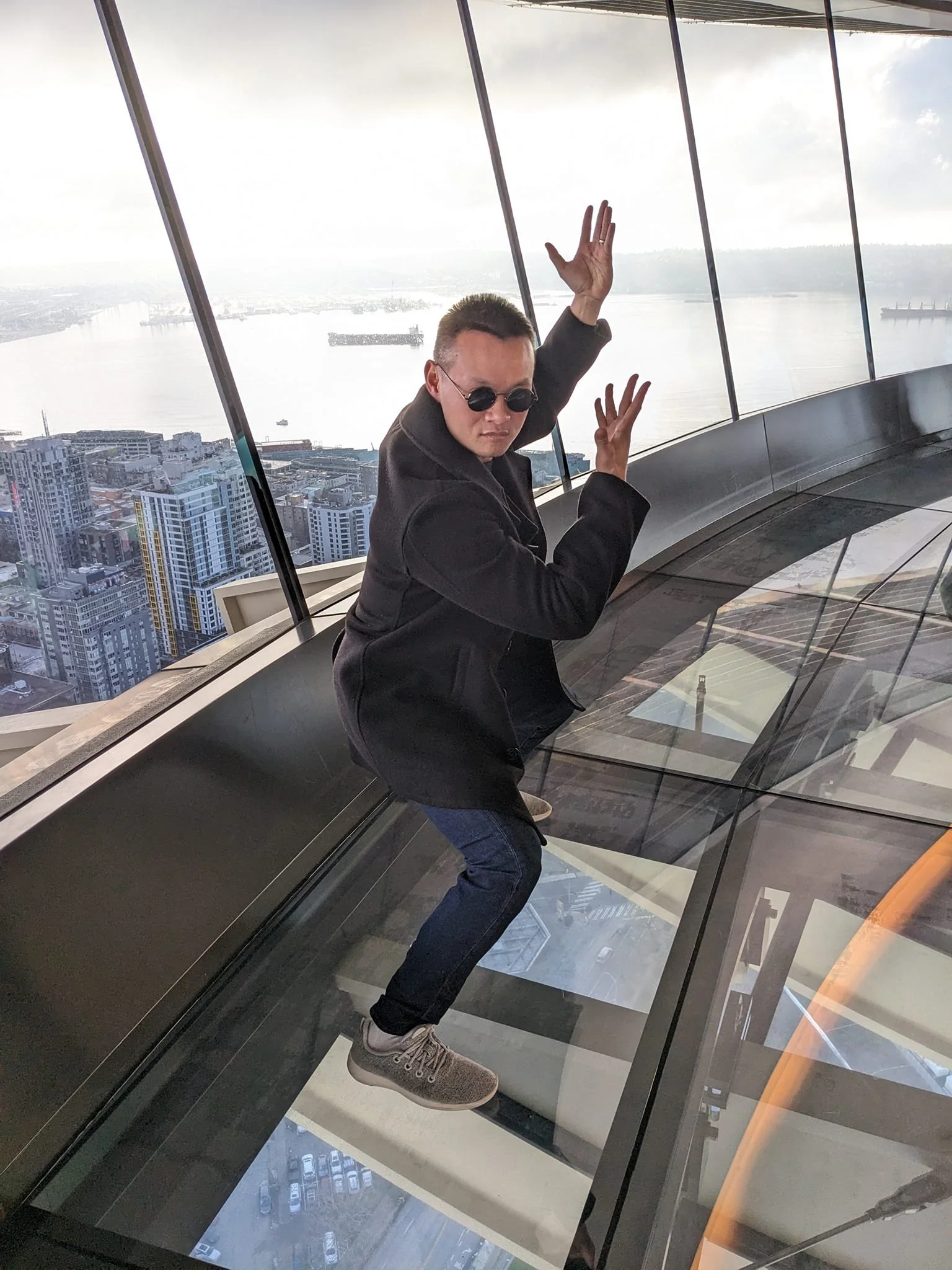
In this episode Andrew sits down and talks with Viet Le about his childhood training in TKD, his eventual move to Kung Fu as well as the cultural and philosophical aspects of martial arts.
Viet Le - Episode 1044
SUMMARY
In this episode of Whistlekick Martial Arts Radio, host Andrew Adams speaks with Viet Le, a martial artist and neurologist, about his journey through various martial arts styles, including Taekwondo and Northern Shaolin. Viet shares insights on the cultural and philosophical aspects of martial arts, his experiences training in China and Taiwan, and how his medical background informs his martial arts practice. The conversation also touches on the importance of competition, the future of martial arts training, and the intersection of martial arts and medicine.
TAKEAWAYS
Viet Le started training in martial arts at a young age due to his father's influence.
He achieved a black belt in Taekwondo at just 11 years old.
Viet transitioned back to Northern Shaolin after a break from martial arts.
Cultural and philosophical aspects of martial arts are now more important to Viet than competition.
Training in China and Taiwan provided Viet with new perspectives on martial arts.
Viet emphasizes the importance of transparency in martial arts teaching.
He believes that martial arts should bring joy and happiness to practitioners.
Viet has trained in various martial arts styles beyond just kung fu.
He advocates for basic first aid skills for martial artists.
Viet aims to pass down the art he has learned to future students.
CHAPTERS
00:00 Introduction
01:34 Viet's Martial Arts Origin Story
05:15 The Transition from Taekwondo to Northern Shaolin
08:39 Cultural Influences and Philosophy in Martial Arts
11:54 Cross Training and Its Impact on Martial Arts
16:57 Philosophy and Culture in Northern Shaolin
21:04 Literature and Its Role in Martial Arts Journey
22:22 Martial Arts Journeys: Training Abroad
24:25 Cultural Insights: Training in China
28:23 The Philosophy of Martial Arts
31:23 Martial Arts and Medicine: A Unique Connection
35:47 Future Aspirations: Teaching and Evolving Martial Arts
38:10 Reflections on Training: Finding Joy in Martial Arts
After listening to the episode, it would be exciting for us to know your thoughts about it.
✅Subscribe to whistlekick Martial Arts Radio on the following platforms:
🎧Apple Podcasts: https://apple.co/3mVnZmf
🎧Spotify: https://spoti.fi/3yHVdHQ
✅You can find whistlekick on all social media platforms using the handle @whistlekick or visit our website at https://www.whistlekick.com or https://www.whistlekickmartialartsradio.com
Show Transcript
Andrew Adams (00:39.822)
Welcome, you're listening or watching to the next episode of Whistlekick martial arts radio. And today I'm joined by Viet Le. Viet, how are you today?
Viet (00:47.916)
I'm good. How are you?
Andrew Adams (00:49.088)
Excellent. I'm doing very well. I'm really excited to get into a conversation today and talk about all sorts of martial arts things. But before we do, I want to make sure any new listeners or viewers that we have know about all of the things that Whistlekick does. You can go to whistlekick.com to find out all of the things we do about the events that we host throughout the country. Maybe you want to buy a t-shirt or a hat. Maybe you want to buy a training program or a book. All of that stuff you can find at whistlekick.com. Now this show, this podcast,
whistlekick martial arts radio commons where you'll go to find show notes on this episode and all of our other episodes. are now over 1040 episodes all of that stuff you can find there. Maybe you'll find you'll find transcripts you'll find extra photos. You will also find a subscribe button to be connected to our exclusive newsletter so you get notified of every episode as it comes out. So you don't miss anything because we hate for you to miss that.
So go there and find out all that stuff. now, Viet, we're here to talk about martial arts and you, because you are a martial artist. So we've been friends on Facebook now for a couple of years. We met at Free Training Day Pacific Northwest a couple of years ago when I was there. You showed up. And we connected there. And I'm excited now that you're on the show.
Viet (01:56.898)
I am.
Andrew Adams (02:13.794)
You have been following your stuff on Facebook and you post a lot of great videos and I would love to talk about what your origin story within the martial arts is and what that's like.
Viet (02:24.942)
Sure. So again, my name is Viet Ly and I'm originally from Southern California. I'm 37 years old and I started training probably around seven years old. At my elementary school, there was a instructor that came and taught Northern Shaolin and just out of convenience, my dad signed me up for that class. And I studied under that instructor who was a branch instructor.
of a teacher named Duke Chang in Buena Park, California. And so that was my first style. I did that for a couple of years. And then my dad decided to pull me out of the class because he felt that he didn't quite understand traditional martial arts. He had been in the former South Vietnamese military. And before 1975, Taekwondo was probably the most popular out.
art in South Vietnam. So he pulled me out of that and he decided to make martial arts sort of a family activity. So we took taekwondo classes together along with my dad and my sister. And I got a black belt probably way too young. I got my second degree black belt through the World Taekwondo Federation. And I look back because I have my ID card still and I was only 11 years old.
My dad really pushed me to do taekwondo, think, not only because it's something that he knew, but he also felt that in the future, if I were to apply for college, I could put that on my resume. And it is an Olympic martial art. So people would know what that is, as opposed to studying kung fu style from a seemingly kind of small part of California.
when I got my license, my driver's license, I decided to return back to my original style. And I started going to the school. I had a little bit of an attitude at that time. I noticed that in my showering classes, like we didn't really do any sort of heavy duty sparring. And there were a couple of instances where I was sort of asked to sit out certain classes because I was like kicking people's gloves and
Viet (04:45.39)
I was used to that sort of Olympic style, uh, techno spar and all of sudden, um, you know, everything just seemed a lot more reserved. And I was still eager to learn the material, especially the forms. Um, but I admittedly had a bit of an attitude that I needed to let go. And I remember there was this one instance where I decided to stay for the black belt class and I got my butt handed to me and, um,
That made me think like, look, maybe there is something to do this. Maybe I really do need to empty my cup. I then went to UCLA for college and I continued on with that style because there was somebody there who had been from my hometown, which eventually led me to meet my current teacher, Jason So, because I signed up for one of the Tai Chi classes at the World Arts and Culture Department. And I'd been with him for the last
13 years.
Andrew Adams (05:48.142)
Now when you first started training, mentioned you were seven. Was the impetus to go to that class, was it your idea or was it your father's idea?
Viet (05:58.158)
Probably my father's idea. I had gotten, I remember getting bullied a little bit as a kid. And you can imagine my dad being a former serviceman, wasn't happy with that. So he put me into it. So I think that my dad was probably the impetuous to start with martial arts. But I will say now looking back.
Andrew Adams (05:59.738)
Hmm.
Viet (06:25.474)
I think that where my father was heading, what he was into versus what I'm into right now are very different. The only reason that I have continued on with my martial arts is mainly because of things like history and culture and language. I'm a full-time physician. I don't really go and scrap. I had those days back then, but I spend most of my time seeing dementia patients in my clinic.
I'm interested in that culture aspect more now as opposed to my dad, which I think he basically wanted to say that his little kid, his little son was a black belt. So some sort of bragging rights, right? I respect what he was trying to do. But that's why like right now when people ask me what kind of belt do I have, said I had a black belt when I was 10, but technically I don't have a belt. I remember my Kung Fu teacher right now asked me, because he, one time we were at a demonstration and
I asked him, what belt am I? Because people were asking. And he's like, pick any color you want. Whatever goes, whatever you like. So I picked a brown one, because I felt like if I picked a black one or a white one or whatever, it didn't seem right. In kung fu, we don't really think about belts, traditionally. It's really, you can tell if someone has the stuff and someone who doesn't. It's about the time that you spend with your teacher, not really rank. So that's kind how I think of it now.
Andrew Adams (07:55.502)
Now you then went to Taekwondo, very different, and then went back. When you went after you decided you you you said you got your license and you can go back. Was it the exact same instructor that you went to or just the same style?
Viet (07:58.85)
Mm-hmm.
Viet (08:11.022)
The same style, but I had, when I was in elementary school, the Shaolin school had sent an instructor to teach at that elementary school. So Sifu Clyde King III, which I'll give a shout out to. But when I started going to the main school, his instructor was teaching there. So his name was Sifu Du Chien, or Cheng Yuanming, that's his Chinese name.
Andrew Adams (08:35.258)
Okay, and did he have any that instructor, not when you were seven, but when you went back as a high school student, did he remember you from training in the under his student or was it completely different? Like he didn't recognize you at all.
Viet (08:54.56)
I wasn't really memorable as a student. He had so many other students. So I don't think he really remembered me at all, but he knew my instructor. And I think some years ago I decided to visit the school. I've also kind of moved on from that style. And I came back and he did recognize me at that time. He said, you're a little chubbier now, back then you were skinnier. but when I was too young, I was too young.
Andrew Adams (08:59.116)
Okay.
Viet (09:24.758)
time to really remember. Lots of kids probably filter through that school.
Andrew Adams (09:29.816)
Now, after you got your second degree black belt in taekwondo, you obviously, I'm assuming you probably stopped for a while, got your license then what made you decide? Cause like that's a big difference in age from 11 to probably I'm assuming 16, 17, right? Your maturity is very different. You know, you could have easily said, Hey, I already have a black belt in taekwondo. I'm going to go train in another taekwondo school. What was it that drew you back?
Viet (10:00.054)
Um, probably similar to a lot of martial arts, if you're really being honest, things like kung fu movies, video games, um, that probably drew me back, right? I just remember, uh, even as a kid, I'd sit through some of these tests that they did at the Shaolin school and the forms were beautiful. And, um, anything that I had learned in Taekwondo seemed to pale in comparison in terms of the presentation aspect, right?
Usually Taekwondo hyungs are really basic eye-shaped patterns. The taeguk and I went up to koryo and kun-gang but it seemed very basic and then you see these guys are jumping and tornado kicks. I was like, that looks so dynamic. I want to do that. I would admit that at that time I wasn't really big into sparring. Even though was, when it came to the Shaolin school I felt like I could beat everybody up.
I was really into it, but when I was at the type window school, because I was just a little kid, I got my butt handed to me. So I wasn't super eager. But I think what attracted me mainly or what brought me back to my school was probably things like video games and kung fu movies, like watching Jet Li and Jackie Chan and Drunken Master and Once Upon a Time in China. That's probably what drew me to that, to come back.
Andrew Adams (11:17.08)
Yeah, yeah, and that makes sense. And then so you mentioned you had a kind of a chip on your shoulder. How like what do you think it was that brought that into your martial arts? Like when you started training, like where do think that came from?
Viet (11:34.7)
I think, you know, being a young black belt, right? And this is a big topic, I think, within the World Taekwondo Federation. And I'm not talking about traditional Taekwondo, like ITF or the other spin-offs like Jumri's Association, what have you. But that Taekwondo school that I was a part of allowed me to pay extra, my parents would pay extra every single test. So I skipped every other belt in order to become a black belt at that speed, at that rate, right?
I passed. I don't think that I met those, at least those minimal requirements, and I was certified by the government of South Korea to be a second degree black belt. So I'm not doubting that, but I do think that for at least me personally, I think being a black belt at such a young age probably led me to feel that I was better than everybody else, that...
I wasn't going to waste my time. And here, when I went back to my Northern Chaletta School, I had to start off from the very beginning. And I think even though I liked the material, I wasn't willing to let it go. And that's why I admit that I had a problem.
Andrew Adams (12:52.482)
Yeah, I can recognize that. It's tough to quote, I'm putting this in the air quotes for people not watching, to go back to the beginning. But I suspect that your taekwondo training still helped you when you started working out in Northern Shaolin.
Viet (13:09.72)
For sure, for sure. Especially since that instructor, he had a pretty unique background.
He was Korean Chinese, meaning that he was of Chinese descent, but born in Incheon. And so he had actually not only studied taekwondo, but he had taught taekwondo for a time when he first moved to the United States. And then when he realized his students wanted to learn more, he started teaching his family system of Northern Shaolin. So he was very familiar with taekwondo technique, and I didn't have a problem
on a physical level at least, in copying those movements. It did give me a good foundation. think the one thing that I had to overcome was so much of Northern Shaolin is about flow. In Taekwondo Pumse, it's kind of more percussive. You have to show the power of each technique, so it's very clear where. In a Northern Shaolin form, there might be a sequence of three movements or five movements that are linked together. You're supposed to go all through the whole thing. Don't stop.
And that was something that I had initially some difficulty learning.
Andrew Adams (14:24.14)
And say more about that. Like, how did you work through that? Because I think most of our audience would recognize whether they do Taekwondo or not, they would recognize this form as being Taekwondo and this other form being as not being from Northern Shaolin Chinese style. So working through that, I have to imagine was difficult. How did you go about that? And what was that like?
Viet (14:48.59)
There's no easy answer to that. It's just you have to... So I'll give you an example. I think in lot of Tang-Sudo schools, they do a sequence called Dan-Tui, right? Or something to that effect in Korean Hanja, right? Basically these lines, maybe a combination of two to three movements and you do it across the room and there's 12...
Andrew Adams (14:50.883)
you
Viet (15:18.014)
lines of it. And when you put the form, put all those lines together, it becomes this form. And it said that Huang QI had learned some Chinese martial arts when he was in Manchuria, along with learning his Tang Shidou. And that's why at the higher ranks, you'll see forms like Taegukwon, which is Taiji. And you'll see this drill that we do called Tan Tui. And when I first learned this drill, I did it like I was doing Taekwondo Pumse. Like each movement was very clear.
right, with a lot of power. And I initially got some compliments. People were saying like, you know, everybody here seems to be doing it so lazily. Look at this kid, he's really trying here. But then when I observed the higher belts do it, I realized like, look, they're able to do this whole form without huffing and puffing, right? They're keeping their breathing level, right? And they're still able to exert power, right? And there's no key hop or key eye in Northern Shaolin.
Right. And it made me think, are there other ways to move the body? are there other ways to exert power without resorting to the framework that I had previously learned in Northern Trelon? And the more that I thought about this question, even as a young child, I give it a try and see how it goes. Right. And I found that, eventually it, as I, as I spent more time practicing it,
I didn't have to think twice about it. I thought to myself, there's no real reason to grunt and yell. I'm not here to score points or anything. I'm here to be able to go through my techniques seamlessly. And if I show that by grimacing or grunting or what have you, yes, it feels like I'm more powerful in everything, but I'm also giving something away to the other person.
You think about like, you're going against somebody who's not really showing much, not showing his cards and still able to piece you up. That was something that I found very interesting.
Andrew Adams (17:26.81)
Now, you had an instructor that essentially cross trained, right? He trained Taekwondo and even taught Taekwondo and then started teaching his own family style. Where does cross training fit for you in your own personal training? it, are you strictly doing this one thing or, you know, because I've seen it work both ways, right?
Viet (18:39.47)
So, since that time until now, I've done a lot of different styles of martial arts, not just different Chinese styles, but also I've done Vietnamese martial arts, I've done Filipino martial arts and stick fighting, I've showed on karate, anything that I could participate in. so I continue to cross train, despite the fact that I have disciple with my teacher and
dedicated myself to in the future passing down the art that I learned to future students. So I've never felt that training in one style
Viet (19:26.574)
could help inform everything that I know about martial arts. And every time I do teach, I try to bring references from other things that I've done. Because sometimes there's other styles, other ways of explaining things that just work better.
Andrew Adams (19:43.546)
Now you mentioned earlier that the, you know, kind of philosophy and the culture of it was really important to you. was something that kind of maybe was lacking in your, you when you were 11 doing Taekwondo. What is it about that, the philosophy and culture now that excites you so much?
Viet (23:50.83)
My teacher at the Northern Chao Lin School, he spoke limited English to all of us, but he would converse in Mandarin to Chinese students. And I'm a Vietnamese descent, and I didn't really understand what he would be saying. And I was always wondering whether he was...
maybe teaching more or giving these little tidbits to those Chinese students. And just because I couldn't understand the language at the time, I wouldn't be able to.
And I'd already said that I loved watching kung fu movies and playing video games and stuff like that. So I think that led me to want to understand Chinese culture and Chinese language more. Now, I'm going to flash forward and just say in spiritual transparency, I never have taken a formal Chinese class. Everything that I've learned has been sort of with my teacher.
going out to Chinese restaurants, talking to my wife who's of Chinese descent. But it served me well. And growing up in Southern California where there are so many different communities or enclaves, it gave me an opportunity to practice whatever I could learn. And then mentioning about philosophy in Chinese martial arts, there's a big emphasis on things like yin yang, Things like the five elements, things like bagua.
And when you, I won't profess to say that the philosophy came first in the martial arts, right? Oftentimes it feels like we push these philosophies onto forms, onto movements, and doesn't always fit super well, right? But when you understand, at least on a very limited level, at least let's say the concept of yin yang, and how can that help to inspire better biomechanics?
Viet (25:49.474)
So for example, like if we're standing at a stance, let's say your bow stance or zenkutsu dachi in Japanese martial arts, and you bend your knee all the way to the front, right? And you punch and you're leaning forward. We would say in Chinese martial arts that it's too yin, right? And if you're not bending enough and you're almost, you have probably like an up two sengou in your knee and it almost looks like a back stance and you're doing that, then we would say that's too yin, right?
So having that balance in your movements, you can get that inspiration from understanding just a little bit about Chinese velocity, right? And bring that balance to everything that you do in life, right? Whether you're being too aggressive with somebody, if you're trying to build a connection with someone, whether that be a friend or a spouse, or there are times when you're being too timid and no one will notice you, right? That's too yin.
So I think just understand that these philosophies are not just something that was written in a book and it's nebulous. You can actually find a way of embodying those philosophies in your movements, in how you carry yourself. I think that was something that drew me to learn more.
Andrew Adams (27:06.49)
Now you mentioned that movies, kung fu movies, Jackie Chan, Jet Li, things like that really drew you in. What about books? Were books ever anything that were important to you when you started your training?
Viet (27:19.828)
I loved martial art books. It's unfortunate there have, unfortunately in the world of publishing, it's very hard to come up with a book. But there are certainly some classics that I read at that time that I still look back on, right? For example, Robert W. Smith's Chinese Masters in Methods is a classic. And he was a CIA operative who spent some time in Taiwan and wrote about him visiting many teachers on the island and what kind of skills they had.
I felt that there's a genre within Asian literature that's called Wu Xia, which basically would translate to night errant, right? E-R-R-A-N-T. Think of it as like the Asian version of Westerns, right? And so those stories were inspiring. At the time, when I was a kid, my proficiency in Vietnamese wasn't enough to read those books. So mainly we would watch the TV
adaptations of those stories, right? But certainly things like Three Kingdoms, Journey to the West, those classics, and what I saw on TV was most inspiring, but those were all based on novels.
Andrew Adams (28:37.402)
And what about traveling for martial arts? you have you had the opportunity to go to China and train in China?
Viet (28:47.234)
Yeah, I have. I have been to Hong Kong, Taiwan, Vietnam for training. And actually right before my wife gave birth, I paid three trips in succession. First to Taiwan because now I have...
Since I've been a disciple of this kung fu system that is centered in Taiwan, I wanted to see what it was like there. So I spent a week in Taiwan. I actually got certification to open a branch in Seattle. So I'm now the head of Wutan Seattle. And then I went with my wife to mainland China to visit her family. And while I was there, they were able to arrange for some connections. I was able to train with the police chief of Xi'an.
Xi'an is where the Terracotta Army is and where the first emperor is buried. So it has a lot of history there. And then finally, I rounded off that journey with going to Vietnam for a week. And I spent time in the South looking at native Vietnamese martial arts. And we did some interviews with this one YouTube influencer on my trip.
I've been able to travel and it does bring a lot of perspective on what we do, right? Because I think that at least growing up I was always told all these fantastical stories. Oh, you know, you guys train in America, but we train more intensely in Asia and this, that and the other thing. Well, it turns out when I would go to these places, martial arts is not as popular as it was before, traditional martial arts, right? Things like Muay Thai and BJJ are bursting at the seams, but because of...
daily pressures and jobs and everything. People are more interested in things like basketball, not really spending time to do traditional martial arts as much. And I would argue that much of what we do in the West, whether that be in America or Canada or Europe, there's no real need to travel far to find good martial arts. So it gets respected, but at the same time,
Viet (31:05.523)
It was just icing on the cake for me.
Andrew Adams (31:07.514)
Now, what was it? Was there a difference though, in what you saw and how your training was like over there? Like, you have to have stories of having been over there. It's definitely has to be different. I would imagine I've never trained in China personally, but you know, I have to imagine that that it would have been a little different than what you were used to. Can you talk about that a little bit?
Viet (31:33.154)
Like, since you brought up China, so I'll bring up how that happened. So I was visiting my in-laws in Xi'an and my aunt or my wife's aunt had arranged for me to meet with these three teachers. One did the stock of Hongquan, right, which is Red Fist. Another one did Tai Chi.
And then the third one, I'm not quite sure what he did, but he seemed to, he was the oldest guy with a cigarette in his mouth and he seemed to know a little bit of everything. So I'm not quite clear as to what he did.
in China and in Taiwan, in Hong Kong, it's all about connections. So they didn't know that they did not necessarily know what style I did. The style that I do, it doesn't come from that area of It comes from a province to the east of that province. They knew about it on a cursory level, but none of them had actually trained it. So they first asked me, show me what you know.
So I did a small sequence and then he followed up with his little sequence and then it's just hands-on training. So he talked about their basic skills. So in that part of Northwest China, the style that they practice is a combination of multiple regional styles and had a great emphasis on flexibility.
And so even though this guy was in his 40s, like he could do all of these lunges and squats that I, even though I'm younger, I had a hard time trying to imitate. But he showed me how that led to how he could basically emit all this power, right? Because he was flexible, right? The more rigid you are, Think of it like you're driving a car, you're pressing the brake and the gas at the same time. You can't really let that energy go.
Viet (33:43.406)
And here he was, he could basically put power in any one of his hits, whether it be his fist or his elbow or his shoulder. And so a lot of that training was hands on. Since he knew that I didn't speak Chinese fluently, he's like, you just need to feel it. And so I put my hands up and blah, blah, blah, blah, and he bumped me with his shoulder and I would fly back. Sometimes it was more subtle. Like in Taiji push hands with the other old guy.
Andrew Adams (33:59.259)
Hmm.
Viet (34:11.342)
There were times where I felt like I was stuck and I had nowhere to go. If I did, I would feel like I was off balance. And I just knew that, look, I would just pull back and say, I understand, I admit defeat. So it's like a good samurai movie. The minute that you see that person assume the kamae, the stance, you can kind of tell who has the edge, who doesn't. And it just takes a couple of blows to feel, oh, I'm...
I am out of my element right now, right? And so it was very much hands-on. I didn't really learn anything new. It was more just the feeling. it was a lot of food for thought on the trip back, because I was like, there are still things that I don't understand. And maybe along my training journey, I will find ways to approximate these experiences that I just had, right?
Sometimes that's all they're willing to give, right? And that's okay, right? A good teacher does not necessarily give the student an answer. It's like learning how to fish, right? You have to figure it out on your own, right? If you're a carbon copy of your teacher, then I think that that limits your progression, right? The goal of future generations of students and Chinese marshals, I would generalize to any martial artist.
is you should try to endeavor to be better, right? To improvise. Right.
Andrew Adams (35:40.666)
Yeah, say more. Yeah, say more. Say more about that. Go a little deeper. That that's a great. That's interesting concept that we've talked about on the show, but I'd love to get your thoughts on it more.
Viet (35:51.278)
I love reading about, within my lineage, I love reading about the ancestors within our lineage. We have one individual, name is Li Shuwen, who is known as the god of the spear. And his spear work was so good that he could pierce a fly that was sitting on a paper window and couldn't pierce the paper. He was known to kill people with one blow. He had so much energy that he would chew on rocks like people would chew on gum.
Lots of these legendary stories, right? And then there's another person, our linear, Gongbao Tian, who his Bagua, Bagua Zhang is an art where people typically will walk in circles, has a very characteristic type of training. He had qinggong, which is this lightness skill, so he could jump from third, fourth story down all the way down to meet somebody. Rather than take the stairs, take the elevator, he'd just jump right down, plop, right? Those are all great stories.
And by learning these arts, sometimes we feel like we can be someone like Ali Shu-wen or Gong Baotian, right? Or training Ji Kun-beo, we're gonna be Bruce Lee, right? Or training Shorokan Karate, we're gonna be Gichin Funakoshi, right? That kind of thing, right? But when you really sit down and think about it, these arts that have been passed on, they are vehicles for personal development. I can't be those people. I don't live in 1800s China during the...
Warlord period right? I don't I never lived in World War two Japan, right? I I live in America as an Asian American and I can only be the best via that I can be right? Certainly these stories are inspiration, but let's not take it too far, right? so I think that's why like when Sometimes modern martial arts they they divorced that history and You know, it's all about
people think that BJJ and Muay Thai, they're the best martial arts and there's really no need to go back to its roots. I think there might be something missing with that. If you understand, example, like jiu-jitsu was also, Brazilian jiu-jitsu was also an evolution, that Kano had a system of ground fighting that was very technical, Kosan Judo that he had practiced and he had trained in Japan. There are parts of Japan that still maintain that.
Viet (38:18.286)
A Muay Thai has its historical antecedents. It does give you an appreciation for what we have now. And it's just about coming full circle. There is nothing new under the sun. Do we think that nobody thought about grappling? No one thought about the triangle choke back in Greek and Roman times? Probably not. Even animals wrestle to exert dominance.
It just gives you an appreciation that we are part of something bigger, right? That martial arts and its practice has been with us ever since we've been on this earth, right? And I think it gives you a sense of respect for where we come from, right? So hopefully that answers your question.
Andrew Adams (39:05.186)
Yeah, no, that was good. That's good. Now you mentioned earlier that with you you're not concerned about belts and whatever. So I'm going to assume from that that competition was probably not something that you were big into.
Viet (39:20.642)
It was, no, it wasn't emphasized. I started competing when I was in my medical training, because I was bored. Apart from, when you're in residency, which happens after medical school, you're stuck in a place that's far from home, and I would need to do something to work towards, And so I started competing at local competitions in the mid-
I never went to like big level competitions at that time because in terms of kung fu competitions, they're not that large, not that well represented in places like Ohio and Pennsylvania, what have you. But it was a good experience. And I think I competed probably for like six, seven years doing things like forms and Taiji push hands. And it gave me a chance to network with other martial artists.
It made me feel like I'm not an island, right? There are other people that are thinking about the same things. I have questions about the same things. I want to promote the same things that I want to do. So I think competition is a good thing.
Andrew Adams (40:33.658)
You mentioned you are a doctor now, you're a physician. How has your martial training affected your professional life as a physician?
Viet (40:37.838)
Hmm.
Viet (40:44.686)
Sure. I'm a neurologist, more specifically a behavioral neurologist. I specialize in Alzheimer's disease. And I think, first off on an emotional level, because day in and day out when you're seeing these patients and their families, it does bring about a certain degree of pressure, right? A lot of patients are looking to get better and unfortunately we're not there yet within my field, right?
We have medications that can help to slow down decline of disease associated with things like decreased mortality, decreased need for nursing home placement, but in terms of improvement, hard to say. I'm feeling these questions in those difficult situations on an emotional level. I know that I have at least a physical outlet for some of those pressures when I do martial arts. gives me something else to focus my mind on. And at least in the moment when you're practicing and you're hitting the bag, you don't really think about...
how am I going to treat so-and-so's adaptation of delirium, right? So I think on that level. On another level, think, you know, having gone through anatomy and neurology, I take a pretty...
I think using the word scientific is a little harsh sometimes, but I've noticed that there are certain trends that are in vogue within the world of martial arts. For example, right now the big thing is talking about fascia, right? And that word gets thrown around all over the place. And before then, could have been some other trend, right? Maybe talking about ki or chi or what have you. Despite being an Asian American, have, and just doing martial arts, you sort of...
from the Kool-Aid a little bit and you absorb those elements of culture and at the same time you also take a more practical approach and I reserve those kinds of things that I don't know about that I can't prove on a physical level. I reserve that for the end right and I talk about biomechanics and physics in the beginning because I think that is readily understandable right. I was most recently at a conference for different Chinese martial artists and
Viet (43:01.516)
This is just being critical. A lot of those people had Chinese medical backgrounds, so they would bring up acupoints. Chinese medicine and Western medicine are built on two different frameworks. And when you talk about the lungs in Western medicine, there are these two structures here that help us breathe. in Chinese medicine, the lung could be represented by the organ. It can also be represented in other parts of body, like in the ear or the foot or the hand. It gets very complex.
And they were talking about things like AccuPoints and how, you if you rub this AccuPoint, certain benefits would come about. And to me,
I don't know anything about that. I can't really say that those are, lot of what we know in Western medicine, when we see that, we think of it as a placebo effect. But I would also argue that Western medicine doesn't have an answer for everything. And sometimes we have to let the pieces fall as they may and just accept that it's two different types of framework. Western medicine also requires a certain degree of faith, a jump of faith. But that's my approach in understanding.
martial arts in practice, right? That's my lens, my bias.
Andrew Adams (44:16.154)
And that's okay. You're allowed to have that. Now, I have noticed and we here at Whistlekick have interviewed hundreds and hundreds of people, but I have found that a large number of
Chinese practitioners of Chinese arts often go into medicine. And I'm wondering if you have seen a correlation to that as well.
Viet (44:51.426)
I do. And I think that goes back to how much this philosophical framework is embedded in the practice. And it's not entirely unique to Chinese martial arts. mean, if you're looking at Greek and Roman history, Plato and Aristotle were known for being very good at wrestling.
And it's written in those records, right? We tend to think of all these guys with big bushy beards and just, you know, wearing their togas and talking about this, that other thing, but they also engage in physical culture, right? I think the paths of learning to how to break down somebody and how to heal them, because so often in your practice, you're going to run into injuries, right? Whether it be yourself or with your partner. And it's important to have
basic first aid skills, right? And sometimes that evolves into a bigger commitment like doing Chinese medicine, right? And I think those martial arts that do decide to do it, right, are all the better for it, right? Because if you think about it, right, when you do a, like I most recently heard at this martial art conference that I attended, between Tui Na, right, which is this Chinese art of...
basically massage and twisting and getting at the acupoints, what have you. In chin na, which is your basically wrists and locks, they're targeting the same kinds of areas of the body. It's just you're exerting more pressure, you're flipping the lock instead of going this way, you're going the other way. And so they inform each other, right? And I think it is important for any martial arts in any field to have some basic first aid skills.
Because if you're waiting to go to the ER, depending on your insurance, depending on the level of hurt you're in, it would be better if you could do something in the short term. So I think everybody should at least have some basic CPR skills at the very least, let alone just know how to put a bandaid on something, not be so afraid of doing that kind of thing. So at least having a working knowledge of that, I think everybody should.
Andrew Adams (47:15.578)
Now, we are doing this interview right now. It's July 2025. If we were to get together for another interview in 2030, five years from now, what do you hope we would be talking about that you've done in the last five years? What are your plans with your training between now and the next five, 10 years?
Viet (47:38.051)
Yeah.
It's a hard question. You know, people ask me in my clinic, hey, what am I going to get worse? What is my dementia going to progress? I have a hard time predicting.
The things that I'm working on, think mentally is how to be more efficient with my time. I have a little daughter now who's 15 months old and I simply don't have the time to practice all the forms that I have previously learned. So rather than like consciously try to let them go and forget, I've spent the last five years filming everything that I can possibly remember as a record. And I think as time will go on, I will...
further hone those elements of practice that resonate with me. Number two, I've been lucky enough to find a couple of students the last couple of years, and I think I've gotten better at my teaching. And so I don't think there's anything wrong with choosing to do traditional martial arts in the present time, but I think there has to be something done about teaching it better. The reason why, for example, kung fu does not attract a lot of people of this day and age.
is because number one, people question its validity in terms of effectiveness and fighting. And number two is that there's a lot of secrets. Teachers traditionally would not teach the whole thing. They would hold something back and say that, you're not ready. But in fact, maybe the teacher wasn't ready to teach it or didn't know it altogether. I think this day and age, we need to be more transparent about our teaching. And simple is best.
Viet (49:21.878)
If an application is too complicated to pull off in real life, right, then you might want to let that go, right? You are lucky in a confrontation with somebody to pull out maybe three moves to five moves, right, when you're in that frenzied state, right? And so I'm trying to find ways to sort of update this teaching and find better ways to convey that. I don't necessarily require people to...
do horse dances like for hours on end or you have to practice this form and this form and this form, that's not important, right? People are looking for an experience, people are looking to understand and if you have five minutes with me or five years with me, I wanna make it worth your while. That's what I'm gonna be working on in the next couple years.
Andrew Adams (50:15.438)
love it. Now if someone listening to this really something you said really resonates with them and they want to reach out to you is there a way that people can do that get in touch with you?
Viet (50:25.198)
Sure. I'll give you my contact info, so my email. I do have a little website. And yeah, I think the best way to contact these is over email, Facebook, and Instagram. And I'll give you that contact information after this interview.
Andrew Adams (50:41.102)
Great. So it'll be in the show notes if you're listening and you want to get in touch with the via that would be the way to do so. Just a minute. I'm going to throw back to you to close us out. But I want to make sure any new people keep in mind whistlekick.com for all of the things that we do, whether it's books program training programs, events that we host around the country. Whistlekick Marshall watch radios where you go to find out everything about this episode. The show notes will be there and you can join our exclusive
of newsletter to find out about all of our episodes that come out. And if you'd like to help support the show, there are a number of ways you can do that. One, tell someone about this episode if you really like it, or maybe another episode. You can also like and subscribe on our YouTube channel. That really helps the algorithms, those little computer bots, they like that. I don't know why, but that's they like. So help us out. It costs you nothing. We would really appreciate it. If you would like to help support the show financially and help us connect
educate and entertain traditional martial artists of the world. can do that at patreon.com forward slash whistle kick and you can have the satisfaction of knowing that you're helping this show happen. And you'll also get some free stuff, which is pretty cool. So all that stuff you can find there via thank you so much. This has been a lot of fun, but I'd love to throw back to you. How do you want to close out today? What do you want to make sure that people listening or watching get from from our talk today?
Viet (52:11.022)
Assuming that a lot of the listeners are engaged in martial arts, if you've ever been in a situation where you're trying to figure out why do I train, what gets me up in the morning or what keeps me going, why do I go to class after working a full day and train in these arts? I think it's something that we all need to think about.
And the answer that I was able to arrive at, and maybe you'll agree with me or not, is that it makes me happy. Rather than always stress, this going to work in the UFC? Am I going to work towards a confrontation where like I'm going to be in a knife fight protecting my loved ones? Just think about it. The chances of that happening, hopefully in your community, is low, right? But what keeps you going is it makes you happy, it brings you joy. And I think that if it's healthy and you're not
disturbing anybody, that you should continue to do it. it's something that I've thought about, especially since the birth of my daughter, why do I keep doing it? that was the answer that I was able to arrive at. And anybody wanting to comment on this episode, I'd be interested to hear, why do you guys keep on trading? Maybe I can find more inspiration in that.
Thank you very much for listening. Thank you for doing this interview with me. I really appreciate the opportunity to do so.
--------------------------------------------------------------------
Viet (56:18.412)
I'm really enjoying these martial art podcasts now because back in the day, if you wanted to get sort of any intimate view of these people, you'd have to attend some kind of convention or you read about it in magazine. So, and now that let's just face it, the heyday of traditional martial arts is kind of like, kind of, it's in the middle. We're not in a heyday right now. It's just nice to get some perspective on like what these people were thinking or doing at that time, like in the nineties, right?
So I enjoy listening to these kind of podcasts on my drives. So thank you for everything that you do.