Episode 1048 - Jadi Tention
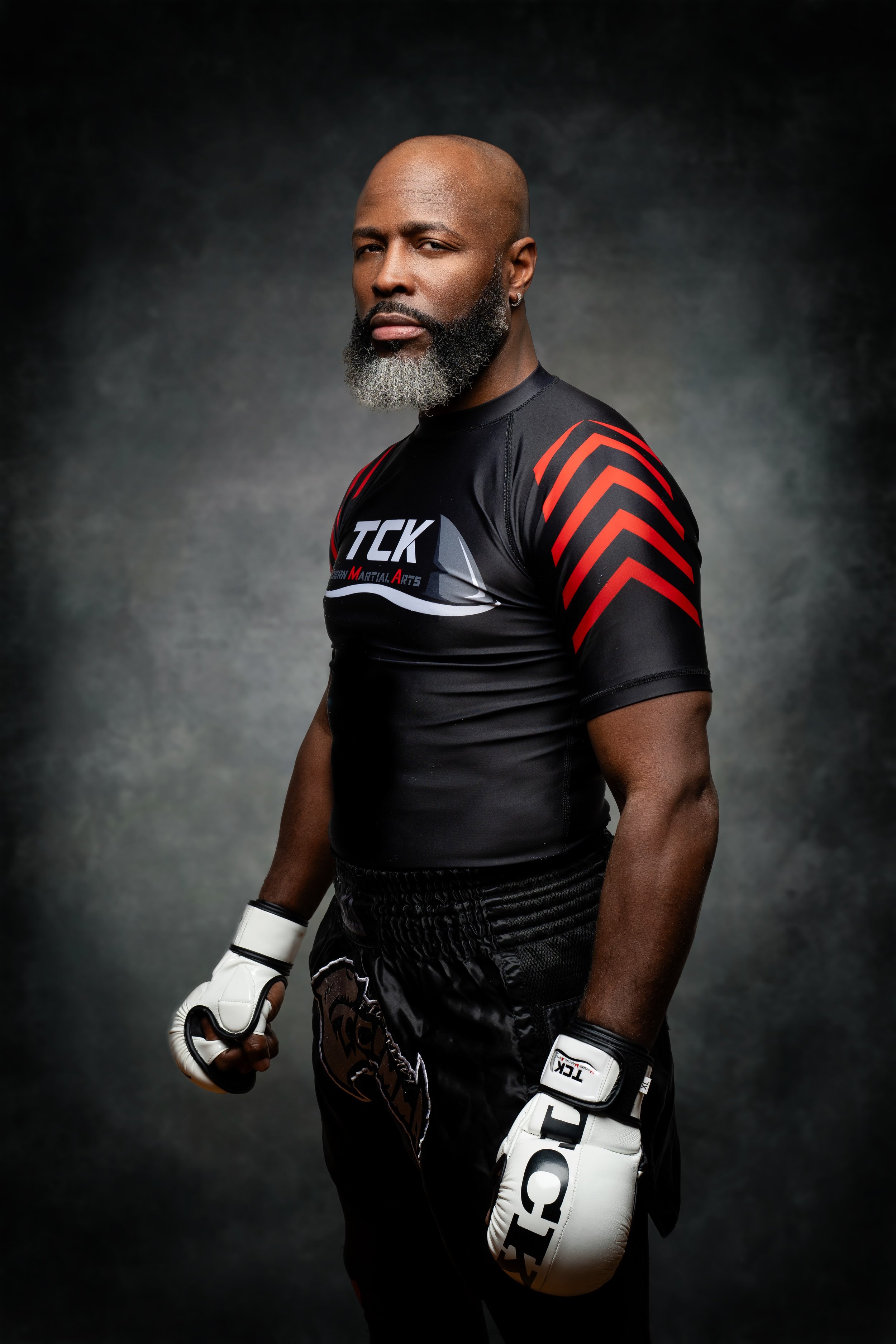
In this episode Jeremy sits down and chats with Jadi Tention about competition, teaching and personal growth.
Jadi Tention - Episode 1048
SUMMARY
In this conversation, Jeremy Lesniak and Jadi Tention explore the multifaceted world of martial arts, focusing on the balance between competition, teaching, and personal growth. They discuss the importance of understanding violence, the role of instructors, and the need for martial artists to evolve and adapt.
The conversation emphasizes the significance of community, passion, and the responsibility of instructors to foster an environment where students can thrive and express themselves.
TAKEAWAYS
Martial arts should blend different styles for better understanding.
Point fighting has its own unique value despite criticism.
Understanding violence is essential for martial artists.
Self-defense should be practical and applicable in real situations.
Instructors must balance teaching with being students themselves.
The community aspect of martial arts is vital for growth.
Passion for martial arts drives success in teaching.
Students should be encouraged to express themselves and evolve.
Martial arts training is a journey of continuous learning and unlearning.
CHAPTERS
00:00 Introduction to the Conversation
01:07 The Role of Sport in Martial Arts
01:48 Criticism of Sport Competition
04:09 The Blend of Fighting Styles
09:19 Understanding Violence in Martial Arts
13:45 Self-Defense vs. Fighting
17:45 The Librarian vs. The Fighter
22:52 The Importance of Application in Training
26:57 The Balance of Theory and Practice
32:02 Finding Harmony in Martial Arts Training
33:11 The Value of Diverse Perspectives
35:40 Patience and Understanding in Teaching
36:54 The Dojo as a Place of Healing
39:36 Transitioning from Competitor to Instructor
45:53 Empowering the Next Generation
50:25 The Importance of Staying Young at Heart
56:22 Leading with Passion Over Profit
01:03:46 Evolving as Instructors and Students
After listening to the episode, it would be exciting for us to know your thoughts about it.
✅Subscribe to whistlekick Martial Arts Radio on the following platforms:
🎧Apple Podcasts: https://apple.co/3mVnZmf
🎧Spotify: https://spoti.fi/3yHVdHQ
✅You can find whistlekick on all social media platforms using the handle @whistlekick or visit our website at https://www.whistlekick.com or https://www.whistlekickmartialartsradio.com
Show Transcript
Jeremy Lesniak (00:51.081)
Do you have anything you need from me? Any questions? Anything I can do for you before we get rolling?
Jadi Tention (01:00.033)
No, I'm just here, know, whatever. We just having the conversation and like I said, you know, it's authentic. So I'm perfectly fine with that. That's good enough for me.
Jeremy Lesniak (01:13.897)
That's how I do it. That's how I do it. So I'm glad. I'm glad. Well.
Then let's.
Jeremy Lesniak (01:25.401)
Let's start in the sport world because that's how most people are going to know your name from your time as a competitor. And let's start with a big question because it's, I think it's an important question and I don't think you'll shy away from it. So let's, you know, we'll take a big swing here at the beginning. Sport martial arts, sport karate, whatever you want to call it. That's just a lot of hate because
Jadi Tention (01:27.404)
Okay. Yes.
Jeremy Lesniak (01:55.475)
Well, I'm not going to say why, I want to let you fill that in. Do you think, as an industry, kind of the sub-industry of sport competition, should sport competition ignore that criticism, or should it respond and potentially adjust?
Jadi Tention (02:18.187)
the criticism of...
Jeremy Lesniak (02:21.362)
I mean, there's a lot. There's a lot of criticism, but I think the biggest chunk of it has to do with application. These skills don't transfer.
Jadi Tention (02:32.941)
Yeah, okay. Okay. Well, you know, it was so funny that you say that this morning, this morning I had a class, uh, uh, and, I had a, I had a bunch of young athletes in my school, uh, probably in the age of anywhere between 11 to 16. And then I had this group inside, inside the group of 35 to 60. Right. So it was like this split.
and we were all training this morning. And so the first drill that I started off with was, remember clearly it was a jab, cross, and a roll, right? And then I said, I want to start this off this way because I want this to be something that can be used universally. And it's something that if you ever got in a situation, it can be helpful, right? So it was jab, cross, roll.
And then from there was a shift where we make space. And I said, now that we make space, I'm going to put a little bit of a point fighting in there. And the message that I told the point fighter, the young kids, and I said, I need you guys to be fighters who do points and not point fighters, right? I need you guys, I need you to take that perspective of fighting is fighting. And then the rules that you
put on that determines your approach, right? So I said, I need you guys to work on rolling and controlling the distance. And then I said to the other guys, I said, you guys, you don't really have this problem, right? You guys already like the box and kickbox, but you lack the finesse and the slickness that points provide with learning how to engage, shifting, making space. I said, the two worlds should blend, right? They both have strengths and they're both.
to me have flaws in it. So I think the question that you're asking is a great question because I think as somebody who did point fighting, I think point fighting is the most pettiest fighting that you could possibly do. And as someone who is a martial artist, I think that the skillset, the pettiness of point fighting
Jadi Tention (04:50.641)
makes your footwork and the elusive part and the distance and the ability to control speed, tempo and space almost second to none. And I think that if you take that skill set of point fighting, because it's so petty in the sense of this is all I got to do to score. This is all I got to do. Now you could do this to me to score and then as soon as you do this, I could take this big left hand and turn over that won't get rewarded. Right? So the violence of
of boxing and kickboxing won't get rewarded because I can just touch you. But how I got there in point fighting is what most people ignore. So my approach to how I get there, I think should be commended, maybe the violence in it should be greater, right? But I think that if you can have both worlds, I think that you will be amazing as a fighter and athlete because all fighting has to do with timing, distance and technique.
So, so again, for someone who did points, is a, it is a petty part because there's times you just have to score, right? And I think that, I think that it's important that when you see the fighters, the fighter fighters, even though they're doing points, you can see the fight inside their fight, right? You can see who has the ability to fight in alleyway. And then there's guys that just play the game. There's guys that just play the game.
and could be excellent at it. But you could tell there's an energy between fighters that I noticed that no matter what you're doing, boxing, kickboxing, jiu-jitsu, once you engage with somebody, you could feel there's unsaid energy on who's who. From immediately that once we get into what we're doing, I could feel like, I could feel the threat of who this person is without ever having to be punched with them.
punch for anymore kick, I can kind of tell the level that I'm dealing with, right? So I think that exists in all kinds of sparring. But I think point fighting can be very petty at times where it turns you off from watching it. But if you're judging a fish by how it climbs a tree, you're not going to be excited about that either. If you judge boxing by how well they do leg kicks,
Jadi Tention (07:17.716)
you're not gonna be excited about it. If you just judo by how well they throw a jab on the cross, you're not gonna be excited about that, right? So it's funny that you can look at every piece of sport combat for what it is. And then when it comes to point, totally dismissive. But meanwhile, in MMA, I can't kick you in the groin and I can't poke you in the eyes. And as soon as these guys, or when you have one hand on the ground, I can't kick you in the face. But as soon as these guys get hit in the groin, they immediately...
go down or whatever. So I think that you just have to look at each particular sport for what it was meant to be. And when you're practicing that sport, honor it for what it's meant to be. But then when you fight and you learn how to apply all those pieces into a fight for the street or the competition arena that you're going to be in.
Jeremy Lesniak (08:07.91)
said and a much better version of how I've responded. okay. So we're learning range. We're learning how to detect openings. We're learning speed. We're learning putting combinations together. Yeah, these are all terrible skills. Who would ever want to have those things? Yeah, those are useless.
Jadi Tention (08:20.627)
Mm-hmm. Exactly. Exactly. And you know what's so crazy? If you lay the lobbies, UFC guys have point fighters in there. So I have a purple belt under coach Randy Stanky in Arizona. I fly to Arizona to train with him and he flies to New York to train me. And the thing that attracted me to him was his skill set of
the movement and the faking and the lake and it was beautiful violence to me, right? It was beautiful violence and I was like, his style resonates with me and I called him and we just hit it off real well. And what's funny is when I go down there, he'll say to me, hey, listen, them sidekicks, how would you put that together with this? Or so even though he's teaching me, he'll ask me, hey, listen, how would you add that in there or the karate part? I need that, I need that karate part in this.
I think that, again, I think that he can appreciate the skillset and take, the meat and spit out the bones. Take the pieces you like, you add it to your, I don't like everything about point karate. I don't like everything about jiu-jitsu. I don't like everything about boxing. I don't like everything about anything. Right, right? you just, if you were to get into my car right now, even though you know how to drive, the first thing that you would do is you would adjust the seats and the windows to how it fits you.
Right, you just wouldn't, cause you'll be this far away from the stand well. was, me, let me move my stand well up a little bit, fix the rear view mirror so it can fit my style, even though it's the same car. And that's what fighting is. That's what martial arts is. You have to fit it according to us, right?
Jeremy Lesniak (09:58.975)
I like that comparison.
Jeremy Lesniak (10:03.804)
Well said. Well said. I've always used the metaphor of the pie in Trivial Pursuit. You you learn something, you're plunking another wedge in, right? And, you know, it's not the best metaphor because you're never done, you never win the game. And sometimes you're putting in a big piece, sometimes you're putting in a small piece. But the game is to just keep putting pieces in because...
You want to be more well-rounded. You don't know the situation. You don't know, you know, if it's real violence and we're going to go to that word because that's the word that people don't use on this show. But when we're talking about real genuine violence, there are so many unknowns that if you want to be prepared for it, you want as many tools in your toolbox as possible. If you're a one trick pony, the numbers are not in your favor. You're better than not training, of course, but.
Jadi Tention (10:39.88)
Mm-hmm.
Jadi Tention (10:51.494)
Yes.
Jadi Tention (10:57.169)
Yeah. Yes.
Jeremy Lesniak (11:00.978)
having a more well-rounded game. let's talk about that word violence, the way I hear you saying it tells me you mean something very specific when you're talking about violence. And it tells me that you have conversations, probably with your students, about violence and what violence is.
Jadi Tention (11:14.504)
Mm-hmm.
Jadi Tention (11:22.128)
Absolutely. So, then you kind of just, it's funny. You must got a camera in my school. I had, I was teaching and I was even teaching a seminar and I said, you know, this is what I want for you. I want you to be kind, funny, patient, considerate, empathetic. I want you to have a certain level of emotional intelligence.
I want you to be all of these things. I want you to be that kind, considerate, loyal, empathetic, patient person who is capable of violence. And when your kindness and your patience and your consideration and the fact that you're trying to resolve a situation and not have a problem and a person can't respect that and they still choose to engage them, we need to be more violent than the aggressor.
I don't know why that's a problem. I don't know why that's a problem in a karate school. Like if I just wanted you to be a kind person, I don't need to go to your karate school. I can just go to church, right? I can just go to the mosque. I can just go to the synagogue. So this is a place of violence. Whether we want to say that it's not, yes it is. We're not just reading verses and sitting down and kumbaya and hugging and kissing. We're saying, hey, punch, kick, front kick, elbow, knee, arm bar, grab, throw, head butt, you know.
I'm Pope, flap the ears. So it's a place of violence put in this proper perspective, right? As we're learning to be, speak about confidence, as we're learning to talk up, as we're learning to look people in the eye, as we're learning to be able to use our voices, right? But we also learn that as we create stronger people, we're using violence to create that, right? We're talking about, hey, fix your jab. And by fixing your jab, you're learning how to pay attention to detail.
You're learning about how to say when something is not fixed, you acknowledge that, I'm wrong. It's not right. That's humbling to say, I'm wrong. I have to continue to work on this skill set to get better. That means it's a humble mindset. So you're developing those, you're fixing those character flaws, but the ultimate goal is to become a great person who will f**k you up if you violate me. Right? And I think that I don't...
Jeremy Lesniak (13:40.456)
Hmm.
Jadi Tention (13:44.867)
ever lose sight of that, right? So I'm always speaking about being a kind person because I think it takes a certain kind of person to be kind and be capable of this amount of violence. And that person should be responsible human, right? So, yeah, I embrace it. I think that it also means that whatever I have to do to get back to my family safely, even if that means running, right? Whatever it takes for me,
Jeremy Lesniak (14:08.712)
Hmm.
Jadi Tention (14:12.923)
to have to get back to my family. And I think that people don't think that running is not a part of martial law. That's why being in shape, you you got all, I'm a go-to. You got these guys that can't be the fighter state that are telling you about violence, right? So I think that all of that goes back into self-defense. And again, the other side that I think is, I think people have this cliched thing of self-defense. I'm like, what is that? Fighting is fighting. And no, self-defense is bullshit. Listen.
Jeremy Lesniak (14:24.008)
Do it. Do it.
Jadi Tention (14:43.119)
You telling me that Mike Tyson doesn't know self-defense? You telling me when Floyd slips and pulls or Canelo, that's not a form of whatever it takes you to get back home? Like if it doesn't include a wrist lock or throw, and this is when I think we just start getting into stupid stuff in the martial arts. But yeah, I definitely think violence is a word that should be embraced more and understood in the proper context.
Jeremy Lesniak (15:09.294)
Let's talk about that separation that some have for self-defense versus maybe some other things. I've said that if your goal is to learn how to defend yourself simply, quickly, get in a fight, go home, what we do in traditional schools is usually not the most efficient way.
Jadi Tention (15:28.987)
Mm-hmm.
Jadi Tention (15:36.56)
Agreed.
Jeremy Lesniak (15:36.936)
We usually do a bunch of other stuff. And I think because of that, I think we've got some people out there, a lot of people out there who, because the path that they've chosen doesn't make them the best at violence as efficiently as possible, they discount all these other things.
Jeremy Lesniak (16:01.032)
What do think?
Jadi Tention (16:02.989)
I think, as you said traditionally, I think in a sense of karate guys, and I want to put myself in that group because I have a background in that, it is too much theory. It is, we reward the librarians. And what I mean by that, think that each, I think in your school you have personalities. You have the librarians. The librarians are the people who want to collect the katas, want to collect the...
the technical terms and all the names and the bunkai and all of this. They're collectors of information, right? And then you have the fighters, right? And some can cross paths. I think they're really good instructors cross paths, right? Then you have the fighters, they're like, it all, man, show me how to get my punches and my kicks off. And most times they're not even the most technical guys. They're just the ones who just have the grit.
and the tolerance to go, I'm going to take one and give you five of mine. And they thrive in that environment. And they also protect the school, right? Those are the guys that when the other macho athletic guys come in, they have references to go, I want to be like that. This system can produce this kind of guy. I want to be like that. But what I find is, is that we get so caught up into this is what this means.
It's almost like religion to some degree. You get a bunch of guys in the room, you tell them this is what to believe, and because we learn kind of in groups, we follow the group, we assume that everybody's doing codders, everybody's punching in the air. And let me say this, I don't think forms are bad thing. Just don't tell me it's for fighting. Just don't tell me it's fighting because it has pieces of fighting in it.
You could put carrots and shit doesn't mean it's good for vegetarians, right? I could tell you, hey, you know what? Football has angles when you're cutting. That means I'm not gonna send my kids to do football to get better in karate, right? Just because. so I think that we get so caught up in how many forms you know, what's the application, what does it mean? And we use that as, see how good you are?
Jadi Tention (18:23.704)
That's just knowing. It's like reading a book and you know the story in the book. Knowing it and applying it is two different animals. And I think that karate guys lose sight of that because we keep following this out-of-date approach of what it is to be good or what it is to be able to be capable of violence. You got these set routines. You never lose. You're fighting 20 dudes at one time who
Jeremy Lesniak (18:43.624)
Hmm.
Jadi Tention (18:53.11)
allow you to pull your hand back, sit in the stance, no fakes, no fakes. It's not a different, not tall person, not a short person, not a quick person. It's just these same set motions in the air and that we use that as the blueprint. And I think that's absolutely crazy and backwards. And you don't see that nowhere but with us. And somebody will say, but they shadow box. When they shadow box, they're shadow boxing.
to do what they would use in a fight. We'll shadow box, we'll take these deep breaths. And if we don't do it while saying it in a foreign language, it doesn't count. It's almost, to me, it's cosplay, man. It's just us. I got guys that's from Newark. I'm from the Bronx. These guys have good accents, you know, New York accents or whatever, boss, whatever accents. Soon as they put that white tee on.
Jeremy Lesniak (19:36.786)
Good.
Jadi Tention (19:50.243)
Ois, ois, ois, you're the most gus, kata, my name is. And I'm like, where did that come from? Where's the accent? You got this white uniform all of a sudden, your accent went out the window, you sound like you're from overseas someplace. Like, you're pretending at this moment. And then you're copying those same moves, and you go, this is the way. Meanwhile, the kid in the boxing gym is like jab, crawl, and slip, roll, pull, knee, elbow. He is not committed to any traditional culture. He's like, what works?
Jeremy Lesniak (20:18.088)
Mm.
Jadi Tention (20:19.264)
and let's do this over and over and over and over and over again. And that's why if you look at karate kids who've been training for three years and look at kids that have been wrestling for three years, their body is shaped different, their attitude is shaped different. You can have a kid that has been doing martial arts karate in particular three years. And when I say karate, kung fu, taekwondo, goju, shodokan, whatever, and this is not all for every school, but in general, who looks like they never done anything.
Jeremy Lesniak (20:31.592)
you
Jadi Tention (20:48.046)
but put a kid in wrestling and see what he looks like. Put a kid in swimming and see what he looks like. Put a kid in football and see what they look look like athletes. When they come on outside, they don't do that because they in the air doing all kind of everything else in the karate school to entertain them, accept what matters. And I think that is the biggest gap and problem that we're having right now, in my opinion.
Jeremy Lesniak (20:56.754)
Yeah.
Jeremy Lesniak (21:06.398)
Thank you.
Jeremy Lesniak (21:12.158)
And I agree with, I think I agree with everything you said. I think there's some nuance there. The way I've been thinking about it lately is I love Katha. My competitive career was based mostly in Katha and I still enjoy it. And this is a new thought for me so I want to bounce it off here.
Jadi Tention (21:21.857)
Yes.
Jadi Tention (21:26.615)
Mm-mm.
Jadi Tention (21:37.507)
Yeah, yeah, yeah.
Jeremy Lesniak (21:40.306)
Hata forms tol hiong, to my folks out there. Hata is the question, not the answer. And there's a lot of value in asking the questions.
Jadi Tention (21:53.986)
I think this is valid.
Jeremy Lesniak (21:57.779)
But what you're talking about, you know, the way a contemporary karate school, martial arts school might train, it's a lot of questions. The way that wrestler is training. It's almost all answers.
Jadi Tention (22:12.192)
Yes. And I think like, so I came up doing forms. don't have a problem with them. I really enjoy a good one and I like to see the fight in it when I'm like, well, I like that move. I just think that we use it as a crutch to not evolve because we'll say, we'll always reference, hey, you want the answer to that? Look at this, Carter. Stop showing me in the air and
Jeremy Lesniak (22:14.096)
Now that, go ahead.
Jadi Tention (22:41.833)
demonstrated. See, I got a brown button in Jiu Jitsu, right? It took me many years to get to that point. And the culture of Jiu Jitsu is don't tell me, show me. Don't tell me. Show me that triangle works. Show me you understand how to Kimura, how to half guard, how to close guard. Show me. And when that fails, show me the next step. See, it's a GPS. This is the route. There's a roadblock.
What do you do next? Okay, we have to go left. Show me the right. Karate guys go, this is the road. See? See, this is it. And there's never the question of what happens when that road is closed. What happens? And if it's 50 of us in the room, 20 of us in the room, why are we spending more time in the air instead of drilling when we have the partners right next to us? You're right next to me.
So if it's a high block to block a punch, then why I'm not doing that? Why are we not going back and forth doing that over and over over over over again? Because there's a direct, even in competition, this what happens a lot of times. You go to a tournament, 89 guys are doing the form division. As soon as you say fight, even in points, it becomes 89 to 10 or 20, right? And then the ability from,
librarian to actual person who can do it, shrinks. Because it's not an education in the sense of improv on the spot. In sparring, it's improv. It is making the decisions on the spot. Is he a lefty? Is he a righty? Should I move to my left more? Should I feign at this guy more? Should I be more aggressive to this guy? Is it a time to stay? Is it a time to leave?
Does he lead with his right leg? Does he lead with his hand? You have to make all those decisions. And how do we get our guys proficient in thinking like that if we spend more time talking theory? And that's my biggest issue is that we spend more time on the appetizers instead of the meal.
Jeremy Lesniak (24:55.929)
Why do you think we do that?
Jadi Tention (24:58.441)
I think that we have instructors who are doing it the best way they could have done it, you know, in a sense of parenting that my instructor did it the best way that he thought he knew how. I think that the other part of karate is that we act as though if we do anything other than what our instructors have done, it is blasphemy. We are not allowed to express ourselves.
and our own nuances and our own ways, which is crazy to me. So I think that's one of the reasons that we've gotten away with it. again, it's too, the other side of it, the elephant in the room is these guys want to make money. I want a successful school. We all want to make money. The way I'm talking may not always be good for business, right? Because I'm saying you got to fight. You have to learn. You have to sometimes...
You know, you get a kid or you get an adult that may get hit a certain, let me give you an example. I have a lady in my school who does extremely well in life and we were sparring. We were about to spar. And she said to me, she said, Professor, she said, $50,000 right here, okay? She said it to me. I said, then keep your hands up. I said, you protect your investment. It's not my job that I gotta lower my level. Now listen, I wanna be clear.
That doesn't mean I go crazy, right? It doesn't mean because if you break your toys, you don't get to play with them the next day. And we're toys, right? We break each other up. We don't get to do this three, four times a week. But you can't lead with that, basically saying, protect my face. No, I said, you got hands, right? Your job is to keep them up. You use your distance in your hand. That's not my job now, all of a sudden, to go around your $50,000. And I told them this, this is me on the side talking. I said, you're compromising the environment here.
I said, don't do that. I've never hurt you. I said, but don't come with that. I said, don't come with that. That's not going to be okay with that. I said, don't bring that in here. And she said, you know what, you're right. And there are groups of instructors who cater to that mentality. And in that mentality, you can get away with, hey, this is nice. I'm never going to challenge you. I'm never going to make you mad. I'm never going to let you take a loss in here. And the grass doesn't grow with that.
Jadi Tention (27:19.987)
Maybe your belly count will get bigger, the quality of the student doesn't get better. Now in Jiu Jitsu, here we go. 10 years to get a black belt. They don't care. It's, hey, you in here. You wanna wrestle? They don't care. You wanna box? They don't care. It takes one, if they say from a kid who starts around seven, before he grows pro, will have almost 400 amateur fights before he or she goes pro. Meanwhile, you a black belt in a year and a half.
in these schools, it's madness. It is madness. So I think there's several reasons, but I think a lot of times it's a money grab and that's one part. And these guys haven't evolved and they don't know. like I told you, I'm a purple belt in the coach, Randy. I'm Jody, whatever that means. When I went over there, I was like, yo, I'm just here to learn. I want to evolve. I like what you're doing. I understand what a jab is.
Jeremy Lesniak (28:08.36)
Mm-hmm.
Jadi Tention (28:18.143)
But I need to be in an environment where I'm not the best one in the room. And I also need to be in an environment where I can learn to shut up. I need to be in environment where someone gives me instruction and I have to shut up because I believe in 51 % student, 49 % teacher. You have to put yourselves in rooms where somebody is teaching you how to receive instruction so you don't lose what that feels like when you go feed it to other people. I need to be fed.
Jeremy Lesniak (28:27.102)
Mm.
Jeremy Lesniak (28:36.072)
Hmm.
Jadi Tention (28:47.409)
so I could feed it to other people, right? I don't want old, stale water that I got from 30 years ago from my instructor, no disrespect. You gotta keep stirring that and you gotta keep evolving that. I want, and there's new, there's nuances to how things are done. And I wanna stay updated. If you took off your iPhone and left it off the shelf for five years and put it back on, it will tell you before we get started, this needs an update. It can still work, but it won't be as smooth and it won't be the most efficient.
It can still work, but I want it to be smooth and efficient because I'm responsible for people. And I think that a lot of instructors have gotten away from that and think that they, and the fact that they're rewarded for theory, that's not required for them to have to demonstrate and show physically.
Jeremy Lesniak (29:39.13)
Yeah. You think it's seen as lower risk, right? Because I could, I I'm pretty good with words. I was a philosophy major. You give me any situation and I can probably convince you that I've got a great way to defend it. I can give you all the reasons. I can give you the angles, the pressure points. I can give you the muscles. I can give you the physics.
Jadi Tention (29:42.6)
Yes.
Jadi Tention (29:49.575)
Wow.
Mm-hmm.
Yes, sir.
Yes. Yes.
Jeremy Lesniak (30:05.498)
I can use a whole bunch of big words that come out of math and science and if you haven't been in the ring doing it, you'll probably agree with me. like, that's a great idea. Jeremy knows what he's talking about. I'm gonna keep giving him money and keep showing up. And wow.
Jadi Tention (30:08.062)
Mm-hmm. Mm-hmm.
Jadi Tention (30:17.054)
It was that.
Jadi Tention (30:23.57)
Yes.
Jeremy Lesniak (30:27.908)
my ability to express the theory.
doesn't mean I can translate it.
because of my own personal whatevers. The fact that my theory is probably way too complicated to actually work in real time, as almost all of them seem to be.
And that's why I think it's, okay. This is a question. actually had this come up a couple of weeks ago. It was I'll spare you how it happened, but I was working with a couple of my higher ranks and we were going over some stuff in Qatar. There was something that I couldn't sleep the night before and the wheels are turning. And I was like, I wonder if this could be that. It was a question and we spent an hour working the question and it had about a 3 % carry over.
to actual application. It was academically interesting. I'm a nerd. These two were nerds. We had fun nerding out about martial arts. But it doesn't mean that's the extent of our training. It doesn't mean I say, all right. So now that we've done this for an hour and we worked this, is, it had to do with augmented blocks and strengths and where that power curve is. And I told him, I said, you're not going to do this in a fight. That would be dumb. Don't ever do that in a fight.
Jadi Tention (31:24.333)
Yes.
Jadi Tention (31:37.053)
Yeah, yeah, yeah, yeah, yeah, yeah, yeah,
Jeremy Lesniak (31:49.555)
But I'm training them not take this and do this in this situation. But I saw it as here's how I ask and unpack and look for the answers of question, which I think is the most important part so they can remain students forever.
Jadi Tention (32:07.685)
Yeah, but see, I think that you've been responsible because you're showing them, listen, there's a flaw here or this is art. This is art. And this is application. And I think it's beauty in, hey, there's art in real combat. Right? The way a jab looks, a slit, whether it's off-pad work, there's beauty in that. There's a beauty, and you should search for that. Because it's a martial art. I should look at you.
Jeremy Lesniak (32:17.79)
Let's go there. Let's go there.
Jadi Tention (32:37.182)
and go, Dan, that was nice. I love watching you. I love a good technique. I don't care if it's a sidekick in the air. I just think don't stop there. Because fighting is a temperament. This is interesting. I had a lady asking about her child. No, it was an instructor talking to me about one of his kids. And he was like, what do you think I could do to make the kid a little tougher? And I said, nothing beats DNA.
I don't care what kind of instructor you got. I can give you all the information that you want. You're not making that golden retriever the same mentality of that rock wallop pit bull. I said, what your job is to do when we have the goldfish in the room is to give them the techniques that can work and their personalities will take over it. But we were responsible in giving them what works. When you give the pit bull the same thing, they're gonna take it and do what they do with it.
Your whole school is not going to be all killers in the army. There are people who just write the strategy. We're going to send a missile here. We're going to send the troops here. They don't go into battlefield, but they find the killers in the room that go, you guys, Marines, Navy SEALs, you go out and do it. But that don't make them the killer. See, that's where the smart ones in the gym come in, right? Those are the librarians. They can tell you, hey, this is what you would do. Don't mean I got to do it, but I know. So we need those.
But we also need the killers in the room. So I look at it like, your school should have all of them because you know who teaches the killers? It's not the other killers. It's that smart, nerdy dude who goes, hey, you know that move? That move is for this. You do it. I don't have the temperament to do that, but I know what you need to do. So my mother used to tell me, old men for council, young men for war.
As she said, Jadi, old men for counsel, young men for war. It's not their job to fight. It's to counsel you guys and show you how to get better. But Keisha telling me that for life. Old people for counsel. You learn the lessons that what old people went through so you can learn, right? It's the same thing in your karate school, right? So I don't think that a person has to be a great fighter to teach you. the problem with fighters are that very rarely do they humble themselves enough.
Jadi Tention (35:04.124)
to learn from someone who they don't think can do what they do, right? And so this is interesting. And that's what I think the other side of martial law says. It is supposed to teach you humility that you can learn from somebody who you can beat up. Because if you watch boxing, none of those trainers can beat up the fighter inside the ring. of them, because the model in them was old men. Those are old 70 year old men teaching Ali, right? But Ali, look at that guy, and we're okay.
Right, Angelo Dundee, those guys, they'll be looking at, I'll okay. So I think that the thing that we do need in the art is that when you do have the fighters, they have to be humble and respect the information that somebody has. I don't think that you can dismiss it because somebody, their theory, they can't necessarily apply because they still have gems to teach us. All I'm saying is...
we have to be able to reward and determine and require more application and not just theory. And I don't think it's just application because the problem with having fighters in your school is you need 50 sheep to feed one wolf. They'll run your students off. They'll beat everybody up because they need to constantly keep eating, keep eating. They need their bodies to beat up. So I think you just have to find that healthy balance of both worlds, you know, in my opinion.
Jeremy Lesniak (36:30.462)
And you're talking about the value that both have. The wolves need, the wolves are better wolves because of the sheep. The fighter's a better fighter because of the librarian. The librarians need more time with the fighters. We all lift each other up. I think that's what, you know, this isn't my line, but martial arts is an individual sport done in a group setting. And that group setting is such a
Jadi Tention (36:33.327)
Mm-hmm.
Jadi Tention (36:40.761)
Yes, yes.
Yes. Yes.
Jeremy Lesniak (37:00.062)
Powerful component of our progress and I love being in a room with a bunch of different people with different backgrounds different ages strengths Etc. I want to mix it up with all of them because every single person has something to teach me I don't care if it's their first day. They're probably gonna teach me I had no idea a person would ever choose to move in that way, but that's still valuable
Jadi Tention (37:11.547)
Mm-hmm.
Jadi Tention (37:22.288)
Yes.
And patience, right? Sometimes I have the guy that's, I say, hey, Mike, move your left leg. And he'll use his right. I'm like, your other left, right? But you know what? Two things that I think about before I work with him, I'll go, what am I gonna learn out of this? I know I'm gonna have to be patient. I pre-frame myself, right? And the other thing is what kind of instructor would I want? I would want a guy to be patient with me. I would want a guy to explain it.
Jeremy Lesniak (37:27.068)
Yeah, well for sure.
Jadi Tention (37:55.245)
and I would want him or her to be able to physically demonstrate it. Meaning, not necessarily fighting, but grab my hand and go, this is the chair, hey, tuck the chin or whatever. I would want him to give me the theory from an audible standpoint and I would want the physical learning. So when I go over to them, I go, let me practice on being the instructor that I want, right? So I think that it's, you know, too much of anything is error, anything.
Too much fighting is wrong. Too much theory is wrong. Too much of anything is error.
Jeremy Lesniak (38:34.59)
I'm thinking about the patience and the patience required to teach some people. this came, I'm almost embarrassed to say how recently this came to me from somebody else. This wasn't my idea, but once I heard, we have to assume they want to learn. Because if we assume they don't want to learn, then what's the point? So we have to assume that everybody there wants to learn.
Jadi Tention (38:40.181)
Jadi Tention (39:01.166)
Yes.
Jeremy Lesniak (39:05.276)
And if they want to learn, then it's our, if we're the instructor or, you know, the senior student working with them, whoever we are, our job is to help them learn is to meet them where they're at. It's to provide an environment where they feel safe enough to do so, because maybe, you know, if they keep using the right leg, when you say go left, maybe they're afraid, maybe they're, who knows what the reason is. And our job is to get to the bottom of that and then help them work through it and help them practice and help them see the value.
Jadi Tention (39:15.119)
Mm-hmm.
Jadi Tention (39:19.876)
Yeah.
Jadi Tention (39:27.14)
Hmm.
Jeremy Lesniak (39:36.453)
not to quit after twice and go
Jadi Tention (39:39.994)
Yeah.
Jeremy Lesniak (39:40.7)
and go over there, because then they quit and then I can't help them at all.
Jadi Tention (39:44.698)
And I think that ultimately, as much as we want to, as physical as it is, is a place of human development. And again, we just embrace violence, but it is a place of human. Listen, the karate school, the dojo, the studio is a hospital. And we all have a different prescription because we all sick. You know what? I need to work on my kicks. Give me a prescription. Three milligrams come three times a day.
Hey, my wrestling sucks. Come once a day on Saturday. You, you know what? You're doing a lot better, but you talk too much, you don't spar enough. Hey, come to spar. We all got a prescription. Hey, you're better on south pole. You're better orthodox. Your footwork needs to improve. Your defense needs to improve. You need to stay in the pocket mode. You need to lead the pocket mode. Stop being so stubborn and just want to take too many shots. We all got something, me included, that we have some kind of dysfunction.
and we need a prescription that we need to heal from and it's in the dojo. And it's the job of the instructor to find who needs what at the prescription, even for him or herself. Yes.
Jeremy Lesniak (40:55.486)
doctor. In that analogy, they're the doctor. That is one of the best comparisons I've ever heard on that. Because yeah, we're all in a different place. I think everybody gets that. But the idea that it's a deficiency, that there's a prescription required to correct something, I think is really elegant. That's going to keep my wheels turning for a little bit. Thank you. Thanks for that one. Yeah.
Jadi Tention (40:59.426)
Yes.
Jadi Tention (41:07.245)
Mm-hmm. Mm-hmm.
Jadi Tention (41:16.014)
Yes.
Jadi Tention (41:19.992)
Thank you, sir.
Jeremy Lesniak (41:24.072)
So what's keeping you, other than setting people right on the internet, what's keeping you going these days? You've retired from competition, right? Okay.
Jadi Tention (41:39.522)
So I stopped competing. You know, knew it was, so this event, I do a lot of seminars. I just finished one for Chuck Norris in Vegas this week. His organization, super professional. But so I do still get the, I still get that itch to fight new people all the time, because I'm always at a seminar. So I still get to feed that wolf in me, right? To get to see what their perspective of the fight is, how they see it.
Jeremy Lesniak (42:03.774)
Hmm.
Jadi Tention (42:08.216)
That's the great thing and working with people. So, but I knew it was time for me to stop because I would say that the worst thing that can happen to a fighter is they become civilized. And I remember being very selfish in my training, right? When I was in competition, because you have to have that very selfish. And then I'm training and I have Ross Levine in my school and other good fighters in there. And I'm like, Hey, I'm in the middle of my sparring.
I'm like, hey, your left foot is not right. I know you're going to blitz right now because the way you're sitting right now, turn your body. And then I'm sparring and then in the corner of my eye, I'm like, hey, fix that hook round over there. And then I look at the clock. I'm like, I got 20 more minutes. I never would do that. I would never do that. Right? So I'm I'm becoming more civilized where I'm concerned more in my own training for everybody else.
And I'm like, even though my body is physically able to do it, I'm like, the attitude to hunt is not my desire anymore. I'd rather build. I'm becoming the librarian to some degree, right? Yes, right? I'm becoming, this white beard start coming in, I start counseling, right? And I knew it wouldn't serve me well as a competitor.
Jeremy Lesniak (43:16.19)
Council, you were counseling. All right.
Jadi Tention (43:29.067)
Because as a competitor, I know what it is to hunt, right? And they'd be like, no, meet me here twice a day. So I'm like, you know, I'm like, and so now I enjoy giving brain transplants. I enjoy putting my brain in younger bodies and seeing what it can do. I enjoy my children in martial arts, so I love to see that process. And it's my therapy.
It's my place for mental health. It allows me to fight. I'm not worrying about competition. I'm worrying about just being as young as I can be for as long as I can be. I still do 20 rounds. still, I'm still training all the time, still drilling. I'm still working out four to five times a week. So I'm still doing all of those things. So my wife has so many different reasons. want my daughter to see it, see her father doing it. Of course I want to be successful in business.
So, you know, I take care of my mother through my martial arts school. So I have so many different whys, and I'm passionate about it. I love it. I'm gonna die doing this. I love this. It is the, I am goofy. I am a comic book, Batman, video game, horror movie, watching guy who loves karate. I get so mature with martial arts, and then I become this goofy-ass dude when I'm not doing it.
And that's the crazy, it's two different worlds. But karate and my fatherhood to my children, to me is the things that I take serious. I'm like, and then other than that, other than that, man, I'm 12 years old, bro.
Jeremy Lesniak (45:19.262)
think that's a little bit of a twist on this idea that you can't ever truly be peaceful unless you're capable of extreme violence. Can you ever truly be a child unless you know how and when to put that down? I think a lot of people put it down and they never figure out how to pick it up again. You know when to pick it up, put it down. I think I'm similar in that because life is too damn short and too damn hard.
Jadi Tention (45:40.074)
Yeah, yes, yes, yes.
Jadi Tention (45:48.746)
Yes.
Jeremy Lesniak (45:49.394)
to be the mature adult all the time. my, no, no, it's rough. It's rough out there.
Jadi Tention (45:52.491)
Yes.
Jadi Tention (45:56.34)
They say the creative, what's it say? They say the creative adult is the child who survived. And that child inside of you, I think allows you to stay relevant. I think it allows you to sit with young people and go, what's your ideas? So, you know, to kind of go with what you're saying.
I have had my school since 2002. I have done every single belt test since 2002. There are four belt tests a year. I've done every single belt test since 2002. The last year, I decided not to do a belt test, right? So I have this young, so this is what generally happens in the belt test. We do our warmups and then after the warmups,
I send a group of the students who have us tested, let's say 20, 30 people, we have this break, like one to two minutes. And I know it's kind of for them to get their self together, they win. And one of the instructor gives them a prep talk. All right, guys, the hard part is done. This is what we got to do. He gets in their head, let's work now. Let's do the work. Just demonstrate this is your way of celebrating what you've learned, what you've maintained. And then they come back to me and I'm like, this is the requirements, I want to see this.
I want to see this, I want to see this. So I didn't do the belt test. I was there, I didn't do it. I said, you do it. So me, you're doing the belt test. So.
The gentleman starts to instruct and then he looks at the, he does the exercises and he looks at a young man named Esaias. And he says, Esaias, you guys go to Esaias and we'll be back here in two minutes. So I see Esaias talking to them. This is we're gonna do, this, so and so. And it was that moment that I realized that I would never create another version of me if I keep doing everything.
Jadi Tention (48:08.68)
Because when I put him in my place, he put Esaias in his place. We constantly think it's us, us, us. I gotta do it, I gotta do it, I gotta do it. And I'm like, it's my job to create the next version of me in the younger body. And hey, I got a 27 year old doing my part. And then now he's able to reach back and put another kid in his part.
And that's what's supposed to happen. It's supposed to, and really what's supposed to happen is I'm supposed to move in the back and just be counseling. I still love war because it's in me. I embrace that. I still like to work out. I think that's important. But sometimes we wear all the hats. You're the pilot. You're the co-pilot. Imagine going to the airport. You say, I'd like a ticket to Portland. And it's you. OK, here you go. Go to gate nine.
Jeremy Lesniak (48:39.912)
Hmm.
Jadi Tention (49:05.362)
Go through the security and you get to the security and it's me again. Let me grab your bags, bring it to the security. And then you get to the front desk and go, group one, and it's me saying group one. Then you get in the plane and it's me. When your oxygen mask come down, put your mask on before you help everybody else. Your nearest exits are to the front. Imagine it's me. And then I go, hey, and now we're going to fly this plane to Portland and it's me. You never give the next group the opportunity to grow.
And because most of us, we do this, it stays stagnant because there's always your ideas and your point of views. And the one thing about young people is young people live in the now. They live in the now. That's why, you know, I don't have TikTok. They keep getting on me, this my age. I'm like TikTok, Johnny, you would be great on TikTok. I'm like TikTok. But they live in the now. And you have to put the now in front of the room with your counseling.
Right? And that's just something that matter all the years of instruction of I realized that indirectly to some degree, it's good that I'm in the room to some degree, too much anything is error. But to some degree, I'm taking their voices away indirectly because I'm never letting them fly the plane. I'm always flying the plane and I step back and they've been running the belt. And I did the last one.
But they've been running them now. And I'll just pop in, I got this, right? But I think that it's important, man, as instructors, we have to let the young people grow. And they're gonna mess up. But we messed up, right? We messed up. So why wouldn't they mess up?
Jeremy Lesniak (50:47.55)
It's how they learn. Yes. Yes. There are so many people, know, because we have a teacher training division. And when we get to the part where we're saying, hey, you've got to let your advanced students take some of your responsibilities. And there's usually somebody says, but I don't mean to be arrogant, but I'm better. And my students are paying me.
I can't let them have a less experienced, less skilled person doing it. And their response is, well, how did you get there? How did you get to be the skilled person? You had to be the unskilled person before you could be the skilled person. And I'm sure that you didn't wake up one day and say, you know, I've never met this other person. I'm just going to have a random person run my belt test. You knew that they would be fine.
Jadi Tention (51:26.951)
Yep. Yes. Yes. Yes.
Jadi Tention (51:41.468)
Yes, yes.
Jeremy Lesniak (51:45.687)
You knew they weren't going to do as good a job as you, but you knew they would be fine. And I'll also bet that somewhere in there, there was some part of it that he, was it a he? You say he? That he did that you went, I like what you did there. There was probably at least one little bit that you went, now I'm learning.
Jadi Tention (51:49.501)
Yes.
Jadi Tention (51:57.895)
Yeah, yeah, yeah, yeah.
Jadi Tention (52:01.969)
Yes. absolutely. Absolutely.
Jeremy Lesniak (52:07.974)
And that's the part that if you have the student mindset that you do that I do, that I believe after doing the show for over 10 years, truly the best in the world, keep that mindset forever, then you can learn from your own students when you give them that opportunity. And now everybody's learning. And I think that that's the most beautiful thing.
Jadi Tention (52:28.017)
Yes. You know, to kind of piggyback off what you just said, he did do something. I was like, and I wrote it down. And I asked him, I asked them as a group of them, and I go, hey, guys, let me ask you, what do you guys think about this? What's your opinion on this? I said, you know, I know you guys see me as me, but I need your opinions on it because you guys got different eyes than me. And...
And that's one of the things that I think is super important that we allow them. So he runs the classes too as well. And we had this challenge that if you, it was like a raffle. And at the end of the raffle, you win a private lesson. One of the gifts was you win one of the prizes. And the kid who won a private lesson.
He said, I would like to take the private lesson with Mr. Shane. And I walked over to Mr. Shane. I said, that is an honor that he's asking you. I said, because you have a relationship with him that he feels comfortable. My personality is not for everybody. We need different personalities in this room that represent the same thing because I'm not going to be for everybody. I may be a little loud, a little energetic, a little, and they may need the more fun guy.
or the younger guy, or the smoother guy, or the quiet guy, or the librarian who's just very technical. And that is okay. I don't want 10 meets, right? When you guys express. So in that, that's how I think everything should be. I think when you have students who fight, they should have their own flavor in it, right? They should, all of that just comes back again to staying in tune with that creative, the creative adult.
is the child who survived, is the person who still embraces the youth. I asked them questions. They look at me, sometimes I like fashion, and I come in with my little outfits and they go, dude, you're crazy. And I'm like, this is me. This times, listen, I'm gonna put on a Batman suit. It's me, it's just me. not being funny. I just like this guy so much. It's just me. And I think that it's important.
Jadi Tention (54:51.417)
that we could be ourselves with our martial arts. That we could, if we silly, we can be silly within our martial arts. Of course, there was serious context, but do not lose who you are in this art, right? And I think sometimes we lose who we are because it's narcissistic instruction, almost. It's me, me, me, me, me, me, me, me, me, me. And I don't subscribe to any of that. So again, picking back enough what you said, I think.
Jeremy Lesniak (55:11.838)
Hmm.
Jadi Tention (55:20.431)
That's also how you keep yourself young by keeping young people around you, having them involved, hearing their points of views, embracing part of that, and still keeping that side, that silly side to you. Because that's, again, that's what helps me when I'm in my worst situations.
Jeremy Lesniak (55:37.937)
If you can't relate to kids, how are you gonna teach kids? If you can't relate to youth, how do you counsel them? If we're the older, the wiser, the more experienced, it's on us to come down to where they are, not expect them to magically figure out how to come up to us. That's arrogant. And it's ignorant, because it's not possible.
Jadi Tention (55:53.201)
Absolutely.
Jadi Tention (55:57.157)
Mm-hmm.
That's narcissism, right?
Jeremy Lesniak (56:06.458)
I mean, that's the worst kind of narcissism. Like setting people up for failure. That's just, that's not going to fly. And there are plenty of schools that have shut down because of it.
Jadi Tention (56:08.496)
Mm-hmm.
Jadi Tention (56:16.685)
Yes, yeah, listen, you know, I coach an impact group with Adam Kaifa and I'm in charge of, we have different people that's in charge of different things of the group. It's a great group, different school owners from all over the country and we meet four times a year, three times a year in a mastermind and we discuss business. But I'm the guy that's in charge of the curriculum and what happens on the connections on the mat. That's my expertise, what they hired me there for.
How many clueless instructors who make it about them or just the dollar is amazing, right? It is one of the most frustrating parts for me as a coach in the sense of trying to help people improve the product that they're producing. The arrogance, the delusion.
of these martial arts, the rigidness of forgetting what it is to be a beginner is an epidemic, bro. Because I'm not just dealing with people in my school, there's a total disconnection between them, the children, and just being knowing what it is to be a beginner. So you are spot on in that assessment.
Jeremy Lesniak (57:40.991)
Irony, you know, and and unfortunately I there's really nobody in our there aren't a lot of people in our audience that That this would be going out to but you know, somebody stumbled on it In my opinion everything I've experienced I've been in business for myself since I was 22 years old It was the last time I worked full-time for anybody
Jadi Tention (58:01.252)
What, three years ago? Three years ago?
Jeremy Lesniak (58:02.75)
Yeah, yeah. You got more and I do. got more and I do. Mine just keeps falling out. you know, I don't have as much as you do. You got a great beard. If you're listening to this episode and you're not watching, are missing how... I'm just going call it sexy. That's a great beard. I want that beard. You turn sideways. It's got the angle. It is well done. I know what it takes to maintain a beard.
Jadi Tention (58:27.919)
No.
Jeremy Lesniak (58:32.574)
which is why it's this short. But anyway, if you start, if you lead with the love, you lead with the love of the training, you lead with the love of martial arts, if you prioritize the students, if you do all those things first, the money comes. If you do things the right way, if you focus on providing the value, the money will be there. And the irony is it will always be there. And even better, it becomes really hard to...
Jadi Tention (58:33.935)
You
Jeremy Lesniak (59:01.938)
to screw it up. But if it's money first, then it is, if it works at all, it's like a balance on a seesaw and it doesn't take much. And I think back to, you know, that big P word that we had a few years ago. How many schools, I bet you know some schools like this, maybe your school was like this, where, okay, we can't have in-person classes.
Jadi Tention (59:07.247)
You're right. Yes.
Jadi Tention (59:28.099)
Yeah, yes.
Jeremy Lesniak (59:29.104)
And students were showing up and they're like, keep taking my money because I want you to be here later because I love you. I love what we do. I love this family. I love this training. And I know a lot of schools like that. And I also know some schools that were the other way where the students were like, why would I keep paying you? You're not teaching me. I'm not going to make my, I'm going to not going to make that belt test. I'm not going to earn that rank by that time that you promised me. I'm out.
Jadi Tention (59:34.179)
Yeah, yes. Yeah.
Jadi Tention (59:46.671)
Yep. Mm-hmm.
Jadi Tention (59:54.351)
Yes.
Jadi Tention (59:57.732)
Yes.
Jeremy Lesniak (59:59.967)
And those schools are
Jadi Tention (01:00:00.079)
You, you, you, listen, it's, it's, it's, it's keeping your promises, right? And it's, is, this is the thing, right? Did I tell you? AI is an active instructor. That's the real AI. And what AI cannot do, it cannot produce the emotion that you and the student have. You know, even you could, you could stay at home every Sunday and watch your favorite minister.
in church or the synagogue or the mosque. You can do that. But nothing replaces when you go inside those places and you greet your brothers and your sisters. That feeling cannot be replicated. That is inside the gym. And when you have that inside the dojo, inside the karate school, when you have that in the academy, you have those things, that's even when you could make a kid dig deep in what they wanted to, because if they trust you, they'll jump through a wall for you.
When you, hey Mike, do that again. I didn't like, no, no, no sir, no sir. You know you could do that better. They'll accept that. You know, hey, maybe this kick to the leg or the stomach or the head hit you more than I would like it to. They could go, I know what you're trying to do, so I don't take none of it personal. They understand you and the goal and the mission. But when you just said this, man, and you are spot on, I could have the same product, the same student, the same instructor.
When one leads with money first and one leads with the glove first, the product looks two different ways. It looks, even though it's the same job, it looks two different ways. You could always see who leads. I want you to be profitable. I want you to be rewarded. I want you to have the call. You want the life you want, but you could always see, I'm telling you always, who leads with dollar first.
and who leads with passion first. You can always see the difference in the student, always.
Jeremy Lesniak (01:02:01.055)
Yes, so much yes. And it's why I do some consulting work. do some stuff for schools. And I talked about this earlier today on a different episode that I think is going to air after this one. Anyway.
When I start working with the school, there's one thing I have not figured out how to overcome. If the person in charge of that school doesn't love training, I can't help them. I have not found a way around that. There's I have no solution. I can give them I can give them programs. I can work their numbers. I can get them to do a ton of stuff. And they end up back at the same point because they don't love it. Well, you got to go find another instructor. You've got to find a way to love it.
Jadi Tention (01:02:45.688)
Yes.
Jeremy Lesniak (01:02:45.702)
You've put yourself in at the top of this pyramid that you're bored with or whatever the reasons are. The answer is always in training. Would you agree with that statement? It's always, there aren't a lot of absolutes, but the answer is always in training.
Jadi Tention (01:02:59.051)
on 1000.
Jadi Tention (01:03:04.237)
Lovely.
Jadi Tention (01:03:07.821)
In the training man, it is going to identify all your holes. It will not lie to you. And the mindset, this is the key, right? To get a little spooky. It will remind you of, if I'm sparring with you and you jab me in my mouth 20 times, I need to improve my jab defense, right? At that moment, I have to let go of my ego. I have to let go of who I am for who I wanna be.
And a lot of people can't let go of who they are for who they want to be. The training will tell you, let go of your rank, let go of who you are. You have a problem in front of you, figure it out, humble yourself and be honest with yourself and we can fix it. And then you take that mentality and apply it to business. You take that mentality and apply it to your fatherhood. You take that in business and apply it to your relationship that if I'm wrong, all my apologies sincere?
Do I only see what you doing wrong? Do I only see, see the ego, like there's guys in my gym that, this one guy really good, but he's stubborn. He don't want to use his feet. So when I spar with him, he'll do this to me. He'll go, yeah, but it won't work. It don't work on you, but it work on them, right? And I'm going, so, so is that, so is that okay with you? Isn't the goal to be as good as you can be always to be
not just me, we not here to serve personalities, because I'd be damned if I go, I don't care who it is. It could be the greatest fighter in the world right now. I'm like, nah, I gotta figure that out. Right? So I'm going, you got the wrong attitude. And I was like, ego is like water. You needed to live, but too much would drown you. You drowning because you don't want to let go of who is safe over here. You don't want to let go of who you are for who you want to be. And the training will tell you that. But the key is you have to take that out the dojo and
put it into whatever you gonna put it into, right? And I think that's 100%. If he did that in his business, he'll see the hole. The way he trains, let me apply it to my business. You'll see the hole. Let me apply it to my relationship. You'll see the hole. So I think I'm with you 100 % everything you just said.
Jeremy Lesniak (01:05:23.696)
student is his goal to be the second best in the room or is his goal to be the best version of him? If he wants to be the second best in the room, he just has to stay above everybody else. That's comfortable. There's no growth in comfort.
Jadi Tention (01:05:27.646)
Exactly.
Jadi Tention (01:05:35.516)
There's no, we here to fail. Every day that you train, you should fail forward. What am I going to fail at today? I'm South Pole, right? I get on my left side to sport. And sometimes on my left side, I'm having a harder time with someone than I would definitely have on my right. But it's not about me winning. It's about I am trying to fail to make.
to become bystander, right? I said bystander, okay. So I'm trying to fail to make that left side that I neglected catch up to my right side. And I explained to my students, was a time, especially in competition, I would tell them, how many hands you got? They would go two. And I go, how many hands you're right with? One. And I'd be like, exactly, I don't switch sides. What, that's the box, how many times do they switch? But I don't accept that anymore. I go, let's work both sides because there are opportunities.
of times when I'm fighting somebody, when I switch, I get another opportunity that I would have never gotten if I would have stayed on that side. It's all about growth. And if I'm keep trying to show growth, then you gotta keep showing growth. So it's not about what don't work on me. It's about you stopping your growth right now with your ego. Right? So, man, you're, it's just echoing what you just already said.
Jeremy Lesniak (01:07:00.862)
been watching you for a long time. Been aware of everything that you've done. I shouldn't say everything. That's not true. I've been aware of a lot of what you've been doing and the fact that as you've stepped out of competition, you're making such a big splash and you're helping people. I see what's going on with Adam with the relentless stuff and it's great. I think that they have a wonderful asset in you and what you're bringing to the table.
Jadi Tention (01:07:10.069)
Yeah.
Jeremy Lesniak (01:07:30.606)
not surprised, but also glad that, you know, in our conversation here, I'm realizing how much we have in common with our words. You've got a little more fire to yours and you like stir the pot maybe a little bit more than I do. But as I get older and I get more confident, I'm stirring, I'm stirring, you know, come back in a few years. Maybe I've graduated to the big spoon in cauldron and I've got that beard dialed in. We'll have to...
Jadi Tention (01:07:49.867)
you
Jadi Tention (01:07:58.346)
man, it's good.
Jeremy Lesniak (01:07:59.037)
have to check back in in a few. Jody, if people want to get a hold of you, where are they going?
Jadi Tention (01:08:06.474)
I'm on Facebook, Jody Tension or TCK Modern Martial Arts. I'm also on Instagram at TCK Modern Martial Arts as well. They could always contact me through there or FaceTime me. My school's number is there as well at 718-542-8622. And I'm always around, whether it's just chit chatting, training. I'm always traveling, doing seminars someplace. Maybe they'll come out, check me out there or just...
have me, I'm all over the place, you know?
Jeremy Lesniak (01:08:38.736)
It's clear that you love what you do and I appreciate you continuing to give back and seeing what you've said here. So, balls back in your court to close us up today. What do you want the audience to keep in mind as the tape rolls out, so to speak?
Jadi Tention (01:08:52.65)
I just want us to be constantly evolve. You have the right to change your mind. And what I mean by that is that we've all come up with our instructors blueprint. That's their blueprint. That's their car seat. You have the right to change your mind. I will say this to, as I'm working with groups, I have a bunch of young people that DM me in the groups that I'm in, whose instructors that I've made gives advice to.
And they'll say things to me like, we want to do that, but they won't let us. And it's, I feel bad for them that they don't, you're not allowing the young people to live in their time. This is their time. And that doesn't mean that you just throw the ship out and you just hand it over, but allow them to be able to express themselves and constantly evolve so you could be in tune with your own students, right? Because nobody's everything, man. No one is everything.
I don't run a Jiu Jitsu program in my school. And somebody asked me the other day, why don't you teach it? I said, cause I don't want to wear all the hats. I don't want to wear all the hats. I want to be able to be a student. I want to be able to come in there and make my mistakes. I don't want to be Jotty in everything. I want to just be one of the guys, man. I got choked and it's no big deal. And I can laugh and give you a high five while I got my leg kicked. And I'm like, yo, that was the best feeling in the world. I don't want to wear all the hats.
And I think that it's important that you allow your students to grow, that you invest time in them for them to grow. And I just think that it's important as instructors that we have to remember, 51 % student, 49 % teacher, constantly be a student, know what it feels like to be a beginner and learn and unlearn and relearn. And you just have the right to change your mind. You have a right.
to do it your way. No one is coming to save you. You have the right to do it your way.