Episode 1066 - Darin Yee
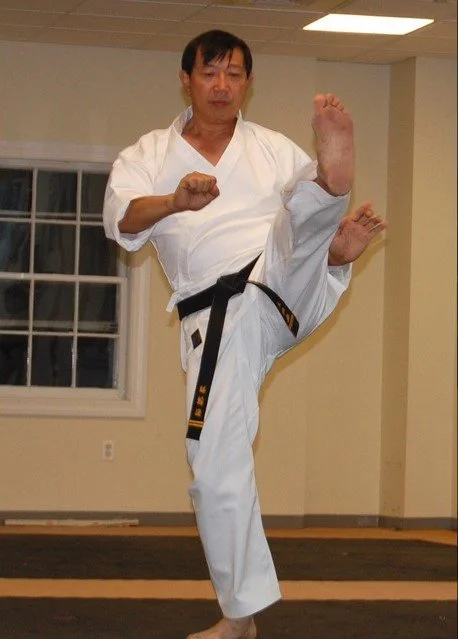
In this episode Jeremy chats with Darin Yee in person, at the 2025 Uechi Convention.
Darin Yee - Episode 1066
SUMMARY
In this conversation, Jeremy Lesniak and Darin Yee explore the multifaceted world of martial arts, discussing its historical context, teaching philosophies, and the evolution of techniques. They emphasize the importance of respect, individualism, and practical application in martial arts training.
The dialogue also highlights the significance of understanding the science behind movements and the necessity of hard work in mastering the art. Ultimately, they advocate for a purpose-driven approach to martial arts, encouraging students to engage deeply with their practice.
TAKEAWAYS
Martial arts has a rich history that differs from modern perceptions.
Respect in martial arts is reciprocal between teacher and student.
Teaching should focus on helping students exceed their own limits.
The evolution of martial arts techniques is essential for growth.
Understanding the balance between hard and soft techniques is crucial.
Individualism in martial arts allows for personal growth and mastery.
Practical application of techniques is necessary for effective training.
The science behind movements enhances martial arts practice.
Experience in fighting is vital for teaching martial arts effectively.
The spirit of martial arts persists even as physical abilities decline.
CHAPTERS
00:00 Introduction and Welcome
01:43 The Evolution of Martial Arts
10:52 Teaching Philosophy and Student Development
17:08 Understanding Movement and Technique
22:09 The Importance of Experience in Teaching
25:25 The Reality of Fighting and Self-Defense
32:27 Natural Movement in Martial Arts
36:46 Teaching Philosophy and Student Engagement
42:21 The Role of the Teacher
46:24 Evolution of Martial Arts
51:33 The Spirit of Martial Arts
56:13 Training Responsibly and Avoiding Injury
01:01:41 Purposeful Learning in Martial Arts
This episode is sponsored by Kataaro. Please check out their site at Kataaro Custom Martial Arts Products - Kataaro. The month of October is Breast Cancer Awareness Month and Kataaro is donating 50% of profits from all breast cancer awareness products to breast cancer research!
And use the code WK10 to save 10% off your first order. And be sure to ask them about a wholesale account for school owners!
After listening to the episode, it would be exciting for us to know your thoughts about it.
✅Subscribe to whistlekick Martial Arts Radio on the following platforms:
🎧Apple Podcasts: https://apple.co/3mVnZmf
🎧Spotify: https://spoti.fi/3yHVdHQ
✅You can find whistlekick on all social media platforms using the handle @whistlekick or visit our website at https://www.whistlekick.com or https://www.whistlekickmartialartsradio.com
Show Transcript
Jeremy Lesniak (00:07.278)
Hey everybody out there, welcome back to another episode. There we go, I can talk, I promise.
of Whistlekick martial arts radio Jeremy Lesnick joined by Darin Yee. Yes, Darin Yee. Good. Glad I have the right person. This would have been embarrassing if not. And we are recording live, I guess we can say live from Uechi-Con in Manchester, New Hampshire. It's 2025 and we may even have some people pop in live if you're not part of the Patreon, patreon.com slash whistlekick. That's how you get in on that.
This episode, as well as all the episodes we're doing here this weekend, are sponsored by Kataro, and this episode will drop in October 2025. And if you're watching, you see the backside, the pink side of this belt, Kataro, because they do great stuff, and that's why we love working with them. Half of the profits of all of their breast cancer related items are going to breast cancer research, like the black and pink belt, which I will be wearing this weekend because it's a great thing to be able to support.
those charities. Well, let's talk about you now. Thanks for being here. Thank you. Thanks for having me. Appreciate it.
Jeremy Lesniak (02:10.144)
There are so many ways we can start. I don't even know. Where should we start? How should we start this conversation? Well, one of the things that I always begin telling people is that martial art is not the kind of thing that a lot of people think of nowadays. See, in the old days, the history of martial art is very different than what people think.
And the problem with Mosh Wads is that everybody is an expert. Especially people who've never done it. Yes. And like, for instance, one of the things I mentioned, people said Mosh Wads is in the old days when it started in China, wasn't rich people that study, it was the poor people that study. Rich people didn't need to learn it because they hired the poor people to fight for them.
So nowadays, all rich people study. In the old days in China, really was no martial art school per se. There was security agencies. There was a purpose to study. So this is why there was so much competition in martial art in those days. It was all about money. So instead of...
hiring somebody else, you should hire my firm because we are the best martial artists. And so there was always competition between the schools. And a lot of people don't realize that. As far as history goes in martial arts, I know there's a lot of people that will write, you know, I spoke to this person or that person, you know, I know the true story. But the truth is that we would never know the truth.
And I tell a lot of people that legend in time becomes history. You tell somebody something often enough and they believe it. And I teach a very different Moshavad than most people. There's a lot of teachers that say, you learn from me. I'm the best person out there. There's nobody better. And a lot of teachers beat up their students to let the students know that
Jeremy Lesniak (04:36.726)
Whereas when I teach my students, I intentionally, while I'm sparring the open ends, so I can get hit and I tell them very good job. And I think that teachers who really teach, if their students don't exceed who they are, they're not really doing a great job. So my idea about teaching is not to have your student think,
that you can intimidate them, but you want your student to think that there was no higher up. Everybody's equal. When we're born, and I don't know if you're religious, but I think that God gave everybody different assets. No one person is superior to another person. Whatever you're better at, I could be better than you at something else. So I feel martial artist life.
Okay? whatever I know or what I can do better than you, there are always things that you do that's better than me. So when I go to bow to my students, whenever they bow, I always bow back because respect has to go both ways. If you were my student, you wouldn't, you couldn't learn from me if you didn't respect me.
And as a teacher, I wouldn't teach you enough if I didn't respect you. So I feel that when we come in the bow, respect has both ways. I think a lot different than a lot of teachers. And I teach very differently than a lot of teachers. I think a lot of teachers, I think most teachers would agree with what you're saying, but I don't know that they all do it. I don't know that they're all putting it into practice. Yeah.
It has to be. And if anybody put themselves on the pedestal and say that you will never reach by level, then you know what they could teach you. Moshua has to evolve. Everything's evolved. You look at Wei Ji Rui, the way Kam Boon brought it over from China, he only had three kata. It developed into eight. And now they're a super rempe and they're calling it the lost kata.
Jeremy Lesniak (07:05.482)
And I don't think that's true when you learn something that your original teacher teach you, then that's a style. Anything that's taught above and beyond that, it's always good to know more. But you can't say that this is his style. You can say I add to it. Weiji-ru is Weiji-ru. Kanbun called it boing-gai-nu. Right? So he was teaching.
which, you know, I'm not sure what language it is, but in Cantonese, bon means half, means hot, nguan means soft, so they call bon ngán nguan. So ponggan nun is a pretty good imitation of, you know, white people speaking Chinese. I think that was, that's pretty good. You know, that's probably as likely an explanation as any.
Yeah, and my problem is when you look at so many people practice ways, are so stiff and they're so tight. How is that half hard, half soft? Nobody's ever seen a statue hit anybody, right? So if you're extremely high, you can't move freely. So you can't move freely. How are you the best that you can?
you're going to be if you're always so stiff. Why do you think people gravitate towards half of the style and not the other half? It's simplicity. Something that's hot, that's strong. I go straight forward and plow through everybody. Soft needs positioning. needs timing. It needs the development of skill. With power, all you need is
Even in the progression of Chinese weapons, when you learn Chinese weapon, the first weapon that most Chinese martial artists, schools will teach you is a dan dou. Dan means single, is the knife. We call it the broadsword now. It's a hard weapon. When you go to block, you need two different points. When you hold just the handle and somebody hits this...
Jeremy Lesniak (09:34.36)
top sword, it comes back at you. Right, this is the flexible sword. Yes, you need to hold the back down in order to block with it. So it's a hard weapon because they're using hard movement. The second weapon that they go into is the stick. The stick is another hard weapon. You beat people with the stick, you block and you have two points. You're right in your left hand, right?
The next one is a spear. The spear is a soft weapon. Now you're going into something that's more skillful. It's further along. It becomes soft, high and soft. A spear. You can't beat somebody with a spear because you can't break the spear. You're thrust. And you can't block directly with a spear, although you can between the two hands. But the front part of it, you divert.
so it's not hot and soft. The most skillful weapon is the sword. The sword is double-edged. You can't hold part of the kushukage with your fingers or your hand off. So you have to softly, when somebody strikes, guide the weapon away. You can't slam it because it doesn't have the strength. The wrist isn't strong enough. So when you hit the front of the sword, to hold it back.
So you have to use the sort to guide the weapon.
If you look at any of the old pictures of Chinese martial arts, like the generals and the soldiers, all the soldiers use the Dandou, out in the field, because it's a hard weapon. It's simplicity. Then you have the stick. The only people you see with the sword are the heavy clad, fancy dress people, because the sword requires skill. So you go from hard...
Jeremy Lesniak (11:37.762)
where you don't need as much skill, to where you become skilled and then you use the soft weapon rather than a hard weapon. So in my opinion, that's my opinion only, right? But I believe that that's the process of learning. You go from hard weapons, where it's something that's more simple to something that's more difficult, which is soft.
which now requires timing, skill, Patience of learning. And I think the problem with most of our martial artists is that simplicity is what they're interested in. And my problem is people are now studying for rank instead of studying for skill. And this is why years ago when...
I actually left the organization because I didn't want to teach because nobody wants to spend the time to develop skill. And even now, you look at some of high-ranking people, evidence-correct, all power. And I don't knock it, don't get me wrong. Something that's simple is easy to learn, easy to use, easy to teach. Something that requires more skill.
becomes a little more difficult and it requires an immense amount of So right now, lot of the things that people learn, they go to the inside. When you see them block, they block on the inside. But when you're on the inside, you're not matching power. Because when you go to punch, I have to come against your power, try to fight it. Where soft, when you punch,
I move the outside and guide the punch away, which requires a little more skill. It requires me to learn how to dance. Sure. I need to learn how to move. You ever see Muhammad Ali barks? Sometimes they make fun of him, say he has his hands down. But Muhammad Ali has such great timing, great speed, and great shift in moving those legs. It's hard to hit him even if he didn't have his hands out right.
Jeremy Lesniak (14:04.3)
So I think to become a great martial artist, you have to learn soft. And when you talk to people, what is soft? You get people say, it's in the breathing. Well, every living thing breathes. Are they also masters of karate because they know how to breathe? Probably not. No. So it's not in the breathing, but you know.
People have a tendency to believe that and I don't know. The movements that we have in Weiji rule and the reason why I talk about Weiji rule is I studied Kung Fu for 10 years before I started Weiji. But I find Weiji rule to be one of the most effective systems that I have trained in. My brother studies Shotokan and I worked out with him and I think Shotokan is a creator.
but the finger shoulder kind is a quite heavy strong hand. And I think weijiru, it leaves a lot in interpretation. You have to interpret the move. The problem is there's two types of people for study. There's students and there's practitioners. Most practitioners do what the teacher tells them. And most teachers love that.
because it makes them everything they teach to be valid. And this is what it is. But as I mentioned before, when we're born, God gave each of us different assets. Some of us are big and strong, and some of us are quicker, and some of us not so great. And also, the important thing is we have to learn to be who we are. To become a master, you have to look at the movements that you learn.
and master those movements for yourself. Not to do what you teach me because I'm not you. Maybe I'm not as strong as you. I'm not as fast as you. So I have to look at these movements to how do I master these movements to who I am. You know, I remember when I was teaching in Cuba and the person that I Hold on. When you were teaching in Cuba?
Jeremy Lesniak (16:31.826)
Well, Well,
Because in order to master the system to be who you are, I like to see what works. now I can learn from you. So this is that's the student versus the practitioner. Yes, the student see a practitioner will practice what they're being taught. A student is going to be a knucklehead like me, who's that when you go to teach me something, the three things I tell everybody is going to learn how to dissect.
take all the movements that take it apart, analyze them. So you dissect and you analyze. What is each movement and what does it do and what can it do? And then you experiment with it because I could think something would work that way. And then you find out it doesn't work very well. So when you listen to another sensei teach something, you say, yeah, that's the way to do it.
And when somebody teaches you something different, you say, that's my sensei is right. You know, that's the wrong attitude. The right attitude is to find out how he does it and then learn what works for you. So you have to be able to dissect, take everything apart. You have to analyze all the movements and how they work. And then you're going to make sure it by experiment.
I tell a lot of teachers who teach, who learn to teach, and I said, you have to teach responsible because what you teach is long lasting. It'll take a long time if it doesn't work for somebody for that to dissipate and have something else work. You never teach a student something that only works for you because your student is not you.
Jeremy Lesniak (18:54.922)
you have to be able to teach different versions of different things. So let the students become who they are and not who you are. It is... I fully agree with what you're saying. And it's how I was raised in karate. But I've learned from doing the show and all the things that we do and traveling around and training in other schools, that it's not every school that looks at martial arts in this way.
Does this philosophy come from your time in Kung Fu? Well, I think it from my 60 years of training. And you know, when I was studying light crane, there's certain movements that they use. And like we have this version of Ch'o-li-fut. Ch'o-li-fut is what they used to teach in the Chinese island. It's very much like taekwondo. It's aggressive.
movement of beating your opponent to death, right? Very little concentrations put into blocking. They have a point, so point, power point, come, punch up, the point is the brush and then the other movements. But they don't teach you a lot about defense, about blocking. So I call that like a suicide. You go and do your best to beat your opponent to death before they beat you to death. Right.
Weiji rule in our Waukebacht that we teach, they teach us singular movements. You say to an instructor, well, how would you use that? He said, well, when you go around, you're collected, you're completely covered. Then I said, well, let's use a little bit of science, because there's no such thing as magic. You don't learn a couple of tricks when they beat everybody up.
you have to find out how it works, right? So if you go to punch me, around being two and a half feet long, maybe three, good reach, then you're gonna step in in order to hit, right? So you're gonna throw a punch at me that only takes like three to four feet to hit me. If I make this full circle, one, two, three, four.
Jeremy Lesniak (21:21.814)
I can go five feet to block a three-foot punch. The math doesn't work out. So I created what we call a waoki bonkai, which we take these movements. So this is number one, number two, number three. I drop in number four, number five, number six. I break it down in six different parts. So no matter how somebody punches at you,
It doesn't take that long to block. If it takes you three feet to punch me, I should only move two to three inches to blocking. Because when you go to punch, by the time you get here, then it registers, hey, you're throwing a punch. By the time I go to blocking, it's too late. I end up getting hit. But if my hand was up, you go to punch and you're right about here. All I have to move is inches.
if you have to move more than it just
at nanosecond, it goes from here to here, you're gonna get hit. So you have to learn how to dissect the wauki, all the little movements in it, and put it to good use. And that's what I did. I created the wauki bonkai. And there's a lot of teachers, I go to their dojo to teach them recording. So they're using, which is a good thing, because we don't want anybody thinking. The first thing I ask is,
How many people here are waiting room students and everybody puts their hand up? How many of us, everybody puts their hand up? And I said, how many of us use the waoki? And they look at each other and they're saying, well, why don't you? Isn't that 50 % of your style? We do a waoki before we do a shogun, right? We do a waoki before we do a rich hand. You do the waoki before you do a nukote.
Jeremy Lesniak (23:20.27)
You even do a waoki before you throw a kick. So if you don't use the waoki, that's 50 % of your system. Why would you do that? Why would you do something that you don't use and you can't use? I think the important thing is to break that down, find out how to use. Because it's irrational to do something that you're not going to do.
So if we go back to the beginning of our conversation, we talked about kind of lost information. And one of my theories is that anything that's fundamental in a style was put there with intent. So if you're talking about this, this circular motion as a defensive motion being so fundamentally important, what changed or maybe I can be lazy and say went wrong.
in how it was passed down, that it's not being used in that way. Well, I think, and I really believe this to be true, that with each generation of students, something gets lost. A lot of us do not study enough before we go to teach. And if you don't really learn enough of it, you don't fully understand it. I would agree.
You know, I watch a lot of people's spot and then I can tell if anybody ever fought. You really can't be a successful instructor about fighting if you never fought. If you don't go out there and fight, then you're not a fighter. Martial arts are out of fighting. How can you teach something that you've never done? I grew up in the ghetto.
I was born in the South End of Boston. At that time, right now, a lot of rich people lived there now. When I tell people I you know, I live in the South End, you had a lot of money. No, I lived there when we were poor. We didn't have anything. There was fights every single day. Fight was a necessity. This is one of reasons I study karate, right? Because...
Jeremy Lesniak (25:43.438)
I didn't want to get beat up all the time. So, you know, I like to believe that I trained so don't have to fight. So when you have the confidence, sometimes that confidence glow within you. So when somebody wants to fight and you talk your way out of it, it's not because you're a coward. It's because you never get in the fight unscathed. Nobody gets in the fight and come out and say,
I kicked his butt and I didn't get hurt. You know, that just, you know, people's vanity. You know, anytime you get in a fight, you never walk out unscathed. And so I rather not fight. I remember I was in college with drinkin' AIDS was 18 when I was in college. I'm old. So somebody wants to, you know, it's getting a little loud. And you know, I said, you know, I really don't want to argue with you. I said, how about if I buy you a beer? said.
I buy a beer with no friends. There's no fight. Beer at that time, I'm old. It's like dollar and 50 cents. So I buy my beer for a dollar and 50 cents. There's no fight. Even a nice fancy beer today in an upper end bar, I'll pay 10 bucks to not get into a fight every time. Yeah. So why fight? And I think a lot of people don't get in fights. go, oh, shoot, I could have done this and I could have done that.
So I paid a dollar 50 so I don't have to get in a fight, you know? And then you get people who say, I would have kicked his butt. You never know. You know, like I said, only gave us so much, right? Who has the knife? Who has the gun? How many friends does he have? Not even that. No matter how strong you are, how good you are, you can't beat who you can't hurt, right? I can hit somebody as hard as I want.
But if I can't hurt them, and this is the problem with people studying martial arts. They think I'm studying martial art, I'm gonna be able to kick the crap out of everybody. And that's not true. And that's the wrong way to think. You know, I've been studying since I was eight years old. I'm 74 now. And with all that martial art, I still don't believe I can beat everybody. I don't believe I can beat anybody. I'm...
Jeremy Lesniak (28:11.182)
much better than I used to be. But to say I'm better than anybody else, I'm fooling myself. And I don't think people should fool themselves. Yeah, I'm a better fighter than I used to be. But to say that I'm better than anybody, you can't say that. And I asked a lot of my students at Cumberland, why are you here? If he says, I want to able to beat this guy up.
And I say, you don't belong in the school. That's not what I teach you to do. I teach you how to fight. I can tell you that I'm going to help you be a better person. Hopefully a better person means I don't have to fight. I can help you become a stronger person. But I can't guarantee you're going to beat everybody. And I train a lot different than other people.
Whereas in America, everybody works for power. But you can't hurt who you can't hit. I train everybody for speed. Because if I'm not fast enough to hit you, no matter how much I try to hit you, I'm never going to be able to hit you if you're that much quicker than me. So I train specifically of speed.
because along with speed and your exercises come strength. I'll give you good example. Bruce Lee, probably one of the hottest hitters that I've ever seen, right? He weighs 120, 130 pounds. Where's this mass? You rely on science, right? You hit with force. What is force? Mass times acceleration. You know, that's just a simple formula. There's no way, there's a lot of...
factors to it. But the important is mass times acceleration. So when we train, I always ask my student to be thinkers. When you use a technique, use something to hit. What is mass? And what is acceleration? What in what you just did requires more mass? And what requires more acceleration? Some people think
Jeremy Lesniak (30:34.168)
You know, I'm big and powerful. hit younger. Okay, let me give you good example. Your front kick, powerful kick, really quick, comes in and out. You're going to hit somebody, and I call that a strong kick, a hard kick, because it's linear. When you go to kick, you have the weight of your body behind that kick. you hit, you have the mass, you can rely on mass. Now, if you take a roundhouse kick,
and you come around to the side. Where is the mass? There's not much. It's just your body and the weight of your leg. It's the acceleration that makes the roundhouse kick powerful. So what is more powerful? The roundhouse kick or the front kick? The roundhouse kick. For most people, yeah. But that's not the hot, that's not the hot kick. The hot kick is your front kick because you got your mass behind.
So it's mass times acceleration. This is my acceleration and my mass is from my body. When you take a roundhouse kick, the mass is just your foot and your leg. The acceleration is what gives you the power. So when you go to study martial arts, it's a science. Understand the science, not just say, you do this and do this and that's what I'm going to hit you on today.
to hurt you with that. Understand the science. What in it that gives you the power? And that's what makes a student. Someone who thinks, takes things apart, that says, I could become stronger and better than who I am because I understand what I'm doing, why I'm doing it, and how I'm doing it to make it more powerful. But if I go to teach you, I'm going to ask you, how do you feel?
Right? Do you feel more powerful this way? You feel more powerful that way? I remember the open islands teaching us about sunshine. says, it's total heel. Right? And your front foot come out a little bit like that. I don't teach like that. No, no. I ask people how fast you, how fast should your foot be? Everybody says total heel. I just really, you feel balanced that way.
Jeremy Lesniak (33:02.424)
So when they practice in the kata, the Sanjana, say to them, how's your balance? I don't say are you totally healed. I said, how do you feel? How's your balance feel? Now, I tell people how far you step, how far your foot goes, you learn how to do that before you're even one years old. Why? Because you learn how to walk. When you go to step, you got to put your foot down before you fall. You learn how far you can step.
before you need to put your foot down. That's what you gotta do with your fighting. What is the difference? You get your foot up, you gotta have your foot stepped down before you lose your balance. Everything's about balance. How wide do you go? They said, well, you you go a little small, go, I don't tell my students that. I said, go side to side. How's your balance feel? He goes, well, I'm feeling going on the side of my foot. I said, then spread your legs out a little bit.
until you feel you're on the flat of your feet. But I don't tell them a specific amount to go because I'm not him. And the best teacher is not me. The best teacher is you. Nobody knows you better than you. So when I go to teach people, tell them, how does that feel? You feel balanced forward and backwards? Do you feel balanced side to side? Find the balance. You don't want to go out too wide because now it leaves you open. You want to...
go out as far as you need to with being balanced without opening yourself up. When you do your blocks, you don't want to do too big of a block. Are you blocking for the guy next to you? Are you blocking for yourself? So your blocks are only the width of your body and not way out here. Where you're blocking, who you're blocking, when you come down and block in larger ways, you root people, they go sideways.
But your body's not meant to go sideways. That's why so many people have bad shoulders. Your body's meant to come out. So when I block, I'm meant to go sideways. I come down and I push out. And then my hands stop. You know, I want you to feel that, go like this. It's stop, yeah, without you having to stop it. But if you go sideways, you have to stop it where you want it to be. And you can feel the strain on your shoulder. If there's a strain...
Jeremy Lesniak (35:32.92)
then it's unnatural. If it's natural, you don't feel straight. So you use that word. Let me ask you before you go on. Because I have my theories on this. Do you believe all martial arts techniques should be based on natural movement? That's right. We agree that. If it isn't natural, it isn't what you're supposed to do. OK? So I tell people.
When they're doing the kata, I want you to feel comfortable when you're doing the kata. If you're not comfortable, then you're fighting yourself before you don't even need to fight somebody else. You already fight yourself, right? You want to be comfortable. When you do your Wawoke, people come back with their hands. They pull way back. I said, do you feel a little strained up? He goes, that's fine. I said, why are you straining yourself? Bring the hand back to where you're comfortable.
When you're doing your kata, you shouldn't be uncomfortable. If you're uncomfortable, you really push yourself too much. So I teach a lot different than everybody else. I want you to be as natural and as comfortable as fast as you can be, right? Because you want to gain strength, lift some weights. Weights are not bad for you. A lot of people say, karate people shouldn't be afraid to get bulked.
Muscles are not bad. Muscles are always good for you. You know what else muscle does? Muscle doesn't have any nerves, have no pain. There's no such thing as a muscle ache. It's the nerves around your muscles that hurt. There's no such thing as bad muscles. So when you gain muscle, it's not a bad thing. You just have to continue with flexibility. Allow and gain your muscles to learn how to be flexible with the muscle.
So, you know, I train a lot different than a lot of other people. The other thing too is understand the philosophy.
Jeremy Lesniak (37:37.33)
All Asian arts is philosophical. There's something behind it. And when teachers teach, they say you do this first, you do that second. I named them. Like if I was teaching, say, kata, like kanchiwa, right? I say three turn block punches. So you do the first block, second block. Then I'll say two sidekicks. You go through the first sidekick. If I say...
Otherwise I say, well, do this, the next move is this. You don't remember that. You just try to remember the move. But if I have you recite your moves, it's in here. So you recite, and that's how I teach. I want to make sure that you continue practice, right? And then that you don't forget it, but you recite the movements. So I learn a lot of different ways to teach. I used to visit a lot of different karate schools and then watch the teachers teach.
I try to pick up good things they have and things that I don't think they should do, I try to avoid it. But I'm not the kind of person to tell somebody what's right or wrong because I'm not them. I try to what's right for me. And when somebody does something and I don't know if I want to do that, I don't argue with them. Sometimes when I teach up somebody, I argue with them, I do those things.
What was wrong for him to say that? When I look at somebody to do something that I couldn't do, I would never say, you don't do that. I'm not you. I don't know why you do it. I don't know how effective that is for you. And that's why I would never contradict what you do. See, you have to have that respect for the other person. When somebody's doing something that it's not you, that you don't do, you have to respect what he does. Maybe it works for him.
I have no right to tell you don't do that. That's all right. I always ask my students if they do something that I think is something I wouldn't do. said, well, does it feel good doing that? Try this. How's that work? How's this work? And they try it and it goes well, do whatever you feel right to it. And I'll leave. But I will never say that's wrong. You can't do that. And never tell me anything's wrong because you know, not them. So you can't tell them.
Jeremy Lesniak (40:03.992)
That's wrong.
I agree.
What about when someone's new? What about if someone comes in there very early in their martial arts career? you? I assume you do it a little differently. Well, you know, since they Madison taught me a lot, you know he I find him the one that he one of the best teachers I've ever been. You get a lot of people and I don't want to mention things, but they claim to be some of the best teachers. But they cherry pick the best students in schools. I'm going to teach the school and teach high school.
A good teacher is someone who takes somebody, anybody, and try to make that person the best that he's going to be. Sensei Madison takes everybody, he teaches everybody, and every one of his students becomes the best that they're going to be. That's a good teacher. Someone who cherry picks and say, yeah, they're my student, they do awesome. And he said, yeah, I'm the teacher.
You're taking credit for teaching the students where you're at. My students do fairly well. And I thank them for making me look good. Because they said, Ceci, you do a good job at teaching. It ain't me. I'm not the one that worked hard to become a good student. The student becomes who they are because of the effort they put in. I just try to help them along.
Jeremy Lesniak (41:33.518)
by showing them different things to do. Every teacher can do that, okay? But it takes a student to become a good martial artist. So I try never to take credit. I just sit there with big smile on my face and go, yeah, he's doing really well. That's good. And you know, it's not about you, it's about your students. When you go to train, you wanna be the best that you can be. And when you can...
attain so much to a level where you can't go any higher, then you try to absorb as much knowledge as you can. Because when you teach a student, you don't teach them one way. You try to teach them multiple ways and let that student pick the way that he wants to do it. That's why when I teach, try to teach us many different ways as I can. When somebody else has something else to teach,
and I don't know it, I learn what they have to teach. And then I try to incorporate that and show my students so they have another option. Not that I'm good at whatever it is that I just thought of. Maybe somebody else was good at it. Just give them some another option to be a good teacher, to help your student to be the best that they can be. I would never contradict anybody else's techniques because I'm not them.
And even when you go to promotions, you sit in a promotion board, sometimes we have five, sometimes seven people that look. And when it got in promotion board, you'll stand up and go, well, that was great. You passed, you I passed you, but you can do this, you can do that. And I never do that. I think of myself, you're not a teacher. You shouldn't be telling him what to do. You see, when I go to promotion, I write things down.
on what I think could be an approval. And I give it to his teacher to look and let him decide. He can say, oh yeah, we can do that. I said, no, my students will find, throw it away. That's fine. I'm not offended. What I wrote down was my opinion. It's his students up to the sensei to teach their student. I would never go up and tell a student how to do something to conjure his teacher. So when...
Jeremy Lesniak (44:02.35)
People pass the test, would say, congratulations, you did a great job. And I sit down. It's not like I, know, people say, damn, don't wanna tell people how to do this. It's not my place to do that. I'm not a teacher and I don't wanna confuse the student. And so what I do is I write my recommendations down and I give to the teacher. He reads it and if he likes it, he'll use it.
If you don't like it, just file a noise pass. But for all these guys to go down and says, well, you should do this, just do that. I just sit there, shake my head. There's an element of arrogance in giving correction in that way, isn't there? what if that person, as you've said a number of times, you don't know what's going on with that person. What if there's some kind of physical anomaly? What if there's an injury? What if there's
prior training, what if, yeah, so many what ifs. Well, I asked the teachers in the test, you know, if there's anything we should know about the student, sure, before they come up. But the thing is, you're there to say that, he sufficient for the rank that he's in for? You're not there to teach him to go to the next level. It's not your job. He's not your student. So you, and so a lot of people think, a lot of times they go and,
They think I don't know anything because I didn't say anything. But again, it's not my place. See, if I teach a seminar, I'll teach things. But the first thing I tell everybody is your teacher is teaching what's right. I'm just adding two things that you can consider. Right? Don't ever think that what I teach you exceeds what your teacher is teaching you. I'm just teaching you another idea to give you different thoughts to go by.
So it's respect for the students teaching. You never try to change the way anybody do this. You can give your opinion and then, you know, I don't want to swear, you know, everybody has opinions like every opinion stinks. The thing is you can give your suggestions and I.
Jeremy Lesniak (46:23.37)
When I go to teach, never say I'm here to teach you, I'm here to share. See, I don't use the word teach. If I teach you, I expect you to learn it be able to do it. I'm sharing with you. If you like it, then you adapt. Most people, if they like what you teach, they'll learn it. If they don't like what you teach, they don't pay much attention, they won't learn. And it's okay. You're not their teacher. You have no right to say that you need to learn this.
I call them and says, I come here and share some things that I learned about this and I share with you. And I share. And that changes the way that you present information, doesn't it? Because once I realized that I could not make someone learn, I could offer them information, but I couldn't, no matter what I did, I couldn't stuff that information into their brain. They had to be willing.
So now I see my job when I'm in the front of the room, whether it's a seminar or my classes, is to motivate my students to want to learn what I am sharing with them. And I don't use the term teaching. You don't? No. I always use the word sharing with you and some of the things I learned because they're not my students. If they were my students, I'm going to teach. OK. But I'm going to teach. And I let them know. I'll teach them multiple ways.
Right? And I want you to learn all three, even though you might not use it, because you might become a teacher. And you like to have those ideas to be able to share with your students. And the thing is, a lot of people don't do that. And a lot of the movements loses translation through time. That's why I call it the evolution of the art. There's a lot of things that, you know, I tell people, some of the things that we do in Waijiru.
that Cambodian originally brought it over from China might not recognize it, say, what the heck is that? Right? Because it's evolved. But did it evolve for the better? That depends on the individual, right? So I'm never gonna say no, it didn't evolve for the better. I'm just gonna say there was more to it. But then if you don't know enough to allow your students to be who they are.
Jeremy Lesniak (48:46.316)
and then your students gotta be a mini you, then I think the teachers lack some understanding of individualism. Andrew and I talked about this, and I think we did a whole episode on that if your goal is to turn your students into you, they're never gonna get there. They'll never be you, as you said, they have different gifts. And so you're, you're, you're dooming them to be less than they could be.
And then when they go to teach, they'll do the same thing. So it gets worse. It gets worse. So the way I'm teaching, I'm hoping to get them to engage, to thinking about how to improve the system and we can advance. Now, know, since St. Madison made me the president of IUKF, not that I wanted to be. I got to spend my retiree year playing golf. But since St. Madison realized that.
I have a lot that I can try to persuade people into learning more about the soft because the hard is the elementary part. It's all the grunt and power plowing right through people. soft part needs timing of the punch position is where I can counter, right? And I need the practice to have that skill incorporate. So I push people more toward the...
soft ass so they become more skilled. Hopefully they can teach more of that. If you look at so many of the people who study Weiji, they're stiff, they don't look bored. I remember Joe Lewis came down to one of our camps down Cape Cod. He looked at me and goes, you're not Weiji. He said, what do mean? He said, your character actually looks good.
That is a huge compliment from a man who was not a fan of Katha. He says, your Katha actually looks good. Then he goes, do you want to one of my books? He goes, He says, it looks like you're teaching out of one chapter of my book because he's watching me teach seminar. I goes, I'm already teaching out of a chapter of your book, why do need your book?
Jeremy Lesniak (51:09.612)
He goes, I'll give you one. I said, no, it's all right, Joe. said, you you print those books to sell. said, so what do you do? Is he sign one and gave it George's wife gave it Susan goes when I leave, give it to them. So after he left, Susan says, Joe was left us. gee, thanks. I said, you know, I should have bought it from him. I didn't want to take his book and not pay him for it. You know, one of the things so small tangent here.
We've had a number of people on the show who trained and earned black belts from Joe Lewis. And one of my good friends, Dennis, spent many years training with him. And I never had a chance to meet him. passed before we started doing this. But I will say one thing that I'm very confident in saying, if Joe Lewis didn't think well of you, he would not have left you that moment. That is...
Andrew, would you agree that's pretty darned? Yeah, Andrew's off camera, nodding, extremely high praise. Oh, thank you. Because we both have had the chance to train with Bill Wallace, of course was Joe Lewis's friend. Joe is an excellent martial artist. I I talked with him. He is so knowledgeable, right? And he goes, I didn't think of that. He goes, that's good. And then he explained how he thought. You know, I sat at lunch and talked to him.
I didn't know, I always thought he was this big, powerful guy who just beat the crap out of everybody because he was so big. But as I'm talking to him, I realized how knowledgeable he is. when, you know, when somebody says, well, yeah, he's a big guy, goes, no, really don't, then you don't know Joe Louis, right? I don't know him. I only met him that one time at camp. And just from meeting him the first time, talking to him, I said,
This man is really knowledgeable about martial arts. He was, I don't think he ever would have used the term nerd for himself, but from what I understand, he was very interested in understanding things and improving them and not being trapped by tradition. no, you know, and we were talking about different movements. goes, that's right out of boxing.
Jeremy Lesniak (53:31.68)
I said, Joe, used to box. I boxed toes up. Yeah, it's amazing what a great martial artist he was and I never realized that about him. He was super. And I brought a kung fu teacher from China because when I went to teach, I didn't want to confuse people with the way I was teaching. So I had him teach some of the same movement.
but different ideas. Because back in the early eights, I used to go train in China. Like once or twice a year, I used to fly back to China. I trained in Toisan. I trained in Guangzhou. I trained in Fushan. And I got to meet a lot of the masters there. And on the way back, I fly into Narita to fly down to Nash to visit Okinawa.
But, you know, I still maintain my kung fu roots, regardless of the fact that I think the world awaits you over. And I've learned so many forms that I can't remember half of them. It's tough being old. But my brother studied shodokan, I studied the hion and the pinyons with him. And then I wanted the flexibility to kick.
like the Taekwondo people. So I studied with Sik-Chang and came to Massachusetts learning how Taekwondo stretch. So I learned all the kicking. And then I met a couple of my friends, they're in Jiu-Jitsu and I studied with Ziggy down at BYMCU down in Boston to study Jiu-Jitsu. But I just didn't have enough time for everything.
So I studied jujitsu for about a year just to learn some of the basics. I was still a white belt, but I got to get some of the basics from him. And then I worked with a man named Val Boss in Boston. That happened recently, Val Boss, great boxing coach. And I trained with him at the Huntington YMCA for about six, seven months.
Jeremy Lesniak (55:56.43)
While I was there, there were some Muay Thai people there. So I trained Muay Thai with them. Yeah, was to a point that we even bought a condo in Bangkok. So I can go there and train out where they still live. Yeah. So martial arts is martial arts, right? How many different ways they say to hit somebody. There's no such thing as bad martial arts. You're going to have somebody says, well, we're better. We're better than that.
It's the individual. There's no such thing as bad martial art. It's just bad martial artists. Right? So if you study and you have the spirit, then you're always going to be a great martial artist. We talk about the mind, body, and spirit. Your mind learns the art. All right? Your body trains in it. Okay? Your spirit keep you going.
When you get older, your mind has a tendency to forget. Your body loses the energy and the power and the flexibility you used to have, but your spirit is infinite. I say to people, when I was 60 years old, I'm now 74 now, but at 60, I'm not as strong as I used to be when I was 30. Do I lose my rank? Why do I keep getting promoted higher and higher?
It's not that I'm a better fighter. As a matter of fact, I'm not as strong and as fast as I used to be. So why am I maintaining my rank and getting promoted higher? Because of my spirit. Because your spirit is infinite. You can't break your spirit. You can lose your mind. You can lose your physical ability. But you always have your spirit. So people continue to train. I have the greatest respect in the world for people getting to an older age.
but they continue to change. I'll even mention some of his name, I don't like, but Madri Swift, she passed away, but she trained and she rubbed a lot of people the wrong way, but she used to come online to work out with me, because I teach Monday, Monday, one and six, and I teach Europe, I teach...
Jeremy Lesniak (58:20.91)
You know, people all over the world and they come in the search. The reason why it's one to six, it's one o'clock. It's their night to have to get out of work and take a workout online. Marjorie had cancer. She's, she's, died of cancer. But while she had chemo, she wore a scarf cause she put on her gate and she came on to work out. That spirit. How do you not respect somebody like that? Yeah.
How can you take anything away from anybody who has that much spirit? She's an older lady. She don't have the strength and the vitality she did when she was younger. And people used to say, you know, know, Marjorie is strong and you know what? She's still a great martial artist. All these years she's trained, continued training. And even while she had chemo and wasn't feeling as well as she should.
she still put on a game, come work out because they're a spirit, right? So you can't knock people like that. But as far as people sending my shot and wanting to be, you gotta fight. It's like learning how to drive a car. You know where the steering wheel is, you know where the gas is. You can even know how to switch your gears, know, and step in the clutch. But unless you get behind that wheel and drive that car, you're not a driver.
You can learn everything you can about punching and kicking. You don't practice fighting. You're not a fighter. I don't care how fast and how strong you are. You don't really fight. You don't have the timing. You don't have the position. You don't know what it's like to get hit. You know, what did Mike Tyson say? Everybody has a plan to get punched in the face, right? Then what happened?
And that's why Kuntiki Tei is good, but you don't exceed it because you have to know your body's limit. So many people train Kuntiki Tei, they pound and beat the crap out of themselves. But if you learn correctly, your Kuntiki Tei should not hurt you because right now everybody's blocked with their bones. You're not supposed to block with your bones, block with your muscles.
Jeremy Lesniak (01:00:46.618)
If I do my Wauke, you would punch, I hit you with my muscle. I turn my hand so I can grab, but I don't do this and hit you with the bone. I hit you with the back and then I turn and grab. If you do this, hit here, you hit your bone. And people go home with black and blue marks. Black and blue marks isn't good. That's internal bleeding. When you do training and you have internal bleeding, it's not good for you.
So I tell people you got to train responsible. You got to understand what hurts. Block like it, block what it doesn't hurt. You don't block what it does hurt, right? And then you get people say, well, that's glitch. You don't do tiki-tei. You're wrong. I did it. I did it wrong. I have a limp now, right? And it's because I have pains in my leg. It comes back. I don't even know where it comes from. And that's because...
I'm not teaching you not to overdo it because I'm opinionated. I'm teaching from experience. I've done that. I'm trying to tell you, don't do what I did, right? Because I'm paying the price because you want your students to be better. Yes, anybody I teach, I don't want them when they get to my age to need a cane, right? And you know, there's a couple of old way you guys are walking with canes.
I'm almost positive that they damaged the nerve during contiguitary. You can hurt your nerves, you leave it alone, you can recover, but if you injure your nerves, your nerves don't grow back and you're gonna be injured for life. And this is why you gotta train responsible. And then you get idiots that says, well, I suppose you don't do it. No, I did it. I did it wrong. And that's why I'm trying to tell you don't do what I did. There's so much to learn.
I fought my whole life. Every, at least one shooting every week in the South, and people get stabbed every day. My brother became MD. He did his internship at the Boston City Hospital. He's just like a triage. He's just every day, you get people with gunshots, stab wounds, unbelievable. Comes in there, broken arms, they're gonna be reset.
Jeremy Lesniak (01:03:10.254)
It's unbelievable how much goes on in the South End. It's now called the Back Bay. A lot of money there now. When I lived there it was the South End. And there was fights. But we fought every day and fighting was necessary. So I understand a lot about fight. That's why when I teach, I try to teach people not to do it improperly and get hurt.
As a matter of fact, a lot of things that I teach in Weiji are very dangerous techniques. Like when we block, we have this thing called the front flip. You block, I never want anybody's hand to pass the face. When that punch comes, I wedge your punch till goes by my body. So the continuation that will go by, but I'm aiming right for the rise. So when I block, it's here. It's blocked and then I poke you in the eye.
Now, if you punch with your left hand, after I block this way, I break your ass. And it's still okay because I can do it strong that way. I'm not trying to force you around because that hurt my shoulder. But if I did this, your body is made to do this. So you can push as much as you want and it doesn't hurt. But if you try to go sideways, you feel the pain. That's why the block shouldn't be like this. It should be straight.
When it blocks straight, I'm wedging your punch past me and I go right from where I'm going. So not only am I blocking a punch, I'm also attacking you simultaneously. So I teach people if it takes one two, it might be too late because you got one two. You punch with this hand, got one, two's coming. I can't hit you. But if I just do it in one, then I don't allow the two to come out.
So I try to train one of my students to block and hit simultaneously. So there's a difference if you have experience fighting and you realize one tool is in the smartest thing. You so you want to teach people how to hit while you attack, while you block, avoid hitting. So, yeah. Yeah. So I'll have you in a moment. I'm going to get, it back to you to.
Jeremy Lesniak (01:05:35.992)
to sum up, to leave the audience with whatever you want to leave them with. But I want to thank everybody for being here. Thank you to the folks at Wechi Khan for hosting us. And we get this room. They even named the room the podcast room for us this year, which is pretty cool. And I don't think of a lot on camera, but thank you, Andrew, for all that you do. And remember, support Kataro and everything they're doing, k-a-t-a-a-r-o.com, WK10 to save 10%.
on anything they've got going on over there. And for the month of October, we can assume they'll do it in the future too, but at least October 2025, they're going to donate half of the profits from their breast cancer products like that great belt to breast cancer research. And if you want to go deeper on what we do, whistlekick.com and whistlekickmarshallarcheradio.com. Darren, how do we close today? What do you, I mean, we've been all over. We've talked about a lot of great stuff.
How do you want to lead it for the audience? Well, you know, I want to recommend that if anybody wants to study martial arts, you want to stay for a purpose. And I want to ensure everybody that you have to learn for a purpose. If you say, want to study martial art to exercise.
I would say go take up dancing. A record lasts three minutes. You get three minutes exercise, right? But if you study weight or kata, you're crying for exercise. A kata lasts less than a minute. Do dancing. But if you really want to study, you have to realize, Moshua isn't learning a couple of tricks. It's hard work. It's making yourself.
Helping yourself become stronger, keep your mind clear, right? Work on speed to help you be faster, learn about balance. Because if you don't have balance, fighting means nothing. You can't hit anybody solid because you don't have the balance, right? You need to be anchored, balanced to get force into a punch. You have to work out hard. You have to understand. Be a thinker. Don't be a practitioner, be a student.
Jeremy Lesniak (01:07:54.824)
Study your movements. Understand why you're studying. Don't just study just to say, well, I come to study. Because all that effort and time you put in to gain your black belt, and then you leave, and then you don't do it again, everything you gain is gone. You know, I've been studying for like 60 years now. I don't let it go away. I wake up every day thinking about martial arts. I practice martial art on a daily basis.
I try to continue doing my cathode. And even after 60 years, I still don't know anything. know, people say, well, Darren, all these years, you must be a great mask. I say, no, I'm a student. Moshra is so fast, you can spend two or three lifetimes and still not become perfect or gain everything you want to learn. Keep on studying, right? I'm going to study till the day I can't move or walk anymore.
because martial art is not just an exercise, it's a passion, it's my way of life. There's an old saying, I gave my life to karate, karate gave me a way of life. So if you're gonna study, study for a purpose, don't just say, I'm just doing it for fun, because there's a lot of effort you're gonna put in. Do it for a purpose, learn how to do it, learn how to do it right.
And remember, if a teacher tells you something that doesn't make sense, think about it. Make sense out of it. Okay. And if any teacher say, you ask a question and they go, no, I can't tell you it's too early. Note, there's no such thing. Education is endless. He probably doesn't know the answer. Okay. Always try to learn from somebody.
who's not there to beat you up. And if a teacher hurt you, then he's not a good teacher. Never get hurt. Always learn for a purpose and work hard. There's no such thing as magic. Everything is hard work. So if you're not willing to put in the effort and the time, right, go dance. Okay, thank you very much. Thank you.