Episode 1076 - Rich Marantz
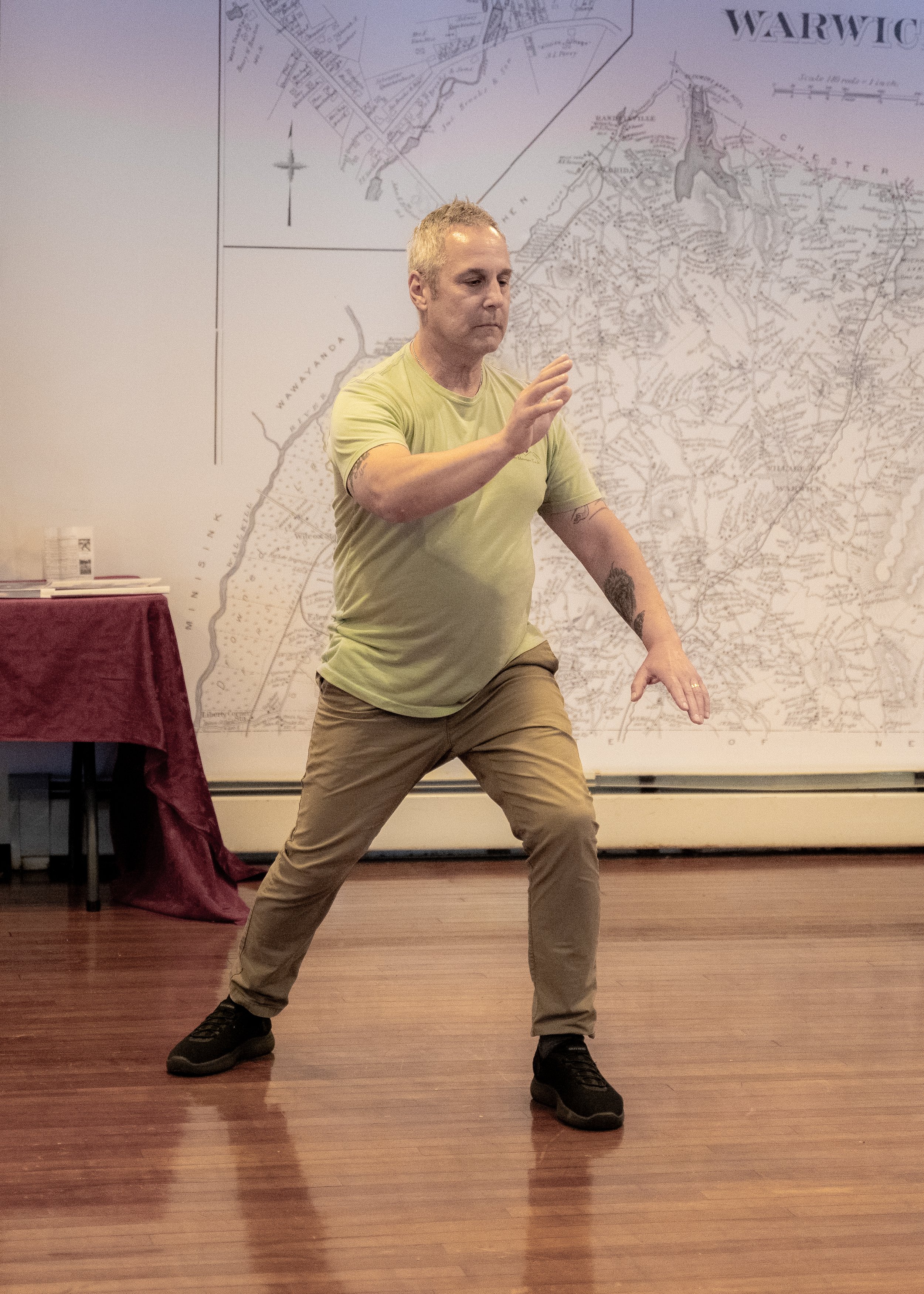
In this episode Andrew chats with Rich Marantz about his journey through martial arts and how he has done many things in the “wrong” order from how they are traditionally done.
Rich Marantz - Episode 1076
SUMMARY
In this conversation, Rich Marantz shares his extensive journey through Tai Chi and martial arts, detailing his experiences with various teachers and the profound impact they had on his life. He discusses the philosophy behind Tai Chi, emphasizing its dual role as a martial art and a healing practice. Rich elaborates on the three pillars of Tai Chi: its martial aspect, its health benefits, and its application in daily life. He also reflects on the importance of finding peace and personal growth through practice, ultimately conveying a message of peace and connection with others.
TAKEAWAYS
Rich's journey into Tai Chi began with a search for healing.
He has studied under multiple teachers, each contributing to his growth.
Tai Chi is not just a martial art; it's a way of life.
The practice of Tai Chi can lead to significant health benefits.
Rich emphasizes the importance of being a seeker and a finder in life.
He believes in the duality of Tai Chi as both a martial art and a healing practice.
The principles of Tai Chi can be applied to everyday life situations.
Rich's philosophy includes being unhurried, intentional, and steady.
He encourages others to find their passion and connect with like-minded individuals.
The message of peace is central to Rich's teachings and personal journey.
After listening to the episode, it would be exciting for us to know your thoughts about it.
✅Subscribe to whistlekick Martial Arts Radio on the following platforms:
🎧Apple Podcasts: https://apple.co/3mVnZmf
🎧Spotify: https://spoti.fi/3yHVdHQ
✅You can find whistlekick on all social media platforms using the handle @whistlekick or visit our website at https://www.whistlekick.com or https://www.whistlekickmartialartsradio.com
Show Transcript
Andrew Adams (03:43.847)
Welcome you're listening or perhaps watching on YouTube the next episode of Whistlekick martial arts radio and today I'm joined by Rich Marantz. Rich, how are you today?
Rich Marantz (03:54.518)
I'm doing great.
Andrew Adams (03:56.422)
Excellent. I'm excited to sit down and chat with you today. But before we get there, just in case we have any first time listeners, I want to make sure that you check out Whistlekick Martial Arts Radio for everything that Whistlekick is doing about this podcast. You can find all of our episodes there completely free. You can find show notes for every episode. You can subscribe to our exclusive newsletter so you don't miss out on any episode. Transcripts, pictures, everything you can find there.
But the podcast is only one piece of the Whistlekick puzzle. If you go to whistlekick.com, you will find out about all of the things we do. You can find apparel that you can purchase. You can find training programs, information on all of the events that we do, books, all of that stuff can be found at whistlekick.com. And we hope you go there and check out all of the fun stuff that we do. But enough about Whistlekick. Rich, we're here to chat about you.
And I'm excited because we've known each other for about at least a year now. We met, I think, last year at Marshall Summit. And we are coming into Marshall Summit as of recording. It will be this next weekend. So pretty excited about that. But I'm excited to sit down and talk about your journey in martial arts. So let's start at the very beginning. If we go all the way back to whenever that was, how did you get started in martial arts?
Rich Marantz (05:18.624)
Okay. First, thanks for having me on this. I'm super excited about the summit. was really pleased to meet you last year. I'm just going to give a shout out to Whistlekick because it was the most impressively organized event I've ever been to, honestly. And I think what you guys do is phenomenal and I'm highly impressed with all the work you guys do. So I wanted to start with that.
Andrew Adams (05:36.989)
Thank you.
Andrew Adams (05:44.207)
Well, thank you.
Rich Marantz (05:46.85)
because and it was yeah, and I so look forward to going again this year. So yeah, we all have an origin story, don't we? Right? And everybody that's everybody's got their origin story and each one of our journeys takes a different twist and turn. So, you know, I started when I was really, really young in American wrestling, actually. So I had always wanted to do like
Andrew Adams (05:55.806)
Yeah.
Rich Marantz (06:15.15)
karate was the known thing back in the 60s and into the early 70s. But my father always said, well, we have a perfectly good wrestling program here in our town. So I started with wrestling and I loved it. And in our town, we started in young elementary school. They had a wrestling program. It was very big in the area I grew up in.
So I wrestled all growing up, but I was always interested in the martial arts. But that's where I started was with wrestling. And then as when I got to be into an adulthood or even before, yeah, around adulthood, I started really being interested in the martial arts. really, the keyword would be dabbled, right? I didn't take it real seriously.
Andrew Adams (07:10.218)
Mmm.
Rich Marantz (07:12.142)
did some kickboxing, I did a little bit of karate, but nothing kind of stuck. And at the time I was a pretty troubled human being. I was pretty much a train wreck of a human being at that time. So I wasn't able to have the discipline to pursue what I really wanted to do. But then when I was in my 20s, in my...
mid to late 20s, I had a spinal injury, a really serious spinal injury. I was disabled and I had a failed surgery and like I just, wasn't healing. It was pretty bad and a lot of pain all the time. And I got into, I went to acupuncture, which helped with some of the pain and found out because at the time the internet wasn't available. And I went to the library and read a book on Chinese medicine and it talked about Tai Chi.
And at the time I was kind of a self-proclaimed tough guy. And so I didn't want to do yoga because yoga was for girls, although I've learned since that that's not necessarily the case. so I started taking it. I asked the acupuncturist if he knew of a Tai Chi.
person and I found somebody I lived in Florida at the time in Tampa, Florida about an hour from where I lived because it wasn't you know, there wasn't that much of it and I started taking lessons and he also started teaching me Qigong and he was also a Shaolin Kung Fu guy. So he also taught me some as I was healing doing the Tai Chi. He taught me some Shaolin Kung Fu forms and
Andrew Adams (00:55.267)
Hmm.
Rich Marantz (01:14.218)
So I studied with him for a while and then I found it just because of the distance and some of the other issues. I ended up with another teacher who I learned another Kung Fu from. But the whole time I kept practicing Tai Chi. I fell in love with Tai Chi from the first day I did it. That's my core practice. And so I studied with another guy for a little bit who was a little problematic.
as they can be sometimes. And then I found another teacher for a while that I was studying Tai Chi and Qigong with, who I just, to this day, I'm so fond about. And from Florida, I moved to Rochester, New York, and I studied with a guy who taught me Tai Chi and Qigong and healing work, and simultaneously,
I was studying with this guy, Sifu Frederick James, we did five animal kung fu and it was full contact, really brutal stuff, lot of injuries. The rule of the school was you hit as hard as you were willing to get hit. That was the rule and it was the real deal stuff. I still rank him as one of the best.
probably fighters I've ever seen in my whole time in travels. So I studied with him for about five years, both of those teachers for about five years. I was training, I was working full time. You know, through all this, you you gotta make a living. working full time, but I was training seven days a week and, you know, going to classes all the time and...
And then from there I moved, and at the same time I also would travel to study with a Jiu-Sung Hua, Master Jiu-Sung Hua at the Tai Chi farm in Warwick, New York. I would travel there from Rochester. And then when I moved to Vermont, I was really searching. I was really searching for a teacher. You know, I'm not one of those, my path has not been of one teacher for 40 years.
Rich Marantz (03:32.16)
I've just, my path has just been multiple teachers for some reason, just kind of the way it worked out. And then I came to Vermont and I was practicing constantly, you know, sometimes eight hours a day, I would just practice. That was my thing. And I was working, but I was just practicing all the time. And...
I went to, it was funny because I was really seeking and I went to a Zen monastery for a weekend just because I was seeking. at the end of the way, and I knew very quickly that was not my path. just being a Zen Buddhist was not my thing. But at the end of it, the priest said, it's good to be a seeker, but sometimes you have to be a finder. And in that instant, I knew I needed to study with Zhou Songhua.
Andrew Adams (04:20.11)
Mmm.
Rich Marantz (04:27.328)
So I traveled to classes three and a half hours each way to my classes with him and study with him until his untimely death. And he still is probably one of my, he's one of my most impactful teachers. And, but then after he has untimely death, I said, okay, now I got to another teacher, right? And I ended up finding Yuan Ming,
Andrew Adams (04:32.556)
Wow.
Rich Marantz (04:57.376)
Yuan Xuan Ming or John Yuan Ming and studied with him for about five years went to China with him for a while went around the country practicing it was Tai Chi, Xing Yi, Bagua, Qigong, healing work so I studied with him for about five years and then you know something happened and
I just was on my own again, right? Just really on my own again and just practicing everything I knew. mean, you know, when you study with people, know, we keep kind of accumulating, right? And then, but we realized there's only so much time in the day to practice, right? But then after him, I found my current teacher I've studied now with for like 20 years. In addition, know, I've...
Andrew Adams (05:44.748)
Yeah, it's true.
Rich Marantz (05:55.412)
been exposed to other teachers, particularly like Wang Reng Gong, really super impactful on me. Didn't really, I can't say I studied with him, but he came to Vermont and did some workshops and I've done some things with him. I didn't, I never formally became a student of his. But so Yun Seng, who goes by Master Chen, he's a Wudong Taoist priest.
and a Taiji master and a martial arts master. And I started studying with him back in 2003 and traveled, I've traveled around the country studying with him. He's been to Vermont and done workshops. So I've been just developing myself as a martial artist, as a healer, as a...
person who lives hopefully a good virtuous life. To me, so when I teach Tai Chi, which is my primary art, although I've studied Kung Fu, I don't really practice a lot of Kung Fu now, even though I loved it. And it's what I needed at the time, especially the full contact stuff. That was an important part of my journey because I needed to let go of some fear.
Andrew Adams (07:12.28)
Mm. Mm-hmm.
Rich Marantz (07:22.238)
in my life and you know I remember one time a friend of mine who used to do healing work on me because I was always bruised and beaten I mean it was it was really hard stuff she used to do healing work on me and she said why are you doing this to yourself you know and I had to think about it and I thought well I want to I want to be able to protect myself I want to I want to be able to protect myself she goes who fights with you
Andrew Adams (07:45.826)
Mm.
Rich Marantz (07:50.4)
She was, nobody's gonna fight with you. But I still did it for a while, you know, and it was what I needed. And, you know, I know I can take a punch. I know I can keep fighting. I know that's possibility, but I've developed in other ways now over the years. so, but when I teach Tai Chi, a lot of people say, you know, I only teach it as a health art or, you know, or.
Andrew Adams (07:50.488)
You
Rich Marantz (08:20.308)
whatever, right? But to me, it's got three legs to it. And all of them are equally important. So it is absolutely a martial art. It was developed as a martial art. I've used it in real scenarios as a martial art, in real life, real time scenarios. But it also, we know that it is health giving art, right? It helps with health and longevity.
There's been so many meta-studies, there's been meta-studies on it to show the benefits for all the ills that we run into in our society, particularly the chronic ailments that show up. But it's also an art of how do we apply it into our everyday life to, that our life becomes Tai Chi, right? That our life, the way we carry ourselves, the way we approach our life.
How do we apply it to that instead of just apply it to somebody who's trying to be violent with us? So where I've kind of come to as a martial artist, and again, I've applied this in real time, is if somebody were to attack me, you know, the first idea is if somebody is attacking you, they're not in their right mind, right? You don't attack another human being to hurt them.
Andrew Adams (09:24.642)
Mm.
Rich Marantz (09:47.356)
if your mind is in the right space, right? So instantly you know this person is not in their right mind if they want to hurt you, right? Nobody hurts another person if they're in their right mind. So the idea is that first I want to be able to care for myself. I don't want to get hurt, right? I'm not a doormat. I'm not passive, which a lot of times people think the internal arts are really more passive. It's anything but passive.
Andrew Adams (09:49.963)
Mm-hmm, yep.
Andrew Adams (09:56.174)
Sure.
Rich Marantz (10:17.152)
So if somebody tries to hurt me or attack me, whether verbally or physically, the first idea is I don't want to get hurt. I care about myself. But secondly is I also care equally for the other. And I have no desire to hurt that other human being to bring equilibrium to this situation. So my goal as a martial artist is
I don't get hurt and I don't need to hurt you either so that we both walk away and we can talk tomorrow when things have calmed down, even if they've become physical. So this to me is the way of Tai Chi. Now, of course, you develop the ability to be able to really hurt another human being, right? I mean, I know I can do that. And it's a tool that is always available, kind of like
Andrew Adams (10:57.389)
Yeah. Yep.
Rich Marantz (11:16.096)
We all have within us that tiger or that immense energy and anger that could come out or that immense power that can come out and really just like spread out and overwhelm something, right? If you've been practicing these arts long enough. And it's just in all of us anyway. We all have that kind of so-called dark side to us, right? That side that can really do damage to this world.
But with real practice, we learn to temper that so that it's available, but there's no need for it. But we also recognize we have to be careful because it is there. Right? We know it's there and it can come out if we're not being mindful. So as a martial artist and in my life, and again, this is like what we were talking about before.
It's always my two favorite words are for now, right? For now. This is the way I feel for now. This is where I am now is in my life and also in application. There's three, there's kind of three ways that I approach it is being unhurried, being intentional and being steady. So I walk through my life like that. I apply my martial arts like that.
There's no rush. There's no, gotta take care of things right now. You just, you move fast, but you're right there and you're intentional and unhurried. And to me, that's the way I approach my martial artists and my life. It's not different, right? I don't see them as different. I just practice. Like every day I practice for the sake of practice.
Andrew Adams (13:11.822)
Mm.
Rich Marantz (13:12.48)
That's it. I don't think about I'm going to use it in this way. I just practice and however it needs to be used, whether it's to defend myself or to defend somebody else so they don't get hurt or it's just dealing with life situations or to keep myself healthy, which I'm a pretty healthy human being. doesn't, it's all, it all shows up that way. It's I let the results take care of themselves.
Andrew Adams (13:43.64)
Cool, I like that. one of the things that really strikes me in your origin story is you started out with Tai Chi at what sounds like an age that not most people do.
You know, I think most people stereotypically think, and I recognize that this is not the case, but Tai Chi is for old people. And we all know that that's not the case, but that's how it seen in most of the world. And by the sounds of it, you started doing Tai Chi when you were in your 20s. Is that correct?
Rich Marantz (14:18.398)
That is correct. I do a lot of things backward.
Andrew Adams (14:22.19)
So, so what was it, what was it like to be doing Tai Chi in your 20s with a stereotype that is like you're not supposed to be doing Tai Chi, you're not an old person.
Rich Marantz (14:35.562)
Well, the funny thing is, is I knew nothing about Tai Chi when I started it. Like, I literally didn't know anything about it, so I didn't know that stereotype. I just knew it was a martial art, and that it can help heal you. So I practiced it that way. So I had no clue, I was really ignorant and naive to the fact that it is seen as an old people's art.
Andrew Adams (14:39.694)
Mm.
Andrew Adams (14:47.779)
Yeah.
Rich Marantz (15:03.592)
So, and it wasn't until much later that I learned that. So I practiced it and my teacher taught it that way as an art of martial art and healing. So, yeah, so that naivete was pretty useful for me.
Andrew Adams (15:12.27)
Mmm.
Andrew Adams (15:17.996)
That's great. That's great. And then one of the things you mentioned later on is you started doing the Kung Fu full contact. How old were you in your timeline when that happened?
Rich Marantz (15:29.312)
I was in my early 30s for that. Yeah, I was in my early 30s So I was still pretty robust, you know, and I was willing to you know, unfortunately I didn't think much of myself at the time. So I was willing to take a lot of shots I Wasn't afraid to let my body take a beating at the time because I just I didn't think much of myself at the time. So So I was willing to
Andrew Adams (15:32.502)
Okay. Okay.
Andrew Adams (15:38.423)
Mm-hmm. Mm-hmm.
Andrew Adams (15:47.726)
Mm.
Rich Marantz (15:58.854)
that but I was pretty robust at the time even though I you know I I was still you know this the injury that I had had you know still had some had some lasting effect to it even into that time period you know it took about ten years for my pain to really go away with Tai Chi so and now I don't have any back issues at all
I did about eight years ago, I split my kneecap completely in half. It was an injury at work and I had to learn to walk again. I had to like kind of start over. And it was Tai Chi that helped me learn to walk. now it's like, you know, I still have some residual effects from that, but I say I got one leg that's not like the other, but they're friends.
Andrew Adams (16:43.8)
Mm.
Andrew Adams (16:52.812)
Hahaha!
And you know, you mentioned doing things a bit, you have a history of doing things a bit backwards. You know, it's not, that's not to say that martial artists in their 30s don't do full contact, but it's generally something that happens.
Just people tip, again, we're talking stereotypes, but it's usually a younger man's game, right? Or a younger person's game, and they get into Tai Chi later in life, and you went the opposite direction. And I find that dichotomy of the two at opposite times really interesting.
Rich Marantz (17:28.852)
Yeah, and it's a pattern for me, I guess, because like even so I've been doing traditional Chinese healing work for a long time as well. that's been parallel with all this. It's been part of it almost from the beginning or pretty close to the beginning for me. And I've been pretty extensively trained in different types of healing, both energy work and acupressure. but so I did, you know, traditional healing work for
many years for decades and then and I had never been to college and I decided at 51 to go to college and got a nursing degree. So I I've been doing traditional healing work and then got into Western Western medicine and nursing and and I've been doing that for over you know for over 10 years now and most people in Western healthcare they
Andrew Adams (18:06.414)
Hmm.
Rich Marantz (18:26.802)
are in Western healthcare from a very young age, they go to college, and then later on they start going into the integrative therapies and the alternative therapies. I did it the other way around, which I'm glad I did, because I didn't have that framework that had to be softened, right? I was able, because I'm able to bring, I'm also a board certified holistic nurse, so I'm able to bring that into the Western modalities, into the Western healthcare system.
Instead of as like, oh yeah, there's that too. It's like, no, that's my foundation. Right? That's the foundation. And it's also the foundation for my martial arts. Because the thing with Tai Chi, particularly, is it's all about moving and working with the energy, the chi, energies of the body. So we move from the inside outward. Right? And it takes a while. You have to start with the physical.
Andrew Adams (19:01.762)
Mmm.
Andrew Adams (19:07.502)
Thank
Rich Marantz (19:26.272)
forms first and then you work your way inward. the power derives from in Tai Chi, the external power to be able to use it as a martial art derives from proper structure of the body to create the environment. So you have body mechanics, right? That's like the physics of it. But it creates the environment for the energy to flow. And we tap into our,
goal in a way is to tap into our original energy, the energy that makes us up who we are and always have been. So when we can move from there, that energy comes through as an out through structural integrity. That's where the power lies in Tai Chi. So you don't have to do a lot physically to generate a lot of power, right?
kind of one of the one of the concepts and this is kind of what I'm going to be sharing at the Marshall Summit.
Andrew Adams (20:32.718)
And hopefully if you're listening to this, you went to Marshall Summit and you took Rich's class and you were able to see it firsthand. Because this will obviously come out after Summit has happened. one of the other things you mentioned earlier was that you feel like Tai Chi has these three pillars, one of them being a martial art. And you never touched on the other two. And I'm curious what your other two pillars were.
Rich Marantz (20:57.952)
So the other, the one pillar is it's a health, it's for healing and health, for health and wellbeing. Right, so like I said, for me personally, you know, I've healed from spinal injury, I heal from my leg injury. I used to have, when I was young, terrible digestive issues. I don't have any digestive issues now. I feel like I'm pretty young, you know, I'm in my 60s and I feel like I'm pretty young and vibrant.
Andrew Adams (21:03.544)
that's right.
Rich Marantz (21:25.98)
energy and I have all the energy I need to do what I need to do. It also, and this is something that Western medicine, you know, really buys into as well is that almost all our health issues have a stress component to them, right? They have a stress-related, at least a component to them. So with Tai Chi, it's very calming of the mind because it's very intentional and you, it...
it becomes like a meditation in motion. So it can help us lower our stress levels, which also plays a role in our health. And then the other component is, and it's built right into it. This isn't like a side thing, is how do we apply the principles and concepts of Tai Chi Chuan into our everyday life? Because really, if you think about it,
You know, even if you're training a few hours, like I train a few hours every day, right? Every single day I put in, you know, a few hours of practice time. In addition to work and teaching and doing my laundry and things like that. But how do we apply it into the rest of our day? When you're dealing with the clerk at the store, you're dealing with your family, you're doing your laundry, you're going to work.
Like how do we, because life happens, it's not always pleasant, right? So one of the things with the application of the principles and concepts of Tai Chi Chuan is to recognize that we're not only gonna be content and happy and at peace when things are pleasant. We can also find that when things are unpleasant.
Right? Because it's this Yin-Yang diagram that's called the Tai Chi diagram. So that we recognize that they are just companions for each other. They walk together at all times. And when we cannot be in a space of this or that, but yet in the center and recognizing both this and that are occurring simultaneously, then we can be what my daughter calls me disturbingly stable.
Andrew Adams (23:48.142)
Yeah
Rich Marantz (23:52.318)
Right? So we become disturbingly stable as life is occurring. And then we can do, we can detach from the game of life, what's happening around us, and then jump back in and play a damn good game. Right? So we're not, we're not caught up in it, but boy, we're in there fully, mindfully through all of it, whether it's pleasant or unpleasant, makes no difference.
We're just right there with it. And that's the application or the result of the application. I would say that's more a result of the application into our daily lives. So it has a philosophical component to it. So Tai Chi Chuan is based on the Yin Yang, Tai Chi diagram, the five elements and the eight energies. So these are all Taoist concepts that we apply into physical movement.
We apply them into the energetic aspects. We apply that into who we are as a human being, who we are as a spiritual being and how we move through this life. So whether it is violence, like in an extreme, a violence that we're having an experience of with another human being, or we are just dealing with
the everyday aspects of our life, or we're dealing with a health issue. All these concepts are applicable, right? If we practice, that's the catch. There's a catch. There's always a catch. got to, there's always a catch. The catch is you have to practice. And hopefully having, I've been so blessed to have teachers that
Andrew Adams (25:33.506)
You
There's always a catch.
Rich Marantz (25:48.746)
that and people that I've been exposed to that I wouldn't necessarily call my formal teachers, but I've learned from that have really just informed the way that now I apply my practice and do my practice. I've been really blessed with really amazing people in my life to share their knowledge with.
Andrew Adams (26:15.928)
Okay, and you are currently, you have a school that you're running in Vermont teaching Tai Chi and other things. Do you get together, obviously you're coming to Summit and you're gonna connect with a lot of people there, but do you get together on any sort of a regular basis with practitioners outside of your Tai Chi circle to train other things?
Rich Marantz (26:38.42)
You know, I haven't done a lot of that. I used, I had in the past done some of that. The opportunities haven't arisen that much for that. And I find it interesting. liked, I have done it in the past. You know, one instance comes to mind, I remember a college wrestler, a guy who was college level wrestler, like a
high quality college level wrestler. And I used my Tai Chi with him and it was really fun, right? We just had fun, right? He used his wrestling and I used my Tai Chi. And you know, when I have done in the past people of different martial arts, we do some light sparring together, which I always enjoy. So I have done some of that, but I would say not.
It hasn't really happened recently in the recent past. And this is again why I enjoyed last year the Marshall Summit so much to get to experience you in what you did, which I was just absolutely loved, right? I have a lot of respect for other arts, but I don't get an opportunity really to touch hands with other people of other arts.
I live pretty simply in a quiet life here where I live and do my thing. So, yeah, just who knows? think maybe you opened up something for me. So thank you.
Andrew Adams (28:19.918)
Well, one of the things we often say here at Whistlecake is our job is to connect, educate, and entertain. And I think that's one of the most crucial parts of Marshall Summit is the connecting part. Obviously, we are educating because we've got all of these classes being offered. And we offer lots of fun things as well.
So we get the entertain, but connecting people I think is really important and it's what connected us. And there were just so many other people that are at summit that are like-minded.
Rich Marantz (28:56.011)
Yeah. Yeah. And that's I love that. Right. I'd love to see to connect with people who the core of what we do is is the same passion. It's just the way it's expressed is different. So for me, the expression of martial arts comes through my Tai Chi Chuan. Right. That's the way. But that fits me as a human being, just like for you, the art you do fit you as a human.
being and it just fits and we can respect that and I would love to do more of that and that I was so impressed with that at the summit because most of the things that I've gone to it's all internal martial artists right some people do also external martial arts for lack of a better word but they're
They're really set up as internal martial arts festivals or things like that. I don't do tournaments. I'm not a competitor in that way. You know, for various reasons, I don't do tournaments. but yeah, so my exposure, with the exception of when I did the other, like when I did the Kung Fu, we used to fight other schools, right? you know, again, I...
really wasn't into tournaments even then, just wasn't of interest to me, but we used to get together with other schools and we'd fight. So I did get to see other styles then, but not from a Tai Chi perspective. And I'm also, it's so funny, I have such a love for the martial arts and I have it in me. I love to punch somebody. I mean, if it's somebody that I like,
and I know they can handle it and they'll punch me and I'll... I mean, it's just a weird thing about me, right? I just love it, right? But on a deeper level, I have zero desire to hurt another human being. So less and less, I just want to be cultivating my inner power. So if it needs to come out, it's there, but...
Rich Marantz (31:15.644)
I don't want to be showing it. don't want to be using it. I want to cultivate and then use it. That same power that we can develop to, you know, to strike somebody. I want to use that power to do healing and bring peace into the world. Right. That's actually a calling that I received to bring peace, to teach a message of peace. So I think just like I practiced Tai Chi Chuan.
I just practice simply to practice, if I need it, it will be available. If I need it for healing, it's available. If I need it in life situation, it's available. I think that same power that we develop as martial artists...
It doesn't have to be used as a weapon, right? It's the exact same power. It's not different power. Power is power is power. And we can use that power to do such good in the world and to bring peace and this sense of being love and healing to the world with that exact same power that we developed as martial artists.
And that's really kind of where I'm at. If it needed to be there as a weapon, it's available, right? It's available. But I just don't have the desire for it.
Andrew Adams (32:41.198)
Mm-hmm.
Andrew Adams (32:50.72)
And is that where the concept for your book came about?
Rich Marantz (32:54.656)
No, actually, this came out of the book. I do everything backwards.
Andrew Adams (32:58.652)
interesting. So again, another way you did it backwards. So tell everybody, I know the book that you wrote, but tell the audience the book and what it's about. now I'm really interested to hear how it went the other way. This is great.
Rich Marantz (33:13.628)
I guess I've lived my life backwards, right? And I got all the really hard stuff done at the beginning so that now I can enjoy my life, right? So the book is called The Way of the Voice of Peace. And I received a very true spiritual calling to teach a message of peace, right? And I was like, what are you talking about? I'm just some guy.
Right. I really, I really feel I'm just some guy and I'm thinking you spirit called me into teaching this message of peace. And and it and I, you know, it came about in other ways, like it slowly evolved. And so this was back in 2010 or 2011. So it's about about 12, 13, 14 years ago. And and part of that
calling to and I was teaching I was like trying to follow this calling in various ways and it came part of the message that I received was to write it down to write it in a book and I was like I don't know how to do that I'd never been to college I was like I don't know how to do this I'm just some guy what the hell do I know and I was traveling to
to Austin, Texas to teach some Tai Chi and Qigong down there. And instead of bringing a book with me, I decided to bring a notebook and a pen to start writing. Because I couldn't figure out how to write this book that I was being called to write. And I was sitting there, I'm like, okay, you want me to write this book, you didn't tell me how to do it. Tell me how to do it, please, because I just don't know. And the first paragraph of the book came to me right then and there.
and I didn't stop writing for four months, handwriting it. And then I got some editors and it was probably about three times longer than the actual book. We edited it down pretty significantly. But basically the book is my story. It's told through my story, but it's not a memoir. It's my story to point people to finding peace in their story.
Andrew Adams (35:12.494)
Wow.
Rich Marantz (35:39.946)
How do they, how do you, to use it as a way of self-reflection. So how do I look at my own story, speaking of the reader, how do I look at my own story to find peace? Right, to be at peace, to not find it, but to be at peace. And since then, since I've written the book, my life has just.
taken off in my own internal development, my spiritual development. And I've learned so much more since then, like including going to college and becoming a nurse. And that was all before that. So yeah, that idea of being at peace. And I used to think,
You know, we can have a level of peace in this lifetime, but nothing like I had had a what I call a short term death experience when I was 12, a near death experience. And it was nothing but extreme peace. And I used to think that wasn't available to us in this lifetime. But since then, I've had the experience through meditation practices that and recognize that
Andrew Adams (36:55.544)
Mm.
Rich Marantz (37:03.55)
true peace is when we let go of the weight that we carry of our lifetime of experience. So when we let go of that weight we carry with us, of all of our life experience, that's where real true peace is, but we can have it in varying degrees. So a lot of the goal in Tai Chi Chuan, when we're practicing, is to let go of that weight, letting go of that weight you carry.
So in Tai Chi practice, we let the heavy go down and the light go up. So doing that is when we're practicing, I'm thinking of all the weight of my physical being, just letting that go into the earth, which makes us very stable too. And then the light part, that spiritual energy, whatever it's like goes up so that we have this feeling.
of this and that leads us to a place of being at peace with ourselves, at least to a degree of peace. So that spectrum of peace is in relationship to how much of your life experience are you carrying.
Andrew Adams (38:22.892)
Yeah, and how much of writing the process of writing the book, did it affect your martial art moving forward?
Rich Marantz (38:31.92)
well, I would say that it, it affected it in a way that it helped me to recognize myself, to understand myself a little bit more to start, because my stated goal as a martial artist as a, is that, and that my kind of reason for practicing Tai Chi is to understand and
be in that space of my true nature and letting my life be an expression of that. That everything I do comes from that. So whether again it's using it as an application as a martial art or using it as an application in life or healing, it's all the same to me. And so the process of writing that book helped me get closer to understanding my true nature.
Andrew Adams (39:31.918)
Now, how can the audience either listening or watching through YouTube, if something you said really resonates with them and they want to reach out, is there a way they can get in touch with you?
Rich Marantz (39:46.674)
Absolutely. And I have always, I love talking about this stuff, right? This is my passion. So my website is greenmountaintaiichi.com. So all spelled out. So that's one way they can get to me and you can email me through that. I also have my phone number on there. It's readily available. I take phone calls from people if they have an interest in anything that.
If it helps them live a better life for who they are and they think I can be of use, even if they don't end up learning from me, that's not what's important to me. people can always contact me and I will either email back or I'll talk to them on the phone. So probably the easiest way would be through my website, has all my information, greenmountaintai Chi.com.
Andrew Adams (40:27.054)
Mm-hmm.
Andrew Adams (40:38.38)
Excellent.
Andrew Adams (40:45.336)
Perfect. And we'll link that in the show notes as well. In just a second, I'm going to throw back to you with some closing thoughts, but just for the audience listening or watching. And if you are watching on YouTube, please hit that like and subscribe button. It really does help us out quite a bit. Share this episode with a friend or any of our episodes. Anything you do to help support the show can really go a long way. If you'd like to support us on Patreon, you can do that at patreon.com forward slash whistle kick.
Whistlekick martial arts radio is where you go for this specific podcast. All episodes are there. Show notes, transcripts, photos, contact information for our guests. And whistlekick.com is where you go to find out about everything else that we do. Rich, thank you so much for being here. This was awesome and I'm really excited to continue to get to know you more at some of the events that we do. But how do you want to close this out today? What do you want to leave our audience with?
thinking about as we finish up today.
Rich Marantz (41:48.512)
I think the key to all of this as whether it's martial arts or anything is find something that you really want to be doing every day. Be consistent with it. Be intentional with it. Have the best quality you can and just get up and do it every day. Find something that fits you as a human being and connect.
with other people that feel the same way and learn from them and be part of that. But find your way, right? And it's there. It is there for everybody. This is available to every single person. So you find your way. And if I can be of use or Andrew can be of use, right? Or Jeremy could be of use, use us.
We've been helped along the way, right? We stand on the shoulders of many people, many generations, and you can stand on our shoulders too.