Episode 1075 - Teaching Students with Disabilities
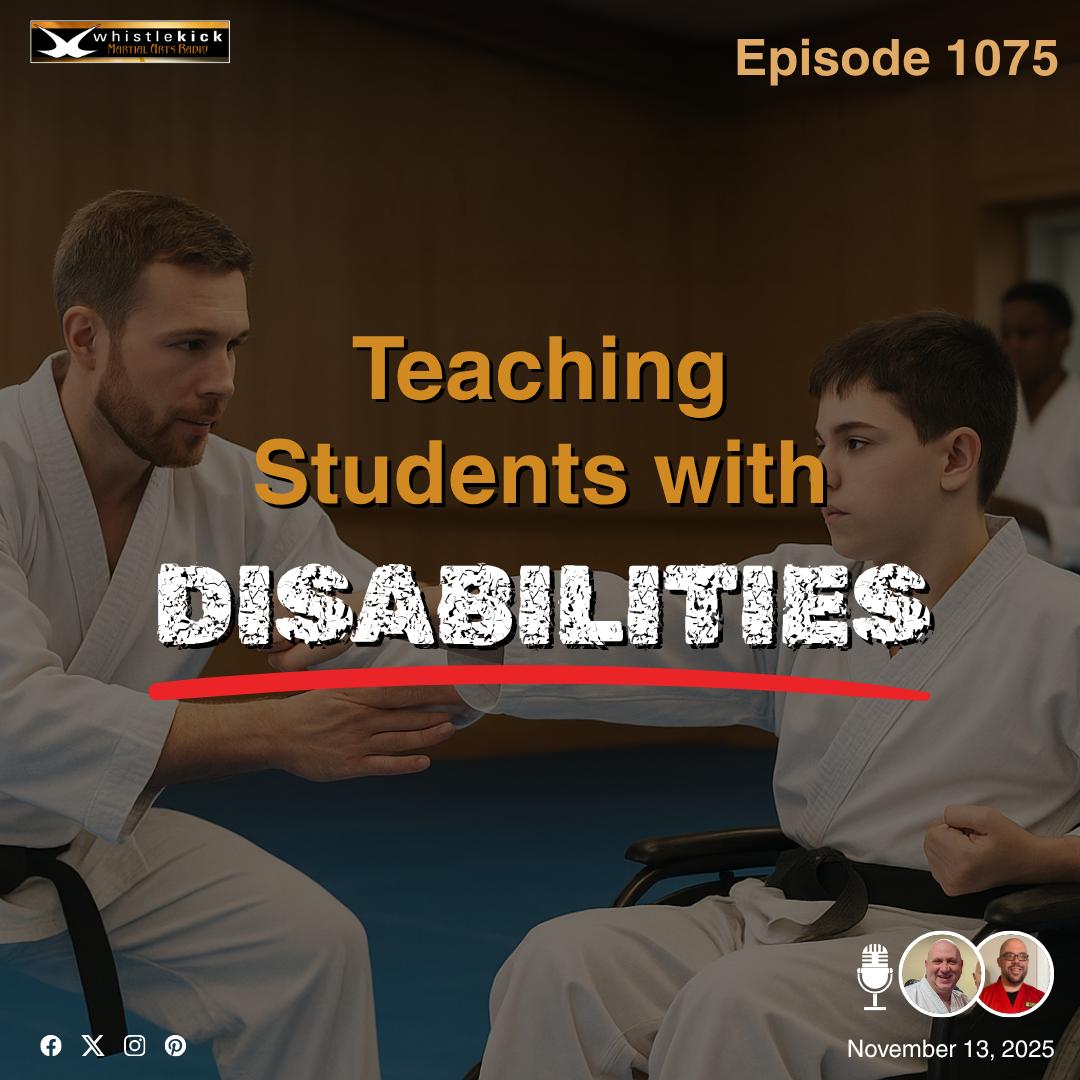
In this episode Andrew is joined by Nick Taber. Sit down with them as they talk about teaching students with disabilities.
Teaching Students with Disabilities - Episode 1075
SUMMARY
In this conversation, Andrew Adams and Nick Taber discuss the misconceptions surrounding physical limitations and the unique challenges faced by students with disabilities. They emphasize the importance of practice and gradual improvement, as well as the need for understanding and support in educational settings.
TAKEAWAYS
The limitations that individuals perceive may not reflect their true capabilities.
Practice can lead to gradual improvement in physical abilities.
Students with disabilities often face unique challenges in traditional educational settings.
Understanding the reasons behind academic performance is crucial for student development.
No one achieves perfection immediately; it's a process of growth.
Encouragement and support can help students overcome their challenges.
Each student has unique strengths that can be harnessed for improvement.
Education should be tailored to meet the diverse needs of all students.
Recognizing small victories can motivate students to keep trying.
Aiming for perfection may hinder personal growth and learning.
After listening to the episode, it would be exciting for us to know your thoughts about it. Don’t forget to drop them in the comment section down below!
SHOW TRANSCRIPT
Andrew Adams (00:43.798)
Welcome.
Andrew Adams (00:54.956)
Welcome you're listening or watching to another episode of whistle kick martial arts radio and today I'm joined by Giggle King Nick Tabor Nick. are you today?
Nick (01:05.64)
Fantastic Andrew, always excited to see you, always.
Andrew Adams (01:10.734)
We are we're giggling because we just had a little bit of a funny moment just before hitting record. So excited to sit down and chat with you as always, as always. Before we get into our chat, I want to make sure if there's any new people listening or watching, go check us out. Find out the stuff we do. Whistlekick obviously produces this podcast. Whistlekick martial arts radio dot com is where you can go to find out.
Nick (01:22.876)
Yes, Yes, sir.
Andrew Adams (01:38.836)
all the information about this episode and every episode that we've ever done and will continue to do. So check out whistlekickmarsharchradio.com. You can sign up for our newsletter there so you don't miss out on any episode. Find transcripts, pictures, contact information for guests. All that stuff is there. But this is one small thing that Whistlekick does. You can also check out whistlekick.com to find out everything that we do from training classes.
teacher certifications, buying, maybe you want to buy apparel, maybe you want to buy a book, all of that stuff can be found at whistlekick.com. You can also find out about all of our events that are just just this past weekend. I'm sorry, by the time you hear this, you've missed it. Marshall Summit was amazing. my gosh. I can't I can't get over how great it was. And
Nick (02:28.968)
Yeah.
Andrew Adams (02:35.67)
It was nice to see a lot of you there, but I know there's a lot of you listening that you didn't come. So hopefully check it out next year. Anyway, I digress. Nick, we are here to talk about teaching students with disabilities. Now, the first question that comes to mind for some of our guests and by guests, mean, audience members listening might be
Nick (02:50.814)
Yes, sir.
Andrew Adams (03:02.75)
Who who what why does nick have any sort of authority to talk about teaching students with disabilities? Like who who is this guy?
Nick (03:08.466)
Well, well you know if you talk about people with disabilities you are one and I are one and you know I have cerebral palsy. I am a weird anomaly in the martial arts world. It's like one in five thousand people make black belts. I am the one in fifty thousand who are joined who have some disability.
have you know have progressed that far but i've progressed in a different time too when you know people with disabilities in martial arts weren't really prominent you know as much as they are now and you know i see that from a very unique perspective but also because i get where they are i get exactly where i joined martial arts because the ninja turtles were on the side of the dojo and i thought that was cool
as like, you most people in the 90s, early 90s did. I get them, you know, and I've been there, I've walked their footsteps.
Andrew Adams (04:17.122)
Yeah, exactly. Exactly. And I think that's, we talk about on this podcast all the time and we, or we have often that different people learn things different ways, right? There's, there's more than one way to teach a thing, right? You can teach that same thing multiple different ways. And why, why is it important to be able to teach one thing different ways? Well, it's because lots of different people learn differently and
Nick (04:28.99)
That's it.
Nick (04:44.85)
Right.
Andrew Adams (04:45.96)
you know, we want to, talk about martial arts as being a really inclusive environment. So if we want it to be inclusive, that means we have to include everybody. So, I mean, I think that's, that's the first thing that I think we should talk about. Like the whole goal of this, this conversation is to make, see if there's a way that we can include everybody.
Nick (04:57.541)
Exactly.
Nick (05:10.526)
Yeah, yeah, and I mean, people who join the martial arts for a variety of reasons and for people who are listening and watching, my cat is just off screen here. You might hear her whining a little bit. She's just exploring and wondering who that other voice is. Don't worry, it's Uncle Andrew. You know, so she just said, okay, and leaves the room now. There we go. So, um, but what we...
When people did join the martial arts for a variety of reasons, it's because something, there are a plethora of reasons why something happened to them and they need to remedy that situation, whether it the scoobily or something like that, or it's something to get into, or they want to be more comfortable in their day-to-day life. I've had it with people who...
You know, and there's a variety of different martial arts too that all work, you know, whether it's internal or external martial arts, but I think you agree Andrew too, is that the big thing that comes from it is the lessons that come from outside of everything that we do while doing it. You know, it's more than kicks and punches. And I've explained that to a lot of people lately is, you have somebody who
I'll tell a story that I tell people and this is one thing that martial arts does. You're driving to work, right? You see there's a giant pothole in the middle of the road. You look down, you look through the pothole, you see somebody from China looking up and waving at you. And then look there, you're A, tell your boss that you can't make it because there's a pothole in the road, or what you're gonna do is you're gonna find a way to get around it.
You're gonna find a way to get around it, obviously. You're like, okay, that pothole sucks. I can't go in there. Somebody from China's looking at me. What the heck? You know, so, the beauty of that is, like, it's like finding your way forward. You know, when you find something, if you can't, like, when I was growing up, one of the things, there's a, there's a nunchuck form in my style.
Nick (07:30.898)
that I learned several, like a traditional nunchuck form, several figure eights, several passes from each hand to another. I couldn't do that. You know, I couldn't do that. So, A, do you say, okay, this is as far as you go and you cannot do martial arts anymore, but what do you have to do is find a way to still do it. And what my sensei, when I was a kid, we created a single hand nunchuck.
that I had here and said, okay, like he could still do it. Maybe you can't pass from right to left or pass behind the back, but could still swing and do that and show the demonstration of the weapon. You know, and still do that.
Andrew Adams (08:09.58)
There were still skills that you could do.
Nick (08:13.177)
Exactly. Exactly. So when you look at it, it's the limitations that they have are not necessarily what they think they are. Somebody who has a problem walking, okay, maybe they can't greatly at first on the left leg, but they can kick pretty well on the right. Okay, well let's put them in situations where they can practice and get slightly better every time.
And I'm thinking, and I had this with some of my students recently, and they, have, I have a couple right now, and I have one, I'm gonna illustrate a couple of them right now that I have. I have one that's 15, 13, and 12. One with cerebral palsy, one with autism, and one with Down syndrome. And all three of them uniquely have a similar situation where they go to the same private school. And...
If they don't get an A right away, they like, they don't know why they didn't get an A. So... And if they're not perfect, you know, like, and first off, we all know, nobody's perfect right away. At all. Nobody's perfect with anything. If you were perfect and you did everything right, then really you're probably aiming way too low. Right?
You're probably aiming way too low and you're like, okay, I did this and I was great immediately. Fine, but come on now. Like, so we look at it and we celebrate and say, okay, I can't turn and open up this can of whatever, a of jelly or whatever it is or something. I can't open the can of pickles, but okay, did you try a different form? Did you figure that? And that's what martial arts is. You're sparring with somebody.
Andrew Adams (09:59.481)
Yeah. Yep.
Nick (10:02.769)
figuring out a way, okay, ooh, I kept getting hit in the gut. Okay, well need to figure out how to hold my hands the right way. You know, or how to do that. Maybe I need to sit in the mirror for a little while and hold my hands up the right way, figure out my fighting stance, or practice the stances a little bit more. And that's the same thing that happened with me. If I wanted what it taught me, okay, I'm a person with cerebral palsy, and...
Andrew Adams (10:17.378)
Mm-hmm.
Nick (10:32.413)
I remember being scared to death I was going to go to job interviews but you gotta shake a hand on a job interview. How am going to shake hands? Alright, I'm going to have to practice shaking hands or how to do that because am I just going to not have a job? You can't stop, you know? The ultimate answer can't be it just can't happen.
Andrew Adams (10:39.47)
Mmm.
Andrew Adams (10:49.539)
Yeah. Yep.
Andrew Adams (10:57.538)
Yeah. Yep. And, and so let's, so, so let's talk about, so being inclusive, right? We we're going to, we're going to get into some, you know, working with students who have some disability, difficulty doing something. And I think, and I could be wrong. And so you can correct me if I'm wrong, but I, I see there being essentially two categories, broad categories, students who have difficulty doing things physically.
Nick (11:23.175)
Thank you.
Andrew Adams (11:26.442)
and students who have difficulty doing things cognitively. Right? So as an example, for those listening that might not understand what I'm talking about, Nick, you would have difficulty doing things physically because you can't open and close your right hand in the same way that other students can. But cognitively, you understand everything that's going on. You just, your body can't do it for whatever reason.
Nick (11:32.006)
Yes.
Nick (11:41.501)
I'm done.
Andrew Adams (11:54.647)
It would be the same if a student broke a leg or even worse than that, lost a leg, right? They're going to have trouble doing things physically. Now, then you have students who physically might be able to do things, but cognitively will have a slightly more difficult time doing things. So this would be like a student who you mentioned you have a student with Down syndrome.
Nick (12:01.342)
Right.
Nick (12:14.695)
Yes.
Nick (12:19.143)
Yes.
Andrew Adams (12:23.288)
trying to be very careful. I'm not saying that they aren't smarter than, they aren't as smart as other people, but they have a harder time connecting things together. Would that be fair assessment?
Nick (12:35.069)
Um, and on the broad scope terms, yes. You know, on, yeah. So my particular student right now, um, with this particular issue, he has to know the reason why. You know, why something here. And I mean, it's more of a challenge to me than it is to him. So in the first kata that I have in my system, the first three moves are.
Andrew Adams (12:38.603)
and
Andrew Adams (12:50.648)
Sure. Yep.
Nick (13:04.989)
Step forward in a front stance down block. Step forward in a right front stance punch. Turn around high block. Now turn around high block in a left front stance. He, for the longest time, could not understand why you turn around. He's like, why do you turn around if somebody's coming at you that way? Wouldn't you do it? I'm like, yeah, but there's somebody coming behind you. So you have to pretend that way. like,
Andrew Adams (13:30.968)
Yeah, yeah.
Nick (13:34.31)
Okay, but what if somebody's in front of you and the factor that you were thinking of, and I want to back up on a few things. Yeah, there are some open and closed problems with my right hand sometimes, but it is symptomatic. So time days, it's good days, it's bad. But the factor really is, is time. So you're going to one of the things I learned and I'm going to plug one thing that
Andrew Adams (13:54.092)
Hmm.
Nick (14:02.129)
Whistlekick does very well as Matic is to celebrate the little wins.
Andrew Adams (14:09.484)
Yeah. And for those, for those that don't know MADC is short for martial art teacher training and certification. M-A-T-T-A-C MADC.
Nick (14:19.555)
And shout out to Dennis and Craig on this one. they, when you know, you do that and you figure out if somebody who can't do a front kick and they're doing it and yet they're kicking and they're kicking and their leg is coming up and they're trying something, but it's like, okay, you try, there's your knee at the right placement. Okay. Celebrate the day. Cause you got that right. You got that front kick almost there, but you're progressing better than you were yesterday.
And then you look at it go, okay, it doesn't like where I was talking about earlier is having, you know, these kids right now that I'm teaching have a progression when they, can't get it right, right away. And then there's an internal monologue because no matter where you look at it and we've progressed with disabilities so much since I started in 1991 with understanding and education, what's out there.
By far. mean, I can get into that if you want to, but there's also a question of can they do it? And then there's an internal monologue with everybody. Am I good enough to be here? And that's the biggest battle that I find when you teach somebody with disabilities is, okay, I am struggling, but you see in their heart that they want to try.
They want to do that. Okay, you're doing it whether you're breaking a board, if you have CP like me and you're breaking it with your weaker hand, and you're trying and you're bouncing off that board. You tried five times. Last time you only tried once. Good for you. Take a rest. You earned it. You know, you earned it. And then come back and see if you want to try again. Okay, and then...
Andrew Adams (16:04.984)
Yep. Yep.
Nick (16:11.741)
Like I have a student who has cerebral palsy opposite hand to mine and he was able to break a board with his left hand and do that. We both just like looked at each other stunned. He's like, I did it. You know, I'm like, okay. And then there's the opposite. When they break that internal monologue that says, can't, you know, and that's a cause to celebrate and say, look,
Andrew Adams (16:34.209)
Mm, yep.
Andrew Adams (16:38.642)
Yeah, absolutely.
Nick (16:39.869)
I did something good like I did you did an amazing thing. Yes, you did it awesome job You know awesome job great, and then you keep finding new ways But the key is time You know is time factor, but also Celebrating their willingness to go at it when you have somebody there and I create a culture and it's been this way Since I started teaching Andrew
was the school that I grew up in, in Giffords Academy, you were expected to help the lower ranks. You know, whether that meant you were taking them aside and showing them the form or helping them correct their fleet, you know, or correct their stances, you still did something. And, you know, like, let's say it's not perfect.
But least you tried, at least you did something. If you had that one person who, going on the cognitive side, if they constantly come in and I have somebody, like when I was growing up, who always did the first, every single kata that we did, he always did the second move first. And like, all of them, like, all dozen of them always did the second move and went, wait, like,
Like, okay, that's fine. You did a right punch. Awesome job. Okay, let's back it up. Okay, with me, one, down block. Okay, now do the rest. Okay, cool. You know, so it's just a matter of another thing with people with disabilities, it's... Nobody's gonna be perfect. But also, I would not exclude anyone.
of anything. You know, I... I was, for a few belts it was, you know, sparring was always a stripe. For the first few belts, like, you just had to spar and you had to do decently. Okay, but it's like, you don't have to do the sparring stripe, you're okay. Am I supposed to just sit here during sparring nights? You know, like...
Andrew Adams (18:37.826)
Yeah. Yep.
Andrew Adams (19:00.77)
Yeah. Yep. And, and let's, let's talk about that for a second. Cause like, want instructors out there to hear that it is okay to alter your curriculum for a student who has a difficulty doing something. Now I want to be clear. I'm not talking about the student who doesn't like doing something I'm talking and let's go to an extreme. If you have a student who is in a wheelchair,
Nick (19:15.505)
Yes.
Nick (19:31.229)
Yes.
Andrew Adams (19:33.059)
that it would be absurd for you to expect them to do jumping jacks. And if jumping jacks as an example is on your testing curriculum, that doesn't mean that the student doesn't, mean, yes, you wouldn't expect them to do jumping jacks, but it doesn't mean they don't do anything. Find something they can do, right? And maybe it's just using their arms. know, if you have a student who,
Nick (19:38.653)
Yes.
Andrew Adams (20:01.958)
is missing an arm for whatever reason, there's still something else they can do, right? There there's you, you are allowed to alter your curriculum or your drills to make it appropriate for the student to be able to get something out of whatever it is you're working on so that they can be included. It would be absurd. this, will basically lose a student.
Nick (20:13.681)
Exactly.
Nick (20:23.12)
Right.
Andrew Adams (20:31.774)
if you just say, we're working on something you can't do. So you just stand over there to the side or sit over there at the to the side, right?
Nick (20:40.295)
Can I add two points? Absolutely right, but there's two things to do that. You will lose a student, but you will lose more because a dojo, dojo is a community built in where everybody will feed off each other. And regardless of whether it comes up organically or you push this. So
Andrew Adams (20:41.595)
Yeah, like, absolutely, please.
Nick (21:07.683)
If you have one student who is excluded because whatever reason. Like let's use the jumping jacks for an example because I'm going to build up on that. Somebody who's in a wheelchair, okay, jumping jacks is here. You know, and I'm sitting in a sitting in an office chair right now doing this and you say, okay, you do not have to do there. Why don't you just be over on the side? We'll finish this and do that. There are going to be about three or four people.
And I've done this long enough that are not going to say a word and eventually they're going to leave as well. Who are not going to be able to do that. So why did you exclude that person? Why did you not do this? Why? And then because there are other things that they're working on, they didn't say a word on it. And there are several, several school owners that you and I both know, Andrew, who, you know, who
who know this, could back this up. Now, the other thing is when you have something, I taught a course at Marshall Summit when your student can't do it. And specifically, one of the things you look at is when you have something that somebody, quote, can't do, growing up, there was a sign on the back of the dojo and it was a big word, big thing that said, can't.
Andrew Adams (22:08.699)
yeah.
Nick (22:34.981)
is a four letter word not used in this dojo. So, in with me immediately. Like, we're gonna find a way. We're gonna find a way forward at least to do that. So, you gotta ask yourself why. What is the point of why you do this? And if it's something that comes up and you say, well I did jump, I asked my students to do jumping jacks because I did that growing up.
Well then you might need to revisit your curriculum because it's still useful at that point because there's a point where you need to drop it but then figure out a way, okay, what is the point of why? So we need to do jumping jacks because it gets the blood flowing and gets the heart rate at the right time because doing those other drills that are coming up, we want them to be prepared if anything comes up later.
Andrew Adams (23:09.357)
Yeah. Yep.
Nick (23:33.534)
because it's a safe environment, but they're not steady. They're not 60 beats a minute, relaxed, ready to go. So, okay, good. Now, what can you do in place that would get somebody's heart rate to the right area? I guarantee you, one of the things that we're looking at is to talk to the person. And a lot of people do not do that.
Andrew Adams (23:57.838)
Mm-hmm. Yep.
Nick (24:01.214)
We know the phrase, when you assume, we know what happens. You know, so they not do that, so they say, I'm thinking of this. I know we have these jumping jacks and you're in a wheelchair. So here's the reason why we do this. What do you do to get to there? Okay, you know, yeah. And they're probably going to tell you, oh yeah, I just do this and do some shadow boxing.
Andrew Adams (24:04.641)
Yeah, yeah,
Andrew Adams (24:22.7)
Yeah, yeah. What can we do to get your heart rate up?
Nick (24:32.541)
Great! Let's do that! Cool! You know, because the other students are not going to expect that personal... Why doesn't he just get out of his wheelchair and just do the jumping jacks with us?
Andrew Adams (24:33.624)
Yep. Yep.
Andrew Adams (24:44.792)
Duh.
Nick (24:46.749)
Really? Really? You know, or why? It doesn't have to be explained. know, you have some genuinely smart people in your classroom. You could probably figure it out. Like, you could probably figure it out. And like, I have a friend of mine in Las Vegas who, he's wheelchair bound, and he started Kempo. And he asked me, said, what?
Andrew Adams (24:47.778)
Yeah, exactly, exactly.
Nick (25:15.591)
can I do in place of spin kicks? And he used his humor and I'm like, dude, I'm like, Mike, you know that answer. So jerk my wheels around and kick my leg out a little bit. I'm like, if it works, if it works, you know, could do that and just let it ride. He's like, okay, you know, but I'm like, ask yourself, say, Hey, what can I do? And then brainstorm together because the ultimate thing is, like,
Andrew Adams (25:30.382)
Yeah. Yeah.
Nick (25:45.662)
90 % of our stuff that we do when it's a real fight is from our basics. You know, we're not going to do fancy jumping spin kicks in order to do that. Maybe we do it in doing tournaments, know, if the situation is right. But, you know, if you can't do a kick, then what's the alternative? Brainstorm and figure it out because
I love it as a person right now who teaches kids with disabilities. I love the fact when I'm challenged and they say, I'm really struggling with this and they're not looking for a way up, but they're like, what can I do here? You know, what can I do? Or, you know, how can I do that? have a student of mine who's like, Hey, I'm really struggling tying my belt today. I'm really off. Can I just put the belt on the wall and just
Like, well, no, but why don't I take these people to the side and you just take a few moments to do the best you can. You know? Exactly. Exactly. Because the thing is, is can't is something like, it just can't be done today. Find an alternative. You find that pothole in the road, you got to find a way around it. There's another route to your destination and figure out what you got to do.
Andrew Adams (26:49.314)
Yep. Yeah. Celebrate the small wins.
Andrew Adams (27:03.982)
Hmm. Yep.
So find another route, something to keep them included because you want to be inclusive. And sometimes it means you have to think outside the box. That's what I'll say. Any other last things to add here before we close out?
Nick (27:16.293)
Exactly.
Exactly.
Nick (27:26.041)
I would say the best thing to do is as things start to move on with people with disabilities, we will, if you go back and listen to this episode 10 years from now, and know, Andrew and Jeremy will be knocking on my door again saying, can we update this? And I will gladly say yes. I will gladly do that. And then we learn a little more, you know.
Always try to be open-minded to learn and I guarantee you there is a sensei, master, senpai, whatever the title is, instructor, lecturer who has figured out something new. And the more that you learn and share the better it's going to be and you find other techniques. if you haven't figured out by now one of my best bits of advice.
Every single student, whether it's a physical, cognitive, or trauma-related disability, every single student has a different way of looking at it. And it's a matter of finding them. And that's the best way.
Andrew Adams (28:34.082)
Yeah, good point. Awesome. And being open and communicate with them and figure out what they could do. Nick, thank you so much for being here.
Nick (28:43.025)
My pleasure, man. My pleasure. Always a pleasure.
Andrew Adams (28:46.19)
And when we reach out to you to record with us in 10 years, that'll be episode 2115. So I'm excited to have you back for that episode. Thank you so much. And to all of you listening and watching, thank you for joining us. Do you have a student that has disabilities? How do you work with them? What tricks or tips would you give to someone that might be in a similar situation? Let us know. Let them know. Comment on our Facebook.
Nick (28:53.681)
Okay.
Ha ha ha ha ha ha ha
Andrew Adams (29:16.042)
group. You can also check us out on YouTube. You can comment there as well. Anything to get in touch with us, you can contact me, Andrew at whistlekick.com. Nick is nick at whistlekick.com. And the last thing I want to say, you know, I mentioned at the beginning whistlekick.com for all the stuff that we do and whistlekick martial arts radio. But I would really love for you, if you've made it this far into the episode, you're 25 minutes in.
like us on YouTube, subscribe to us on YouTube. It really means a lot to help help us out. And the last thing you can do that will really, really, really help is share the show with some friends, tell people about it, let them know what it is we're doing, and let them know that there's stuff there here that they might really get a kick out of and dig and enjoy listening to interviews or topics like we do this Thursday. So
We would really love for you to check that out and share it with everybody. Yay. And we're really sorry you missed us last weekend at Martial Summit. You'll just have to check it out next year.
Nick (30:19.911)
Yeah.
Nick (30:25.319)
See you
Andrew Adams (30:26.496)
All right, until next. That's right. Me too. And until next time, train hard, smile and have a great day.
Nick (30:32.733)
Smile and have a great day.