Episode 1080 - Hapki-Yukwonsul Todd Miller
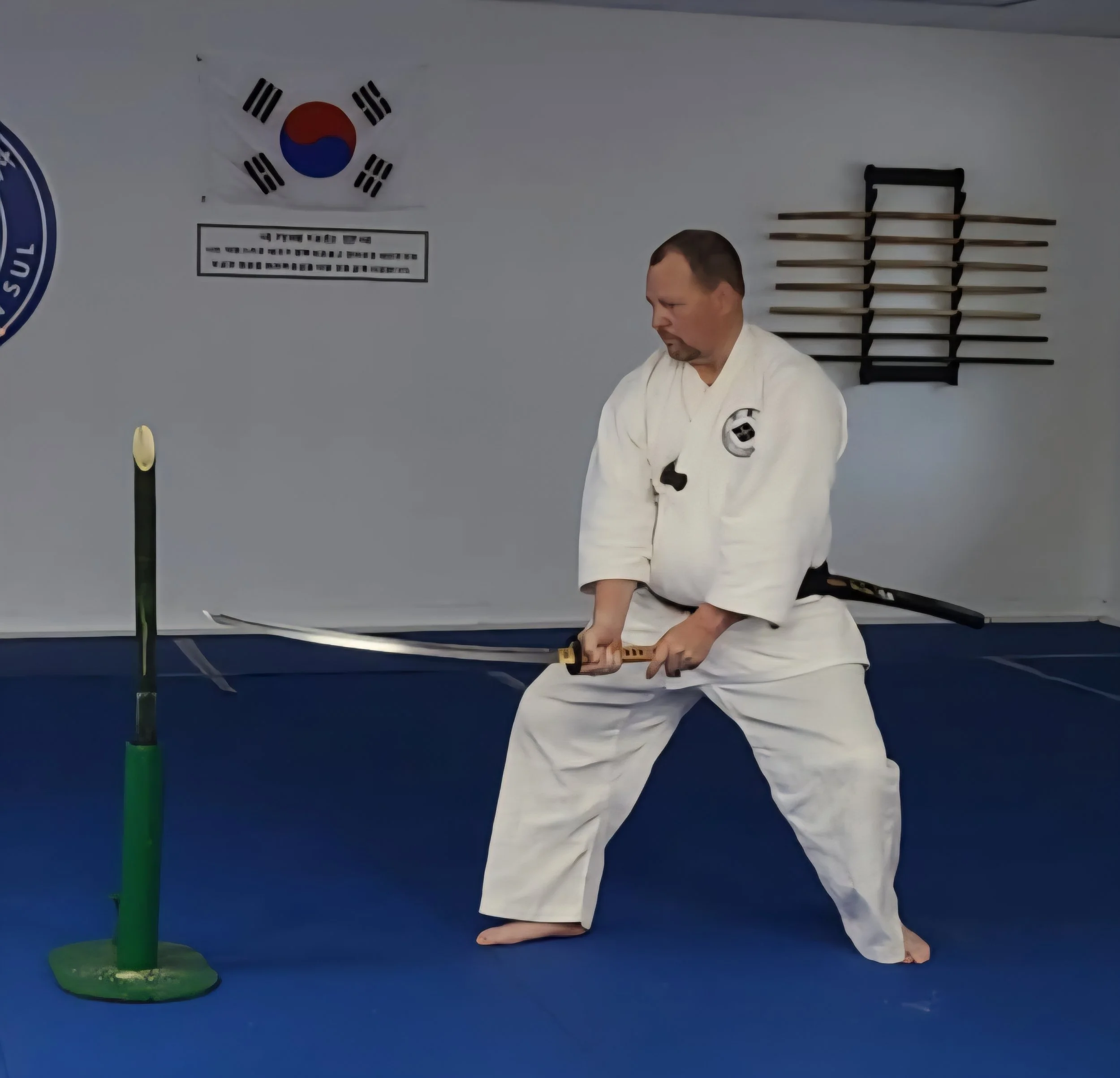
In this episode Andrew chats with Hapki-Yukwonsul Todd Miller about his training in Korea and how it was a life changing experience for him as well as the benefits of going to martial arts gatherings.
Hapki-Yukwonsul Todd Miller - Episode 1080
SUMMARY
In this episode, Hapki-Yukwonsul Todd Miller shares his extensive journey in martial arts, spanning nearly 40 years. He discusses his early influences, including martial arts films, and how he began training in Taekwondo before transitioning to Hapkido. He reflects on his transformative experiences training in Korea, the challenges he faced in teaching during economic downturns, and the importance of character and discipline in martial arts. He emphasizes the value of continuous learning and the camaraderie found within martial arts communities. Lastly, he also shares his aspirations for the future and encourages others to embrace their own martial arts journey.
TAKEAWAYS
Todd Miller has been training in martial arts for almost 40 years.
His journey began with a fascination for martial arts movies like Billy Jack and Bruce Lee films.
He started training in Taekwondo before transitioning to Hapkido.
Training in Korea was a life-changing experience for him, exposing him to a different culture and training style.
Todd emphasizes the importance of character and discipline in martial arts training.
He faced challenges in teaching during economic downturns but remained resilient.
Todd believes in the importance of continuous learning, even after decades of training.
He values the camaraderie and kindness found in martial arts communities.
Todd's current focus is on Hapkido and sharing his knowledge with students.
He encourages martial artists to walk their own path and embrace the journey.
CHAPTERS
00:00 Introduction
05:36 Martial Arts Journey Begins
09:57 The Impact of Early Experiences
13:09 The Call of Martial Arts
15:12 Training Hard and Discipline
17:01 Transitioning to Hapkido
17:42 Training in Korea and Cultural Insights
18:59 First Trip to Korea
22:15 The Journey of Teaching
25:41 Challenges and Resilience in Martial Arts
27:05 Finding Purpose in Martial Arts
28:31 The Journey of a Martial Artist
29:19 Learning from Great Instructors
30:40 A New Perspective on Training
31:40 The Importance of Conditioning
35:57 Balancing Competition and Martial Arts
37:30 The Inward Focus of Martial Arts
39:09 Experiencing Martial Summit
43:30 Camaraderie in Martial Arts
44:00 Future Training and Expansion
46:07 Connecting with the Community
To connect with Todd Miller:
hkdtodd@gmail.com
This episode is sponsored by Kataaro. Please check out their site at Kataaro Custom Martial Arts Products for your holiday gift giving needs. Be sure to check out their Martial Arts Belt Pagoda Display!
And use the code WK10 to save 10% off your first order. And be sure to ask them about a wholesale account for school owners!
After listening to the episode, it would be exciting for us to know your thoughts about it.
✅Subscribe to whistlekick Martial Arts Radio on the following platforms:
🎧Apple Podcasts: https://apple.co/3mVnZmf
🎧Spotify: https://spoti.fi/3yHVdHQ
✅You can find whistlekick on all social media platforms using the handle @whistlekick or visit our website at https://www.whistlekick.com or https://www.whistlekickmartialartsradio.com
Show Transcript
Andrew Adams (06:20.072)
Welcome you are listening or perhaps you're watching on YouTube another episode of Whistlekick martial arts radio. And today I'm really excited to be sitting down and talking with Hapki Yu Kuan Sol Todd Miller. Todd, how are you today?
Todd Miller (06:35.414)
I'm doing very well. Thank you for having me on.
Andrew Adams (06:38.434)
absolutely. I'll, I'll, I'll give a little story about why you're here today, which will be news for you as well. So excited. I've surprised you can find out why I invited you on, but in case someone listening or watching is new, I want to make sure that you know about some of the other things that we do here at whistle kick. Obviously we have this podcast. You can go to whistle kick martial arts radio.com to find out.
show notes on every episode that we've ever done. We are up to over 1070 episodes at this point. And all of those can be found at whistlekickmarshallrstradio.com. You can also sign up for our newsletter there by clicking the subscribe button. And whistlekick.com is where you can go to find out about all of the other things that we do. We just dropped a new line of merchandise of some really cool t-shirts with some fun sayings and pictures on them.
And so you can go to whistlekick.com and use the code podcast one five to save yourself 15 % off a Lot almost everything there. We've got t-shirts. You've got hats. We've got books We have training programs all everything that we possibly do you can find at whistlekick.com And I also want to recommend another location to go to find some cool holiday things
Kataro that's right kata aro this episode is sponsored by Kataro we've partnered with them for some other things and they are the in our opinion the world's best manufacturer of Belts as long with other products a lot of people think they do just belts, but they do a lot more than that in fact they are just released a pagoda style belt holder, which is really really really cool, so
I encourage everybody to go check that out. All of their stuff is handmade. All their stuff is made here in the USA. So they do gift boxes as well and gift wrapping if you're looking for something for the holiday season, because it is coming up. So again, you can go to Kataro dot com to check out all of the stuff that they have going on as well. And we hope you do tell them we sent you tell them we said hi. So Todd, I have to tell you a bit of a selfish reason why you're here today.
Andrew Adams (08:46.944)
So we met at Marshall Summit this past year, 2025, and we had never met before. You were presenting on Saturday and I sent an email out to all the presenters saying, you know, I need, we had somebody back out for Friday. Is somebody interested or willing to step in and teach another, present another class on Friday? And you said, I will, I've never been to your event before, but I will be happily help out and present another class on Friday.
Todd Miller (08:47.32)
Okay.
Andrew Adams (09:16.57)
And that spoke to your character. You've never been to our event before. And you came on Friday and presented and it was, and I was watching your class and I was like, this is really cool. This guy seems fun. He's having fun teaching. I want to get to know him better. And at Marshall summit, for those that have never been, Jeremy and I host this four day long event. I'm running around like a chicken with my head cut off. And so you and I did not get a chance to connect and get to know each other better. So I said,
I want to get to chat with this guy and get to know him better. So why don't I just record it at the same time? So you're here selfishly so I get to know you better.
Todd Miller (09:56.207)
Well, I'm glad to be here, Andrew, and I really appreciate you guys inviting me to come on and talk a little bit and talk a little bit about my experience and what I'm doing. it's always fun for any of us that have been in martial arts for any amount of time, even people just starting, if they've gotten bit by the bug like we have, they love it. And I am no different. So I've been training in martial arts for almost 40 years now.
You know, I'm in my 60s and I'm just like I was when I was in my early 20s. My attitude towards it hasn't changed any.
Andrew Adams (10:34.498)
Yep. So let's talk about that. Your first initial experience with martial arts. You already mentioned you're in your twenties. you hadn't been bit by quote the bug yet, right? You're just starting out. What was that experience like? How did you get involved? What made you start to want to get involved? Let's talk about that origin story of, of the young twenties, Todd Miller.
Todd Miller (10:58.754)
Well, it actually began before that. When I was a very young, you know, a young boy, I went to see a movie with my parents called Billy Jack. And I don't know if anybody on here is familiar with Billy Jack, but if you're into Korean martial arts, you probably are. Billy Jack was kind of a famous movie back in the early 70s. And I saw that when it came out, and I was so enthralled by the fight scenes and, you know, like many people.
with Bruce Lee and just you know I saw that then the Bruce Lee movie started coming out after that along with Chuck Norris and and I really loved the the martial arts you know just the whole
thing about martial arts back then. But unfortunately, where I grew up in rural Maine, I think the nearest martial arts school to us was like 40 miles away and it just wasn't, it wasn't possible for me to train in those days. So I, you know, I wasn't able to start until I, until I moved down here to New Hampshire and I found a Taekwondo school, a very good Taekwondo school. It was called Wong's Taekwondo and that was an ITF Taekwondo school. And I really
loved that school. It was a great bunch of people and some really, really good practitioners that I got to hang out with and learn from back in those early days. That was my beginning. When I got into that school and started training, there was a Hapkido practitioner instructor that came and who was very skilled. I still consider him one of my early instructors in Hapkido.
His name was John Kukowski and he started sharing some of the material that he had from Hapkido and we started getting together kind of in off times in the school and I fell in love with Hapkido. Once I got to practice it...
Todd Miller (13:02.634)
I even went and bought some mats so that he could throw me around. I, you know, then I started to learn how to do knock-bob, which means falling practice. And I just, like I said, I even fell in love with it more than what I already was. And then I just kind of, things went from there after that. I kept training and...
ended up going to his teacher because he was in the Air Force and I started training with Mike Wohlmershauser who was one of the few Americans that actually trained with Che Yang-Sul which by most people's account he's considered the founder of Hapkido and that was great experience my time with him.
Andrew Adams (13:26.724)
Mm-hmm.
Andrew Adams (13:47.885)
Hmm. And for the people listening or watching, if you want to know more about Billy Jack, go to episode nine eight five. We did a great discussion on Billy Jack and included some people, someone that was in the movie. So go check that out. So you're in your 20s, you're training Taekwondo. You had gotten interested in martial arts earlier. You couldn't until you moved. But everyone listening to this episode are watching.
Todd Miller (14:03.839)
great, yeah.
Andrew Adams (14:18.196)
your first classes, you haven't been bit by the bug yet. What was it that in your words, you got bit by that bug, this martial arts bug? Like, do you remember having experience of you like, that's it, this is what I'm going to do.
Todd Miller (14:33.806)
Yeah, I don't know if there was a particular experience, but one of the things that I loved about martial arts is that
You know, in ITF Taekwondo, we have the tenets of Taekwondo, and I really liked how every class, we repeated those tenets, courtesy, integrity, perseverance, self-control, indomitable spirit. I really liked how that was stressed about character. You're learning a martial art that could possibly hurt and damage other people.
don't take it lightly. You need to be a person of good character and know when to use it and when not to use it. my current hap-kido instructor has the same attitude. It could be a very dangerous martial art.
And you don't just go around and use it for anything. You have to be aware of what you're doing. And when you get into any kind of a situation, it has to be like the last resort.
Andrew Adams (15:41.166)
Sure.
Todd Miller (15:41.804)
And I liked that, but it was the physical training that I love because I've always been very physical. used to, I was in the sports when I was in school, high school, and even after high school, I swam, did a, you know, I did a lot of different things physically. It's what makes me feel good. And the training was hard, you know, I mean, as you probably can attest to it, your training, it was very hard training and I just loved it. The harder the training, the more I enjoyed it. And, you know, after, you know, after
doing that for maybe two years I said this is what I want to do with my life and and that's what I did you know I just kept learning and training and and then when I got to the point where I could teach hapkido I opened a school and I started teaching hapkido along with taekwondo.
Andrew Adams (16:31.375)
Now, 40 years ago, we're talking the mid 80s, roughly around there. You're talking about the training being really hard. Give me some examples. You really enjoyed that hard training. What was it about it that really called you or resonated with you?
Todd Miller (16:36.59)
Mm-hmm.
Todd Miller (16:49.804)
Well, was the hard training. One of things that I learned very early is that if I don't discipline myself to practice...
I'm not gonna succeed at this. Because I talked with all the older black belts and the people that had gotten there. They had traveled before. And they all told me the same thing. You gotta practice every day. You gotta have a routine where you're practicing. Or you're gonna just, if you just come to class two, three times a week. Or even if you go, I was going six days a week at that time for about four or five years. So I was there all the time.
But even just doing that, I still had to do practice on my own and that's what I did. And it really helped me. I was able to move through, not fast. In those days there was no fast moving in martial arts. You took a long time to get to anything. And I'm glad of that. I like that you have to work hard and sometimes you're like, when is that next belt gonna...
come and you know but but you just keep training you learn to discipline yourself and enjoy the the difficulty that in everything in life that I believe that's worth having there's some difficulty in getting it you know and and that that was something that resonated with me and it still does you know I I love you know training hard now the physical hard training is a little different for me now than it was back in my 20s 30s and even 40s but
I still enjoy that to the ability that I can give, you know, do that now.
Andrew Adams (18:33.391)
And so you started training Taekwondo and you transitioned to Hapkido. Was there training in both at the same time? Did you, was there a clear delineation?
Todd Miller (18:46.026)
No, I have always continued my taekwondo training, but I gotta say, around 2000, was still teaching taekwondo and practicing it on my own, but I really stopped focusing on taekwondo after that, and my focus really was on hupkido. When I first started training in hupkido, I knew that that was the martial art that I wanted, and that was what I...
was going to keep my lifetime focus on. And so I did them both, but my focus has really been Hapkido since I started.
Andrew Adams (19:24.271)
And any other branches after that into anything else or have you strictly been hap-keto since?
Todd Miller (19:32.974)
Well, when I was training in Korea, I started going to Korea in 1997, and I'd been 18 times since then. And when I got to Korea, I started training in...
Andrew Adams (19:39.599)
Mmm.
Todd Miller (19:49.656)
co-op-do which it translates in Japanese to ye-do and I was you know I started doing that and I found that I really liked that because it was physical very difficult physically but it also was a kind of a meditative
practice within that training and I really liked that and that helped a lot of my hupkido training to be focused on the sword. You had to be very careful because we used live blade swords. did cutting and it was serious. It was a very serious martial art.
So I actually was the first person to be promoted to first Don in Copdo in Korea, you know, from the United States. And that was kind of a one of my, you know, things that I just feel kind of proud of over the years.
Andrew Adams (20:40.48)
cool. Let's let I definitely want to get there. But let's talk about 97. You first went to Korea. How did that How did that trip come about? And what was that trip like for you? Your first time going?
Todd Miller (20:47.584)
Mm-hmm.
Todd Miller (20:55.81)
Well, my instructor at the time, Mike Wulmershouser, he had been talking to all of his students about planning a trip to Korea. So he tried to get an idea of who was going to go. So my wife, Michelle and I, we both like, yeah, where in? We want to go. Just let us know when so we can plan for it and be prepared. so he started making the plans. we had a, I don't remember exactly how many people, but we had a good
amount of people that went over with us on that trip and then we started training at the Junkie Kwon which is a Korean school of of Hapkido and Ye-do or Kropdo in Korean and we planned that trip I think it took us about maybe eight months when we first started talking about it to get the plans together and you know get all of our you know our passports and that kind of stuff but
When we went, I gotta say that trip probably changed my life more than anything in martial arts that I had done until that point because going to another country, which I was a kid from backwards Maine.
Andrew Adams (22:03.791)
Mmm.
Todd Miller (22:15.126)
I'd really never been much of anywhere in my life. I'd never been on an airplane. And when I did that, I was like, it really opened my eyes to other cultures. And I was impressed with the Korean culture and how kind so many of the people in Korea were. was amazing. They didn't know me. I was just an American that was coming to visit their country. everybody was so nice. Even people that weren't affiliated with the martial arts school that we
were training at and that impressed me and it just kind of told me that you know it would be nice if you know our country was like that and so I said I'm gonna try to carry that with me and have that be a part of my culture as I go forward.
Andrew Adams (23:02.6)
That's really cool. And what was that training like in Korea compared to the training you were doing here?
Todd Miller (23:09.95)
it was rough. It was rough. You know, we started at six in the morning.
and we did an hour and half class and that class was just a lot of calisthenics, a lot of physical, like hard physical training, a lot of conditioning. We do exercises in the, like in Hup Keto, there are several different branches of Hup Keto. There's one, the branch that I've always been in.
is the branch that kind of came from Choi Young-Sul. Now there's other branches that came from some of his students that kind of did things a little differently, but I've always tried as much as I can to stay along that branch. And in the Choi Young-Sul...
teachings that was always conditioning and know body we we do arm conditioning You know where we hit our arms we hit our legs and it's a lot like Okinawan some of the Okinawan karate styles where they they do a lot of like Bodybuilding, know hitting things and that sort of stuff So that was a lot of that day and we weren't really used to that because we didn't we didn't weren't doing that kind of stuff in the USA at that time
Andrew Adams (24:13.87)
Mm-hmm.
Andrew Adams (24:24.527)
Yep. you, so that was your first trip to Korea and it was meaningful enough that you went back more times.
Todd Miller (24:29.443)
Yep.
Todd Miller (24:33.772)
Yeah, after that first trip, said, got to, I didn't look, mean, I was there for, I think 10 days and I was like, wow, I got so much to learn and.
And I think I was like a third down at that time. And I'm like, wow, I just got to keep coming because I need to keep training. And then I just kept going. I would go sometimes a couple of times in one year. And just every time that I have an opportunity, I would go. And then I started taking some of my students with me.
because they kind of, I kind of hopefully inspired them to go and it was a good experience for us all to go there. And everybody that I ever took to Korea, they said they were impressed really with the culture and the people almost more than the martial arts.
Andrew Adams (25:30.415)
And you mentioned earlier that you were the first American to get your first Don rank in essentially EI. don't remember the Korean term. But what was that like and how did that come about?
Todd Miller (25:42.082)
Yeah, that's fine. We can just call it a day.
Todd Miller (25:48.717)
Well, it was just, know, I, when I first went, I started, you I was training, you I'd already been training a little bit in the, some sword material, but when we went there, we started training. Originally, the instructor over there trained in Musu Jikiden nation, U Yado. And so it was under the Sekiguchi Ha. And so we were essentially doing Musu Jikiden.
Andrew Adams (26:08.464)
Mm-hmm.
Todd Miller (26:17.262)
So that's what I started doing. So we did a lot of practice and working on the forms. And it just became a part of my everyday training and I actually started teaching classes in that as well.
Andrew Adams (26:36.366)
All right. And then you go to Korea, but you come back here, you're you're you have your own school at this point. How did how did that come about? Because you mentioned really early on, like after a couple of years of training, you're like, this is what I want to do. I want to teach. How did that come about?
Todd Miller (26:55.522)
Well...
I just basically took some steps. I took some steps to open a school. First, I opened a school out of my Taekwondo school. rented space and started teaching a hupkido class there. And that went over very well because a lot of Taekwondo people like the self-defense aspect of hupkido. It's a little different than what they've learned in Taekwondo. And so I had students immediately when I started teaching.
I moved over to one of the local bodybuilding gyms and was teaching classes out of there. And then I actually started renting my own dojang, I call it, in 1997. So it was just after I got back from Korea.
Andrew Adams (27:42.862)
Okay, so yeah, so it really, that trip to Korea really did, mean, okay, it sounds like I'm not believing you, but like, mean, it did really impact your life in a very meaningful way.
Todd Miller (27:58.063)
Yeah, it did. It It made, it just made me realize that one, there's so much more to learn and two, I want to learn it and I'm going to do what I need to do to do that.
Andrew Adams (28:11.62)
Hmm. So that takes us through the late nineties and into the two thousands. Where does your Marshall journey? What is, what was it like in the early two thousands? You know, things are changing. You're, you're now in your, if I'm doing my math right, thirties, late thirties, early forties. How, how are things looking there?
Todd Miller (28:28.301)
Yep.
Todd Miller (28:31.66)
Well, I just was continuing to do kind of my, you know, what I was doing. You know, I would go to Korea usually once a year. A couple of years I went twice. But I would just keep going to Korea, train, and then come back. And I taught classes six days a week.
And you know, I worked another job part time to kind of help with that. And I just kept doing that for many years. And then I ended up closing my school down in 2007 just because there was a big economic downturn at that time.
Andrew Adams (29:09.264)
Mm-hmm.
Todd Miller (29:10.188)
And I started teaching out of a different town, out of another martial arts gym. there were some ups and downs there, with things in the economy. In martial arts, to be the first things that people cut out when things get so they can't do as much.
Andrew Adams (29:30.318)
Hmm. And when you were in that period, you just closed your school, which is, which is a hard, a hard thing for any instructor to have to do. yeah. And talk a little bit about that. Like, how did you, what did you do to get through that? I mean, obviously you have a school now. So between we'll say 2007 when you closed it, like, and when you reopened, like what was that?
Todd Miller (29:42.402)
Yeah, hot breaking.
Andrew Adams (29:58.353)
time like for you? How did you deal with that? That as you say, admittedly so heartbreaking.
Todd Miller (30:05.09)
Yeah. You know, it was probably one of the most difficult times in my life, frankly, because that's what I wanted to do. I have always felt like my life purpose...
You know, it's multifaceted, but part of my life purpose was to be a martial artist and not just teach it, but to train in it and to practice it and to, you know, be a part of every aspect of the martial arts. And that just, you know, for me it included teaching. Not everybody can do that, but I wanted to be a part of the whole thing. I wanted to be a learner, always a learner, but also a teacher too, to the best of my ability.
And at that time I didn't have many students. I had some people that I was training privately, but it was, you know, I was in a place where I was like, geez, am I, you know, am I ever going to get to get back to, you know, when I had my school that I opened, I had the...
Most time, most students I had was around 75 students. And for the town that I was in, that was a lot of students. You know, there was, it was just a, we had a good sized school and we were always busy. You know, we had kids, adults, more adults actually than kids. And, you know, when we was making that transition,
I just, I was trying to find where my place was and that kind of brings us really up to where I am today. I don't know if that's the segue, but.
Andrew Adams (31:38.626)
Sure. I mean, let's go there. Let's talk about where we are today.
Todd Miller (31:44.143)
Well, I've had very few instructors over the years, and I like to point that out. I know some people have had more than others, and that each person's path is different. And I don't judge anybody for what they do. My path, I had four major teachers in Hup Keto. And in those years, I trained with each one of those teachers at least 10 years.
And so I really, when I was training with each instructor, I gave them my all. I was on board 100 % and I was doing the best I could to be a good student and be a good instructor at the same time.
And some things happened with my last instructor. We had kind of a difference of opinion and we had to part ways. And when that happened, I was really ready to just say maybe it's time to retire from martial arts and...
let the younger people come in and decide where they want to take it because I was discouraged at that point. But fortunately, in 2019, I started training with...
Chief Instructor Park, and I call him Chong Kwan Jin-im, which that's our Korean term. And he showed me a whole different way to look at hupkido. And I gotta say, that was a big turning point in my life because I had learned things a certain way from almost everybody that I trained with.
Todd Miller (33:29.166)
And then I found, oh, there's other things that I haven't never learned before. I was really, to me, that was amazing because now even, you know, I'm in my 60s. I've been training a long time, but I'm learning more than I've ever learned before. one of the things that Park Chung-Kwon Jin-Him told me when I first met him and when I first decided that I petitioned to become a student of his, he said,
can show you the path, but only you can walk it. If you don't walk the path, it won't be yours, and you'll waste both of our time. And that was something that stuck with me, and ever since then, I've been doing my best to walk the path every day, even every moment. I may not be training and on the floor, you know, doing my exercises, but in martial arts,
I think you're training every moment of every day because every situation that you come in contact with, you have to manage how you deal with people. have to, you know, it's all martial arts practice.
Andrew Adams (34:41.553)
Yeah, sure. And you know, you're essentially saying when you met Park, it was a bit of an eye opening, you know, clearly pivotal moment in your your training. What what was it specifically like? Are there examples of things that you like this? I had never thought of it this way before or anything like that that you could that you can help the audience get from you from this.
Todd Miller (34:48.823)
Mmm.
Todd Miller (35:05.676)
Yeah, well, part of it, I have to go back a little bit on the history. I'm a history buff, history is always going to be a part of my conversation.
Chong Kuan-Jin and Park, his teacher was Rim Jong-Bei. And Rim Jong-Bei was one of the few students who trained directly with Choi Young-Soo. Choi Young-Soo was his only martial arts teacher. And he moved to the United States, I believe in 1973, and then he started teaching. He didn't have big schools or anything, but he had a small group of people. And Park was one of his students. And he...
taught things directly the same way that Choi Young-Sul taught things. And that's always been my goal, is to be as close to the original as possible. That's all, ever since I started, I wanted to be in that position where I was doing things the way it should be done, the way the original taught it. when Park started teaching me, he started showing me things about conditioning proper
conditioning, how to do it, and how to adapt it as you get older. Because you don't do the same things. When you're in your 20s, you can break an arm and it will heal. But when you get to be...
you older you gotta be a little more careful on how you do things you gotta be tempered a little bit and that's something that I kinda learned because I've always been even as I've aged I've been you know kinda like a bull full force go forward you know throw caution to the wind and I've you know I've had
Todd Miller (36:53.442)
back surgery, shoulder surgery, wrist surgery. I've had so many surgeries because I threw caution to the wind. And now I'm trying to be a little more careful, still train hard, but do it with a little more knowledge and thought behind it.
Andrew Adams (37:11.695)
And how much of that training do you do with your students now? Like the body conditioning and whatnot. Like what's the curriculum like for your students?
Todd Miller (37:20.034)
Well, for my students, conditioning is a personal choice that everybody has to make. I have several women that train with me, and I'm not gonna make it mandatory for them to bang their arms and their shins.
That's not for everybody. And I understand that. And I don't require it from anyone. But I tell people every day that we're training, say conditioning is going to help your body. One of the things that conditioning helps, it makes your bones more dense. That's going to make you stronger.
but I always stress just like Pak Kwan Jin did to me is that it's always gotta be what you can manage. You start out slow, you build up, and then after a while, one of the things that Pak Chong Kwan Jin did with me is he wanted me to break a baseball bat. And I've done breaking in Taekwondo, but I've never tried to break a baseball bat. I've never been one to show off or
you know, do that kind of thing. But so he had me do a forearm break and you know, a shin kick break with a baseball bat. And that was to kind of test myself. And I'm glad that I did it now because it, I didn't know if I could do it to be honest with you. I I knew I could do it. I've broken before, but breaking with your shin and your forearm, that's a little different.
from what I was experienced in Taekwondo. So I was just glad that I was able to do it and it was actually easier than I thought it would be. But it's all due to the training regimen of conditioning, everyday practice. That's what gets somebody to the place where they can do that. for those that wanna be at a, I was gonna say master.
Todd Miller (39:19.628)
You know, for those that want to be at a higher level of training and be an instructor, those things you have to do, I believe, at least in Hapkido, without that, your body just is not going to be able to handle the type of techniques that we do. Some of the stuff that we do, it's similar to Jiu-Jitsu and Aiki Jiu-Jitsu, but it's very, very painful and you have to have a certain...
You have to be able to control your body and your mind in order to take that pain.
Andrew Adams (39:56.786)
Now, one of the things that not I don't want to make this a blanket statement that all taekwondo schools are like this, but a lot of taekwondo schools do a lot of competitions and they do they go to competitions. Is that something that you got into when you had started were doing taekwondo and then into hapkido or not?
Todd Miller (40:20.562)
I did do quite a bit of competitions when I was younger. I went to all the ITF tournaments that we had. Our school went to. We would go down to Connecticut at our head school down there. We would go to tournaments that were held. And I always enjoyed tournaments. It was not my favorite thing to do. Because unfortunately, when you go to a tournament, that becomes a sport.
and it takes the, then the martial arts is put off to the side and you're dealing with sport, you know, training. And I, as much as I like sports as a young man, I, at this point I was into the martial arts side of the training because I think martial arts, you tend to focus on inward, you know, rather than beating somebody. It's a,
winning the battle over yourself that is really the most important in my opinion and you're not gonna do that. I mean you might be able to do it facing an opponent in a ring scoring points but not as much.
Andrew Adams (41:33.655)
Mm. Speak more about that, that martial arts being more inward.
Todd Miller (41:40.013)
Well, I'm a, like I said, firm believer that, you know, the martial artists of the old day, they trained so that they could keep themselves safe and keep their kingdom safe, their families, their towns, so it was real. And the same thing back in those days, they were a lot more, you know, they had a lot more ability than most of the rest of the culture.
So they had to develop some kind of a moral compass, let's just say, in order to manage that. Otherwise, if somebody has a bad day and they go out and kill somebody, that doesn't make for a good protector, does it? So I have always really been
Andrew Adams (42:26.066)
Hmm.
Todd Miller (42:30.946)
felt strongly about the tenants. In Hapkyu Kwan Su, we have our own list of things that we say at the end of our class, just like in Taekwondo. And I really like those old traditional beliefs. And it's not anything to do with religion. It's just about good character.
Good character goes through everything. You can thread good character in any religion you want, any martial arts you want. That's a good thing for us to have in our society.
Andrew Adams (43:11.632)
Hmm. And then, you know, earlier this month, you came to Marshall Summit for your first time. What made you decide to come to a large major martial arts event with all of these people that you don't know and train and all of these underneath all these other people that are presenting classes? What made you decide to attend an event like that? And then, well, yeah, let's go there first. What made you decide to go?
Todd Miller (43:40.079)
Okay, well I've been fortunate. I have a student and I'm gonna give his name, Brian Wing. He had went to the first summit that was held and he had talked about the radio show that you guys do over the years. He'd been constantly talking about it and one thing would come up and I would be busy, I'd be traveling during the summit so I just never was able to do it but this year I said I'm gonna go to the
this year and I got the invite to teach so I put my information in and so that's how I got there and I love meeting new people and one of the things I gotta say, the Marshall Summit, if you haven't gone, go. There is no other organization or no other place where you can go and train with as many highly skilled instructors for free.
It's a no-brainer. You you got to do it. And you know what? I met a lot of people that I'm staying in contact with, you know. They're good people and it's just fun to, you know, you see differences, but you also see a lot of similarities. So that's, I think that's an important thing for, especially us, know, as we, when we get...
into one style and that's been my focus. I do hukkyu kwonsool, that's what I train in. It's nice to see other things and see some of the things that we do maybe done a little differently but it's very similar.
Andrew Adams (45:14.226)
And that's why I brought up I want to make sure the audience knows I did not pay him for that endorsement But But I bring it up because you are someone who admittedly has trained with very few people you have very stuck specialized into basically one slash two art forms and
Todd Miller (45:22.22)
No, that came whole for me.
Andrew Adams (45:40.187)
you stayed in for lack of a better vernacular, you stayed in your lane and you love that lane. And there's, want to be really clear. There's nothing wrong with that at all. But then you come to an event like summit where you are learning from lots of different people, teaching things that are absolutely not what you typically train in. And that's where I wanted to go with my question. And you segue kind of right into it perfectly.
What was that like, learning these different things that either A, perhaps were completely vastly different from what you do, or B, similar but done a little differently?
Todd Miller (46:21.902)
Well, I gotta just say the instructors that I, the classes that I took while I was there, they were very knowledgeable. Everybody that I was training with, I thought they were very knowledgeable in their arts. And they just had a relaxed, calmness about them. And I said, I recognize that.
And that's important. That to me, if you see somebody that's got some skills but they don't have a little bit of a calmness to them, I'm questioning a little bit about how much skill they really have. I think somebody that has skill and has knowledge, they have a calmness about them because they've learned some things about...
what this stuff does and the importance of keeping a calm spirit about them.
Andrew Adams (47:20.594)
And you came and presented on Friday and you presented on Saturday. What was the biggest takeaway from the event for you personally?
Todd Miller (47:35.303)
camaraderie i gotta say that that from every every student that i talked to that i i talked to you know some taekwondo you know fairly high ranking taekwondo people tai chi kung fu
many karate stylists. And the thing that I got from everybody was from right down from some of the white belts that were there to some of the high ranking black belts was that there was a camaraderie that was really kind of special that was like nobody was looking down on.
this style, nobody was doing that. was just everybody was like, hey, it's great to see you here. You you're learning? Yeah, we're learning a lot. And I really, I really liked that. It was a feeling of just kindness. And I think I mentioned that to you and and Jeremy when I left, said, I was really impressed with the kindness that we saw here over the last couple of days and really.
That's something that means a lot to me in my life, to see people doing that.
Andrew Adams (48:45.017)
And where do you go from here? What's your training look like now these days? What is your training for the future? Where do you see it going? Let's chat a little bit about about that.
Todd Miller (48:57.218)
Well, I'm trying to work as closely with Pak Chong Koranjanim as I can for Hup Q Kwon Sool. We're working at enlarging our organization. have...
a new student that's out of Brazil. We have a student out of Spain and we're gonna be starting to travel and do some training in these different countries. So that's kind of a big thing that we're preparing for right now. don't know, we haven't got any plans right yet, but we're working on that. We're doing a lot of weapons training. That's one of the things that I love about Hapkyu Kwan Sul. We do, we call it Jang Sul, but you would call it Joe Staff.
in the Japanese arts. We do fan training. For fan training, it's called tessen in Japanese. We call it sunsul.
But we're doing a lot of that kind of stuff, and that's a good way to practice principles. We've always practiced principles rather than just individual techniques. Now, we use the individual techniques to practice the principles, but the key to opening the larger picture of Hapkyu Kwon-Sul is the principles.
Andrew Adams (50:21.039)
Awesome. And if someone listening or watching wants to connect with you, with you or your school, how can they do that? How can someone get in touch with you?
Todd Miller (50:31.726)
Well, the best way is email. It's just hkdtodd at gmail.com. anybody can contact me any time they want through that medium. And I'm happy to get back to it. Usually, I get back with people within the same day if I'm not traveling. But I've been trying to.
go to people's different schools just to share little training lessons and also Pak Chong Kwan Junim, he travels to different schools for those that want to host a seminar. And one of the things that we try to do is we try to make it...
doable for people because you know it costs money to run schools and to do stuff and we want anybody that wants to learn hupkiguan so we want it to be a benefit not a burden.
And that's an important thing. Especially for somebody that's already teaching something else, we want them to be able to say, hey, this is a good move, a good choice to add Hapkyu Kwan Sul to our curriculum or to what we're doing now.
Andrew Adams (51:48.341)
Excellent. I'll make sure to put that email in the show notes as well so people can check it out. You know, I'm going to throw it back to you to end here in just a second, but I want to make sure to reiterate to the audience.
Todd Miller (51:53.526)
All right, thank you.
Andrew Adams (52:00.957)
whistlekickmartialartsradio.com is where you can go to find out stuff about this episode. That's where you'll find his email will be listed there. And about all of these shows that we do, you can find photos, you can find transcripts, all of that stuff is there. You can also subscribe to our exclusive Martial Arts Radio newsletter so you won't miss out on any episode that comes out.
And if you want to check out all the other things that we do at Whistlekick, maybe you want to come to Marshall Summit, you can find all of that info at whistlekick.com. You can, if you're a school owner, you can join our Alliance program. If you would like to learn how to be a better teacher, you can take one of our martial art teacher training certification courses that's offered there. There's actually an online version of level one now. But all of that stuff you can find at whistlekick.com. And don't forget.
It's currently December, which means the holiday season is coming up. So if you want to purchase something for the holidays, you can do that at whistlekick.com, also Kataro, K-A-T-A-A-R-O.com. Check out their Pagoda belt display. I'm actually going to put the link to it in the show notes here and you guys can all take a look at that and check out all the other things that they do. They're handmade belts.
some phenomenal stuff that they're doing over there at Kotaro and we're super appreciative that they continue to support us and we're happy to support them. So Todd, thank you so much for being here. I'm really excited that we got a chance to talk and get to know each other better, but I want to leave you the opportunity to close out the show. This episode is about you, this is your show. What thoughts or feelings do you want to leave the audience with today?
Todd Miller (53:46.745)
Well, I guess I've kind of alluded to some of the things that, you know, in our talking, but I would just say, you know, For those that are interested in training in martial arts, find a good instructor.
That's key, more so than the art that they teach. If you find a good instructor, a good communicator, then you've got something to work with. I always tell people, if you don't like training what we do, there are other people that I can recommend you to. There are many different things that you can train in. you can learn some fantastic things.
The thing for those that have been training a while it's Walk the path because as we talked about before we started the show we talked a little bit about the term sensei Meaning one that's gone before In order for somebody to go before it indicates that they were doing walking and moving
And that's really important in martial arts. If you're not moving, if you're just standing on the path and you're kind of stomping and you're turning around, you're just making a hole. You got to walk the path in order to enjoy the aspects of the martial art. The biggest part is the journey. It's not getting to a certain level. when I get to be a fifth degree black belt, I'm there. That doesn't ever happen.
It's the journey of just keeping moving and keeping walking, keep learning. Even if you're, you know, as I said, I've never been learned, I've never learned as much as I am learning right now. And I've been doing this a long, long time. And I'm thankful for that. I'm really grateful that I've got a teacher that is still teaching me and he's still sharing things. And it's not all physical techniques. Some of it is just about how to walk and how to be a true person.
Todd Miller (55:51.681)
You know that those things are just as important as any of the physical techniques and I I want to encourage people to to think about the philosophical side of their art, you know, that's just as important as the the physical training because they go hand in hand there there are two sides of the fence
And that really is about, you know, that's what I would like to say. And I want to thank you, Andrew and Whistlekick for having me on here today. I really enjoy talking with you at any time. I enjoy that. But thank you for having me. And I appreciate it.
OUTRO
Todd Miller (03:56.94)
I wanted to just tell you real quick, I listened to your discussion about titles and I've actually listened to that a couple of times and it's funny, I've been advocating for years and years, you know, in the Korean martial arts. that we use titles because there is no Korean title like, you we have, like you said in your episode, Sabum, Sabum-nim, Kyosa-nim, Kwang-joon-nim, Chung-Kwang-joon-nim, there's different titles and none of them have anything to do with master or grand master. When I think of grand master, I think of, I don't know if you remember wrestling back in the 70s, the grand wizard of wrestling. That's all I can think about with this guy with this gaudy looking hat and It's just interesting that, you know, I heard that and I was like, I mean, I believe that, you know, like what you talked about Sensei, one who's gone before, that's really, that anyone that's can, like we still use the term master to be honest with you in our school, but it really, it's about that the same thing you guys talked about. It's about somebody, we use the term chief instructor. Like my teacher is the chief instructor of our organization and our style of training. doesn't take anything away from his qualifications that he's not called great grand master of the world. It just says it more accurately how it's done in Korea. That's the thing that I've been advocating for years.