Episode 1086 - Sensei Cole Stanley
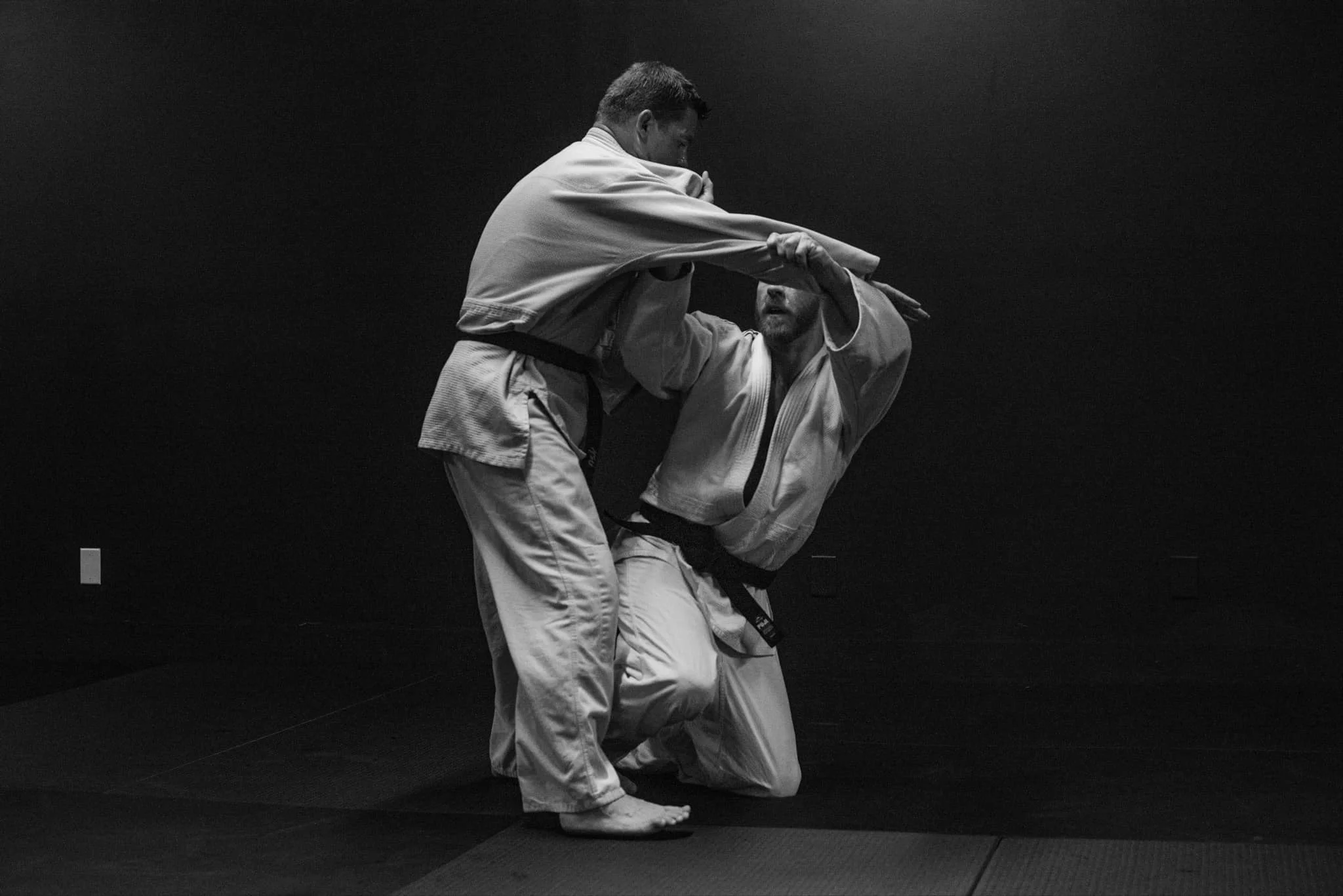
In this episode Jeremy chats with martial artist and podcaster Sensei Cole Stanley about the evolution of and the philosophical side of judo and how jiu jitsu and other grappling arts have evolved it.
Sensei Cole Stanley - Episode 1086
SUMMARY
In this episode, Sensei Cole Stanley shares his journey in martial arts, focusing on Judo and its philosophical aspects. He discusses the importance of competition, the influence of Brazilian Jiu-Jitsu, and the current state of Judo in the United States. Cole also highlights the significance of grassroots marketing for Judo and the opportunities available in martial arts. The conversation wraps up with insights from Cole's podcast, 'The Well-Rounded Grappler,' where he aims to spread knowledge and inspire others in the martial arts community.
TAKEAWAYS
Philosophy in martial arts is crucial for personal growth.
Cole started Judo at 17 due to lack of wrestling options.
Competition in Judo can be both beneficial and detrimental.
Judo's marketing needs to focus on grassroots participation.
Brazilian Jiu-Jitsu has helped popularize grappling arts.
The podcast aims to spread knowledge about martial arts.
Opportunities arise when you ask and pursue your passions.
Judo is for everyone, regardless of age or ability.
CHAPTERS
00:00 Introduction
05:06 The Importance of Philosophy in Martial Arts
14:32 Cole's Journey into Judo
24:45 Competition in Judo and Its Impact
32:15 Reflections on Olympic Competition
32:47 The U.S. Sports Landscape
36:21 Professional vs. Amateur Sports
38:43 The Evolution of Martial Arts in the U.S.
46:02 The Impact of Brazilian Jiu-Jitsu on Judo
52:24 Promoting Judo for Everyone
58:02 The Well-Rounded Grappler Podcast
This episode is sponsored by Kataaro. Please check out their site at Kataaro Custom Martial Arts Products for your holiday gift giving needs. Be sure to check out their Martial Arts Belt Pagoda Display!
And use the code WK10 to save 10% off your first order. And be sure to ask them about a wholesale account for school owners!
Join our EXCLUSIVE newsletter to get notified of each episode as it comes out!
Subscribe — whistlekick Martial Arts Radio
After listening to the episode, it would be exciting for us to know your thoughts about it.
✅Subscribe to whistlekick Martial Arts Radio on the following platforms:
🎧Apple Podcasts: https://apple.co/3mVnZmf
🎧Spotify: https://spoti.fi/3yHVdHQ
✅You can find whistlekick on all social media platforms using the handle @whistlekick or visit our website at https://www.whistlekick.com or https://www.whistlekickmartialartsradio.com
Show Transcript
Jeremy Lesniak (06:41.204)
What's happening, everybody? Welcome back or maybe for the first time to Whistlekick martial arts radio on today's episode. I'm joined by Cole Stanley Cole. Thanks for being here. We'll start this chat in just a moment. And to the audience out there, thanks for being here. Thanks for spending some time with us. Martial arts radio is the world's top traditional martial arts podcast. We bring you two episodes each and every week. And part of the way we're able to do that is through support from our sponsors like Kataro K A T A A R O dot com.
That's where you go to find Kataro makers of the best stuff. make some great stuff. Everything's made in the USA. They've got a few things that they want me to tell you about this time around. They've got this great new pagoda style desktop belt display, which is super cool. They're constantly adding embroidery options. So, you know, the thing Kataro is known for most is their belts. We did a belt in collaboration with them. You can find that on their website, but.
If you check out what they're doing, it's all great quality stuff from great quality people. And we are thankful to be in partnership with them. And I'm thankful to be here spending some time with you, Cole. How is it going?
Cole Stanley (07:55.604)
Wow, life couldn't be any better, like I was telling you earlier. Any of these opportunities to where I'm able to spend some time with other martial artists, picking each other's brain, having discussions, talking about the philosophy, the technique, whatever it might be. It's always something that I really enjoy. So this is an awesome opportunity. Very excited to be here. And obviously, thank you so much.
Jeremy Lesniak (07:59.192)
Yeah.
Jeremy Lesniak (08:21.358)
Thank you. Of course, of course, thank you for spending some time with us. And, you know, the hardest, I think one of the hardest jobs I have is deciding how to start our conversations. So what I'm going to do is I'm going to pick at something that you just said, sharing philosophy. You know, not every martial artist is super into the philosophy of what we do. A lot of martial artists are.
It's all about the training or the techniques or the next form or whatever, but you brought up philosophy. So I'm going to guess that that's important to you. Is that true?
Cole Stanley (09:01.522)
Yeah, absolutely is. And I was thinking about this earlier because I also have a podcast and I found a Kenpo Karate Sensei that I really liked on TikTok and he does nothing but talk about philosophy and the deep roots of martial arts. And yes, Kenpo Karate and Judo are different, but they're also the same.
Right? That continuous pursuit for perfection, self-perfection. And you know, when I think back about things.
Jeremy Lesniak (09:35.534)
Hmm. Is that Michael, by the way, you're referencing?
Cole Stanley (09:41.456)
Now his name is the Sensei Thompson is what his name is.
Jeremy Lesniak (09:45.704)
I thought that's who I'm thinking of. Maybe his first name's not Michael. He's got a really deep voice.
Cole Stanley (09:51.388)
Hmm. It might be. Usually the background has a...
Jeremy Lesniak (09:52.835)
Is it? I think we're talking I think we're talking about the same guy. Yeah. Yeah, he's he's he's a great guy. Yeah, keep going. I'm sorry.
Cole Stanley (10:00.412)
No, absolutely. So he has like some tigers and stuff in the background. He's like in a a dojo type atmosphere.
Jeremy Lesniak (10:13.036)
What? Yeah, go ahead.
Cole Stanley (10:13.512)
But so as far as philosophy, and I thought about this question earlier because when I have Sensei Thompson on, I'm gonna talk about philosophy to an extent, potentially deeply, it depends on how the conversation goes. But I think the longer you spend in the martial arts or trying to find something that you're perfecting throughout your lifetime, when you're younger,
You are just going through the motions. And you know, when I was training judo coming up from a teenager and competing, I really didn't realize the lessons that were being taught to me. You know, you were able to come back and reflect on what you've learned over time. But as you're going through it, sometimes you don't realize things are happening and the mindset is shifting.
and you learn to become a better person over time and it helps out with your confidence. I mean, there's so many other realms that it could go into, but I'm definitely more into the philosophy aspect as of now. And as I get older, I'm 43 now, this is year 25 for me in martial arts. I heard something the other day.
And it talked about how physically you're able to do techniques and especially these big dynamic techniques like, you know, like such as judo, some of these big throws and eventually the body is not going to be able to do the throws as they once did. you might not be able to do the throws at all. If maybe you have some sort of injury or whatever the situation might be.
but your mind is gonna continue to get sharper and the things that you learn through martial arts are gonna be translated mentally. So as the techniques start to fade, the mind and the deep thought and the philosophy of martial arts is gonna come through, especially if you decide to continue to do that on as a lifetime activity.
Jeremy Lesniak (12:33.72)
for sure.
So if I did my math right, you started Judo in your late teens, right? 18, 19?
Cole Stanley (12:43.444)
17
Jeremy Lesniak (12:45.378)
Okay, I don't know too many people who start judo at that point. mean, put aside for a moment the fact that judo is far less popular in the West than it is globally, which is, fascinates me. That's not an age where a lot of people get going in judo. Is this a college thing?
Well, 17, probably not. How'd you get started in Judah?
Cole Stanley (13:09.809)
So So and I just Was talking about this the the other day I was a guest on a different podcast called it to Tommy talk and had a good time on on that show as well so when I was younger, I grew up in a very small town and
Jeremy Lesniak (13:24.034)
Mm-hmm.
Nice.
Cole Stanley (13:36.402)
you know, coming up through the eighties and stuff, of course, you the Internet wasn't there either. It was almost like a world that was kind of shut off, right? Like the kids today are much more globalized, much more, you know, cultured of the world than I was. I mean, if it didn't happen within my little town or I saw on the television, then I really didn't know anything about it. Right. Unless I obviously saw it in a book or something like that. But I watched.
Professional wrestling when I was a little kid and was pretty heavy into that and really enjoyed it so of course me and my friends would you know do the moves to each other and things like that and then I do have a younger brother and sister that I would also practice the moves on of course and We had somebody move into our town yeah, his name was Adam and
Jeremy Lesniak (14:22.67)
I'm sure your parents loved that.
Cole Stanley (14:33.326)
He, know, just again, you know, coming of a class of, know, like 20 people, obviously you get to know everybody in your class pretty well. And you become friends with people pretty well when you're in such a small town like that. And he said that he wrestled when he was in middle school. And I'm like, okay, I really didn't know what that meant. I'm like, okay. So you did stuff like WWF and he's like, no, it's real wrestling, you know? And I don't remember the conversation exactly, but.
Okay, sure, you know, like what is that? You know, he's like, it's similar so he would show me moves and we would we would do little tussles and Sometimes get out the boxing gloves and stuff But I mean, I didn't know anything about what I was doing, but I kind of liked it You know, of course it kind of sucked because I didn't know what I was doing and I was just getting absolutely dominated right because I mean Anybody that's done any sort of martial art or wrestling if you are a complete beginner and don't have any clue
of what's going on. mean, it's really difficult to pick up right away, you know? And so I wanted to wrestle and I got into high school and wanted to see if I could get onto a wrestling team. Well, again, being from such a small town, my high school didn't have wrestling. So the same friend, Adam, mentioned judo and
Again, like I don't remember the conversation, but I doubt that I even knew what judo was. But he said it's, it's very similar to wrestling, but you wear a gi and a big thick jacket and it's something that you should try. You know, if you want to do wrestling and we don't have it at the high school, try that. have a couple of cousins that do it. So I went to a judo club at 17. I had just graduated high school actually. And.
You know, a long story of, know, I tried to meet with the principal, see if we could do like a co-op, see if I could go wrestle for another school. And, you know, the answer was no. So I decided to do that. And again, it's like the resources of today are a lot different, right? You couldn't just go on to Google and search, you know, where's the nearest wrestling club or where's the nearest judo club. It wasn't really like that. It was all kind of word of mouth.
Cole Stanley (16:50.868)
And so I started judo at 17 and 25 years later, I'm still involved with the art and I love it and I teach it now and I don't compete anymore, but I competed for about 10 years. And yeah, it's awesome. And now I'm to the point in the martial arts journey to where I'm giving back. And not only do I teach it.
Jeremy Lesniak (16:59.723)
Yeah.
Cole Stanley (17:18.662)
at Brazilian Jiu Jitsu club. teach her twice a week, but I'm in the process of opening my own dojo in my front yard. I actually had a 1200 square foot building built, you know, 30 feet from my front door. And I'm getting ready to open hopefully in the next month or so. But yeah, it's it's interesting because I take this full circle and, know, back to the philosophy question.
Jeremy Lesniak (17:29.889)
series.
Cole Stanley (17:48.359)
Again, like you hear about some of this deeper stuff as you're coming through and when you're young and you don't really understand it and you know that the whole thing about, you know, like parents or educators saying you'll understand when you're older, you understand when you're older. I really didn't know what they meant, but now I do. So it's all become full circle to me and I'm to the phase in my martial arts career to where I'm giving back as much as I can.
Jeremy Lesniak (18:13.964)
Nice. So I'm curious, coming into judo, probably not knowing, as you said, not knowing very much about it with at least an understanding of professional wrestling and that seeming like it might be the closest thing to getting out there in between the ropes. What were those early days of judo like for you? Was it was it what you had hoped it to be or maybe something else?
Cole Stanley (18:32.84)
You
Cole Stanley (18:42.504)
I mean, I try to, you know, like think back of stuff and whenever I'm teaching technique and things like that, I tell my students like all the time, I'm like, I have no clue where I learned this from, you know, like this particular way to do a hip throw or, or a single arm shoulder throw or whatever it might be, this gripping sequence. Most of the time I can't remember, you know, where I learned it. I wish my memory was
was more like that. I don't have a vivid memory of what it was like in the beginning, but all I remember is that it took me a long time to learn and I was not very good at first. I mean, I'm still not good, but I remember that it had been a year or two years before I legitimately took down somebody that was not a white belt.
Now, obviously when you got two brand new white belts going against each other, somebody gets luckier. They both kind of trip at the same time and somebody goes down. So, you you could, you could consider that a takedown or a throw, but somebody that had been doing it for, you know, six months or a year. I mean, I did not get a single takedown or a single throw or a single foot sweep or anything for a year, maybe two years, you know, and it's. And then, so.
Jeremy Lesniak (19:49.507)
Yeah.
Cole Stanley (20:11.688)
I had, you know, like a choice to make, right? It's either I just give this up because I'm not good at it, or I just stick with it and kind of see what happens. And I decided to stick with it. And I haven't been doing judo for 25 years straight, but I also have coached wrestling. I also do Brazilian Jiu Jitsu. And there probably hasn't been a time longer than maybe six months, I would say.
within that 25 years to where I was not on the mat at least once or twice. You know, so it's been on and off kind of, but you know, I'm involved in a lot of things and you know, if you know any coaches at the high school level, you know how much of a commitment it is to be a successful coach and be there for your athletes and
Jeremy Lesniak (20:58.499)
Yeah.
Cole Stanley (21:04.404)
try to give them every opportunity you can. It's hard to fit in another activity. So most of the time when I was doing wrestling, I didn't do judo. But there was some years to where I would be doing judo up until wrestling started and then start judo as soon as wrestling was done. And other times I might not go back to judo for a couple of months or whatever it might be.
Jeremy Lesniak (21:28.568)
So when did wrestling work out? You started judo because you couldn't find wrestling. How did you end up finding wrestling?
Cole Stanley (21:37.552)
Yeah. So as far as my introduction to wrestling, remember, like I said, my friend Adam had shown me a little bit about it and he had several cousins that were big into wrestling. One was a multi-time state champion in Illinois and he was also a black belt in judo and his name was Tommy Liqueur and he
was a black belt at the club that I first started in Yorkville, Illinois, Yorkville Judo club. So, you know, back then in the 2000s, leg grabs were still allowed in Judo. Not that we practiced them a lot, but they were still there and it was still an option. And I know that, you know, Tommy obviously was very, very good at leg attacks and
things like that. I would see them. So what led me to wrestling? So besides practicing a little bit in judo and doing it in my backyard or doing a little bit of maybe like you can call it cross training maybe within the judo dojo like wrestle around Tommy or some other people that had wrestling experience. I decided to get into education. I was a
I was a public school teacher for 16 years. I'm not currently, but I was for 16 years and I was a PE major and real big into sports, played a whole bunch of sports growing up. wrestling was about the closest thing to judo and I just loved grappling period. I mean, wrestling is a martial art. So I love martial arts. I love grappling.
So I wanted to get involved in wrestling and literally started out with me being a volunteer coach for a long time. And as the coach was showing moves, I would be learning along with the wrestlers and then I would wrestle the kids every single practice. So I kind of went through the grind and the learning process right alongside the wrestlers, even though, you know, I was in my early twenties.
Cole Stanley (23:57.19)
And then that led to later on, becoming a head coach, you know, but it took a long time and I was taking the lumps just like the kids were, you know, and I was getting taken down and I was getting pinned and there was times to where, you know, I was doing judo and, throwing them and, know, because that's all I knew at first was, was judo. And then I slowly just picked up wrestling and understood the rules and
Being involved in judo and grappling, I understood the principles of body manipulation and affecting balance. mean, judo is a lot like wrestling as far as the grind and things like that, working when you're exhausted and getting beat up and getting slammed on your back and everything like that. So it was very similar.
So I ended up again, just kind of going through that and I was a volunteer coach for a long time. And then I decided I wanted to, you know, step into an assistant wrestling coach role and then eventually a head coach role, which I was a head coach for six years.
Jeremy Lesniak (25:09.538)
Did you enjoy that?
coaching.
Cole Stanley (25:13.972)
Yes, yeah, mean, so there's, gosh.
Jeremy Lesniak (25:17.038)
That's a conditional yes.
Cole Stanley (25:24.734)
When I think back about coaching in general, like what did I enjoy the most out of it? I enjoyed, if we're talking about the sport specifically, I enjoyed showing moves and learning moves and teaching kids moves and techniques and strategies and game plans with grappling and wrestling. I also enjoyed
you know, the laughs that we had and the camaraderie and the lifelong friendships that I've made and the connections I made with the kids. You know, but, you know, there's a whole background story and, you know, a strong opinion about the state of public education for me and coaching through the school system and just some things that I just absolutely don't.
agree with and I decided to leave the school system for the most part because of lack of support from administration. I mean there's other things too but you know and that went hand in hand with coaching you know because I was a head coach for the school that I was a teacher and yeah I mean I love coaching and you know right now I'm teaching judo and
I don't really have to worry about too much of the, backend stuff, the behind the scenes type of thing. The gym owner is very trusting in me, which I feel very lucky and fortunate for that. And he lets me run the judo program how I want to. I don't really push competition. I might mention, you know, a tournament or two coming up or, you know, this is more a competitive mindset or whatever, but.
I'm just kind of teaching as the art. And you know, when you add the aspect of competition, and again, this, this goes back to what I was talking about with the last, the last time I was on a podcast was with organized school sports. Competition is always going to be kind of the centerpiece. You know, if you're on a baseball team, you're going to play baseball games. If you're on a football team, you're going to play.
Cole Stanley (27:46.74)
the football games on Friday night or I think Thursdays is JV. But in wrestling is the same, right? Like you're gonna be on the wrestling team. That means you're gonna be on the mat at some point. Martial arts has a little bit of a trump card to where there's individuals that might not ever compete. You you can't join a wrestling team and just say, never wanna compete. It's just not the way that it works. But with martial arts, you can.
So I've taken a much bad, much more recreational approach to the way that I coach now. And I don't emphasize any sort of competition. mean, if people want to compete awesome and I'm happy for them, and I do have a couple of students that do. And, you know, they asked me a little bit more competitive based questions and I'm happy to help them. I'm happy to work with them, but it's a much more stress free environment when I'm supported.
And I'm not very worried about competition and getting people ramped up and pushing people real hard for competition-based scenarios.
Jeremy Lesniak (28:56.942)
Sure. You mentioned that you had done some competition as well in your Judo career. How? And here's why I ask the question, because you brought up, know, martial arts isn't inherently competitive in a tournament setting. But some martial arts are a bit more competitive philosophically in the way they are typically taught. And I see Judo as one of those.
Cole Stanley (29:26.291)
Mm-hmm.
Jeremy Lesniak (29:26.904)
Talk about your time in competition with Judo and how important or unimportant that was to your development as a judoka.
Cole Stanley (29:38.74)
So, and again, this is a discussion that I keep having with a lot of people as of lately, the last couple of months. Judo the art, you know, and you could substitute Judo for, know, Jiu Jitsu, Sambo, karate, kickboxing, whatever you want to substitute it as. You have the art itself, and then you have
the sport and as time goes on, it's starting to separate itself. Obviously judo is the one that I have the most experience with and have studied the most. So you have the art created by Jigoro Kano in 1882.
that was meant as a physical education tool for the people of Japan. And then later translated to the world. Jigoro Kano wanted to spread Judo as a physical education tool and a self-improvement tool to the world. Now, there was a little bit of a self-defense aspect because, you know, it is a martial art. So you are learning to defend yourself.
Kano saw how dangerous Japanese jiu-jitsu was and the things that were taught to the military and the police force sometimes end up with, you know, people that, you know, with broken bones or sometimes killing, you know, with these certain techniques. So he wanted to take
Japanese jiu-jitsu and make it a little bit more practical and provide a little bit more of a safer environment so that anybody could practice it and One of the original philosophies was mutual welfare and benefit so you want to have benefit not only for yourself, but you also want to benefit your partner and What's welfare welfare is safety and happiness. So you want to?
Jeremy Lesniak (31:44.556)
Hmm.
Cole Stanley (31:57.662)
provide a safe environment for your partner. So there's a little bit of a separation there. Now, as I was coming through the system, the martial arts system, the judo system, the judo clubs that I went to, just like the majority of the judo clubs in the United States and probably the world, what they do is based off of current IJF
Rules. What is the current rule set for judo? You know, what grips can you have? What throws can you and cannot do? How long do you have to throw? How long can I hold this? How long do I got to pin somebody down? This is a pin. So I would do this. How do we get out of this pin? You know, this is half guard. Do I go into turn or whatever it might be? So I, I came through as, a competitor. So we were.
learning judo as the sport. And as the rules changed, what we did in the clubs also changed to match the current rule set. So again, as I'm coming through, I have a different view than I do now, right? Like I like the competitive aspect. One of my favorite things to do when I was younger and
When in my competition days was the live aspect called Rondori. And that would be my favorite part of practice to where I could try to, you know, take somebody down or submit them or pin them, you know, within this controlled environment. but we're trying our best, right? controlled scrimmage, a controlled fight, whatever, whatever you'd like to call it. And I loved it. I love competition. I've always been.
Involved in sports my you know my entire life. mean I was on the know the t-ball field and you know the basketball court and things like that as long ago as I can remember and When me and my friends would get together we would play sports together. So I mean I always loved it and Was a very competitive person for a long time and As I came through and competed as a white belt
Cole Stanley (34:21.618)
all the way up through a brown belt. You know, I enjoyed it. I was able to travel to different parts of the United States, maybe to, I don't know, we'll just say maybe 10 states total. I was able to compete as well as go to camps and clinics and things like that. And I liked it, but there are levels to competition in.
judo especially because judo is an Olympic sport and there are professional judo players in the world. Now you don't see it as much in the United States. It is better now than it once was, but there are paid professional judo players and they're trying to win world championships and they make money and they're country that their front pays them money. If they win.
these big tournaments or if they win a medal in the Olympics or even make it to the Olympics, they get money to do so. So those would be there. They're well, I'm not sure if they're still called this or not, but they used to be called a tournaments. So point tournaments, a tournaments, that's the top echelon. I don't know if I ever competed in an eight tournament or not. Maybe, maybe a couple of B tournaments.
but most of them were just like at the amateur level, know, the regional level, you know, me just go into a tournament that just had, you know, people from an hour or two hours away. And I was just, you know, competing against people, my own level. So I never got up to that, that high level to where I was trying to win a national championship. You know, I mean, cause honestly, I mean, I wasn't, I wasn't at that caliber. I wasn't that good.
because I mean, when you, you know, and I've been introduced to the hard way of some of these top level players and man, they are a different animal, man. They were, they're way better than I ever was and ever will be. But I competed at more like the amateur circuit and enjoyed it.
Cole Stanley (36:41.268)
You know, never won any money doing it or anything. got, you know, a box full of metal sitting in my closet, which is, which is cool. But, um, you know, just the fact that I went out there and did it and had a couple successful tournaments that I did really well in and got a couple of state level metals, which is kind of cool. You know, I feel pretty, pretty proud about that and happy that I was given that opportunity. And then I just had a couple of really good tournaments and, brought something home that.
you know, that I could talk about.
Jeremy Lesniak (37:13.946)
Cool. Yeah, I find the subject of Olympic competition always pretty interesting because my understanding is that the United States compensates Olympic athletes the least. That there are plenty of other countries that once you are even in a junior Olympic program, you're good to go. We're going to make sure you're taken care of and you can focus on your sport and all the development you need. And if you
win a medal, you're compensated well. They want to look good on that global stage. And we just don't seem to make that a priority, which is a bummer.
Cole Stanley (37:49.278)
Mm-hmm.
Cole Stanley (37:55.055)
Right. know, unfortunately, you know, and I mean, a lot of people are in agreement to this, you know, the United States kind of just, you know, stays within its own boundaries. You know, the U.S. is a gigantic country compared to most countries in the world. And
Jeremy Lesniak (37:56.236)
Yeah.
Cole Stanley (38:18.769)
We kind of just pay attention to what's going on here, you know, and a lot of the world does too, you know, when it comes to, you know, music or movies or, some of the professional athletes and stuff like that, we kind of stay within our own. And I don't even remember what the point I was trying to make for this was, but
Jeremy Lesniak (38:42.446)
I'm going to guess that you were working to say that because the US is so physically large that sometimes we can forget that other countries are out there and we just kind of do our own thing within competition.
Cole Stanley (38:55.419)
Yes, we do. Absolutely. you know, the the you know, and it's it's interesting too, because it's not like the US as a whole doesn't pay certain athletes pretty well. mean, you know, all the NBA players. mean, this is a guess, but I would assume that all of them maybe start out at a million dollars, maybe close, you know.
football, baseball, similar stories, maybe not as high of money, but I mean, a good salary. I everybody that plays professional sports is gonna make big money in the United States when we talk about basketball, baseball, and football for the most part.
Jeremy Lesniak (39:40.463)
Those minimum contracts are big compared to what most of us make as our general life salaries. I don't know if a minimum contract in football is worth it because you're getting the snot beat out of you for I think it's 400k.
Cole Stanley (39:47.443)
Sure.
Cole Stanley (39:50.737)
Yeah.
Cole Stanley (39:58.206)
Sure. Okay. Yeah, sure. Again, that was just a guess on what they make or whatnot. But all of these organizations are privately ran. The NFL, the MLB, NHL, all of them are run by private organizations. They are not run by the government. A lot of, well, I don't...
Jeremy Lesniak (40:04.355)
Yeah.
Jeremy Lesniak (40:11.021)
Yes.
Cole Stanley (40:26.576)
Again, this is a guess. I'm not sure, but I know there's a lot of countries in the world that all the sports that are held within the country are run through government funded centers. know, the U.S. we play sports through the school system and, you know, people are in middle school and they compete for their middle school program. Now, obviously there are clubs out there that you can join just about in every sport.
but you also have the option to play for your school. A lot of the world does not have that. If you want to be part of a sports team, you join the local government run facility, similar to like a YMCA, I guess, but it's run through the government. So that's one major difference, that the money that these athletes from other countries are getting.
paid is actually from the government directly. the money that athletes make in the United States, as far as I know, none of them are paid through government. It's all done through these private organizations, know, big organizations, but they're still privately owned. They're not owned by the government.
Jeremy Lesniak (41:46.233)
And then you've got the whole pro versus amateur discussion, right? And we've seen collegiate sports, finally, you we figured some things out with that. And it really is a fascinating subject. The idea that if you're really good at something, the ability to make a living doing it can be really challenging. you know, we, you know,
Cole Stanley (41:53.086)
Sure.
Jeremy Lesniak (42:13.738)
You go back over the years of this podcast and we've had a variety of people come on who have made martial arts their job. But their job is most of the time one of about three things. They have a martial arts school. They work in TV or film.
Jeremy Lesniak (42:33.944)
they make stuff, you know, like we make stuff, know, so like books or a podcast or training equipment or something, right? Like that's about it. You know, and then you've got some people who do okay with seminars, but the majority of people doing seminars, you know, they're not making a living. Whereas, yeah, you look at other countries where, you know, in some countries, just to be any kind of martial arts instructor, you have to be certified by
that country's athletic board.
But there are more opportunities. What would would martial arts look like in this country if the top, I don't know, three, five, 10 percent of judo players made one hundred fifty, two hundred fifty thousand dollars a year? Because I'm guessing nobody's making that. In the in the the like open point tournament.
Cole Stanley (43:27.721)
Barely.
Jeremy Lesniak (43:37.068)
striking art world, which is what I'm more familiar with, the very, very best people.
Jeremy Lesniak (43:46.255)
Unless if you take out the sponsorships for logistics, right? Like some of them have sponsors that fly them in the hotel rooms and everything and cover their fees The only way they're making any money. Yeah, they like Win, you know a thousand dollars in a weekend at a competition maybe 2,500 bucks if it's a huge one But they're teaching some seminars, you know, they've got to cobble together this professional athlete lifestyle to cover their bills in a way that
Cole Stanley (44:06.761)
Yeah.
Jeremy Lesniak (44:16.266)
other countries and other sports really don't have to do. it's, I hope one day we get there, because I think it would be amazing. What would, what would martial arts competition look like in this country if we had professional martial arts competitors?
Cole Stanley (44:31.452)
I mean, we do with MMA, yeah, but as far as the traditional martial arts, there are many, but you know, the one thing that Brazilian Jiu Jitsu has done really well is fill that void that was kind of missing. So a lot of the big tournaments that Jiu Jitsu has, they have prize money.
people that are opening jujitsu clubs are able to run that as a business for a living and don't have to work a second job. it's a good pathway for some others to follow. I know we're both similar age, but in the 70s and 80s karate was gigantic in the United States and there were
karate schools that seem like in every town, you know, and sometimes multiple in the same town. And people were making a living teaching karate or maybe a taekwondo something or something like that. And, you know, it shifted to now Jiu-Jitsu. The thing that I talk about with Judo and, you know, there's a lot of people that
Jeremy Lesniak (45:31.502)
Mm-hmm.
Cole Stanley (45:58.319)
I listen to on social media within the judo realm, some high level competitors and people that actually do have big successful schools and are making a hundred thousand dollars a year, but that's very rare because the whole philosophy of judo from the beginning was to teach it as a physical education tool and to offer it to people for basically free.
While that might have been an okay idea for the timeframe that was happening in, you know, early parts of the United States and the world, such as, you know, like the world wars and things like that, to where so many people were living in poverty and literally didn't have enough money to do anything, it was great that judo was available for them as an outlet.
Jeremy Lesniak (46:55.79)
sure.
Cole Stanley (46:56.519)
but we're doing much better as a country financially and the average person makes more money. We don't have this catastrophe, this world war that we're dealing with to where we just have to survive. So it's different. And you mentioned about coaches being able to get
paid a good amount of money to teach Judo. you know, there's a lot of people in the community. You know, one would be like Jimmy Pedro or Shintaro Higashi, Colton Brown, a couple pretty big people within the Judo community, Roddy Ferguson. They all talk about how there are paths for people throughout the world in Judo.
After they're done competing, there's ways to get paid at coaching positions to where they make enough. mean, they obviously don't get rich doing it, but they make enough to provide for their family to pay their bills and they could focus on coaching judo. They don't have to have this secondary job. They could just coach judo and it doesn't necessarily have to be for a national team. It could just be at one of these government ran centers. Like I talked about.
And you could just be teaching, you know, youth judo and making enough, you know, as a living. And there really is not an opportunity like that in the United States. I mean, judo is small, obviously, and there are only so many coaching roles out there. I know that there's been a push in the past for judo to be offered in the school system and as an NCAA sport.
which both of them obviously did not work out. Now there are some schools within the United States that do have after school judo programs. You don't really see it as much anymore. And again, I could go into a deep rabbit hole about education, but you could take physical education 30 years ago and they might get out the mats and do wrestling.
Jeremy Lesniak (48:49.294)
Mmm.
Cole Stanley (49:18.704)
as a PE unit. My gosh, man, you try to do that today. I mean, you'll have parents trying to sue the school over it, you know, which is absolutely ridiculous, you know, but, you know, but, you know, you could do martial arts or you could teach judo as, you know, physical education curriculum 30 years ago. You just, can't do it anymore. And, you know, I, I love wrestling, but unfortunately with
with the way that things are going on, like I could see wrestling, unfortunately, fading away because of just how physical it is, you know, and the perception of people that don't know anything about it that's dangerous and then things like that, you know, because I mean, it does look like a controlled fight in a way, you know, but again, it's like.
I don't want that to happen and I hope that I'm wrong, but it's like, again, with the trajectory that schools are going, you I could see them taking it out because like, you know, just because how physical it is.
Jeremy Lesniak (50:21.486)
Sure. It may not. If you look at the numbers, everything I've read about youth football, participation numbers are down because of the concerns of CTE. And if you have kids with parents who would say, you I'd love you to have that.
Cole Stanley (50:37.438)
Hmm.
Jeremy Lesniak (50:46.126)
kind of aggressive, that physical, really intense experience. I want you to be part of a team. To me, if I don't want my kid to have quite that much physical injury risk, the first thing I'm gonna look at as an alternative is wrestling.
Cole Stanley (51:02.503)
Mm-hmm.
Jeremy Lesniak (51:03.982)
So maybe, maybe there's an opportunity in there. just for anybody out there in the audience, if you can speak to this, if anybody out there is following this subject well, I wanna hear from you,
Cole Stanley (51:07.092)
Amen.
Cole Stanley (51:22.708)
I love wrestling. I I love grappling in general. mean, that's kind of my mission, you know, is I feel that I just want to just try to get as many people involved in grappling period. And, you know, whether it's seeing kids or adults or whatever, sometimes I mention some kids, I say, you know, that I think that kid should go out for wrestling just because.
the way they move, the way that they're built, just whatever it might be. Other times I say, I think that kid would be great for Judo or I think that kid would be great for Jiu-Jitsu or to just get into martial arts in general, whether it's karate or taekwondo or whatever it might be, boxing, just as a good outlet to learn self-control and to learn discipline and to teach what...
martial arts really teaches that it's more of a competition against yourself. And the more that you're in it, the law, the more you realize that it's not about fighting and it's not about the self-defense. And you want to use it in a real life scenario, the least amount of, you know, as least as you can, if not ever to use it, you know, it's always going to be that.
Jeremy Lesniak (52:25.326)
sure.
Cole Stanley (52:48.113)
that last resort sort of thing.
Jeremy Lesniak (52:50.424)
Well, I'm curious. You mentioned that you teach Judo out of a Jujutsu academy, and you were doing Judo before BJJ had really gotten big. From my outside perspective, because I did a whopping three months of each at different times in my life, it seems like BJJ is one of the best things that's ever happened to Judo. Would you agree? At least in this country?
Jeremy Lesniak (53:25.539)
he has mixed feelings about this.
Cole Stanley (53:28.244)
I absolutely do. One thing that I want to say before I give my opinion about this is that, you know, I'm a jujitsu practitioner. You know, I'm a blue belt in jujitsu. There's certain things that jujitsu has taught me as a martial artist that I love. I feel that it's definitely helped my judo and it's helped.
slow my Judo down, but in a good way. And I'm happy for Jiu Jitsu and I'm glad that it's doing what it's doing and how popular it is. Now, the first thing that I want to say about it is the fact that I'm kind of shocked that Judo has not exploded because of how big Jiu Jitsu has gotten.
because it is a geek-grappling art that has very similar strategies and points of emphasis, right? Take somebody from their feet to the ground, control them and submit them. Juno does have the pins, but a pin is a version of control. So, you know, it both goes into...
that realm of taking somebody from their feet to the ground and controlling them on the ground. It's the same principle. Now there's obviously different techniques and again, like if you view it as the sport aspect, there's different rules. But unfortunately, Judo is not kind of writing on the coat tails of Jiu Jitsu. And like I said, I'm shocked that it hasn't.
I think that one of the reasons that it's not exploded is because it's not marketed the same way that Jiu-Jitsu is. Now, the whole idea and philosophy and statement of Jiu-Jitsu is for everyone that comes directly from Judo because Brazilian Jiu-Jitsu came from Judo. One of Jigoro Kano's students, Count Maeda,
Jeremy Lesniak (55:43.278)
Hmm?
Cole Stanley (55:51.72)
which I can't remember what his first name is, but, I don't know what he has a count of exactly, but he brought judo to Brazil because Kano decided that he wanted to take judo and spread it throughout the world. So one of his students, Count Maeda, took judo to Brazil and taught it to the Gracies. And then it changed into Brazilian Jiu-Jitsu what it is today.
Now, and again, like I have these discussions. So a lot of the jujitsu videos that you see is taking the technique, explaining it nice and slowly by a middle-aged man, taking it step-by-step, talking about how easy it is, you know, this is what you do, this is what you do, and...
You know, anybody could do this and this is how you use it against somebody that's bigger and stronger than you. Whenever you see videos of judo, you almost always just see the high level competition side of it to where you have these professional athletes that are freaks of nature with their speed and their strength and their stamina and their endurance and their flexibility doing these insane throws.
and doing whatever they can to put their opponent on their back. So while it's cool to look at, the majority of people are like, I can't do that. You know, it's cool to watch and I like watching it and judo is cool to watch, but I could never do judo because I can't do that.
Jeremy Lesniak (57:33.282)
This is one of the biggest mistakes we make as an industry is showing the high level stuff and people not being able to see themselves in it. Please continue.
Cole Stanley (57:42.544)
And that's why Jiu-Jitsu is, know, that, well, that's one of the reasons why Jiu-Jitsu is also so popular because of how much it's pushed as it's for everybody. So, you know, one of my missions as far as, you know, what I want to do for Judo is get it back to that grassroots level and talk about how it is for everybody. And...
You you could take where I teach, for instance, 4M Fitness and Indian Trail, North Carolina. There's probably, I don't know, I'd say close to 200 members that are there for Jiu Jitsu alone. It's a big place. It's like, you know, it's a successful business. Davis Fleming is the owner. He's done very well. Kathleen Foster is the other owner. They've done very well. You know, I'm very happy for them.
You know, they've brought me on as a judo instructor and like, I cannot thank them enough for the opportunity that they've given me. But even within the confines of the jujitsu gym, I can only get, you know, three, four, 10, 12, 15 people on the judo mat. And even people that I know that I've trained with, that I've rolled with, that I've done stand up against.
tell me, I don't want to come to judo because I don't want to get thrown in my head all the time. And I'm like, have you gone against me on the feet? Yeah. Did I ever throw you on your head? Well, no, but you you're a black belt and you're being nice. And I'm like, well, if you come to class, you'll see, man. I mean, I got 40, 50s, you know, even a 60 year old man that's in my class, you know, and we don't really practice that competitive.
hard throw style that you see on the Olympics. know, I practice the art and we break down the throws nice and slow. I bring out the crash pad and back to what I was saying, one of the missions that I think is super important is to let people understand that judo is for everyone and the techniques can be used by people of all sorts of
Cole Stanley (01:00:02.216)
physical abilities, know, age, sex, it doesn't matter. You know, the whole premise of Judo was to provide, you know, a physical education for everyone. And I think that it's definitely been misperceived. And I think that that should be one of the main things that is gonna help Judo grow in this country is to promote it as that.
And unfortunately, some of the bigger organizations, they're so concentrated on these big events and showing the Olympics and the world championships and the Pan-American championships that they don't really invest any time promoting the grassroots aspect of judo. And I think that that's a gigantic mistake.
by all of the US organizations that are in charge of judo currently.
Jeremy Lesniak (01:01:04.206)
The number one thing that we see that benefits any martial arts club of any style, I do some consulting work and we've got Whistlekick Alliance, so I'm pretty involved in this stuff, is showing pictures and video of everyday people training in your school.
Cole Stanley (01:01:24.136)
Yeah, absolutely.
Jeremy Lesniak (01:01:25.006)
And I've seen instructors say, I can't show that picture. My student's not doing that perfectly.
Cole Stanley (01:01:34.004)
Yeah, sure.
Jeremy Lesniak (01:01:35.087)
Right? No, it's the wrong approach. You want to show them doing it imperfectly because that means it's okay to be imperfect and that means people will try and they'll say, oh, I guess I'll give this a whirl. As cool as it was, I don't know if you remember a couple of years ago, there was this Taekwondo demonstration and they were doing breaking and they were vaulting each other up into the air and doing these backflip kicks and everything. Did you see that? Super cool.
Cole Stanley (01:01:40.798)
See ya.
Cole Stanley (01:02:00.616)
Mm-hmm.
Jeremy Lesniak (01:02:04.44)
But if someone shows that to me and says, that's taekwondo, that's really cool. Do you want to do that? No, I don't want to do that. As someone who's trained in taekwondo, I don't want to do that.
Cole Stanley (01:02:04.852)
See ya.
Cole Stanley (01:02:15.124)
Right?
Sure. Sure.
Jeremy Lesniak (01:02:21.518)
It's a marketing problem.
Cole Stanley (01:02:24.358)
It can be, absolutely. the Taekwondo, again, I don't have the statistic in front of me right now, I think that either Taekwondo has to be, it might be the biggest in the United States. I'm not sure about what Jiu Jitsu is currently.
Jeremy Lesniak (01:02:45.642)
It's believe it or not, I wrote, I did the research. We have what I'm pretty sure is the most definitive data on this, on our website. So as you were, if you saw me go and typing, that's what I was doing, because I was pulling up the numbers. in the U S Taekwondo is second to karate, but not by much.
Cole Stanley (01:03:06.962)
Okay. Yeah. Well, well, there we go. You know, but you know, they've done pretty good marketing as well, you know, and I would say that the majority of the time too, when you look at a Taekwondo website, it is that friendly people. is kids smiling, having a good time. when I was talking to, Shintaro Higashi when I was up in New York,
Jeremy Lesniak (01:03:28.302)
Mm-hmm.
Cole Stanley (01:03:36.018)
He said that there's a Taekwondo school right next to his house and they do like kids parties and they'll get out a cake and cut it with a samurai sword and like you can rent out the space to do stuff and you know, like it's encouraged as just a fun place to be. It's just so happens they teach Taekwondo, but it's like it's a cool, fun place to be. We do these fun activities. It's kid friendly and you know that they've done a good job with that as well.
You know, and again, it's like, if judo wants to get bigger, you know, we, have to like step away from, you know, the, the gigantic competitive aspect of it because judo, just like the rest of the martial arts in the world, except maybe MMA, you know, because again, that's kind of focused around like the competitive aspect. If you take that out of the equation.
90 % of people that practice martial arts do not compete. Maybe even higher, 95 % do not compete.
Jeremy Lesniak (01:04:41.998)
I would say at any given time, yeah. It's higher.
Cole Stanley (01:04:45.844)
Yeah. So, know, Judo is the same. So if 90 % of the people in Judo don't compete, why is it that you only want to show highlights of, you know, the national championship and the Olympics? You know, it's like, why are these organizations not going around to grassroots level things and just like,
Jeremy Lesniak (01:05:04.92)
Come with it.
Cole Stanley (01:05:15.516)
interviewing just a random kid or random 40 year old adult that's competing in the white belt division for the first time and just like showing these successes or telling these stories about how, know, whatever, like, like somebody was going through trauma and they did judo and it saved them or
You had an adult that wrestled 20 years ago and hasn't really found anything to do. And then they found Judo again. it's like revitalize them and help them lose weight. Now they can compete again or just whatever. It's like, there's all these great stories and things that they could focus on that are not these high level competitions, because and Jiu Jitsu and Taekwondo and karate, they all.
focus on the grassroots, everyday person, and it's really helped them boom in the United States.
Jeremy Lesniak (01:06:13.528)
for sure. We're going to start to wind down. You mentioned something pretty important at the top. You have a podcast. Tell us about your show.
Cole Stanley (01:06:24.638)
So my podcast, The Well Rounded Grappler, is something that I just do for fun. I don't have any sponsors. I don't have any revenue coming in from them, and I'm perfectly okay with it. So it's an interview-based podcast, and I talk to individuals from the world of...
Judo, Sambo, Jiu-Jitsu, and wrestling from the high level competitors, Olympic level competitors, all the way down to the everyday individual. It kind of just depends on who I want to reach out to and talk to. And we have, you know, usually hour long discussions and I go into a whole bunch of different aspects. I don't want...
it to be the same sort of interview every time. know, sometimes I ask people, know, tell me where you grew up. Tell me when you first started judo or wrestling, you know, tell me about your first competition. But other times I definitely don't do that. Like I ask completely different questions. You know, it might be about philosophy. It might be about opening a school. It might be about.
It'd be just a whole bunch of stuff, you know coaching whatever it might be You know where they've been in the world so the first 50 episodes that I did were audio only and After that I kind of took a little bit of a break Because again, like I do it for free and my audience is small and you know, it just kind of depends what I'm doing
is how much time I invest in the podcast. But as of the last maybe like year of the podcast, a lot of people, well, not a lot, but like a handful of people were like, do you have a video? Do you have any video for this? Is it on YouTube? This and that. And since then, I've kind of...
Cole Stanley (01:08:44.082)
I started doing the podcast again and now I offer a video as well as audio. A couple of them, well actually the last three was me going up and training up there or one of them was doing a clinic and after I was done training or doing the clinic we sat down and I interviewed them in their own dojo.
Jeremy Lesniak (01:08:50.571)
Okay.
Jeremy Lesniak (01:09:04.173)
Hmm.
Jeremy Lesniak (01:09:10.176)
Nice.
Cole Stanley (01:09:10.804)
A couple of the ones that I'm going to do in the future will be kind of just online like this, know, Zoom or Google meets or whatever it might be. And I'm going to start posting video as well. But then I'm also going into the realm of providing, you know, clips, whether it's audio with some cool video that I found on judo or wrestling or jujitsu, whatever it might be.
or video clips from the actual episode of the individual saying something cool or something funny or something motivational. But I think that overall, and again, like I said earlier about when you're going through the process and you kind of look back, you realize that some things that were happening you didn't realize at the time were going on.
I just like doing it and I like talking with individuals about martial arts and I throw in, you know, and wrestling is in there and wrestling is a martial art. And I try to figure out how I can, you know, become a better instructor or how I can get motivation or how I can find something to relate with people.
Or some of the discussions are how to improve your business or what I can do to start. When I open the doors to my dojo, how I can have success with that and ways to keep the door open and get people to try judo and things like that. But I just, I love doing it and I love networking with people. And some of the people that I've talked with.
I've went and visited their club and trained or, you know, maybe got a private from them or whatever. And it's just been a great opportunity. And. You know, there has to be more avenues and opportunities to spread grappling and martial arts, because the thing that's wonderful right now about technology or.
Cole Stanley (01:11:30.152)
the availability to information is the fact that if there's a famous judo player or karate competitor or instructor, kick boxer or whatever, there's probably going to be an interview of them on YouTube. Now, if you look back 20 years, the top level judo players in the United States, I mean, they weren't going on ABC or
Jeremy Lesniak (01:11:47.246)
Hmm.
Cole Stanley (01:11:59.865)
or Good Morning America and talking about their Juno experience. So like the resources weren't there. I mean, I could buy a VHS tape and I could watch them like do some instructing and listen to them talk, but it's not like it is today. So that's the great thing is that you do have opportunities to find.
individuals that you want to hear from, know, famous judo athletes or MMA athletes or just whoever. And you could find these interviews and watch them practice and demonstrate stuff. that didn't really exist 20 years ago. So anytime that I can promote grappling, that I provide an opportunity for somebody to listen to either me or my guest.
Jeremy Lesniak (01:12:30.19)
Mm-hmm.
Cole Stanley (01:12:52.547)
and help them on their own personal journey. That's kind of what it's about for me. Because like I said, like I'm an educator by nature. I like to teach. I like it when the light bulb comes on and people understand it. Whether it's judo or whether it's in the classroom and they understand, you know, comprehension of a paragraph or whatever it might be.
or in the physical education classroom to where the kid figures out how to score with the lacrosse stick or whatever, you know, and they get real happy about it. It's, it's cool. And that's kind of what it's all about to me is providing these opportunities for people. And, you know, me being, you know, a no-name guy that just, you know, likes to teach. If I can.
say something and people want to listen to it, then that makes me happy.
Jeremy Lesniak (01:13:55.983)
And where would people find that show your podcast?
Cole Stanley (01:14:01.203)
All of the episodes are on Spotify and I've started and it's called the well-rounded grappler and I've started to upload them to YouTube now as well Now the newest episodes which I've only had three that are video
Jeremy Lesniak (01:14:16.225)
great.
Cole Stanley (01:14:23.603)
So all three of those are on YouTube and I'm slowly putting the old episodes on there, but it's not video, it's just audio. So it's just a picture.
Jeremy Lesniak (01:14:31.022)
Our early ones, our early ones are like that too.
Cole Stanley (01:14:36.219)
Yeah, but going forward, they're all going to be video. And another thing, and I mean, it's a big time commitment and you know, it's definitely a learning process for me because I'm not very good with video editing, but I've also taken some time to, you know, like video tape, like the dojo and do like a little.
Jeremy Lesniak (01:14:40.718)
That's great.
Cole Stanley (01:15:01.811)
tour of it or whatever. And I'm also like putting that online as well of places that I've been. And just again, like just trying to spread grappling, mostly Judo, but again, you know, whether it's or martial arts in general, you know, whether it's wrestling, Jiu-Jitsu, Judo, or if it's a striking art, like I encourage people to learn about it, to understand and to try it out, you know.
Jeremy Lesniak (01:15:30.991)
on. I'm gonna have you close us up in just a minute so you might think about what your final words to the audience are today but my words to the audience thank you for being here thanks for spending some time with Cole and I and remember support Kataro, k-a-t-a-a-r-o dot com all the good stuff that they do use the code WK10 for your first order remember they also have a wholesale program for those of you out there with schools. Cole
Cole Stanley (01:15:35.795)
Okay.
Jeremy Lesniak (01:15:59.257)
Thank you again for being here. And this is your episode, my friend. So how do you want to end things?
Cole Stanley (01:16:07.261)
Well, obviously, thank you so much for considering having me on. You know, just like I did for you, I sent out an email to several different martial arts podcasts, some that I listened to others that I know are spreading a similar message to what I want to spread. And I'm just happy that I'm able to come on and
talk about what I love. So first of all, thank you so much for having me on. Again, like I don't have the accolades, but without a doubt, I can confidently say that I have a passion for this. So thank you so much. As far as what I want to say is, you know, there's...
Cole Stanley (01:17:08.915)
There's opportunities out there for people and you don't know until you ask or until you try it. You know, I didn't know that I could have, you know, Olympic caliber athletes on my podcast till I asked. I didn't know that I could be a judo instructor until I asked. I didn't know that I could be a guest on a podcast until I asked, you know, that, mean, I could go on and
But if you are interested in doing something, especially if you're passionate about it, you love it, and the intentions are pure,
Try to go after it and try to see what opportunities are out there. Because if somebody says no, then you're the same as what you were before. But there are opportunities to where people are going to say yes. So don't be afraid to just put your name out there and just try to pursue things that you love.
and it doesn't have to be confined to martial arts or to grappling or to your career or anything. You you need to just take the step, no matter how scared you are, embarrassed you are, to where you might think, well,
you know, I'm not good enough or I don't have the accolades or who am I to reach out to this big organization or this big company or this famous person. Just reach out and eventually you're gonna get that yes that you have waited for, but you'll never know until you get out there and try it.