Episode 1090 - Dan Bernardo
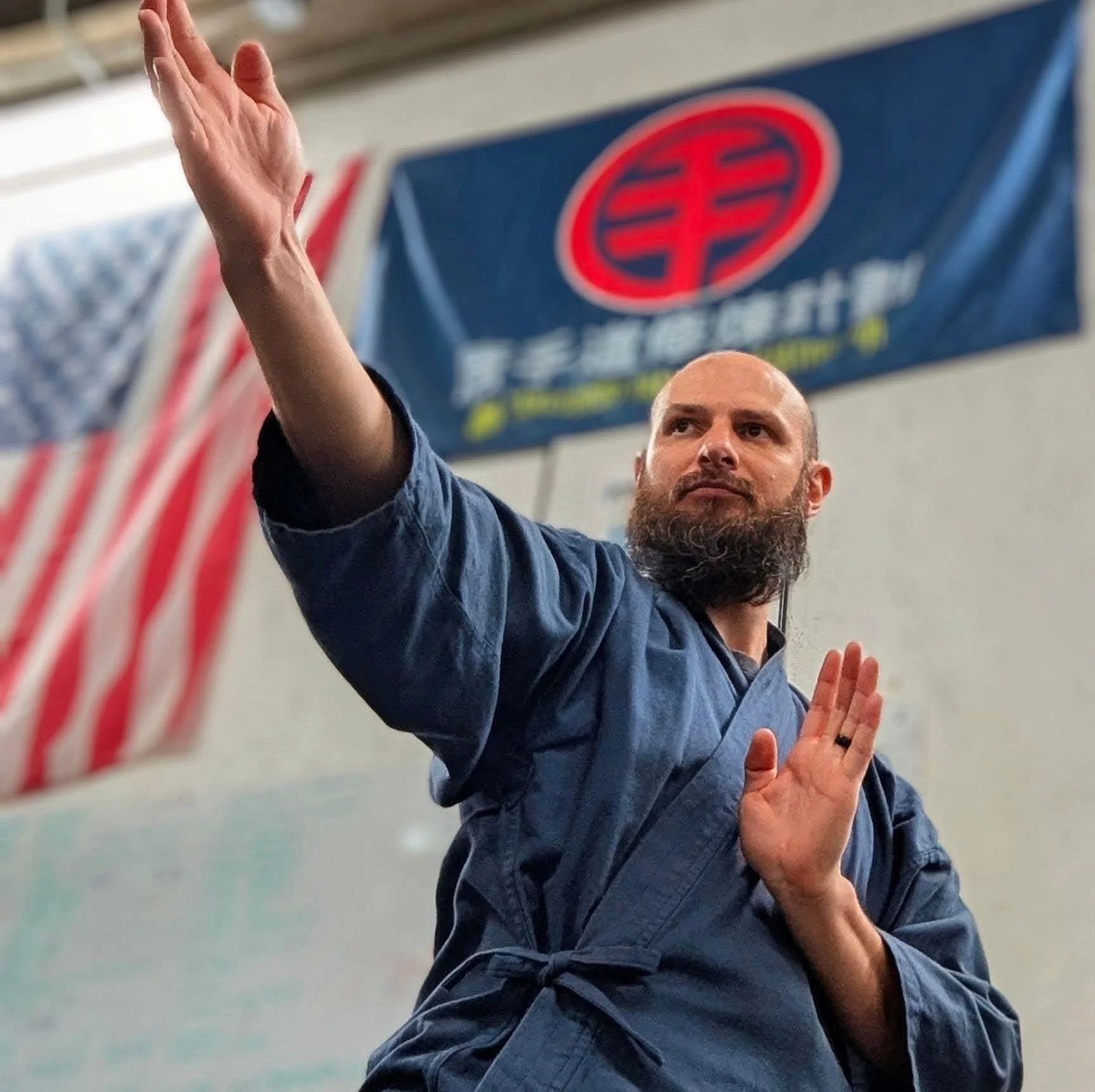
In this episode Jeremy chats with Dan Bernardo about his virtual training, teaching Tai Chi to elderly students and how things like calligraphy and archery have changed his martial arts philosophy.
Dan Bernardo - Episode 1090
SUMMARY
In this conversation, Dan Bernardo shares his experiences as a martial arts instructor, discussing the challenges and rewards of teaching Tai Chi to elderly students, the balance of multiple teaching roles, and the evolution of virtual training in martial arts. He reflects on the integration of diverse practices, such as calligraphy and archery, into his martial arts philosophy, emphasizing the importance of depth over breadth in training and the personal growth that comes from teaching. He also discusses the personal journey of becoming a martial artist, the significance of personal expression in training, and the balance between chaos and structure in the learning environment.
TAKEAWAYS
Backup plans are important in teaching.
Teaching the elderly can enhance instructor confidence.
Virtual classes can reach students globally.
Cross-training enriches martial arts practice.
Calligraphy connects to martial arts philosophy.
Learning new skills can provide balance and joy.
Teaching is a unique connection between instructor and student.
Forms are essential for understanding martial arts techniques.
Personal growth is intertwined with teaching others.
Writing a book solidifies knowledge and shares insights.
CHAPTERS
00:00 Introduction
02:05 Teaching Tai Chi in Assisted Living Facilities
04:58 Balancing Multiple Teaching Roles
08:10 Pioneering Virtual Martial Arts Training
12:05 Integrating Diverse Martial Arts Practices
14:57 Exploring New Skills: Calligraphy and Archery
17:57 Philosophy of Learning and Cross-Training
20:58 The Impact of Teaching on Personal Growth
24:02 Reflections on Teaching and Learning
28:31 The Depth of Martial Arts Training
31:05 The Joy of Teaching and Learning
37:14 The Journey into Martial Arts
40:13 Philosophy and Martial Arts
46:18 Personal Expression in Martial Arts
51:25 Navigating Chaos in Training
53:02 Dynamic Forms and Training Contexts
55:57 The Journey of Writing a Book
01:01:02 Insights from Korean Martial Arts Texts
Join our EXCLUSIVE newsletter to get notified of each episode as it comes out!
Subscribe — whistlekick Martial Arts Radio
After listening to the episode, it would be exciting for us to know your thoughts about it.
✅Subscribe to whistlekick Martial Arts Radio on the following platforms:
🎧Apple Podcasts: https://apple.co/3mVnZmf
🎧Spotify: https://spoti.fi/3yHVdHQ
✅You can find whistlekick on all social media platforms using the handle @whistlekick or visit our website at https://www.whistlekick.com or https://www.whistlekickmartialartsradio.com
Show Transcript
Dan Bernardo (00:31.02)
This is true. sorry. I'm a little bit late. I apologize.
Jeremy Lesniak (00:35.6)
That's OK. I expected it. I knew you had class. Thank you for coming right out of class to do this.
Dan Bernardo (00:42.996)
yeah, sure, sure. My class wasn't even here in my dojo. I teach Taijiquan to a couple assisted living facilities. So I was coming from one of those.
Jeremy Lesniak (01:00.801)
cool.
Jeremy Lesniak (01:06.768)
How, you know, I've had people ask me, you know, about doing that. How did you get that to happen?
Dan Bernardo (01:15.79)
So the first one, I knew the lady who was in charge of like event planning and she was just like, we don't have a Tai Chi program. Let me get you a conversation. And it was really that easy. The second one, there's a gentleman who was teaching.
Jeremy Lesniak (01:37.52)
Hmm.
Dan Bernardo (01:45.005)
for years and years and he's retiring. And I had taught a, like a, just a small little session at a local law firm that my wife works at. And one of the guys, you know, knew the tycoon structure that was retiring, told my wife and was like, hey.
would your husband be interested? I'll get you his phone number. And so then I chatted with the guy who was retiring and that's kind of how that happened.
I mean, I'll be honest, I didn't go looking for it.
Jeremy Lesniak (02:30.606)
Right. Do you enjoy teaching that group though? Yeah.
Dan Bernardo (02:33.653)
I love it. Yeah. Yeah. Yeah. I mean, like teaching all ages. I don't, I don't really care, but, I really, it's funny when I was little, like little, little, my family would travel and perform at nursing homes. We were kind of like a, like a traveling, you know, Romany family. And, and so I've, I've always kind of.
felt comfortable in those sort of settings. So I get along with them well. There's one cool thing about the elderly population, if I want to call them that, but they just, they're very honest. They're not going to beat around the bush with you anymore. They know what they want. They know what they're expecting. And if you don't have it, they're moving on, right? And I really like that. I wish that more people were.
Jeremy Lesniak (03:20.688)
Hmm... Nope. Nope.
Dan Bernardo (03:33.886)
more confident in what they wanted and what they wanted to say and just said it.
Jeremy Lesniak (03:38.872)
Yeah, I'd imagine that makes you a better instructor.
Dan Bernardo (03:43.242)
I mean, it can, right? Because you can't, how should I say, there's no reason to sugarcoat anything. There's no reason to, you know what I mean? You just have to, but then it requires you to be confident in what you know and what you do so that, you know, a student's not going to be like, well, you know, what about this? And you could go, yeah, we could do that. And like, no, you can't, but.
You want to say that because you want to keep the student, but that's not healthy in the long run anyway.
Dan Bernardo (04:22.952)
Yes.
Jeremy Lesniak (04:23.46)
Yeah. Okay. Tell me, and if you're okay with it, we're just gonna let this run. what started as a quick question turned into a great start for an episode. welcome, everyone. Thanks for being here on Martial Arts Radio. We're with Dan. Thanks for being here, Dan. What does the rest of teaching look like for you? Like, you you've got these programs, but you have your own school, like.
Dan Bernardo (04:43.187)
Thanks, Jeremy.
Jeremy Lesniak (04:52.212)
Where are you and how often and how and that's the set up to the part that I really want to ask, which is how do you find the balance with all that?
Dan Bernardo (05:05.225)
gosh, lots of sleep. So I teach almost every day. So I do have in-person classes here at the Dojo. I teach.
Dan Bernardo (05:29.446)
Tai Chi, Tang Soo Do, sword, stick work. teach calligraphy classes, show all that stuff in person. And then I also teach at these assisted living facilities. Only Tai Chi though. But then I also teach virtually. No, but it's funny. I had one guy who was like, so you do weapon work. And I said, yeah.
Jeremy Lesniak (05:47.812)
You're not teaching sword work at the assisted living.
Dan Bernardo (05:58.03)
What kind? And so I grabbed like a PVC pipe and I was like showing them some stuff. And one lady was like, I think I want to do that. And I'm like, let's do it. You know, you got to come to the school. not doing it here. But, but then I also do virtual. So I have, quite a few students, that are, you know, not here in my city. and we train, virtually either, you know, Facebook.
Jeremy Lesniak (06:08.335)
Yeah.
Dan Bernardo (06:28.388)
video chat or zoom or whatever. So I've got students in Australia, the UK, all over the US. So that's a lot of fun too. So I teach all sorts of ways. And I was teaching virtually before COVID.
Jeremy Lesniak (06:48.08)
That was going to be my next question was where did that fit in? So when did you start virtual? Because I think here we are, it's five years past and five years ago, five and a half now, the prevailing attitude in our industry was you cannot learn online.
Dan Bernardo (06:56.993)
Long time ago.
Dan Bernardo (07:10.233)
Mm-hmm.
Jeremy Lesniak (07:12.174)
So what is widely accepted now, you were a bit of a pioneer. Tell us about that.
Dan Bernardo (07:19.365)
So I was helping with an organization that I was in and as we were growing, people wanted to train together. so, I mean, even back in 2016, 2017, was teaching over virtual, you know, like we used Google meetups and we used
Facebook Messenger, we used all sorts of stuff before Zoom really became the main platform. I used Skype and all that jazz. And it was really primarily because...
Dan Bernardo (08:12.48)
Everybody wanted to know, so how do you do this part of the forum? How do you do this part of it? It was really mostly like I was teaching teachers. So I wasn't taking brand new white belt students and trying to teach them online.
Jeremy Lesniak (08:26.98)
Which of course is such a dramatically different thing. Refinement versus the initial understanding of any skill. Sure.
Dan Bernardo (08:31.212)
Very.
Dan Bernardo (08:35.893)
very, right? So I wasn't doing that, but...
But I was quite successful with it and I found myself very successful with it. And I was able to even get people to progress and rank that way. And then when COVID hit, I had a lot of people coming to me going like, how do you do this? What do you do? Right? And so it was really cool to watch that change happen in our...
Jeremy Lesniak (08:44.976)
Hmm.
Dan Bernardo (09:10.977)
circle, our martial arts circle. You know, you started to see like, people who were incredibly anti solo training, we'll use quote unquote forms, like people who are anti forms, but then they had no way to train with a partner. So then they started creating forms. That was kind of cool too. No, they didn't know, of course, but like that's that that was very interesting for me, right?
Jeremy Lesniak (09:31.78)
but they didn't call them forums.
Dan Bernardo (09:41.872)
But, and my teacher at the time really struggled teaching virtually. So people would want to train and then so they would, know, they would, I would help out in that regard. It was a lot of fun. So I still do it I still have students all over the place. Yeah. Yeah, it's fun.
Jeremy Lesniak (10:02.474)
You rattle off a few things that you're teaching and something tells me that it's not even the full list. So we've got to get some context for that list. How does that all happen? Calligraphy and Sword and Taiji and what else?
Dan Bernardo (10:17.279)
It's all the same,
Jeremy Lesniak (10:19.79)
Well, some people agree with that. And ultimately, sure. But, you know, if I show up for day one of a calligraphy class and you put a sword in my hand, that might not be what I was expecting. It'd be, you know, it'd be better the other way. I show up for a sword class, you put a pen in my hand.
Dan Bernardo (10:22.495)
Sure.
Dan Bernardo (10:30.4)
It'd be really cool, wouldn't it? It'd be really cool though.
Dan Bernardo (10:38.441)
I'll put a calligraphy brush in your hand if you're doing Tai Chi as well. Because there's a movement like in single whip, right? We have this like circular motion. And a lot of people do weird stuff with the hands. And so I put the brush in the hand and you hook. And then you have to spiral on the axis of the calligraphy brush. That's kind of cool. whatever. So I started.
I started my martial arts journey primarily in Tung Sado, which is Korean karate, right? I grew up in Western Pennsylvania, Pittsburgh area. And so Tung Sado was kind of everywhere. It was like probably, you can't drive, you know, five, 10 miles and not see a Tung Sado school. I'm exaggerating, but.
that, you know, they're kind of everywhere. And so that was my, that's my primary, my primary system. been doing that, you know, 30 years, right? 31 years. And then I started training in sword. I fenced, I did kendo, I've done Katari Shinto Ryuwa, I've done Mugaidu throughout the years. I've done Hima, I love Hima. You know,
In my opinion, think that once the sword is drawn, the Europeans are better sword fighters than the Japanese. So I love Hima. That's going to get me in trouble, but that's okay. So I started doing Tai Chi in, man, it's been so long. I'm trying to remember. It was either like senior in high school or freshmen in college.
That time period of my life is kind of crazy. don't really remember which one it was. But I was lucky that one of our senior ranking Tung Sudo practitioners in our organization was also a very senior ranking Tai Chi practitioner in the Chen Man Ching lineage. Like Chen Man Ching taught Ben Lo, Ben Lo taught Arnold Lee, Arnold Lee taught us. And so he would come up and do seminars. And so like that, that was like my big introduction.
Jeremy Lesniak (12:49.753)
you
Dan Bernardo (13:04.604)
And so that's really kind of... And in my lineage of Tang Soo Do, Tai Chi is in the curriculum. So, yeah, believe it or not. So I come from a lineage that was started by a man named Hwang Gi. So you've heard of the Mudukwan School, probably, right? So he created the Mudukwan.
Jeremy Lesniak (13:19.351)
Oh, this this is the first for me. Yeah, I haven't heard about
Dan Bernardo (13:33.589)
And in his curriculum, he included the Young Style 88 Long Forms. So it's actually a part of our curriculum.
Most people don't do it.
But it's there.
Jeremy Lesniak (13:48.401)
You know, and it's funny, now that you, once I said, I haven't heard of this before, I'm actually second guessing myself. And I'm not, because you know, we're a thousand and whatever episodes in, I'm not going to be able to pull out who it was, but I feel like I may. And, know, to the audience out there, or maybe Andrew, when, when you do the backend stuff on this, maybe somebody remembers who this is that I'm thinking of. Cause that, that would be interesting to see, like, sounds like a good chance. You know, who this person is.
Dan Bernardo (13:55.674)
Mm.
Dan Bernardo (13:59.098)
you
Dan Bernardo (14:19.204)
Probably.
Jeremy Lesniak (14:20.176)
Okay, so given that initial exposure was, I mean, let's face it, especially when you're first starting out in martial arts, Tung Tzu Do and Tai Chi are so dramatically different at those fundamental levels. Is that what cultivated the philosophy that made you spider off into some of these other things that, let's face it, you're probably the second or third calligrapher we've had on the show.
Dan Bernardo (14:49.379)
Cool. wow. Yeah.
Jeremy Lesniak (14:49.538)
in 10 years. And, you know, I see the martial in that from the outside, right? I've not done it. But do you think that tracks back to your starting in Tung Tzu Do and Tai Chi?
Dan Bernardo (14:57.593)
Mm-hmm. Mm-hmm. Mm-hmm.
Dan Bernardo (15:07.962)
I I'm not going to say that they're not connected, right? Because I think that would be disingenuous. I really, the reason that I wanted to start calligraphy was because I wanted to know what things said, right? Go to the school and there's things written in Chinese and Korean all over the place. And I'm like, what does that say? What does that say? What does that say? And then I want to be like, I want to be able to write that. And so
even as a kid, I was learning Korean, learning Chinese. And so I wanted to know how I wanted to make that. I wanted my own calligraphy up there. So that that's really what prompted it.
as you progress in martial, things start to integrate and intertwine just in general. you know, I think everything that I do now, and I think this is arguably true for every martial artist, like everything that you do has some form of martial.
essence to it, right? So calligraphy nowadays is as much of a martial practice as anything else. And then, you know, we always hear the term, you know, in Japanese, bunburyodo, and in Korean it's bunburyodo. It's this, the path of both martial and scholar, and the ability to practice both the physical
combative aspect, the life protection aspect, but also the mental aspect, the scholarly aspect, the history, the terminology, the philosophy, reading the classics and things like that. Not everybody does it and I'm not saying that you have to, but that's how my journey ended up.
Jeremy Lesniak (17:20.368)
Sure. I think for most of us who've been training for a while.
Unless you're someone who's, you know, actively avoided cross training. You train for 20 years, you kind of can't help it. some somewhere, somebody that you look up to is going to make you learn a different thing. And maybe you can fight it, but everybody I know has been training for, you know, decades has done a bunch of cross training and they all say, you know, roughly what you're saying, you know, it's, it's all the further you get, the more similar it is than it is different. And.
Dan Bernardo (17:38.805)
Yeah.
Dan Bernardo (17:54.324)
Right.
Jeremy Lesniak (17:57.455)
So what I find interesting is when someone has reached that stage where they start to look at things that way, learning of new things becomes very different. So of the things that you do, what's the thing that you added in last, most recently?
Dan Bernardo (18:07.423)
Mm-hmm.
Dan Bernardo (18:12.47)
most recent.
Dan Bernardo (18:18.964)
reason.
Dan Bernardo (18:23.477)
Hmm.
Dan Bernardo (18:27.327)
So.
I'm just going to go ahead and this is probably just going to be probably the easiest thing to do. this Saturday, I was lucky. went up to North Carolina and helped out at a, a, Kodanja high level, right? High level done, done testing. She was testing for fourth time and we had a three day weekend of training and testing. It was, it was lovely. And on Saturday morning, I've done archery before, but I've never used a Korean
a bow with a thumb draw. And so Saturday morning I got to use a thumb draw Korean bow and I loved it. It was phenomenal. And so that's probably the newest thing for me and I'm already looking at bows.
Jeremy Lesniak (19:18.96)
Okay, so now that we've got the setup, here's the question. As you were starting that process, you know, obviously, I'm imagining somebody's giving you some instruction. But all instruction leaves the responsibility of translating that instruction to movement up to yourself. So what was going through your mind as you're experiencing this bow for the first time?
Dan Bernardo (19:24.521)
Yeah.
Dan Bernardo (19:31.925)
Mm-hmm.
Dan Bernardo (19:38.964)
Mm-hmm.
Dan Bernardo (19:46.978)
well, you know, just kind of like everything you, you have to worry about bigger movements first and then things get smaller. So one of the, one of the funniest parts about it was my, biggest struggle was this small movement of holding the, holding the thumb draw. And so I, once you figure it, once, once I figured that out, the rest of it kind of.
You know, it kind of came, but what I enjoyed most about it was...
Dan Bernardo (20:29.331)
You know how like sometimes when you've been doing something so long, tend to either go two ways. tend to like everything becomes so second nature that you don't have to think about it or you think about it way too much. The archery was right in the middle. I was able to take a moment and think a whole lot and then not think at all. And that was super, super just amazing. It was my favorite thing about it. I was able to have that sort of balance, you know what I mean? That was my favorite part
Jeremy Lesniak (22:44.174)
I love learning new stuff. I love, because for me at this point, it's not even about technique, it's about philosophy. When someone's gonna show me a combination, and I've done those moves before, somewhere along the line, and I've probably done them in the way they're putting them together, but I've probably not done them with the same thought process they have. And I'm like, And what I love about that is I can take that, if I can,
Dan Bernardo (22:45.893)
Mm-hmm.
Dan Bernardo (22:54.139)
Mm-hmm.
Dan Bernardo (23:09.328)
Right.
Jeremy Lesniak (23:13.878)
internalize a bit of that approach, I can run everything I know through that approach. And then I can run everything else I've learned and the other approaches and what if I combine these two, right? So it becomes I like the metaphor of recipes. Everybody's kitchen has flour and sugar and water and right like there are only so many foods you can you can do. But just look at what you can do with wheat flour.
Dan Bernardo (23:19.921)
Mmm.
Jeremy Lesniak (23:43.221)
sugar, and butter. Like it can be so it can be a it can be a biscuit. It can be bread. It can be a croissant like all of those are so different. It can be a donut.
Dan Bernardo (23:49.073)
you
Dan Bernardo (23:57.145)
Mm-hmm. Mm-hmm.
Jeremy Lesniak (24:02.222)
And there are times where...
Dan Bernardo (24:02.511)
and how it's given, how it's plated, how it's finished, how it's displayed, how it's sold, how it's, yeah, yeah.
Jeremy Lesniak (24:09.829)
Yeah.
Jeremy Lesniak (24:15.546)
And they all have a time and a place. Like if you sit down at a at a nice dinner.
and you're expecting a roll on the plate or in the basket and it's a donut. I mean, yeah, it's a donut and that's good, but it's kind of weird. It doesn't really fit. And at the same point, you you go to bite into what you think is a donut and it's a bagel. That's a that's a sad, that's a disappointing bite. Right.
Dan Bernardo (24:27.408)
Mm-hmm.
It's not what you wanted. Yeah.
Dan Bernardo (24:40.688)
you
Yeah, yeah.
Jeremy Lesniak (24:45.913)
So.
Dan Bernardo (24:47.376)
I love that. I love that idea. you know, it's, I'm sure, you know, you've been doing this for so long and you've had so many people on your episodes. Like you must learn new things a lot.
Jeremy Lesniak (24:59.854)
This is my main vector for learning is doing this show because people talk about things. And so, you know, what I think to a lot of people might be a fairly innocuous statement. You made the comment about putting a brush in a Tai Chi student's hand, you know? And I don't know how serious that was, but that really resonated with me. Like, okay.
Dan Bernardo (25:08.516)
Mm-hmm.
Jeremy Lesniak (25:25.486)
That's an interesting concept. And I might go and I might play that out. And what does that look like? And what can I take from that? And so I do that 10, 20 times an episode across a decade. I've got a lot that I get to bring in. And I actually started a school, not so much because I wanted a martial arts school, but because I needed a test ground with guinea pigs. And it's been, it's kind of wild, some of the stuff that we do in
Dan Bernardo (25:33.103)
Mm-hmm.
Dan Bernardo (25:48.451)
Yeah.
Jeremy Lesniak (25:54.661)
more so that we don't do. And it all tracks back to what people have said on this show.
Dan Bernardo (25:56.345)
Yeah.
Dan Bernardo (26:00.271)
So who has been your, maybe this is a hard question for you, but if you want to do like top five, that's fine. But who's your favorite person that you've interviewed?
Jeremy Lesniak (26:12.91)
I can't I can't do it because it changes, right? It's it's like it's like music, right? You know, when you when you think about music, your mood dictates and context dictates. And what if you, you know, what if something's been in heavy rotation and now it's fallen a little out of favor? Right. I have and I'm not going to give you this list. There there are episodes that I did not enjoy doing.
Dan Bernardo (26:14.224)
huh. Okay. Yeah.
Dan Bernardo (26:24.992)
Mm-hmm.
Mm-hmm.
Dan Bernardo (26:34.08)
Right? Right? Right?
Dan Bernardo (26:42.912)
Hahaha!
Jeremy Lesniak (26:44.068)
There are guests that made me pull teeth, They've given me one word answers, that's tough.
Dan Bernardo (26:48.778)
Yeah, yeah. yeah, gosh. So who has given you, so let's say just, you know, off the top of your head, we're talking about.
Jeremy Lesniak (26:59.128)
I love how you flip this. Like, I'm even gonna let you do this for a little while, but we are gonna come back to you.
Dan Bernardo (27:04.492)
Well, I mean, this is the first time we've met. This is the first time we've met. So this has to be a conversation. Well, and you know, I'm also very interested in you. you know, when in your in your current state of your training and your your learning, right? Can you think of
Jeremy Lesniak (27:06.436)
Don't think I didn't notice. That's right. That's right.
I that.
Dan Bernardo (27:32.021)
something incredibly profound that somebody has said that you've taken back and you've played with in your school and you found that it was incredibly beneficial.
Jeremy Lesniak (27:42.789)
Yeah, yeah, and I, you know, I'm, this has come up a couple times on the show and I'm embarrassed that I don't remember who said it, but somebody made the statement that the more form, the more material, and they were talking specifically about forms, that you ask students to learn the less well they will know any one of them. And that hit me like a ton of bricks and that is probably the single most revolutionary idea I took to the, from the show into my school. We have five forms in a karate school.
Dan Bernardo (27:57.63)
Uh-huh.
Dan Bernardo (28:11.881)
Nice.
I love it. I love it.
Jeremy Lesniak (28:17.264)
And that's it. Because we don't need more. And because instead of asking my students to memorize 50 things or 15 things or 10 things, they've got to memorize five. And they get to know each one of them a lot more intimately. And we get to get to the good stuff, the deep stuff sooner. You know, I've got I've got students going really deep.
Dan Bernardo (28:18.676)
Yeah.
Right.
Dan Bernardo (28:28.446)
Mm-hmm.
Yeah.
Dan Bernardo (28:41.674)
Mm-hmm.
Jeremy Lesniak (28:46.126)
by first degree. They've got to take pinion showed on and go super deep with it. And there's a whole there's a whole side thing with that. But I'm watching them do this and they progress faster.
Dan Bernardo (28:48.04)
Nice.
Dan Bernardo (28:52.778)
Mm-hmm.
Jeremy Lesniak (29:03.248)
They're getting better faster because we only have 25 techniques. We have five kicks, punches, blocks, strikes, stances, 25 total. instead of coming at it from all these different, know, okay, well, you know, now we're going to do the jump this and the spinning that and the sweep this and not, I love martial arts, right?
Dan Bernardo (29:06.442)
It's awesome.
Dan Bernardo (29:12.906)
Sure, Yeah.
Dan Bernardo (29:22.687)
Yeah.
Dan Bernardo (29:27.742)
Mm-hmm.
Dan Bernardo (29:31.743)
Yeah.
Jeremy Lesniak (29:32.108)
You don't cross train if you don't also want all that other stuff. But we reach a point where they're like, OK, I know how to do this kick. And I'm like, great. Yeah. Now, how do you apply this kick? How do you understand? they.
Dan Bernardo (29:43.292)
Yeah.
Dan Bernardo (29:47.484)
Yeah, because all those other versions are just variations. That's all they are. Yeah.
Jeremy Lesniak (29:55.405)
It's one of the things, you I grew up in this, this is probably my least favorite thing about Japanese and Okinawan martial arts is, you know, every minor variation is in a lot of schools is presented as a separate thing with a separate name and a separate set of instruction and it just.
Dan Bernardo (30:08.904)
Mm-hmm.
Jeremy Lesniak (30:18.0)
I you're losing the recipe, right? Like you're micromanaging, okay, well, you know, instead of using Himalayan salt, we're gonna use, you know, this Tibetan salt, which is really, you know, it's a Himalayan salt, but, you know, it comes from over here and it's sourced and you got an, and I'm gonna read the back of the package to you. And you know what, when it goes in the bagel or the muffin or the whatever,
Dan Bernardo (30:23.858)
Mm-hmm. Mm-hmm.
Dan Bernardo (30:42.386)
Right.
Jeremy Lesniak (30:48.368)
It's salt. The chemical reaction treats it like salt. So does it matter? Does it matter when you're putting in, know, an eighth of a teaspoon?
Dan Bernardo (30:49.671)
salt.
Dan Bernardo (30:57.831)
Mm-hmm.
Yeah, I agree with you.
I agree with you.
Jeremy Lesniak (31:05.392)
you said early on how much you loved teaching and I find that
That's a really, most of people come on the show are instructors in some way, and most of them enjoy instruction, right? Like you don't tend to stick around in martial arts for terribly long and hate teaching. We've had a few over the years where like, really don't like teaching, but I would say 95 % plus really do enjoy it. What was your early experience with teaching? And did you love it right away?
Dan Bernardo (31:30.971)
Mm-hmm.
Dan Bernardo (31:42.586)
Yes. Yeah. So my, my, my mom taught dance, out of our house, like even when I was a kid, right? So I grew, she, she was primarily ballet. I think she did, she did tap. She did, lyrical and stuff like that, but she, was primarily
Jeremy Lesniak (31:43.856)
Hmm.
Jeremy Lesniak (31:53.54)
What styles, like what formats of dance?
Jeremy Lesniak (32:08.762)
Classic stuff.
Dan Bernardo (32:09.892)
Yeah, yeah, yeah. She was primarily a ballet dancer. And so I grew up in and around instruction and performance and all of that.
when I started training Marshall, I mean, I don't remember when the first time I taught something was, but it just, like I am a teacher. Like I, you know, I mean, I'm sure you've heard people say it all the time. I can't do anything else. I'm not good at it, right? I'm just not good at it. But I also,
Dan Bernardo (32:59.846)
Teaching to me is one of those things where...
Dan Bernardo (33:11.681)
It's, I'm trying to think the best way I can put this.
When you teach somebody something and they have learned it, even to a degree, you can't take it back. There's no refunds because you can't return it. As soon as that lesson has been learned, not just listened to, not just, you know what I mean? Like as soon as it is learned,
Jeremy Lesniak (33:45.84)
I
Dan Bernardo (33:47.321)
You can't take it back. there's no, the act of teaching is something that is different than say if you buy a piece of calligraphy from me and I send you a scroll and you say, I don't like it. You could burn it. You could rip it up. You could throw it in the trash and you'll never have it again. And I have to make you a new one. That does not exist within teaching.
And to me, that is one of my favorite aspects of teaching because then you, not only do you have something that is unrefundable, unreturnable, but you also have a part of me. And so we have this connection in a way that doesn't exist in a lot of other places. And I love that. I love it.
Jeremy Lesniak (34:35.216)
Hmm.
Jeremy Lesniak (34:46.393)
Are you a good student?
Dan Bernardo (34:48.804)
I hope so. Um, I mean, yeah.
Jeremy Lesniak (34:54.352)
I ask because you're thinking about that dynamic, right? The dynamic of how that information is conveyed. And I think most really good instructors are really good students.
Dan Bernardo (34:57.58)
Yeah. Yeah.
Dan Bernardo (35:09.688)
I mean, I would say that I like to think that I am, but I've had some tumultuous relationships with teachers in my past. So does that mean that I'm a bad student? Or what does that mean, right?
Jeremy Lesniak (35:10.244)
But not all of them.
Jeremy Lesniak (35:36.868)
Maybe if you had a tumultuous relationship with all of your instructors, we might be able to infer that. But some.
Dan Bernardo (35:40.386)
Hahaha!
Not all of my teachers. I would say that I am a perpetual student. So perhaps that would make me a good student. I am constantly trying to learn something and trying to get better at something. Sometimes that is just reading.
or trying to connect dots with history or reaching out to people about something. I'm constantly picking people's brains about stuff. So maybe that means, yes, I'm a good student. No, no. Maybe you'd have to ask other people probably. don't think that I, know, humans are pretty bad at judging ourselves. So I would say I would have to, you'd have to ask somebody else.
Jeremy Lesniak (36:41.936)
Do you like being, you said you're a perpetual student. Do you enjoy that process?
Dan Bernardo (36:46.468)
yes, absolutely. yeah, yeah.
Jeremy Lesniak (36:48.868)
Then you're pro- if you if you enjoy being a student and you are a perpetual student, I think it's fair to to guess that you're a good student.
Dan Bernardo (36:59.564)
I'm just me.
Jeremy Lesniak (37:10.084)
How did?
I'll just ask the easy version of the question. How, when, why did you start training? We haven't gotten there yet. Usually we get there organically by this point if I don't. We got to shoehorn it in.
Dan Bernardo (37:28.93)
I mean, I don't know. Everybody has kind of the same story.
Jeremy Lesniak (37:33.892)
They don't. No.
Dan Bernardo (37:35.463)
No? I mean, okay, so...
think the easiest answer is, I grew up in the 80s. I was an 80s child. So Teenage Mutant Turtles, Karate Kid. I was after the Bruce Lee generation. Bruce Lee had no influence on me whatsoever.
But I'm also very much a philosophy person. majored in comparative theology and philosophy in college. I decided to go and become a monk. So I lived in different monasteries throughout my young adult life.
So I guess, you know, I've always wanted to be that, you know, wise man on the,
So to speak. And now I'm just a crazy man in a.
Jeremy Lesniak (38:46.17)
Those are the same coin, just different side. so whenever somebody tells me I was also a philosopher major, whenever somebody tells me they, they aspire to occupying that position, it's, it seems to be, it's because they either had someone that did that for them. And it was such a powerful experience that it changed their life, or they didn't have that and they needed it.
Dan Bernardo (38:48.034)
HAHAHAHA
Dan Bernardo (38:58.731)
huh.
Jeremy Lesniak (39:14.254)
and they don't want someone else to go through that. Which were you?
Dan Bernardo (39:17.308)
Right.
Dan Bernardo (39:20.857)
Dan Bernardo (39:25.095)
little bit of both. didn't have so I was I was constantly seeking people to guide me in that in that way and
kept finding.
kept finding people that would guide me in a certain aspect of it, and then others who would guide me in another aspect of it, but never fully. So I decided that I wanted to be that person for other people, if they so choose.
Jeremy Lesniak (39:54.117)
Mm-hmm.
Dan Bernardo (40:13.083)
if that makes any sense. Yeah. Yeah. Yeah.
Jeremy Lesniak (40:14.968)
It does. It does. Yeah, it's the philosophical approach to martial arts, right? Like if you dig back, especially if you go in like the first hundred episodes, I didn't have a good lens to approach this as a martial arts interviewer. So I defaulted to philosophy, right? So I would ask.
Dan Bernardo (40:29.371)
Hmm.
Dan Bernardo (40:37.115)
Hmm. Hmm. Mm-hmm.
Jeremy Lesniak (40:40.56)
philosophical questions, and we tackled a lot of it, a lot of really interesting things about ego and and everything else on the show. And I think it's. Ultimately, I think that's the stuff that. The physical skills are supposed to give us the time and the opportunity and the connections to explore. Right, one of my favorite sayings, I haven't said this on the show in ages.
Dan Bernardo (40:46.383)
Mm-hmm
Dan Bernardo (41:05.115)
Mm-hmm.
Jeremy Lesniak (41:09.488)
But if you break down the term martial art, the noun is art. Martial is an adjective. What we do is a type of art. And.
Dan Bernardo (41:14.287)
Mm-hmm. Mm-hmm. Mm-hmm.
Jeremy Lesniak (41:22.23)
If that is true, and you know, I've got my definition of art, but whatever we define as art becomes really important.
Dan Bernardo (41:29.691)
Mm.
Jeremy Lesniak (41:32.302)
Because otherwise...
You can't have the adjective without the noun. It just sits there.
Dan Bernardo (41:38.744)
Sure. Sure. Yeah, and you have to be careful. And I don't want to get too into the weeds with it, the term that we normally, all right, cool, cool, The term that we normally use for art, especially in Asian martial arts, whether you want to call it,
Jeremy Lesniak (41:49.55)
we love weeds on this. You can you can I'll get you I'll get you one more if you want.
Dan Bernardo (42:08.556)
Jutsu or soul or shoe, however you want to call it. But it's that it's that Chinese character, right? It doesn't it doesn't mean art like fine art. It means art like a method. So we have to be very careful that we don't look at martial arts as a.
as a fine art, as something that is aesthetically beautiful or something that is, do you know what I mean? It really is just, so it means.
Jeremy Lesniak (42:45.358)
I do, but I want you to keep going. I'm, I'm see, this is a great example. You asked me before things that get me thinking this you you're going there. I love it.
Dan Bernardo (42:51.892)
Yeah. So there is a specific China, you know, there are specific words in these languages for fine art, right? There, there is a different word for that. So in, in martial art, it's more about the techniques used for martial, not necessarily artistic. So, you know, when I, I, when I really am trying to say is we have to be careful not to think that
It can be incredibly subjective and incredibly artistic. It needs to still function. For instance, if I think about like, so the Chinese character for hand, right? If you were to say, tangsu, right? Tangsu or karate.
It means or tori, right? It either means Chinese hand or it means empty hand. But if you take like the old, like Funakoshi's original books, it's a Chinese hand method, right? Todi jitsu, right? So this is the methods of Chinese hand.
But if you take Chinese off and you just have teijutsu, just hand method, those two words mean surgery.
Right? So it's more of a method of using the hands. It's not so much of an art. So you could think of it like when you do make your recipes, there's a method of kneading dough.
Dan Bernardo (44:48.563)
There's a method of using the hand to knead the dough. There's a method of whisking. There's a method of making rice. But it's not necessarily like fine art.
Jeremy Lesniak (44:51.109)
Mm-hmm.
Jeremy Lesniak (45:01.856)
Sure, I it does. It does. I see what you're saying. We're challenges the wrong word, but we're there's a there's a piece that I think fits in here, too, where there's a personal element to it. You and I can train in the same art, same instructors, same classes, same drills and how we express whatever we're learning is still going to be a little different. And to me,
Dan Bernardo (45:02.672)
if that makes any sense.
Dan Bernardo (45:18.77)
Mm-hmm.
Dan Bernardo (45:30.581)
absolutely.
Jeremy Lesniak (45:31.682)
You can look at that, and I do, as that's the artistic piece. Like, it's the expression. It's that personal element that, let's see, honestly.
Dan Bernardo (45:37.106)
Mm-hmm.
Mm-hmm. Yeah, we could say that is the style, so to speak, right? Like, that is your style of teaching the art.
Jeremy Lesniak (45:50.101)
Yes. And some people will say that that's, that is to be beaten out of you, right? Like that uniformity is what's most important. And. I strongly disagree, yeah, it's that individual expression, I think, becomes the goal. And I think any and this is where I get really bummed out when people don't like forms.
Dan Bernardo (45:57.202)
Right. Which I disagree with. But... Yeah. Yeah.
Dan Bernardo (46:11.356)
Mm-hmm.
Dan Bernardo (46:18.662)
Mm-hmm.
Jeremy Lesniak (46:18.736)
Because I think that's the easiest way to see that personal progression. At a high level, your forum and my forum not only shouldn't look the same, but they can't. It's just not possible. And the proof in that is, watch any synchronized forums competition. The very fact that that's so difficult to do, that it's a competitive event, is proof.
Dan Bernardo (46:23.186)
Mm-hmm.
Dan Bernardo (46:30.554)
Right. Right.
Dan Bernardo (46:41.826)
Yeah. Yeah.
Yeah. Yeah. And, know, my, my lineage founder, right. Pongy, he wrote in his, 1970 book, he said, one, one of the reasons why we have to focus on learning all the things is because in the beginning, you may feel like your pseudo is very strong.
And so if you only focus on your, your pseudo, you'll get good at it, but then you may not find what you're actually good at. Right? So every, because everybody has, he says, everybody has different face shapes and body sizes, everything you're going to do things differently, but make sure that you learn as much as you can and cultivate it equally.
So because at some point you're gonna go, this is what I'm really good at. This is my special talent. And then that will take.
And then at that point, nobody will look the same, right? Exactly, exactly like you were saying. Yeah.
Jeremy Lesniak (48:01.155)
Yeah. those phases, that initial phase of I'm just having everything thrown at me to that refinement and that identification of, here are my things, here are my favorites, my best, however you want to look at it. I think that process is so incredibly fascinating because it
Dan Bernardo (48:21.504)
Mm-hmm. Mm-hmm.
Dan Bernardo (48:25.94)
Mm, agreed.
Jeremy Lesniak (48:28.438)
always happens. It happens regardless of what we do, right? Good instruction, bad instruction, instruction targeted at uniformity, instruction targeted at personalization. It always shows up.
It's inevitable. And I think if it's inevitable, there's something special in looking at that. And that's why I'm really big. So we talked a little bit about my school. I'm really big. I try to make sure in every class, students have what I call free form time. It's generally very slow sparring. And sometimes it's themed or, know, put parameters, we call them, you know, like I want you to, you know, you're
Dan Bernardo (48:50.081)
Mm-hmm.
Dan Bernardo (49:02.624)
Mmm.
Dan Bernardo (49:08.14)
Right, like situational sparring.
Jeremy Lesniak (49:10.538)
could be situational, could be you're not using your feet or you're only, you can't move forward, you have to move sideways.
Dan Bernardo (49:13.386)
Right. Like a constraint. Yeah, like constraints, let approach a little bit. Yeah.
Jeremy Lesniak (49:19.788)
Yeah, yeah, and that's, you as an instructor, that's super fun to watch. You know, like I said, they're all my guinea pigs. And some of them know this. Some of them were around at the beginning and I told them like, this is why we're doing this. watching that development and watching them, you know, how, if this is inevitable.
Dan Bernardo (49:25.451)
Yeah.
Dan Bernardo (49:32.705)
Mm-hmm.
Jeremy Lesniak (49:42.67)
I want to get them there. I don't want them to lose out on stuff, but I want to get them there. Because I think that that's such an enjoyable place to be. And how do I get them there? How do I help them navigate that path?
Dan Bernardo (49:55.093)
Now, if somebody is doing their sparring and they come up with something that may go back and inform their forms training, and maybe they go back and they say, well, maybe my elbow shouldn't be here because of the way that I made that work, the elbow is here, but that's not how I was taught. Are you cool with them having two different ways of absolutely doing the technique, even in the same, you know, like, right?
Jeremy Lesniak (50:23.84)
Yes. So I probably have more leeway for what is the correct way to do a form than most instructors. And even if they have something, even if they're like, you know, not only do I not think that this is a shoot dough with this elbow here, I think that's an elbow. Cool. You're allowed to have two versions. You're allowed to have the version where maybe you're competing with it or
Dan Bernardo (50:25.242)
Awesome. Good stuff.
Dan Bernardo (50:33.052)
Awesome, awesome.
Dan Bernardo (50:44.841)
Mm-hmm.
Yeah.
Jeremy Lesniak (50:52.952)
maybe as, you know, so like level five of our forms, like they've got to show me pinion showed on and demonstrate that they have a unique and personal understanding of it. So maybe that's where that starts to fit in for them. But if, we're doing the doing it in class and they've got white belts next to them, you better do it the way that we have all agreed to start at. Otherwise, it becomes chaos.
Dan Bernardo (50:53.236)
Yeah.
Dan Bernardo (51:04.372)
Awesome.
Dan Bernardo (51:08.009)
Yeah.
Dan Bernardo (51:21.386)
You don't like chaos?
Jeremy Lesniak (51:25.624)
Chaos has its place, usually not the most conducive learning environment. But, you know, I actually I had a student bringing this up the other day. He was showing me I forget which form it was. He was showing me something and it looked really good and it was a little different. And he asked me, point blank. He's like, can I do it this way? And I was like, it feels like it's within bounds. If you're teaching it to somebody, you know, I'm going to ask you to adjust back a little bit.
Dan Bernardo (51:31.06)
Hahaha
Dan Bernardo (51:43.112)
Mm-hmm.
Dan Bernardo (51:49.394)
Mm-hmm.
Dan Bernardo (51:55.805)
This is
Jeremy Lesniak (51:55.951)
because it's just big enough that it might throw them off if they're doing it this way with one of you and this other way with another one. But yeah, go for it.
Dan Bernardo (52:03.559)
Yeah.
So you brought up it's within bounds. How do you define that?
Jeremy Lesniak (52:11.344)
I know it when I see it. I don't know. Yeah, you have a different, great.
Dan Bernardo (52:15.059)
So I define it as does it meet the objective?
Jeremy Lesniak (52:21.648)
Okay.
Dan Bernardo (52:21.948)
Right? Every technique has an objective. Does that meet the objective of the technique?
So if you're doing a kick and instead you want to switch it to a punch, that doesn't meet the objective.
But if you do a kick, you do a front kick, but instead you want to do maybe like a front pushing kick or maybe a side kick, or maybe you want to cut the angle and do like a different kind of front kick, does it meet the objective? Sure. As long as you're neutralizing the incoming force, seizing the opponent and issuing it the way that it would be done the other way. Yeah, totally.
Jeremy Lesniak (53:02.916)
And I suspect you and I are on similar page. I don't view forms as static. I don't view them as.
Dan Bernardo (53:09.81)
Mm-mm.
Jeremy Lesniak (53:14.988)
robotic instructions. I see them as this is a thing. This is simply context for for you to work with. Because if I if I tell you go home and work on. Your stances. OK, well, which stances in what way do you want me to work on them, right? Or I could say go home and pick your favorite form and do your stances super low five times.
Dan Bernardo (53:22.823)
Mm-hmm.
Dan Bernardo (53:29.617)
Mm-hmm.
Dan Bernardo (53:32.999)
Mm-hmm.
Dan Bernardo (53:40.251)
This is... this is...
Jeremy Lesniak (53:41.765)
That's a simple set of instructions because we put in the time for the forms and I can come up with probably dozens. We did an episode once. I think I had 25 ways that you could practice your form. Right. And you probably have a bunch of them. And it's really nice to have that simple, relatively simple set of instructions that they can apply that becomes their starting point for all this other training.
Dan Bernardo (53:43.878)
Yeah.
Yeah.
Dan Bernardo (53:51.771)
Right?
Dan Bernardo (53:57.372)
This is
Absolutely.
Dan Bernardo (54:08.22)
Yes.
Yeah. Yeah. I feel the same way. Forms are stuff that they do at home.
Dan Bernardo (54:19.047)
Drills are what we do in class.
Like we may do the form a few times, but then we're going to do some drills and we're going to talk about how those drills are congruent with the form work. And then when you go home, I'm going to be like, so you had this little issue with the partner drill, go do this section of the form and think about that partner drill. And then they have something to work on at home.
It's the same, you we were talking earlier about, you know, when we could not touch each other, what did we have?
Right? That's what they're for.
Yeah, yeah, I love it. I love your idea.
Jeremy Lesniak (55:10.554)
Where are are you? You said, I think you said driving north to Kowloon. Yeah.
Dan Bernardo (55:14.436)
I am in the middle of South Carolina. I'm in Columbia. Yeah.
Jeremy Lesniak (55:18.904)
Okay. Okay.
Always been there? No.
Dan Bernardo (55:23.79)
Nope, no, I grew up in Western Pennsylvania. Yeah, just south of Pittsburgh. We moved here in 20.
Jeremy Lesniak (55:27.689)
you said that. Of course.
Dan Bernardo (55:34.628)
12.
Dan Bernardo (55:38.638)
24th. gosh. Yeah. It's been a long time. Yeah. I'll never move back up.
Jeremy Lesniak (55:42.416)
Hmm.
Jeremy Lesniak (55:47.532)
No? Snow?
Dan Bernardo (55:49.016)
don't like the cold. I don't like the cold. And it's cold right here now. Like it's, it was like 30 degrees this morning and I had to leave and I was not happy.
Jeremy Lesniak (55:52.783)
What is it?
Jeremy Lesniak (55:57.557)
30. I woke up this morning. This morning it was four.
Dan Bernardo (56:02.684)
my gosh, where are you at?
Jeremy Lesniak (56:04.132)
This is the I'm in I'm in well, I'm in Maine currently. I primarily reside in Vermont. This is the coldest start to December we've had in who knows how long it's it's up to 18. Right now you might hear the furnace in the background. Typically, I will turn off the furnace while I'm recording. I am not doing that today. That is not happening when it's 18.
Dan Bernardo (56:07.672)
me.
Dan Bernardo (56:23.076)
I don't blame you. Don't blame you at all. That is cold.
Jeremy Lesniak (56:28.996)
Yeah. Did you write a book? Did I see that in the notes?
Dan Bernardo (56:33.165)
Read a book.
Jeremy Lesniak (56:34.938)
Tell us about writing a and your book.
Dan Bernardo (56:38.093)
So over the past like 10 years or so, I've been diving into my lineage founders Korean texts. There's some translations out there like his volume one, volume two, and like there's a translation of his philosophy book and stuff. when I went back and I started reading like his actual Korean texts, I started noticing that there was big differences between the Korean and the English.
And so that piqued my interest enough that I really, really dove into it. And the differences were so big that I started heavily modifying the way I do everything. And
Jeremy Lesniak (57:26.128)
Do you have an example you're willing to share?
Dan Bernardo (57:28.801)
The book here. Or you mean just example of like...
Jeremy Lesniak (57:31.536)
Between, yeah, between those differences.
Dan Bernardo (57:34.243)
So the biggest difference is how he says to breathe. So in Taijiquan, there's not a whole lot talked about breathing, but some of the most basic instructions, more of an observation, is when you breathe in, energy rises, and when you breathe out, energy drops, energy sinks.
he says to do certain techniques, the way that he says to breathe is often opposite of how most people do it in his lineage. And then...
Dan Bernardo (58:22.185)
You know how like when we break down forms for instruction, you know, it's like turn low block. Then, know, huh. And then you step in and you punch, right? These are, these are good for instruction, but those two movements are actually one movement. And so there's aspects in his book where, you he does number movements and it was arguably the worst decision he ever made.
because everybody has decided to just put a full breath on each and every single numbered movement. And so then you get like what I like to call choppy karate. Chop and chop and chop and chop, right? So I'm noticing that like sometimes three or four of these movements are strung together with one breath.
And sometimes that one breath, that sequence of movement is different in terms of sequence that I learned and the application of that and how that would be applied drastically changes. And so that's really the biggest difference for me. Plus how he says to issue force, he talks a lot about what's called Shinjo.
probably have heard this term in Korean, it means to expand and contract. 99 % maybe less than that now because I think the real translation has been making its rounds. But I grew up learning that Shinjuku was tension and relaxation and it's not, right? It just means expand, contract. And so when Hongyi talks about issuing force, he talks about doing so with
Shinjuku with expansion and contraction, not whipping motion, not like a whipping power. And so when I started to read this and I started to look at the way he said to breathe, the way he started to issue force, his instruction on how to stick connected here and follow and do not lose the opponent, which is directly from the Song of Pushing Hands in Tai Chi Chuan and direct Tai Chi principles.
Dan Bernardo (01:00:44.109)
And then, you he talks a lot about the way that, you know, you use different energies like in Tai Chi. then so it started to really kind of make me go, nobody does.
I need to write a book. And so I did.
Jeremy Lesniak (01:01:08.356)
Did you enjoy writing a book?
Dan Bernardo (01:01:10.427)
I hated it.
Jeremy Lesniak (01:01:13.792)
Ask me how I know to ask that question. Writing a book.
Dan Bernardo (01:01:16.475)
I'm glad that it's done. I'm glad that it's done. But I, I, yeah.
Jeremy Lesniak (01:01:23.106)
If, so I often make this joke that, you know, no martial artist starts a school because they think it's a great way to make money. But in comparison to writing a book, it is the greatest quick scheme because writing a book is so much work. And when you're done, I think the statistic on like top level publishing.
Dan Bernardo (01:01:33.291)
yeah, absolutely.
Jeremy Lesniak (01:01:52.793)
I want to say that it's like one out of a hundred books actually does something. Now that number, might be off by a few percentage points, but the vast majority, 90 plus percent of books, barely sell. And it's the other books that keep it going.
Dan Bernardo (01:02:00.57)
Mm-hmm.
Mm-hmm.
Dan Bernardo (01:02:07.321)
Yeah.
Yeah.
Jeremy Lesniak (01:02:14.126)
But I'm going to guess that in the same way that teaching helps you learn yourself, writing that book probably helped you learn.
Dan Bernardo (01:02:21.164)
It did. First and foremost, it helped me isolate the congruencies far more than I had in my brain just from reading and taking notes. And it was a lot of fun too, because the book not only has quotes from his text, but it also shows quotes from old Chinese Tai Chi quotes.
old karate books and basically showing like, he's not alone in saying this, that there's precedence for this and other arts agree with this. So it's not like he's saying something crazy. There's actual congruence here, there's precedence for this here. So that was a lot of fun and that was something that I can't just like pull out of my brain.
like that, right? Some of it can, some of it I can, but not a lot of it, right? So what it did, and oddly, as much as I hate writing, this is only volume one. So I'm gonna publish volume two next summer because I just had so much, like this is 430 pages and I had so much.
Jeremy Lesniak (01:03:42.736)
It's a lot of bull.
Dan Bernardo (01:03:45.331)
that I'm going to have to have volume two and maybe volume three, because this ended up becoming a what book? Like, what did he say? What are the principles? What should I be paying attention to? You know, that sort of thing. And then volume two is going to be a how book. Basically, here are some practices, here's some methods of cultivation, here are some things that you can actually do to cultivate this thing that he's talking about.
Jeremy Lesniak (01:03:48.496)
you
Dan Bernardo (01:04:13.003)
And then I don't know what volume three is going to be yet. But the why, maybe. Maybe. But it's,
Jeremy Lesniak (01:04:17.2)
Maybe it's the wand.
the life of
Dan Bernardo (01:04:28.286)
It's been helpful too, in that now, like, you know, I've shared stuff on, you know, we always share stuff on social media and I've shared quotes of this guy for years. And some people like the quotes and some people don't like the quotes, but the book has now gotten to a point where, you know, there are people who have bought it and read it that I don't know who they are. And so they, they message me and they go, Hey,
Jeremy Lesniak (01:04:56.656)
That's fun.
Dan Bernardo (01:04:58.195)
I'm on chapter this, thus this. Can you explain this more? Can you share some videos as to what he's talking about? That has been what I'd hoped would happen. And so I'm glad that it is, but...
Jeremy Lesniak (01:05:11.45)
Yeah, that's pretty cool.
Dan Bernardo (01:05:17.065)
The book itself, for the most part for me, was just like, I need to make this concrete. I need to make this something that I can have, I can put down, and then I can move forward into explaining it better. But it just, had to go out. It had to be done, it had to go out. It's not perfect, but.
No book is perfect.
Jeremy Lesniak (01:05:48.366)
No book is perfect.
Dan Bernardo (01:05:49.631)
Yeah. Yeah.
Jeremy Lesniak (01:05:51.61)
Dan, if people want to get a hold of you, first, where do they find the book? Let's do that.
Dan Bernardo (01:05:56.309)
So the book, you can buy it on Amazon. So it's called Chayunhua. Chayunhua means naturalization. Chayun means nature, hua means to transform. So Chayunhua literally is naturalization. It can also refer to naturalization in terms of citizenship of a country and things like that. But within the context of martial art, means to make.
Yourself, your technique, everything that you do as natural as possible. Huang Yi's whole point was to develop and cultivate himself and us as Jian in natural people. So the book is called Jian Law Cultivating Natural Principles. You can find that on Amazon and you can find me on Facebook. My name is Dan Bernardo and
Instagram I have way too many Instagrams. I just realized that
So I have like my Instagram and then I have the Instagram for the Dojo, which is called Well Within Martial Arts. And then I have an Instagram for Giant One, the book now. And then I have an Instagram for my Tungsoido Training Initiative, which is a Tungsoido like group that I run. I don't want, it's not an organization. It's not a federation. It's not a union. It's not a, like there's no Kwan-Jang. There's no, you know what I mean? It's just, it's like a, it's like a study group almost, right?
Jeremy Lesniak (01:07:26.681)
Cool.
Dan Bernardo (01:07:27.961)
I have a Google Classroom that you can get access to that has tons of stuff on it, right? And so we've got members all over the world. The majority of the people that I was talking about earlier that I teach via Zoom and stuff, they're all initiative members, right? So that's fun. So I've got that. I've got an Instagram for the Italian stick work that I teach, which I didn't talk about, but it's okay.
Jeremy Lesniak (01:07:47.909)
Nice.
Dan Bernardo (01:07:58.064)
Jeremy Lesniak (01:07:58.833)
Yeah, I knew there was more than you were. When you kind of I did ask you for a list at one point because I could just tell that we hadn't completed the list. Italian stick work. OK. OK. We'll put that aside. We'll wrap. We'll your second episode. talk about Italian stick.
Dan Bernardo (01:08:04.645)
Hahaha!
Yeah, it's not important. There's, you know, it's not, it's not important. You know, there's, yeah, yeah, you can look up any of those things and you'll find me.
Jeremy Lesniak (01:08:31.056)
So here, here's what we're going to do now. I'm going to give the audience and well, there was no intro. So an outro with some intro elements. This was fun. I love rolling. Like I would call it like hot roll into the conversation. It always goes better. Not every guest can handle it. Right. So good job. Good job. Thanks for doing that.
Dan Bernardo (01:08:54.425)
There you go.
Dan Bernardo (01:09:03.894)
Mmm.
Yeah, man.
Jeremy Lesniak (01:09:08.944)
yeah. Yeah. Good times. And after I'm done with that, I'm going to throw it to you to close and you can, whatever it is you want to, you want to say, however you want to wrap this up, that'll be, that'll be your job in about 30 seconds. So, yeah. So to the audience, thanks for being here. Thanks for spending some time with Dan and I, and I hope you enjoyed the episode. And if you didn't, I did. And so that's fine. If you want to check out the show notes, the transcript, we'll link all this stuff.
Dan Bernardo (01:09:20.502)
gosh.
Jeremy Lesniak (01:09:37.743)
the best place, whistlekickmarshmartsradio.com. Wherever you're watching or listening, you probably have show notes there. They're not complete. We try to make them complete, but there are things that we're just not allowed to put in that they filter out from us even if we try it. So that's why we try to push you over to the website. And of course, while you're on the website, please make sure you sign up for the emails. The emails are free, because they're emails, and we send you an email every time we drop an episode, twice a week.
So if you want the audio version, the video version, they're right there, one click, you won't miss an episode. And we even started to sprinkle in some bonus material because there is bonus material. yeah, thanks for your time. And so Dan, thank you for your time as well. I appreciate you being here. And how do we close today? What are you gonna leave us with?
Dan Bernardo (01:10:26.977)
So I guess the best thing that I can say is thank you so much for having me. And for those of you who are listening, thank you for putting up with my insanity. And remember that you're awesome. Keep being awesome. Keep training, because that's the whole point.