Episode 1094 - Coach Ken Dunbar
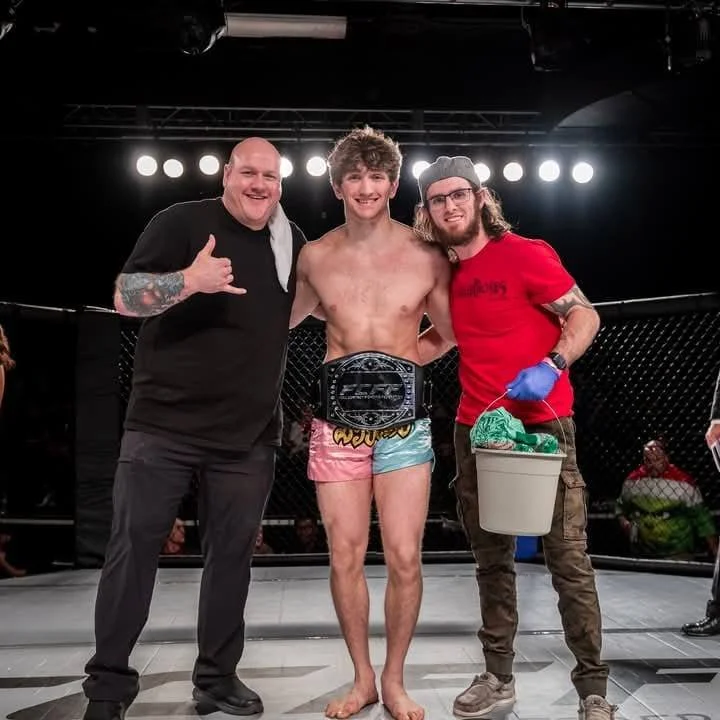
In this episode Jeremy chats with Coach Ken Dunbar about traditional martial arts and mixed martial arts, and what they might take from each other.
Coach Ken Dunbar - Episode 1094
SUMMARY
In this engaging conversation, Coach Ken Dunbar and Jeremy Lesniak explore the intersection of traditional martial arts and modern combat sports, discussing the influence of pop culture, personal journeys in martial arts, teaching philosophies, and the importance of adaptability in training. They delve into the challenges of authority in martial arts instruction and the evolution of training methods, emphasizing the need for a balance between tradition and innovation. In this conversation, Coach Dunbar shares his journey through martial arts, discussing the evolution of training methods, the importance of community, and the balance between traditional and modern martial arts. He emphasizes the need for respect and discipline in training environments and reflects on the cultural aspects of MMA and traditional martial arts. He also highlights the significance of adapting techniques and fostering a supportive atmosphere for students.
TAKEAWAYS
Personal experiences shape one's martial arts journey.
The need for flexibility in teaching methods.
Authority in martial arts can hinder personal growth.
Creating a supportive learning environment is crucial.
Self-study can be a valuable part of martial arts training.
The significance of mentorship in martial arts.
Understanding the difference between tradition and combat effectiveness.
The evolution of teaching styles over time.
The impact of pop culture on martial arts participation.
Family discussions about world events shaped Ken's perspective.
Ken emphasizes the importance of pressure testing in martial arts.
He believes traditional martial arts can learn from modern combat sports.
Ken's journey includes starting a fight team in his parents' yard.
Ken's community grew during the COVID-19 pandemic despite restrictions.
He advocates for the evolution of martial arts techniques over rigid traditions.
Teaching respect and discipline is crucial in martial arts.
MMA training often lacks the culture of respect found in traditional martial arts.
Building a supportive community enhances the training experience.
Discipline in martial arts goes beyond traditional practices.
Finding the right school can change your life.
Progress comes from addressing weaknesses in training.
A supportive environment fosters resilience and accountability.
CHAPTERS
00:00 Introduction
01:58 Cultural Influences on Martial Arts
05:48 Personal Journey in Martial Arts
15:58 Teaching Philosophy and Coaching Style
25:56 The Role of Authority in Martial Arts Training
28:03 The Influence of Family on Martial Arts Perspective
34:47 Understanding the Nature of Combat Sports
42:07 Tradition vs. Evolution in Martial Arts
48:54 The Journey to Opening a Martial Arts School
57:03 Building a Diverse Martial Arts Community
01:03:03 Integrating Traditional and Modern Martial Arts
01:06:59 The Legacy of Count Dante
01:08:15 Teaching Respect and Discipline in Martial Arts
01:09:30 The Culture of Respect in MMA vs. Traditional Martial Arts
01:11:12 The Impact of Personality on Martial Arts Training
01:14:26 Building a Supportive Training Environment
01:18:45 Discipline Beyond Tradition
01:21:38 The Importance of Communication in Martial Arts
01:28:46 Encouragement to Train and Find Your Community
To connect with Coach Dunbar:
FB: https://www.facebook.com/GlacierCombatArts
Website: Martial Arts Home - Glacier Combat Arts
Youtube: (252) Glacier Combat Arts - YouTube
IG: https://www.instagram.com/glaciercombat
Join our EXCLUSIVE newsletter to get notified of each episode as it comes out!
Subscribe — whistlekick Martial Arts Radio
After listening to the episode, it would be exciting for us to know your thoughts about it.
✅Subscribe to whistlekick Martial Arts Radio on the following platforms:
🎧Apple Podcasts: https://apple.co/3mVnZmf
🎧Spotify: https://spoti.fi/3yHVdHQ
✅You can find whistlekick on all social media platforms using the handle @whistlekick or visit our website at https://www.whistlekick.com or https://www.whistlekickmartialartsradio.com
Show Transcript
Jeremy Lesniak (04:42.67)
Hey, what's going on everybody? Welcome back to another episode of Whistlekick, a martial arts radio. Today I'm joined by Ken Dunbar. Ken, thanks for being here. And for all of you out there, thanks for coming, spending some time with us. We appreciate you, whether you're listening or watching. Thank you for being here. Why do we do what we do? Because we believe traditional martial arts makes people better. We believe six months of training can set people up for a better life. And we're going to keep doing what we do here at martial arts radio and all of Whistlekick.
Check out whistlekick.com for all of it until we get everybody in the world to train. So your efforts to help us get more people training, whether that's direct support of us or getting people to watch the show, send them to whistlekickmarshallartsradio.com where we've got all the episodes and the transcripts and all that, is appreciated. And if you want to sign up for the newsletter to get all the behind the scenes stuff on the show, make sure you check the show notes. Anywhere you find the show notes, we've got the link there for you to sign up for the email.
And with that, Ken, thanks for being on our shorts radio.
Ken Dunbar (05:43.782)
Thanks for having me, man. I'm excited.
Jeremy Lesniak (05:47.5)
Yeah, I'm excited to have you here. And I don't know where we start. The hardest part for me is deciding, how do we transition from the intro to something that is neither contrived nor boring for the guest? And lately, I've kind of been just stating that problem and shutting up and letting the guest make the choice on what we do to start. So I think that's what I'm going to do.
Ken Dunbar (06:13.031)
Well, I was on my buddy Zach's podcast a couple months ago and we started the podcast by talking about Teenage Mutant Ninja Turtles and G.I.
Jeremy Lesniak (06:22.464)
and one of my favorite subjects.
Ken Dunbar (06:24.999)
But I promised everybody I told them I was gonna be on this podcast. They're like, are you gonna do another 20 minutes of GI Joe and Ninja Turtles? And I was like, I'll try not to. I mean, I feel like you and I are close enough in age. I'm 41, I don't know how old you are. But like we came up in that era. Like we watched.
Jeremy Lesniak (06:39.694)
46, yeah. You can't get away from it. You cannot overstate the significance of the Ninja Turtles in the cultural lexicon from like late 80s, maybe not even late 90s. It might not even be a 10 year, but there was, if you were maturing in that,
Ken Dunbar (06:50.967)
for sure.
Jeremy Lesniak (07:07.246)
probably 88, 89 to 95 time period. turtles are important. And here's how important they still are to me. My girlfriend found me an advent calendar of Ninja Turtle socks. I received 24 pairs of Ninja Turtle socks last month. And
Ken Dunbar (07:20.839)
Yes!
Ken Dunbar (07:25.905)
Can you have your girlfriend send that to me so I can order it?
Jeremy Lesniak (07:31.34)
Well, what we found very quickly is that these are not full size adult socks, but I have narrow feet so I can stuff into them. And I absolutely am making them work because it's 24 pairs of Ninja. Well, 23, there was a fuzzy pair I gave him to her. Because, know, fuzzy socks. But the other 23 pairs are just phenomenal. And yeah, I'm guessing it was on Amazon.
Ken Dunbar (07:57.735)
I'm gonna have to look it up.
Jeremy Lesniak (07:59.594)
Yeah, the best advent cow. was like, she gave, said, there is no way this thing is full of 24 pairs of Ninja Turtle socks. There has to be, you it's gonna be a couple pairs of socks and like random, you know, branded candy or no, it was all socks the whole month. It was the best.
Ken Dunbar (08:19.687)
That's amazing. I love it. Well, mean, yeah, our generation came up on Ninja Turtles and the generation before us came up with bad kung fu movies that were good for the time, right? Every generation since World War II has had some sort of pop culture that has led them to the martial arts, right? It didn't happen in a vacuum. The first people who practiced martial arts as we know them, right? Not boxing and wrestling, which
are martial arts, generally aren't considered. Happened after World War II when GIs started coming back from the Orient, bringing with them the things that they've learned, right? That's where we had this big, huge resurgence. But pop culture is really, really heavily influencing why people train to start. And now today we have the UFC, which has a very similar effect as professional wrestling did in the late eighties.
as THVNHTurtles did. It's a pop culture. Yes, it's a sport. It's a huge organization, but it still has these larger than life characters within the sport that get people to bite and to want to train. And I think we as martial artists, especially on the traditional side, we get really into the weeds about tradition and where we come from, but we kind of forget about the path that led us there a lot of times, the things that aren't
tradition or things that exist within the dojo or the school that are reinforced in us. Like, I'm sure you and I both know people who watch Chuck Norris movies or Bruce Lee movies, and that's why they train, right? You know, and we probably have students, like I have a student who only started training because he likes Michael Jai White, right? That's the only reason he came here. And then I have another student.
who only trains because he watches anime and loves this boxing anime. I'm not an anime guy. I know I'm going to get some heat from it, but he came in and he's like, I want to be this character. And like, okay, that's cartoon, but I can teach you how to kickbox. I can teach you how to fight. Yeah.
Jeremy Lesniak (10:32.206)
don't call it cartoons. You call it cartoons. No, it's animated. I'm just trying to save you from some of the hate.
Ken Dunbar (10:39.375)
Yes, you're right. You're right. I'm gonna I'm gonna get so I'm gonna get flamed I'm gonna as soon as I open up today. I'm gonna get massive amounts of hate. I'm sure of it But I mean it's really important that we recognize all the outer Things that make us train right and we have our classic. I'm being bullied. That's why I got into it, right? I mean, I loved Ninja Turtles. I loved all the Power Rangers
Jeremy Lesniak (10:49.346)
Yeah.
Ken Dunbar (11:07.505)
Bruce Lee movies, John Claude Dundon movies. I loved it, but I was never allowed to train until I really started grappling with bullying. Then my parents were like, okay, fine. We'll let you do taekwondo.
Jeremy Lesniak (11:18.286)
They actively denied you, like you wanted to and they said no?
Ken Dunbar (11:22.919)
Yes and no. I don't want my mom to watch this and be like, we never said no. I wanted to train. They were worried because remember it's the 80s in the early 90s. They have a hyperactive boy who's basically insane, right? Undiagnosed ADHD running around the house, headbutting dad all the time, wrestling with him constantly. And they were under the impression, as a lot of parents were back then, that
martial arts would make me more violent, right? And when I started doing taekwondo when I was 11, they kind of realized, this isn't making him more violent, right? This is just giving him an outlet. And then I went from taekwondo, I had to take a break. And while I took a break, I was like 14. So from like 11 to 14, I was doing taekwondo. I took like a couple months break for some reason. I don't remember what I think there was something with
parents finances or something at the house that I couldn't go. And I just checked out every martial arts book I could from my local library. Shout out to the Tom Water Timberland Library. And I did self study, which when you're 14 doing self study is terrible. Let's just be real. But some studies better than no study. Yes. When I started, I checked out this book on American boxing and then I checked out this.
Jeremy Lesniak (12:38.35)
You were motivated enough to self study at 14. That's significant.
Ken Dunbar (12:48.411)
Biopic on Benny the jet Right. And so I'm like, well, I can kick like Benny But I can learn how to box and then when I came back to taekwondo the first day back we were doing sparring and I wasn't in a taekwondo stance I was in a boxing stance and I was lighting up everybody 14 years old and I was beating the crap out of the 18 22 year old black belt and All the yellow belts and a couple of the green belts and I was like a yellow stripe yellow belt somewhere around there
And I got yelled at by my, Sabinim and she was like, you know, you're not in the right stance, but I'm winning. And it was point sparring, right? It wasn't real fighting, but I was getting all the, all the scores and I'm like, why does the stance matter if I'm beating people? And that's when the light bulb went off in my head. I'm like, this is not training me to fight. This is training me to carry on a tradition.
And it wasn't until years later where I met this guy named Eric Larson, who was an Olympic alternate for Taekwondo, that I realized there's different styles of Taekwondo. Cause watching him go, he would go full contact and he would have more like a bladed Western guard, right? Like his hands from the waist up, very Western, right? From the waist down, very, very bladed stance, very like, like, man, my brain's going to like Benny, like,
Bill Superfoot Wallace, like those types, like very karate-esque, but he would light people up and he'd put his hands on them. And then he was a pro MMA fighter too later. And I realized, okay, when it comes to the traditional martial arts, there's traditional martial arts for the sake of tradition. And then there's those traditional martial arts that are like holding true to what they were intended for, which were combat systems. And that kind of...
It took me a very long time, probably like a decade after that, really see that. But after Taekwondo, I went to Kajukenbo, and I kind of started seeing it there.
Jeremy Lesniak (14:53.774)
Before we go that I want to go back. I want to go back to this tech on this school because you're not the first person to have this experience of. I've explored something on my own. I've cross trained and I bring that back into where I'm training and it is unique enough that the people I'm training with don't have an answer for it. It's not something that would generally be taught, so it's not something that people are used to defending against and you you express the.
challenge that the instructor has of how do you deal with that? And there are a few ways to deal with it. Doesn't sound like that was necessarily the best one. You're standing wrong, but I'm winning. Was there fallout from that? What happened?
Ken Dunbar (15:38.748)
Yeah, the fallout, I should say that like I'm a very anti authoritarian person just in general, which is ironic because I thrived when I was in the Marine Corps, but I'm still like a very anti authoritarian person. I'm a punk rocker at heart, you know, I hate authority, which again, ironic, I run a gym and I'm the head coach, but we don't use honorifics in my gym for that reason. One of those reasons, right? I hate being called professor. I'm a black belt in Brazilian Jiu Jitsu.
Don't call me professor. Professor is for Marcelo Alonzo. That's the general, the lineage I'm under. You call him professor cause he's earned it or you call him master cause he's seventh degree now. Right. Kano my direct coach, you can call him professor cause he's earned it. I hate being called professor. I also have a black belt in karate that I earned, but I didn't earn. Right. I'll tell that story later. It's hilarious. You'll get a kick out of it as a fellow TMA guy.
But I got that and I don't like being called Sensei. I hate it. I despise it. I have a black belt in the Silivoya Sambo system, combat Sambo system. It's not the same as the Fia system, so it's not recognized. And I'm sure you're aware of that type of stuff. happens. Every single organization has its own standards, right? Yeah. But so I have three black belts. If you want to call me something other than Ken, call me coach, right? If you want to give me a title.
Jeremy Lesniak (16:55.31)
time.
Ken Dunbar (17:05.586)
Cause I hate honorifics because I hate authoritarianism. That's really what it comes down to. I got way off in the weeds, but this, this instructor was the, don't care if you're my customer, you're going to do as I say and why I say to do it in some of that's necessary in the martial arts. I even do it here sometimes like, no, you need to do it this way, but I learned from her. You never say because I told you to, or because this is the way we do it. You always have to have the reason. And if I can't articulate a reason.
I tell my student, you know, this is how I was brought up and this is what has worked. But I don't know why. Let's explore this together. Right. And a lot of times we find out that, here's the answer. Like, especially on the kickboxing side of the house, you know, if you're playing Philly show and kickboxing, it opens up your head to head kicks really, really easy. Right. Especially if you're slipping the punch low. Clack. I throw a
lead roundhouse and you go night night. Right. Now we know, right? We've explored that. This is why we don't play Philly shell outside in the pocket. can cause a lot of people can't kick that close. Right. We explore that type of stuff on the jujitsu side. Somebody will be like, Hey, this is working for me, but you showed this. And I'm the first to say, Hey, everybody's body's different. Grappling is not a one size fits all thing. You know, I'm 300 pound heavyweight who's been doing this for 30 years.
What I do is not going to fit the 115 pound business partner of mine. She's going to do something completely different. She's not going to be able to rip somebody and just deadlift them when she's sick of their shit, right? Like she's got to use more technique, but being less rigid as a coach is what that instructor taught me because she was always like, nah, you must do it this way. Must do it this way. And she's a very nice person. I've crossed paths with her since, but that incident is what caused me to leave Taekwondo.
entirely. Now I was briefly back in Taekwondo with a friend of mine who handed me my green belt and I didn't do any forms for it or anything but I got a green belt in Taekwondo I don't really know if we can say that I earned it. He just said this is where you're at as far as and he was a third degree so like I don't know enough about Taekwondo to say if I deserved it or not but I don't
Ken Dunbar (19:29.05)
If you look on my bio, nothing about Taekwondo other than I started in Taekwondo was there, right? Cause I'm not going to claim about that. didn't feel like I heard.
Jeremy Lesniak (19:37.816)
And let's face it, if you have three black belts and you're claiming a green belt, it's either for historical and technical accuracy or you're trying to push it over to a second page. There's something that feels a little.
Ken Dunbar (19:51.238)
Yeah, and-
Jeremy Lesniak (19:58.03)
Little funny.
Ken Dunbar (19:58.461)
Well, I mean, if we look at all those, the guys who show up on McDojo who have like 90 black belts, like chasing the belt is one thing, I guess. But if you're padding your record, just because you want to pad your record. Like a black belt in Brazilian Jiu-Jitsu today is legit, right? Now we are seeing watering it. It's watering down in some places, but still it's like a black belt in karate in sixties, right? You knew a black belt in karate in the sixties.
knew how to fight, right? Because point sparring really wasn't a thing yet. It still full contact. It was still very, very different. And then when the 90s came along,
Jeremy Lesniak (20:35.384)
Point sparring was a different, very different kind of point sparring.
Ken Dunbar (20:37.968)
Yeah, yeah, I mean it's still a single touch, but it was very brutal.
Jeremy Lesniak (20:43.918)
Hutch is not the word I would use.
Ken Dunbar (20:46.184)
Yeah, strike forceful strike single strike
Jeremy Lesniak (20:50.656)
Yeah, yeah, yeah. I've had the opportunity to spend a good amount of time with Bill Wallace. And he's told quite a few stories about that time. And he moved his key, and I saw my knuckle print. That sort of a thing.
Ken Dunbar (21:07.048)
That's awesome. I would love to meet him.
Jeremy Lesniak (21:10.254)
Probably the most active seminar presenter from that generation. He's around. yeah, he's still around. He just turned 80. He's around. Where are you?
Ken Dunbar (21:16.487)
Really?
Ken Dunbar (21:23.518)
I'm in Washington. I'm in Centralia, Washington, which is like 40 minutes from the Capitol, Olympia, or for those of you who don't live in this state or don't know the capitals, I'm an hour and a half away from Seattle. I'm in the halfway point between Portland, Oregon and Seattle, Washington. I'm in like the exact halfway point.
Jeremy Lesniak (21:44.866)
We did an event three years. First time we did it, we did it in Portland. And the second and third time we did it was in Puyallup.
Ken Dunbar (21:52.429)
right on.
Jeremy Lesniak (21:54.135)
Yeah. So all right. So I suspect you did say that it was that incident that ultimately led to you leaving Taekwondo. And I'm going to guess that if we look back on it, it felt like an unanswered question. That that question existed. you got an answer, but it wasn't a good answer. Did that stick with you? Go ahead. OK.
Ken Dunbar (22:17.98)
For me, it was less about the unanswered question and more about the you have to do what I say. Right. And I think at this time period too, I was rewatching like the 60s Kung Fu show. It was rerunning on FX and I was watching Green Hornet and I was watching like, was still, I've always been into like Bruce Lee movies. I think once a month I was watching, enter the dragon, like
Jeremy Lesniak (22:35.918)
Mm.
Ken Dunbar (22:47.528)
stuff like that. In those media forms.
there always was some technique or something that was expanded upon. This wasn't working, so we're gonna try this, right? With the exception of the green hornet, because they kinda, it's campy, they use gadgets to get out of it unless Kato just came in and wrecked everybody, right? But when I had an instructor telling me, no, you have to do it this way, and I'm like, why? This is working. It was less the unanswered question at that time and more,
you're telling me what to do and what you're telling me to do is wrong. All right. And then when I watch these movies, these people are the martial artists in these movies. They're they have their sensei, but the sensei at one point says go and they learn themselves from that point. And that's what kind of clicked in my head. I need to be responsible for my own journey. Later, I found really good mentors who helped me answer questions and helped me forge my path.
but we're very much like, this is your path. We're just here to help you find answers. So like Kano Melvin, Brian Johnson, these are really big guys for me. Brian's one of the best kickboxing instructors in the state. Kano is a kind of a diamond in the rough jujitsu instructor, but they're very, very important to my journey. And then I came across this guy named Greg Swanson in Connecticut who taught me Samba. And he also is very much like,
Here, here's the parameters I want you to work, but just work. Find what works for you. Like, this is the type of throw I want you to do. I want you to do Prednia, which is a Taiyotoshi for you judoka people, right? And he's like, okay, this is what I want you to do with your knee to keep it safe, but use any grip you want. And when I'm in a judo class, it's like, nope, your grips are going to be here, here, or here, here, right? Until your upper levels, then they start transferring grips. He was like, get whatever grip you have. This is where your body needs to be. That's your Prednia.
Ken Dunbar (24:53.446)
And it's like, okay. I get to discover how I'm going to throw people or how I'm going to grapple my own way, just using these parameters. So it was really cool when I met those guys, but she's the one who kind of made me go, nope, authoritarian. That's not where I want to be. I don't want to be somebody who says this is must, must be how you do it.
Jeremy Lesniak (25:14.082)
when you realize that you can't make someone learn.
The way you teach starts to change. All you can do is create an environment in which someone learns. They want to learn. They choose to learn. Talk to a public school teacher. They will tell you, you can't make someone learn. Because they usually have a few kids in class that it's not happening, no matter what they do. And they spend their time trying to reach that person. And unfortunately, not everyone who teaches martial arts has reached the point of saying, hey,
Ken Dunbar (25:20.392)
Mm-hmm.
Jeremy Lesniak (25:46.665)
My job is to cultivate an environment where people want to learn and are able to learn, rather than I'm going to try to photocopy my experiences onto somebody else. Which is what, not just in martial arts, but a lot of people that have some knowledge that teach it, that's what they do. They're trying to duplicate their experience.
Ken Dunbar (26:04.114)
Well, in the spirit of true honesty, when I opened up here, that's what I was doing. There was a lot of, this is what I was taught, this is the way we do it.
Jeremy Lesniak (26:13.068)
Yeah, well, that's kind you have to start that way at some point.
Ken Dunbar (26:17.394)
But the good news for me is I had Kano in my gym with me and he would remind me like, that's not how I taught you. Like I let you find your, your own path and I helped you find your path, but I never said this is the way I do it. At best he would say, or, or at worst he would say, this has always worked for me. We can try it this way and find out what works for you. There was always that nuance with him. Right. And then I had a kickboxing instructor that I hired for a bit named Devin Goda who
Jeremy Lesniak (26:21.966)
Mm.
Ken Dunbar (26:47.13)
is absolutely brilliant and he's very close friend of mine now. We meet for breakfast every couple of weeks. We do ice cream bro dates. It's amazing. but he's just an amazing coach. He's so brilliant. He's so intuitive. He's probably the best fight analyst I've ever met in my life. And he sat me down one day and he's like, you have to quit demanding respect from your students by saying, this is what I do. And you need to start getting respect from them.
by helping them find their own thing, by showing them what you know, and then letting them do their path. And it was a harping thing and I'm very thick headed. I don't listen very well. It takes a lot of input to get me to change behavior and having them and my friend, Lindsay, who opened the gym with me constantly reiterate, no, you, you aren't the archetype, right? That everybody wants to be. You are the guide. They helped me really become a better coach.
And then my fighters, I have a huge fight team. I'm going to, I'm going to show all of our championship belts. Got to show that. But we have a great fight team, but they don't look to me as an authority. They look to me as somebody who's helping them, which is very different. And it's actually made a healthier environment here. If you come into my gym, it is like a wrestling practice. All right. Where.
We work hard, we go very, hard. We're constantly going live. We're constantly pressure testing, right? But it's also like a friend reunion almost every day. Because there's no honorifics. There is a hierarchy because it is necessary to be a hierarchy in teaching, but it's not like I'm here and everybody's here. It's more like this. And there are times when we do
the students take the charge because I don't want to call it a family because I hate when people say that and that's very culty, but it's like a huge friend group that's just trying to find the right answers. It's very Socratic. So when you come in, the vibe is very different than most martial arts schools. I won't say it's chill. That's not the right word, but it's very,
Ken Dunbar (29:09.842)
With all the structure that we have, it's unstructured. It's like a game of shoots and ladders. I've always wanted to be Master Splinter.
Jeremy Lesniak (29:10.254)
Open
Yeah.
Jeremy Lesniak (29:18.19)
Why did you want to open a gym?
Ken Dunbar (29:25.224)
When I was like
Jeremy Lesniak (29:25.55)
Okay, so do you walk around with like a bow can or a cane and and
Ken Dunbar (29:28.68)
When I had my surgeries I was walking around with a cane and I was doing Billy Robinson impressions. All right, we're gonna grab like this and we're gonna twist them like that. Like I always tell people when I'm like 70 I hope I'm as funny as Billy Robinson was and I have his voice even though I don't smoke or drink so I'll have to fake it but When I was really really young like two to five
I wanted to be Michelangelo or Raphael depending the day. Right. But then when I was like five or six in kindergarten daycare, and we would play Ninja Turtles, I didn't want to be one of the Ninja Turtles. I wanted to be splinter. And there was this weird, I think it came from wanting a place of authority in my life. Cause as much as I love my mom and she's going to get mad when she hears this, she's very authoritarian, which is probably where my rebelling comes from. so I think I lacked.
some sort of basis for having authority in my own life for a while. And just to clarify, my mom and I have a great relationship now, but she was a single mom in the eighties for a while. was really hard. And shout out to my dad when he came along, things chilled out a lot. I love that guy. But when we would play, I'd always want to be
Jeremy Lesniak (30:40.504)
Yeah, I had one of those.
Ken Dunbar (30:54.694)
that then when we did like Power Rangers I was always zored on right and this is before I started shaving my head I wasn't bald then I had hair but I don't know what it was but I always wanted to be that person who was looked to as somebody who had the answers right or somebody who could give guidance all right
Jeremy Lesniak (31:17.918)
there, so I'm going to speculate in asking this question based on my life. Were there people in your childhood, probably your earlier childhood, that filled a bit of that, you know, supplemental parental role that you were able to go to that gave you that guidance outside of your mother?
Ken Dunbar (31:37.192)
Mmm.
Jeremy Lesniak (31:41.302)
Was there somebody that was your master splinter?
Ken Dunbar (31:42.886)
Well, I think my dad, the man I call my dad, Kevin, he came into my life very young. He came into my life when I was like two and a half.
Jeremy Lesniak (31:49.726)
OK, OK. OK, the way you express it, it sounded like it was later than that, but I can see that.
Ken Dunbar (31:54.449)
I mean, he came in early, but he didn't... It took a long time for my mom to realize she was safe, I think, with him. Because she still, I mean, even to this day, she's still very matter of fact and very like, this is the way I am, type of, that very authoritarian thing that I rail against.
Jeremy Lesniak (31:58.126)
Mm.
Jeremy Lesniak (32:03.79)
Mm.
Ken Dunbar (32:20.56)
And I know that when my wife watches this or when any of my friends watch this are gonna be like, you're the same way. What are you talking about? I am the same way outside of the mats. I think I'm less authoritarian on the mats. It's a weird thing. But I think my dad, he was like my first master splinter. He is super into social sciences and history. And even when I was like five or six, we would have very academic conversations.
Jeremy Lesniak (32:26.914)
Yeah.
Ken Dunbar (32:50.118)
Right. lot of which was above my head at the time about world events. the troubles in Ireland were going on really big when we were young. And every time the IRA came on the TV, we'd have a conversation about it. Right. when big events like Bosnia happened, my childhood talked about those events. didn't ignore them or
You know, my parents weren't the type to turn the news off or just let the news play and not talk to the kids about it. If we had questions about world events, my dad would sit us down and be like, yeah, what do you want to know? Or he'd mute the TV.
Jeremy Lesniak (33:28.822)
You had siblings. You have siblings?
Ken Dunbar (33:32.732)
Yeah, I have a little sister. Yeah, Steph. She goes by Ani now. She is probably the only person in my life that
I know I could call at any time and she would answer the phone. I mean, she's been in meetings at work and I've called her and she stepped out and I just was seeing what she was doing and she's like, I'm in a meeting and I'm like, my bad. I have nothing going on today. Yeah. I have two other siblings that I met later in life. I met my biological father a couple years ago. We didn't know about each other, which was kind of a unique thing. But now I have this cool whole new bonus family.
Jeremy Lesniak (34:14.864)
wow.
Ken Dunbar (34:18.254)
And yeah, so I got a brother and a sister on that side too. So it's really cool. They don't know what to make of all this martial arts stuff. My brother wrestled, but that's the extent of what he did. And yeah, my dad is my bio dad is very clueless when it comes to this stuff. So every time we talk, he's like asking me a million questions about martial arts.
Jeremy Lesniak (34:18.839)
Nice.
Jeremy Lesniak (34:42.67)
How do you explain what you do? know, well, I mean, there's gaps we've got to go back and fill in. But, you know, when you put those pieces together of what your training's been and the gym and the use of the word coach and the belts on the wall, I'm sure people have put together that, you know, sometimes you are you
you're training and competing in a bit of an aggressive way, maybe a full contact way. OK. So I was looking for a playful way, clever way to say that, and I completely lost it. But the point being, most people don't volunteer to get punched in the face. Even in the traditional martial arts world, we are generally, OK, this
Ken Dunbar (35:11.762)
Yeah, Yeah, I mean, we're kickboxing in MMA school, really what it comes down to.
Ken Dunbar (35:29.127)
Yeah.
Jeremy Lesniak (35:33.666)
If you get a pump, if you take a shot to the face, it's usually because somebody went harder than they were supposed to and somebody missed the block. Whereas you step into the MMA world, even the amateur world, it's going to happen. It's by design. You have to accept that this is inevitable. And that's not something most people can wrap their head around. So how do you try to explain that?
Ken Dunbar (35:54.761)
I always lead with I'm not sane. Right. And I think anybody who fights, right, who enjoys fighting, not people who are forced to for survival, right. But
Jeremy Lesniak (36:00.143)
Okay.
Ken Dunbar (36:13.416)
think GSP said it right? Like you should be a martial artist who fights not a fighter who does martial arts. Right? Okay. Let's go to that first. So when I'm explaining what I do, it depends on the room. If I'm talking to somebody who's trying to be an alpha bro, I just tell them I do MMA. I teach MMA, kickboxing, and Brazilian Jiu Jitsu. And they're normally in that Rogan sphere if they're one of those guys and they get it, right? They don't get it, but they get it, right? If I'm talking to family members,
Right? I tell them I teach martial arts with real world consequences. Right? And they always look at me like, what does that mean? And then I will bring up YouTube. I always have my phone on me, right? So I'll bring up YouTube and I'll do like combat Sambo highlights because combat Sambo is my favorite sport in the world. All right. And then they see people getting head butted and yeeted and need in the face and elbowed and they're like, what the... And I'm like, yeah, this is what I teach. Right?
and then I like
if it's a military veteran, I normally just tell them we're doing combatives, but at full scale, right? Depending on the vet. Usually it, I come from the white collar world, the corporate world. Before I opened up, I was a state worker, a public sector worker. And so I learned how to communicate with a lot of different people in my role. So it really depends on who I'm talking to. Like if I'm talking to another martial artist.
We do what you do, just full contact. If they're like a, I don't want to call it a traditional martial artist. If they're like that rebranded 90s style of traditional martial arts where they're not doing any contact. Because a true traditional martial artist should be sparring, should be getting hit in the mouth occasionally. Whether it's point sparring or not.
Jeremy Lesniak (38:06.957)
Here is.
There is nothing traditional in the training methodologies of no contact. There's nothing traditional about that.
Ken Dunbar (38:18.31)
Yeah. Or, or Kata only, right? Like schools that do Kata or forms only really infuriate me. And I know you had a guest who kind of talked about, you guys had this conversation, not too long ago. can't remember his name, but for me, the schools that do Kata best are the ones that treat their Kata is more like shadow boxing or
solo drills rather than set forms. All right. They're not going to win world martial arts association forms, right? They're probably not going to win gold in those forms categories, but those are the guys who, when you put them in the sparring category, tend to do better because they understand the application, right? And when we talk about boxing gyms or kickboxing gyms, they're shadow boxing.
There's a very big difference between cardio kickboxing style shadow boxing, right? Where they're not envisioning the fight, they're just punching the air and kicking the air. It's exactly like Akata, in a lot of ways worse than Akata, because at least Akata you have some structural understanding of what the invisible opponents are doing. Whereas if you're cardio kickbox shadow boxing and you're just punching the air, you're not hitting an opponent, you're just hitting the air. But if you watch like a, yeah.
Jeremy Lesniak (39:40.802)
focuses on movement as a conditioning tool rather than here's what I'm working on today, generally, not to say that that's
Ken Dunbar (39:48.849)
Exactly. Well, and even in here like my people who've been here three months their shadow boxing is very movement based Because they haven't had enough experience in the fight to know what they're working on and then my fighters who are fighting for titles and stuff Their shadow boxing looks different every single time I have two fighters who have fights coming up right now That are mimicking their shadow boxing based on the history of their opponent
and the game plan that we're trying to enact, which is exactly what you're supposed to be doing, right? Hopefully nobody's bringing cameras in from the other camp and seeing this shit, but like they're actively fighting the fight in their head while they're shadow boxing. And it's like very different than static katas or static shadow.
Jeremy Lesniak (40:36.574)
And the people who do forums really well tend to bring that intent in there.
Right? Are there schools out there that, and this is where I acknowledge I can get a little bit defensive at times of faces in this industry. I love forums. I absolutely love forums in my school. It's a karate school. I teach kata to my students. I love kata.
But I would never drop barring for the sake of more copy. And schools that don't do any free, I would call it a group that is free form, partner work, and they only do standardized partner work.
are missing a huge opportunity.
Ken Dunbar (41:25.382)
I agree. I think I'm not going to, I don't want to dime out an entire art, but I'm going to, if we look at like American Kenpo, what Ed Parker was trying to do. I know the, when you bring up that name, people have really good things to say and really horrible things to say. Right. Just like anybody. I'm sure talking about Bill Wallace, people will have negative things to say to is just the nature of our damn environment that everybody has to be a jerk sometimes.
But what he was trying to do was he was trying to make a system that was real world, right? And if you look at the forms that he was doing, they're very different, right? But then you have some of his students who never varied and they're teaching just what Ed Parker taught, which is kind of against, it's very much like the G Kundo guys who only teach what Bruce taught. Like you're missing the point of why these guys are doing it.
Jeremy Lesniak (42:21.326)
I do find that a little odd. What I've come to see in that is that it's a historical preservation.
Ken Dunbar (42:31.558)
Yeah, we see that in the HEMA community a lot. I don't know how much about HEMA, you know, we're one of the only schools in Washington that have a HEMA program. Yeah. Shout out to Arthur. He's a nationally ranked HEMA dude, Order of the Wolf, which that's an SCA thing, but it means he knows how to actually hit people with sharp sticks. Yes, that's his actual name. Right. He's also a Marine like me. He dropped bodies in Iraq, but
Jeremy Lesniak (42:35.022)
Mmm.
decent amount.
But that's really cool.
Jeremy Lesniak (42:50.19)
Is Arthur his actual name or is that OK? It's like it's.
Ken Dunbar (43:01.168)
When you meet him, he's the biggest nerd in the world, right? You're like, this dude is just a LARPER. And then when you spar against him, you're like, no, this man is very, very good at his craft and is incredibly dangerous. And this is terrifying. If we go knife on knife, I can normally hang with them and beat them most of the time. We do anything else. Rapier, long sword, saber. That man cuts me up like a Thanksgiving turkey. I am trash. He just, he destroys me. Anyway, I'm getting way off in the weeds.
Jeremy Lesniak (43:14.667)
Nice.
Ken Dunbar (43:30.48)
HEMA has a problem where you have, HEMA is the martial arts of anthropologists. All right.
Jeremy Lesniak (43:40.298)
And for those out there that may not know the acronym, Historical European Martial Arts, it's what we think about the Knights, know, sword and shield and morning stars and like that sort of deal. That's why I made the Arthur joke, but please continue.
Ken Dunbar (43:43.225)
Exactly.
Mm-hmm.
Ken Dunbar (43:51.581)
Yeah, Well, English Martial Arts, that YouTube channel, I can never remember the actual guy's name. He did a really interesting video on this, and I agree a thousand percent. The best fighters in HEMA, right, are often criticized as being the least to treaties or least to manual by the academics, right? And the issue with that is the academics are wrong.
Because when we look at the treaties or we look at the plates or we look at the plays, we're limited by the artistry of the time and by the language of the time. Right? So if we look at I-33, which is often referred to as the foundation of HEMA, it's the oldest preserved treaties. It's a sword and buckler treaty. Right? And it was written to help train priests who were on pilgrimage from getting accosted by bandits.
right? And highwaymen. And when you look at the video or the videos, the plates, they're in that early Renaissance style. You can't tell which way they're holding the blade half the time because we hadn't had the true Renaissance of Da Vinci and Michelangelo studying the body and learning how to draw and all the great masters. had just two steps above stick painting.
two steps above cave painting, right? So when you're looking at these plays, you are having to think really, really hard about what this might be saying. So if you don't look exactly like the play, right, the academics will say, well, you're wrong. But if you've actually fought and you know how the body moves and you know how to wrestle, all of HEMA is based on wrestling. And if anybody says otherwise, they are historically ignorant. Because wrestling was the first thing
every swordsman learned how to do. Right? If you know your footwork from wrestling, you can be a better sword fighter than the people who know the plays plate by plate. And it's one of those issues in HEMA. And I think it's in most traditional martial arts now where you have the people who are so rigid.
Jeremy Lesniak (46:07.31)
And it's in every martial art, right? It's in the super die-hard Monday morning UFC analyst, right? Well, know, it's in that voice, right? Everybody talks in that voice when they're saying those things, because there is the way things should be based on the way they have been. But anytime there's evolution...
the way things should be is at least partially inaccurate because of evolution. And you've brought up MMA in the UFC. if you look at anything other than the very first generation of high level MMA, the blending that has gone on has not only occurred organically, it's become necessary. And it has created, this is not my observation, but the observation of someone that I...
look up to very much. What they've described is almost the cyclical thing that happens where the whole of high level MMA seems to focus more on ground grappling. And then somebody starts to move off and say, you know, everybody's doing that, I need to stand out. So I'm going to focus more on striking. And it, you know, I'm not saying that that it goes from one to the other that cleanly, but there's a shift.
as everyone constantly refines and learns from each other. That's evolution. That's how it should be.
Ken Dunbar (47:42.451)
Yeah, I agree. I don't want to bring politics into it, but like conservatism, right, just in its general sense is about maintaining tradition, right? And progressivism is about learning and improving, right? And there's always this conflict in every aspect of life, like whether it's martial arts, politics, finance, doesn't matter. The more we learn, the more data that we have, the more we should grow. But there are people who don't want to grow. I'm convinced of it.
And we see that really bad in the martial arts. And I'm going to dime out jujitsu too. There are still schools in jujitsu, Brazilian jujitsu that believe the way Helio did it, the way that Helio did it is the only way. And there's some beauty in that, right? But you have to remember he was fighting people who didn't know his system.
Jujitsu has evolved, right? I don't remember which black belt said it, but Jujitsu evolved from fighting untrained people to now overcoming people who know Jujitsu, right? And there's things in Elio's book, his first book, that do not work on somebody who knows even like a one-stripe level movement, right? Like, like their one-stripe white belt.
There are things in that book that would never work on them because it wasn't designed for them. It was designed for people who didn't know Jujitsu. Right. And so when we look at these types of evolutions, the people who constantly say, no, this is the way Ed Parker did it. This is the way Elio did it. This is the way Bruce Lee did it. And are so rigid and refusing to grow. They're the ones that ultimately hurt the practice. They're the ones that ultimately hurt martial arts. They're the ones that
have these lies too like our stuff is too deadly for combat sports no it's not because you can come to my gym and i'll let you eye gouge me kick me in the groin and fish hook me you can do that i won't and i'll still beat your ass
Ken Dunbar (49:55.373)
and it's not I'm so good, I'm so amazing. I can do those things too and I know how to defend them because I pressure tested them here. Like one week of the year we do John Wick Week where a knife or a gun is instituted in the middle of grappling. Right? And guess what? It becomes really, really, really brutal, really, really, really fast. Right? Back when I had the gym at my house.
when there were no insurance issues and people weren't paying me money and it was just boys being boys, right? We used to put MMA gloves on, mouth guards in, shin guards on, and go full contact with knives. No mask, not the smartest, I fully admit. I'm surprised nobody lost an eye. But you know what? I learned how to fight with a blade. I learned how dangerous it was.
Even though they were plastic knives, the amount of times my skin was broken open with them or had bruises, pretty freaking high. I learned what worked and what didn't.
when you have these people who just do root memory and we're seeing it in Krav now too, hurts me. Cause I trained Krav once with some Israeli paratroopers and the way they train very different than American Krav. Maul Krav is the worst thing to happen in martial arts ever since the weakening of karate in the nineties. I'm convinced that it's actually worse because Krav is all about not having structure, but then they teach these very structured root
responses and it's like, wait a minute. That's not how the Israelis train. Right. They give you a basis and they're like, okay, if the knife comes here, this is one thing that might work. And then when they go live, you see them attempt that it doesn't work. And then they just follow up with as many strikes as they can in isolation. Right. You don't see that down at the mall. Right. The Krav guy from premiere, not diamond out that system in general, just like.
Ken Dunbar (52:01.171)
There are good Carave schools in America, but you have to look really, really hard for them. And there's a lot of good karate schools in America. I mean, if I had the chance to go to Wonder Boy Thompson school, I would in a heartbeat and learn karate from him. Cause one, I know it works cause he's doing it in the UFC, but two, he's so, he has a tradition. He has a structure, but he's so good about making sure that it fits. Right? His other students, you watch them spar. They're amazing.
It's not just him, he's not a diamond in the rough type of thing. They have preserved the combat element of karate in such a way that's so beautiful. And I know they do forms there too, which is really hilarious to me. just do it. A UFC fighter doing forms is funny to me for some reason. I don't know why.
I'm going off on a tangent here though.
Jeremy Lesniak (52:49.102)
This whole show is Tandeds. I love Tandeds. They're the best.
So we've got to connect a dot in here. We've got to connect in your timeline this 14, 15, somewhere years old to, you said Marines. And I'm guessing you opened your gym after you came back.
Ken Dunbar (53:12.018)
So at 16, I started training Kajikambo. Then I went away to art school, which is really ironic. And there was like a martial arts club in art school. And it was like, there was a brown belt in judo, a golden gloves boxer, two state wrestlers, a dude who was like a fourth or fifth degree black belt in taekwondo. And we all just beat on each other every Saturday night. That's literally all it was. Just hitting pads or each other every Saturday night.
It was, it was really fun. It was a great time. It's one of my fondest memories of my entire life, but it really made me realize that structure didn't mean shit. All that mattered was pressure testing and learning technique, right? Like you don't need to have somebody up there telling you what to do. You and your group of friends who all have different skills can combine and become something better. And then I failed out of art school for poverty and too much. I was asked to leave the art Institute of Seattle, which
It's really, you have to really try to get kicked out of an art school. You have to be really, really terrible. And yeah, I hold that honor of partying too much at an art school to get kicked out. I had no direction in life. I was like, what am I going to do? I went to the recruiting center. Air force said they weren't hiring army dude. Wasn't there. The Navy guy said I'll be back in two hours. Can you wait? And it was like five o'clock at night, you know,
And the Marine came out, Gunny Thompson, and he's like, what do you need? And I was like, I'm just trying to get information. And then he sat and talked to me for three hours, bought me dinner. And like three weeks later, I was in MEPs. Right. my parents said, you're not going to make it. You, you, you're never going to be a Marine. Not because they were trying to dissuade me. They just knew that Mr. Anti-Authoritarian wasn't going to do well.
And so to rally against their authoritarianism, I went to the core graduated bootcamp and I did very well in the core, until an injury. And then I got out early due to the injury, not anything cool, not combat related. I was ordered to ride my bike in a Typhoon under some alcoholic beverages and ended up.
Ken Dunbar (55:37.779)
Blowing out my MCL, so yeah. And they didn't repair it. It compounded, made it very hard to work out. So ultimately, medically sepped. Came back home, went back to that Kajikimbo school, realized it really wasn't what I wanted. It was too TMA for me. There wasn't enough full contact. And so I started a fight team. And I had like 10 by 10 of tatami puzzle mats.
that I put in my parents' front yard and just beat on my friends. That's how we trained. And I started a fight team. And then I got in touch with Brian Johnson, and we got on one of his fight cards and lost spectacularly. And Brian, very, very beautifully amazing, called me up and said, hey, I know you're training out of your yard or your garage.
whatever garage will have you. If you want, you guys don't have to pay a membership fee. You guys can pay just a use fee. And at the time, like his membership fee was like 150 bucks. This was like 2008, I think around that timeframe, 2009, somewhere around there. And instead of 150 bucks, we have to pay $25 each for a use fee. And I was like, sweet, yeah, we'll do it. My whole team came in and it started with me teaching them in his facility.
But it didn't take long before we just started integrating in the class. And at no time did he ask for more money. All right. He's a brilliant man. He knew he was got us. And we just kind of joined the Brian Johnson fight team and Glacier MMA at the time. And then one by one, my fighters life happened and they stopped fighting and they stopped training. And it wasn't too long before it was just me as the only Glacier guy at Ryan's and
Brian and I had a great friendship. met Kano there, started doing Jiu-Jitsu heavy, learning how to do kickboxing, learning how to be a coach. Not just a thick headed Marine who beat his people, but actually learning how to cultivate. I got Brian's initials tattooed on me right here. He gave me so much and he always had, he knew that I wanted to open a gym. So instead of just teaching me the martial arts and the kickboxing side of the house, he taught me what it meant to be a businessman in this game.
Ken Dunbar (58:01.469)
which a lot of people don't have. And there are practices I don't do because I don't have the ability ethically to do them. Like I don't charge people for drop-ins. To me, that's wrong. I know a lot of people do. I don't charge for belt tests because it's wrong to me. I don't do contracts on month to month only because I hate holding people. Right? you got somebody going.
Jeremy Lesniak (58:31.298)
There are dogs upstairs and I'm just...
Ken Dunbar (58:33.232)
you
Jeremy Lesniak (58:35.107)
listening because sometimes they get into trouble.
Ken Dunbar (58:37.178)
I get you. I have a golden lab at home who is the exact same way. But he taught me the business. And then in 2015, my wife and I had a baby, my daughter Ari, and we bought a house. And on that house was 1100 square foot garage. And I bought mats for the garage, laid them out and started training people out of my garage.
Jeremy Lesniak (58:41.992)
fast.
Ken Dunbar (59:05.448)
And I was still teaching at Brian's at this time. I was a grappling coach. And then there was some drama within the grappling organization. And I stepped away, gave it to somebody else who was a senior belt. And I still showed up to Brian's to train and get my time in. But then I was teaching at my house and then slowly stepped away from Brian's not out of any animosity, but I just started growing my school. And then I did that from like 2015 to 2019.
ish, COVID hit and I didn't have a school. I just had guys who were coming in training. So when the restrictions hit here, I don't know how was in your state, but when the restrictions hit here, you couldn't go to a gym. It was against rules, but you could still visit people. So I had people coming to my house and training still, which ended up being really good for us because we grew our numbers.
And we started creating our community. And then in 2021, I decided to ask my team, Hey, would you guys be okay paying for this? Cause I think this would be really good for me. And I think I could give you guys more. The more you guys kind of give back and every single person was like, hell yeah, let's do it. And then like four months after that, we got this place and just went strong from there. open this place with my best friend, Lindsay.
She has gone through a really rough divorce at the time and this place was kind of like her savior and her, like her sanctuary, I guess. And then, we just grew this place as much as we could. We built a great fight team. We hired Devin. We hired a bunch of coaches. I know I'm going to forget somebody, but I got a third degree black belt in judo named Andy Dodd who trains here. He's a Kodakon black belt and he teaches the judo class here.
Kano helped me out. He's a second degree black belt under Marcelo in Brazilian Jiu-Jitsu. I Devin come in and do the kickboxing and establish the kickboxing team. And he's an AMC trained kickboxing coach. got Jared Teer, who's a buddy of mine from Ryan's who runs Fight Team Now, or who helps with the Fight Team. Then I got all my student coaches, Kai, Matt, Drew. I know I'm forgetting somebody. Oh man, Julie, Julie's the number one ranked.
Ken Dunbar (01:01:32.68)
125 amateur kickboxing champion in the state and she runs our kids kickboxing program She's amazing and then we got Arthur the human instructor, of course. I know I'm forgetting somebody and then Lindsay, of course Lindsay is our women's instructor for jujitsu. So
Jeremy Lesniak (01:01:52.077)
This is quite the team. And if I think I'm hearing you correctly, you didn't go looking for them. They just kind of, they were all there.
Ken Dunbar (01:01:56.892)
Yeah, well, I learned, I learned very well.
Jeremy Lesniak (01:02:04.78)
You didn't wake up one day and say, you know, I need a judo coach. Or maybe you did, but that's not how it sounds.
Ken Dunbar (01:02:05.352)
yeah.
Ken Dunbar (01:02:11.208)
No, it was more, I've always been the jack of all trades, master of none type of guy. So I knew when I opened this place, I wanted people who knew more than me about their art to help guide me, to help me better, right? So like on the kickboxing side of the house, I can hang with anybody. I can hang with any coach in kickboxing. I can go to any kickboxing school in the world and get through a class, right? Unless an injury happens.
But I'm not going to be the best. I'm going to be mid tier at best. Devin is elite. He's an amazing kickboxer. Jared was a pro kickboxer. He knows more than me about the actual competition aspect. Right. On the Jiu Jitsu side of the house, I'm pretty decent. You know, I am a black belt. If I go to any school, with the exception of maybe Danaher school, I'll be viewed as a black belt, but black belt. Right. But I'm not the best. I'm not the most well-rounded.
I know a lot, but I'm not the encyclopedia of knowledge when it comes to Jujutsu. But Kano is much better at that than I am. He's amazing. I'm an Ikkyu third degree brown belt in Judo, right? I know how to throw people from my Samba background. I can yeet lots of people. Judo rules make me angry because I love grabbing legs, but in the Judo rule set, I'm very accomplished, but I'm not the best.
But Andy's a third degree Kodokan and national champion, right? He also reffed internationally. He knows Judo really well. All right. And then on the Hima side of things, I've always loved knife work. So when it comes to knife, I can hang. Any other weapon? I'm like a kid. I'm like the little boy who found a stick and just swinging it for the fences. I know a little bit about the plays. I know some of the treaties. I'm probably, Arthur's probably gonna be like, nah, you're giving yourself.
not enough credit, but I'm not very good at HEMA. I'm good at knife work, right? I can play like ringing, but Arthur's amazing. So I just naturally knew I wanted people who were better than me in all of these arts.
Jeremy Lesniak (01:04:23.918)
Do the majority of your students take advantage of multiple programs?
Ken Dunbar (01:04:28.52)
Yeah. So the way we do things here, we're really unique, I think, at least around here. We do one cost for all programs. Right. And we do allow people to do a singular program at a reduced rate, but it's 150 bucks and you get everything. You can come to every single class and we can do that because we're in a poorer, poorer area. We're in a more rural area. So we don't need to compete with the big box martial arts schools.
We have almost no competitors as far as martial arts around us. We have a couple schools in Shehalis We do have my friend Nicole and Quinton school in Shehalis the brick jujitsu check them out So they're like six minutes away from us, but they only do jujitsu. They're amazing. But Yeah, we we don't have a lot of competitors when we came here. There was another fight school and that fight school didn't last Once we
signed in, I think they were gone within six months. And I don't know if that was just because we had a better team or we had a more structure. We have quite a few of their former students here now. the number one thing that I hear is that we have more structure than they had. So maybe that's what people were looking for, which is really weird because I don't feel like we have much structure. I've been in a lot of gyms that have really rigid structures and I don't feel like we're very structured, but.
I guess some structures better than no structure. Yeah, it's, I'm in a nice place. There's not a lot of competition from a business perspective. We're the only school that offers everything under the sun. Like if you want to do weapons, you got HEMA. If you want to do traditional, we have Judo. If you want to learn how to fight, we have everything else. Right. yeah. And
Most of the people that come in here, they come in for one program and then they fall in love with all programs.
Jeremy Lesniak (01:06:30.638)
Sounds like a great spot. Sounds like the type of place I'd like to hang out. Little far away, but yeah, appreciate that.
Ken Dunbar (01:06:33.148)
Yeah, I mean, anytime you're up, come visit. If you're ever in Washington, come visit. No charge.
Jeremy Lesniak (01:06:45.368)
We should start to collect our thoughts and slowly walk towards the exit here. One of the things that we talked about, I think it was before we officially started recording, was some of the...
some of the benefits that traditional martial arts could take from what we might call less traditional or mixed or modern martial arts, right? You would brought that up. Have we gotten there? Because if we haven't gotten there, I think we should.
Ken Dunbar (01:07:18.568)
I think we touched on it with people wanting to hold tradition rather than improve, but I don't think we really dove into it. I think before the camera was on, so to speak, we talked a little bit about how...
there's a lot of traditional martial artists who think they can fight who've never been hit or something to that effect, right? And I think one of the things most traditional martial arts don't have right now is pressure testing. But I actually kind of want to flip it on the head. In my world, in the combat sports world, people dog on traditional martial arts constantly. And they see people like Wonderboy Thompson as an outlier, statistical outlier.
but not indicative of what traditional martial arts can be. I think the thing that my side of the house or our side of the house that are more combat sports oriented can take from tradition is recognizing that there's a reason these things existed like the high block or the low block, right? Which if somebody does this in a Taekwondo sparring,
Nobody's going to say anything, right? But they do that in kickboxing. They're probably going to get knocked out. However, if you watch boxers, this is the only difference in a high block is a high block and it works. Right now, if I understand that. Right. And I understand why they're chambering. I can take that and modify it a little bit and bring it into the modern context and still keep those traditional techniques.
just looking a little different. And I think a lot of my side of the house or our side of the house forgets that. Forgets that these combat systems came from combat first and then they were nerfed for commercialization. Right.
Jeremy Lesniak (01:09:20.236)
And I think there's another piece in there that's important to remember. Traditional martial arts, as we understand them today, come from family legacies, family lineages. And generally speaking, if you're a parent and you're trying to raise a child,
you probably want to give them as much good stuff as you can. I don't think anybody in the traditional martial arts world has ever said this is the most efficient way to learn how to fight. I've never heard anybody make that.
Ken Dunbar (01:09:50.95)
Not in recent memory, no. Count Dante probably did.
Jeremy Lesniak (01:09:56.974)
I don't know who that is.
Ken Dunbar (01:09:57.629)
You don't know the story of Count Dante? Brother, he's infamous. He had a dojo war in the 70s and killed somebody.
Jeremy Lesniak (01:10:00.335)
No.
Ken Dunbar (01:10:10.055)
He's a-
Jeremy Lesniak (01:10:10.755)
Is this one of the first generation online forum things? OK.
Ken Dunbar (01:10:14.544)
No, bro. No, dude, this dude, this was back of magazines. Count Dante, fist of death. He's up there with like Ashita Kim and Dilman. he's well, actually, he actually trained. So maybe not, maybe not like Dilman and Ashita Kim. I guess Dilman trained too a little bit until he went all wonky and started doing no touches. Let's.
Jeremy Lesniak (01:10:20.078)
Oh, okay. Okay, I'll have to look for stuff.
Jeremy Lesniak (01:10:36.494)
way more than a little bit.
You can, I'm gonna make a statement. George Dillman was kind enough to come on this show. And I've known and trained with the number of people who have trained with him. I am not making any claims over his pressure point work. You cannot tell the story of karate's progress in the United States without George Dillman.
Ken Dunbar (01:10:45.735)
Yeah.
Ken Dunbar (01:10:59.378)
I can buy that just because I know his history in the 70s and the early 80s. However, his legacy is tarnished. And I think we can leave it at that. Right? Because we don't need to get into the hyper frequency and all that stuff, but...
Jeremy Lesniak (01:11:16.748)
Nope.
Ken Dunbar (01:11:17.32)
Count Dante was a karate practitioner in the 70s. Like a really good one. But then he went off the friggin' rails. And Count Dante is not his real name. But he went off the rails and he actually, they got into a weapon on weapon fight, his students versus another karate dojo, and somebody was stabbed with a basento and died in the 70s. Yes. I'll send, you know what, I'll send you some stories after we get offline.
Jeremy Lesniak (01:11:40.61)
Wild. Wild.
Jeremy Lesniak (01:11:47.055)
Please do. just to kind of wrap up, that's OK. To wrap up my thought, if I'm trying to raise my child and I want them to learn how to protect themselves, but also learn some respect, learn some discipline, build some conditioning and all of those things, that's a really good thing. And we see in the way traditional martial arts is implemented at most, I think I could say most schools in the West, that that carries on.
Ken Dunbar (01:11:47.696)
I derailed you, I'm sorry.
Jeremy Lesniak (01:12:15.864)
People learn, they learn some combat stuff. They learn some physical discipline. They learn some respect. They learn a whole bunch of things that are all good for living a modern lifestyle where you're probably statistically, right, not going to be assaulted and have to fight for your life, right? Like if we play the numbers out, that bears out some relevance.
Jeremy Lesniak (01:12:43.35)
I think there's some, some when you, and maybe somebody figured this out 150 years ago. In my observation of the limited set of people that I've been around who started and exclusively trained in the MMA space, that hyper-focus on the combat side of things has not developed respect and self-discipline.
In fact, I have seen in a non-trivial percentage of people that it's gone the other way.
Ken Dunbar (01:13:16.432)
I would agree. I would agree.
Jeremy Lesniak (01:13:19.04)
Now, that doesn't mean that MMA can't be trained in a way that does foster respect and discipline.
But it seems to not be a priority in at least a good chunk of schools. And I think that that is a shame because you don't have to do a whole lot of stuff to build that culture of respect. And when you do, people are more willing to put their bodies on the line for their training. If I like you, I'm much more willing to take a shot from you. Okay. Apologies to the audience, my headphones died, so that's why you have slightly different audio now.
When we can build out that culture of respect that I think happens organically in the way most schools run their traditional martial arts programs, everybody who's training, no matter what they're training, benefits. And it sounds like because of some of the things that you've done in the traditional space, that made its way into what you're doing. Maybe it didn't. Maybe I'm choosing to see it that way.
Ken Dunbar (01:15:12.804)
I there's two things that I want to address, right? I'll address MMA as a whole first. My issue, I think, with the lack of respect in MMA, I think it comes from...
a jock culture, right? A locker room culture that has inundated itself into the MMA sphere. I will say, at the best MMA gyms in the world, when you go in there, it feels more like a TMA place in its general vibe. And I think on the TMA side of the house too, it's the same thing. We have this issue with
Jeremy Lesniak (01:15:52.29)
I believe.
Ken Dunbar (01:15:58.803)
cults of personality or individuals getting so much media attention that the perception is that's the way it is. So in the TMA space, we see the phonies or the guys who can't even kick above their waist or the guys who have no pop, no technique, who are wearing a fifth degree black belt. We see them more than the guy who's a second degree black belt who's really truly honed his craft.
who can crack the bag and make it bend, you know, the Michael Jai White type of guys. There's more of those people out there than there are that first guy, but we don't see them. And I think that's the issue in MMA too, because we see the Sugar Sean's and the Conor McGregors, the people who talk the most shit, who are disrespectful. I shouldn't say that about Sugar Sean. He's actually become more respectful, but that type of thuggery is hyper focused on.
And then you have the people like Frank Shamrock who is congenial, understanding, empathetic, but he's from my generation as I was coming up. Like he's one of the people I looked up to coming up in combat sports.
He's viewed as an outlier when there's more people like him and less people like his brother. Right? No offense to Ken Shamrock, but Ken Shamrock knows how to sell a fight. Even now at 60 something years old, right? Like he knows how to sell a fight. He knows how to get traction. He can talk the shit. He can get people to Right? When you add pageantry to any sport, that's what happens. Right? When you commercialize any sport, that's what happens.
Don King ruined boxing by doing just that, right? But I think the majority of schools do have a more reverent and respectful tone. We talk a lot of shit here at my school to each other. We banter a lot. There, there is some locker room culture here, but everybody here is incredibly close with one another, right? It's more like a family busting each other's balls.
Jeremy Lesniak (01:18:10.978)
That's what I was thinking of. I rip out my friends, they know that it's love, and I'm not actually gonna try to hurt them. I'm encouraging them. I want them to perform at their best, just like I know they do for me.
Ken Dunbar (01:18:14.652)
Yeah.
Ken Dunbar (01:18:18.13)
Mm-hmm.
Ken Dunbar (01:18:26.984)
But like two years ago, I had five surgeries in a row, right? And I put on a lot of weight since then. My closest friends, Lindsey's new husband, Randy, my boy, Travis, Brett and Kyle, they rag on me for being a fat fuck all the time. They know that I'm capable of more, right? But it's not from a place of hating me or anything. They're just breaking my back, trying to make me...
laugh and also trying to get me to take some accountability for my health. Right. And I am taking accountability for my health, a large part because of them. Right. They're, they're encouraging me and if they didn't respect me, they wouldn't care. All right.
Jeremy Lesniak (01:19:11.943)
They're not going up to the random person on the street that needs to lose a few pounds and rip it on them.
Ken Dunbar (01:19:16.956)
Yeah, they wouldn't know. Well, Brett might, but everybody else wouldn't. Brett's a rugby player. He's when he watches this. Yeah. When he watches this, he's going to be like, you're damn right. I will. I'll say it to their face right now. But like also there's different tiers of respect in here because like in the kids class, I don't make fun of any of the kids in the little kids class. Right. I don't even play in a, in a teasing manner with them. I will play with them, like tickle them, throw them around, you know.
Jeremy Lesniak (01:19:23.822)
But they're a different breed.
Ken Dunbar (01:19:46.265)
I don't throw submissions on the kids that's messed up, but I will pin them and then like, call or check them and then get their ribs, you know, and then they tap to that. Cause one, it's age appropriate to all the parents are watching and they know that I'm taking care of their kids. But it also, that's the type of bullying I do to them. That type of stuff is fun. It's rough play, but it also does make them resilient in a way that doesn't hurt their feelings. The tween class, the eight to 12 year olds.
Jeremy Lesniak (01:19:57.752)
Mm-hmm.
Ken Dunbar (01:20:16.304)
I'm vicious too, because they're middle schoolers and you have to be. They're evil. I'm convinced that every ounce of evil starts in middle school. I'm convinced of it. And some of the kids grow out of it and the sociopaths keep it. I'm convinced. Because some of the things those kids say, I'm just like, what?
Jeremy Lesniak (01:20:34.242)
Yeah, middle school kids are, it's a whole different world.
Ken Dunbar (01:20:41.394)
But when I tease them, right, or banter with them, it's age appropriate, right? I don't comment on their looks. I don't comment on anything physical about them. I don't even comment on their personality. I only will comment on behavior, right? If they're running in the gym when they're not supposed to, I will make fun of them for that. You can't listen? What are you doing? Right? That type of stuff, right? I have one kid in here. I'm going to dime him out. I know his parent won't care. Kaden.
He is the mouthiest kid to me in the whole gym. The mouthiest kid outside of family kids, like kids that I'm tangentially related to. But I know for a fact that that kid trusts me more than anybody in the world. Cause he will come to me. He will look me in the eye and say, Hey, you went too far here. Do you know how hard that is for an 11 year old to do to a 41 year old man? But he trusts me enough that he can tell me, Hey, you're going too far. And I'm like, Hey,
Jeremy Lesniak (01:21:38.774)
impressive.
Ken Dunbar (01:21:41.009)
I hear you. Right. And we've cultivated that level of respect, even at that age where he respects me enough to tell me that I've had a line or, or he can't do something because it hurts or this doesn't work for him and he needs help with it. He can come to me and ask me for that. Even though I'm breaking his balls all the time and yelling at him and making fun of him and having good dialogue back and forth. We've cultivated that era of respect between us where he can view me as a safe adult that he can bring concerns to.
And if it's a real concern, he knows it's going to get addressed in a way that helps him feel better rather than being brushed off. And we
Jeremy Lesniak (01:22:20.226)
See, everything you're saying to me, that sounds like it comes from a place of a culture of discipline. There's respect there. There is a code. You're not supposed to run in the gym, right? Like there are things that need to happen. Whether or not it's a traditional martial arts space, those are things that you would commonly find in a traditional martial arts school.
And not to say that they're exclusive to traditional martial arts training, but it's a layer that fits in with training that I think we're in agreement, makes the experience better, more effective, more enjoyable for everyone.
Ken Dunbar (01:23:03.048)
I think one of the disconnects is people view traditional martial arts discipline as bowing to dead masters and rigidity, right? And they don't recognize that that's more the pageantry of tradition than the actual discipline. The discipline comes from the respect you show each other, the following of the rules, being able to communicate to each other. And I think in any endeavor, that type of structure is necessary to thrive.
Like if you look at corporate structure, the corporations that have dialogue as a culture and empathy as a culture, they thrive better than the cultures that are top down hierarchical with very few exceptions. If we look at Amazon.
In the white collar world of Amazon, right? There's a lot more dialogue that occurs between peers than the blue collar side. The blue collar is very hierarchical and very rough and all of the bad that we hear about Amazon predominantly happens there. On the white collar side, the corporate side of Amazon, there's still horrible things that happen. I don't want to be a Bezos, apologist or anything.
But one of the reasons that they do so well is they do allow a lot more kaizen between departments and communication between departments and that constant trying to be better. Right. It's still cutthroat because corporate America, but it does well because it has that communication and that respect as a, as a ground line. The contractors on that side aren't treated very well, but the people who are part of Amazon core by and large have good experiences in that room. And I think it's the same thing in martial arts. If I go to a TMA school,
And the sensei is very rigid and assholish about honorifics and you must pay deference to me. And like all of the bad that we know about, it's no different than going to an MMA school where it's a former fighter who just beats on the students because he wants to relive his goalie days. It's the same toxic environment, right? But if I go to a TMA school where the sensei wants to uplift us or wants to help people be better,
Ken Dunbar (01:25:10.28)
It doesn't matter if it's Aikido, which I have a very poor look on from a technical perspective.
It doesn't matter if it's like keto, taekwondo, karate, whatever. If they're trying to help people be better, it's a lot better environment than a school that is all about whoever's in charge being uplifted every day and having their ego stroked.
Jeremy Lesniak (01:25:38.358)
If people want to get a hold of you, know, website socials, email, any of that stuff, what should we share with them?
Ken Dunbar (01:25:43.477)
the Facebook page is probably the easiest way. I monitor the Glacier Combat Arts Facebook messaging till like 10 o'clock at night, much to my wife's chagrin. there have been times where Melissa was like, Hey, turn your phone off, go to bed. Okay. But, yeah, that's probably the easiest way to get ahold of me. Yeah. Right on.
Jeremy Lesniak (01:26:06.318)
We'll link that in the show notes. This has been great, Ken. I appreciate you coming on and we've had, it feels like kind of almost two different conversations that we kind of joined together, but all really good stuff. it's important for me, because there are so many folks out there now who have seemingly have a foot in each world or at least did, right? I don't draw a thick black line between traditional martial arts and mixed martial arts.
I will draw a thick black line with the UFC because that is a very specific implementation of MMA. you know, I've made my feelings on the UFC well known over the years. We don't need to beat them up, but.
when you consider the notion of growth and evolution, you've got to look at everything. Where can you pull from? Where can you learn from? If you've got, if the goal is to be as good as you can at this particular set of skills, then not looking all over the place is foolish. And for those of us who train exclusively in traditional martial arts, not looking at what
the kind of boundless MMA format has brought to light, I think is a mistake. I think it's at the very least arrogant. I'm sorry, at the very least foolish, but potentially arrogant to say there's nothing for me over there.
And if you think that all MMA is the UFC, you are sorely mistaken. There is some incredibly good stuff. In fact, I still love watching amateur MMA. Is it still some of the most enjoyable combat I've ever seen? You know, the type of thing you go, you spend 20 bucks and, you know, half the people on the card have never fought before.
Ken Dunbar (01:27:47.452)
you
Ken Dunbar (01:28:05.415)
Yeah.
Jeremy Lesniak (01:28:06.144)
and their opponents like helping them out in the middle of the match, right? Like I love watching that stuff because it's, it is the spirit of traditional martial arts, but it's just implemented differently as I see it. And I've learned so much.
Ken Dunbar (01:28:19.528)
I agree. You want to hear something funny? I get made fun of by my peers and my fighters. I don't watch the UFC at all. I don't watch one FC. I will occasionally watch glory if one of my favorite fighters is fighting, but I don't watch them. And whenever they ask, they're like, why don't you watch fights? Like you're a coach. You need to understand the meta. You need to understand. No, I don't. You guys aren't fighting in the UFC.
Jeremy Lesniak (01:28:24.11)
Please.
Ken Dunbar (01:28:48.316)
You guys aren't fighting in glory. You're not fighting in one FC. You're fighting local regional. So my job is to focus on the now you guys have the dreams to get there. When we get to that point, that's when I'll start watching it again, because they're your peers now and I need to get you there. But I've watched thousands of fights now in my career. I started out watching every single UFC, every single pride.
Every single dream, every single ring, I'm infant MMA from 93 on, I was watching as much as I could. All right. I saw the first UFC when I was what? Eight years old, seven years old, something like that. Right. I watched the first UFC live. I have been in this game for a very long time. It's more important to me to watch your next opponent at the amateur event that we're going to.
you know, at redemption, which is one of our local cards or Northwest fight challenge, which is Brian's card, right? Or war. Shout out to Landon. It's more important to watch a fight there and get you guys ready for that than it is to watch. I don't know.
Khabib retired now, so that's a bad example. But to watch Khabib murk somebody or some other Dagestani because you're not there yet. I need to focus on you guys now. And I get a lot of flack for it. They're like, why don't you watch real fights? I am watching real fights at the level that we're all at. Like, they don't understand it, but plus I've watched over 4,000 fights at this point. I love it still, but it gets daunting.
Jeremy Lesniak (01:30:32.406)
And it's a lot easier to watch, you know, if I can, if I can watch a fight where I like both of the people, or at least don't have a reason to strongly dislike them, which I know is exactly what the UFC is doing there. They're creating polarization because it creates eyeballs. But to me, it's There's enough gross in the world. I'm not going to choose to watch gross.
Ken Dunbar (01:30:45.584)
yeah.
Ken Dunbar (01:30:54.844)
When I was in my 20s or 30s, I loved the pageantry. I loved the professional wrestling aspect of combat sports, just in general. It really does wear on you. The pageantry gets really old.
Jeremy Lesniak (01:31:10.176)
And it's gone further, right? It was one thing to call somebody out and it's one thing to... I'll just, you know, some people will get this, some people won't. The bus. I'll just go back to me. I can just say the bus. You know what I'm talking about. That was the line in the sand for me. That's when I was done.
Ken Dunbar (01:31:11.718)
Yeah.
Ken Dunbar (01:31:22.576)
Yeah, the bus instrument.
Yeah. Well, and I've met Mike, yes, a couple of times because he's trained at Brian's occasionally over the years. I doubt he remembers me, but I've met him a couple of times. He's always been a congenial dude. When he got the glass in his eye, I felt personally offended. I felt like, Hey, this dude's from Washington. What the hell? Like even though he and I aren't friends or even like really acquaintances, we've shaken hands a few times.
I felt like one of my friends was hurt and it made me not want to watch any of the cards future. Like when, when violence spills out of the sports, it pisses me off. Keep the violence in the
Jeremy Lesniak (01:32:07.726)
Because there's a difference between violence and combat. Sport, combat, and violence should be different. They are not the same. And maybe we need to have you back on. Maybe we need a part two where we talk more about this, because I think it's a subject that we're probably both very passionate about. And we won't solve it, because there's too much money in there for two guys to solve it over the internet. But it's OK.
Ken Dunbar (01:32:10.812)
guess.
Ken Dunbar (01:32:32.72)
I would love that conversation. I'll come back on. yeah. Let's schedule it.
Jeremy Lesniak (01:32:35.886)
Alright, yeah, let's do it. So how do we want to wrap today? know, we've been all over the place. What do you want the audience to take away from our conversation?
Ken Dunbar (01:32:46.13)
From our conversation, I'm not sure, but anybody who hasn't trained or who has taken time off from training, get back in. And I don't care what you train. Be surrounded by this stuff. Right. And you, every single person knows when they're being fed bullshit. Leave when you feel it. Don't stick with somebody and think that it'll get better. Right. Go with the people that can demonstrate to you.
that it works and stay with them. You don't have to be loyal. You don't have to be crayons and go train everywhere, but find somewhere where you feel like home and train. And I don't care if you're in a wheelchair, if you have cerebral palsy, if you have to use a cane. If you find the right school, you can be a part of this community and it'll change your life.