Episode 1093 - Martial Arts from a Trauma Informed Space: Part 1
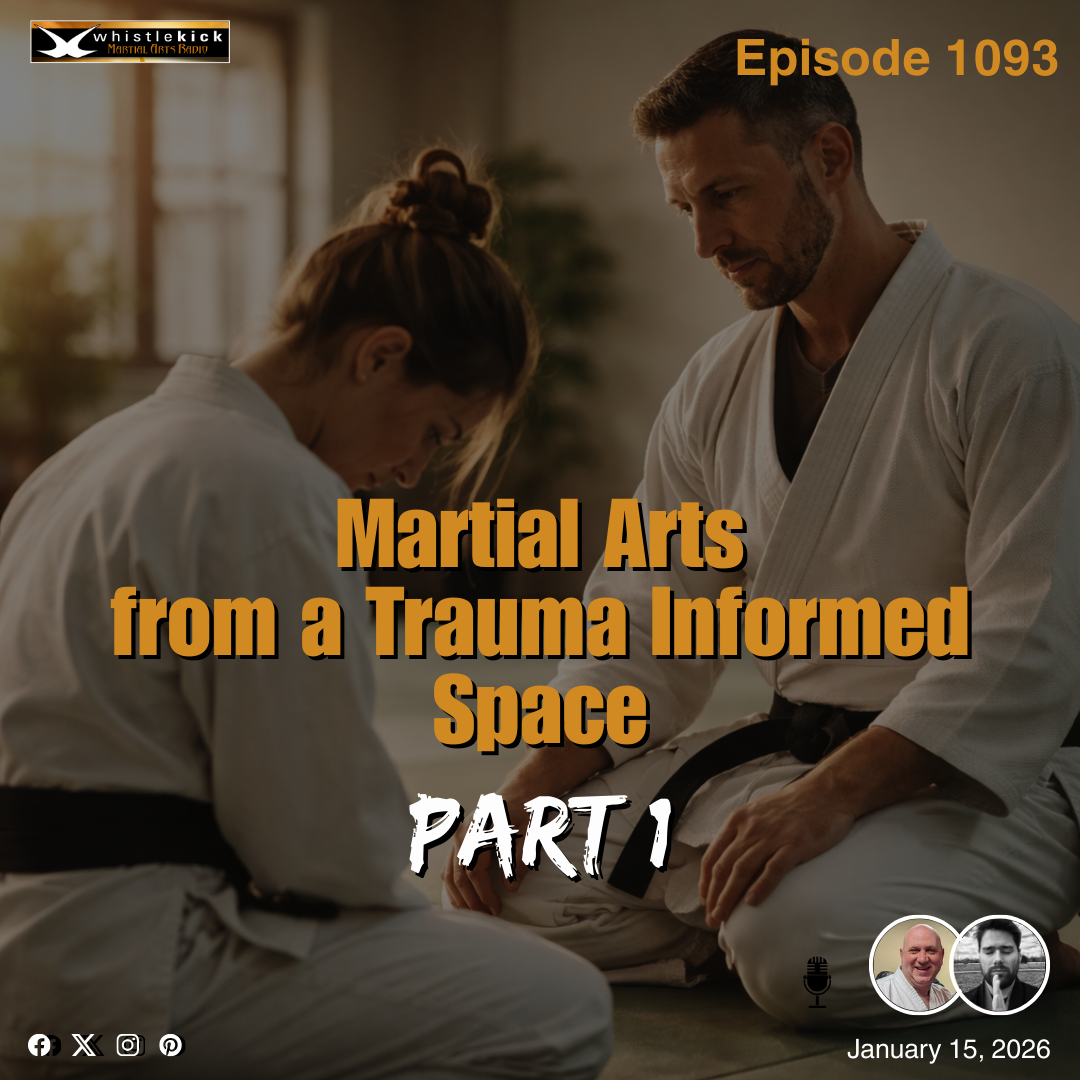
In this episode Andrew is joined by Paul Coffey to discuss martial arts, but from a space of understanding trauma.
Martial Arts from a Trauma Informed Space: Part 1 - Episode 1093
SUMMARY
In this episode, Andrew is joined by Paul Coffey and they discuss the importance of teaching martial arts from a trauma-informed perspective. They explore the nuances of class planning, the distinction between soft and hard skills, and how to effectively navigate violence and nonviolence in martial arts education. The conversation emphasizes the need for sensitivity and understanding when working with students who may have experienced trauma, and the importance of effective communication in creating a safe learning environment. In this conversation, Paul Coffey discusses the importance of crisis intervention and soft skills in martial arts, particularly for vulnerable populations. He emphasizes the need for instructors to build trust with their students, create a safe training environment, and understand the significance of intention in martial arts practice. The discussion also highlights the necessity of teaching nonviolent techniques for self-defense and the critical role of listening to students to address their unique needs and traumas.
TAKEAWAYS
Teaching from a trauma-informed perspective is essential.
Nonviolent individuals can learn to navigate violent situations.
Soft skills in martial arts are crucial for effective teaching.
Class planning should consider the audience's background.
The distinction between soft and hard skills is important.
Trauma can affect how individuals respond to violence.
Effective communication is key in trauma-informed teaching.
Crisis intervention is essential before physical conflict occurs.
Soft skills can help mitigate damage while protecting oneself.
Building trust with students is crucial for effective teaching.
Instructors must listen to both verbal and non-verbal cues from students.
Creating a safe training environment is vital for trauma-informed practices.
Intention in martial arts training can change the perception of techniques.
Every trauma is valid; do not compare traumas.
Teaching nonviolent techniques can empower students who have experienced trauma.
Instructors should express boundaries clearly to foster a safe space.
Listening to students can reveal their unspoken needs and concerns.
CHAPTERS
00:00 Introduction
01:38 Crisis Intervention and Soft Skills in Martial Arts
07:56 Teaching Techniques for Vulnerable Populations
12:39 Building Trust with Students
17:06 Creating a Safe Training Environment
22:55 Understanding Intention in Martial Arts
27:44 Nonviolent Techniques for Self-Defense
31:04 The Importance of Listening to Students
Join our EXCLUSIVE newsletter to get notified of each episode as it comes out!
Subscribe — whistlekick Martial Arts Radio
After listening to the episode, it would be exciting for us to know your thoughts about it. Don’t forget to drop them in the comment section down below!
SHOW TRANSCRIPT
Andrew Adams (18:15.204)
Welcome your listening or perhaps watching on YouTube the another episode of whistle kick martial arts radio. And today I'm joined by good recent new friend, Paul coffee. Paul. are you today?
Paul Coffey (18:28.448)
I'm wonderful, Andrew. How are you? Good. Killing it day after day.
Andrew Adams (18:30.06)
I am doing great. woke up handsome yet again. I know. I know it's hard to believe, but it's totally true. Actually, fun story for the holidays. I got a new shirt that all it says is a black shirt with white letters that just says, just another ridiculously handsome bald guy. So appropriate. Anyway, I digress. Paul, thank you for joining me today. Before we get into our chat,
I want to make sure that all of the people watching or listening know where to go if they want to find out more about this episode and all of the other episodes that we've done. We've got over a thousand episodes now. Whistlekickmarchialartsradio.com is where you can go to find information on the podcast, show notes, transcripts. You can sign up for our exclusive newsletter so you will be notified when every episode comes out. You can also go to whistlekick.com to find out about all of the other things that we do, whether it's
teacher training certification courses, whether it's events, maybe you want to purchase some apparel, some fun t-shirts or sweatshirts or things like that. Maybe you want to purchase a training program. All of that stuff you can find at whistlekick.com. All right. So, Paul, we are here to talk about martial arts from a trauma-informed space. And this came about
Paul Coffey (19:48.588)
Yes, sir.
Andrew Adams (19:50.726)
For two things two reasons one you taught a couple of classes at martial summit this past 2025 That I heard excuse me a number of people Say really good things about and I thought it was a great topic to delve into and we had had a discussion you and I about how I think that the the soft skills of of teaching quote self-defense or self-protection
Paul Coffey (19:57.538)
Mm-hmm.
Paul Coffey (20:05.4)
Thank you.
Andrew Adams (20:18.49)
You know, you've got the martial skills, the basically punching someone in the face or breaking free from a grab or whatever. And then you've got for me, everything else. Those to me are what I would typically have called the soft skills. And you kind of push back on that a little bit. And I thought that why don't we delve into that and talk about it from a different perspective that I don't have.
Paul Coffey (20:37.346)
Mm-hmm.
Paul Coffey (20:46.046)
Sure, and I actually want to start with something that I have not said to you yet. This is what started the Genesis for me really kind of understanding and discovering it because as somebody that's been through trauma, I am very much aware that usually there's one of two different things that happen. You become like me and you kind of embrace it or you close off to it.
But so I was teaching a group of, I call them my nonviolent friends. I was teaching my nonviolent friends. And I said, the way that we do it as martial artists is that we kind of have a switch inside of us. And we flip that switch on and it's happy, go lucky. Hi, Andrew, how are you doing? And then we flip it off and it's not Andrew that's in front of me anymore. Now it's just a person.
And I'm teaching this concept. I'm like, this is kind of how martial artists act. And I got immediate pushback. And they said, that's dehumanizing somebody. And we've been dehumanized. And we don't want to do that to anybody. So then it's like,
Andrew Adams (21:53.35)
Mm-mm.
Paul Coffey (21:57.142)
It's like you have to regroup. have to reassess things and it's like, okay, so you don't want to dehumanize somebody. You probably don't want to punch them in the face or slap them in the throat or poke their eyes out or any of the other fun stuff that we do. So, so, so what is there then? And so I started teaching that everything that you're labeling as soft, I label this as crisis intervention.
Andrew Adams (22:10.982)
You
Paul Coffey (22:24.854)
So this is everything up and until physical conflict occurs. I can walk on the other side of the road. can, I can, I have the freedom of leaving the bar if it doesn't feel right or if somebody's given me bad looks and I can be upset that I had to leave the bar. But as Steve says, upset is a condition of being alive and that is better than not.
Andrew Adams (22:51.844)
Yep. Yep.
Paul Coffey (22:53.76)
So, so that we call crisis intervention. Then we have our soft skills, which are things that are still physical, but are not as we will say they're not as Marshall. They're not as horrible. And examples of those are just as simple as being able to use your structure and push somebody off of you, being able to redirect their energy in a way that they're going to fall gently ish, go to a wall.
gently ish and you giving yourself space. I'm never telling anybody look, you're not going to not hurt somebody but I'm saying you can mitigate that damage while you also protect and preserve yourself. So that's where that conversation really, really, really starts. I will also add before I give you back the floor is that
Andrew Adams (23:24.165)
dish.
Andrew Adams (23:50.063)
You
Paul Coffey (23:51.446)
The other thing that I typically do is unless it's a protected group of individuals that I'm working with, I work in a lot of rehabs and homeless shelters and stuff like that. So I work with people that are sometimes government protected and I can't bring other people in, but when I can, I like to bring in my advanced students. And while I'm teaching my new friends how to defend themselves,
My advanced students are learning how their techniques work to break up a situation.
Andrew Adams (24:27.942)
Gotcha. that is a, a, it is a distinction from the physical side of punching the person to, to, or they've grabbed you and getting rid of, but looking at it differently in the terms of the, haven't had to interact yet physically, but there might end up having to be some physical interaction, but it doesn't, that physical interaction doesn't have to be violent.
Paul Coffey (24:37.964)
Mm-hmm. Mm-hmm. Mm-hmm.
Paul Coffey (24:49.58)
Mm-hmm.
Paul Coffey (24:53.794)
Mm-hmm.
Paul Coffey (24:57.518)
Mm hmm. Mm hmm. Well, and so like, teach, I teach a lot of different groups that are disenfranchised in a lot of different ways. But my LGBTQ friends that I teach, they have been in situations where maybe they were accosted in a bathroom, you know, like, and these are situations that like, you don't have as much time for that crisis intervention, you know?
seconds in some cases. Whoa, whoa, whoa. What are we doing is about all you have time for in some of those capacities. And so it's just a situation of like, look, I know it's uncomfortable. I know it's scary. I know it's not good to do this physical harm to others. Let me show you how to do it in ways that are like, you know, most efficient. We do a lot of specific joint and balance manipulation.
because like somebody might not want to hurt somebody, but if you can put a palm into the hip, you can rotate their hips around and now they don't have a base and just stuff like that. So it's looking at it from that lens or that perspective.
Andrew Adams (26:10.02)
Yeah. And I think most people listening or watching go to YouTube, would understand that someone who has been accosted and perhaps I'm going to, I'm going to take a very specific example, someone who, a woman who has been choked, right? I, we all can understand. Okay. That woman is likely not going to feel comfortable putting.
Paul Coffey (26:29.58)
Mm-hmm.
Andrew Adams (26:37.85)
having someone put their hands around their neck, right? That is, we recognize that and that's understandable. But I think what we as instructors miss out on is that person that was assaulted might also not want to be violent. And I think that's kind of what you're talking about. And those skills of being able to defend yourself without being violent, because the person who went through some trauma doesn't want to use violence is an important skill to learn.
Paul Coffey (26:42.146)
Mm-hmm. Mm-hmm. Mm-hmm.
Paul Coffey (26:55.885)
Yes.
Paul Coffey (27:02.957)
Mm-hmm.
Mm-hmm.
Andrew Adams (27:07.654)
Is that correct? I am I seeing it correctly?
Paul Coffey (27:09.946)
It's it's absolute. It's like somebody wearing a backpack that has 100 pounds in it and they're wearing this backpack and they pass somebody that they don't hate. They don't like, but they don't know. And it's like, hey, you could give that backpack to that stranger or you could keep carrying it. And they look over and they're like, just keep carrying it. It's fine. And that's the same thing as the trauma. They're carrying their backpack of trauma. But the thought of
Andrew Adams (27:33.732)
Yeah.
Paul Coffey (27:39.598)
Giving it to somebody else to carry? That's just as uncomfortable as continuing to carry it. So they share the burden themselves.
Andrew Adams (27:48.615)
Yeah. And those, think thinking of it in that way is very different from the, what you would call crisis intervention, which is just not be there, you know, talking your way out of things or whatever. But sometimes you might have to get physical, but you are now teaching someone who doesn't want to be physical.
Paul Coffey (27:55.671)
Mm-hmm.
Paul Coffey (27:59.84)
Mm-hmm. Mm-hmm.
Paul Coffey (28:07.49)
Mm-hmm. Mm-hmm.
Paul Coffey (28:13.911)
Mm-hmm.
Andrew Adams (28:15.033)
And so I think that's the avenue that I think I would agree with you is likely not taught enough.
Paul Coffey (28:22.292)
Mm-hmm that and that has become my current life's work is it currently the focus is How can I help those that are traumatized through martial arts in the same way martial arts helped me through? through my own personal trauma and I've gathered a lot of information one
You have to gain their trust. That's the first and foremost. But we kind of should look at every student in that capacity. We have to gain every student's trust equally. And in order to do that, I'm going to say something that not very many instructors want to hear. But you have to listen to your students.
You have to hear what they're saying and you have to hear what they're not going to say because they're not going to come out and be like, yeah, Andrew, I was, you know, raped or whatever molest. You know, they're not going to say that. The first time I had another student confess that they were abused to me was I was 18. So at the time I'd been teaching for four years, I've been doing martial arts for eight years. And this woman.
who was in my adult class, who was a regular. She got very frustrated and ran out of the room crying. And I came to her, I'm like, hey, what's going on? She's like, you didn't do anything wrong. She shared her whole story with me about everything. I shared my story with her. We had a cry and a hug. It was great. But the one thing that she said that stuck with me is,
Paul, I need you to understand this is the ninth martial arts school I have been to in seven years. And this is the first school that I feel welcome and protected in. And so like I go back to listening to the student has a value that they're not gonna always speak to. They're not gonna always speak about. They may not even consciously know.
Andrew Adams (30:17.276)
Wow.
Andrew Adams (30:23.911)
Hmm.
Andrew Adams (30:38.513)
Mm.
Paul Coffey (30:39.064)
But if we are approaching everybody in that capacity, the other thing that I said, and I said it to you before we started recording, everybody that's a martial arts instructor, how many of your students have past traumas? I would be very shocked if you knew the answer to that question, you know, honestly, genuinely. And so if we treat people all that way, we're listening to them and we're listening not only to what they're saying, but what they're not saying.
you know, the kid that gets a little sheepish because somebody's putting his hands around his neck, you know, or the kid that always like jumps when the bathroom door is closed. Like those are the signs that we need to pay attention to because then it's like, okay. When I'm building trust with that individual, I need to be a little bit more gentle. And so that first thing is build trust. But then after you build trust, you have to
Say, I know it's horrible, but we're going to do it. We'll do it together. We'll get through it. Like learning the thing, but give them permission and give them a why. Why should you fight or why should you defend yourself? Or we, we like to use the terms self preservation and so set of self-defense because defense has even more of a hard edge to it than what they're used to.
Andrew Adams (31:55.196)
Hmm. Yeah. Yeah. And you and I have talked about that. I don't like the term self defense either. Because if you're defending yourself, it implies you've already gotten into an altercation. Yeah.
Paul Coffey (31:59.65)
Mm-hmm.
Right.
Paul Coffey (32:05.814)
Right, right. Well, and I also think that defense is a term that's disingenuous for somebody that like, if you are minding your own business and then you just were violently attacked out of nowhere, some of my LGBTQ are just randomly pushed in bathrooms or randomly pushed down a hallway. Like you can't control that. So that's a little bit different than self-defense.
Andrew Adams (32:31.047)
Mm hmm. Yep. Yeah, no, I get it. get it.
And I think it's in, you mentioned, you know, as an instructor being aware and noticing what the students are saying and doing and what they're not saying and doing, giving them permission to, you know, I will say that I have personally done this. teach a karate club at the local college and we, I often will allow the students to come in and say what they would like to work on.
Paul Coffey (32:48.236)
Mm-hmm.
Paul Coffey (32:59.842)
Mm-hmm.
Andrew Adams (33:07.141)
because we're a very informal club. know, there's no testing, no one has to wear a uniform, so it's very informal. And I had a student, you know, and there's multiple students, and I had one say that they wanted to work on some techniques from grabs, people grabbing me. And I said, okay, well, that's what we'll work on today. But I could tell when we, they said, one person asked, what if somebody has grabbed you around the neck?
Paul Coffey (33:10.2)
Mm-hmm.
Paul Coffey (33:15.469)
Mm-hmm.
Andrew Adams (33:36.521)
And I immediately felt, okay, I need to be very careful on where I go with this because yes, this particular student wants this, but some of the other students might not want this. And I had to make it a very safe space. I said, I allow the students to change and alter the technique. Instead of having hands around your neck, if you don't feel comfortable with that, that's totally fine. You can take your...
Paul Coffey (33:50.37)
Mm-hmm.
Paul Coffey (33:54.606)
Mm-hmm.
Andrew Adams (34:05.416)
partner's hand and place it on your shoulder. Instead, it doesn't have to be around the neck. You can do the technique on the shoulder. If that's not comfortable, take their hand and place it on the side of your arm if that is more comfortable for you. Those sorts of things are easy to do, easy in air quotes, right, to alter a technique for your students. But what's difficult is getting your students to understand that it's okay and it's a safe space to do that.
Paul Coffey (34:08.802)
Mm-hmm. Mm-hmm.
Paul Coffey (34:16.46)
Mm-hmm.
Paul Coffey (34:25.624)
Mm-hmm.
Paul Coffey (34:36.396)
So, so that's okay. That's difficult is, creating the safe space. And the other thing that is difficult is how we articulate both in word and in physicality, the offensive aspect of it. But so to create the safe space, here's a couple of things that I have done. They could be right. They could be wrong. The last one that also the first one I stole from uncle Tommy. Okay.
He puts down hula hoops and those are the safe spaces. Only he's allowed to approach somebody at the safe space and you give them a little bit of time to relax. You know, I really liked that. That really works. Thankfully, most of my spaces, I haven't had people that have had to use them. We were pretty good about that. The other thing that I do is it's part of the culture, but it's about
keeping it fun, keeping it sometimes dance-like to where it's jovial, but also with the correct purpose and intent.
Andrew Adams (35:47.642)
Intention matters.
Paul Coffey (35:49.27)
Yeah, intention in it. I've been saying the only two things that we have as martial artists are perspectives and intention. We set our own intention and then we use our perspective to decipher the things that are coming in and to articulate the things that are going out, you know? And so that intention. Is something that. I don't want to use the word control. But because I don't control other people's intentions in the class, but what I am doing is I'm like.
I am guiding them to test their own, you know, intention in like, can we do this at 15 % now and like take it like step it up, take it a little bit more seriously. I think stuff like that really helps. I will also say that the piece of the puzzle that you may have glossed over or missed is if we've got a group of students.
Andrew Adams (36:23.816)
Mm-hmm. Mm-hmm.
Paul Coffey (36:47.072)
And one says, well, what happens if they grab you around the neck? That might be an indication of, hey, they've been grabbed around the neck. That's a worry or a concern that they're voicing. Another thing to the culture very quickly is that I have in myself, I don't do self-defense seminars. I don't do a self-defense four-hour day. And then you get a certification and you know what you're doing.
Andrew Adams (36:55.42)
That, yep, yep.
Yeah, that's a really good point. Yep. That's a great point.
Paul Coffey (37:17.194)
I only do self-defense clinics and they are an actual class that's on a schedule somewhere. And it's, is the self-defense clinic and you know to come reoccurring every Friday or whatever, right? Because you have to dedicate to do it like everything else. Those individuals, they don't call me sensei or see if we're anything we could call all of each other. We call each other friends. And so then when you're approaching a friend to help work with,
Andrew Adams (37:37.063)
Yep. Yep.
Andrew Adams (37:41.842)
Sure.
Andrew Adams (37:47.048)
Mmm.
Paul Coffey (37:47.618)
friend, is it okay if I touch your shoulders? Boom. Or is it okay if I put my hands around your neck? I won't squeeze, you know, those type of things. And using that verbiage really does help the overall community. And it also reinforces consent, which if they were victimized, they didn't have, and so it's really good to go, no, it does exist here. So.
Andrew Adams (37:54.599)
Yep. Yeah.
Andrew Adams (38:10.918)
Yeah. And I think it's okay to have a discussion on intent that, you know, intention matters. here's an example, completely not martial arts related, but I think it's not martial arts, but I think it relates really well to this concept of intention makes a difference, right? So I teach, I do drumming for dance classes here locally, and I travel around to different schools and I drum while they're teaching dance moves.
Paul Coffey (38:16.226)
Mm-hmm. Mm-hmm. Mm-hmm.
Paul Coffey (38:29.25)
Mm-hmm.
Paul Coffey (38:36.59)
Mm-hmm.
Andrew Adams (38:40.264)
And at the end of the year in May, there's this huge dance, for lack of a better word, recital. It's not really recital. It's a performance with a script and whatever. there's 300 kids on stage, all from 15 different schools that are all doing the same dance at the same time. One of the things that happens in this year's dance is all the kids drop down on their hands and knees.
Paul Coffey (38:50.808)
Okay.
Paul Coffey (38:58.154)
Mm-hmm. It's awesome. It's awesome.
Andrew Adams (39:09.042)
they're in lines and they grab the hands of the people next to them and they stand up and they lift their arms up in the air while they're holding hands, right? The theme for this year's dance is climbing a mountain and putting up a goal. actually, the concept is not reaching your goal, like setting a goal to hike this mountain and you're not gonna get there. And so this part of the dance move is meant to signify
Paul Coffey (39:13.826)
Hmm
Paul Coffey (39:18.253)
Mm-hmm.
Paul Coffey (39:31.157)
Mmm.
Andrew Adams (39:38.132)
Helping someone up, right? Grabbing someone's hand, like they're having trouble. They're struggling climbing or hiking, and you're gonna reach down and you're gonna grab their hand. Well, this dance is for children that are in like fourth, fifth, sixth, seventh grade. So what's that age? 10, 11, 12, 13 years old. You're saying I have to hold hands with somebody else? that's...
Paul Coffey (39:40.639)
Mmm. Mmm.
Paul Coffey (39:46.838)
Mm-hmm. Mm-hmm.
Paul Coffey (39:57.494)
Mm-hmm.
Paul Coffey (40:01.389)
Mm-hmm.
Paul Coffey (40:06.273)
Mm-hmm.
Andrew Adams (40:08.125)
gross or only boyfriends and girlfriends do that or whatever, right? But if a boy and a girl hold hands walking down the hallway, that might mean they're boyfriend and girlfriend. But if someone fell down and you extended your hand to them to help them up, you're still touching their hand. It's the intention that makes a difference. And when we had this discussion with the students, the dance students, it
Paul Coffey (40:10.038)
Mm-hmm.
Paul Coffey (40:26.134)
Mm-hmm. Mm-hmm. Mm-hmm.
Andrew Adams (40:35.881)
completely changed. We didn't have any more, this is gross or this is weird. It was completely different. And it's because we had a discussion about intention. Now, does that mean it's going the issues you have from a trauma-informed space? Does it mean those issues are going to go away? No, they're not going to go away. But I think it is okay to have a discussion about intention.
Paul Coffey (40:37.644)
Mm-hmm.
Paul Coffey (40:44.715)
Mm-hmm.
Paul Coffey (40:55.15)
Mm.
Paul Coffey (41:00.43)
Well, it's not just having the discussion about intention, it's creating the space and the environment for it, you know, because like my new students, if a new friend comes into a self-defense clinic, they will never do anything where they are physically partnered with another person.
Andrew Adams (41:07.049)
Sure. Yep.
Paul Coffey (41:23.434)
until they are comfortable enough with doing it very gently with me. And if that doesn't happen on the first class, then it doesn't happen on the first class. doesn't happen on the second class, third class, whatever. know, like sometimes it takes a couple of weeks and then it happens. And I think that like, it's important to have the conversation about intention, but it is just as important to walk or demonstrate the correct intention, you know?
Andrew Adams (41:49.961)
Mm. Yep.
Paul Coffey (41:53.418)
The other thing that I would say, which is similar to intention is, is the actual barrier, you know, that we put up because, Stephen worded it more eloquently than I'm about to, I'm probably going to butcher it, but you have to set a boundary. Then you have to express the boundary say, you know, Andrew, I don't really like when you do that, that sort of thing. Like, because if.
If I have something that bothers me and I don't tell you, hey, this bothers me, then you're not the person that's responsible for me being bothered. And a lot of like a lot of people have that problem, but expressed and then and then reinforce and reinforcement could just be as simple as Andrew. I already told you, you know, it could be something like that or it could be more reinforcement.
Andrew Adams (42:34.771)
Hmm, that's a great point.
Paul Coffey (42:53.31)
I will say that the other thing about it is that sometimes there's not enough time for those, all those steps, you know, because sometimes maybe the person that's a, that's that's a victim of trauma. They know that something's bothering them, but they don't know what it is. Like they can't put their finger on it or really define it. And then,
Andrew Adams (43:15.965)
what it is. Yep.
Paul Coffey (43:22.218)
I've also recently over the past couple of weeks started the idea of teaching my students that just because you're coming from a place of trauma does not mean that something less traumatic is not traumatic. You know, the the the victim of trauma that has taken a lot of pain or discomfort in their life.
They may stub their toe and be like, it's just a subtoe and walk on this. The toe that you stubbed could be bleeding. There could be a broken nail that you could have broken a toe. So you should tend to every trauma. And the conversation started with like, you shouldn't compare traumas because like somebody's like, this happened to me. well, yeah, this happened to me. And I opened up everybody like the purview of like
yeah, but it's also a this happened to me so I can definitely deal with this bad situation because I've dealt with a lot of the most common thing that I've seen. I'm not going to say it's the most common thing, but the most common thing that I've seen as a martial arts instructor is women coming to learn martial arts from me because they were abused as a child and they do not realize they're in an abusive relationship.
Andrew Adams (44:24.07)
Mm-hmm.
Andrew Adams (44:46.634)
Gotcha.
Paul Coffey (44:47.88)
and that's because they've already been through this so this isn't that bad.
Andrew Adams (44:53.162)
They're used to it in air quotes. Yeah. Now, and then how do you work with that individual in terms of like, we talked about at the beginning of the episode about them not wanting to be violent, but wanting to give them skills to be able to protect themselves in a nonviolent way. Where would you go with that?
Paul Coffey (44:56.802)
Yes, yes.
Paul Coffey (45:11.488)
Mm-hmm.
Paul Coffey (45:17.87)
Mm hmm. Mm hmm. We think a lot about the concept of jujitsu, but applied to standing. And what I mean by that is if you've seen any bit of jujitsu, the two things that you hear from a coach most commonly is improve your position. You know, or maintain.
And so like, if we just take those two concepts and apply them to the physicality of it, I want you to improve your position. Are you pushed against a wall with somebody around your throat? well, that's actually pretty good because the wall is your friend here. Show them how to use the wall, show them how to redirect this energy in a way that it can get the person off of them. It'll hurt them a little bit, but are they going to get choked out?
No. And you know, like we kind of it's building blocks from there. Stance work is very important. Hip work is very important. And then also like, hey, you're not good with hitting, but are you good with pushing a hip? Are you good with manipulating somebody's spine? Are you good with the under the nose or the chin? Yeah. Yeah. Your head's the heads of steering wheel of the body.
Andrew Adams (46:33.642)
Pushing, yeah.
Paul Coffey (46:39.02)
If somebody is coming after you and you get their nose or you get their chin, you push it that way, their body's going that way. Their body's going this way and they're not here in your face any longer. I will also say one of the classes that I taught in Summit was about
Andrew Adams (46:49.416)
Yeah, that's a good thing to keep in mind.
Paul Coffey (47:00.706)
my I bring my black belts in and I have my black belts to crisis intervention techniques and that's probably a different podcast altogether. But in doing that the most valuable piece of evidence is I have my black belts remove the threat away from the person.
Andrew Adams (47:23.05)
Hmm.
Paul Coffey (47:23.478)
So like you see a fight go on and your instinct is like push yourself into the space between two people. When you do that, you're encroaching your body into somebody that is being attacked, being victimized. You're adding to the physical trauma of it. And the only reason I bring that up right here is because that's another thing is that if you're dealing with somebody who is from coming from any sort of traumatized space.
they don't know all of their physical triggers. I could teach them a minor reap and it could make the guy collapse towards them and the collapsing towards them could trigger them. So...
When I teach my nonviolent friends any sort of techniques, I teach them techniques that manipulate a body away from them, manipulate falls that are not like, I'm not doing a Judo over the throw or over the shoulder or anything like that. I'm not trying to bring in in any way. It's all about expressing out and about expanding their personal energy and their personal space. Protect the bubble, Andrew.
Andrew Adams (48:16.02)
Hmm.
Andrew Adams (48:33.566)
Hmm. That's a good. Yeah. No, I love it. I love it. I suspect that we could, we could probably go on for another couple of hours just on this topic. So maybe we'll have to have you back for a volume two and look at this from a, from another direction. Yeah. Yeah. a lot to think about for sure. anything to, kind of anything you want to kind of wrap up on before we, we close this out that we, that we didn't talk about today, you'd make sure.
Paul Coffey (48:50.592)
Mm-hmm. Yeah, I'd love it.
Paul Coffey (49:01.219)
the
Andrew Adams (49:02.814)
people here.
Paul Coffey (49:04.62)
I don't want to talk about something we didn't talk about. I just want to re-emphasize, listen to your students. They will, whether they tell you verbally or they tell you physically or they tell you emotionally, they will tell you everything you need to know. Just listen.
Andrew Adams (49:10.654)
Yeah. Yeah.
Andrew Adams (49:22.088)
Yeah, and sometimes it's not just what they say, it's what they don't say.
Paul Coffey (49:25.398)
It's what they do. And what they do, what they don't do, yes.
Andrew Adams (49:28.298)
Yep. Love it. Thank you so much, Paul. Appreciate you being here. We'll definitely have to have you back for another session of this because I think it's an important topic that we need to cover a little more of and you have a lot of insight. So we'll definitely have to have you back. Thank you. Yeah. For those that made it all the way to the end, if you're watching on YouTube, you will notice that I've blown my nose a lot.
Paul Coffey (49:32.472)
You're Thank you.
Paul Coffey (49:39.842)
Mm-hmm.
Paul Coffey (49:43.559)
I appreciate you. you.
Andrew Adams (49:53.052)
That's because I've got a cold. But if you're if you are watching this at home, it's okay. My computer has virus protection. So you are safe. You won't catch my cold. I promise. Thank you. Thank you. Thank you. Go to Whistlekick Marshall's Radio to find out all of the episodes that we've done on the podcast. Go to Whistlekick.com to find out all of the things that we do here at Whistlekick. Maybe you're going to check out Marshall Summit next year. Maybe you want to come.
Paul Coffey (50:19.074)
You definitely should.
Andrew Adams (50:19.996)
You should for sure. Maybe you want to come to All in Weekend, our weekend long residential training seminar that we host in Vermont in April. All of that stuff you can find at whistlekick.com. until next time, train hard, smile, and have a great day.