Episode 1092 - Tyler Duda
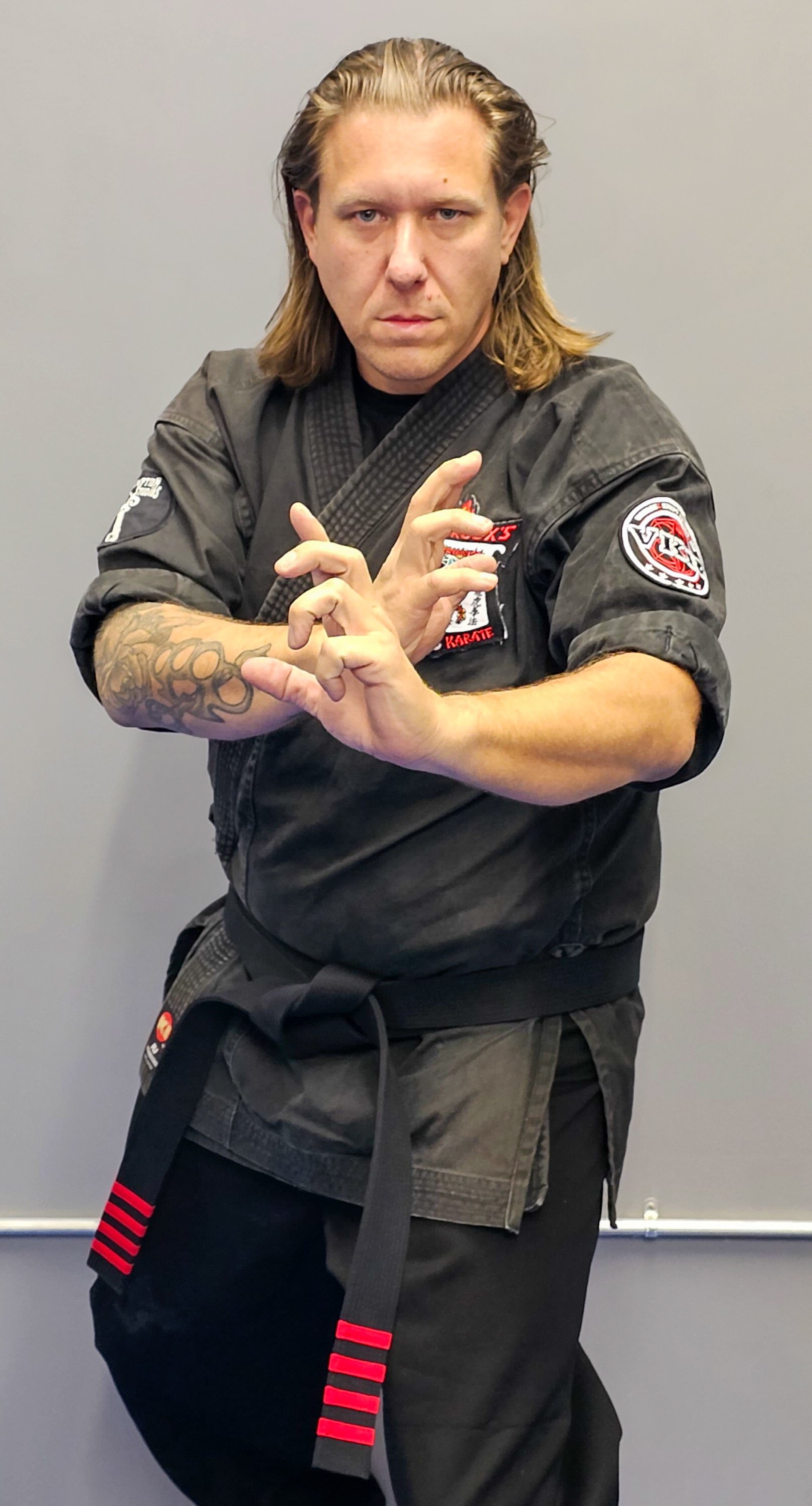
In this episode Jeremy chats with Tyler Duda about his martial arts school and training, cross training, and the significance of asking questions.
Tyler Duda - Episode 1092
SUMMARY
In this conversation, Tyler Duda shares his journey in martial arts, discussing the transition from running a commercial studio to a more laid-back club environment. He reflects on the challenges of navigating relationships with students and instructors, the importance of teaching and learning, and the personal growth he experienced through martial arts. Tyler emphasizes the significance of doing things the right way and maintaining respect in the martial arts community. He emphasizes the importance of teaching, personal growth, and building a positive school culture. He discusses the challenges he faced in his early training, the significance of asking questions, and how he aims to create an inclusive environment for his students. Tyler also highlights the role of culture in martial arts schools and his aspirations to improve the Kempo community by providing more opportunities for training and connection among practitioners.
TAKEAWAYS
The transition from a commercial studio to a club allows for more flexibility.
Teaching martial arts can lead to personal growth and self-reflection.
Navigating relationships in martial arts requires respect and communication.
The effectiveness of martial arts can be seen even in less structured environments.
Starting martial arts later in life can still lead to a deep passion for the art.
Self-defense interests can lead individuals to martial arts training.
Teaching helps instructors identify their own mistakes and improve their skills.
Maintaining integrity when students want to follow you is crucial.
Teaching can help overcome personal challenges like shyness.
Effective teaching involves mutual learning between instructor and student.
Admitting when you don't know something is crucial in teaching.
Students should feel empowered to ask questions without fear.
The environment of a school, including its cleanliness and smell, impacts student experience.
CHAPTERS
00:00 Introduction
05:01 Transitioning from Commercial Studio to Club
09:50 Navigating Relationships and Student Dynamics
14:49 The Journey of a Martial Artist
20:00 Teaching and Learning in Martial Arts
30:48 Teaching Philosophy and Personal Growth
39:28 Building a School Culture
48:09 The Importance of Culture in Martial Arts
52:30 Future Aspirations and Community Impact
Join our EXCLUSIVE newsletter to get notified of each episode as it comes out!
Subscribe — whistlekick Martial Arts Radio
After listening to the episode, it would be exciting for us to know your thoughts about it.
✅Subscribe to whistlekick Martial Arts Radio on the following platforms:
🎧Apple Podcasts: https://apple.co/3mVnZmf
🎧Spotify: https://spoti.fi/3yHVdHQ
✅You can find whistlekick on all social media platforms using the handle @whistlekick or visit our website at https://www.whistlekick.com or https://www.whistlekickmartialartsradio.com
Show Transcript
Jeremy Lesniak (05:55.959)
What's going on everybody? Welcome back or maybe for the first time to an episode of whistle kick martial arts radio today I'm joined by Tyler Duda Tyler Thanks for being here looking forward to our conversation and to all of you out there Thanks for spending some time with us. I have no idea where this is gonna go That's for me at least after 10 years and a thousand of something episodes. This is the fun part About doing this show is you never know where we're gonna be even if when it's people that I know and Tyler I know you about this much about
just the tiniest little smidge. And so I'm looking forward to getting to know you. Now, if you are new to the show or maybe you just need the reminder, whistlekick commercial arts radio.com is where you want to go for show notes, transcripts. All the episodes are there. All of it. It's all there. It's a great place to go. And while you're there, sign up for the emails. What do we do with emails? We email you the episodes. So you get the video, you get the audio, your choice. You get both every time we release an episode right there, as well as some behind the scenes stuff.
You can unsubscribe at any time. It's not a cost thing. We just want to make sure these episodes make it to you. And we found that email is the best way to do that. If you have guest suggestions or anything, anything you need, write to me, Jeremy at whistlekick.com. And with that, Tyler, welcome to the show.
Tyler (07:14.017)
Thanks, how's it going?
Jeremy Lesniak (07:15.631)
going pretty well. were just talking. both in the Northeast. It is cold. I don't know where it is right now. Last I looked at the thermometer, was four.
Tyler (07:24.31)
Yeah, sounds about right.
Jeremy Lesniak (07:25.645)
Yeah, brutal, Probably not a day that we're going to train outside, is it?
Tyler (07:33.91)
Nope, no, definitely not. I was out there yesterday trying to work on a vehicle. I'm like, nope, nope, all right now.
Jeremy Lesniak (07:40.761)
Yeah, it's hard. You know, I don't mind being outside in the cold. I don't mind working in the cold. But the thing I have the hardest time with is my hands, is trying to keep my hands warm while I do anything. I have not found the right pair of gloves. They're either too thick and I can't do anything, or they're too thin and my hands get numb.
Tyler (07:59.724)
I don't know that they exist to be honest with you.
Jeremy Lesniak (08:02.073)
don't think they do. I think that's why heated garages exist.
Tyler (08:06.146)
Yep, sure.
Jeremy Lesniak (08:09.241)
Well, we should start because it's on your shirt, it's on the wall behind you. Redemption, is that, is this your school or have you come to us from a church?
Tyler (08:19.758)
Uh, no, so it's, our studio name. It's, um, it's, it's more of a, of a club than a studio. I used to own a commercial studio. Um, and when I got out of that, I kind of had some students that still wanted to train under me and I love teaching, so I didn't want to give it up entirely. So I have a, fairly small studio here. Um, and it's, you know, we run it more like a club. have classes a couple nights a week and myself and one of my training partners teach, you know,
Jeremy Lesniak (08:46.003)
What's the difference? What's the difference between a club and a studio?
Tyler (08:49.838)
That's a good question, I guess. I train with quite a few guys out of the UK. And I know over there everything they run is a club and they kind of do it more like a come when you want, pay by the class kind of model. And they're typically a lot smaller than our commercial studios here are. So I guess when I think of a club, that's kind of what I relate it to just because of my experience with them. so yeah, it's just we have a
It's a little bit more laid back, especially with our schedule. Excuse me. I work a lot of 12 hour shifts and stuff. my students have the understanding that every now and then they might get a text like, hey, guys, sorry, I called in. We're going to have to reschedule class tonight. So it's just a little bit more laid back, little less structured when it comes to those types of things.
Jeremy Lesniak (09:40.493)
It sounds like the priorities shift a little bit.
Tyler (09:46.902)
Yeah. Yeah.
Jeremy Lesniak (09:47.373)
with that club designation.
Tyler (09:50.99)
Yeah, I mean, to me and what it like, how I think of it, I'd say so, you know, like, and that's a whole rabbit hole, you can go down there. But when you're running a commercial studio, there's a lot of things that, you know, somebody explained it to me once is like, got into this doing, you know, working for myself, because I didn't want to have a boss, and then I ended up with 200 bosses, you know. And so when you're running a commercial studio, it's, it's, you have other factors that that
drive the direction you have to take things. to me, if you're just running a club and doing it for the fun of it and the love of teaching, you can kind of take things in a different direction. That's kind of how I run it and why I went that
Jeremy Lesniak (10:33.007)
I would guess that when we consider the money side in a club, the goal is to not lose money.
Tyler (10:40.856)
Yeah, yeah, pretty much.
Jeremy Lesniak (10:41.783)
Whereas maybe in a commercial studio, it's generally at least part of your income.
Tyler (10:48.194)
Yep, yep, I'd say that's fair assessment.
Jeremy Lesniak (10:52.271)
And when I think of it that way, there are actually, I would guess, half the schools in the US probably are more club than they are commercial, if you want to look at it with that delineation.
Tyler (11:05.954)
Yeah. Yeah. And I don't know if that's intentional or not. I know a lot of people that get into it wanting to run like a successful commercial studio and then it's not as easy as people think it's going to be. And it kind of turns into more of a trying to survive and not lose money and devolves into more of a club type, you know, set up. But I would say that those numbers are probably pretty accurate. Yeah.
Jeremy Lesniak (11:15.118)
Hmm.
Jeremy Lesniak (11:30.037)
Yeah, yeah, it's something like 50 to 60 percent of martial arts schools in the US because that's what I've got the data for are break even or losing money, you know, and, you know, some of you out there know that we do some stuff to support those endeavors to help schools make money. I'm not going to turn this into commercial. I do. I am curious, Was there an event? Was there a big reason that you stepped away from the commercial studio?
Tyler (11:56.722)
so I was running it with, someone I was in a relationship with. And when the relationship ended, I just kind of made a decision to, rather than, you know, turn it into a fight or something over the studio, I want to do what was best for myself and the students and just kind of parted ways and, and, let them continue on with the school and just went my own way. So.
Jeremy Lesniak (12:02.568)
that's a big reason. Yeah.
Jeremy Lesniak (12:21.123)
Yeah. Okay. So the school wasn't shut down. You stepped out.
Tyler (12:26.446)
Nope, school still exists, still doing well. Still doing really great with their students. That's hard for a lot of reasons. You have the personal emotional aspect of it. And then you have the kind of attachment to the studio and to your students. And having to lead your students is really hard. But it's also wanting to do what's best for the students and not...
Jeremy Lesniak (12:30.467)
Was that hard? That sounds really hard.
Jeremy Lesniak (12:36.398)
Yeah.
Tyler (12:56.608)
not tear the school apart or create an environment that's not best for learning, you know? yeah, yep.
Jeremy Lesniak (13:00.527)
Have you seen that happen? I've seen that happen.
Tyler (13:08.886)
Yep, absolutely. It's a tough thing and it's something I don't get into too much detail over because I don't want to affect anyone's reputation or affect the school in any negative way. I'm really glad that it's still doing well and that they're successful with it. So I'm glad that it didn't fall apart, that we didn't tear it apart and that those students are still training there. It's really awesome.
Jeremy Lesniak (13:32.591)
Good. And so, you know, one of the things, and if you don't mind, we can talk about this because there's this interesting sociological principle where a tribe essentially can grow well to about 150 people and then things start to split. And I've seen it time and again in martial arts circles, in CrossFit circles. I haven't seen it as much on the dance side, but something grows to a certain size.
and then something carved some of those people off.
Tyler (14:05.827)
Hmm.
Jeremy Lesniak (14:06.287)
How many students did you have in there?
Tyler (14:09.518)
So we only had about 70 at the time, because this was when we bought the studio right before COVID. we bought a school that the owner had passed away and had started to dwindle as a result. And then we turned it around. Six months before COVID, we bought it. And then going into COVID, it started to go down again. And then came out of COVID and started building it back up. then I parted ways. And I have no idea what their numbers are now. But I know that.
Jeremy Lesniak (14:17.177)
Hmm. Hmm.
Tyler (14:39.224)
You know, we only had 70 at the time. I've been involved with studios that were much larger when it comes to numbers. So when you're saying that, I'm thinking about, well, that's an interesting point.
Jeremy Lesniak (14:49.219)
Yeah, yeah, it's fascinating to see that, to see that happening. I think one of the things that is interesting to me, and I'm curious of how you handled this, because there's no perfect way to handle this. In this scenario where you're stepping away and ultimately start teaching again, some of those people want to come follow you.
and it can be really difficult.
to say, yes, come follow me and maintain integrity and not speak ill of frankly, what you built, what you helped build. And I'm just, curious if you don't mind sharing, did you have conversations on that subject with students that wanted to follow you? And if so, how did you handle them?
Tyler (15:48.718)
I only had a couple that they didn't follow right away. They came later on. And it was a little bit of a different scenario. wasn't that they were following me. It's that they had some dissatisfaction with some things at that studio. it's always, conversation is always about leaving respectfully and...
Jeremy Lesniak (16:07.576)
I see.
Tyler (16:16.322)
doing it the right way and everything, of course. I've had more experiences with association splits and stuff. When you start talking about the 150 people numbers, my mind more goes to on an association scale. And even if I look at it from that perspective, it's always...
Jeremy Lesniak (16:26.895)
Mmm.
Tyler (16:44.622)
just the idea of doing it respectfully, like, look, I understand and you're welcome here. The way I always view it is that everyone's welcome at my studio. I don't really care about lineage or where you came from or whatever. It's just that I'm not trying to step on anybody's toes. if I have a student that leaves, of course, they're free to go, but it just be nice to know. And if they have any dissatisfaction to know so that I can take corrective actions in the future. So it's just always a conversation about.
Whether it's a studio or an association just about doing it the right way going to the instructor letting them know giving them that respect, you and Trying to encourage them to have a conversation with that instructor and You know, I don't really know how else to say it than that then just to do it respectfully, you know and and you're not always going to get the blessing of
the instructor or the head of an association or whatever, they're not always going to be happy about you leaving or say, yeah, sure, go. But I think that at least if you give them that respect, if they choose to not be happy about it, then that's on them. And I think that you're free to move on at that point at least. I mean, I know when I've left instructors in the past, it's kind of how I went about it. And if they were happy, great. Or, you know, happy for me and encouraging, great. And if not, then I'm sorry, you know, but it's what I got to do. So what's best for me at that point. So.
Jeremy Lesniak (18:07.215)
It sounds like you've had a few iterations in your martial arts identity, right? And so we should probably talk about some of those because who you are now and what you're doing now obviously is a reflection of who you've been and what you've done. So maybe we roll tape back to the beginning. When did Tyler start martial arts?
Tyler (18:19.661)
yeah.
Tyler (18:37.198)
I started back in 2008. I think I was 21 when I started, 2021. I started with a small studio that was in town and a buddy from high school kind of dragged me into it. It was good experience. I stayed there for quite a while, but it was a school that was very closed off. Don't go outside of these four walls. Don't go to seminars and stuff.
And eventually I, yeah, and then I had a falling out there because I started asking questions then wanting to look outside those four walls. And, and that wasn't, you know, appreciated. And, and that was kind of where I was like, okay, well, I got to do what's best for me. And once I saw what was beyond those four walls, it was like, oh, there's a lot more out there, you know.
Jeremy Lesniak (19:07.756)
We have all the answers.
Tyler (19:36.088)
But the style that I do is, I don't want to say it's hard to find in the area. It's, it's, thought it was, cause again, I was blocked off from seeing what was available. Then I realized there's a lot of it, but not all schools are created equal, not all, I don't even want to say lineages, but versions of an art are created equal. So finding the right instructor,
Jeremy Lesniak (20:00.472)
Hmm.
Tyler (20:01.474)
turned out to be a little difficult so I actually went through three or four different schools, or four different lineages of the same art in the local area.
Jeremy Lesniak (20:08.591)
And can I ask, would you say what the style is?
Tyler (20:14.798)
Oh yeah, it's So I trained at Parker's American Kenpo. got into it, like I said, by chance didn't know what it was when I got into it or anything. Um, and, uh, but once I started training, I fell in love with it and, uh, you know, knew I wanted to stay with it and I had gotten my.
Jeremy Lesniak (20:28.815)
Hmm.
Jeremy Lesniak (20:32.335)
And you'd never, know, starting at 21 isn't super common. you, had there been kind of interest in the past that just didn't turn into training or?
Tyler (20:44.725)
Nah, you know, it's like, I guess I was like any kid, like I'd watch, you know, movies when I was a kid, and like, you know, everyone goes to like the Karate Kid and stuff. I watched like the Three Ninjas when I was little and movies like that. And I always thought it was cool when I was a kid, but I just never really, I didn't even know where I would go for it. You know, it's like, I didn't even know there was a school in town. Then in high school, one of my best friends got his black belt at this school and we were going to,
Jeremy Lesniak (20:55.599)
Hmm.
Tyler (21:12.704)
After high school, were going to post-secondary training. We were going for automotive and we had a long commute. And one day I was talking, was like, so the school that he was training at had a probationary period. Once you get your black belt, you had to stay for a year if you wanted to get your certificate and some other topic. so I was like, not knowing anything about it. was like, man, was like, why didn't you stick around? You know, he trained for a few months and then got busy with football and everything else and kind of stopped training. So was like, why don't, why don't you stay? you got your black belt, but like not really like.
people would kill for that, didn't you stay? And he goes, you know what, I'll tell you what, he's like, when we graduate here, I'll go back if you come with me. And I was like, yeah, sure. I was like, this kid's never gonna go back. But made a deal with them and then we got out and he's like, hey, let's go to class. And I was like, yeah, all right, sure, you're not gonna do it. And so we went and I saw this like, you know, he was like a linebacker and stuff, big, know, strong dude and stuff. And I saw like this 120 pound woman who was instructor put him in a wrist lock and there he goes. was like, oh, okay, sign me up for that, that works.
Jeremy Lesniak (22:03.823)
Hmm.
Tyler (22:12.302)
I like that. And then two weeks later, after I start training and stuff, literally two weeks later, he's like, Hey, I'm moving to Virginia with my girlfriend. I was like, no, not. just said we were, doing this now. So I didn't want to do it on my own. You know, I have a shine stuff and I didn't, felt kind of going into that as an adult at a school that does, you know, demo team uniforms and the set feels kind of goofy. You know, it's like putting on this white gi.
white belt and stuff, I felt kind of goofy. So I was like, no, man, you're staying. And he moved, but I was kind of already hooked on it at that point. I kind of got into it totally unintentionally.
Jeremy Lesniak (22:52.419)
What was it that hooked you in so quickly? Most of the time when people come on the show and we have this sort of conversation, they'd wanted to train for a long time. We haven't had too many people come on the show that have said, well, I never really thought about it that much. And then this random accident happened in my early 20s and I started training. So something.
Tyler (23:18.232)
Jeremy Lesniak (23:19.183)
You found something, you connected with something quickly. What was that?
Tyler (23:26.598)
man, I don't know. I think it was the effectiveness of, of the art and, and knowing what I know now that school is kind of not teaching it the way it should have been. But even at that, even at that level, I still saw a lot of effectiveness in it. And I never really had much of an interest, particularly in martial arts. but I always had an interest in self-defense, I guess, again, like I just didn't really
know how to access it. But even beyond, you know, a martial arts perspective, I grew up, you know, shooting at this time, I was shooting competitively. So different forms of, you know, self defense based sports and stuff were something that I had always been interested in and involved in and stuff. So I think it was just kind of a natural progression or maybe
backwards, know, people probably don't usually go from shooting to hand to hand, but you know, again, as somebody that didn't really have access to it as a kid, it was just like, all right, I'm doing these things. This is fun. And, you know, all right, I'll go try this, you know, martial art, which then eventually went into okay, there's Brazilian Jiu Jitsu over there. Let's go try that. And, you know, it was just kind of a desire for more knowledge, I guess it wasn't necessarily about the particular art or about
you know, doing martial arts or karate or anything else. was just wanting to get more information on things that interest me. I don't honestly, I don't even know why it was self-defense. mean, I'm, I'm six to 240 pounds. People don't typically start things with me, but it's, know, I'm a very mechanical learner. Like I said, I went to, to school for, to be an automotive technician. so anything that was
Jeremy Lesniak (25:09.708)
You
Tyler (25:23.414)
mechanically involved or, you know, based in mechanics and physics was interesting to me. And when I started training, I saw a lot of similarities, you know, between how the human body worked and how a motor worked and how leverage and torque works. And, you know, okay, that I know, I know those terms from working on cars and now I'm seeing it being applied to, you know, throwing a punch or setting a wrist lock or something. So, um, I think it was really more just a desire to learn.
you know, and it just happened to be something that I found interesting and kind of draw me in, drew me in.
Jeremy Lesniak (25:56.239)
Okay, so there is a similarity there. A lot of people that start training.
Jeremy Lesniak (26:04.207)
They find value in that academic side, right? The educational process of learning martial arts. And I don't know if you would describe yourself as a nerd, I would describe myself as a nerd. And quite a few people that come on the show are nerds. And in some way, there's something about them that they will point out and say, yeah, that thing that I'm interested in is pretty nerdy. And it tends to bleed into...
how they approach martial arts. So that, you know, that's, I can see that. Now you brought up your physical size. You talked about your friend that got you in as having been a football player. Were you also a football player?
Tyler (26:37.998)
Mm.
Tyler (26:50.446)
I was I never took it too seriously I got into it more for the for the workout because I was I was even bigger in high school and I was pushing 300 pounds and I was like I need I need to lose some weight so I I knew I wouldn't do it on my own so I needed someone that would yell at me so I heard the football coaches I like I'll go do that you know and and you know what though I will say that I lost 70 pounds my first season playing football and and I I got
Jeremy Lesniak (27:08.419)
Yeah.
Jeremy Lesniak (27:15.311)
Whoa.
Tyler (27:19.438)
incredibly flexible and I was running pretty fast my size and I could do like a six and a half minute mile so when I get into training that actually that helped me a lot because I was quick. Nobody expects a dude my size to be able to kick over his head and I don't train it but if I need to I can so that was kind of you know when it came to sparring and stuff it helped a lot having that flexibility and stuff so had more benefits than just you know losing weight and keeping busy after school but uh but
Jeremy Lesniak (27:29.263)
Yeah.
Jeremy Lesniak (27:40.111)
Hmm.
Tyler (27:48.066)
Yeah, that's the only reason I go to football. was never really, I wasn't that good at it because they're like, I'm not memorizing all these plays. I'm just going to go hit somebody, you know.
Jeremy Lesniak (27:55.407)
The reason, the reason I brought up the potential football connection was, you know, we see people that come through sports as kids and, they miss that team dynamic. And of course, martial arts and individual pursuit, but we still do it in this sort of team setting. And I wasn't sure if that at all played a role for you.
Tyler (28:18.158)
No, can definitely see that, but that definitely wasn't it. Because again, when I got into football, wasn't really anything with team aspect was something that I didn't really care for. I've always been more of an individual sport type of guy.
Jeremy Lesniak (28:36.985)
So you're training in a school, you mentioned, BJJ is over there, you know, and it sounds like you might have wandered a little bit, finding a few different things, doing some cross training, whether, you know, whatever the format was. But at some point you started teaching. Right. And I don't imagine that that happened the day you opened your school.
Tyler (28:56.14)
Yeah, so...
No, I started teaching in the sense of like assisting with classes and running warmups and stuff when I was a green belt. And then, you know, I was teaching my own classes and private lessons and everything, you know, by the time I was a brown belt or black, you know, first degree, whatever, I got my first degree at that first studio. So I had been teaching for quite a while at that point, you know, I got my black belt relatively quickly, just because I had gotten this is
I guess, you I don't think of myself as a nerd and my friends say, no, no, you're a nerd. Especially when it comes to this. I'm seeing it now because like, I had gotten laid off at one point and I was, this was like, again, 08, 09. So the economy wasn't great. So I was unemployed for like almost two years. So I was in the studio 30 to 40 hours a week between training and teaching and helping and stuff. So I was doing private lessons with the owner and the head instructor. I kind of moved.
through the ranks pretty quickly as a result of that. So I was teaching pretty quickly and then by the time I left that school, had, you know, at least a few years of teaching experience and which might be, you know, the teaching is great for so many reasons. I think that in that case, it was also part of why I ended up having a falling out.
It's like, I have an instructor that says, you want a lesson, teach a lesson. Because you see so much in your students and start wondering, am I making the same mistakes that I'm correcting and stuff? But for me, made me question a lot of things, start asking a lot of questions. I is that going to work? then so it made me even more curious, which I thought was a good thing. I think it's good thing.
Jeremy Lesniak (30:43.311)
Hmm.
Jeremy Lesniak (30:48.569)
can be, depends on the philosophy of the school depends on the comfort level of the person answering the questions.
Tyler (30:50.242)
Yeah.
Tyler (30:55.948)
Yep. Yep, that's for sure.
Jeremy Lesniak (31:03.591)
Different people have different experiences with teaching. Some people take to it naturally, they love it. It becomes their favorite part of martial arts. Other people, it's incredibly reluctant. Okay, fine, if I have to, you know, sometimes that comes with a school where teaching becomes a component of rank progression. So where are you? Do you love teaching? You hate teaching?
Tyler (31:28.024)
So I love teaching now. I'm naturally very introverted. get, you know, like even sitting here on this, I'm like fidgeting and stuff and trying not to, but I get real fidgety and uncomfortable interacting with people a lot of times. But where I was kind of thrown into it, it was good for me because I had to learn to overcome that. And I think I enjoyed teaching enough that it was easy to get
get past that. so like now, you know, one on one interactions, I'm kind of shy and nervous. But if you put me up in front of a class of, you know, 10 or 50 or whatever seminars, whatever, it's like something switches and, and that all kind of goes away and I've gotten very comfortable with it. So I, I love teaching. I especially now I think that I think that it was probably
love of teaching early on to help me overcome that, but it certainly wasn't something that was just natural for me right out of the gate, you know what I mean? was, had to get over a little bit of you know, shyness and stuff first, but it, I think it moved pretty quickly just because of the desire to teach. And again, cause when I, I, when I teach, I learn so much, which is, know, I enjoy teaching, I enjoy seeing my students grow, but I also enjoy learning and I learn a lot when I teach.
Jeremy Lesniak (32:50.531)
Yeah.
Tyler (32:50.554)
It's kind of mutually beneficial for me, you know?
Jeremy Lesniak (32:54.425)
For sure. I think anybody who's teaching well is also learning. If you're not learning when you're teaching, I would question if you're teaching or you might as well just be a video on, you know, in front of the room. Right. Those are two very different things. I think there's a respectful and delicate way I can ask this. And so I'm going to do my best. You've talked a few times about
Tyler (33:12.78)
Yep.
Jeremy Lesniak (33:24.011)
the resistance to answering the questions that you were asking at your original school. And was there a general theme to the sort of questions you were asking?
Jeremy Lesniak (33:39.129)
Does that question make sense?
Tyler (33:41.666)
Yeah, think it's, I think it was just mostly along the lines of like,
effectiveness of things like okay like I you know, yeah, you know American tempo is 154 techniques 96 extensions and Essentially, it's like 250 techniques right some of the extensions are longer than the base technique and I think technique based systems by their nature kind of have some some flaws when it comes to you know becoming effective at defending yourself just by the nature of them, but
Jeremy Lesniak (33:51.267)
That's what I would have guessed, but I didn't want to put that word in rough.
Tyler (34:19.502)
you know, especially again, coming from a school that didn't necessarily teach it the most effective way. It's like, okay, you want me to do this, you know, first technique, you want me to, they grab me, you want me to pin step back and hammer their arm because it's supposed to straighten. I'm like, if I do, if I grab something that's a hundred pounds and they step back, they're not straightening my arm. Like this, doesn't make sense to me. It was just things like that. Like how do I make this more effective? And for me, again, I was teaching at the time it's because
I recognize, so every instructor I've had has been 150 pounds or less. I like learning from smaller people because they have to be more technical. And I know a lot of guys at my size just throw their weight around and I don't want to be that guy. I want to learn to be technical. But so because of that, a lot of my training partners, like right now my training partner, he's about 120 pounds and it makes it difficult for me to work on him. But it's always bringing up things of like, this doesn't work for him. How can we make this more effective for him?
Jeremy Lesniak (34:52.207)
you
Tyler (35:17.358)
And so when you're teaching a lot of students and you have students that are a lot smaller than you, it's like, I can make the technique work, but now I have to learn how to articulate it to my students that they can make it effective for them. And as you're coming up and you're a Brown first degree black belt, you know, I think I was just questioning those things because I want to be able to help my students. I want to make sure that what I'm teaching is effective as effective for them as it is for me, but I don't always.
Again, when I have an instructor that's 100, 120, 30 pounds that's teaching it to me, like, cool, I can make it work. Then I go back to them. like, but why are we doing it that way? How do I make that more effective? Because I need to be able to teach my smaller students that. it's like you said, the comfort level with somebody's, their comfort with the amount of the level of knowledge that they have, I think, kind of dictates the response to that.
And a lot of things I found out later on, it kind of all made sense why they didn't like those questions and stuff, just because they didn't really have good answers for it. But, well, that's the thing.
Jeremy Lesniak (36:24.065)
And it's OK to not have the answers. We talk about this. You can say that's a great question and still not have the answer, but you look for the answer.
Tyler (36:35.374)
Well, exactly. And that's the thing. But it's being able to acknowledge that it's okay that you don't have an answer and admit that you don't have an answer. That is where it becomes a problem. when ego takes over and doesn't want to admit those things, and I do it all the time. And last night I had three students here and they're getting ready to test. And I was like, show me this technique. And they all stepped one direction. was like, do we step forward or back? And they're all like back. I was like, oh yeah, okay. They're like, what, you don't know? said,
Jeremy Lesniak (36:47.822)
Hmm.
Tyler (37:04.782)
And I could, and the thing is, because now I'm comfortable that I could articulate to him. said, look, you could step forward for these reasons. You can step back for these reasons. This technique would work either way. said, and you know, I said, I had to think about her for a minute. I said, you know, cause again, I have another training partner that teaches them. said, I thought maybe he taught it to you differently and I might not be right. So there's no right or wrong here. said, but no, I'll tell you, I'm not. if it works for you, go for it. I'm not going to hold it against you, you know?
But I'm not going to sit there and be like, do it this way because I said so. Like, man, I don't, I don't always remember every move, every technique perfectly, but as long as you can make it work and make it effective, that's what matters to me, you know? So.
Jeremy Lesniak (37:46.703)
especially if there's 250 of them.
Tyler (37:50.094)
Yeah, right.
Jeremy Lesniak (37:52.699)
And you know, we should probably for the non-Kempo folks out there, we should probably let them know technique in Kempo doesn't mean the same thing it means in a lot of other styles. The technique in Kempo is what I would call a combination. But it's a fundamental combination that's trained. You can call it a combination, you call it a mini form, but that's what they mean. No, there aren't.
Tyler (38:15.97)
Yep.
Jeremy Lesniak (38:19.599)
I don't think, I didn't even know if we could come up with 250 techniques the way I would define that, right? Number of kicks, number of punches, number of blocks, right? That would be, that would
Tyler (38:27.118)
Yeah, I mean, I think our shortest one is two moves and we got some that are like 10 plus, you know, move strikes, whatever. Yeah, it's a little it's a little ridiculous sometimes.
Jeremy Lesniak (38:39.663)
I have a good friend who runs a Kempo school and we joke and the best part of the joke is that I've trained Kempo and actually have rank in Kempo but I still make fun of it because it's fun to make fun of it. I make fun of all martial arts but Kempo seems to lend itself well to being made fun of. Did you know Kempo is the most aggressive form of massage?
Tyler (39:05.454)
Yeah.
Jeremy Lesniak (39:07.439)
So given that asking questions and not getting the answers that you were hoping to hear was such an important part of your early experience as a martial artist, how did that change the way you ran a school?
Tyler (39:08.525)
Yeah, yeah.
Tyler (39:28.056)
So when we opened that school, we kind of, so by the time I opened a school, I had trained under like four different lineages of Kempo and finally settled on instructors based out of New Jersey and Philadelphia. So I was going every other weekend down in New Jersey, training down in there, going to Philadelphia at least once a month, train with guys out of there. I ultimately what,
sealed the deal with me leaving the first school as I started training for Yujitsu. And I only bring that up because what we did when we opened our school was we took all the aspects of all those schools that we really loved and we made sure we incorporated them, everything from the aesthetic to how they taught, how students addressed us. And we took everything that we hated about schools that we had trained at previously and said, we're never going to do that.
You know, I think that the way that we taught, the way that I teach is probably, it's more laid back than most campus schools teach. You know, I never go by "Sensei" or "Master". You know, we said, look, if you want to address us, address us as "Coach" And I address my students as "Coach" And they're like, what? I learned just as much as from you, as you're learning from me. I said, and I want you guys, especially as you progress, to help each other and coach each other.
you as long as you're, you're coaching each other in a manner that, that makes sense and is safe, then you guys, know, so I had, you know, kids helping out kids and stuff. And of course we're overseeing them to make sure that they're doing everything correctly and stuff. But I wanted to, you know, we want to give them that power and let them build confidence and stuff. it was kind of like, if even when I'm teaching,
a 12 year old, it's like, don't teach them like I'm superior to them. I teach them as I would teach any of my peers, you know, it's the rank doesn't matter to me. I really, the belt that we're now has conjured basically says everything's made up and the ranks don't matter because I don't. Well, especially in Kempo, you know, it's like when you got like over 210 degrees, it's like you really start to cares about it. So I think the whole approach that I take is just kind of
Jeremy Lesniak (41:40.861)
I love it.
Tyler (41:54.799)
you know, being more laid back. I said, I'm willing to admit when I don't know or if I teach something wrong. mean, man, the first school I taught at, we taught everything mirrored. So everything, every technique I have to teach facing the class mirrored. Then when I was teaching private lessons, you many times I'd sit there and I'd watch somebody be like, oh man, I taught it to you backwards. I'm sorry. Like, you know, so I, uh, I'd always, you know, try and make sure that I, that I
admit when I'm wrong and admit when I don't know. And I always tell my students like, look, I may not have the answer, but I know some really amazing chemists out there and I can, I can get you an answer and I will get you an answer. I'd rather admit that I don't know them, you know, then be one of these people. That's like, why are you doing it that way? You taught me. No, didn't. You've been doing that wrong. I I had that happen to me. They're like, no, he's definitely taught it to me like that. So I just
I don't know what else to say about it. it. It's just, I just try and be honest and without ego and just give my students the room to ask questions and not feel like they're going to be in trouble or feel stupid for it or anything. Just, you know, and then do the best to either give them an answer or find them an answer.
Jeremy Lesniak (43:09.849)
The notion of everyone addressing everyone else's coach is fascinating to me. And I completely understand the mindset.
What do you think that has done to the learning environment?
Tyler (43:28.238)
So in my experience, it's been great. And I can't take credit for that. got that from my instructor. He's a little nutritional. He calls his students sensei. And we asked about that. And it's like, you know, he's showing them the same respect that he expects from them. again, he has his students help out with his classes and stuff if they want. you know.
The thing I try and explain to people and I've even, know, if the kids are getting a little out of hand, I'll remind them of it is all our students knew. And again, I keep saying are because most of my, my teaching was done at commercial studio that I remember with somebody else, but my students now too. They, they knew when it was okay to be a little goofy, you know, while they're waiting for class and stuff. And they could, you know, joke around with us and stuff, but they also knew that.
there was a certain point when we bowed in or whatever that they had to be serious and they had to be, you didn't have to call me sensei or master or anything like that, but they also knew that if they wanted to learn, that there was a rank order and a hierarchy and that they had to be respectful of that, whether it was to the instructors or to their fellow students or to the older kids helping with their class. So I think that
I think sometimes people don't give kids enough credit for what they're capable of and what they're capable of understanding. from my experience, you give them kind of that.
you you give them that respect and kind of treat them more like a peer on the mat. I think that it makes them feel really good. I think it gives them a little more confidence and allows them to put themselves out there and step outside of their comfort zone a little bit more, or maybe makes them a little more comfortable, you know, in a situation in front of.
Tyler (45:35.425)
a bunch of their peers are in front of black belts that are older than them and stuff. you know, it's really intimidating when you're up in front of whether it's a belt test or whatever, when you're up in front of a bunch of black belts or a bunch of people that outrank you or even just a big crowd. Like I said, I'm an introvert. get, you know, all kinds of nervous and stuff. But I think that when, you know, like, okay, these people aren't going to judge me, look down at me, they're treating me as an equal. I think that that goes a long way with
helping people feel comfortable and therefore perform better. So my experience with it has been really positive. I think, you know, I've gotten a lot of positive feedback from students and stuff, and I personally haven't had any, you know, negative downside to it.
Jeremy Lesniak (46:20.503)
it
Tyler (46:22.519)
Not for everybody, but it worked for us.
Jeremy Lesniak (46:23.701)
No, no, but it's it's a it's a really cool notion and the go ahead.
Tyler (46:31.478)
You know, sorry, as I say, like, when I opened my school, it was rather than opening a martial arts studio and then letting a culture form, I tried to build it around a culture that I wanted. And so like, think because we bought a school and it was really hard to change the culture that was there. Right. And then at one point we had to move locations in the middle of COVID and it's like, okay, new location, fresh start. Even the existing students knew they were coming into something new.
Now it's no longer Sensei so-and-so's that they had before. It's a whole new facility. we're like, we're to build this culture the way that we think is going to be best for our students. again, that comes from training out of Philly. The instructor I train with in Philly, man, Dave Pantano, the culture at his school is amazing. And I saw these amazing cultures at Jiu Jitsu that were, you know, rather than everyone coming in and bowing to every black belt and yes sir, no sir, it was just like,
you walk in, first time I ever meet this black belt instructor, comes over and he shakes my hand and gives me a hug and he's like, no, it's just, you know, like the culture was so amazing. And that's what I wanted to bring to my Kempo studio. So when you start and build that culture from the ground up, I think it's a lot easier to, be able to do something like that. If you went to a traditional school and was like, all now everyone's going to, you're calling me coach instead of sensei and everybody's coach would be like, it wouldn't work. You know,
Jeremy Lesniak (47:58.669)
It would come across odd,
Tyler (47:59.169)
It's really how you build your school. Yeah, so it's, built the culture around, you know, a certain, a certain idea and it worked well.
Jeremy Lesniak (48:09.103)
Culture is such a fascinating thing because I think...
More than anything else, culture is what keeps people or pushes people away in a school. It's rarely the techniques, it's rarely the quality of instructions, not the style, it's usually how specific lesson plans are going.
sometimes it's rank, but it seems to be more about culture. And it's interesting to me that you were so aware of the opportunity to build that culture when you changed locations. Because most schools, recognize that there's a culture, but they don't ever put any intent into adjusting it.
Tyler (48:50.86)
Well, there was a lot that went into that because again, coming from a school that was very boxed off boxed often very honestly like cult like to all these schools that had a really open and welcoming culture like my most recent instructor, said, you're free, go. He's like, you want to go to a seminar? Don't ask me, just go. Again, it's the confidence. He knows what he's teaching is good. He's not intimidated.
or afraid you're going to run off. So, you know, part of it was experiencing those great cultures. But honestly, too, I had a lot of great business coaches that, you know, that are in the industry. And that was one of the biggest things that I learned from them. They're like, you know, your culture is your most important thing. know, showing that in your marketing is huge, you know, I spent a lot of time and money trying to educate myself on
the business side of things and the marketing side of things and culture just kept coming up and you know, culture and relationships, know, relationships over algorithms and stuff like that and building good relationships and like you said, the person coming in off the street doesn't know what my rank is. don't care. There's a 90 % chance they don't even know what style that they're walking in to do, you know, that doesn't matter to them. How you make them feel.
From the initial point of contact, from the first text message that they get from me when they fill out an information request online or something, to the feeling that they get when they walk into the studio right down, again, this is another rabbit hole, right down to the smell of my studio, right? Like I had started learning about aroma marketing and stuff and making the environment right down to the smell of it.
Jeremy Lesniak (50:38.703)
What is the aroma marketing? Is this like you're spraying the mats with apple pie scent or?
Tyler (50:41.838)
Thank
No, well, kind of no. It's I mean, it's honestly it was it so simple as just putting airwicks. But like Certain scents like like lavender is a calming effect, right? People are feel more calm. They're more willing to spend their money. Simple things like that. So it was just. If you. And I've experienced this, if you walk into a studio that has dingy looking mats and it smells musty or moldy, I don't want to get on that mat.
Jeremy Lesniak (50:46.447)
You
Tyler (51:14.99)
You know, I saw, I see studios that they, you know, they'll post videos of like their dog on their mat. I'm like, man, you're doing jujitsu and you got a dog on the mat. I don't know where, you know, I see where my dog's feet go. So it's like, it has to look clean. know, pet peeves of mine is like dusting the corners of the ceiling where the little cobwebs get that everyone forgets, you know, stuff like that. And making sure that my studio always smells nice and is, you know, looks clean, smells clean.
But yeah, there's a lot of psychology that you can get into with like the aroma stuff and colors and everything else, you You know, there's a reason they don't paint hospital walls red, right? there's a, so yeah, so I try to educate myself on all those sorts of things, but it all kind of kept coming back to building relationships and nurturing a culture that is, you know, positive to people. So, where are we focused?
Jeremy Lesniak (52:15.181)
Are there any efforts on culture that you're making now? It sounds like you're continuing to learn about this stuff. is there stuff that you're saying, know, hmm, can we incorporate this or adjust this?
Tyler (52:30.942)
Um, there is, but not at the school level. Um, I, like I I've, I've in recent years worked more on, I, for a little while there, I was helping, uh, run an international association. Um, and, uh, myself and some of my training partners right now working on a pretty big project that I can't really talk about too much, um, at the moment, but
Jeremy Lesniak (52:55.439)
That's okay. That's okay.
Tyler (52:58.122)
It's, we're focused more on trying to, and this is an impossible task. So people are gonna be like that, you're an idiot for saying it, but we're focusing more on trying to change the culture of the community, of the Kempo community. You're not gonna ever really change it. So it's more like provide options for people that don't exist currently that are culture focused.
Jeremy Lesniak (53:05.165)
I like those.
Tyler (53:27.84)
So, you know, like I said, now I have a small studio and I do this for fun and for my students, but kind of aiming more on a larger scale because unfortunately the Kempo community has a real culture issue.
Jeremy Lesniak (53:45.071)
And I've heard others say that and I'm not going to go as far as to say that it is worse in Kempo versus others. I'm not going to make that kind of distinction. I think there are a lot of groups that would benefit from some cultural improvements. And, you know, I guess my only thought to you rather than deem it impossible from the beginning, if you go back to the beginning of Whistlekick and the things that we were trying to do.
everybody said they were impossible. as, as, because, you know, you've been to Marshall Summit, and the very first instance of the event that became that had like 26 people, you know, and, as it grew, people went from, you know, kind of patronizing what we were doing, to ignoring what we were doing, to
Not thinking I wouldn't see that they were borrowing ideas. That was the goal, right? Like, OK, cool. You're making a positive impact. Not through us, but because of us or maybe despite us, depending on how they want to look at it, I'm good either way. So. You grow it large enough that it can't be ignored, even if it's among the people who are.
you know, not sitting at the big tables, you know, with all the stripes, they'll still take notice and they'll get big enough. It'll have an influence.
Tyler (55:25.454)
Yeah, that's the goal. It's, you know, it's again, just because I don't know, culture has become such an important thing to me. it's like, there, when, when things, when it's a problem at scale through your community, it causes a lot of other problems, right? And again, it's like, can you change an entire, you know, systems, you know, culture? No. But if you give people options,
You know, I think you can make an impact with that. And like you said, other people notice it. And whether they copy it because they like it or out of spite of it, it doesn't really matter. As long as those changes are happening and they're for the better, then that's the goal, right? So, yeah.
Jeremy Lesniak (56:08.589)
Yeah, you create enough gravity and people fall in regardless of whether they want to. You know, it be that they and a lot of them won't fall in and they'll die or their schools will die. And it's sad, but there's always a choice. There's always an opportunity to get better. And I believe wholeheartedly that we should
bring the mindset of martial arts to everything we do, including running the school and how we approach our own training, right? Like constant iterative improvement. And if you're not willing to say that where I'm at could be better, you can't improve.
Jeremy Lesniak (56:56.791)
So what, not in that realm, but in terms of your own, maybe your own training or something, as we look into the future, what excites you?
Tyler (57:15.022)
actually could talk about that project that we're working on. because of...
Jeremy Lesniak (57:21.113)
Well, maybe we'll have you back at some point, you know, and we can talk about that. You know, I don't want you to feel like I'm trying to pry into that because I'm certainly not.
Tyler (57:26.232)
Yeah, yeah, that...
Tyler (57:30.946)
Yeah, no, I don't feel that way and that'd be great. You know, once I can talk more about it, I'd love to share with you and everybody. But I'm excited for that because of what we're going to do, what we're going be able to do, not just with the culture, but with opportunities. you know, I had started this project before I think before I even met you guys and stuff. But when I saw what you do with Whistlekick, it's not what we want to do. But I'm like, he's doing some stuff, you know, that's not Kempos, you know.
we're focusing on campus specific things, but some of what you were doing as like, that's kind of like, I almost envy you. like, he's kind of doing what I want to do just in a different way. So look into it, what you're doing with whistle kicking stuff. If anything, was encouraging. Like you say, it's like you're taking on this task that you feel is impossible that you see someone else is doing it.
Jeremy Lesniak (58:21.294)
Awesome.
Tyler (58:27.328)
a different aspect or a different part of the martial arts field. So, you know, it's like I've been hosting, you know, pretty successful campus seminars and events and stuff for quite a while now. And to be able to do more of that, to be able to scale those up, to be able to get more people involved in that, those are the types of things that excite me. And that's kind of the direction that we're moving. So, you know,
I love training, but I love teaching. love connecting people, facilitating things and getting people together and stuff. it was, you know, and it's selfish too, because every time I put on an amazing event, where, a great seminar event and stuff, everybody benefits, everyone loves it, but I'm like, well, selfishly, I get to go work with all these instructors now too, right? So it's kind of all the same to me.
that is a big part of my training is, you know, getting to work with different instructors from around the world and stuff. if I, again, you know, I kind of, if I'm honest, I think a lot of this comes kind of a selfish place because I'm like, I want to work with all those guys, but man, they're all spread out across the country. I'm going to bring them all here so I can work with them, you know? And well, if we're going to do that, let's open it up and yeah, I'm like, let's give everyone the opportunity to work with them. you know, I'm just.
Jeremy Lesniak (59:49.391)
That's the best sort of selfishness though.
Tyler (59:56.079)
I guess I'm talking as I'm thinking about what you said, man, my training and everything else, like, what am I excited for? You know, much to be able to do more of that, to get to train with more people, to get to meet more people, but to get to expose people in my community to the, like I said, I went to New Jersey and Philly in California to really find the instructors that I wanted to work with. And the whole point to opening the studio was that I wanted to give people in my local area, the opportunity to train with those guys without having to spend $3,000 to fly to California or.
or the five hours to drive to Philadelphia. So I wanted to start bringing those guys up here and letting the local martial arts community get to work with them at a much more affordable rate. And that's what I've been doing. And that's what I'm excited to keep doing, you know, and to be able to grow that. So.
Jeremy Lesniak (01:00:44.505)
Tell her if people want to get a hold of you, how would they do that? Website, email, socials, any of that.
Tyler (01:00:50.342)
my, my, most everything I do now is just through Facebook. Tyler do down on Facebook. have redemption studios and, redemption studios, MA on, Instagram too. But, lately it's just been a lot of my, my personal page is kind of where I post a lot of stuff because it's. I just haven't focused on, you know, the commercial, the commercial accounts as much, because I've been focused on things other than in the school, but.
always available on any of them.
Jeremy Lesniak (01:01:22.735)
And you sent those over so we'll make sure those are posted in the show notes and a reminder to everyone Show notes whistle kick martial arts radio comm if you want the full show notes That's where you want to go wherever you pick up this episode. We have show notes, but depending on the platform There's always certain things that they strip out that they won't let us do so And of course the transcript which makes it really easy like, you know I remember Tyler saying something about this, but I don't want to go back and listen to the whole hour again control F
And you can search that transcript and you'll probably get there. And let's see, what else do I want to tell you? Remind you and sign up for the newsletter there. But Tyler, this is where we come to an end, but it's up to you, right? You're the one that decides how we're going to wrap. So what words do you want to leave the audience with today?
Tyler (01:02:14.592)
Geez, that's lot of pressure there. You know what, guess just to go with kind of like a...
the theme of what I've been talking about is coming up through the ranks I felt.
felt like whatever my instructor said had to go and if I didn't stick to that, that I'd be in trouble and that honestly at the time I felt like that studio was my only option and to anyone that's coming up through the ranks or that's newer to martial arts, it's like don't let anyone box you in. No one instructor is important enough or good enough or has all the answers to where you should just feel like you're stuck with them. I encourage everyone to go out and train.
train with different people, try different styles and ultimately do what makes you happy, train in what resonates with you, I guess. But after some of the experiences that I had just being, feeling stuck and not knowing where to go and stuff, don't ever want anyone else in martial arts to feel that way because it doesn't allow you to grow and reach your full potential. and stuff. And that maybe sounds a little cliche, but...
That's it. If somebody's telling you don't go to that, you can't go to that seminar, you can't go to that school, probably more reason to go. know, so, you know, don't let someone else's insecurity hold you back.