Episode 1098 - Larry Tatum
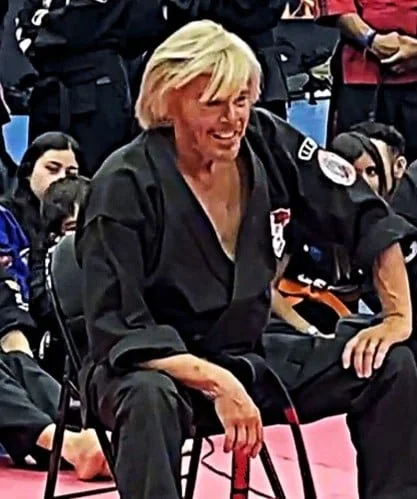
In this episode Jeremy chats with Kenpo practitioner Larry Tatum about his training and teaching methodologies.
Larry Tatum - Episode 1098
SUMMARY
In this conversation, Larry Tatum shares his extensive journey in martial arts, spanning over 60 years. He discusses how he began his training at a young age, the impact of Ed Parker's Kenpo school on his life, and the importance of respect and discipline in martial arts. Tatum emphasizes the role of martial arts in personal growth, teaching, and embracing reality, while also highlighting the significance of communication in teaching martial arts effectively. In this conversation, Jeremy Lesniak and Larry Tatum delve into the intricacies of teaching martial arts, exploring the cultural significance of techniques, the ethical responsibilities of instructors, and the personal growth that comes from teaching. Tatum shares insights from his extensive experience, emphasizing the importance of understanding the emotional and ethical dimensions of martial arts. He also discusses his journey as a writer, highlighting the therapeutic aspects of reliving experiences through storytelling. The conversation culminates in a reflection on the spiritual dimensions of teaching and the profound impact it can have on both instructors and students.
TAKEAWAYS
Larry Tatum has over 60 years of martial arts experience.
His journey began with judo and transitioned to Kenpo at age 15.
Martial arts provided him with discipline and improved his academic performance.
The culture at Ed Parker's school emphasized respect and acknowledgment.
Training involved sparring with older, more experienced practitioners.
Martial arts teaches students to embrace reality and break down emotional walls.
Teaching should focus on communication and understanding beyond physical techniques.
Larry emphasizes the importance of parables in teaching martial arts.
He believes that martial arts can help individuals find their place in society.
Cultural significance in techniques teaches ethical behavior.
The more you teach, the more you learn.
Martial arts instruction requires ethical responsibility.
Teaching is not just about physical skills; it's about emotional understanding.
Promoting students too quickly can hinder their journey.
Writing about teaching is a therapeutic process.
CHAPTERS
00:00 Introduction
02:25 The Journey Begins: Larry Tatum's Martial Arts Path
11:37 The Culture of Kenpo: Respect and Reality
24:35 Embracing Reality: Lessons from Martial Arts Teaching
32:00 Teaching Martial Arts: A Passionate Journey
38:59 Cultural Significance in Martial Arts Techniques
44:00 The Role of Ethics in Martial Arts Instruction
50:03 The Journey of Writing and Teaching
57:06 The Spiritual Aspect of Teaching Martial Arts
Join our EXCLUSIVE newsletter to get notified of each episode as it comes out!
Subscribe — whistlekick Martial Arts Radio
After listening to the episode, it would be exciting for us to know your thoughts about it.
✅Subscribe to whistlekick Martial Arts Radio on the following platforms:
🎧Apple Podcasts: https://apple.co/3mVnZmf
🎧Spotify: https://spoti.fi/3yHVdHQ
✅You can find whistlekick on all social media platforms using the handle @whistlekick or visit our website at https://www.whistlekick.com or https://www.whistlekickmartialartsradio.com
Show Transcript
Jeremy Lesniak (11:35.176)
What's going on everybody? Welcome back to another episode of Whistlekick Martial Arts Radio. And on today's episode, Andrew and I are going to discuss the question, are all martial artists outcasts? I bet you already have an opinion on that, but bear with us. Let's unpack this together. I'm joined today by my good friend, Andrew Adams. welcome. Thanks for all that you do for the show.
Andrew Adams (12:03.241)
I don't do anything.
Jeremy Lesniak (12:04.622)
Nothing at all. No, you just kind of, you know, most of it. I'm Jeremy Lesniak, founder here at Whistlekick, and I do some things. I wear a lot of hats, which is good, because I don't have any hair. And if you're new to the show and to what we do, please.
Check out whistlekickcommercialartsradio.com. It's where you're going to find every single episode we have ever done. The video versions, the audio versions. You can sign up for our newsletter while you're over there. Now, what is this newsletter? Really, it's pretty simple. We email you the episodes when they come out, as well as some bonus material. And if you like the show, you should do that because it makes it easier to find. You can also, and probably should also, subscribe and wherever you are, Spotify, Apple Podcasts.
YouTube, but when you get those emails, we give you all the best stuff because we can't put everything in the show notes. Those platforms won't let us. So if you want the bonus material, the outtakes, all that good stuff, make sure you sign up and you'll find that link to sign up anywhere you're going to find the show itself. All right, Andrew, are we ready to dig in? We're ready to do this. Okay.
Andrew Adams (13:15.948)
Let's dig in.
Jeremy Lesniak (13:20.862)
is that you pantomiming digging?
Andrew Adams (13:22.402)
Yeah, dig it.
Jeremy Lesniak (13:24.648)
It was a very short shovel and it looks like you are already in a hole as you are digging. I feel like if you're in the hole, you probably shouldn't be digging above yourself. could be a problem. Maybe. Maybe you're digging a boxhole.
Andrew Adams (13:34.807)
Maybe I'm digging a foxhole.
Jeremy Lesniak (13:43.386)
Martial artists are weird. And I think that we can say that with some confidence because what we do is weird. And weird people, it's kind of required to be a weird person to do a weird thing. What we do is strange. If you've never seen martial arts before, if you have no idea what it is, if you come in from another planet or out of the woods and you watch people,
Andrew Adams (13:46.082)
Yeah, we are.
Jeremy Lesniak (14:12.156)
conducting themselves in a typical traditional martial arts class, you will see them trying to almost hit each other or hit each other gently. So that's kind of weird because we're not actually trying to hurt them. We're trying to better ourselves, right? That's weird. We practice these techniques and let's face it, we're generally doing.
Andrew Adams (14:21.966)
Mm-hmm.
Jeremy Lesniak (14:36.46)
some techniques that don't have a lot of application to them. They're kind of niche, they're kind of odd. And we wear funny clothes, most of us, and we have this pseudo-militaristic hierarchy going on. And we memorize things, everything from language to choreographed fake fights.
And a lot of us talk in foreign languages when we don't even understand what the words mean sometimes. That's all weird, right?
Andrew Adams (15:09.368)
Mm-hmm.
Andrew Adams (15:12.974)
Yeah, and for a lot of people, it consumes a lot of their life in a really heavy way. All aspects of their life revolve around the martial art that they train in. And for a lot of people, that is weird.
Jeremy Lesniak (15:36.028)
Yeah, yeah, when you layer in the commitments outside of training that go into this, doing the laundry for this, right? If you have a really heavy uniform, you know that that does not launder easily. You have to pay money to do this. You will probably get banged and bruised up. So now there are wounds and injuries to deal with.
Andrew Adams (15:58.831)
Mm-hmm.
Jeremy Lesniak (16:00.356)
and it is time away from other people because while plenty of families do train together, I'm going to say that based on my observations, the majority of people who train do not train with the people they live with.
Andrew Adams (16:13.166)
Yeah, I would agree they do train a lot of them but not all and you're right probably a vast majority and and I think that the part that that you kind of glossed over is But I think is important is walking around with bruises all the time
Jeremy Lesniak (16:28.914)
Yeah, yeah, this idea that we go do this thing and then.
we show up to the rest of the world proud of it when a lot of the things that we exhibit in our day-to-day lives are counter to societal norms, right? The injury stuff is probably the most prominent.
Andrew Adams (16:58.412)
Yeah, I would agree.
Jeremy Lesniak (16:58.948)
Most people, if they're walking around with a black eye, are embarrassed. There are a lot of martial artists who are like, hey, did see my black eye? Can we talk about it? Right? That's kind of strange.
Andrew Adams (17:08.078)
you
Yeah, yeah, I actually, had a martial arts friend and I would send pictures back and forth of our, bruises we might get on our arm. Look how purple it is over here. yeah, yeah, yeah, it is. You're right. You're right.
Jeremy Lesniak (17:21.04)
It's weird. Okay. So I think I don't think anyone would ever disagree with the notion that what we do is a bit odd. We love it. It makes sense to us. But when we look at it through the contemporary societal lens,
It's kind of strange. Now you can make the argument that a hundred years ago it was less strange or whatever, but when we think about it today, it's kind of strange.
Andrew Adams (17:56.303)
And I think it has its ups and downs in terms of it being common, putting in air quotes, commonplace or accepted is not the right word. I don't think it's ever not been accepted, but I think there have been upswings and downswings of when it has been more popular and mainstream. And I do think we're starting to get...
into an upswing of it being a little more mainstream now to do martial arts. And I think part of that is due to a number of celebrities that are involved in martial arts. And so people are seeing it as less weird, but I think those of us that have been in it a really long time, you and I, and likely a lot of our listeners or watchers, if you're on YouTube, have been in it a long time and have seen where it
It wasn't as societally accepted.
Jeremy Lesniak (18:55.356)
Yeah, I think that social proof is making people more comfortable trying it, but that doesn't make it unweird, right? People are willing to try things. And I think the best example I can offer of that transition actually doesn't come from martial arts. I'm sure you've seen the Big Bang Theory. I'm gonna guess a lot of our audience has.
Andrew Adams (19:06.872)
Mm-hmm.
Jeremy Lesniak (19:23.576)
If you take a look at the arc of that show through time, it gave a lot of people a lot of permission to do their nerdy things, to play role-playing games, to play video games, to be more public about it.
Andrew Adams (19:33.966)
That's a really good point
Jeremy Lesniak (19:39.4)
The aspect of that show that I, or the nerdy pursuit that I think changed most in the modern landscape is role playing games, Dungeons and Dragons, you know, and so forth. There is a huge difference in the way Western society perceives those things. And I believe it is single-handedly because of that show.
Andrew Adams (20:00.994)
Yeah, I hadn't thought of that, but that's a really, really good point that things like tabletop games, the most common being Dungeons and Dragons, or even live action role playing, large things like that have become a lot more mainstream. And you're right. I think that show is a major part of that.
Jeremy Lesniak (20:23.472)
Now, the reason I cite that show is because even though those things have gotten more popular,
Even the people participating in them will say, this is weird, this is nerdy, it's kind of silly, but I still enjoy it. And I think that that is what most martial artists would say if you ask them, hey, is what you do, think about it, is it kind of weird? I think most people, even if, maybe they haven't thought about it that way before, but if they stop to think about it, they'll say, you know what? What we do is pretty strange. We make friends by punching each other in the face. I mean, there's a lot of us that make that joke. You know, I made my best friend because I kicked him in the head.
You know, it's a ridiculous thing to say, and it's even more ridiculous because it's true in a lot of cases. Acceptance of it doesn't make it less strange given the conventional landscape. And what I find really interesting, you know, when we use words like strange or weird, we're usually talking about...
the way the majority of people look at things, right? What I don't have data on that I really, know, as Whistlekick grows, I really want data on this single thing. What percentage of people alive have done martial arts? We have data on who is currently doing martial arts, but I'm sure you just like I bump into people all the time and say, yeah, I did whatever for, you know, a year or two or three years.
Andrew Adams (21:38.861)
Mmm.
Jeremy Lesniak (21:48.04)
when I was a kid or when I was a teenager or in my 20s or you know I did wrestling or boxing you know if we if we go to everybody you know is that is that at a majority level even if it is I don't think it is my guess my guess is going to be 30 to 40 percent by the way
Andrew Adams (21:49.166)
Mm-hmm.
Andrew Adams (22:05.868)
Yeah.
Jeremy Lesniak (22:07.598)
Even if we had 60, 70, 80 % of the world that had done some martial arts at some point, I don't think that changes the fact that it is strange and we see it as strange. And here's my proof. When a martial artist posts a video of them doing something that other martial artists have not generally seen before, it is often torn apart.
Andrew Adams (22:33.23)
Hmm. Yep.
Jeremy Lesniak (22:34.598)
Right? And I'm not just talking about, I've done this, you know, I'm showing how I do this form. No, I'm talking about weird. And I'm intentionally not using specifics here because all the ones I come up with, people are going to get derailed in the conversation. And I want you to just kind of stay with us. I can show you a new drill that I do and...
The more creative it is, the more weird it is, and the more likely people are gonna, mm, actually I do have a great example. Here's one, and it's one that you probably won't think is weird, Andrew, because you and I have spent enough time together, but it is weird in much of the martial art, traditional martial arts world. Very, very slow movement. When I do seminars with this, when I travel, when I'm leading people in these sessions, a lot of people struggle with it.
Andrew Adams (23:18.519)
Mm-hmm, yeah.
Jeremy Lesniak (23:28.04)
And they struggle with it because they struggle to even wrap their head around why. Now, we're not going to get bogged into that. We've done plenty of episodes on slow and why that's relevant. But even within our own circles, we think what a lot of us do is weird.
Andrew Adams (23:31.584)
Yeah, yeah.
Andrew Adams (23:45.549)
Yeah, yeah, no, I would definitely agree. And you're right. If people don't understand something, they see it as even more bizarre. And so the slow is a perfect example of that.
Jeremy Lesniak (24:00.838)
Now the question we have at hand is, does weird and strange constitute outcast? Are the people participating in weird and strange things necessarily outcast? I don't think so, but I think there is a point where what you do is weird enough and strange enough that people see you doing those things and they do create some distance from you.
Andrew Adams (24:27.66)
Yeah. And even if you think about the uniform that we wear in many schools, not all, but most schools wear a different clothes than they would normally wear out on the street. Most schools aren't training in jeans and t-shirt. Are there reasons to do so? Yes. We're not going to get into that, but I feel a little bizarre myself.
If I leave the school and because sometimes I leave the house and I'll put my karate pants on and I'll have a t-shirt on and then I'll go to the school. I'll put on my top at the school and my belt and I'll have class. And when I leave class, I'll take my top off and I'll take my belt off, but I still have those pants on and I'm like, shoot, I need to run to the grocery store.
I feel a little weird because it is not what typically people wear.
Jeremy Lesniak (25:25.926)
And I think that that physical response, kind of that, you know, right? Because maybe you're not embarrassed, you're not panicked, you're not fearful, but you are aware that other people are aware of what you are doing. And it is strange.
Andrew Adams (25:42.274)
Yeah.
Jeremy Lesniak (25:46.376)
So what does it mean to be an outcast? An outcast is someone who doesn't feel like they belong. Whether they feel that way falsely or others have made them feel that way, others have physically put them out, right? I don't quite know the etymology of that term, but I don't think we have to go back too far to think, okay, an outcast is someone who was literally cast out of their tribe, right?
Andrew Adams (26:13.506)
Mm-hmm. Yep.
Jeremy Lesniak (26:17.522)
Who is your tribe? I think for a lot of us, we look geographically. It is the people that you live with and work with. Those are your modern day tribe. And if you're not doing martial arts with most of them, what you are doing, a large part of your identity, because I don't know too many martial artists who've been training more than, I would say two, three years, that do not have some portion of their identity wrapped up in their training.
When part of who you are is viewed differently, dramatically differently by the people in your tribe, and you are aware of that and continue to do that thing, you are choosing to participate in something that has distance between you and your tribe.
Andrew Adams (27:11.48)
Yep. Yep.
Jeremy Lesniak (27:15.344)
And I think you could, depending on how you wanted to find these terms, because there's some ambiguity here, I think most people could say, I am a bit of an outcast. I'm a bit of a weirdo. I've heard, and I think this is Craig's term, he may have taken it from someone else, that martial arts schools are islands of misfit toys.
Andrew Adams (27:41.742)
Yeah, I've heard that too. And it might have been from Craig. don't remember, but yes.
Jeremy Lesniak (27:48.72)
And I think that recognizing this, know, and we should probably be really clear. We're not disparaging anyone, especially since we're about as deep into this as anybody else.
Andrew Adams (27:58.831)
We're in that group.
Jeremy Lesniak (28:05.01)
But here's the proof. Here's how I would prove it. And Andrew, I'm gonna guess you identify with this too. I am most comfortable in my life wearing my gi.
training with other people wearing a gi training. It almost doesn't matter what we're training. Doesn't matter where we are. I am that that is who I am.
Andrew Adams (28:25.186)
Yeah. Yep.
Andrew Adams (28:34.488)
Yeah, yep, no, I would agree with that statement for me as well, for sure. It's either that or drumsticks in my hand.
Jeremy Lesniak (28:41.576)
Sure, sure, I get that. Which, know, again, we could say all the things that we said about that, about musicians, musicians are a weird lot. I think the biggest difference is that there's more social acceptance of being a musician. When you reach a certain standing, you know, it's like, my God, you're a musician. That's how everybody's talking to you. Nobody's out there saying, my God, YouTube, where's Warts?
Andrew Adams (28:48.557)
Mm-hmm.
Andrew Adams (28:56.972)
Yeah, yeah
Andrew Adams (29:11.736)
I'm gonna come home tonight and Teresa's gonna be like, my God, you know martial arts.
Jeremy Lesniak (29:15.468)
I hope she does and if she does I hope she records it because I want to see her because that'd be funny
Andrew Adams (29:19.292)
Hahaha
Jeremy Lesniak (29:23.324)
Being an outcast isn't bad. Being an outcast is living your own life your way, regardless of what other people think or want. It is not a bad thing. A lot of the things that I choose to do around health and fitness are perceived as strange and kind of always been that way. kind of, you know, mean.
Andrew Adams (29:32.962)
which is not a bad thing.
Jeremy Lesniak (29:46.918)
I didn't end up writing books on health, 12 months to health by the way, for those of you out there. I didn't end up writing that book because I was a mainstream follower of what everyone else does in health and fitness. It's because I'm constantly researching and testing and trying to find new and better and more efficient ways to keep myself healthy. I think a lot of us are.
on a simpler level doing that with our training. We're looking for the things that we can do day to day that scratch a particular itch, make us smile, make us comfortable, whatever those things are. most people, while we have said time and again,
Everyone would benefit from traditional martial arts training. We are still on this mission at whistle kick to get everybody to train for at least six months across the globe. Yes, we all still want that. But that doesn't mean that in any given martial arts school, the majority of people would find it something that they did not want to do. Most people would not have an enjoyable time in my martial arts school, long term.
They wouldn't, I know they wouldn't, because we do things in a certain way. But some of them would find value in, I'm thinking of other schools that are around here. A good chunk of those that, let's say washed out from training with me, would train better and have more fun at that school or that school or that school. And if everybody keeps trying, they're eventually gonna find a school that will work for them.
Andrew Adams (31:33.24)
Yeah, no, I fully agree. And as we train longer, we start to find that although we might be, and I'm putting this in air quotes, outcast, we found our own tribe and we make our own tribe within our school.
Jeremy Lesniak (31:56.358)
I think I'll, I think.
Jeremy Lesniak (32:00.788)
some of us because we, I don't know that I wanna say this as exclusively to those who are training as children, but I think it's a pretty universal experience to feel othered as a child. Even, and I've come to learn this as an adult, even the people that I thought were the most social, popular, et cetera, they also felt some degree of being othered. And a lot of them,
Andrew Adams (32:27.789)
Mm-hmm.
Jeremy Lesniak (32:30.184)
had to change the way they were and showed up to be in that role, but they weren't living authentically. So again, I think we all go through this.
But when we find a thing that makes us feel good, that gives us some identity and a place to plant our flag as to this is part of who I am. And even if most people don't accept it, there are people that accept it. I'm not the only one. That is really powerful and really validating. And you and I are gonna record a second episode today that I think actually could plug in right here about
Andrew Adams (32:56.812)
Yep. Yep. Yep.
Jeremy Lesniak (33:13.064)
the non-physical, the soft skills, a lot of the personality stuff and mental, emotional stuff that shows up with long-term training. And I think that that's where for so many of us we say, I don't even, I don't care if nobody gets it. I do not care because this is who I am and I need this.
Andrew Adams (33:38.274)
Yeah, no, fully agree.
Jeremy Lesniak (33:41.394)
So I wanna recognize all of you out there. you are like I am, like I believe I can speak for you, Andrew, like you are, like so many of our friends are, like the whole core team at Whistlekick is.
Jeremy Lesniak (33:57.65)
We don't see being outcast as a bad thing. We're choosing to do something different that works for us. And that's awesome. And if you are someone who is doing something different and it works for you and it doesn't hurt anybody else, then you have every right to do that. And that goes back to the six freedoms of martial arts. You have the right to train how you want, where you want, with whom you want, why you want, when you want.
Andrew Adams (34:06.243)
Mm-hmm.
Jeremy Lesniak (34:25.704)
towards whatever goals and nobody has a right to ruin that for you because it's about you, it's about your training. If you continue to train, you may be even further cast out. no, that's okay. You're doing you for your sake, you deserve that. Everybody wants the confidence to do their own thing.
the loudest people who criticize, and this happens within our sphere as well, the loudest critics, those are the ones who are the most afraid to step out and do their own thing. They are jealous of your confidence, and they are trying to ruin your willingness, because the more you do your own thing, the less they have other people doing their thing.
Andrew Adams (35:04.13)
Good point.
Jeremy Lesniak (35:20.272)
and they're afraid of being even further cast out. To those of you who do that, I understand. It is scary out there, but it's okay. You'll be fine. Do your thing. Train your way, et cetera.
Andrew Adams (35:38.348)
Yep, that's a great note to end on.
Jeremy Lesniak (35:43.92)
If you have feedback for this episode, we want to hear it. You can send all complimentary emails to me, jeremy at whistlekick.com. If you have anything hateful to say, you can send it to andrew at whistlekick.com. Our social media everywhere you could think of is at whistlekick. And don't forget, don't forget, release audio versions, but also video versions. are on YouTube the day of release and the video versions are on Spotify.
Usually pretty close. We've got to go and there's a manual thing that we've got to do that Andrew does a great job on. So thank you for that. And if you want this and every other episode sent right to you so you have the most convenient way to go watch, listen and never miss a thing. Que Aerosmith tune here. Make sure you sign up for the emails in the show notes wherever you're getting this episode. There's a link there all the time.
Anything else we add before we bounce over here? All right. Thanks for being here. Thanks for spending some time with us. We appreciate you and your support. And until next time, train hard, smile, have a great day.
Andrew Adams (36:42.828)
No, I think that's great.
Andrew Adams (36:52.334)
Train hard, smile, and have a great day.
------------------------------------
Larry Tatum (00:01.614)
Good morning.
Jeremy Lesniak (00:03.077)
Good morning, sir. How are you?
Larry Tatum (00:06.456)
Can you hear me?
Jeremy Lesniak (00:08.11)
I can, can you hear me okay?
Larry Tatum (00:09.326)
I can't hear, wait a second. Okay, can you hear me now?
Jeremy Lesniak (00:12.145)
Check, check. I can hear you.
Larry Tatum (00:15.022)
Okay, loud and clear. Yes. hold on one second. I'm going to change the audio here just a little bit.
Jeremy Lesniak (00:18.021)
Yes, you sound great.
Larry Tatum (00:28.778)
Okay, can you still hear me?
Jeremy Lesniak (00:31.376)
Yes.
Larry Tatum (00:36.687)
I've fallen. So if I sit down, I think I'll make it. It's been going around a lot of people in our area have been getting vertical. It's a type of flu. And boy, I tell you, I got this morning. That was it. I think we can do this as long as I stay seated and I have my coffee.
Jeremy Lesniak (00:37.105)
Hello, hello.
Jeremy Lesniak (01:00.187)
Sounds good. I'm getting a small error here. I'm probably going to have to refresh the page. It's on. My end is with the system, so just bear with me. It may go away with this thing here.
Larry Tatum (01:10.673)
Sorry.
Jeremy Lesniak (01:21.071)
world of technology, right?
Larry Tatum (01:25.415)
Let's see.
Jeremy Lesniak (01:27.013)
I'm going to go ahead. I will refresh. may kick you out. Just come back in. If it does, my apologies.
Larry Tatum (01:30.503)
Okay, got it.
Larry Tatum (02:28.743)
How we doing now?
Jeremy Lesniak (02:28.908)
All right, and everything seems good now. Yeah.
Larry Tatum (02:33.595)
Okay, all right.
Jeremy Lesniak (02:38.038)
Well, the recording is running, we're not officially going. This isn't going to be part of the recording unless you say something brilliant. We'll keep that in if you do. I'll share with you a couple of things that I always remind folks that come on the show. And then if you have questions, we can talk through them, of course. It's not live, so feel free to screw up. Put your foot in your mouth. Say something dumb. I'm probably going to do it. I usually do.
Larry Tatum (02:47.623)
There we go.
Jeremy Lesniak (03:06.942)
We usually keep it in if I do it, but we're going to make sure that you look and sound good. We're not going to do anything that paints you in a bad light. We don't rearrange. We don't edit for length. We don't put things together to make it seem like you said something you didn't mean to say. Nothing like that. The only editing we do really would be for technical reasons or if one of us needs a break. One of us needs the bathroom or, hey, I'm puffing to death. need to go
drink of water or something. That's the sort of stuff we would edit for. It's pretty rare we do anything more than just cutting off the front and the back end. It just kind of runs as it runs. because it's not live, that means if you need something from me, don't be afraid to ask. Whatever it is. You're going to do most of the talking, almost all the talking, in fact.
Larry Tatum (03:47.249)
Good, good, sounds good.
Larry Tatum (04:04.391)
I
Jeremy Lesniak (04:04.816)
My job is pretty simple, to keep you talking. And my style is pretty simple in that you talk and I'll ask you something about something that you just said. It's very conversational. I don't have prepared questions. I don't have an agenda. It's nothing like that. And...
Larry Tatum (04:07.525)
Alright, that sounds good.
Larry Tatum (04:24.847)
No politics and good.
Jeremy Lesniak (04:28.828)
No, no, am not. There the world has too much agenda. I have no agenda.
Larry Tatum (04:34.799)
It is too much. I mean, everybody is, everybody has a talking point, right?
Jeremy Lesniak (04:43.084)
They do. Mine's pretty simple. I martial arts makes us better and that's the beginning and end of it. So we'll talk for somewhere around an hour and I'll look for a point where it seems to make sense that we start to wind up. I'll ask you to close the show. I always do that with the guests. say, you
Larry Tatum (04:50.65)
Absolutely.
Larry Tatum (04:55.643)
Alright, that sounds good.
Jeremy Lesniak (05:10.116)
How do you want to close? And you share whatever you want to share at the end. And then we do that. At the beginning, when we start, I'm going to welcome to the audience. I'm going to acknowledge you. I'll give a very brief intro for folks who might be newer to the show. And then you and I will just start chatting. The intro portion is like 20 seconds. It's not very long.
Larry Tatum (05:33.905)
Sounds good.
Jeremy Lesniak (05:35.67)
Do you have anything you need from me? Any questions, any concerns?
Larry Tatum (05:38.213)
No, not at all. So will they be able to see us while we're talking? Okay.
Jeremy Lesniak (05:44.432)
Yes, yeah, this is video, so don't pick your nose while we're going.
Larry Tatum (05:50.769)
Sounds good.
Jeremy Lesniak (05:52.178)
OK. All right. So it's already running. So I'm going to leave a few seconds of silence. And then I'll start my piece. And we'll go from there.
Jeremy Lesniak (06:04.628)
Hey, what's going on, everybody? Welcome back to another episode of Whistlekick Martial Arts Radio. Today I'm joined by Larry Tatum. Sir, thanks for being here. Looking forward to this. I've wanted to have you on the show for a very long time. But for all of you out there, if you happen to be new to what we do, please check out whistlekickmartialartsradio.com. We've got nearly 1,100 episodes that we've done over the last decade, including folks who have been around doing martial arts for a little while, like today's guest.
as well as some topic episodes and you know everybody from from the people you know to the people that maybe you train with. We do it all because we love martial arts over here and if you love martial arts you're in the right place. And with that sir thanks thanks for being here on martial arts radio how are you?
Larry Tatum (06:52.081)
Thank you. Thank you. Thank you for having me. As I said before the show, I woke up this morning with a bad case of vertigo. It's been so if I look at this, this eye is kind of shut. It's a type of flu been going around and a lot of people you wake up with vertigo and literally you'll hit the ground. You can't stand up as long as I'm and I can hear you. I think we can go through this. Okay. All right.
Jeremy Lesniak (07:03.596)
Mm.
Jeremy Lesniak (07:20.108)
Well, we'll do the best we can. And if we end up needing to reschedule it, we'll do that. You got your, that's, mean, that's the most important part, Coffee is life for so many of us.
Larry Tatum (07:22.439)
And I got my coffee, so I'm okay.
Larry Tatum (07:29.529)
Absolutely.
I don't, kip of blood.
Jeremy Lesniak (07:39.198)
I don't know where we start. Your martial arts career has spanned a couple of decades.
Larry Tatum (07:49.536)
my gosh, it's over 60 years now. That's a long time.
Jeremy Lesniak (07:53.228)
And it is a long time. And you've been well known for a good portion of that time. And as someone who is inversely afflicted, I have to note that you've had quite the hair for that time.
Larry Tatum (08:00.797)
yeah, yeah.
Larry Tatum (08:12.953)
You know, I guess as I got older, my hair got thicker. I don't know why. It just happened. Just rub it in.
Jeremy Lesniak (08:14.988)
Ha ha!
Jeremy Lesniak (08:28.204)
Just rub it in. He's just...
Larry Tatum (08:33.916)
Yeah, keeps me warm.
Jeremy Lesniak (08:38.636)
Yeah. Which you need down there and you're in Arizona, right? Yeah. Yeah. You need.
Larry Tatum (08:42.469)
Yeah, I'm in Prescott, Arizona. It's a mile high. It's about an hour and a half, two hours from north of Phoenix. We're up a mile, so it gets real cold here, but it's beautiful. like it calm and quiet.
Jeremy Lesniak (08:57.004)
Nice, yeah, it's, I saw a graphic come through social media the other day and I was surprised to learn that there were actual ski resorts in New Mexico and Arizona. It blew me away, I never imagined.
Larry Tatum (09:07.257)
Yeah, yeah, yeah. I didn't either until we moved here.
Jeremy Lesniak (09:14.176)
Where did you start out?
Larry Tatum (09:16.507)
Where did I start out? gosh, I was 15 years old and...
Jeremy Lesniak (09:18.144)
Yeah.
Larry Tatum (09:24.807)
I took a couple of judo lessons and I liked it a lot. I had them in Pasadena, California. That's where I was born and raised. he said, you know, I think you'll like something better than this. And I said, what? He said, it's called kenpo. And he said, let's give that a try. And my brother went first to check it out as an older brother.
Jeremy Lesniak (09:28.835)
Where was that?
okay. You're a California guy. Okay.
Larry Tatum (09:53.447)
I was 15 years old. And he came back and after a couple lessons and told me, said, look, it's a good place for you. I think you'll really enjoy it. And he said, it's more than just learning how to fight. But, I was 15 and I thought, you know, why not increase my fighting edge? You know, that's, back in those days in 1965,
martial arts kimpel karate was still an obscure.
way of fighting, of understanding fighting and so forth that it wasn't wrestling, wasn't boxing, so to speak. And so as a kid, I went in there and this guy came in, big guy with jet black hair and it was Ed Parker and he grabbed me, pulled me in his office and we sat down and signed me up. so when I went in and put my first gi on,
which cost me $12 for the, yeah, $12 for the ghee. And it, huh?
Jeremy Lesniak (11:07.668)
Lawpack then. That's a lot. I would imagine that's a lot for a uniform. Yeah.
Larry Tatum (11:12.36)
That was a lot of money. I did people's yards and paper routes to save money as a kid and so forth. But when I put the uniform on, felt suddenly I was united with an old friend. I felt different. Something was different. And so I went on the mats and...
learned the procedures of bowing, know, ethical behavior and so forth. And it really hit me hard in a good way in that, you know, I didn't like school as a kid. hated it. It wasn't I couldn't do it, it's because I could learn very fast and I got bored easy. And...
What I realized was that the discipline that I needed as a 15 year old kid was beginning to take place at Ed Parker's karate school. And my grades went up, my concentration went up, began to look at life on a three dimensional level.
began to understand my importance as a kid and realized that the more I learned and the better that I got, other things were changing as quickly as I was learning how to fight. I couldn't categorize them then because it was happening very fast.
Jeremy Lesniak (12:54.166)
What did your family think of this? said your brother signed off on it, but what about, you know, parents?
Larry Tatum (13:01.104)
My dad, after I came home in the first lesson, and it was very tough in those days, because there were no kids, and there were no girls or no women, it just wasn't, it wasn't apropos then. They didn't take a...
Jeremy Lesniak (13:07.916)
Thank
Larry Tatum (13:15.992)
It was very rough. I was fighting guys that were 25, 30 years old and older teenagers and guys that were very rough. And so you took your lumps. So when I crawled in the front door, my dad said, how do you like it? I said, I love it. And my dad, who was quite a boxer and he was very streetwise.
understood that it was the best place for me at the time. I, as a kid, as I got better, go back to school, and the so-called guys that thought they were the toughest of school, they weren't tough anymore because I was fighting brown and black belts as a white belt. That's how you learned, okay? And...
You learn to take it and you learn to not flare up when you got hit. You learn to respect. See, we always had a thing back in those days when we had Spar. If you got your shot in, the guy would acknowledge it. It's very important. And that hit me very strong as a kid to acknowledge getting hit and giving back respect.
reminded me of the Knights of Old with their swords and a suit of armor, okay?
Larry Tatum (14:50.084)
So it was the way Ed Parker had coordinated this culture, okay, within Pasadena back in 1965 was far ahead of its time in terms of helping kids.
Find their place Okay in society in Town neighborhood they lived in and like I said before the importance and as a teacher all my life one of the most important things and I keep using that word is to Let your student know that they are important Okay and that
that word transcends all languages. Okay, it does. And not just for kids, but for adults too, because you get a lot of adults that come in to sign up and they missed that lesson possibly when they were younger. so people from all walks of life even may be successful in their business, but
their confidence within themselves, okay, may be lacking and generally is. You know, a people said, I'm coming in for self-defense, I'm coming in for exercise, but their subconscious is actually aware of the fact that they're there for other reasons. Okay, I mean, people stay for a long time and have to get your black belt.
I mean, guys keep training, how, like we used to say, how dead is dead? I mean, how much do you want to fight? Okay. Okay. How much do you, how much do you want to fight? How much do you need to fight? I mean, when are you going to reach a point in your training where fighting is not the big thing in terms of training? Okay. The reason that you come back is yeah, you like to yourself in shape and sure you like the challenge of it, but
Larry Tatum (17:04.964)
what it does is it creates a disciplined mind and a thinker, okay, a deep thinker. And that's why people keep coming back. It's the camaraderie of...
Larry Tatum (17:24.912)
of a culture that allows you to, like I said, hit each other, okay, but with respect. Okay, and that.
Jeremy Lesniak (17:32.702)
Now, when you got started, here you are, 15, I'm guessing you're one of, if not the youngest person in the world.
Larry Tatum (17:41.08)
I was there was in those days they wouldn't take anybody under 14.
Jeremy Lesniak (17:47.756)
So yeah, you're one of the youngest people there. You're with some, and you said men, exclusively men, many of whom were, most of whom were older. When you started anyway, they'd all been training longer than you.
It could be really easy for within that culture for them to almost haze you. To really haze, just to knock you around a lot in the beginning. And I'm curious, because you're talking about the school being ahead of its time and Mr. Parker's, the culture that he had built there. How were you received when you came in? What was it like for you as that teenager?
Larry Tatum (18:14.17)
Almost what?
Yes.
Larry Tatum (18:37.33)
How was I received? Well, I remember there was a, I've told people this throughout the years, there was a strange smell to the place, a physical smell. And it wasn't body odor, I'm not saying that, okay? You'd come through the front door and there was this pungent musk-like smell.
Jeremy Lesniak (18:37.632)
as you're starting out.
Jeremy Lesniak (18:50.294)
Yeah
Larry Tatum (19:06.188)
And my brother noticed it too. And it was thick, it was heavy, you could cut it with a knife. But the Tartostrid actually took on a physical smell in that dojo. It was very strange. It was a dangerous smell. And the only thing I can liken it to is that years ago,
and Pasadena they had a car dealership that had a bear, a live bear in a cage that you could wrestle for a dollar. Okay, you call him, his name was, yeah, Victor the wrestling bear. He was trained to wrestle big wrestlers. And I was 16 at that time and my friends goaded me in to pay a dollar and.
Jeremy Lesniak (19:46.09)
Make a great idea.
Larry Tatum (20:03.672)
That was probably the stupidest thing I ever did. And the guy that would train her, the bear said, don't escalate force because he'll do it proportionately to you and more. But I'm a teenager, I thought I can outwit this bear. You name it, I tried it, but he was way ahead of me. mean, not only was he trained, but his instincts.
as a fighter, as an animal there. But he had one thing that he would do. He would stick his muzzle in your face and breathe down your throat. And that hot air and the musk coming from his body would actually choke you. It was a strange thing. Well, that was the same. It took me a week to get it out of my hair. It did. And a t-shirt I had to throw away that I wrestled in.
The novelty of doing that was worth it. I'm glad I did. But that type of smell lingered in the studio when you walked in there. And in those days, when Black Belt walked in, you stood in respect. You didn't have to be told to. You didn't have to be told you have to salute them. this, that was there. was...
the point was made, okay? It was very clear that if those guys had a black belt or a brown belt and they walked past you, you knew that they were Knights of Ault in that sense, okay? And that, you know, there was only a handful of karate schools in the United States, Japanese, there were, I don't remember any Taiko Ando schools at that time.
So anyway, that was my environment. And so when I would go back to school, I was one of maybe three guys in the school, in regular school in Pasadena that were taking lessons there. Just, it wasn't done. It it wasn't done.
Larry Tatum (22:29.028)
It was worth it. was like being transported back in time to days of old.
Jeremy Lesniak (22:37.452)
You've mentioned that a few times, this connection, what some folks get really doubted on as Budo, right? The code. And yeah, in the Middle Ages, we think of knights having a code. And of course, the code can be different. Different people have different codes. But I'm wondering if that was something that you were, were you aware of that connection then, or is that something you're
Larry Tatum (22:48.911)
.com
Larry Tatum (22:59.144)
Sure.
Jeremy Lesniak (23:06.944)
putting together in hindsight.
Larry Tatum (23:08.36)
No, I was aware of it. I relished it. I, a kid, learning how finally to salute, okay, when it was the right time. And bowing before you stepped on the mats was very unique for a teenager in 1965. Understanding you're showing respect to the school.
to the teachers before you in the school, in turn, you're showing respect for yourself. Taking the time to sever yourself from the outside world when you bell, okay? And stepping into the mat area, and in those days, it was a sunken floor, like a Japanese house, it was great. And you stepped down into it, okay?
And once you did that, you were separated from your outside world. And this was unique for a teenager, let me tell you. It really was. And yeah, I felt it, I understood it.
Larry Tatum (24:25.616)
I,
Larry Tatum (24:30.985)
gosh.
In the old days, in the knighthood days, would, when you were knighted, they were slapping the face with a gauntlet, a glove. And that was to remind you to stay humble, okay? And that you were to help those that were helpless, those that were in need of food or protection and so forth. That was the same culture in 1965 that was in there.
And when you got kicked for your belt, that was the same as getting slapped in the face with a gauntlet.
Jeremy Lesniak (25:14.668)
pretty easy for us to look back and say, wow, you lucked out. You ended up training with an absolute legend in the world of American martial arts.
Larry Tatum (25:26.684)
Yeah, it
Jeremy Lesniak (25:29.74)
When, because, you I don't know Mr. Parker's career well, but, you know, we're talking about the mid-60s and my understanding of his reputation at that time is he was, you know, reasonably well known in the West Coast, but was not the, I'll call him the legend that he became in the Kenpo world nationally and internationally at that time. Is that a fair way to put it?
Larry Tatum (25:54.576)
Yes, yeah it was. I would get, he was instrumental in not just bringing Kimpel to the screen, okay, but
martial arts in Hollywood, okay, he was considered the person to go to.
Larry Tatum (26:19.183)
It,
Larry Tatum (26:23.458)
One of things I learned as a kid is that when he taught, is that he taught in parables. And when you do teach in parables like I do throughout my life, in my new book coming out, which I'll plug right now, it opens up the subconscious to the individual.
Parables are a way of a can opener, of opening you up to understanding. Some people pass it on as Zen or...
Larry Tatum (27:01.266)
transcending daily existence and so forth. But actually it's actually very simple. But you have to learn how to teach in that method, okay, to speak more than one language on the mat. Now, when I say speaking different language, is the human language, which is beyond the cultural language, like Spanish, Russian, English.
But parables really reach into the student and gets them to think beyond one dimension, two dimensions, they begin to think three dimensional. And that's what happened to me. And that's what I do when I teach or give seminars around the world and so forth. I just got back from Chile about a month and a half ago.
almost 500 people in one class, in one class. And most of were black belts. And when you walk out there and you see this, I always say a little prayer before I do it. I thank God for allowing me to be part of this and to be able to do what he intended me to do. But I looked out at 500 people and I told them, said, you know, I said, this is a huge seminar.
And that's not counting the hundreds or 200 that were in the audience watching.
So when you teach that many people, are you just going to teach a physical technique? Are you going to sit down and just discuss?
Larry Tatum (28:56.602)
easy words to just say in a lotus position, okay? And I'm not downplaying it, but I'm saying, you know, or are you gonna really reach in and try to get people to understand beyond one dimension or linear thought?
And it's, that's speaking another language. It's speaking the human language. Okay, because people, you know, they build their walls of defense throughout life to protect themselves because no matter what lifestyle you were raised in, you start to build up certain walls and you live by them. Okay, what Kibble did to me as a kid was,
taught me to eliminate the walls, okay, and embrace reality. That's another important thing when you teach. You have to get the student to embrace reality and understand that there is a tremendous freedom in living that way. Okay, and then that's another reason why people
Jeremy Lesniak (30:12.941)
Can you say a little more about that? It strikes me as a significant concept that I might not be fully understanding. What do mean when you say embracing reality?
Larry Tatum (30:13.554)
come back because they want to embrace it.
Larry Tatum (30:35.378)
Well, it's no more, bear with me, because I still got this vertical. OK.
Jeremy Lesniak (30:40.012)
I understand.
Larry Tatum (30:43.952)
Everybody has their version of reality. Okay? You can make an analogy that how many...
Jeremy Lesniak (30:46.945)
Yes.
Larry Tatum (30:57.072)
shades of kenpo are there. Shades of light. Okay if somebody's behind you he's in the what? He's in the dark. If somebody's on the side of you he's in the gray. You can see some of it. If he's in front of you he's in the light. Okay now these are the shades in your your self-defense and your fighting that you deal with. You have to learn they exist and how
to encounter them. Okay. Now as a kid, you taught techniques that take this in consideration, those three shades of light, okay. When you step out of the studio, you step out of your house the next day, you see these three shades of light, don't you? You see it. Okay, so it brings you conscious, your conscious.
It's actually, this may sound elementary, but it's very profound. Your consciousness is raised because of that. You start looking at life in that manner. And then you start looking at the reasons that you built certain protective walls around yourself. It could be because of a family problem. could be a problem at school. could be your inability.
to achieve certain goals. So you've got to realize your environment and the reality of it. Okay. And exception, accepting the fact that you could get attacked. Okay. That's a reality. Accepting the fact that, I could learn how to protect myself. Is it a guarantee? No. But...
I have the ability to learn and walk in that direction. Okay? And every time you learn a technique, every time you come back to class, okay, the walls that you put up, okay, are pushed aside because reality takes center.
Larry Tatum (33:12.744)
whether you become a good fighter, a middle of the road fighter, or a poor fighter, you understand this relationship that you have, okay, with reality. Okay? And life is no more than a compromise with realities.
Larry Tatum (33:35.56)
Okay? But when you compromise, because of your Kimball training or other martial arts, okay, when you learn to compromise, you're compromising with reality, but you're not giving into it. Okay? You're not giving into it to the point that you have to build a security wall emotionally around yourself. And you live with those walls, okay, for the rest of your life.
I know that sounds a little dark, but this is what people do. So when I go to teach, I try to break down those walls. Getting back to Chile, when I went out and saw all those students out there, masters, high ranking black belts, just were, everybody's a student. But when I teach, I teach through the reality, but not to the point to where
It sickens the student, okay? But to the point to where the...
They become, they hang on the words that you're giving when you're teaching, okay? They're listening to you. They're listening to you. And.
without just being redundant, that's part of my nature. this is...
Larry Tatum (35:12.796)
Gosh, that's the best way, not the best way, but it's one way that I can explain how I teach. And what I learned as a kid, and I cultivated that. After I got back from Vietnam and the Army, I had to take a look at my realities now. Okay, what did I garner from being in a war? Okay.
what were the things that I was carrying with me that I didn't know. So when I got back to the studio, those things that I had to be when I was overseas, now were being the good part of it, you know, learning how to survive state, the other stuff was taken away. Okay, so I'm trying to, you know,
I'm still at this vertical is making me a little slow but bear with me.
Jeremy Lesniak (36:13.1)
think you're doing great. don't second guess yourself.
Larry Tatum (36:19.25)
So, you know, when you're, for those of you that are out there teaching and learning how to teach, you you have got to take the time, you know, guys become physically very good here. And then their teaching ability is about here and they get real good here, teaching ability, but it's not what? It's not unfortunate, is it? What you want to do.
is that you want your teaching ability to get up and unite with this. And then the importance of the physical does this. If you're going to wear red on your belt, and there's a lot of red out there, then let it be not because you know how to fight better, but because you can teach better.
and that you can speak the human language of understanding. Okay, that's what those higher ranks are all about. Not how many times you can do five swords or another technique. Okay, backwards, forwards, inside out, inversed. Okay, that's part of critical thinking, learning how to physically do that and understand the matrix of Kimpl. But your ability to communicate
through it. The art is what you are wearing that red on your belt for.
Larry Tatum (37:55.144)
We should move on, I guess, right? I don't want to bore people. mean, I...
Jeremy Lesniak (37:57.612)
No, no, it's, you know, one of the things that's kind of unique about this show is that because I just, I tend to let the guests talk, we often end up going in some directions that they're not used to going, which can often be a lot of fun, but.
The subject of how to teach martial arts and how to progress as an instructor of martial arts is something that I'm personally very passionate about.
How do you teach people how to teach?
Larry Tatum (38:38.044)
by what I'm telling you right now is that in my new book I get into deeper. There's another book I wrote. gosh, I think I have it here. The Teachings of a Kipple Master, which has done very well. I wrote this about eight years ago and everything I'm talking about I get into more detail. My newest book.
Jeremy Lesniak (38:52.938)
If you got a copy nearby, let's see it.
Larry Tatum (39:07.91)
which is about 500 pages, out, goes to print in about a week. It's everything I learned in my life through teaching.
So how do get people to do that? It's, guy came up to me and said, Mr. Tatum, I'm on a private lesson. I said, okay, go teach one.
Jeremy Lesniak (39:32.46)
Ha ha!
my God, you just, that is, that is the most elegant way of articulating my feelings on teaching I've ever heard. That's, that is brilliant. That should be on a shirt.
Larry Tatum (39:49.042)
Go teach what? How can you not learn by teaching? And the more you teach, the more you learn.
Larry Tatum (40:00.177)
Okay.
Jeremy Lesniak (40:00.492)
I had always heard that and then I opened my first school. was 22. And the first two years that I had that school, I ended up having to pursue some career stuff. And at the time, martial arts wasn't my career. But I learned more in those two years than I think I had in the 16, 17, 18 years prior that I'd been training. It was remarkable.
Larry Tatum (40:22.15)
Yes, that is remarkable. It's that the art is the matrix of the art is set up not just physically, okay, to work for you, but to
Larry Tatum (40:40.52)
It is set up to get you to understand the cultural relationship you have with other people and life itself. And how can that not come through? It has to come through. Not every, but many of the first techniques in yellow belt (in Kenpo) and orange and purple have a...
cultural significance to them in that they teach
Bear with me. they teach understanding.
Larry Tatum (41:26.512)
Like a delayed sword is a technique where somebody grabs you. You step back, okay, before you fight, okay.
If that doesn't work, you pin the grab, okay, so you can isolate it. If that doesn't work, then you what? Before you poke him in the eye or do something drastic, you what? You block the arm off of you, okay? And then if that doesn't work, then you can kick to the groin or lower stomach. You can pick your target depending upon the severity of the attack, okay? Okay, so if that isn't enough and
If your life is threatened, then you can chop to the side of the neck or throat, whatever. But it teaches, what are all those steps teaching?
Larry Tatum (42:20.826)
ethical behavior.
Jeremy Lesniak (42:23.755)
Yeah, yeah, there's an escalation of violence of response throughout that.
Larry Tatum (42:24.337)
Okay.
Yes. And that you have a responsibility not to go to the throat first, but go to the stepping back before you do any of that. Sometimes those have to be transcended and you move to the throat if it's life or death and you don't have the time to do that. But that's not the point of teaching that technique. That technique is teaching the cultural significance of under your understanding.
that you are responsible for every step of that technique. Okay? And that every move is an emotional aspect of life. I step back before I what? I defend, I pin before I what? I hurt, I block, okay? Before I damage, I kick to the groin.
I damaged before I what? Before I possibly have a kill shot. All right, so all these techniques, not all of them, but many in the very first stages, especially for kids, teach that responsibility. As a teacher, how can that not go out the door with you? When you step out the door, of course it does. How can that not make you a better person through critical thinking?
not only physically but emotionally, okay, and responsibly. How can that not seed into your subconscious? It does. And like you said, you know, the first two years you taught, it was teaching you, okay?
Larry Tatum (44:21.628)
But if you're always looking for the physical, getting so good, and I know what I can do physically, okay? That has been an art, a challenge of the art for me, okay? But then I look at myself and I say, what's the second half that's missing to that? What's the second half of life, okay?
So I know I'm a little long-winded today, but I have to, this vertical is really, but I hope I'm getting a point across.
Jeremy Lesniak (44:58.668)
You are, you absolutely are. I wouldn't, you are not long-winded. you go back and check out, we've had some, guests on the show that I might classify as long-winded. but no, you're, you're sharing and you know, we live in this world where everything is in sound bites. And I don't think that that serves this subject well, you know, to, to cut things up into 30 second or even five minute segments. You don't get.
the nuance and once you get beyond, I would say the middle ranks in most martial arts schools, it's all nuance. We need that time to explore in depth.
Larry Tatum (45:37.148)
Well, you know, that's fast. Yeah, it's fast. What they call you think it's fast learning. But it's it's not it's it's yes, it's fast learning, but it's not fast understanding because you don't these snippets that you speak of. Take people off the. Their own journey, they wreck the road that they're on.
Jeremy Lesniak (45:51.532)
Mmm.
Larry Tatum (46:07.112)
Guy came to me one time and he said, he said, I want my, will you promote me to seventh? And I looked at him I said, well.
I said, what have you done in the last 15 years? I hadn't seen him in 15 years. Well, I go to seminars and I teach once in a while. And I said, well, why do you want the seventh? He said, well, I'm physically better than many of those out there. I said, yes, you are. I said, I know your talents. I said, what is the seventh going to do for you? Well, I should be recognized. And I said, yeah, but you haven't done anything.
Okay? I should, you know, I should...
Jeremy Lesniak (46:54.316)
You just summed up such a large portion of the conversations around upper right martial artists. I want to be recognized, but you haven't done anything.
Larry Tatum (47:09.128)
I said, look, if you promote somebody too soon, then you take away, what do you take away from them?
that journey that they're on for self-discovery is you just screwed it up, okay? You don't wanna promote somebody too quickly, and nor do you wanna promote somebody just because they're alive, okay? All right, he said, well, you said, you sure you're not gonna hold me? I said, yeah.
and a couple weeks later he promoted himself so he put it on okay that's you know it's fine i can't do anything about it okay it's not
It's not something that I can dwell on, nor should I dwell on it, because when somebody digs a hole, don't step into it with them.
Guy came in one time.
Larry Tatum (48:26.96)
He said, Mr. Tatum, I don't have any money. said, my family is, my wife's sick. He said, I can't afford lessons. And I said, look, you're a very integral part of the school. I said, just take your lessons. And I said, me when you get time. And he said, don't know when that'll be. I said, look, just go on the mats.
I said, enjoy your workout. And I said, keep training. And he said, thank you. And so another guy overheard it. He said, you charged me. I said, yeah, because you can afford it. And he said, well, you didn't charge him. And I said, well.
Is it your course of life to be him?
I said, you can afford it, so you're going to pay for it. I said, and it's my decision.
I said, if I want somebody here that can't afford it, they're going to be here. Okay? And six months later, the guy got two jobs, started making good money. He came back one night. He said, Mr. Tatum, I owe you this money for all those lessons. And I said, ah, you don't need to. I said, he said, no. He said, I want to pay it. I earned it.
Larry Tatum (49:53.224)
you earned it as my teacher and so I accepted it. Now if I hadn't accepted it I would have been sold at him. He worked hard to pay for those lessons. Okay the other guy was so concerned of my decision. Okay.
Larry Tatum (50:15.144)
All right, so, you know, as a teacher, you and look, this still is a free enterprise country we live in. And if I open up a school, it's my school. It's my decision. OK, and as a teacher, when you're dealing with emotional contact with so many people on the maps. It's like my wife said one time, she said.
She says, you're a benevolent dictator.
Jeremy Lesniak (50:49.504)
Those are the best martial arts instructors. That describes the best ones I've had for sure.
Larry Tatum (50:52.488)
Yeah, mean, martial arts schools are not a democracy.
Okay? No, no. It's a martial training, martial training. But yet, they have to have ethical behavior built into what you're teaching. They have to have respect. But there has to be decisions made that concern individuals as they are and as things...
Jeremy Lesniak (51:00.224)
Don't last long if they are.
Larry Tatum (51:27.9)
happen in life, OK? So.
And getting back to that guy, he finally came in about a year later said, I'm glad you kept that guy. And I said, yeah, and you know, he paid for his lessons. He said, I know. And I said, now, are you still concerned with my decision? He said, no. He said, it's your school. I said, yeah. I said, it is. And I said,
You know that word being transparent? Overused today, but nonetheless, I'm very transparent when I'm on the mats. And I'm very transparent when I teach. Okay?
Larry Tatum (52:16.552)
Let's go on from there. Yeah Let me get some coffee my this eye keeps closing on me because of this
Jeremy Lesniak (52:31.412)
last long. We've had a flu. I'm in Vermont. We've had a flu up here that's been knocking people down left and right. I haven't, I mean, this is barely wood, but I'll knock on it. I've managed to avoid it, fortunately, but some of the people I know, they're, they've been
Larry Tatum (52:48.04)
Well, as a martial art teacher, when you open up a school, it's like every kid that comes in is a Petri dish, right? Mother comes in and I says, ma'am, Well, I would say to him, he's not really sick. And I go.
Jeremy Lesniak (52:55.82)
Yes. Yeah.
Larry Tatum (53:08.38)
Didn't he? Doesn't he have chicken pox? He said, well, he still has the sores. And I said, yeah, and they're open. And she said, yeah, but the doctor said that I said, ma'am, you can't he's oozing. I don't do that. One of my instructors who never had chicken pox at 30 because of that kid came down with it, ended up in the hospital for three weeks. So, yeah.
Jeremy Lesniak (53:11.497)
Ha ha!
Larry Tatum (53:37.318)
kids or petri dishes in your school. if I don't, never needed inoculations. Okay. They were brought.
Jeremy Lesniak (53:48.298)
That should be the very simple. This should be like part of the parents code of conduct. If your child is oozing, they are not welcome in class. We're we're in ooze free school.
Larry Tatum (53:55.872)
That's right. Please, you know, if he's in a horse, yeah, if he's in a horse stat and he's eight years old and he's coughing in your face, that's a sign.
All the school owners know what I'm talking about.
Jeremy Lesniak (54:15.946)
Yeah, I know exactly what you're talking.
Larry Tatum (54:18.664)
So.
Jeremy Lesniak (54:21.644)
Let's talk about your books. You've written how many? You mentioned two of them.
Larry Tatum (54:25.64)
Well, Confidence of Child's First Weapon, it's in the other office, but that did very well for me. It ended up on Amazon. This one, I like a lot. I did this eight years ago, but my new one, can you hold on a second?
Jeremy Lesniak (54:40.661)
I sure can.
Larry Tatum (55:00.22)
You know, getting back to the guy that couldn't afford to pay me.
Larry Tatum (55:10.522)
I asked my minister one time.
when I was young I said, how come people have to suffer?
I never forgot that. As a kid, got thinking, because they can't. So that must mean that there is a significance to their suffering in some way. Not to the point to where suffering gets, where you can't...
Larry Tatum (58:36.787)
Continue on with your life, but a certain degree of stuff. Okay. And getting back to that guy that couldn't afford to pay me and I told the other guy, he said, why are you letting him come in free? And I said, because I can. Okay. And it's very important. It's extremely important to understand that. Okay. Within decisions. But anyway, I don't want to believe her that.
Jeremy Lesniak (59:04.757)
of the new book.
Larry Tatum (59:06.463)
Alright.
Jeremy Lesniak (59:08.876)
It's a good picture of you.
Larry Tatum (59:09.951)
It goes to print in about a week. It is everything that I learned through teaching in my life, capsulized in one book. And it takes you on a journey of lessons that I taught and lessons that I learned.
by teaching. And through those lessons that I learned, I put it in print so that every page is a lesson, but it's also a dramatic story at the same time. Okay, so it's a biography novel. Okay?
Jeremy Lesniak (01:00:03.2)
What's the title?
Larry Tatum (01:00:04.927)
a struggle with destiny.
Okay, because you got to understand, you when I started teaching.
Larry Tatum (01:00:18.495)
for a living.
Larry Tatum (01:00:23.935)
Thank God that he, I knew that I could not sit in a cubicle in a corporation. It would kill me. It's not my nature. But yet I had to do something where I could buy a car, afford a house, family and so forth. But what was that gonna be? Because Kimpo and martial arts schools,
In 1971 when I started teaching for a living, it was not a real vocation yet. There was only a handful of people in the United States like Mr. Parker and some other teachers that could make a living.
Larry Tatum (01:01:15.647)
Most of them were living in their cars, okay, trying to teach for a living, but it was not a vocation. It wasn't Americana yet. That didn't start happening until around 1973 and on up. Then it became Americana. Kids started flooding in, movies, kung fu series, everything just, you But still, we had to take what we learned, okay, because we were on the cutting edge of making this a vocation.
teaching for a living. Okay, now it's a multi-billion dollar business. Okay, and I looked down one day on the mats when I first started to teach for a couple of bucks an hour and I realized I was in my pajamas and I was barefooted.
It was at my ghee, course. And I saw all my, I saw people that I knew in cars early in the morning on their way to the freeway. And then stuck in the traffic. And then they get out and they go in and sit in a cubicle. Then they get a 20 minute break and they get a 40 minute lunch. And then they have to fight that traffic and come home. And somebody is gonna give them a...
about a quarterly appraisal of their work. Okay, and that's gonna be their life. And on top of everything else, they may have gone to college for four or five years to sit in a cubicle. Okay, now, they're not downplaying it, okay? Some people like it. But you can't put somebody like me, okay, in a cubicle. But here's the irony of it.
Look at my office. It's a cubicle.
Larry Tatum (01:03:09.351)
Okay. But it's And I give my own quarterly, Okay. I think, you know, I think for that, my gosh.
Jeremy Lesniak (01:03:09.356)
It's yours. And you decided how to decorate it. You decide when you sit in it.
Jeremy Lesniak (01:03:20.88)
Performance reviews, yeah, those you need start.
Larry Tatum (01:03:30.93)
So as teachers of the art, you've got to love people. You've got to want to see people increase, okay? And as they increase, it's not because you want to see too many, it's an ego trip for the teacher. the point is that every time you teach a student, you both take a step forward, not just a student, but both of you.
And you've got to keep that in mind about yourself when you're on the mats.
Larry Tatum (01:04:08.105)
Well this book, like I said, it reads like a novel and you can open up any page and it's like a sliding door. I don't know if you remember that movie. I did it in such a way that when you teach, I can take any technique in a seminar, I don't care if it's advanced technique.
Jeremy Lesniak (01:04:21.26)
It's a good movie.
Larry Tatum (01:04:36.475)
intermediate or basic and I can approach it from any angle to fit those that I'm teaching at the time. Okay and the book is written the same way.
And there's tragedies in the book. There's life lessons that...
that I think people need to hear, and particularly this book now, I wrote it in such a way that it just doesn't stick to the martial art world. This book now can go to everybody, okay? Go to everybody. Anyway, I'm very proud of it, it was a lot of work. My wife right now, Jill, is writing the foreword to it as we talk.
Jeremy Lesniak (01:05:21.036)
Fantastic.
Jeremy Lesniak (01:05:30.86)
Great. That's awesome. And you said that'll start printing in about a week. Will this one also be available on Amazon?
Larry Tatum (01:05:39.776)
I'm gonna Distribute it myself first okay Yeah Yeah, because I I know my market I'm already there and but it will go to a publishing house beyond me But anyway it will I hope you everybody will enjoy it it took a long time to write and
Jeremy Lesniak (01:05:44.66)
OK. Make sure we have links to how people would get that, please.
Larry Tatum (01:06:09.619)
hard part of writing a book like this is that you have to go back to year one and relive everything that you put in the book. And it weighs on you, the good and the bad. So every time you write a chapter, and when I'm done, late at night, I go to bed, go to sleep. It's like being back there when it happened.
but that makes for good writing okay and also makes for good making you humble
Jeremy Lesniak (01:06:42.944)
I'm sure there's a therapeutic quality to it for you to relive some of those things.
Larry Tatum (01:06:46.739)
There is, yeah. One of my closest black belts, Frank Soto, you know him, I think you do. Yeah, he has a podcast. He said, Mr. Tatum, said, you know why I do the podcast? I said, why? He said, it's therapy.
Jeremy Lesniak (01:06:55.85)
I know the name. I know the name.
Larry Tatum (01:07:08.753)
I said,
Jeremy Lesniak (01:07:09.132)
It absolutely is. This is a great excuse for somebody like me to get to talk to somebody like you. Because without a podcast, I'm just a weirdo who says, will you hang out with me on the internet for an hour?
Larry Tatum (01:07:27.549)
You know, when I would give other podcasts a few years ago, some things were in snippets, and I like that word that you used, and I had to get away from that.
just get back to how when I'm on the match is to teach like I'm talking now. Hopefully without vertical, that's all I mean, but I had to get away from being, what people want to hear at times, okay? I'm an open book now, okay? And,
Larry Tatum (01:08:15.288)
This is good. It's good for everybody to be able to just sit down and talk.
Jeremy Lesniak (01:08:21.3)
I think we need more of this, even better when it's in person.
Jeremy Lesniak (01:08:29.6)
Well, I think we should start to wrap here. We've been all over the place in the best way possible. I don't mean that in any kind of bad way. It's one of my favorite things about what we do on the show is that it wanders. The best martial arts instructors, in my experience, tell the best stories. And they tend to wander as they tell their stories. And I'm not surprised that we wandered a bit as we spoke today. So that's great.
Larry Tatum (01:08:34.162)
Okay.
Larry Tatum (01:08:40.32)
Ugh.
Larry Tatum (01:08:58.672)
Yeah, because then it digs up other new ideas that are fresh that maybe have been hidden.
Jeremy Lesniak (01:09:03.404)
Yeah.
Jeremy Lesniak (01:09:11.948)
So how do you want to leave it? What do you want to leave the audience with? What are your final words? It sounds awfully dramatic, but what are the last things you want to tell them before we call it a day?
Larry Tatum (01:09:28.064)
without being just a snippet of pontification.
Jeremy Lesniak (01:09:36.094)
You can, you can, it could be an extended snippet if you would like. I don't know how long that is, but we.
Larry Tatum (01:09:42.688)
I would say, you know.
Larry Tatum (01:09:52.8)
And be honest with yourself, okay? I'm a Christian, and I'm a very devout Christian, more so now than I ever have been. And I used to say, how am I doing this? Why am I doing this? And then I realized it's because the Lord works through us, okay? And it far exceeds your expectations of yourself.
And that's how I believe okay, if you don't have that same type of face, it's not important It really isn't okay. Not I mean I taught students people all my life from all walks of life all belief systems all religions as intensity everything okay, and
I just believe that what I do and what my wife does with me is, God's hand is on our work. And when you recognize that and you give up to that, what you are supposed to do for yourself and others is apparent and easy.
It's a lot of work, but it's like I've told people, said, you know, I've never worked since I've been teaching. It's not work. Okay, it's not work. And that's what I say to people. If you're in a cubicle, I don't know if you're a singer or whatever, but understand whose hand is on you. Okay, and when you understand that, you will finally be at a point.
Larry Tatum (01:11:49.482)
to where you are working for the Lord. And this is not a Sunday school message. It's the truth that I found. And like many people before me and around the world have found as well. I don't do this just because, like I told you, I said I used to give these interviews sometimes and snippets and then I realized, you know.
go okay let the hand of God work with you okay do what you're supposed to
Jeremy Lesniak (01:12:30.57)
going to cut it. I'll let it run for a minute more because sometimes the guest ends up saying something profound after I close the show and I don't like losing it so we splice it back in if we need to.
Larry Tatum (01:12:46.752)
there is one thing I wanted to tell you. darn it, I knew it was. Okay, are you recording? Okay. Every time I opened up a school, and I've had 12 schools.
Jeremy Lesniak (01:12:49.1)
See, I told you. Yeah, yes.
Larry Tatum (01:13:04.736)
Two things happen.
Larry Tatum (01:13:08.692)
Well, one thing happens very important. a month, a couple of weeks or a month, a minister comes in and joins.
Larry Tatum (01:13:20.326)
and from different denominations.
Okay. And.
That's not my doing. Okay? That's not my doing. How can that happen? Once, even twice, but 12 schools, guy couldn't, huh? yeah, it's and it,
Jeremy Lesniak (01:13:39.82)
12 tones.
Jeremy Lesniak (01:13:43.808)
like somebody's keeping an eye on you. It's like somebody's trying to keep an eye on you.
Larry Tatum (01:13:57.152)
This is something I hope you keep in the interview because it's happened. It's happened. And they have helped me and the school so much. I'll tell you a little story.
I was having a big seminar back eight years ago in Sierra Madre, California, just hooked on the Pasadena. Guys who come from all over the world.
Larry Tatum (01:14:24.156)
And the minister walked in and he'd been a student of mine for a while. And he said, Larry, said, have you got enough, are you making any money out of this? And I said, man, I said, I'm barely, that's not important. He said, well, look, he told me, says, you know, the Lord doesn't want you to be out of pocket on this, not on this one. I said, oh.
He said, how much did it cost you for the food?
And before I answered he said, was it $200? And I said, exactly. I said, how'd you know? He said, he reached in his pocket and says, here's $200.
And he looked at me and I looked back at him and then I knew that it was far beyond me.
Larry Tatum (01:15:21.012)
That is my advice to you, to everybody, not you, but to everybody. People ask me how I believe in what I've seen and what has happened. Okay, that's it.