Episode 1100 - John Borter
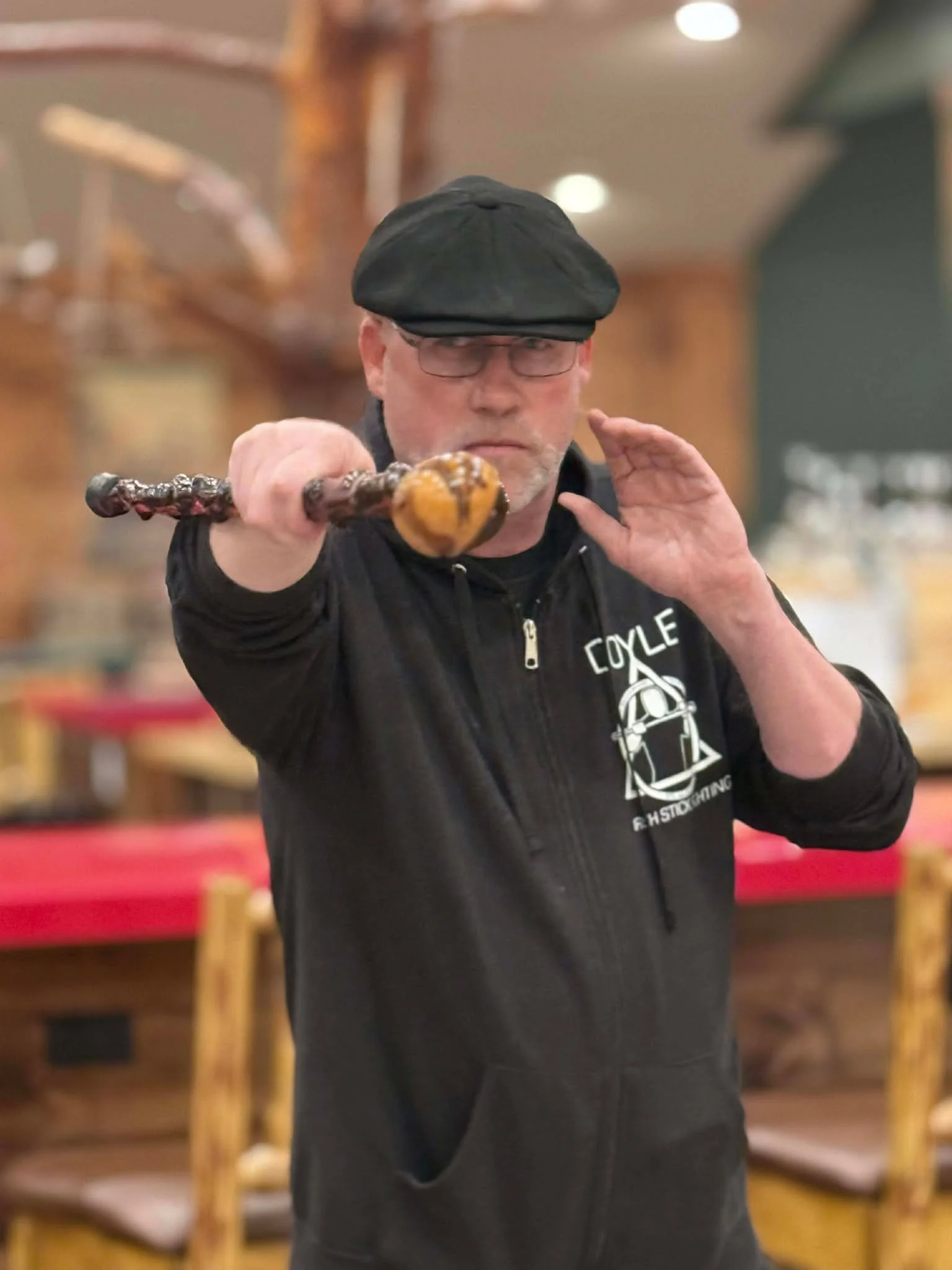
In this episode Andrew chats with John Borter about his martial journey from Tae Kwon Do, to small circle Jiu Jitsu and ultimately into Doyle Irish Stick Fighting.
John Borter - Episode 1100
SUMMARY
In this episode, Andrew Adams speaks with John Borter about his journey in martial arts, starting from his late entry into Taekwondo to his current focus on Irish stick fighting. They discuss the challenges of transitioning from student to instructor, the differences between various martial arts styles, and the cultural aspects that influence Irish stick fighting. Borter shares insights from his experiences, including teaching at Wally J's 90th birthday celebration and the unique principles that differentiate Filipino martial arts from Irish stick fighting. In this conversation, John Borter discusses the rich history and cultural significance of Irish stick fighting, tracing its roots back to centuries of occupation and oppression in Ireland. He explains how the British penal laws impacted the Irish population and led to the development of stick fighting as a means of self-defense and community expression. Borter highlights the Shillelagh as a traditional weapon and its evolution over time. He also emphasizes the role of social media in reviving interest in Irish stick fighting and the importance of maintaining the integrity of the Doyle system for future generations.
TAKEAWAYS
John Borter started martial arts at 28 due to work schedule.
Borter gravitated towards Hapkido for its joint locking techniques.
He trained with Professor Wally J in Small Circle Jiu Jitsu.
Borter transitioned to Irish stick fighting after closing his school.
The transition from student to instructor was natural for him.
Borter emphasizes the differences between Filipino and Irish stick fighting.
He believes that each martial art has unique principles and techniques.
Cultural aspects play a significant role in Irish stick fighting.
Irish history is marked by centuries of occupation and cultural suppression.
The British penal laws severely restricted the rights of Irish Catholics.
Irish stick fighting evolved as a response to oppression and cultural loss.
Faction fights were a form of social expression and community bonding.
The Shillelagh is a traditional Irish weapon made primarily from blackthorn.
Blackthorn is favored for its durability and historical significance in stick fighting.
Social media has played a crucial role in reviving interest in Irish stick fighting.
Maintaining the integrity of the Doyle system is essential for its legacy.
CHAPTERS
00:00 Introductions
02:42 John Borter's Martial Arts Journey
09:08 Transitioning from Student to Instructor
12:25 Exploring Different Martial Arts Styles
18:06 The Distinction Between Filipino and Irish Stick Fighting
23:35 Cultural Aspects of Irish Stick Fighting
27:38 Historical Context of Irish Occupation
30:49 The Evolution of Irish Stick Fighting
35:07 The Shillelagh: A Unique Weapon
42:30 Promoting Irish Stick Fighting Online
44:11 The Future of Irish Stick Fighting
Join our EXCLUSIVE newsletter to get notified of each episode as it comes out!
Subscribe — whistlekick Martial Arts Radio
After listening to the episode, it would be exciting for us to know your thoughts about it.
✅Subscribe to whistlekick Martial Arts Radio on the following platforms:
🎧Apple Podcasts: https://apple.co/3mVnZmf
🎧Spotify: https://spoti.fi/3yHVdHQ
✅You can find whistlekick on all social media platforms using the handle @whistlekick or visit our website at https://www.whistlekick.com or https://www.whistlekickmartialartsradio.com
Show Transcript
Andrew Adams (09:42.858)
Welcome you're listening or watching to another episode of whistle kick martial arts radio. And today I'm joined by friend, John border. We're excited to have John on the show. How are you today, John?
John Borter (09:55.275)
Great, great, thanks for having me, I appreciate it.
Andrew Adams (09:57.141)
Absolutely excited to sit down and chat about some stuff. But for anyone that's listening or watching that's new, I want to welcome you. Thank you for being here. Whistlekick Martial Arts Radio has been going, we're into our 10th year now. We're almost at 1,100 episodes, all for free. You can find all of the information on all of our episodes at whistlekickmartialartsradio.com.
We have a newsletter that you can subscribe to on that page so that you get notified when every episode comes out. We don't want you to miss any of them. We're also starting to throw some behind the scenes footage in there, some fun, you know, behind the scenes stuff that Jeremy and I get into sometimes with guests, sometimes with just the two of us. So check it out. Now the podcast is about one small part that Whistlekick does. If you go to whistlekick.com, you can find out about all the things that Whistlekick does, whether it's
merchandise that you can purchase for t-shirts or hoodies or hats or all kinds of stuff. You can purchase books. There's training programs that you can find out information on all of the events that we host throughout the country. All of that stuff is at whistlekick.com. So please go check it out. John, thanks for being here, my friend.
John Borter (11:11.465)
Thank you, sir.
Andrew Adams (11:13.294)
So we met, you and I met a few years ago, I think in about three years ago, 2023, you came to one of the events that we hosted and it was great to meet you and Trish. But that was 2023, let's go back even further. Like way back at the beginning, young John Border, how did you get involved in the martial art that you are currently training in?
John Borter (11:42.272)
Well, if I go back a little further than that, I wasn't even that young back either. So I didn't start training in martial arts in general until I was 28. I was a late bloomer. a lot of it was that I was working a retail career at that point.
Andrew Adams (11:48.897)
Okay.
John Borter (11:56.167)
And if anybody's ever worked retail, know, know, I'll give an example, Christmas time, you're working from seven in the morning until midnight and then you can do it all over again. So there just wasn't a lot of flexibility in my schedule to do it. Something I always wanted to do ever since I was a kid, never had an opportunity to do it. when I was 28, I decided to go out and get a job, a nine to fiver. And the first thing I did was sign up for Taekwondo lessons. And so, you know, like everyone else in the history of the planet, right? Everyone starts off in Taekwondo, at least in this country. Loved it. I had a great, great couple of great teachers, actually.
I ended up making it to second degree black belt taekwondo. But at the same time, the instructor was teaching hapkido, kind of a side program.
I really gravitated towards that because I didn't have any real natural flexibility. was almost 30 years old when I started. I enjoyed it and I did okay. I'm not going to brag because there's nothing to brag about. But I did okay. I did alright. But I really liked the joint locking, the hap-kido, that kind of stuff. From there, I got involved heavily with Professor Wally J. Small Circle Jiu Jitsu, which is still a core of anything I teach empty handed.
Love it, absolutely love the principles behind it. I've met Professor Jay before he passed away. I was fortunate enough to teach at his 90th birthday party celebration. I was invited to fly up to California with a bunch of others and teach and really rub elbows with some of the bigger names than me, that's for sure. And it was just a great experience. And then a few years later, he passed away.
And then I started kind of dabbling in FMA, that kind of thing. I got involved with C &B Combat Systems out of Austria, fantastic group. I just started kind of trying to find my way and ultimately what I did was I picked out my favorite from each system that I had and just kind of combined it together. it was very fast, active, primarily a joint lock, take down control system. Fortunate enough to be called in and act as a consultant for some local police departments and local SWAT teams for take down control.
John Borter (13:49.021)
control. And, you know, I a smaller club because I didn't teach kids and that kind of stuff here in the here in the upstate New York area. And then COVID hit. And me like I actually kind of limped through for another couple of years. But I never was able to get back to where it was, you know, even though I didn't have a huge student base. It was enough to pay the bills and enjoy what I did. I wasn't doing it for a living. And then it just got to the point was just it was impossible to maintain. And that was about
two years ago, I think. And then I closed the school, sold off a lot of equipment. Prior to that, I kind of fell upon our stick fighting. So I was doing that as well. And I decided at that point, I was just going to do our stick fighting going forward. And that's, that's, leads us to where we are now. I'm really interested in how I fell upon our stick fighting. think that's where your question was going. bought a Shalali. That's it. I bought a Shalali online.
Andrew Adams (14:38.425)
I mean, it's all relevant. It's all connected.
John Borter (14:45.995)
I always liked canes and those kind of walking, know, the fancier canes and walking sticks and that kind of stuff and no idea what I was getting into. And I put it online and I, on Facebook and hey look, I bought a shalali. This is awesome. And a friend of mine, James Stewart from the UK, he was actually helping me teach my women's self-defense program over there. And he goes, that's a beautiful stick. Now you need to learn how to use it.
use it, it's a stick. He's like, no, it's not. And he said, reach out to, reach out to Bernie Letty. Bernie Letty is at that point, he was an instructor in, in Leecham, Ireland. And I reached out to him. We started training on Zoom online. We got together whenever he came over into the States. We've gone over a couple of times and he's been in different, different events over here to kind of spread the art. And eventually we worked, myself and Trish worked ourselves through to an instructor level.
and that was five years ago or so. And the rest is history. Right now I teach Zoom classes. I have about 50 students a week on Zoom and I have another 50 or so, 40 to 50 depending on attendance that we do in local study groups. So it's become my full-time gig.
a company that I was working for, as many do, had a massive layoff about three and a half years ago, and I decided I've had enough of corporate America, I'm just gonna swing a stick. So that's what I do, this is what I do for a living. So, so.
Andrew Adams (16:08.782)
Wow. Now, if we go back, you know, before the stick fighting, which we're definitely going to get more into, I definitely want to make sure that we chat more about that. But at 28, you decided to start Taekwondo. What was it that had changed in your life that at 28, you're like, you know what, I'm going to do it now. Like why, why not at 26? Why not at 22? Why not when you were 20?
John Borter (16:30.579)
It all goes back to my work schedule.
When I decided at a young age, I was probably 16 when I started working in retail and I didn't think there was anything beyond that for a retail, somebody that specialized in that. So from the age of 16 up to 28, that's all I did. Nights, weekends, mean just anything you could imagine. I always loved the martial arts. I'm like everybody else, I saw a Bruce Lee movie and thought that was the greatest thing in the world. all of them, Steven Seagal, Chuck Norris, I just loved that kind of stuff. Never had the opportunity to train. And so when I finally happened,
the opportunity. were friends that were training at this taekwondo school, was relatively local. And first thing I said was, I can do this now. I can actually do this now. Funny, the great part is that I worked nine to five, but it wasn't, I was in the drooling business. Let's put it that way. I was a certified dermatologist and gemologist and, and sold jewelry and that kind of stuff within the store.
Andrew Adams (17:10.872)
Hmm.
John Borter (17:24.491)
My nine to five was like a small independent jewelry store that does really well in Saratoga Springs, New York. So even though I was still in retail, now I had time. My boss at the time was so gracious that he actually bought my sparring equipment for me. He says, I know you're excited about this, here, go get what you need. He was that kind of a boss. And so I loved working there. So gave me the opportunity to train. And as I worked up through the ranks, teach a little bit. And I taught some courses here and there and that kind of thing. But really it was just about
time. It's just about schedule. You know, I was foolish enough to, I'm gonna do retail. You know, now when I go to a mall, I have anxiety attacks after about 10 minutes. I'm like, God, I hope I never have to go back into this again. I have so much respect that people that work retail because it is a very, very tough gig. You miss family functions, you miss holidays because you have to work. You have to work. And so,
Andrew Adams (18:03.329)
I'm
John Borter (18:18.627)
It was interesting, it was fun, it gave me some people skills to be able to talk to people on that kind of stuff, which I think has transitioned over to everything else I do. But yeah, no, was just a matter of time, matter of availability. And once it was there, one of the first things I did was I want to take martial arts lessons.
Andrew Adams (18:36.494)
Now that transition from being a student to being instructor can be very stressful and difficult. What was that like for you? What made you decide to start actually teaching?
John Borter (18:50.335)
Well, even in retail, and then when I went to a different nine to five position, after that it was working in customer service, and I worked myself into a trainer's position.
I love teaching people. I was training and teaching people working behind the counter at the jewelry store. You know I mean? of thing. Teaching them about gems and different types of processes for making jewelry and if this comes in, here's what we need to do. So I was always into training. You know, training someone else. So it was kind of like a natural transition for me to become a teacher. You know, become a trainer, I should say, because teachers are a bit different. But I just, you know...
I just loved working with people and seeing them kind of expand and get better at whatever it is that they happen to be doing, whether it be selling jewelry or doing martial arts or whatever it happened to be. And so I always wanted to kind of get into that kind of a role.
So I was kind of mentally in that direction anyway. So when the opportunity came from my instructor, hey, do you want to be an assistant instructor? Hey, do you want to work on the children's class? I jumped all over that. I jumped all over. Now, truly I'll tell you, I was rough around the edges. There's no question about it. But over the last, God knows how many years, last 30 years or so, I've hit my stride, I think.
Andrew Adams (19:51.81)
Okay.
John Borter (20:06.795)
People tend to tell me I'm a good teacher and I appreciate the compliment. I'm just doing my thing. And if they get something of value out what I have to offer, then great, then great. But yeah, I enjoyed being a teacher. I wanted to teach or instruct at some level. And I just kind of just walked right into this and it worked out great.
Andrew Adams (20:28.814)
And you already mentioned I was going to ask about teaching kids, but that was something that you ended up doing as well.
John Borter (20:35.315)
I'm going to tell you honestly, that was a short-lived thing for me. In my school, I didn't teach kids. It was just adults. I assisted and taught some children's classes. And God bless you guys that teach kids.
It takes a special talent and a special kind of understanding and patience to do that. And I love kids, but I couldn't do that. Not much longer than what I did. I did it for a few months, six months a year, whatever it happens to be. But yeah, that's not my gig, which is why I probably didn't open up a standard commercial school because as we all know...
Kids pay the bills, right? So if you're do it as a business, that's a majority of the income you have coming in. I just was not interested in doing that. We love kids, more power to them, but not my gig to be doing that,
Andrew Adams (21:19.47)
Hmm.
Andrew Adams (21:25.196)
Yeah. Now, as we move forward in your journey, you mentioned you were doing Taekwondo and then your instructor was doing some hapkido as well. But then you also mentioned starting to get into some Filipino martial arts. How did that end up happening and what was that transition like? Because I think most people would recognize that there's not a... I mean, all martial arts are related. I think we can agree with that. But there's not a ton of similarities between Taekwondo
and Filipino martial arts, at least not at the outside that people would see. So what was that transition like?
John Borter (21:55.853)
There's a baby step in between. So I went from Hokito to small circle jujitsu, which is joint locking, let's face it. But it also had at that time an incredibly close relationship with modern Arniece. And so I kind of...
Andrew Adams (22:02.737)
that's right. Sure.
Andrew Adams (22:10.36)
Hmm.
John Borter (22:13.152)
was doing Small Circle, but on on the peripheral watching Modern Arnis. And I'm like, that's great. The drills that they do and the moves that they do. Cause there's a lot of joint locking stuff in there. And, and I've done some stick work. I will never say I'm an F, I'm an FMA expert cause I'm not. I'm deaf, but I think that natural relationship between Small Circle Jiu Jitsu and Modern Arnis kind of, I kind of got involved in without even realizing it. And I was like, whoa, this is cool. This is FMA. But like I said, I would never say I'm Filipino martial artist cause I'm not.
Andrew Adams (22:42.232)
Sure.
John Borter (22:43.086)
that that relationship between Small Circle Jujitsu and and and modern our needs really kind of drew me in and and showed me some other things because the people that I know quite a few people in Small Circle that because of that relationship and I I do and did the same thing they adapt a lot of FMA entries FMA drills FMA to get to their Small Circle locks and and That's kind of the direction I took it as well, and I just loved what I was doing. I was doing
of demonstration last night and stick class a little bit after class to show people the kind of stuff that we used to do when I did it full time. And it was fun. It was fun to do it again. I loved doing that kind of stuff. But yeah, so it was kind of a hedge over a little bit. It was in close range. It was that way. It was there.
Andrew Adams (23:31.136)
Yeah. And I think the relationship between those two makes a little more sense. Like I can see that. And I think most of our listeners will see that as well. Now you mentioned a kind of prestigious thing you got to do, which was you had been training with Wally J, Professor Wally J. And you mentioned you got to actually teach at his 90th birthday. How did that come about and what was that like?
John Borter (23:57.729)
Well, I train with Professor Wally Jay in seminars, maybe a handful of seminars. I actually connected with his son, the current Grand Master of Smalls Religious to Leon Jay and Will Higginbotham when they did a Midwest tour.
I think it was like Indiana, Kentucky, and then a couple other states. And just through our meeting through seminars, Leon Jay said, hey, you want to do the Mid-Morning Tour with us? I'm like, sure, that'd be great. And so I flew down to Indiana and we spent about a week traveling a number of states in that area. And I think we did that for three years before I kind of moved on to other things and just that relationship. And he had said, hey, my dad's 90s birthday is coming up. You want to come out and teach?
Andrew Adams (24:45.038)
Mmm.
John Borter (24:46.862)
any better than anybody else. I was in close proximity to the J.J. Art at that point. And he's like, come on, teach. You'll do great. I'm like, sure, let's do it. Because I had to make some pressure points in there, you know, and stuff. So Dilman was there, stuff like that. And I'd go into his seminars back in the day when he first started out and, you know, that kind of thing. so, yeah, so was just a natural thing to have a little modernized in there to kind of support the small circle and add some pressure points in there to add some effectiveness there.
There's some validity to pressure points. It's kind of gotten a bad rap, I think, as of late. Back in probably the 80s, was, wow, pressure points, this is awesome, but everything kind of ebbs and flows. And there's still some fantastic pressure point practitioners out there.
But yeah, I kind of just had, I was in the right place at the right time with the right people. And hey, you wanna come out and teach? I'm like, sure. And it was just a quick little demonstration that I did. And I kind of supported some of the other senior instructors kind of a thing. And maybe I have a little window of time to show something, John kind of thing. So it was just good to be in that atmosphere. The thing that I took away from that the most was Wally J.
Andrew Adams (25:58.412)
Hmm.
John Borter (25:58.988)
He was 90, right? He was 90 for this, right? And they called him out. There must have been 200 people at this event, and we're all there, and they said, ladies and gentlemen, Professor Wally J. And he comes walking out very slow, very kind of like a nine-year-old man. And then he pointed, and a guy went after him, and he threw this guy around like a rag doll. I mean, it was great. That has always stuck with me, that kind of art, what you're capable of doing.
very small motions. So yeah, so that was was a nice nice experience for me.
Andrew Adams (26:36.704)
And then, so you're doing some Arnis, you're doing some Filipino martial art, then you get connected to Irish stick fighting, right? And I think on the outside, obviously the connection between Arnis and stick fighting, Irish stick fighting, like they're both sticks. I want to recognize they are different, but from the outside looking in, that's a pretty easy observationally, it's a pretty clear commonality between.
But because I've done some with you, I know that it is different. can you talk a little bit about what the difficulty was like going from training Arnis into now Irish stick fighting?
John Borter (27:21.675)
What?
To clarify, again, I'm a dabbler, right? So when I say our knees, it was much more the empty hand stuff that I was really drawn to because of joint lock and portion. I swung a stick once in a while, but I would never say I'm a stick fighter from a Filipino standpoint. it's, yeah, I can't even say that there was a transition there because, you know, I knew wipeout level stuff. I could move a little bit because of my small circle, but I am not a stick fighter, you know, prior to this. I don't want anybody
Andrew Adams (27:24.643)
Sure, sure, sure.
Andrew Adams (27:35.426)
Gotcha.
Andrew Adams (27:45.422)
Mm-hmm.
John Borter (27:52.096)
anybody to
Andrew Adams (27:52.942)
That's fair. Okay. I appreciate that clarification.
John Borter (27:56.866)
But I think you made a good point. One of the only commonalities between Filipino martial arts or Kali or Eskimo or Arnis, whatever you want to call your particular segment of the art, and Irish stick fighting is that they use a stick. That's it. I mean, the principles are different. The concepts are different. I have these conversations quite often. And they say, well, I've done Kali for the last 20 years. I can swing an Irish stick. I'm like, hmm.
It's different.
Andrew Adams (28:26.924)
Mm-hmm.
John Borter (28:27.149)
It's different. And I have a lot of students that are FMA people and they start realizing pretty quickly how different it really is. You know, it's a longer stick. It's got a weighted knob off center on the end, typically, you know what mean? In the Doyle system, we hold it with two hands in the middle. That's a shock for a lot of people that come in from the Filipino martial arts world because they tend to hold the shorter stick one handed or two handed if they have a double stick. It's very, very different. And I always get
Andrew Adams (28:51.118)
Mm-hmm.
John Borter (28:57.103)
into those conversations. You have people that say, and I'm hoping I'm not gonna rub anybody in the FMA wrong by saying this, but I have to speak my mind on it, that if I, swinging a sword and swinging a stick is the same thing. You know, started out as a sword, so we went to sticks, or vice versa, it's the same thing. It's not the same thing. There's a different weight, there's a sharp edge, there's a heavy handle or a hilt on a sword. It's not same thing as swinging a 24-inch of rattan or 28-inch rattan stick. It's just not.
Andrew Adams (29:19.299)
Mm-hmm.
John Borter (29:27.023)
And I was teaching a tomahawk class at one point and one of the gentlemen came in to take the class and he's a friend of mine but he says, oh, it's the same thing. I've been taking this class and this online system and it's great. It's the same thing, same thing. I said, dude, it's not the same thing. It's the same thing. Oh yeah, same thing. And now we're talking about tomahawk versus stick. The system that he was training in, their setup was that hand all the way back and the stick behind their shoulder facing downward. So the first time I threw a training time,
Tomahawk with the spike on the end, right? He went, boom! And he's like, oh! I go, congratulations, you just discovered the world's most expensive back scratcher. It's not the same, but because he had this training in Kali that had this particular stance or this particular position, when he tried it with a different weapon, it was detrimental. If that was a real Tomahawk and not a training, it would have stabbed himself in the spine. You know I mean? So it's very, very different. It's very different.
Andrew Adams (30:21.902)
Hmm.
John Borter (30:26.799)
in my mind no comparison between Irish stick fighting and Filipino martial arts stick fighting. Now I'm not saying better, worse, please, no, I would never do that. That's like saying who's the better athlete, a basketball player or a baseball player? How do you answer that question? What's the context? What are they doing? What's the point of it? And, but, you a lot of people, you know, they try to, they try to cross those lines. Another thing that comes up very similar to this, and as well bring it up now, is there's only so many ways to swing a stick.
Andrew Adams (30:44.482)
Yeah, yeah,
John Borter (30:56.719)
That is true. There's gonna be a finite number or so many ways to move the body. That is true. There's gonna be a finite number. But if we do two different systems, so let's make up a number. Let's say there's 100 ways just for round numbers, right? Well, my system might use 40 different ways. Your system might use 50 different ways. And there might be some overlap. But there's a lot that we're not gonna overlap on. So you can't compare your 50 with my 40 if...
there's like maybe 10 of them that are the same, know, kind of thing based on the weapon or the culture or how it develops. So that's a phrase I hear a lot. I just kind of shake my head a little bit because it's bigger than that. It's big. Not every system does all 100 moves to use a round number. You know, some of them used 30, some of you, whatever, you know, and, the moves are going to vary depending on the weapon that you're using or the culture that it came from, which is where the Irish stick is, is differs a lot from a lot of other systems.
Andrew Adams (31:26.286)
Yep.
John Borter (31:53.398)
So yeah, there's very little crossover between Filipino and Irish, you know, as far as my personal experience is concerned.
Andrew Adams (32:04.942)
Now talk a little bit about the culture of your stick fighting, right? It's not
I'm not going to say that Irish stick fighting is not known. We've obviously here at Whistle Thick, we've had a number of guests on the show that have been involved in it. It's not like it's not known, but I wouldn't say that it's well known in mainstream, but that culture aspect is something that plays a part in your training. Can you talk a bit about that?
John Borter (32:28.609)
Yeah.
John Borter (32:35.531)
Yeah, absolutely. If we start back...
a hundred years. do that. Because you really want to understand where it came into play, right? It really came into play. And I joke around about this sometimes and some Irish people get really angst, but I'm just kidding. When I said, you know, the Irish had a bit of a spat for about 400 years with the British kind of thing. Yeah, they did. They were occupied, but it's longer than that because the English were 600 years prior to that. And prior to that, was the Saxons and the Celts. mean, and so Ireland, Ireland has always
been an occupied country, always, right? But the thing that comes into more the modern history is the British. And the British occupied the country, they moved a lot of people around, they really took over in a very, very harsh kind of a way. And at one point in the game, order that really their goal was to stamp out the Irish culture, right? That you weren't allowed to speak Irish, you know, you couldn't, you know.
there's that Catholic versus Protestant thing going on, you the British Protestant, the Irish being primarily Catholic. And just, just boy, talk about your first real, real rub there. They came in and they just tried to stamp out the Irish culture. And so it was tough. They were downtrodden. They were really downtrodden.
Andrew Adams (33:35.182)
Mm-hmm.
John Borter (33:52.758)
and they passed some laws around 1695 called the penal laws, the British shit, to control the Irish population. And there were things like a Catholic could not marry a Protestant, a Catholic couldn't own land, a Catholic couldn't send their children to school.
Andrew Adams (34:07.32)
Hmm.
John Borter (34:10.861)
The Catholic couldn't buy a horse that was less than a certain size, or more than a certain size, I say, because they didn't want to have strong farming. It really made it tough. Really made it tough. And one of the laws, and there was a whole list of them, the penal laws, was you can't have any weapons. They outlawed weapons. know, primarily anything bladed or anything like that. So, what are they gonna do, right? A lot of farmers, a lot of herders.
Andrew Adams (34:26.381)
Mmm.
John Borter (34:35.233)
you know, kind of thing. So they use sticks. I they had sticks and they said, well, we have to use these, right? That's one side of the story. The other side of the story is that a lot of Irish people were sent off to fight on behalf of the British in a lot of foreign wars. So they did learn some sword work and that kind of stuff. But when they came back, they couldn't have a sword.
So they created these head schools where they wanted to teach the people how to use these sticks as a self-defense thing, as a weapon kind of a thing. So it kind of came from their environment of having sticks being available and from some of the people going off and getting some type of some functional military training. Right. And what that led to is it led to factions. Now, factions are like chapters of people because it was a very stressful environment. Right. And the thing about Irish stick fighting,
and I think a lot of the reason that people don't know about it is because a lot of Irish people never heard about it.
it was it was it moved away right way back in the famine back in like you know 1847 or whatever case may be because they had more stuff to worry about and the Roman Catholic Church didn't want people beating each other up with sticks and the government didn't want you know the British government didn't want any lead any validation to what what the Irish people are doing they literally used to print magazine articles with hand drawings of Irish people with monkey faces with a bottle of you know liquor in one hand and a stick in
the other. mean, anything they could, they shut these poor people down, right, kind of thing. And so they didn't trust the British court system. So whenever they had any kind of an altercation, any kind of a disagreement, they'd fight it out with sticks. There were two different types of faction fights. Now factions could be based on your family, could be based on the town that you lived in, the county that you lived in, your occupation. They just kind of bound together to kind of form a nuclear
Andrew Adams (36:03.822)
Hmm.
John Borter (36:33.423)
of a faction to be able to protect themselves and their lifestyle and their families. So there could be an entertainment level faction fight.
where one family gets another one or one kind of another one and they just beat themselves senseless and then they go off and have a couple drinks. You know, kind of thing. Or, you know, just, you know, the old days you go outside, you just have fisticuffs. You know what mean? Well, they used do with sticks. They used to do with chileles. You know, we can talk about chileles too at some point if you like to. And, you know.
Andrew Adams (36:53.902)
you
John Borter (37:10.101)
that was the way they did it. On any kind of disagreement. I've read different stories. I'll give you a perfect example.
One family sold another family a horse. And when they got the horse, they measured it and it was one inch too small. So what do they think they did? Grabbed their sticks and went back over and went at it with the other family. You know, in anything just to get it out. Sometimes I akin it to like WWE. You know, you've got thousands and thousands of people trying to get any kind of frustration out, whether it's their personal frustration or a government thing or whatever happens to be, people are frustrated, you know, in the round the world.
Andrew Adams (37:29.592)
Mm.
John Borter (37:47.278)
and they're out there screaming and yelling and rah rah rah. Well this was also their way to get their frustration out. They literally would show up for fashion fights, right? And there were 12 people on this side and 14 people on this side that said, you go over and fight with them. You know, cause that was the entertainment portion, to even it out. They'd be really cool about it. Then there were also the really nasty, you know, deadly fights.
Andrew Adams (37:51.31)
Mm-hmm.
John Borter (38:09.837)
There was, I'm trying to look at my notes to see what the exact date was, but there was a battle in a place called Valley Bunyan. Real quick, I'll glance to see where it is, if you want to cut this part out. There it is. June 24th, 1834, right? There's a horse race on a beach in Valley Bunyan. It's getting the county carry. And over 2,000 people showed up for this fight.
Andrew Adams (38:34.574)
Hmm.
John Borter (38:35.641)
There were like seven different families or something. I don't remember the exact number, so I apologize for any of my Irish friends that I'm saying incorrectly. But thousands of people. And there was reportedly about 200 deaths in this.
Andrew Adams (38:41.262)
you
John Borter (38:49.229)
And I personally think I've heard other stories saying there was more because some people came by land, some people came by sea. Well, the people that came by sea had to swim back out to the boats. Some people didn't make it back to those boats because they were just so injured from the fights. So I'm sure it's probably a little bit more than 200 people. Right. And some people have never heard of Irish stick fighting and say in an Irish phrase, it's a bunch of bullshite. Right. There's a huge plaque right on the beach that commemorates that event.
You know, it's not a fantasy. It happened, you know, kind of thing. And so, yeah, it got, it kept pretty nasty. It really did. It got pretty nasty. And then eventually culture changes, right? When was the last time we had a phone with a dial on it, right? Culture changes, right? know, things change. And what happened was the famine hit, right? And when the famine hit and some people argue that point and say it's a genocide, I'm not judging, you know, whatever, whatever belief you have on that or however you want to present it is fine.
Andrew Adams (39:33.654)
Yeah, yep.
John Borter (39:49.12)
But it hit and guess what? They had better things to worry about. They had to take care of their family, that kind of stuff. So that whole culture started to kind of back away, trying go away. They had the British. The British was evicting people left and right from their homes. had to, the Roman Catholic Church said no more of this stuff. Violence is a tool of the devil. Don't do this kind of thing. So it just, it went out of vogue. It went out of style.
And a lot of the faction fights or lot of the training that happened since it was a faction, they always kept their stuff pretty close. You know, it was mostly families. They would train father to son, father to son, father to son. And that's not a sexist thing. Wim Wim not allowed to swing his flailie back then. So a lot of the stuff, nobody knew it was even being trained. So you could have a great, great, great grandfather that could have been a stick fighter and you wouldn't even known it. I was at an Irish event walking with my stick.
To a main event at a concert and an Irish gentleman says oh you look like a man that means business with that sir Laley I go as matter of fact it is my business he goes. What do you mean? I go I teach our stick fighting he goes bullshite and he goes over and they start laughing with those other they don't they won't exist won't admit it exists, you know because they don't know and and I it's harder for Bernie lives in Ireland Bernie let me
Andrew Adams (41:05.325)
Hmm.
John Borter (41:15.021)
About two and a half, three years ago, Glenn Doyle retired and he turned the system over to Bernie Letty. So Bernie Letty is the first person in history, right, to be the head of the Doyle system, the chief of the Doyle system that is not named Doyle. Now when it happened, he was already our instructor, myself and Trisha. like, you know, we love Bernie. He's fantastic. In fact, Bernie, happy birthday. Today's his birthday. So happy birthday, Bernie, you know, if you're watching this. And so when he became the chief of the system,
Andrew Adams (41:29.838)
Mm-hmm.
John Borter (41:44.928)
We were thrilled. Our instructor is now the chief of the system. He is the nicest guy on the planet. But man, can he swing his stick? Can he swing his stick? my God. But he said to me, it's harder to get Irish people to even realize the existence of Irish state fighting than anyplace else. Because they don't want to admit it exists, they don't know it exists, because it's been downtrodden and hidden and beaten back for generations.
I literally had a guy from Ireland call me to do an interview and we were talking and I said he had an Irish Brogue and I know one or two people in this area that do radio interviews that have an Irish Brogue, right? So I think twice about it and he said something and I said, well, where are you located? I said, he goes, I'm in county, whatever in Ireland. You're in Ireland? He goes, yeah. go, Bernie probably lives right down the street. Why aren't you talking to Bernie? He's the head of the custom because now I want to talk to you. go, why? He goes, cause you're an American. go, yeah.
Andrew Adams (42:33.963)
Yeah.
John Borter (42:41.683)
And he says, can't speak to, this is he told me, I can't speak to the validity of the statement. When the Americans get involved in something, it piques the Irish interest.
Andrew Adams (42:51.425)
interesting.
John Borter (42:52.819)
So I'm like, all right. And we talked for probably two hours and I don't know if that he's in Ireland. So I don't know if whatever was aired anywhere. But it was a really interesting thing to talk to somebody from Ireland about how do we do Irish state writing. And it was great. It was great. But it just kind of faded away eventually. And we're bringing it back. It's come back gangbusters in the last few years. And I think a lot of that is some of us, myself, Trish, Bernie.
Andrew Adams (43:07.511)
Hmm.
John Borter (43:22.209)
We're leveraging social media.
You know, we're out there, I teach full time. There's only a couple people in the world that I'm aware of that really teach full time. So we have the time to invest in this and get out there. You know, our Facebook group, which we'll talk about later, has 45,000 members on it. You know, so we're really, my goal is to get Irish stick fighting in every YMCA and gym and Irish organization in the country. yeah, so it's coming back. It's coming back strong, so.
Andrew Adams (43:38.03)
Mm-hmm.
Andrew Adams (43:52.931)
Now you mentioned the Shalali being kind of unique, right? Obviously it's different than a stick. It's not just a stick. So talk a little bit about the weapon itself, the Shalali.
John Borter (44:07.757)
Well, back in the day, it was made out of all kinds of wood. In fact, I think the primary choice back then, there used to be oak, right? And there was actually a town in Ireland called Shillelagh. And they called it Giant Shillelagh Forest. And then it was huge, just huge from what I understand. And that was a great place to get wood and make Shillelaghs out of and that kind of stuff. Until the British decided to cut it all down and build boats.
So that wipe that out. people say, well, it's it's it's blackthorn. Blackthorn is the thing. Well, blackthorn is the thing now. But blackthorn was just one of a number of woods back then that they made it with. But it since has evolved as the primary wood, you know, to make a shillelagh out of. But it used to make an oak, ash, hawthorn. Whitethorn is another word for hawthorn. There's a story behind that you might find interesting. Oh, God.
It's definitely blackthorn and whatever was handy whatever was in that particular region or area as long as it was durable and strong but now The go-to thing is blackthorn and blackthorn is a nasty monster. Well, it really is we have I'm friends with a number of stick makers through my associations on the group that we have and One in particular Declan Casey who I consider probably the premier stick maker in the world no offense to anybody else is listening to this but he's
Andrew Adams (45:09.036)
Mm.
John Borter (45:29.844)
the guy right beautiful beautiful his stuff is work of art beautiful beautiful work my god I have a number of his sticks and he would show videos of going out and pulling blackthorn out it's a hedge it's not a tree it's a hedge right but he goes in there all just just you know canvas and gloves and masks and everything and pulling this stuff out of the brush when he comes out he looks like he's been attacked by a leopard
You know what mean? It's just, these things have poisonous thorns, not poisonous, but when you get poked, you will become infected. have a special, something is going on with that that really promotes infection once it penetrates the skin. And it's brutal. And to make a black thorn shalali, you have to let it dry.
for a long time. And it's usually based on, if it's a one inch diameter stick, it's got to dry at least for a year. Two inches is two years, three inches is three years. So I mean, they get all these hedges together and trim them up, cut them down, and they usually put them in a shed or a basement or something for years to do this. So black thorns are not inexpensive. They're not outrageous, but they're investment. And people say, why are they so expensive? Because this guy just got
ripped apart by Blackthorn thorns, know, and he's got to, you know, prompt these sticks and dry them out for years and then he has to work them and make them. It's not like you go chop something down and have a stick. It takes time to do that. So Blackthorn seems to be the big thing.
A Blackthorn stick, I actually have one with me here. This gives you good example of what they used to look like with the thorns. And these thorns are shortened and cut off at the ends. So you would use those thorns to poke someone or rake it down their face or whatever the case may be. And then of course they have the knobs up on the other end here and the pummel down the end here. But Blackthorn is kind of the primary, that's the winner right now.
Andrew Adams (47:11.63)
Mmm.
Andrew Adams (47:27.438)
Mm-hmm.
John Borter (47:31.906)
Now the interesting story on that, they also have something called Hawthorn, which is affectionately called White Thorn. But can't cut a Hawthorn, can't cut a Hawthorn brush, because that's where the little people live in Ireland. That's where the fairies right? And you have to, I've heard two stories. One, you can never cut them, or two, you can only cut them a certain time of year, but you have to leave a dram of whiskey and a gold coin or something along those lines, you know?
Andrew Adams (47:43.47)
Mmm.
Andrew Adams (47:55.426)
Hahaha!
John Borter (47:57.196)
Now, that's, I laugh. I think it's great. I'll tell you two quick stories about that, right? Declan Casey had made a stick and posted it in our group. And I know I take that back. posted, he posted a lot, but a gentleman said, can you make me one? Can you custom make it for me? So he made him a Hawthorne stick, a white Thorne stick.
posted it and somebody said, this is my steak, but the guy said, oh, Hawthorne or White Thorne, did you hear about that? You're not supposed to cut those and anything, because the fairies will put a curse on you and your family. I guess there's a little story out there. The guy canceled the order. And...
Andrew Adams (48:32.492)
Wow.
John Borter (48:34.541)
Mr. Casey was a little ticked off about that, right? So he reached out to me, goes, I can't believe this guy did this, he cost me a sale, and he was reasonable about it. He knew the guy didn't have any malicious intent, you know, kind of thing, but he did lose a sale. So I said, how long is the stick? And he said, 35 inches. I go, send it to me, I'll take it. Now, not for me, I take a 37 and a half inch. Trish takes a 35 inch.
So she has a Hawthorne stick, a white Thorne, from overseas and she tells the story at seminars and stuff that we have and she's like, I'm not worried. I don't think the little people are to be taking a boat over here to find me. But the second thing about that is they were making a major highway through Ireland. I'm not exactly sure what county, I do apologize for not remembering, but like a 95, like a big highway, right? And the way that the road was laid out.
Andrew Adams (48:59.49)
Mm-hmm.
John Borter (49:24.429)
It came right up to a white thorn hedge, a hawthorn hedge. And the workers refused to go any further. The people that were contracting for the highway were like, oh, cut it down. Don't you cut that down? We're not going any further. And it went back and forth. They went through some courts and there was a lot of protests. So a friend of mine who's been over there numerous times, Chris Shaw, he's a great friend. He's family and he's one of my students. He's been there millions of times. He said the highway goes down the road and all of sudden it goes...
Andrew Adams (49:30.158)
Mm-hmm.
John Borter (49:53.806)
and curves around and there's a white thorn right in the middle of highway. All of a sudden you're going 65 miles an hour or whatever it is. You've to slow down to 30 to go around the other side. And they take that stuff very seriously. Some people do, some people do. And, but that's been part of their culture, culture generations, you know? So it's, I find that so amusing, but also just amazing those kinds of things. Cause I'm really, I really liked the whole Irish culture situation. To be clear.
Andrew Adams (50:07.596)
Wow.
John Borter (50:23.213)
I am this Irish, right? Little tiny Irish. I tell people if I cut myself shaving, my Irish goes down the drain. But there is some Irish in my blood. And that's not why I started doing this, but that's why I decided to do an ancestor thing to see if I had any Irish. And I do a little bit. And so it makes me feel a little bit better. But yeah, it's a lot. I like using Hoth Hazel.
Andrew Adams (50:31.469)
Hahaha!
John Borter (50:50.381)
I'm a big Hazel fan, because Hazel is another one that they use. It's a little bit lighter for a stick of the same size as a black thorn. And most of your black thorns have the thorns off of them, right, kind of thing. And it moves really fast. It moves really fast. And that's what I like in a stick, is it has to be fast, especially since we hold it in the middle.
Andrew Adams (51:12.97)
Now you mentioned your Facebook group. know, I want to give you a chance to talk about what you're doing to help promote Irish stick fighting. And you mentioned a substantially large Irish stick fighting group that you have online. So let's talk about that.
John Borter (51:30.414)
Yeah, we started out, we decided to put it on social media when we got involved, right? Not realizing we probably shouldn't put that out there. The Irish stick fighters keep things close to the vest. So it's not meant to be an instructional group. I opened it up to anybody who swings, teaches, or makes an Irish stick of some type.
Andrew Adams (51:44.43)
Mm-hmm.
John Borter (51:52.992)
So a lot of the craftsmen have kind of taken over the group, right? I would say there's more craftsmen than there are Irish state fighters on there now. But that's the symbiotic relationship.
You know, people will come by a Shalali and they'll realize, Oh, you're supposed to fight with these things. And they'll reach out to the stick fighting crowd or somebody comes over and they're a stick fighter or want to be a stick fighter. Oh, they got Shalali's boom. If you look behind me, you see, have all these sticks. can't see one. You can see one third of them over here, but over here, should say I've got three racks of this. I've 150 sticks to my name. It becomes, it becomes an addiction. It really does. Um, but yeah. And so we started out,
Andrew Adams (52:28.3)
Hahaha
John Borter (52:33.327)
and just kind of built and kept building and kept building. And Trish and I run the group and TJ Medlin, who's a stick instructor and a stick maker, we both make training sticks because people don't use their black thorns, right?
They're expensive. They're extremely hard, but they do have bark on them that don't have a tendency to chip off if you're banging it. So we usually, there's not many people, there's some that use an actual natural stick, but a lot of people use trainers, know, training related sticks that I craft and he crafts and a couple other people are crafting. And he taught me, I'll say it on public, TJ Medlin, great stick maker, told me everything I know about making training sticks. And I appreciate everything he's done. And he actually had an opportunity to train with Glenn Doyle himself. So he's one of those.
Andrew Adams (53:03.086)
you
John Borter (53:17.999)
I call them, he's a second generation instructor because Bernie would be a first underglad, in my viewpoint, it's not a formal title. There people that train under Bernie or later on.
Andrew Adams (53:27.374)
Mm-hmm.
John Borter (53:31.38)
third generation show, so you know, first, second, third. But TJ and a couple other people actually got to train with Glanton, which was phenomenal. I've never had that opportunity, so I'm jealous. So we started to open up to everybody. First, some people were like, shouldn't this just be a Doyle group? Why are you bringing these other systems in here? Well, because you know what? Rising tide raises all ships, right? The more we can get out there about Irish stick fighting, the more everybody's gonna benefit from it.
Rather than just have a rising tide, don't have a puddle, because people will step over the puddle. And so it's really, it's really grown and really just amazing. So I think right now we're just over, I think I looked this morning, was 45.3 thousand people on the group. And it just keeps growing and growing and growing.
We have a pretty sophisticated filtering system in place. So scammers and spammers don't get out there. And they are out there, right? Every once in while, I want to think through it. we've got a multi-step process with filters and certain things that we manually look at. Because we protect the integrity of those people in that group.
We protect their privacy and we try not to allow anybody that's going to come in and take advantage of that. And we're very proud of that. People have said this is one of the best one groups on Facebook. Well, that's because we work at 24-7. But we want it to be that way. We want it be that way.
Andrew Adams (54:53.326)
Now, what's the future hold for you? if, if let's say you and I are going to get together right now, it's 2026. We're going to get together for a follow-up interview in 2036. What do you hope in 10 years that we're talking about your Marshall career has brought you?
John Borter (55:11.809)
Well, one, in 10 years, I hope I'm still alive. Let's put it that way. I think it's gonna be a matter of, well, I don't see massive change coming in Doyle. I just don't. One of our responsibilities is maintaining the integrity and the legacy of the system. This is a family system. It's not just swinging an Irish stick, right?
Andrew Adams (55:15.255)
You
John Borter (55:39.16)
Glenn Doyle or Greg Doyle learned from his father. Right? Greg taught Glenn, who was the patriarch of the system.
And Glenn doesn't have any children, so he passed it down to Bernie. So Bernie can help grow the group. So we expect massive growth. We won't necessarily expect huge change. Is it going to develop? Is it going to become better? Are we going to start start doing a little different approach? Maybe. Right. Kind of thing. But we want to maintain that critical core because, again, it's not just a stick system. It's a family legacy. And even though I've never even met Glenn Doyle, I feel so connected to that legacy because I've been honored enough to to to become a teacher.
Andrew Adams (56:08.044)
Hmm.
John Borter (56:15.615)
of this, that we protect that system. So will it evolve a little bit? Yeah, I think everything will. If things don't evolve, they go stagnant and they die. Will it just totally change? I don't see that happening. think we've got a nice core approach to it and it works really well. The techniques are just incredible. The footwork and like I said, we fight with the hands in the middle, right? Because it's like boxing with a stick. I mean the two major influences on
Doyle-Iverstig fighting is boxing and fencing, know, actual military sword work. So if you do it or you watch it, you'll start seeing some crossover of certain things. Do we fence? We don't fence. We're not saying we fence, but some of the footwork might be similar to that.
Andrew Adams (56:52.462)
Mmm.
John Borter (57:03.437)
It's not the same, but it be similar. Do we box? No, we're not doing boxing. We have a stick, but we do things that could be called shovel punches and uppercuts and crosshits and that kind of stuff. So yeah, there's a huge element. Glenn Doyle, from what I understand, starting at four years old, he learned boxing.
Glenn to me is just a legend in Irish stick fighting. It's just it's just amazing And then it's anyhow how much you learn from at four what at seven his dad They went out the back and he threw him a stick and Glenn's like what do I do with this? He goes everything you've been doing for the last three years And and that's how it all started all started and Glenn wanted to go public as as as he got you know more trained and
talented with a stick. Glenn was actually, think, a four time Wushu champion in Canada. So he had a lot of background and he knows he's brilliant. I actually have a video of him doing a form with a T bench, a little short bench. It's just remarkable the way this guy can move. But so there's a little bit of kung fu in there too, because it comes from a goal.
Andrew Adams (57:56.418)
Mmm. Yep.
Andrew Adams (58:12.59)
Sure, he definitely did. For people listening or watching, you can actually go back and listen to episode 360. We actually interviewed Glenn Doyle way, way, way back, about seven years ago.
John Borter (58:25.421)
I think that was the first video, first interview I ever heard with Glenn. That's when I heard the word whistle kick. I'm like, whistle kick, that's an interesting name. but yeah, in 1998, his father was unfortunately on his deathbed. He was sick, I believe he had cancer. And he's been asking for years, let me teach, let me teach outside the family, because I don't have any kids. If I go out right now and I get hit by a bus, you know what mean? And his father finally said, yeah, okay, teach, but.
Andrew Adams (58:28.622)
Mmm.
Andrew Adams (58:33.816)
Hahaha!
John Borter (58:55.445)
just be careful people are going to take away take it away they're going to try to change it they're gonna start taking credit for it and he's like no no I got it I'm good and then in hindsight I've seen one Glenn goes he was right he was absolutely right
So we really take that seriously to try to protect that legacy and not be the kind of person that just does a hostile takeover or colors too far outside the lines. You know what I mean? We're all gonna have our own spin on things, but we respect that core legacy a lot.
Andrew Adams (59:20.119)
Yeah, yeah.
Andrew Adams (59:25.198)
Yeah. Now, if anyone listening or watching wants to reach out to you, maybe you said something that resonates with them, they want to reach out. How can people get in touch with you?
John Borter (59:36.216)
Sure, if they want to join the group, that's a way to start. It's a Facebook group called The Irish Stick. And there's another one out there that's a fake group. Don't go to that one. That's got like 200 members on it. We have 45,000 members on it. Don't go to the fake one. The fake one even has our pictures on it, know, and videos and stuff. It's skit, right? So just don't go there. If they want to reach out to me, I can be met at johnattheirishstick.com.
Andrew Adams (59:53.654)
Of course.
John Borter (01:00:03.561)
If they want to reach out and ask any questions, that's great. If any martial artists out there want to maybe offer a program in their school, come see us because we have, I have personal clubs, there's three up here.
have students that are coaches now in California, in Seattle, in, where is it, Eugene, Oregon, in Rochester, right? And I'm training people currently in the Netherlands, in Australia, in Japan, and I mean all, Mexico, Canada, all over.
I'm not the only instructor, I'm just me. I happen to be out there a lot. But there's a lot of instructors if you go to our website, theyoyostrict.com, notice the pattern if you understand. There's an instructor page, right? There's a gentleman named Tom Moore, fantastic instructor, first generation under Glenn, right? Along with Bernie, they come up together. Bernie, I'm just talking about the local people here in the US. So I'm not forgetting about you, Bernie.
Andrew Adams (01:00:39.855)
Mm-hmm.
John Borter (01:01:03.469)
We'll get to you. TJ Medlin in Ohio teaches. Ku in Baltimore, Maryland, I think he is.
is a great instructor. have coaches. We have coaches in Rochester. These are the next level before instructor. Again, coaches in California, coaches in Virginia. We have a couple coaches in Virginia. One in Virginia Beach and one in Fredericksburg maybe. Sorry if I said the wrong thing. And then if you're listening around the world, Bernie's in Ireland and he has coaches and instructors there. We have number of coaches and instructors in the UK under Bernie.
reach out to Bernie Letty himself. It's L-E-D-D-Y, Bernard Letty, on Facebook. So if you want to talk right to the chief in the system, reach out and ask him. But we're all available. If I don't have anything in my schedule, we...
fire me out to someone else and say, why don't you work with this guy? But in the US, there's a handful of instructors, a lot, but there's coaches coming up, coaches coming up. So more more people. This thing is growing like wildfire, which is exactly what we wanted to do.
Andrew Adams (01:02:12.739)
Awesome. Well, I want to thank you for being here. I'm going to throw it to you here in just a second to kind of close this out. But for any new listeners or viewers, please go check out whistlekickmarshallartsradio.com to find out everything about this episode and all of our episodes. You can find show notes, contact information for our guests that have given it. You can find transcripts.
all of that, photos of guests, all of that stuff, whistlekickmarchalarcheradio.com. Sign up for our newsletter. You can also go to whistlekick.com to find out about all of the other things that we do. And then a few things you can do to support the show. If you liked this episode, share it with a friend. It costs nothing to tell somebody, hey, I listened to this great episode with this Irish stick fighting guy. Send it to somebody. Help us spread the word of not just John Borda, Irish stick fighter,
But if whistle kick of all the other things that we do, it would really mean a lot and cost you nothing. appreciate that greatly. John, how do you want to close us out today? What do you want to leave the audience with?
John Borter (01:03:17.729)
Well first I'm going to capitalize on something you just said. You got an event coming up in November, right? So. Yeah, first weekend in November. We went to it a couple years ago and it was amazing. So if you're listening to this and you're in that area, you want to do a little travel. We're traveling from four or five hours away. We're going to be there and we'll be teaching another seminar there. But great, great event. Fantastic event. So I'm looking forward to it again.
Andrew Adams (01:03:21.871)
That's true.
Andrew Adams (01:03:39.844)
Thank you.
John Borter (01:03:41.646)
I already kind of touched base on where we can reach out and how to it grow, but you know what? It is a very, very unique art based on the culture of the Irish. You know, not just swinging a stick. And if you really want to dig in and learn a couple of quick things. One, I'm always open. Bernie's always open. Any instructor will help. There's a gentleman by name of John Hurley that has a series of books out on Shalali, Shalali Fighting. Look up his name as an author on Amazon and you'll see a bunch of them come
He is in my viewpoint, just my opinion, the dominant author when it comes to Irish stick and Irish stick fighting in history. Just a fantastic, so there's stuff out there. You typically don't find instructional stuff out there, not for Doyle anyway, because we have part of that responsibility to protect the legacy is to protect the quality of the training. So we won't throw video series out there and that kind of stuff and you know, it's face to face or on Zoom.
you know that kind of thing but that helps protect the integrity and the quality of the training that you're going to receive. So a lot of people reach out, do you have a distance learning program? Yep, it's on Zoom. you don't have videos? Nope. Nope, we don't do that. That's a conscious choice, nothing wrong with that. There's a lot of great successful martial artists out there that do that. It's just not part of our game at this point.
But yeah, feel free to reach out. you any questions, I really appreciate you having me on. It was great. And any questions about Doyle or the techniques or the history or the concepts or the principles, just reach out. I'll be happy to answer any questions.