Episode 1110 - Collin Lieberman
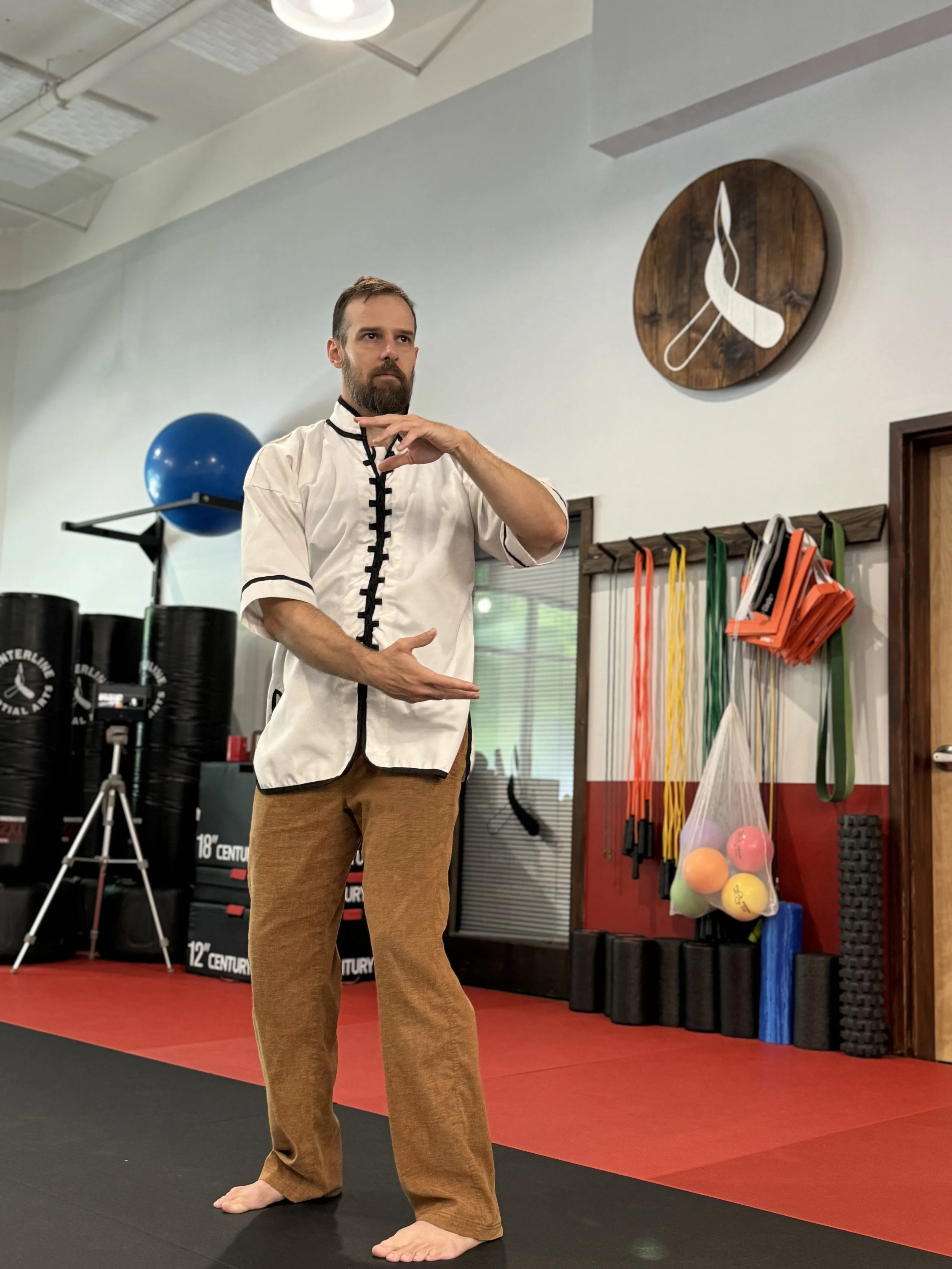
In this episode Jeremy chats with Collin Lieberman about Jeet Kune Do, Bruce Lee’s philosophy as well as the importance of student engagement.
Collin Lieberman - Episode 1110
SUMMARY
In this engaging conversation, Collin Lieberman shares his journey in martial arts, emphasizing the importance of continuous training and the philosophy behind Jeet Kune Do. The discussion explores the evolution of martial arts apparel, the impact of Bruce Lee, and the balance between tradition and innovation in martial arts training. Collin also highlights the need for adaptability in teaching methods to meet the changing needs of students, particularly in the wake of the COVID-19 pandemic. In this conversation, the speakers delve into the intricacies of martial arts training, discussing the significance of curriculum, the importance of student engagement, and the evolution of training methods in response to modern needs. They explore the relationship between martial arts and fitness, particularly through the lens of CrossFit, and emphasize the necessity of creating a supportive learning environment for students. The discussion also highlights the role of sprints in training and the lifelong journey of martial arts practice, advocating for a smart and adaptable approach to training.
TAKEAWAYS
Martial arts can be a source of empowerment and self-discovery.
Merchandise can reflect the evolution of martial arts culture.
Jeet Kune Do emphasizes finding one's own path in martial arts.
Bruce Lee's philosophy remains relevant in modern training.
Balancing tradition and innovation is crucial in martial arts.
Curriculum should evolve to meet the needs of students.
Adaptability in teaching methods enhances student engagement.
Understanding the history of martial arts enriches the practice.
Engagement in training is crucial for student retention.
Modern training methods should adapt to the needs of students.
CrossFit principles can enhance martial arts training.
Sprints are effective for developing combat readiness.
Students should be encouraged to explore beyond their rank.
The value of martial arts remains high despite accessible information.
Training smart is more important than training hard.
CHAPTERS
00:00 Introduction
04:01 Merchandise and the Evolution of Martial Arts Apparel
07:15 Exploring Jeet Kune Do and Its Philosophy
12:29 The Impact of Bruce Lee on Martial Arts
17:14 Classical vs. Conceptual Jeet Kune Do
22:51 The Balance of Tradition and Evolution in Martial Arts
27:43 Adapting Curriculum in Response to Student Needs
38:59 Understanding Martial Arts Curriculum
42:16 The Importance of Engagement in Training
46:55 Adapting Training Methods for Modern Needs
51:39 CrossFit and Martial Arts: A Comparative Analysis
56:49 The Role of Sprints in Martial Arts Training
01:01:34 Creating a Supportive Learning Environment
01:05:29 The Lifelong Journey of Martial Arts Training
To connect with Collin Lieberman:
https://www.centerlinestrong.com/
Join our EXCLUSIVE newsletter to get notified of each episode as it comes out!
Subscribe — whistlekick Martial Arts Radio
After listening to the episode, it would be exciting for us to know your thoughts about it.
✅Subscribe to whistlekick Martial Arts Radio on the following platforms:
🎧Apple Podcasts: https://apple.co/3mVnZmf
🎧Spotify: https://spoti.fi/3yHVdHQ
✅You can find whistlekick on all social media platforms using the handle @whistlekick or visit our website at https://www.whistlekick.com or https://www.whistlekickmartialartsradio.com
Show Transcript
Jeremy Lesniak (13:56.558)
What's going on everyone. Welcome back to another episode of Whistlekick martial arts radio. Today I'm joined by Colin Lieberman. Colin, thanks for being here. Yeah, we're going to have a good, we're going have a good time. We're going have a good time. We've had just enough conversation in the past. know that this will be super fun. And for those of you out there in the audience, if you don't enjoy it, that's okay. Cause we will. And that is how we run this show.
Collin Lieberman (14:08.24)
pleasure.
Collin Lieberman (14:23.282)
they're going to enjoy it. I'm sure they'll enjoy it. Let's do it.
Jeremy Lesniak (14:26.178)
Well, setting the bar high right out of the gate. like that. I like that. It is going to be the most enjoyable thing that you do today or Colin will give you your money back. Double your money back because here at Whistlekick, all the best stuff that we do is free. We have a bunch of great events that are
Collin Lieberman (14:37.412)
That's right. Double your money back.
Collin Lieberman (14:45.872)
That's right.
Jeremy Lesniak (14:47.864)
free to attend in the simplest form. We have martial arts radio, we have martial journal, we do a lot of cool stuff for the martial arts industry because we are martial artists who love martial arts and we believe martial arts makes us better. Now, if you're watching or listening to this show, the podcast format probably resonates for you and you should check out whistlekickmarshallartsradio.com where we have transcripts and all the links and all that stuff. And while you're there, make sure you sign up for the email list. People are, they're not taking me serious on this.
sign up for the email list. Why? Because you're going to get an email every time we drop an episode and you can go click video or click audio from your computer, from your phone, wherever it is. It is the simplest way to make sure you don't miss an episode. And if that wasn't enough, sometimes Andrew drops some bonus content in there that you're not going to find anywhere else. And of course, that email list is free. Unsubscribe anytime, but you won't because it's great. And with that, Colin, welcome to Marshall Arts Radio.
Collin Lieberman (15:46.032)
Thank you, it's an honor to be here. It truly is, I appreciate you bringing me in.
Jeremy Lesniak (15:49.878)
Yeah, thanks for being here, man.
Collin Lieberman (15:51.511)
And if I may just say, speaking of whistle stuff that whistle kick does, I just this week, you're kind of nervous now.
Jeremy Lesniak (15:53.474)
Yeah, please.
Yeah.
I am a little nervous because I'm like, where's he going with this one?
Collin Lieberman (16:03.92)
I received my first piece of Whistlekick kit or merchandise this week. Yeah, I ordered a t-shirt. Yeah, I ordered the martial arts because sometimes therapy is too slow. Get out of here. Get out of here. Different shirt, different shirt, but that's great. That's great too. That's probably my second choice.
Jeremy Lesniak (16:09.603)
Yeah.
nice. What shirt did you order?
Jeremy Lesniak (16:20.11)
Do you mean this shirt?
Oh no, this is the karate one, sorry. Sorry, this is the karate one. Damn it, I thought that's the one I had on.
Collin Lieberman (16:30.968)
I love that you just went for it and you're like, got a 50 % chance of being right. That's courage, my friend. That's courage.
Jeremy Lesniak (16:33.836)
You know what, I-
Jeremy Lesniak (16:38.722)
That, well, you know, if you can't be brave in your own house with your own clothes, like, what are you going to do? Right. Yeah. Terrible angle. I people after, after doing that, people likely think of 350 pounds. Yes. Yes. Me lifting up, lifting up the hoodie and, showing off that t-shirt. You know, those, those shirts were a lot of fun for us to make.
Collin Lieberman (16:43.834)
with your clothes.
Yeah.
Collin Lieberman (16:56.122)
Can that be the thumbnail for my episode as you lifting up your sweatshirt?
Collin Lieberman (17:03.376)
You
Jeremy Lesniak (17:07.918)
And they represented a bit of a departure. And actually, I think this might be a good lead in for you, because I know you trained in a number of things. When we started the company, I wanted to make sure that we weren't a collection of verticals, right? That here's our karate line, here's our taekwondo line, here's our judo line. Like, I wanted to make sure that wasn't us. And so we have worked really hard from day one to be a martial arts company. Because...
Collin Lieberman (17:14.704)
I
Collin Lieberman (17:35.405)
Right.
Jeremy Lesniak (17:37.838)
the infighting, right? We've gotten, we've gotten, we've gotten better as an industry, but there's, there's still, you know, it's still there. And so these shirts represent the first time we've done anything that was style specific. The karate shirt, you know, there's a karate shirt, there's a Capoeira shirt, there's a judo shirt. And I was really nervous. Huh?
Collin Lieberman (17:42.096)
which is another style. That's another style in martial arts.
It is.
Collin Lieberman (17:54.928)
Cool.
Collin Lieberman (18:01.517)
Is there a GKundoshir? Is there a GKundoshir?
Not yet.
Jeremy Lesniak (18:09.292)
We did 12. We worked from the 12 most popular arts, if I remember correctly.
Collin Lieberman (18:17.329)
you
It says who.
Jeremy Lesniak (18:21.65)
says the extensive data research that I conducted and summed up and we wrote at whistlekick.com because the data didn't exist. Like I put quite a bit of time into it. It's it's estimates because it's all estimates, but it's better estimates than I think anybody else has. And yeah, like one of the things, what about a this shirt or that shirt, or what about this really weird derivative flavor of karate that, you know, 19 people practice? Okay, cool.
Collin Lieberman (18:26.601)
okay. Fair enough. Fair enough.
Jeremy Lesniak (18:51.182)
Get all 19 people to commit to buying a shirt and we'll make one.
Collin Lieberman (18:55.087)
Yes, or buying ten or twenty shirts each.
Jeremy Lesniak (18:57.632)
Yeah, yeah, or you could buy 10 yourself. Yeah, that would be fine too.
Collin Lieberman (19:01.435)
So are you making them continuously or in batches?
Jeremy Lesniak (19:04.722)
All of our gear like that is on demand. We have a partner that we work with that prints and ships and everything for us so we don't have to carry inventory.
Collin Lieberman (19:15.001)
I mean, you designing them in batches or are you designing them as they come
Jeremy Lesniak (19:18.55)
we're designing them in batches. Yeah. Yeah.
Collin Lieberman (19:21.201)
So if you have a great idea tonight, you're not gonna put it on the store tomorrow.
Jeremy Lesniak (19:28.492)
I've got some notes for the next one. And they were inspired by, and I think this is the first time I'm sharing this publicly, maybe not. Do you remember the coed naked shirts? Those came out when I was in junior high.
Collin Lieberman (19:44.374)
Yeah, yes I do actually. Yeah.
Jeremy Lesniak (19:45.134)
Yeah, was a series of double entendres and 13 year olds should not have been wearing these shirts, but we all were at school.
Collin Lieberman (19:54.406)
Can you give me an example of one just to jog the memory that's not too risque?
Jeremy Lesniak (19:59.874)
The karate one, there were two versions of the karate one. And neither of them is over the top. But if you go back 30 years, was a slightly different time. One of them was, you'll go far when you spar.
Collin Lieberman (20:17.937)
Okay, yeah.
Jeremy Lesniak (20:18.55)
and the other was get your kicks below the belt.
Collin Lieberman (20:22.477)
Okay, yeah, those are good. Those are good. So that inspired your t-shirt endeavor.
Jeremy Lesniak (20:24.77)
They were fun. They were fun.
Yeah, was was meant to be so you know, we got some style specific stuff, but doing it in an irreverent way so no one could take themselves too seriously.
Collin Lieberman (20:38.437)
Yeah, I appreciate that. do. Awesome.
Jeremy Lesniak (20:39.98)
Yeah. And so now with that very extensive lead in, right, which seems appropriate because you, you are a, what's that?
Collin Lieberman (20:46.053)
slash plug for your merchandise. Slash plug for your merchandise.
Jeremy Lesniak (20:51.266)
slash plug for the merchandise, which thank you for that handoff. You are a bit irreverent based on our time together and you are a multiple disciplined, multi-disciplined martial artist.
Collin Lieberman (21:07.217)
Yep. I'm a multi-disciplined dude. Yep. Would you like me to elaborate on that? Or do you want? All right. All right. I should, I got it. got it. All right. Well, I started in 2000, the year 2000, the year it was all supposed to end, but it didn't. Right. Um, I started in the art of Jeet Cundo, which I think many listeners probably have heard of and
Jeremy Lesniak (21:10.264)
Yeah.
Jeremy Lesniak (21:14.422)
I would love, I would love for you to do that.
Jeremy Lesniak (21:25.646)
I don't
Collin Lieberman (21:36.15)
and a tribute to Bruce Lee, know, the late great Bruce Lee. If you haven't heard of Bruce Lee, then I am honored to be sharing with you that you should look into him for sure. As a fan of a martial arts podcast, you got to know about Bruce Lee. Yeah, so I got into the philosophy of martial arts through Bruce Lee's readings, through his books. I'm sure as a lot of martial artists have, and it really...
Jeremy Lesniak (21:48.332)
interesting line.
Yeah.
Collin Lieberman (22:05.051)
connected with me and or I connected with it and I felt empowered by it and also curious about the philosophy. It was probably my first serious like dive into philosophical thought at that age because I was in junior high at the time. So could have been wearing a coed coed naked shirt when I got that book as a gift. And that's what started me on my path. And then I started training when I was 18.
is when I joined my instructor's Jeet Kune Do school. So I never trained as a kid. I started as an adult, a teen, late teen, I guess you would say. And that's how I kicked it off.
Jeremy Lesniak (22:49.902)
So why?
Collin Lieberman (22:52.601)
yeah well like yeah go
Jeremy Lesniak (22:53.358)
The why, and the reason I ask it, obviously, why is the most important question. It always is. But the why of an 18-year-old is very different from the why of just about anybody else.
Collin Lieberman (23:09.455)
Yeah. Yeah.
Jeremy Lesniak (23:10.038)
Right? Like, you know, you're coming to the end, likely coming to the end of high school and starting to figure out, I'm an adult now, that's weird. And just like, in the West, is the period of time where we have the most opportunity and the least capacity for that opportunity. And so your choice, one of your choices at that point was, I'm going to go do martial arts specifically, which you can do.
Collin Lieberman (23:20.689)
you
Collin Lieberman (23:38.267)
Yeah, that's an interesting way of framing being 18. I like that. That was kind of cool. Yeah, so I did have a lot of opportunity and I guess very little capacity to handle it, right? And I felt like in a way what Bruce was preaching through his writings was my guiding religion in that time of uncertainty. And it was giving me a sense of direction. It was giving me a sense of confidence.
And it kind of planted a seed of like Daoist thinking, which I really resonate with now and I'm very interested in. So it was like, there's another way of seeing the world. And also as an 18 year old guy, I wanted to be able to protect myself and feel powerful. So.
Jeremy Lesniak (24:15.31)
Hmm.
Collin Lieberman (24:29.87)
At the time, Jeet Kune Do was like the most powerful martial art in my opinion, obviously. That's why I feel like everybody thinks that about their own martial art naturally. So that attracted me to it as well. And the big thing was, this was before the, no, this wasn't before the internet, but it was before I was fluent in the internet, I guess, and before you could just look things up on your phone.
And I remember discovering there was a Jeet Kune Do school that was like 20 minutes away from me, which I think in the 90s was like a pretty rare situation to be in, especially if you find it personally very interesting. Like that was the unicorn of martial arts schools for me. So I was like, what? It's within driving distance?
And I think my mom might have seen the sign and told me about it or something, because it was an area I didn't drive through that often. And that was like, wow, I can actually do this and pursue this interest that I have. So my parents, I'm very grateful. They gifted me a month of training at school and I never left. And that's how it all got started. That's the why.
Yeah.
Jeremy Lesniak (25:55.735)
Now.
How far back prior to starting training does your awareness of Bruce Lee and his maybe writings, movies go?
Collin Lieberman (26:09.756)
So I started when I was 18, started training formally. I would train informally, I'm sure as many young people would who have an interest in martial arts. And greatly overestimate my ability as many young people do. I learned this one move from a book, I can beat anybody, hands down. I haven't tried it, but I've seen the pictures and I know I can do it.
Jeremy Lesniak (26:26.84)
Sure. Sure. Sure.
Jeremy Lesniak (26:32.366)
That's right. That's all you need.
Collin Lieberman (26:39.73)
And now here I am, you know, having trained for 26 years. Yeah, 26 years. And I'm like, I don't know if I can beat anybody.
Jeremy Lesniak (26:53.934)
I feel that.
Collin Lieberman (26:55.044)
It's funny how that works, but in any case, yeah, so I got gifted a book when I was in junior high school. I was, how old are kids then? 14, 15.
Jeremy Lesniak (27:09.326)
Yeah, so it was a good four or five years. Do you remember which book?
Collin Lieberman (27:12.4)
Yeah, was of building up. So there was this like pressure of like, need to, I want to learn jikudou, but I don't know, I don't know how I can find a teacher. And then when I found the school existed, that was like, I got to try it now.
Jeremy Lesniak (27:27.672)
So was a four or five year lead up.
Collin Lieberman (27:31.142)
Yeah.
Jeremy Lesniak (27:31.788)
Yeah. And okay. the reason I ask is that there's a tension, right? That kind of comes, you know, because when we're teenagers and when we're interested in something, we tend to become a bit obsessive. You sometimes we carry that as we go forward. But when you're a kid and you're into something, you don't have the distractions of other things. You don't have to put down Legos to go to work. You're just like,
you know, I'm going to build more, I'm going to read this book and then all the books that come after it in a week. that obsessive quality can sometimes create unrealistic expectations. So here you are, I imagine at 14 ish, you're reading this book, you're building a, if not obsession, a passion for
Collin Lieberman (28:15.004)
Yeah.
Jeremy Lesniak (28:27.042)
Bruce Lee, Bruce Lee's writings, philosophy, you use the word religion, which seems to support this, the physical movements, and then you start doing the thing that you've wanted to do for years. Did it live up to your expectation?
Collin Lieberman (28:46.905)
I would hope so because I've stuck with it for 26 years. But no, I appreciate the question. I do.
Jeremy Lesniak (28:50.466)
Well, sometimes you know, but it doesn't mean you can't put it on as you go.
Collin Lieberman (28:56.315)
I did pivot. Yeah, for sure. was a hundred percent a Bruce Lee fan boy, you know, throughout high school and college. and I would say, and the training did live up to my expectations, which were, I had very little expectation of the physical training. besides that, it would involve trapping and punching and kicking, you know? So, and it had all of those things, which was great.
So it did live up to those expectations, but as the training went on, I sort of shed the fanboy element of it and was like, oh, this is its own thing. And it's more about my own self-discovery than about, you know, unlocking the treasure that Bruce Lee, you know, hid away in this cave or however you want to see it, which is exactly what Bruce was preaching was your own self-discovery.
So I appreciate that. And I guess the more I learned, the less like the myth of it became of importance to me. I still appreciate it, but it doesn't affect me in the same way or it doesn't like, obsess me in the same way.
Jeremy Lesniak (30:12.174)
I think you've answered my question indirectly, so I'm going to guess that the school you were attending was one that allowed Jeet Kune Do to continue to evolve rather than one of the schools that teaches Jeet Kune Do. This is what Bruce made. This is what we do. It is codified in almost a historical reference way.
Collin Lieberman (30:40.113)
Yes. Yeah. So generally there's the Jeet-Kundo Concept School and then there's the Classical Jeet-Kundo, which is not the word they use, that is essentially what it is.
Jeremy Lesniak (30:51.15)
That's a much more articulate wave.
Collin Lieberman (30:54.865)
Right. Old school Gicondeau or however you want to put it, which ironically, know, like Gicondeau is about like breaking free from the classical mold. And then there are schools that try to make it, you know, essentially crystallized, which is another way of saying classical. And I don't disagree with what they're doing. I think they're both right. I think they both need to exist.
but yeah, the school that I trained at was the concepts, lineage. So it was more of like, find your own way. Here are the guiding principles, here are the concepts, and then it's up to you to like, take them into your, embody them as a martial artist and make them your own, which was great. Cause I'm a creative person. I love reinventing the wheel. I'm, I'm passionate about inventing and designing things. so.
This that's part of why this was the perfect martial art for me because it didn't have that like confining structure That being said there are pros and cons because structure is what gets you from point a to point b It's hard. It's hard to get get up a ladder if there's no rigid pieces in that ladder, right to climb so That can be challenging especially for certain type of people who who really crave or require structure to advance
So I feel like Jeet Kun Do is a bit of a paradox and a conundrum in that way, because you do need to honor the teachings of what Bruce was doing. And so there's a value to that sort of historical preservation aspect. But you also need to value his philosophy, which was one of self-discovery and removing limitations and boundaries and kind of finding your own way.
So in that way, it totally makes sense that there are these two factions that disagree. And I think they're both necessary and it's just the way that the chips fell. And there's no other way it could have happened really.
Jeremy Lesniak (33:02.68)
Hmm.
Jeremy Lesniak (33:07.554)
The first time I heard, and honestly it probably was those terms, the concept in classical division within Jeet Kune Do, it got me thinking, kind of interesting this idea, what if we go learn this martial art, the classical, as a bit of a historical exploration, right? In the same way that you might read a Middle English novel.
You have to take it, have to contextualize it for the time. You can infer some things about the person, the people that are there. And I think that that's really, really kind of neat. And that led me to, okay, but what if other martial arts are like that? There are some other, certainly not as strong or well known, but there are some other martial arts that are, even today, practiced in a bit of a classical sense with a of a cult of personality.
This is what so-and-so, and I'm intentionally not naming styles or names, this is what so-and-so said should be done, so this is how we do it. We don't change it, we don't touch it.
Collin Lieberman (34:16.104)
Yeah, I think that's a smart idea is to not be averse to checking it out from that perspective of trying to gain some historical perspective and understanding. The problem with like find your own way, And like a lack of structure, anything goes, is that you might get it totally wrong, right? Or your truth might not.
help your students and it might not help the legacy of the art. So there in lies the problem. Follow your truth and hope that it aligns with your students and hope that it enhances the legacy of the art and serves the preservation of the art. And if it doesn't, well, there was no doctrine telling you that was a bad idea.
Collin Lieberman (35:14.452)
Yeah. So that's, that's sort of, uh, I try to step back from that, draw that drama for lack of a better word and that debate and just be like, yep, I see both sides and I don't really have a solution for you. I'm just kind of doing my own thing. I I'm personally, I'm trying to serve my students. That's like my motivation.
Jeremy Lesniak (35:23.694)
Mm-hmm.
Collin Lieberman (35:41.939)
So I think every Jeet Kune Do practitioner should assess their own motivation for why they're training or why they're teaching, depending. And that should, I think that should really shape, shape your art. If you are interested in the preservation of,
the techniques that Bruce was doing and the way it was taught, then maybe you should be on the more classical side of the spectrum. And I'm sorry that I'm using that word. I know I'm offending some people, but they'll never hear this. And that's that's fine. But if you're more into furthering like
Jeremy Lesniak (36:13.848)
That's right, they're not here.
Collin Lieberman (36:29.67)
the path that Bruce might have gone down of studying, like further study, further development. The thought experiment that I enjoy is what would Jeet. Kun Do look like if Bruce had lived to 80 years old? Do you think it would have stayed the same for like the 40 years after he passed? Or would it have kept evolving?
And I think, I don't think anyone with a straight face could say it would have stayed the same. Like it had reached the pinnacle.
Jeremy Lesniak (37:02.574)
It couldn't have, and I'm trying to remember who it was, and my apologies to this past guest. We've had one person on who trained at the original Oakland school, not under Bruce, because at the time they were training there, Bruce was off doing a lot of movies and things. But he was still actively developing Jeet Kune Do. And so that's where, who was the other gentleman, the one that was teaching classes at that time? Was that Eric Lee?
Collin Lieberman (37:32.18)
In Oakland, James Lee, think you're thinking of?
Jeremy Lesniak (37:34.802)
Yeah. James Lee. Thank you. And so this, this gentleman who was on the show, it was training directly under James Lee. And he said that from week to week, things were changing because Bruce was calling in or writing in, or maybe he was back and he would be upending things. So even at that time, towards the end of, you know, this was not the very beginning. This was towards the end of his time. It was changing. I, I.
cannot fathom anyone who truly knows the history saying, no, no, there was going to be a point he put a pit bow on it and said, that's it, it's done.
Collin Lieberman (38:14.761)
Yes, absolutely. You're right about that. And you, you, you brought up a good point as well, which is that Bruce had a lot of things going on for, for him, right? He had a lot of things going on in his life. he had a lot of talents to share and gifts to share. He, he was not a full-time, school owner. He was not a full-time
Curriculum designer. He was not a full-time teacher so You could imagine if if he was a hundred percent focused on teaching and developing a school and a system of teaching how How that would have affected things as well
Jeremy Lesniak (38:59.085)
Mm.
Collin Lieberman (39:01.435)
As somebody who has been a full-time school director for the last decade plus, one of the lessons I've learned, not to say that other people couldn't do this better than I am doing it, but one of the lessons I've learned is that it is usually not effective to change things on your students. When the epiphany comes to me that it needs to be changed.
There needs to be like a buffer and there needs to be some sort of like schedule. So I used to do that where I was like, oh my God, this can be better if I change X to Y, if we change this to this or something. Right. And I was like, oh my, why are my students getting annoyed? And it's like, don't they, don't they just want what's best? Don't they just want the latest like update to their operating system?
but it doesn't quite work that way when you've invested a lot of time in, learning something and then somebody changes it. For example, if someone changes your operating system on your phone and it's like, where's the button that used to be there and it's not there anymore, it can be frustrating. And it's the same with martial arts.
Jeremy Lesniak (40:18.38)
Now that's a great metaphor, the operating system, because my prior life was in IT and so the new thing would come out and you'd have the early adopters. I want the new thing, I want the upgrade, I wanna get the latest and greatest. But you had most people would say, this does what I need it to do, I am competent with it, I want to continue working with this until it no longer serves my needs.
Collin Lieberman (40:49.565)
Yes, exactly.
Jeremy Lesniak (40:52.204)
And if we look at training through that lens, you at some point found you needed new or additional programs or modules or whatever to plug into your Jeet Kune Do. And I'm curious about what that thought process was like. How'd you get there?
Collin Lieberman (41:09.907)
So let's keep on the IT route here. We'll keep on that thread. So I'm like a power user if I'm the instructor, right? I'm the black sash. I'm asking more of my martial art and I don't mean I'm going out fighting people and using it. It's like, I didn't block that punch so I need to change it. I just don't live that kind of life. But for it to like...
Jeremy Lesniak (41:13.313)
Okay.
Collin Lieberman (41:35.959)
Satisfy my conceptual understanding of how the martial arts work and also how it should plug into sparring effectively, right? I need it to be at a certain level and for a student who's been training for a year
they, that might not affect them in the same way, right? It's like they're, they're not a power user yet. so like you were just saying, it's adequate for them for their needs. Whereas for me, it might not be adequate anymore. need a little bit more out of it. So I've got to optimize it or, or change it.
But is it smart for me to force that upon them as soon as I realize it, right? Or as soon as I change it in my own training? And personally, I don't think that's the case. I don't think that is the best way to run a school. So it doesn't mean that I've stopped the evolution of my art and curriculum because that's one of the nice things about
what I study and what I teach is that it's always evolving and it's designed to be a living curriculum that grows. But it needs to be looked at through two different lenses. One is my understanding and satisfaction with it and then the other lens is the value to my students and their understanding of it.
So I try to look at it through both lenses and as a sort of a safeguard for myself, I have like a yearly buffer. It's like, okay, we'll do a yearly update, right? And we're not gonna change too much. We're gonna change like maybe a handful of things at most at the yearly update. And then the students come to expect, there's a yearly update. So it's not like suddenly I pulled out the rug from under them and like, surprise.
Jeremy Lesniak (43:37.196)
What's their reaction to that? Do they look forward to it? Does it depend on the personality type?
Collin Lieberman (43:43.319)
It depends. Yeah, it definitely depends. There are some students who may have been jaded from my previous willy-nilly changing of things that they're like, here's another change. And I can't fault them for that at all because, you know, I've scarred them and my apologies, but...
That was a part of my own evolution and growth was to learn that the hard way. And unfortunately, you know, they got kind of annoyed by it, but in the end it was for the greater good. And I think for the most part, the students just are like, that's the way it is. I don't particularly care too much. Some of them are excited because they're like, I like this. You know, this feels better. And I'm like, yeah, that's why I changed it. So it depends on the student.
Jeremy Lesniak (44:33.23)
Can you give us an example of a recent change?
Collin Lieberman (44:37.846)
Sure, yeah. So about maybe a year and a half ago, we use a rotating curriculum, which is an efficient way of teaching a large group of students, I would say.
Jeremy Lesniak (44:55.456)
also probably the most debated aspect of martial arts schools today.
Collin Lieberman (45:03.478)
I think there's not necessarily a greed upon understanding of what it is. And yeah, so that's an interesting topic unto itself. basically, around COVID time when I had to go virtual. So I'm going to go on a little bit of a tangent here. And hopefully you remember the original question, because I'll forget.
Jeremy Lesniak (45:10.67)
That's okay.
Jeremy Lesniak (45:21.39)
That's right.
Collin Lieberman (45:26.12)
We, we did before, before COVID we did 90 % like partner training. That's, that's one of the hallmarks of Jeet Kune Do class is that it's mostly hands-on with another person. It's very little like, you know, do this form, kata. So suddenly we're virtual and it's like, okay, I got to figure this out, you know, to keep the students training.
So we went to a lot of, practice sets, basically like Kata, Katas for, for what we're doing. so instead of blocking your partner's punches, you'll do this sequence of blocks in the air. And there is some of that in a lot of Jeet Kune Do anyways, which is called a practice set instead of a form because form is a naughty word and, in Jeet Kune Do lore. so we did a lot of that and I was kind of struggling with how to.
to teach that because I have no classical background. know, kata's are kind of a mystery to me. And having a curriculum with that stuff, also a mystery to me. So I ended up doing some coaching with somebody who does consulting about curriculum and specifically rotating curriculum. And they successfully implement it with a large number of students.
And I was like, this makes total sense to me. You know, I am going to, I'm going to dive into this and this is, this is how we're going to pivot and survive this like COVID shift. so, so we went into the rotating curriculum, basically modeled after this school that I was studying under, the instructor system. And I learned a lot, but it wasn't the right fit for my school and my students.
partly because it's designed for like having a school of 500, 300 to 500 students, which means you have a staff of, you know, a dozen instructors and you have a few classrooms and you have all the staffing and money. And that, that didn't describe my school at the time. So, um, I was like, okay, I see the value in this, but it's not the right fit. So
Collin Lieberman (47:44.952)
I changed it. I got to, you know, scratch that itch of reinventing the wheel and designing stuff that I like. And I was like, I'm going to hybridize this and kind of keep what I think works for us and discard what is useless. That's like the tagline, Jeet-Kundo by the way. So I Jeet-Kundo-ified the rotating curriculum for our school, essentially. And that's where we are now. So it's kind of a...
Half and half, I guess you might say. And we've been doing that for a couple of years and it's working. It's working very well. Anyway, back to your question, which I do remember. You can just cut this part out. So we had been doing... All right, cool.
Jeremy Lesniak (48:31.212)
No, we're gonna keep this by the way, because this is what we do on the show, Conversation wanders as it should.
Collin Lieberman (48:38.817)
Beautiful. You should have a katana sound when you make a cut in the show so that people know.
Jeremy Lesniak (48:42.654)
I think the sound that we drop at the very front of the episode has something like a clingy, yeah.
Collin Lieberman (48:52.245)
Yes, yes, beautiful. So one of the hallmarks of rotating curriculum, back to the question, is you got these different lesson focuses that you rotate through. So we might have two weeks or a month that is focused on blocking, two weeks or a month that is focused on kicking, punching, et cetera. So with our, and we call those at our school stripes.
which are essentially lessons, right? And you earn the stripe if you complete the lesson. So we had the blocking stripe, which for us is stripe six and it's red. And it was a lot of remembering a choreography, a practice set, a form. And that was kind of a holdover from our COVID iteration of the curriculum.
Jeremy Lesniak (49:40.248)
Hmm.
Collin Lieberman (49:48.012)
But then I'm like, you know what, people aren't resonating with this as much. They're not practicing it as much as I would like them to because they want to practice with a person again. so when we made that pivot, it was right at the time, but it's not serving what they want to do now, which is more hands on with a partner. So I, I basically.
retooled that lesson and de-emphasize the practice set. I keep it in the lesson, but it's there as home practice. And now the part they're going to be tested on is what they do with a partner. So we call it a Jun Fan application, is versus the jab. You're going to do this block, this strike, this strike, this strike, and you're going to do it against a punch with a partner. So.
more partner training. I think it's more fun. I think it's more applicable to self-defense, which is at the heart of Jeet Kune Do. So it's just been an evolution, kind of a seesaw as the needs of the students change and also the culture changes and pandemics and all that good stuff.
Jeremy Lesniak (51:00.45)
make sense. I think, I think schools should be changing. It should be evolving because the instructor should be getting better. I they should be recognizing that, that students are learning differently. The way people learn today is not the same as they learned 20, 30, 40 years ago. We have different theories on education and, and, you know, people's lives are different. And so all that needs to change. So
thought to those of you out there who are setting curriculum and running schools, if you're doing things the same way you were even five years ago, I think your students are missing out. There's more of you to give. But I wanna roll back to our metaphor, our operating system metaphor. So I think what we've got now is we have a good idea of your update routines. We wanna really belabor the nerdy IT side of things, which, know, I I'll do that all day.
Collin Lieberman (51:55.618)
you
Jeremy Lesniak (51:58.914)
But we need more information about the checks going on in there. Maybe we get a little lazy. We could call it the error checks and you're finding, there's a gap here. We wanna plug in some additional information. That's where you've got off and done some other things and brought some other things in. And I'd like you to talk about that.
Collin Lieberman (52:25.666)
I'm not sure I understand what you're asking.
Jeremy Lesniak (52:28.782)
On the form you submitted, you're like Ji Kun Do, and then you added other styles that... Now, maybe I a misunderstanding of the role those play, but I thought those were significant. For example, Tai Chi. I thought Tai Chi was significant in your martial.
equation.
Collin Lieberman (52:47.412)
It is, but it's separate from the curriculum. So they're different programs.
Jeremy Lesniak (52:51.37)
Okay. Okay. all right. So then that, that is also interesting to me because there are people who, who it all, it all goes in the same bucket and they teach it to their students. Then there are others who have rigid boundaries and maybe you could speak to the boundaries.
Collin Lieberman (53:12.598)
Yeah, so we have different programs at our school which are Gekundo, which is our core program. That's the one I've spent the most time in. It's the one I've been certified to teach at the highest level. It's the one with the curriculum and the it's the one with the curriculum. So if students like curriculum and they want to get from point A to point B and they want to rank up, that's the one that's the one at our school.
We also offer Tai Chi, which does not have a curriculum, so to speak. However, it has a long choreography that you learn called the form, ironically called the short form, just to mess with you a little bit. It takes 20 minutes to do the short form. Don't ask about the long form. So that is the...
Curriculum, I guess you would say for that class, but there's no rank. There's no testing. It's just how far you are in that on that choreography. We also have a Kuntau Salat program, which is also curriculum free at this moment. I would like it to have a curriculum, but it doesn't at this point. It does have forms which are.
called jurus and lancas, which are hand forms and leg forms. And so those basically serve as the curriculum as well. And we also have a Kali, Filipino Kali program, which does have a curriculum, but we don't do enough of it to use the curriculum, because we don't have enough.
time in the week spent on that program to really make it make sense at this point. I would hope to do it someday, but our schedule is packed full at the moment. So there is a curriculum for my instructor, but we're not really using it. So if you show up to Tai Chi or Silat or Kali class, you show up just to train and level up as a martial artist, not having a sense of like, I'm on this clear path.
Collin Lieberman (55:25.441)
I can see the pagoda on top of the mountain and I've got to get there. You know, and I know there's a checkpoint in a month and another checkpoint in a month. And in Silat, Kali, Tai Chi, it's like you're doing it for the love of the training and the love of the class and the love of the art.
Jeremy Lesniak (55:43.436)
What?
what percentage of your students that are doing those programs are not doing Jeet Kune Do? Are they all doing Jeet Kune Do and then those are all, know, bonuses to them?
Collin Lieberman (55:57.508)
For the most part, yeah. Yeah, people love a curriculum. People love a curriculum. They do.
Jeremy Lesniak (55:58.636)
Yeah. Okay. So deep condo, you called it the core.
Jeremy Lesniak (56:05.122)
They do. People like to know what's expected. They like to know what success looks like.
Collin Lieberman (56:10.593)
And they like to know where they're going and how far they have come and how far they have left to go. And I think at some point you could speak to this as a black belt. you shed that at least mostly, if not completely, right? Cause
Jeremy Lesniak (56:15.245)
Yeah.
Collin Lieberman (56:26.841)
When you're a black belt, you're actually, you know, that's when you start learning martial arts and, and, you know, you're no longer like, I'm sure some schools are different where there's like second degree, third degree, and you have your whole life plotted out ahead of you. But I do believe for a lot of us at black belt level, it really opens up and you're not as preoccupied by, uh, the path of the curriculum. Do you, do you agree with that personally?
Jeremy Lesniak (56:52.238)
Yeah, yeah, I do. I do. And I think it comes down to the scope of the curriculum. You know, I grew up the original school I came up in. There was no new material after Black Belt. There was just refinement of that material. But I've also trained in schools where there's a new material up to fifth.
It's more.
Jeremy Lesniak (57:23.68)
It's more spread out, I guess. Whereas honestly, the first school I started in, there were minimums, but nothing was gate kept.
Collin Lieberman (57:37.121)
How so?
Jeremy Lesniak (57:37.154)
You know, if you were, if you were a blue belt and they felt like, look, you know, your forums, you're not ready for your green belt, but you know, your forums, you want to learn the next form, which you don't need to learn yet, but you're around people who are working on it. That was okay.
Collin Lieberman (57:52.676)
See, I like that personally. And we do that sort of as well, I used to do a lot more gatekeeping, especially as I was like...
Jeremy Lesniak (57:53.987)
Yeah.
Collin Lieberman (58:04.442)
dipping my toes in the whole like curriculum rotating curriculum scene and the whole like Cata practice set scene. It's like, you can't do this till you do this. Cause it didn't used to be that way as much. And I find that letting people try things out that's above their pay grade, it just helps them and it helps the school. I don't.
Jeremy Lesniak (58:13.901)
Mm-hmm.
Collin Lieberman (58:32.76)
I don't see a lot of students like getting mad with power. Like I've done this blue belt form before I'm supposed to, and they're using it irresponsibly or, something. We have our entire curriculum on video for our students. They can access it from day one. They can access the black black sash lessons. They don't, they hit like, because I have enough.
Jeremy Lesniak (58:41.654)
Wait
Collin Lieberman (59:00.942)
difficulty getting students to watch their video for their lesson because everyone is so busy and so distracted. Right? And it's like, if you want to look ahead, bless you. Thank you. That's great. I appreciate that. It's just not a problem in the culture now, at least in my school. Yeah, it's kind of the opposite.
Jeremy Lesniak (59:24.766)
I think it'd be hard pressed to say, you I've let this person learn too much and it went badly and now they're behind and they quit, right? Like that doesn't, I don't see that happening. I can see people saying, whoa, okay, so this feels like I'm not ready for this.
And if that happens, there's really only one of two responses that most people are going to have. I'm going to, I'm going to shed the new, more difficult thing and go work on the other thing, which feels more appropriate for where I'm at in my journey. Or they're going to ignore the easier thing and do the harder thing, which is probably an.
take longer to reach competency act because they don't have the foundation. But if they're more engaged on that, if your curriculum is set up well, they're probably going to learn the same lessons. So where's the problem?
Collin Lieberman (01:00:20.974)
Yeah, that's a good point. I think it's a holdover from an earlier time. Before the mass information age and social media, now you can get any technique you want just by looking on YouTube or social media, right? So the gates have been breached and it used to be guarded knowledge and it used to be protected.
Jeremy Lesniak (01:00:26.604)
I think so too.
Collin Lieberman (01:00:46.842)
And I think part of that was just out of a sense of tradition and fear. Like this is dangerous, right? And we can't let this get out to other schools. Or if I let this out too early, you're not going to pay me to learn it when the time comes. Yeah. Yeah, for sure. And, interestingly enough, now that it's all available, the value of it hasn't declined, which I think is, is awesome.
Jeremy Lesniak (01:01:01.902)
I think that was a lot of it.
Collin Lieberman (01:01:16.836)
think that's really cool. Like you can get pretty much all the moves, but people aren't paying less for martial arts classes than they used to. Because I'm sure there's a lot of reasons, but one of them, like I mentioned, is that people only have so much time and attention, and they would love an expert to tell them what to focus on, because it's very hard to distill all of this information into like a path, right? That's not just like garbled and.
and confusing.
Jeremy Lesniak (01:01:46.882)
Well, think about every other skill, right? We could look at yoga or dance or cooking or we'll just take those three instead of throwing more on the pile.
Collin Lieberman (01:01:59.737)
I want seven.
Jeremy Lesniak (01:02:03.854)
All right, I'll have to get back to you on the other four. It's not about the knowledge. Like I can go, I can buy all the cookbooks I want. I can learn all the principles of cooking. I can have all the recipes I want. And I could teach myself, but if I want to go become a really, really good cook or even a chef, I'm probably going to school to help me implement that knowledge and.
Collin Lieberman (01:02:05.807)
Hahaha.
Collin Lieberman (01:02:30.383)
Yes.
Jeremy Lesniak (01:02:31.714)
have some checks and balances, not because I couldn't do it the other way, but it's more efficient. I could do the same thing with dance. I could do the same thing with yoga. People don't, I mean, when the internet really hit and crushed, people didn't stop going to yoga because they could find a yoga video online. In fact, it's more popular than ever.
Collin Lieberman (01:02:38.533)
Yes.
Collin Lieberman (01:02:56.12)
A few of them did, but for the most part you're right.
Yes. Yeah, exactly. It's like that whole car, bunch of car dealerships next to each other with the car sales. They don't compete.
Jeremy Lesniak (01:03:10.188)
rising tide lifts all ships. Where is every Burger King next to a McDonald's? Why? Because it's not really competition, it's about awareness. And this is why I get on some martial arts schools for being mad that somebody else opened a martial arts school in your town. I say, shut up, go talk to them and see if you can collaborate on marketing because it's gonna be more cost effective. Take out a quarter page ad and each of you take the eighth.
Collin Lieberman (01:03:18.937)
Yes, yeah.
Collin Lieberman (01:03:35.163)
Mmm.
Collin Lieberman (01:03:39.545)
Yeah, yeah. Well, that's hard to do as a martial artist because we're, we're built for this, right?
Jeremy Lesniak (01:03:46.542)
Right. We are. We are, but it doesn't have to be that way. And so when we look at...
Collin Lieberman (01:03:50.779)
It doesn't, it doesn't, but it's a lot easier in yoga culture, I think. Like that's more common because it's okay, all the time, but.
Jeremy Lesniak (01:03:55.872)
Jeremy Lesniak (01:03:59.31)
I don't know that that's true. do not, do, I think based on, of course I have much more time and awareness of what happens in martial arts, but from my limited but not tiny awareness of yoga, there is a significant amount of competition.
Collin Lieberman (01:04:21.221)
Cut through it, yeah.
Jeremy Lesniak (01:04:21.846)
There is, it happens in CrossFit. It's like, no, no, our implementation of this methodology is better than their implementation of that methodology. And you should come here and do that thing with us.
Collin Lieberman (01:04:32.004)
Yeah, totally.
Collin Lieberman (01:04:35.831)
Yep, I think it happens more in martial arts just because it's based on conflict, right? And competition, whereas competition creeps into yoga for sure, but it's not the core value is my understanding. It is a core value with CrossFit, so that makes sense. Yeah.
Jeremy Lesniak (01:04:52.878)
Right. I would agree. I would agree.
Mm-hmm. Yeah, the parallels between CrossFit and martial arts are absolutely fascinating.
Collin Lieberman (01:05:05.851)
Crossfit is awesome. I've been doing Crossfit, yeah, for like three years, I think. Maybe four years, yeah. And it's been my buffer against aging and it's been very helpful.
Jeremy Lesniak (01:05:08.449)
really? cool.
Jeremy Lesniak (01:05:15.351)
Nice.
Jeremy Lesniak (01:05:21.186)
Has your time and CrossFit changed the way you look at martial arts class structure?
Collin Lieberman (01:05:28.411)
Not a lot, actually. That's an interesting question, but not a lot. Okay. Yeah. I'm curious to hear how, but I guess just first to answer your question, I sometimes I'll be a little more talkative during the warmup or have people circle up, um, for a warmup and just sort of change the whole, like I am in front of you and you're a line of students and you must not speak, you know,
Jeremy Lesniak (01:05:32.654)
Because it did for me, dramatically.
Jeremy Lesniak (01:05:55.544)
Mm-hmm.
Collin Lieberman (01:05:56.92)
martial arts vibe, breaking that up a bit. But I've been interested in the whole competition fuels class structure for a while. I used to have a CrossFit style martial arts program that I'd developed.
which I still think is awesome. just don't have like the time and the interest to produce it at this point. But I do think they work really well together.
Jeremy Lesniak (01:06:28.022)
They do. They absolutely do. in, in, my dream gym, cause we all, we all have our dream gym, right? Like here, here's the school that I want to have. And it's, you know, 40,000 square feet and six floors. And you know, there's a secret fight club in the sub basement and you know, whatever, whatever yours is in mine, there are CrossFit style fitness classes.
because one of the challenges in most hour long martial arts classes is the strength and conditioning component. You know, we all know stronger people are harder to kill. It gets kind of old, but I think the big thing it changed for me was, okay, we're doing this skill piece. Is there also an opportunity to practice the skill piece in a way that is building endurance or building flexibility or building strength?
Collin Lieberman (01:07:00.847)
Yeah, pushups and jumping jacks and gets kind of old.
Jeremy Lesniak (01:07:22.272)
or building accuracy, right? The 10 principles. And that awareness changed some things for me and it's something I try to bake into my lesson plans now.
Collin Lieberman (01:07:35.088)
That is really cool. I like that. I think I've had a bit of an advantage in that area because our original conception was centerline fitness and martial arts. And we were two pillars. We were basically martial arts plus fitness classes. I was a personal trainer at the same time that I was teaching martial arts. I was a certified strength and conditioning coach and I was a group.
Jeremy Lesniak (01:07:47.895)
Hmm.
Jeremy Lesniak (01:07:58.41)
I'm gonna...
Collin Lieberman (01:08:03.58)
group fitness instructor. So I had those, those two pillars sort of, you know, holding up my school this entire time. And, so the fitness would always leak into the martial arts and the martial arts would always influence the fitness. it's, it's good. It's hard to do. It's hard to do multiple things at the same time. Well, so there are pros, pros and cons to that. but it's been nice having that.
Jeremy Lesniak (01:08:11.374)
Mm.
Collin Lieberman (01:08:32.42)
It's been, it's been really nice. So there's always been a high level of fitness, I think in our training and that that's also a part of the Jeet Kundo culture. so it does, it does reinforce that and it fits pretty well.
Jeremy Lesniak (01:08:39.117)
Hmm.
Jeremy Lesniak (01:08:45.95)
I also, I think the other thing and we can move on from here.
I don't love the, let's do 10 pushups. Because for some people, 10 pushups is not enough. For others, 10 is a horrendous number and they shouldn't get anywhere close to that.
It doesn't give people the ability to get better. If you can do 10, what if 20 is the number you're supposed to be doing and now we're doing 10? You're regressing. So we bring in more time-based stuff. We do Tabatas, for example, which for those of you who don't know, 20 seconds of work, 10 seconds of rest. So we might do two, three, four Tabata chunks. So you've got 20 seconds. Do 20 seconds of pushups. For some people, that's four pushups. Great. They're pushing themselves.
Collin Lieberman (01:09:15.9)
Right. Yeah, that's a good point.
Collin Lieberman (01:09:34.596)
Yeah, that's smart. That's smart.
Jeremy Lesniak (01:09:36.462)
For some people, that's 15, 17, 19, 25 pushups, whatever they can do. Now they're challenging themselves. And that's been a big and positive adjustment for us.
Collin Lieberman (01:09:50.077)
That's good, I like that a lot. Yeah, that's smart. We do a little bit of both, or we do. We do X number of pushups for your rank. We're also gonna see how many you can do in a minute when you're done with that X number of pushups. So it does, I don't know, maybe it has advantages of both of those aspects. Yeah, that's it.
Jeremy Lesniak (01:10:03.938)
Hmm, okay.
Jeremy Lesniak (01:10:13.526)
Nothing's perfect. Yeah, yeah, but that's good.
Collin Lieberman (01:10:17.082)
When was the last time you did a Tabata on an Assault Bike or Echo Bike?
Jeremy Lesniak (01:10:27.042)
probably been six years.
Collin Lieberman (01:10:29.338)
Yeah, I don't blame you. It was not fun. Not fun.
Jeremy Lesniak (01:10:32.238)
They are not fun, but...
Jeremy Lesniak (01:10:38.234)
It's, I'm a, I'm I'm a big believer. Maybe this is a place we go as kind of our last chunk. I'm a big believer in sprints. Cause if you look at the hormone response on sprinting and then what changed this for me, and I actually wrote a whole, um, endurance training program around this concept. Show me a fight, show me any combat sport where they are operating at their highest intensity for more than 20 seconds.
Collin Lieberman (01:10:47.013)
Yeah.
I love.
Collin Lieberman (01:11:09.037)
Yeah.
Jeremy Lesniak (01:11:10.08)
It doesn't exist. I can't find it and
Collin Lieberman (01:11:12.988)
counterpoint to that, I think there are elite athletes, like top MMA fighters, where their 80 % output is your 190 % output.
Jeremy Lesniak (01:11:27.054)
I'm not disagreeing with that, but I'm talking about their sustained 95%.
Collin Lieberman (01:11:33.124)
It's just human physiology, Yes.
Jeremy Lesniak (01:11:34.918)
Right, and so working from that, when we understand that that 20 second time domain, for those of you who haven't spent time in CrossFit, like this is a core thing that's discussed in a lot of CrossFit schools that I'm gonna forget the three primary pathways, but once I connected those dots, went, this changes things. This changes how I want my students to train for an altercation.
Collin Lieberman (01:12:02.203)
Yeah, that's a, that's such a good reminder. I'm going to write that down in fact, cause I want to do more sprints in class in the upcoming classes.
Jeremy Lesniak (01:12:15.252)
It's there's something about that 20 seconds of all out work, whether it's shadow sparring, shadow boxing, kicking burpees, pushups. There's something that happens in there that is pretty darn cool physiologically. But when you tell people, instead of saying, I need you to do this number, I need you to go as hard as you possibly can for this short period. 20 seconds is a very approachable period of time for people.
Collin Lieberman (01:12:44.795)
Yeah, yeah it is.
Jeremy Lesniak (01:12:45.218)
When they know I just need to bang my face against this figurative wall for and I'll tell okay, we're halfway five seconds left three to rate like I give them a countdown so they can keep working they know it's there. And they know
Collin Lieberman (01:13:00.381)
to clarify for your listeners, by sprint you don't necessarily mean running. It's a metabolic sprint.
Jeremy Lesniak (01:13:05.517)
Yeah.
Jeremy Lesniak (01:13:09.576)
No, no, anything, any movement done at a really high intensity, right? And the place that I most, I most frequently saw this growing up was kicking. You know, you might step up to the, to the, shield, right? Somebody's holding a shield in the front of the line. How many kicks can you do in 10 seconds? Go. Right. And people are cranking through and your leg falls off when you're done.
Collin Lieberman (01:13:16.923)
Yeah.
Collin Lieberman (01:13:37.169)
Yeah, that's great. That's so good.
Jeremy Lesniak (01:13:43.756)
I like that you're taking notes during our podcast. makes me feel like I'm doing a good job.
Collin Lieberman (01:13:48.569)
Yeah, I was like, I gotta, this is a class like anything else, I'm gonna get some lessons here and I don't want to forget them.
Jeremy Lesniak (01:13:54.306)
Yeah, and I got notes. I got notes on yours too.
But this is how you approach things, isn't it? You're very methodical, kind of process oriented. You take a lot of notes, you observe.
Collin Lieberman (01:14:00.145)
Collin Lieberman (01:14:09.467)
Yeah, yeah, was before this iteration of my life, I was an engineer, a mechanical engineer. And so it made me methodical and it made me calculated, made me a better problem solver. And I try to take that into what I do now. And I think it's helped me to be more successful. Yeah, going back to what we were talking about earlier, you know, what you were describing with like,
Collin Lieberman (01:14:42.173)
I think you were talking about dance, was it? It's, you're describing Kung Fu, which is the process of getting better at something, you know, and learning how to, learning how to unlock a skillset. And it doesn't have to be martial arts, doesn't have to be fighting. And it's really about learning the process. Like why go to a class versus just watching videos online?
Jeremy Lesniak (01:14:43.886)
Hmm.
Collin Lieberman (01:15:08.605)
Because you're practicing doing it under the guidance of an expert. And so you're learning kung fu, because kung fu means cultivated human skill. And it is helpful to have a good teacher in that respect.
Jeremy Lesniak (01:15:27.214)
and you're in an environment where other people are also cultivating their skill.
Collin Lieberman (01:15:33.617)
Yeah, that's easily forgotten how important that is to be in that supportive environment.
Jeremy Lesniak (01:15:35.66)
Because it
Jeremy Lesniak (01:15:42.046)
I realize, and I'm embarrassed it took so long to realize this, this is only a realization in the last probably three years for me. I can't make someone learn. I cannot force them to learn. I cannot in any circumstance forcibly apply knowledge such that they develop.
All I can do is create an environment where they are able to and hopefully want to. And once I had that observation, that changed everything for me in the way I run my school. Oh, it's gotta be fun, because otherwise they don't come back. They have to enjoy themselves.
Collin Lieberman (01:16:14.056)
Yeah, that's that.
Collin Lieberman (01:16:24.944)
Yes, I had a similar realization and 100 % agree with you. Engagement is the top priority and then skill development and then curriculum. that's been like distilling that hierarchy has been key for me. And I understand that that might be an advantage to...
a school like mine where we're not teaching a traditional art, where you might be bound by your curriculum. It's like some schools are like, okay, we can't violate the curriculum because it is sacred. And beyond that, I want the students to have a good time and I want them to be able to break a board or whatever. Everyone's going to have their own hierarchy.
took a while to really understand that. Like you were just saying, like the top priority is student engagement. Otherwise they're not going to show up to train tomorrow. And it doesn't matter how good your curriculum is and how much skill they get if they don't show up to class. Exactly. So it is so, it's so valuable and it's, it's often under understated how important it is that the students.
Jeremy Lesniak (01:17:31.852)
If they're not there, they can't learn.
Collin Lieberman (01:17:44.52)
have a good time. And I do say engagement, not fun, because if you go to CrossFit, you will see a lot of people in extreme pain that are highly engaged and come back to the next class because they love, they're alive in that moment of pain. And martial arts can be the same way.
Jeremy Lesniak (01:18:05.422)
I would speculate that most martial arts instructors would benefit from some manner of group exercise class, whether that be dance, yoga, crossfit, one of the crossfit knockoffs that have popped up, right? Something where you were in that group environment. You're not in charge. You're learning new skill and be able to observe how people are learning and what's them coming back.
I've always said, and you came to Marshall Summit, so I'm sure you agree, we should all keep learning. Every instructor should be a student. We should value that part of what we do. But I think sometimes the lessons are easier to see when they're not coming from martial arts.
Collin Lieberman (01:18:55.803)
Yeah, it's helpful to get in a new environment where you're not on a pedestal and you're not in your, you're not in your element, right? and anytime I go travel somewhere and like, if, if I'm on a trip, I tried to take a class, maybe drop into like a box, title boxing class or something like that. And for weeks afterwards, I'm, I'm an inspired person and I just bring so much from that into my own classes, even though they might just be.
doing jabs for an hour, but something about it being new in a different environment where I am a student and it just opens up your pores to like receiving information that you might already have, but a slightly different perspective. So you're going to get something out of it as well as inspiration.
Jeremy Lesniak (01:19:47.8)
Where are you again? You're... New York. Ithaca.
Collin Lieberman (01:19:51.92)
I'm in Ithaca, New York, and unfortunately, this is what it looks like here. Sorry if you're listening on the radio, but this is what it looks like here just about every, every day from November to April.
Jeremy Lesniak (01:20:04.726)
You don't have any snow. Where's the snow?
Collin Lieberman (01:20:06.811)
Ray and cold. Well, there was snow yesterday and now it's rainy and icy. So it's kind of fluctuates between those two wonderful things for about six months.
Jeremy Lesniak (01:20:20.353)
Here it's about eight.
Collin Lieberman (01:20:23.069)
8 degrees.
Jeremy Lesniak (01:20:24.142)
Well, it was five degrees when I drove here this morning, but eight months.
Collin Lieberman (01:20:31.183)
Eight months. But do you get more sun there?
Jeremy Lesniak (01:20:35.022)
No, definitely not. We're like the third or fourth cloudiest state. It's bad.
Collin Lieberman (01:20:37.083)
No?
Collin Lieberman (01:20:41.621)
You're in Montpelier, is that right? Okay. Is that because you're on a lake that you get like more clouds? You just, just bat, roll the dice.
Jeremy Lesniak (01:20:43.458)
Yeah.
Jeremy Lesniak (01:20:50.806)
It just is, it's, think some of it is that we are, I mean, there's a couple of mountain ranges between you and I and just the way the weather, sometimes the clouds, they just kind of settle. It's, it's interesting, but we don't need to. Yeah. We've got some good weather.
Collin Lieberman (01:21:03.025)
Yeah, it's a bummer. You gotta, that's why you gotta get to class and light the fire inside of you and keep it, keep that fire burning, baby.
Jeremy Lesniak (01:21:12.962)
Right.
Right. Now, if anybody wants to get ahold of you, maybe they're somewhere in the vicinity of Ithaca or they're traveling or they just want to reach out, know, web, social email, phone. What, what stuff do we want to give them?
Collin Lieberman (01:21:29.051)
Yeah, so I'm in Ithaca, New York. My school is called Centerline Martial Arts. Our website is centerlinestrong.com. All one word, Centerline Strong. You can find us on Instagram and Facebook, Centerline Martial Arts. I think there's a Centerline Martial Arts somewhere on the West Coast, but we're the one in Ithaca, New York.
we do it, we would be happy to, I'd be happy to meet anybody, have you take a class at my school. We also have, still we have a, a virtual option for training. I do have several students that are training in the Jeet Cundo program that are in other States.
So we have a zoom option So if you want to check out a class you can reach out to me and do that virtually as well And it's not just you can know actually all of our programs Currently for adults are offered virtually. So that's Tai Chi
C-Law and Collie and kickboxing. We have a very robust fitness kickboxing program. For that one, I would say that you probably want to have a heavy bag at home because it's heavy bag based, but it is, we got our iPad and we got our Zoom set up for all those classes. Yeah.
Jeremy Lesniak (01:22:51.162)
Rock on. Nice. Cool, Well, this has been fun, as I knew it would be. And if anybody disagrees, they're wrong. We appreciate you being here. That's right. That's right. They can just reach out. They can complain to you. Don't complain to me. I won't listen. Wait, how do we close? How do we close such a great conversation? are... What's the end here?
Collin Lieberman (01:22:59.046)
Totally, totally. Yeah, we would like to hear from you. I disagree.
Collin Lieberman (01:23:09.114)
Hahaha.
Collin Lieberman (01:23:18.032)
The end is keep training, keep training, and there is no end. It's going to keep going on. you know, The older I get, I'm in that wonderful decade of my life called the 40s. And it's, I really believe it's all about train smart, train smarter, not harder, rest smarter, and keep moving. And if you, if you can do that and stay healthy, you're gonna be a happier, older person. And that's where I am aiming my ship. I would love to be there. martial arts is one of the ways to do that, for sure.