Episode 1112 - Brittany Searles
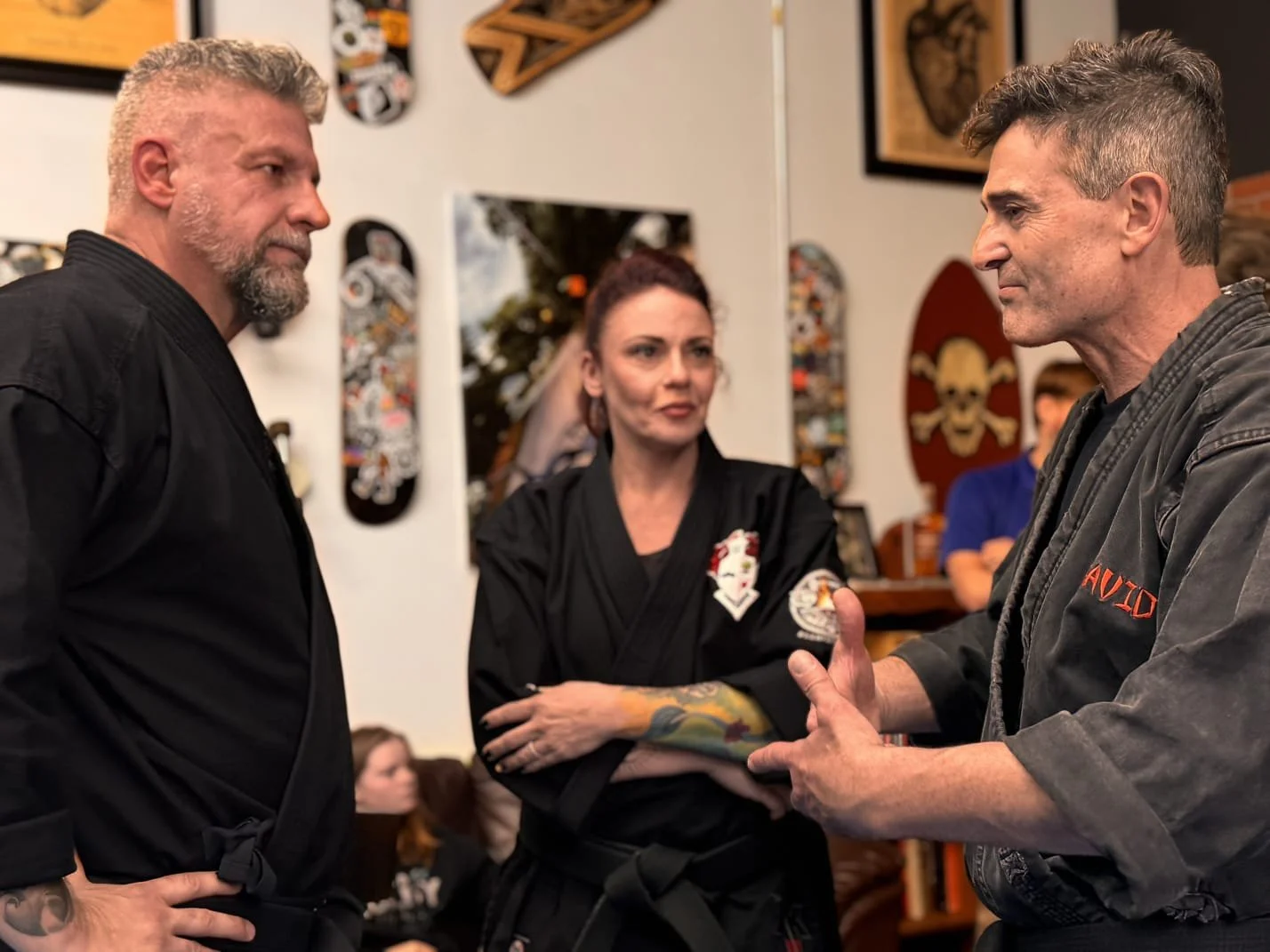
In this episode Jeremy chats with Brittany Searles about her growing up in a famous martial arts family, the role of instructors for their students, as well as balancing martial arts with other responsibilities.
Brittany Searles - Episode 1112
SUMMARY
In this conversation, Brittany Searles shares her unique upbringing in the martial arts world, influenced by her parents, both Grandmasters. She discusses the responsibility of martial arts instructors, the environment of training, and how her childhood experiences shaped her resilience and mindset. Brittany reflects on the balance between martial arts and other life experiences, including her teenage years and the impact of family dynamics on her journey. The conversation highlights the importance of confidence, support, and the warrior spirit in both martial arts and life. She delves into the themes of independent thinking, the concept of martial science, and the responsibilities of martial arts instructors. She also explores how personal experiences shape one's approach to martial arts and the importance of teaching with intention and clarity. The discussion also touches on the significance of personal growth and the impact of martial arts on life beyond the dojo, including the launch of new projects and ventures.
TAKEAWAYS
Instructors have a responsibility to ensure students are mentally stable.
Growing up in a dojo creates a unique environment for resilience.
The influence of family is crucial in martial arts training.
Balance in life is essential for martial artists.
Teenage years can challenge commitment to martial arts.
Experiences outside of martial arts enrich personal growth.
Confidence is built through supportive parenting.
Martial arts training can shape one's mindset and character.
Life experiences can lead to a return to martial arts.
The science of motion is translatable across all movement.
You can't know how to go until you know where you're going.
It's our responsibility as instructors to guide our students.
Martial arts gives you the opportunity to grow and become a better human being.
Teaching should focus on the outcome for the student.
CHAPTERS
00:00 The Responsibility of Martial Arts Instructors
03:49 Growing Up in the Dojo
09:54 The Influence of Family on Martial Arts Training
15:04 Balancing Life and Martial Arts
20:57 Navigating Teenage Years in Martial Arts
26:09 Life Experiences and Returning to Martial Arts
26:19 The Influence of Independent Thinking
32:16 Understanding Martial Science
44:11 The Responsibility of Instructors
50:06 Exploring New Ventures and Projects
Join our EXCLUSIVE newsletter to get notified of each episode as it comes out!
Subscribe — whistlekick Martial Arts Radio
After listening to the episode, it would be exciting for us to know your thoughts about it.
✅Subscribe to whistlekick Martial Arts Radio on the following platforms:
🎧Apple Podcasts: https://apple.co/3mVnZmf
🎧Spotify: https://spoti.fi/3yHVdHQ
✅You can find whistlekick on all social media platforms using the handle @whistlekick or visit our website at https://www.whistlekick.com or https://www.whistlekickmartialartsradio.com
Show Transcript
Jeremy Lesniak (10:13.501)
Hey everybody, welcome back to another episode of Whistlekick, martial arts radio. And today's episode, I am joined by Brittany Searles, who we've been, we've been, we've been chatting. I mean, we had to, had to stop. No, we gotta, we gotta stop. We gotta, we gotta actually do like the real thing. We gotta stop chatting cause we're getting into such good stuff. So I'm glad you're here. I think this is going to be a lot of fun. And for some of you who've been watching lately, there's a connection to a recent past guest, one that was really exciting.
made me feel special because somebody had wanted on the show for a while. I'm not gonna tell you who it is yet, but it'll happen. You'll find out organically. Now, if you are new to the show, please visit whistlekick.com. See all the things that we do, because as a company, we do a lot more than the show. But over on whistlekick.com, radio.com, that's where you're going to find transcripts, videos, audio, photos, all the links, all the stuff that we talk about. And this episode is going to be over there because, you know, when we post the show notes and YouTube and Spotify,
all over the place, they strip out a lot of stuff. They don't let us put everything. So whistlekickmartialartsradio.com, that's where everything is. And then of course you can sign up for the emails to get it all emailed right to your inbox twice a week when we drop these episodes. And with that, Brittany, thanks for being here. Thanks for being on Martial Arts Radio.
Brittany Searles Bushido Forge (11:30.798)
Thank you, thank you so much for having me. I am super excited today and yeah, what do you wanna talk about? What you wanna do? There's the dog. There's the dog. That's half the dog. There we go. Yeah.
Jeremy Lesniak (11:39.207)
Man, where do we start? We had a good roll. There's the dog. Well, that's back of the dog. I don't like that half as much. I prefer the half. look at the face. That face. If you're listening and not watching, this is a, you said 115 pound? A cutie pie.
Brittany Searles Bushido Forge (11:55.566)
115 pound male American Akita named Atreyu. So for those of our generation that were, you know, emotionally harmed by the never ending story, right? There you go.
Jeremy Lesniak (12:02.419)
betray you.
Jeremy Lesniak (12:13.779)
Oh, There's a movie that you go back. When did I rewatch that? I think I watched it for the first time when it was like eight or nine or something. And then I watched it again. Gosh, I was I was in my 20s. And it's still, you know, still pulls at you.
Brittany Searles Bushido Forge (12:24.024)
Mm-hmm.
Brittany Searles Bushido Forge (12:32.762)
my gosh. it does. Yep. There's no fixing that. And I think that's part of what makes our generation like so tough, right? It's cause we got through that movie.
Jeremy Lesniak (12:44.303)
Yeah, we had to let ourselves in. We were latchkey kids and even the children's movies were sad and violent.
Brittany Searles Bushido Forge (12:55.234)
They sure were. They were. We have kids and trying to walk them through those films. It's like, this this didn't age well. This this is not okay.
Jeremy Lesniak (12:57.267)
Yeah.
Jeremy Lesniak (13:07.283)
There's a lot. Right? Lion King. mean, you know, maybe a little bit older than the target demographic, but how do you kick off the Lion King with a significant traumatic moment?
Brittany Searles Bushido Forge (13:18.474)
Nope, I still cry, especially the live action one, the new one. was like, no, not doing it.
Jeremy Lesniak (13:24.337)
Yeah, for sure. Well, you know, we could spend an hour talking about why our generation is more resilient due to the pop culture that was crammed down our throat, but I don't think that's what people are going to want to hear us talk about. They're going to want to hear us talk about martial arts. Maybe, you know, maybe we come back to those themes a bit because they are real, right? The environment that you learn martial arts in does become relevant to the sort of training.
Brittany Searles Bushido Forge (13:39.732)
Exactly.
Brittany Searles Bushido Forge (13:52.302)
Oh, absolutely. Absolutely. Oh, yeah. Yeah, takeaway pads, right? We didn't have all of the gear, you know, growing up. I mean, I remember getting the wind knocked out of me seven times in a row when I was like five at the West LA school, you know, and of course, dad's teaching the class and he's telling me, get back up, get back up and you know.
Jeremy Lesniak (13:53.959)
Right?
Jeremy Lesniak (14:14.803)
You were five, five years old? Is that what?
Brittany Searles Bushido Forge (14:17.47)
Yeah, so I grew up in it, you know, I grew up going to the West LA school with my dad on Saturday mornings. I was probably about three when he started taking me. And so my earliest memories of being alive, honestly.
are of two things. My parents owned a nursery. So I grew up surrounded by plants and flowers. We had a pet store. So there was all this beautiful greenery and this. And then there was, you know, the the dojo. And so the smell of the mildew of the carpet, the smell of the sweat, the smell of the feet, you know, the the smell of the the bags that people were using the heavy bags.
Even back then, you know, I would take naps in the private rooms. We don't have private rooms anymore, but we used to have private rooms that had Shoji screen that walled off. And I'd take my naps in there and listen to everybody beating the crap out of each other and having the best time. And I would get into the kids classes, which at that time were really just starting, you know, because. Yeah.
Jeremy Lesniak (15:29.445)
Yeah, it's, I mean, doing the math, you told me earlier how old you are. I'm about a year younger. Right. So I wasn't going to say it. You said it.
Brittany Searles Bushido Forge (15:36.044)
I am 48.
I'm good with it. Are you kidding? I wouldn't trade my age for anything. Like I am a happy 48 years old and I just got braces on for crying out loud, you know, like we're doing it. It's good. I am. Yeah.
Jeremy Lesniak (15:48.691)
Well,
Jeremy Lesniak (15:53.811)
You're in your second childhood then. You're going back. If we do the math, we can go back. I started pretty young as well. I started in 83. And it wasn't common. And when there were kids classes, they weren't usually teaching three-year-olds, five-year-olds.
Brittany Searles Bushido Forge (16:15.306)
No, no, no. I mean, there really isn't a kid's chempo. You know, as an instructor, the way that we did it was however old they were, was how many techniques that they learned.
Right, so if you were five and you were going for orange, then you would, as an instructor, do your best to pick out the five that supported the concepts, principles, basics, you know, the stances and the outcome. And as they got older, they would approach their junior black belt and...
Jeremy Lesniak (16:42.259)
you
Jeremy Lesniak (16:45.651)
this night.
Brittany Searles Bushido Forge (16:52.62)
that would happen at 15, then they would go back and learn the ones that they hadn't learned and start developing a mastery of their motion and their power. But you know,
as kids get older and they go through the system, everything's changing so rapidly, right? I mean, their bodies are getting bigger, their feet are getting bigger. So as they're growing in their art, they're also growing in their body, they're growing in their balance, their confidence, you know, their mental state, what's going on at school, all of those things. it's...
you try at least, you know, we would try and still do not to get too heavy into the eye gouging and, you know, the raw techniques and the the knife techniques and all of those because it just wasn't, it still isn't appropriate, right, to lead a child through that kind of combat mental state. But
Jeremy Lesniak (17:57.939)
Yeah, it's gotta be.
Brittany Searles Bushido Forge (17:59.819)
Yeah, but I mean, growing up, mean, the kicks and the punches when you're sparring, mean, those all landed the same. And we had shin guards and we had, you know, forearm guards that we put under our gis. The white ones, yeah, they get all sweaty and yellow. Mm-mm.
Jeremy Lesniak (18:06.899)
and
Jeremy Lesniak (18:16.091)
I remember the white ones. The white ones that always sunk and they were yellow and they never fit right. And they would twist. They would always twist. And you didn't realize they would twist until you clashed chins or banged forearms and you're going, I thought I had pads there. Yeah. Yeah. Some of you today have no idea. You have no idea what it was like.
Brittany Searles Bushido Forge (18:28.95)
They twist on you exactly.
Brittany Searles Bushido Forge (18:39.138)
Yeah, they don't. They have no idea. nor, mean, and again, you know, going towards my black when I was at the Green Street Dojo, and this is many years ago, doing that without pads. I mean, how many bones do you break on your way to Black Belt? And that, that elbow on the shin, there's still some bone memory in there.
Jeremy Lesniak (19:05.287)
bone, like not muscle memory, bone memory. I like that's the first time I've ever heard that term. That's a good one.
Brittany Searles Bushido Forge (19:05.614)
It's bone memory. yeah, like that's like, I wince.
Jeremy Lesniak (19:14.589)
So I want to go back because you said something and I think it's kind of important to unpack because I think it's going to tell us about the environment that you grew up in.
being so young and having the wind on.
Brittany Searles Bushido Forge (19:29.674)
yeah, that was scary.
Jeremy Lesniak (19:31.155)
And multiple times, which suggests it wasn't just an accident, this was part of the expectations. Now, I'm also going to guess, because I've spent a little bit of time with him, that this wasn't because your father was a horrible person and indifferent to the wellbeing of his child. It suggests that there was something happening in that school that...
Brittany Searles Bushido Forge (19:48.172)
No.
Brittany Searles Bushido Forge (19:51.914)
No.
Jeremy Lesniak (19:57.664)
I never experienced and I want to hear a bit from you about what that was like.
Brittany Searles Bushido Forge (20:03.342)
Sure. So my father, he wrote his book, Confidence Child's First Weapon. My father is Grandmaster Larry Tatum. My mother is Grandmaster Jill Tatum. They both trained me and have been on the mat training others for a long, long time.
Jeremy Lesniak (20:10.413)
And we should say, your father is Larry Tatum.
Brittany Searles Bushido Forge (20:29.018)
And no, they were not terrifying parents. They were not the parents that said, you must get into class and you must train. At a young age, that's what I wanted to do. When they were teaching their privates and I was at, you know, in one of the private rooms.
Jeremy Lesniak (20:30.291)
and get a video.
Brittany Searles Bushido Forge (20:48.448)
I was in there as a toddler, punching the heavy bag bare-fisted and building my calluses, knowing that what I was doing was conditioning my body. And that might sound odd to people that don't grow up in it, but that was my environment. Yeah.
Jeremy Lesniak (21:07.091)
I did and it's odd. That's not a bad thing, but that's not a typical response. You're talking about yourself as a toddler, so I'm imagining you at two years old.
Brittany Searles Bushido Forge (21:16.608)
Nah, well, because maybe not toddler, but between the ages of three and probably about eight or nine years old, I was in there and doing this and wanting to do it as an adult, wanting to do it as hard as an adult, wanting to connect with my breathing. know, meditation was a big part of it, not in like a religious way, but
I remember dad, you know, really connecting the kids and the adults to our breath, to our diaphragm so that we could build that key eye, which would protect our internal organs. And that's what was going on during that sparring match. I remember it clearly. There was this kid, you know, that was years older than I was. He was a blue belt. He had legs like a grasshopper. I mean, they were just, you know.
And I was a white belt and my father was getting me to protect my stomach, you know, with a universal block and encouraging me to get back up. And it wasn't just getting back up. I mean, when you get the wind knocked out of you at any time, you you just have such a difficult time getting it back. So he would have us blow on his palm. So.
Jeremy Lesniak (22:32.189)
Yeah.
Brittany Searles Bushido Forge (22:40.472)
when you get the wind knocked out of you, the last thing that you want to do is breathe. You know, you're just like, right? But if you can blow as much as you can out, forces the body to inhale, which gets your wind back into you. And so we did that, you know, over and over and he, he would ask me, you know, here I am like crying and spitting and all of this. And you, you sure you want to do this? You sure you know, let me back in.
Jeremy Lesniak (22:49.49)
you
Jeremy Lesniak (23:09.843)
Mmm.
Brittany Searles Bushido Forge (23:10.354)
And then he pulled me into his office and he had these little Japanese dolls that he said were the seven samurai. And he's like, got the wind knocked out of you seven times, but you got back up and you kept going. And that's that samurai spirit. That's warrior spirit.
Jeremy Lesniak (23:32.051)
It's the literal proverb, right? Fall down seven times, get up eight.
Brittany Searles Bushido Forge (23:34.698)
Mm hmm. Exactly. So growing up with that at that age, I mean, it really shaped my mindset, you know, as a human being and indefinitely as a martial artist. And then later on, remembering how that felt when I was teaching children, I was teaching adults, still am teaching and then having my own kids being able to build that.
that confident mindset in them of like, yes, parent is here and you also have control in your body to move past the discomfort and to get back up to keep going. It's a good memory, it's scary memory, but it's a good memory.
Jeremy Lesniak (24:21.169)
Yeah, I've got to imagine that there was stuff happening outside of training, stuff at home. Maybe it was balance that your mother was providing that made you able to do that. I don't know too many kids of that age that, I we have a kids program.
Brittany Searles Bushido Forge (24:41.272)
Great.
Jeremy Lesniak (24:43.333)
I don't know too many of them that could handle anything close to what you're describing. So there's gotta be something in how you were being raised beyond training. Do you have any thoughts on what that was? Like what was it about how mom and dad were treating you, bringing you up that made that an option?
Brittany Searles Bushido Forge (24:46.766)
you
Brittany Searles Bushido Forge (24:54.975)
definitely.
Brittany Searles Bushido Forge (25:02.338)
Yeah.
Well, I mean, my parents have always had a tremendous amount of confidence in me, and they have always instilled in me that I need to do it. Right. I need to engage in life. I need to be a citizen of the world. I was, you know, we grew up in a house of antiques. My parents love collecting antiques. There were fragile things all around. I didn't break those things. The value of
my environment, our environment, our home. I was an active participant in maintaining that structure and peace. When my parents weren't teaching, they were gardening. You know, there's that saying, right, it's better to be a warrior with a garden than a gardener that needs to be a warrior, right? I think I screwed it up. Warrior in the garden.
Jeremy Lesniak (26:00.977)
warrior in the garden better to be a warrior in a garden than a gardener in a war
Brittany Searles Bushido Forge (26:04.414)
than a gardener in war exactly. So we had we had our garden. My both of my parents are artists, right? My father is a fantastic painter, sketch artist, my mother, an artist of all kinds.
just we had this huge attic upstairs, which was creative space. She was always sewing something, throwing something on the ceramic wheel. So life was very balanced and both of my parents are writers. So at an early age, they taught me how to journal, how to, you know.
write poetry, we had a beautiful library, all of the encyclopedia Britannica's as well as
you know, works of Khalil Gibran and Robert Louis Stevenson, Robert Frost and, you know, Emily Dickinson. mean, like all of these different authors. So it was a very Renaissance way of growing up where we had the martial arts and the warrior side. But then we also had both of my parents this.
this passion for developing the brain and developing philosophy and the other arts. within that is.
Jeremy Lesniak (27:23.047)
Mm-hmm.
Jeremy Lesniak (27:31.331)
Where did that come from for them? Was that how they were raised?
Brittany Searles Bushido Forge (27:35.63)
Yeah, so my grandfather on my mother's side was a professional artist. He did a lot of work for Disney. Most of the Egyptian museum pieces that you see for sale, like at the Smithsonian, like gift shops and things like that, he did the original castings for. So my mother grew up in Laurel Canyon.
Jeremy Lesniak (27:53.397)
cool.
Brittany Searles Bushido Forge (27:57.55)
with a father who was an artist and she went to school to be an architect. She's also a master ceramicist, so she did that. My father, his father was a landscaper as well as the San Gabriel Valley bowling champion and was a boxer, but had this...
beautiful outlook on life. They always wanted to cultivate, grow things, make people's lives better through connection and community. So there was a tremendous balance, I feel, for the both of them. My dad went to art school before he joined the army to go to Vietnam. And so...
You know when you're on the mats and you're in combat and you're teaching and you're investing so much of yourself physically and mentally into your students the business behind it as you know It's like how are you gonna decompress? I had a lot of people go to the bar. They decompress. They're cool some people You know who knows what they do, but my parents and I you know, we've we've always been writers and painters and
Jeremy Lesniak (29:06.577)
Hmm.
Brittany Searles Bushido Forge (29:18.228)
I write, you know, as well. I have written a column on self care for the last seven years for one of our papers out here. I do my blogging and yeah, it's always been this passion for expression and what deeper pieces of ourselves we can cultivate but also help others cultivate, you know, as well. So.
Jeremy Lesniak (29:35.133)
Hmm.
Brittany Searles Bushido Forge (29:47.81)
Yeah, that was a long answer. There you go.
Jeremy Lesniak (29:49.883)
No, was as long as it needed to be.
Jeremy Lesniak (29:59.685)
a lot of kids who grew up with martial arts.
Brittany Searles Bushido Forge (30:03.47)
Mm-hmm.
Jeremy Lesniak (30:04.551)
They initially, I'm gonna train because I wanna make mom and or dad happy. And then for quite a few of them, and we've heard this story go in both directions over the years. They reach adolescence, which is a time that quite often kids who are training look at other things. They go off, they join team sports, or they wanna find their way in their social circles.
Brittany Searles Bushido Forge (30:09.23)
Sure.
Brittany Searles Bushido Forge (30:16.693)
Mm-hmm.
Brittany Searles Bushido Forge (30:32.151)
sure. Yeah.
Jeremy Lesniak (30:34.373)
And sometimes that departure, if it happens, can be...
very challenging in the family dynamic, especially if martial arts is the family business. And even when the child reaches that teenage age and keeps training, now it can be that, okay, you're mom and dad and I'm learning to push back and rebel against mom and dad in a safe way, but I don't know if I can do that in the dojo because it's a different dynamic. So as you started to age, what was...
Brittany Searles Bushido Forge (30:46.606)
Sure.
Jeremy Lesniak (31:08.583)
you know, which of those paths were yours and what did that start to look like?
Brittany Searles Bushido Forge (31:12.796)
golly, well there's a reason I've been doing this my whole life and I'm only a fourth degree black belt and I tell people it's like I was a teenage girl and then. Right, like we.
Jeremy Lesniak (31:26.108)
I hope you're going to clarify what that means because I can imagine a few, there's a few different characterizations that could be relevant here.
Brittany Searles Bushido Forge (31:36.245)
Um, well, so I did do the team sports. Uh, you know, I did those all through junior high. I played soccer, softball, volleyball, basketball, all of those. Um, I went on to in high school lettering cross country, um, started, you know, uh, weightlifting at an earlier age, um, probably about 18, 19. So I would, I would, I would be training in the dojo.
And I'd get a couple of belts, you know, I'd go into it and then life would happen, right? Kid summer, you know, hey, let's go on this church trip or, you know, we've got cross country happening. And my parents were always very supportive of that. Like, please go and do that. You know, this life is its own structure. It's its own life. But they really encouraged me to go out.
and try other things that were athletic, as well as becoming an artist myself. So I spent summers at the Pasadena Art Center of Design. I was, you know, a fine artist for a while. I went into multimedia in 98 because I was like, don't think I can make a living doing fine art. And at that time,
The dojo was running so well and they didn't need me as an instructor. So I was really free to, to take these, you know, year, two year breaks, go and experience life and then come back and dive into my training. And, you know, I got married the first time at a very young age, did not have kids, came back after that divorce, you know, I'd lived out of state.
Jeremy Lesniak (33:06.611)
Hmm.
Brittany Searles Bushido Forge (33:31.898)
And at that time, you know, had been working corporate in marketing for about 10 years. And I was just turning 30 and I, I really wanted to do something different. I wanted to be of service instead of being in a cubicle. I wanted to be out in the world. And my dad is like, Hey, you know, my manager just, just quit. You know, he had to go back to.
what he was doing. And all of your corporate experience could really work here. Plus, you've always loved being on the mats. Why don't you come teach for me run the school and and we'll take it from there. And I said, awesome. said, I also would love to study yoga and become a yoga teacher. So that's that's how that happened. You know, at 30, I went back after experiencing life and
And sure, I mean, there were plenty of times, you know, as a martial arts brat, like I got into defending people in places and things that I probably should not have. I remember coming home after defending. I well, my sister passed, gosh, 10 or 11 years ago, coming up on that anniversary.
Jeremy Lesniak (34:50.663)
Are you an only child?
Jeremy Lesniak (34:59.717)
Okay. I'm sorry.
Brittany Searles Bushido Forge (35:01.582)
but we were 11 years apart. So I was 11 years old when she was born. So theoretically we were both only children. But yeah, yeah. No, no, that's okay.
Jeremy Lesniak (35:07.132)
Okay.
Jeremy Lesniak (35:15.075)
I'm sorry to have interrupted, but think that that birth order, think, becomes relevant with what you're talking about, wanting to protect others, right? That's that older civil dynamic.
Brittany Searles Bushido Forge (35:21.047)
Yeah.
Brittany Searles Bushido Forge (35:25.166)
Oh yeah, first born, older sibling. You know, I'm a natural redhead, so there's that. But, you know, I came back after I was 16 and I was roadieing for these Christian bands at the time. And so I was on Sunset.
Jeremy Lesniak (35:44.627)
Wait, no, you can't you can't you can't just say I was roading for a bunch of Christian but you can't just gloss over that like that's the thing most people do.
Brittany Searles Bushido Forge (35:56.083)
Well, right. So.
Jeremy Lesniak (35:57.56)
You said it like, I went to the grocery store. How does that happen?
Brittany Searles Bushido Forge (36:01.902)
So I think we've established that my parents let me be a pretty independent thinker.
Jeremy Lesniak (36:10.685)
That yeah. The antiques told me that the antiques told that they expected you to maintain a very high standard from a very young age. That's, that's what I took from that. But also with everything else.
Brittany Searles Bushido Forge (36:12.43)
and the antiques.
Brittany Searles Bushido Forge (36:25.388)
Yes.
Yeah.
Jeremy Lesniak (36:32.135)
They had complete faith in you. They didn't just tell you they had faith in you. They had faith in you in a way that I think very few parents do have in their children.
Brittany Searles Bushido Forge (36:36.258)
No. yeah.
Yeah, yeah, they did. And I mean, it wasn't that they the expectation was was hammered on me terribly. It was an expectation that I was welcome to accept. And and so I you're going to laugh. I had sat my parents down. I was 16 years old. I was taking my junior and senior year at the same time. And and I said, you know, look, I I can be doing college work.
sign me out of this school and I'll take my GED and go to junior college and you know work part-time and just get that going right so yes through that you know I was very involved in a church growing up and there were all these Christian bands and they were on the circuit and for those of you that that were on that scene I mean prayer chain was big and like all of these are right and so there was this production
record company that that was had you know had these bands and so I was I was rooting for them I was also writing their newsletters and you know staying out lately I'd always call on the payphone right mom you know we're going we're going to Sunset Boulevard we're going to be at this club and I'm going to be home at this time and
So yeah, I was in this pink granny dress, you know, with my little combat boots on and right in the crowd. Yep. And There is this out of control, you know, drunk gentleman who was about to hit my date. And I saw out of the corner of my eye and I, you know, had asked him to calm down a few times and it was just escalating.
Brittany Searles Bushido Forge (38:31.142)
and my date didn't see the punch that was on its way. So I intercepted it and did a modified version of hooking wings. And the gentleman was wearing glasses. I knew in that split second I did not want to A, hurt him that badly, and B, mangle myself. So made some decisions and A, it worked, launched him.
Security got him out of there. Of course, I was all proud of myself and everything, right? Yay, defended. Came home and my dad was like, what were you thinking? Like, what were you thinking? You could have been hurt. Why were you even going to someone's defense like that? They should take care of themselves. Like, that's not, mean, it was the total opposite that what I thought I was going to receive. But.
Jeremy Lesniak (39:23.527)
Hmm
Jeremy Lesniak (39:27.613)
Sounds like he went into dad mode more than instructor mode.
Brittany Searles Bushido Forge (39:33.01)
yeah, know, and mom both. mean, they weren't militant martial artists, you know, like we had a lot of laughter in our home and music.
Jeremy Lesniak (39:45.555)
Anybody who watched your dad's episode, by the way it was 1098, knows he has a good sense of humor. He's a fun loving guy. We had a great time. We made hair jokes, right? Because he has all of it and I have none.
Brittany Searles Bushido Forge (39:49.557)
Uh-huh.
Brittany Searles Bushido Forge (39:53.806)
He does. Oh, right on. Yeah.
I know he has the best head of hair and I mean there's like rumors going around that it's like a wig. It's not like that. That's his hair. And I'm like, thank God.
Jeremy Lesniak (40:08.219)
Ha ha ha!
That, when I was coming up and we have to come back to your story, but since we got here.
Brittany Searles Bushido Forge (40:15.99)
Mm-hmm.
Jeremy Lesniak (40:19.325)
That's how I started to connect the material that was your father when I was younger. was the guy with the hair, the guy with the hair, the guy with the, because nobody else had hair like him. Nobody still has hair like him. And so I started to watch and initially it was the guy with the hair. And then I'm watching him going, this guy knows what he's doing. And then of course became aware of who he was and everything. And so that's why getting to talk to him, it was both.
Brittany Searles Bushido Forge (40:31.219)
I know.
Brittany Searles Bushido Forge (40:41.724)
yeah.
Jeremy Lesniak (40:48.883)
Here's this celebrated martial arts figure from history and someone who I, I don't know if I want to say I looked up to, I guess we will. You I admired him for his martial skill and his hair.
Brittany Searles Bushido Forge (41:03.054)
Yeah, yeah, no, he's got incredible style both my parents do and so yes, yeah, but back That's okay We were you had asked about you know, what was it like growing up in that and departing from things and and so yeah, I was very into music and I was very into Art like I said and and so that's just one story though
Jeremy Lesniak (41:10.087)
But please, I took you off topic.
Brittany Searles Bushido Forge (41:32.59)
about like probably classic martial arts kids is you you grow up with all of this training behind you you know you think you're this badass and I mean in many regards you you are however how you use it right you just don't have the frontal lobe connected in a way that's great so there's that.
Jeremy Lesniak (41:56.977)
Now, you've used a term, we're gonna take a hard left here. You've used a term and I've seen it in when, because you had reached out to us after your dad's interview and said, good job, thank you. That means a lot. And you and I started a conversation, you used a term at one point during that conversation and you used the same term again.
Brittany Searles Bushido Forge (42:02.702)
do it.
Brittany Searles Bushido Forge (42:10.188)
Yeah, I was thanking you for it. You did a great job.
Jeremy Lesniak (42:24.301)
in your pre-show form and it's a term, I'm not gonna say you're the first person I've heard use it, but it's pretty uncommon and that is martial science.
Brittany Searles Bushido Forge (42:32.974)
Sure, martial science.
Jeremy Lesniak (42:34.171)
And I'd like for you to talk about why you use that term. And I imagine you're using it in contrast to the term martial art.
Brittany Searles Bushido Forge (42:43.372)
I'm using it in support, right? So martial science, I I probably have to Google what the actual definition of that means, but I can tell you what it means to me as a martial artist, and we can go from there.
Jeremy Lesniak (42:46.182)
Okay.
Brittany Searles Bushido Forge (42:58.488)
There is a science of motion that is universally translatable across all movement. In Kempo, we use the universal pattern as the blueprint of all conceivable motion and angles. So you see on the patch.
It's the circle with, you know, the axes and the other concentric circles in the middle and all of that. Theoretically, it's supposed to be nine of those spheres, right? So that person sits in basically a globe of it. And from there, you can anticipate, triangulate, plan on like all of your different attacks and the different angles.
of your strikes that are going to optimize essentially your ability to survive an attack or be offensive in your attack. all of those. then how to get egress out of it and dominate the clock and the pattern to move your opponent where they need to be or disrupt
their behavior along those lines. That's a big long answer. So the science behind that, right, is that on this planet we have the laws of physics and it's not the universal pattern isn't just for chempoists, it's not just for martial artists. I mean, it's for anyone that's moving around in any sport or dance or like that.
So the science of motion is translatable. Martial science is, in my opinion, it really takes the ego out of it. When you can baseline, okay, know, this 45 degree angle is going to do this, you know, on this plane, right? Then it's not an opinion. It's how can we take what is actually true, given the science that we have.
Jeremy Lesniak (45:12.083)
Thank you.
Brittany Searles Bushido Forge (45:22.914)
the geometry that we have, the laws of gravity and you know, motion, inertia, velocity, et cetera, and use that to make ourselves better weapons, honestly, and better makers of peace. And then how can we translate that into our teaching when we're teaching a variety of students, you know?
How do we get that into their body? How do we give them confidence in their own motion and extrapolate it, cultivate it, bring it from there?
Jeremy Lesniak (46:03.407)
What I'm hearing, and there are a few words that are popping up for me, and this is one of my favorite things about doing the show, is that the guests tell me things, and it makes me think, and then I go off and I think about them and share them with my students. What I'm kind of hearing is looking at what we do in our training through the lenses of physics and physiology and understanding, something that I think we all do somewhat.
Brittany Searles Bushido Forge (46:10.04)
Sure.
Brittany Searles Bushido Forge (46:32.556)
Mm-hmm.
Jeremy Lesniak (46:32.583)
But what I'm hearing is a prioritization of those things in a quest for efficiency. Does that make sense? Is the efficiency part in there?
Brittany Searles Bushido Forge (46:36.492)
Yes.
Brittany Searles Bushido Forge (46:40.766)
Mm hmm. Efficiency. And one of the things that, you know, my husband and I have been toying around with and also using AI to help us. for those of us, for those of you out there that.
know what a Kanban board is or JIRA work in, Scrum, those kinds of things, right? Like that's what we do in our day jobs. those, right, it does not, it's project management, exactly.
Jeremy Lesniak (47:09.811)
For those of you who don't know, has nothing to do with breaking wood. This is like project management sort of stuff. You're not breaking a con. You might want to break a con bonbon, but you are. It's not, it's not like a kind of wood.
Brittany Searles Bushido Forge (47:23.626)
Exactly, exactly. So yeah, it's project management. And so what do you have to do before you even start a project, right? You've got to get your stakeholders together and we can translate that into, all right, what are our stakeholders on the Nats? There are our instructor and our student and possibly our UK, possibly, you know, the manager or the head, you know, belt on the Nats, whatever. But before you can even begin a lesson.
And now this is my opinion. I'm sure people start lessons just all the time because they've been doing it long enough and this is just in them. I like to think, all right, what's the outcome? What can we all decide that the outcome is going to be? So if we're gonna start a project, we're gonna start an initiative, we're gonna start a lesson, we're gonna start a belt, we're gonna start yellow, orange or whatever.
or we're even going to start a technique, right? What's the outcome that we want from that technique? Is the outcome...
Jeremy Lesniak (48:23.307)
You might be surprised how many martial arts schools out there pay very little attention to outcomes. Okay. All right. Some of you in the audience might be surprised as to how many schools out there do not have consideration of outcome. And you can't, you can't reach a goal. You can't know how to rather, you can't know where you're going and how to get, you can't know how to go, which is the training until you know where you're going and you're
Brittany Searles Bushido Forge (48:29.78)
no, I'm not surprised.
Brittany Searles Bushido Forge (48:39.405)
Yeah.
Brittany Searles Bushido Forge (48:50.134)
Right, exactly.
Jeremy Lesniak (48:52.269)
And that is unfortunately quite common.
Brittany Searles Bushido Forge (48:55.486)
Mm-hmm. Yeah, because if you go straight to tactical, then you're going to find yourself in the mix of the event, right? But you can lose, all right, what's my outcome? So for example, you find yourself in an altercation or a situation and you're defending yourself. Awesome.
But is your outcome to be a big, bad beastie in there, break a bunch of bones and do a lot of damage? Is your outcome to be a peacemaker? Is your outcome to do a combination? Or is your outcome to go home? Who's waiting for you at home? Those are some of the things that are also covered in the CCW class. And it's a whole mindset. But back to project management and taking that into a technique.
deciding on, the outcome of delayed sword, for example, is that my student understands that they can take dominant posture. They can give their brain something other than a fight, flight, or freeze reaction. They can build in, you know, neural pathways to where the brain goes, yes, this makes sense. I can do this instead of the F1.
You want them to, you know, experience full range of motion on some of their very basic strikes. You want them to understand what a neutral bow is, what a cat stance is, what a front kick is, where they are in relation to the body. Like those are all, in my opinion, part of the outcome. Did they take that technique and were they able to understand the basics, you know, the science of motion that went into it?
how we get there, right, is very based off of the student, their ability, their physical, mental, and all of that. But the outcome, you know, of yellow belt or of those yellow techniques, they each have their own outcome. We've taught them this part of the pattern. We've taught them this line of motion. We've taught them line reinforcement or, you know, positional recognition. We've taught them
Brittany Searles Bushido Forge (51:12.352)
a little bit of marriage of gravity. We've taught them a little bit about, you know, zones of obscurity or zones of sanctuary and what those mean. Now you can't pepper your student with all of that at once because they're going to go, that's really cool. I'm never coming back. you know, but through being, you know, an instructor and taking a student on that journey, I believe that if you can keep the outcome in
ahead of you and an outcome that's separate from your bias, right? Because I was shooting a video on this the other day. was like outcome based. All right, that makes sense to everybody. But my outcome, what I want for my student might be different than what another instructor wants for their student.
Jeremy Lesniak (51:47.41)
Hmm.
Brittany Searles Bushido Forge (52:07.394)
the outcome for one instructor is like they're going to kick ass and they're going to survive and they're going to do this. All right, cool. But that is like another biased outcome. going back to the curriculum, going back to the technique cards, you know, the looking at each one of those ranks and the basics within there and teaching from that as much as we can.
first right but I mean obviously you're gonna have your biases in there that's what makes instructors awesome or not awesome is is their different you know background so yes I think I went on a road pardon
Jeremy Lesniak (52:51.283)
Okay. Now where does that approach come from? That's what we do. That is a hallmark of this show, is that I just... Okay, I've had the strangest compliment so many times over the years. Jeremy, you're a great interviewer. I don't do anything. I just shut up and get out of the way. I ask you a question and I let you answer it.
Brittany Searles Bushido Forge (52:57.088)
It's what we do.
Brittany Searles Bushido Forge (53:14.114)
Right?
Jeremy Lesniak (53:19.227)
And what's fascinating to me is how many podcasts I have podcast. I'm a podcaster. I love podcasts. I listen to other people's podcasts and the number of podcasters who step on the question. So tell me about that time. Cause I was thinking about that time and it's so and so set about that time. And I really want to hear what you think about that time. And three minutes have gone by before they shut up and get out of the way to hear the answer to the question. And I'm sitting there going fast forward, fast forward.
Brittany Searles Bushido Forge (53:27.478)
huh.
Jeremy Lesniak (53:48.103)
Fast forward drives me crazy.
Brittany Searles Bushido Forge (53:50.914)
Yep. No, no, this is great. We're just talking. I love it.
Jeremy Lesniak (53:53.491)
which is the weirdest way I've ever stepped on a question. Where does that mindset, that martial science approach come from? Is that, I'm hearing it from others.
Brittany Searles Bushido Forge (54:04.588)
You're hearing it from, so where does that come from? Well.
Every human being in my opinion, right, just like every animal on the planet, like has the ability to to fight for their survival. I mean, it's what we want to do. know, how we temper that fight for survival, how we we.
get to a point to where we can go, my value system or this code that I want to live by is going to help me not create war, not hurt other people, not take advantage, you know, because humans, like, I mean, just like all things, we want to eat and we want to have shelter and we want to have love and we want to have all of these things. And then we get the things that we want. And then it's like,
Well, we want to defend those and we want to keep those, you know, healthy. But you can also go the opposite direction of being jealous by nature and aggressive by nature and, you know, not very patient and not balanced. So how do we get a martial spirit or a martial or mental martial science?
comes from your instructors, honestly, when you're younger. And then I believe as, as a person that finally does have their brain more fully developed, you know, in your mid to late 20s, I believe it's the responsibility of the practitioner to take a good look at themselves and go, what what is the fruit of, of my life right now?
Brittany Searles Bushido Forge (55:58.242)
you know, am I living in chaos? Am I living in debt? Am I living in constant drama? Is my friends circle in constant drama? they, you know, upholding the standards that I want to live my life by? And if not, all right, cool. You have an opportunity there to go back in to your, you know, your baseline code and make some adjustments to that so that
you can change your sphere of influence, you can change your environment, you can cultivate something beautiful and peaceful and balanced. It doesn't take the human nature away, which is to fight for survival, you know, to protect the things that they love, but I believe, you know, it gives the opportunity to grow and become a better
a better human being, a better parent, a better instructor. It just takes a lot of bravery and it takes people around you that you trust their know. You know, and and my parents, you know, just going back to them, I mean, they of course, I was a rebellious teenager. Of course, I was, you know, I made all kinds of mistakes. That's what kids are supposed to do. But when, right. But when when I came back to it,
at that age, they were very, not only supportive, but gave me lot of guidance on my nose and called me out on a lot of habits, know, that I had, mindsets that needed to change. so those getting back to how do we come into balance, you know, it's part how you were raised and then it's part how you go back and raise yourself and the people that you surround yourself.
but really looking at the fruit of your life. And As an instructor, looking at your students, you know, are they also fulfilled? Is your instructorship giving them something that gives them a love of the art that you're sharing? Are you supporting them in positive philosophy? Are you guiding them towards being a peacemaker? Or are you a very frustrated, angry individual
Brittany Searles Bushido Forge (58:20.28)
that's aggressive, that's forging students that are in your image that are going to go out and be @$$holes assholes. Like, ugh. Like, take a look around you. And my gosh, I know. No, no, no, no. That's our responsibility as instructors as well to be able to say, all right, you've gone far enough.
Jeremy Lesniak (58:33.523)
And if they are, don't promote them.
Brittany Searles Bushido Forge (58:48.334)
you've gone far enough, you can leave and come back when you're humble, come back when you're teachable. But it's Just like you wouldn't handle a knife or a gun to someone that wasn't mentally stable or sound or was in a reactionary state of mind. I believe it's our responsibility as instructors to do the same thing
with the martial arts because we are the weapon. You know, we have our empty hands, but we are the weapon before we even put a weapon in our hands. And to enable people that aren't balanced and in that aggressive mindset further down in their ranks makes them very dangerous people.
Brittany Searles Bushido Forge (59:40.814)
We could keep going.
Jeremy Lesniak (59:41.383)
We could keep going. We could keep going. But I don't think we should. I think we should, we should do a part two and have you on and everything. Now we've mentioned a couple of times you have a podcast talk about that.
Brittany Searles Bushido Forge (59:47.979)
Alright.
Brittany Searles Bushido Forge (59:56.14)
I do. So I do have a podcast. It's called Good Advice. It's on Spotify and all of that. But I'm relaunch, well, not relaunching. I'm doing another one called Naked and Unafraid. And that's where I'm going to be talking with people of all walks of life about their lives. And, you know, so we have friends that have a med spa that the HRT save their marriage, you know.
They do amazing things in their community with helping people train and healthy mindset. So I want to talk to them about, you know, when they realized, you know, for example, that their marriage was on the rocks and how they were conscious with that and gracious with each other and helped each other through that and the importance of blood draws and hormone therapy and, you know, all of that. So I want to get into the nitty gritty with people and give them a chance to tell their story.
Jeremy Lesniak (01:00:56.659)
I like that. And yeah, you mentioned titles and where people can find it. And what about other stuff? People want to find your email, socials, what should...
Brittany Searles Bushido Forge (01:01:06.438)
sure. Yeah. Yeah. So so we're on Facebook, obviously. People can message me there. We have see him on TikTok. We are our Bushido sauce line where people can take a look at our hot sauces. Yeah, we'll have to send you a box.
Jeremy Lesniak (01:01:25.375)
What? You have... Okay, hold on. Hot sauce?
Brittany Searles Bushido Forge (01:01:29.87)
Uh huh. Yeah. We do. We got hot sauces. I know we didn't even...
Jeremy Lesniak (01:01:32.179)
you
I love when guests surprise me. This, this wasn't in any of the notes that I saw. is Tiger's Fury. my God.
Brittany Searles Bushido Forge (01:01:38.606)
Yeah
Brittany Searles Bushido Forge (01:01:44.64)
Right, Tiger's Fury, we got our warrior panda. We just came out with Mantis Kiss. We'll send you a box.
Jeremy Lesniak (01:01:51.443)
I love hot sauce. I'm so excited. I do. I really do. Oh, why? Not that you shouldn't, but why?
Brittany Searles Bushido Forge (01:01:55.182)
Do you? Okay. Oh yeah, yeah. we, each sauce has its own. Because we're cooks too. We're, we, my husband and I, we cook, we, we love creating memories with family. And, and so we, we work with the chef on the recipes and we did all of the marketing. So you can go to BushidoSauce.com.
Jeremy Lesniak (01:02:06.931)
Mmm.
Brittany Searles Bushido Forge (01:02:23.25)
and take a look at our hot sauces and they've got these beautiful black gift boxes that yeah but they're they're they're awesome they're all whole ingredients and each one has its story so sauce with a coat of honor right that's what it says on the back here and yeah so we we started these we've got tiger's fury we've got mantis kiss we've got
Jeremy Lesniak (01:02:40.657)
Hmm
Brittany Searles Bushido Forge (01:02:51.736)
Dragon's Fire and we've got Serpent Strike and they're all different and they can all be used not just as hot sauces but infusion sauces in your recipes.
Jeremy Lesniak (01:03:05.565)
excited. Okay. And so now it's up to you to close, right? It's been, this has been great. This has been a lot of fun. And I always kick it to the guests to decide how we're going to close. And often it will be some kind of, of, you know, theme, they're bringing a theme back in or, you know, I want to make sure the audience knows this, but it's entirely up to you. How do you want to close this up?
Brittany Searles Bushido Forge (01:03:06.958)
you
Brittany Searles Bushido Forge (01:03:34.86)
my gosh, they just, you how do I want to close? Interesting. I would say for anybody out there that's listening, that practices, that's interested in practicing, that loves this art, you know, for the sake of loving it, but also maybe has had to learn it for the sake of self-defense, you know, to anybody out there that practices.
make it your best day. You know, get out there, do your forms, get into your breathing, love it as much as you can, get as good at it as you possibly can, take responsibility for your training as much as you can, and see if you can teach it to someone, see if you can give the gift of it to someone, and it doesn't have to be for money, you know, but see if you can
Help make someone's day better by the philosophies that you can impart behind it, or see how you can help save someone's life one day by giving them the gift of self-defense and be authentic. Move from there.