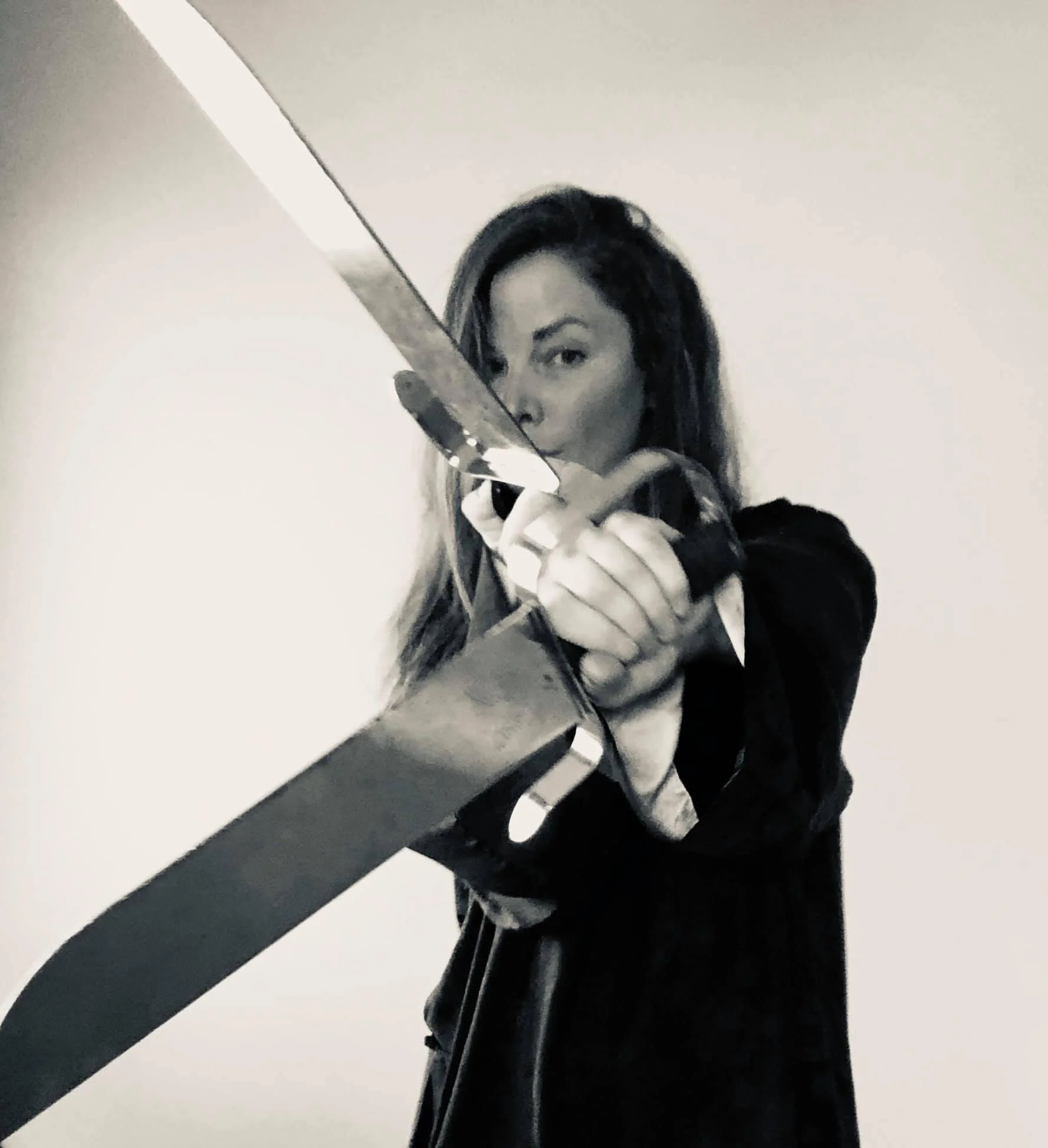
In this episode Jeremy chats with Kendra Mahon, aka Kung Fu Kendra, about her journey into martial arts starting with a traumatic experience and how kung fu helped her grow.
Kendra Mahon aka Kung Fu Kendra - Episode 1122
SUMMARY
In this episode, Jeremy Lesniak speaks with Kendra Mahon about her journey into martial arts, the healing power of Kung Fu, and how she transformed her trauma into a purpose-driven life. Kendra shares her experiences of overcoming personal challenges, the importance of community support, and her efforts to create accessible online programs for learning Wing Chun. The conversation also touches on the challenges faced by women in martial arts and the significance of using adversity as a catalyst for growth. She shares her journey in teaching Wing Chun, emphasizing empowerment through martial arts. She discusses her comprehensive programs, the inspiration she draws from nature, and how her training methods have evolved. Kendra also highlights the importance of travel for creativity, her experience in writing a book, and the balance between work and personal life. She encourages listeners to push through adversity and embrace their potential.
TAKEAWAYS
Kendra started martial arts after a personal attack.
Martial arts served as a form of meditation for her.
She believes in using grief as fuel for inspiration.
Kendra emphasizes the importance of perseverance.
She created over 25 online programs to teach Wing Chun.
Kendra's transformation inspired her to help others.
Teaching Wing Chun empowers both the teacher and the students.
Nature serves as a significant source of inspiration for creativity.
Training methods evolve based on personal growth and student needs.
Traveling enhances creativity and offers new perspectives.
Balance in life is crucial for sustained success and happiness.
Pushing through adversity leads to personal growth and success.
Every small effort contributes to larger achievements over time.
Community and sharing knowledge are vital in martial arts.
CHAPTERS
00:00 Introduction
01:00 Kendra's Journey into Martial Arts
05:37 Healing Through Martial Arts
10:27 Transforming Trauma into Purpose
14:26 Navigating Challenges in the Martial Arts Community
20:30 Creating Opportunities Through Online Programs
21:16 Empowerment Through Teaching Wing Chun
22:06 Comprehensive Wing Chun Programs
24:04 Finding Inspiration in Nature
27:00 Evolution of Training Methods
30:37 Traveling for Martial Arts
33:04 The Journey of Writing a Book
39:06 Balancing Work and Life
40:03 Promoting Resources and Community
44:04 Pushing Through Adversity
To connect with Kendra:
Kung Fu Kendra
https://www.youtube.com/@kungfukendra
https://www.facebook.com/TrainerKendra/
https://www.linkedin.com/in/trainer-kendra-canadas-top-fitness-trainer/ https://www.instagram.com/kung_fu_kendra/
https://www.tiktok.com/@kendramahon1
Join our EXCLUSIVE newsletter to get notified of each episode as it comes out!
Subscribe — whistlekick Martial Arts Radio
After listening to the episode, it would be exciting for us to know your thoughts about it.
✅Subscribe to whistlekick Martial Arts Radio on the following platforms:
🎧Apple Podcasts: https://apple.co/3mVnZmf
🎧Spotify: https://spoti.fi/3yHVdHQ
✅You can find whistlekick on all social media platforms using the handle @whistlekick or visit our website at https://www.whistlekick.com or https://www.whistlekickmartialartsradio.com
Show Transcript
Jeremy Lesniak (04:45.903)
Hey, what's going on everybody? Welcome back to another episode of Whistlekick martial arts radio. And on today's episode, I'm joined by Kung Fu Kendra. Thanks for being here. We're going to have a great time to all of you out there. We're going to have a great time. You're part of this too. You're part of this episode. We do these for you. We do two episodes each and every week. We've been doing it for over 10 years. And that's why we're well over a thousand episodes. So thank you for your continued support that helps us do this. Why do we do this?
because our goal here at Whistlekick is to connect, educate, and entertain the traditional martial artists of the world because we believe martial arts brings out the best in us. And just six months of training can help change someone's life. If that means something to you, the best thing you can do as a listener is share episodes. It's easy, it's free, it helps grow the show, helps us reach more new people, helps grow and continue.
You can find everything about this and every episode we've ever done at whistlekickmarshallartsradio.com. And with that, Kendra, thanks for being on Marshall Arts Radio. Thanks for being here.
Kung Fu Kendra (05:51.596)
Thank you so much, Jeremy. It's an honor to be here.
Jeremy Lesniak (05:54.573)
It's an honor to have you. you know, over the years, we've done enough of these that there are only a few ways that seem to work well starting this sort of a conversation. So instead of reinventing the wheel, we'll just we'll go with the easy, the classic. How did you get started in martial arts?
Kung Fu Kendra (06:15.758)
Well, a very long time ago, over 20 years ago when I was very young, I was unfortunately attacked. Nothing serious, life threatening, but that's what drew me to the idea of I need to learn how to protect myself. I need to learn how to use my arms and my legs and everything on me to have a fighting chance. So I...
lived in Calgary, Alberta at the time I was young and I signed up for Kung Fu classes. And at the time I didn't know what Wing Chun was. That's the specific type of Kung Fu I do. But it didn't matter at that time. I just needed a place to kind of sort out what happened and learn to develop some sort of skills. So
I trained at the Canadian Wing Chun Kung Fu Academy my whole life and that's in Calgary, Alberta, Canada under Master Brian Lewadney. And that it turned into something that I had no idea what it would become. I'm sitting here today and now I teach Kung Fu, which is a great honor. That's essentially what got me started.
Jeremy Lesniak (07:40.205)
Yeah, I'm sorry that happened. That's like the worst reason to start martial arts, but at the same time, it's not, right?
Kung Fu Kendra (07:49.198)
Yeah, it's so true. Yeah, a lot of people start because, you know, they've seen Bruce Lee movies or they were bullied or, you know, they want to learn some fancy stuff. For me, it was a lot more personal. And I think it was a gift, actually, because now I feel the urge and the need to continue to teach people these very simple
Jeremy Lesniak (07:54.607)
Right.
Kung Fu Kendra (08:16.729)
things that can potentially save their lives.
Jeremy Lesniak (08:22.213)
If you don't mind, and if you do, let's not go here, but if you don't mind, I'm curious about how your start into training may have impacted how the trauma felt and what recovery, or recovery might not be the right word, processing of that was like.
Kung Fu Kendra (08:45.485)
Yeah, that's a great question because Of course there was huge trauma and anxiety and depression and all sorts of things that were developing inside of me. And the martial arts actually was a form of meditation. It was a way to When I entered the qun is what we call it in the Chinese training room. That all went away, you know, all those thoughts all that.
Jeremy Lesniak (08:50.148)
Yeah.
Kung Fu Kendra (09:13.291)
anxiety, the depression. I was surrounded by people who are supportive, who knew a little bit about my story, and who just kind of took me under their wing. I was so blessed to have learned Kung Fu from a second generation master in the Ip Man lineage. He trained with William Chung, Grand Master William Chung, and that's my Sifu, Master Brian Lawadney. And he is a very special man. He
saved someone's life in Canada, in Thunder Bay, Ontario. So there is this sense of comfort, as you will, with being in a place that felt so safe. And it was a healing journey for sure.
Jeremy Lesniak (10:05.989)
Does that journey of your own lead to any advice? You didn't shy away from this, right? Like this was how we started our conversation. So I imagine it's important to you. I imagine you talk about it. What do you say when you talk to people on this subject?
Kung Fu Kendra (10:25.615)
Well, I am a very strong believer in persevering the worst of times and using that as your fuel and your inspiration and your drive. I lost my mom a year and a half ago and it's the most painful thing you'll ever go through to lose a mother. And...
Jeremy Lesniak (10:50.053)
We're three weeks from my one year.
Kung Fu Kendra (10:54.463)
Yeah, so you understand and you know the pain never goes away. The feelings never go away. So I, know, Moving away from the trauma of my childhood and into this, you know, now I'm an adult and I've been, you know, learning Kung Fu and healing myself and then this unfortunate, horrible thing happened and I had to decide right then and there that
Jeremy Lesniak (10:56.335)
I get it.
Kung Fu Kendra (11:24.003)
You know, this is either going to just completely take me down. And of course it did. But I also need to find out how to use this grief and this anger and all these feelings of, you know, unjust and all this, the loss and use it to do what my mom would want me to do, which would be make her proud. You know, The last words she said to me were, I'm so proud of you.
Jeremy Lesniak (11:53.316)
Mmm.
Kung Fu Kendra (11:53.37)
She saw me building this Kung Fu empire online and teaching. And so I thought, you know what? I am going to develop and dedicate the rest of my entire life to working my butt off to help others and make her proud, you know, and be a positive influence in other people's lives. So I started a scholarship program.
the Bonnie Atkins Memorial Scholarship that, you know, it gives away free Kung Fu education. So that was just one small thing I did, but I just want your listeners out there to know that no matter what you're going through, because we're all going through something, you know, whether it's similar or different, there's always going to be that next thing that we're faced with, you know. And what we learned in Kung Fu is don't just reach
the target, but move through the target. You want to go six inches past whatever that is. And that's going to push you and accelerate you so you're not stuck in that dark place.
Jeremy Lesniak (13:09.088)
What did she think of you starting Kung Fu?
Kung Fu Kendra (13:12.751)
She absolutely loved it. Everyone in my life at the time had seen a huge transformation take place over a course of a few years. I wasn't aware of that happening. That was just from me going to class every time I could. There was like two or three classes a day, one in the morning, one at noon, one in the evening. And I would make sure I was there. I had a little job at the time and I would go at the lunch.
class and then I'd go again in the evening because it felt so good. And what I noticed was, you know, the people I was hanging out with and my friends and you know, a lot of that changed because suddenly, I was outgrowing them in a way it was like, you know, the things that they were doing wasn't, you know, fulfilling my greater purpose, you know, partying or drinking or things you do when you're young. And
So there was a lot of feedback of this transformation, whether your friends thought it was good or bad, but my mom, getting back to my mom and my parents, they were really proud. And I think any parent would be extremely happy to see their child enter martial arts.
Jeremy Lesniak (14:30.627)
Most, not all. And so that, and that's kind of why I asked that question because that, you know, I could imagine that there are, because there are people out there who even still, even today think traditional arts are about fighting for, you know, whatever reason, wherever they got that from, I could imagine that a parent watching a child after what happened.
Kung Fu Kendra (14:47.727)
Mm.
Jeremy Lesniak (14:57.903)
thinking, you know, is this gonna, are you gonna turn into some vigilante or, you know, is this a healthy way to process? Obviously I know the answer, you know the answer, our audience knows the answer, but I'm glad to know that she trusted you in making that choice. That's great.
Kung Fu Kendra (15:15.024)
Thank you.
Jeremy Lesniak (15:18.435)
So multiple classes a day, I'm gonna guess most days, at least most days of the week, people who train multiple times in a day probably don't just train one day. So it sounds like you were kind of living at the corn there.
Kung Fu Kendra (15:32.08)
We're here.
Kung Fu Kendra (15:38.961)
I actually was and I mean, it didn't occur to me until later on, like years and years and years after that, I had so much Kung Fu in me that, you know, I, it just became my whole life at one point. It went from being just kind of not really knowing why I'm there, like, of course I know why I'm there, but this being drawn to it every day.
over the course of 20 years, all of this training, wasn't just once a week or once a month. And it became honestly a part of me, which inspired me to, at this point in my life, share it with the world. And of course I still train every day on my own, and I love training in nature, I love doing my forms in nature, I love making videos.
Anyone who's seen me online knows that, you know, I make a lot of videos. I make a lot of reels. make a lot of, I love putting music with them. love bringing out emotion and, and hopefully touching people to inspire them to start doing something.
Jeremy Lesniak (17:02.905)
When did your view on your training shift from it's about me to it's about others?
Kung Fu Kendra (17:14.68)
That happened during the pandemic, actually. So, you know, we were all kind of stuck at home. There was no, you know, physical contact. It was a very scary time for a lot of people. A lot of people died and I, we didn't know if we were going to come out of it. We had no idea what the future looked like if we were all going to have to just not be together ever again. And so then I...
was inspired to make online products. So from then to now, I've built over 25 different programs. I've just been working extremely hard because I find that especially with Wing Chun, Wing Chun schools are extremely hard to find. You know, they're far and few between you're lucky if you've got one in your city, you know, or
or community. So I was inspired to bring it to the people. And I do get a lot of feedback from students and people who are fans and who have interest that, you know, thank you so much. It really has changed. I think we're moving more into a modern world. People are watching more Kung Fu, especially with the
recent Ip Man movies that have come out, that's brought Wing Chun into the global scene, so to speak. And so people are searching out how to learn Wing Chun. A lot of my students are, know, Africa or places where there's, you know, they're training, but there's just not a lot of access to learning. And they're so into it. That's their dream in life.
is to learn Wing Chun. So that's where everything shifted was, you know, 2019, 2020, when I just kind of focused on creating a platform where people can just learn it without it being a big hassle.
Jeremy Lesniak (19:31.257)
And how did that change your training or your approach to your Kung Fu? That's a big shift, right? That's why I asked that question. It's a shift not only in how you're doing things, but how you're thinking about things. And anytime there's a big shift, it impacts everything. So how else did that impact you?
Kung Fu Kendra (19:52.016)
Mm-hmm.
Kung Fu Kendra (19:56.021)
Well, bringing, well, first of all, being a female in a male dominated martial arts community was challenging. And, and then the Wing Chun community specifically is a very tribal mindset. You know, everyone thinks everyone else's Wing Chun is wrong. There's a lot of negativity. Okay.
Jeremy Lesniak (20:20.857)
Just so you know, that's not just Wing Chun. That's just about every martial art. I'm sorry, that's why I'm laughing. It's, yeah, it's.
Kung Fu Kendra (20:25.516)
Okay, I thought it was just, yeah, you your elbows, you know, you do it this way, or, you know, it's like, you're doing it wrong, you're doing it wrong. So coming online, especially with online products, became quite a target on my back with the naysayers and the people who have trained for a very long time. And I mean, I trained for a very long time in a school and I was just like them.
So that changed a lot when I moved to the online world because suddenly, you know, I was being judged. I was being harassed. I was being bullied. I was, you're doing it wrong. This, that, the other thing. you know, but that's just noise. And actually what that is, is when that many people are focused on you, it means you're doing something right. And like Jimi Hendrix would say, I let the music.
do the talking, okay? So he had a lot of adversity as well during his time of fame and he was a brilliant musician. And people tried to hold him down, same with Bruce Lee. Bruce Lee melded a bunch of different arts into one, called it something. And he would try to tell people, be like water, be like water. No one's gonna be in the perfect 45 degree angle.
in a fight, you need to be able to move, you need to just know the fundamentals. the training changed quite a bit for me, moving to the online world. But that just actually made me stronger and learning to use the fuel of resistance to push you to the top. know, Eminem would say, behind every successful person, there's a whole pack of haters and
Jeremy Lesniak (22:24.271)
Mm-hmm.
Kung Fu Kendra (22:25.39)
If you're being noticed, that's important. And there is something to be said about polarization. If you can polarize a crowd, you're being noticed. you need to have, know, if you're a martial artist out there and you want to start, you know, showing your work in groups and things like that, you have to let the work just be your voice and
basically just mute the noise and let the kung fu just guide you, you know, spiritually.
Jeremy Lesniak (23:01.637)
Nobody's ever changed the world without pissing off a whole bunch of people. And if everybody's happy with what you're doing, you're not changing anything. You're not changing the world.
I think that's important for people to recognize is that, you know, because I think for a lot of us, we don't want to upset anyone, right? If you're a good person, you're probably trying to avoid hurting other people's feelings. But if you're trying to do stuff that's big and new and different, and I've had to wrestle with this with what we do. mean, we don't even tell people how to do a thing. We don't even say, you know, this is this in this style. We don't do any of that. It's like the one thing we don't do.
Kung Fu Kendra (23:36.324)
Okay.
Jeremy Lesniak (23:42.871)
And we still have people that hate us. Well, why do they hate us? Cause we're, we're creating some change and I've, and we're at the top and we've had to learn to, to take it as a badge of honor that, you know, people we're, we're standing out enough that they notice what we're doing to hate it. Right. If you're in the mix with everybody else and, and nobody notices, then they can't hate, which can be very comfortable.
Kung Fu Kendra (23:45.103)
Mm-hmm.
Kung Fu Kendra (23:50.306)
And you guys are, you're at the top.
Kung Fu Kendra (23:57.937)
Mm-hmm.
Kung Fu Kendra (24:11.076)
Mm-hmm. Mm-hmm.
Jeremy Lesniak (24:14.031)
But is that where change comes from? And I would say no.
Kung Fu Kendra (24:17.316)
I would say no as well. you know, that's not where success comes from either living in fear. So, I agree. And one of my good friends, Bridget Babydoll Riley, I believe she was on your show at one point. I am in communication with her quite often and she says that, your podcast, and what you guys do with WhistleStick is, top tier. And I couldn't agree more.
Jeremy Lesniak (24:31.713)
yeah. Yeah.
which is great.
Jeremy Lesniak (24:48.911)
Thank you. Thank you. doing what you've done, how many, you said you 20, 20 something programs you've created.
Kung Fu Kendra (24:58.16)
over 25 programs.
Jeremy Lesniak (25:00.461)
Okay, so if you've made that many programs, it's probably because at least some of them were successful, and if they were successful, it's probably created opportunities. So what are some of those opportunities that have come to you as a result of what you've done?
Kung Fu Kendra (25:09.424)
Mm-hmm.
Kung Fu Kendra (25:16.75)
Well, opportunities that have come to me is the ability to teach others and fulfill their dream of learning Wing Chun, as well as having the ability to be on platforms like this one to educate people the importance of learning Kung Fu or any martial art for self-defense and to learn to feel empowered.
and to face adversity and be a voice for anyone who's afraid. And I want to be that person who can lead the pact. there's no shame in maybe you feel like you're good enough, but you are good enough. And anything you do,
as long as it's done with pure intention is a wonderful thing.
Jeremy Lesniak (26:24.386)
and
Jeremy Lesniak (26:31.845)
Let's go here. If we take a look at these programs that you've developed, what are we going to find? Are we going to find... Well, I'm not even going to speculate. I'll just ask. What are we going to find if we take a look at those?
Kung Fu Kendra (26:46.49)
Sure. Well, I've got a complete Wing Chun certification program that will have condensed all of my knowledge into creating a 10 level program where you learn the Wing Chun curriculum. I've created a Qigong.
program, of course. I do yoga, I created a yoga instructor program. I've created meditation audios, subliminal audios, meditation course. I've created a Wing Chun home workout, a complete abs workout program, basically A to Z. I've got a very comprehensive store that
basically takes care of all of your health and wellness needs. I've got a history of Wing Chun audio book that I wrote and then brought it into an audio version. I wrote my own book that you can see in the background that's available on Amazon that's teaching the ancient principles of Kung Fu to get what you want. I've done a lot. been very busy.
Jeremy Lesniak (27:58.127)
Yeah, yeah, it sounds like it. sounds like it. How do you just, how do you decide where to put your time and energy? If you've done that many things, it's because you see a lot of opportunity, right? We talked about that. And you probably still see even more, you know, I could do this and this and this and this and this and this and this and this. So how do you decide? How do you decide where do you spend your time?
Kung Fu Kendra (28:10.448)
Mm-hmm.
Kung Fu Kendra (28:18.682)
again.
That's a great question, especially now because I've gotten through a lot of the programs that I wanted to create. Right now I'm working on the Wing Chun Ring. So that's the wooden ring that teaches how to maintain a center line. And that's been a great program. It's very comprehensive. And next I'm going to be making a self-defense program to teach the teacher.
So it's a learned to be a woman self-defense instructor, of course. And then from there, I think I'm good on the programs. I can't imagine, you know, what I could create next. so I'd probably, I'm sure.
Jeremy Lesniak (29:05.511)
you'll come up with something. Yeah, I don't I don't see. I don't see anybody making that's that's going to bring you close to 30 and then say, you know what? I'm done. I'm not going to make any more. You'll you'll have something.
Kung Fu Kendra (29:14.06)
Yeah.
Kung Fu Kendra (29:18.818)
Yeah, I always think, okay, this is the last one, you know, I'm just gonna kick back and, you know, look out the window. And of course, I do private one on one Wing Chun training sessions, maybe I'll just, you know, stick with that. And, but yeah, it's hard for me to sit still, I sit still for a little bit. And then, you know, I get inspired and
Jeremy Lesniak (29:40.924)
Where does that inspiration come from?
Kung Fu Kendra (29:44.133)
Honestly, the inspiration comes from nature and I'm a huge nature enthusiast. love watching animals. Right now I'm on Vancouver Island and my view is of the water and in the backyard, you know, we have little sea otters that come and roll around on the grass and you know, a lonely raccoon walks by every once in a while. And I get that inspiration from
the world around me. It's not necessarily the people. I'm not a people person. I'm not someone who's, you know, in big groups or likes being at the mall or anything, but I do find inspiration in just the sound of birds and water and innocent animals.
Jeremy Lesniak (30:37.327)
Do you bring any of that inspiration into how you train? My basic understanding of Wing Chun is that it is not one of the animals, rooted in the animal's styles of Kung Fu. Is that correct? Am I getting that right? Okay.
Kung Fu Kendra (30:50.597)
Mm-hmm.
Kung Fu Kendra (30:54.692)
Yeah, it's not an animal kung fu. It's a close range learning the economy of motion, like real life self-defense. But I do incorporate nature and animals into the videos that I create. And I create these videos to inspire people. I've had videos with goats, bighorn sheep in the background, in front of lakes with, you birds and
I try to tie it all together. For me, feel like the balance comes from the earth up and the animals are a part of that earth. So for me, there's a huge interconnection. And if you've seen any of my videos, they are mostly done in a nature setting. They're not done in a gym or a school. I find my school is
around me.
Jeremy Lesniak (31:57.561)
Did your training change this for you or have you always been this way? Were you a nature kid when you were young?
Kung Fu Kendra (32:05.572)
Definitely. I loved, I was a bit of a tomboy growing up and I loved going camping and walking and being outside. Of course, all of my Kung Fu training was done in a Kung Fu school, but since I've been teaching and after COVID, I've just really taken advantage of the opportunity that lies in the beauty of the world around us.
Jeremy Lesniak (32:39.749)
Talk to us about what your training looks like now versus before. What's changed? What's the same?
Kung Fu Kendra (32:51.6)
Now definitely the the training is it's I like to bring out my passion more now and my emotion into it with using film locations that are stunning or in music. I'm a big fan of adding music to my videos to
make people feel something. So before it was just, you know, doing the moves and learning the moves and, and now it's a matter of demonstrating, but demonstrating it with this pure light energy. And
Jeremy Lesniak (33:35.439)
What about when you're not filming? Do you use music then too?
Kung Fu Kendra (33:39.293)
No, when I'm not filming. I don't so I like to spend time every morning, you know, I wake up every day. And I like to go for a run. I'm a big fan of cardio workout. And then I'll just you know, move into a meditative state and I'll work on one of the forms I'll work on. So I'm down form and I'll just immerse myself where it's just the sound of birds. It's just the sound of water. And
I find that that maintains the honesty in the martial art.
Jeremy Lesniak (34:21.253)
How else has your training changed over the years?
Kung Fu Kendra (34:27.702)
Well, the training is always changing. I do private one-on-one Zoom sessions with people from all over the world. everyone's different. Everyone has their own unique style of learning. Some people are more visual. They can learn by watching. Some people need things broken down. So for me, the training, now that I've got a global reach,
is constantly changing based on the needs of my students, based on the environment, based on what's going on inside of me. And I think it's constantly a changing thing.
Jeremy Lesniak (35:17.701)
Has any of what you've done given you the opportunity to travel and do any of this work outside of your area?
Kung Fu Kendra (35:19.844)
Thank
Kung Fu Kendra (35:23.952)
Thank
Kung Fu Kendra (35:29.29)
Yes, actually, it does. I travel between, you know, California, like the west coast, beautiful, you know, scenery in California. Right now I'm in Vancouver Island. I've done some filming and some training in the Caribbean. You know, I like to keep it simple. But at the same time, I think that the world that we surround ourselves in will help
our creativity and inspiration and you know, a lot of people are you know want to be on vacation and and things like that and there's a reason for that is because I think that having new experiences and seeing new things is really important. They say like the gorillas a long time ago would you know find a new bed every night. They would and that was just a part of their programming.
and their survival and who knows why they did that but there's something to you know having even for you know just going to a new park in your neighborhood just to fill yourself with something different for your eyes to see something different and it can trigger and change your thinking you can draw on inspiration from that you can work out problems and work together solutions
to things that you've been pondering. And I'm a strong believer in travel, definitely.
Jeremy Lesniak (37:03.119)
Where haven't you been that you wanna go?
Kung Fu Kendra (37:06.444)
Well, I have not been to Europe. I would like to go to Europe at some point and visit London. I was recently invited to a Masters Conference, a Martial Arts Masters Conference in London. Unfortunately, this year I'm not going to be able to make it, but it's something that I would like to do. There's so many
skilled practitioners that exist all over the world, especially in Europe. And it would be an honor to, you know, just kind of immerse myself in the history and learn the culture.
Jeremy Lesniak (37:54.502)
And, you know, when people follow a path like yours, they often find themselves changing who they're learning from. I think I remember you saying at the beginning that you've retained this. You've been training under the same instructor your your entire martial arts career. Did I get that right? Yeah.
Kung Fu Kendra (38:16.74)
That's right. I trained under master Brian Lawadney until 2019. And then I took on a different teacher for, I had already reached the level 10 at that point, but then I took on a greater idea and a greater path at that point. But most of my training,
Jeremy Lesniak (38:28.674)
Okay.
Kung Fu Kendra (38:44.624)
If not all of it was done under Master Brian the Wadney and I wrote about him in my book. It's dedicated to him along with my mother and another Sifu that meant a lot to me during my training.
Jeremy Lesniak (39:03.311)
Writing a book, I've written a couple of books. It's not easy. It is an exhausting amount of work for what I don't think people realize how much work it is. a book, you wrote some words down. Yeah, yeah. Well, I can write 10,000 words a day. Great, but that's not a book, right? It's such a different experience. What made you want to tackle a book?
Kung Fu Kendra (39:18.02)
Mm-hmm.
Kung Fu Kendra (39:30.917)
Well, the book inspiration came from just living everyday life and watching the inefficiency of the way we move around in a day to day basis. So the book is designed to teach Kung Fu principles in the modern world. So everything from being more assertive learning to say no to how to navigate.
grocery shopping, how to navigate crowds, how to basically learn to use your energy most wisely and most efficiently so that you can have more time to do the things you love, which could be spending time with family, spending time alone. And so my inspiration came from a trip I took to Las Vegas.
And, you know, Las Vegas is like a circus. It's just like, there's no rhyme or reason. And watching people, you know, navigate through the crowds and, you know, I thought, because I had a method, right? No one else had this method of, of just, you know, finding a way to get through it all and make the best for you and reach all of your goals that you wanted to achieve there.
And so I just picked up my phone every once in a while and started auto dictating my voice memos about this situation, that situation, and you can overcome this by doing that. And then that turned into developing chapters. And then that developed into, and like you said, it's a very long process. took over a year. And a lot of people ask when are you going to write your next book? And it's like, I'm not like it's long one.
Jeremy Lesniak (41:25.103)
Well, you might change your mind because it's the closest thing I can compare it to from obviously the outside is giving birth. You seem to ask a new mom, so are you going to have more kids? No, absolutely not. Never. And then give it a year. Maybe we should have another kid. And I see authors say the same thing. I'm so tired. No, I'm never going to write another book a year or two later. So I've got this idea for another book.
Kung Fu Kendra (41:54.255)
Mm-hmm.
Jeremy Lesniak (41:55.518)
How long ago did you finish it?
Kung Fu Kendra (41:58.801)
Let's see, I 2022? think it was 2020.
Jeremy Lesniak (42:02.885)
Okay, okay, so long enough that maybe you're right, long enough that maybe you won't write another book.
Kung Fu Kendra (42:09.264)
Yeah, it was a lot of work. mean, I was up, I was so dedicated, I would get up at around like 330am. Just because I had other things to do through the day, I didn't want to just spend all day on the book. So the book was like from 330am to 730am. And then that way, that's been checked off for the day, then I'm going to do all these other things. So it's for me to simultaneously do all the things I want to do, you know, things get scheduled earlier and earlier into the morning.
Jeremy Lesniak (42:19.045)
Sure.
Kung Fu Kendra (42:39.344)
And you know, That's honestly how I've gotten so much done. wasn't, know, Everything done in little bits creates the incremental timeline of completion. And for me, it's like the sooner I can get things done and bring them to market, the you know, the better I feel because otherwise it's just in my head and I'm thinking, well, I should be doing stuff.
There's also something to said about taking time for balance. So you become successful, but you're still spinning your wheels. You know, how How is that success, right? You're still working your butt off. So I'm a huge believer in balance. So now it's like I forced myself to okay, work in two hours. And then the rest, you know, stretch, breathe, go for a walk. And
Jeremy Lesniak (43:08.421)
understand that.
Kung Fu Kendra (43:36.514)
That just gives me more power.
Jeremy Lesniak (43:48.262)
I want to make sure I don't forget, let's do this part now. All the stuff, all the websites, all the socials, emails, any of that stuff for books and programs. And you talked about a bunch of the things that you do and offer. let's, let's get all that, all that out. Where do people go?
Kung Fu Kendra (44:03.696)
Okay, well, it's very simple. You go to kungfukendra.com and I've got free resources there. I've got free ebooks. I've got a store full of pretty much anything you could ever want in terms of wellness and kungfu. For my socials, you can just Google me, Kung Fu Kendra, and you'll find Instagram, LinkedIn, and I'm pretty much everywhere.
Jeremy Lesniak (44:27.0)
Easy.
Jeremy Lesniak (44:33.037)
You kept it easy. Good. That's important. Okay, cool. What haven't we talked about that we should? Where didn't we go in our conversation?
Kung Fu Kendra (44:34.574)
Yeah, just Google.
Kung Fu Kendra (44:46.5)
Well, I do believe we've covered quite a bit and you know, I do want to thank you again for creating this amazing platform for martial artists to speak about what they do and bring inspiration. And like you said, to the viewers out there, I also agree, share the interviews, spread the word about this podcast because
somebody who needs to hear one of these interviews will and it could very well change their lives. So I did want to give you a huge thanks and I've heard nothing but amazing things from amazing people about the podcast and it's been a truly an honor to be a guest and to have a voice in in this.
Jeremy Lesniak (45:43.632)
Well, I've been blessed. I haven't sat on the show for a while, but there are days I wake up and I just think, my life is very strange. Because in a short period of time, I went from reading about and watching certain people on screen or TV. And then, you know, just a few years later, I'm talking to them and I have their numbers in my phone and I go to events with them and I text them and they text me back. And it's just a, it's a very strange place to be, but.
You know, it's like everything else that we do as martial artists. And this is, you know, kind of what I'm seeing as a theme in what you've talked about today.
You start doing a thing and then that opens a small door and you just kind of iterate up incremental progress. I mean, that's what martial arts is set up for anyway. And so we started and we started doing what we could because that's all we can do. And then you start doing more and you do more and more and more and more and more and more and more. And eventually one day you say, OK, I got to stop doing this thing over here so I can do this new thing over here. And. If you're.
consistent and persistent, good stuff happens.
Kung Fu Kendra (46:59.984)
Absolutely, yes, absolutely. mean, we're both proof of that. It's just the commitment and the small steps that create, you know, one day you've accomplished so much.
Jeremy Lesniak (47:06.021)
Yeah.
Jeremy Lesniak (47:18.521)
Well, a reminder to the audience out there, go check out everything that we've talked about today. We'll have links. This is about as easy an episode to do show notes for as we get kungfukendra.com. That's pretty simple, pretty easy to remember. But we've got some photos and if there's other stuff, we talked about Bridget Riley who's been on the show, check out her episode and all the other stuff we've done at Whistlekick.
Kung Fu Kendra (47:18.969)
you
Jeremy Lesniak (47:46.692)
martial arts radio dot com. it's it's time to it's time to start to whine. So I'm going to kick it to you in a very broad way, which is how do we close? What do we leave the audience with from our conversation today?
Kung Fu Kendra (48:04.632)
I think that what I would like to leave the audience with is no matter what you're going through, keep pushing forward and don't let resistance, don't let fear and if you're feeling upset or depressed or sad, the best thing to do is to push through it and you will find success on the other side.