Episode 1126 - Master Geoff Booth
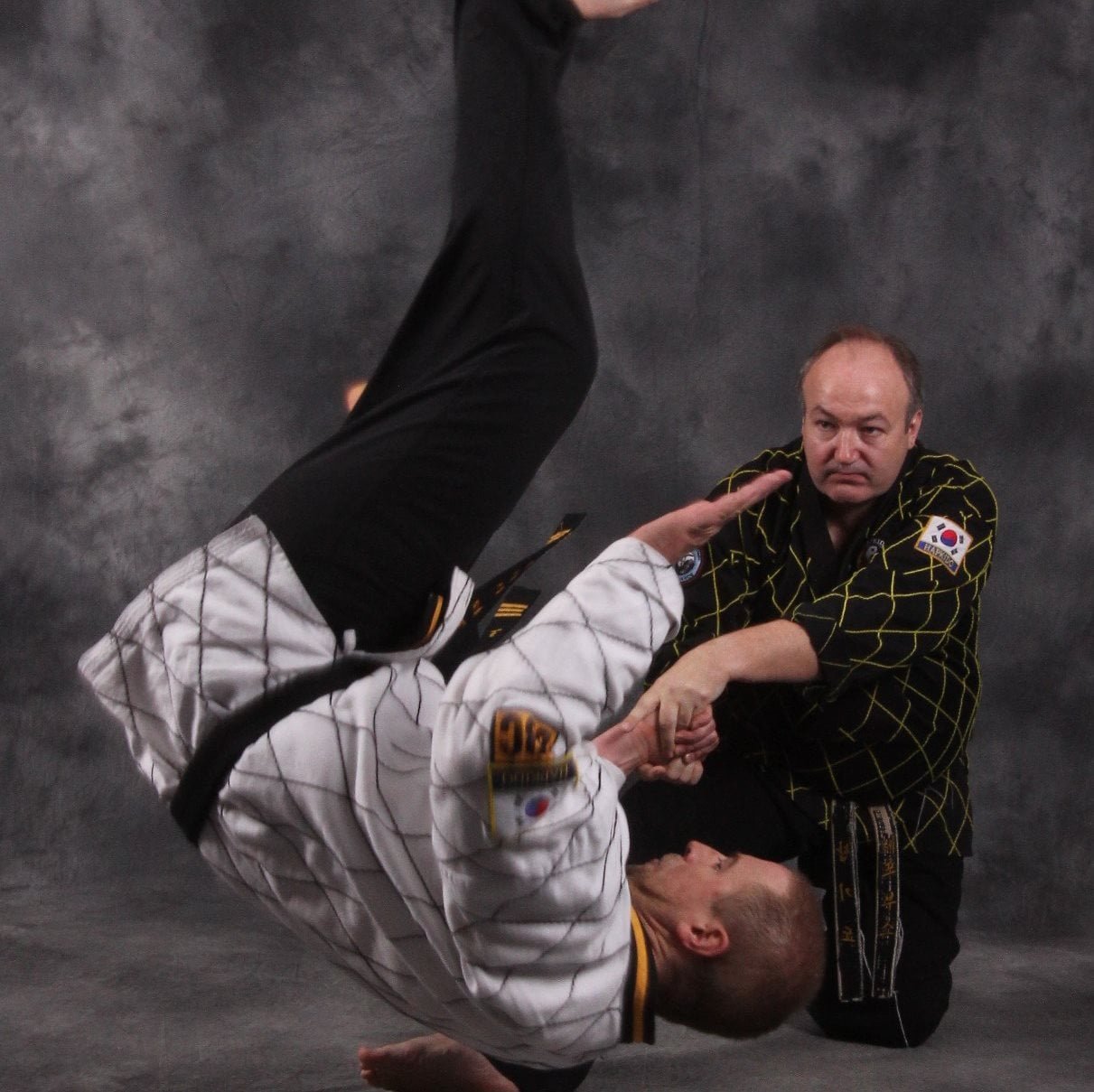
In this episode Jeremy chats with Master Geoff Booth about his martial arts journey, which includes travel all around the world.
Master Geoff Booth - Episode 1126
SUMMARY
In this conversation, Master Geoff Booth shares his extensive experience as a martial artist and instructor, detailing his unique approach to teaching and connecting with schools around the world. He discusses the challenges and joys of traveling for martial arts, the importance of saying yes to opportunities, and the passion that drives his work. From his early days in martial arts to his current role as a global instructor, Master Booth's journey is filled with insights and stories that highlight the significance of community and education in martial arts.
In this engaging conversation, Master Booth shares his unique experiences traveling to war-torn countries, particularly his time in Sri Lanka during the civil war. He discusses his love for Thailand, highlighting its cultural richness and affordability. The conversation transitions into his journey through various martial arts, particularly Hapkido, and how he draws inspiration from his travels and experiences to innovate in his teaching. Booth emphasizes the importance of humor in martial arts education and conflict resolution, sharing anecdotes from his travels and airport experiences. He concludes with insights on the significance of travel and martial arts in broadening perspectives and fostering connections across cultures.
TAKEAWAYS
His passion for Hapkido drives his teaching.
He has missed only one month of training in 49 years.
Geoff believes in saying yes to opportunities.
He has taught in 40 countries around the world.
Geoff's approach to teaching is science-based and practical.
He values the connections made through martial arts.
Geoff Booth experienced the end of a civil war in Sri Lanka.
Thailand offers a unique blend of culture and affordability.
Hapkido is a versatile martial art that stimulates the mind.
Continuous learning is essential in martial arts and life.
Effective communication can resolve conflicts in tense situations.
Humor plays a vital role in engaging students during lessons.
Teaching should be entertaining to inspire students to return.
Travel broadens perspectives and enhances cultural understanding.
Martial arts can serve as a vehicle for global exploration.
CHAPTERS
00:00 Introduction
01:40 The Life of a Traveling Martial Artist
03:20 Connecting with Martial Arts Schools Worldwide
06:32 The Passion for Hapkido and Teaching
07:59 The Motivation Behind the World Tours
09:00 The Reasons Schools Seek Guidance
13:06 Building Relationships in the Martial Arts Community
15:43 Funding the World Tour: A Unique Approach
16:58 Living the Life of a Martial Arts Instructor
21:36 The Early Days of Training
24:40 The Transition to Full-Time Martial Arts
26:52 The Power of Saying Yes
29:38 Travel Stories and Unexpected Adventures
33:20 Experiences in War-Torn Countries
35:59 The Allure of Thailand
37:13 The Journey Through Martial Arts
38:01 Inspiration and Creativity in Hapkido
39:12 Conflict Resolution and Communication
43:12 Traveling Insights and Airport Experiences
46:02 The Role of Humor in Teaching
52:05 Engaging Students Through Entertainment
To connect with Master Geoff Booth:
Join our EXCLUSIVE newsletter to get notified of each episode as it comes out!
Subscribe — whistlekick Martial Arts Radio
After listening to the episode, it would be exciting for us to know your thoughts about it.
✅Subscribe to whistlekick Martial Arts Radio on the following platforms:
🎧Apple Podcasts: https://apple.co/3mVnZmf
🎧Spotify: https://spoti.fi/3yHVdHQ
✅You can find whistlekick on all social media platforms using the handle @whistlekick or visit our website at https://www.whistlekick.com or https://www.whistlekickmartialartsradio.com
Show Transcript
Jeremy Lesniak (03:05.161)
Hey everybody, welcome back to another episode of Whistlekick, a martial arts radio. And on today's show, I'm joined by Geoff Booth. Geoff, thanks for being here. Looking forward to our conversation. For the audience out there, you're new, well, I'm Jeremy Lesniak, host of the show, founder of Whistlekick, where we do everything we do for you, the traditional martial artists of the world. We are here to connect, educate, and entertain you. And if you want to go deeper on this or any other episode.
It's whistlekickmarshallarchradio.com. Your show notes and whatever you're looking at, whether it's YouTube, Spotify, your podcast player, they don't give you everything. The only place you can get everything, all the links and all that good stuff is at our podcast website. It's also where you can sign up to make sure you receive emails of every single episode we release. So that way you don't have to go hunt for them. They are right there in your inbox. Play the audio or the video version, whatever your heart desires.
But thanks for being here and spending some time with us. And Geoff, thank you for being here and spending some time with me. I appreciate you.
So I very rarely do this, but you said something in your guest form. And I want to start here because I think it's a fun way to open up. You said that you might be the martial artist that spends the most time on planes. That is a bold claim, my friend.
Geoff Booth (04:40.573)
It is, it is.
Jeremy Lesniak (04:44.36)
Now, is this all for leisure? Are you a pilot? Because I've known some pilots that also trade.
Geoff Booth (04:51.479)
well, they might have me beat if they're flying the plane. But I average, for the last 15 years, I've averaged 65 flights a year. So more than one a week. And being Australian based, they're typically longer flights. So I've put a lot of hours into sitting on uncomfortable seats, eating bad pasta.
Jeremy Lesniak (04:53.362)
Okay, okay.
Jeremy Lesniak (05:01.655)
That's a lot of flying. Yeah.
Jeremy Lesniak (05:16.358)
Yeah. And are you doing this for martial arts purposes?
Geoff Booth (05:20.493)
or are it purposes? I am. So I do a world tour every year where I try to go to member schools in my group and visit other people. And then I do some other miscellaneous traveling on top of that. So it all adds up. I think my record tour was four months and I did 43 flights in that one tour. So I'm very comfortable with airplanes, airports and assuming the TSA position.
You pick up a lot of knowledge about planes by flying. So I can have a good discussion with a pilot at times, but no, don't put me behind the controls of a plane. That would be a disaster.
Jeremy Lesniak (05:51.487)
I'm surprised you aren't flying the plane at this point.
Jeremy Lesniak (06:06.6)
Okay, I'll keep that in mind if you and I ever end up on the same flight. Member schools. So you're flying around, you're connecting with other martial artists that are affiliated with you in some fashion. Tell us about that.
Geoff Booth (06:20.983)
So I'm very different, I guess, the most I do something that's quite crazy. But every year I do the world tour, I go to the schools and I'll just use this year. This is a reasonably quick tour. Started in Sydney, Thailand, Thailand to Spain, Spain to the Netherlands, Netherlands to Norway, Norway to Iceland, Iceland to Lapland, Lapland to Finland, Finland, New York, New York, Florida, Florida, Virginia.
I'm now in North Carolina. Next week I'll be in Minnesota. The week after that I'll be in Guadalajara, Mexico. The week after that, Cancun, Mexico. Then I'll be going to Texas and I'll head home. So this trips eight countries, three months and 24 flights. I spent about a week in each location working with the school doing training. And one of the things I tend to do is I say yes a lot. So what happens is I'll get
Oh, if you're ever in Morocco, can you drop in? Yes. And then I just add Morocco to the next trip I do. So I've gone to a lot of interesting places. I've been to 67 countries and have taught some sort of martial arts in 40 of them. But, I get invited to a lot of different places and I invariably say yes and add it to my next circuit.
Jeremy Lesniak (07:42.282)
And when you're there working with the schools, you're, you're got a sneeze going, excuse me, pardon me. That's a good spot for an edit. See, perfect, perfect illustration. Also probably an outtake. Great. When these schools invite you and you're there working with them, what are you working with them on? Are these schools under a particular style umbrella?
Geoff Booth (07:47.181)
Bless you.
Geoff Booth (07:54.816)
Okay.
Geoff Booth (08:04.686)
So my, my passion is hapkido. I have my, a system of hapkido that I teach. I was a student of the founder for over 30 years, but I've always taught my version of it under his approval. It's a little bit more science based, a bit more technical as far as the reality things. We want to know why things work and how they work. So I have schools that work with me on that.
I look after their testing and their senior progression. And I found the only way to develop quality is to be on the ground. So I spent at least a week at every member school each year. It gives me a chance to see how things are going, tighten up any holes and do some testing for the senior levels. Beyond that, you know, I do try to sneak in a little bit of holiday time. One of my previous travel agents was like, you just go teaching, teaching, teaching. It's like see the world.
So now I do try to sneak in a little bit of a side trip here, a side trip there and see more of the wonder that is the planet. This trip major highlight was the Northern Lights in Lapland. Incredible, you know, incredible. So I've been very lucky to see a lot and experience a lot of things. So it's really good.
Jeremy Lesniak (09:27.71)
Nice. How long have you been doing this?
Geoff Booth (09:32.527)
we too long. One of my instructors laughing in the back. I think it's over 20 years. I've been doing world tours. There's no doubt. started off in the U S where I was doing probably the first time I did seminar teaching was in the U S New York area around 95 would have been the first. So I've been doing to us since then, as my organization grew, I
Jeremy Lesniak (09:59.272)
Long time.
Geoff Booth (10:01.454)
So I would do two trips here to the US, principally to attend an event run in Jackson, Mississippi by JR West. And that would enable me to do some hap-kido and connect with other hap-kido people. Then I started getting requests to do some seminars at different schools. And that grew. And then I had a couple of member schools in the US. The first group in Europe were from Finland. We've just celebrated our 25th anniversary there.
So then I added Finland and I thought, well, I'm doing a lot of bouncing around. I might as just connect it all and do one world tour. And that's where the world tours came from. And then as more people reach out, I add a country and I go to a new place.
Jeremy Lesniak (10:50.714)
Okay, good times. So I guess the question is why?
Geoff Booth (10:59.904)
I love what I do. I mean, I think to be a senior martial artist, I haven't been doing it as long as others. I'm just nudging 50 years of training. But it's been my professional life for 33 years. So I tell people I'm a homeless habkido instructor. Do habkido for food. I do OK. But yeah, mean, it's
Jeremy Lesniak (11:11.476)
Just.
Geoff Booth (11:27.566)
I'm just truly lucky to be able to do this. And then when I find other people, regardless of where they are, that share that passion, that have a like mind, I want to help them. So I get on an airplane and I fly. I just happen to sadly be based in Australia most of the time. So the rest of the world is a long way away.
Jeremy Lesniak (11:37.662)
Hmm.
Jeremy Lesniak (11:48.17)
Hmm.
Jeremy Lesniak (11:56.618)
I'm choosing. I got a couple directions I could take it. Let's go here. You mentioned something about as kind of more schools came to you.
Geoff Booth (12:00.29)
Okay.
Jeremy Lesniak (12:07.754)
What is it they're coming to you for? they... And I recognize that there can be...
A delicate way to answer this. I'm going to, I'm going to give you some, guardrails in case, in case you need them. Um, we don't have to name any names or anything, but from, from my experience, typically if a school is looking for a, to, connect with someone of senior rank, it is because either they have left someone of senior rank or they have progressed themselves to a point where they realize, okay, this person that
I have been going to, they can only take me so far. Maybe they're not separating from them, but they still need some more senior guidance.
Geoff Booth (12:56.654)
Okay, so there's lot of different reasons. So let me pick on my Finnish group. They reached out some time ago via email, 25 years, and said, you know, we're interested in joining. You know, we're a group in Finland. They were under a Korean instructor who basically stopped teaching them, and they were looking for some guidance. And they'd reached out to a number of organizations, not just me. Most, were ones they had found in the back of Taekwondo Times at the time.
Jeremy Lesniak (13:00.456)
Okay, please.
Jeremy Lesniak (13:16.083)
Hmm.
Geoff Booth (13:26.41)
And I wrote back and I literally said, seriously, I'm in Australia, you're in Finland. It's a waste of time unless we were together. And that and I thought, well, that's dealt with and moved on. About a month later, an airline ticket turned up and I jumped on a flight to Finland. They tell a story where the three of them are at the airport. And as I was walking from the flight, I used to wear glasses all the time. I come wandering out and they're all talking to each other, finish go.
Jeremy Lesniak (13:41.524)
Ha ha ha!
Geoff Booth (13:55.543)
We paid for this guy to come here. So.
Jeremy Lesniak (13:57.29)
they didn't really, they knew you by reputation alone. Okay. Sure. Sure.
Geoff Booth (14:01.334)
Yeah, well, they they found the organization because we were one of the few websites on the Internet at the time. So they were sort of like, what have we done? I ended up I stepped on the mats. laid hands on somebody and that was all put the rest. I said to them later, why me and why not some of these other organizations? And their thing was everyone else we contact was like, great. We'd love to have representation in Finland. Send us some money. We'll send you a certificate.
I was the only one that said, don't waste time unless we're going to train. I think for a lot of my people, it's a combination that I meet them normally on a mat somewhere, whether I'm at a combined event or I'm at a Korean based martial art event. And I bump into these people and they see this crazy Australian guy who does his version of habkido. It is very science based. So when you say to me, why do you do a technique? I've got an answer for you.
Yeah, I've got a bit of a sense of humor. I like to make things fun. And that always makes the seminars entertaining. So I think it's a combination of things. I'm rather down to earth on those things. But I work really hard on making sure that what I teach is A, practical, and B, there's a reason. You won't get a mystical answer. There's no magic. And you'll get the science behind it. It's very clear. So even some very senior guys, like there was some
the very senior masters in the Netherlands. They're like, joined because whenever we said why, you had an answer.
But the connections are weird. So I'm in Finland and I have a gentleman that buys my video series in the Netherlands and says to me, if you're ever in the area, you know, it'd be great if you could drop in. And I'm like, well, I'm in Belgium next week and I can get a train. So how about Wednesday night? So he wasn't expecting that. And that's where the Dutch schools came from. then they talked to some people in Germany. I end up in Germany at the seminar.
Geoff Booth (16:06.434)
The guy's like, this is pretty good. Can you come back next year? I said, fine. The next year that he invited a Spanish guy that he knew the Spanish guy was like, can you come to Spain? I'm like, sure. I met a Mexican in Spain. That's where my Mexican schools came from. It's the connection. Yeah.
Jeremy Lesniak (16:23.114)
So there's a virality to it. Martial artists talk to the martial artists and you were doing good martial arts for these martial artists and it made them also want to associate with you.
Geoff Booth (16:28.27)
and I'm go back and record more.
Geoff Booth (16:33.826)
Yes, and it's very organic. So I've never asked anyone to join. I don't want to sell what I do to somebody because then I have to resell or refresh. It's like if you want what I have, I'm happy to give it to you. I mean, it's an easy system. And then I'm to tell you something that will sound very weird. And it's not a good business model, but it's how I do things and how I've done things from day one. I literally pay for the entire world tour myself.
Book the hotels, the flights. It's all arranged before I leave Australia. This tour was $25,000, give or take. I then arrive into Spain. I do a week of teaching, possibly some testing. Now, if there's testing, there are set fees for ranking, but for the seminars, I don't charge anything. There is no fee for the seminars. At the end of that week, the instructor there, he's charged something. I don't know what. He will literally
Give me some money. How much that is, I have no idea. It goes effectively into my bucket and I do the same thing at the next stop and the next stop and the next stop. And when I get home, I pour the bucket out of my desk. I mean, obviously figuratively, I travel with an actual bucket filled with money. Can just imagine TSA. And I hope that that's $25,001. And if it is, I believe I've done well.
So that's how I run a world tour. that's people are like, are you an idiot? Are you crazy? No, it's why I have international schools. It's why I'm continually invited because the small schools know that they're not going to have to, you know, miss somebody's opportunity because they can't afford an airline ticket. I can't afford an appearance fee. You know, it's, it works that way. And the bigger schools are the big brother and they help cover the little schools.
So you hope it's profitable, but I'm doing it because I love doing it.
Jeremy Lesniak (18:34.932)
So then I have to ask because if the goal is to break even on the world tour, your money's coming in from somewhere. So pardon me if this is too personal. so the school that you operate in Australia is your job. then this, I know we got some loose terminology here, but I'm trying to wrap my brain around this. And what you do.
Geoff Booth (18:43.33)
Yeah, so I run a martial arts school. No? No?
Geoff Booth (18:57.069)
Yeah.
Jeremy Lesniak (19:02.186)
as you travel around the world is giving back.
Geoff Booth (19:06.178)
Well, you know, I think I do a little bit of male stripping in between, you know, just to, I'm kidding. I'm kidding. I do have a funny joke about that though. Not to detract. Yeah, I have a martial arts school at home and you could say that's my principal source of income. Obviously I have an organization. So some of these member schools do have an annual membership. It's minimal.
and they pay some membership dues and some testing fees. So that all helps. I live frugally. I don't have a wife or a family or kids that I need to worry about. So I can basically be a traveling scholar. I don't need to worry about those expenses. So I do live a little different to the average person. But I'm...
Jeremy Lesniak (19:49.821)
see.
Jeremy Lesniak (19:56.436)
Yeah. Okay.
Geoff Booth (19:58.592)
who else wakes up every morning in a different country enjoying what they do all day and at the same time it's still covered. It's pretty amazing.
Jeremy Lesniak (20:02.833)
very many people.
Jeremy Lesniak (20:06.602)
And I get it, and obviously on a much smaller scale, but my life at times looks a bit like yours. So I get it. it's the feeling you get when you put your head down on the pillow at the end of the night, knowing I just helped this many more people. I just educated this many more people is powerful. And it's a feeling that I don't think very many people get.
Geoff Booth (20:10.592)
overscale but my life at times looks a bit like you.
Geoff Booth (20:25.803)
I just educated this many more people. It is powerful.
Geoff Booth (20:33.71)
It's a phenomenon.
Jeremy Lesniak (20:36.008)
to have.
Geoff Booth (20:38.584)
True. you know, there was never a plan to build an organization. It was just not a thing. I don't have any world building aspirations. I just love what I do. And if somebody wants to have some, I'm just overjoyed to share it with them. And that's pretty much the business model that's built my organization. We hit 50 schools just before COVID. Like most COVID was a bit of a challenge.
We're probably somewhere north of 30 schools currently. I was one week into a three month tour when the whole COVID thing happened. I had to fly home and throw that entire tour away. So that was a hard, a hard moment. But my family and I call my schools my family, but they stuck with who we are and what we did. And we're still here today and I'm still getting on an airplane. So it's all positive.
Let me come back quickly to the stripper comment because I got a little funny story and this will stop you. Stop you editing it out. In Mexico, when they're converting money, it's cheaper for a Mexican to buy US one dollar bills. They get a better rate to buy one dollar bills and to buy bigger bills. And it works the reverse way. If you want to buy Mexican pesos, buy them with 100 US as you get more. So I.
Jeremy Lesniak (21:37.29)
Yeah
I love it. Let's do. Okay.
Geoff Booth (22:05.432)
we'll get paid for a certification in a stack of ones. So I'm there one year and there must have been a record number testing and I have this wad of ones. I don't know how to sum it up. So I'm traveling back into the US and I have a US bank account and I've walked into the bank and I've given this to the lady and she's just looked at me like, the heck? And I've just made eye contact and said, I'm a stripper.
And she's just like looking at me and I went, I get paid to keep my clothes on. And she just had to laugh as she's running these ones through the counter. It I get stopped in some interesting places. I was leaving Morocco and one of the questions they're really strict on in Morocco is financial transfers in and out of the country. So I get, do you have any foreign currency? I was like, yeah.
Really, how much? said, I don't know. Can we see it? So I've opened this leather folio I have, and I'm like, euros, Thai baht, Polish Lotti, Croatian Kuna. Here are some Norwegian Krone. Here's the Mexican dollars. Here's some US dollars. Here's some Australian dollars. And they're just going, what? They've had to fan it all out, count it all, exchange rate it all, because there's a limit. was not even a thousand bucks.
Jeremy Lesniak (23:30.666)
Ha
Geoff Booth (23:31.79)
But it looked impressive. And I'm like thinking, don't look in the other side of the lever folio. That's where all the foreign passports are. It was very James Bond-ish for a moment. But I laugh at this stuff. I go to so many airports. You have to have fun without getting arrested.
Jeremy Lesniak (23:51.368)
Yeah, air travel is not our best industry as a species.
Geoff Booth (23:59.211)
No, and you know, I remember pre-9-11 and I remember post-9-11 and airline travel dramatically changed. I was actually in Finland. Yeah, yes, and it was a lot more relaxed. But yeah, I was in Finland when that happened. So it was a big change.
Jeremy Lesniak (24:07.794)
It used to be more fun.
Jeremy Lesniak (24:12.776)
Yeah. Food was better too.
Jeremy Lesniak (24:21.098)
Hi. Well, if I did my math right, somewhere around 15, 20 years after you started training, you ended up in this role, but we haven't talked about anything with the early days and what got you training.
Geoff Booth (24:36.814)
cooking.
Jeremy Lesniak (24:39.218)
OK. It's not the answer I think I've ever had. What does that mean?
Geoff Booth (24:39.616)
It's not the answer you want. You're like, what?
Geoff Booth (24:45.558)
I, they've stolen my story if they did. I was at high school and we had elective topics to choose and it was home economics or martial arts. And when I was at school, boys didn't do home economics, which included sewing and other and three items. So I chose martial arts, which was in 1977. So I was lucky it was a choice. think from the very first lesson, I knew it was going to be something.
of importance to me, not as a profession, but I just love doing it. And that's where I started. I literally have missed one month's training in 49 years. A lot of people talk about I've got X amount of years experience, but they took three years off, 10 years off. They don't teach, they don't have a school. I mean, I would, I guess for the last 49 years, I probably averaged, I guarantee you I've averaged three days a week in a martial arts school.
And that's where I started. Now I did find out later that if you cooked, you got to eat the cooking and there were only girls in the home ec class. So I ended up taking home ec later because I was like, food and ladies got very good at cooking. Didn't get any ladies, but that's where my martial arts started. Finish high school, wanted to be a computer programmer. Did that. Didn't like that. Became a stockbroker.
Sort of enjoyed that. then they, around 92, they offered me a partnership in the firm. That contract today is worth about six or seven million, that signature. At that moment, I had an epiphany. A lightning bolt hit me in the heavens and I was like, I don't want to sign this. I want to quit. I had two part-time martial arts schools, about 100 students.
And I knew that becoming a partner was the end of my school. So I'd have to work the hours that would shut my classes. I went out to my school that night and I said, I'm unemployed. We need to make this a business. Shut my two part-time schools, open a full-time school in the beginning of 93. And I mean, I moved into the school, lived in the school, didn't have a car, went days where I couldn't eat. just great memories living as a martial artist.
Geoff Booth (27:10.702)
And that was 30 odd, 33 years ago.
Jeremy Lesniak (27:14.354)
How do we get from?
Jeremy Lesniak (27:18.994)
I didn't want to take the class that the girls were taking to, love this so much that I will give up what sounded, sounds to be a fairly lucrative career for a wide degree of uncertainty and even not eating.
Geoff Booth (27:40.174)
Well, I think I always loved, you know, Hapkido. And when I started to teach, I just enjoyed it. Just loved doing it.
Jeremy Lesniak (27:46.199)
Is that hop keto is what they taught you at school? Okay.
Geoff Booth (27:49.197)
Yeah, it was a mixture of things. It was Hapkido and Taekwondo. It was like a blending of both. It was generically called martial arts, but it was both. As a child, you have no idea what you're doing, but subsequent research, you can track back who it was and what they were doing. I mean, as a teen, did Hapkido, Taekwondo, Judo, played with some other styles and some Kung Fu.
I think that was always important to me. So even though I was working, I was either training part-time or I was teaching part-time. I got given a school by accident. A lot of these things have just fallen into place. I was picking up an extra class at a regional school of the organization I trained in. So I would go out to this school near where I lived once a week. four or five people, very small class, walked in and the teacher went,
I've had enough. It's your school." And he walked out. And I was like, what? And that's how I opened my first school. I just got given it. There was no, there was never a goal to open a school. So then I moved the school to a better hall, grew it from the four to 20 or so. He came back, took it off me because now it had 20 students and the master of the organization was like, well, he's senior to you. So he gets the school back. I was like, whatever. Then
He got kicked out for some stupid thing. So I get told to go and open a school again. I was like, I didn't want to open it originally, but I guess now I can. And then that was the beginning of my first school. And then that led to a second part-time school. So a lot of these things have just happened. There's never been a goal. It's just been accidental to some degree. I'm not complaining.
Jeremy Lesniak (29:40.85)
No, no, I hear a lot of the things that I enjoy in your life now.
Geoff Booth (29:45.678)
in your life now.
Jeremy Lesniak (29:48.906)
You said something pretty early in our conversation. You generally say yes, or maybe you said it the other way, that you have a hard time saying no. Is this kind of the recurring theme through all of this that you just said, okay, here's this opportunity, I'm just gonna go with it?
Geoff Booth (29:52.396)
any early conversation. You generally say yes.
Geoff Booth (30:10.318)
Pretty much. don't, okay. I do think, and if you're grading for a belt, you'll hear more nos than yeses. Let's just, I'll be honest. I'm one of the few people left that still fails people quite regularly. know, belts are sacrosanct when it comes to certain standards. I don't draw lines there, but I think when it comes to having opportunities or experiences or,
you looking at new directions. I always like to say yes, I like to give it a go. You can always say that's enough. I don't want to do that anymore. I mean, we have the, you know, it's like, here, try this food. Don't like this, don't need to eat anymore. But I now know what it is. So, Habkido typically has stolen three principles from the Aka Jujitsu styles. And that's non-resistance. invite me for a meal. I'll say yes. So, that's where the yes comes from. You know, there's water theory.
So I put that in my coffee and circular motion, which I try to embody physically. But yeah, so I typically say yes. I've never said no to an invitation to teach wherever it is in the world. And that means I've been to some crazy places. And sometimes I don't go back. Some of these schools have become part of my family and some I've made a friend and I've moved on and enjoyed the experience.
I was talking to a teacher recently and he said, how do you know if you're a success? said, because the first time you reach out and you say, hey, will you teach a seminar for me? I'm going to say yes. And then I have to work out how I get to wherever you are. You have no idea whether I'm good or bad until I do the seminar. So I said, this guy, I know if I've done a good job. And he goes, how? get invited back.
And in 25 years of seminars, there's only been three times I wasn't invited back. And that was year one. So I deliver. I have an accent. I have a sense of humor. And I know Hapkido. So I'm very well known amongst the Hapkido community because I travel more than anyone. And I've been in most of their schools at some point, or been on the mat with them. So it's what I do.
Jeremy Lesniak (32:32.296)
You've been trying, you kind of hinted at this. You've been traveling for a long time. You've done a lot of traveling. Traveling often leads to stories. Are there any stories that don't throw someone under the bus that you might share?
Geoff Booth (32:38.574)
Mm-hmm.
Geoff Booth (32:47.182)
I could throw a lot of people out of the bus.
Jeremy Lesniak (32:48.97)
I'm sure you could. And if you want to, that's fine. I have no issues with that. They're your stories, not mine. But generally, the people who come on our show don't want to make waves with others. But I'm just, yeah.
Geoff Booth (32:57.112)
Yeah.
Geoff Booth (33:04.962)
Yeah, I'd like to do it personally. I like to it in person. Yeah. I have some friends who call me like have kiddo police. And I was like, I don't know what you're talking about, but if I'm staying in an event next to you and you're wearing a 27th degree gold belt, I might be going seriously. How did you get that? And I'll do it politely. Yeah. Cause I haven't met at 27th day and you might be worth my respect. but I tend to ask people questions. I'm not one to talk behind your back.
I'm known for keeping my word, no matter how stupid it was that I gave it. And I'm known for not talking behind people's back, and I'm known for being brutally honest, sometimes to my detriment. Yeah, I've done 27 laps of the, no, 42 laps of the Earth is, I think, my number, and six laps to the moon. I've covered a lot of distance traveling.
It's one those things where the stories, there's so many. You'd have to give me a little bit of a segment if it's something I've seen, something I've eaten. Yep.
Jeremy Lesniak (34:10.794)
How about something where you ended up somewhere you had not planned to be and you said, am thankful for my martial arts background.
Geoff Booth (34:19.523)
Okay.
Geoff Booth (34:25.132)
I don't live in a sense of fear, right? And I've been to some fairly interesting places. I don't tend to worry where I wander. I mean, you know, I've been through the Middle East. Okay, here's one for you that was quite a chuckle. I get invited to teach in Sri Lanka. Now, the Sri Lankans were at war with the Tamils, which are a group from India. So the flight arrives at 3 a.m. And the gentleman that invited me was a Shodokan practitioner that
Jeremy Lesniak (34:26.89)
You
Geoff Booth (34:54.85)
you know, for some reason he'd found me, I don't know how, and he wanted me to do some hap-kido and I said, great, because there wasn't any hap-kido in Sri Lanka at the time. So the flight arrives at 3am, we're driving into the city, and I was like, 3am arrival, that's just hard. And he's like, yes, Sensei. And I'm like, it's not Sensei. I couldn't train him out of that. But it goes, I'm like, okay, okay, Manoj, all right, that's okay. Yes, Sensei. No, no, okay. So the whole time, but he's driving along, goes,
this hotel way booking for you. And I was like, wow, that's pretty good. Because now we moved you. And I was like. But it looks pretty good. We go around the corner and the whole back of the hotels missing. They've blown it up that week. So I was like, OK, that's probably why I'm not staying in the hotel. He's like, we're going to put you in a hotel, the Queen of England stayed at when she visited. I was like, when was she in Sri Lanka? 1979.
Jeremy Lesniak (35:40.842)
Good reason not to be there.
Jeremy Lesniak (35:50.026)
That's the first thing I was thinking.
Geoff Booth (35:52.833)
I was like hotel hadn't changed since she'd been. So we're getting stopped every block and they're doing, you know, mirrors under the car to check for bombs. And when they realized there was a white dude in the car, they just waved us through because the terminals wouldn't have had a white dude. So the whole time there, the place is like under martial law. The flight left at five. I said, what's the story with the flights? He goes, they shoot rockets at the plane. So it's good to go.
come and go under the cover of darkness. I was like, these are things that's good to tell someone before they come to your country, not when they're already here. And now I'm considering, can I get a boat home? Needless to say, the plane didn't get shot down. But I was there years later when the war ended. I was there literally on the day they got rid of the last Tamils and the war ended, big celebrations. So that was an interesting moment being in a country that was at war and people were blowing up things.
Jeremy Lesniak (36:31.177)
Yeah.
Jeremy Lesniak (36:40.458)
Hmm
Geoff Booth (36:50.382)
And the hapkido seminars were taught on a beach because they didn't have a school. So that was a that was an interesting visit. That would have been late 90s. So yeah, definitely some fun. Thailand, I'm a big fan of Thailand. I like the fact that it sits on the border of, you know, what we perceive Asia to be, you know, the rice paddies and
Jeremy Lesniak (37:01.962)
Where's your favorite place? Where's your favorite place to visit?
Bye.
Geoff Booth (37:18.094)
a bowl of street food for a dollar. And I like the fact that they've got Michelin three-star restaurants. You can cross the street and be in a mall that's more modern than anything in most modern countries. I mean, they've got a mall there with a Rolls Royce dealership in the mall. You'd think that's Dubai, not Thailand. They're incredibly friendly people. And, you know, it's a relaxing place where I can go to a really good movie. I can enjoy a fantastic meal and then I can go and have a
one hour foot massage for 10 bucks. mean, it sits on both sides. If you go to Korea, Japan, China, Singapore, Hong Kong, you're paying more than first world prices. Go to parts of Malaysia or the Philippines, Indonesia, it's definitely more developing and you don't have the first world access. So Thailand sits right in the middle and it's relatively easy to get to from Australia. Stable economy.
stable political system, never been invaded by anybody. Probably my favorite place to visit without a doubt.
Jeremy Lesniak (38:24.746)
Okay, well it takes a little while to get there from here, but it's been kind of circulating in the top three for me for a number of years. So maybe you just pushed it up.
Geoff Booth (38:37.878)
It's still nine hours from Sydney. So we say it's close, but it's still nine hours. So it's it was like they look at the map and they go, there's Australia. And you're like, yeah, Australia is about the same landmass as the United States, not counting Alaska. It's just look small because we're on the other side of the planet. And it's like you're near Asia. Nine hours. Yeah.
Jeremy Lesniak (38:59.668)
Yeah.
Jeremy Lesniak (39:04.382)
Why did you end up choosing, if that's the right word, Hapkido?
Geoff Booth (39:10.71)
It was just what I fell into at school. And I did, I did.
Jeremy Lesniak (39:12.938)
Okay, well, because you also said taekwondo and you mentioned some judo.
Geoff Booth (39:16.344)
Yep. Yep. And some Kung Fu and some illustrious, some Carly and some muscle juccan and ish and row here, Jitsu, you get a black belt for saying the name right. Some shot of cards and kai kushin. I've done a bunch of different styles, but you know, you try on a shirt and that shirt fits better and just have kiddos the one I love the fact it does a little bit of everything. Like the fact that it's technical. if you have, you know, more than a three IQ points,
it stimulates the brain, you when you're looking at the locking and some of the movements. So I like that combination. I've never been bored. And I literally to this day, I'm still working on new ideas and new things and challenging myself on how I can do something differently. I mean, you can talk to my students, they're always like, we've never seen that before. And I'm like, well, that's because I made it up on the flight over. Yeah, it's just a beautiful art.
And I guess, you know, the guy that's been doing Taekwondo for 50 years feels the same about Taekwondo. It's just the right one for me. Yeah.
Jeremy Lesniak (40:18.25)
Hopefully. I like that metaphor, the shirt.
Geoff Booth (40:24.002)
Hmm. I did try on some shirts. I did try out a few. So it's not, it's not the only one. And, you know, I can appreciate a quality stylist in any style. It's, this just happens to be mine. So, you know, I love sharing it with people. And I think a big part of my success is that if you love something truly, it comes out when you teach, you don't, you're not lying when you show techniques, you move and people can see it from you. So.
Jeremy Lesniak (40:25.118)
at resonating.
Geoff Booth (40:53.4)
I think that's a big part. It helps. It really helps.
Jeremy Lesniak (41:01.756)
You said that your students find you coming up with new stuff that you're sharing things that they hadn't seen before because you made it up on the plane. Where does that inspiration come
Geoff Booth (41:02.313)
You said in New York.
Geoff Booth (41:14.968)
Partly from the founder of Hapkido, we spoke about him in one of the previous podcasts. He was always coming up with the odd new things. Some of those were quite crazy, I think if you're not learning, if you're not growing, you're stale or you're going backwards. And I've got one of those logical minds. I like to think and I like to always find answers to questions. And I'm always asking crazy questions of people. And it might be a martial arts question.
So, hapkido is just such a big art and there's so many aspects of it to play with and study that it keeps me entertained. So, that's where it comes from. And I say things that sound really, they sound bad to be honest, but if I'm sitting on a plane and I'm like, you know, there's a pen, like, well, how do I use that as a weapon? So, there's always, it's the weird stuff that you're thinking, how would I use that? Or.
If someone's standing a strange way, how would I sweep them? Not because I particularly want to hurt anyone, but it just makes the brain keep moving. You you've got to kill some time when you're sitting on an airplane or in an airport. There's lots of angry people in airports. If you haven't noticed. Not me, I'm at peace, but people are angry at airports.
Jeremy Lesniak (42:27.966)
true. Have you?
Jeremy Lesniak (42:35.85)
If ever had to...
defend anyone in an airport. know. I see so much chaos and I figure if I rolled the dice as much as you, something must have happened.
Geoff Booth (42:43.715)
Nice.
Geoff Booth (42:52.908)
Never had anything physical at an airport. I've definitely found that there are times when I will speak through a situation, is how I like to term it. I've often found that if you give a teacher's voice, so it's about raising your voice without it being a scream. It's like it's a sword. There have been a number of times when people are arguing or having an issue and I'm like, you know, we just need to stop now. And then people are like, well, and then
that needs to go straight into a solution. And I found I've done that a number of times and that works pretty cleanly because it stops the emotional fight because people just fight for them because their emotions are boiling. Whereas if somebody gives a solution that works, it takes away that anger. So I've had a couple of moments like that and I've traveled enough that you get a very quick understanding of how airports work and planes work and boarding works and flights and, you know, have a very
big understanding of being a traveler. So it's come to play there, but never nothing physically. You don't want to mess around in the airport. You'll get black banned from life. You'll never fly again. It's not a threat. They'll do it to you and you won't know they've done it you. I mean, I won't give you a full backstory because there's some privacy concerns, but a friend of a friend got marked, got black marked because of a very bad divorce. The ex-wife said some things to a police officer. So he got flagged.
while he was flying. So every time he got on the plane, he got checked. Well, then I got marked as a no one accomplice. I love terminologies like that. It's like I'm part of the freaking mafia. I fly to Sydney of all places. you've been randomly selected for, you know, full security check. And I was thinking, really? That was the first time, you know, it's like, you know, can you unlock your phone? Give us your phone, turn on your laptop, unlock your laptop. We want that. Take that away.
Jeremy Lesniak (44:30.929)
Yeah.
Geoff Booth (44:49.39)
open every toiletries, squeeze something out, check all the toiletries, all the clothes out, check all the pockets. I mean, it was a very thorough check. it ended with me calling my friend and saying, you make a formal complaint, get me off this damn list, because I'm going to go through the airport 50 times this year. And if they're going to do a full security check every time I get on a plane. But it was an interesting, interesting situation. But you've got to realize you've got to be polite.
It's yes, sir, no, sir, what do you need to see? Yeah, that always gets you a lot further. Being calm is an amazing thing. I'm on a plane, captain comes on. We've got some issues. We're not going to be flying today. We're going to have to get off the plane. Everyone's angry. Everyone's, there's a rush off the plane to the service counter for that airline.
And I'm two or three people back. There's four or four or five ladies dealing with the whole plane load of people wanting to change flights. And everyone ahead of me was getting married, going to a funeral, going to a job interview. I mean, it's amazing. The whole plane was full of people that were dying or getting married and they needed to be there today. So I get up to the lady and she's looking at me like, I hate the universe. And I just looked there and I said, you won't believe it. My wife, who I was getting married to today, died.
And I have to get a job to get her buried. And this woman just went, what? I said, I'm joking. I said, I need to be at an airport at some point. Whatever you got. And she just laughed. And she went.
Geoff Booth (46:26.498)
And I got there quicker with a better connection. Correct. She's doing a job. You know, the flight attendants are doing a job. Don't treat them badly. The pilot telling you the plane is delayed because something's not working. That's a good thing. He cares enough to not take off. So we're going to be late. We're going to be alive. Yeah, it's like, come on. So respect goes a long way.
Jeremy Lesniak (46:28.436)
Because you treated her like a person.
Jeremy Lesniak (46:42.25)
It's kinda... Yeah.
Geoff Booth (46:55.518)
It truly does.
Jeremy Lesniak (46:58.73)
If I was to attend your school in Australia or one of your seminars in your
Geoff Booth (46:59.341)
in your face.
Jeremy Lesniak (47:07.914)
global takeover. What would I notice that was different?
Geoff Booth (47:12.248)
Sense of humor. You would find that I'm a bit off the reservation. Nobody knows how to take me. I identify as a discriminationist. So I discriminate equally against everybody and everything. The world's too correct. They all know I don't mean it when I'm picking on something. I pick on myself as much as anyone else. So lots of humor.
Jeremy Lesniak (47:13.13)
Mmm.
Geoff Booth (47:39.661)
But you'll also, think, I think most people, yeah, we've all got egos. Let's be honest. You don't become a master or grandmaster without a dose of ego. But I know Habkido. You know, I'm not saying I'm the best by any means, but I know Habkido. So the first thing is, who's this dude? I don't look like a grandmaster. I don't look like someone who does anything. You get the sense of humor. You'll get the confidence and then you'll get me moving and you'll think, okay, this dude's got movement. He knows something.
And then I'll talk a little bit about techniques and you think, okay, he knows what he's talking about. That's what you'll get. And you'll laugh your ass off whilst tapping your ass off because of the pain. I'm very good at putting pain on people. Remember when I first went to Russia, they were like, what do we call you? I said, I don't care. I guess not late for dinner, but I said, I don't care. he said, I said, look, I'm putting a uniform on and I'm gonna step on a mat somewhere.
You're to watch what I do and think he's an idiot or he's a black belt or he's a master or this person's got something to share. said, until that point, don't care what you call me. I got invited back to Russia. you know, beautiful people, the head dude, lunatic, but the people, beautiful people and St. Petersburg, arguably the most beautiful city in Europe. Going on record there. Sorry, Paris.
Jeremy Lesniak (49:02.419)
I've heard that.
Geoff Booth (49:08.546)
Yeah, I'd say St. Petersburg's right up there. It's definitely obviously not right today or current climate, but well worth a visit at some point if it reverts to any degree of normality.
Jeremy Lesniak (49:20.148)
Hmm.
One of the commonalities I find among the highest ranks, and I actually think we talked about this when you were on, when we had our group conversation, is that sense of humor that you brought up. So I'm going to ask the question very directly. Can you be the most, can you be a truly effective teacher if you don't know how to use humor?
Geoff Booth (49:52.751)
I think it's harder. I think the type of student you appeal to is a lot more limited. Some people want a drill sergeant and there is a space for that. My teacher, my first teacher was a drill sergeant, but it was a different era too. And those days getting knocked out by your teacher was a badge of honor. These days it's a quit. So it's a different, there's a different time. There are still some of those. mean, I...
Jeremy Lesniak (50:08.362)
Hmm.
Geoff Booth (50:20.044)
When I run an instructor's program for my guys, I tell them you need to find your authentic style. And humor could be that, or you might be the quiet wise scholar type, where it's like, well, let's talk about this journey. And some people want that teacher, or you might be Yoda. I mean, you need to find your authentic way of teaching. But humor, think, is definitely a big part of that. You need to have some. And most of the seniors that I hang around or bump into, most have got a sense of humor.
Jeremy Lesniak (50:34.922)
Hmm.
Geoff Booth (50:48.47)
Mine's a little crazy, but most have got a sense of humor. So yeah, you're right. I think it is a very important tool, and especially in a style where there's pain. And I don't mean a punch in the head pain. mean, you know, joint lock pains. It's direct. You've got hold of somebody and you're squeezing the pain into them. That can be counterbalanced by humor, like yin and yang. You know, if you've got an equal component of enjoyment.
you'll go through the pain. But if you just have only pain, you know, there's only a small group of people that will pay for that. And they wear leather a lot. yeah, so they're not in my hapkido class. Well, they might be, but they're not wearing leather.
Jeremy Lesniak (51:28.38)
Yeah.
Jeremy Lesniak (51:34.41)
So here's kind of the part B there because so many higher level instructors are also funny. Where's the chicken and egg? Do we get funnier as we progress in rank? Or perhaps, or does being a martial arts instructor appeal more to those with a sense of humor?
Geoff Booth (51:49.518)
Maybe because we get dropped on her head more, don't know.
Geoff Booth (52:01.57)
No, think you get, I think the funnier comes after time through the martial arts. I don't think you, I don't think comedians are immediately drawn to martial arts. I think you see enough situations, you have enough weird questions, you deal with enough interesting situations that you develop funny stories and funny outlook on people. Because you see people in some of the weirdest positions. I mean, I have some funny things I like to roll out. You got two students choking each other to death on the mat. And you you just crouch down.
You paid for this. And they're like, he's right. I think it develops over time because we're exposed to such a gamut of experiences. I'm a big one for question and answers. So at the end of any of my seminars, there's already a period of time where I allow people to ask questions. And it's not necessarily just martial arts. It might be about the planet. Because obviously, I meet a lot of people that don't travel anywhere near to the degree I do.
Jeremy Lesniak (52:33.363)
Yeah
Geoff Booth (53:01.25)
So I like to broaden people's outlook on things, but that also generates a lot of humor because some of the questions you get, you're just like, OK, we need to fix that one. And then that gives you material for the next seminar. So I think it comes after time. I think it definitely fills up the time and many blows to the head.
Jeremy Lesniak (53:14.058)
Hmm.
Jeremy Lesniak (53:22.302)
Yeah. I think that's a big part of it. I think a lot about this sense of humor piece and how it's a way to keep people engaged in between, right? Because we can't do rep, rep, rep, rep. We can't just go constant repetition. need, there needs to be some cycle in there. And I think for a lot of people, once we connect as instructors that,
I can tell a silly story. can be a little goofy. I can let my personality come through. not only is that okay, they like that, they crave that authenticity because it's fading so much for the rest of the world. I think for a lot of us, that's part of why they come back.
Geoff Booth (54:06.872)
True. I mean, if you invite me to your school for a seminar, there's a couple of key things I do. One will be to find out there's any key messages you need passed on, because there's nothing worse than telling a student, step left, step left, step left. And then along comes an instructor and goes, step left. And you're like, yeah. You're like, no. So I always try to find if there's any messages they want passed on. Maybe it's better in an Australian accent. Who knows? And then, you know,
Jeremy Lesniak (54:26.346)
Yes.
Geoff Booth (54:35.296)
I want to know what the ranks of the people are and a bit of the goal. Like what does the teacher want out of this? But the key thing is I'm there to entertain you. I'm going to use Habkido as a vehicle and I'm going to put a lot of humor, but I'm going to want to make sure that you're laughing incredibly by the end of that seminar because then you don't begrudge the time or the money. And you'll be thankful to your instructor because you enjoyed it. And let's be honest, in a one hour seminar in a foreign school with a non, you know, different style,
How many techniques are they truly going to learn? The job is to plant a seed and to plant some inspiration, but it's entertainment. They've got to have enjoyed the time. And that's a key thing, making sure people want to come back. Because you can't teach anyone if they only come once. So we want to inspire them to continue to come back and get another dose.
Jeremy Lesniak (55:29.364)
Right on. Jeff, if people want to get a hold of you, you've mentioned that your website is an entry point for a lot of people towards what you do. So let the audience know about what you've got going online and where they find it.
Geoff Booth (55:43.449)
Yeah, we've got an organizational website at hapketo.com.au, Australian tag. But if you Google my name, I'll come up. You'll find miscellaneous YouTube videos of me and pictures and I'm fairly easy to find on the internet. But the website's probably the best port of call. I'm on Facebook. Happy to chat to people, happy to share knowledge with people. We have a lot of online information. We were, I think we were the first
Hapkido organization with a DVD series. We have some online videos for training. So literally the material from first through fourth then is not only quantified in the manual, but it's on video format online so people can just go through the system. But yeah, I'm very easy to find either through that website or just Google the name. Very easy to find. And more than likely I'm flying past you or teaching near you.
or will be soon, a bit like Santa I think.
Jeremy Lesniak (56:45.886)
Hopkito Santa. I can think of a worse nickname.
Geoff Booth (56:48.045)
Yeah.
I've had worse nicknames, I think, but I'm not complaining. mean, if at least they're talking about you, good or bad, it's publicity. Right. So it gets people remembering who you are. And then maybe when they're remembering who you are, they remember the word have kiddo. So have kiddo wins. My job is just to inspire you to think about it and do a bit. It doesn't necessarily have to be with me. It might be with someone else. And let's be honest. If there's no have kiddo, do some martial arts.
Jeremy Lesniak (56:52.362)
You
Geoff Booth (57:20.16)
It's good stuff. There's lots of martial arts out there. Find the one that's right for you. I'm a big, big believer in that. The shirt doesn't fit everyone. And depending upon what you want to do with your shirt, I mean, you want to bite someone else's ear and earn a big belt to wear on your waist. This is not the place to come. If you want to win a gold at the Olympics, no, don't come see me for that either. So there's certain things that we appeal to. But yeah, if you want a crazy Australian,
I'm definitely ticking that box. There's no doubt. But yeah, I mean, I just, I'm just a very lucky individual. know, the traveling is, it's just become what I do. It's just part of it. know, six months a year I'm on an airplane somewhere. You've got to keep that frequent fly status up, you know.
Jeremy Lesniak (57:51.274)
You
Jeremy Lesniak (58:08.362)
That's right. That's right.
Jeff, thanks for being here. And I told you when we first started, was going to have you close us up. where do we go? How do we end this with the audience?
Geoff Booth (58:24.002)
Do some martial arts. Find a place. Find somebody that talks to your soul. I found that martial arts is, you know, to quote Happy Gilmore, go to your happy place. And I think a martial arts school is your happy place. I tell my students, imagine life as a backpack. And when you walk up to your martial arts school, you take that backpack off. Finances, know, emotional issues, challenges at work.
You put that backpack at the door to the school and you walk into that martial arts school without that backpack of stress or woes and you enjoy some time that's your happy place and martial arts is great for that. So find a martial arts school somewhere in the world and go to your happy place. And of course, if it's a keto happy place, that's even better. But just do some martial arts. And if you're doing some, keep doing some. The secret to being the best, come to the next class.