Episode 1142 - Arwen Taylor-Yoho
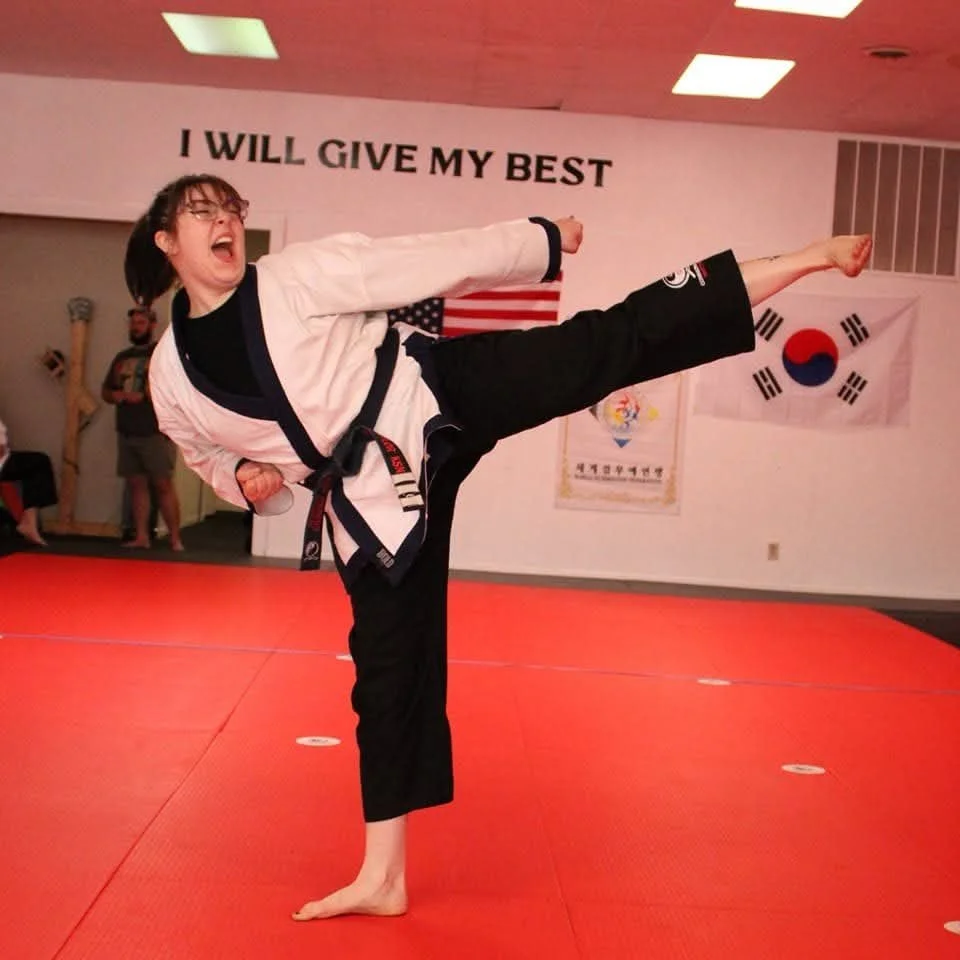
In this episode Jeremy chats with Arwen Taylor-Yoho about her martial journey, teaching in a male dominated field, the transition from student to teacher, and about finding “weirdos”.
Arwen Taylor-Yoho - Episode 1142
SUMMARY
In this engaging conversation, Arwen Taylor-Yoho shares her unique journey in martial arts, discussing her experiences as a third-generation black belt and the challenges she faced as a woman in a male-dominated field. She emphasizes the importance of individuality in martial arts training and her approach to teaching, which focuses on understanding and supporting students rather than strict discipline. The discussion also touches on her transition from student to instructor, the balance of personal life with martial arts, and the need for respect and authenticity within the martial arts community.
In this engaging conversation, Jeremy and Arwen explore the unique experiences of martial artists, particularly those who identify as 'weirdos.' They discuss the challenges of individuality within structured training environments, the pressures of teaching, and the importance of rediscovering one's passion for martial arts. The conversation also touches on the business side of martial arts, the need for mentorship, and the significance of community in fostering personal growth and enjoyment in training.
TAKEAWAYS
Arwen aims to make martial arts more approachable for everyone.
Individuality is often suppressed in traditional martial arts training.
Teaching should focus on helping students understand their mistakes.
Arwen's school has a higher retention rate for women students.
Her father's perspective as a 'girl dad' has influenced his teaching style.
Arwen started assisting in classes at a young age, which helped her grow.
She values grace and explanation in teaching, over strict discipline.
The martial arts community can sometimes be abrasive and unwelcoming.
Arwen's background in theater has shaped her communication skills.
Many martial artists feel like 'weirdos' in their communities.
The martial arts environment can provide a safe space for individuality.
There is often a gap in teaching individuality as students progress in rank.
Not everyone is suited to be a teacher, and that's okay.
Teaching can be overwhelming and may lead to burnout.
Rediscovering the love for training is crucial for instructors.
The business side of martial arts can detract from the joy of teaching.
Martial arts should be accessible to everyone, regardless of their goals.
Community is essential for personal growth in martial arts.
Finding the right school is important for a fulfilling martial arts journey.
CHAPTERS
00:00 Introduction
06:51 Teaching Philosophy and Gender Dynamics in Martial Arts
12:28 Transitioning from Student to Instructor
18:08 Balancing Personal Life and Martial Arts
24:03 Individuality in Martial Arts and Its Challenges
31:44 The Unconventional Path of Martial Arts
36:01 Finding Community Among Weirdos
39:01 The Gap Between Ranks and Individuality
40:11 The Pressure to Teach and Lead
43:01 Rediscovering the Love for Training
46:12 The Business of Martial Arts and Its Challenges
49:56 The Importance of Passion in Teaching
54:09 Future Aspirations and Personal Growth
To connect with Arwen:
SBNTaylorMedia@gmail.com
Join our EXCLUSIVE newsletter to get notified of each episode as it comes out!
Subscribe — whistlekick Martial Arts Radio
After listening to the episode, it would be exciting for us to know your thoughts about it.
✅Subscribe to whistlekick Martial Arts Radio on the following platforms:
🎧Apple Podcasts: https://apple.co/3mVnZmf
🎧Spotify: https://spoti.fi/3yHVdHQ
✅You can find whistlekick on all social media platforms using the handle @whistlekick or visit our website at https://www.whistlekick.com or https://www.whistlekickmartialartsradio.com
Show Transcript
Jeremy (06:31.678)
What's happening, everybody? Welcome back, or maybe it's for the first time to Whistlekick Martial Arts Radio. And on today's episode, I'm joined by Arwen Taylor. Arwen, thanks for being here. Looking forward to our conversation. And to all of you out there, I'm looking forward to sharing that conversation with you. We've been doing this for 10 years, really more than 10 years. And it's because of all of you and your constant watching and listening that we are the web's.
Number one traditional martial arts podcast. So thank you for helping us get there and keep us there. And if you've got friends that don't know what we do, the best thing you can do is find an episode that you think they'll like. Go to whistlekickmartialarts radio.com. We've got every episode we've ever done, full transcripts, lots of links. Anything Arwen and I talk about today is going to be on her page on that website. And share that episode with your friend. Say, hey, I know you love.
martial arts and you train this or you know this person or whatever and share that episode with them and maybe they'll help us connect to the next person that we bring on the show because that's how we get a lot of our guests is from referrals. So thank you to everyone who helps us with that. And thank you, Arwen, for being here and sharing some time with me. How's it going today?
Arwen Taylor-Yoho (07:49.57)
It's going well. I am really, really excited to be here. Thank you so much for having me.
Jeremy (07:54.169)
You're welcome. I'm kind of regretting that I have this painting in the background because otherwise we could have this lovely orange blue no distraction background. You I I really like that color behind you. I dig it.
Arwen Taylor-Yoho (08:08.538)
Thank you. I just happen to be moving or else I'd have a whole bunch of pictures. So they're here in spirit. Don't worry.
Jeremy (08:14.09)
Okay, all right. Right on. Right on. did you pick that color? Orange is yeah, orange is one of my f I had a car that was nearly that color. I loved it. Yeah. Yeah. right on. Yeah, I had this was a a Toyota little Toyota sports car. It was a lot of fun. But of all the things that we talk about on this show,
Arwen Taylor-Yoho (08:18.958)
I did pick this color.
Arwen Taylor-Yoho (08:23.684)
goodness, my mom did too. It was a bright orange of Ayo. She loved that thing.
Arwen Taylor-Yoho (08:32.386)
Love it.
Jeremy (08:38.594)
We talk about pretty much everything but martial arts, at least some of the time, but we do spend most of our time talking martial arts. Now, I was telling you before we got started, I started seeing your content on TikTok not too long ago. And
I wanna pick my words carefully because if I don't get them right, I'll hurt I'll I'll I might offend you.
Arwen Taylor-Yoho (09:00.292)
Ha ha.
Jeremy (09:02.454)
You seem like you have some strong opinions, but you present them in a way that is much more approachable, less abrasive, I guess, than a lot of people with strong opinions on the martial arts. Is that a is that a fair way to characterize you? Okay. Yay. Awesome. Well it well, then you're doing a great job.
Arwen Taylor-Yoho (09:20.842)
Yes, and that's exactly what I'm going for. So sweet. That's what I like to hear. Yeah, a big thing for me in martial arts or in the industry just as a whole is the abrasiveness. I think that kind of rough around the edges, like good old boys club. Like, you know, I'm a female in a very male dominated industry. And so my goal in
really anything I do within martial arts, whether that be teaching, whether that be as a student, content creation, is to make things seem more approachable, to be the person I wish was there for me in my times coming up throughout martial arts. So that's good that that message is getting across.
Jeremy (10:07.885)
Yeah.
Jeremy (10:11.534)
person that you wanted there when you were coming up. That, you know, I I think for a lot of us, that's that's how we live our lives, right? Whether as instructors or I I I don't have kids, but you know, when I when I work with kids, even outside of martial arts, I try to I try to think back to what did I like and especially not like about various things in my childhood? How do I fill those gaps, meet those needs? What was it you didn't have?
And when you were coming up.
Arwen Taylor-Yoho (10:42.148)
Well, I think individuality is the first thing. As you know, I think a lot of people have in the martial arts community, it's hard to find that individuality until you're much higher in rank because it's not seen so highly upon, at least in traditional martial arts. But like I also came up,
Jeremy (10:47.254)
Mm.
Arwen Taylor-Yoho (11:05.936)
I'm a third generation black belt in my family. So like, this is like a whole family thing and that's fantastic. But it's hard being the kid of somebody who else, or somebody else who's already well known in the community. You're so and so's kid, you're so and so's daughter, and you're just that way for most of your life. So while I have a lot of great support and a lot of great mentorship,
Jeremy (11:19.778)
Yeah.
Arwen Taylor-Yoho (11:32.677)
throughout my career. I think I also felt that kind of squishing. I think also I was one of very few women in martial arts. I know that's changing significantly. But even now, I don't really meet women that are my age. I rarely meet women who are my rank or teach. It's kind of hard to come by. So I wish sometimes I had that.
I don't know, just that energy. As a young girl, I very much had to play with the boys, which is okay. It's, know, but it gets you rough around the edges and sometimes it just doesn't have to be that way. I wish there was a little bit more cohesiveness at times in training. And I think that that's my biggest takeaway from that. That's why I felt I was missing.
Jeremy (12:03.734)
Mm.
Jeremy (12:19.308)
Hmm. Yeah. And so what are what are the things that you're doing differently? Because i if I if I've read between the lines correctly, you've taken over this school. Is that or or Okay.
Arwen Taylor-Yoho (12:33.422)
So in a sense, yes. So it's me and my dad. It's kind of our business together. We have two locations. And so one location is his, one location is mine. We're working on creating a third one in a much bigger area, hopefully in the next few years. So it's kind of a, we do it together, but daily operations are split.
Jeremy (12:40.834)
Mm-hmm.
Jeremy (12:51.704)
We see.
Arwen Taylor-Yoho (13:01.592)
between schools kind of thing.
Jeremy (13:02.166)
Mm-hmm. Is there a difference in the male female breakdown between the locations? And your school has significantly more women, doesn't it?
Arwen Taylor-Yoho (13:08.664)
Absolutely, absolutely. it's funny, I was just...
Actually, it's funny. No. No. Isn't that crazy? Yeah, my dad's school has way more women than my school. But I will say the women that are in my school stay around longer. The retention rate within women is a little bit higher.
Jeremy (13:17.662)
Really? Okay. All right. That is crazy.
Jeremy (13:36.536)
Okay.
Arwen Taylor-Yoho (13:36.721)
in some senses and in other senses it's not. It's so interesting. My dad and I teach very similarly, but with different flavors, of course, different flavors. And it shows those flavors and who chooses to stick with what we've had. Many students who have gone from one school to the other just because they have the preference of how we teach, which is kind of fascinating, I think.
Jeremy (13:42.55)
That's fascinating.
Okay. Yeah.
Jeremy (14:01.229)
Yeah.
Jeremy (14:05.932)
Okay. Interesting. Yeah, what I I get the opportunity to travel around a d a good amount and what I've noticed is that schools that are run by women tend to be close to fifty fifty in their enrollments. Schools that are run by men tend to be eighty-five, ninety percent men.
Arwen Taylor-Yoho (14:17.04)
Mm.
Arwen Taylor-Yoho (14:24.24)
Absolutely, absolutely. My dad, think being a girl dad very much changes his perspective. And I think watching his daughters grow up in the world, he's changed how he's addressed many situations in martial arts and handling, you know, being trauma informed in his education and how he chooses to express things. He's grown a lot as a teacher. I think
Jeremy (14:29.183)
Ooh.
Arwen Taylor-Yoho (14:53.232)
Prior to having children from what I understand, he was very stereotypical, like very militant, like very gravitated, know, men were gravitated towards him for sure. But now it's the strong independent women, which I think is great.
Jeremy (15:04.131)
Yeah.
Jeremy (15:07.628)
Yeah. And you're a Taekwondo practitioner? Tang Sudo. Okay. All right. still the the Korean militarism in a in a lot of the school cultures that I've I've seen. I've been in fewer Tang Soo Do schools than I've been in Taekwondo schools, but it does seem to be there in in most of them. what what is different
Arwen Taylor-Yoho (15:18.564)
Mm-hmm.
Arwen Taylor-Yoho (15:28.794)
Yeah.
Jeremy (15:36.78)
that you've noticed, because if i if you've been training as long as I'm guessing you've had, you have, you've seen the changes in him. And then what are some of the changes you've made from him in how you teach? What are what are those differences that we might notice?
Arwen Taylor-Yoho (15:50.933)
that's a great question. I think my biggest thing is when you see Korean disciplinary action or just disciplinary action in martial arts in general, there's no room for anything. You make a mistake, an automatic discipline, punishment, however you want to phrase that. And while...
boundaries are important and I am very strict as a teacher, probably more strict than my dad honestly. I'm very much a meet people where they are kind of person and give people the chance. In the past it very much used to be at least in my dad there was like a one and done like you didn't even know what you did wrong before it was push-ups you shouldn't have done that or something along those lines.
I like to kind of break it down piece by piece. And lot of my martial arts teaching is trying to help people be good people. It's not just about the combatives. It's not just about the self-defense aspect of things. Like it's just trying to give people a space to figure themselves out and...
be good functioning members of society. And that comes with a little bit of grace sometimes and explanation because while it might make sense to me that, you know, speaking out of turn or, know,
talking to someone in a certain way is inappropriate, that might not make sense to a seven-year-old depending on who they're around, who they've been raised by, what their life has looked like. So giving a little bit of grace, giving a little bit of explanation, and then saying, know.
Arwen Taylor-Yoho (17:31.599)
here's the consequence if we choose to do this again. Normally, there's not and again, but if there is, you still kinda have to follow through with that. I think a lot of very traditional schools, there is no opportunity for that. Like said, I don't think you always know what you did wrong before, you you don't always know what you did wrong in that sense. You kinda have to figure it out after the fact. And if we don't have answers,
Jeremy (17:55.5)
Which is tough for a kid.
Arwen Taylor-Yoho (17:56.921)
It is, it is. If we don't have answers, we fill holes and sometimes we fill it with the wrong information and now, you know, they interpret something incorrectly or they internalize something incorrectly and it's kids, but it's also adults. I see it in adults all the time. So I think that's something that's super important to me and a little bit different than how I approach things is definitely give a little bit of grace at first because people don't always know.
Jeremy (18:28.78)
Did you come up with your father as your instructor?
Arwen Taylor-Yoho (18:32.514)
In Tang Soo Do, yes. I trained in many other styles prior to Tang Soo Do. And it's funny because...
Jeremy (18:38.89)
That's that's that's not the how the story usually goes.
Arwen Taylor-Yoho (18:45.371)
Yeah, um, I So my dad is Like your physical embodiment of a martial artist. He lives he breathes he eats it like it's just that's just his life and it always has been That's how my parents met they both did martial arts together And it was important to them when we came into the picture that we did martial arts It was it was not a choice you had to get something
Jeremy (19:12.024)
Who's we? You have siblings? Okay.
Arwen Taylor-Yoho (19:14.414)
I have one sibling, yeah. And yeah, we didn't have a choice in that we had to get our black belt, but my parents were very much like, I don't want us teaching. They didn't want to be the people to kind of push that story for us. They wanted us to find our own journey. so we did. Absolutely.
Jeremy (19:32.462)
Kudos to them for understanding that. Because I I it's it's, you know, I'm not gonna go so far as to say that it never works, but I've seen it enough times. It rarely works. It is rarely a healthy dynamic.
Arwen Taylor-Yoho (19:45.913)
No, seriously, and it's hard to have a healthy dynamic with that. It's your parent, your kid, your students together, your teachers. It gets very complicated very quickly and especially at such a young age, you can't separate the two. You can't figure out where your role is.
Jeremy (19:58.445)
Yeah, it's messy.
Arwen Taylor-Yoho (20:06.884)
But yeah, so my parents put us in Taekwondo, very small Taekwondo program in St. Albans, West Virginia. And we did that for a while. Our instructor moved, I think, and then we took up Shaolin Do for several years. And then we moved to Connecticut. And at that point, there was no...
Shalindon was very hard to come by, so there was no school, there was nothing close by. Tang Soo Do, however, was an easy option. there sure is, and we were about maybe an hour and a half away from West Haven, so it was like right there for us. My dad did Tang Soo Do, so it was, know, for him, was ready to get back into things. For us, it was a, there's not really anywhere else to go, and...
Jeremy (20:38.806)
There's a lot of Tang Soo Do in Connecticut.
Arwen Taylor-Yoho (20:59.618)
I ended up falling in love with it and kind of stuck with it as my as my main art. So he's been my primary Tang Soo Do instructor. And I guess you could say my Kumo Do instructor, but not my only instructor, that's for sure.
Jeremy (21:15.886)
So I wanna I wanna pull it a couple threads on that because I don't know that we've heard this story before. This I this parent sends kid off into the w martial arts world and
Eventually comes back and and now is student as well as child. How old were you when when that happened?
Arwen Taylor-Yoho (21:39.824)
10.
Jeremy (21:40.929)
Okay. So still pretty young. How many how old were you when you had started doing t that taekwondo program? Okay. So you had a solid five, five plus years of training, you know, not enough life experience to really know what's going on, but enough to know how to how to move. What was that transition into being student?
Arwen Taylor-Yoho (21:49.904)
Four and a half, I think.
Arwen Taylor-Yoho (21:55.824)
I'm out.
Jeremy (22:10.73)
of dad and and is is mom also part of part of the school there?
Arwen Taylor-Yoho (22:15.664)
Business side. She doesn't teach art, but yeah, business side.
Jeremy (22:17.28)
Okay. Okay. Okay. So 10 is also old enough to have some awareness about whether or not things are feeling good or not. What was that transition like?
Arwen Taylor-Yoho (22:30.352)
Honestly, pretty seamless. I was excited to have something to bond with my dad over with. I mean, we've been in student, see like he did Shaolin Do with us. He didn't do the Taekwondo program, because that was only for kids. But we had that, I was excited to continue exploring that and having something with my dad to share. And I honestly...
Jeremy (22:33.678)
Really.
Arwen Taylor-Yoho (22:59.182)
didn't start training in it for myself. It was, my dad was, I think on year almost 15 of being a paramedic. So he was burnt out. He did not want to work on the truck anymore and wanted to open another school. He hadn't taught since I was born or owned a school since I was born. So it wasn't just a, you know.
you're doing this because it's all we have, it's, well, hey, mom and I want to open a karate school and we need leaders. We need teachers. Can you help? And I was like, absolutely. As, you know, the first born daughter, was like, give me the task. I will help in any way I can. And it was a good motivator outside of myself to challenge myself and work hard. even in the
Jeremy (23:30.83)
Mm.
Arwen Taylor-Yoho (23:50.553)
weird times of like Training in our living room because we didn't have a space yet kind of thing and those weird times It was a good just a good motivator and they they knew it worked for me though that was always the I know this is tough now But soon you're gonna be able to help people and you know be a part of this big thing
Jeremy (24:08.91)
Sure, sure. And and what about with your sibling?
Arwen Taylor-Yoho (24:12.912)
That's a little tougher of a nut to crack. My sibling.
Jeremy (24:19.926)
When when you the when you when you underscored firstborn, it suggested there was a difference for the secondborn.
Arwen Taylor-Yoho (24:23.93)
Yeah.
As there often is. Yes, so my parents kind of, I mean, gave the same spiel, but my sibling was very onery growing up. And so anything that any of us wanted to do, they did not want to do, but it was very much a boundary in our household. Cause you know, my parents, you know, we're living examples of...
Jeremy (24:29.4)
There generally is.
Arwen Taylor-Yoho (24:53.484)
the benefits of martial arts. It was not, I mean, we got to do other things, but it was you had to get your black belt in something before you're 18. And so Cody went along with it because they felt that that was, you know, what they're supposed to do, but they definitely did not enjoy the process as much. They were more, like they were better of a practitioner.
At first, they really appreciated being the student for the most part, but leading was not their thing. They tried the teaching thing, didn't work out for them, they didn't like it. And after they got their black belt, they were like, yep, I'm done, that's it.
Jeremy (25:36.399)
And I I I think it's important, you know, we don't have to poke at that any further, but I think it's important to understand, you know, when they're when there's a family business and a family endeavor that is that business, understanding that not everybody's gonna be, you know, it's it's it's not the Brady Bunch, right? Right? You know, not not everybody just blindly goes with the program.
Arwen Taylor-Yoho (26:05.017)
No way.
Jeremy (26:06.518)
So okay.
So here you are, you jump in, you're 10, you've got enough of a background that transitioning into these movements, these forms, probably even most of the language is pretty straightforward. And I'm gonna guess you are helping with classes pretty early, if not right away, and maybe even
running your own classes at an age that feels a little early to most people.
Arwen Taylor-Yoho (26:44.834)
Yes, that's pretty spot on.
Jeremy (26:48.438)
Like I said, I've heard a bit of this story before.
Arwen Taylor-Yoho (26:52.643)
Yeah, it's um, and I think that's family business in general, know, it's that's any industry you get into you're just around it so much is and especially in such primitive years of your life It just absorbs like it's it's crazy the things that You don't even have to think of because it's just been your life entirely. Um, I So was 10 when I started Tang Soo Do
and then we'd opened a school in Connecticut. But my mom got offered a job here in North Carolina. And so we moved to North Carolina and my dad...
I think worked for six months longer as a paramedic and he was like, done. I can't do this anymore. And he mowed lawns for the summer and started what we have developed as a school now with 500 bucks in his pocket. We got very involved with our community. Like we live in a little small mountain town. you know, small world, easy to get involved with and do good for kids in the community. People are always looking for that. And we actually started our first program
We had a part-time program in a space we rented, and then we had a part-time program at the YMCA. They asked us to come teach for their after-school program. And that first class we taught had 52 kids in it. And so my dad was like, I need your help. And I think I was maybe...
11 almost 12 at the time and so that's really when I started assisting and I was so scared I was way outside my comfort zone but again I'm up to the test someone needs my help I'll be there and I ended up falling in love with it teaching I loved helping people accomplish goals for themselves and I loved being able to help
Arwen Taylor-Yoho (28:53.772)
modify for people who maybe were struggling with a certain technique or for I was working primarily with children because I was a child myself but yeah just being able to break things down in ways that everyone can understand it was very rewarding I liked that and then I continued up and
was leading my own classes, I think by the time I was 13, maybe 12, and I took my first on test when I was 14. And then I took my kiosk test when I was almost 15. So I'd become a certified instructor by the time I was just about 15.
Jeremy (29:36.824)
Let's talk take a small detour. Let's talk about you outside of training because this is a lot of responsibility.
You brought up the birth order thing. I don't usually bring that up. What is what does Arwen's life look like outside of training in the family business? What does school look like? What does friends look like? What do you do you have hobbies outside of Taekwondo?
Arwen Taylor-Yoho (30:03.086)
That is the million dollar question, my friend. Something I'm continuing to.
navigate as an adult. As a teenager, I did have stuff outside of martial arts, though martial arts was the primary. I was a big theater kid. That's actually what I went to school for originally when I got my first degree in vocal performance. So on top of the teaching, was movies, commercials, was in shows, I mean, trained with world renowned opera artists and Broadway stars. And like, that's what I wanted to do for a living was
Jeremy (30:30.606)
Hmm.
Arwen Taylor-Yoho (30:39.698)
perform. That's what I want to do. Then COVID hit and the industry took a big turn and I was not willing to fight that fight anymore. So I kind of decided to stick with the family business and
Jeremy (30:44.822)
Mm.
Arwen Taylor-Yoho (30:57.998)
You know, I've lost touch a little bit with the theater side. Theater and running a karate school, scheduling-wise, don't go hand in hand. Everything's in the evening. same thing as my training. Like it's hard for me to train as a, you know, full-time instructor because I'm teaching. But now kind of as an adult, I've been able to go back to school.
Jeremy (31:05.974)
Hmm. Right.
Arwen Taylor-Yoho (31:25.836)
And I actually just graduated in May with my associates in funeral service education. So isn't that hilarious? Yeah.
Jeremy (31:33.6)
Okay. Wait, what?
That is that is none of the things we've talked about. How do we get there?
Arwen Taylor-Yoho (31:41.648)
That is my question. Great question.
Jeremy (31:46.99)
Is this like a really, really morbid, intense sparring sort of environment or people going down and
Arwen Taylor-Yoho (31:54.637)
Exactly, I had to find a way to dispose of exactly, see, did it. Not something I've always been fascinated with. My dad, know, paramedic my whole life. My mom worked in veterinary medicine my whole life. like anatomy and death and dying and medicine was... Absolutely, absolutely. Yeah, I was definitely that 10 year old.
Jeremy (31:56.813)
Yeah. Gotta get rid of the bodies. I gotta
Jeremy (32:12.758)
You have a different relationship to death than the average person then.
Arwen Taylor-Yoho (32:21.488)
I never talked about it because I got bullied enough, but in my free time as a kid, I would like watch live streams of funerals. Like I loved it. It was so fascinating to me. pushed that aside. Didn't want to be the kid that was like, I want to work at a funeral home.
But then actually when COVID hit and I kind of made the switch from Broadway performer to sticking with the family business, I did decide I needed something else. I've only ever done martial arts. I needed some individuality. And so I went back to school and became an EMT for a while. Really enjoyed that work.
didn't enjoy the culture that comes along with it. And it's very intense. It's very cutthroat for $12 an hour, which is insane to me. But yeah, so I left that, but I left realizing it was not weird to be fascinated by death and dying.
Jeremy (33:08.622)
It's intense.
Arwen Taylor-Yoho (33:27.116)
healthcare workers see it and deal with it all the time and they're praised but the second you slap funeral on it and people are like so after I kind of left that I explored just what the funeral industry looked like
started working at a funeral home and it became this very liberating thing for me because I was actually in a pretty abusive relationship at the time and so it gave me an out, it gave me a place to go and...
just be myself authentically. didn't have to be a teacher. I didn't have to be this like person who had all the answers. I didn't have to be, you know, this kept at home wife. I was just me and enjoying helping people grieve. And so I went back to school and now I'm working on taking my national boards at some point to get licensed.
Jeremy (34:22.218)
You will be a I I I is funeral director the correct term?
Arwen Taylor-Yoho (34:26.8)
Funeral director is the correct term. Yeah, technically I'd be a funeral service licensee, which means you can do both directing and embalming. funeral director is a very all-encompassing term.
Jeremy (34:28.984)
That that is
Jeremy (34:36.939)
Okay.
Jeremy (34:44.98)
Okay, well that that was a tangent that I didn't expect to bear the fruit that it did. but I want to go back to you, you've now brought up the individuality piece a couple times. And this is a subject that is is I think under discussed in the world of martial arts, which surprises me because we do exist in a culture that
values independence and identity and let's face it tends to rebel against structure and
Arwen Taylor-Yoho (35:21.741)
Absolutely.
Jeremy (35:25.324)
When when I take a look at those who thrive in martial arts, it is typically those who in the rest of their lives are rebellious and are individuals. It is not the ones who are super compliant and get with the program that seem to get into and stay with martial arts. So we've got this bizarre paradox. I'm gonna guess you've thought about it. So what how how what's up with that?
Arwen Taylor-Yoho (35:55.338)
And you're absolutely correct. It is, it's very fascinating. I've also found that
some of the people who are most successful within martial arts, like you said, are these, you know, I guess, quote unquote rebellious individuals are also some of the most self-conscious people I've ever met in my entire life, which is such a shame because oftentimes they're doing such good things. But I think it goes back to that phrase that everybody is told. But I think I heard it a lot growing up in martial arts and not even like from my dad necessarily, just like all kinds of martial arts instructors.
Fake it till you make it, right? That kind of mentality of push through it eventually it will make sense or you however you choose to internalize that. And I think sometimes with that thought process, everyone means well, but I think you lose a little bit of authenticity. And so their whole, I don't know, I've noticed that a lot of individuals who do take that route, that is their whole
identity is being this rebellious person even in times that they probably didn't really feel the need to but now they've created this sense of self of I'm this rebellious person I'm gonna go against the flow and I think sometimes that's where you tend to see some of the
disagreements and just sometimes the ripping apart of each other in the martial arts industry. think that's where people start to lose their ability to be respectful to one another, which is such a shame, I think, and takes away from why we all got into this in the first place, you know?
Jeremy (37:44.62)
Yeah.
Jeremy (37:53.347)
I keep go I keep going back to who I see in classes, who are in my classes, who have I trained next to.
And you usually I don't know, I I'm I'm used to seeing one or two that they're not weirdos, but most of them are weirdos. I'm a I'm a self described weirdo.
Arwen Taylor-Yoho (38:16.794)
Same here.
Jeremy (38:18.06)
Well, I I'm glad you said it 'cause we all knew it. We all we all right,
Funeral science? Would that be the the term? I've I've known a a a couple of people who've worked in the industry. Wonderful, wonderful people. It's not a conventional job. It's a job that I think a very large percentage of people would say, no, no, absolutely not, never. Right? of course it's got to get done.
Arwen Taylor-Yoho (38:28.986)
Yeah.
Arwen Taylor-Yoho (38:42.05)
Absolutely.
Jeremy (38:47.022)
A lot of AI is not taking that job.
Arwen Taylor-Yoho (38:50.096)
Ain't that the truth?
Jeremy (38:52.224)
Right.
But there's there is something about this this combination that we have in what we do that it it comes from a very regimented structure. And even if we do not encourage individuality at lower ranks, and and some schools allow that, but yeah, most of most of what I see is if it's not this way, it's wrong.
Arwen Taylor-Yoho (39:23.952)
Absolutely.
Jeremy (39:25.396)
And and you know, when you don't know what you're doing, I can make a case for that. That there's there's some logic in there. It's not just coming out of nowhere most of the time.
Jeremy (39:36.515)
So the question becomes: why that contradiction? Why do we have weirdos that thrive in their own degrees of self-expression? Why are they engaging in something that we often celebrate for not having changed in a hundred years?
Arwen Taylor-Yoho (40:01.338)
Honestly, I think a lot of the time, as you have said, us weirdos try to find a place just to be without, I guess, any pressure to be something else. And I think that's where people thrive in their lower ranks in their martial arts training is they're just trying to find a place to be where it's kind of under the radar.
And it's all the same weirdos together. Like they all have different lives, but we all have the same, you know, or tend to have similar takes in life or how we choose to serve people in life. They all kind of gravitate to the same place. So I think it gives that sense of community while not having to kind of out yourself in a sense.
And then I think the higher up you go, that is where we start to see that push for individuality. This is a big conversation I have with a lot of people like this. You go from third Don to fourth Don, fourth on the fifth, depending on your style, but basically go from Don to master level. And all of a sudden,
Everyone looks at you differently, which makes sense, but it's like also the other masters look at you differently and they expect you to think a certain way. They think that you should be able to pull application apart a certain way. And I know not every school is this way, but in my experience and a lot of, and just not just from doing, also seeing there's this gap.
between Don and this master level where they're wanting individuality, but we're not actually teaching people how to have that individuality. And so you get to that fourth, fifth Don level and you're like, I'm a complete fraud. I don't know anything, but I wasn't really taught to know anything other than what I've been told.
Arwen Taylor-Yoho (41:58.865)
So I think it's this weird gap of it pulls people in where they get to be themselves, but not in a way that's going to exclude them in any kind of way. They can learn, they can grow in a safe environment and build these good habits and build this good mindset. And then all of a sudden we start to trail up and up and up and up and then you're kind of lost. There is no path and there's a beauty to that, but not everybody.
makes it that high. And I think that's why people don't take the time to bridge that gap because, you know, one in 100 people make their black belt, one in 100 of them make second, so on and so forth.
because that percentage is less and less and less, I don't know if it's this unspoken rule of now is your chance to be your own person and get the same flak that I got going through the ranks because that's just part of the journey or if we really don't understand that gap is there. It's so interesting, it's why...
I think we tend to lose people when they go higher up. You've got people who've been around for, you know, eight, nine, 10 years who are getting second, third, fourth on, and then we lose them because they have no path. And I think no matter how much of an expert you are in anything, you always need a mentor. You always need to have somebody who knows more than you or thinks differently than you and challenges you. Absolutely.
Jeremy (43:22.136)
Mm-hmm.
Jeremy (43:26.982)
Everybody needs an instructor. Every yes, to d yes. Whoever's out there saying but no, you do too. All of you, everyone needs an instructor.
Arwen Taylor-Yoho (43:36.068)
Yup.
No one is below having an instructor.
And I think we miss that. I think we miss that. So it's kind of weird. I think it's the inviting thing to not be individual at first, but also you kind of are, because really, if you do martial arts, you're the martial arts expert in your life. Most people don't train in martial arts. So you have this place to have that sense of, ooh, I'm still the weird person doing the thing that other people don't.
And I claim myself as that person. I have a lot of, a lot of my identity has always been tied to I can do the things other people can't do, hence the funeral stuff, you know? Hence the teaching martial arts. Nobody does that. You know, there's a sense of accomplishment and reward in that, in a sense. But yeah, I think we tend to start to lose that because we don't support those people as they go higher up. They're the people that were like, they'll figure it out. They'll figure it out.
Jeremy (44:35.692)
And it's funny because I I th as you were talking, I think you gave me the answer to the question, you know, why do we have weirdos doing martial arts? Because it is a thing that they are doing on their own. They are doing it around other people. I mean, that's all we we've we've a lot of us have said that it's an individual sport done together. But
Arwen Taylor-Yoho (44:48.142)
Mm-hmm.
Arwen Taylor-Yoho (44:53.263)
Yeah.
Jeremy (44:56.856)
There's a clearly defined right and wrong, especially at low ranks. You have to learn how to punch. You hold your hand like this. You put your hand here or here, and your other hand goes here. When you kick, it is this, and then this, and then this, and then this. And if you're someone who's a weirdo and you want to do a thing.
Arwen Taylor-Yoho (45:01.431)
Absolutely.
Arwen Taylor-Yoho (45:10.52)
Mm-hmm.
Arwen Taylor-Yoho (45:15.747)
Absolutely.
Jeremy (45:24.219)
Having a clearly defined successful outcome is really appealing.
Arwen Taylor-Yoho (45:28.163)
Absolutely.
Jeremy (45:30.06)
And so we bring people up and over time we take off those training wheels as it becomes a little more fluid. And then you're right, I think in a lot of schools there's a certain rank transition where, okay, you've kind of maxed out the curriculum.
Arwen Taylor-Yoho (45:47.129)
Hmm.
Jeremy (45:49.049)
But we want you to keep learning and getting better. We want you to teach everything you learn to these other people. But don't teach it the way everybody else teaches it. Find your own path.
Arwen Taylor-Yoho (45:55.472)
Mm-hmm.
Jeremy (46:04.0)
You're probably gonna have you teach every class, but we want you to keep working on your own stuff. There's a lot of conflict in there.
Arwen Taylor-Yoho (46:08.783)
Yup.
So much, so much. And you know, I know this is a hot take. I get a lot of flack for this one. I don't think everybody should be a teacher. I don't. I don't think everybody is meant to teach.
I think you can be a leader. I think there's a sense that when you reach, you know, a certain rank, whatever that might be in your school, you know, people do look at you differently when you have that black belt around your waist. And you should have a sense of responsibility of being able to guide lower ranks. But not everybody is meant to teach. I have met some fantastic martial artists who are
awful teachers and have quite literally ruined the training trajectory of many of my colleagues who refuse to train in other style or training styles that they took this one class from because the person that they took this clinic from was just not a good teacher. And that's such a shame.
Jeremy (47:09.62)
In and clinics and seminars, it's even worse.
Arwen Taylor-Yoho (47:13.736)
my goodness, that's a whole other skill set. That's a whole other...
Jeremy (47:16.888)
We did an episode a long time ago, where I I I had PTSD from attending a seminar series and so many wonderful martial artists were so horrible that I needed to vent about it. I don't remember what episode it is, but you know, you you can all go back and take a look. Yeah. Yeah, that's it. It's in there.
Arwen Taylor-Yoho (47:33.073)
I'm gonna to do some digging. I feel like we've all had an experience with you like that. But yeah, I think that that's not a fair pressure to put on people. You reach a certain rank and you should be teaching. I think you can guide people, I think you can lead people, but I think forcing people to be in a role of authority can be quite overwhelming for people.
and that can go one of three ways. They can become very intense and very power hungry and know, kind of take that and run with it. It can shut them down completely, which I've seen more times than the other way. I've seen a lot of people drop martial arts entirely because they don't want to teach. They don't want to be people.
Jeremy (48:21.89)
I don't want to earn my next rank because that's what I'm expected to teach. I've seen it.
Arwen Taylor-Yoho (48:24.782)
Yeah, and I think that's such a shame. I think that's such a shame. Or it works out and people really like it, but why not let, I don't know. I think that's how you have your best instructors, you know, is the people who want to do it.
Jeremy (48:31.214)
Mm-hmm.
Jeremy (48:39.49)
I'm a huge proponent that anything that you want someone to do later has to be introduced earlier. If you want someone at whatever rank to be an instructor, they need opportunities as early as possible. And it's one of the things that I've picked up from some of the people I've trained under and
Arwen Taylor-Yoho (48:44.922)
Earlier, absolutely.
Arwen Taylor-Yoho (48:53.552)
That's right.
Jeremy (49:00.782)
Our instructor program starts unofficially at Yellow Belt.
Arwen Taylor-Yoho (49:06.788)
Yep, ours is the same.
Jeremy (49:09.332)
If because I I think there is a lot of value in learning to share that information for yourself. And I and and I think it's important enough that
We may not have it happen formally at those ranks, right? But hey, can you take so and so and go over this thing? Right? It's one on one, it's material they know, it's pretty straightforward, but they learn a heck of a lot doing it.
Arwen Taylor-Yoho (49:24.816)
Thank
Arwen Taylor-Yoho (49:30.191)
Mm-hmm.
Arwen Taylor-Yoho (49:39.426)
Absolutely.
Jeremy (49:41.128)
And as they move up, you start to add a little bit more expectation. The same way you do everything else we do in martial arts, but I've seen I I think more what you're highlighting is that overnight expectation of student, student, student, student, teacher.
Arwen Taylor-Yoho (49:48.762)
Mm-hmm. Mm-hmm.
Arwen Taylor-Yoho (49:58.993)
Yeah. Yeah. And I think, I think, I think you just see that so much and I think it's a shame, you know, and to, your point, the earlier, the better. And I always tell everybody, even if you don't ever want to teach in your life, you're here for leadership skills. You're here to learn real life skills. That's not just about punching and kicking. That's, know, mental strength as well. And part of that,
is putting yourself in uncomfortable situations and teaching somebody is a little uncomfortable. Leading somebody through something is uncomfortable. But I tell you what, I had a teacher tell me years and years and years ago, if you can teach it correctly, I add in there, but if you can teach it correctly, you know it. And it's a really good way to pressure test yourself. And so to your point to have a yellow belt or an orange belt,
start showing someone a very basic kick, a very basic punch, maybe the beginning of, you know, very basic form. It makes you think differently. It makes you think about the shapes differently. It makes you think about how you move your body differently. And that doesn't just translate to the one piece of material you're helping somebody with. That translates to everything because it's all built on itself. So yeah, absolutely.
Jeremy (51:20.216)
The the major argument against having lower ranks help is they don't know it yet. Yeah, and you know what? The person they're teaching wasn't gonna know it if you taught them either.
Arwen Taylor-Yoho (51:32.94)
I say that all the time. Like, you might show it to them wrong. I promise you, next class they're gonna be like, I've never seen this before. They do that to me.
Jeremy (51:41.074)
It's
What what the biggest transition I've made as an instructor was the realization that I cannot make someone learn. I can only provide the environment in which they want to learn. And that changed everything for me. My job was no longer, I need to come up with the most efficient ways for someone to understand a concept. It became more about culture and enjoyment.
Arwen Taylor-Yoho (51:54.336)
Mm-hmm. Absolutely.
Arwen Taylor-Yoho (52:07.962)
Yeah.
Jeremy (52:12.258)
How do these people come in and spend an hour with me and have a good time and come away with a a bit more knowledge on whatever we're working on than they walked in with? Because if they don't have a good time, they're not coming back next week. And then I can't teach them anything.
Arwen Taylor-Yoho (52:25.924)
No way. Exactly. I think that's such a sad thing that I've seen in the martial arts industry is, you know, as it's become such a big business heavy industry, that's where it's kind of split. And the people I see who are making, you know, hundreds of thousands of dollars or, you know, millions of dollars teaching, that's so impressive.
They also don't have a love for martial arts anymore. They are so burnt out. They are so exhausted. They are so angry all the time. Absolutely, absolutely. And they're not showing, you know, the real time of like, maybe this is what I got in total, okay, but how much are your business expenses? know, like, what are you actually?
Jeremy (52:56.49)
Most of them are lying, by the way, about how much money they make.
Jeremy (53:08.44)
They're they're calculating that based on, you know, the best month of the year where the most renewals come in and they don't show you, you know, that what they had what the amount of money they spent on uniforms and all these other things to get that to happen. And, you know, their million dollar school is really a hundred and twenty thousand dollars falling out the bottom for them, and you know, their credit cards are maxed out and they're late on their mortgage.
Arwen Taylor-Yoho (53:14.714)
this.
Arwen Taylor-Yoho (53:23.169)
Mm-hmm.
Arwen Taylor-Yoho (53:34.735)
and you're so stressed. Like there's no fun in any of this. And I think that's such a sad thing because that's like even on like Facebook, like on my personal Facebook, I'll just be scrolling and it's AI this for martial arts school and you know this, that and the other and you know, cool, cool that you can make money doing this. And that's not why most people got into teaching in the first place. And so I think it takes away...
I don't know, to your point, the joy, I think we have fallen into that trap, not to that level because again, we live in two very small towns. We will never have, you know, 500 plus people in school. It's just not doable. But I've watched my dad run himself into the ground worrying about numbers and crunching this and the professionals are saying this and the industry says that and it takes away from everything. And then when you're stressed and burnt out,
You're teaching good classes, but like your students aren't paying as well attention. You're having classroom management issues. Technique is starting to slip a little bit and now you're stressed about that too. And I'm falling in the same boat with you. All that to say is in the last year that's been my focus of we're here to have fun. We're here to learn.
We're here to have culture because that's what people need in today's society. They need a place to go and a place to be. And that's not about how much money you bring in, you know?
Jeremy (55:01.56)
Yeah. There's nothing wrong with having a big school. There's nothing wrong with ha running a financially successful school if that's what you want. But I will say, because I've consulted with school owners from the I haven't quite started yet up to I've been at this for decades. And there is one thing I have found with every single person. I cannot help anyone until they love their own training.
Arwen Taylor-Yoho (55:06.832)
absolutely not.
Arwen Taylor-Yoho (55:18.735)
Hmm?
Arwen Taylor-Yoho (55:28.408)
Yep, absolutely.
Jeremy (55:29.664)
If they do not love their own training, and that is not the same as teaching. If they don't love their own training, nothing I've ever recommended has worked. Because they don't do it, because they forget why they're doing it. Because the arc of becoming an instructor is pretty straightforward. I'm gonna do martial arts. Hey, I love doing martial arts. Hey, this is kind of my life. I wanna share it with other people. I'm sharing it with other people.
Arwen Taylor-Yoho (55:38.564)
Nope.
Jeremy (55:56.474)
there's so much more here that I have to worry about than I ever realized. And it's killing my spirit. And now I'm focused on those things and I've stopped training and teaching as a job.
Arwen Taylor-Yoho (56:09.042)
Mm-hmm.
Jeremy (56:11.328)
And the way out of that trap for every single person I've ever worked with is rediscovering your own love of training. And not one person who didn't do that ever found their way out that I'm aware.
Arwen Taylor-Yoho (56:26.786)
Absolutely, because it brings you back to your Y. It circles back. Absolutely, it's such a good reminder. It's so easy to get lost in all of the responsibilities. Because again, as you go higher, we lose that, like we were talking about earlier, that curriculum. It's very obvious what the path is. So it's easy when the training becomes less, I guess, guided by other.
Jeremy (56:29.336)
Yes.
Arwen Taylor-Yoho (56:53.476)
people, it's guided by yourself, then if you choose to instruct, well now you're starting that process over again. You're starting at white belt as an instructor and it's very clear the goals and the steps that you have to take to be able to accomplish this, that, or the other. Okay, then you get all the, you know, basic understanding of how to teach and now it's, now you gotta, you know.
class plans and write this and numbers that and this becomes all very systematic and just hyper fixate on that because that's what's in front of you instead of I have to think really hard about how I'm going to continue to evolve my training or my mindset.
Jeremy (57:37.08)
So what's next? What's next for you as as we look down the road and you're putting people in boxes and nailing shut and maybe posing them, you know, if it's a closed casket. I don't know. I just I just imagine you going, you know
Arwen Taylor-Yoho (57:53.692)
We'll see we're actually trying to You know see we're trying to create a school and a funeral home So like we can have really intense sparring matches and keep keep the you know the lights on yeah, that's that's the next No, think for me I'm in a time in a journey of self exploration to your point you know I'm 24 and I
Jeremy (57:55.042)
That looks like that looks like a low block. Let's fix that.
Jeremy (58:05.815)
Yeah.
Arwen Taylor-Yoho (58:22.016)
have been doing this my whole life and it's fantastic but truthfully most of the time I've not done it for myself. So learning what martial arts looks like for me is my biggest piece of this journey and that's kind of why got into the content creation is not to spark controversy not to do anything other than see who else is out there that is like-minded truthfully because
I've been in the industry a long time. I've not met a lot of strong women in the industry. I am not someone who's looking to get into the big combative sports side of things. Definitely respect Jiu-Jitsu and Muay Thai and I've trained in those, but those are not my people. And I'm not looking to follow the trend of that. Just because society says,
That's what you should be doing right now if you're a young person in martial arts. But I'm also not stuck in the times with the good old boy traditional kind of mindset. I think there's a missing piece of the blend of the two and being able to help bridge that gap for me is going to look like, to your point, figuring out how that training looks for me.
because we can only really teach from experience. If I don't have experience, then I have nothing to give. I have nothing to continue to build. So as of right now, that's kind of what's next.
Jeremy (59:58.667)
Said. I have some people I might be able to connect you with that I I think you would appreciate. We'll we'll talk after the recording.
Arwen Taylor-Yoho (01:00:07.386)
Sounds great, I'd appreciate that.
Jeremy (01:00:09.652)
If people want to connect with you, web, social, I mean, you you've talked about your your content. Where where do people find you online?
Arwen Taylor-Yoho (01:00:17.808)
I'm on TikTok, Instagram, YouTube, Facebook. My handle is SBN, like Sabanen, and Taylor. Though I'm about to change that because I just got married, so it'll be SBNTaylorYoHo.
And then my email is probably the best way to reach me, which is SBNTaylorMedia at gmail.com.
Jeremy (01:00:47.522)
Well, this is this has been fun. I'm gonna have you close us up in a minute. I I
This went mostly how I expected it to, right? The the the funeral stuff threw me. That's it that's an that's a new one. I if couldn't have if you'd asked me a thousand times, I wouldn't have come up with that one for you. yeah. Yeah. And and I and I think I think there's something really powerful in that that I hope the audience picks up on this.
Arwen Taylor-Yoho (01:01:01.2)
You
Arwen Taylor-Yoho (01:01:10.064)
I gotta keep some kind of tricks in my back pocket.
Jeremy (01:01:23.34)
This idea that, you know, we often talk about martial artists and what they do as they bring their martial arts into the rest of the world. And, you know, obviously we don't have a crystal ball. We don't, we don't know. Maybe you would have ended up a funeral director without training. But I I would put a whole bunch of money down on the fact that you were much more confident stepping into that.
Arwen Taylor-Yoho (01:01:43.76)
All right?
Jeremy (01:01:53.239)
making about as 180 a career adjustment as you could. Operate a funeral director. That's I mean, I don't know how you would plot those around a circle, but they have to be pretty close to opposite sides. It they just and this is one of the many reasons that I love marsh traditional martial arts is that it proves to us we can do hard things and find our way through. And you
Arwen Taylor-Yoho (01:02:07.472)
I so.
Jeremy (01:02:22.828)
I can't imagine that stepping into that coursework was easy. maybe maybe it was. May maybe maybe I I don't I don't know. I just
It seems like it seems like a thing that one should be proud of being willing to do.
Because if nothing else, if you tell people what you do, they're gonna go, you know, they're gonna raise an eyebrow and and you know that. But you're confident enough in who you are, again, probably because of your training. Because I know every bit of confidence I bring to anything I do is because of my training, because I didn't get it anywhere else.
Arwen Taylor-Yoho (01:02:59.64)
Absolutely.
Jeremy (01:03:08.282)
And and I just I I think I think there's something really special to highlight there. So I just hope the audience catches that. So of course. Thank you. And and thanks for being here. And how how do we close this wandering conversation that I've thoroughly enjoyed?
Arwen Taylor-Yoho (01:03:15.888)
Well, thank you for sharing that.
Arwen Taylor-Yoho (01:03:29.336)
I think all in all, I have really appreciated getting to share not just my martial arts experience, because I don't really share that online a lot as far as like, you know, I'm in a family business, we've come up with this, because again, coming back to that individuality, right? I want to not be Trapper Taylor's daughter, though I'm so proud to be Trapper Taylor's daughter. It's time for me to be me.
But I think it's been so beautiful to your point, full circle, right? Things that wouldn't normally make sense can somehow kind of all tie together. And I think that's it is training in martial arts seems like a linear path, but it never really is. Just kind of like life follows, you know? And I think...
That mindset in my training has very much transferred into how I'm able to approach life itself. And it's why I'm so passionate that martial arts is accessible to anybody and everybody who wants to train, whether that be people who want to fight in a ring, whether that be people who want to just come into class and have fun, or maybe people who are in it for the lifestyle.
I think the biggest thing I would want to share and close with is martial arts is for everybody and there is a place out there for you if you are trying school and it's not working out and it's not the martial it's the school. In fact what we said that culture right it's your group of weirdos is out there and it's important to find them because life is short and in a society where we live on our phones it's easy to think we are more lonely than we actually are.
You just have to do a little digging.