Episode 1154 - John Hatfield
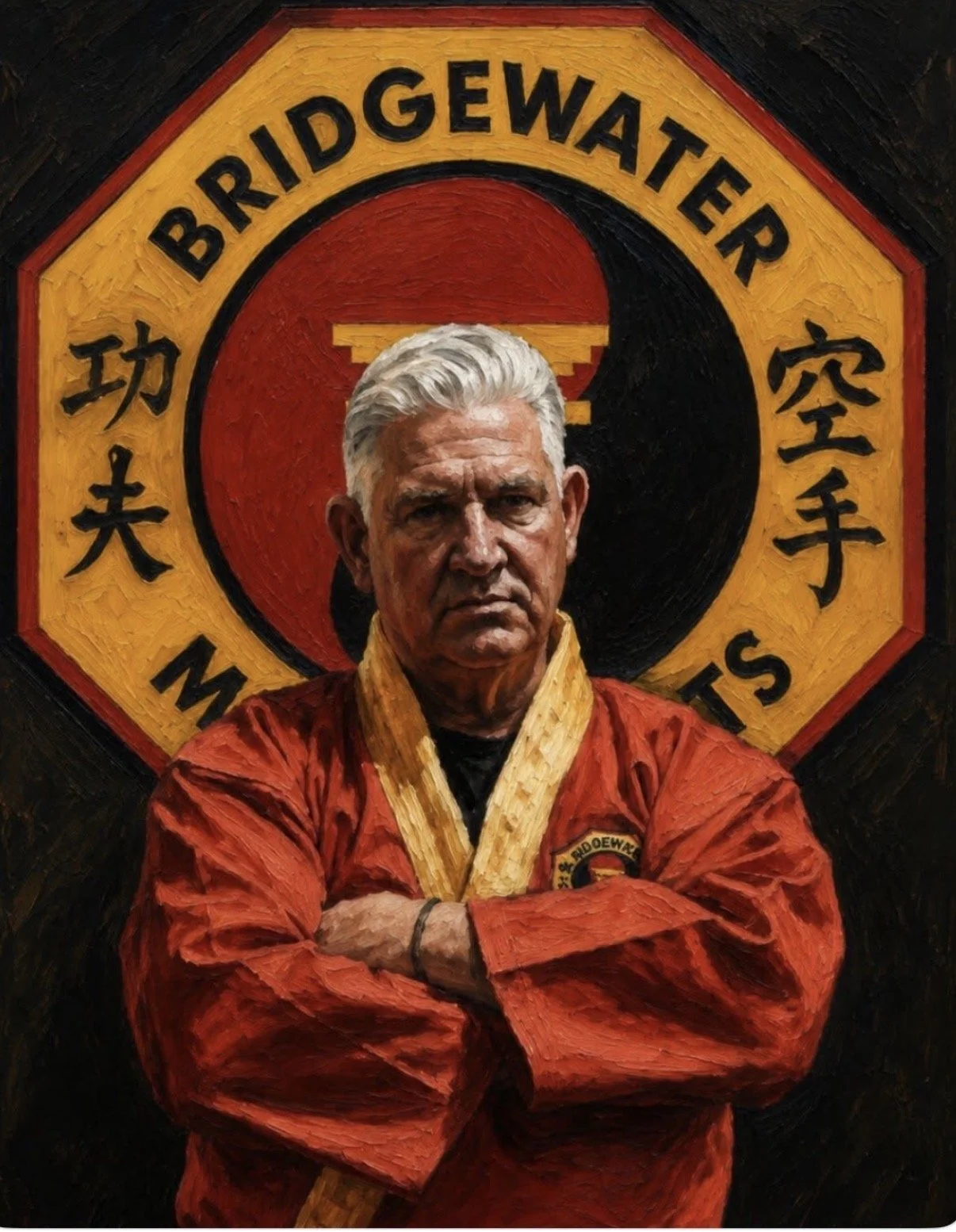
In this episode Jeremy chats with John Hatfield about the evolution of teaching methods, neurodivergent teaching, and the role of kata in teaching.
John Hatfield - Episode 1154
SUMMARY
In this conversation, John Hatfield shares his extensive journey in martial arts, discussing the evolution of martial arts schools, the challenges faced by modern students, and the impact of technology on youth engagement in martial arts. He emphasizes the importance of difficulty in training and the need for martial arts to adapt to the changing landscape of society, particularly in relation to young men and women. In this conversation, John and Jeremy explore the evolution of parenting and education, particularly in relation to martial arts and neurodiversity. John shares his experiences as an adolescent psych nurse and the success of his Kids Action Initiative program, which focuses on helping children with autism and other neurodivergent conditions through martial arts. They discuss the importance of creating a safe learning environment, the role of kata in martial arts training, and the legacy of martial arts instructors. The conversation concludes with John's reflections on his future in martial arts and the importance of honesty in teaching.
TAKEAWAYS
John Hatfield has been involved in martial arts for over 50 years.
He emphasizes the importance of challenging students in martial arts training.
The evolution of martial arts schools has led to a more accessible approach for students.
John believes that martial arts can help address societal issues.
He highlights the success of young women in his dojo compared to young men.
The impact of technology and video games is detrimental to youth engagement in physical activities.
John's dojo focuses on age-appropriate challenges without compromising on difficulty.
He believes that martial arts should be a serious commitment, not just a recreational activity.
John's experiences in martial arts have shaped his identity and teaching philosophy.
He advocates for a return to more rigorous training methods in martial arts.
Martial arts can significantly benefit neurodivergent children.
Creating a safe environment is crucial for learning.
Kata serves as a vital exercise in martial arts training.
Martial arts training can enhance cognitive and physical skills.
The legacy of instructors shapes future generations of martial artists.
Honesty and integrity are essential in martial arts teaching.
Martial arts can help mold individuals into better people.
The importance of community and connection in martial arts.
Teaching martial arts is about more than just techniques.
CHAPTERS
00:00 Introduction
01:15 Johns Martial Arts Journey Begins
06:20 The Evolution of Martial Arts Schools
14:48 Challenges in Modern Martial Arts Training
23:24 The Impact of Technology on Youth and Martial Arts
25:00 The Evolution of Parenting and Education
28:13 Martial Arts and Neurodiversity
31:01 Creating a Safe Learning Environment
35:00 The Importance of Kata in Martial Arts
39:00 A Journey Through Martial Arts Training
42:57 Legacy and Future in Martial Arts
To connect with John Hatfield:
HOME | BridgewaterMA
Join our EXCLUSIVE newsletter to get notified of each episode as it comes out!
Subscribe — whistlekick Martial Arts Radio
After listening to the episode, it would be exciting for us to know your thoughts about it.
✅Subscribe to whistlekick Martial Arts Radio on the following platforms:
🎧Apple Podcasts: https://apple.co/3mVnZmf
🎧Spotify: https://spoti.fi/3yHVdHQ
✅You can find whistlekick on all social media platforms using the handle @whistlekick or visit our website at https://www.whistlekick.com or https://www.whistlekickmartialartsradio.com
Show Transcript
Jeremy (06:15.958)
What's happening, everybody? Welcome back to another episode of Whistlekick, a martial arts radio. Today I'm joined by John Hatfield. John, thanks for being here. Looking forward to our conversation. And to all of you out there, remember Whistlekick is more than a podcast. We do a whole bunch of things. And you can learn about all of those things at whistlekick.com. The show gets its own website because there's so much going on here. More than 10 years, transcript transcripts, links, and all the social media for all the guests, all that good stuff.
And you're going to find that at whistlekick martialartsradio.com. While you're there, make sure you sign up for the newsletter so we can email you every episode that we do. So you've got it nice and easy right in your inbox. Watch the click the video link, click the audio link. There's nothing you can do easier to support us than that. Helps you out too. And of course, if you want to support what we do organizationally, anything that you can imagine would work. But lately we've been selling a bunch of the new runner shirts. So you might want to check those out at whistlekick.com.
And with that, John, thanks for being on the show. Of course, thanks for your time. We where where do we start? Where do we start a conversation about you? Do we do we go chronologically? Do we do we do we pick some some exciting moment and l launch the movie? You know, if there was a movie version of you? Well how do you think? You know, I gotta say, every everybody says that.
John (07:18.961)
Thanks for having me.
John (07:28.432)
About me.
John (07:39.993)
movie version may be pr be pretty boring actually, but I don't know who they're blaming. Right.
Jeremy (07:45.517)
When I started the show, everybody said, I don't know why you want to talk to me, I have nothing to say And every single one of came on and an hour later we'd end that we'd roughly, you know, end the episode. And I said, I thought you said you didn't have anything to say and they're like, Well, you know, I guess I do. Well yeah.
John (08:02.65)
We did it. I don't know. Chronologically, yeah, nineteen seventy three, end of June nineteen seventy three, and I didn't write down any dates. I'm currently still working on my book that I've been working on for fifteen years. But I started I bought in I I watched the when I was a child, when I was eight, I watched the premiere of Kung Fu with David Carradine on television and there's a story behind that I won't bore you with, but
You know, sitting on a cold linoleum floor on a twelve inch black and white and I watched it and I I told my mother, This is what I want to do. You know, and she thought I was crazy, right? She didn't she goes, You want to be a a bald Chinese guy? That does no, you know, she's like, No. So it was like but I you know, I kept bugging them. I No, this is, you know, then the series. I don't know if everybody remembers, I'm old enough where Siri is always premiered with a either a one or a two hour movie. And if the movie did well, then they pick up the series the week later and then you know the sponsor
Jeremy (08:53.859)
Yeah.
John (08:58.092)
the money in for the budget and I guess the movie did well and they started the series and I kept watching the series and my and my parents were like finally my dad found a guy teaching out of his cellar in Holbrook Mass, Fredericks. He's still alive, believe it or not. And I went there he only taught on Saturdays and I went every Saturdays for about two and a half, three years. And the cellar flooded. So the dojo closed. He lived on a he was teaching Kempo. That's all I know. I don't know K-E-N-P-O, K-E-M-P-O.
Jeremy (09:21.495)
What was he teaching?
John (09:27.628)
I don't know where his lineage was. I do know he was stationed in Okinawa as a Marine during the Korean War. So that that's really all I know. I don't know, but he was teaching Kempo. He sported a black belt. I really didn't know too much about him. I mean, except I went there every Saturday. I put two dollars in a rusty Maxwell coffee can. And that was my tuition, eight dollars a month. And and I taught and I and I and I stayed there for three years and I practi unlike you know most kids today, I went home every week and practiced.
'Cause if you didn't practice, if you didn't show up the next week and improve or know what he taught you the week prior, he just walked you out the door. Yeah, so it was a really good experience. And then just one d one fall, cold fall, rainy day, I went there and the whole cellar was flooded and and my dad ended up bringing me. it was very very next, so that was fall, very next spring. My mother was driving by North Montello Street in Brockton, Mass, where I grew up, right down the street from where I grew up in
They were actually hanging the sign for the United Studios of Self Defense. Now Grandmaster Mangoni was hanging the sign with his brother. My mother came, now she, you know, bought into this whole martial arts thing and she went and 'cause I was still practicing, you know, four or five, six months out and I'm still practicing. I am nine. I am nine. So I
Jeremy (10:39.918)
Mm.
How how how old are you at this point? Okay. A nine year old practicing six months later. That's that's that's not something I would expect of most nine year olds.
John (10:49.6)
Yeah, the stuff he learned after the dojo closed down. Yeah.
No, no. So yeah, it wa it's th this has been my thing for fifty three years. So it it defines me as a human is the is the only way to say it. I mean when when you ask, you know, if anybody asks, you know, who's John Hatfield? he's that martial arts guy, he's that Kempo guy, he's that karate guy, that's just who I am. I mean, it's it's it's in my blood for some reason. I don't know. If you believe in, you know, prior life stuff, I guess I don't know, was a
I don't know, samurai on a field somewhere. I don't know. I I But either way, I joined that. That was my real beginning though. That was my dojo. That was something I could go four or five times a week, and practice and we did. And that's where I met my current instructor, Grandmaster Gallagher. And he's been in my inst my instructor since about twelve or thirteen. And and like I said, I'm washing on dates and times and ages because, you know, nobody told a nine year old, Hey, you should write this stuff down, you know. So
Jeremy (11:26.595)
Yeah.
John (11:52.287)
Yeah, I'm always going trying to find the truth. I'm asking people, Grandmaster Mangoni, who owned the Brockton United Studios, now teaches out of my school one day a week. he's ninety-two. And that's my sales speech. So they asked why should I do Tai G? I Tai G, 'cause they say the instructor teaching you is ninety-two. That's a good sales speech. Yeah. So that's it. I mean, fifth you know, a couple of breaks in the breaks that I had, four years in the military and you know, a little bit of time traveling, but I always found a way to practice.
Jeremy (12:01.846)
That's cool.
Jeremy (12:09.314)
That's a pr that's a yeah, that's a good pitch.
John (12:20.052)
You know, I always f I always found a way. I always found and when I was in the army, I always found another martial artist and you know, it was sketchy, it was here and there, but I always found a way. Then when I came back, the United Studios that turned into Fred Bellaris organization, you know, fell apart and I had to go find my instructors and I did and that were there and then I just picked it right back up again in the late eighties. So
Jeremy (12:40.706)
Yeah. The the transition from United Studios to Valaris to a lot of the schools that that I saw turn into ma masters. Right. you know, of course there was a there's always a list of guests that are are really important to me and and unfortunately the list of guests that are are important to me that have passed away continues to grow because it's not gonna shrink. I haven't figured out how to do this over a Ouija board. But
John (12:50.899)
Massive self defense, yeah.
John (12:59.538)
Mm-hmm.
Jeremy (13:09.45)
Grandmaster Fred Villari was one of those folks on that list. And what the all that leaves us to do as as a show is to kind of piecemeal some of the the stories together from others. Would you be comfortable speaking a little bit to some of those transitions just to chime it in here?
John (13:13.074)
Mm-hmm.
John (13:26.478)
No, I mean you're gonna remember something. I was a child and or teenager. So, you know, the in you know, I I've got a lot of the now that Grandmaster Mangoni is back at my school, you know, I I I've I've been I've been party to some of the stories and you know what happened and you know what went on. And of course, you know, money, you know, just you know, money's the the number one factor and jealousy and money, you know, God forbid somebody made two dollars more that month than somebody else, and then it was an issue and you know, the hierarchy was
Jeremy (13:29.89)
Of course.
John (13:56.988)
You know, it it was a really good when it started out, so I went to one of the original five schools. So Brockton was one of the original five schools. And they all ended up being really good schools because they could only afford and you know, I talk about this with Grandmaster Man Goni all the time. At the p time they could only afford rent in in lower income neighborhoods, you know, quote unquote ghettos. I mean, Revere, East Boston at the time, Brockton
Fairhaven, which is right next door to New Bedford. I you I forget the original and I'm missing one. Profeder Larry's original school on Moody Street and Waltham. Well, Moody Street and Waltham was a horrible neighborhood. And you know, being next door to Wellesley and Newton, you would think, but now it's now it's upscale, but it wasn't then. And we ended up with a lot of, you know, what we ended up with was a lot of street kids who who gravitated towards it and
Jeremy (14:37.827)
Yeah.
John (14:50.18)
they became great martial artists. I mean, because they didn't have a lot in their life. You know, I mean for for me, you know, I grew up in a you know, I grew up with in a family of six with, you know, in a in a two bedroom apartment and, you know, over over the Brockton line in Avon Mass. I mean, we didn't grow up with a lot. So I mean it was what we had. It was, you know, and back then it was if you can believe this, my my monthly tuition was twenty five dollars a month. So I mean that's probably equivalent to a hundred and twenty five dollars a month now. But
You know, it was affordable, it was doable, and and we you know, it was something we had, it was precious to us back then. I mean it's precious to different people for different reasons, but it was it was it was definitely something we you know we could we could, you know, hold on to and and and be and make something of our of ourselves with it. So yeah, so it was a great time. Now what happened, you know, I think it was nineteen eighty one when the transition from United Studios Self Defense and the Ferraris and they got into the whole franchise thing.
And there was no model for it. So I mean these guys, and I've talked to Grandmaster Mankoni about this on several occasions. They opened up the first schools and then entered the drag and hit the movie theaters. They opened up the schools and then David Carradine starred in the series Kung Fu. They hit they did the movies and all of a sudden Chuck Norris, you know, was starring in in in at the time B movies. Now they now we obviously know that he, you know, he he excelled as an actor.
later on, but all of a sudden all these martial arts movies were everywhere and they had the the thing in place, you know. Imagine, you know, open up at a McDonald's and then the hamburgers invented. It just, you know, it's just it just it took off. And I don't I'll blame Fred they're taking off. There's nothing wrong with making money. But it just they didn't see the downfall. and I was at Fred Valari's services when he passed. I mean, he didn't he wouldn't know me walking down the street, but I got invited.
Jeremy (16:33.719)
No.
John (16:45.431)
But you know, it was it was definitely a a great time. I mean, the economy was horrible, but it and it was something that everybody could do. I mean, Larry Mangoni blinked and he had two hundred students. They didn't advertise, they didn't do anything. You know, it just they they walked up. They saw karate on a sign outside a building and people just walked in and signed up. different times, different martial artists. you know, it was you know, growing up in the Brockt area in in a in a karate school, you know, it was a fight town. I mean, you know.
We produced Marvin Hagler and, you know, all all those fighters, and it was just a tough place to grow up. So if you if you were doing martial arts and you know, it it wasn't long before somebody found out you were doing it, you were being challenged. It was, you know, it was a great way to grow up. It was a great place to practice martial arts. It was a unbelievable group of people that were involved in the br in the United Studio system, especially the Brockt school. But some of the talent that's come out of there is just unbelievable.
Jeremy (17:44.815)
Sure. What what it what I'm hearing you say, and and I think this is an underdiscussed aspect of martial arts is you know, this notion of iron sharpens iron, right? We make each other better. And the better the people you're around, the better you become, because you just you just can't help it. my favorite thing is is I whatever I'm trying to work on, I look for a room where I'm the worst one there.
John (17:44.854)
Just incredible.
John (17:59.01)
Mm-hmm.
John (18:10.741)
Hello, that doesn't happen anymore. It actually didn't happen in the 70s and 80s either. You know, a lot of people, if they found a student that was excelling or becoming better than them, you know, there was usually, you know, there was usually a rift in the dojo. And I'm like, I I I have some students now that I tell them, like at you're, you know, you're eighteen years old and you're a second degree black belt. You're a better black belt than I was when I was 18. That's my goal. I mean, any instructor that doesn't want that isn't growing the martial arts, right?
Jeremy (18:12.621)
Yeah.
Jeremy (18:39.126)
I I I wholeheartedly agree. It it should be. You're if if you take your your role as an instructor seriously, you should be improving not just your students, but the teaching ability. You should be a better teacher than your instructor was because you saw how they did things, what worked, what didn't work. And you should be judging yourself as an instructor on the quality and the rate of progress of your students.
John (18:51.413)
Mm-hmm.
John (19:04.146)
Mm-hmm. I had a I had a guy fight Saturday night, in a Sunday in a full contact kung fu match. And I've been training him for the last two months. Every Thursday for the last two months I've been working with him and you know, giving him homework to go back to and and he texted me, he dominated the fight. He did amazing. and he ended up with a win and he didn't make too many mistakes because I was watching the fight and
Jeremy (19:10.626)
Hmm. Yep.
John (19:30.707)
He said to me, he says, Hey, thank you very much. Thank you for doing this for me. I said, you know, Adam, you did this. I'm just a book. You had to read the book. I go, this was all you, man. I mean, the information is here. You read it. I go, that that this is all you. I mean, I'm not going to take credit or you know, for your for your fight. I mean, it that was amazing, you know. So, you know, and I fought in the NEKL, New England Kickboxing League, and I fought in the USA boxing as an amateur. And, you know, I said, You're learning, you're you're not learning what I did right. You're learning what I did wrong and not repeating it.
I'm not gonna let you repeat the mistakes that I made and then that's the growth, correct you know, so yeah.
Jeremy (20:04.728)
Yeah. Yeah, for sure. For sure. So
John (20:08.83)
But ask me anything about the old days, please. If if if you'll put allow it on the T V station, 'cause it on the radio station, there was definitely blood and gore, but go ahead, you might have to edit it out, but give it make.
Jeremy (20:19.01)
Yeah. Well, you know, that that's that's the beauty of it being a podcast is you know, we're not we're not held to any any FCC standards. We can we can say we can talk about whatever we want. yeah, yeah, ha heck. I mean we can I don't know what's above that. We whatever's above that, we can we can do that too. When when you when you look at those days, when you look at the you know, the late seventies, the early eighties, and you look at today.
John (20:31.262)
Just make it our rating from the beginning.
John (20:43.39)
Uh-huh.
Jeremy (20:48.448)
You've been involved in martial arts for a long time. I'm going to imagine you've been an instructor for most of that time. Okay. So a long time. Things have changed.
John (20:54.557)
Thirty four years full time, yeah. Mm-hmm.
Jeremy (21:02.392)
What are we getting right? What are we getting wrong?
John (21:05.245)
Wow, that's a good question. that's a really good question. I think what we're getting right is we're getting martial arts out to everybody by toning it down a bit, then we can cause everybody deserves to learn martial arts. Not everybody's gonna be Bruce Lee and Chuck Norris, agreed? And then, you know, so you know, we're getting martial arts out to everybody. We're getting marsh, you know, hopefully the dojos are more open to who comes in and who teaches. And, you know, you don't have to be a s you know, super talented athlete.
Jeremy (21:20.184)
Right, agreed.
John (21:32.399)
Or, you know, you just have to be dedicated enough to learn and you know, in I think w now we understand that we're we're teaching an individual and we're looking at an individual's pr progress. Some are gonna progress faster, some are gonna press slower, some are gonna be better punchers, some are gonna be better kickers, some gonna be better at defense, offense. I mean it's just gonna it's just gonna be what it is. back in the day, if you weren't just an absolute badass, can I say that? If you weren't you know, they they found a way to walk you out the door. You know, I mean
Jeremy (21:56.835)
You can. Yeah. Yeah.
John (22:01.37)
You know, so and you know, we took a lot of punishment. I I'm not sure we need to go to that. I like to see a little bit of it come back. I like I like to see
I I'd like to see the dojos get a lot hard. I I'm hard. I'm really up as far as the the the the programs in my area, I'm probably one of the most difficult. Only because I, you know, studied in the seventies and eighties and but I'm not I'm definitely not the North Montello Street Brockton United Studios of Self Defense. we fought without spiring gear. We didn't have money to buy spiring gear. It really wasn't out there until the mid eighties. June Ree was the first company to put it out.
I mean, I have pictures of myself sparring in tournaments and you know, either I was getting clocked or s I was clocking somebody, you know, barefoot, bare knuckle. I think we had mouthpieces. I can't remember back that far, but we might have had mouthpieces. that's about it. So Yeah, I think so. Yeah, I think you're right. Maybe I did have to a mouthpiece and a cup. I don't remember though. But yeah, no, it was it was definitely a different way to grow up and you you know, and and and grow up in a school and if if you got
Jeremy (22:58.134)
Mouthpieces and cups are what I remember from back then.
John (23:12.847)
You know, if you got hurt, if you got kicked in the ribs, you were back in there the next day. You didn't take two days off to you know, I it iron sharpens iron, right? Yeah. So it yeah, I I you know, I think I turned out okay. You know, jury's still out, but you know, for the most part I think I turned out okay. I don't look back at that stuff as trauma. I don't you know, it it's it didn't, you know, it wasn't trauma. It was, you know, but it it it definitely made me the person who I am today.
Jeremy (23:23.299)
Yeah.
John (23:42.2)
win or lose. I'm not the best martial artist in the world, but I'm really not afraid of anything. and and that that just doesn't mean fighting or or, you getting assault or somebody, you know, in a match or something. I'm really I just I take you know, I I run into the wind, man. I you know, if the storm's coming I I don't run away. I run at it, you know, and
I don't know, I I just think that's missing, you know, and video games is a big part of that. We'll talk about that later. But you know, we're losing an entire generation, you know, socially and cognitively, but yeah, it's crazy.
Jeremy (24:13.976)
Yes. Well, I there there's something I want to poke at because I don't have the answer and and you know, you can you can throw some some material on the table. You mentioned that your program is more challenging. I I assume what you meant is more challenging for the students, to the students. You challenge your students more than perhaps some other schools might. And there is of course a difference between
John (24:19.522)
Mm-hmm.
John (24:27.064)
Mm-hmm.
Jeremy (24:42.114)
Beating on your students and challenging your students. And I think the common opinion among martial arts schools is we we can't we can't challenge them too much because you know then they won't come back. But then I look and I say, well, Spartan Race built a whole business globally that blew up very quickly. That, you know, let's face it, the easiest option they offer.
John (24:44.856)
Absolutely.
Jeremy (25:10.58)
is far more difficult than ninety-nine percent of martial arts programs.
John (25:15.553)
People keep coming back.
Jeremy (25:17.39)
But people keep coming back. And what is it? There there's something. There's something in the difference between what some schools do and other schools do as they challenge their students. Some schools the students love it and it builds retention. Others, it's perceived as too much, and students step away. Do you have any insight?
John (25:38.817)
I haven't I haven't had too many and of course, you know, actually you know, something that I will brag about as far as my school is I got a thriving adult program. I've got about forty or fifty adults in my adult class. you know, we we teach four days a week. They're not all here on the same day. But my class, my adult classes sometimes are 30 strong. They I don't have too many parents pulling their kids out saying, Yeah, this is too hard for them. I I now that you mentioned that, one or two here and there, but
But my my my dojo is age appropriate difficult. I mean we have three age groups five, six, and seven, eight through twelve. When you're thirteen, you gotta go in the teens slash adult class. And it's age appropriate. but I I'm gonna really make some people mad here. I really don't care though anymore. The you know, I don't have Nerf Gun Wars in my dojo on Friday nights as a special. I don't do birthday parties, you know, no cake and ice cream on my dojo floor.
And I'll get to you as far as the business side of this in a minute. there are no there there is no
Jeremy (27:00.334)
John, I think I lost your mic.
John (27:12.388)
You there?
Jeremy (27:13.174)
I I can hear you now. Yeah. Well I think we lost about the last five to seven seconds, if you wouldn't mind just rolling back.
John (27:18.607)
Okay. Yeah, so you know, a you know, at my dojo, I know we lost sound for a bit, but at my dojo, I don't
We don't we're age appropriate, like I said, five, six and seven, eight through twelve. And then we have an advanced kids class, eight through twelve, so that's even harder. And when you go into my teen adult class, it's hard. It's physically challenging. it it's supposed to be. Anything in life worthwhile is difficult. And I don't know who made that rule up. I don't know where that came from. Maybe Adam eating the apple. I don't know. But you you know, you don't there's nothing easy in life that's worth your time. If if it's not difficult, it's not worth your time. Don't do it.
It's supposed to be difficult. Only difficulty makes you a better person. so we're age appropriate. Like I said, no birthday parties in this dojo. and I I know people do it, and that's fine. I'm not judging anybody. You you do whatever works for you. No Nerf gun wars, you know, no special pajama night. You know, we wear our uniforms. But what I found out is my retention is through the roof. Is through the roof because people understand that this is a special place. This is not just something you did as a kid or a teenager or an adult.
This is not just something that you showed up at and it was like an extra thing. I you know, and I I don't know really what to compare it to, but you know, w when you when you show up here, you know, we're teaching martial arts. That's what you came here for. If you signed your son or daughter up for a baseball camp and you showed up and it was an in ground pool and they were playing Marco Polo when they were supposed to be working on their, you know, their swing or their pitch, you'd be mad.
And and I don't understand the mindset of people. Because if your child comes out of a dojo every day and you ask them how was it and they say that was the best class I ever took. Guess what? You're getting your you're you're getting st You're getting ripped off. You're getting ripped off. It's supposed to be challenging. Things are supposed to be difficult. I mean, that's what makes the that's what neurologically makes the brain grow, which makes us a better person. you know, you don't, You know, easy isn't good. Video games are easy. Look at the neurological damage that happens for video games. It's crazy. So
Jeremy (29:24.886)
It it sounds like that's a I don't wanna say a sore subject, but a something you have some strong opinions on. I wonder if you might go deeper because let's face it, it's
John (29:34.089)
My best my best students are my young women. End of end end of story. And I I you know, I have some great young men male students, don't get me wrong, but my best students are my are my young women and I lose more males young male students than I do young women. And the success success stories out of this dojo with some of my young women are just unbelievable. They're going to some of the best universities.
they're excelling socially and the one factor, the one fac 'cause I'm an adolescent psych nurse too. The one factor is video games and technology that the the the boys have instant gratification box right in their hand all the time. The majority of my young women don't play video games, if any of them actually. it's just not a thing that the young women do. It's not it's it's it's a it's a boy thing.
And we're losing an entire generation of men. And I'm not misogynistic, I just happens to be the truth. I follow Scott Galloway, he's a podcaster and speaker and he's an author, and he wrote the book, Notes on Being a Man. And he got a lot of hell for it because they thought, well, what about women? And then he Well, I tore with Brene Brown, who's a woman psychologist who speaks. So he says, You it's it's it is what it is. I'm just telling the truth. and and it we're yeah, we're losing an entire generation of men. And it can be fixed with martial arts, it could be fixed with a lot of things.
But you have to make do it, you know. The new you know, the new parenting out there, and once again here I go, I'm gonna piss off a lot of people. But you know, the new parenting thing out there, we're we're letting him make his own decisions. You're letting a five year old make his own decisions. You know, you you know, let him wear you know, let him pick out the color of his socks. You know, I go, what what are you out of your mind? I go, I I don't know, I don't get it. But you know, and then the flip side of that coin is you gotta trust the person who's educating your son or daughter, right? So
Jeremy (31:11.564)
Yeah. Yeah, I s I see I see that too. It's it's insane to me.
John (31:28.935)
Yeah, I know. So it's a tough thing. yeah, so I was, you know, I was an adolescent psych nurse. I worked I worked in hospitals and I've been working for myself for the last thirteen years now, under my license. And I started a program called Kids Action Initiative and it's it was initially started for autism kids, ASD kids. And most of my I teach three classes a week for kids with autism and the
the majority of my kids in the program are autistic. Some are severely ADHD. There are some other neurodivergent kids in the program. But you know, I started and I have a teen and adult program as well. But I started that thirteen years ago and it's been a huge success and we've been able to transition many of the kids out of the dozens of the kids out of the modified autism program into the typical program 'cause martial arts is just phenomenal for
Kids on the spectrum and neurodivergent kids.
Jeremy (32:25.622)
Yeah. Yeah, we've we've had some a few guests over the years who have talked about that, whether it's a specific program for ASD or you know, they are essentially mainstreaming mainstreaming these ASD kids into a program and it's the only time that they're ever mainstreamed. And what it what it seems to be from my vantage, tell me if if you agree, is that it's the incorporation of physical movement.
John (32:32.881)
Mm-hmm.
John (32:43.111)
Mm-hmm.
John (32:53.093)
Yes, so they
Jeremy (32:53.408)
To to the requests that you make of them that allows them to find their way and ultimately build some self-regulation and ultimately thrive.
John (33:02.043)
They have there's a lot of data on it now that most kids eighty nine percent of the kids that suffer from autism spectrum disorder also s suffer from a and the the the diagnosis is escaping me, but
the the the physical side of that. They the you know the poor motor skills, the soft muscle tone, the hypotonia, sometimes it's tight muscle. Either way, they they they suffer from a you know from a physical thing. And and the new the the new data is saying and I've always known it, a lot of people have always known it, the new data are saying that you work from the ground up. So you you've you've you've fixed the motor skills, you fix the core strength
you fix the how the brain reacts to the body and then you work on the cognitive. If you work just on the cognitive, there's a lot of the there's a lot of programs and disciplines that will only work on the cognitive, ABA therapy and stuff like that. And there's nothing wrong with ABA therapy. It's all good, but just some things are better. If you work on the cognitive on the top down and you don't fix the things that make somebody feel safe, then once they leave their your your office, it comes back much it it goes away much quicker. They regress much quicker.
I mean, if you could do it top to bottom, that would be great. I mean, you I've tried that. I've actually worked with neurologists and stuff. We've worked with kids together. And you know, we work on the motor skills, we work on the coordination, we work on everything that makes somebody feel safe. When somebody leaves and they feel safe, they feel safe socially, they feel like, you know, they could stand without falling, they could they can you know, they're not they're not what a lot of kids with autism do, they bolt because they get overwhelmed. when you could fix that and you can make the individual feel safe.
Then then you could start working on the cognitive factors. And then that that seems to be working. And the truth is behind that, and my my my instructor, Grandmaster Gallagher, put me in my place because I was acting all proud and my ego came out of my back pocket, you know, about how successful the autism program is. And he looked at me and he goes, Stupid, martial arts is good for everybody. You know, and I went, Yeah, it is. I mean, it it's it's one of the best things you can do do cognitively, because when you feel safe, your brain develops.
Jeremy (34:55.439)
Ha ha ha.
John (35:10.222)
And I don't mean say from just say from people, but when you say it feels safe in your skin, you know, it it's it the brain just has an easier time developing. You become a better thinker.
Jeremy (35:19.686)
In fact, I'd go so far as to say without that feeling of safety, you cannot develop. And you know, one one of the things that really is core to to how we run our classes, and we we have someone who is, you know, high functioning autism. He's he's, you know, in high school and he's been mainstreamed with us from actually from our day one. I'm not gonna name his name, but anybody who comes to class, you know, they know who I'm talking about and they're nodding along and
John (35:24.449)
No, can't.
John (35:44.067)
Yeah, it's fine.
Jeremy (35:50.959)
We meet him where we are where he's at. And that can change day to day, just like every other student. And so the what we're offering to him, and this is why I think it martial arts is so great for every diagnosis that you could come up with. Because there's always a way to adjust what we do to meet the person where they're at. Maybe it's more verbal. Maybe it's less verbal. Maybe we we've got maybe we've that's okay.
John (36:19.179)
Sorry.
Jeremy (36:20.62)
Maybe we've got more movement or less movement. Maybe we need to keep it higher energy, lower energy. You know, maybe we're being sensory aware, depending on the group.
John (36:31.52)
Censor you're where however you want to pull him out of his comfort comfort zone. Cause that goes back to the discussion we had a little while ago where, you know, nothing is, you know, you know, like I had with one of my autistic kids who's now believing or not teaching for me. And I said, you know, well, he says, I think sometimes you forget I'm autistic. I said, Do you want me to treat you like you're autistic? And he was like, Well, no. And I go, Well, there's your answer. I go, you know, no, I'm gonna treat you like everybody else, man. You make mistakes, I'm gonna tell you. You know, I said, You're gonna have to find you're gonna have to find a way to hug the cactus.
You know, so you know, so
Jeremy (37:02.22)
like that. But it that feeling of safety is is so core, right? With without that, nothing else happens. And I think that that is where we collectively, you know, the industry, that's the first thing I look for is is my class setting an environment where people feel safe. You talk about pushing your students. I'm going to guess that they come in and
John (37:09.992)
Nothing else happens.
Jeremy (37:30.058)
You're probably pushing them from day one, but you're probably doing stuff that you're aware of and probably other things you're not aware of that make them feel safe to be pushed. So they're willing to sort of submit to the process and see what happens. And then you've
John (37:44.095)
I had a dollar for every time I told a student, I said, you know, I'd go on vacation next week. But I'm like, Have I ever lied to you? And they're Well, no. Have I ever told you something that didn't result in a better technique or a better way to do things? No. I said, So, you know, listen to me. I said, It's been fifty-three years. I'm not a genius. It's been fifty three years. If I'm still making mistakes, which I, you know, obviously everybody does, but if I'm if you know, but as far as you go, I'm not making mistakes. Listen to me. I know what I'm talking about. that may sound a little arrogant, but
But you I'm always getting better, so but it but it it's it's you know some of the questions, I'm like, I don't I just don't understand how they could sit back and you know, how many times have you told a student, hey, get on the balls of your feet when you pivot and they you know, and you come back next week and they're on their heels or they're flat footed and you're like, dude, what are you doing? You know, I made it easier for you a week ago and you're still doing it. And that goes to the whole, you know, everything outside the actual, you know, martial arts training as well as
No, I got some pretty good advice. Just listen to it. I'm you know, I've made a lot of mistakes. I don't I don't want you to make But yeah, maybe it's maybe people need to make mistakes. I don't know. But but yeah, no.
Jeremy (38:50.69)
I I think I think we learn from mistakes. I think that's the only way we actually learn. And I think I I
John (38:56.443)
Most people, yeah. It takes a special person to learn from somebody else's mistakes, yeah.
Jeremy (39:02.434)
Well, you could make you could make the argument, if they didn't make the mistake, did they learn it or are they reci r repeating it? Right? There's a difference between understanding something and and going through the motion. You know, when we teach forms, when any of us teach forms, the first time someone's doing it, they're imitating. They don't know it. But hopefully, and you know, this is in every school, but I think in most schools, the expectation is that your understanding of that form, your embodiment of that form, regardless of the style, improves over time. And
John (39:09.594)
Yeah, true.
Jeremy (39:32.066)
You know, one day, hopefully, they get out there and they do their form and they're like, this is a whole different experience. And to those of you out there who who hate forms, who hate kata, I'm talking to you, you didn't spend enough time.
John (39:48.486)
Yeah, I know. I don't know what they're gonna do when they're 80. They're gonna keep fighting, I guess. But yeah, but no, no, Kata's a Kata's a special thing. Ca you know, people this is not my quote, but somebody that looks at Kata and
Somebody that looks at I'm gonna get this quote right. Somebody that looks at Kotar and doesn't see knowledge, looks at a looks at a a great novel and just sees a pile of paper. So, you know, when you when you understand that Kata is the exercise, you know, and it's deeper than that. When you get involved in Kata, it's it's much deeper than that. It's you know, it's fighting somebody you can't see. So it's like fighting blindfolded. And if you and if you could beat that person in your mind.
You know, if you can you can put the person in place, quote unquote bunkeye, if you can put the person in the place, if you can fight blindfolded and win the fight, then by taking the blindfold off, it should just make it easier. I mean, I try to explain that to people and I say it's an exercise. It's not perfect, nothing's perfect. But, you know, doing a cotter and and and visualizing the strikes and the punches coming at you and the the people moving around you, I said is is is is is a skill that will
That will stay with you forever. I if you put somebody in fr now if you put somebody in front of you, that's just gravy. You know, it that's just gravy. I mean, fighting somebody when somebody's shoulders turn, I mean, especially after 53 years, I'm like, I know what's coming 90% of the time. And and I'm like, but most of that I got from Kata. Most of that I got from my imagination, you know, my my human side. But there's a whole group of people out there they're gonna dog me on this and but that's okay. And they're gonna say, well
Jeremy (41:26.796)
That's their problem. You know that
John (41:29.006)
He's not a fighter online, then I'm gonna refer them back to New England Kickboxing League and North Montello Street and Brockton and but
Jeremy (41:31.873)
Yeah.
The same people that trash forms are the ones that do sparring combinations and sparring situations and they drill them over and over again. And they they don't they don't get it. They don't see the similarities between what they're doing.
John (41:47.906)
Right.
John (41:55.082)
I was allowed to open up earlier than the grappling schools, because the grappling schools after COVID, I think we we were allowed we were we were under creative movement. So I think eight months after COVID in Massachusetts, we were allowed to open up our doors. Of course we had limitations. We had to be s six feet away, wear masks and stuff like that. We weren't allowed to touch each other, no sparring, no no techniques on each other. But it gave at least I it gave us people coming back in the door. The grapplers though couldn't do that because their whole curriculum is hands on, just about.
So a lot of those guys went to Zoom classes where they were going over movements on the ground and say, imagining this, imagining that. And those were the guys, not all of them, but those are the guys that were dogging kata and and you know, and you know, making fun of martial arts for their katas and their forms. But yet here they are doing it. And you know what? It worked. A lot of those guys became better grapplers when the when they were, you know, had the blindfold on. So yeah. So anyway.
Jeremy (42:52.502)
Modern science validates the impact of visualization. It's it's not it's not debatable anymore. Anyone out there, no, it's go go do a small amount of research. You'll find it. Like this is well established psychology. And that is just one of the, I don't know, hundred, thousand, ten thousand ways you can approach forms. You can approach it as visualizing an actual fight.
John (42:57.74)
Mm-hmm.
John (43:04.455)
Yeah.
John (43:17.847)
Right. Exactly. You should. I mean, you should. I mean, it's the difference between a push up and a push. You know, you don't and and I I actually started a a Patreon account a few weeks ago and I've been piling videos so I can have videos to put every week compiling videos. And it's under Patreon, it's Budo one one, B U D O one one if anybody's interested. But I do five it's ten dollars a month, it's nothing. And I do f three to five minute videos, and my my success has been
Jeremy (43:31.696)
cool.
John (43:47.882)
When I teach seminars, I don't have to teach a Chinese Kenpo seminar, which is my my system. I teach I teach to all different systems because I had the fort fortune of having a Chinese master that I've been studying from for twenty six years, who didn't want me to dump my Chinese Kenpo. He just improved what I was doing. And that's a whole nother story. But anyway, that's Grandmaster Winchel Wu, Sifu Wu from Chinatown.
Just an amazing individual. Took me and my instructor under his wing 26 years ago and just exponentially just made us so much better. I and I and I go back to I believe older is better. So, you we went back to the Hungar lineage with him. but he but anyway, but you know people have to understand that the exercises are exercises and that y you know, you you can't over you can't pre-think in a fight and think that something is gonna happen. You you you gotta be ready, but
Jeremy (44:18.39)
Mm.
Jeremy (44:41.422)
You don't have time.
John (44:42.879)
But you're never gonna have that muscle memory, you're never gonna have that that that cognitive link to your body when something does happen if you don't practice something over and over and blind practice it over and over. So yeah, no. You're
Jeremy (44:55.758)
Yeah, how how did you that gentleman in Chinatown, how did you connect with him?
John (44:59.444)
I say read the book when it comes out, but I hope I finish it someday. it's a long Yeah, it's a long yeah, I gotta get back on it. It's a long story. Every time I go to I I every time I start a new chapter, something happens in my life that takes me away. But I
Jeremy (45:03.714)
Well, fifteen fifteen years, John, don't make us wait.
Jeremy (45:14.71)
Mm.
John (45:18.098)
Yeah. S so when I w when I was a child and I wanna I wanna I was a child and when I taught want to talk about back in the day when it was more difficult, I was thirteen or fourteen years old. And one of my friends at the at the United Studios in Brockton told me of this wonderful Chinese master in Boston and I had to go study with him and you know he you know, he he led me to believe that this guy could levitate, you know. So I I I got together, I I went to my parents' couch and my the the
Jeremy (45:18.702)
I just realized my camera's crooked. I'm gonna fix it. There we go.
John (45:48.039)
the bench seat to our Ford L T D and I got enough change for the bat bus, the Brockt bus, to take me to Ashmark Station on the red line, take me from there to South Station. And this was before the archway went up in Boston, Chinatown. And I bought a Snickers bar, I had enough money for a Snickers bar, and before the metric system was drinks, I had a sixty-four ounce bottle of Coke. And that's what I had for the entire day. And in the middle of July, I end up fine I I end up walking into Chinatown from South Station and
I look up on the I think the third or fourth floor and I saw some people working out in the window. And I go ahead and go up and I sit there and then Sifu Woo was teaching the like thirty or forty people on this floor. It was a huge ten thousand square foot solid wood martial arts center. And it was called the Bamboo Hutt Club. And I went up there and and I sat there for about two hours on a Sunday watching them perform and I and and
He came up to me afterwards. He says, I see you've been sitting here the whole time. And I go, Yeah, my friend told me about you. I said, I go to a school in Brockton four days a week. Stupid teenager, right? And I go, I'd really like to come up here on Sundays. How much would it cost for me to join and come up here and train on Sundays? And he said, Come back next week and we'll talk about it, thinking the kid's never gonna come back, right? I left, I did the exact same thing the next Sunday. My friend Kevin, who had the cool mom in town, Mrs. Scoutus, I said, Can do me a favor for my parents call? Could you tell them that I'm just out playing with Kevin in the neighborhood?
And here I was in the combat zone slash Chinatown in Boston at like thirteen or fourteen. I did it all over again. And the same thing happened. Wu came up to me afterwards and said, I see you came back. But he says, he says, if you kind of look around here, he says, I'm not really allowed to train you. And I looked around and nobody looked like me. Right? They were all Chinese, Chinese Americans. I'll figure it out. It was I was fourteen, so
Jeremy (47:38.648)
'Cause this is the eighties.
John (47:44.399)
Seventy-eight, seventy-nine. So yeah, so maybe maybe eighty. No, seventy-eight or seventy-nine. And I and I said, okay, and I and I kinda left and and I and I went away. And then, you know, flash forward about twenty six years ago, I'm in a seminar that my the organization I belonged to at the time organized, and they brought Wu and his crew up for a staff seminar. And I was in the staff seminar. He doesn't remember me, I changed, I don't look the same that I did when I was 14.
Jeremy (47:45.632)
Okay. All right. I did.
John (48:12.656)
But I was on the floor and I was once again, I was giving it hell, you know, doing my best, like I, you know, like I did when I first started. And he walked up, he saw my patch on my uniform, and then he walked up to my instructor, Grandmaster Gallagher, and he says, Is that your student over there? And he pointed and he goes, Yeah. He says, I wanna see him and you next Sunday in Chinatown. And he's been working with us ever since. And he just we lost him last February. He was eighty seven. You know, that's okay. He was
Jeremy (48:35.83)
sorry. I'm sorry, but that's it's a pretty cool full circle. And the fact that you you got you got more than you know more than just a couple weeks, couple months, you got years with him. And so here's the here's the the question is would you have been ready? Would you have been ready for what he offered when you were 14?
John (48:41.603)
Yeah, full circle moment.
John (48:57.779)
I don't know. That's a good question. I I really don't know what the answer to that is. fifty fifty, I knew I would have given it hell. I don't know how I would have made it up there in the winter, but I don't know, that's a good question. I don't know. Maybe I would have left the United Studios and went there. Maybe I I don't know. I really don't know what would have happened. Wow, that's a good question. Would I have been ready at fourteen?
Jeremy (49:08.278)
Mm.
John (49:24.34)
I definitely wasn't mature enough, but I I don't know. I would have given it my all anyway. It it was a possibility, but probably slim possibility, but a possibility that it would have worked out.
Jeremy (49:34.518)
W what with respect to you and your training, what is what is his legacy that he's left you that maybe has trickled down to your students?
John (49:44.834)
So he, you know, that that's a that's a good question. So he knew that, you know, and I can remember him, you know, he's got a c one quote that sticks with me that we're all different taking different roads, but we're all going to the same house. And he says there's nothing wrong with the Kempo that you're studying. You can only do so many techniques. Block high, strike low, kick low, punch high, block right, strike left. I mean, that there's there's only so much you can do. What he did for us was he fixed our structure. He brought us back a century.
where the things that the Americans have lost along the way or let slip for whatever reason, either out of laziness, either out of ego, or, you know, just out of financial reasons because it was easier to sell the less detailed it was. He gave us that detail back. I'm a firm believer that four hundred years ago on the old I island of Okinawa, that those martial artists were better than I ever will be.
they had to walk out their front door and every day and defend themselves and make it back from the tax collectors and whatnot. I really have never, with the exception of the military, have never had to really do that. I don't have to live every day defending my life or or thinking that I could defend my life. So they were training harder, training better. Their application from the art was much better than ours was. so I'm a firm believer that the the the further you go back in time, the the most answers that you're gonna get.
For your technique now and the way you train now. And it's truth. I I do a hung I do a hung qigong set from him that absolutely I I picked up a few things, it's called 12 hands. It's a action series that I do. All my Kempo techniques right now, I haven't changed the actual techniques, but they are structured properly now. I you know, I c there's a million details. I won't go over the details with you, but the
The teeth the teachings that I did from C Fu Wu, the footwork, the placement of my feet, the placement of where my hips are at, where my hands are at, you know, the internal side of it is all there now. And it doesn't matter what system it is. It it it doesn't matter. And that's kind of what I go over on Buddha 101 when I teach, because you know, he's allowed me he's given me the tools. So when I I don't have to teach just to Kempoist or Chinese Kempoists, I could teach to anybody now.
John (52:09.599)
I can say, do me a favor, move your hand here. Don't change the technique. Just move your hand here. Position it this way. Look at what what a difference it made. And all of a sudden, you know, it it just comes alive. That's what he was able to do. so and and it it just a godsend, just an absolute godsend this man was to us. But yeah. And I didn't tell him this story till about three months before he passed away. But he didn't know I was the kid that came up on that floor. And he didn't know. He did remember though, but he
Jeremy (52:38.092)
He did.
John (52:39.08)
He did remember sending me away. It was one of the biggest regrets he said. Not sending just sending me away was a regret. He about the the fact that the Bamboo Hutt Club had, you know, had rules. but I when we were at his funeral, you know, I spoke at his funeral and it it was it was a much different much different dynamic. you know, I told everybody, I said, I want everybody to look left and look right. Nobody here looks exactly the same. Some people are driving
really nice cars and some people aren't. you know, they're everybody is a different age, you know, different race. I go, this is, you know, well, there's only one race, the human race. But you know, it you know, but you know, I said, look around, look at how many people this man touched. And he caught a lot of flack for it in Chinatown. He caught a lot of flack for it in Chinatown. But he he started it shortly after that, he started teaching everybody. And there's some wonderful students that came that came out of the Hungar School in Boston.
C Fu Woo's program. I mean some wonderful students. We still all train together. I'll be at August Moon Festival actually performing, which is you know, just an honor. You know, just an absolute honor. But
Jeremy (53:52.377)
Let's flip the timeline. We've we've talked about then, you know, a while ago. We've talked about recently ago. We've threaded through. Let's let's look forward. I I I'd be shocked if if I said, Hey John, what's coming next? And you said, Well, you know, in six weeks I'm gonna stop training. I I know that's not the answer, but but what is the answer? What is what do you see in your in your future path to that house we're all headed to?
John (53:57.586)
Mm-hmm.
John (54:11.452)
No.
John (54:21.287)
This may sound crazy. I'm technically technically retiring in three years. I'll be sixty-five. I got social security in a couple of retirements, but I'm looking forward to handing the reins off to my school on the day-to-day stuff. You know, the website, this, that, and you know, somebody else answer the phones. My cell phone rings off the hook because my business phone comes through to my cell phone. I'm really looking forward to training more full time than I am now, if that makes any sense.
Jeremy (54:50.721)
It does.
John (54:51.141)
I guess I get to re I guess I get to retire when they take the black belt off my corpse. But I one of my students said, Sir, we'll leave it on. I go, Thanks a lot, man. But yeah, no, I'm looking forward to getting back to it. I'm looking for actually the stuff that Wu gave me before he passed, I'm you know, and thank God I got Tim Lavalie, Tim Labalay in my corner. He actually received the lineage from Wu. He's actually the head of the Boston Hungar right now.
Jeremy (54:56.47)
Yeah.
John (55:18.442)
shout out to Tim. He's doing an amazing job. But I got thank God I got him in my corner. Cause he's obviously more skilled at the hungar sets and everything than I am. A lot more skilled and and I got it. But I'm I I'm really looking forward to working on the stuff that Wu gave me, which is only gonna, you know, propel me forward. I yeah, I like I told you earlier, this defines me. I'm I'm not not necessarily looking to grow the school. I mean, we have a wonderful population here.
I've got somewhere, I don't even count, I've got somewhere between 180 and 200 students. But that's been thirty, four years in town, in the same town doing the same thing, you know, you know, and doing it right. I mean, it w it would be very difficult for somebody to open up a school, I'm probably jinxing myself, you know, close by because, you know, they're just gonna start, you know, marketing the way people market and and you know
I don't do that. I do a post every Friday on my personal Facebook page and my business page and it's not marketing. It's not you our T shirts are on that sale now for nineteen ninety nine. I don't do that. you know, f first week trial, you know, now, you know, comes with a free uniform. I don't I don't do stuff like that. I think it cheapens it. I'm gonna piss a lot of people off. You know, do what you have to do, you know, you gotta eat, you gotta pay your rent, your kids gotta go to college, but you know, but you know, I think it's just just cheapens the art. I mean
Jeremy (56:25.878)
Mm.
John (56:39.402)
You jo join Bridgewater Martial Arts because you want to learn Chinese Kempo. You know, you want to learn martial arts. That's it. That that's that's my sales speech. I mean, I don't I I don't know any other reason to join a martial arts school than to study martial arts. I mean, it doesn't make any sense, you know. So, you know, the the ancillary benefits, you get in shape, you lose weight, you become stronger, more flexible, more range of motion, you think clearer, you know, you're not going home and pouring a glass of wine after work, you're coming in here.
You know, so it's it's it's you know, th those are the all the ancillary benefits of it that that come with it. But you know, you learn how to defend yourself, right? But the you know, it's just whipping gr I took over the school from my instructor, Grandmaster Gallagher. It's been twenty one years, twenty-one years ago, and he started the the culture of Bridgewater martial arts and it's continued, and I'm gonna continue it. You're here to learn martial arts. You're l here to learn Chinese Kempo, that's what you came in for.
Is it bor g does it get boring sometime? Does it get re repetitive? Yes, it does. Is it difficult? Always. But you know, that's that's what it is. So
Jeremy (57:50.179)
Well said. And if people want to find you, you mentioned that Patreon Patreon earlier, you should s mention that again, but website, social media, email, phone, any of the stuff you wanna share.
John (57:58.508)
Bridge I use Yeah, so I use I use my social media more than more than I do my website. I use my website for like events like tournaments and stuff like that. Bridgewater Martial Arts dot com is my website. my email, if you want to contact me by email, is Bridgewater like the town. One word, is in Michael, A is an Adam, Bridgewater A at Comcast dot net. If you wanna check out the Patreon account, it's
Ten dollars a month. I did, you know, I did most people are doing forty seven ninety nine. I did ten you're gonna get a video once a week, three to five minutes. Simple concept, applies to all martial arts, at least I think it does. that's Patreon dot com backslash Buddhine. And that's that's my Patreon account. It's a simple nine ninety nine a month. We're not selling gasoline. Right? It's ten dollars, you know.
Jeremy (58:51.768)
Ten even.
John (58:54.987)
Ten even. No no marketing here. It's not nine seventy nine. It's ten dollars. I'm hoping I get a few hundred people in on it. yeah. also my my Facebook page is John T is in Thomas Hatfield. there's my my background picture is myself and my wife, and my profile picture is a picture of C Fu Woo from a few years back. It so if you're looking to if there's more John T Hatfields out there, you're looking for the
Chinese gentleman in the red tunic. The my my business page is just Bridgewater martial arts. That should be easy to find my my my Facebook page. So yeah, that's any way to get to my phone number's five zero eight six nine seven four nine four seven. I still have a business line that comes through to my cell phone, believe it or not. by cell phone you can have it, five zero eight three four five five two nine six. Text me. Anybody, you know, seminars, whatever you want, but let me know.
Jeremy (59:51.161)
So that's about the the I'd say you're the most available person we've had on the show in a while. And of course we'll we'll link and write all that stuff in the transcript and and all that for for everybody that that wants to come through whistlekickmartialarts radio dot com because most people listen while they're doing something else. And a lot of that's driving. And I don't want anybody going, hold on, you know, driving with their knee and trying to write down phone numbers and rewind and and all that. We try to make it easy.
John (01:00:00.041)
Thanks, man.
John (01:00:15.551)
I'm I'm actually lecturing. I've lectured, I've I've spoken about the Kids Action Initiative program, my autism program at Harvard Medical School. Pat on the back. it was the alternative health con international alternative health conference. And I spoke there and there was Shaolin Priest there. It was incredible. it was just amazing. I've actually spoken it. It went very well received. And the guy ahead of me was talking about pulling
Jeremy (01:00:20.739)
Hm.
Jeremy (01:00:32.967)
cool. W well received.
Awesome. I'm so glad.
John (01:00:42.88)
using green tea DNA as curing cancer. And mine went more received than his was. And I go, that guy's curing cancer, man. Maybe you should listen to him. the yeah I spoke there. I actually had a Shallon Priest with an interpreter asked me about the program and everything. It was fairly cool. Then COVID hit. so that wiped that out. I was supposed to go to Stanford and speak after that and that that nicked that. I am speaking at a hospital and the name escapes me in Long Island and
Jeremy (01:00:49.55)
Ha.
Jeremy (01:00:59.377)
well.
John (01:01:12.574)
Port Jefferson in the spring. I'm actually speaking at psychiatric hospital, a teaching hospital in Port Jeff on Long Island. So yeah.
Jeremy (01:01:21.23)
that's great. Yeah, though I I'm a firm believer, as you know, we already heard that that you are, and I I I think a large portion of our audiences too, that, you know, I describe it as martial arts being a magic puzzle piece. It will slot whatever the gap is, whatever is missing, it will slot in if you allow it to. And, you know, I'm that's an another angle that I'm hearing from you as you're talking about this and and
John (01:01:37.957)
Yeah.
John (01:01:46.877)
Well, the neurological benefits of martial arts are are crazy. I I mean, just they're they're just starting to they just got the tip of the iceberg now. But I mean, we've been c curing ADHD for thirteen hundred years, man. I mean, you know, it just makes it makes better people. It just I can't think of too many things. I mean, everything's great. I mean, if you put your kid on a hockey team or a basketball team, there are obvious benefits to that, you know, but this there's something about this, there's something about this you fixing and molding yourself.
Jeremy (01:01:48.694)
Yeah.
Jeremy (01:02:03.534)
Nice.
John (01:02:16.72)
that that there's not too much maybe dance and gymnastics to an extent, but there's just something about this about about martial arts. And, you know, I'm biased. It's been fifty-three years, right? It's been my whole life. But you know, the the there's just something about this that that you know it it just allows you a tool to mold yourself and and to change yourself into a better person. One of the times I spoke at Harvard, they wanted the Shaolin priests were here visiting through Sifu Yon Lee and
They they want to listen, they wanted to hear from martial artists who have you know, what they've what they've received from martial arts because they don't get to do that. And I spoke at that. I spoke with Steve Damasco at that. I don't know if you Steve Damasco is. He owns a shell, you know. Yeah, I know, wonderful guy. I was just with him three weeks ago at a seminar. And he's one of my original instructors from the Brockton United Studios, actually. And
Jeremy (01:03:03.852)
I do. I do. He's been on the show.
Jeremy (01:03:08.614)
great.
Jeremy (01:03:12.854)
cool.
John (01:03:14.509)
Yeah, so shout out to Steve. But he and I remember I had a picture in the dojo where we did some between us and the Hungar school in Boston, we did some like cross training. And we had a picture one day. We held a small kids tournament. We had one ring in my old location and we had like twelve and unders. We probably had like thirty kids enter and it just a real friendly thing between the Kung Fu school and us. And I took a picture of all the staff that were there afterwards, and it was like twenty of us.
And I I brought the picture with me when I when I spoke at Harvard and I said, there isn't a person in this picture that isn't a wonderful human being for one reason or another. I mean, there was everything there from a police officer to a nurse to a CEO for Fritole to a guy that had a PhD in mathematics, who was broke, but he had a PhD in mathematics. I mean, there was just everybody there was just for one reason or another, an individual success story. And I always go back to.
Do we attract that kind of person or do we produce that kind of person? Maybe both, but more I think I lean more towards producing that sort of person. You know, there there's a certain morality that comes with martial arts, and it just it just hones the it hones the person. You know, it just it hones the person. What's the quote from Enter the Dragon? I've tempered myself in the furnace of my will.
I might I'm paraphrasing, I might have that wrong, but I'm close. I'm close. I have a bad memory, I've been hitting the head too many times. But yeah. That's it. That's my story.