Episode 1166 - Joe Bump
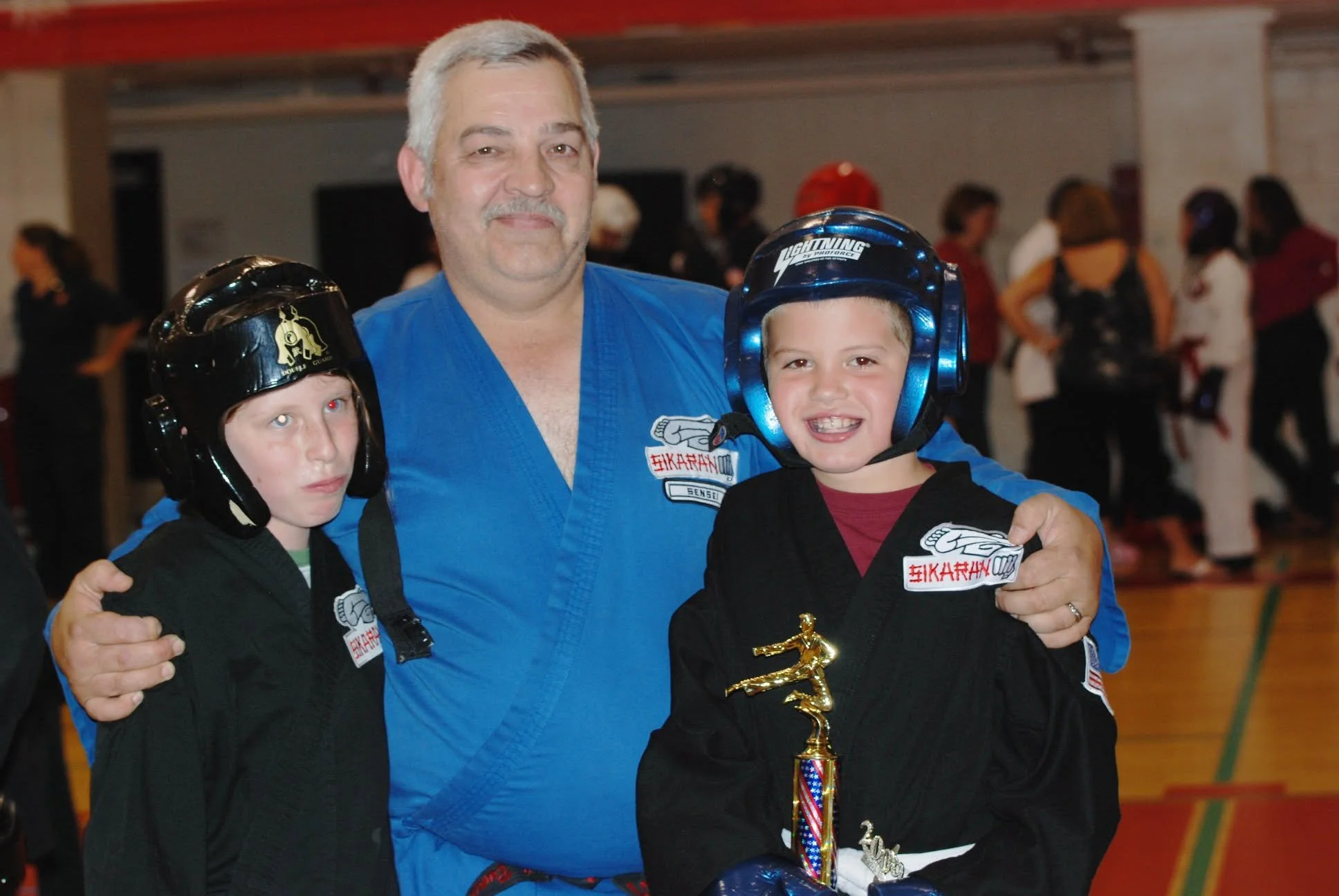
In this episode Jeremy chats with Sensei Joe Bump about his training, teaching, and student commitment over the decades.
Joe Bump - Episode 1166
SUMMARY
In this conversation, Joe Bump shares his extensive journey in martial arts, beginning in 1969 at the age of 12. He discusses the challenges and changes in training, teaching, and student commitment over the decades. The conversation highlights the importance of mentorship, community, and the legacy of martial arts, as well as the evolving expectations of students today. Joe reflects on his role as a senior instructor and the pressures that come with maintaining the traditions and values of his martial arts system. He also discusses the evolving landscape of martial arts, focusing on the financial challenges faced by schools, the importance of building a family-oriented culture, and the commitment required from both instructors and students. He emphasizes the need for communication with parents, the balance between profitability and passion, and the significance of community support in fostering a positive environment for learning and growth.
TAKEAWAYS
Joe Bump shares his early experiences in martial arts, starting at the age of 12 in 1969.
The significance of mentorship and the influence of instructors in shaping a martial artist's journey is emphasized.
Joe discusses the sporadic nature of his training during his youth and the importance of self-practice
The transition from student to teacher is explored, particularly Joe's experiences while serving in the military.
Joe reflects on the changes in martial arts training and student commitment over the decades.
Joe discusses the challenges of being a senior instructor and maintaining the legacy of his martial arts system.
The conversation touches on the differences in student dedication and expectations compared to previous generations.
Joe emphasizes the importance of teaching values over financial gain in martial arts.
The cost of participating in martial arts has significantly increased over the years.
Family involvement is crucial in martial arts, both for students and parents.
Communication with parents helps in understanding their children's progress and challenges
Profitability in martial arts schools is a complex issue that requires careful management.
Martial arts is not just about physical training; it's about building relationships and trust.
Dependability, commitment, and respect are essential qualities for black belts.
Financial challenges can be mitigated by understanding the numbers and managing costs effectively.
Teaching martial arts is a lifelong commitment that goes beyond just instructing techniques.
CHAPTERS
00:00 Introduction
01:11 Journey into Martial Arts: Beginnings and Influences
11:06 The Evolution of Training and Teaching
21:02 Legacy and Challenges in Martial Arts Today
26:24 The Rising Costs of Martial Arts Participation
27:48 Building a Family-Oriented Dojo Culture
30:26 Balancing Profitability and Passion in Martial Arts Schools
37:02 Navigating Financial Challenges in Martial Arts
43:33 Creating a Supportive Community in Martial Arts
47:50 The Lifelong Commitment to Teaching Martial Arts
To connect with Sensei Bump:
www.sikaranvt.com
Join our EXCLUSIVE newsletter to get notified of each episode as it comes out!
Subscribe — whistlekick Martial Arts Radio
After listening to the episode, it would be exciting for us to know your thoughts about it.
✅Subscribe to whistlekick Martial Arts Radio on the following platforms:
🎧Apple Podcasts: https://apple.co/3mVnZmf
🎧Spotify: https://spoti.fi/3yHVdHQ
✅You can find whistlekick on all social media platforms using the handle @whistlekick or visit our website at https://www.whistlekick.com or https://www.whistlekickmartialartsradio.com
Show Transcript
Jeremy (09:40.639)
Hey, what's up, everybody? Welcome or welcome back. Hopefully, welcome back to another episode of Whistlekick Martial Arts Radio. And on today's episode, I'm joined by Joe Bump. Joe, we've been getting to know each other a little bit over tournaments. I'm looking forward to our conversation, getting to know you better. And to the audience out there, thanks for being here. Thanks for spending some time with us. If you're new to what we do, please check out Whistlekick Martial Arts Radio.com. It's where we have every episode. This is episode I I don't even know anymore, eleven hundred and something.
Andrew will have that that plugged in. You'll know before I do. And you can find every single episode we've ever done with transcripts and links and all that good stuff over at Whistlekick Martialarts Radio.com. Now, if you want to go deeper into the other things we do, like the tournaments or our other events like Marshall Summit and Free Training Day, you can learn more about those things over at whistlekick.com. There's so much for
the podcast. We keep that separate. And with that, Joe, thanks for being here. Of course. Of course. Thanks for for spending some time.
Joe (10:46.188)
Hey, thanks for having me.
Jeremy (10:54.876)
You've been at this a while. I think we'll start there.
Joe (10:58.062)
Okay, yeah, I started in 1969.
Jeremy (11:04.754)
It's little while ago.
Joe (11:06.156)
Yeah, I was 12. so the problem there was that the temple and the dojo was in Laconia, New Hampshire, and I was in Bennington, Vermont. as a young
Jeremy (11:07.828)
Ha ha.
Jeremy (11:20.425)
Okay.
Jeremy (11:26.196)
For for th for those that don't know New England geography, those two towns are not next door. What is that? Hour and a half? It's three hours. Okay.
Joe (11:31.784)
No, about three hours about three hour drive. Yeah. Yeah. So by the time you go to the rest of Vermont and into New Hampshire and then up to Laconia
Jeremy (11:44.362)
'Cause there's no there's no good east west route there. Yeah. Okay.
Joe (11:47.287)
Right. Right. So it's a pretty good drive. you know, I would, I started with my father who was, he had been in it for a while and he played out in the backyard with me. And so he was showing me a technique and he asked me to try it and I did. And I hit him in the nose and his nose started bleeding. And that was kind of the beginning.
And so then he took me on my first trip over to meet Sansecardia, who was my instructor.
Jeremy (12:22.794)
Okay. So I I I just want to make sure I'm getting this right. He had already been making that three hour one way drive to this school. Okay. Okay. Okay.
Joe (12:30.296)
Well, he had been a and had been in Laconia, but he was only, I think he might've been a green belt or something. But, know, and he had gotten away from it for quite a while. So then, you know, he would just show me some basic stuff out in the backyard. But I was just like, you know, 12. so anyway, he took my brother and I.
Jeremy (12:52.884)
Yeah.
Joe (12:59.83)
and friend of ours with him and we went over to actually look at it to go to a tournament that was in Laconia. But we worked out the night before for like three hours and that was intense. So my brother and his friend, that was the only time they ever did anything. They never came back. But that was like the bug hit me, I guess.
Jeremy (13:20.074)
Mm.
Jeremy (13:25.244)
W what was it about that? 'Cause it tw doing anything for three hours when you're twelve years old is that's in it's a lot.
Joe (13:32.719)
It was pretty, yeah. Yeah. It was pretty intense. I could barely move the next morning, but, we had such a great time. He was such a great instructor. Sentai, Sentai cardio was, was a great instructor. And it just so happened that, because it was a tournament, that was the first time I met, master log rails, which I didn't even know who he was. And I was just.
there and I'm not sure whether, since it was trying to see if we were going to stay or not. So it was pretty intense. A lot of exercise. we exercised for, I don't know, probably an hour or so. And, and then some basic, Blocks and strikes. And so mostly it was just watching, observing, seeing how things were and kind of,
the camaraderie and everything that went with that. So it was such a great time. This was, like I said, in the sixties and 69. So it was quite a different world back then.
Jeremy (14:31.23)
Hmm.
Jeremy (14:39.412)
Yeah. Yeah, I don't think anybody would attend a a three hour class today.
Joe (14:44.14)
No, and no gear, no, nothing like that. learned, no, everything was about control. And so, I can barely remember why, there was anything particular that made me want to stop and stay, but I just, I fell in love with it right from the minute I was there. So, yeah.
Jeremy (14:48.308)
Right. Gear didn't exist in sixty nine.
Jeremy (15:10.474)
She did. But she did. Okay. And so what did the next period of time look like? Three hours is a a logistical nightmare.
Joe (15:20.984)
So what would happen is I would get as much as I could that I'd go home. I may not come back to the dojo for three or four months, because I mean, I was in junior high. So I would go home and practice everything that I had learned. And I had a notebook. I carried a notebook with me all the time. And so I would write everything that I learned during that time period. And then I would go home and I would practice it.
And then the next time I would get an opportunity, whether it was a break from school, I'd go and spend a week and sleep in the. Yes, I'd sleep in the dojo and take a, take a bath in Lake Winnipesaukee and those kinds of things. then anybody that walked in the dojo, I was the dummy for whoever came in. So when the black belts came in and, and anybody came in to train, but I watched and.
Jeremy (15:57.232)
Okay. It's kind of the old way. Yeah, the real old school.
Jeremy (16:11.338)
Mm.
Joe (16:18.668)
I watched how they did things. And then I would take and every time I went over, Sensei would be like, all right, what can you do? Write down what forms you know. Write down what techniques you can do. And then he'd go over them. And if it was satisfactory, he might show me something new. And so as the years went on, my notebook got pretty full. And so...
Jeremy (16:38.674)
Mm.
Jeremy (16:46.09)
Mm.
Joe (16:48.238)
But I did a lot of the training on my own until I got, you know, obviously old enough to start going myself or spending more time. But mostly it was, you know, vacations and a week here, week there, tournaments, seminars, things like that.
Jeremy (16:58.238)
Yeah.
Jeremy (17:10.761)
What?
What kept you focused on that? Because you know, we're we're talking kind of out of sight, out of mind, and you you work with kids, and even even back then, it's hard to maintain dedication to something that is sort of infrequent. Was your dad pushing you to practice at home? How how did that how did that dynamic happen?
Joe (17:36.438)
Not really. It was pretty sporadic. So from 69 to 75.
You know, I probably may yell about, I over those five or six years. you know, I would go, if I, I would go when I could and I would learn when I could. And then I'd forget things, you know, and then start over and go back and, this and that. wasn't until, I don't know, when I got in high school, I guess, I really started getting a lot more involved.
Jeremy (17:49.223)
Okay.
Joe (18:13.986)
You know, I can remember going over and, Sensei's first school, we left the first dojo, he opened another dojo. And so I would go and, and stay. And then I started meeting a lot more people. when I started, he had one black belt who was a Nidon who was a Sensei. That was Mark Payne from Burlington. And then he had another guy.
that was getting ready to be promoted to showdown. They went to Puerto Rico. And so that was interesting because that's where Grandmaster was. And so my first time in Puerto Rico was to basically see how they got promoted. And so that was a quick trip and it was a fun trip for me, like during my, I don't know, maybe a freshman or sophomore in high school, but.
But it was a nice vacation over the summer. And then I didn't really get involved until I became, I think, a junior in 74. Well, for one thing, I could travel more. Yeah, you know, and I got older. And so then I had been to a few tournaments. I had seen how things went. I won a few trophies.
Jeremy (19:16.702)
Yeah. Yeah.
Jeremy (19:26.89)
Okay. What changed then?
Jeremy (19:32.424)
You could drive, sure. That makes sense.
Joe (19:43.815)
since they would come and get me and he would take me with him and we traveled to, throughout the play. We went to Connecticut, we went to Jersey, we went to, mass. We went to a lot of places for tournaments and I met a lot of people. met, well, I went to one tournament where Bill Wallace was there and Chuck Norris and all the big stars. And I got to see all those guys. I met Grandmaster Pai.
Jeremy (20:06.099)
Mm.
Joe (20:13.272)
who was a bodyguard for Bruce Lee, which was pretty cool. And so I started learning some other things. I went to seminars with Pailam Fire Dragons and started learning some Kung Fu and I started learning some things from Master Olson who taught Shaolin Wushu. And so they were all part of our system. And then I think I made...
I know, I progressed to like Brown, first Brown maybe. And then I graduated high school. And so from there, I joined the army. As soon as I graduated high school, I joined the army.
Jeremy (20:47.082)
Mm-hmm.
Jeremy (20:58.824)
Had that always been the plan? Okay.
Joe (21:00.908)
No, but that was kind of funny because I went with a friend of mine who was going to join and I ended up joining with him. Shocked everybody. Well, they didn't know what to think of that. So, you know, this was in the seventies. It was, it was the thing to do, I guess. You know, I mean, there was really nothing here. I worked in a factory for
Jeremy (21:10.388)
Hmm. What did your parents think of that?
Ha ha ha.
Jeremy (21:20.552)
Yeah.
Joe (21:29.738)
12-hour shift for minimum wage and and so there was a lot of You know that I had a good recruiter for the army and he talked about the adventure and about travel and this and that and so that was That became the plan. So actually I joined in my senior year and Then I joined the National Guard which everybody was doing that I went to basic training over that summer came back and
It just wasn't what I wanted. So then I immediately joined active army and spent the next 20 years in the active army. So from my martial arts perspective, I trained everywhere as I went. I taught. I didn't train so much as I taught. So I had a book and I had a video and those are what I used to train with.
Jeremy (22:02.826)
Hmm.
Jeremy (22:16.084)
Hmm. Okay.
Joe (22:28.526)
And for 10 years, I traveled throughout the world and taught people that wanted to learn just the things that I knew, which I didn't know a lot. I thought I knew a lot. I didn't know anything. And so, you know, I traveled to Germany. I taught in Germany. I traveled all over the states. Plus I had my military career. And then in 80,
84, I think, 84, 85, I became a recruiter. And he sent me back to Burlington to be a recruiter and then eventually to my hometown as a recruiter. And that's when I really started my martial arts. I went back to the dojo and got promoted to black belt and then opened up my school.
here in Bennington in 84. And then that's really when we started. And so, and then eventually I went back to the army because I got, my time was up. But I went back and finished my career and did 20 years in the army and then came home. So in 95, I retired, but I have to, I have to back up a minute. So in 93,
I was home on vacation, home on leave, and I got in an accident in a pool, diving into a pool. So I was going to dive into this pool and there was a young kid that I didn't realize was there that came up out of the water. It was probably six or seven as I was beginning to dive and I noticed him. And so I dived over the kid instead of a shallow dive. I did a deep dive. I hit the bottom of the pool.
Jeremy (24:07.252)
Mm.
Joe (24:28.526)
and fractured my neck, C2 and C3. So I went to, of course, the doctors and all that stuff. so the military doctor, and I had, I had a really good doctor, but she told me that you'll never do martial arts again. So for a year, a over a year, I did physical therapy, eventually healed all that stuff.
Jeremy (24:31.578)
Mm.
Joe (24:58.476)
retired, came home. For two years I didn't do anything. And then in 97...
I said, that's I can't not do martial arts. So then I opened my school again. I reopened the school and we've been open ever since. So. I've never had an issue. I guess nothing serious. mean, I I've been in pain, but but I've just continued from there and so. You know the years just they flew by. And then.
Before I realized it, I was a senior black belt and we lost Grandmaster, I think in 2001 and then lost my sensei a year later. And so both of my teachers were gone. And so then by then I was a six, six, I think or seven.
Jeremy (25:55.25)
Mm.
Joe (26:07.448)
six maybe anyway and so then carry down from there and actually my best promotions came from my students so all my all my black belts and my teachers contacted senior belt in the system and said we are going to promote our sensei and so they all got together as a group and
Jeremy (26:29.94)
Mm.
Joe (26:35.81)
Did the certificate, had it signed, and then promoted me. So, yeah, so that's worked out pretty well. Now, today, I think I'm the only active school still running. There are other people out there, but there are no schools that are actively running. Since the big schools were in Puerto Rico and when the hurricanes hit there and wiped everybody out,
Jeremy (26:37.93)
Mm.
Joe (27:05.484)
They never regrouped. COVID came along. A lot of people quote from COVID. And so anyway, now here we are 50 something years later, 57 years, I think I've been doing this. And I am the senior belt in the system as a Q-DON. And I think I'm the same rank as grand master, but I'm not sure. But anyway, we only have one grand master. so.
Jeremy (27:10.836)
Yeah.
Joe (27:36.111)
There's a whole story involved on how he became Grandmaster and who Grandmaster is, but it was decided some years ago at a Hall of Fame dinner, actually, when Grandmaster was inducted into the Hall of Fame. We had a meeting of all the black belts in the system. And at that time, and this was probably...
I don't know, 1999, maybe 2000. Anyway, it was decided that if anything should happen to Grandmaster, who would take over the system? And so they wanted my teacher, Master Cartier, to take over. And he said, I would rather let one of the logger have a logger rails in the system since it's a logger rail secaron. And so it was decided that Grandmaster's son,
would become the next Grandmaster. And so he had two sons and neither one of them wanted to be Grandmaster. So then it was decided by Boat that the oldest brother would become Grandmaster. And so as it turned out, Grandmaster did pass. And so now, Grandmaster Lawrence Labarraos became Grandmaster and his brother Mark became the Master.
And so they are in California and, to my knowledge, other than in name, and they're not doing much, they're not visiting. They're not doing much as far as, schools or, or, you know, other than that. after COVID, I was the only one I think that reopened. So even though we have.
Jeremy (29:30.282)
Mm.
Joe (29:32.974)
We have a senior black boat in New Hampshire. We have another one in Puerto Rico. We have some more throughout the country, but none of them have opened to school. And so hopefully that will change sometime.
Jeremy (29:48.454)
D does that does that feel pressured pressuring to you? If you're if you're the la kind of the last school standing, there's a there's some gotta be some weight to that.
Joe (30:02.006)
It is. It's tough. It's tough trying to communicate with Grandmaster. It's tough trying to communicate with any of the other teachers. So everyone comes to me, I guess. So I have good teachers. I have three.
Jeremy (30:20.682)
Mm.
Joe (30:25.25)
maybe four black belts that support me every day in school, in the class. Two are newly promoted showdowns and they're super. And then one is my senior belt who was who Leo Beatty who has been around with me since I can't remember when, but he's a, I just promoted him to
Jeremy (30:28.49)
Mm.
Joe (30:53.422)
Seventh and So he's the senior instructor and then I have I have others I have three or four other black belts that come when they can and assist me but but yeah, it's We were kind of on our own I guess So I'm teaching the system the peer system. I've always been in this system and so although I teach some of the kung fu stuff and some of the
Jeremy (31:11.444)
Yeah.
Joe (31:23.694)
Shaolin those are in addition Those are students that I think Have the ability to do that. So not everybody can do kung fu. Not everybody can do the Is flexible enough to do that? I'm certainly not flexible enough to do it anymore, but I can teach it and so, you know for me and I'm You know, I'm not a young pup. So, you know, I'm 69 this year So but I'm still competing
Jeremy (31:52.83)
You're still getting out there doing it. I've s I've seen ya. I've seen ya. It's awesome. Setting a good example.
Joe (31:54.511)
Yep. So, you know, so yes, it's a little daunting at times. You know, especially trying to keep the legacy and trying to teach the hierarchy and, you know, the system and the history and all of that. Today's students are a lot different than they used to be.
we're not anywhere as near as, as hard and as painful as we used to be. Cause you can't afford it. Can't afford to be.
Jeremy (32:32.818)
It's it's a special person these days that sees the value of doing hard things early. I think I think a lot of us see it, you know, as you bring people up through the ranks, they start to get it. But how many how many
How rare is a Joe Bump from 1969 today, a kid who's gonna even care past one visit. I mean, because back then you were one of three that that made that first visit. And now I I I can't even imagine I don't think I I you know, and I I love my students, but I don't see any of them traveling three hours even occasionally to come train with me.
Joe (33:03.992)
second
Joe (33:21.738)
Absolutely, that's absolutely correct. Even my black belt. I have a black belt who's in Manchester, New Hampshire, which is not far, but I might see him every three months. I might see it once if he happens to be coming this way.
Jeremy (33:29.322)
It's not that far.
Jeremy (33:40.104)
And if he's listening, you know who you are. You're you're you're getting called out here. It's time.
Joe (33:42.991)
That's right. know, but commitment is not like it used to be, you know, and let's face it, that's what it takes. So, you know, I have always said that out of, you know, out of a hundred students, one may become a black belt and then it just grows from there exponentially. you know, today,
Parents want their kids to get promoted every week and they think that, you know, that's what it's about and that's not what it's about. I've never been one to make money from the system. you know, we don't charge for tests, we don't charge for belts, we don't do any of that kind of stuff. I'm here to teach. And so I have some great students, I have great parents, which really makes a difference.
The ones that stay are the ones that are family oriented and understand how the system, how we are. And we are a family oriented system. So we do.
Jeremy (34:51.816)
What wh what do you what do you mean by that?
Joe (34:54.094)
So we do Christmas parties together. do, we're getting ready to do trunk or tree. we, we talk, I spent a lot of time talking to my parents. We talk about what's coming up for the year. What, can we afford? What can we not afford? So I try to go to as many tournaments as I can, but I don't make it mandatory for any student to go to a tournament because it's not me paying the bill. It's mom and dad. And so when.
You let's face it, you know, back in the day, back in the seventies, you could go to the tournament for 20 bucks and, you know, do whatever. I mean, it's just not that way anymore. I have a family.
Jeremy (35:38.686)
But to be fair, twenty bucks back then was was a lot more than twenty bucks today.
Joe (35:45.123)
Yep. But I have a family of five. And, and, so, you know, I have dad and, and four kids, that are in class. So for those five to go to a tournament, you know, that's five or 600 bucks. Yeah. And so, you know, for, and then you got to travel. Hey, let's face it. Price of gas, food, lodging.
Jeremy (35:47.508)
Yeah. Yep.
Jeremy (35:58.943)
Yeah.
Jeremy (36:03.498)
That's big money. Yeah.
Jeremy (36:09.3)
Mm-hmm.
Joe (36:14.594)
The whole to bang. so anyway, we, we all go to tournaments as best we can, you know? And so I leave that up to the parents. But when I say we're family oriented, we talk about that. We talk about where are you, where are your kids? Where do you want the kids to be? you know, why aren't you getting promoted? Why isn't this one getting promoted? why is this one ahead of you? Because.
You're not training, you're not practicing.
Jeremy (36:46.472)
Right. Right. The e the answer to every one of those questions is because they're working harder than you.
Joe (36:51.67)
Exactly. And sometimes that's hard. And then on top of that, now you've got soccer, you've got football, you've got, you know, all the sports. And so, well, you know, so I don't say, I say to a parent, okay, look, you're only gonna be here half as half as much time. So I only charge you half as much in in payment for classes or
Jeremy (36:58.314)
Yep. Yep.
Joe (37:20.418)
Bring your 12 year old to the adult class after soccer is over and after everything's over and they can still learn. You know, especially like I've got a green belt that is in soccer. Who just falls in the same day as class. And he's like his mother came to me actually this weekend and said. You know soccer games and blah blah blah. What can I do?
Jeremy (37:23.818)
Mm.
Jeremy (37:40.15)
Joe (37:50.243)
Well, bring him to the adult class. He'll learn more. It'll be harder on him. And, you know, he'll become a better student. And so, you know, those are things that we do. But I think communications is the biggest thing. I talk to my parents all the time. We talk about, well, for instance, we had a...
a women's self defense class. And at the end of the class at the graduation, they all brought a dish in. We had a buffet dinner, I mean, at the dojo. And I was like, are you kidding me? You know, it says after class was all over. And they just, that's, those are the things that make it worth my time. And, know, I make enough money to pay for my school, pay my rent, pay my bills and
Jeremy (38:36.65)
Yeah.
Joe (38:48.19)
I'm not trying to make any money. I'm not trying to become rich off my school. And so my students know that, my parents know that. And I think my teachers know that. And we talk about that. So.
Jeremy (39:05.744)
Is that because this is, you know, you've you've been around long enough, you know this is probably the biggest debate, other than maybe junior black belts, the biggest debate is should I make money on my school? Should my school be a job? Or should I or is my obligation in a different way? What are your thoughts?
Joe (39:26.846)
If your community can support you and that's the only thing that you need to do is that job, then that's a tough road. Personally, I don't think that the average family can afford to pay you to become a job. So if I had to...
Jeremy (39:51.434)
Mm.
Joe (39:56.247)
I guess break it down to what do need to make in a week to survive. Now break that up by how many students you have. the thing that Sensei always taught me was you have a core students. So let's say your core is 10 and you need to do $300 to make your rent. Well, obviously that's $30 a student.
Jeremy (40:07.369)
Mm-hmm.
Jeremy (40:25.225)
Mm-hmm.
Joe (40:26.198)
Now you've got insurance. Now you've got utilities. You've got this and that. So now that goes up. So now for your 10 students to pay for your school, this is what you've got to charge for a fee. When that fee becomes so high that the parents can't support it, then you start losing money. And when you start taking money out of your pocket, out of your wallet every month to pay
for your studio and you're in trouble. you know, it's nice if you can do it. I could never see, I could never support my family just from the school. I always support them. Yeah.
Jeremy (41:11.324)
It's it's tough. It is it is so tough. And and you know, just to to school owners out there that might be watching or listening, if your school is not profitable, you're not alone. In fact, roughly half the numbers vary, but roughly half of schools are they float just above and below that break-even. And the only reason they float is because there are things that they forget to include. Number one, and number two, the
the school owner doesn't consider their time in the equation. Right. So you're I school schools that are are not full time profitable, you're not alone.
Joe (41:53.401)
Right. And then when you kick in equipment, so, you know, I encourage my students to buy their own gear. However, I have gear in case they can't afford to buy it or, you know, and they want to go to a tournament, but they don't have the gear. Well, I have gear, but you have to buy that gear, uniforms. You know, I give every student,
When they sign up and pay their first month, I give them a uniform. So I buy that at wholesale. I know what it costs, you know, for a uniform. I can absorb that. Not everyone can do that depending on what you're getting for uniforms. But if you have, so I have three or four different people that I buy my gear from and I compare prices all the time, but the price of gear is going up. The price of uniforms are going up.
And then belts, I mean, it all, it all comes in. So, and then patches. So the first month you get a uniform, the second month that you're there, you sign, you pay your next month's dues, you get a patch or you get whatever you need to put on your uniform. Now you become part of the school. So, and that's the other thing we make that a big deal. now you belong to the family. Now you're in the, you're in the school, you're in the system.
Jeremy (42:55.658)
Mm-hmm.
Joe (43:20.728)
So, you know, we, I've lost a fair share of uniforms and stuff, but I've also had parents that come back and said, I just can't do this. Can I give you this uniform back? Nine times out of 10, it's been hemmed, it's been cut. It's been, you know, why don't you just keep it? You know, it's a souvenir. But at any rate, all that's involved. And then as it goes on, now you've got training equipment.
Jeremy (43:38.836)
Yep. Yeah. Yeah.
Joe (43:50.635)
I've got Bob, I've got wave masters, I've got all the stuff I need for kicking, I've got the target. know, exactly. All my floors. You know, you can buy floor squares pretty cheap, but to ship them is crazy. It costs more to ship them than it does to buy them.
Jeremy (43:55.922)
Yeah, those are not cheap. God, the shipping on alone.
Jeremy (44:11.602)
I I I I I I've got I've got a friend who teaches at a school in New Hampshire and he and his instructor who who owns a school, when they did their mats, they drove I want to say it was to Michigan or something from New Hampshire, because it was cheaper to rent a truck, drive to Michigan, pick up the gently used mats, spend the gas, still pay for the mats, of course, drive back hotels, food.
than it was to order new mats.
Joe (44:42.316)
That's absolutely correct. When I put new mats, I just opened my studio a year ago, my new one, and I got a great deal on it. So I mean, all that is great. I got twice as much space as I had a little less than half of what I paid before. And, you know, I mean, that worked out great.
Jeremy (44:56.915)
Okay.
Jeremy (45:02.918)
Yeah. Those are the right numbers.
Joe (45:05.526)
Yeah, mats when I got ready for the mats it was 600 shipping just for the shipping to get the mats here, by fedex or ups and I checked three or four different places the price of the mats Are good but it's the shipping and like you said unless I wanted to run a truck And drive to new jersey or drive to wherever to get him
You know, and I got them from Texas actually, but, that would have been quite a drive. So, you know, and of course they never mix and match because you buy from this company and you buy from that company is supposed to be the same cut, the same mat. never fit. So anyway, you have to deal with it, but that's all part of that equation. And so when a, when a school owner thinks that he's going to be able to survive.
Jeremy (45:38.396)
It we tr yeah. Yeah, for sure.
Joe (46:02.784)
on his school, he's got to look at his numbers. So how many students? you know, I look at the Taekwondo guy just beside me, who on any given class, he's got three students, or maybe four students. And I wonder, how can you afford to do that? He's got the same space I have. So I have to think that he's paying roughly the same amount of money I am.
Jeremy (46:17.074)
Mm.
Joe (46:31.47)
I mean, how could he do that and run all the time? So that was the other thing. Back in the day, I used to run classes six days a week. I don't do that anymore. know, I mean, God bless my wife. was happy about that. You know, we went to class every day of the week, except Sunday. We had classes. And then we had, we didn't have black belt classes so much, but we had she highs, which are gatherings.
Jeremy (46:39.466)
Mm.
Joe (47:00.864)
And so we did that. So now I do a black belt class once a month. I do classes. I have four classes that I run basically through the week. And then I have a women's self-defense class and I have my black belt classes. But I'm in control of that. I know what, what my schedule is. And, you know, I'm retired, but I'm a busy man. I do more since retiring than I did when I was working all the time.
Jeremy (47:25.066)
Sounds it.
Joe (47:30.892)
But now I'm in control of my schedule, so I can look at that and find the time to do things. So.
Jeremy (47:37.854)
But you sound happy about it when you talk that there you know, y you you seem not everyone enjoys being busy, but it you seem to be someone that does.
Joe (47:47.149)
Well, I say busy, I'm busy, but I also am control. have, I have control of that. I have control of how busy I am. Right. I can, I can say I'm sleeping in, you know, or I'm, don't have to get up. And when I do, the only boss I have to answer to is in the mirror. When I look in the mirror and I look at my boss, I say, okay, what are we doing today? We decide, you know, and
Jeremy (47:55.988)
So you're not too busy.
Joe (48:16.714)
And same thing when I look at my schedule for the week and I'm involved. So, you know, of course I'm a veteran, so I'm involved in the American Legion, very involved in American Legion. And that keeps me busy. I'm involved in my community. I have my school. So there are things that keep me going. I mean, I can't sit down in my recliner and just not do anything.
Jeremy (48:29.77)
Mm.
Joe (48:47.52)
I would just waste away. So I try to get out there and be involved. So. You know we we travel, we travel to the tournaments we travel to wherever we have seminars we have. I have gatherings we gather at least once a year. As a system. And I get my my instructors so I have a one instructor who teaches.
He only has one or two students, but he teaches out of his house. And so he'll come and see me. He'll bring his students and we'll see how they're doing. I have another instructor that, you know, teaches a couple of people and he'll bring those people. And so we gather at least once a year as a school. Everyone comes and we do our promotions and we do those kinds of things and we do our tests and, and everything that we're going to do, we plan for that. But we also in between there, we have all our, our get together.
And we try to get together, even if it's just a picnic at the park. We'll try to get together every quarter or every, as often as we can as a family and as a group. Not to work out, just to spend time together.
Jeremy (50:05.725)
What do you think that does for the culture in your school? Not every school does that.
Joe (50:09.928)
well, for one thing, all the parents know each other. When they come, they bring their kids, they spend their time off the mat talking and, and, you know, gossiping, whatever they do. But they also can look at little Johnny out there and say, you know, he's, he's done this. He was trying this at home. You tried that and yeah, you know, Jack's doing this and he's doing that. then.
Jeremy (50:13.97)
Mm.
Joe (50:38.498)
they know each other, plus the kids know each other. And so when they see each other at school, it's not just passed by in the hallways, hey, what's going on? know, how you doing? And so that, know, not that we don't have our issues because we do, kids are kids, you know, and when kids pick on each other, I hear about it. But it's just another part in that culture.
Jeremy (50:48.744)
Mm-hmm.
Jeremy (50:57.512)
Yep. Yep.
Joe (51:03.758)
It makes them train better, makes them understand each other. When we go to tournaments, they are cohesive with each other. They look at each other. They help each other out. If somebody had a bad day and they dropped a weapon and they, whatever, there's somebody right there to go over and say, hey, look, it's not a big deal. We'll get them next time. Or when you get hit and you got hurt at the tournament.
There's somebody there to come over and take care of you. The parents, you know, it doesn't even have to be their kid. They're right there to make sure that are you okay? Everything all right? Is there any problems or any issues? Cause I'm busy. I'm busy in the ring. You know, I'm busy judging or whatever. And so I've got a parent that's making sure that Susie gets in her ring where she belongs. I've got a parent that has the list of rings and make sure that
Jeremy (51:35.594)
Mm-hmm.
Jeremy (51:51.092)
Yeah.
Joe (52:03.394)
You Ryder doesn't miss his weapons because he's in the wrong ring. So I have somebody that does that. I have someone else. Right. And that's what it's called. And that's what makes a difference. Cause let's face it, we go to tournaments, all of my black belts are judging. I'm judging who's with the students. You know? And so I've got at any given tournament, whatever parent is there, they know all the kids.
Jeremy (52:10.246)
Everybody's taking care of each other. That's great.
Joe (52:33.506)
They keep them together. make sure they're in the right uniform. They make sure their gear is together. They make sure they get to where they got to be. So that's, that's a big difference. That's thing off my shoulders or my teachers, because somebody's not running over to them while they're trying to judge and whispering in their ear and saying, that's what I'm supposed to do. There's somebody there to take care of, you know, and,
Jeremy (52:53.938)
Right.
Right.
Joe (53:02.582)
And so that makes a big difference. then in the, the dojo, if I have a, you know, let's face it, if I have a kid that's just not there, it just is, he might be standing there, but he's not in school. He's not in class. He's somewhere else. Mom is right there or somebody else is right there to make sure. I have moms that can come and drop their kids off because they got an appointment and they can say to another mom that's there, you know,
Jeremy (53:16.424)
Yeah.
Joe (53:31.843)
I'll be back to pick them up. You know, can you, can you watch out for him? And, you know, I've had, I've had parents that weren't parents of the kid that has tested and failed. And the parent that was there said, well, this is what he did. And, you know, he wasn't, he wasn't where he was supposed to be. He wasn't, he, just didn't have it.
Jeremy (53:33.098)
Yeah. Keep keep keep an eye on for me. Yeah.
Jeremy (53:57.214)
Yeah. Yeah.
Joe (54:00.547)
He didn't do what he's supposed to do. And so that's why he didn't get promoted, you know, or, or whatever. You know, I have a, I have a young man whose brother and sister are both have surpassed him because he will not get his stuff together so he can get promoted. And so they all joined together at the same time, but yet he's still a white belt and they're yellow belts. And, you know, and it's,
Jeremy (54:18.356)
Yep. Yep.
Joe (54:28.45)
Kind of cool because their older sister sat there and watched and she went home and told mom and dad, listen, this is why. Cause I watched him in class. and what a difference that makes. so, but you know, it's, it's, there's a lot more personal intervention than if you had, if you didn't have that culture and it was just a bunch of strangers coming in and taking class.
Jeremy (54:42.026)
Mm.
Jeremy (54:58.227)
I can see that.
Joe (54:59.554)
So it makes what a difference it makes. When I started a women's self-defense class, they're all strangers. And by the end of the six weeks, they're all sisters. And it's like, because they've been through it together. And they started off, maybe this one was timid and that one was overbearing. And now they're all doing what they're supposed to do. And they all are happy about their class.
Jeremy (55:11.306)
Mm.
Jeremy (55:14.666)
Yeah.
Joe (55:28.302)
So that makes such a difference. mean, and that's something that was ingrained in me so many years ago when I would go to the dojo only going every so often. But when I went, I was always welcome. There was always somebody there to put their arm around me and say, come on, let's work on this. You know, when I got tested for black belt,
We never knew we got there and then all of sudden you find out you're going to be tested or maybe you didn't know until you walked into the door and there was somebody there to. You got this, you know you go and let's let's practice this or let's work on this because they knew that you were going to be tested or you know and you're wondering why. Why is this?
Jeremy (56:01.257)
Mm-hmm.
Joe (56:18.254)
showed on coming over to me particular to help me with this form or something because he knew I was going to be tested. And so we've carried that on as a family and so we travel together. We you know we work together. We do everything together.
Jeremy (56:37.354)
That's great. I I I'll ask this as a question, but I already know the answer. At least I think I do. Do you see do you see a scenario where you stop teaching?
Joe (56:50.444)
Well, I mean, eventually maybe when I'm, you know, when I'm too old to do anything more, but not really. As long as I can walk and talk, I guess, you know, I can go on the floor and not have to do anything, which is kind of nice. Now I just walk around and look important. That's the beauty of being the master, I guess, you I can never not teach. I don't think. I mean, I would have to be not capable or not able.
Jeremy (57:05.908)
Yeah.
Joe (57:21.218)
to go.
Jeremy (57:21.576)
I I had a feeling.
Joe (57:27.34)
I have a couple of people. One is my granddaughter, who I am mentoring to eventually take over the school. So my granddaughter, for instance, is, she is the part owner of the school. she's, she's on the lease. She's on, she's involved in all the finances. She's involved in, in everything that we do and she's learning. So, you know, she.
Jeremy (57:37.182)
Mm.
Jeremy (57:46.665)
cool.
Jeremy (57:53.416)
Hmm. That's awesome. That's
Joe (57:57.945)
She's put up with a lot because she, I am her only teacher. And so to the black belts who watched her come up through quickly, we're like, well, you know, how can she be so, how can she be so ready so quickly? Well, because she only has one teacher and that's me. I know she, she can put all of, you know, she gets all of my knowledge at one time and she practices. So now.
Jeremy (58:02.376)
Mm.
Joe (58:27.96)
She's one of my seafoods and she's learning the system, not just our system, but the Kung Fu system and the Shaolin system. And she knows the history and she's involved in the school. So will she take over? I don't know. She's young. She's 18. You know, she, or no, I'm sorry. She's 21. She just turned 21. So.
You know, she's, she's got a ways to go, but so do I. I don't see myself backing out anytime. You know, like I said, unless something happens and I can't physically do it, but, I'm going to do as long as I can. You know, so as long as I can get there and walk around and.
and do what I have to do and coach and teach. That's what I'm gonna do.
Jeremy (59:30.986)
I don't cool. I if people want to get a hold of you, you know, maybe a website for your school or socials or emails or anything, how how would they find you?
Joe (59:31.864)
So.
Joe (59:42.383)
So I'm on Facebook at Sikaran Vermont, actually that's spelled out S-I-K-A-R-A-N-V-T dot com. That's our website. We have a full website which is pretty interactive. I'm on Facebook as either by name, by Sikaran Vermont, by Monty Togratty Center. You can find me on Facebook.
And then my grandson keeps me on other ones, Twitter, all them other social sites. But that's one way. Of course, I'm always available by phone, by my cell phone. Sometimes even if I don't answer, leave a message, I'll call you. So that's 802-733-4101. And so I've had that number for years.
We are on the Bennington blotter and a lot of Bennington sites as well. yeah.
Jeremy (01:00:51.124)
You're around. You're easy you're easy to get a hold of.
Joe (01:00:54.658)
Yes. Yep. So we've been that way for quite some time.
Jeremy (01:01:00.884)
Well, you know, Joe, we've we've we've covered a a number of things today and I'm just you know, w how do you want to close? How do you want the audience to think about our conversation today? What takeaways or
Joe (01:01:12.931)
Well.
So, you you never know who you're talking to. So when you're talking to an old guy that you may think is just somebody.
that's interested in your business. Maybe take a minute to think about what does this old guy know? You know, how long has he been around? I go to tournaments, I see a lot of young black belts that.
to me, you don't, it's not the same as it used to be. So show some respect, show some, something, this guy's been around a long time. And so obviously, if you see someone that's wearing, whether they're wearing an obi or not, but they seem to know what they're talking about, they look like they've been around for a couple of days, then give them that respect. And don't...
you know, I've had people come up and say, well, just what bell are you? Why? What does it have to do with anything? You know? I mean, is there something you want to know? Just ask me. If I don't know, I'll tell you, I don't know. you know, to me, it's just because you're a black belt doesn't not mean anything. It means.
Joe (01:02:42.03)
You've been around a little bit, you have to have the respect and dignity that goes with it. Remember where you started. So I have always thought it's a journey. And so you start at the bottom of the mountain and you want to get to the top. And the more you climb, the harder it gets. But when you reach the point where you don't think you can go on, look over your shoulder. Look how far you've come. And now it's not so far to the top.
and get back in there, but respect those that have climbed before you. So I guess what I want to say is what I want people to think about is martial arts are a commitment. And for those that have been at it for a long time, it's more than just dragging my body to the dojo and teaching. It's about commitment. It's about dedication. It's about
Jeremy (01:03:16.266)
Mm.
Joe (01:03:42.115)
Dependability. I require my black belts to have three things. Dependability, commitment, and respect. Be dependable in case I get sick and I can't come to class and I need you to teach for me or I need you to come and help me do something. Be dependable. Show respect and receive respect. Just because you walk onto the floor,
You haven't earned anything. You have to earn the respect of your students. They respect you and you respect them. Because without them, you wouldn't be there.
and then be committed to your journey. Those are things that I think a black belt should have. And so that's my philosophy.