Episode 1168 - Stephanie Burnham
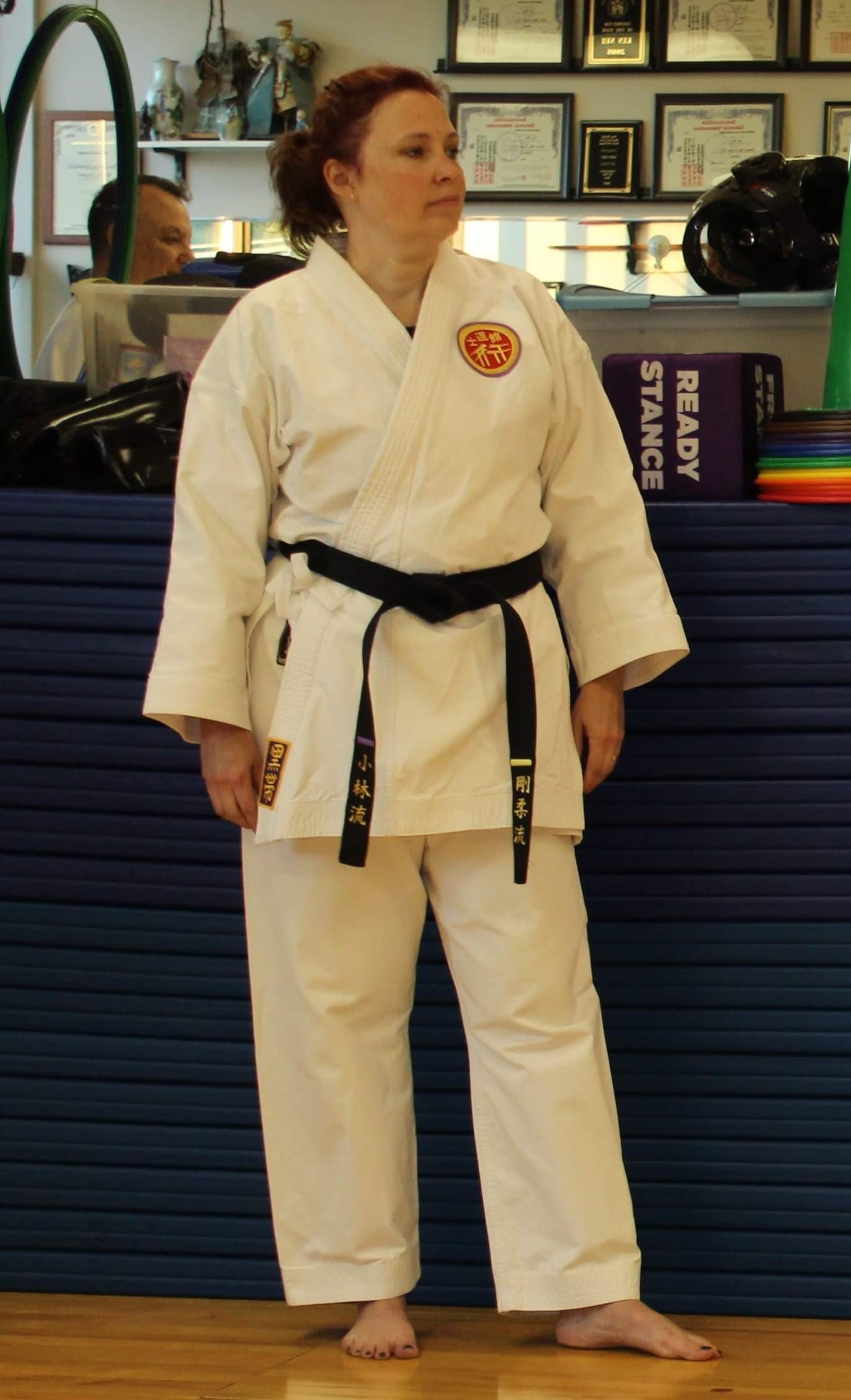
In this episode Jeremy chats with Stephanie Burnham and they discuss her unique journey into martial arts, starting at the age of 35, and how her legal career intertwines with her martial arts practice
Stephanie Burnham - Episode 1168
SUMMARY
In this conversation, Jeremy and Stephanie discuss her unique journey into martial arts, starting at the age of 35, and how her legal career intertwines with her martial arts practice. They explore the importance of self-discipline, confidence, and community in both fields, as well as Stephanie's transition from student to teacher in the dojo, highlighting the challenges and rewards of teaching martial arts to children. Stephanie Burnham also shares her experiences in teaching martial arts and practicing law, emphasizing the importance of respect, the value of teaching experience, and the unique perspectives brought by neurodiverse students. She discusses how teaching enhances understanding and confidence, the challenges of engaging students, and the therapeutic benefits of martial arts as a stress relief. The dialogue also touches on the adaptability required in teaching methods to meet diverse student needs. In this conversation, Jeremy and Stephanie discuss the importance of personalized teaching in martial arts, emphasizing that the best instructors make every student feel valued. They delve into the critical topic of succession planning, particularly in the context of martial arts schools, highlighting the need for a structured approach to ensure continuity and legacy. Stephanie shares insights on navigating business succession, the challenges of planning for the unexpected, and the value of having a solid plan in place for both instructors and students. The discussion also touches on the importance of finding the right legal support for dojo owners to secure their legacy and ensure their students' needs are met even in their absence.
TAKEAWAYS
Stephanie started her martial arts journey at 35.
She was inspired by the Karate Kid movies.
Her husband introduced her to martial arts.
They wanted their children to learn self-discipline and confidence.
Stephanie found joy in teaching martial arts to kids.
She experienced a shift in confidence through training.
Teaching children was her first formal teaching experience.
She faced challenges with students questioning her authority.
Martial arts training fosters a sense of community.
Respect is crucial in the dojo, regardless of belt color.
Teaching enhances understanding of martial arts techniques.
Students often ask challenging questions that deepen learning.
Teaching requires adaptability to meet diverse learning styles.
The best instructors make every student feel valued.
Continuous improvement is essential for both students and instructors.
Succession planning is crucial for the longevity of martial arts schools.
Martial arts schools thrive on the relationships built within them.
Planning for unexpected events can prevent chaos in a dojo.
Students deserve a plan for continuity in their training.
Having a plan helps retain students during transitions.
Finding the right legal support is vital for dojo owners.
CHAPTERS
00:00 Introduction
01:15 Stephanie's Journey into Martial Arts
14:37 Teaching Journey Begins
17:52 Teaching Beyond the Belt: Respect and Experience
21:03 The Importance of Teaching Experience in Martial Arts
23:51 Learning Through Teaching: Insights from the Dojo
27:49 Neurodiversity in Martial Arts: A Unique Perspective
29:36 Balancing Law and Martial Arts: A Dual Career
42:04 Finding Stress Relief in Martial Arts
45:44 Adapting Teaching Methods for Student Needs
46:06 The Art of Personalized Teaching
49:02 The Importance of Succession Planning
52:02 Navigating Business Succession in Martial Arts
55:48 Planning for the Unexpected
01:00:59 The Value of a Legacy
01:07:52 Finding the Right Legal Support
To connect with Stephanie:
https://www.facebook.com/RaymondKarate https://www.instagram.com/kaizenacademymartialarts/
Join our EXCLUSIVE newsletter to get notified of each episode as it comes out!
Subscribe — whistlekick Martial Arts Radio
After listening to the episode, it would be exciting for us to know your thoughts about it.
✅Subscribe to whistlekick Martial Arts Radio on the following platforms:
🎧Apple Podcasts: https://apple.co/3mVnZmf
🎧Spotify: https://spoti.fi/3yHVdHQ
✅You can find whistlekick on all social media platforms using the handle @whistlekick or visit our website at https://www.whistlekick.com or https://www.whistlekickmartialartsradio.com
Show Transcript
Jeremy (08:33.943)
Hey, what's going on, everybody? Welcome back to another episode of Whistlekick Martial Arts Radio. Today I'm joined by Stephanie Burnham. Stephanie, thanks for being here. Looking forward to our conversation and to all of you out there, I'm thankful that you're joining us today. If you don't know me, I'm Jeremy Lesniak. I founded Whistlekick a bunch of years ago because I love martial arts. I love martial artists. I believe training brings out the best in us. And we have an entire organization dedicated to that premise.
You can find everything related to this show at whistlekickmartialarts radio.com. You're gonna find transcripts and links and photos and videos and and and all of it. Point your search engine over there, point your AI over there if you want to ask questions. It's weird. Sometimes when I go Googling things now, I get AI generated answers that are rooted in things that I said from the show. It's kind of strange, but you can you can you can do that too if you wanted. The rest of the company is at whistlekick.com. That's where you'd find shirts like the
train hard pet dog shirt that I'm I'm wearing or information on the various events that we do. Whistlekick dot com, whistlekick martial arts radio dot com. And with that, Stephanie, thanks for being here. Thanks for spending some time.
Stephanie Burnham (09:45.831)
Thanks for having me. It's a pleasure to be here.
Jeremy (09:48.36)
It it is a pleasure to have you here. And you know, it's it's it's funny that starting starting these episodes is always I think it's at this point, because I mean what are how far are we in 20? Yeah. We're like 11 year. We're on our 11th year. Starting the show is the only part that I think I get a little stressed over now. Because do because and and and
Stephanie Burnham (10:08.498)
wow.
Stephanie Burnham (10:14.759)
you
Jeremy (10:17.355)
I'll pose it to you this way. I filter very little. Do I ask the obvious question, Stephanie, how did you get started in martial arts? Which is a perfectly fine way to start. Or do I come up with something clever where 80% of the time you as the guest take my clever question and answer the how did you get started a martial arts question that I didn't ask?
Stephanie Burnham (10:44.009)
Hahaha!
Jeremy (10:47.27)
It's the it it really i
Stephanie Burnham (10:48.839)
Those Those are two good options. I'm always curious what people will come up with. I have to admit, there's always, what people will say throws people for a curve ball all the time. You just never know what anybody's gonna say and how it's gonna all work out. So feel free to start adding your way you'd like.
Jeremy (10:59.938)
Yeah.
Jeremy (11:04.651)
Right. Right. Well, I I know we're gonna talk about your legal career and how that plays back and forth with your martial arts. But if I I I skim. I don't research guests because our audience doesn't research guests, right? But I will often skim and go, Who is this person? And and usually I want a face. I'm looking at a face, I'm looking at the pictures that you all send in, and I just wanna
'Cause I I get a pretty good idea who somebody might be from the picture. Not just them in the picture, but the pictures they chose to send. That tells me a lot.
But if I if I read between the lines correctly, you are not someone that started training at, you know, five, six, seven years old. This is not a thing you've been doing your entire life.
Stephanie Burnham (11:55.024)
No, I started at the ripe old age of 35. So.
Jeremy (11:57.966)
Okay. So just squarely an adult. We can't even pretend that you're, you know, we can't we can't even round down and say, you were 20. You were still, you know, an old kid. No, you were you were full on adult. Well, we've had plenty of folks who are on who's who started later. Don't I I I don't want you to think that you're you're capping out on any any evaluation scale there. But I do find it interesting
Stephanie Burnham (12:06.503)
No, it was very late.
Jeremy (12:25.515)
When people start as adults. Cause when people start as kids, it's pretty obvious. My mom brought me to karate because she wanted me to learn discipline, right? Like that you're a teacher now. You you know that that those are the conversations you have. But when you start at 35, you have full on autonomy. So what's the story there?
Stephanie Burnham (12:43.365)
So I think growing up, I didn't really think about martial arts, anything other than loving the Karate Kid movies. All right, and I'm gonna probably have a very unpopular opinion. My favorite Karate Kid movie was actually two, not...
Jeremy (12:57.845)
Why? A a strong sequel, one of I believe the strongest sequel in cinematic history.
Stephanie Burnham (13:03.301)
Yeah, and going to Okinawa and all of those things and being a part of the culture, you know? But growing up, I know, right? But we actually have one of those at our dojo, one of those drums. Growing up, I never envisioned myself as Daniel.
Jeremy (13:07.509)
And the drum. The drum. The the drum scene at the end. One of my favorites. Cool. Those are yeah.
Stephanie Burnham (13:25.963)
or as the karate person, I thought I would end up more along the lines of envisioning myself as his strong female sidekick. So I grew up with the traditional bringing up, I did soccer, I did softball, I did gymnastics, I did dance, all those things that, you know, your parents say, okay, you gotta go join things. And my parents were great at introducing me to a wide variety of things. Martial arts never came up.
I'm the oldest in my family. I have a brother who's younger than me by two years and he took to soccer like no one's business, like right through high school, varsity soccer, that kind of thing. So it just never came up. It wasn't something that my parents were ever involved in and didn't even think about looking for a dojo or giving that a try. I got introduced to martial arts through my husband. We...
We dated in college. We met in college at UNH in Durham and we started dating and he trained in martial arts and he trained in martial arts when he was a kid, left it for a while, went back to it in high school when he had a little bit more flexibility to control his own schedule. And then when we were at college, we both took a summer course. I took physics over the summer and he was taking a
Jeremy (14:29.77)
Okay.
Stephanie Burnham (14:47.239)
course over the summer to catch up because he had gotten sick. And we went ahead and we had a routine. I had one day a week where I had a lab. And during that lab, I would go to class in the morning and then he and I would we meet, we would go to lunch and I would drop him off at his dojo. He'd take the bus back to UNH for the rest of his schedule for the afternoon and I'd go home and go to work. So he was very involved in martial arts when I started
Jeremy (15:15.181)
Hm.
Stephanie Burnham (15:16.527)
when I met him, when we were friends, and then when we started dating, arts was kind of a thing. And when we started talking about our family and how we were going to do that, we both agreed that we wanted our kids to be involved in martial arts. We said, we want this to be something for them.
Jeremy (15:29.037)
Hmm. And and just to clarify, at that point you still had not started training. You're you you were okay, all right, keep going.
Stephanie Burnham (15:35.432)
never set foot in the dojo. I dropped him off in the parking lot. I actually never even went into the dojo that he was actually taking classes at. You know, not a single lick of experience about what a dojo would be other than what I saw on TV. But we liked the concept of the self-discipline. We loved the concept of being part of a team.
Jeremy (15:42.935)
Okay.
Jeremy (15:49.749)
Mm.
Stephanie Burnham (16:00.296)
Because even though the Karate Kid movies, you know, they focus on Daniel, when you look at Cobra Kai and the team and the atmosphere there, you know, despite some of the teachings of the instructor there, but when you think about the teamwork and how they built each other up, even though they were second place and how they were cheering for each other, you know, we wanted that for our kids. And, you know, the self-defense component.
Jeremy (16:19.437)
Short.
Jeremy (16:23.223)
Yeah.
Stephanie Burnham (16:26.279)
We had boys and my husband said, you know, when you're a boy, you get challenged a lot in high school unless you carry yourself a certain way. And so we wanted those, we wanted those, those traits, those gifts that you train and learn that confidence, all of that, that comes with training in martial arts for our children. So when we had our first son, Gunnar,
my husband started looking. He's like, I'm going to go find the right fit for our family, for my son, and where I would want him to train. And he looked at lot of martial arts school. He trained originally in Kempo, and he really liked the schools and the people that he trained with, but they were geographically undesirable for where we were living at the time. So since they were...
Jeremy (17:16.8)
Sure.
Stephanie Burnham (17:19.537)
too far away, he started looking at places that would be more convenient for us to go to. He would go, he would take a class or two, because again, he's a martial artist. He has experience. He would see whether it was a good fit for him, how he felt when he was there at the dojo. So he might take a training class, you know, or a trial class here or there. And then he found this little school in our town that we moved to that just had all the right stuff. The instructors were
supportive and energetic and exciting. The way they handled themselves in the class, the way they were inclusive for everybody, it was just such a good fit. And he said, this is the school. This is the place we want to take our son. I said, great. They had a grasshopper program. So we started him off right at, you know, the beginner, four or five years old.
Jeremy (18:11.725)
Mm-hmm.
Stephanie Burnham (18:12.935)
And so he was doing his trial with the grasshoppers and we would go and drop him off and say hi and meet the different instructors there. And one of the instructors turns to me and says, why don't you train? And I laughed. I'm 35 years old, I'm not gonna start training at 30. What are you talking about? Why don't I train? And then they said, no, They were actually much older than me at that time, much in quotes.
Jeremy (18:37.236)
Stephanie Burnham (18:42.885)
But 50s and 60s, running the dojo and training, we have adult classes, you
Jeremy (18:46.582)
Yeah.
Stephanie Burnham (18:51.983)
Okay. And then they kind of said something to, they said something to my husband. you used to train in martial arts. Why aren't you training now? It's like, well, you know, the, schools that they're like, you could train here. So we about six months. So we started him right after his birthday when he was old enough to start at Grasshoppers. And then about six months later, you know, we were starting school and you know, was September. And, you know, again, they're like, why aren't you,
Why you try it out? Come try it out. Come try it out. You gotta try it out. Come try it out. I was like, okay. All right. You know, these people are supportive. They're inclusive. They're not gonna make fun of me. They're not gonna make me feel silly because I don't know how to throw a punch, you know? So I'll go ahead and I'll, we'll try. We'll try. So we started trial and I liked it. Which I didn't, I wasn't sure, you know.
Yeah, you I love watching the martial arts on the movies. I loved watching all this, you know, watching them, you know, do these amazing things and throw these kicks and throw these punches. But I liked it. I liked doing it myself. And I liked the kata. Sparring, you know, was fun, but I really liked doing the kata. I liked learning the different moves, thinking about how this would apply if, you know, somebody approached me. And little things started to change, just like it changes for kids.
Jeremy (20:06.605)
Mm.
Stephanie Burnham (20:19.097)
It changes for adults too. You know, the way you carry yourself, little bit more confidence, how people see you and interact with you. And you grow this family, you grow these friendships, you you look at these circumstances and you think to yourself, my gosh, you know, I'm looking forward to going to class, to seeing these people, to seeing these fellow instructors, to seeing these, you know, this scenario. And so we started training.
at the dojo where we started our son. And then came the transition. When I take my son to the grasshopper class, and I'm sitting out in the car because when it comes to dojos, you want the kids to not have their parents sitting there, especially the young kids, because they react differently when their parents are sitting right there. So I'm sitting in the car and I'm reading a book, because I like to read.
Jeremy (21:05.549)
Mm-hmm.
Stephanie Burnham (21:18.087)
Class is over, so I come in to get him and the instructor looks at me and says, why are sitting in the car? And I'm like, why wouldn't I be sitting in the car? Why wouldn't I be sitting in car? Why don't you come in and help me with the class? And I'm like, you want me to help you with the class? And she's, yeah, I want you to help me with the class.
Jeremy (21:27.949)
Where where where else am I supposed to be?
Jeremy (21:37.004)
How how long had you been training at that point?
Stephanie Burnham (21:42.296)
I would want to say I was I was like a yellow belt. So that puts me like maybe six months into training like bare bones. But she was running the grasshopper class. And we all know that the grasshopper classes 30 minutes, you keep them moving, you keep them engaged. They have no attention span. You teach them how to punch. You teach them how to kick. You teach them some fun stuff. All stuff that was totally within the ability to do that. We're just pretty much herding cats or what we like to call herding grasshoppers. So she said, you should come in.
Jeremy (21:46.38)
Okay.
Sure.
Jeremy (21:56.855)
Mm-hmm.
Jeremy (22:03.479)
Yeah. Yeah.
Mm.
Stephanie Burnham (22:12.167)
and help me out with the class. I'm like.
Okay, sure. mean, really, I'm sitting in the car for 30 minutes. I might as well just get on my uniform and, you know, be there with the kids. And so that started the teaching journey. That started the, you know, now I'm in class.
Jeremy (22:20.769)
Wow. Yeah.
Jeremy (22:30.827)
W was was that your first experience teaching in a in a formal way?
Stephanie Burnham (22:37.415)
So yes and no. Yes in the sense that I was actively hands-on teaching and assistant teaching classes that was in like a classroom setting. I am a teacher of attorneys. So I teach other attorneys about what we do. So most...
states have requirements that attorneys must take continuing legal education classes because the laws are always changing. You know, there's always new things to learn and you always want to get better, which kind of goes with our philosophy of the the martial arts school. Our martial arts school is called Kaizen Academy, Kaizen meaning to continuously improve. Well, attorneys need to do the same thing. We need to keep up on the changes in the laws. And I started with presenting
Jeremy (23:23.211)
Mm. Right.
Stephanie Burnham (23:38.056)
these seminars on behalf of companies like National Business Institute or the New Hampshire Bar Association, where they would ask me to present on certain topics. So presenting, kind of like this, especially after COVID, a lot of this, presenting was something that I taught other attorneys about different nuances in different areas of the law, but not in a classroom setting.
Jeremy (23:49.068)
Okay.
Jeremy (23:53.877)
Mm.
Stephanie Burnham (24:04.049)
You know, we would have seminar halls and we would all be there, but it was adults there learning and getting their continuing legal education. When it comes to kids, this was definitely my first experience teaching children anything. And being in kind of a setting where we're starting, start to finish where this is, you know, we have kind of a loose agenda. This is how we're going to run it. We're going to do the warmups. We're going to make them run around. We're going to have them do, you know, this kind of, or that kind of that we know they can do. We're going to,
you know, have them learn how to punch, we're going to let them kick in bags and, and, you know, teach them some of those life skills, like, you know, honesty and, you know, integrity and confidence. And so that was my first experience teaching. But I apparently was pretty decent at it because it wasn't long before they had me started to, to, you know, help out with some of the more junior classes, which became very challenging because I
found that there were times where I was assistant teaching classes with our juniors, which was six years old to like 13, 14. And they would look at my belt color and say, why am I listening to you? Your belt is lower than mine.
And that was an interesting thing because I hadn't, you as an adult, you think to yourself, well, somebody's teaching you something. You listen, you pay attention because you're learning something from them and that is value to you and your life. But I had a couple of kids because I started teaching so early in my martial arts career. I mean, to be teaching or assistant teaching within that first year of martial arts is,
Jeremy (25:31.297)
Mm-hmm.
Jeremy (25:43.105)
Yeah.
Jeremy (25:50.645)
That is uncommon.
Stephanie Burnham (25:52.132)
It is not common. So I got a lot, I got some pushback from some of these kids that said, I'm a green belt and you're only a yellow belt or you're only an orange belt. Why are you teaching me anything? And I say, well, I'm an adult orange belt and I have teaching experience and I'm going to show you something that you probably don't have or that you could improve on. And so let's work on that.
There was only a couple times where I had to pull in the big guy. I had to pull in the owner of the dojo and say, we're having a problem with this one. And then they would take them into the office and they would talk to them about respect. And we would have that conversation about respect and how that works and etiquette and how when you have somebody standing in front of you with a teaching patch, even if it just says tatsudai, just apprentice teacher, that is somebody who's got some experience that they're going to share with you. And we don't talk that way too.
Jeremy (26:22.965)
Mm.
Stephanie Burnham (26:46.917)
these adults. We don't talk that way to people who are teaching us something, regardless of what color their belt is. So that was a moment in time where it was really interesting. I remember that it even happened. And this was a surprising thing because I wouldn't have expected this. But the comment happened about my teaching rank at a tournament from another dojo owner to my sensei.
Jeremy (26:57.805)
Mm.
Stephanie Burnham (27:18.463)
And we were there at a tournament and I was participating and I, know, colored belt, you know, again, right around my first second year. And I had a Tetsudai patch, you know, and so I had my regular school patch and the Tetsudai underneath it. And I had walked up to my sensei, who's now Kyoshi. I walked up to Kyoshi Nyu and I was talking him about something that was happening at this tournament.
and another dojo owner had walked up to, up while we were talking. And as I'm walking away, he made a comment and I heard it and he made a comment to Kyushi and he said,
She has a tatsudai at that belt. And he had made it kind of a, a, that's not, that's not right. And it was in his tone. And I heard it. And I was like, wow. And Keisha turned around and goes, you haven't seen her teach. And that was the end of the conversation. And that was that. And I was like, wow.
Jeremy (28:07.149)
Mm. Mm.
Stephanie Burnham (28:20.379)
That was like, you know, okay, you know, that's how he handled, you know, that scenario. And I was like, okay, so I'm good. It's okay. I'm, you know, that I'm a Tetsudai at this low rank. It's okay that I'm assistant teaching, even though I'm just barely into, you know, martial arts. It's okay that, you know, and he's got my back. And so do all the other instructors at the Dojo. They all have my back. And it doesn't matter who says what, you know, they have the confidence in me, which helps me have the confidence in me.
Jeremy (28:22.517)
Hm.
Jeremy (28:31.829)
Right.
Jeremy (28:38.141)
Right.
Jeremy (28:47.976)
Yep. I I I I have said for a very long time that this idea that we gatekeep teaching behind certain rank is
A missed opportunity at best. Setting up future instructors for failure at worst. The idea that you in and let's face it, in I don't know that I want to say most schools anymore, because more and more schools are catching on to this. But many schools, okay, you have your black belt. Now it's time for you to run classes.
I've never run so much as the warmups before. You want me to run a whole class? Yes. We are the only industry that seems to think that knowing how to do something equates to how to teach it. Every other industry I'm familiar with has teacher certifications and teacher credentials and how to teach. And and you're you you at some point had to learn how to teach the the attorneys, right? That there was a teacher of the teachers, right? Which
is is my understanding of of one of the translations or of Kyoshi. So I have always been an advocate for as soon as you know something, you should be put in an environment where you are maybe not formally in the front of the room teaching it, but sharing it.
And in in my school, for example, the way we we handle that is we have exercises where in pairs or small groups, they have to figure things out together. We'll give them a scenario or a problem or you know, take this form and work this into it, something. So they have to to kind of open their minds in that way. And that's worked really well. Now, I would all but guarantee that if we found the closest person that it had come through.
Jeremy (30:47.197)
your school at roughly the same time as you with a similar physical ability and and and passion for your training, but they had not spent the time teaching. Even if they spent the exact same amount of time in the dojo, you will have progressed faster than them. Why? Because any and anybody out there who has spent time teaching and remembers what it was like to start teaching something knows. When you start teaching it,
you realize how poorly you actually know it, and you have to fill in those gaps really
Stephanie Burnham (31:23.419)
You learn so much from teaching. You learn so much about yourself. You learn so much about the kata, about the style, about what you're doing when you teach it. It's a big part of the philosophy of our dojo that we make the kids be a part of it. We really integrate for all of the kids, you know, the idea that they have to run a warmup exercise, you know, across the board. But
you really don't know how much you don't know about your cottage, just like you said, until you have that student standing in front of you saying, why do we do that? Why do we do that right there? What is that? What is that supposed to be? And we talk about bunkai And, know, there's always a kid that's going to ask you about a section that you never talked about with your instructor. You're going to be like, you know, why do we do this?
and you never talked about it with your instructor, so you don't have that to fall back on, and you never actually thought about that particular move in that section because maybe you thought, well, maybe that's just a transition move. And then all of a sudden the kid's like, yeah, but why do we do that? Why do we transition that way? Why can't we transition in a different way? And it really gets you thinking about what that could be. And...
Jeremy (32:24.759)
Mm-hmm.
Stephanie Burnham (32:47.079)
he or she was really good at thinking on the fly because I asked him some questions that I know he just looked at me and he's like you are always fun to have in class.
Stephanie Burnham (33:05.895)
Yeah, I know. I was a hard one for him because I would, I would. So one of the things that was really great, one of the reasons why this dojo worked for our family and why I think I was able to train to the point of where I'm at was because of how flexible they would be when I would say, whoa, whoa, whoa, whoa, What did you do? Show me that again. Really slow because I don't know where your hands went and everyone would stop.
And we would all have him do it nice and slow so Stephanie could figure out what he was doing. But yeah, I know I was more challenging. I just didn't stand there, shut up, and do what he said to do. I'd be like, no, no, tell me why we did that. And how does that work again on a real person that's not, I'm not that big and bulky. And how am I going to get them to do, show me that with leverage again?
So I know I was challenging when it came to those kind of options and the Bunk Eye and how that all worked for Cata, but the kids still get me. They'll still want to, what is that?
Jeremy (34:09.933)
Right. Yeah. 'Cause 'cause they they look at things in a completely different way than you ever would imagine. I I I I'm sure you get it, I get it. They they asked me a question that if you gave me ten lifetimes, I wouldn't have even thought to form the question.
Stephanie Burnham (34:31.623)
night.
Kids are brutal like that too.
Jeremy (34:36.609)
They are. They are. But it forces us to get better. If if assuming that we're the sort of instructors that want to find the answers, there's the longer you've been training, the more benefit there is in considering the material from a direction you've never thought of.
Stephanie Burnham (34:54.693)
Yeah, yeah, I mean, those kids teach me just as much as I teach them. They teach me all sorts of things. They challenge me in all sorts of different ways. I find that martial arts, much like the law, attracts some neurodiversity.
Jeremy (35:17.996)
Yes.
Stephanie Burnham (35:20.323)
And so they have such interesting ways of thinking about things and challenges with how they're going to learn. And when you sit there and you try something and it doesn't work even a little, and you're like, it gives you something to think about. It gives you something to reevaluate. Well, maybe that's not going to work with this particular group of kids. It might have worked with the class right before it, but not this particular group of kids. How can I rework this so they still get the same skill?
Jeremy (35:35.916)
Mm.
Stephanie Burnham (35:49.468)
but we're not doing the same activity. And then the questions and the way they interact with each other. I mentioned earlier, one of the things that we liked about the dojo was the fact that the kids would, we wanted them to have that comradery, to be friendly with each other, to meet. I my oldest son right now, the one who started this whole martial arts journey for me is now in college. And his girlfriend, he met at the dojo.
Jeremy (36:19.488)
Hm. Cool.
Stephanie Burnham (36:20.195)
So, and growing up his best friend, he met at the dojo. So that kind of camaraderie, you we also are managing that class in such a way that hopefully these kids will find those connections and will be each other, have each other's backs at school and at clubs. And when they're on the soccer field, you know, in the fall, because martial arts is something you train in constantly, but it doesn't have to be the only. It can be...
being hit.
Jeremy (36:49.973)
I I like the way you worded that.
Stephanie Burnham (36:52.367)
It can be the enhancement. You know, it's the discipline that you learn here helps you interact with your coach on the soccer field. You know, because your sensei has been training you all summer how to do this and how to pay attention and how to listen. And now you're going to go do that and you're going to go do that on the soccer field. You're going to go do that on the baseball field. You're going to go do that in class with your teacher. So, you know, I just.
Jeremy (36:53.794)
Yeah.
Stephanie Burnham (37:21.435)
have to admit that it's something that is really helpful for all of those things.
Jeremy (37:27.969)
Yeah. Let's 'cause we we kinda threw in earlier that professionally you are a teacher.
Stephanie Burnham (37:36.668)
Yes.
Jeremy (37:38.015)
I I wanna get some some understanding of the timing of these things. Were you teaching as an you know, were you a teacher of attorneys shortly before you got pulled in to to teach these grasshopper kids? Or had you been doing that for a while?
Stephanie Burnham (37:42.438)
Okay.
Stephanie Burnham (37:58.984)
all right. So I went straight through. went, undergrad straight to law school full time and straight from law school to practicing law. So I have been practicing law probably about 20 years. okay. I, ironically enough, I had taken the bar exam and I, my first day I was working, when I first started working, I was working, as a corporate counsel for financial
company and I was able to start before I got sworn into the bar because I was just doing some administrative stuff for them and kind of you know got started. My first day of work as an attorney well just before my license kicked in was 9-11.
Stephanie Burnham (38:45.575)
literally, yeah. 9 11, 2001. And, I went into work my first day at the job and, the financial company I was working for, you know, something bad happened in New York. We turned on the TV and watch the towers come down and then work was over for the day. People were going to go get blood. People were going to, you know, go do the things they need to do. And, and it was like,
Jeremy (38:47.467)
Wow.
Jeremy (39:08.255)
Yeah.
Stephanie Burnham (39:15.311)
Okay, so that also happened to be my birthday. that was great. So that was not much of a birthday celebration. The world changed. But that was...
Jeremy (39:20.68)
Whew.
Jeremy (39:30.867)
No not even a little.
Stephanie Burnham (39:43.332)
about five years before I started teaching attorneys. So I'd say I had been, and I'm not even entirely sure how the company that had me start teaching attorneys found me. I'm not entirely sure how that happened, but they did. And I started going in and doing seminars with other attorneys. We would do it as kind of a panel.
Jeremy (39:57.485)
Mm.
Stephanie Burnham (40:08.417)
And so we started that process and I would want to say that I had been an attorney for at least five, six years or so at that point. So that was almost four years before I started in front of the grasshoppers. And that was...
That was something that I did and what I liked about it was I was required to take continuing legal education. New Hampshire has very strict requirements. All attorneys must take a certain amount of credits and a certain amount of ethics credits every single year in order to stay licensed to practice law in New Hampshire. And those classes can get expensive. And when you're first starting out, and I've been a solo attorney for most of my career, so it's been just me running my own show, that cost added up. But when you taught,
Jeremy (40:56.929)
Yeah.
Stephanie Burnham (40:58.213)
You got to attend the seminar for free and you get all the credit for being there plus some teaching credits. They give you a couple bonus credit hours for the fact that you had to prepare materials and you had to present it. So.
Jeremy (41:09.196)
Mm-hmm.
Stephanie Burnham (41:10.823)
When I first started, I was thrilled to take advantage of teaching some of these classes because then that cut that out of my budget because I could go take these things for free and I picked seminars that I was like, I want to go to that seminar and learn all of this stuff. I can teach that topic. So I will pick that topic. I'll say, yes, I want to teach and I want to teach that topic because I can teach that topic and then I'll go learn all the other stuff for free. So that happened. That happened first. But that said, I come from teachers.
Jeremy (41:40.973)
Mm.
Stephanie Burnham (41:41.081)
My mother was a teacher. She taught for 30 years, eighth grade science.
So she was always, she was a teacher and so growing up actually I thought I was going to be a teacher. That's what I thought I was going to do. And she said, no, you're going to be a doctor or a lawyer. And I said, well, you're teacher. Why can't I be? No, no, you're going to go be a doctor or a lawyer. That was what she said to me. And then every time I get stressed out, I said, it's your fault I'm a lawyer. I'm all stressed out and it's all your fault. And she says, I thought you were going to be the doctor.
Jeremy (41:56.533)
Mm.
Jeremy (42:12.897)
Ha ha ha.
Stephanie Burnham (42:15.464)
I'm like, mom, you still watch Perry Mason reruns. She's probably watching Perry Mason reruns right now. I saved on her her direct TV box. But this, you know, we hear that my kids hear the sound of the intro for Perry Mason. like, my grandma's watching Perry Mason. But yeah, so it was predetermined when I was younger. And I said, mom, I'll be a teacher like you. And she said, no.
Jeremy (42:24.981)
Love it.
Jeremy (42:37.035)
It was predetermined.
Stephanie Burnham (42:44.496)
no, no, you go be the lawyer or the doctor. And I get to do some teaching. I just get to do it in different way. I get to do it through my professional career, helping other attorneys learn about different facets of areas of law that I practice in. And I get to do it at the dojo in front of these grasshoppers and these juniors and now the Kabuto program, the weapons program at our dojo. Because that was something that really became a passion that I didn't know I had.
getting introduced to using those weapons that those teenage mutant ninja turtles used to use. Which probably dates me pretty badly again, but you know.
Jeremy (43:24.581)
no, if there if there's one environment there no one's going to Well, two things. One, Ninja Turtles continues. There are still newer iterations. It's w the world is not letting go of the turtles, which I think is wonderful. But also, if there's an environment where you will not be judged for for thinking about Ninja Turtles, it it is this show. There's there's a picture, there's a picture out there that Andrew put together side by side.
Stephanie Burnham (43:31.848)
Thanks
Stephanie Burnham (43:44.904)
Yeah.
Jeremy (43:51.278)
because we didn't know each other as kids, but we were both Raphael, dressed up as Raphael for for something. I I was in a I was in a a town parade and he was doing something, so it's a side by side of both of us as as Raphael. I mean the the the ninja turtles have deep roots into into the culture of martial arts radio.
Stephanie Burnham (44:12.156)
And you know what's really funny when you say Raphael and the Psy? It turns out that's my weapon of choice. It really is. And I trained in all the weapons. I'm now the director of our program for the weapons training at our school at Kaisen Academy. And the Psy tend to be the weapon I prefer. But growing up, I liked watching Leonardo with his swords and Donatello with his bow staff.
Jeremy (44:18.035)
Is it really? You like Cy. fun.
Jeremy (44:35.959)
Yeah.
Stephanie Burnham (44:38.876)
was never really into Michelangelo with the nunchucks, Raphael had an attitude and yet he's the one. It's his weapon that somehow put those in my hands and I went, I like this. And I didn't even know that was really my weapon until the instructors around me kind of looked at it and said, that's your weapon. And I was like, And they're like, yeah.
Jeremy (44:46.664)
Yeah.
Stephanie Burnham (45:07.01)
put that in your hands it's a totally different experience than when we put the bowstaff in your hands or we put you know the tonfa in your hands and I'm like
Jeremy (45:09.781)
Mm.
Stephanie Burnham (45:15.666)
But yeah.
Jeremy (45:17.741)
This is gonna sound like I'm I'm teeing you up for a David Letterman style top ten list. And if you if you could pull that off on the fly, that would be beautiful. But I'm thinking about the the similarities and the differences in teaching, you know, adult attorneys and I'm I'm gonna guess statistically, primarily younger martial artists. Like where where's the overlap? Where does it veer?
Stephanie Burnham (45:26.939)
Okay.
Stephanie Burnham (45:45.169)
So attorneys will sit still and be quiet. That's definitely a good start. They'll definitely sit still and be quiet while you're presenting. But both sets ask really interesting, sometimes hard questions. attorneys will think about it. It turns out that the national average for attorneys with ADHD is higher than any other career set across
Jeremy (45:49.441)
Come on!
Stephanie Burnham (46:14.436)
every career. More attorneys have ADHD than doctors, than engineers, and it's just the way that works. So their brains are constantly moving and you know, it kind of feeds into it. There's always something interesting going on with the law. There's interesting fact patterns with your clients, interesting things that are happening in the courtroom. courtroom is constant stimulus.
you know, and you're interacting and you can hyper focus on a client, you can hyper focus on these things. So it really builds into, know, some of those things. And so attorneys will have these really deep thoughts about some avenue of the law. And what will happen is you'll say something and their brain will go on that topic. They'll go right off to the side, you know, take a right turn and they'll be thinking about that. And then you'll take a breath for a pause. And then they'll ask a question on that right turn that they made. And you're like,
Jeremy (47:03.093)
Mm.
Stephanie Burnham (47:06.258)
Whoa, whoa, whoa, wait, what? And now, just like when a student, when a kid is asking you, what's the bunk eye for that move? That doesn't make sense to me. You're off on a right-hand tangent that you have to not only hopefully answer in a way that will satisfy their curiosity, but bring the rest of the group back to the rest of the topic you wanted to talk about and not get sidetracked completely on that topic and abandon the rest of your presentation that you have going there.
Jeremy (47:17.845)
Mm.
Jeremy (47:30.784)
Yeah.
Stephanie Burnham (47:34.867)
When it comes to interesting questions and trying to divert the class, because we all have those students that would love to sit there and talk to you and not do the physical activity for at least 10 or 15 minutes to see if they can get you monologuing. We haven't entered our villain arc yet, but they want to get you monologuing. And it's similar when it comes to attorneys. Sometimes they'll ask those hard questions.
because they're actually genuinely curious or they have a case where something weird is happening. They're like, I'm going to pick your brain while I have you right in front of me. So I would say the challenge is the hard questions that both sets can ask and that hyperactivity, hyperfocus that you see with neurodiversity in both the legal field and the students are similar when you're teaching them that you always have to keep it engaging, that you want to keep things moving forward, that you want them to be interested in what you have to say.
Jeremy (48:03.489)
Yep. Yeah.
Stephanie Burnham (48:26.694)
and you have to present in a way that is interesting for them. And every single person sitting in those chairs or standing in your dojo has a different way of interacting with you and different personalities and different ways of learning. And you have to figure that all out. But you can get the attorneys to sit still for at least long enough for your presentation. Whereas the students are hurting cats a little bit sometimes.
Jeremy (48:46.965)
Mm.
Jeremy (48:52.055)
All right, all right. Good answers. Good answers. About about about what I would have expected. You know, the other thing I I thought about as you were talking about ADHD, and I think that this is a big part of why there is such a interest among we'll say the the neurodiverse neurodiverse, neurodivergent population in martial arts as well, is boundaries.
Stephanie Burnham (49:20.615)
Yeah.
Jeremy (49:20.801)
There environments that tend to draw really strict boundaries. In the law, it is the laws are the boundaries. In martial arts, it's we're inside these walls. We're wearing this clothing. We are doing these activities. No, you generally don't get to choose. You show up, you fall in, and for people who
maybe struggle to keep their brain on track, like myself, that can be very freeing. there's one right answer. I just have to do what I'm being told to do right now. Okay. I I like that. Maybe not twenty four seven, but for a period of time that can be restful.
Stephanie Burnham (50:04.809)
It really can be, you know, and the thing about law in that avenue is yes, we have these boundaries, but as lawyers, are, I have a niche practice. I do wills, trusts, and estates work and succession planning and things like that.
Jeremy (50:20.94)
Okay.
Mm.
Stephanie Burnham (50:24.489)
And so I look at the laws and I say, how can I make what my client wants to have happen to their stuff if the unthinkable happens? How do I make it go the way they want it to go in the way they want it to go? And how do I make the law work to their advantage? When I go to the dojo, it's like a huge stress relief. It's like I'm going there and I'm going to do the kata and I just have to do it this way.
And I might do it a little bit differently or a little bit differently here, but it's not, I don't have to rethink it. I don't have to play that complicated chess game of how do I thwart, you know, or how do I minimize those estate taxes? How do I, you know, make it so that we can pass on this business to the people they want it to go to in such a way that's fair to people that, you know, aren't going to inherit that business. know, it's, it's a huge stress relief to be able to go there and I'm going to go and punch and kick some stuff.
You know, I'm gonna, I'm gonna go and I'm gonna punch the bag and I'm gonna think all about all, you know, I'm gonna stop thinking about all the arguments I should have made when I was, you in court because after I left the courthouse, then I had three different thoughts about how I could have reworded that argument and made it better. I'm gonna thinking about that. I'm gonna instead think about the kata. I'm gonna think about what I need to do next. I'm gonna think about, you know, this and just be this for an hour. And it's amazing how I many times,
Jeremy (51:32.822)
Of course.
Jeremy (51:37.461)
Stephanie Burnham (51:46.962)
as Kyoshi would say, Steph came in with that face. We're not going to ask her any questions. We're not going to, we're just going to do the stuff. We're not going to, we're not even going to necessarily talk to her other than saying, hi, she's got the face. And then halfway through, all of sudden it's like, okay, and I'm breathing and I'm doing it. And now it's like, so, you know, let's do this now. Let's, and all of a sudden it's like, I'm watching. And there it was, it was that, that moment where he was watching me.
Jeremy (51:54.764)
Stephanie Burnham (52:16.241)
and interacting with me and trying to teach me at this, meet me where I was, where my mental status was, where I was, I needed to punch and kick some stuff. And so he said, you know what, we're going to start off by doing it, breaking a sweat in the beginning of class, you know, and other people are like, my God, what is he doing? And he's like, I'm breaking her down a little bit. And so that she's going to be tolerable by the time she leaves. So yeah, yeah. And, and that's such a valuable tool.
Jeremy (52:37.377)
Hmm. I've done that. I I've done that for my students.
Stephanie Burnham (52:45.533)
to be able to have somebody come in who's having a bad day or is stressed out or something just went so terribly wrong and they showed up. They showed up to the dojo and you're like, all right, what can I do to just make this a little bit better? What can I do to make their day just a little bit better? How can I help them get rid of that tension to make them not think about that bad thing that happened for them that day? How do I de-stress them just a little bit? Let's get them.
Jeremy (52:54.891)
Mm-hmm.
Stephanie Burnham (53:15.171)
not having to think. We're not going to make them think about anything to start with. We're not going to ask them about Bhangka. We're not going to ask them any complicated questions. We're not going to teach them anything new, right, to start with. We're just going to start with, let's start with the, let's start with the running. Let's start with the pushups. Let's start with the sit-ups. Let's start with the kata you already know. Let's do the things until your brain now is here, here at the dojo. And then once we have you here at the dojo, then we'll go ahead and we'll start bringing in some of the stuff that we wanted to work on, you know, because
Jeremy (53:19.509)
Mm.
Stephanie Burnham (53:44.18)
curriculum right out the window when somebody walks in with the face. And now it's like, okay, we got a whole new plan for today. We're gonna, you know, and everybody who doesn't have a bad day, they still have a good class. They still get that, they work out, that stress relief that comes, that they didn't even know they had stress. And then all of a sudden their shoulders when they're walking out are like two inches lower than they were when they walked in. I had no idea they were having that kind of a day, but there it was, you know.
Jeremy (53:48.279)
Yep.
Jeremy (54:06.262)
Mm.
Jeremy (54:10.957)
The best instructors help every student feel like the class was just for them. Right. And sometimes we can make it just for one person, but if we do it in such a way that it's not just for that person, but now it starts to open up. And to me, if if I ever reach not that I ever would, but you know, the the perfect model of being an instructor that I'm looking for is that truly every single person, if you ask them, who did who did Jeremy teach that class for? me. And that every person in the room would.
Stephanie Burnham (54:15.495)
Yeah.
Jeremy (54:39.991)
Would say that like that's that's what I strive for when I teach a class.
Stephanie Burnham (54:43.187)
Yeah. Well, and that's really what you want to strive for because, you know, continuous improvement. You know, I go back to Kaizen and again, that actually was the name of the dojo when we started. That was how it was when we showed up and the concept of continuous improvement, not just for the kids, but for the instructors as well.
to be able to say, you know what, I improved a little bit today because that kid asked me that really hard question and I came up with a bunk eye on the fly. Or I saw the stress level in that kid or I saw the look on their face and I knew, I knew they needed a special type of a class and everyone else was in such a place where I could make it work for that particular student and make everybody feel part of it. That continuous improvement. We all want to be that perfect teacher, but
Jeremy (55:34.125)
Mm.
Stephanie Burnham (55:41.256)
You can't because there's no set student. They're all so different. They come from such different backgrounds and such different experiences. And the way that they look at life is so different that you have to always continuously improve. And you always have to learn from them just as much as they're learning from you if you really want to be a good instructor.
Jeremy (56:05.813)
I agree. You you mentioned something in your if I can call it your day job, your your attorney work, that we've talked about a little bit on the show before, and that is succession planning. And w unfortunately, in the context of martial arts, succession planning is generally discussed as there was a lack thereof.
Stephanie Burnham (56:30.282)
Yeah.
Jeremy (56:32.627)
When when so-and-so died, they didn't do this. They didn't designate their successor. They did not write down these things. There, we lost the stories. We, you know, there was no planning. And I have seen examples where people figure it out. And to be fair, I we we have had examples where nope, everybody knew that.
When so-and-so died, this is what was going to happen. And that's unfortunately, we're all gonna die. So planning for that is not a bad thing. But then there are I would say most of the time when it is not planned, there are there are issues. And it the usually the best case of that side of the problem is people go off on their own.
Stephanie Burnham (57:08.392)
Yes.
Stephanie Burnham (57:22.281)
Bless.
Jeremy (57:28.447)
And they do their own thing, and there are multiple schools that now more or less compete or claim similar title, rank, etc. But then there are plenty of other times that I can point to where it was divisive enough that it disappeared. That the legacy that that instructor left by not acknowledging, you know what, I might die someday and I won't be able to do what I'm doing, meant everything they had worked for in terms of legacy was gone.
Stephanie Burnham (57:56.584)
Yeah, martial arts is really unique business. When you think about it as a business and we think about business succession planning, we think about death planning. Because I have yet to meet the Highlander in real life. know, we're not immortal. Yeah, well, you know what? No one's working around with a broadsword. So I mean, there is that. At least not without getting picked up by the police.
Jeremy (58:12.769)
That you know of. Maybe.
Jeremy (58:18.779)
Ha ha ha.
Stephanie Burnham (58:21.863)
But we haven't quite met that immortal human being yet. And if one thing is for certain, nothing is certain. I mean, we had locally a really bad accident a couple days ago, and the people that died were 28 to 33. And they didn't, they...
Jeremy (58:38.69)
Yes.
Stephanie Burnham (58:43.265)
A lot of people don't think about estate planning until they get older. They think, well, that's something I can put off until later, you know, when I'm old, I can do it later. I've got other things that I need to do. And martial arts schools are really unique when it comes to how you want to do a business succession planning, because martial arts schools are about the people. Yes, you have a discipline. Yes, you know, we do Shorin Ryu and Goju Ryu
You know, yes, we, you know, we have a discipline to it. And if somebody wanted to train in that style, they could probably find a dojo that has that style somewhere else. If we mysteriously vanished, but it's the people that make up that dojo, it's that camaraderie, it's those instructors, it's the attitude they have, it's the inclusion that they have, it's the way they make the people feel when they come in the door. That is really hard to try and capture in a business succession plan.
Jeremy (59:32.909)
Mm.
Stephanie Burnham (59:35.946)
I will say this, there are ways to make it easier. There are always ways to make it easier and always ways to think outside of the box. When it comes to the challenges of a business succession plan, it's really about making sure that you have documents in place to allow people to do the things. One of the biggest issues that people have when it comes to something like that is not knowing where the passwords are to log into systems.
not having the ability to sign checks out of the business account, not having the ability to wind up business without going to probate court, which takes a while just to get the paperwork you need from the court to begin the process. It's not having the documents in place to allow the people that you trust that you know can actually do this, do this. You know, for my family,
Jeremy (01:00:06.941)
Mm.
Stephanie Burnham (01:00:31.761)
My husband and I run, we run both businesses together. He's not an attorney, but he is my office manager at my day job. And then I go and I help him at his dojo in the evenings. And I'm his director of Kabuto. I run the Kabuto program, but I also take some pressure off. I do all our calendaring, things like that, when I run our website. So I do some of these things and we help each other. Not every school, every dojo is about a husband and wife team.
Jeremy (01:00:35.318)
Is it?
Jeremy (01:00:43.639)
Mm.
Jeremy (01:00:56.373)
That's cool.
Stephanie Burnham (01:01:01.617)
It's really not. We were fortunate that the way our transition to owning the dojo came from these people that brought us in and taught us all these huge valuable lessons about how to integrate and work with these kids and supported us and gave us the confidence and made this something that we could do. It doesn't always work the same in every dojo. And I've had dojo owners from other schools.
come into my office for estate planning where we're talking about setting up those important legal documents that they need. And they say, yeah, I don't have anybody at the dojo. We just had huge hierarchy turnover. Most of our instructors that we started with have all retired. they'll come in every now and then and do a thing, but they're all retired from martial arts. So where would it go? Who would we want to take over? Who would do those things?
Jeremy (01:01:29.58)
Mm.
Jeremy (01:01:43.693)
Mm.
Stephanie Burnham (01:01:54.084)
And what we have to do is sit down and say, who would be the default if you don't? Who's the default if you don't plan? You know, is it your spouse who knows nothing about how martial arts works? You know, are they in enough of a good communication and working relationship with your head student that might be able to substitute and take over some of those classes in the interim while you're sick or you're disabled? I mean, death doesn't always have to be the problem. If you're in a car accident and you're in the hospital for a couple of months and you are it.
Jeremy (01:02:14.733)
Mm-hmm.
Jeremy (01:02:23.436)
Uh-huh.
Stephanie Burnham (01:02:23.881)
Who's your backup? Who's going to post on your website that classes are suspended temporarily? Who's going to make sure that your students stay engaged? Who will be able to say, you know what, this is where I want you to train temporarily, or this is what we can do in the interim while we're waiting for our head instructor to come back. Who's going to make sure that your bills get paid for the dojo so that you don't end up coming back from the hospital to a huge dumpster fire of accounts overdue and
know, eviction notices on your dojo and all of those things. And that's the kind of planning that, you know, is something where starting the conversation can help. Because even if you don't know right from the get-go who that person is, you can't say, I know who that person is going to be. Sitting down with an estate planning attorney local to you that does business succession planning, you know, that...
can start to talk to you about, what does this look like? And they will tell you what your default is. All right, well, if you don't do any planning, this is what's gonna happen. This is who's gonna end up being in charge. This is how this will work. It's an eye-opening experience for some people to say, really? That's the person? And it's like, yeah, unless we rework this and we do this and we get these documents in place. And then you don't have to think about this anymore. You did the thing.
Jeremy (01:03:47.179)
Mm-hmm.
Stephanie Burnham (01:03:48.458)
You did the adulting thing for that moment in time. You took care of what if the bad thing happens. Now go run your dojo, go run your school and grow your student body and get some more head instructors. And then later when you, you know, when you have it in a different place and some people have moved on and other people have taken their place, let's look at it again. You know, maybe it's time to put different people in. Maybe it's time to modify those things. Maybe major life changes have happened and it's time to update and to make some changes. But
Once you have the structure in place, making the updates isn't such a big deal. Now it's a little bit easier and you've done it once before. Now it gets easier every time. And now it's like, okay, and look at that. You have an estate plan. You have a plan for what's gonna happen to your dojo. You have a plan about who will take over in the event that you are disabled or you are in the hospital for a month recovering from a car accident or something. You have a plan. And now your dojo is not gonna fail. It's not gonna leave you high and dry. It's now...
Jeremy (01:04:38.167)
Mm.
Stephanie Burnham (01:04:46.469)
there's something that can happen. There's people that step in and they'll step up and you've trained some of them and they'll sit there and they'll be like, yeah, we might have to consolidate some classes. We might not be able to run as many classes on as many days as possible while you're in the hospital. Maybe we have to drop your three classes or your four classes on a Tuesday and a Thursday to two classes because these people didn't think they were going to come in and run a dojo, but they can do that for four weeks. They can do that while you're recovering.
And then you can get back in the dojo and you can kind of, you know, maybe you're directing from the sidelines for a little while while your broken leg is healing or whatever's happening. But you had a plan in place so that when the bad thing happened that no one was expecting, your dojo didn't fail on you. It didn't fail because you had the documents in place so that people could step up and make sure your electric bill got paid and make sure that the money came in from the students to pay your rent so you didn't get an eviction notice.
They made sure that somebody could update the website because they knew where you kept your password book to log into the website. And they could update it and say, hey, still in operation, but on reduced hours. And that's the value of sitting down with an estate planning attorney and kind of discussing it to protect that thing that you're growing, that business that you're growing that's based on you.
Jeremy (01:05:53.877)
Yeah. Yep.
Jeremy (01:06:09.185)
Mm-hmm.
Stephanie Burnham (01:06:10.641)
and will hopefully survive if you plan for it right.
Jeremy (01:06:13.197)
A and you know, I'm going to guess statistically that fewer martial arts schools have done succession planning than individuals have done their own estate planning. Just
Stephanie Burnham (01:06:27.003)
You know what, you have to say it, you have to look at it this way.
It takes a rare person to make it to black belt to begin with, nevermind a dojo owner. So there aren't statistically as many dojo owners out there as there would be for other people. So if you try and think from a ratio, there is a whole bunch of people out there that swear to God they're immortal because they don't come in and do that. They say, yeah, I've been meaning to do this since my kids were born. And I said, great, how old are your kids? 35 and 37. Okay, yeah, so you've been meaning to do it a while.
Jeremy (01:06:37.975)
Mm-hmm. Agreed.
Jeremy (01:06:50.081)
Yes.
Jeremy (01:06:54.506)
Mm-hmm.
Yeah.
Stephanie Burnham (01:07:01.465)
But I will say that dojo owners, like solo attorneys, things, you wear all the hats. You wear the marketing hat, you wear the I'm gonna update my website hat, you are updating your calendar, you're trying to schedule your classes, you're trying to teach the teachers how to be teachers, you're trying to teach your students, you are wearing all the hats. And so when you talk about those solo business owners, or even those small business owners.
Jeremy (01:07:10.7)
Mm-hmm.
Stephanie Burnham (01:07:31.641)
I would say that yeah, you know, it's really hard to get them in the door to do this kind of planning because you always have things you need to be doing. You need to be running that social media marketing campaign to bring in new students. You need to be engaging the students in something new and teaching them something new so that they don't think this is boring. You need to be doing all of these other things. And this is definitely one component that in most people's lives, they skip right over because there's time. I can do it later.
Jeremy (01:07:47.927)
Mm-hmm.
Stephanie Burnham (01:08:00.67)
You know, I can do this later. I don't have to do this now. It's okay if it gets put off. I'll wait until business is a little bit better or I'll wait until I have another instructor because then hopefully if I have that other instructor, that'll be the person I can name in these documents. No, no, you can't keep saying that and then think that you'll magically get it together right before the bad thing happens. I like to tell people, look, if you know when you're gonna die,
Feel free to procrastinate. I mean, if you know, feel free to procrastinate. You have plenty of time. You know when you're going to pass away. You can go ahead and set up your estate plan about a month before you pass away. Do all the things you need to do. Have it perfect. Great. But I also keep a crystal ball behind me that is absolutely black. It's an obsidian crystal ball. And I say, go ahead. Let me know when you're going to pass away because I can't read anything out of that sucker.
Jeremy (01:08:34.253)
Yeah.
Jeremy (01:08:52.085)
Mm.
Jeremy (01:08:57.333)
Hm, I like that.
Stephanie Burnham (01:08:59.763)
but you feel free to let me know. And it's the same thing. We have no idea who's gonna, what car's gonna run a red light, who's gonna be a drunk driver, who's gonna be that car accident that really sets you back, physically and mentally puts you in a place where you're out of commission for a month, six months. And having some kind of a strategy in place makes it so that it means you don't lose your dojo because of it.
Jeremy (01:09:28.765)
Yep. I I would come at it from a slightly different angle in that in speaking to the school owners that are out there that are watching or listening. Your students deserve this. Unless what you believe is that what you are teaching them and the environment you're teaching it in does not matter that much.
You should want it to continue beyond you for them. How else do you do that? And you brought up something that I you you you kind of floated over it quickly, but I think it's pretty significant. Access to the checking account.
Stephanie Burnham (01:10:09.03)
yeah.
Jeremy (01:10:10.261)
The how most so we talk about this periodically. Roughly one in two martial arts schools runs at generously defined break-even. If that is true, we know there's money going in, there's money going out, and it doesn't take much to upset that Apple cart. And if nobody has access to be able to monitor things.
And a couple payments hit at the wrong time and nobody knows, it creates a cascading effect. And next thing you know, you've lost one critical piece of infrastructure. Maybe it's your, you know, the the CRM you use to manage your student body. And you know, that now that's gone. And it but you didn't you didn't know how to get it back quickly enough and and now the data's gone and you're starting from scratch and you know it it
There are ways to do this if you work with an attorney. I I I can't help you, but there are ways to do this if you work with an attorney who can set things up that take effect upon your death. It doesn't have to mean I'm handing all of the keys over to someone. It can mean the keys exist and they will be handed over if, you know, God forbid something happens.
Stephanie Burnham (01:11:12.213)
Yeah.
Stephanie Burnham (01:11:31.677)
Well, and that's really what estate planning is about. It's about, you know, there's a triggering event, you know, the disability, the death, the sickness, the accident, you know, and you can create these documents so that people have access.
only under those circumstances, only when those things happen with a doctor's note, with different circumstances have to be in place before. So, yeah, it's not like you are sitting there saying, all right, I'm gonna work with an attorney and that means I have to pick somebody and not only do I have to trust them right away, but I have to give them access to everything right this second. And then if it doesn't work out, I have to get it all back from them. No, we're talking about something that'll take place after the fact. And going back to something,
when you talk about the fact that, you know, don't your students deserve this? And we talk about business plans and we talk about dojos and we talk about the personalities.
Before we got here, where we are now, my husband and I, he looked at so many dojos. And he looked at the personalities of the people running the classes. And he looked at whether or not the students were happy and how they engaged. And he looked at all of those things. And so for every single student that walks into your dojo as a dojo owner, that parent
or that adult student said, you're the one. I like you. I like the way you run your classes. I like your atmosphere. I like what you're doing. Almost exclusive of the style. I mean, yes, there are some parents that'll say, I want my kid to learn Taekwondo or, I want my kid to learn traditional karate or, I want my kid to learn BJJ. But when you walk into the dojo, these parents are looking at you.
Jeremy (01:13:01.719)
Yeah.
Stephanie Burnham (01:13:26.023)
and they're looking at your teachers and it's about you being able to stand up for them when you can't, when you are disabled or you are injured or something like that. So planning, you know, is about what happens when you die, but it also happens while you're alive so that you can keep your legacy going so that you can give back to your students and support them if something bad happens to you.
Jeremy (01:13:34.817)
Mm-hmm.
Stephanie Burnham (01:13:54.779)
so that they can have your back and you can have theirs.
because it will matter that you have something going on if you're in a car accident and the students can at least come in and participate in your dojo a couple days a week. They'll stay because you made it what it was. You as the instructor, you gave them the atmosphere, you gave them the instructing and they'll stick it out when they know there's a plan. But if there's no plan, if there's no plan and they don't know when you're coming back and they don't know whether or not the doors are gonna be open, they're gonna go find other schools.
Jeremy (01:14:20.316)
Yep. Yes. Yes. It's so it's an important point.
Jeremy (01:14:28.663)
People don't want to be part of a losing team.
If if they don't understand what success looks like out of this scenario, they will disconnect until they have a clear picture because people don't like making the wrong choices. And the if the only and if the only path they see forward out of whatever the event is is bad, they will disconnect because they don't want to go down with the ship. Some will, but most won't.
Stephanie Burnham (01:14:45.095)
You
Stephanie Burnham (01:14:56.071)
Or they don't have a plan. Yeah, they need to see the path. They need to see the path out. They need to say, okay, there's a plan. This is what's gonna happen. It's amazing how you can retain your students by having a plan. You don't have to tell them every single detail. What you need is if the bad thing happens, you have somebody, you have your plan in place so that when the bad thing happens,
Then the information goes out. We have a plan. This is what's gonna happen next. We really appreciate you. We want you to stay. This is gonna continue. We've had to change some things up. And it's amazing when you have that rapport with those parents and those students, how willing they are to be flexible about that. They're not, The only ones that are gonna leave are the ones that were never really vested in the first place. But the students you have that they're growing and learning and the parents that are like, wow,
We really like what's happening with our kids while they're here. If they have, they know that there's a plan, they know there's a path and we're gonna be back too and the kids aren't gonna be suffering and the classes might change a little bit, but it's okay because they know that these people you trust are gonna be doing these things and they trust you. Then it's a great way of making sure that your dojo doesn't go sideways on you if something unexpected happens.
Jeremy (01:16:19.021)
For sure. now there may be some people in the audience who are saying, can I can I work with you? Your license to practice where?
Stephanie Burnham (01:16:26.855)
I'm licensed in New Hampshire and Massachusetts. yeah, do both states. That's probably about as far as I can go from a legal standpoint. That doesn't necessarily mean I can't talk to people about some ideas that they might have. I just might not be able to prepare the legal documents for them.
Jeremy (01:16:30.151)
And so there you go.
Jeremy (01:16:47.993)
And and I would imagine that if somebody's in the audience and they they say, Okay, you you get it, you're an attorney who also trains, you're gonna have a better understanding. They could probably spend an hour with you. They're gonna pay you for your time, but you can help them understand what they're looking for and how to vet the sort of person that they're looking for, because you know, there probably aren't a ton of martial arts.
attorneys who work in succession planning.
Stephanie Burnham (01:17:18.993)
Yeah, I would say that's probably, at first I was gonna say, well, I'm sure there are lots of attorneys that work in martial arts because the discipline, the confidence, all of that stuff really blends well. But yeah, and also just succession planning, that's where probably you got a little bit narrower.
Jeremy (01:17:20.821)
It's a
Jeremy (01:17:33.559)
Yeah. Yep. But you ca you can arm them with some tools on how to find the right person for them in their own location.
Stephanie Burnham (01:17:39.464)
Yeah, not only to find the right attorney that can work with them and that will have some ideas, but maybe give them some ideas that they can go into that meeting with and say, you know, I talked to this other dojo owner who happens to do planning. She helped me find you and we talked about this. Will this work for me here in Utah or Texas or, you know, Tennessee?
So there is some component of that, just understanding that my license is only in the two states. So when it comes to the legalities of those, those are the only places that I'm licensed to practice. But I'm happy to talk to other people about, know, succession planning for a dojo and what that could look like.
Jeremy (01:18:23.127)
And if people want to get a hold of you, what is you know, what are the ways?
Stephanie Burnham (01:18:26.441)
So they can get a hold of me through They could reach out through our school our kaizen academy, which is Raymond karate comm Yeah, Raymond karate comm yeah, it's pretty it's pretty easy It's the town our dojo is located in and then my my professional website is burn ham legal comm
Jeremy (01:18:36.619)
That's easy to spell.
Yeah, that's easy. Yeah.
Jeremy (01:18:50.551)
Did I say your last name wrong, or are you enunciating so people understand how to spell it? Okay.
Stephanie Burnham (01:18:54.555)
I enunciate it. like to say that my last name is burn ham. It's spelled like if you cook badly in a kitchen, you burn ham. But the pronunciation is burn them for, you
Jeremy (01:19:00.415)
Okay. Okay. Okay. Alright. I I was really embarrassed for a moment because I've known a number of people with with your last name. In fact, one of my childhood best friends, same last name. And so I didn't even ask the question, and I often do. So okay. I I had that that was the most panicking part of the whole conversation so far. I th I thought I might have gotten your name wrong. I'm glad I didn't. Well well thank you. Yes. For sure.
Stephanie Burnham (01:19:22.383)
No, no, no, I enunciate it because spelling is, spelling can be a little bit more challenging.
Jeremy (01:19:30.157)
For sure. Stephanie, thanks for being here. I really do appreciate your time. And now I I I told you up at the top that I was gonna do this. how do we close out? Because we went in some some different directions. So how do we how do we put a bow on this thing?
Stephanie Burnham (01:19:47.036)
Well, first, thank you for having me. It's been a really fun discussion and I really enjoy talking about all these different aspects of crazy that come into your lives. There's so many different places that dojo owners come from and so many different ways that people decide that they're going to run things. I guess I would say I hope that anyone listening who owns a dojo takes a couple of things away from this conversation. They take the fact that they probably shouldn't put off planning.
Jeremy (01:19:49.933)
Course.
Jeremy (01:19:54.7)
Yeah.
Stephanie Burnham (01:20:15.771)
any longer than they already have. And if they're working with an attorney, great, keep working with your attorney. And if they're not, there's some great people out there that'll be able to help them in their area. Look for estate planning attorneys. That'll really help jumpstart your ability to do that. And don't forget, as an owner of a dojo and as a teacher of martial arts students, to make sure you learn every day from your students just as much as they're learning from you.