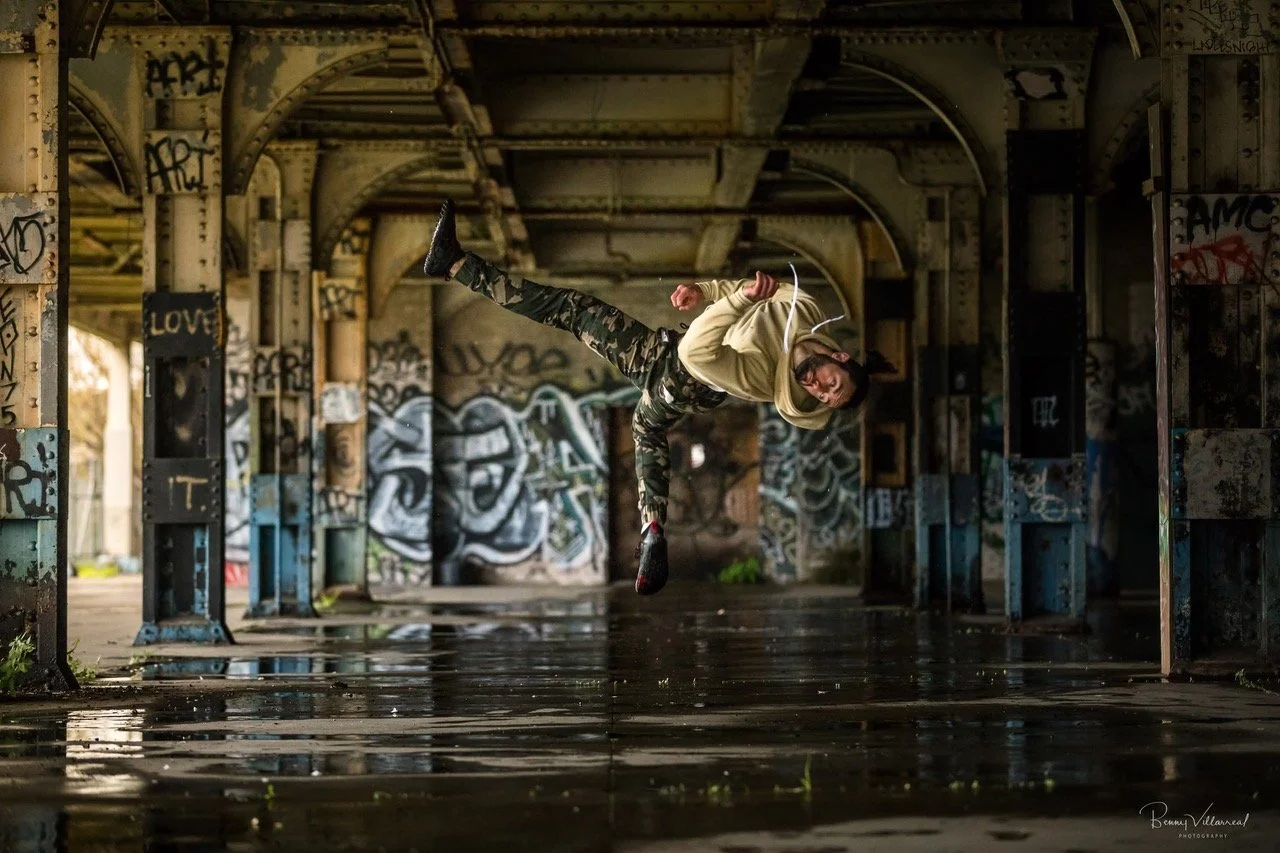
In this episode Jeremy talks with Mike Pinto about his journey into Capoeira, the culture within it, and how it differs from other martial arts.
Mike Pinto - Episode 1174
SUMMARY
In this conversation, Mike Pinto discusses his journey into Capoeira, the evolution of college Capoeira groups, the unique philosophy and cultural aspects of the art, and the significant role of music in practice. He emphasizes the importance of community and the concept of play in martial arts, highlighting how Capoeira fosters connections and offers a different approach to movement and self-expression. He emphasizes the importance of experiential learning, the role of character development in teaching, and the need for educators to create engaging environments that foster curiosity and exploration. Pinto also highlights the cultural connections within Capoeira, the importance of understanding language and history, and the value of building community and trust among practitioners. The discussion culminates in key takeaways for martial artists and educators alike, focusing on the transformative power of play and community in the learning process.
TAKEAWAYS
Capoeira has evolved significantly over the years, especially in college settings.
The decline of college Capoeira groups is linked to changing student interests and institutional support.
Capoeira's philosophy emphasizes flow and aesthetics over traditional martial arts effectiveness.
Music is integral to Capoeira, influencing the energy and dynamics of practice.
The cultural roots of Capoeira are deeply tied to African heritage and community building.
Capoeira fosters a unique sense of community that is often absent in other martial arts.
The concept of play is essential in Capoeira, allowing for a different mindset in training.
Seriousness can coexist with play in martial arts, creating a unique training environment.
Understanding Capoeira's cultural context enhances appreciation and practice of the art.
Experiential learning can help bypass resistance.
Creating a playful environment encourages engagement.
Character development is crucial for effective teaching.
Understanding songs in Capoeira is vital for participation.
Language learning enhances cultural understanding.
Teaching requires creating a space for interaction.
CHAPTERS
00:00 Introduction
02:20 The Evolution of College Capoeira Groups
05:30 The Unique Philosophy of Capoeira
10:38 The Role of Music in Capoeira
15:42 Transitioning from College to Community
18:07 Cultural Aspects of Capoeira
23:00 The Concept of Play in Martial Arts
28:30 Resistance to Play in Adult Learning
29:53 Experiential Learning Through Play
32:35 The Role of Play in Education
34:22 Character Development in Teaching
36:52 Creating Engaging Learning Environments
40:04 Dialogic Teaching and Student Engagement
42:19 Preparing Future Educators
44:15 Personal Development and Continuous Learning
48:11 Cultural Connections Through Capoeira
50:34 The Importance of Language and History
54:52 Connecting Through Community and Trust
01:00:05 Key Takeaways from Capoeira and Martial Arts
To connect with Mike Pinto:
Instagram
Martial Arts Classes for Kids & Adults in the South Bay | Mao Pelo Pé Capoeira
Join our EXCLUSIVE newsletter to get notified of each episode as it comes out!
Subscribe — whistlekick Martial Arts Radio
After listening to the episode, it would be exciting for us to know your thoughts about it.
✅Subscribe to whistlekick Martial Arts Radio on the following platforms:
🎧Apple Podcasts: https://apple.co/3mVnZmf
🎧Spotify: https://spoti.fi/3yHVdHQ
✅You can find whistlekick on all social media platforms using the handle @whistlekick or visit our website at https://www.whistlekick.com or https://www.whistlekickmartialartsradio.com
Show Transcript
Jeremy (00:00.285)
yet, but it just keeps me from forgetting to turn on the recording when when when the good stuff starts happening.
Mike Pinto (00:00.622)
Like it just keeps me from forgetting the turn on and when the good stuff starts happening. Totally makes sense.
Jeremy (00:10.173)
Right, cool. Well, good morning. It's an early one for you. Thanks for doing this.
Mike Pinto (00:11.842)
Well, good morning. Okay, we went for you. Thanks for doing with us. Yeah, no problem at all. you're you're based on the East Coast, yeah? Yeah. Yeah, you're Calendar. Yeah. Where where in the East Coast are you at? okay. I actually grew up in Massachusetts. been here about ten years, so I got a lot of family in that area.
Jeremy (00:19.589)
Yeah, yeah, and you're Cali, right? Yeah. Vermont.
Jeremy (00:28.714)
right on.
Jeremy (00:32.063)
Okay, okay. let's see. So seventeen years ago, Capoeira, Massachusetts, on a clay to was he's?
Mike Pinto (00:35.502)
So seventeen years ago, Kepler
Mike Pinto (00:45.358)
What was that? Do you know him? No, I don't. He's out of Boston. He was my capillary instructor. okay. Yeah, I haven't met him. Most of the most of the capped of people I know in Boston are around a guy named Messi Chuiscu. yeah.
Jeremy (00:46.419)
Ancleto Assis, do you know him? He's out of he was he was out of Boston. He was my cup witter instructor. that would have been early aughts.
Jeremy (01:09.203)
Okay, I don't know that name. Yeah, I went I went to college. I went to college in Worcester and so had like two years with Capoeira before moving up here. Yeah. Yeah. It's a good time.
Mike Pinto (01:15.502)
cool. Nice. Yeah, yeah. Yeah, that was a time where like college groups were a really big thing, like all across Massachusetts, which was really cool.
Jeremy (01:26.334)
Yes.
Jeremy (01:29.821)
Yeah. Yeah. It was a lot of fun to to see so many people because most of the people in our group had no copoera background. Or right no no martial arts background, I should say. Yeah, they just they're like, what is this cool thing? Let's go do it.
Mike Pinto (01:36.918)
Yeah. interesting. Yeah, they just they're like, Well is this cool let's go do it. Mm. That's awesome. Yeah.
Jeremy (01:46.12)
Yeah. we've kind of jumped in. If if you're okay with it, I just like to roll. I mean, if you if you have qu if you have any concerns anywhere along the way, you know, we can we can edit that stuff out if it if anything pops up, but generally we don't do any strong edits. Okay. Let's let's plow forward. Well, Mike, welcome to Martial Arts and Radio. Thanks for being here. Thanks for making the time.
Mike Pinto (01:51.185)
He cut his own.
If you're okay with it, I just like to roll. Sure.
Mike Pinto (02:02.702)
that stuff out and if anything pops up, any good with me. Let's let's plow forward. All right.
Mike Pinto (02:15.49)
Yeah, thank you.
Jeremy (02:15.719)
Jeremy (02:20.273)
Let's talk about those those college groups, right?
Mike Pinto (02:20.79)
Let's talk about those those college groups, right?
Jeremy (02:28.133)
You said it in a way that suggests maybe it's not as big of a thing now. Is that what you're saying? Yeah. What's what do you chalk that up to?
Mike Pinto (02:32.417)
You said it in a way that's just maybe it's not as big of a thing now. Yes. Is that what you're saying? So I think it's been been a couple things. So I got started in Cupwood in two thousand nine, in southeast Massachusetts, where I was going to school. And back then the US Dartmouth. Okay. Yeah. And back then there was
Jeremy (02:50.057)
Where'd you go?
Mike Pinto (02:56.834)
There was a big group at at UMass, at BU, at I think WPI had one, Harvard had one, URI had one, there was Connecticut once. And they were they were really doing a great job of getting getting college age people involved in Capota specifically, but kind of movement arts generally, which was really interesting time.
Jeremy (03:21.897)
Hmm. Sure.
Mike Pinto (03:25.688)
This was kind of like the time where guys like Ido Portal were just like just starting to like come into the general consciousness. and there was a lot of great interaction between college groups because of that. We had just college group focus gatherings that were really interesting. and I'd say over between then and maybe twenty fifteen, twenty sixteen, a lot of those groups started to disappear.
Jeremy (03:30.983)
Mm.
Jeremy (03:43.33)
cool.
Jeremy (03:56.093)
Hmm.
Mike Pinto (03:56.746)
And I think some of it is because a lot of the colleges became less interested in investing in those kind of things. and then part of it is, you know, it's very challenging for I think college age students in that situation to like generate a succession plan such that once you have, you know, a big personality that's keeping things going and then they leave, like how do you keep things going?
Jeremy (04:24.573)
Yeah. I I I think I think there's another another piece we need to throw in there and and I don't know that we we can say how significant it is. But anyone who interacts with college age students today and did twenty-five years ago knows that they're different. They're less open to new, scary, especially
Mike Pinto (04:25.794)
So I think that's that's pretty challenging.
Mike Pinto (04:36.034)
Well anyone who interacts with college age students today and did twenty-five years ago knows that they're different. True. They're less open to do scary, especially external and inclusive.
Jeremy (04:53.052)
External and in person.
Jeremy (04:57.567)
And I that that has to play a factor, you know, as we especially as we watch that time progression.
Mike Pinto (04:58.17)
And that that has to play a factor, you know, as especially as we watch that progression. For sure. And I mean, the you know, being going through the pandemic has only made that a lot worse. has made people kind of like withdraw from a lot of those communities, which is i i in many ways I think some of the work that needs to be done right now is getting people readjusted to those kind of things.
Jeremy (05:24.369)
Agreed. Yeah. Okay. So you you you dip your toe in at college. What was it that made you say, you know, this sounds like the thing I want to do? Did you have and actually but pre question to that question. Did you have any martial arts prior to that?
Mike Pinto (05:30.104)
You you're
Mike Pinto (05:34.52)
Maybe say you know just
Sure. Did you have any quarters prior to that? A little bit, not not actually a lot. So my my dad was was very much a martial artist growing up. He was very interested. And because of that, me and my brothers all had kind of a bit of like broad exposure to martial arts, so we had that awareness. but nothing ever really captured me.
the same way when I was younger. so, you know, when I was in middle school, I did Kenpo for a little while. but there was I think the at first, you know, at first the movement diversity that we experienced in Capua was something so different to me that it was something that I I found myself like really needing to investigate more. fought like
I it was it was essentially this movement problem that was so complex that I'd never even thought about that I had to try to figure it out.
Jeremy (06:48.159)
Right. And anyone who's trained in in Capoeira and another martial art understands that it is philosophically so different that every other martial art that I've trained in, our the priorities are
Mike Pinto (06:53.855)
It is philosophically so different that every kind of marijuana that I
Jeremy (07:06.575)
Roughly the same. I'm gonna do these things and everything is regardless of effectiveness, it is all couched in this idea that what I'm doing keeps me safe later.
Mike Pinto (07:08.529)
I'm gonna do these things. And everything is regardless of effectiveness, it is all couch in this idea that what I'm doing keeps me safe later. Capillary kind of changes that dynamic a lot and says, Alright, does does this allow me to flow back and forth with another person in a way that is
Jeremy (07:23.947)
Witter kind of changes that dynamic a lot and says, All right, does does this allow me to flow back and forth with another person in a way that is aesthetic and enjoyable?
Mike Pinto (07:38.317)
static and enjoyable. Yeah. And also maybe, you know, you know, if you do this a while and y you could, you know, optimize someone in the face if you need to. Yes. As as you know, as a few people have shown us in, you know, Eric Maya comes to mind and yeah.
Jeremy (07:41.447)
And also maybe, you know, you know, you do this a while and y you could, you know, Hobjahai someone in the face if you need to.
Yep. And the that's why I that's why I chose that movement, 'cause we've seen it work.
Mike Pinto (07:59.244)
Yep. A hundred percent. yeah, it's so someone a long time ago, someone someone just like condensed that to me in in the in the phrase it's like the art of making the other person miss. and that has always like really connected with me well. because you know, there's there's ways to avoid a a lot of the attacks we do are circular.
Jeremy (08:17.064)
Take that.
Mike Pinto (08:27.927)
And because of that, they're very highly telegraphed because you want the other person to know what's happening to a degree. but there's like the easy way of not getting hit by something circular where you can just, you know, take a step back. And then there's the interesting ways of not of of being of making that miss happen. and that's the space that we really like to explore, which makes that kind of the interesting problem. That's like the the ritual combat.
Jeremy (08:42.119)
Yeah.
Mike Pinto (08:56.685)
aspect that I think is so strong. but in addition to that, there's you know we also spend a lot of time inverted, which is not super common. And there's there's really deep philosophical reasons as to why. Because a lot of these root these these arts are rooted in African Bantu spirituality where inversion is a is a
Jeremy (09:06.473)
Yeah.
Mike Pinto (09:24.973)
critical part of connection to both like spiritual realms, realms of ancestors. So it becomes a way that spiritually the art is connected to that cultural history with the use of the use of
Jeremy (09:37.392)
Hmm. And and to people who may not recognize w what what Mike is saying there, literally standing on the hands, cartwheels, things where your feet are above your head. It's which of course I think it's difficult to defend that as from a self defense perspective, right? It's perfect illustration of how Capoeira is different in that way. But please continue.
Mike Pinto (09:42.84)
What I was saying now. Literally standing on the hands, cartwheel, stays where your car above your head is which of course I think it's difficult to defend that as from a perspective. And it's a perfect illustration of how Aquaena is different in that way. But please continue. Yeah, no, that's that's that's perfect. because you are you are in fact, you know, making yourself you're putting yourself in a
what is often a less safe position because of the philosophy that you're that you're approaching at. and I've seen people get knocked out from upside down kicks before too. It's not that it's not there isn't danger, but you're approaching it in a very specific way because of that philosophical intent.
Jeremy (10:34.207)
Okay. All right. So you dip your toe in, you find the movement problem as you put it f interesting. Is that what kept you or was there other or more?
Mike Pinto (10:38.359)
You dip your toe in, you
Interesting. Is that what kept there other remote work? Yeah, it's definitely not what kept me. that's that was kind of like what initially brought me in. and then it's really the depth of the art that that has kept me going for as long as I've been here. So there's in addition to I mean the other very critical part that makes Cupwita unique is the focus on music.
when we are doing when we are playing Capoeira but we're doing Capoeira it is never done without music. never. But you know, in in the proper context, it was is always done with music. And the music is a way to dictate what happens in those those ritual combat games. so the person leading is able to modify the energy what happens there. And also the songs that they're singing can
can give instructions, can tell histories, can, you know, teach lessons in a very subtle way that is always present. So the music was the next step for me that really solidified, like solidified for me that, okay, I'm all right, I'll be doing this for the rest of my life. That's fine. Because then the music opens you up to the rest of the parts that I think are very deep and important, the cultural aspect, the historical aspect.
and even the teaching aspect, because they're used in that way historically in the Cupwood spaces.
Jeremy (12:20.383)
Hmm. Okay.
Mike Pinto (12:24.406)
So it's almost like a gateway to the rest of the like the rest of the amorphous art besides just the movement stuff that's happening.
Jeremy (12:29.481)
Hmm, sh sure. Sure. Okay. and
Mike Pinto (12:36.235)
Es no.
Jeremy (12:38.569)
think that that focus on music w I I I I found it fascinating. And I I think the thing that I first noticed when I was training was it is easier to go harder longer because we have this music to
Mike Pinto (12:41.228)
Mm-hmm.
Mike Pinto (12:45.258)
I I think the thing that I first noticed when I was training was it is easier to go harder or longer. Yes. Because we have this music to
Jeremy (12:56.785)
lean on, I guess is how I'll describe it. But I also found it to be
Mike Pinto (12:57.548)
Yon I guess is how I'll describe it. But I also found it to be
Jeremy (13:04.689)
an impediment to some of the students learning the music. Because people people don't generally come to a martial arts class with this belief that they are not good at martial arts and cannot be. But they do come in saying, I can't play an instrument, I can't read music, I can't keep a beat, etcetera.
Mike Pinto (13:05.216)
impediment to some of the students learning the music. Because people people don't generally come to a martial arts class with this belief that they are not good at martial arts and cannot be. But they do come and say I can't play an instrument, I can't read music, I can't keep a beat, etc. A hundred percent. And that's and and especially especially here in the States, I think. And that's
That's been one of the big difficulties of translating a art that is like deeply inherently Afro-Brazilian into another culture. Because like if I was to if I was to grab you know, I don't know, if I was to grab a 17 year old Brazilian kid who's grown up there his whole life and asked him to dance and to sing, probably be pretty okay. Like he wouldn't it wouldn't be like weird.
Jeremy (14:02.611)
Mm.
Mike Pinto (14:04.769)
Me to ask for to to expect that. Whereas here, you know, especially with men here for sure, have this belief that like I can't, I can't dance, I can't sing, like these are things that are just not accessible to me. and so for sure it can be an impediment. And then you add on top of that, it's also in a language that you almost definitely don't speak. So you have to sing now in a language you don't even understand, and it it can be hard.
Jeremy (14:07.176)
Okay.
Mike Pinto (14:35.04)
But the first thing you said I think is super super critical in feeling that you can go harder, you can go longer, like with music going on. And a lot of that is, you know, these are these are songs that are not that different than like chants sometimes. It's call and response. We're repeating the same thing over and over again. The music is very like droning. It's it's very like it's very
good at getting you in that flow mind state and to kind of like separate you from i in the way I the way I feel it, the way I internalize it is in some ways it separates me from my body so that I can be in the art itself. Like I don't feel my I don't feel what's happening in my body when that when I'm in that state.
Jeremy (15:29.523)
Interesting. Okay. So you stuck around for a while and if you're part of a college group, eventually you gotta leave college.
But you didn't stop training. That's can be a that can be a tough transition, especially with an art that I don't want to call it niche, but certainly less common than Taekwondo.
Mike Pinto (15:44.254)
No. Niche, but certainly less common than
Sure. I mean, and I I think at at this point, niche is not that much of a stretch, I think. so I so I left UMS Dartmouth and I did grad school in Rhode Island at a at URI. And I was lucky that when I was there, I was close by the instructor that had kind of started that college group that I was at previously.
So I was able to continue training with him in Rhode Island until I left. You know, once I finished grad school, that was 2016, I moved here. I'm in like the the San Francisco Bay Area in California. And it was so when I moved here, there was like I didn't have any family in the area. I didn't know anybody that was here. I just took a job and had off to the to the West Coast. And what
Jeremy (16:51.153)
What what what's what's your career in?
Mike Pinto (16:52.876)
What's your premiere? So I'm a mechanical engineer. Yeah. and the first thing that I did when I got here was okay, I gotta find the cup water groups in the area. at that point I had been training for eight years. I think eight years. so I was heavily invested and I knew that if I really wanted to establish myself in an area.
That was gonna be the way for me to find community. finding people that already do something that I like to do. and I know that's not a unique thing to Capoeira . I know a lot of martial arts are like this. I will say there is an extra emphasis in Capoeira on the community aspect in a way that I haven't experienced elsewhere. but that's basically what helped me feel more like, you know, start developing
foundations in an area that I didn't really have any in. and, you know, now I've been here 10 years, so it definitely helped me get invested here and then keep going in that art.
Jeremy (18:05.161)
Right on. I I think we should talk a little bit about that cultural aspect. Any theories on how a let's call it a typical capoeira group builds that culture of
Mike Pinto (18:07.795)
I think we should
Mike Pinto (18:20.703)
Builds that culture.
Jeremy (18:24.671)
We'll we'll just kind of broadly call it social welcoming versus other schools. How how how's that happening? How is that commonplace?
Mike Pinto (18:25.163)
We'll we'll just kinda broadly call it shoulder up at me.
Mike Pinto (18:31.977)
Yeah.
That
So I I think some of it is so this is something that I think about a lot because I as I I've been running my own school here for the past five years and that that's something that is really important to me to construct as well. And if I were to if I would try to think where it is coming from, a lot of it is tied to the is tied to the Brazilian culture that it
was created in for in in a couple different ways. One is that, you know, the the history of Brazil or the history of Capoeira is inherently tied to slavery in Brazil, where you have for hundreds of years enslaved African people are brought over to Brazil to work in the very industries industries there under that Portuguese colony.
And capoeira was a something that emerges in Brazil from the various cultural practices, martial practices that come from Africa and that are mixed and combined in Brazil. so when I say like capoeira is Afro-Brazilian, that's what I mean. It's it's it's clearly very African-rooted, but capoeira itself doesn't emerge in Africa, it emerges in Brazil. and
Mike Pinto (20:04.702)
the way it is used there is is kind of two to there's two main purposes. One is to pervert preserve martial practices in a way that they're able to keep doing under the under the the oppression of slavery. So when we talk about like a fight disguised as a dance, a lot of times that's is what we' what we mean. And the second is to preserve community and cultural heritages.
that come from from Africa. when we're in Brazil in this time period, there the there's a real effort to cut culture and the way that's done is by taking people from different regions and mixing them together to try to remove the common history, cultural, language type things. and then those people get shuffled around every couple of years for those kind of the same kind of reasons. So
Cap Weta becomes a way to very quickly develop community in these in these places with people that have a hard time doing it otherwise. So I think that is if we look way back to where is some of this foundation coming, it's because not only is Cap Weta being used as a tool for martial practice, but it is also for rapid community building. and then if we look today towards Brazilian culture, especially in how it interacts with Brazil, with with Capueta,
there is a big emphasis on time. or rather, no emphasis on time, if I switch that around. Because there when I so for example, if I go to a class for something else, if I go to a yoga class, a dance class here, there are always communities around those, right? but there's usually a very defined window of time where you're doing the thing.
And then you're not doing the thing. and there's various reasons for that. But when I'm in Brazil and I'm doing Cup weta with people, it's if I'm if I have a Capwita Hada, which a Hada is like where it's the circle where Cup Wuda happens, where you have music and a lot of times it's outside. I'm with those people probably for seven or eight hours. I go to their house, we're hanging out, we're talking.
Mike Pinto (22:33.813)
We're starting, it's very slow. We go eat, we come back, we go play, we go back again, we get more food. And it's not like it's all the same one experience. And there's the and the the willingness to have that much time, I think develops much different relationships with people.
Jeremy (22:59.197)
You you used a word, a verb, that I I know was kind of important to you from your guest form. And that word is play. And it's been a long time since we've had conversation on this show about play. And j just to give you an idea, your your scheduled to be episode, it could change. 1174. We've been around a while. However
Mike Pinto (23:00.149)
Yeah, you use the
Mike Pinto (23:09.513)
That word is play.
Yeah.
Mike Pinto (23:17.267)
Give you an idea, you're you're scheduled to be an episode 1174. Wow. And it's been around a while. However, the first time that I I had to go back and look. As far as I can tell, the first time we used the word play on the show was an episode that changed martial arts for me. And that was episode 252 with someone that people might not expect unless you know is her, Lori Miller.
Jeremy (23:28.019)
The first time that I I had to go back and look. As far as I can tell, the first time we use the word play on this show was an episode that changed martial arts for me, and that was episode two fifty two with someone that people might not expect unless you know his work, Rory Miller.
Rory Miller's books are primarily on violence.
Mike Pinto (23:48.745)
Folks are primarily on fire.
Jeremy (23:55.186)
And I I I dug back one of the cool things about AI is that because we have transcripts, I can ask questions and get answers. You know, and basically I I I asked, I said, you know, what is starting with that episode with Rory Miller, how did Jeremy, me, change in the way he talked about martial arts with the word play? Because I know where I am now with it, and I know that it's completely changed how I interact with.
Mike Pinto (23:55.653)
And I I I got that one of the cool things about AI is that because we have transcripts, I can ask questions and get answers, you know, and basically I I access a few. What is
Starting with that episode with Rory Miller, how did Jeremy, me, change in the way he talked about martial arts with the word play? Because I know where I am now with it and I know that it's completely changed.
Jeremy (24:25.085)
With other martial artists, it's changed the way I see myself, it's changed the way the school I run now exists. But I didn't get there overnight. For me originally, Capo Area was play, but everything else was train or fight or practice, right?
Mike Pinto (24:25.652)
With other martial artists, it's changed the way I used to myself, it's changed the way the school I run now exists. But I didn't get there overnight. For me, originally capoeira was play, but everything else was trained or fight or practice.
Jeremy (24:48.947)
But when you start to use the word play, expectations change. Maybe you'd like to talk about that a bit.
Mike Pinto (24:49.47)
But when you start to use the word play, expectation.
Maybe you'd like to talk about that a bit. For sure. And you know, I think understanding play, especially in a martial practice, was also something that took a long time for me too. and to me, what I I didn't really start to, I think, internalize it in myself until I started teaching kids. that was really what changed what changed that for me. But play is an essential part of
of Cup Woda for me. And I guess, you know, when we talk about what play means, I think of it in a in a couple different ways. One is sometimes when we talk about play, we we s think that means like we're removing seriousness. And we're it doesn't that's not necessarily true. There can be seriousness in play. But there is a
Willingness to go into a different kind of space. Like to me, play is creating a space that is a little bit separate from the world, that has its own rule set, that we, you know, give ourselves into to experience the game that we're playing. and there's very much like like kids are so good at this.
Jeremy (26:09.855)
Yeah.
Mike Pinto (26:25.226)
Because kids play games all the time. Kids understand the world through games. Because the world is complex and it's the way they kind of make sense of things. And I think as adults we convince ourselves that we don't need that anymore because we think that the seriousness is removed. but there can be very serious games. And I think martial arts are a great use case where we have serious games, where we have games that have their own, you know.
world that we're constructing, that can sometimes have violence in them too. And violence can happen really quick. but it can still be a game. It can be something that we approach with that mindset of this is this is separate from the world. This has its own rule set. And it's something that we can approach with, even when there's seriousness, some amount of allowance to ourselves and to the other person.
But that's like if I think of, you know, if I try to like intellectualize what a game is, that's kind of what I think of it around. But I think b giving into that child mindset is really the important thing that I take to my teaching spaces, especially for adults when we're trying to get them to do games.
Jeremy (27:49.168)
Mm-hmm.
How do you
Mike Pinto (27:51.988)
Yeah.
Jeremy (27:55.156)
So first off, I I I have vague memory of bringing up this word play. And you know, if we go from eleven seventy-four back to two hundred fifty-two, we're talking roughly nine years. The world has changed a lot in nine years. Martial artists seem more receptive to using that word, but still I would not say the majority. Because there's there's a context to that word play that
Mike Pinto (27:55.794)
Yeah.
Thank you.
Mike Pinto (28:02.921)
And you know, we go from eleven seventy four back to two fifty two, we're talking roughly pioneers. So the world has changed a lot in pioneers. True. Martial artists seem more receptive.
But still I would not say the majority because there's there's a context to that word play that as you address, people assume it's unserious.
Jeremy (28:24.031)
As you addressed, people assume it's unserious.
If you're working with adults, or
Mike Pinto (28:31.538)
If you're working with adults
Jeremy (28:34.621)
I would imagine a good portion of them are resistant to that mindset and approach. Okay, how do I do it? What's what's the how do I do this? What what they're gonna be resistant to that learning through discovery, which you know, to me is the important part of play. Why do we want kids to play? Because they're gonna figure stuff out. That process, the way we learn, that doesn't change. We still have to discover through experimentation.
Mike Pinto (28:35.186)
I would imagine a good portion of them are resistant to that mindset and approach. How do I do it? What's what's how do I do this? They're gonna be resistant to that learning from the start, which you know to me is the important part of play, why we want kids to play. Because they're gonna figure stuff out. That process, the way we learn, that doesn't change. We still have to discover through experimentation.
Jeremy (29:03.679)
How do you have these conversations and or
Mike Pinto (29:04.234)
How do you have these conversations and or
Jeremy (29:11.771)
address I guess a how do you address the subject with people who aren't willing to jump in and say, Yeah, sure, I'll play and sing and dance and hit it bang a tambourine.
Mike Pinto (29:12.316)
address I guess in how do you address the subject with people who aren't willing to jump in and say, Yep, sure, I'll play and sing and dance and bang camarine. But by the way, we have we have a shirt. I don't know how long living future people in the audience might be listening to that's watching this episode. We did a series of tongue and cheek shirts all with specific styles and we'll put
Jeremy (29:25.785)
By by the way, we have we have a shirt. I don't know how long in the future people in the audience might be listening to this watching this episode. We did a series of tongue in cheek shirts all with specific styles. I w No, I don't have one on right now. The karate one, for example, says putting the fist into pacifist since nineteen twenty two. The capoeira one says because fights are better with a tambourine.
Mike Pinto (29:40.966)
I don't have one on right now. The karate one, for example, says in the system and past distance nineteen twenty-two. The capoeira one says because fights are better with a tambourine. That's fantastic. Yeah, but all over my question has given you about 17 things to think about. I'll shut up and think about it. No, I think those are those are beautiful questions. And to me that's like as as an instructor and especially one that
Jeremy (29:53.31)
Yeah. But now that I've stepped all over my question and given you about seventeen things to think about, I'll shut up and let you go.
Mike Pinto (30:09.832)
really wants to bring in the play aspect. That's like something I think about all the time. and to me what I found is I I I think the important thing is getting around the person's like intellectualization of what they're doing. So I have a way easier time having these conversations if I can get someone to experience it first. So when I j have people jump into class, I sometimes I'll I'll say
The word game. A lot of times I won't. we're just doing something. Like we're warming up, we're doing this, and we'll play. I'll have them whenever I have new folks, I will almost always start with a game that I use with my kids. Almost always. and we won't say it's I won't say that, you know. We're doing, we're doing, we're warming up, go do this. There's a tag game that I play with the kids, and we play with the adults, and within
you know, forty seconds. Doesn't matter who the people are, they're running around, they're laughing, they're bumping into each other. Like it's like you've you've immediately turned this group of of people, whatever backgrounds they're coming from, into children for just a moment. And when they feel that, then I find they're always much more willing to have that input afterwards, right? So because you feel it, right?
It gets past your brain and it gets to your your body. It gets to like the core of you, that like core human need of play. and then it's like, okay, now we're using the same tool to actually learn stuff. You're gonna explore. I'm not gonna give you enough instructions. I'm gonna give you us you know, your space to figure stuff out, and then we're gonna see happens. but I I really think the the getting to the core humanness of someone.
is really important to bypass the all whatever is built up that's resistance, that stuff. Music too. sometimes I'll just hand people an instrument and I'll sit them next to somebody that knows what they're doing. I'll say, we're doing music together. Follow along, you can figure it out. And most of the time, even if they at first they're not really participating, it's really hard. It's really hard if you have an instrument and you're sitting next to someone who's playing to not do anything.
Jeremy (32:11.806)
Hmm.
Mike Pinto (32:35.721)
So so yeah, that's that's how I I think about kind of getting around those things.
Jeremy (32:41.865)
Nice.
because you spend so much time thinking about the concept of play and how play impacts training, you're an engineer, so I can't imagine you haven't thought about the broader concept of how play as it relates to adulthood versus childhood education, you attained higher education, you spent a bunch of time in school, so you probably didn't hate school.
Mike Pinto (32:45.937)
Because he spent so much time thinking about the concept of play and how play impacts
Mike Pinto (32:56.093)
engineer. So I can't imagine you haven't thought about the broader concept of how play as it relates to adulthood versus childhood education. You attain higher education. We spent a bunch of time in school, so you probably didn't hate school. And then you transitioned from East Coast to West Coast, and you're rebuilding a life.
Jeremy (33:14.343)
And then you transitioned from east coast to west coast and you're rebuilding a life.
How do you see this notion of play existing outside of Capoeira?
Mike Pinto (33:24.273)
How do you see this notion of quality existing outside of gambling? Interesting. I I mean, I think in many ways it's it's different in the context, but a lot of I think it's more similar than it is different. when I'm I find so I I and find myself having to give a lot of talks like in my regular work.
And I think that is for me where I experience the most play. Because it's like I'm assuming a character. There's interaction between me and an audience. And that becomes like it becomes a it becomes a game between how do I like engage people, right? How do I how do I come at them in a way that's it's it's different, you know? The way you talk to people when you're trying to convey ideas is different than when we're talking to people like one on one.
And those like character assumptions I think is where I see the most play. it's it's yeah. And even teaching. I think there's teaching characters, like I have a different character when I'm teaching adults, when I'm teaching kids, when I'm mentoring an an an a young engineer. and those I think for me are how I experience it the most. how intentional you cultivating?
Jeremy (34:45.959)
How intentional are you cultivating the character, or is it simply you observe that you are different in these ways?
Mike Pinto (34:51.987)
The character or is it simply you observe
For teaching it's very deliberate. especially for teaching I'll say less so for teaching adults because I've I've had some role teaching adults since mm probably for the last fifteen years. So from pretty early in in the in the my couple what I like path. but teaching kids was something I never thought I would do.
So that became a very conscious character development. And same thing if I'm teaching audiences that have like we'll say like different abilities or different needs. and when I'm talking to like say in my in my work or when I'm talking to audiences, that character is also very deliberate. But the more time I spend with characters, the more I think more natural it becomes.
I can feel myself like I step into a space and now I'm this, right? there was a teacher there's a Capota teacher from Rio that does a lot of work with underprivileged youth there. And he this guy he teaches with youth, he teaches in prisons, he teaches in mental hospitals, all over the place. And I remember something that changed the way I thought about characters was he told me the best.
Biggest change he had in his teaching style was when he took a clowning workshop. and it totally changed the way that he thought about how he presents like himself to you can say an audience in general, but people that that he's talking to. And that that like shifted the way that I thought about teaching a lot.
Jeremy (36:51.942)
C can you say more on that?
Mike Pinto (36:52.531)
Can you say more on that? Yeah, it's it's teaching is a performance at some level, I think. Because it's to me it's not enough to it's not enough to just have the information to give to to people or to exchange with people rather. especially with kids. You need to it's your job as a teacher to
Create the environment in the classroom and the mind state in the students to be willing to receive an interaction, we can interact with that information, especially if we're trying to create a space where they are willing to play and explore and be like, in some ways, be kind of like vulnerable and brave in a space that's really threatening and that has a lot of unknowns for them. And
The way that I see we get there is a little bit of performance. It's a little bit of like, okay, I need to not only inform you, I have to inspire you to think that you can do this. I have to make you want to be able to do this. and I need to keep you engaged with the class. And for adults, you know, f for for some audience the engagement apart is is is more or less challenging. For adults, it's not always that hard.
For my four year olds, engagement can be an issue sometimes, right? 'Cause like you know, they have a thirty second assent attention span. So
Jeremy (38:30.603)
What you're talking about, I sum up with the observation that you can't make someone learn. You can only create the environment in which they have the opportunity. And then our job as instructors is to make them want to learn. I I I I talk to any public school teacher and they will tell you that they cannot make children learn. You can't pin them down and pour knowledge into their brain. In fact, you can't even just confine them to the desk.
Mike Pinto (38:35.762)
can't make someone learn. For sure. You can only create the environment in which they have the opportunity. And then our job as instructors is to make them look smart. I I I have talked to any public school teacher, they will tell you that they cannot make children learn. You can't pin them down and pour knowledge into their brain. In fact you can't even just confine them to the desk.
Jeremy (39:01.829)
make the information exist and then expect that they're going to retain it. So when you talk about performance as an instructor, what I'm hearing is this is how we make them want to learn. We have to deliver the information in a way that is
Mike Pinto (39:02.36)
make the information exist and then expect that they're going to retain it. So when you talk about performance as an instructor, what I'm hearing is this is how you make them want to learn. We have to deliver the information in a way that is
Jeremy (39:22.271)
Conducive to that process for them. We have to meet them where they're at because they're not going to meet us.
Mike Pinto (39:22.756)
conducive to that process for them. We have to meet them where they're at because they're not gonna meet us.
A hundred percent. And like there's there's even another element and then and you kind of touched on it a little bit in where you were saying. are you familiar with Paulo Freire? Yeah. So Paulo Freire is an educator in Brazil. he basically revolutionized a lot of the educational system, especially in Sao Paulo. And he makes so his philosophies have really affected the way I teach as well. and he makes a distinction between two
teaching styles. What he sees as an old school traditional teaching style that he calls the banking method of teaching. And what he means by that is in those systems, the idea is the teacher is the essentially arbiter of knowledge that makes deposits of information into the student. And in that in that arrangement, you basically have
the teacher is the subject of the relationship, meaning they're the ones that has autonomy. And the the student is the object, and it's this one-way relationship. And like you were saying, you can't you can't just inject knowledge into students. So what his methodology becomes is he calls it dialogic teaching structure, where now both teacher and student are subjects. They
Both possess knowledge, they both have their own autonomy and they're both their own responsibilities. And the teacher's responsibility now is to create this space in between where learning can happen. that is respectful of the knowledge that the student has and even accepting of that knowledge. You know, and as teachers we know this, we learn from our students all the time, but we're creating this space so the learning can happen.
Mike Pinto (41:32.05)
to help maximize that student's understanding, meeting them where they're at, and tailoring that learning experience in that space. And I think that that has also been a really valuable thing to to kind of incorporate it to my own teaching styles.
Jeremy (41:53.97)
If you've had a school for for a few years, I'm I'm and you're concerned about teaching, I imagine that you are spending some time, whether they realize it or not, helping at least some of your students become future teachers. What is it you're thinking about, given that this is such an important subject for you, that helps them
Mike Pinto (41:54.512)
It's fine so
Mike Pinto (42:09.075)
Hmm. What is it you're thinking about, given that this is such an important subject for you, that helps them
Jeremy (42:18.515)
become ready at some point.
Mike Pinto (42:19.046)
become ready at some point. So that that aspect has been very deliberate for me right now in in that, you know, I I do you know I actively talk with my students about folks that want to go in that kind of path, that like are interested in in in learning how to teach and to assuming these kind of roles. And for me, that
almost has to start with learning how to teach kids. So which is not, I think is not uncommon in a lot of martial arts structures. But what's important to me there is a lot for a lot of folks, especially young folks, don't really know how to interact with children in a teaching space, especially not in the ways that are important to me for constructing the the kind of environments that we've been talking about.
so a lot of times, you know, people will default to treating children like small adults, especially in teaching scenarios, and trying to break that and come at an approach that is more playful, that is more respective of the autonomy of those children and like the the knowledge that they bring, even at whatever age they come in at, is the work that I do to make.
students ready. And some of that is, you know, we have, okay, who wants to come with me for these next couple weeks? We're gonna we're gonna learn how to teach in a style that we want to maintain in the school. And I have them be kids, right? Going all the way back to what we were saying before, the the easiest way I've had to get people to understand what what we want
kids classes to feel like is to get them experience themselves. You're gonna be a kid for right now. We're gonna play this game. We're gonna run you through. You're gonna feel what it feels like. This is why we're doing this, because this is the feeling we want to create that is going to facilitate the learning. And now we can talk about okay, what what actual strategies are we using to get there? You've already felt it, and then it's much easier for them to understand. and I think that's been effective at helping especially young aspiring teachers
Mike Pinto (44:44.899)
understand that it is something that they can do.
Jeremy (44:48.127)
Right on.
W what are you spending your own development time on?
Mike Pinto (44:52.188)
What do you think
In my personal cupboard? yeah. Well you know what that's brought me. Sure.
Jeremy (44:57.867)
yeah. Well, you know what? Let's broaden it. Because 'cause I can't imagine that I suspect y you you and I are similar in that the boundaries between all of these aspects of life get a little blurry. So let's not restrict it to the question in that way.
Mike Pinto (45:06.279)
I suspect you you and I are similar in that the boundaries between all of these aspects of life get a little blurry. For sure. Yeah. so and that's that's a great that's a great way to put it for sure. I think all of these really blend together. and you know, it there's I think there's mm
Growth and education in Cupoda for me, especially being in it this long, always feels very cyclical. where like focuses will shift around.
Jeremy (45:43.719)
It's an ironic word and observation given Capoeira. It all comes back to the Hora.
Mike Pinto (45:48.527)
Exactly. It's yeah, may maybe not maybe not totally unintentional. but but you know, there's in in any martial art there are so many aspects to work on in development, especially when you have a teaching and a leadership role. so for me, like I I am a very physical person. so I I love training.
Jeremy (45:54.047)
Yeah, yeah.
Mike Pinto (46:14.832)
I love training and I will never stop doing that. So finding ways to keep myself improving in the physical aspect is something that you know is is hard to do when you're teaching because you have a lot of those responsibilities. It's gonna take up a lot your time. but it's something that it's a in it's a problem I love approaching because it allows me to continue studying and learning and then
That changes the way that I teach, right? I incorporate different things. I take things from other places. I travel a lot for Kapoda of going to events and learning from different people around the country. and that keeps things very fresh in that development. and a lot of times it changes the way I teach too. When I when I go to events and I'm at workshops, part of it maybe like
50% of me is there taking the okay, what concepts are we actually working here? Right. But then another 50% is all right, how is this instructor conveying this information? How are they approaching teaching this lesson to the students that are here and how is it going? What are things that I want to take from this, and what are things that maybe we want to improve? so that has been
For me, one of the most beautiful things about being in this art for this long is there are many opportunities for me to always be learning, even while I'm in this leadership position that is occupying most of my mind state. and it's given me a chance to grow in a lot of different directions. You know, I don't know that I would be as interested in learning other languages if I wasn't in an art that's so rooted in Portuguese, in Brazilian Portuguese. I don't know that I would be exploring history.
of so many different aspects of Latin America if it wasn't to okay understand songs that talk about historical and cultural elements that I have no idea about. and you connect differently when you know those things. which which I think is such a wonderful opportunity that many most martial arts schools miss. We have plenty of people on the show that have said, you know, I I started in techno but I started in
Jeremy (48:25.651)
Which which I think is such a wonderful opportunity that many most martial arts schools miss. We've had plenty of people on the show that have said, you know, I I started in Taekwondo, or I started in karate, or I started in Kung Fu, and as I fell further down the rabbit hole, I went into language and traveled to the country my art comes from. a
Mike Pinto (48:40.839)
Karate where I started to. And as I fell further down the rabbit hole, I went into language and traveled to the country my art comes from. it's not uncommon for some of those people to end up developing strong relationships, even romantic relationships with people from that source country and realize that.
Jeremy (48:56.059)
It's not uncommon for some of those people to end up developing strong relationships, even romantic relationships, with people from that source country, and realize that what so many people see as a physical pursuit done temporarily became a life-changing and identity-forming experience. And
Mike Pinto (49:10.551)
what so many people see as a physical pursuit done temporarily became a life-changing an identity-forming experience. And
Jeremy (49:26.619)
If you're an instructor, think about the retention that that creates if you're willing to allow what you offer to be so multifaceted. So I saw you nodding long as I was talking. How important is it that your students learn language and history and understand the the songs that they're singing?
Mike Pinto (49:27.097)
If if you're an instructor, think about the retention that that creates if you're willing to allow what you offer to these are multifaceted. For sure. So I find you nodding along as I was talking. How important is it that your students learn language and history and understand the the songs that they're singing? So that that's
I was actually just talking with my students about this this past weekend. So that's that's a great, a great, great question. I mean and all of them are important to me. but if I was to put them in order of importance, understanding the songs is the most important, understanding the history is the second most important, and language is the third. and the reason that I put them in this order, because if you have if you had mastery of the language.
Jeremy (49:59.042)
cool.
Mike Pinto (50:24.836)
The other two become way easier, because you you ac you can access that information. However, learning another language is a huge bar, especially for people here in the States where the vast majority of people here will never learn another language in their life. and that's it it's and a lot of people have the the mindset that it's not something they can access, right? so
Jeremy (50:34.879)
Jeremy (50:52.605)
If you have a phone, you have access to Duolingo and maybe it's not the best language app, but it's free and you can do it in bite-sized chunks.
Mike Pinto (50:54.734)
Dualingo and maybe it's not the best language app, but it's
Yeah. And that that will get you and even just a little bit goes a really long way, especially with language, and when you're exposed to it a lot. but understanding to me, understanding the songs are important because many times so I was in a a Capo de Hada out on the street two weeks ago, and we're we're all gathered up and the guy leading is singing a song to people.
That is clear to me when it's happening, they don't understand. And he's getting a little upset at what's happening. And what he's singing is the the words of the song are basically saying, whoever is whoever's outside can't come in, whoever's inside can't come out. And what he's trying to communicate is there's a game happening that he doesn't want it to stop. He wants them to keep going, he doesn't want people to interrupt. And he's trying to communicate that to everyone that's around without explicitly saying it.
And if you don't understand that, then you will you will break the energy that's happening because you just don't know. It's gonna go right over your head. And there's lots of examples of that in kapputa sometimes singing about what kinds of games that people want to happen. or there's a the there's there's songs that we sing to open and there's songs that we sing to close. So if there's a song that people are singing to close and you don't know, then it's hard to interact well. So
Jeremy (52:05.801)
Yeah, yeah.
Mike Pinto (52:29.742)
Understanding those songs becomes very important, just being in the space. but also many of those songs talk about history and they connect you to the the the that cultural heritage. and that kind of bridges the gap between understanding the songs and understanding the history. So that should lead you in that direction. and knowing that history connects you with the rest of the community in a very different way, especially in an art that
really has only had formalized instruction since we'll say the nineteen thirties. So like before the nineteen thirties, it's more of a street art that people just learn, in in a very organic way. but you know, as a as a formalized structured art, it's you know, less than a hundred years old. So yeah, so many times like
Jeremy (53:24.325)
I didn't realize.
Mike Pinto (53:28.126)
I I know people that were students of the first guy that ever opened a structured cupboard at school. And that's crazy. Right? That's crazy. so knowing that history like connects you with the rest of the community a different way. So I know, okay, this person is the student of this person that connects me to this time, and now you can see the flow of of learning. It I mean it's it's you know, it's the lineage, right? Which all our martial arts
Jeremy (53:35.985)
That is crazy.
Mike Pinto (53:57.009)
Have lineages that are important. But here the lineages are very short. They're like two or three people deep sometimes, which is and a lot of these people are still alive. And then the language comes there. So I think with that order of importance, it becomes easier for people to be willing to take on learning a language because you learn the songs or you learn what they mean, and you say, okay.
There's a lot of depth here that I need to understand, which many times leads you to the history and connects you to the rest of the community. And then at that point you realize well, there's a lot of information and a lot of people that have really deep cultural knowledge that I'm not really going to be able to access unless I can speak their same language. And now that becomes an easier transition there. and I think as as
As I step into teaching roles, that has become even more important because as a non-Brazilian, connecting my community with the rest of the the community, even local like the local Brazilian community and the broader community from there, I can't do that if I have to, you know, transl have a translator for everything. In order to really get people to understand you, speaking their language becomes very important.
Jeremy (55:20.515)
If people want to get a hold of you, email, web, phone, social, whatever is appropriate, how do they get a hold of you?
Mike Pinto (55:21.154)
If people want to get a hold of you email
Mike Pinto (55:30.058)
so they can reach me on on Instagram at mikepinto.mvmnt. just movement without the vowels. and you can also find me on mppoda.com is my website for my for my classes and includes links so I also run a a Capota history podcast that they can find links to there. Yeah? Yeah, sure.
Jeremy (55:54.751)
we didn't even talk about t pr t tell us about that.
Mike Pinto (56:00.708)
Yeah, we get we got we got involved in all the other stuff too. but but yeah, so in talking about this this priority, right? history has always been very important to me and I credit some of my early teachers for really inspiring that in me. they not only taught me to care about history, they taught me that you actually have to teach people how to care about history. Because I think that's something that I missed.
When I was in school. and the question then became to me, you know, just like we were talking now, there's a lot of Capweta history that is really hard for people to access if they can't speak Portuguese. Both because they can't find the people to talk to and the very few documents that exist are all in Portuguese. so I created this material.
Jeremy (56:52.327)
And translating source material usually loses a bit of n at least nuance, if not full blown context, because a word, you know, you can translate word for word, but phrases often have meaning, especially colloquialisms.
Mike Pinto (56:56.389)
At least nuanced, if not full blown context. For sure. You can translate word for word, but phrases often have meaning, especially colloquialisms. A hundred percent. A hundred percent. and so I I was looking for a way to help facilitate that historical learning. And back in 20, I think it was 2020.
I decided to start a podcast that was centered around we have all these Capoeira songs, and a lot of them are referring to very specific historical events or people or places. So let's start from there and let's dig into different topics and s and to help people connect the songs with the history. Because now people have a little bit of context when they sing a song, now okay, this is what we're talking about.
And then that opens up the curiosity to teach them, okay, this is maybe something that's important to me because now I'm so much more connected to the music stuff that's happening. Where where would people find that podcast? you can find it on on sp Spotify wherever you get your podcast. It's called Singing for Survival. Yeah. Yeah. but that's that's been important to me because I think
Jeremy (58:06.136)
Where d where would people find that podcast? What's the what's the name of it?
Jeremy (58:12.905)
Yeah. Singing for surviv I like that. It's a good name.
Mike Pinto (58:23.535)
There's a lot of experiences, very special experiences that I've had in Capua. that without the cultural and the language connection I wouldn't have had. And I don't think I would have anywhere I don't I don't know how I would have these kind of experiences in life otherwise. so yeah.
Jeremy (58:46.419)
Well, I would imagine that even if someone is not a capoeira practitioner, that they might find some value in this if they enjoy history, or I can see for a lot of folks, even just a model for how to think about the history of martial arts in general.
Mike Pinto (58:47.043)
Look, I would imagine that even if somebody's not a technological practitioner, that they might find some value in this if they enjoy history. Or I can see for a lot of folks, even just a model for how to think about the history of martial arts in general. For sure. So I hope people to check it out. I'm going to. Awesome.
Jeremy (59:11.039)
So I hope people do check it out. I'm going to.
Mike Pinto (59:17.093)
Yeah, and I think I think connecting it to martial arts in general is important too, because you know, Capura is Kapura is unique in many ways, but a lot of martial arts are unique in their own ways. And while they own ha they all have their own development, I find a lot of it rhymes. There's a lot of like similar elements that you can find. You can understand one thing a lot better by understanding, okay, this is how this came to be the way that it is.
Jeremy (59:36.831)
Mm-hmm.
Jeremy (59:49.5)
Mike, I don't know how often, or if at all, that you've checked out our podcast, but I generally ask the guests to close us up. So considering that most of our guests are martial, or rather, our audience is martial artists, but not most of them being capoearistas, what would you want them to take away today? What do you want them to think about? What are the themes? However, you want to wrap this.
Mike Pinto (59:50.157)
Like I don't know how often we're, if at all, that you checked out on the podcast, but I generally ask the guests to close us up. So considering that most of our guests are martial rather audience.
But not most of them being cabaletics. What would you want them to take away today? What do you want them to think about? What are the themes, however you want to
So I think I think there's two things that Cupweta can provide martial artists and people in general that I think are very important, that are beyond the movement practice. You know, there's there's a lot of cup there's a lot of martial artists that have done at least some cupwita training to experience the difference in the movement and bring into their own practice, which I think is wonderful.
but to me, the more important things that Capwite has provided me and the the students that I have in my life is the play aspect, is the willingness to not to enter a you can even say a training space without these rigid instructions and being willing to explore in the learning process, and also focusing on building up very strong communities with people that
really, really need it right now and in many ways are very resistant to that. So I think there's a very special community relationship that develops with people that do physical things together, especially physical things that involve a little bit of danger. And I think those things are important to really lean on. And I think I'll I'll I'll kind of cap that with one small story.
Mike Pinto (01:01:46.959)
that this experien th this is an experience that I will carry with me for the rest of my life. in twenty twenty-four, twenty-four, I got invited to teach at an event in Peru. And it was folks that I had never met. I had met them, they knew me through a a teacher that I was training with at the time. so they contacted me, they told me about, you know, we're gonna have this big gathering, we want you to come teach.
And I had booked my plane. I had a plane ticket there and I had a plane ticket out. And that is the total extent of the information I had about what was going to happen when I was there. And when I took a step back and thought about it, it kind of sounds crazy. I'm going to be going to a country I've never been to, meeting up people I've never met before. I'm going spend four days with them just doing cupboard stuff.
they picked me up from the airport at midnight and then we drove I think an hour and a half to the tiny, tiny town that they were all living in. And they brought me to one of their students' house and I stayed with them for four days. And it was a really beautiful experience of trust. Trusting that I'm going to s I'm gonna show up at a place and they're opening their house to me.
And this guy's dad was so happy to cook breakfast for everybody that was staying there every morning. And that kind of deep like human connection with people in a very different place only happens when we have this this deep trust and and in really humanity that we get through this shared community that we know. Like we we know each other, we trust each other because we're a cup with this, because we're in this community together.
And we know we're coming to share. and that is I don't I don't know how else I would have an experience like that in my life. And the way that it felt to really just like open myself and take in these people. it was like it's a it's a very special feeling. I feel really deeply, and I I will feel that for the rest of my life. so yeah, I think that's that's a really special thing for people to try to open themselves to.