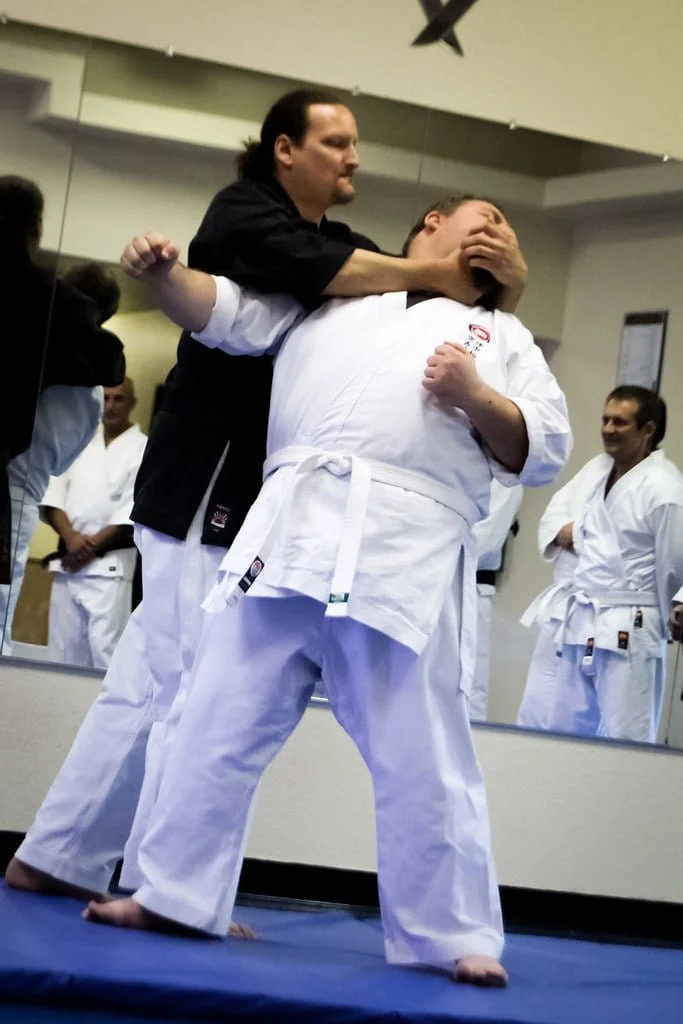
In this episode Jeremy talks with fellow podcaster Paul Wilson (Karate Cafe) about martial arts culture, the challenges of promoting martial arts, and the importance of community and cross-training.
Paul Wilson - Episode 1178
SUMMARY
In this engaging conversation, Paul Wilson and Jeremy discuss various aspects of martial arts, podcasting, and community engagement. They explore the importance of technology in recording podcasts, the challenges of scheduling and engaging with the martial arts community, and the value of collaboration and knowledge sharing among martial artists. The discussion highlights the significance of creating a welcoming environment for training and learning, as well as the personal experiences of both speakers in their martial arts journeys. They also explore the evolution of martial arts culture, the challenges of promoting martial arts, and the importance of community and cross-training. They discuss their experiences in podcasting, the need for innovative formats, and the significance of content over equipment. The dialogue emphasizes building connections through martial arts and the resilience required to continue training despite challenges. They explore the energy derived from student interactions, the importance of instructors continuing their own training, and the challenges faced in maintaining motivation. The discussion also touches on the impact of virtual training during the pandemic and the significance of community in martial arts. Ultimately, they emphasize the importance of choice in training and the value of perseverance in the martial arts journey.
TAKEAWAYS
Engaging with the martial arts community can lead to valuable connections.
Collaboration among martial artists can lead to mutual growth.
Creating a welcoming environment for training is essential.
Sharing knowledge among martial artists enriches the learning experience.
Personal experiences shape the way martial artists approach training.
Martial arts culture has evolved significantly over the years.
Accessibility of information has changed how martial artists connect.
Promoting martial arts can be challenging, even among known peers.
Cross-training fosters community but is often underutilized.
Quality content is more important than expensive equipment.
Building connections is essential in both martial arts and podcasting.
Resilience is key to continuing martial arts training despite setbacks.
Personal experiences shape the journey in martial arts and podcasting.
Students make you a better instructor.
Training is both preventative and curative.
Instructors need time outside of teaching to train.
You can't slack when you're teaching; it raises your game.
No one is glad they stopped training.
Virtual training can still be a valuable tool.
Training is a conscious choice that requires commitment.
CHAPTERS
00:00 Introduction
08:10 Martial Arts Community Engagement and Collaboration
11:25 The Evolution of Martial Arts Culture
12:46 Challenges in Promoting Martial Arts
14:57 Cross-Training and Community in Martial Arts
16:55 The Podcasting Landscape and Its Challenges
18:55 Exploring New Podcast Formats
22:47 The Intersection of Podcasting and Martial Arts
29:05 Content Over Equipment in Podcasting
34:44 Building Connections Through Martial Arts and Podcasting
38:50 Overcoming Challenges in Martial Arts Training
42:12 The Energy of Teaching and Learning
44:58 The Importance of Training for Instructors
49:53 Balancing Teaching and Personal Training
54:59 Navigating Challenges in Martial Arts Training
59:48 The Impact of Virtual Training on Martial Arts
54:59 Final Thoughts and Encouragement
To connect with Paul Wilson:
paul@karatecafe.com
www.karatecafe.com
Join our EXCLUSIVE newsletter to get notified of each episode as it comes out!
Subscribe — whistlekick Martial Arts Radio
After listening to the episode, it would be exciting for us to know your thoughts about it.
✅Subscribe to whistlekick Martial Arts Radio on the following platforms:
🎧Apple Podcasts: https://apple.co/3mVnZmf
🎧Spotify: https://spoti.fi/3yHVdHQ
✅You can find whistlekick on all social media platforms using the handle @whistlekick or visit our website at https://www.whistlekick.com or https://www.whistlekickmartialartsradio.com
Show Transcript
Jeremy (09:23.233)
What's going on, everybody? Welcome back to another episode of Whistlekick Martial Arts Radio. For and today we have a little bit of a a pseudo crossover episode as I talk to Paul Wilson of Karate Cafe. Paul, thanks for being here. It's been a while since you've been on the show. And I'm of course, of course. Today we're gonna we're gonna stop it.
Paul Wilson (09:39.636)
Yes, and thanks for bringing me on. It's this is great. I was shocked that
Well no, I that's what I asked Andrew. I like, you so have you run out of everybody to talk to?
Jeremy (09:49.854)
Yes, you were the last person. We made a list. You were at the bottom of it. And so that means this is the last episode we'll ever do. No, of course not. What a what a way to close, though. I I I just hope you know that you you that if that's true, that means when I have you close the show at the end, you are the last person to speak on martial arts radio. No pressure. So to the audience out there, if if you want to see all the episodes we've ever done.
Paul Wilson (09:53.476)
We're done.
Paul Wilson (09:57.414)
Bye everybody. Sorry.
Paul Wilson (10:02.594)
Jeremy (10:18.119)
Whistlekick Martial Arts or Radio dot com. If you want to see all the things that we do beyond the podcast, because we have tournaments and training events and apparel and training programs and even more than that, whistlekick dot com. And yeah. Paul, thanks for being on the show. Thanks for your time.
Paul Wilson (10:36.411)
Thanks a lot. I appreciate it. This is this is really good. This is actually this is good for me because we were on summer hiatus traveling and and whatnot.
Jeremy (10:43.605)
Mm.
Paul Wilson (10:46.671)
Dan's up at a monastery in a under a waterfall at five o'clock in the morning and I was in a camper tooling around trying to force my way into Dojos to train. And so we actually haven't put out a show yet, even though we've been talking to people and people have actually been pinging me about, hey, didn't you want to talk to me? And so this is a good this kicks my rust off. So I appreciate you get the invite.
Jeremy (11:02.249)
nice.
Jeremy (11:10.869)
You're you're welcome. I I I'm imagining trying to force your way into a do into a dojo. So that's not quite dojo storming them and trying to come up with some sarcastic lesson. It's it's like dojo dojo sprinkling, dojo.
Paul Wilson (11:16.635)
No, it's it's well you know, you're
Paul Wilson (11:24.163)
I just mean more like just dojo weaseling. I you know. I I've been spending a lot of time up in Canada, so you know, I'm I'm really sorry about the way I push it out. But no, when I do You may have seen it on on the PlayStation page, I the Karate Cafe Roadshow 'cause we always w would travel, you know, and we would go hither and yon and have this great country of ours and up in Canada and whatnot. And so I would just always email ahead of time. I'd Google and find
Dojo along the route that we were going and I would just email everybody for a couple of reasons. One, to work out and two, just to, you know, like, hey, this is your town, what's cool to do here? You know, especially if we were staying there for a few days and whatnot. And then and then also just, you know, different styles and different outlooks and and whatnot. So I mean I would just say like, you if you just want to go get coffee, that's fine. We can just sit around and geek out on martial arts. but the whole idea was actually just to get together and train as well.
Yeah, gotta get the road rust off, right? So and it didn't always work out so well. yeah, I got my feelings hurt a couple of times and 'cause I'm a sensitive soul, you know me. and but you know, I was traveling in the summer and especially sort of, you know, in the northeast and the north and stuff like that. In the summer no one's in the dojo primarily. So
Jeremy (12:48.279)
We we do see some departures, unfortunately.
Paul Wilson (12:51.033)
Yeah. So sometimes I'd be Man, I emailed this person like four or five times and I didn't get any reply and blah blah blah blah. And then like in September, I'd be like, hey, you know, I just checked our email because you know we're out, you know, it'd be in, you know, Wisconsin or Minnesota or something like that. Like, okay. So from then on and and after I switched to I actually got started getting more response when I switched my Cardi Cafe email address than my Dojo email address. so
Jeremy (13:16.013)
Mm.
Paul Wilson (13:20.569)
And I tested that. One time I went to Santa Fe and I sent out a thing and I had one guy, my good buddy Chris Krumbacher, who's an Ishao stylist up there. Hey Chris. And I trained with him for a while, and he said, yeah, they're they're not responding to you because they see you're a martial arts instructor. So I said, Okay, I'll go to be a goofy podcast guy, and I emailed the next time ahead of it with a karate FA email address and actually had other people respond.
trained at a Kempo school, visited another Shuanru place, visited a Shotokan school. So it was like it there was that was the difference. and I think that spawned
Jeremy (13:59.982)
I is it isn't that wild though that the default is is cynicism? a martial arts instructor is emailing me and wants to come work out with me. I I can't let them come to my school.
Paul Wilson (14:11.173)
Mm. yeah.
Paul Wilson (14:19.203)
Right. Yeah. I had I'd I straight up had one of my friends say, yeah, they're not gonna respond to you because you're a martial art instructor and they're worried you're gonna show them up. This was him pumping sunshine up.
But I just wanna work out. And he's like, it it doesn't matter. This is their b it's their business, it's their job. So they don't want anyone and I'm like, I don't even live here. I don't I'm here for like a week and then I'm leaving. And anyway, so that's the kind of thing. We did actually end up doing an episode based on that, and it was like I think we called it like puddle protection prevents
proper performance or something like it was something alliterative. We were it was when we were at illit yeah, it was our alliterative phase at Karate Cafe and it was all about like, you know, people are just too worried. I mean I I know you don't have that gene. You know, but there there there's other people out there that and I've encountered like this last trip, I had someone who basically emailed me and it was very nice. no sorry I'm not interested. I don't have time. And I'm like, but you have class
Jeremy (15:00.371)
So l you have a lot of alliteration there, yeah.
Jeremy (15:24.717)
You you don't have time for me to be in your school and take your class?
Paul Wilson (15:28.303)
Yeah, you know. And and then I had another someone else repo r s responded after I visited their class, it's like, Well, unless you're wanting to join and train and and test for rank, I don't think you need to come back. And I was like So that means either I'm really bad, which I'm very bad at that system, but anyway, so yeah, that kind of stuff happens and and I don't get it. Don't get it.
Jeremy (15:50.046)
See it just
It and and see, I don't get it because I have never thought at any point that I am the best person in the room. And in fact, I work I work really hard to make sure I'm not. Probably the only time where I am is when I'm teaching my students. And even then, a lot of them have training in other things. And I try to highlight that because they have elements that I don't, because I believe that if we are all
Learning together, we all get better together instead of me just trying to vomit knowledge on them. That doesn't seem like the most effective way to help them grow. And so I love when we have someone come visit. It's like, you know stuff. You know stuff I don't know, and my students don't know. Do you want to share some stuff?
Paul Wilson (16:27.77)
Yeah.
Paul Wilson (16:36.517)
Yeah.
Paul Wilson (16:43.781)
Yeah. Well when people visit my dojo, I invite I'm like, you know, run us through your basics or, you know, show us one of your content. You know. and then the back clip of that is in the next class when it's just us, I say, okay, this is what this person did, this is what we weren't in and this is how it relates to our system, or this is where that concept is to greater or lesser degree in our system. You know, and that way it's more of a you know, this is the things that bring the
Jeremy (16:52.79)
Yeah.
Paul Wilson (17:12.429)
the concepts that bring us together. It's, you know, the application necessary, arguably, that like separates us. And so, you know, but I never get I've had other instructors go like, Aren't you worried? 'Cause like I had a a a friend of mine, a coworker who did present jujitsu, and so he came in and we got the mats out and we're like, Let's roll. And I mean he just wiped the floor with me. I mean, you know and it 'cause we were doing jujitsu. So but
Jeremy (17:33.729)
Yeah.
Paul Wilson (17:40.974)
Yeah, he was like, You okay with that? I'm like, Yeah, man. I mean, you're showing me stuff. And I'm like, it's okay, so here's where that concept is in our system, you know, in some fashion. You know, and so the next time, you know, and so then the next class we rolled and tried to apply our concepts to that, you know, the way we do it, and we moved on. Everybody learned, everybody had good time. A good workout, you know, life is on. But I'm I'm finding I don't wanna say it it's an overwhelming number 'cause I'm dealing with a small sample size, clearly.
Jeremy (17:49.389)
Mm-hmm.
Paul Wilson (18:10.115)
But I've run into way too many people that are very like Keep it off. Keep it off, you know? So
Jeremy (18:18.167)
Yep. Yep. It's you know.
Who doesn't want a free seminar? There are schools out there that are paying a whole bunch of money to bring people in for outside perspective. And you get someone who it's like, I I'm I kind of just want to hang out and like be friends and exchange knowledge and train and talk about martial arts. Like and
Paul Wilson (18:28.919)
yeah.
Paul Wilson (18:39.333)
Yeah. Yeah.
Yeah. And I don't even lead with with I I used to lead with like, you know, I'd come do a seminar on applications or you know system whole holistic system, you know, da da da and and then I just kinda devo devolved that to like, I just want to come and train. You know, I just just wanna come and work out. And if you want to do this, I do this thing, which, you know, you know, buy me a coffee and let's freaking do a do a seminar, you know, it'll be a way to get your guys in. I was marketing it when I started marketing it as a
Jeremy (19:00.225)
Yeah. Yeah.
Paul Wilson (19:14.543)
sort of extra extra benefit of hanging out with me, was I would say like, you know, if you have trouble getting your students back in in the summer, after I figured out that people were dropping out dur during the summer or less likely to go, I like, this would be a way for you to kinda encourage people to come back in and train during the summer. You know, and and still upkiss. Yeah. You know, and and I guarantee I always when I train with people, I did a seminar in New Brunswick a while back and
Jeremy (19:33.197)
'Cause it's special and different. Yeah.
Paul Wilson (19:43.91)
They were a Shotokans offshoot and I was like, What what do you guys do? They the instructor was like, We're interested in this and I was like, Okay, cool. You know, what do you guys do along those lines? Because I wanted to reiterate what he was talking about. So, you know, you can say it, you know, ten times, but the eleventh time you hear it from someone else and it you know, 'cause, you know, I used poor French or something and they were like
Jeremy (20:06.731)
Yeah, total.
Paul Wilson (20:14.069)
that's what he means. that's what he means. You know, and then and that that sort of d j and just to try and help out. But if not, you know, just teach me some stuff. Let's just work out, you know. I went to a taekwondo school one time and you know, they're like, Do you do spin kicks? I'm like, No. You know, so it's gonna be bad, but I'll understand them better after we do these. You know, I I may still not do them, but at least I'll understand the mechanics. Anyway, so
That's the know, the kind of thing that I was trying to drive with with the roadshow was like get a workout but just meet people and you know I actually had I was going through Iowa and we were in I think it was Mason City, I think. Anyway, we were there for like we ended up extending 'cause it was kind of a cool town. And we ended up staying there like a week, week and a half and I left and I'm on the the Facebook page I said, you know, Hey, see you later Mason City, I'm going to, you know, wherever. And somebody who was a listener ping me said like
I didn't know you were in Mason City. And he was in Mason City and he's like, crap, we could have hung out, we could have trained. We could and I was like, So that but that was my failing for not like, you know, marketing as as as well as I as well as I should.
Jeremy (21:17.76)
No.
Jeremy (21:25.065)
It's, you know, it's it's amazing. If if we think of if we think about martial arts culture over time, there it seems like, and maybe it's just a romanticized hindsight, but it seems like in the 60s, because there was less martial arts, people were much more open to that sort of sharing. Can I crash on your couch and we can train for a few hours in the evening?
Because what we should see today is way more of it. Cause it's so accessible. You can look up. People can look up if somebody's like, I don't know about this Paul guy, you have a you have a body of work. People can find out who you are and what you stand for and how you think very easily.
Paul Wilson (22:13.883)
For good or no. Yeah. Yeah.
Jeremy (22:16.689)
And I've run into the same thing. I thought at one point traveling around the country would be a good way to spread what we're doing and to connect. And I had this dream of of getting a tour bus, which you know was was probably a barely functional Winnebago, and you know, just just rolling around and doing lots of in-person interviews and training and catching some footage and just kind of being a martial arts hobo.
I thought that would be a great time. And I remember the first time I tried to put together a tour. And I struggled to get people who had hosted me before, that knew me, that liked me, that said they and their students had a great time. I struggled to get them to open their doors. They're like, well, you know, we've got this, we've got testing going on, and then we got this other thing going on.
Jeremy (23:14.573)
Okay. So year one of the tour, I looked back and I went, this is exhausting for very little result. So now I don't tour, you know, we have our events and then I go to other people's events and I don't try to bridge the two.
Paul Wilson (23:29.881)
Yeah. Yeah. Yeah, I tried to do that. Kind of the same thing was, you know, on the roadshow was like, you know, we would we would train and then we'd sit down and, you know, have an interview or whatever, or we go grab coffee and we do a quick interview and then I'd I'd post that out. But from a a production angle, that was kind of a hassle because, you know, my wife is like, We're traveling and I'm there editing, you know, and whatnot. So that didn't take off. But yeah, it was it was very hard.
And you know, it it's interesting because I I was talking to a buddy of mine who he's another show and known him for twenty years or whatever. and he has moved back to my hometown and he is talking about martial arts in general. You know, we're and I was telling him the other day, because he was talking about how relatively few schools there are now.
Forty tho or seventy thousand people, seventy five thousand people. Anyway. and I was telling them I was look, you know, back in the day, like there was us, there was another Gojuroo school, I think there were two Goju-Ru schools, three or four Taekwondo schools, like a couple of Kung Fu places. Like so for our town of our size, I think we had a good cross second number of of of schools. And like we had tournaments, you know, and or you know, we didn't there were people would put on tournaments and stuff like that.
Jeremy (24:48.077)
Yeah, it sounds like a good number.
Paul Wilson (24:57.583)
But to your to your point was like, but everybody knew everybody, but not everybody was going over in and cross training. and then actually my sensei, he kind of dojo weasel his way into you know, he would go, you know, 'cause he knew all the police officers and stuff like that, and he would go in and go, Okay, hey, well let's I got my stuff in the truck. You know, he always carried he had a he had a
a ghee and a belt and a set of weapons in his office. He had a ghee and a belt and a weapon and a set of weapons in his truck, and then all of a sudden the Jojo. So when he was driving somewhere and he'd like, I saw so and so was open, he would just pull up and he'd be like, I got my ghee in a truck. And then he would just go in there and train. So he, you know, kinda he's the one who kind of broke the ice a little bit for that. And actually maybe probably inspired me to, you know, want to go train with
Jeremy (25:32.149)
Mm.
Jeremy (25:44.077)
Yes.
Paul Wilson (25:54.596)
different people and and turn it it's much more of a like we're all karate people. If I can use the the the the trademark karate geeks, you know, we were all karate geeks back then and we wan and so flash forward to a year a year or two years ago or whatever, I kinda got a little like screw this game on podcasting because I unfortunately that's when
I started listening to you a whole lot. And I was like, Man, these guys are really good and they get all these really great interviews. And so I was decided I was gonna try and start getting really good interviews. And I was surprised, I'm not gonna mention the name, it's a fairly well known martial artist who I thought I had a a a a good in hookup with. And they basically said like, you're too small, he's really busy, needs to prioritize his time. So
And I was like and that was kinda and then I had a and then I had a couple of friends who I'd asked on to be on the show and that and they were like, Yeah, absolutely, I've never done one and then they did other podcasts and I was like, We're time. Why didn't you tell me anyway? And so I just I got I dropped off and like Dan was like, What are you doing? And I'm like, I just I don't whatever. I just don't want to do it anymore. I mean and then I pivoted to like, Okay, I'm just not gonna worry about interviews.
Jeremy (26:56.704)
It hurts.
Jeremy (27:18.199)
Well
Paul Wilson (27:23.001)
I'm just gonna go back to what we used to do, which is we just talk about martial arts. I got big eyes.
Jeremy (27:27.885)
Well, I th I think I think that leaves that leaves an opportunity for you. It's a format that we've talked about and you know, we do from time to time, but I think there's there's space for it, which is the three, four, five person topic based discussion.
Paul Wilson (27:46.895)
Yeah, I remember yeah, was it was it Chris?
Jeremy (27:51.286)
You know, you you you and you and Dan came on, you know, a lot years ago. We had, you know, the four of us, you Andrew, we chatted and you know, we do that from time to time and I see other people do it. And I think when you have the right people and people aren't there with an agenda and they can
kind of watch because right it's it's like sparring. You're watching for that opening and you've got to be delicate with it and not have two people not willing to shut up and talking over each other. When you've got the right people doing it, it's really entertaining. You know, maybe that that could that could be that could be what you guys do.
Paul Wilson (28:14.638)
Yeah.
Paul Wilson (28:26.319)
Yeah.
Paul Wilson (28:29.803)
That's true. yeah, the one of things that we're we're knocking around we we tried to do it. One of the problems that we're having is we we record like at lunch on, you know, in the middle of the day. And so it's hard to get people and dance on East Coast time, I'm on Pacific Coast time right now, and so it's it's it's kinda hard to get people scheduled up for that. And then of course work and stuff happens. but
Jeremy (28:53.025)
Yeah. Yeah.
Paul Wilson (28:55.779)
One of the things that that we were thinking about doing is is switching our recording times to like the weekends so we can get into people and then get back to our I call it the guest instructor, which is, you know, somebody comes on and that's I put it on the page, you've probably seen it, where I say, like, you know, anyone available? Doesn't matter what style, doesn't matter your rank, doesn't matter your experience level, you're on this page, you listen to the podcast, you're coming on the show, you can't hear the topic, we're not gonna talk about the topic until you get there and go.
You know, and just see what and I've had a couple people go like I want to, but you know, I'm a brown belt and I'm like, Well, you outrank me in your style, so come on, it's okay, you know. and but that was before the summer when we started going on. So yeah, maybe I will do You're inspiring me, Jeremy.
Jeremy (29:30.327)
Yeah.
Jeremy (29:37.587)
That that that could that could be cool. I just I
My frustration is I look at I look at the the podcast space and I see you know and and and I hope this doesn't come across arrogant because it is not meant to be arrogant.
Jeremy (29:57.4)
We were if you think about the inter interview side of things, I think we were like the third show that kind of got launched. You know, there were a couple of they're they're how far back do you guys go?
Paul Wilson (30:08.315)
two thousand five is when Jean and Pete started it.
Jeremy (30:14.089)
Yeah, yeah. So it was it was it was you guys and Haya. It was you guys and Haya, okay. and then I kinda you know, there might have been some others, but like I don't remember them in the way that I remember Karate Cafe and and Hayah. And so we were kind of number three. And so many podcasters have come out since.
Jeremy (30:43.701)
And a lot of it's the same stuff. It's the same guests, the same questions. Sometimes I see those guests coming out three times in a week on three different shows. And I'm like, guys, there's more, like this format doesn't have to be interview.
Paul Wilson (30:46.619)
Yeah.
Paul Wilson (30:54.115)
Yeah.
Paul Wilson (30:59.471)
Yeah. It's a conversation. It's just
Jeremy (31:00.657)
And it's but but now that video is is easy, there's ways to do material. So, like what you know what would be would be awesome because I would love to do this in a physical in-person format. How do you solve this problem? You get five martial artists on, and in your style, how do you respond to someone coming with a knife at this angle? Right? And so
Paul Wilson (31:25.864)
yeah. Yeah, yeah. They you know, like th that's 'cause remember like Blackfelt magazine used to do that, you know?
Jeremy (31:31.062)
Everybody gets three minutes to show what they would do. And then after the three minutes, you kind of collaborate and you're like, okay, I like what you did there. And you piece it together. And it becomes everyone sharing and learning. Right. Like the once we went just from audio to video, I and especially as we got through the pandemic, when everyone realized you actually can learn things from watching a video. Maybe it's not the best, is being in the room with them, but it's still valuable.
Paul Wilson (31:44.315)
Yeah.
Paul Wilson (32:00.806)
Yeah. Martial methodum.
Jeremy (32:01.013)
I I feel like we ignore so many opportunities with format. And I'll I'll I'll be honest: like we talk about Andrew and I talk about do we adjust some of these things that we do? Do we do we look at these other formats? And we are, there are some things that we're kind of slow rolling out and playing with. But most of my time is spent on other aspects of what we do because.
The podcast is never gonna be a thing that cut pays the bills for us. It just it it just isn't. You know, we're this many years in, you're 20 years in, it's not paying your bills, I assume. So what does it have to be? It has to be a thing that leads to other things. So we've got a good thing going here. So I'm working on the other things.
Paul Wilson (32:47.707)
Yeah. Yeah, I that would be I was thinking about doing that for a while. I said, Yeah, I've got a in my office I am at a standing desk, right? So like whenever I like see something on YouTube or whatever, I can basically just like go over to the heavy bag and work on something or I can just you know, just take a couple and do do some Nahanchi steps to the left, or the right in this case, and then you know, do so anyway. So I think I like, Wow, you it'd be kinda cool if I put the camera on
And then, you know, we talk about this and and then I just kinda go down the rabbit holes like, Well then I gotta get a second camera 'cause you know, I used to be a videographer, right? So I'm all like, need some lights and then I'll need to do whatever. Yeah, I s I start like really super
Jeremy (33:25.879)
So you you're setting the bar too high. R River Riverside supports multiple cameras. Mm-hmm.
Paul Wilson (33:31.993)
Does it? okay. All right. If anyone's l listening from Riverside. They're they're they they in the stream, they're like, I hear the keyword and then I'll up if I start getting stuff in my feet, I'm I know why now. 'Cause they listen. that's good. Yeah, but then I need someone over there to s hit the switch. That was the thing. That was when I we used to do the application seminars and I I put a camera up and I was like, yeah, I can have two cameras but then someone has to someone has to
switch, right? So somebody there has to be someone there who like goes camera one, camera two, camera one, camera two, you know. So
Jeremy (34:08.629)
You can handle that in post. You just you just get your full your full recordings and and
Paul Wilson (34:11.183)
Yeah.
But but again that requires work and then I gotta do that. I gotta, you know, do my nonlinear whatever and
Jeremy (34:18.087)
You my my friend, you really you really need to check out Riverside. I I think I here here's what's gonna happen. And and I'll I'll so for the audience, Riverside is the program that that we record on with Whistlekick. And it's it's designed for podcasters. And if you're gonna do start a podcast, you should check it out. And if you
Paul Wilson (34:28.975)
You're looking at it now.
Jeremy (34:37.975)
Have a podcast when you're using something else, you should check out Riverside because it is still, because I continue to look at this stuff, it's still the best offering out there. I'm gonna guess, Paul, that if you check out Riverside, you're gonna get like probably halfway through your first month, you're gonna go, son of my god, I wish we'd done this years ago. Truly, I I really think that would happen for you. And then you're gonna message me and you're gonna be like,
Paul Wilson (34:57.423)
Why didn't I do this? Hmm. Yeah, I mean well that was
Paul Wilson (35:04.803)
Absolutely. Pretty much like that and then there'll be a you know semicolon and then more. I was actually talking with my wife, we were talking about something the other day and she was somebody a a n a mutual friend of ours or whatever started a podcast. And about art or something. And she s said like, you know, like is it hard to do a podcast? And I'm like, No. You know, it it's it's
I think it's arguably it's hard to do one well, but like technically, I mean it's all now, you know, like when I first started this, it was on a you know, an old Mac G five or whatever. And so, you know, I had you know, we didn't have a camera way back in the in the old timey days. you know, and I went put some coal in the in the thing to power the the the and you know Mike and
whatever is always messing with my mic and then doing things and had to get like a a a virtual switcher for the audio, you know, and just you know, all this stuff and like now it's like click go. You know, and I'm an IT guy, right? So it's like, you know, I can absolutely see the marching of time of it's it all gets easier to do. But so I told her, I said, No, I said your your MacBook can do, you know, or your any laptop can pretty much you could you could record a podcast, a video podcast, and poop it up somewhere.
Jeremy (36:13.141)
Isn't
Paul Wilson (36:27.023)
And you're podcasting. And she's like, Wow. And
Jeremy (36:30.221)
You could you could argue that something like TikTok is is podcasts, the way most people use it, right? It's short form, but it's it's personal, it's generally topic driven, and it is fairly one directional in that there are far more people consuming than creating.
Paul Wilson (36:35.867)
Yeah. Right.
Jeremy (36:51.733)
And it's it's opened up some interesting ways to consider what that content generation is. But I agree. It's it is it is simple to make a podcast, but it is not easy.
Paul Wilson (37:04.877)
Right. Yeah. And and furthermore to than to do the content, I'm on a podcast creators Facebook group and I see people post in there all the time. They're like, you know, I have this and this and this. Is that enough? It's like, Yes, that is enough. Y you don't e you can just use these, you know. I like I don't have I'm traveling so I don't have my mic. I finally got a good nice, decent yeti mic. Finally, after twenty some odd years or happily you know, but or because
For a while I think we had a I can't remember if I mentioned this last time we talked about, but I always on the show talk about the massive Karate Cafe studio. And because there was a another martial arts podcast and the guy who did it was arrogant. Pretty pretty pretty and he we kept talking about it's like, and I have this massive studio that I you know, that we use to make the podcast and
But what he forgets is that there's a such thing as an internet, and that previously on my space, look it up, kids, he had posted a picture of him in his massive studio, and it was like him in front of a desktop. He had a mic, you know, and it was, you know, in his office. And so I was like, okay, dude, that's not a massive studio. That's just, you know, well anyway, so it was like that is like I I say these people who think they need a lot of equipment and a lot of expensive switches and blah blah blah blah.
To produce a good podcast. And I don't think you do. you know, just like you don't need, you know, a big massive, and this is the kind of the road I'm going through here with martial arts, if we can talk about martial arts for a minute, you know, is you you know you don't need a huge thing. that's one of the our pending topics or our big eyes in martial arts is, you know, like what what do you need to be successful in a martial art? What do you need you think you need to start to be successful in martial arts? You know, and it's kind of parallel with with podcasting, is like you don't need a lot of stuff.
But you need good content, you know, and
Jeremy (39:05.685)
Yeah, you you need to get started. And and I'm so glad you're correlating those two things because I I see an amazing similarity in that there's a minimum standard.
And just about anything above whatever that standard is doesn't get you a lot more. So audio. I am also an IT nerd and come from an A V background and really enjoy justifying spending money on gear.
However, I have learned that nobody cares.
As long as it sounds decent and it looks decent, the only thing they care about is content. As long as the audio and the video does not distract from the content, as long as they can hear us and see us, that that, you know, when they if they don't have to crank the radio, because most people still listen to podcasts in the car, but when they crank the radio, that at that top volume, it's audible. The rest is gravy.
Paul Wilson (40:06.416)
Yeah.
Jeremy (40:09.171)
And if you have certain skills, if if you know, if I've trained my knife defense skill and I've gotten to it, gotten it to a certain point that if you try to stab me, I'm not gonna die, could make the argument that the rest of it is gravy. The rest of it is for exploration or ego or because I find it genuinely interesting. And there's nothing wrong with that. But in the context of
Podcast as a business, instead of spending the money and the time on more gear, maybe I need to spend it getting guests. Maybe I need to spend it on some ads, or maybe I should go back to that website if neglected for the last however long, right? Just like with my martial arts skills, I instead of spending all my time on this knife defense, maybe there's a form, or maybe there's a kick, or maybe there's you know an instructor I need to go train with that I've been putting on.
Paul Wilson (40:52.773)
Yeah, right. Yeah.
Paul Wilson (41:04.715)
Mm-hmm. All right. Well yeah, I mean for for us where I was going with that was like, you know, it's it's it's I run into a few peers in the martial arts world and they're like, I'm I'm I'm getting my school together, I'm starting my you know, and they and they drop a lot of money on a space and equipment and painting and logos and yada yada yada. And they spend all this money, you know, it's just like it's opening a opening a a business, but I'm like
But dude, you're not you're in most of these cases, like you're not a reference. This is a business. This is the thing you go do as well as your day job. So like you're dropping a lot of money to make this look really good, but no one's coming in, you know, or you you have two or three good students and then the rest is, you know, churn and whatever. and then or like me, like I always start with a free class in the park and I get a couple of people and then I try and move indoors.
Jeremy (41:34.039)
Mm-hmm.
Paul Wilson (42:03.995)
You know, it it it and so and if I only sublet a space and I, you know, I make enough money to buy some more pads or whatever, you know, then awesome. You know, then that's where that is. And in the podcast world it's like, you know, is it clear? Like, yeah, like there was way back in the day, I was using a mic and I I could always there I was recording, like I could hear my dogs barking and so I'm spending a lot of time on audacity trying to take you know
You know, trying to get out dog bark and then finally somebody messaged me and said, like, hey, what kind of dogs do you have? Like in a a chat and I like, okay, no one cares 'cause they were listening to what we were saying, not
Jeremy (42:38.359)
Right. They don't. It's because podcasting is a is a format that's inherently authentic. I've had people stop me at competitions and say, wait a second, can you talk for a second? I recognize your voice. You're that dude from the podcast. You talk to my instructor. And that's super cool. Right? Like I dig that. And I have I've had people come up to me, and I'm sure you've had this too, where
Paul Wilson (42:48.73)
No.
Paul Wilson (42:54.555)
Yeah.
Paul Wilson (43:00.226)
huh.
Jeremy (43:08.159)
It's like they know you, they think they know you because they've spent hundreds of hours with you over the years, but you've never met them and didn't know they existed prior. So it's a very off-balance relationship.
Paul Wilson (43:20.891)
Yeah, yeah, you n you know all the weird stuff that I then Yeah, absolutely. And I and it it's a very easy way, I think, again to tie this back and it's some sort of martial arts, is yeah, it's a very easy way to get people to yeah, arguably easy way if they want to spend the time to get people who don't know who you are,
Jeremy (43:23.191)
But but that's part of the beauty.
Paul Wilson (43:45.702)
to get to know you before they meet you and v invite you and that's what I, you know, when I craft these emails to send people, I'm like, you know, here's some here's a link to our website, here's some of our episodes, here's our YouTube channel, you know, listen to some of our stuff, see if you like it, and then we'll you know, if you want to get together because that's what it is. It's it's a way it's almost a business card for could be a business card, at least you for you and I, you know, a martial arts
martial artist with a podcast to here's what I'm about. ⁓ and then, crabby jokes and you guys say, Mm a lot. I don't like it. You know, whatever. So but You know, I don't I've never like Dan and I always joke about like a w when that sweet, sweet podcast money starts rolling in. It's like it's again just like with with martial arts, you know, it's it's not about money. It's not about having eight thousand students.
Jeremy (44:28.492)
Yeah.
Paul Wilson (44:44.315)
It's not about having a two thousand square foot dojo. It's about creating a a connection with people. it's about understanding where people are coming from. as a martial artist, it's about learning more about martial arts. Like you know when I love it when have people on that have a a good history, you know, of things they've done and places they've gone and where they've
Jeremy (45:01.207)
Mm-hmm.
Paul Wilson (45:12.293)
They've done it. So like we do our our three questions at the end of the show. And you know, it's like where where's the best place you've done martial arts? You know, you know, where's the weirdest place you've done martial arts, and then what is the the best way you've used your martial arts, essentially. You know, and it was like that's that's the last those are the last three questions that we wrapped up, and I kind of ripped it up.
Jeremy (45:23.405)
Mm.
Paul Wilson (45:41.032)
off you a little bit of like I need a I need a good closer. It's you know you're bringing you're raising my vote. So I was like, okay, I'm gonna need to come up with a a thing. I you know, well I mean that's part of the again, you know, we we listen, we talk, we you know Yeah, you know. We I went to your seminar, you showed me some stuff and I'm like, I like that. I'm gonna make take that over here and work it over to my my my business. but we started doing that because I wanted to do like it's it's it's yeah.
Jeremy (45:47.82)
I'm honored.
Jeremy (45:53.399)
That that is martial arts, right? Wheat iron sharpens iron.
Paul Wilson (46:10.703)
Well, I was a I was bullied, you know, and then I saw a Bruce Lee movie and then I took martial arts, which is pretty much everyone sort of in our generation of martial artists. Like that's kind of the story. It's like I saw a Bruce Lee movie, I saw Karate Kid, you know, you know, Ninja Turtles, got into it. but with men, it's like, okay, well, now that was that end. Now on this end, at this end of the arc, what have you encountered to a martial arts? How how is it
Jeremy (46:24.717)
Ninja Turtles.
Jeremy (46:39.991)
Mm.
Paul Wilson (46:40.793)
you know, done things, you know, for you. So or there's a spider. Hello spider. Eat it. the
That's a way of trying to maybe help them go like, hey, you know, look back at your martial career and go, what is what is the best place? 'Cause then invariably it takes it to like, you know, the best place is when I was, you know, just after a really hard workout, you know, and one of my students said blah and you know, or my sensei said, Good job. You know, that that sort of that that they're like pivotal like moments of of of their martial
career. I think it's important for the people to look back on because they're so busy punching and kicking maybe they don't catch it. You know, and that's part of the conversation.
Jeremy (47:22.21)
Sure.
Jeremy (47:30.765)
What keeps you going? What keeps you you know, w we're we're at a time right now where I think because of social media, anyone that's engaged in social media is either, you know, fighting off pessimism, negativity, or they're really, really good at separating. I think most of us fall in the former category. You're public.
Paul Wilson (47:32.635)
Yeah.
Paul Wilson (47:47.29)
Yeah. Yeah.
Paul Wilson (47:55.6)
Yeah.
Jeremy (47:59.416)
People know who you are. You're seeing martial arts content online. You are creating martial arts content. And you are still training as a martial artist. And that's not always easy to continue doing in the face of negativity. So how are you continuing to do that and not throwing up your hands on everything and just going, screw it, and walking away?
Paul Wilson (48:21.089)
Well, that's actually kind of interesting because now we're gonna enter the dark phase of the podcast because actually last week I I literally I told my wife and me and my friends look I'm done. Can't do it anymore. I you know, I just I was like I we're we're living currently up in Canada and so we were in Edmonton last year. Last year, year before last. And I had a basement in the house and I was doing my online class.
Jeremy (48:26.197)
Really?
Paul Wilson (48:50.308)
And I was like, Okay.
one year, figure out that there's a vibe, and then I'm gonna start a class. And then we moved, for very transit reasons. We moved and now we're in British Columbia and same thing. I waited a year, kinda got the vibe, met a few people in town, you know, still going on. And then so at the end of this year or the end of this summer trip, I was gonna come back and get started get get a class going. And so I started doing it and started kinda going it up and there's there's a
Jeremy (48:59.285)
Mm.
Paul Wilson (49:22.693)
whole backstory of s of things that have been going on in in my life that that I'm not gonna share on the podcast. But anyway, it all boys it boiled up to I was doing an intro class and I had three or four people say like yeah that we're interested. So I was gonna do an intro class in the park, as per usual. And got all lined up, ping people, you everyone can make it, yeah. And no one showed up. And so no one showed up and I was like, so the next day
Jeremy (49:44.653)
Mm.
Paul Wilson (49:52.026)
Next day was Monday, which is where my online class is. And it's in my garage. We got a space. I got some mats down, got my heavy bag, blah blah blah blah. And but I have to kind of set up my light and mic and whatever. And I was setting the table up and you know, I had to like move some of our bikes 'cause we mountain bike and I was just like and I started doing it, I was just like, I can't do it. Can't do it. And I got my phone out, I text my guys and goes like not gonna have class tonight. Sorry, I'm out. You guys can train.
Zoom link Zoom link is up, I'm done. And I started messaging all my friends and all my Martial buddies and I'm like, I think I'm done. I just I can't I can't do it anymore. I just I'm I'm s sick and tired. I've been doing this forty years and I'm just you know, And you know, people in my life said like, well, you you've only had two students, you know, for however long. And actually one of my students in my virtual class is a student of my friend, this is actually his dojo.
Jeremy (50:31.053)
Mm.
Paul Wilson (50:50.639)
that that I'm at him visiting in in Washington, Washington State. And one of his students comes online because he moved to Wisconsin and he knew I had an online class. So and then my senior student and then me, that's it. So anyway, I just kinda you know. And when he watches this podcast, he'll go like, That's why you came from class. but I whatever anyway, so then we came down here to
go to Seattle for various reasons or whatever. So last night I went to class at at my my buddy's Dojo at Northwest Kenshin Con and Everett, Washington. And we I did my online class. I signed in, we did our online class because it time zone thing. So did our online class and I kinda walked through that. And then we bowed into the class there and, you know, we kinda got through the basics and I was like, all right.
And and then we started doing then we did kata, you know, conditioning drills and then we did some, you know, stuff with the fingers and the toes and whatever and like it just it started kind of ramping up, you know, and then you started doing content. We do all the content from the beginning to the end. Or up to that and and like by the end of the class I was like, I'm not quitting karate. So, you know, and it was like so what keeps me going i is is is really right now is is doing it. You know, it's it's getting there.
Jeremy (51:54.425)
Okay.
Jeremy (52:01.773)
Yeah, I thought it was like the value.
Jeremy (52:12.959)
Yeah.
Paul Wilson (52:14.925)
And getting that energy from other people and you know and someone asking me a question and then or making me think about something like on the online class, I logged in a little bit late. And I logged in and the senior student was having everyone go through our first contest we've got it each. and but he said, Hey, let's do it backwards. So when I logged in, they were doing it backwards. So like from the end, backwards. and I was like,
Jeremy (52:35.565)
Mm-hmm.
Jeremy (52:41.899)
Mm.
Paul Wilson (52:44.429)
Okay. You know, and so I had to try and noodle on that. Anyway, so I think that kinda kicked me on was like I got that challenge from one of the students, you know, they they challenge which I've always said, you know, students make you a better instructor. And so
Jeremy (52:52.257)
Hmm.
Paul Wilson (52:59.309)
Anyway, so I that's kind of what keeps me going. I mean before it was, you know, the teaching and training and working with people and and and and and the social vibe of working out in a class or working out with people. when I did the Apat Vation Semitar seminars, I was just in love. I mean, this is great. It was I'm working with people and like every year they got bigger and then, you know, one year I did it, you know, full weekend and I actually had extra guys come in. I like, Okay, here's the theme and
Jeremy (53:28.15)
my god.
Paul Wilson (53:28.771)
Like it was kinda like you were talking about earlier. It was like, okay, this is the thing we're doing. Now show your way of doing it. You know? And then, you know, everyone worked with somebody from a different system and everybody kind of give your version of whatever it is. And so it was a whole room of people, you know, cros micro cross training of, you know, that and so then I was just kinda like, you know, hurting the cats, right? This is what we're doing, you know. Hey, think about this, you know, go show these guys how to throw, you know, that kind of that. And and that's the thing that so
Jeremy (53:33.909)
Yeah, I think that's a good
Paul Wilson (53:58.598)
So like right now that's kinda my struggle is like that focusing on that bit that keeps me going and and and makes me happy. So so when we go back back up to British Columbia next week, I'm gonna sit back down and do it again. Which is is kinda you know, being a traditional martial artist. It's like well you just keep going, you know, you keep punching, you know, you keep kicking, you keep, you know, rinse, repeat, you know, do it ten thousand times. So that's
Jeremy (54:26.011)
Yeah.
Is training. You know, I've I've said it on the show a number of times. I think it's I think it's well, it is, it is preventative, but it is also curative. Because I I've I've worked with a bunch of school owners professionally, and the only ones I can't help are the ones that aren't training. Or the ones that have fallen out of love with their training. They're resentful, they're cynical.
Paul Wilson (54:38.105)
Yeah. It's kinda like a vaccine a little bit, you know.
Paul Wilson (54:58.427)
Right.
Jeremy (55:06.337)
Where their only time doing anything is in the front of the room.
Paul Wilson (55:10.224)
Right.
Jeremy (55:13.069)
And
I don't know that I can fully explain it, but I've observed it enough to know that it is true.
And it's true for me. You know, I I was I I I had a chance to go to a a Kraf Maga seminar last week. And it was three hours of getting beat on in a in a wonderful way. And I I I left exhausted and sore. And actually I'm a little still a little sore in in ways and
Jeremy (55:47.093)
It's the best I've felt in a while.
And I know I need more of it, not Krav Maga specifically, but I need more time, not in the front of the room.
Paul Wilson (55:57.583)
Yeah, absolutely.
Jeremy (55:59.574)
And I think that more of us do.
Paul Wilson (56:02.992)
yeah, and I mean what as an instructor, what would you think your training versus teaching ratio is, not within your own school, but just in general, like globally.
Jeremy (56:19.471)
it it's it's 95% teaching. Because even when I travel around, people are like, hey, you want to teach my students? I'm honored. Thanks. Yes. You know, by by volume, most of my most of my training, not as the instructor, is still in my own school where somebody else is running the class. You know, my my senior my senior student show run the class. And you know, we don't do that all the time, but
Paul Wilson (56:30.511)
Yeah, yeah. No.
Jeremy (56:48.813)
Sometimes I'm like, I I need to I need you to tell me what to do. I just need to do it. I need to shut that part of my brain off.
Paul Wilson (56:53.029)
Yeah. yeah.
Yeah, one of the things I do in in our class is you know, we bow in and and I usually you know, we s we do our warm ups and stretches and stuff like that. And then Adam he's my buddy student, but he's a he's a young dun, fourth degree and he's really fit. He's he and he does we tie and FMA and a couple other things. Anyways really so I was just kinda like I don't really fit, you know, I like
Jeremy (57:12.567)
Mm-hmm. Mm-hmm.
Paul Wilson (57:26.019)
lead us to the ba the warm ups. And so he pulled all these crazy warm ups out from like, you muechai and and all this other stuff. And it was great. And I got done, I was sweating and I was all warmed up and I was like And I just in my head I like, okay, you're gonna run the warm ups from now on. Because I can unplug my brain and I can actually just stretch and warm up and do my thing. But I'm I I'm like, hey, what are you doing? Let me see what's going on. You know, because it's great. And then every now and again I say, you know, someone else do it. I I really like I've stepped away from
you know, leading to warm ups because that's my workout. And even it doing the basics, we have our twenty five basics you do basically the beginning of every class. And I do them. I don't just stand there and look. Because first off, one of them's a need on, the other's a young gone, so they really don't need me to ping on the the the the the Q rank stuff. But I mean I'm I'm it's like, Okay, now we're gonna do three reps, you know, instead of two reps or you know whatever it is. But or I was like, okay now we're gonna do it, you know
Jeremy (58:04.503)
Mm.
Paul Wilson (58:24.783)
Doing body changes, you know, changing angles and stuff like that. But by and large, I have someone else lead it because I don't have to really teach them anything. I just throw it all aside. Hey, that's how that's but I get my workout in it. But even when I had, you know, white belts, green belts, brown belts, something like that, I usually led the basics because I wanted the workout. And I would, you know, do the thing and then I'd write a note. I used to have a whiteboard. Actually, for a while I had a the you know, the sort of
Jeremy (58:27.125)
Mm.
Jeremy (58:36.237)
Right. Right.
Paul Wilson (58:53.999)
parchment paper, the big roll of moving paper or whatever, you can roll in a roll. And I would put it on there and I wrote on in with a Sharpie I'd write who was in class and then what we covered and then like whatever my notes were. And then and and then I just roll it up. So I was making like a scroll for like so for the year I had like a scroll of like what we did, wrote it in hand right now and then you know I'd give it to one of the students like, Here, this is what we did for the year, yeeha, you know, put my honko on it or whatever. But
Jeremy (58:55.735)
Mm-hmm. Mm-hmm.
Jeremy (59:07.701)
Mm.
Paul Wilson (59:23.887)
But I would just, you know, keep going and I'd write down whatever my note was. And then after the basic side it's like, okay, now this is what we're gonna focus on because you guys didn't do this right, or you know, we need to work on that or whatever. But that way I still got my work out in because I I thought it was super duper important not not to miss that workout because I wouldn't I wasn't traveling and and going in places and stuff like that. So yeah, it's like it for me it was it was very much and then after that when we're doing two person stuff, I really like to just have people mixing up.
Get in there and and ⁓ work with them and demonstrate stuff and we're j we're rotating out everyone grab a dance partner, we start working out, then we rotate, so one person is out, I'm out, and then I rotate in and they wrote out. And I said, now just watch everybody. generally ⁓ start with the senior person. It's like, watch everybody and then see what they're doing. And so that way when you rotate back in, you'll have the the outside view of that's what I should have been doing, kind of thing.
And but but that way I get my work everybody gets a workout, I get my work out, but then also everybody gets not necessarily to teach, but to learn by observing without being in the mix, which, you know, somet sometimes it's hard to see. So you know. And and that's the one thing I do miss about virtual lessons is you know, there's not a person there. So
Jeremy (01:00:26.253)
Hmm.
Jeremy (01:00:35.735)
Yeah. Yeah.
Jeremy (01:00:45.69)
Right. you're still out around Seattle?
Paul Wilson (01:00:51.031)
I am right now, but no
Jeremy (01:00:53.453)
How long are you gonna be there? Because I've got three people I could connect you with.
Paul Wilson (01:00:57.881)
Well, do tell. I'll be there
Jeremy (01:00:59.295)
Yeah, yeah, I'll I'll I'll mention them off I'll mention them offline, but all three have been on the show. Great people.
Paul Wilson (01:01:02.373)
Okay. at least until Saturday. but we may stay an extra week, so I don't know. But yeah, absolutely. That'd be that'd be great. I mean I I come here and I train because this is our federal federation and stuff, but he c cross trains here and all kinds of stuff. But yeah, I just it it's great, just drop it in soon.
Jeremy (01:01:19.637)
Actually the numbers going up. I I think we're up to like seven or eight people now. There's we did so we did I think three years, we did a free training day. maybe I think it was four years in outside of Portland and then
Paul Wilson (01:01:23.307)
Ha
Jeremy (01:01:36.575)
Some ridiculous town name south of Seattle. Piolo.
Paul Wilson (01:01:40.283)
Yeah. Which is just fun to say, right?
Jeremy (01:01:41.826)
Right. it it it's yeah, it's it's it's spelled funny. It's funny. Any of you out there who are who are watching or listening to this, yes, I'm making fun of the way your town is spelled. But I'm also from New England where, you know, we don't know how to pronounce or spell anything. So it's don't worry. yeah, there there's a there's a good there's a good contingent out there.
Paul Wilson (01:01:52.356)
It is.
Paul Wilson (01:02:02.884)
It's that's yeah. Well yeah, no, so
Paul Wilson (01:02:07.781)
Yeah. Yeah, there's lots of great martial arts out here. That's one of the one of the things I do when I when I go around. Even if I don't like connect with anybody, like if I'm outside their school, I'll like take a picture. Do a selfie in front of and post it like, hey look, I was here, you know. And I used to joke and say, like, yeah, I show up and no one's here. Convenient. You know, like they knew I'll come in. And you know, but no one ever no one ever took the bait. I like, come train with us, we'll show you. So you know, it is what it is. But yeah, I so I my
My grand sensei, my sensei sensei. I was watching a video of him from back in the in the late 1900s. And we were at a and he was teaching a class on teaching the basics. And so it was all with Shodan and you know upper bro brown belts and whatever, and I was like peeking around the corner because I think I just got my brown belt. And he was talking about he's like, you know, you don't train in class, just teach in class.
And he says, you know, you you train outside and then you you teach in class. And I was like and I and this was an I I I came across this video, I don't know, maybe ten years ago or something like that. So I was already teaching and I like, I can't do that. I can't not like my sensei's, like none of them ever didn't work out in class. So so I mean when when you
Jeremy (01:03:28.907)
I don't think there's anything more motivating for a student than to see their instructor training and specifically their instructor training working on something that they're not great at. I think that's the best.
Paul Wilson (01:03:39.716)
Yeah. yeah. Right. And and like as a as a senior student, like going like I get put on the front row, right? So I know there's all these Q ranks behind me. And I was like, if I look junk up here, they're gonna be like, Who's this guy? Who you know, whatever. So th there's that that added pressure of like, they're seeing me, they're seeing like how you know how I'm standing, you know, and how my kicks are looking, you know, how my stance looks while I'm w doing that. Yeah, it it it puts
puts that pressure on where like I'm where I'm not I'm not teaching, but if I'm up front, I have to if I'm facing them, because like, you like when we go to camps and stuff like that, everyone lines up and then the front rank turns around and they lead the basic, right? So you can't slack. You know, you you're you're you know, you're walking talking death machine and and whatnot, you can't slack. But you've gotta, you know, so if you're you know you're slacking your kicks, you've got to raise your game a little bit.
Jeremy (01:04:25.549)
Mm-hmm.
Paul Wilson (01:04:37.241)
And so when you're teaching you gotta raise your game a little bit because you know, you can hang on, I gotta write this note down or whatever, or stop and talk to somebody. But I I just think it's super important that you know, as as a martial art that that you're training. If if you've got if so many students and you don't have enough senior students to teach, I I
Jeremy (01:04:43.541)
Mm.
Paul Wilson (01:04:59.277)
I guess that's good. But I mean I st I still need to train. I still need to to get in there and do it. And like a lot of times I'll we'll line up we all do we do the we do the kata. I go through the first time and then I'll step out and everyone else do it. You know, and because that way I'm still getting it. And then if they do it really well and I'm really jazzed by it, I'm like, Let's do that again 'cause you guys all look better than me, so I need to go do that was parenthetical. I don't say that part. But yeah, you know, it's like
Jeremy (01:05:22.413)
So the the end result is that you're you're not done. You're not throwing in the towel. You will continue. Good.
Paul Wilson (01:05:31.395)
No. Yes. For for for better for better or worse it's it's a warning. Unfortunately you guys aren't gonna get rid of me anytime soon. But yeah, I mean that was you know, it was there's been times where I mean so that that's a good question for for you. Has there been a time where you were just like I'm totally phoning this in for like a long period? Not like every day, like, you know, we have a bad day at work or whatever, we're tired. It's like, all right, everybody do basics, you know. And it's like but
But there have been more than a few times over the years where I'm just like, This whole week I've just been just phoning it in.
Jeremy (01:06:08.663)
But you know what? I think I think that's natural. And and I don't want that to be true. But if we're going to say this was a good week, then we have to be able to say that it was offset by a bad week. If you can have a good week, you can have a bad week. Every week can't be a good week. Otherwise that's a normal week.
Paul Wilson (01:06:28.313)
Yeah. And it's it's like everything can't keep getting better every week.
Jeremy (01:06:33.245)
Yeah, and and I would love to live in a world where that was true, but it it doesn't seem to work that way. It seems to be trends, right? So we've got to take it on on the average, right? You know, maybe I had a couple of weeks or a couple of months, or to be honest, I've I've gone through quite a bit of personal stuff over the last couple of years and it's definitely impacted my training and my school and and whistle kick. And and I do my best to not let it affect it, but it does. I can pretend it doesn't.
More I can accept the reality and and do my best to to work with it. If if someone tries to punch me in the face, I can try to pretend that they're not, you know, six four and two fifty and that that matters.
But that doesn't serve me. Right? Reality matters and and pretending reality is other than it is doesn't doesn't get us where we need to go.
Paul Wilson (01:07:18.981)
Okay.
Paul Wilson (01:07:29.455)
No, and it it and I guess that that's the you know, the lesson for martial artists is like, you know, you know it's what the great sensei Gurney Halleck said, right? You know, you you fight when the necessity arises, no matter your mood. It's like, you know, you have to you have to keep training in order to be able to fight, you know. If you're injured or you're just not into it, you know, you y you walk into the dojo, it's like, All right, you know, I gotta do this.
Even though you know, but I I've talked to more than a few people and it was like and they're like, no, man, I love Every time I go on the dojo, I love And I like, Well, yeah, I do, but I mean, you know, there have been times where I'm just like Man Yeah. Yeah.
Jeremy (01:08:12.567)
There are different kinds of love. There are people I love and sometimes I want to punch them in the face. And they're not martial artists. Right? But it doesn't mean I don't love them. I love training, but sometimes I don't want to.
Paul Wilson (01:08:21.093)
Yeah. Yeah. But I mean yeah, for for for for the all the phoning it in a bit, it's always pretty much you know like when I'm done with class, I'm usually like, friend, okay. You know, it it doesn't it may it may not have been an ideal class, I mean it may not have done all the things that we want to do. You know, or whatever, or you know, I may have gone in a weird way or just, you know, I wasn't really happy with my performance, but
But at the end of the class I'm usually like, Yeah, that was a good class. You know, I'm I got some got some lumen in, I did some stuff, I got to hang out with people that I like and you know it all worked out. but it you know it'd be interesting to hear more stories of of how I got past 'cause yeah, I mean like I I th the last week was the time where I was just like I am I'm just done. I mean like I was like, you know, gonna sell on my ghee, like or you know, who can I get my weapons to or you know, it's like it's
The whole the whole the whole shooting match was like, you know.
Jeremy (01:09:25.815)
But but I think I think the beauty there is that it that's always a choice. It remains a choice. You know, people argue about the definition of of what makes someone a martial artist, and to me a martial artist is someone who who has the intent to train again.
Paul Wilson (01:09:30.811)
Yeah.
Paul Wilson (01:09:45.317)
Yeah, it's it's it's a it's a conscious choice to do it. It's not you know I wanna
Jeremy (01:09:48.428)
Right. And there's power in choice. And that's why I think that matters. You know, every time we we put on our ghee, Dobak, whatever it is, er or or or maybe if we train without, every time we choose to train, whether it's one punch or, you know, a four day seminar, it counts. And I I think
Jeremy (01:10:13.205)
I think sometimes smaller bites.
Paul Wilson (01:10:17.859)
Yeah. Yeah, a little bit, you know.
Jeremy (01:10:17.985)
are appropriate. And you know, you know, if if you're if you're if you're ill, you may not sit down and have a huge meal, but you gotta eat something to keep going. And then eventually you feel better and you eat a bigger meal.
Paul Wilson (01:10:30.127)
Yeah. Yeah. Yeah. Well that was, you know, especially true, you know, through pandemic. you know, we I don't know if we talked about this, but you know, I knew a lot of people that were just like I can't I can't do it, you know. I can't, you know, there's I can't do it. You know, there's i th I mean and there are systems where virtual training is nigh in po into possible, right? But there was still like and that's why I used to call it martial method.
Jeremy (01:10:37.421)
Mm.
Paul Wilson (01:10:59.855)
It's like it's not quite as good as the real thing, but it kind of takes the edge off. It was like that's what virtual class was, you know. And now many people have adopted it. Whereas early in the pandemic, a lot of people were like, I can't do it. You know, I just you know that just like podcasting. It was like, it's you know, you have to have a laptop with a webcam and you get a class, you know. And then again, like me, I was like, I need two cameras and I need a
You know, one on the floor for the stances and you know, it just it for me it was a challenge. And I we mentioned it on the show several times like that was a challenge as a martial artist, as a martial arts instructor. It's like how am I gonna do this? You know, you can't you can't you know like okay, I can't do this. How am I gonna do this? Well, just do it and then come back the next day and do it again and then you know, the the technology came up, you know, and the the you know, people filled the hole, you know, and
Jeremy (01:11:52.791)
Mm-hmm.
Paul Wilson (01:11:56.86)
the the gap in ability, you know, whatever, you know people, you know, dedicated Zoom devices and you know whatever. And you everyone got to work out. And then, you know, you adjusted your expectation on how you were going to train and what training was going to be. and you moved on. And then when pandemic failed out and you know a bunch of people rushed back into Dojo and stopped doing the virtual classes. We kept ours up because I was like, hey
Jeremy (01:12:26.381)
Mm.
Paul Wilson (01:12:26.767)
You know. This is still a tool. So even when we had our regular class, I would pop up the Zoom session, you know, and sometimes like our guys in Australia would pop in and you know, even just watch and say hi, hey, what's going on? All right, and then or you we'd all get together and do a kata. And I just because that was a way of we're all apart, well now we can be together. We w we were able to be together more during pandemic through virtual classes. That doesn't need to stop.
Jeremy (01:12:36.758)
Nice.
Paul Wilson (01:12:55.995)
Because we don't need to do virtual classes anymore. So that was the kind of thing that th that buoyed me up through pandemic. It's like, okay, we can't really train. Like me and my local students, we get together in the park, you know, and and train stuff like that. But you know, when we got back in the dojo, it was the same thing. We were all still keeping the distance and you know, but
Jeremy (01:12:58.848)
Exactly.
Jeremy (01:13:07.949)
Mm-hmm.
Paul Wilson (01:13:20.303)
There were a lot of people that were like, I'm done. You know, and that's one of the things that I try and do when I start a class is I try and reach out to people who used to train. You know? And actually for a while I on a Facebook marketplace, I'd just, you know, do a search when I see people like selling their their ghee, like you know, and it'd be like, you Taekwondo Ghee, you know, barely used, fifteen dollars or whatever. And I'm like, Why are you selling your gi? You why are you getting rid of
Jeremy (01:13:30.165)
Mm.
Jeremy (01:13:40.397)
Mm.
Paul Wilson (01:13:49.712)
You know, it's not like, I you know, it's like, hey, well, come train, you know? Come try for a month free and you know, get you know. I was like, you know, why you know you know, there's a lot of means it's like kid sizes. You see a ton of kid sizes. But I mean, it'd be like why'd you why'd you get a because I had several students that came to me and started training with me because they used to train and then life happened and they always missed it.
Jeremy (01:13:55.595)
I like that. That's that's a good that's a good strategy. That's a good strategy. I dig that
Paul Wilson (01:14:20.011)
And and so this is another thing that kind of was kinda helping me power through my my dark days was like I don't want to be the be like wake up in a month and go or two months or second a year and go like Man I shouldn't stop training, you know? Because I've trained a lot of those guys.
Jeremy (01:14:36.522)
I
I've never met anyone who was glad they stopped training. I know people who have glad they stopped training at certain places. No one has ever told me, yeah, I used to do martial arts and I stopped, and I'm glad that I stopped.
Paul Wilson (01:14:53.209)
Yeah. Yeah. I I hated having all those confidence building, you know, self defense something. Yeah. And being reflexible and stuff like that. It's
Jeremy (01:14:59.521)
Yeah, all those are the worst.
Paul, if i we're we're gonna we're gonna start to whine here 'cause I've got plea please don't please don't take that as a as an insult 'cause I know you and I could could talk for hours more.
Paul Wilson (01:15:09.938)
yeah, we should.
Paul Wilson (01:15:17.583)
Hey, Corona Cafe is the home of the ninety minute, half hour show.
Jeremy (01:15:23.629)
okay. And where do people find the ninety minute, half hour karate cafe show?
Paul Wilson (01:15:28.467)
at the internet near you where, you know, karatecafe dot com. we can we have a YouTube channel for our since we started doing the video shows as well as the audio shows. And anywhere find yep, YouTube of Karate Cafe. and then Yeah, and then you know, anywhere find podcasts or soul, you know, is is pretty much I actually went through and I was digging everywhere on Spotify and I had to like go through and and and and dig stuff like that. That that's the hidden side of
Jeremy (01:15:37.345)
Hmm. Is it called karate cafe?
Paul Wilson (01:15:57.851)
of podcasting is like, some of that stuff it just doesn't get ingested. You've got to go and like submit your feed and do a thing. Verify.
Jeremy (01:16:03.381)
Mm.
Yep. Yep. There are there are things that must be done. and if you if people wanted to get a hold of you directly, are there ways to do that through through those those places or do they need other other ads?
Paul Wilson (01:16:18.371)
Same thing. you can email you can email me at Paul at karatecafe dot com or karatecafe at gmail dot com is the is is is the standard one. my my dojo address is Paul. Sensing a theme here at karate dash dojo dot org. that's you know one of the things that I got really like uptight when I started teaching was like, you know, calling myself Sente and you know, and just so like
Jeremy (01:16:36.407)
Yeah, I think so.
Jeremy (01:16:45.933)
Mm.
Paul Wilson (01:16:47.247)
Even on email I like I can't I can't bring myself to type in Tente. So and I even my signature for Karate Cafe is as is producer, co host, jenner. 'Cause I'm you know, I'm just I'm doing I'm doing all the stuff, right? So, you know. So I don't wanna you know.
Jeremy (01:17:04.759)
I get it. I get it. Now, even though this isn't the final episode of martial arts radio, because we don't keep a list of all the people and you are not the last one for us to talk to, I am still going to have you close up the show. So what do you want to leave people with? What what thoughts or themes, takeaways?
Paul Wilson (01:17:27.983)
Don't quit. Be friendly. Answer the email when I send it to you.