Episode 1068 - Sensei Anthony Arango
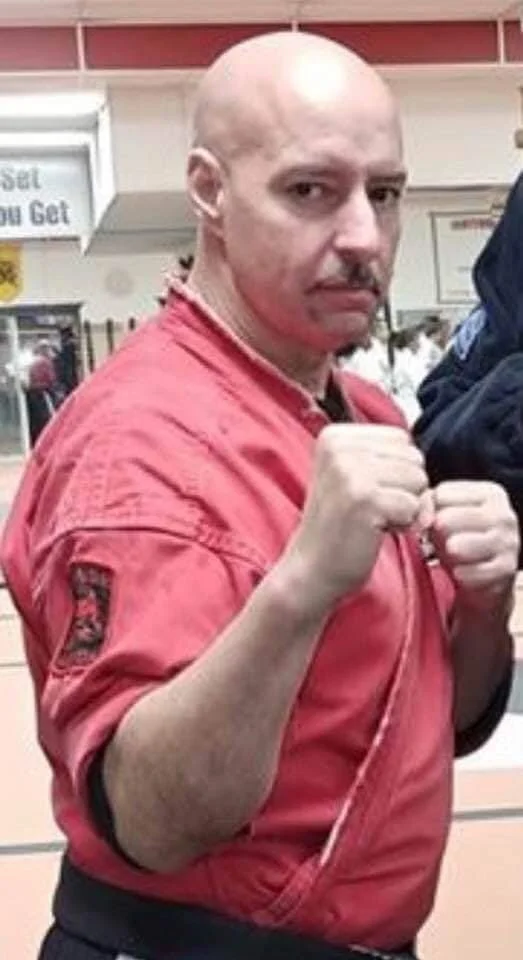
In this episode Jeremy chats with Sensei Anthony Arango in person, at the 2025 Uechi Convention.
Sensei Anthony Arango - Episode 1068
SUMMARY
In this conversation, Jeremy Lesniak chats with Sensei Anthony Arango and they explore the multifaceted world of martial arts, emphasizing the importance of community, culture, and personal growth.
They discuss the challenges faced by martial arts schools, particularly in adult participation, and the need for a supportive environment that fosters learning and development. The conversation also touches on the evolution of training techniques, the role of parents, and the significance of tradition in martial arts. Through personal anecdotes and reflections, they highlight the emotional connections formed within the martial arts community and the impact of instructors on their students' journeys.
TAKEAWAYS
Martial arts is more than just physical training; it's about community.
Events like Uechi Con foster connections and learning among martial artists.
Adult participation in martial arts has declined post-COVID, especially in schools.
Creating a positive culture in martial arts schools is essential for retention.
The evolution of martial arts training includes a blend of various techniques.
Early teaching experiences shape how instructors approach their classes today.
Competition can be a double-edged sword in martial arts training.
Understanding student needs is crucial for effective teaching.
Family involvement in martial arts can enhance the experience for children.
Martial arts training is a lifelong journey that evolves over time.
CHAPTERS
00:00 Introduction
02:40 The Importance of Community in Martial Arts
05:36 Challenges in Adult Martial Arts Participation
08:19 Creating a Supportive School Culture
10:55 The Evolution of Martial Arts Training
14:01 Personal Journey and Early Experiences
16:40 The Role of Tradition in Modern Martial Arts
19:25 Understanding Student Needs and Goals
22:19 The Importance of Foundational Skills
25:01 Family Involvement in Martial Arts
28:08 The Evolution of Techniques and Training Methods
30:50 Integrating Self-Defense into Curriculum
33:25 Balancing Tradition and Modern Techniques
36:23 Curriculum Development and Student Progress
38:35 Streamlining Martial Arts Curriculum
41:18 The Evolution of Teaching Methods
43:01 The Emotional Journey of Martial Arts Instructors
45:28 The Role of Parents in Martial Arts
48:35 Safety and Personal Protection in Martial Arts
52:41 Teaching Special Needs Students
57:05 The Importance of Facilitating Learning
01:02:01 Traditions and Physical Conditioning in Martial Arts
01:07:54 Highlighting Unsung Heroes in Martial Arts
This episode is sponsored by Kataaro. Please check out their site at Kataaro Custom Martial Arts Products - Kataaro. The month of October is Breast Cancer Awareness Month and Kataaro is donating 50% of profits from all breast cancer awareness products to breast cancer research!
And use the code WK10 to save 10% off your first order. And be sure to ask them about a wholesale account for school owners!
After listening to the episode, it would be exciting for us to know your thoughts about it.
✅Subscribe to whistlekick Martial Arts Radio on the following platforms:
🎧Apple Podcasts: https://apple.co/3mVnZmf
🎧Spotify: https://spoti.fi/3yHVdHQ
✅You can find whistlekick on all social media platforms using the handle @whistlekick or visit our website at https://www.whistlekick.com or https://www.whistlekickmartialartsradio.com
Show Transcript
Jeremy Lesniak (01:56.45)
Hey, what's up everybody? Welcome back. It's another episode of Whistlekick martial arts radio. And today I'm joined by Anthony Arango. I got it right. Yes, sir. Yes. And if you're new to the show, please check out whistlekickmarshallartsradio.com. It's where we've got every episode we've ever done, audio, video versions, sign up on newsletter so we can email you when we drop a new episode. So you get all that super easy right there for you.
And of course, whistlekick.com for all of the things that we do, events, peril, sparring gear, all that sort of stuff. Now this episode is sponsored by Kotaro. Thank you to Kotaro for their continued support. This belt here, this is, if you're listening, you don't know this. If you're watching, it's black on one side, pink on the other. This is part of their breast cancer awareness line. This episode is dropping in October of 2025. I don't know if you've been affected by breast cancer. Most people know quite a few people who, yeah.
had been affected by breast cancer, but Kataro is donating half of the profits from these belts and the other breast cancer related items to breast cancer research. Use the code WK10 to save 10 % on your first purchase. If you're a school, sign up for their wholesale program and thank you again to Kataro for supporting Martial Arts Radio.
I'd take you to Anthony. As many times as I've done it, there's really no excuse not to be, except for the fact that sometimes I'm not. You do something long enough, you get pretty good at it, and if you do it enough times, will still... Isn't that the story of what we do as martial artists? 99 % of the time, you do it enough times, you're still gonna screw it Sometimes too comfortable is not good.
So, we don't have a formalized way of starting. So let me ask you, you're here and if I'm understanding correctly, this is your first time here at WeegeeCon. Shout out to WeegeeCon, shout out to Marcus and the Durkens and everybody for hosting us here again. Why are you here? I watched the last year or two that he's had the event here and I wanted to come to feel and see it for myself.
Jeremy Lesniak (04:13.71)
how he has so many adult students of the over 29 age training and living the lifestyle of martial arts. You know, which sometimes is the hardest age group to get training on a regular basis. And I saw all the great people that are here. And I'm a student, I wanna take classes, I wanna take pictures with you, that's just the way I am. That's why I'm always so excited when I'm at my school.
So, and you got to lead by example. mean, you know, where's your school? Massapickua, Long Island. Okay. New York. Down on Long Island. New York. I'm a, a, my parents are from central Long Island. Hicksville is in my, in my, in my blood, I guess we can say. Yeah. But that's close to me too. That's a 15, 20 minutes. But just to be in the, in the presence of so many great people look like even, you know, I took a class today with Andrea Tippett.
Yeah. know, and he was so smooth in handling the weapon and such a humble guy that you get attracted to, you know, watching him do his craft. And I got to experience it, you know, being in a class with him. Yeah. You know, so it's a, and that's what you get to do here. I mean, every room, the problem that I have whenever I come to an event, especially big, as big as this, they have three instructors at the same time.
So now want to go to all of them and now I got to decide on okay which one am I going to get the most benefit from? And isn't that a great problem to have? I mean that's we do some events that are formatted similarly to Wechi Khan and that is that is what we aim for is to create those sort of problems. Well you want to come back next time because this way if I miss this one I hope he comes back next year so I can get into that class. Right. So you mentioned the over 29
demographics. Does that mean most of your students are on the younger side? I have a strong school. We've been there for 44 years. Opened a school when I was 19. I was crazy back then. Afro and everything had been. Seriously? in the day. Okay. Do we have photos of that? Do you have photos of that? Okay. I want photos of that somewhere in the mix. And you know, I was young, crazy, you know, opening up the school at 19. And
Jeremy Lesniak (06:35.278)
Now, after COVID, the adult population isn't as strong as it used to be. I think the parents were very eager to push their children back into a physical activity. So the children's program blossomed again the way it had previously. What about 150 children under the age of 12 that are presently trained in program? Yeah, it's a big, and then, you know, we had always the same, we always equal with.
If we had 150 kids, we had 150 adults. That is very strong. Right now we're like a half of what we were for the adult population. So that's what I'm working on. And coming here, I see a lot of things that I can improve on. By talking to some of the black belts here that are training with Grandmaster Buzz Durkin and listening to the seminars and watching, you know, what they're teaching, little things they say.
where I see a large population of adults taking the seminar. what do you think the difference is? Because for folks who maybe haven't watched a lot of episodes, Buzz Dirkins has been on, of course. And we talked about it, this idea that at the peak in this tiny, pretty small town in New Hampshire, had 400 students, which is, 400 students in any school, in any kind of insane.
But to have 400 students in these towns where, you know, there aren't 40,000 people. I mean, that's more than 1 % of the population is in a school and that's pretty rare. What is it? I I've heard bits from from from us. What is it you're observing that is different in this culture that you're bringing back? I'm going to say definitely it's not the techniques that are being taught. It's a culture that's being fostered.
within that school because I'm watching, I watched the graduation last night. I watched how they're interacting. I watched, you know, they're a family. this is, I'll attribute this to Sifu Brown from Detroit. He said to me once, there's three places that you have in your life. You have your school, if you're a child, you have your work. Now where's the other place? Like where do you go to be yourself and grow and be
Jeremy Lesniak (08:57.272)
part of the team like we were when we were in high school or a clique. And the martial arts should be that other place, you know, for a healthy environment. So what I see here is that is exactly what he is forced to. I mean, he is forcing a tremendous amount of culture that is not a technique like that. There's no secret technique that's behind closed doors. And, you know, they're only working on that. And we haven't seen it yet. Only if you take a class and no disrespect to.
to Weechie-Roo, there are fewer secret techniques. mean, is a, what's word I'm looking for? It is an approachable style. And I'll say this from what I see. I think a lot of school owners or styles, they emphasize too much of one thing. And then if you're not able to do that particular thing, then this is not the place for you.
I think gearing towards the adult population. think going more towards self-defense and more towards physical conditioning, you know, instead of kicking or fighting itself in the sport karate aspect. think that would be more beneficial for you to go, you know, I think I can do this. You know, because I think that when somebody comes to your school, a lot of times they're looking at things that they're not able to do so they could talk themselves out of.
You know, oh I can't do that. I can't do that kick or I can't do that technique or oh, they're getting hit too hard I don't know if that's for me Uh, and then they talk themselves out of it before they even start and and what's kind of ironic is that? You know if if you know anything about lychee rule if you've spent any time with any of these folks they The way I would describe it. They like to bag. They're hardcore. They are rugged and right and they have a huge number of
multi generational anticipation and the number of families that have two and three generations. I don't know if they have any folks for generations, but if anybody does, they do. Training is mind blowing. And what I think it is, they all seem to care about who you are, and how you are, and why you are long before they care about what you're doing. They care about who you are as a person long before they care about the quality of your
Jeremy Lesniak (11:20.91)
Well, they know about you, you know, because they're inquirers. Yeah, because it's not a tactic. No, it's a genuine. And you feel it. You know, you feel it. It's not I'm going through a questionnaire and then I want to find out all these things about you. It's genuinely asking you questions. know, you met who's your significant other. Do you have children? What do do for work? How's your physical fitness now? What do you do? You know, all those things that, you know, it's a genuine that most people don't ask you.
The other thing too I saw is that when I see them training, they're training fought and with contact, but not malicious. So that's the other aspect that has to be kind of taken care of very quickly. When you're running a class that the people that are in that type of frame of mind, maybe not, you know, the people that you need at your school, because that one person can take out 30 people that, ego is so destructive in a martial arts.
setting and it's hard because most people step into a physical pursuit with some ego and when you're talking about fighting even if it's fighting adjacents ego is going to come up it's it's primal it's part of who we are and it's understandable which that doesn't mean that you can't temper it right well we don't have to be malicious and i think that's the the the culture that's fostered here which i definitely want and we're we're very similar
to all that, but I saw a lot of things that I can improve on. And that's why I'm here. I can't be in my own little box and I'm gonna have all the answers. I gotta go out and say, okay, and there's some things, when I go to seminars, I go, that's just not gonna be in my culture here. And there's other things I go, like every seminar I took today, yesterday and today, I picked out a couple of things that either the way I can teach it or say it or explain it has become...
something I'm taking home with me. Sure, sure. You said you opened your school in 19. 19, yeah. That suggests that you started training at least a little while before that. I started training at six, I'm going to say, in the 60s. Hate to even say that. When you said how long your school's been open and when you... Because initially I was like...
Jeremy Lesniak (13:42.414)
He must have taken that over for something. But then you said, you opened it and I did the math and I went, huh, okay. Wouldn't have guessed. Training as a six year old in the 60s? I've been doing this a long time. That was not common. Now the only reason why I was able to do that was because my sister at the time was taking karate at Kempo School in Queens and she was 16 or 17 and she was also the secretary.
And she was paying off the tuition that way sure and then I was sitting there because she was watching me and they ended up starting to teach me So that's how I got started with martial arts back, you know, so I was about six or seven I got one or two pictures of me when I was six or seven and then And then my father Was on the Cuban boxing team. Okay, so a very physical family So that's how I kind of what did what did family think about you? Doing karate and then you know
This is gonna be my job. Well, that was more my father push it be really He said why don't you open up your own school and I said I'm like I was 18 I was at 18 when this talk started 17 18 I go who's gonna study with me? said, you know, only you know an 18 or 17 and And he would always say this to be my whole life. What's the worst that can happen? You know, what's the worst that can happen you open the school and nobody comes then you're close here, you know
But look at it the other way. Maybe you all of sudden get a lot of people like you that are young and want to, you know, and I was fighting a lot. So that was what I was gearing the school towards in the beginning. You know, so we were, it was still a fighting school. We do still compete in everything, but I opened it young. I didn't know anything. So whenever I do some school consultations or somebody asks me questions, I've made more mistakes than anybody because I was 19. What the hell did I?
you know we had the classes were too long started at the time that we had two hour classes and then fighting after that so it was two and a half hours you couldn't do that now you know it wouldn't last and you know and we started sparring too soon so once you learn your reverse punch and a front kick you're fighting no equipment
Jeremy Lesniak (16:01.422)
You know, this was this would have been like 79 80 from new. This would be 81 81 and I look look I'm embarrassed about all the things that I have done to chase people out of the school. I probably could have I probably chased out many great martial art potential black belts that we were too rough to I didn't know, you know, so and that's why I go to seminars and I continually.
improve and see what's working go to good schools and see how they're bringing people and how they keep people how the curriculum is and all those things that this is the only way and people go that you know all back in the day back in the day you can visit anybody's school you know unless it's gonna be a fight you know so nobody was sharing anything and and and correct me if i'm wrong but when i think about
If I was going to create the least likely environment that would share, it would probably be Kempo in the sixties and did you say Queens? Queens, yeah. Queens, well, I've got to imagine, you know, cause from what I know of that time, it was already pretty, you know, and then you said your father was Cuban. So, yeah, yeah. So there, you know, now there's a, a, a personal cultural element to that. So when he came here from Cuba, he came here.
He was on the boxing team and his best friend was on the judo team. Well, that's, me. so that's how I grew up, you know, doing judo with my father's friend and doing karate, at the Kempo school and boxing with my father, you know, so was, know, it's the environment that I knew you were cross training before you even knew what it know, it's funny how like, and that's why I never used and still don't use the MMA,
that you see everywhere, we're an MMA school, know. I said, when that started, I go, been doing MMA since we opened. Bruce Lee was doing MMA, you know, back then. So I started seeing a lot of new schools putting up that MMA mix martial arts as if they're the only ones that just started and it's new. And I never wanted to attach my school with that because they were popping up all over the place, you know, during different, you know, eras of movies and.
Jeremy Lesniak (18:22.08)
and UFC and all of that. So I wanted to keep our school the way it was going. we've been, you know, thank God, very successful doing what we do.
We haven't talked about it for a while on the show, but I've actually always been opposed to using the term MMA for what is called MMA.
I would have preferred something more like mixed martial combat. MC because what I find in most schools is the first thing to go is what I consider the artistic elements, the personal expression. You you lose a lot of the, and not in every school, but you lose a lot of the bowing. You lose a lot of the contemplative aspects. The, the, stuff that I feel is the most effective, not for combat, but for personal development. makes it different than all the other physical activities.
You know, like I always people, you know, say, you know what? guy just opened up down the block or or Jiu-Jitsu school opened up or a karate school opened up and I always go, they are certainly not my competition. My competition is baseball, football, lacrosse, dance, soccer. I'm so glad you said that. And to those of out there who are school owners. Remember that you.
If we're all fighting for such a small portion of the pie, you know who loses the most? It's the students and the potential students who get confused over what a successful choice looks like. So they say, I'm not going to do martial arts because I've got three different schools to choose from and they all say they're the best. Well, they can't all be right. So I'm just going to go over here and play racquetball or pickleball. I always say when people are shopping around or looking around, I said, look, there's a school for everybody.
Jeremy Lesniak (20:33.762)
You have to sit and watch the class, have to watch how the instructor interacts with the students, and you have to see the technical level of the students because you're going to be the one in that class. we don't know what you're looking for yet, and sometimes you don't know what you're looking for. So a lot of times people will come in and ask me, do you teach Kung Fu, or do you do boxing, or do you do Jiu Jitsu? And then my next question is, well, what's your experience? Have you done any of those? And no.
So they just picked out a word somewhere because somebody somewhere told them you should do this. This is the best thing. then when they asked me, so ask me if I teach you, do you teach Kung Fu? Absolutely. There's a lot of Kung Fu techniques within our curriculum. You know, so whatever you're to ask me, but it's the truth. I'm not making it up as a sales pitch. Yeah, we do Kung Fu. Yeah, we do Jiu Jitsu. Yeah, we do throwing. So we are. Yes, we have all those elements in our curriculum. So I'm not saying, you know,
But then when somebody asks me, like, you know, I want to, my father was in judo and I want to compete in judo. I will send them to the judo school that I know. You know, because I want their experiences in martial art because if they don't like that place, they will always come back. You know, and again, I'm friendly with everybody in my area, you know, and I sometimes help them when they ask me or, know, and, that's the way it should be. agree. You know, and the mixed martial arts part.
And I tell the guys, I get people that come in and now that he wants to be a cage fighter, you know, then and I'll ask him, well, do you have any experience in wrestling or boxing or no, no, That's like, do you enjoy being punched in the face? Well, that's like you coming in and saying, you know, want to play, you know, want to go to the Super Bowl. Have you ever thrown a football before? No. So what do you have on TV? can't be that hard. Right. Yeah. I saw I saw something within the last few months and it was a statistic on the percentage of
adult men who believe they can fight at a high competitive level and it was it was a mind-boggling numbers like 80 percent or 78 percent everybody it's fighting is the only skill that most people think they have i i will agree with you 100 and then when i finally coached it coach them to come in and let's just do a private lesson me and you one-on-one
Jeremy Lesniak (22:59.67)
And we do some basic things with pads and stuff. And then I say to myself, he knows nothing. You know, but it's the ego that they have to say, yeah, yeah, I did this. Everybody's done something. Everybody's done boxing. Well, I a little bit of MMA with my friend in his backyard and he was, you know, he was going on to K-1. You know, but I do tell that the aspiring kids that maybe want to be a cage fighter or you go in UFC or fight professionally, there's not one
professional champion that has come out of an MMA school know that they were great at one discipline and then padded the rest of their repertoire with what they felt they needed. You know, and if you look at all the champions, they're either Brazilian Jiu Jitsu or they're D1 wrestlers or they were boxers or nobody has come out of a... You need a foundation. You have to have something that you're great at first and then build around it. You know, and that's what we emphasize.
We're a competitive school, you know, I have a lot of wrestlers that, you know, my son was, you know, in that D one wrestling level going to college. And, we have a lot of boxers in there and all that. So we do a lot of fighting, but it's not the culture that we have to produce MMA fighters because that culture is a little different. Look, and like I said, every school is, is different. So you've got to find what you're looking for.
You know, I'm close to Matt Sarah and Ray Longo. If you want to be a MMA fighter, I'm sending you there because that's the place to go. And it's responsible thing to do. You know, I don't want you to take class and then you go, I'm not, I want to elbow somebody and this is not what we're doing right off the bat. You know, so, so that's, and I've never had a parent come into me ever, ever and say, listen, I want my child to be a UFC fighter.
You know, they never say that to me. I've never heard it yet. So what do they say? What do they want their kids? They want their child to be a little bit more confident. He's very quiet. You know, I want him to learn how to be a little bit more respectful and work with people better. And that's the the the for and now for adults, you know, adult is always what do do for fitness? That's the first question I always ask a parent because I think they come in and they go, maybe I'd like to do this too. You know, so the first question always, hey, what do you do for fitness?
Jeremy Lesniak (25:25.792)
You know, and when they say nothing, I do this, I said, well, you know, maybe we'll get you into the program. I go, cause there's no better bond that you can build with your child than to do something with them instead of dropping them off. And there's no better way to show a child something is important than you are doing it yourself. And I, we have a family class at my school in between the kids class and the adult class. You know, sometimes the kid stays, maybe the adult. I have a family class once a month. Nice. Once a month.
You come in with your child and if your child is the one that's a student, they're gonna teach you something and you're gonna hold the pads for your child. That's awesome. You know, so it's a once a month. It's our biggest attended class of year long. You know, we usually have 50 people on the floor. That's great. And I take pictures and my job is to facilitate the environment. I'm not there to teach a class.
I warm them up real easy, know, then because I have, you know, sometimes I have grandmothers in there with their grandchildren or whatever. So I don't want to show them how out of shape they are. I want to just warm them up and not have them be afraid of being on the floor. And then go do your thing together. And it's sports is such a great environment. And my job is just take pictures and capture the moment and then send it to them randomly. Like my phone is filled with pictures randomly. Let's say you stop training for a little bit. I'll just send you a
picture that I have and I'm going, Hey man, you having a great time here. just, he just popped up on my phone. just figured it like that. And no sales pitch. Genuinely. knew that they would appreciate it. it's gotta be their idea to come back. So, but you have to have an easy re-entry, you know, and you have to have an easy, listen, if it's not for them at the moment, I try not to, you know, sales pitch you, talk you back into.
when you already have these certain plans that you're gonna try, because I want it easy, easy for you to come back in and not feel embarrassed that you left on a bad note, or you know, they feel that they're disappointed, they're instructed because they're looking. Students are not there forever, not all of them. You know, so if you look at the majority, I want them to feel comfortable coming back, I want them to recommend the school, I want them to say what a great experience.
Jeremy Lesniak (27:44.078)
You know, and that's how, you know, my re-entry program and my reactivation of getting, because I've been there 44 years, so I have students that now have their kids and grandkids at the school coming back. And nothing's more of a compliment when I have somebody come in and say, you know, this person recommended me, and they're not even in the school anymore. You know, and I That's how you know you're really touched. And I shoot a text to them and say, I really appreciate the person that you recommended, man. Thanks.
So let's go back. So you're training at six and the reasons for your training at six make a lot of sense. know, some family influence there. because back then there was no children's program. You know, so when somebody tells me that they, you know, I hear a lot of, you know, martial artists, I was training as I started at three. No, you weren't. There was no three year old program. Not in the 60s. You know, there was none. There was none there, you know. So it was a rough environment, you know.
I did my first tournament at Sunnyside Garden in Queens, which was the Mecca of boxing back then. And I didn't know. And I want to relay this quick story. Please. The Kempo school didn't do any Katas at that time. They were more of a self-defense school. OK. And I go to the tournament. I was scheduled to fight, you know, right. And now they have. And I remember this like it was yesterday. How old were you? I was probably. Seven or eight, seven or eight.
They have everybody sitting around the ring. The boxing ring is right over here and we're on the other side of the boxing ring and we're all sitting down. And then there's a guy with a clipboard. It was a purple belt because I remember it. He a clipboard and he's starting to call people up and they're doing a bunch of stuff in the center and then they sit down. And I'm saying to myself, please God don't call me because I don't know what they're doing out there because they were doing kata. But I didn't know that.
So I still remember like it was yesterday, I was saying, please God, don't call me. Don't call me up. And then we started and then they that finished and then they paired us up for sparring. But I still remember that like it was yesterday. I should go to a therapist for that. Clearly, because yeah, because they just came to me just now. I started sweating. Please don't call me up. And so it was interesting. Like that's what I remember tournaments being like in the beginning. And then I came up during a tough era back then, New York era.
Jeremy Lesniak (30:06.222)
But it was, and I tell my son this, it's not that we were any tougher. It was just that's what we all did. So, you know, it wasn't like only the tough guys do this. No, you're in karate. You're going to go fight the tournament. There's no, there's no equipment because it was no equipment until June restarted. So there was nothing. So we just got used to that type of environment and contact or whatever, you know, but it's like I always, I always go to my son. These are the good old days because all the students.
Like if I fought myself now, I would kill my old self because I'm so much more versatile than, you know, we were linear, straight in, everything was predictable, you know, it's just cause you who gets there faster. Now they're moving like Muhammad Ali, they're moving around, they're faking. I said the fighters now are so much more versatile. I like that angle you held. It's almost like an old school boxing angle. That's how man, when I look at a lot of the old photos from the sixties, mean, it's toe to toe.
is toe to toe and the wide stances and they're they're deep and they're just more and you know the closest thing I think we have to that now is some of the like WKF style fighting but they're still you know it's the weight distribution is different and they are fast as heck you know so the athletes now are certainly more conditioned like well I look at my the way my son is conditioned you know
He's been wrestling since he's five years old. He's done jiu-jitsu since he's five. He's boxed And he's done karate at the school So he is he is the most well rounded black belt that I have at the school Because of all those aspects that we now incorporate into the curriculum now years ago It wasn't a school. It was a style that you studied you didn't go to you know, let's say, know a Rango school No, you went to either was a taekwondo school
It was a Shotokan school, Shodaru, Kung Fu. when you're at the tournaments, you just got to look at the patch and now you know what you're dealing with and what style and how he's going to fight. That you fought and you went to a style, you didn't go to a school. You know, where nowadays it's, everybody's a little bit of everything right now, which makes everything more effective. You know, like, because like I teach the military and
Jeremy Lesniak (32:27.49)
I do the air marshals from JFK and we do knife and gun to Psalms and all that. And that's something that we weren't as proficient years ago. It wasn't something that we're at the level. So right now, I think the level of martial arts is much higher because there's so many things that we have incorporated into the systems that we never had back then. The self-defense aspects, the jujitsu aspects of fighting on the ground and surviving.
gun and knife disarms, unless you were in the military or police. And even back then it was very raw. Like right now, I've seen guys very proficient on knife and guns, whether it's offensive or defensive. Like I said, I look back on how I was, let's say when I was doing this for an overhead knife. right. We look back and that's, my God. Yeah, don't do that. Don't do that.
And look, and I think the equipment is great because it prolongs your, you know, your ability to not get hurt the next day. Because that's the, I think that's the biggest thing is injuries. And I think that has, you know, helped us, you know, with the longevity of keeping students a longer time and then being able to teach actual combat and then not getting hurt. So how, how does a, how does a, Kemple guy.
end up doing all of these things. Was that something that someone? Well, I started at Kempow and then I started taking taekwondo and then I started doing Shotokan. Why the moving around? Because that wasn't super common in the 60s. I'm going to say is because my exposure at tournaments, I would compete against, let's say the Shotokan guys that were great at linear, boom, sweep and counter. And I said, I want to get good at that. So then I'd find somebody that was training or in that style. And I started doing that too.
And that's how, you know, the evolution of, especially the art system, but that's for everybody's system. That you start to see something that you go, I'm lacking that. I got to get good at that. You know, because I always laugh when people say to me, somebody, know, nobody's ever going to take me down. You know, and I just look at them, I guess you haven't worked with anybody that is good at wrestling, you know, because they're going to take you down. That's all they do.
Jeremy Lesniak (34:51.19)
You know, and I remember working with one particular wrestler that went to Kent State University and he was always my partner at Sheehan Dunn's Jiu Jitsu school. And I knew he was going to take me down. Like I knew it, he knew it. So I got good at countering once I'm taken down. Because that's why when I say it, when somebody goes, no, I said, whatever discipline you're good at, that's the best style.
you know it doesn't there's no best style it's a practitioner you know so i i worked with good guys that were very effective in that and that's how i go okay i gotta get better at this and especially with the evolution of jujitsu coming in from the ufc and back in the day and i've had hoist gracey at my school at chiad don at professor glick i've had it you know the best there you have to incorporate that because it's gonna happen you know at some point maybe
You know, so you want to be able to. is a large.
vector of attack that should be considered. it's not the only, because every style has their, okay, this is not going to work at this particular, know, jiu jitsu, you're, did a lot of bouncing, I guess you could say at the door back in the day. And if there's two guys there, you don't want to be on the ground. So that you have to be well rounded with everything. know, certain times you won't be able to kick, you know.
then you know like with Krav Maga and everything you gotta be in your in close okay I'm gonna use my elbows and knees so I think all of that made us better martial arts because now we have to I have to be able to teach somebody in close or or far away or I get taken down or he has a knife or gun especially with the active shooter stuff and so everything has to evolve in your school but still keep the tradition now I'll just say this back in the day I was like the rebel Antichrist
Jeremy Lesniak (36:50.284)
You know, I'd be going to tournaments with a red gi and a headband where it was traditional. Everybody is in white and there I come with my team and I'm in a red gi and a headband and my sleeves rolled up and wristbands. were that guy. I was sure enough from, you know, but that, you know, that was how we developed that kind of a little reputation on, on, or on fighting, you know, but now
I think I'm more traditional than most of the traditionalists because like you said about the bowing and the respect level and all of that is sometimes lost in some schools because they want to modernize. And they also want to be bowing to people, you know. And if you come to my school, that's what they love the best because there's so many rules because of the respect level that we have for each other in the environment.
That is gonna be rough. So you can't have a haphazard, no rules, and that's how people get hurt. It's the thing that I see that I don't wanna say most, but a good number of schools would benefit from the most. It's not the curriculum, it's about setting the culture. You wanna have a culture of we're partners, not opponents. As my friend Sifu Brown always would say that to me.
And that is probably what we talk about all the time. We're partners, man, not opponents. If we're both gonna get better, then it's not, who's gonna have the better day? It's not like that. And that what keeps us, I always tell everybody, be the partner that everybody wants to gravitate to, to work. But man, I wanna work with you, man. Because we had a great, we worked hard, but I wasn't worried about getting hurt. And then every school has the one or two that you have to put with the right people.
because you don't want the other person never coming back. But you have to have that eye there for the experience level. But that's how the philosophy of partners, not opponents. So how do you reconcile all these different skill sets and making sure that students are able to progress with all this material? Because you're talking about a tremendous amount of material that you bring into your school. And I'll go back to when I first started.
Jeremy Lesniak (39:11.854)
And I think this is something I do help schools with sometimes were too overloaded in the beginning with too many techniques And I think that you have your whole lifetime to teach somebody martial arts That's why I look at it and Dennis Brown said that at a seminar once he said man I just want to get you excited about training and I want you to feel that I can do this and I got the whole your whole lifetime to teach you so You have to make your curriculum
I always say that the most important belt, know, besides the white belt, of course, of having courage and coming, but the most important belt is your yellow belt, your next belt from when you started. Because if you can't make that belt, you're never making this belt over here. So in the beginning, I was way too, too many techniques to make the required. were front loading. Too much. So now I look at it and I, you know, so we have a large curriculum, but it is systemized.
for each belt. What I feel beginners should be able to do well before they go to intermediate and then before they go to advanced and then before they go to black belt. and it's a process. for 44 years, I've been moving this, taking this you're probably still doing it. to this day. You know, so, and over the years I found what works well, when do we need to teach this?
And I can say this, years ago I didn't teach much knife and guns and things like that in the beginning or weapons in the beginning and now, man, I teach it right off the bat certain things that I feel self-defense wise. I want to start them early on thinking certain awareness before they get to this level which they may never get if they're not feeling that they want to stay in the curriculum.
So my goal is the beginner's curriculum, I want them to be excited about martial arts and I'm getting this and it's basic stuff that they're gonna get good at and I'm gonna take my time with it. So when they get to here, man, they are hungry for a little bit more of the meat and potatoes of real self-defense. Yeah, so, know, it's a great way to approach it. makes a lot of sense. Here's a mistake that I feel that many schools...
Jeremy Lesniak (41:32.802)
You have your whole life doing martial arts, right? So name me three kicks that you do. Round hook side. Okay. Most schools teach all of that in white belt. They teach front kick, round kick, side kick, white belt. And then they have their whole life to... But the problem is that at beginner level, front kick is good. Let's just teach them a good front kick. Let them get that really good and maybe a round kick. Side kicks is difficult.
sidekick there's a lot of stuff that you have to think your foot has to be pivoted hand in the right place you pivoted you so why teach all of that where they're to develop bad habits over here and now it's going to be forever and it may never break that habit so i want to make the curriculum easy for them to get good at the basics because if i get their basics good everything is easy everything is easy yeah it's it sounds like you and i came to the same conclusion that
the more I ask my students to learn, the less good they will be at any of it. So what is most important? I'm going to focus on what is most important. And I worked backwards. If this is what I want them to be here at Black Belt, Brown Belt and work backwards, how do I set them up for success? And so the compromise that we made in my school, we have 25 basic techniques, five katas, that's it. That's what we got, five katas. I know 30 katas.
you know, that I could probably still do most of them because it was so ingrained over and over and over. But I didn't feel that it was necessary because I control my own curriculum. So I'm going to pull this out, pull this in. This doesn't work. I learned a lot of things that were ineffective and were taught because it was taught and that was what the curriculum was. And we had to learn it to progress because somebody else made the, you know, the requirements.
But I said, look, and that was why I was a little bit of, you know, a rebel back then, because I said, you know, why do I have to teach that? You know, let me move that out of here. Let me do that. want to, I want to teach this. I'm sure that there are things that you took out that you put back in. Yeah. And there are things that were there that have since come out because yeah, it's, if you, if you're
Jeremy Lesniak (43:53.856)
Adjusting I'm not saying throwing out on rebuilding but it's constantly adjusting your curriculum that suggests that you're continuing to learn about What is effective? Maybe what's less effective what your students need what they need? Maybe a little more of maybe a little less of because you're looking down here at that lifelong journey, right? And the more students you probably have some students that have been with you a long time 40 plus years so you can see what that turns into it's like, okay if this then that and
My goal is to help my students get to these goals as quickly as possible. they should get there faster because we're better teachers. Hopefully. know, because back then, and this is the other thing, like sometimes I look back on what a raw teacher I was back then. Yeah. Where we're so much more refined because we do it more often. And we expect little things and make the corrections. And years ago, there wasn't that much corrections other than, you're doing it wrong, get it, you know.
issue of the shit yeah because i you know you look back on some of the things that you can do that now i can get back a little sticks you know but i think the the marshall arts now isn't a good place you know you look now on every block there's a karate school karate school pizza deli you know where years ago the awareness is wasn't as hot you know so
I think that's good for the martial arts. agree. Although there's a lot of schools that maybe shouldn't have been open to begin with because the instructors didn't have the right intention. Not that they weren't qualified, but the intention is different. I look back now and my intention was always to produce the greatest students I could. It wasn't about the money because back then it took me
I think it was about two years before I was not having to put money from my other job. What else are you doing too? I was going to school full time and I was in a real estate business full time. Okay. And a karate school. So those three things, you know, I incorporated into, you know, trying to keep the school open and, uh, but it was tough back then, you know, and it's tough now. mean, it's, you know, uh, it is.
Jeremy Lesniak (46:17.13)
If you want the easiest way to make a living, opening a martial arts school is not it. anything is easier. You know, it's emotional because you you're dealing with relationships and some people don't know how to make a proper exit when their studies have stopped for them. know, where I feel that parents, I wish they had a better exit strategy for their children where, you know, let them come and say thank you.
You know, so they don't feel uncomfortable if they ever wanted to come back. No, they just left. They just an instructive been with me for, you know, I mean, you know, you have a student with you for for a year or two or three or more. And then all of a sudden you get a text, you know, that they're not going to be continuing instead of you just coming in and say, look, we love it hurts. Yeah. That's what I say about emotional. You know, we develop relationships. You're coming and telling me, you know, can you talk to him a little bit? He's getting bullied at school or he's having a problem. You know, we're a counselor.
you know, slash and strutter, you know, in there. And we don't get paid extra for that, you know? No, and we do it, almost all of us do it because we...
We know what it did for us. We know what it means to us and we want others to have that same opportunity. And when you see someone who has that opportunity and they're progressing.
And then they stop. Now if they stop, they've stopped progressing. Right. And all we want is for them to progress. All we want is for them to get more and better because we know what it's going to do for them. You know, the crazy thing is that sometimes we have more vision of their children than the parents do. Yeah. You know, because what you were just saying is that I didn't mean to cut you off, but we want them to succeed.
Jeremy Lesniak (48:06.958)
We see how they're going to become a better person. Yes. Besides fighting and all the weapons and their techniques, but they're becoming better for themselves. And sometimes parents don't see that because some of them don't watch and see the progress that they're making. They're waiting out in the car and just wait for class to end. You know, we see so much more of the potential of children and adults, but we'll just talk for a second about children than some of the parents do. And the thing that gets me, oh, and
And I don't have a great way of solving this. We have some stuff that we do within Whistlekick on the business side of things for schools. And the thing that we talk about often is how do we get parents to recognize that they are the biggest hurdle to the child learning discipline?
Well, they don't want to come today. They're six, right? They don't know what they want. You're not going to let them choose their menu. You're not going to let them drive your car. Why do they get to determine this as well? Right? Like, if you want them to get the good stuff out of this, they've got to push through and and in the recording that we did just prior. Chris Rappel put it perfectly.
Even if you love your job, have days you don't want to go to work. But it doesn't mean you quit. And I just thought that I thought that was one of the best ways of articulating. it's so true because I know the parents in their heart, they know it's in their best interest for their child to be in this environment. And yet they're making an emotional quick decision for the moment instead of seeing the long vision. Because it's easy in the moment. Oh, it's very easy.
There are a lot of things that are easy in the moment. Sitting on the couch and eating junk food is easy in the moment. But that's the truth though. It's sometimes the biggest hurdle is the parents. You know, when a parent is signing up at the school after they've done their intro and the classes and you know, they're ready. I always laugh, but I make a correction. When the parent looks at this five-year-old and said, are you sure you want to do this? Because we're signing you up to a, you know, a commitment.
Jeremy Lesniak (50:30.51)
And I look at the parent, I swear and I say this every time, I said, I swear, you know, I'm not signing a child up, I'm signing you up. It's so true. My understanding, did not go through the private school system, but my understanding is most private schools are evaluating not just the child, but also it's the whole family. if we can find a more effective way to do that.
I think we're going to increase retention within the youth programs. I kind of do a little interview with the parents because I have told parents I don't think this is a school field. You know, when I knew, I just see it coming that they're not going to stay and their expectations of what they want from us is way far beyond teaching the classes. And then they don't want to participate because I can see they're going to be a drop off parent. They're not going to be a VIP parent, very involved parent. That's what I call them.
VIP very involved drop off ten minutes late every time because not because they're rushing and they're busy but because it's not a priority They don't see the real value in what's going on on the floor You know and that's if we can educate parents a little bit more on as to what goes on besides the physical activity I always say the lesson and the talk at the end of class is sometimes more important than the techniques that are taught You know that little thing and I personally would feel that
Even when I was studying regularly with Xi'an Jin Dun, his talks at the end of class was more important than the Kimura armlock choke that we practiced. So you had essentially a match at even in the adult program? Yes. Wow. after every class, at the end of every class there's a talk. Okay. You know, and that's our opportunity to tie in, you know, what's going on, you know, in the class or something, a message that we want to relay and get that so that they understand that. Yeah, we've worked a couple of techniques, but let's...
Let's talk about our health. Let's talk about our safety, all those things. And I think that we need to, and nowadays, like right now, the newspaper and media is just talking about personal safety all the time. So I'm trying to always talk about personal safety with the child because soccer, football, lacrosse, dance, all those things, they teach no safety aspect.
Jeremy Lesniak (52:49.91)
of personal protection for themselves or their child. So why take them out of that one particular, let them, can do everything. I'm not saying don't do anything, but keep martial arts involved always, even if it's less training than you would like at the moment. And even think about the unconscious signaling of those other sports. We're going to create an environment through rules and protective equipment where you are not going to get hurt.
We're going to keep you safe in this way. Whereas the real world, it's not everyone else keeping you safe. It's you keeping you safe. Be your own bodyguard. I always tell my parents that. We want to create it so they're their own bodyguards. Because you're not going to be around with them when the issues start. When the kid at school bothers them, the kid at the cafeteria, the guy on the bus, I said, you're not there. I said, so we have to create the environment where they're going to be their own bodyguard. You know, be able to speak up. And the only way is for them to continue in the program.
You know, but we're looking, we okay? Yeah. Yeah. just, you know, constantly constantly periodically. I've got to look, make sure is that, is it uploading? Cause it doesn't say if he's got, he's got cartoons playing over there. got turtles going here. He's watching football right now. And it fells back. Andre tip. Andre's not here. He's he was here yesterday. I watched him walk out. Yeah. Are you shaking hands with that man? It was like I was a child.
It was like I put my hand in a baseball mitt. That's what I felt. And I said that to a friend of mine. I said my hand went into a baseball mitt. I was like a child. Every one of his fingers is like the size of my forearm. And I just felt like why he's good at what he does. But let me tell you, he was so nimble. More work in his bow. Like it was an extension of him and so smooth. You see a big rough guy.
Being so smooth was very impressive. But this is the difference of being a gifted professional athlete, right? if you look at, especially of that era versus a lot of the athletes today who are maybe a little less versatile, but you go back, was I just seeing, was it Dr. J or Wilt Chamberlain? One of them, think it was Wilt Chamberlain. I apologize if I'm getting that wrong, 50-50 shot. He said basketball was his worst sport. Right.
Jeremy Lesniak (55:14.126)
that he set a record for high jump and all these other things and you take a look at natural athletes, you can spot a natural athlete. You've probably had a few of them come through your doors. I've had some people come through and I'm like, this is a kick. They're like, all right. Are you goofing off? Like, I swear you've done it. I do this? Yeah. All right, try this. Easy to teach somebody. Here's my belt. Easy to teach somebody. And it can be a lot of fun. Yeah. It can be a lot of
You know, and at the school we have our array of competitive students. have older students and then I also teach the special needs classes from the elementary schools that they... break that out separate? Yeah, they bus the kids into the school. cool. And then that's a Friday schedule morning. And it's a humbling experience. I probably get out of the class more than they do.
And you know, I leave that class very grateful, you know, that I'm able to do what I do because I definitely in that class, you definitely feel you make a difference even to make a kid smile. That's nonverbal and you get a little, you know, a little smirk from them. go, all right, let's do it again. And the funny thing is I'll say this on camera too. when, when I meet the new special needs class that is going to start next week for me, the a's always say the same thing to me. They'll go.
you know, this particular student doesn't like to be touched or, you know, and I always go, they couldn't be touched today. You know, this environment is going to be a little different because, you know, I, I'm the dictator there, you know, so I don't have a PTA telling me what I can, can and can't do. So it, it fosters a different environment for them. And let me tell you, they come alive in that class and I have principals come from other schools to watch the class and they go, I can't believe what you get these kids to do.
because I have them sword fighting with their aids. I'm 85 % sure I know the answer. Why are you able to get them to do that? Because they're having fun, first of all. It's a disciplined atmosphere. Because you believe they can. Oh, of course. This is the biggest difference I see. Don't ask me questions. I'm going to have a whole show. It's not 85. All right. So, you know, I see so often in
Jeremy Lesniak (57:37.388)
with public education that the effort is not how can we find a way to raise your bar? It's how can we lower your bar so you are guaranteed success? You know, I think too, with the kids that are in those special needs classes, I know they're very restricted because of, like I said, the PTA and whatever rules governing, can't do this.
I have grabbed a lot of them students and I pull them close to me, go knock it off, you know, because they're not allowed to be that aggressive and then they're fine. And then I have them climb in ropes. When you see the classes like incredible, you wouldn't know that there's special needs because I'm letting them express themselves physically, but it's a safe environment, safe play. And each student comes with an aid.
So that's how the program works. I teach the aides how to hold pads, how to do stuff. it's a, it's only an hour class. you have pictures of that? I'd love to get, it. I do. And you know what? And they, they don't never, they never liked me taking pictures, you know, because they think the parents is going to be a bad no, man, your son is doing awesome. And now because of those programs, I have a lot of them that come in and do private lessons with us first to see if I can assimilate them.
with an instructor, you know, one of our beginner instructors in the class itself, because that's what they need. You know, they're not allowed to participate in sports like all the other kids. So I try to, and we have probably five right now that have come from that program and our students at the school. They're, they're legit. I have one student with me. He's been with me for 23 years. He's a legitimate Brown Belt.
Yes, it's taken him a long time, but he's a and he helps out in the class. And the funny thing with him is and that's you, David, ever hear this podcast? When I tell him something that's he doesn't interpret anything other than what I just told him. So he's got like blinders on like, OK, he's not these are the rules of the school and nobody breaks the rules when he is in that class because that's all he knows. Yeah. So he doesn't interpret it.
Jeremy Lesniak (59:57.186)
Well, maybe it's okay. No, those are the rules and that's it. So he'll come up and always tell me since I had to straighten out this one because he did that or that, where he said the S word and got an enforcer and I told his father, that's how, you know, so they all have their own qualities that, you know, we can foster in this martial arts environment. That's great because it's easy to foster an athlete athlete. You're not a good teacher. said,
Teach the one that's uncoordinated and is shy and you bring the best out of him, then you're a good I was thinking about this, I think it was yesterday. If you're gonna call yourself a great instructor because of some of your best students, your naturally gifted students, then aren't you also a bad instructor for, because you have to take responsibility for your...
Lower performing students? Right, you can't only be exalted because of the one student that he'll be good in any school. One out of how many? Right. Right. You and I always say that I'll use my son as an example. He's a far better weapons practitioner than I am. So I did my job because every instructor, if you want to be a say you're a great, I'm a great instructor. Well, let me look at your students. You know, they should far...
Surpass your ability. I don't want to be the king of the hill, you know, like sometimes I'm working my students and and I got a young kid I said I'm 63 you should be hitting the hell out of me right now. I was a blessed get to it man You know, I shouldn't be able to block your techniques anymore Yeah, you know and when I do get hit now I always go good shot man and that and I think that that's such a powerful sentiment because we've talked about this on episodes before the idea that students should Surpass their teachers. It should be our goal
Otherwise what's going on? But the idea that you're willing to be Vulnerable you're willing to be imperfect in front of your students. I think it is such a powerful signal to students that affects the culture I've seen schools, this is a lot of the older schools where Sensei whomever Grandmaster is infallible and
Jeremy Lesniak (01:02:15.328)
Other people don't get to see them do anything unless they feel they're doing it at the highest level. And so then they get older and now they're not demoing anything because their bodies changed a little bit. Maybe they're not doing the jump spinning whatever. Why don't you demonstrate that form now? No, I want to see you do it because there's wisdom in the years of movement even if you're not doing it perfectly. it's ego though. Look, when I get hit with something...
I feel good because I taught it to you. I knew it's coming and you hit me with it. That's my job. And look, and not only my son, because of course, you know, uh, uh, I have other students that have gone on and earned their Brazilian Jiu Jitsu, uh, uh, rank from others, other instructors, because that's not the only thing I do there. So I sent them go. If you want to focus on that. I probably have, I have.
three students that are now black belts on the three different instructors, two different because one moved to Florida and got his black belt from American Combat Top Team there. And I have another one from Marcelo Garcia and another one. So they've gone on because I encouraged that. I've sent my black belts to other schools to learn stick and knife fighting and scream. But that's my job.
You know, I can't be the all, need five lifetimes to learn everything I'd like to learn. You used a word earlier in our conversation that I think really showcases this. You used the word facilitator. Yeah. And that's the word that I like to think of myself. My job in the front of the room is not to teach because I can't make you learn. I can't tie you off and stuff knowledge into your brain. doesn't work that way.
So what do I have to do? I have to create an environment where you want to learn. I have to set you up for success. And when I think of it that way, it completely changes what I do. Right. Right. And you can't be the all-knowing for everything. But it doesn't matter what I know. It matters what I can help them learn. I've known, I'm sure you've known, most of you out there have known somebody who is a very gifted martial artist and an absolutely horrendous instructor. Yeah. Many.
Jeremy Lesniak (01:04:30.862)
Now I've had over the course of 44 years, I have invited a hundred, I must say 150 to a hundred instructors that I have brought in. You know, because I don't know everything. And I want the students to see there's so much out there to learn, you know, in martial arts. That's why I do want them to, because we have aspects in our curriculum or like every school, you do your weapons, you do your self-defense, you do your jiu-jitsu, you do. So.
I'm glad that they have taken a liking to something, you know, after an advanced level that they want to get, I want to get good at this right now. And they have gone on and brought it back, you know, which is the greatest compliment to me and to the school that I'm not offended that they, you know, since I could, could I teach a jujitsu club? Can I do the, can I teach this, stick and knife that we just did? Yeah, that's how we get better. Like we have wrestling, know, Antonio teaches us the wrestling, you know, to do that.
I had to real single and leg, you know, it'll take it down. You know, I always laugh when somebody goes, yeah, I said, all right, Tony, go in the back. said, go up. You're going to try to stop him from taking you down. And then we're going to come back. that works out. You know, so that's what I want to foster. I want to be the facilitator of many. And like I said, I need five lifetimes to be proficient on everything. want to be. You find more. You need more lifetimes. I just say, yeah, that's all. You know, what is the truth though?
because I'm that excited about feel the same way. That's why I'm here. I get excited, I watch, I'm, I want to do that, I want to do it all because it all, doesn't matter what I learn, it makes me better at other stuff that I didn't even think I was working on at the time. And I want my enthusiasm to come to the students that way. I'm always on the floor. I spaw my students still. I'm doing all that. I'm very active on the floor.
Like we have a tradition, I'll give you one of our traditions. So you as a black belt, right? So on your birthday, how old are you? 46. Okay, so on your birthday, you have a birthday month now when you're 46, right? You have to do 46 minutes of straight fighting, no break, because that's your age. So as a black belt, that's our continual physical test that we have. And I'll say this on camera, Antonio, if you ever watch this. my last, two, three years ago, I was 62.
Jeremy Lesniak (01:06:54.07)
at the time. he has to, we have to fight for an hour and two minutes, 62 minutes straight, no break. So we're sitting there sparring and that's brutal. He looks, he glances, you glanced at the time. Now I know you're a little tired. And that's always a joke. The first one to look at the time is the one that's the most tired, but that's a kind of a little a cultural rule that we have.
Because you have all these tests, you know, as we, don't have any degrees in our school or anything like that. That's all. belt is black belt. That's all. Yeah. Whoever came before you is your senior rank period. So this way, whenever you want to return, you always go to your same rank level in the school. And that's one of the reasons why many instructors from schools leave and don't want to come back because the person they taught them as a white belt is now a higher rank than them.
and now they're going to be in the back of a line somewhere where they've been here since the beginning. whatever, whether it was job or relationship or your work, whatever it is, it took them out of the training. So one of our senior guys come in that have and you know, we have a lot of guys that like like Grandmaster Buzz Durkin that have been with us 40 years, 44 years, 43 years, 40 years in there and they're still active. But when one of the old time guys come back, man, everybody's excited to see them.
and they are in their rank wherever they should be. but that's a little tradition that we do so that these black belts continue their physical conditioning through their black belt because they know that at their birthday they have a month they have to complete their. So it's a brutal, it's not brutal physically but brutal mentally because you go, man I gotta do an hour It's not brutal, it's not even an hour straight. I gotta prepare for that.
You know, but it's a nice little tradition. know every school has their own little traditions, you know, and that's what makes it different than all other sports. You know, there's so much culture and tradition within within each school. Like I feel everybody should study martial arts. I agree. You know, there's so much more than the punching and kicking, but we have to educate the parents on that right off the bat. You know, and I just did an article and it's really like a flyer, but it was the most shared post.
Jeremy Lesniak (01:09:19.498)
on Facebook that I've ever had. It was shared over 120 times. And it was just a picture of a child in a karate uniform, a picture of a girl with a soccer ball, and a boy with his baseball uniform on him. And the heading was, most kids quit on the way home from their activity because of the response or they get from their parents.
So it's a really good, a really good article. It's not even, it's just a paragraph, but it really tells the parents, us be the teacher and you be the cheerleader for you. Just tell me. I'd love to get that linked in somewhere in the show notes. Probably. the reason why I wrote that, you know, we always write things because there's an incident that happens. I had a parent that was always belittling their child, not because he doesn't like his child, but he's trying to...
give the child his experience, but that's not his place. So he's making the child feel unproud and they feel that they're disappointing their parent. So I said to him, I had to pull him to the side. said, you're going to make your child quit because you feel that you want to give him all this criticism. And I understand, but it's not doing the effect that you think it's doing. If the majority of what you say to someone about any subject,
is perceived as negative. They're going to associate you plus that thing as negative. Look, and I learned that early on, maybe not that early on when my son was competing a lot in all different, you know, in fighting forms, jiu-jitsu. I had to step back and not be the coach. I always had other black belts be his coach because it was emotional for him.
Like I said, you know, like I remember in one particular tournament, you know, he won the match, but it took him way too long. You know, and I said, Tony, you got to move to the side and come in, angle that guy. What are you waiting so long for? And he looked at me, he goes, I'm trying. And now I want to kill him because to me that's a disrespectful response. I'm looking at him as a student at my, you know, so then I have one of my black boss, Joe, and I go talk to him before I kill him. And then I realized I had to step back.
Jeremy Lesniak (01:11:43.414)
And then I realized also that's the problem that most parents have. They want to give them the experience, but it's not, you know, it's not the right person to give it to them. And I learned a lot, you know, trial and error, you know, and I start, and the greatest thing was when he was about 16, 15, 16, he would ask me to coach him. that's great. So, and I have a great picture of the, the one time that the one day that he wanted me to coach. And at that time he was wearing my old fighting top.
And somebody took a picture of it and it was just great. So I always look at that. go, man, that's a great picture. I'm going to cut in here. Yes, sir. We could keep going. Yeah, we could go for hours. I'm not sure. Yeah. You're you're affiliated with with Dallas Deadly Artists Magazine. you can you talk about that? Because we haven't had anybody from.
from that magazine on. the Desi Art of Survival magazine that is now the number one, it's the number one magazine in the world for martial arts, know, surpassed all the other magazines in a great way. You know, it's a magazine that's telling the story of less egotistical martial artists that are kind of in the background that have created great cultures of martial arts schools.
There seems to be a lot of synergy between what we do, for those of you out there who are unfamiliar, a lot of synergy between what we're doing with Whistlekick and what Deadly Artists are about. And I'll use an example. I'm the New York representative, one of the New York representatives for the magazine. I became very friendly with Nathan because I saw the vision that he had, Nathan Ingram, and I wanted to be part of that and help us.
people that deserve to get some recognition and the funny thing is is that the ones that deserve the most recognition don't want it you know and I'll use Buzz Durkin as a Grandmaster Buzz Durkin as an example we wanted to get him in the magazine and it was so difficult to get him in because he always felt well there's other people that are more deserving you know and and those are the people that wanted we want to highlight in the magazine
Jeremy Lesniak (01:13:56.086)
You know, and when he asked me for quite a number of years to be in the magazine, I refused. And I said, there's so many of my seniors, people that I respect and looked up to, that I feel I don't want to cut the line. And I feel that, you know, they need to get their moment for people to know all the great things they've been doing for years. And then when he said that he wanted to do a father-son edition, and he wanted to have myself and Antonio on the cover so that...
I can go over all the things, all the qualities that Antonio has learned from growing up in a martial arts school. And I would be able to highlight that in the magazine for other people to see all the things that somebody can grow into, you know, through the martial arts. And that's when I agreed to do the, so that the magazine I'm on this, I'm in the same edition as Buzz Dirk, but this is the brain, the brainchild of Nathan Ingram.
He has the magazine, the edition, but he'll have three or four different covers so that he can highlight people still and not just have one cover for one edition. so I have the fortunate honor of being in the same magazine with Buzz Dirk. that's awesome. And I'm always honored to, know, and I look at it still and I look at the magazine and it's like a dream come true.
because all of us when we were young we wanted to be in Karate Illustrated or Black Belt Magazine or Karate Kung Fu because those were the only magazines and we go wow I have to be a movie star to get into that magazine and he creates the environment that no he wants true martial artists that are making a difference to be highlighted in the magazine even if they don't want to there's many people that have chased down and tried to get in and finally they agreed to it and those that
Constantly want to be in it don't get in it because it's an ego thing Yeah, most of the people that that get on the cover or in the magazine Most of them are reluctant to be in there They don't want to highlight they feel that there are other people that are more deserving And those are the people that he really wants to highlight so, know kudos to him, you know It's a lot of work, you know to his son Jacob and the writers they got great writers Glen Beck that did my edition
Jeremy Lesniak (01:16:15.456)
I said to him, I could write my own thing. I'll write, you know, that's a whole other story. But he brought out more things because he's such a good interviewer. So he'd interview me and kind of like we're doing now. And then he'd make his notes and then I didn't get to see the article until it was published. And I went, wow. I said, he brought out more things and I didn't even remember. kind of said to him, I said it in this and he'll ask me a couple more questions.
and he interviewed Antonio on the sneak in the way that he said I don't want Antonio to know that he's being interviewed for the magazine because I wanted it to be a surprise for him when I got that on video and then I said to Antonio Nathan wants the writer to the editor to ask you questions about what you've gained about being in martial arts and wants to ask you a couple of questions because they're doing kind of a little article in general so he called Antonio up and he did an interview with Antonio without him knowing
that it was for the magazine. That's some skill. And then when I gave him, I showed him that he didn't know anything about the magazine and I showed him the magazine. And he goes, he was looking at it. He was stunned, you know, and I have that on video. It's really cool. It's a, it was a great moment. So I think the, magazine is a, is a, such a boost for, for martial arts because how proud and it's
I don't say proud for the person, but proud for the school and students when they see their instructor highlighted in the magazine. You know, it's more about that because that's how I kind of convey that to the person that we would like to highlight in the magazine. Hey, listen, it's not because this is what Nathan did to me. It's not about you. It's about your students. And I want them to feel that there's more to it than just punching and kicking out. They need to know your history, which we don't talk about enough, you know.
Hence this show. Yeah, is incredible. I'm gonna throw it back to you to close some kind of last word. We're gonna do an arm wrestle for the end. Yeah, for sure, for sure, cuz that's gonna go well You want what you'll hold it tight, man. Cuz I don't want any cheating going on. I'm already warmed up. didn't know I was I didn't, I didn't. I saw some visiting down there. I just thought I was visiting. To all of you out there, go check out
Jeremy Lesniak (01:18:37.058)
The magazine we've already talked, Nathan's long been on the list to have on the show. Hopefully that happens sooner than later.
whistlekickmarshallarchradio.com for every episode we've ever done. Whistlekick.com for all the things that we do beyond the show, the events, the apparel, the training programs, all those good things. And reminder, shout out, thank you to Kotaro for all that they do for the month of October, at least 2025. This will be available into the future forever. I'm hoping that they're going to keep doing that each October.
donating half of the profits from their breast cancer related products to breast cancer research. Save 10 % on your first order with the code WK10 and school owners make sure you sign up for their wholesale program.
And so it's back to you. do you, how do you put a bow on this? We've been all over the place. All I'm going to say is this, is that I'm honored and privileged to be sitting here with you. You know, I look back when I first started, yeah, I was just a crazy karate guy, which I still am. I'm glad you clarified. No, you know, all right. I don't think that's fair. You know, I'm blessed to do what I do. You know, I get paid to play, you know, and I never go to work.
I go to work out and I go to teach. never feel, I've never woken up and said, I'm going to school today. You know, so I feel blessed for that. And just to have this conversation so that people know that, you know, martial arts is a lot more than just physical activity. There's so much more to being part of a school and a good culture and go find yourself a great school. And if you're one of the great teachers out there, kudos to you, because it's a lot of work.
Jeremy Lesniak (01:20:26.094)
You know, it's a hard road, but it's the most satisfying road. And I'm honored to be sitting here with him. You know, my son said something funny. goes, oh, you I said, yeah, I have to do a podcast or something. said, you know, I don't even know what that means so much. He always laughs at me and he goes, oh, you must be you must be getting important. I go, no, I'm just crazy, crowded guy. I probably look different than everybody. So but all kidding aside, I think what you're doing here is being able to share people's experience with with with others.
is the most important thing. You know, we can't keep everybody in a little box and this is what we do. And then, you know, unfortunately, sometimes something that there's a couple of things that you said that it resonates with me. And I'm going to carry that on to my seminar and to my students. Thank you. I appreciate it.