Episode 1070 - Kat Connor
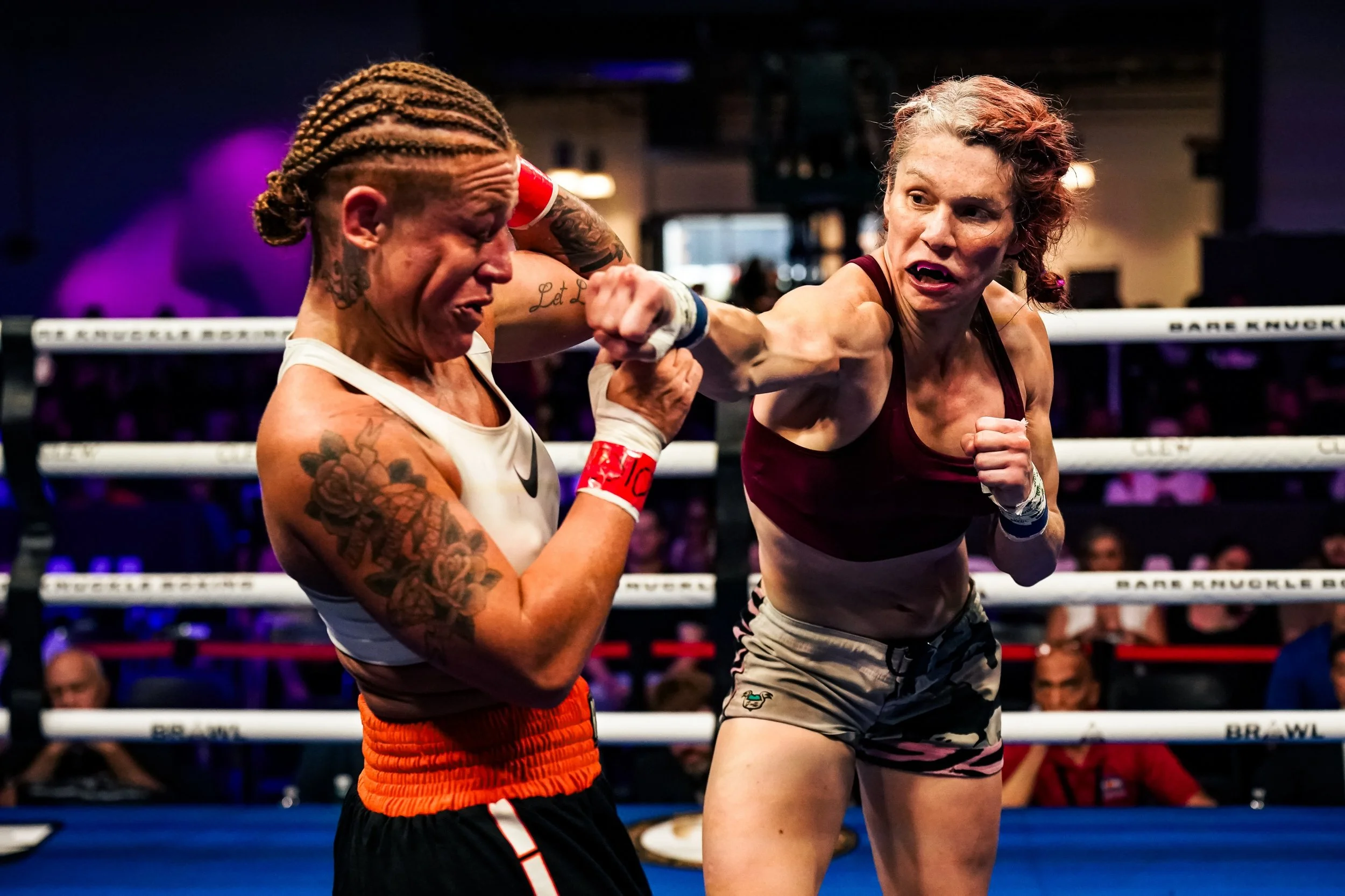
In this episode Jeremy chats with Kat Connor, bare knuckle boxer, muay thai fighter, and wielder of swords, about the many aspects of martial arts she is involved in.
Kat Connor - Episode 1070
SUMMARY
In this episode, Kat Connor shares her extensive journey through martial arts, from her childhood beginnings in karate to her current pursuits in bare-knuckle boxing. The conversation explores the importance of focus and mindfulness in martial arts, the evolution of training styles, and the cultural aspects of competition.
Kat emphasizes the philosophical insights gained through her experiences and the significance of community and teaching in martial arts. The discussion also touches on the realities of competition preparation and the mindset required for success in the ring.
TAKEAWAYS
Martial arts can provide a unique focus and mindfulness experience.
Many martial artists share traits like introversion and ADHD.
The journey through martial arts can lead to personal empowerment.
Historical context enriches the understanding of martial arts.
Transitioning to combat sports can be a natural progression.
Bare-knuckle boxing offers a new frontier for fighters.
Competition culture varies significantly across martial arts.
Philosophical insights deepen the martial arts experience.
Teaching and sharing knowledge is a vital part of martial arts.
Community support enhances the martial arts journey.
CHAPTERS
00:00 Introduction
02:21 The Journey into Martial Arts
04:53 Focus and Mindfulness in Martial Arts
07:51 The Evolution of Training and Styles
10:44 The Role of Historical Context in Martial Arts
12:15 Transitioning to Combat Sports
24:39 Bare-Knuckle Boxing: A New Frontier
28:32 Bare-Knuckle Boxing Comparisons
32:58 Philosophical Insights on Martial Arts
36:22 Boundaries Between Martial Arts
40:32 Becoming a Full Time Instructor
42:38 Preparing for Competition
46:15 Mindset Before and During Fights
54:34 The Realness and Truth of Fighting
1:03:57 Conclusion and Final Thoughts
This episode is sponsored by Kataaro. Please check out their site at Kataaro Custom Martial Arts Products - Kataaro. The month of October is Breast Cancer Awareness Month and Kataaro is donating 50% of profits from all breast cancer awareness products to breast cancer research!
And use the code WK10 to save 10% off your first order. And be sure to ask them about a wholesale account for school owners!
After listening to the episode, it would be exciting for us to know your thoughts about it.
✅Subscribe to whistlekick Martial Arts Radio on the following platforms:
🎧Apple Podcasts: https://apple.co/3mVnZmf
🎧Spotify: https://spoti.fi/3yHVdHQ
✅You can find whistlekick on all social media platforms using the handle @whistlekick or visit our website at https://www.whistlekick.com or https://www.whistlekickmartialartsradio.com
Show Transcript
Jeremy Lesniak (03:32.335)
What's going on everybody welcome back to another episode of whistle kick martial arts radio today i'm joined by cat connor cat thanks for being here. We're gonna have some fun if you're watching the episode you can see a whole bunch of pointy things in the background which may be some foreshadowing of what today's episode is is gonna talk about but. If you're new to the show make sure you check out whistle kick martial arts radio com for every episode transcripts you can search or you know fine.
What did that person say about that? Or heck, maybe you're using chat GPT and you want to kind of be a bunch of stuff that past episode guests have said and summarize things like there's a lot of cool stuff you can do with that. And I'm glad that we've been doing transcripts this whole time. You know what else I'm glad about? I'm glad for Kataro. You've heard me talk about Kataro before. Kataro makes some of the coolest stuff in the world. K-A-T-A-A-R-O.com. Now this episode, it's being originally will be in October of 2025. I don't know when you're going to watch it.
Katara will still be cool whenever you're watching or listening to this episode, but they sent over this great belt that I wore last weekend, and it's pink on one side and it's black on the other, because it's their breast cancer awareness belt, because October is breast cancer awareness month. And they're running this great promo.
50 % of profits from breast cancer related products will be donated to breast cancer research. You can use the WK10 to save 10 % at Kotaro. And thank you as always to Kotaro for their continued support of what we do here at Whistlekick. And I move that because I'm going to fidget with it. And I'd rather focus my attention on you, Kat. Thank you for being here.
Kat (05:13.565)
It is a pleasure to be here. I'm glad I was finally able to take it on. But yeah, we made it happen.
Jeremy Lesniak (05:17.966)
We made it happen sometime. I mean, it's kind of a martial arts thing, right? Like sometimes it doesn't work and you keep chipping away and you keep figuring out and eventually it happens.
Kat (05:28.027)
Yep, pretty much. definitely one thing I've been kind of talking about recently is just how many, particularly people in combat sports, but I would imagine probably you could expand that out to martial arts in general, a lot of us have a little bit of ADHD. I think that martial arts is, for many of us, possibly the first thing that we ever were able to bring the entirety of our focus to. And think that's part of why it's so powerful.
Jeremy Lesniak (05:54.541)
Yeah. I think there's something pretty special about martial arts because in not every drill that we do, and this certainly has some variance by school, but if you've ever done a drill with someone or sparred with someone and not been completely focused on them, it doesn't go well for long. You're going to get hit. And even if it's not full contact,
Kat (06:17.841)
No, not the best. Yep.
Jeremy Lesniak (06:23.136)
It's still, it's at least embarrassing that you zoned out and you're like, look at the butterfly. I should probably pay attention to your foot.
Kat (06:32.317)
It's like oops I messed that one up. Yeah you get like a you get this sense of kind of instant feedback that is very focusing I guess you could say. So yeah like you know I don't know that's that's certainly the way that I kind of kind of conceive of it and kind of you know.
Jeremy Lesniak (06:34.616)
Yeah.
Jeremy Lesniak (06:42.567)
Yeah.
Kat (06:52.733)
I like it's always felt like one of the, you there are two things that I feel like have been able to bring like the entirety of my being into focus on a single point. One is riding a motorcycle way faster than I really should. And the other one is combat sports, you know, fighting, getting in the ring, you know, I'm
Jeremy Lesniak (07:11.852)
Yeah.
Kat (07:16.125)
present in that moment, it's gonna be a little bit of a problem.
Jeremy Lesniak (07:20.078)
Right. As someone who also rides, yes, I can attest to that. You can zone out in a car. I think a lot of us zone out a little bit in a car and once in a while we're brought back to life by the foot hitting the brake pedal and going, I was paying attention on some other level, which is kind of cool that we can do that. I don't do that on the bike. If I'm on two wheels, yeah, there's very little I permit.
Kat (07:44.349)
I can't see everything.
Jeremy Lesniak (07:47.352)
to let distract me and you're in California Sue, so are you a lane splitter?
Kat (07:53.086)
So I moved out here from Tennessee and we didn't do that in Tennessee I feel weird to me, you know, like it's like I know I can but it's like I was just gonna stay over here
Jeremy Lesniak (07:55.695)
no, no, most places don't do that. Yeah.
Jeremy Lesniak (08:07.074)
Yeah, yeah, so your writing experience is closer to mine being in the Northeast Tennessee than it is California. Yeah, it's
Kat (08:12.966)
Yeah, yeah.
Jeremy Lesniak (08:18.84)
Did you first start in martial arts because of the desire for focus?
Kat (08:24.413)
So I started with like, I picked up karate when I was a kid. I just saw a poster for it in the grocery store. Ninja Turtles and you know, I was born
Jeremy Lesniak (08:29.11)
Yeah, rewind the tape.
Kat (08:47.613)
You know so like you know kind of coming into you know awareness, you know like in the 90s You know you have like ninja turtles you have like ninja movies on TV You have you know you have the karate kids. You know like being like this this cultural touchstone You know so like that was just kind of like the thing like in the 80s is like you know People people were very very into that stuff
and kind of like being a 90s kid, you know, kind of like inherit that. So I saw the poster one day, you know, in the grocery store and I took it to mom and I was like, like, hey, how, you know, I showed it to my siblings, you know, I have a younger sister and younger brother. I showed it to them, they were hype about it. So then I took it to mom and I was like, I want to do this, you know, like put us in, you know, let's give it a roll. And so, you know, I was 11 at the time, mom put us in, little brother, he was a little too hyper. So it didn't,
It didn't work for him at his age. He was like six, you know, just kind of like like way up there So he dropped out after about like two weeks when it wasn't like full-on Ninja Turtles Sister she stayed in for probably about about six months and then just got distracted with like other things But first for some reason for me, know Like it just kind of got its hooks in and I just kind of kept kept doing it and kept doing it and you know Like I wasn't like super consistent, you know, like his would they only had class a couple days a week It was like a little small
town the instructor was driving in from from far away you know but like but pretty consistently like you know week week to week you know like I was I was there and like I stayed I stayed active I stayed engaged and I and you know I enjoyed it so I think like kind of like planting that seed at that age you know just kind of like put me in a position to develop a lifelong love and fascination for the martial arts you know so yeah like you know I'm not
I'm not 100 % sure what I would have been looking to get out of it, you because I don't think as a kid, you know, you're thinking like, I'm going to go learn how to focus really well. Not most children in my experience at least. You know, so like I just thought it would cool.
Jeremy Lesniak (10:51.406)
I that something that maybe your mom, when you brought her that poster, do you think she had that awareness or have you talked about it since? Were there additional reasons beyond, want to do this?
Kat (11:09.341)
I think, hmm, so I think, know, I'm, hmm, additional reasons to be honest. So, you know, like think I dealt with like a little bit of like, I've always been, a lot of martial artists are like this, kind of introverted, maybe a little bit shy even.
Jeremy Lesniak (11:24.546)
I've never heard that before, that doesn't describe me at all.
Kat (11:26.309)
Yeah, right. Yeah. So, you know, I think kind of being like kind of introverted and shy and like never been very good at like confrontation or whatever, like standing, you know, standing up for myself. So I think it was a little bit of like that, you know, kind of like seeing the fantasy of this reclamation of like, you know, a little bit of like personal power and like kind of like developing an idea of who you are, which, you know, like of course at that age, you know, like it's all developing an idea of like who you are.
Just something about that reclamation of like that, the iconography and being cool and capable. That's a very powerful motivator, like I was gonna say for a kid, but even for an adult, who doesn't wanna be kinda cool in some way? We don't have to be cool in every way. We don't to be traditionally cool, but we're cool in our own way. And I think...
later on in life as I started teaching, know, like one thing that I realized, you know, working and teaching kids and teens and whatnot was that a lot of the kids that like, that you get in martial arts are kind of like the kids that like...
Maybe aren't like the best fit for like team sports, know, like maybe they're once again, a little shy, a little introverted, maybe even a little awkward. It's okay, it's nothing to you. Maybe even a little awkward. like, you know, those are the kids that come in to martial arts classes. Those are the kids whose, you know, whose parents like think like, okay, you might get a benefit out of this. You know, we're gonna put you in this. And it's a sport that you do for yourself. You proceed at your own pace. You're not gonna like not get the point and then everybody's gonna hate you. You're not gonna get picked last to be on the team.
100 % like you you are in it and it is it is Something that you do, know like in your head and in your heart and you and you do it at your pace I think that you know, I think that's why I it works so well and why so many so many people do benefit from it
Jeremy Lesniak (13:28.494)
So you started 11, six months later you're the only sibling left training, but somehow you stuck with it long enough that you started teaching. So if you're teaching, that's not just I'm hanging around for a little bit and I kinda like it, that's I've been here for a while and I really like it.
Kat (13:39.931)
Yeah, so starting at 11.
Kat (13:48.158)
Oh yeah, that's my life. Martial arts is my life. It is so integral to who I am. If you were to try to separate where I begin and end versus where does this hobby of mine begin and end, they are completely entangled. But yeah, just to kind of run it back again. Like I I started karate when I was 11, doing that.
once or twice a week for about five or six years. You that started to be, you know, an older teenager and wound up, you know, kind of wound up getting out of it for just a little bit. You know, I think I was out for like maybe a year or two. And I was like, wow, I really want to get back into martial arts again. like first.
The martial art that presented itself to me that I picked up was actually historical longsword fencing. was the first one that I kind of like glommed onto. Because I knew club had just started. What's that?
Jeremy Lesniak (14:47.722)
And you had started in karate as a kid, I heard you say. Karate was where you started? Yeah.
Kat (14:51.965)
Yeah, I started with karate, and then my first adult martial art was historical European martial arts. So that's how I got back into it after a very small break from childhood. Stayed in that, that for a long time. Still kind of pick it up off and on. And then I think after a few years of that, was like, I want to get, I wanted to do, hmm.
I don't know if I wanted to do a combat sport specifically, but I wanted something that I felt was going to be good for self-defense or whatever. Now I'm a young woman out in the world on her own for the first time, so I was like, all right, I want to learn some self-defense. So I of clicked around, trying to see what was interesting. I wound up, MMA was kind of starting to pop off a little bit in the early 2000s. So for whatever reason, that's kind of where my
went so I you know started that around that time and then just kind of kept doing it forever until until I built a life around it you know started started coaching started teaching competing all of that stuff so like there's always been you know despite the roofs
somewhat varied background, there's always been this through line of like, am doing some martial art or often multiple martial arts, concurrently and consecutively, just kind of staying in it. And that's been almost a daily practice.
Jeremy Lesniak (16:24.046)
So I've got to ask the question, because if I heard the timeline on this correctly, I might have to make fun of you a little bit. You wanted to train again, and you were concerned, you were interested in maybe I should start training in something that is self-defense applicable. And then you went into longsword.
Kat (16:43.577)
Yeah, well I started so I started long sword first actually because there was a club, you know, I've always liked
Jeremy Lesniak (16:47.926)
Okay, and you and you know why I'm making a little bit of fun of that right and in case some of the audience out there has you know is three drinks in I've not you know, you don't generally walk around with a long sword, you know and not to say that those skills aren't transferable in some ways but you know for all the things that that you know Okinawan martial artists get made fun of you know, you're not gonna carry your nunchaku or your side You're even less likely to carry your long sword, but please continue cat
Kat (16:59.451)
Not even an ordinary one.
Kat (17:12.669)
Right, Yeah, so slightly, slightly, slightly reverse on the timeline there. Like Longsword is kind of is what I got into first. know, kind of like on the tail end of like, you know, like I want to pick up a martial art again. And I wasn't thinking necessarily practicality at that point. It was, yeah, it was, yeah, yeah. So, you know, slightly reverse makes me not seem quite so, quite so zany, you know, which maybe is a bad thing. I
Jeremy Lesniak (17:32.748)
Okay, well that makes more sense.
Kat (17:42.494)
Little zaniness is good. Yes, I picked up longsword first, know, our brother historical European martial arts or HEMA as yeah as it's well known now and like the the training methodology Ironically first edition for you know, a relatively impractical and esoteric martial art was actually like quite good You know, it's very much about like, you know
like, you know, sparring and like this kind of experimental archaeology and like reading like these old manuals and like kind of like, you know, putting your brain like, I'm like these texts, you know, they're freshly interpreted, you know, like we're all kind of like figuring out together. was very, it was like kind of a new martial arts frontier. So that was like really fascinating. But, know, besides, besides that, like, you know, it was a lot of like sparring, testing, figuring things out, you know, and trying to kind of like triangulate to, to, to...
to accurately recreate this historical martial art that was written about in the 14th, 15th, 16th century and to bring that back to life. But because that training was so oddly martial focused, I was like, if I had to go fight a duel with this sword, I want to be able to win the duel.
was trained in this combat sports-esque manner of trying to find these very practical solutions to the problems that you're encountering in a longsword duel. So that changed my perspective on what I was looking to get out of martial arts a little bit. It me new ways to think about training methodology. And I think that is what grew into an interest in combat sports and finding that practical, that real martial art.
Jeremy Lesniak (19:27.0)
Yeah. So we've had a number of HEMA folks on over the years and it really is fascinating. I'm a self-described nerd. I've never shied away from that aspect of my personality. I'm going to guess that you are as well because the folks who seem to really dig, if you're not watching, you're missing, the folks who seem to gravitate towards HEMA.
most of them talk about it in a way that you're talking about with this exploration of these old texts or hey there's a new translation of this text that just came out and everybody digs into it and that's not what tends to happen in other martial arts and of course some of it is because we've got a cleaner lineage right where stuff has been passed down and didn't so much abruptly stop but let's be real if that part of it really calls to you there's
Plenty of books you can go read the average martial artist for in from what I can see doesn't read much about martial arts but darn near all the HEMA folks do. And I find that to be fascinating so how important was that part of it for you in in feeling fulfilled and gravitating towards towards that training.
Kat (20:36.049)
Yes.
Kat (20:46.525)
So you know like I might be a little bit weird because like even even you know, Rewinding back to being a kid and like doing karate Possibly even before I actually started training karate I think that would be the case actually is I would like go I would go to the you library at school and they had like a book on judo a Book on karate, you know, like and they weren't you know, they weren't very great books, you know by modern standards But like it was a little bit, you know, like here are some techniques, you know Here's the history of this martial art and like I would read that
even as a kid and I think that's possibly maybe that was a little bit of like the seed to kind of give me that early interest. So I've always been like a reader and then you know like grow that up into the quote unquote HEMA movement right? You know because you are recreating something that hasn't existed on the planet for several hundred years you like you don't have a master to like kind of like to come in and like help you with like all right this is the methodology that we use you know like I learned.
his sensei, da da da da. It's like I have this book that this guy wrote in the 15th century. Hopefully someone can translate it for me and then, you know, a lot of times these translations are piecemeal. They've gotten better through the years. So it's very much like kind of like bringing your focus into that manual and getting it directly from a historical source. And I think there's something like very, very interesting about that because you're not getting like, you know, like my sensei did it this way.
I do it slightly different, know, maybe based on just like body type, know, just how like, you know, like I'm I'm tall and lanky this so this kind of works for me, you know, so I built, you know, like I kind of structured my curricula intentional or not around having like this body type, you know, like maybe it doesn't necessarily translate down for everyone.
But yeah, so I think HEMA kind of bypasses a lot of that in a way because you just have your stack of books, you go in there and you put together what you can out of it. And sometimes they're very difficult to interpret. like I said, at the time it was like...
Kat (22:51.355)
very much like a new martial frontier, where it's like, we are exploring, we're exploring and constructing this thing together, rather than it being kind of already set down and just handed to you. I think that's intriguing. It makes you feel like you have ownership over it.
Jeremy Lesniak (23:08.358)
And I've got a feeling that in the next, you know, probably 25 years or so, we'll look back at this this 50 year period of HEMA and we'll be able to draw some some.
We would make some guesses about the development of other martial arts because that process is going to be roughly the same. We're trying to figure some things out here the tools available here are the your the goals right there's a strong seem to be a strong combative aspect. To him for me because that's where he's testing okay so these are theories interpreting these books and these these limited drawings and we're gonna go in there and.
just smash on each other with some metal and we're gonna see how that goes. And that helps us understand, okay, maybe they didn't mean that, they meant this, that does work better. Maybe that is what they meant, right? And I think a lot of where we are in what I would call more contemporary traditional martial arts, because to me, HEMA is traditional, because it's old and right, like it's kind of traditional.
Kat (24:12.431)
traditional as it gets.
Jeremy Lesniak (24:17.178)
And if we look at something like various styles of karate or taekwondo, less so taekwondo, but let's just say karate, things have been lost. Things have been put aside. The majority of people who taught in the West came out of a very short learning period in the East. So we can assume there's some detail lost in the same way that translating a book is going to leave some detail wanting.
And I just think from an academic perspective, that's really fascinating.
Kat (24:48.189)
Yeah, no, I agree with that. like, it's one thing too that like, like maybe...
that you see like kind of possibly as a result of HEMA or maybe I'm just kind of like, maybe I'm just like seeing it from like this perspective. As I've seen like HEMA people start like branching out into other martial arts and like actually looking at like, know, Japanese, you know, these have these old scrolls of like Japanese swordplay and kind of like trying to one draw like correlations like, okay, if I want to hit the guy with the sword, know, like then this is a good way to hit a guy with a sword.
sense that they would do it, you know, universally pretty much the same. know, but like, but it does seem like a lot of like people that do Hima and also do Japanese swordplay or, you know, Chinese swordplay or anything like that will also tend to dig into those, those scrolls and those sources and kind of like start to like look at those as well.
I I'm seeing, I think, I feel like I've seen more of that happening online than I would have expected to be happening in like if you just went to like an IE dojo, dojo for example, you know, cause you're getting it directly from, from your sensei and his sensei and da da da da. Why would I look at the scrolls? You know, like I have this guy to teach it to me, you know, but like now it's like, well, yeah, what's that?
Jeremy Lesniak (26:07.342)
See, people don't read the books.
They don't read the books. People don't seem to want to read the books.
Kat (26:11.963)
Yeah, they don't read the books. But maybe there's something in those books that you're missing, that your sensei didn't get because he only got it from his sensei. But that's, of course, all the interpretation.
Jeremy Lesniak (26:16.429)
Exactly.
Jeremy Lesniak (26:23.438)
Are you cross training? I mean, you have non-European swords on your shelf there.
Kat (26:30.043)
Yeah, so I do not I don't actively train like any Any of the Japanese, you know, like my interests are mostly European and Japanese as as if you're watching the episode Then you can see that based on what's in my background But I do I do not actually train any of it any of the Japanese style Sword arts like me if if it was close and available You know, then like maybe maybe I'd branch out into it But it just hasn't it hasn't presented itself and it's not been something I've been interested in
at this stage in my life to pursue. Though I have a lot of respect for the craft of the Japanese sword. I know a lot of people say that, but I have a 600 year old katana behind me. I understand how they're made, the materials, the finer details that someone that collects antique swords is gonna see and appreciate. I kind of have that knowledge base.
Appreciate them as functional functional art objects. I guess you could say But don't actively train with them
Jeremy Lesniak (27:38.786)
What does training look like for you these days?
Kat (27:42.75)
Let's see here so So these days let's see here So I'm actually like pretty active these days, right? So my my latest my latest combat sports martial pursuit is Is I've recently picked up bare-knuckle boxing. I had my first professional bare-knuckle boxing match And I don't know how much you actually like have grokter, you know gotten out of my background yet. Yeah, but like
Jeremy Lesniak (28:10.422)
I actually, and you should know this, and I think most of the audience knows this, I don't research guests ahead of time because the audience isn't going to research. But I can tell you, know enough about bare-knuckle boxing to know it's pretty serious stuff. And it's not something that I say this as a compliment, that the average person is going to step into and say, this is a thing I want to do and compete in. So we're learning something about you.
Kat (28:16.07)
Thank
Kat (28:32.573)
Yeah, so then let's go back. go back from, we to talk about swords. So we'll talk about the next stage in development was picking up combat sports. I had seen the UFCs, actually my childhood karate instructor, I brought them into the dojo and showed them to us one time because he was picking up Brazilian Jiu Jitsu as well. I wound up seeing these early UFCs with Voice Gracie going in there and of course we all know how that went.
You know, it's like, okay, that's an interesting thing that's happening like like, you know, it's like it was like Street Fighter You know kind of think kind of the video game like come to life, you know, they're doing it for real And you know like at the time I didn't think it was ever gonna be anything that like I would be doing you know, but like
Having seen it, that kind of stayed in the back of my head as something that was out there. And then when I got a little bit older, that is when I picked up mixed martial arts. I started doing Muay Thai and Brazilian Jiu Jitsu. And that kind of ties back into the self-defense stuff that we were talking about earlier. It's like, all right, these are supposed to be very practical, tested martial arts. I'm going to do that. So I started training MMA. And I, you know.
really just wanted to lose weight and like kind of like learn you know learn the skills and then I was like well you know maybe I'd like to try like one fight you know so like I kind of you know put in my time got to the stage to try my one fight and came out and like you're a much bigger girl than me and like I
This was before weight classes were really a thing. I come out and I catch her with like two big overhand rights and Bam bam and like she goes down and like I'm looking at my hand like whoa Like you know, it's like that was cool. Yeah, like I can do it and then I just kind of like kept doing it and kept doing it and kept doing it and I've currently had I think I'm like
Kat (30:27.421)
think my record is like 35 and 5 or 36 and 5 right now so I've had a pretty significant number of fights. A little bit of MMA, mostly Muay Thai is my main thing. I was a four time amateur Muay Thai world champion in a couple different...
I was a three-time like national champion in once again a couple different organizations. So I don't think it was a fluke, you know, I think I was in there and I did it and I did it pretty well.
Jeremy Lesniak (30:56.824)
So yeah, yeah, sounds like you train hard and the results show. Yeah.
Kat (31:01.839)
It's easy when you love it, huh? know? But did my thing. And I think I kind of like that interesting combat sports, you know, is kind of like what led me into just kind of like pushing the limits a little bit. You know, it's like, all right, I'm doing MMA.
I'm doing Muay Thai. You know, it's like, all right, well, what's next? You know, like, what do I want to do? Like, what's the next feather in my hat? Like, ooh, this bare-knuckle boxing stuff looks interesting. So I just started that, you know, like, pursuit relatively recently. And I have a, just had my first bare-knuckle fight. And then I have my next one is coming up in November.
Jeremy Lesniak (31:25.23)
Hmm.
Kat (31:41.021)
contracted for at least two more after that. But I think I'm probably going to win the championship in the organization. So then I'll just keep going until they kick me out, so to speak.
Jeremy Lesniak (31:50.285)
Right. So, you know, I personally haven't stepped in any kind of full contact competition, but a number of our our audience certainly have. And doing some MMA or kickboxing is something that people are fairly familiar with. I'm going to guess we've got pretty few people out there, if any, who are doing bare knuckle boxing. So how would you compare that experience? I mean, not not, you know, obviously, bare knuckle.
There are no gloves, right? We can understand what that is like. But I would imagine that the culture of the events in the competition is also different.
Kat (32:28.913)
Yeah, it definitely is, know, especially coming from like a mostly Muay Thai background. That's my main focus. I actually fought in Thailand a couple times.
But you know, so Muay Thai has always been like kind of my main focus and Muay Thai there very much is like this kind of this respect culture that's in there. Like you don't see like, you know, like kind of like two fighters like getting up and like giving each other like these big stare downs. Not so much, you know, like a lot of like, you know, Thais are like really goofy and silly when they train. They're just like really, really like fun loving people, you know, so like in that kind of, know, but you know, very, they're very serious about what they do, you know, they're trying to turn it on and off.
But there's this culture of respect that I think is present in Muay Thai. You don't see it quite the same way in bare-knuckle fighting. Bare-knuckle fighting has a little bit more of
almost like MMA, like that MMA like attitude, know, it's like kind of like hardcore, testosterone, you know, like kind of, you know, thing to it. It's not really like my my favorite vibe per se. I don't like to have like these big like mean mug, you know, stare downs. It always feels like really cheesy to me. I don't like a lot of like the trash talk or whatever. You know, that's not, that's never gonna be my thing. I don't think I'm just not capable of doing that.
understand why they do it for the marketing but there but there is a lot of that I think in these more what would we say like these like hardcore like combat sports you know that you do get like more of like that that energy and that vibe you know but like for me I just want to go out there and like test myself try something try something different you know like I was I
Kat (34:15.293)
You know, like, just wanted to push the envelope. You know, I was like, all right, this looks like it could be interesting. It'll be instructive. I've never punched anyone without gloves on my hand, other than like my siblings, but they deserved it. And we were 10. You know, so I was like, right, it was that pursuit of like the real, what would it feel like to, you know, like am I gonna actually like explode my hand on someone's head? I don't know. You know, like what is that gonna do? You know, like what is it like to get punched by someone, you know, without
without a glove in the face at full force with bad intentions. I don't know. So was like part of like that pursuit of martial truth is what led me into that particular arena. And I hope I have constructed that through line well enough.
Jeremy Lesniak (35:01.678)
Yeah. I was just checking something because I was trying to remember. My brain was telling me that the person that I knew of who had spent the most time in bare-knuckle boxing was Paige Van Zandt. And Google confirmed that I was correct in that. But she didn't do as well as you from what quickly popped up there.
Kat (35:20.605)
Yeah,
Kat (35:27.037)
Yeah, you know, like it seems to be catching on a bit more with the the bare-knuckle thing. I think a lot of like previously like MMA centric people have kind of like transitioned into trying a little bit of like bare-knuckle stuff. It's a little bit of like a frontier. I think you wonder why that is.
Jeremy Lesniak (35:37.166)
Mm.
Jeremy Lesniak (35:41.312)
Why do you think that is?
Okay. Yeah, yeah.
Kat (35:48.626)
I think because possibly because it allows you to narrow a bit of like your training focus and like dig into this very, this, this deeper sort of like meta, you know, so like boxing, you know, first, how about this?
So the more that you expand like a tool set that you're bringing into a, into, you know, we'll just say competition, cause that's my main thing. The more that you expand like the tool set that you're bringing into competition, like, okay, I'm doing it in May, right? So I need to be able to like wrestle. I need to be able to, you know, no submissions. I need to be able to do like standup. My standup has to like kind of like look a certain way to take into account these like takedowns and stuff that are happening, you know, and bites. But like you take out, say you take out the takedowns, right? You know, now you have,
Jeremy Lesniak (36:32.87)
Sure.
Kat (36:33.577)
Muay Thai, know, so like the stance changes the the techniques that you're throwing are gonna like change, know Things are gonna look a little bit different You know, the meta is built around having access to elbows and knees and clenching and all that kind of stuff Take that out, know now you have like kickboxing, know, so now your your meta is gonna look different You're gonna get the more, you know, maybe a little bit more like of a sideways stance almost like American American Freestyle karate kickboxing that like came out of like the 80s
you change what's happening, the meta changes. You turn that all the way down to just the hands, just boxing. And you're only working with two tools, but the meta of using those two tools is incredibly deep. Even after having been in combat sports for 20 years, I continue to be fascinated with how deep the level of these various metas of these various combat sports can go.
One thing that I think is just really great about martial arts and why I will sing the praises to the heavens about like why it's the greatest and best hobby that you can ever have in your entire life is that it is...
You know, it is functionally an unattainable skill set, right? Like no matter how many hours you put into it, no matter how dedicated you are with your practice, like the reality is that you can never master all of it that's out there. You know, you can be very good at like certain things, you know, but like, you know, you're never gonna master all of it. And by the time you are even starting to be like...
really, let's say, masterful in your execution or whatever. like, you know, talk about like Muay Thai or boxing, you know, to use myself as the example. like, all right, so like I'm, you know, now in my 40s, I feel like I understand the games very, very well.
Kat (38:24.637)
But also I'm going to start being at that stage where my physical ability to execute the things that like I hold in my head is going to start to decline. You know, so even as my skill set and understanding goes up, my physical ability is going to start to like, they're going to meet for a little bit and then, you know, they're going to kind like branch off. And then what do you do there? You take that and you give it to someone else so that they can go further than you did so that they can get the things out of it that you got out of it. And maybe a little bit more as you, you know, kind of put your own understanding into it.
And I think that's just one of the coolest things about martial arts is it can be there for you your entire life. I started when I was a kid doing it in my 40s. I'm not going to stop. I'm a lifeguard. I'm going be doing it forever. And I don't always do the same things. Sometimes I'll fight with my fist. I'm kind of bored of that. I want to go back to rolling around on the ground.
I'm bored as you just say, you know, think I'm gonna go get back into like sword fighting or stick fighting You know, like I was I got into combat shooting for a while all that kind of stuff, you know So I'm gonna do that for a while. Maybe I'll mix them all together a little bit, know, like I'm bored of mixing all together I think I'm gonna go back to Moyts high, know And you just cycle and cycle and cycling go through it and go through it do that for 50 or 60 years You know, you'll have a good time
Jeremy Lesniak (39:43.727)
That's for sure. Whenever I talk to somebody who's trained in a number of different things, I find it fascinating where they draw their boundaries between, right? And how they draw their boundaries. Some people draw very thick boundaries. That's over there. This is this. You know, it's almost like they load a program into their brain. Other people feel, you know, I'm never going to be able to keep them separate. I'm not even going to try.
And then I think most people are kind of in the middle, you know, and I would put myself in that camp. And when I learned this stuff over here, it helps me get better at this stuff, but I can kind of see where the two are separate. What are you?
Kat (40:27.441)
Hmm. So I think, you know, like when you, when you are a...
multiple combat discipline kind of person like I am. You have to be able to draw a certain amount of boundaries between them because the matter that works really well over here will mess you up in here. So I can't use the Muay Thai optimized stance to go into boxing. I mean, you can, but I'm not gonna be as good at boxing as I could be if I adopted a more boxing style guard and position, because it opens up ways that I can move my
and use my defenses differently because I don't have to worry about my legs you so you you kind of have to be able to draw a little bit of like those boundaries to be to be successful in competition but like when I'm talking about just being a holistic martial artist right you know like I think I think there are there are areas around the edges you know taking taking the sport focus out of it where things can kind of like bleed together and you start to create this
cohesive meta of the way that you move and do your techniques. But I think actually I like move better. The way that you move changes when you do martial arts. People will see me just walking out in the world.
Granted, I am a reasonably athletic looking woman. But people will see me just moving out in the world. They're like, whoa, were you in the military? You look like you're someone from my favorite compliment when I got
Kat (42:05.757)
that was passing, going down the sidewalk and some guy looked at me and was like, whoa, you look like you're a super spy or something. I'm like, super spy? OK, that's pretty cool. I'll run with it. you kind of develop this way of moving in your daily life, but also in your practice where things just kind of start to bleed together and kind of change the vocabulary of how you conduct yourself and how you are present in your body.
Jeremy Lesniak (42:15.79)
I would take that.
Kat (42:35.689)
That was a very roundabout answer. I have lot of thoughts that all come out at once.
Jeremy Lesniak (42:35.98)
You talked all, you know what? Every answer on this show is roundabout. There's no need to connect the question with the answer. The question just gets you talking about something else. And that's really, that's all my job is. Are you teaching any of these things actively at this time?
Kat (42:49.447)
How thin?
Kat (42:55.355)
Yeah, let's see here. I'm...
You know, like I help out around the gym a little bit, you know, like, so I was a, I was a full-time.
Jeremy Lesniak (43:05.248)
And when you say the gym, which gym? Because are all of these things that you do in the same space?
Kat (43:10.749)
No, no, this is all like that. I mean once again, we're talking like 30 I have like 30 years of combined martial arts history You know, so like it's a very you know, and I you know, it all blurs together to me So I don't necessarily draw very good lines like this happened then and then this I did it up It's all kind of it's happening concurrently as far as I'm concerned but yeah, like I I currently train out of a Slick Rick boxing in Manteca, California Because I'm obviously I'm doing primarily boxing right now. So it makes sense for me to train at a boxing
Jeremy Lesniak (43:15.51)
Yeah.
Kat (43:40.856)
I'll help out a little bit but since I am since I am back to actively competing I retired for a little while after I had my Muay Thai career I took some time off from from fighting it was like I just want to there wasn't really any any money in like women's combat sports at the time you know so it's like I kind of felt like I got everything out
And I knew I wanted to be a professional martial artist in some regard even since I was a kid You know like when I in the karate dojo, you know, but I'm like 12 It's like I want to be a sensei one day, you know, guess what kid you did it you you you are the sensei, you know, so like You know, so I knew I wanted to be a full-time professional martial artist and I've never had interest in doing anything else There wasn't the money in competing. What do you do? I can teach full-time so I did that for for a
very long time. And then I wound up like COVID kind of like put me out of like coaching a little bit like when you know a bunch of places closed. So I got like a different job for a little while.
It's never been never been terribly satisfying, know, so I wanted you know wanted to get back into into teaching so I do it a little off and on but since I'm actively competing now, I I don't like to teach and compete at the same time because when you're competing you have to be so focused on what you're doing getting your hours and getting your training that you can't be present for your students in the way that I want to be present for them as a coach, you know, like maybe I could teach a little on the side, but like it's not really
You know, I have like a little bit of demarcation there, if that makes sense. So I'll fight, I'll fight, I'll have my next bunch of fights and then I'll probably go back to teaching full time. know, they pinch me off into teaching at the gym a little bit here and there, then it's fine. But yeah, that's kind of where it is now.
Jeremy Lesniak (45:36.043)
heard competition prep for really any sort of competition, martial arts or otherwise, is kind of inherently selfish. And that's, I don't say that in a judgmental way, but it's so singularly focused. And a lot of the other things that people might think are still happening are not happening. And you're talking about that. What are other aspects of competition prep, of bad of competition prep that those of us in the audience who've never competed might
Kat (45:48.881)
Yes.
Jeremy Lesniak (46:05.706)
not understand.
Kat (46:07.773)
So I think the first thing that you kind of have to realize when you're doing these full contact combat sports is that, guess what kids? It's dangerous. That's very dangerous. Even at the amateur level, I...
had a training partner of mine back in the mid 2000s that like that actually got a very bad brain injury in in an amateur Muay Thai fight and she did not wind up coming out of the hospital for it you know she had a bad enough a bad enough brain injury that she that she you know unfortunately passed away from it you know so so it is it's it's serious out there like you know like you are putting life and limb on the line not usually life generally generally
it's not quite that serious but like it can be and because it can be that serious it means that you need to be a hundred percent present a hundred percent present and capable like when you step into the ring you know I don't want to go if you go in there like you're not you know like you're neither technically ready or your fitness isn't there you know then you can you can get very badly hurt
So you do have to take it very, very seriously. And the side effect of that is that it functionally consumes your life. I usually train two hours in the morning, two hours in the evening. Very, very hard training, very physically demanding, very technically demanding. I'm not very much fun to be around a lot of times when I'm training that hard, because I'm either in the gym or I'm tired from the gym.
I'm napping before the gym to go back to the gym. know, gonna kind of stuff all these calories in my face, know, these nutrients in my face at the right times of the day so that I can be optimized in my training, so that can be optimized for the fight. it's just, it really does like consume your life, who you hang out with, what events you go to.
Kat (48:07.325)
If any, what you eat, when you eat it, how you sleep, when you sleep is just very regimented and very controlled. And that's it's just a very demanding way to kind of like go through your, through your day to day life. I think that's the main thing that like people, people don't see. You know, and the more serious the combat sport that you're doing, the more demanding it is. You know, like it's one thing to do, say like kind of, like, I don't know, like.
like maybe ITF, like Taekwondo or whatever, you like kind of like, you know, you're in there, you're your thing, you know, but then there's a level up from that, you know, like maybe you get into like amateur kickboxing, that's more demanding, you know, get into like MMA, you know, like professional MMA, that's more demanding, you gotta be putting in your time, because like it can be...
Like that, can have a life-changing injury. you know, I think that's the main thing about competition prep is just being on it all the time.
Jeremy Lesniak (49:10.968)
being in the ring in that competition. You've done it enough that we can probably rule out the nerves that would come from doing it the first few times. If I was to step into the ring for, I've competed but not at a full contact level. And like most competition things, most of us, the first few times we do it are the most nerve wracking. I imagine that you never completely shed nerves when
someone could punch you in the face and you you know, people who've passed away these sorts of endeavors, but what is your mindset, you know, just before and going into the ring and during the actual fight.
Kat (49:43.237)
Yeah.
Kat (49:53.694)
So this is where we'll get a picture of two different cats, I guess you could say. Because I do have such a long history in competition. Having started literally 20 years ago. And then, you know, now competing in my 40s as a very veteran athlete. So very early on, as a fighter, as a martial artist, you're kind of...
Jeremy Lesniak (49:59.055)
Mmm.
Kat (50:24.615)
Constructing this mythology of yourself in your head Where you are trying to tap into like this level of like personal power, you know to push yourself further Then like you've gone So you kind of like have to like you almost have to like flush yourself, know fluff fluff yourself up a little bit You know and kind of like believe that you're larger than life right and then yeah, like you said you get up there right and like you're All right. I'm about to go do my first MMA fight or whatever
You know, it's like, you know, like now it's all about to come to fruition and yeah, like
for me like very early, not even like very early, but like through most of my, what I might call competitive career number one, which started in 2004 and then I competed I think till 2011 or so and started coaching full time. I was terrified before like every fight. I mean terrified, like very literally, like every time I would get in the ring right and like.
like your gear shack, the referee's like checking you out. They're over there. You see your opponent over on the other side of the ring and like you know that like in a few seconds, like you're gonna be, the bell's gonna go ding and you're gonna be on top of each other with what I like to call bad intentions, you know, because we are technically trying to hurt each other out there. You know, it's not a...
It's not vindictive or with malice, like, you know, like if I, if I kick you in the jaw and like, and break your jaw, that's just, that's just the game. You know, it's a win condition of the sport. so that, you know, like that is, that's very, very scary. I like kind of like have it in your head when you're out there. so, you know, but I think the other side of that is you get.
Kat (52:10.333)
For me it was always like bell goes ding, right? Fight starts. As soon as I hit them or they hit me, then all of a sudden something changes and it's just.
It's just business. like, okay. All right, we've made first contact Hey, guess what you're actually made out of like meat and blood and bones just like I am I know I can get hurt So that means that you can get hurt too. I get tired. Well you get tired too And it's always what you kind of like find through the years is that the opponent that was in your imagination Right, like the the other fighter that you are that you are picturing is gonna be there You know when you're thinking about like the fight that's coming up is like, you know, they're
They're stronger than you they're faster than you they know everything that you know They have the counters to all of like your moves and then like you get there and it's just another meat bag You know doing doing their best. It's like okay. All right. This is this is doable. You know like So that so that was always you know like kind of like overcoming that fear and then having like that moment and then like the elation of Having done it, you know, I'm being after just like kind of riding that high
It's a really powerful and addictive feeling. So we'll fast forward real quick, right? So then we come to what I call career number two, right? When I got invited to go to...
It was four years ago actually, around this time. One of the coaches for the Team USA kickboxing, they were getting ready to go to walk WAKO Worlds in Venice, Italy. And they're like, hey, Kat, we have a space on the team. Would you like to go to Venice and fight for Team USA kickboxing? And I was like, oh, man, I haven't competed in a while, but.
Kat (53:56.67)
I'm getting a little long in the tooth, you know, like I might as well have my my last hurrah, you know, like then this is a pretty cool pretty cool last hurrah. So, you know, I was like, all right, yeah, sure. I'll do it. Trained really hard. I think I was like 39 at the time. Yeah, 38 or 39. Trained my butt off for 10 weeks. I only had like 10 weeks notice to go to go from literally the couch in the post-COVID era. Like been sitting on the couch for a year.
Jeremy Lesniak (54:21.134)
This is not like a couch to 5K. I don't think anybody's condoning this for those of you out there who are riding the couch right now. Please continue.
Kat (54:24.123)
Yeah, I notice you.
Kat (54:31.121)
It's never too late to come off the couch. But yeah, so, you know, it's like coming off the couch, you know, right after COVID, you know, into the gym to go to Waco World, you know, the biggest kickboxing tournament with the United States kickboxing team. Pretty cool experience. But, you know, I went and, you know, did it. Unfortunately, they put me in the wrong rule set. So I went.
wound up getting a bunch of points deducted because I was not able to turn off my reflex to throw knees. You can throw knees in what you call K-1 rules, right? But they accidentally put me in low kick rules and I didn't know that they had messed up my racket. This was on our team. The coach wanted to put me in the wrong ruleset because I was like, you want to K-1 or low kick? So I've been training for K-1 rules. So anytime I would clinch up, bang, that knee would come out.
I mean, you know, what are you gonna do? Like first I'm gonna throw the knee and I wasn't able to on like three days notice when I got there and Saw that they had put me in the wrong thing. I wasn't able to turn off that knee reflex So I got a crap ton of points deducted just because I couldn't turn off the knee. It just like would snap out And you know, that's a point done. That's a big deal. You know when you get points deducted in a fight So, you know didn't wind up didn't wind up winning but it did it did get me excited about competing
Jeremy Lesniak (55:53.08)
Yeah.
Kat (55:59.481)
again and like well you know all right I just did this maybe I'll maybe I'll go and do another fight and another fight and another fight so I think you know maybe I'll go to Thailand and fight there so I you know did that you know and yeah and now bare-knuckle boxing he started started calling my name so I'm gonna do that I do that too so you know but all that being to rewind that back right as a veteran athlete now someone that's had
you know, over 30 fights and you know, pretty, pretty solid record. I don't get the nervousness the same way anymore. The first time I felt that was like, there's no nervousness here was when I was, you know, over there in Italy. I was like, I'm just excited to be here. I'm so happy. I'm like smiling and like nodding at my opponent across the ring. I'm not scared of her. She's probably, she's a little scared. That's a little nervous of me, which I would be a little nervous to fight me to be honest. I know how hard I hit, you know, but like,
I was just so thrilled to be there and so excited. And it's been like that even for the bare-knuckle fight that I just had. I was like, I'm just so happy to be here. And I went to knowing that I'm in the twilight of my career. Not done yet, but I'm in the twilight.
It's like, I want to appreciate and enjoy every moment that I've been there and I'm able to do this thing at this level and to be still competitive with it and still win. I just want to feel that and appreciate it for how cool it actually is. So fortunately, I haven't had the nervous butterflies the same way. was just, I'm doing what I want to with my life. What could possibly be better than this?
you
Jeremy Lesniak (57:45.935)
That's a good question. I was on an episode earlier, recording an episode earlier today, and I think yours comes out first. But that guest was talking about the, there's an honesty, there's a truth, as we get closer and closer to that kind of real world, as rules fall away, as contact is increased.
Do you see it that way? You know, when we consider the breadth of martial arts and your exploration, your, you know, I think we agreed I could call you a bit of a nerd, right? Okay. know, nerds like to know things. And, you know, you've talked about how that manifests for you.
Kat (58:28.414)
100%.
Jeremy Lesniak (58:41.89)
But being out in the ring, I would imagine if I got through the nerves of it, which would be the biggest part for me for quite a few, you I don't know if 30 would be enough for me, maybe it would. But I dig through that. And on the other side of that, I think there would be a really strong compulsion.
digging into the understanding because it is there's a truth to it. I'm coming in there and I'm bringing in this set of experiences, techniques, strategies and everything. And there's an outcome and it's kind of hard to argue the outcome. And the more full contact it is and the less rules there are, the more honest that outcome is from throwing these two people in a sort of a blender. Is that
Do you see it that way or is that just, you know, my musings as someone who's never done it?
Kat (59:39.879)
So I think, you know, kind of, you know, too...
to answer the question that wasn't asked, but I think, you know, like kind of applies, applies, yeah, to, you know, kind of applies here. Perhaps one of thing is as I, as I've, yeah, early on, yes, you know, you think about like the kind of like the philosophy of like what you're doing and why you're doing it, you know, it's very, very big thing in martial arts culture in general. But I think definitely as you, as you get older and you.
Jeremy Lesniak (59:48.844)
I love it. Please. Always.
Kat (01:00:12.478)
You know, have been putting so much of your time into this thing, right? Like you start to think very deeply about like these sorts of philosophical truths that you're looking for. So like, is there a truth on how to throw like a punch? I mean, yeah, I guess so. But like, what is, you know, like the punch that I throw with my heart is like the real reason I'm here. Not just this, you know, like there is a reason why we train and like, what do you get out of it?
So like I think it's normal to like kind of philosophize about that kind of stuff And that's probably why a lot of us are are friggin nerds You know is because there's always like that bit of understanding there and like and yeah like you know like Of course, know, like when you get down just like, know, the two meat puppets, know being smashed into each other You know certain things are gonna reveal themselves to work to work very consistently, you know and you know, and and that is that is a sort of truth as well, you know, but like
I guess that the truths that interest me more these days is like, why do we do this? Why am I compelled as a middle-aged woman to go out there and punch another woman in the face for a game? I'm not even madder.
no hard feelings about any of this, felt like we're out there mashing each other up. What is driving me to do this and what drives any of us to do this? What are we really getting out of it? What is the audience getting out of watching it? I think that kind of stuff is what really fascinates me. That's kind of where my mind is more these days.
So when I, you know, and I guess to answer another question that like wasn't asked, I'll just keep going like this, is, so, you know, like there's like this.
Jeremy Lesniak (01:01:57.048)
Please do.
Kat (01:02:04.798)
I think it's common debate in martial arts. Like, I want to have the real fighting. What is the real, the realest fighting? What is the most real? I know I keep using that word, but that is, we all are familiar with this debate that takes place online.
You know all the time and not just online even back in like the 15th century like you look at like the fencing manuals That like the great masters of long sword fencing wrote and they'll be like I'm tired of all these like plate these play fencers that don't understand like real combat You know, like this is this is literally, know, like a centuries old, you know debate in martial arts So, you know, but where I'm where I'm going with that right is as I've gotten older and I've taken on a more veteran
understanding right and like when I was younger I wanted the real fighting I want to do MMA because I'll understand for real you know like what it is you know to get in there and do it but now I'm like whatever whatever you take away from like your personal martial practice whatever it is like maybe maybe you like to do like I don't know
Like tweedly foot kung fu or something or even like the Shaolin, know, like wuxia wuxia style, know, like where you know, it's like very like form centric and very almost a bit of like a performance art, know, like the Shaolin Shaolin monk style, you know, like if you are getting something out of that that like you need that makes you feel a certain way about like what you're
I think that's great if you just want to go and do you know like like point sparring you know like kind of like that you know like like take the contact out and just kind like get in there and almost like fencing with your fists and feet and whatever level you're doing that I think that's great do I care if you can take you know like a very specific style of like Taekwondo or whatever like put it in an MMA fight no I don't care at all I care does that person that is doing that martial art are they getting what they're looking for out of it are they
Kat (01:04:02.048)
enjoying their practice. And I think that's the realest thing of all. Whether you're doing bannacle boxing or some esoteric longsword fencing system. If you're getting something out of it that you need and then you're able to give that to someone else and kind of create that bond and that connection and to have...
this sense of shared community that we all have with our training partners and with the broader martial arts world, if you're able to get that out of it, like what could be more real for a human being than having a shared community of something that you're passionate about? Who cares about whether you can defend yourself from a guy with a submachine gun on a street if he attacks you on a bus or whatever? guess that's perhaps relevant for some people, but it's not.
That's not the truth that I'm looking for out of martial arts anymore, even though maybe once upon a time, maybe I would have thought it was. like I said, that's a question that wasn't asked, but I hope it wasn't in head.
Jeremy Lesniak (01:05:06.58)
And it's a good question to answer and I'm glad that you did. Are these bare-knuckle boxing matches televised? Would people be able to watch?
Kat (01:05:18.642)
Yes, absolutely. So like I said, I just had my first one. It's actually up on YouTube. So I'm fighting under the organization is just called BKB, BKB Bare Knuckle Boxing. So they have my last fight up on like their YouTube. And then this next one is going to be televised, I believe on.
Jeremy Lesniak (01:05:24.279)
Okay, cool.
Kat (01:05:39.635)
Vice TV, they'll put it up on their YouTube eventually, but this one I think is gonna be on the main card. So it's gonna be on like Vice TV, which goes through like Hulu and all this stuff. they, and it'll be on like Telemundo, which I guess is a Hispanic television network, if I'm not mistaken. So yeah, I'm doing it for real. Like it is a real organization, not like just like the nails in the backyard.
Jeremy Lesniak (01:05:52.93)
Yeah. Yeah, it's a huge network.
Jeremy Lesniak (01:05:58.565)
that's great. I want to be clear. I wasn't suggesting that this was like eight people in a backyard. You know, like some of the wrestling promotions that I see these clips of. And, you know, it looks like it looks like somebody dragged out, you know, some mattresses and they put some cardboard on it. you write like I'm not proposing that it's that. The question was really, is it visible like while it's happening or do we have to wait until you're done?
Kat (01:06:06.3)
Yeah.
Kat (01:06:18.962)
Good.
Kat (01:06:27.678)
Yep, you can see it while it's happening. my next brand-new fight will be once again through the BKB organization on November 22nd is the next one. So yeah, it'll be on TV. So if you want to watch, please stay then. Watch, watch, watch me do my thing. I'm pretty good, I'm pretty good is what they say. I won a lot of fights. So like I said, probably not a fluke.
Jeremy Lesniak (01:06:30.327)
OK, cool.
Jeremy Lesniak (01:06:46.122)
Yeah, yeah that sounds...
Jeremy Lesniak (01:06:54.04)
Sounds super exciting. I'm game to watch. If people want to get a hold of you or follow you, website, email, socials, like what stuff should we be giving out to everybody?
Kat (01:07:04.454)
Yeah, so you'll like this actually. if you, Facebook is my main, is my main, I guess, social platform. Cause I like to write like little like in the ring slice of slice of life, know, excerpts, know, kind of the blend, you know, like we were talking about earlier, the experience of like being in, you know, being in the ring, you know, like this moment that happens in a fight with a little bit of like my philosophical musings and try to like tie that up all real nice, which I'm much better doing in writing than I
off the cuff like we are here. But my Facebook page is KatConner, fighter, swordswoman, and very scrappy nerd. is literally the title of my Facebook page. So there's only one me. And then I'm on Instagram, CombatKatMarshallArts usually is my typical moniker. But if you just look up KatConner, martial arts, then you'll find me all over Google.
stuff like that and be able to see all my socials. I'm a little bit on like TikTok. Not so much because I don't like to make the videos because I'm lazy. But as lazy as a professional athlete can be. Lazy in the sense of like... Yeah, Too much looking at screens drives me crazy. Yeah.
Jeremy Lesniak (01:08:05.878)
Hold on, no, that word cannot apply to you. No, maybe you don't like making them, but I can't imagine it's out of laziness.
Jeremy Lesniak (01:08:20.268)
That I will, I can, I understand that for sure. Awesome, we're gonna drop all that stuff in the show notes for those of out there. Make sure you're following Kat, you're checking her out, watch her fights. hey, this is, we've had a few people on the show that, know, do this sort of thing. And I love when the audience supports, like, let's go out there. You know, I'm not saying everybody's gotta grab the pay-per-view or sign up for some streaming service just for this, but.
Watch your fights, leave a comment. You know, do-
Kat (01:08:51.518)
Yeah, even if you catch it after the fact, that's cool. think, like I as a veteran martial artist now doing bare-knuckle boxing, I'm trying to just bring a different vibe than a lot of these fighters have.
Jeremy Lesniak (01:08:54.676)
Yeah.
Kat (01:09:09.224)
philosophical side, know, and kind of like share that the joy and appreciation for the art. So if you if you like that, you know, then go, I guess, you know, like what I do. I don't I don't really monetize anything. I've actually talked about this a little bit on like my Facebook post. I don't like, you know, I'm not ever trying to like sell people crap, you know, like that's not my thing. I don't want to.
my love of martial arts, you know, any more than like I have to. all that stuff, you know, you can just go check me out and see, see what you think. See if you like, if you like my vibe, then yeah, come on over.
Jeremy Lesniak (01:09:43.769)
We've talked about quite a few different things today, and I think most of them, least that I find really interesting are given the fact that the majority of people who are in this audience are not full contact competitors, right? So we've gotten a little bit of a glimpse behind that curtain, which I really appreciate.
Put that to the side for the moment. How should we kind of put a bow on this? What do you want the audience to consider as they're watching or listening to our conversation today? What do we fade out?
Kat (01:10:21.628)
You know, I think my two biggest takeaways and things that I'm glad that we got to kind of like talk about here is, you know.
One, just how much martial art there is out there for you to do. We talked a little bit about all the stuff that I've done. All that stuff is, I don't know what level, whoever may be listening to this is, but all that stuff is out there for you too. So go and enjoy it. Live deeply while you live and love what you do.
to the other thing, think putting the bow on it is like just that sense of, know, keep enjoying your martial art for whatever you're getting out of it while
Personally, I don't ever like to feel like locked down. not like stuck, you know, I'm not like, I'm this style, you know, person, you know, or I'm that style person, you know, like I see it all as arriving at like a personal sense of like power and truth that is much more important to me that I think most people would benefit from integrating into their ways that they think about like.
their martial arts practice at whatever level is taking place at right now and wherever it takes you in the future. Just be fully present in it. Love it while you can. Get out of it when you can. And don't be afraid to explore.