Episode 1106 - David Lashley
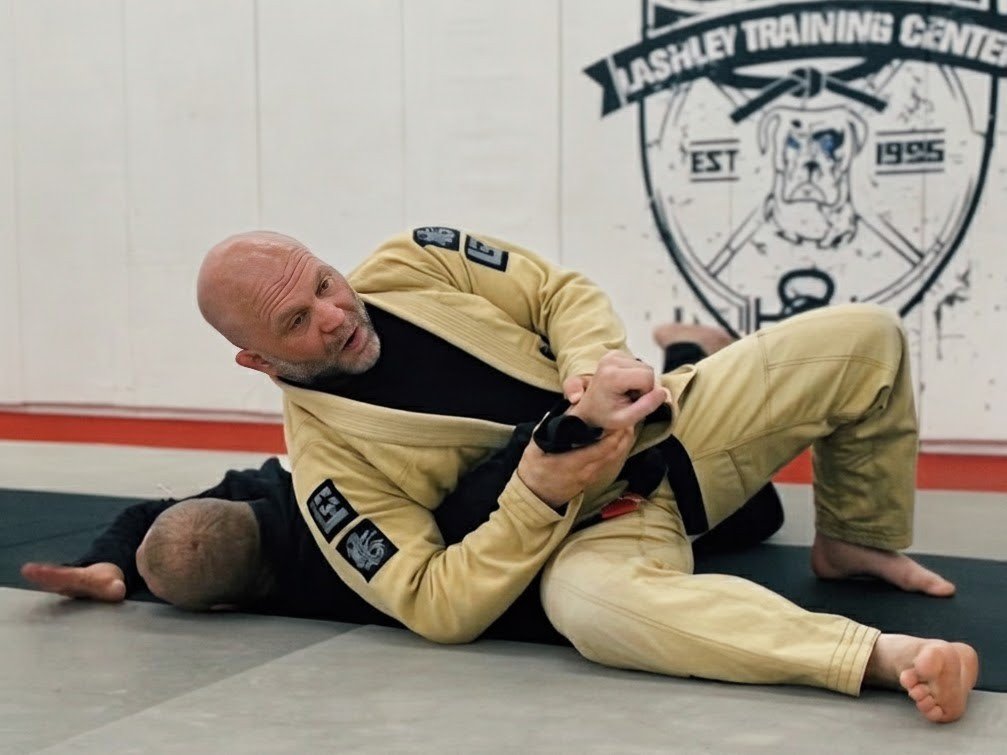
In this episode Jeremy chats with David Lashley about his training in BJJ, working with youth and being a courtroom bailiff.
David Lashley - Episode 1106
SUMMARY
In this conversation, David Lashley shares his unique journey from working in juvenile court to becoming a bailiff, highlighting the insights gained from his experiences in both roles. He discusses the challenges of applying martial arts training in real-life situations, the importance of understanding youth behavior, and the reality checks that come with martial arts practice. The conversation also touches on the significance of family support in pursuing martial arts and law enforcement careers, as well as the lessons learned from working with troubled youth. In this conversation, David Lashley also discusses the evolution of acceptable behavior in schools, the challenges of classroom management, and the importance of de-escalation techniques. He emphasizes the influence of personal experiences on training methods and the need for awareness in self-defense situations. Lashley also highlights the role of ego in conflict and the significance of teaching self-defense with a focus on survival rather than competition. The discussion culminates in insights from his courtroom experiences and the release of his book on awareness and safety.
TAKEAWAYS
The role of a bailiff is often misunderstood.
Working with youth requires a different approach than adults.
Martial arts training can provide valuable insights into handling violence.
Reality checks in martial arts can be difficult but necessary.
Family support is crucial in pursuing martial arts and law enforcement careers.
Transitioning from juvenile court to bailiff was a significant career shift.
Understanding the dynamics of violence is essential for martial artists.
The journey into law enforcement can be influenced by personal experiences.
Acceptable behavior in schools has evolved significantly over the past 25 years.
Personal experiences shape training methods and perspectives on conflict.
De-escalation techniques are crucial in preventing violence.
Awareness and understanding of ego play vital roles in conflict resolution.
Complacency in security roles can lead to dangerous situations.
Real-life courtroom experiences provide valuable lessons for self-defense.
Martial arts training serves as a form of mental and physical outlet.
CHAPTERS
00:00 Introduction
02:46 The Role of a Bailiff: Insights and Experiences
05:58 Transitioning from Juvenile Court to Bailiff
09:05 Understanding Violence Through Martial Arts
11:54 The Journey into Martial Arts Training
15:02 Lessons Learned from Working with Youth
17:58 Reality Checks in Martial Arts
21:09 The Evolution of Martial Arts Training
23:59 The Impact of Family Support on Martial Arts Journey
27:00 Shifting into Law Enforcement: A Personal Journey
30:08 The Challenges of Applying Martial Arts in Real Situations
35:09 Evolution of Acceptable Behavior in Schools
36:02 Challenges in Classroom Management
38:45 Influence of Experience on Training
40:46 The Importance of De-escalation
42:43 Transitioning from Physical to Psychological Training
44:21 Understanding Ego in Conflict Situations
46:07 The Role of a Bailiff in Courtroom Dynamics
50:59 Focus on Self-Defense and Survival
53:01 The Importance of Awareness in Daily Life
59:50 Unique Training Environments
01:02:14 The Value of Martial Arts Training
01:08:23 Insights from Courtroom Experiences
For David’s book:
Eyes Wide Open: From Courtroom to Street: Lashley, David: 9798305896541: Amazon.com: Books
Join our EXCLUSIVE newsletter to get notified of each episode as it comes out!
Subscribe — whistlekick Martial Arts Radio
After listening to the episode, it would be exciting for us to know your thoughts about it.
✅Subscribe to whistlekick Martial Arts Radio on the following platforms:
🎧Apple Podcasts: https://apple.co/3mVnZmf
🎧Spotify: https://spoti.fi/3yHVdHQ
✅You can find whistlekick on all social media platforms using the handle @whistlekick or visit our website at https://www.whistlekick.com or https://www.whistlekickmartialartsradio.com
Show Transcript
Jeremy Lesniak (07:30.883)
Hey, what's going on everybody? Welcome back to another episode of Whistlekick, martial arts radio. On today's episode, I'm joined by Dave Lashley. Dave, thanks for being here. Looking forward to our conversation. And to all of you out there, thanks. Thanks for coming back. Thanks for joining us on the top traditional martial arts podcast, martial arts radio. As I'm recording this, this is gonna be close to episode 1100. We're 10 years in. It's crazy to think about this journey and how do we get here? It's because of all of you.
Thank you for your continued support. And the number one thing you can do to help support us is help us build these numbers. So share an episode, subscribe wherever seems appropriate. And of course, join the email list. You'll find a link to sign up for the emails everywhere that we post these. And what do you get in emails? Well, we send you behind the scenes and clips and sort of things. If Dave and I do something particularly goofy today that doesn't make it into the episode.
Maybe we'll share it with you there. don't know. But regardless, thanks for spending some time with us. And with that, Dave, thanks for being here.
David Lashley (08:37.214)
Thank you. Thanks for having me.
Jeremy Lesniak (08:38.989)
Yeah, yeah, appreciate your time. You know, when I saw the info about you come across, I was really excited because you do a job that I don't think we've ever had anybody on the show that does your job. And you can imagine 10 years in, all these episodes we've done, that doesn't happen very often.
David Lashley (09:05.422)
Yeah, I actually, I get that a lot. Even a lot of the law enforcement guys that I know are, they'll say that retired and they're like, you know, I know some bailiffs, but I've never really talked to one before.
Jeremy Lesniak (09:08.729)
I believe it.
Jeremy Lesniak (09:21.965)
Yeah. You know, I've got to imagine that everyone's understanding or everyone's thought of what their understanding is comes from from TV and movies. You know, when I when you asked me to picture a bailiff, I'm either picturing somebody who's overly serious or I'm picturing bowl from night court. Right.
David Lashley (09:47.277)
That's usually the top one I get and it doesn't help that I have a spare fat.
Jeremy Lesniak (09:51.417)
I was, mean, you and I are similar. I didn't cut my hair this morning, but yeah, we both have some glare going on.
David Lashley (09:56.584)
You
David Lashley (10:01.28)
Yeah
Jeremy Lesniak (10:04.451)
Why a bailiff? Or how a bailiff? Was it choice or did you fall into it?
David Lashley (10:10.147)
I of fell into it. was, I started off in juvenile court 25 years ago as a probation officer in a unique position. we call it an alternative center here in Knox County. And the alternative center was basically a school that they was having some troubled youth. They would send the kids to this school so they could still participate in the educational system.
but it had a lot more restrictions to it. And I was the guy who, if that kid acted up, I removed him from their situation or helped the teachers and stuff. And I did that for a while and we had a opening in the court system for court security. was, you know, better pay per se, but really for me it's always been training.
The caught my eye was we'll send you to the high peace officer training academy for bail of school And I'm like well that that sounds kind of neat. You know it so why not so I I really Really worked hard to get it just because I thought I was gonna get an idea. I should I got more free training and within a year
the bailiff that I replaced, he wasn't from around here and he moved back home and took a job back to his hometown. So I kind of fell into it. There was not any point in my life, especially in high school, I thought, hey, I'm gonna grow up and be like bull. It was.
Jeremy Lesniak (11:54.265)
such a great show. To everybody out there, you're, I mean, I was kind of on the younger end. I'm 46, but I'm going to guess that I doubt anybody younger than 40's seen that show. It's a great show. It was a wonderful sitcom. It's what launched John Larroquette, right? You know, who I bet a bunch of people will recognize the name. So,
David Lashley (12:06.367)
priority. Yes.
Yeah.
Jeremy Lesniak (12:22.029)
I want to go back in a second and talk about the work you were doing pre-Bailiff, right? Because the world has changed and how you work with kids that need that physical, mean, maybe restraint is too broad of a term, but Bailiff School. Is it obvious what's going on there or? How?
I don't quite know the question I'm trying to ask. I'm trying to ask something about bailiff school because I don't even know enough about what the differences would be to ask a smart question. Maybe you can help me out.
David Lashley (13:02.238)
So back then, the academies for law enforcement, they had a police academy and then there was a bailiff academy. The police academy was much longer. I can't remember. mean, it's quite a few hours now for the police academy. But back when I started, it was probably about half. And I'm not giving it justice, but I want to say
you know, probably 300 hour Academy or something. And then a Bayliff Academy, ours was a hundred and 160 hours. So it, cause obviously we don't use vehicles. am not going to, I don't need to know how to do stops from a car and stuff like that. So it was just giving you a basic understanding of the judicial system.
Jeremy Lesniak (13:33.346)
Okay.
David Lashley (13:57.308)
a fire, 40 hours of firearms, 40 hours of defensive tactics. And then the rest was all like working inside of a courtroom itself or understanding the laws and what we can and cannot do from a, where a law enforcement officer, much more in depth, what they have to go through and stuff like that. So, and I don't think they even had the bail for Academy anymore. It's a moral, it had like a weak core.
Jeremy Lesniak (14:22.744)
Hmm.
David Lashley (14:27.127)
in a lot of retired law enforcement or people in law enforcement get into it. So they didn't have to have a long academy like they did for when I went through.
Jeremy Lesniak (14:33.101)
Okay.
Jeremy Lesniak (14:39.993)
Okay, all right, that makes sense. And so your prior role, you said, if I heard you correctly, removing children from the classroom if it was necessary. And that's a subject that anybody, and we do have a lot of teachers in our audience, knows it's a delicate subject because of the restrictions that have been placed on them. I know that at least some of those...
David Lashley (14:51.14)
Yes.
David Lashley (15:02.235)
Mm-hmm.
Jeremy Lesniak (15:07.383)
Restrictions were not there when I was a kid because of things I saw
What was that role like?
Jeremy Lesniak (15:18.393)
then maybe beginning to end of that role. How long were you in that position?
David Lashley (15:25.642)
About a year.
Jeremy Lesniak (15:27.083)
Okay, okay, so not long enough for it to have a huge, huge change. Maybe you can just comment on what that was like for you.
David Lashley (15:34.746)
So what I did learn though, I've learned even as I do with adults, if I can even do the same like procedures, but what I found out with juveniles was when I would go into a classroom, the first thing that I would usually do when they said that, know, such and such kid is acting out, we need him removed, I never removed him first. I removed everybody else in the classroom. Once you take away their,
performance, people that you can perform to, you can talk to them much easier. And most generally, are some, you you can reason with them to enough to get them to comply to what you need them to do. But it's amazing. And adults get like that too. If there's an audience, people like to perform sometimes. And that's, I tried to eliminate that first before I would actually have to use a hands-on.
Jeremy Lesniak (16:21.113)
Yeah.
David Lashley (16:33.706)
I did, but you did approach it differently obviously than you did an adult.
But make no mistake, there's plenty of 14-year-old, 15-year-old teenage young men that were much larger than a lot of adults I've ever had to deal with. And I think that sometimes the misconception kind of forgot that just because they're youth that they're not as maybe could be as dangerous or violent acting. That's not always quite the case. mean, there's some big...
Jeremy Lesniak (16:56.059)
I believe that.
David Lashley (17:13.215)
big, big kids out there.
Jeremy Lesniak (17:15.307)
Yeah, yeah. I'm aware. I am. I'm very aware. Your know, your martial arts training predates all this, right? It goes back at some point. So we'll get there. But.
David Lashley (17:26.092)
guys.
Jeremy Lesniak (17:33.277)
This is probably where we would have the subtitle of the episode, your book, if we did such a thing. What was it from that you're working with children and the time working with a bailiff as a bailiff that informed your understanding of violence and your martial arts training that maybe the rest of us don't have?
David Lashley (17:58.198)
That was probably the biggest step was like, you know, I trained for him since I was really in my teens, martial arts, but you always, your theories got put to play. And that was what was probably the biggest confidence builder to just knowing what you thought you weren't.
Jeremy Lesniak (18:15.545)
Hmm.
David Lashley (18:28.692)
you thought would work, doesn't work. was like, it was just a real reality check. And it's been like that every sense I've been doing this job, you know, and other jobs I do outside too. But that was probably the biggest thing when it come to the martial arts. It's like you started to understand a little bit more about why someone would.
you would do certain things in a sparring class or a regular class and you're like, well, why didn't this work? Well, maybe because the person in front of you is really not trying to hurt you. And there's a little bit of more of it, just a friendly competition. So it was more like the theories of things was like the big thing that I got from the jobs over the years and the martial arts.
Jeremy Lesniak (19:12.761)
Hmm
Jeremy Lesniak (19:22.905)
Were those difficult lessons to learn? Yeah.
David Lashley (19:25.949)
Yeah, because and so many aspects of it and not just because say something failed. cause you're like that just didn't work, but you, we put, especially when we're, think newer in the martial arts, you put such of, my, my sensei or instructor, how could they, they're not going to show me anything wrong. Everything they show me is like a superhero of some sort. you.
Jeremy Lesniak (19:53.207)
So it must be you. You must be implementing it wrong.
David Lashley (19:55.7)
Yeah. so that was, so it was early on, was like, well, this has to work because he said so. And then you, when you, know, you find out more is like, that it was, it was more just as a teaching session, they're teaching you, they've, they've never applied it before, besides outside of the, the dojo. And so it was just, it was a big.
Jeremy Lesniak (20:03.033)
Hmm.
David Lashley (20:24.851)
Big deal, more of that when I was younger. I just wanted to, you all my instructors are there. And they are great men, great people. But I just thought they were invincible is maybe the word. And so they're teaching me invincible stuff. And that's, that was a little bit of a reality check.
Jeremy Lesniak (20:47.415)
Yeah, I think a lot of us have have that experience at some point. And it's it's sad, but it's part of the reason I see people step out of competition or double down on some of their opinions or their beliefs.
because they start to get in awakening. I had one. I'm not going to talk about it here. I've talked about it a few times and just
Okay, the world's a little different than I thought it was. And that's terrifying. And I think the longer you've been training, the more terrifying that is. Maybe this is a good time for us to go back. You said you started training as a teenager.
what, when, why, how, you tell us about that.
David Lashley (21:43.474)
I'm a lot like you always hear. I was a huge Bruce Lee fan. I mean, I was the I couldn't wait for Saturday Night Kung Fu Theater. It was all of those shows. I just really enjoyed it and I started really early and Kempo. It was all we had here locally and guy was a great guy Steve Hatfield and and the older I got it.
Jeremy Lesniak (21:54.713)
Mmm.
David Lashley (22:13.137)
You I got into high school athletics and other types of athletics. And then I had an uncle who was a Shotokan black belt. So I really liked that as well, but he was really into the sparring aspect of it. So I think everybody, especially when you're young, you gravitate to anything. You get a punch more than doing forms and stuff like that. and so karate was really my
Basis that some form of karate was how I started with at a young age and Didn't stay consistent through my junior high high school years, but was like on it because of the sports It would but I'd always went off season. I'd always go back to the martial arts and like I said Bruce Lee was probably my the biggest influence one of all the ones and then after that
Chuck Norris because you know, return the dragon. gives Bruce Lee the hardest fight. So I had to know who find out who this guy was. And that's when I found black belt magazine and black belt. I mean, your last guest, Larry, made him what I read his stuff about him all through my whole youth. mean, was, it was a, it was a great, it was
Jeremy Lesniak (23:22.999)
Hmm.
Jeremy Lesniak (23:31.853)
Larry Tatum. Yeah.
David Lashley (23:40.888)
To me it was a great episode because it just brought back all these childhood.
Jeremy Lesniak (23:42.669)
Thank you. Thank you. Yeah. Yeah. mean, you can't forget that hair. I mean, I made a little bit of a joke with Mr. Tatum. mean, just absolutely iconic person from that time. And his hair didn't hurt. You know, mean, and, you know, given the two of us in our similar hairstyle, if you want to call it that.
David Lashley (23:49.036)
No!
David Lashley (23:56.823)
Yeah.
Yeah, okay, that's it now.
David Lashley (24:05.806)
But him and Jeff Speakman, mean, those were the guys back then and Chuck Norris and Joe Lewis and all of them. And so it was just like I gravitated that way. And then when I got out of school, I got married and pretty early we had children shortly after we were married and kind of got away from.
Jeremy Lesniak (24:10.199)
Yeah.
Mm-hmm.
Jeremy Lesniak (24:18.713)
Hmm.
David Lashley (24:35.149)
training and then I gained a lot of weight and my doctor just pretty much said, I'm not putting you on medication. You need to go find something that you enjoy to do and it can't be golf because you'll get a cart. So I'm like, I'm going go back to training, martial arts. And I went to, George Anarino was my instructor, which is more of a show to con style, but he was a boxer, a heart.
So we started to do a lot of sparring. You he, he emphasized sparring more than the caught aspect of things. And so I gravitated toward that. And during that timeframe, I remember sparring a black belt and I was probably a brown at the time. And, I'm, much bigger than this guy and Mike, and I, I just felt like I'm, just, I'm just pepper this guy. I'm really, then all of a sudden.
He comes in tight on me, does an osoto gari, which I didn't know what that even was then, arm bars me, and I'm on my back. I don't know what to do. I didn't know anything about tapping. So I started yelling, uncle. I was like, uncle, uncle, uncle. I didn't know what to do. But that's when I really gravitated towards the grappling arts at that point.
Jeremy Lesniak (25:46.754)
You
Jeremy Lesniak (25:57.699)
So what was it you were doing professionally after high school?
David Lashley (26:03.107)
I kind of bounced. was more like just like my and where I got the influence towards my brother was a cop his whole time and he's one year he was one year younger than me. So he always kept pushing me get into this profession get into this and I just I didn't know what I wanted to do. It was I really just wanted to make money to live.
Jeremy Lesniak (26:04.589)
Okay.
Jeremy Lesniak (26:11.178)
Okay.
David Lashley (26:31.726)
I didn't really have anything that really caught my eye, especially when I've been married a couple years at this point, then we had our first child then. It's about paying bills like that.
Jeremy Lesniak (26:48.825)
What?
grew up an only child, but I've had enough friends with siblings. Was there something familiar about the...
we'll call it wrestling, right? The transition from punching, getting punched, and next thing you know, wait a second, I would imagine you and your brother, especially if he ended up as an LEO, probably were rough and tumble kids with each other.
David Lashley (27:14.822)
Yeah, yeah, and you gotta remember in the 80s, pro wrestling was huge.
Jeremy Lesniak (27:19.801)
Okay, so now we've got that piece on top of it. Yeah. So I'm imagining you laying on your back yelling, uncle, being.
David Lashley (27:22.898)
Yeah.
Jeremy Lesniak (27:32.85)
shocked and wanting more. I is that a reasonable characterization? Okay.
David Lashley (27:36.134)
Yeah. Oh, 100%. Yeah. Because I probably had a good 70 pounds on the guy I was going against. Yeah, so I it just like this made sense to me like this. I didn't want to like. Quit the striking arts by any stretch. I wasn't of one of these guys that said. Grappling or Jiu Jitsu's end all of all.
Jeremy Lesniak (27:43.963)
even better, yeah.
David Lashley (28:05.669)
You know, I just knew I needed to add this to it. You know, because I firmly believe, yeah, but you'll hear the argument, all fights go to the ground, but 100 % of them start standing. So you got to have both when it comes to, especially self-defense aspect.
Jeremy Lesniak (28:22.327)
Yes!
Jeremy Lesniak (28:28.793)
Yeah, I've always said a well-rounded martial artist is a better martial artist.
David Lashley (28:32.58)
I agree.
Jeremy Lesniak (28:34.787)
So you take that incident and what do you do? Was there enough of that focus in that martial arts school that you could stay there or did you say, I need to do more in elsewhere?
David Lashley (28:49.508)
I did a little bit, because they had like their form of a Seikan Jujitsu, but it was more of an Aikido type base Jujitsu. So it kind of entertained me for a while until it was like, need, I want more of this ground stuff, you know? And so I then went out and then Black Belt Magazine on the back and I'm like, there's this.
There's this ad for Shingita Jiu Jitsu, Perrysville, Ohio. And I'm like, Perrysville, Ohio is like 30 minutes from my house. So I called this guy, sent him a letter, because there wasn't like really email or nothing back then. And he lets me come out and to find out his name was John Saylor. John Saylor was a former Judo Olympian and an Olympian Judo coach of 84.
coach of the year. So that was grappling at a whole nother level that I just I weren't so much and like I was just at awe how I was just being thrown around and John did and I wish I could remember the name a former bare knuckle karate when he was in Japan training in judo and stuff. So he did combine like using striking to get in close to
Jeremy Lesniak (30:08.921)
Hmm.
David Lashley (30:15.939)
You know, make that clinch of some sort. So it wasn't just straight up like like you see most Brazilian Jiu Jitsu today where it's just all about grappling. But in that process, one of the students was a purple belt underneath a Helsing Gracie lineage. And I and then he he just could tell how much I love Jiu Jitsu. So it's like, hey, come to class with me or we trained off to the side. So he showed me something a little bit different. So I.
Jeremy Lesniak (30:38.489)
Mmm.
Jeremy Lesniak (30:44.745)
That's pretty early for BJJ.
David Lashley (30:47.586)
Yeah, this was probably 92,000, around 2,000 at this point. Yeah, for Jujitsu.
Jeremy Lesniak (30:54.133)
Okay, okay, so not super early, but still, you know, there, there, it was, it was still kind of fringe back then.
David Lashley (31:01.823)
Yeah, there were no black belts in Ohio at that point. When you saw a blue belt, purple belt, you'd thought the holy grail of grappling would just showed up in Ohio. know, that was a big deal back then for Brazilian Jiu Jitsu.
Jeremy Lesniak (31:17.539)
Yeah.
Jeremy Lesniak (31:23.233)
Okay, so you're doing this other stuff, you're experimenting, you're rounding out what you're doing. I've got to imagine that you start getting healthier. So that's feeling good. You sound like the type of person who, I don't want to say fully immersed, you sound a little more balanced than that. Did you have support from your family as you're doing this?
David Lashley (31:45.524)
I think. Yeah.
David Lashley (31:50.144)
the most part, mean, my wife, so my wife knew me better than most. She was my next door neighbor since I've been in the first grade. So yeah, we knew each other. We dated all through school. So she knew what she was getting into per se. And when I do like something like that, I have a tendency to really, you know, make me become obsessive with it.
Jeremy Lesniak (32:01.747)
that's awesome.
Jeremy Lesniak (32:08.953)
You
David Lashley (32:20.191)
want to learn more and about it. So she accepts to this day. She plans to vacation. I think she even intentionally looks before if there's a jujitsu school or Krav Maga school or something around that because she knows I want to train at different places with that so.
Jeremy Lesniak (32:38.285)
Yeah. cool.
So where...
Because it's such a significant point for you. Where do you finally say, you know what, I'm going to take my brother's advice and I'm going to make a shift into the law enforcement world?
David Lashley (32:57.545)
So probably about 29, he comes to me about this job at the Alternative Center. And he's like, this job's coming open. I know the person real well who's interviewed for this. You have a really good chance. And he's my younger brother. And I'm like, I don't know if I want to do that. And he's just like, you have a child. Get a career. You've got to start looking at a career.
And he was right, you know, at that point I was like, yeah, it's maybe it's something I should, but I never really wanted to ever be a police officer. It's like, cause I thought he was trying to force me become a police officer like him. Like you know, we'll get you in the academy. Like this is just a trick to get me into the police academy. was just said, was just something that I didn't want to go that route per se. but I'm,
That's when I got into that at that point.
Jeremy Lesniak (34:07.757)
Was that the first time you had to, I guess, use your training? Had it all been theory prior to taking that position?
David Lashley (34:19.237)
Pretty much, mean, because everything I did before is inside of a dojo. And so, I mean, even though you're being very competitive, you still knew the person across from you didn't really want to hurt you per se. so it was a real eye-opener. Like, here's a 12 or 13-year-old kid that in the dojo, I'm moving men with that, ooh, that didn't work so well.
Jeremy Lesniak (34:37.561)
Mm.
Jeremy Lesniak (34:50.051)
Do you remember the first one that made you go, wait a second?
David Lashley (34:54.521)
Yeah, yeah, yeah, for sure with it. Yeah, I mean, I just remember the teacher asked me to come in and where the real reality was I come in, I'm going to restrain the kid. He just refused. It wasn't being combative as like he's ready to like throw hands or something like I'm not leaving type. And he kind of stands up. So I go in and grab ahold of, but what's not.
Jeremy Lesniak (34:57.731)
Can you tell us about it?
David Lashley (35:22.861)
What's something that's not in a dojo when you're practicing stuff? Desks, chairs, all these objects and they're getting in my way. And even trying to move him, it's like, I just grabbed and that seemed like the most logical way to go because that's the way I should go. Well, it's not because there's things there, there's humans, there's other humans watching at this time.
Jeremy Lesniak (35:27.193)
Hmm.
Jeremy Lesniak (35:32.27)
Yeah.
David Lashley (35:50.872)
And so it was just like a whole other way of thinking about why you're in a wide open gym space. And when you move towards people in a gym, they move out of your way. And all of they're not doing that.
Jeremy Lesniak (36:05.315)
Yeah.
Jeremy Lesniak (36:08.889)
What I find interesting about this this ideal, you know, we've heard plenty of people you've probably had friends and maybe even people you've trained with who have bounced at bars and That's it. Okay, you've done that. So what I find interesting about bouncing is Your there's an imbalance generally in your willingness to commit violence The the drunk jerk doesn't really care about you that much
David Lashley (36:21.078)
I've done that too.
Jeremy Lesniak (36:38.239)
You have to care about them somewhat because it's your job and you don't want to go to jail. And, you know, if if the bar gets a reputation for being too heavy handed, it hurts business. Right. You know. But when it's a kid, that that disparity is even bigger. And so I'm thinking about all these things that are these these subjects within within martial arts. And I'm sure you've heard people make. Well, I just carry a gun.
Well, a gun's really bad at doing anything other than killing people. So you need tools for violence that's less serious. But when you're talking about a kid, now it's even, I don't want to say less serious because it's still serious, but you're trying to do zero damage. I would assume that that's the standard, but they don't have that same concern for you.
David Lashley (37:32.311)
Well, and the judge at that time, and I'm assuming that's still no different to this day, but at that time, mean, hitting, striking wasn't an option whatsoever. No matter if they're throwing it back at you, you know, it just was not an option because of it was being a child like that or a kid.
Jeremy Lesniak (37:57.987)
How much training did you get for that position?
David Lashley (38:02.806)
Actually, I mean, I hate to say it at that time, nothing. No, I mean, I got your basic orientation to the job. What's going to be expected of you, know, things like that. But actually, when it came to, hey, by the way, we need you to remove this, this person. This is how we want you to do it.
Jeremy Lesniak (38:09.721)
Mmm.
David Lashley (38:30.313)
No, there really wasn't back then. think that's all changed. Obviously this is you're talking 20 plus years ago, 25 years ago, so I know it's changed.
Jeremy Lesniak (38:32.057)
Mm-hmm.
Jeremy Lesniak (38:41.817)
Yeah, I've got to imagine, you know, and I'm going to work hard not to say anything that seems identifiable. I know people who work in public schools and what is considered acceptable mainstream behavior has changed so dramatically that I would imagine what you were doing then, because we're going, how far back are we going? Okay, so 25 years ago,
David Lashley (39:08.309)
25 years.
Jeremy Lesniak (39:13.267)
what was considered fringe and you have to be in these other classes is now being mainstreamed in a lot of cases with one-on-one paraeducators. And so I'm having conversations with people who they go into the job kind of with a similar setup that you have. know, here's the job orientation. Here's what's expected. Here's what you can't do. But it's almost that there seems to be a lack
of available options. You know, I hear these stories about kids throwing rocks and turning over desks and chair throwing chairs and books. And the people that are charged with keeping them and the other kids in the classroom safe can't even restrain.
David Lashley (40:02.783)
And it seems to be, I mean, different from state to state too. Yeah. I mean, I am probably even school district to school district at this point. Cause that every school district's probably going to treat a little bit different. then, and at the alternative center, what they call, like I said, you had a little bit more lead way because they've already been, they're on probation at this point.
Jeremy Lesniak (40:07.791)
I'm sure it is.
Jeremy Lesniak (40:29.953)
Okay, they've crossed a legal boundary at some point.
David Lashley (40:32.359)
Yeah, yeah, so it was a, but we still, you know, there's still a certain way you had to handle it. So.
Jeremy Lesniak (40:42.105)
That must have been an exhausting job.
David Lashley (40:45.363)
It was, yeah. It was definitely, gave me a different, started to give me a different perspective towards, towards disdains as the rest of my career. You know, it's hard not, you're influenced by what you see on a regular basis.
Jeremy Lesniak (41:07.906)
Is is that why you were there a year and switched into being a bailiff?
David Lashley (41:16.369)
I'm not gonna tell you it wasn't, but the right opportunity just come forward. So that yes and no, I probably would have started looking to go into some other area. I might've even went to the police academy at that point.
Jeremy Lesniak (41:38.903)
Your brother would have been happy.
Jeremy Lesniak (41:45.301)
So, you you're certainly not the first person, I think I said this before, has this, you know, these epiphany experiences and it changes the way they train. So you talked about that young child and it not working. there's desks in the way. There's other people in the way. They're not being compliant.
What was your takeaway for your training? How quickly did that change your training? What did you do with that experience?
David Lashley (42:19.632)
So as time went on, especially when I went to, per se, we called it the adult court or the court at that point and became a court security to then like the bail off and stuff. What I started to learn real quick was preparing for the day, preparing for what? Like I could have got the same information probably, I know I could have.
Ask the probation officers a little bit more about the kids in the classroom to what they've done. How what should I be paying attention to? Maybe ask the teachers a little bit more information. Could have made my job a little bit easier. Just getting to know more information and that's what I found. The longer I do this as knowing more what you're getting into. And understanding it makes things go so much easier.
with it that that even helps you prepare. think more if there is a physical altercation, you're getting a pretty good idea of what you're getting ready to deal with before not knowing any information before I go. So I I prepare the day, you know, talking to others quite a bit on a daily basis. I make it a real regular habit. So.
Jeremy Lesniak (43:46.551)
You talked towards the top about, I guess we'll call it the psychology of, know, they're looking for an audience in a lot of cases, let's get everybody else out of the room, let's remove the audience, and then I have an option for deescalating the situation. How much understanding of deescalation did you have from your martial arts training versus on the job and that professional training?
David Lashley (44:14.476)
Quite a bit. It just depend like and you've probably seen this. It's just who you train with. You know some some coaches would really emphasize about you know how to prevent and how not to let this escalate any farther. You know to you know other coaches is you know you've trained for this moment. Any get ready here and so it just like I was.
Jeremy Lesniak (44:20.599)
Hmm. Sure.
David Lashley (44:43.819)
I started gravitating towards like more combatives at that point. So a lot of the coaches would emphasize like how to deescalate something always first. especially when I went through the Academy for the Bailiff School, part of our, I think we had just an eight hour, but it was just like how to talk to people and, and, you know, trying to understand them a little bit.
better and what they're experiencing. And it does help quite a bit. You know, I think de-escalation should always be your first form. I, between awareness and de-escalation, it's probably when I do teach self-defense, I probably spend just as much time on those two subjects as much as the physical, if not more time on those two subjects than the physical aspect of things.
Jeremy Lesniak (45:37.891)
Hmm.
Jeremy Lesniak (45:42.553)
the physical stuff is far more fun, but I think far less useful, right? And you you brought that up that you are an instructor now, you do have your own school. At what point did you add that to the mix?
David Lashley (45:46.825)
Yeah. Yes.
David Lashley (45:59.454)
Yeah, I put it in pretty quick. you set through a, like one of my first trials as a bailiff that I set through was, and everybody's heard this scenario before. Yeah. And so this particular case was he had a guy drinking at a bar. Guy comes up for whatever reason, don't know why, never really got the truth why, just kind of bullying or picking. Guy drinking.
Jeremy Lesniak (46:02.349)
Hmm.
David Lashley (46:29.321)
He leaves, goes to a different bar. He's just, he's going to try to deescalate. He doesn't want to deal with it. Guy follows him to the next bar. They get into it the next one. So there, there's a local, at one time there was like a little local restaurant that served the people who drank at 2 33 o'clock in the morning. They get into it outside of that. The guy follows them to the place and they're outside and they're arguing. And the guy finally is like, I'm tired of you. Leave me alone.
And the officer person pushed him. The guy said, that's it. So hits him. Guy fall hits his head on the curb. He's life flighted. So all of a sudden he's now in a jury trial, setting in front of 12 jurors, trying to convince them that, yeah, I know there was nobody behind me and I could have walked away still again, but I just couldn't take it anymore.
And that's what it was like.
I have to emphasize the de-escalation aspect more. Like the man in essence says, I don't want to walk away. I got to prove a point here, but you got to think everything through. And so when I seen it firsthand, not from a TV show or a movie, this is like, I'm literally watching this guy's really sweating some bullets.
Jeremy Lesniak (47:53.625)
Mmm.
David Lashley (48:00.594)
for the sake of it, he got found of a lesser charge, but he still was found guilty. Yes.
Jeremy Lesniak (48:06.177)
He was found guilty. He did everything that I would say most martial arts schools teach. Because let's face it, given enough opportunities, the guy following him is probably gonna initiate. And you were probably raised as I was. If you know that it's imminent, you hit first.
David Lashley (48:15.163)
Yes.
David Lashley (48:30.119)
Yep, yes. Well, that's tough. mean, preemptive striking, that's what we call it. And as I said, I understand to a point, you know, why you think you can do that. But like I said, and over the last 25 years, I've sat through four of those type of trials. And every one of them have been found guilty of something.
Jeremy Lesniak (48:51.737)
Hmm.
David Lashley (48:57.509)
Like I said, maybe not as harsh, but still, you're still a felon. You still been found guilty, you and you still got jail time out of it. Maybe not going to the penitentiary, but, but.
Jeremy Lesniak (49:10.201)
So how do you, given that you've seen that four times, how does that change your de-escalation training with your students?
David Lashley (49:21.86)
That's what I always, mean, and that's where I add the awareness aspect into it. know, things could have changed maybe. I don't know if the jurors would have did, but if the guy could have said, hey, I saw a gun, I saw a knife, I saw pepper spray, something that maybe could have gave them a little bit more warrant that the use force, because you're truly now can say you're in jeopardy. Maybe you can feel.
for you're so threatening to your life more because you see a weapon and I don't have one. So that's why I, you know, pay attention to what's in front of you, but then also pay attention what's behind you. And it's going to be hard walk away.
Jeremy Lesniak (50:10.009)
How much, how related are de-escalation and ego?
David Lashley (50:16.889)
Yeah, that's a good one. Yeah, that's, yeah.
Jeremy Lesniak (50:19.961)
Because that's what I'm thinking, right? Like I'm putting myself in that situation. And I had a situation over the summer. I was at a concert and I picked this guy out of the crowd and he was hammered when he got there. It was an outdoor, it was a country show of all things. Dustin Lynch for anybody out there, right? Like not exactly a rough and tumble crowd as you might expect, especially up here in Vermont.
David Lashley (50:34.798)
Okay.
Jeremy Lesniak (50:45.255)
I just, spotted this guy as a problem at the beginning, but.
I, Ego, I admit it, Ego did not want to leave the show. did not want to, people I was with, we'd found a good spot to watch. I didn't want to leave.
Jeremy Lesniak (51:06.423)
Leave me alone, don't touch me, we're not friends. No, we're good, yes, I forgive you. Super drunk. And eventually there was a point and I just, remember that feeling. I remember that inner conflict of my ego is, I am having to suppress this so much. I'm really struggling at this point versus the deescalation.
David Lashley (51:30.359)
No, and everybody's experienced that. mean, who hasn't at some point experienced road rage? And at the end of the day, I mean, like you said, the ego plays a big factor. I can't let this person up me on something. And I think that's probably the, if we could, once you check that a little bit, it makes de-escalation a lot easier.
Jeremy Lesniak (51:33.836)
Yeah.
Jeremy Lesniak (51:55.865)
Sure. So how do you address, because you're aware of that and because you've seen it, what are you doing with your students? I mean, is it lecture? Is it conversation? Are there drills?
David Lashley (52:08.695)
We do. I always usually like I one of the classes I teach is a self defense class here at taxis or it's we call it a Krav Maga class because we I'm certified in Krav but. It is. I always at the end though, like when we're doing something, it's really say a little bit more violent than necessary is like this is this is how they'll teach you, but this is where I'm going to tell you how you.
probably should approach it with it. I try to give like two sides of the version of it. Because I think in a lot of these martial arts that we've seen, especially from other countries, this isn't Israel, this isn't the Gaza Strip. And I think that stuff has to be brought up like,
some of the other countries that, know, that maybe resolving something is okay by just throwing hands in the street and they're, well, it's not okay here. Yeah. And you need to know that. sometimes I think I just by emphasizing, remember where you're at kind of attitude that helps.
quite a bit, I always try to, and I'll always tell them, like, I'll give a like, hey, I just, or what could happen, I could be in court and I'll tell them, hey, I was just in court two days ago and this is what happened. And this is when the guy did this. So just remember that. You know, so I try to use those experiences that I have to help them think more de-escalation than...
going to the violence right away.
Jeremy Lesniak (54:07.021)
Yeah. Yeah. OK. Are you are you still employed as a bailiff? Is that still your profession? OK.
David Lashley (54:13.408)
Yes. Yeah, yeah. 25 years. I've been in the same court for most the whole entire time. So I've been real fortunate. Same two, I've had two judges in my career full time, but I've bailed for probably about 30 different visiting judges and stuff like that.
Jeremy Lesniak (54:40.227)
How much does the judges approach to running a courtroom change your role?
Is it a big change?
David Lashley (54:51.015)
Not really. mean, for me anyways, they're both pretty similar, you know, and how they wanted the courtroom ran with it. So I was able to transition. Now, some of them that are like a visiting judge coming in, depending what the case is before, but some are a little bit more relaxed with it. That is a little, little,
Jeremy Lesniak (54:52.355)
Okay.
David Lashley (55:18.751)
Hard for me, something as simple as I won't let anybody wear a hat in the courtroom. That's just why I was always taught, I was taught as a kid, those things even. I've had a visiting judge that didn't bother him.
Jeremy Lesniak (55:24.238)
Hmm.
Jeremy Lesniak (55:29.792)
Right. Don't wear a hat inside. Yep, that's how I was raised.
David Lashley (55:39.455)
Stuff like that, that's a little hard sometimes. You're like, I just want to make him take the hat off.
Jeremy Lesniak (55:43.267)
Yeah.
Jeremy Lesniak (55:47.039)
Hahaha
Okay, so you're still doing that work. You're still teaching. What about your own training? Where are you focused now?
David Lashley (55:59.548)
I've really switched towards more of the self defense. We've had a lot of competitors here. We still have a lot of people compete. My son kind of taken over that more role of helping the competitors more keen. He's really heavy into competing right now. He's only 31 and I've really focused. Like I said, the self defense and I'm, I'm trying to really, like I said,
Jeremy Lesniak (56:17.916)
Cool.
David Lashley (56:29.499)
I try to merge the two. I'm really focused on the standing up to. I emphasize the ground, but I with the emphasis of how do we get back to our feet and get away? We will look for submissions, but it's to get them off and get back up. You know, it's we're we're not trying to have our hand raises the winner. We're trying to survive.
You know, and I emphasize that more than anything. And survival is not being there. You know, and let's get to safety. So.
Jeremy Lesniak (57:08.985)
Yeah, for sure. And I guess the last kind of the last piece I was thinking I wanted to ask you, because it didn't come up organically. If you're in a courtroom, you're carrying a firearm. Where where do you see that fitting in to this mix? You talked about the transition from striking into grappling. You sometimes people will will split that even further, you know, striking, wrestling, grappling, right? Talking about the different ranges. Some people put kicking out there, but
David Lashley (57:20.964)
Yes.
Jeremy Lesniak (57:38.743)
I mean, I think we can all acknowledge firearms have the greatest reach. Do you do any work on those transitions? 21 foot drills, any of that stuff?
David Lashley (57:48.002)
More than anything is weapons retention. I spent a lot of time teaching to training weapons retention. Cause to me that's the biggest, know, detriment is not, it's someone taking the firearm as much as, or you can't get it out because they're trying to take it for whatever reason with it. So, and that was the biggest eye opener that once again, the reality aspect of things is
Jeremy Lesniak (58:02.797)
Yeah.
David Lashley (58:17.323)
I remember going to, I can't remember the class, but we went to a class at a jujitsu school and the instructor that day had us put in our training guns and stuff like that. boy, that changes everything. When you might have top control and you're putting the pressure down and you're like, I got this. And all of a he's got his hands on my gun.
You know, and it was like a whole like, this I can't finish with what I need to finish it because I have to take care of that. And so it was a big game changer with stuff like that. And John sometime would keep a rubber knife inside of his Ghee. And I remember going for an ankle lock on him. And I was nowhere near getting it, even if he didn't have the rubber knife. But but just to prove the point, he pulled it out.
and just sat there and I'm like, he goes, got to remember stuff like that. It, you know, cause he gave us the scenario, we were working on that day and I let the competition still come in and he showed, you know, taught me a lesson.
Jeremy Lesniak (59:15.16)
Mm-hmm.
Jeremy Lesniak (59:25.111)
Yep.
Jeremy Lesniak (59:30.073)
Yeah, it's life is not in a vacuum.
You know, it doesn't take much to change that force dynamic and to upset the balance of where you think you are. know, and for me, it comes down to awareness and not assuming as little as possible.
David Lashley (01:00:00.983)
I think awareness is so important. Like I said, if I have an incident in the court and had very few, and when I do have one, I've always been successful so far, know, knock on the, what does it say, with getting it resolved and taken care of. But even so, I am so disappointed with myself at the end because what didn't I get?
What did I miss? Who did I not talk to? How did I not pick up that this was not going to be a problem? How I couldn't have prepared for it more. So with it, and that's to me is the awareness aspect of things with it. And I think it's no different in daily life. I'm driving, I need to get money on my ATM and the closest ATM is the worst part of town, or I got to drive an extra five minutes to the good part. And I go to
Jeremy Lesniak (01:00:31.096)
Yeah.
David Lashley (01:00:59.893)
bad part of town, use the eight and half troubles. That's basic awareness, skill.
Jeremy Lesniak (01:01:07.853)
Right, Tony Blower would be proud of, think that's one of the scenarios that he talks about. Drive the extra five minutes. Yeah.
David Lashley (01:01:13.312)
But yeah, that's I mean, it's literally I mean, and that's no different, like for me every day. And the second part of awareness that it helps if you stay true to it, it's complacency. Because I think that's the biggest thing like for especially us, for me, or if you know, law enforcement security in general, any type of security possessions, you know, they'll tell you right from the get go complacency kills.
That's, and it does, I mean, so that this, if you stay aware and do like your research that you need to do, your information gathering and just continue, be disciplined, it goes a long ways with your safety or self-defense aspect. And that's no different every, every day, you know, driving around to walk through the car from.
we get complacent. mean, and when it's easy for good people to get complacent because good people think don't think of bad things.
Jeremy Lesniak (01:02:22.211)
Right, right, that's not where our head is at. It makes complete sense.
Dave, as we start to wrap up here, I'm wondering, and I know you can't name names and you can't certainly can't say anything that even becomes identifiable, but you mentioned that there have been a few situations in court where things escalated. Could you tell us about maybe one of those or, you know, commonalities to them? What can we learn, perhaps?
David Lashley (01:02:51.551)
who are like, probably the one that really sticks out to mind, was, we've had a, two C.Morris where we do jury trials, and we had a jury trial coming in, and it was a criminal jury trial on it. And then in the back, close to the courtroom, there's probation offices for adult probation. And this one particular probation officer was having trouble with one of his, he had taken into custody one of his clients.
and the guy just was refusing, it was getting loud. Well, I know with a jury coming in, they don't need to see here anything about criminal crime stuff because they're going to hear cases. We want them to be neutral when they walk in. I don't want them to experience anything, anything that's going to influence them whatsoever. So,
When I go back, the probation officer was like, hey, put your hands behind your back. said, fester up. I'm not going. There ain't no one here going to bail. Take me. And I'm like, we got like 20 minutes before we these jerks in. And I just looked at the officer. was like, OK, let's clear the chairs out.
I could, cause the guy actually went behind the desk at this point. He's very great. Like, and I'm like, let's just clear the chairs out. Let's get an open space here. So no one gets hurt. And that was, and I said those words like, so no one gets hurt. Like we're going to, you're going in handcuffs. You're leaving this place in handcuffs one way or the other. And you could tell he kind of like, you can see I'm, he's trying to process now like,
Jeremy Lesniak (01:04:20.889)
Mm.
David Lashley (01:04:45.62)
Do I really want to do this or not? And I told the officers, like, get your handcuffs ready. I'm going, I'm going to get them. You put the cuffs on them and went in, got control of them. Was able to neutralize them. I always say if I have a wall or a floor, I have a partner helping me. So I used the wall to get control. We got him to the
I've gotten four and the handcuffs were put on him with it. the part I'd have trouble telling you, I can remember that day as plain as clear as it could be, but I don't really remember what I did. I remember getting the two on one and getting like a hold, but after that, everything just went so quick and we were on the ground. And I was on top.
Jeremy Lesniak (01:05:30.924)
Hmm
Jeremy Lesniak (01:05:41.677)
Yeah.
David Lashley (01:05:44.552)
That's what I wanted to be. That's the salad plan to be. And we was able to put him on his belly and get the handcuffs on him with it. So, and we got it all done before any juror came in. And that was my objective. That was my goal. Cause that was just important to me to have it done. So that's like one of them. and that, and no ideal that that was going to happen that morning. Even the probation officer.
Jeremy Lesniak (01:06:04.867)
Okay.
Jeremy Lesniak (01:06:11.832)
Hmm.
David Lashley (01:06:14.29)
said I had no intentions of even wanting to put him in jail. And he just kind of started escalating a little bit. And then out of the blue, he had, I think, some type of screening or something he didn't comply with. It came back, and he just made the assumption he was going to go, and he turned it into a situation. So it wasn't planned whatsoever.
Jeremy Lesniak (01:06:30.595)
Mm-hmm.
Jeremy Lesniak (01:06:39.779)
Yeah. Okay.
Where are you? It sounds like you run a pretty unique program. might have some folks out there that are interested in checking you out.
David Lashley (01:06:50.983)
We're in Mount Vernon, Ohio. It's a Lashley Training Center. My son, it's his gym, you know, but I work with him and help him out with everything. And I turned it over to him about 10 years ago, it's a full-time job for him. Yeah, so he runs it and then I teach majority of the classes for adults.
Jeremy Lesniak (01:07:07.566)
No, it's okay.
that's awesome.
Jeremy Lesniak (01:07:16.986)
And I've got lashlytrainingcenter.com. That's the note that I have here. Okay, awesome. And if people want to get a hold of you directly, how would they best do that?
David Lashley (01:07:20.219)
Yes. Yeah. So.
David Lashley (01:07:29.655)
I should have an email address on the Lashley Training Center, but I'm on, you know, Dave Lashley on Instagram, Facebook. LinkedIn is my, I do a lot more postings on LinkedIn more than anything under that. So any of those social media, there's not too many people with my name. it's not real common.
Jeremy Lesniak (01:07:32.93)
Okay.
Jeremy Lesniak (01:07:44.728)
Okay.
Jeremy Lesniak (01:07:54.969)
Well, Dave, I really appreciate you being here. I'm going to have you close us up in a moment. And to the audience, I hope you've taken something from this. if nothing else, I hope you'll take a step back from your own training and ask yourself, what assumptions are you making? Because we're all making assumptions in our training. And where can you possibly find questions to ask and then hunt down the answers? Because that's how we're going to get better.
day, that's what I was hearing from you, was, you these questions, you didn't ask them, the answers were kind of stuffed in your face. And I think that that's, that's important, right? It helps us, helps us develop as martial artists. So thank you for being here. And how do you want to close up? You know, what do you want to leave the audience with today out of our conversation?
David Lashley (01:08:44.784)
I want to really appreciate you having on and I always like to get the opportunity because how you started it, lot of people don't know what bailiffs do. so I always think it's a real important part of the judicial system that maybe a lot of people don't know about. And so I always like to talk about it and go train. think martial arts is one of the best ways
Jeremy Lesniak (01:08:55.609)
Hmm.
David Lashley (01:09:14.744)
to, I call it, especially when I do live rolling, I call it my violent meditation. I think we all need outlets and martial arts to me is probably one of the best ways to get those outlets. It fulfills so many aspects of what we need for the physical and the mental aspect of things. I just, people to go train, go find a gym and train.
and you'll be led to what you feel good about. It might not be the first school you go to, maybe, you don't like jujitsu, but you'll meet somebody, somebody or some way and you'll be led to what you want to learn.
OUTRO
David Lashley (01:14:43.004)
Sure. Yeah, and I never, didn't, I don't know if you knew this, because of it, last year, it's actually been a year, I released an awareness book. Eyes Wide Open Courtroom Through the Street was based on my 20, roughly 25 years experience of thousands of court hearings I've sat in. And the idea was I've sat through all these civil protection orders, domestic violence hearings and stuff, and I'd sat there and I'm like, if I could relayed just a little bit of information to some of these people, I'm not saying it would have made them
like give them like a superpower, like make them wonder one or something, but maybe it could have helped prevented it. You know, the prevention was more than anything when I would hear a lot of these cases and, maybe got them thinking a little bit more before maybe they would have reacted to something or went to somewhere or something like that. So I took all those hearings that I've heard and in this time, hearing wise, like criminal hearings,
They tell me I've roughly they figured up. I've said it over like close to 20,000 hearings 120 118 jury trials Thousands of domestic Relation hearings and stuff like that So I just I took all that as much as I could and tried to give tidbits and I made the book a Real easy read. I that was my second goal. There is so much
great information out there right now. It's unbelievable. But I think the simplistic things have been forgotten that they've it's got so scientific and it's great for guys like me who love this stuff. Like this is awesome. But for the everyday person, I was like, I think it's there's something missing and you shouldn't need a three or 400 page book.
to get some basic understandings on how to keep you safe when you're out and about. So I took the other approach and kind of said, I want to use my experiences and what I've seen and what I haven't seen and how I read people when I'm in a courtroom, what I look for and all this trial and hearing information and put it down and let people see if I can help them, you know, be a little safer.
Jeremy Lesniak (01:17:58.681)
Right.
David Lashley (01:17:59.501)
or be prepared so.
Jeremy Lesniak (01:18:01.273)
It's great. And where would people find that?
David Lashley (01:18:04.402)
The best is just to go to Amazon's where it's at and under Dave or Dave Lashley, you'll come up with Google or that so.
Jeremy Lesniak (01:18:10.339)
Search your name. Okay. Yeah, we'll make sure we hit it, links. Two, awesome.
David Lashley (01:18:16.963)
All right.