Episode 1114 - Dr. Conrad Bui
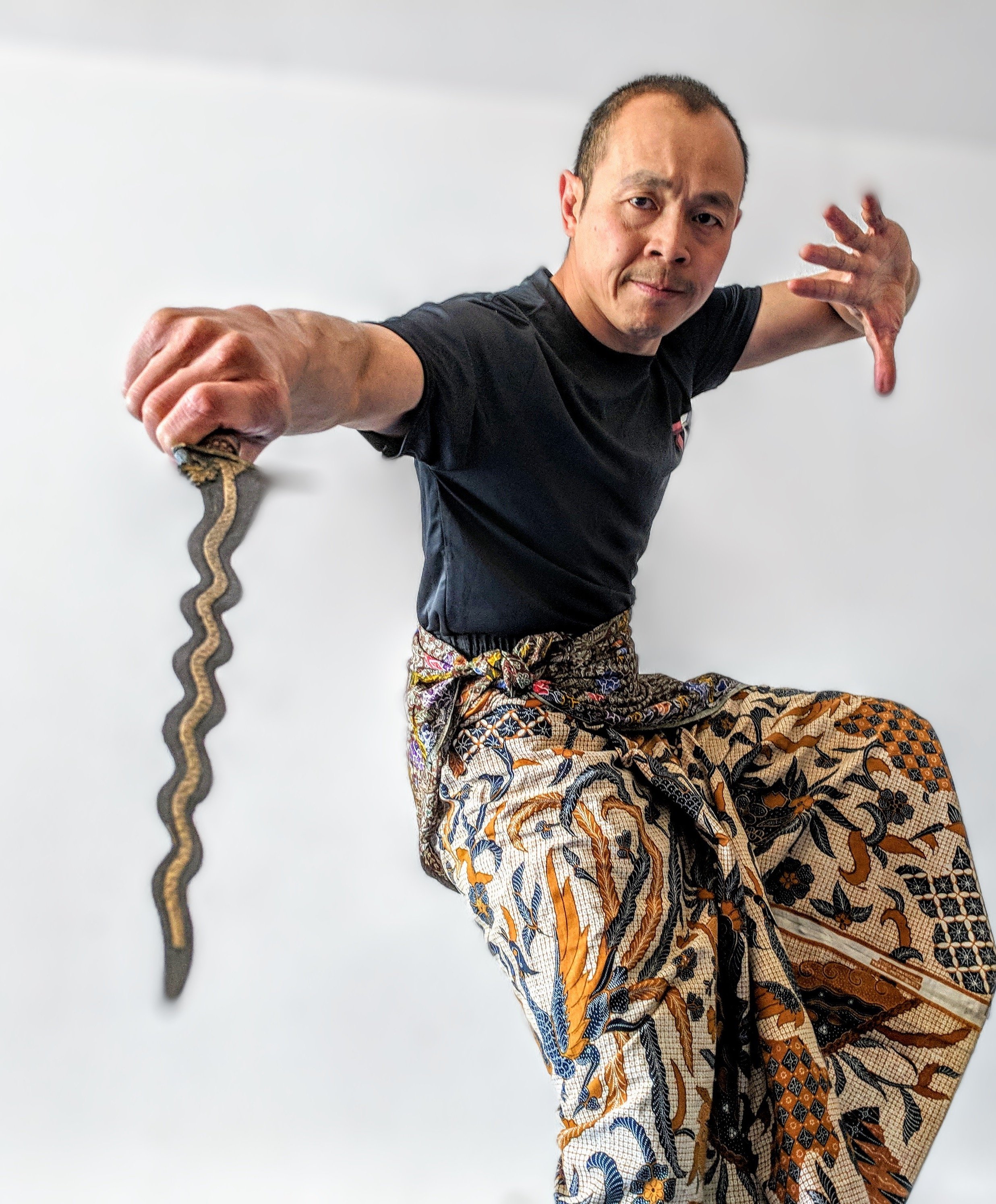
In this episode Jeremy chats with Dr. Conrad Bui about his journey in martial arts, emphasizing the importance of humility, kindness, and continuous learning.
Dr. Conrad Bui - Episode 1114
SUMMARY
In this conversation, Dr. Conrad Bui shares his extensive journey in martial arts, emphasizing the importance of humility, kindness, and continuous learning. He discusses how martial arts create a sense of family and connection, reflecting on his cultural identity and the influence of icons like Bruce Lee. Dr. Bui details his training in various martial arts, including Tae Kwon Do, Jeet Kune Do, Silat, BJJ and Muay Thai, highlighting the significance of longevity in training and the health benefits it brings. His story illustrates the deep connections formed within the martial arts community and the personal growth that comes from embracing this lifestyle. In this conversation, he shares his extensive journey through various martial arts, highlighting the importance of community empowerment and self-defense. He discusses the PRO method of defense, which emphasizes protecting oneself first, and reflects on the philosophy of martial arts as a means of personal growth and connection with others. The conversation concludes with key principles for living a fulfilling life: staying alert, humble, and kind.
TAKEAWAYS
Martial arts create a sense of family and connection.
Continuous learning is essential in martial arts.
Cultural identity can be explored through martial arts.
Taekwondo is a great introduction to martial arts.
Jeet Kune Do emphasizes adaptability and fluidity.
Silat offers a unique perspective on martial arts.
Family dynamics play a crucial role in martial arts training.
Longevity in training leads to better health and recovery.
Competing in martial arts can lead to unexpected victories.
Training in martial arts fosters community and empowerment.
Real-world attack analysis can improve self-defense techniques.
The PRO method emphasizes protection, repositioning, and offense.
Martial arts training can enhance mental and physical health.
Philosophical insights from martial arts can apply to various life aspects.
Staying alert, humble, and kind creates a solid foundation for life.
CHAPTERS
00:00 The Foundation of a Good Life
03:00 Martial Arts as a Family
06:04 The Journey of a Martial Artist
09:10 Finding My Path in Martial Arts
12:06 Cultural Identity and Martial Arts
14:53 The Influence of Bruce Lee
17:47 Training and Competing in Taekwondo
21:07 Exploring Jeet Kune Do and Kali
23:59 The Impact of Silat and Chiropractic Training
27:13 The Role of Family in Martial Arts
30:08 The Importance of Longevity in Training
32:59 The Evolution of My Martial Arts Journey
35:49 Integrating Muay Thai and Brazilian Jiu-Jitsu
37:39 The Journey of Brazilian Jiu-Jitsu
44:47 Martial Arts and Community Empowerment
51:58 Analyzing Real-World Attacks
59:40 The PRO Method of Defense
01:01:35 The Philosophy of Martial Arts
Join our EXCLUSIVE newsletter to get notified of each episode as it comes out!
Subscribe — whistlekick Martial Arts Radio
After listening to the episode, it would be exciting for us to know your thoughts about it.
✅Subscribe to whistlekick Martial Arts Radio on the following platforms:
🎧Apple Podcasts: https://apple.co/3mVnZmf
🎧Spotify: https://spoti.fi/3yHVdHQ
✅You can find whistlekick on all social media platforms using the handle @whistlekick or visit our website at https://www.whistlekick.com or https://www.whistlekickmartialartsradio.com
Show Transcript
Jeremy Lesniak (07:13.929)
Hey, what's going on everybody? Welcome back to another episode of Whistlekick Martial Arts Radio. And today I'm joined by Conrad Bui. Conrad, thanks for being here. I appreciate your time. Now all of you out there, if you don't know me, I'm Jeremy Lesniak. I founded Whistlekick and started this show because I love martial arts. I love training. I believe martial arts has the power to make the world a better place. And so that's why we do all of the things that we do.
And if you don't know all the things that we do, you should check out whistlekick.com. That's where we have our products or services, whole bunch of stuff. I'm not even going to name, but go check that out. You can use the code podcast 15 to say 15%. I haven't said that in a while. whistlekickmarshallartsradio.com is where we do everything for this show. Cause with over 1100 episodes, it kind of needs its own space. And if you go over there, you're going to find links, transcripts.
the audio and the video versions, and a place to sign up for our newsletter. If you want behind the scenes content for free, you should sign up for the newsletter. And you can do that at whistlekickmarshortsradio.com. And with that, Conrad, thanks for being here.
Dr. Conrad Bui (08:25.857)
Hey, you're welcome. Thank you for having me. I'm honored.
Jeremy Lesniak (08:28.917)
Well, it's an honor to have you on here. Anytime somebody is willing to spend some time with someone that they don't know.
I'm pleased, I'm thankful. It's a little strange. Hey, do you wanna come talk to me about martial arts?
Dr. Conrad Bui (08:47.201)
Hahaha
Jeremy Lesniak (08:49.787)
I don't know, maybe I'm wrong, but I look out at the world and to ask that question, hey, do you wanna come talk to me about just about any other subject? It sounds very childish. Like, do you wanna hang out and build a fort? But when it's, do you wanna hang out and talk about martial arts? It's like our favorite thing to do, isn't it?
Dr. Conrad Bui (09:13.473)
Right, right. Well, it's our passion and you know, it's a lifestyle. So, yo, that's about all I talk about anyways.
Jeremy Lesniak (09:22.193)
It's it. Do the non martial arts people in your life ever go or do you eat? Maybe you don't have non martial arts people in your life. Maybe you've pushed them all away with your frequent martial arts talk.
Dr. Conrad Bui (09:34.359)
You know, it's a lifestyle, but I try to be flexible. But yeah, it's interesting when I am outside of my martial arts circles, I'm an introvert. I just, I'm like just listening and absorbing, but when I'm with my martial arts family, I'm a, you know, I just.
Jeremy Lesniak (09:50.644)
Really.
Dr. Conrad Bui (10:01.098)
my vibration goes up. am just, in my space and I'll, I'll steal the show if I can sometimes because I just love it. I feel like my passion comes out and my love for the arts comes out. You mentioned like, wow, you know, how is it that you can contact a stranger and, you know, go and hang out and talk to them? I consider the martial arts world one big family and it's just people I haven't met yet.
Jeremy Lesniak (10:02.709)
Mmm.
Dr. Conrad Bui (10:30.594)
You know, I've got aunts, have uncles, have cousins, have family out there I just haven't met yet. you know, it's just, we're meeting right now, but we're family.
Jeremy Lesniak (10:43.829)
I like that. I like looking at it that way, because it's kind of a different dynamic. A lot of us talk about the ways that martial arts are related, and my favorite metaphor is the mountain one. Closer you get to the top of the mountain, the closer the arts that we practice look and are to each other. But the idea of thinking of it as a family, think,
inherently starts with connection rather than the mountain metaphor which suggests that the connection is built over time.
Dr. Conrad Bui (11:15.27)
Yes, yes. I consider it a family. Sometimes you have crazy Uncle Bob out there just spewing funky words and you're like, there's crazy Uncle Bob. And then sometimes you have people you just connect with really well. It could be a distant cousin that you just vibe with really well. so it's like a family.
Jeremy Lesniak (11:37.705)
the people you look forward to seeing at the reunion. And then maybe there's somebody that you're like, I'm gonna, why don't you stay over on that side? I'm gonna stay over here. But there's still family. And if push comes to shove, you still maybe have their back.
Dr. Conrad Bui (11:40.75)
Mm-hmm.
Dr. Conrad Bui (11:45.666)
Yeah, but they're still family. They're still family. Right.
Dr. Conrad Bui (11:53.897)
Right, yes, yes. And you know you have something in common with them. You know, with family, it's DNA, right? But with us, it's our passion, it's our lifestyle, it's martial arts. I have a Jiu Jitsu instructor and he said, you know, to me, you're more family to me than my own family.
Because we can talk like this, we can share our passion. We sweat together, we bleed together. You feel more like family to me than my own family. And I agree, sometimes a family that you choose has deeper meaning than a family that you have by chance.
Jeremy Lesniak (12:38.163)
Has it always been like this for you? Did you did you hit the ground running with your training and think this is gonna be my life? No.
Dr. Conrad Bui (12:45.58)
No, it's been a long journey. I've been training for over 40 something years continuously. I've met people, I've trained for 40 years. It turns out they did some martial arts at the Y, took 30 years off and just came back five years ago. And I have to put in continuously, nonstop, several arts at a time as well too for over 40 years. And I've been through so many journeys. I can see people's evolution when I talk to them.
Jeremy Lesniak (13:04.553)
Yeah. Wow.
Dr. Conrad Bui (13:12.854)
where they are on their journey, because I've been there myself. So when someone says something to me that I feel is immature, I understand, because I was there myself. I've been part of cults, if you will. I've been parts of this and that. I've been all the negative side of martial arts, as well as the positive sides of martial arts. And I understand where they are. I didn't jump into this.
with this understanding, this more broad understanding that I have when I was in my 20s or 30s even. And I still feel I'm still on a journey. I'm still learning. I'm growing. Every time I meet somebody, I learn something from them. And I always learn something, whether it's what to do or what not to do. And so I'm always learning from somebody. My advice to people
Jeremy Lesniak (13:46.323)
Hmm.
Dr. Conrad Bui (14:07.488)
is try to be on the what to do side and try to avoid being categorized, I'm learning from you, but I'm learning what not to do. And so everyone's my teacher. Everyone's my teacher for the good or the bad.
Jeremy Lesniak (14:22.421)
Sure, Okay. And so what was, what's your origin story?
Dr. Conrad Bui (14:30.476)
Alright, yeah. So I go around the country, I've been around the world teaching seminars and things like that, and I'll go and do, spend my own money to go and teach seminars and things like that, and to be part of seminars as well too. And that's the question you get when you meet some other martial arts junkie, extended family, like how'd you get into this family? And I always wonder.
Do you have time for the long version or do want the short version? And then I always wonder, yes, we're gonna go into the long version. And it also depends what event I'm at. So if I'm at a Sea Lot event, I kinda just keep it Sea Lot-y. If I'm at like a Muay Thai event, it'll be Muay Thai. If I'm at, you know, whatever Chinese martial arts event, I'll keep it Chinese martial arts. Because I wonder, like, do they have half an hour?
Jeremy Lesniak (15:00.703)
We've got time for the long version. Let's do it. Let's do the long version.
Dr. Conrad Bui (15:25.666)
or an hour to walk with me through my journey. you know, do you want the long version or short, the long form, full 108 Yang-Fat form, or do you want the short 24 version form? So I kind of try to read the situation and just give them that specific background. But since, you know, this is a podcast, we have time and hopefully I won't bore our listeners too much.
Jeremy Lesniak (15:37.076)
Yeah.
Dr. Conrad Bui (15:53.135)
We'll go through the long version of what created this man, what I call myself now a man, M-A-N, martial arts nerd. And so I use that term man. One is to sound kind of manly, like it's a strong thing. But then when you figure out it's martial arts nerd, that kind of puts the yin to the yang and disarms people. I find that when I talk to people,
Jeremy Lesniak (16:18.25)
Yeah.
Dr. Conrad Bui (16:22.614)
outside the martial arts, sometimes they think, ooh, martial artists, you're violent. You just want to punch me in the face or something. And we as martial artists know that the most dangerous people out there are actually the most peaceful people because they understand their destructiveness and the destructiveness of potentially other people out there as well too. And so we're actually the most peaceful people. And we have a saying in my company, Tiga Tactics,
We say kind by choice. so we're kind by choice. We have a choice. If I want to, I can kill people with my bare hands. There's absolutely no doubt. I put you in rear naked choke. I knock you out. You're out cold. I do what I want to you, right? I could kill literally just about anyone I meet out there with my empty hands. But I choose by choice to be kind. And most of the people I know who are in martial arts,
Jeremy Lesniak (16:54.421)
I like that. That's good.
Dr. Conrad Bui (17:19.104)
including non-martial artists who are in the military as well as law enforcement I train with and train under. They are the kindest, nicest people that you'll ever meet. And so that's why I go back to this martial arts nerd thing, just to disarm people and let them know, hey, I'm a nerd. I'm a nerd. I think there's that perception out there that, you know, as a martial artist, we're violent, dangerous people that
Jeremy Lesniak (17:28.373)
you
Jeremy Lesniak (17:38.453)
Hmm.
Dr. Conrad Bui (17:48.537)
go around dragging our knuckles and grunt at each other. But once we put that word nerd behind it, all of a sudden it's like, hey, you kind of cool there. Yeah, yeah. So my beginning started back when I was eight years old and my family immigrated from Vietnam to the United States. And we wound up in Aurora, Colorado of all places in the 70s.
Jeremy Lesniak (17:58.421)
I'm sorry, sorry.
Dr. Conrad Bui (18:18.024)
And that... Yes, exactly. Huge, huge.
Jeremy Lesniak (18:19.047)
I'm sure there was a large Vietnamese population there. And I'm sure in the 70s there was absolutely no, how do I wanna put this? Legacy feelings among some of the people about you being Vietnamese.
Dr. Conrad Bui (18:40.174)
Right, right. know, my family, there was probably 10, 10, the population of Vietnamese was probably 10 at that time. And my family took half of that population right there. And so, yeah, and I understand, you know, the culture back then, there was a lot of racism, there was a lot of challenges. A kid, I, I,
Jeremy Lesniak (18:53.941)
Yeah
Dr. Conrad Bui (19:08.214)
I was about four years old when I came to the United States. And I grew up in Aurora, Colorado, and I experienced a lot of racism. And so I never felt like I belonged. And luckily one day I watched Bruce Lee enter the dragon. And I thought, man, here's an Asian guy and he's doing this amazing.
his abilities amazing and he's Asian and someone I can relate to and be proud of because Up until that point. I always felt like an outcast. I I was not proud of myself. In fact, I was embarrassed I'd love to tell the story. It's you know, I'm Asian Obviously, I'm Asian but when I went to school
Jeremy Lesniak (19:55.893)
If you're not watching, can, Conrad is Asian.
Dr. Conrad Bui (20:00.116)
Yeah. When I went to school, I just looked through my eyes and pretended I was white, you know, like the other kids. And I would be so embarrassed to bring my parents to like back to school night or teacher conference and things like that. Because then the kids would realize I was Asian. And I'm like, yeah, I'm like, so I was embarrassed of my parents even, you know, and it was the weirdest thing. But yeah, I really...
Jeremy Lesniak (20:12.265)
Hmm.
Jeremy Lesniak (20:19.517)
You couldn't pretend.
Dr. Conrad Bui (20:29.165)
I wasn't proud of my heritage at all. I was embarrassed. And so by seeing Bruce Lee, I thought, wow, that's so cool. And later on talking with martial artists, I found that a lot of them, there's two reasons that they started martial arts, especially the older generation, maybe 40, 50, 60s and above. There's two reasons. One was Bruce Lee. I've met a lot of people. man, yeah, I watched that Bruce Lee movie. I just wanted to do martial arts.
The younger generation not so much, but it's still cool. The media, you know, I have friends who are younger and they got through it from Jean-Claude Van Damme or one of those media outlets and that's cool too. But a lot of the older generation, they were Bruce Lee fanatics, Bruce Lee fans. And so that's one reason. The second reason a lot of martial artists get into martial arts is because of some kind of bullying, surprisingly.
And I talked to a lot of martial artists and those are the two major reasons. One was Bruce Lee and the other's bullying. And I had them both. I had them both, Bruce Lee and bullying. And so at that time I watched Enter the Dragon and I thought, wow, this is amazing. I definitely want to do this. Some of, you know, something, I don't know what it was. I just knew this is something I wanted to do. And so I asked my parents,
Jeremy Lesniak (21:35.465)
I would agree.
Dr. Conrad Bui (21:55.958)
you know, please put me into martial arts school. And back then, immigrants from Vietnam, we didn't have a lot of money. And so my, my parents were like, well, we can't afford it. And, and so it turns out my dad had a black belt in Aikido. And so I didn't know what Aikido was. I just wanted martial arts, you know, eight year old kid. I was like, okay, dad, teach me Aikido then, you know, we can't afford schools, teach me Aikido. So
Jeremy Lesniak (22:12.02)
What?
Jeremy Lesniak (22:16.232)
Yeah.
Dr. Conrad Bui (22:22.829)
He would wake myself up and my brother up before work, before he went to work. And you know, as a eight, nine, 10 year old kid, you're like, you just want to sleep. But I was dedicated. I woke up and we trained Aikido. And after a while, I was like, wait a second, where's all this Bruce Lee kicking and punching stuff? We were doing wrist locks and throws and things like that. And I thought, I want more of that Bruce Lee stuff. But I still.
Jeremy Lesniak (22:31.402)
Really?
Dr. Conrad Bui (22:50.575)
trained with my dad for about three years. And then they finally gave in and they allowed me to go to a Taekwondo school close by called Maohai Karate, ran by Steve Oliver and he had a franchise of schools. And so I went through a few instructors in that system, Maohai Karate, and they taught basically Taekwondo. It was through the Junri lineage.
I started there and I earned my black belt at 16 years old. And at that time I was competing a lot in tournaments. I had several instructors that came through the school. And then the one I stuck with, his name was Troy McCaskill. He was a big time point fighter back in the 80s and 90s. so I did a lot of point sparring, point competitions, as well as forums as well too.
Jeremy Lesniak (23:43.404)
I know that name.
Dr. Conrad Bui (23:50.24)
I usually was able to place in both forms and fighting. I have state titles in sparring. have national titles in sparring as well as forms. Back when, from 16 all the way up to 19, 20 years old, I was competing very heavily at that time. so, taekwondo is a wonderful art.
And I think Tae Kwon Do is a terrific introduction for kids to do some kind of activity. It's also a terrific way to get step into the martial arts because as far as martial arts go, it's very organized and it's a great workout as well too. And also there's, if you're into it, there's competition. If you're into it, there's self-defense aspects for it. It's a terrific avenue to step into the world of martial arts with.
Jeremy Lesniak (24:31.369)
Mm-hmm.
Dr. Conrad Bui (24:46.625)
And so I still practice taekwondo to this day. I don't teach it anymore, but I still practice it. I am a sixth degree black belt in taekwondo. so I, you know, it's my foundation. But when I did taekwondo, I was so happy because I was like finally doing the Bruce Lee stuff, kicking and punching and doing all that stuff. So I was in total hog heaven. But again, I was always a Bruce Lee fan. So I always wanted to learn Jeet Kune Do.
Jeremy Lesniak (24:52.713)
Okay.
Jeremy Lesniak (25:13.652)
Hmm.
Dr. Conrad Bui (25:15.971)
So when I was in college, I saw a flyer that said a Jeet Kune Do training. I took down the flyer, called up the number. The instructor, his name is Jeff Jones. He still has a school over in the East Coast. And Jeff, at that time, was going to school in Colorado. And so he was going to teach private lessons, but he also wanted a training partner. So I had enough experience.
from my background to become his training partner because he learned Jeet Kune Do on the East Coast and there was no Jeet Kune Do in the Denver area at that time. so luckily, you know, he was looking for that partner to train with. I was that partner and I was like just so happy. I was in hog heaven because, you know, Bruce Lee's Jeet Kune Do and this was back in the late 90s. I mean, late 80s, early 90s when I was training with him.
and it was called JKD Jikun-Do slash Kali. And so that was during the time Guru Dan was blending the Jikun-Do with the Kali. And man, I was just, I still remember that feeling today. So happy to be learning the Jikun-Do along with the Kali. at that time, this was state of the art, especially compared to the Taekwondo I was learning. man, I was just so happy.
Jeremy Lesniak (26:18.695)
Mmm, nice.
Dr. Conrad Bui (26:42.775)
I trained with Sifu Jeff for about two years and the training was very rapid because he wanted me to get up to a level where he could continue training his drills and all the flow drills and all the Jeet Kune Do and Kali drills. He would teach me as fast as I could pick it up. So he would show me one thing. I think when you have an interest in it,
your mind's instantly focused and you learn faster. And so I was very interested and I learned very fast and he would teach me, we would do the drills, I would go back home and I would practice it in the air, come back the next time and we would do it again. He's like, wow, solid, let's move on to the next drill, next drill, next drill. Yeah, so I picked it up in a very rapid succession there. So I was super blessed to be hanging out with a seafood Jeff Jones there.
Jeremy Lesniak (27:31.05)
Nice.
Dr. Conrad Bui (27:41.44)
And so I was going to school for, in the pre-med program and eventually I went to chiropractic school. So this was all in Denver, the pre-med program. And so I wrapped up my training with a seafood Jeff and then I moved to San Jose, California. And so it was Denver and now I'm in San Jose, California going to chiropractic school and
Jeremy Lesniak (27:47.914)
Okay.
Dr. Conrad Bui (28:11.247)
At that time Guru Dhanan Osanto, he was getting into Silat and the specific system was Silat Sarak. And I remember Guru Jaff, he learned some Silat as well too and he's like, this is secret stuff. I shouldn't actually be teaching you, but definitely don't show anyone this stuff because back in the day, it really was like just very closed door kind of stuff with this Silat Sarak.
So I went to San Jose and we started our own martial arts club and we taught taekwondo out of the chiropractic school. There was a club, but I found out that there was this guy who was teaching C-Lot in the school. And so I approached him. said, hey, I hear you teach C-Lot. Will you teach me C-Lot? And he said, you know, I...
I am an instructor, but there's even a better instructor than me here. He was a student, his name's Armando, and he said, there's actually a clinical professor here that teaches C-Lot that's much higher level than I am. And I was like, really? He's like, here, I'll introduce you. So he brings me to the clinic and he introduces me to Dr. Andre Canuschkraken. And it turns out Dr. Andre Canuschkraken,
Jeremy Lesniak (29:22.25)
Cool.
Jeremy Lesniak (29:31.925)
What was that last name?
and he was teaching at a chiropractic school? That's great.
Dr. Conrad Bui (29:38.508)
Yeah, yeah, and he was the clinical professor there. And so Dr. Andre, he taught CELOTs rock, the exact type of CELOT that Guru Daniel Osanto was learning as well too. And so I just thought, are you kidding me? And so, yeah, I, I, I, you know, begged to be his student. He accepted me as a student and I became a student of CELOTs rock under Dr. Andre. And so I trained with him through my chiropractic school. We trained in his house. trained at
Jeremy Lesniak (29:49.565)
Okay.
Jeremy Lesniak (29:57.621)
Yeah.
Dr. Conrad Bui (30:08.035)
where I live, we trained in the clinics as well too. Since he was the clinic director there, we would just grab an exam room, we'd close the door and we would be training our C-lot in there. And people would be knocking, Dr. Andre, we need your signature here or there or whatever. And he'd be like, give me a second. And then we would just train a little bit or have great times, great times.
Jeremy Lesniak (30:21.45)
Nice.
Dr. Conrad Bui (30:33.219)
Yeah, so I learned C-Lot-Sarok, the entire system under Dr. Andre, going through chiropractic school, became an instructor under him. I continue to train that and I teach that today as well too. I still have students that I teach. It's a terrific art. C-Lot-Sarok is very well organized, but loosely organized as well too. If I was going to say TaeKwonDo is the most organized, mean there is ranks.
Every belt has specific things that you have to learn. C-Lot's kind of like a very good balance of things that you must learn, but things that you should take and evolve on your own as an art as well too. So it has structure, but yet it has a lot of growth and art potential as well too. so a wonderful system. And so I graduated from chiropractic school in San Jose.
Jeremy Lesniak (31:16.703)
Hmm.
Dr. Conrad Bui (31:32.822)
And so I'm ready to move back to Denver, Colorado to set up my, open up my clinic. And when I was ready to graduate, Dr. Andre said, okay, you're moving back to Denver. There's a teacher, his name is Willem de Tours. He's one of the de Tours brothers. The de Tours brothers, they taught Groudin in Osanto. And they
Jeremy Lesniak (31:59.847)
Dr. Conrad Bui (32:00.912)
pioneered Sealots Rock in the US. They actually brought that system to the US and pioneered that system over to the US. And so he said, Rulam de Torres teaches in Denver, Colorado. I know him. I can hook you up. I thought, my goodness, seriously?
Jeremy Lesniak (32:18.343)
You are the luckiest person of all time. I just want you to know that. I've never heard of anyone be luckier with instructors and getting passed to the next instructor. This is, it's like, this sounds like the plot of a martial arts movie, right? The only thing we're missing from the beginning is someone that you need to avenge.
Dr. Conrad Bui (32:28.694)
Yeah.
Dr. Conrad Bui (32:34.127)
Hahaha
Dr. Conrad Bui (32:40.383)
The only thing that needed to be avenged was my eagle from being bullied when I was a kid.
But yeah, so I moved back to Denver to start practicing chiropractic and met Uncle Bill, Willem de Tours, and he likes to be called Uncle Bill, which is really cool because he's the one that introduced me to the concept of family. he's like, I was like, Grandmaster, master, grandmaster. No, no, no, Uncle. Uncle, just call me Uncle.
And I thought, wow, that's really cool. And he really was like an uncle. He took me in and I think my second or third class, I came over there and he's like, let me cook you some dinner. And I thought, oh, no, no, no, you don't have to do that. He's cooking me dinner and then we start training. And I've really felt like family. It was just amazing the way he treated me.
He taught Kun Tao. Kun Tao is basically Chinese Kung Fu by way of Indonesia. So the Chinese, they immigrated into Indonesia and they brought their Kung Fu with them. in Southeast Asia, including the Philippines and Malaysia as well as Indonesia, they called it Kun Tao, which kun meaning fist and tao meaning way.
It's like Jeet Koon Do, there's Koon Do, fist way, and Koon Tao is just the same thing as Koon Do. Same thing in Tai Kuan Do, Kuan Do, yeah, fist way, Tai Kuan Do meaning foot, fist way. They just took the fist way. so Uncle Bill taught that Chinese system, which included like Shaolin arts as well as Wudong arts in his Koon Tao.
Jeremy Lesniak (34:27.389)
Haekwondo, yeah, I thinking that.
Dr. Conrad Bui (34:46.275)
So we have like Shaolin forms. We have animal style forms like tiger and dragon, as well as internal forms. There's Bagua in his system as well too, as well as Silat Surak, which is from his family and other Silat systems as well too. he taught a big buffet, if you will, of different martial arts from that region. And so, yeah, I trained with him.
very consistently, two to three times a week. At that time there was also a Kuntau school in Denver ran by one of his students and we were trained there as well too. so terrific times training there, I learned a lot from Uncle Bill, learned a lot of the old ways. Uncle Bill is now 90 years old and he's still teaching. If you follow me online you'll see some of my videos with him. He's still teaching.
Right there, if there's just one reason to train martial arts, right there is that reason, longevity. He recently, yeah, just last year, because gosh, it seems like a long time ago, but this was just last year, he suffered a double stroke and also had some lung embolism and things like that. He was gonna die, okay? And he made it through all that trauma.
And I remember I met him like a couple months after this huge, huge health crisis that he had to go through. And he was walking very slow, very unbalanced, know, stroke victims generally lose function in parts of their body and things like that. So his legs were weak. He had a cane. And I thought, my goodness, I'm just glad that he made it through. And then I thought, wow.
Jeremy Lesniak (36:28.298)
more.
Dr. Conrad Bui (36:41.611)
Is he ever going to be the same again, like be functional again? He said, hey, don't worry. I train every morning. I'm going to make it through this. And sure enough, a few months later I come back, he's stronger. And then a few months later, I come back to Denver. I'm right now in San Francisco. So a few months later, I come back to Denver and he's back to normal after about six months of him.
Jeremy Lesniak (36:56.957)
Hmm.
Jeremy Lesniak (37:08.423)
Yeah.
Dr. Conrad Bui (37:11.321)
pushing himself to do his martial arts. And now when I see him, he's basically like before, like this health crisis never happened. it's just an amazing tool, an amazing vehicle that we can use to not only improve our lives, but improve our health, improve our odds of recovering from something bad like this. So martial arts is just amazing. So I had to tell that story about Uncle Bill.
But anyways, back to the journey. I was just in my mid-20s when I trained with Uncle Bill. at that time, Uncle Bill had a friend. Unfortunately, he passed. Uncle Wayne, Uncle Wayne Welsh, who taught traditional Bagua Zhang and Xingyi and Tai Chi. And Uncle Bill's Bagua is very old school.
Jeremy Lesniak (37:44.469)
Mm-hmm.
Dr. Conrad Bui (38:09.2)
How would I say? I don't want to say basic or rudimentary, but it's very primal, like just not classical style of Ba Gua Zong that I've always wanted to learn. And so he said, if you want to the classical Ba Gua Zong, the one with all the poetry, go to my friend, Uncle Wayne. And so I learned from Uncle Wayne, Ba Gua Zong, and he taught a system
called Ying Long Xing, the shape and image of the dragon. And yes, he had all the Ba Gua a nerd could want. I mean, the first set has like 116 moves to it, and every move has poetry behind it. know, wild goose leaves the fog, close the door to push out the moon, hide flower under leaf.
Jeremy Lesniak (38:49.237)
Hmm.
Jeremy Lesniak (38:57.941)
Hmm.
Dr. Conrad Bui (39:03.524)
wild loose leaves a flaw. And so every move, and so I loved it. You know, I'm a nerd. You know, I've like, give me more, bring it on. I don't care. you know, at this time, I still practice my taekwondo forms. I still practice all my silat, judoos and forms, if you will. My kuntal. I really consider it disrespectful and a waste of my time and my teacher's time if I just let everything go to pock.
You know, and that's how I consider it. You know, I just consider I've wasted their time. I've wasted their energy that they gave to me if I stopped training their system. So every system that I've done and do, I continue to train. If you ask me to do Taekwondo forms, I'll do Taekwondo forms. Probably not as good as when I was completely focused on Taekwondo, but I can still go through those sets and the combinations and the curriculum that they had for us. Sealock, same thing. Jeet Kune Do, the same thing.
I consider it a shame if I forget my stuff. I consider it very shameful if my teacher says, hey, do this form here. I want to see this form and I can't do it. That's very embarrassing to me. And I would feel very bad about it because I've wasted my teacher's time and effort on me. time is our most valuable commodity. And if I felt I've wasted their time,
Jeremy Lesniak (40:28.117)
Thank
Dr. Conrad Bui (40:31.128)
That's just such a shame on me to that. all this Kun Tao, Kun Tao has a lot of forms as well too. Shaolin and the Silat systems that Uncle Bill taught me has a lot of sets. And then I added on all this Bagua Zhang stuff as well too. And these are long sets. And so we have several sets. We have weapon sets in Bagua Zhang and Xingyi, there's five elements, 12 animals. I love them all.
I love them all, so I still practice them all. And so this was from my 20s to my 30s that I learned from Uncle Bill and Uncle Wayne. At that time, I set up chiropractic offices in Denver and I was doing very well. And so I decided to take a step back from that and move to San Francisco. My wife's family is from San Francisco and she wanted to be back there with them.
Jeremy Lesniak (41:28.168)
Okay.
Dr. Conrad Bui (41:30.018)
And so I was like, OK, let's move. Because I was just working so hard as well. I was either working like crazy or doing martial arts, one or the other. And it was really burning me out, that work. I was not a very pleasant person. I was just a mean person. And so I thought, I can't do this anymore. I've got to move. I'm becoming toxic.
So luckily, you I had good partners, good doctors. And so I moved to San Francisco and close to my house was a Muay Thai school. And I thought, I always wanted to do Muay Thai. This is so cool. And so I went in and, you know, coming from a traditional martial arts background, thought these.
These guys would be dragging their knuckles on the ground and grunting at you. But you know, it turns out they're really cool people. Very nice, very kind, very respectful people. And I thought, I want to train Muay Thai here. It's really cool. This is under a crew Sam, Pimso Tham. He's from Thailand. And he's also one of Master Thaddee's first instructors as well, So.
Jeremy Lesniak (42:42.505)
you
Dr. Conrad Bui (42:50.768)
Muay Thai was awesome. I just loved the Muay Thai and I teach it at the school today at World Team USA right here. And so I'm an instructor there and this was over 20 years ago that I walked into that Muay Thai gym. And so at that time too, UFC just happened. UFC One, UFC Two, and of course, know, Gracie, Hoist Gracie winning those tournaments.
Jeremy Lesniak (42:59.923)
Yeah.
Jeremy Lesniak (43:19.753)
you
Dr. Conrad Bui (43:20.528)
is one of the pivotal points of martial arts. I mean, it's something that no one can ignore. It's just, it happened and we can't ignore it. And I looked at, they had a jujitsu class. And I would look at those guys rolling on the ground and I thought, woo, I wanna do some of that. so, yeah, a year after Muay Thai, the jujitsu guys are always really cool. We would have the Muay Thai class right after their jujitsu class.
Jeremy Lesniak (43:26.535)
Right.
Jeremy Lesniak (43:44.181)
Mm-hmm.
Dr. Conrad Bui (43:49.521)
Those guys would be finishing up and I would talk to them and they all seemed very cool and they're like join us join us so I joined them a year after I did the Muay Thai and So I did Muay Thai and then I'm sorry I did the Brazilian jiu-jitsu and then Muay Thai on Monday Wednesday and Fridays and then Yeah, love that the Brazilian jiu-jitsu great workout just an amazing amazing
way to work out as well as, you know, obviously learning how to survive on the ground. my teacher, he taught both the old school jiu-jitsu, like self-defense stuff, as well as the new sport jiu-jitsu as well too. We went through several different instructors in that program. I just wanted to shout out to...
Jeremy Lesniak (44:33.268)
Mm-hmm.
Dr. Conrad Bui (44:47.536)
My teachers, Angino and Yoshi and then Marcel and then Diego. And luckily, Marcel and Diego, they're all from Brazil. They're all like Brazil from Brazil and they're all champions in Brazilian Jiu-Jitsu. They're gold medalists in the Pan Ams, in the Worlds, in the Brazilian Nationals. They were like solid guys, super tough.
Jeremy Lesniak (45:01.685)
Hmm.
Dr. Conrad Bui (45:16.252)
Some of the toughest people on earth, but also some of the nicest, you know, as well too. Super cool. so Brazilian Jiu-Jitsu Muay Thai. A couple years ago, I went back to Thailand to train under Master Thadi. I'm a crew, which is an instructor in Muay Thai. Brazilian Jiu-Jitsu, I've competed in the world championships. I placed third in the Nogi division. I've placed third in the Pan Ams.
Jeremy Lesniak (45:42.983)
this
Dr. Conrad Bui (45:45.745)
I've placed first in the American Cup, did what would you call it? The open division, the unlimited division or absolute division as a brown belt and won that. So in other words, I competed against the other winners of their divisions in all weight classes. And I won that as a, so it's called a double gold medal.
Jeremy Lesniak (46:09.866)
Mm-hmm.
Dr. Conrad Bui (46:13.616)
So I won my division and then won the open or absolute division as a Brown Belt, which was crazy as well too. I want to talk about that story because it might inspire some of our listeners as well too, into being able to do something you don't think you can do and just give it a try. And so I was at the American Cup as a Brown Belt and I competed in my division, won my division and
Jeremy Lesniak (46:19.999)
never
Jeremy Lesniak (46:31.093)
Hmm.
Dr. Conrad Bui (46:42.32)
I was like, okay, I'm good, I'm good. And then my teacher, Diego, at that time, he's like, I'm gonna sign you up for the open division. I was like, no, no, no, I'm a featherweight. I'm not even a middleweight. Or a light heavy. I was like, no, no, no, no, no, I'm good, I'm good. He's like, no, I'm signing you up. I was like, no, no, no, please don't. So he goes and signs me up. And so I'm looking at my teammates, I'm like, should I leave?
Jeremy Lesniak (47:11.801)
Hahaha
Dr. Conrad Bui (47:12.996)
there's very little chance that a featherweight's gonna win this thing and I might get injured. You know, I mean, you're going up against heavyweights and people similar to your skill set. And so I thought, I was ready to leave the auditorium. I was ready to leave the venue, because I was like, I've never competed in absolute before and I was scared. I was totally scared. But then my teammates were like,
you want to fight those guys or you want to fight Diego on Monday when you come back to class. So I was like, okay, fine. I'll go do it. And yeah, You know, I won all my matches and I submitted both my opponents in the quarterfinals and the finals. You know, sometimes luck just falls your way and you accept the challenges and it just falls your way. And so that was a lucky day for me.
Just everything came together for me. I met the opponents that made my journey possible. so, yeah, yeah, take a chance and you never know. You just never know what happens. So that's my Brazilian Muay Thai Brazilian Jiu Jitsu journey. I'm a second degree black belt in Brazilian Jiu Jitsu. I teach it at World Team USA right now as well too.
Let's see. Okay, so I'm still currently teaching. I teach Monday, Wednesday, Friday at the school, both Brazilian Jiu-Jitsu and Muay Thai. then during, so COVID hit, COVID hit. And so the gym closed down. You can't be hugging guys or punching them in the face. It's too close. And so I thought, you know, I've always wanted to do a Japanese sword art with swords.
I learned swords with Chinese weapons in Ba Gua Zong, the broad sword, the straight sword in Tai Chi. But I always wanted to learn the katana. I always had extreme respect for the katana. And I was like, I always wanted to learn to use it. So I was like, let's investigate this, because I have time.
Jeremy Lesniak (49:07.093)
Hmm.
Jeremy Lesniak (49:11.221)
Mm-hmm.
Jeremy Lesniak (49:16.661)
Mm-hmm.
Dr. Conrad Bui (49:33.394)
And so there's an Eido school in San Francisco and I contacted them and they were teaching online. I was like, this is perfect. so, oh my gosh, know, finally when we were able to meet back, you know, I was able to learn in person and get my Hakama and, know, I call it cosplay. I got to do cosplay once a week, put on my Hakama, pretend I'm samurai.
Jeremy Lesniak (49:54.581)
you
Okay. Sure.
Dr. Conrad Bui (50:01.18)
put on my iaito, which is a training katana, basically, put on there to walk around like I'm samurai, you know, hey, don't mess with me, I'll cut your head off, kind of thing. And so, I, you know, I'm a nerd. I'm big nerd. So that was six years ago. So I'm a black belt in iaito, and I've almost made it through their curriculum. I mean, when I first started, I would look at their curriculum sheet and think,
If I only learn like just half of this curriculum sheet, I'll be good because I already do too much. I don't think I can squeeze in anymore. But no, you know, don't put limits on yourself. I'm still squeezing stuff in and I'm still training all my previous stuff as well, And so luckily, during that time as well, too, during COVID, luckily or unluckily,
Jeremy Lesniak (50:39.893)
That's right.
Jeremy Lesniak (50:44.181)
you
Dr. Conrad Bui (50:55.297)
There was a lot of Asian hate over here in San Francisco. Seniors were being pushed to the ground. They were being assaulted. Asian people were being assaulted. was just all sorts of, you know, I mean, they were calling it the China flu or the Kung flu, things like that. You know, trying to point the finger at something. I understand. That's just what happens when something bad happens. We want to escape.
And there was a lot of violence against Asians over here. And so I became part of groups who were trying to see how we can mitigate that and how we can help empower the Asians and the seniors over here. And I met a bunch of different martial artists from San Francisco. And one of them, his name is Sifu Lass Wong.
Hungar instructor under YC Wong. And you know, he took a liking to me and we started hanging out together. He's older than I am. He started introducing me to all these martial artists and these events and everything like that. one day he's like, Hey, Conrad, you want to learn some Hungar? I'm like, my gosh, I have so many forms. I don't even know how many forms I practiced. And I thought, I can't say no.
Jeremy Lesniak (52:19.635)
But you said yes, didn't you?
Dr. Conrad Bui (52:21.221)
Yes, I said yes. You see the pattern.
Jeremy Lesniak (52:24.351)
I do. I do. There was no way you were going to say no to that one.
Dr. Conrad Bui (52:28.209)
Yeah, yeah, and He said, hey, you know, what form do you want to learn? I'll teach you anything you want to learn in hungar. And I And he said, how about the iron wire set? I was like, I've heard of that. I've read about that. The iron wire, that is their top internal training set. And yeah, and so I said, oh, my God. So iron wire and learn it from you as well too. I would be honored. So I drove in. He lived an hour outside of San Francisco. I drove an hour to his place.
to learn this iron wire set and I'm still learning a hungar from him to this day. I've learned the iron wire set. At first I thought, how long could it be? This thing takes like nine to 10 minutes to complete. But I love it, I love it. It's a really cool set. It kind of has like internal work, dynamic tension and isometrics. It's actually a really cool set and of course it has martial arts.
applications and things like that too. And come on, it traces back to Wong Fei Hong, Once Upon a Time in China series. You gotta love that stuff. And so yeah, I was just in hog heaven. If any of the listeners want, check out my Facebook or Instagram post. There's a post on there where we've trained in Chinatown. So you'll see a little bit of San Francisco Chinatown. Okay, cool. And then we went down into the basement. Like we're talking.
Jeremy Lesniak (53:49.819)
Okay, we'll make sure we get that linked in the show notes.
Dr. Conrad Bui (53:56.038)
Big trouble in Little China, buddy. You know, we go into the basement and there's all the old seafoods down there and then I'm doing some training down there. A dream come true. Yeah. Ever since I saw big trouble in Little China, I always wanted to learn some Kung Fu in Chinatown and it happened. so, here we are today. Also during this whole time, I've been training firearms as well too.
I trained with police officers, SWAT team members. I've trained under San Francisco's most decorated police officer, Paul Lozado. I'm a firearms instructor under him. I'm a firearms instructor under the NRA. I'm a concealed carry weapons instructor, a concealed carry instructor under the NRA, as well as the concealed carry instructor under the Department of Justice with the State of California.
as well too. I've always loved firearms. Growing up in Aurora, Colorado is part of the culture. Every house had guns and cabinets. mean, literal cabinets that weren't even locked. You could just open it up. These guns were loaded as well too. It's just the culture back then. And so I've always been around firearms my whole life and I instructed as well too at the...
Tactical Solutions Academy. We were also part of a big training event for SWAT teams last year as well too. And so I consider firearms part of martial arts. Some martial artists I've ran into say, no, no, that's not part of martial arts, but I'll tell you what, the Shaolin monks are about as traditional as you can get, right? And they trained with spears. Now there's only one use for spears and that's to kill something.
You know, it's not a farm instrument where you're using it for bale, know, hay or something like that. It's actually to kill. It's a war, it's a weapon of war. And that's the technology they had back then. And if the monks continued to evolve and had the same mentality they had back in those days, they would totally be into firearms as well too. But that's just my stance on it. It's controversial, I understand.
Jeremy Lesniak (56:13.683)
I agree, I agree wholeheartedly.
Dr. Conrad Bui (56:15.782)
That's just my stance. And also during this time, I took a step back and I was like, you know, I've got all these arts, taekwondo, jikun, do, sila, kuntao, bagua, BJJ, muay thai, point sparring, all this stuff. If I was attacked, what would I use? And I, you know, I was like, you know,
Jeremy Lesniak (56:35.637)
Yeah.
Dr. Conrad Bui (56:41.302)
knife attacks, punch, what would I do Muay Thai, would I do BJJ, would I do C-Law, what do I use? And so in Brazilian Jiu Jitsu, you know, I learned a lot about sports psychology because I was competing all the time. And there's something called Hicks Law. And Hicks Law states that the more choices you have to respond to a stimulus,
the longer it'll take for you to respond to it because your mind's going through the files going, what do I do? Okay, and so I knew that was my hindrance. It's a great blessing to have all these arts, but if I was attacked, it can become a hindrance to me. Like, what do I do? Do I side kick them? Do I punch them in the nose? Do I try to clinch up? Do I double leg them, take them to the ground? So I really took a hard look at that. So I thought, you know,
There's something that our previous generations and previous masters before us didn't have opportunity to do. That was to look at all the CCTV footage, security cams, cell phone footage of actual attacks. know, yeah, so I'm also an instructor in Cali. Back in Colorado, I had a friend who was an instructor in Cali and we would train Cali.
He would teach me Kali and I would teach him Silat and we would do this trade-off because I want to learn more Kali and so I'm a guru in Kali if you will. you know I thought Silat is well known for blade and blade defense as well as Kali known for blade and blade defense and I looked at those arts I thought you know there's a lot of holes in these arts here I just don't know where those holes are.
Jeremy Lesniak (58:05.749)
Hmm.
Dr. Conrad Bui (58:32.602)
So I went back to the drawing board and I spent hundreds of hours combing through CCTV footage. And I found that there's four basic types of attacks that are common amongst all these. I did a study actually. So I found that being punched in the face with a big right hand was a very common thing. And we all know that. If you're attacked by a knife, a blade attacks are a common thing.
And it's generally like the sewing machine thing, sewing machine or what we call a cycle stab. A sewing machine more common, but the cycle stab is out there as well too. that, clubbing attacks as well too, big old clubbing attacks. So they have a stick, a pipe or a baseball bat, big clubbing attacks is another one. And also firearm threats, someone putting a gun to your face.
Jeremy Lesniak (59:03.593)
Hmm
Jeremy Lesniak (59:21.535)
Mm-hmm.
Jeremy Lesniak (59:28.67)
Hmm.
Dr. Conrad Bui (59:28.956)
Those were the four major ones I found on the CCTV footage. Of course there's a bunch of other stuff too. People getting grabbed, but usually the grab was to control, to punch, or things like that. Those were the main things I saw. Of course if you watch enough, you'll see people using kung fu, you'll see people double legs, you'll see everything on there. But if you study it enough, you'll see that those are the most common attacks. And luckily, then I found that, wow, the...
Criminals when they attack you, they attack you like an eighth grader would attack you. Like an eighth grader without any training would just hit you like this and that's how criminals attack you. You gave an eighth grader a knife and say stab someone they go like that and luckily you know so here I was in C-Lot defending angle 15 and Collie defending the snake against angle seven or whatever and you never saw those angles.
Jeremy Lesniak (01:00:03.093)
Thank you.
Dr. Conrad Bui (01:00:28.304)
Well, if you watched it enough, you might see some of those angles, maybe. But if you're looking at the commonalities and the high percentage things, those angles were just like, you know, because I trained against angle one, same as I trained against angle 14. Right. So which angle? So I found that these attacks were one, very simplistic and two, very violent, quick and repetitive.
Jeremy Lesniak (01:00:28.597)
Good.
Jeremy Lesniak (01:00:45.065)
Hmm.
Dr. Conrad Bui (01:00:58.478)
And so I went back to the drawing board. looked through all my systems and not just the systems. try to figure out three things. How can I counter these threats now? Now I found the problem. How can I counter these threats with a proper solution? So I need my techniques there. What techniques would I use? I had literally...
Jeremy Lesniak (01:00:58.484)
Mm-hmm.
Dr. Conrad Bui (01:01:22.258)
hundreds, I don't know, maybe thousands of techniques from all the way back to taekwondo to jeet kune do to da da da da muay thai, you know, and so there were certain aspects where I was like, okay, knife defense, you taekwondo guy, you muay thai guy, even you BJJ guy, shut your mouth for now. We need to figure out the knife guys, what they're going to say. Okay. All right. So I looked at the C lot and I was like, okay, how would C lot possibly handle this?
Jeremy Lesniak (01:01:23.935)
Sure.
Dr. Conrad Bui (01:01:50.195)
this problem that I'm looking at, the cycle stab and the sewing machine, how would they... And so I formalized some theories, I formalized some techniques, and I gave them a try. I pressure tested it. So I would take a training knife to the Muay Thai class and say, here, try stab me with this. And yeah, I would try all this disarms and stuff. was like, wait, wait, wait, stop, stop, stop, They're cutting me up to ribbons.
Right? I'm like, okay, back to the drawing bar. I go back to the gym, back to the drawing bar, back to the gym. And then I figured out a simple solution. Finally, that's high percentage. So I wanted something that was gross motor skill and simple to teach. That I would use. That's high percentage. So I went through that. I figured out, we eventually discovered what I call the PRO method, Pro, P-R-O. The P stands for protect yourself first. So let's just look at the knife solution.
Jeremy Lesniak (01:02:30.805)
Mm-hmm.
Jeremy Lesniak (01:02:47.412)
Mm-hmm.
Dr. Conrad Bui (01:02:48.818)
But that that PRO method you use for anything whether you're being shot at a mass shooting or drive-by you still can use PRO whether they're punching you in the face or stabbing you with a knife or hitting you with a club you use that PRO method so P stands for protect yourself so a knife's coming at me I'm gonna use something to protect myself I might get stabbed once maybe I got caught by surprise right so
Jeremy Lesniak (01:02:55.701)
Thank you.
Dr. Conrad Bui (01:03:16.774)
Gosh, it went back to Taekwondo. I have a low block and I'm going to protect myself. The other hand comes in, we will protect ourselves first. We want to then reposition and restrain that weapon. So I learned that repositioning through Brazil and Jiu-Jitsu, their whole model is position before submission. And most of the time, not all the time, that rule can be broken, but a position before submission. In other words, when we watch Hoyce Gracie dismantle all those people in UFC 1-2,
Jeremy Lesniak (01:03:29.694)
Mm-hmm.
Jeremy Lesniak (01:03:36.906)
Mm-hmm.
Dr. Conrad Bui (01:03:46.789)
and four, he repositioned them and restrained their weapons. They could no longer punch him. And then he went off on the offense. He choked them out. He arm barred them. Or he punched them and they gave up. They tapped. And so he used the PRO method too. His first thing was protection, right? So he would stand at a distance and then do these,
Jeremy Lesniak (01:04:07.785)
Mm-hmm.
Dr. Conrad Bui (01:04:10.66)
ugly looking kicks to keep him at a distance and then he'd go in and shoot on their legs. So he would protect himself first, then he would reposition them. In other words, take them down, get to side control, get to mount, get to whatever before he went off on the offense. So PRO, when people hear about that, they're like, my gosh, that's everything in martial arts. It is, it is the commonality amongst all martial arts. One, don't get hurt, right? Protect yourself. Two,
Jeremy Lesniak (01:04:19.445)
Uh-huh.
Jeremy Lesniak (01:04:30.421)
Hmm.
Dr. Conrad Bui (01:04:38.288)
Restraint, if you can, restrain that weapon. Reposition yourself, restrain that weapon. And then, now you've earned the right to go on to the offense. That being said, of course, these aren't like complete laws. They're just general tactics that you can follow to increase your odds of coming out. Sometimes you just have to hit offense right away. You just have no choice. just offense right away without protecting yourself.
Jeremy Lesniak (01:04:41.685)
.
Dr. Conrad Bui (01:05:07.078)
But that being said, that might reduce your odds. So like if someone's stabbing you and you're trying to eye jab them at the same time, you've got inferior tool and you're on the losing end, right? So if someone's stabbing you in the neck and the body and you're trying to punch them at the same time, you might knock them out, but you're gonna be cut severely. You haven't protected yourself, you haven't restrained yourself.
Jeremy Lesniak (01:05:31.669)
Hmm.
Dr. Conrad Bui (01:05:35.252)
or restrain the weapon and then go on the offense. You might, I mean, maybe you're super fast and you just hit that chin right at the button and you drop him. That might be possible, but again, we're looking at the odds. There's always percentages. You have the small puncher's chance, as they call it in combat sports, of doing that. But again, me, I'm just about percentages. If there's something that's higher percentage, low risk, I'd rather take that road than go,
high risk and high reward. But that's just me. Everyone has their own approach. So we came up with the PRO defense and that's where Tiga Tactics is born to disseminate this information. Take all, yeah, I forgot to mention I was also a bouncer back in why not going through college. And so I was able to experience some of this stuff firsthand and get some of the knowledge firsthand. But you know,
Jeremy Lesniak (01:06:23.443)
That doesn't surprise.
Dr. Conrad Bui (01:06:33.923)
Even I bounced for about two years. It wasn't like as good as in my CCTV study because I still saw very limited types of attacks as well as limited to a bar scene with drunk bikers and drunk college kids. know, there are some really cool stories to tell about that when that was the time the whole bar was fighting. It was just hilarious. But yeah, so.
That's where I'm at right now. I still practice everything. I just go around just being a nerd and sharing the love of martial arts. Now my whole mission, you know, how the Mormons send out people to do... My whole thing is to go out there and convert people to do martial arts. It's the best activity you could do for yourself, for your family. It checks off so many boxes doing martial arts. I mean, there's the...
Jeremy Lesniak (01:07:23.711)
Yes.
Dr. Conrad Bui (01:07:32.019)
exercise, the physical activity. There's the mental growth as well too. Martial arts challenges your mind. Whether you do a form or kata, you're working your mind, you're not stopping, but you can help delay or prevent dementia, those type of age-related things. There's social interactions, just like what we were talking about, Jeremy. Like, you know, here we are two strangers and we get to hang out like this.
Jeremy Lesniak (01:07:59.349)
That's right.
Dr. Conrad Bui (01:08:02.06)
There's that big family out there we haven't met yet. So there's this whole social thing. I know people from around the world, literally. And if I go somewhere, I could just say, hey, I'm going to be in this area. You want to hang out for a little bit? Oh, yeah, everybody's free to hang out with the nerd. And so there's that part. There's the cultural part. When I learn martial arts, I'm learning the history of civilization as well, too.
There's that part. There's also a very spiritual part to martial arts as well, too. And that's where my journey's currently been going as well, too. I've been spending the past few years trying to learn about different religions. And I find that they parallel the development of martial arts very similarly, very similarly. So you have a religion and then it splinters. And then you have different groups that don't agree with each other. But you're all still one.
Jeremy Lesniak (01:08:55.509)
Right.
Dr. Conrad Bui (01:08:57.533)
part of the family. And you know, it's funny, like in Buddhism, for example, there's different forms of Buddhism. You know, I don't want to say I'm a Buddhist, but I grew up as a Buddhist. So if you said, what religion are you? And you made me say I'm something I would have to say I'm a Buddhist, but I don't want to say that. But even in Buddhism, there's different lines and lineages of Buddhism. And...
Jeremy Lesniak (01:09:08.565)
Mm-hmm.
Dr. Conrad Bui (01:09:23.911)
They don't always get along. It's so weird. But that's like martial arts. know, one system of karate can look very soft, almost like Chinese style. And then the other system, like Kyokushin, they're out there like chopping off horns of bulls and doing full contact fighting, you know, and they're all part of the same family. The bottom line is, as a human being, martial artists are spiritualists.
Jeremy Lesniak (01:09:34.143)
Mm-hmm.
Jeremy Lesniak (01:09:38.229)
Right.
Dr. Conrad Bui (01:09:53.639)
we have much more in common than we do in difference. All right, so that's the end of the journey.
Jeremy Lesniak (01:10:01.717)
That is your origin story. Okay. We have time for one more question.
Jeremy Lesniak (01:10:14.559)
So here's the question. So I often will ask people where you've come from and where you're going. So you talked about how you put some of these pieces together with PRO and that's fascinating, resonates with some of the things I'm working on myself right now. So it's cool to see that, and I'm gonna steal some of your ideas and everything with that. Certainly give you credit if I...
Dr. Conrad Bui (01:10:43.453)
Feel free, feel free. I don't believe in any more secrets anymore. Some of my teachers and my classmates don't like that idea, but there's no more secrets. There's no more secrets.
Jeremy Lesniak (01:10:44.213)
If I run with it, right? Okay, good.
Jeremy Lesniak (01:10:53.653)
Good. So when we look out to the future, because as you've said, you've built a foundation of so many martial arts and you've committed to maintaining them, that that's not always positive. That sometimes that's a bit of a liability.
Jeremy Lesniak (01:11:20.627)
But I also see someone in the way that you've talked about learning these arts who can't say no to learning new things. So which, as time goes on, do you think is more likely that you are going to say no to new martial arts training opportunities and new styles or systems, or that you will let go of some of what you've learned in the past?
Dr. Conrad Bui (01:11:51.027)
Hmm. Hmm. You know, that's a good question because there, there, you know, I used to think, and I could be wrong both ways. You know, I used to think that there's a limit to what you can learn. Like, like a cup of water, your mind can only hold so much. But now I'm kind of thinking it's unlimited. It's unlimited. So, I'm not sure where.
my thinking will be in a few years. I'm on the unlimited portion right now, but there might be a limit. So I'm okay with living in the gray on that one.
Jeremy Lesniak (01:12:29.415)
Okay. Okay, we'll have to stay in touch so we can find out because I think at least some of the audience is probably seeing you in the way I am, which is.
eventually maintaining all of those things, unless you drop the standard, right, which is certainly possible, right? Okay, I remember this form, but I'm kind of walking through it, right? Like I'm not doing it with any kind of intent, maybe I'm forgetting some of the nuance. You could do that, but eventually you run, it's a time problem.
You start stacking enough martial arts in and you start, keep, okay, these are different. I'm going to maintain them as different things. I'm going to train them as different things. And now if you want to get through everything, I mean, how many forms do you actively know right now? I'm going to guess it's well over a hundred. And some of them are taking 10 minutes. know, we, we, uh, we start working in some of those, those Chinese sets that are five, 10. There are some out there I've heard that are 20 minutes. So now we're talking.
Dr. Conrad Bui (01:13:19.966)
Yeah, yeah.
Jeremy Lesniak (01:13:35.302)
hours, you know, well beyond a single training session to get through just that piece. That's a lot of material.
Dr. Conrad Bui (01:13:45.894)
Yeah, luckily since I've been training these sets for so long now, I just have to train them once a month.
to maintain them. you're right. sometimes, the time issue is a thing. The time issue is a thing. So I'll cross that bridge when I get there, but I've got to keep going home. know, I'm the nerd. I just love martial arts. And you know, I love the people in martial arts too. That's what keeps me going. Meeting amazing people like yourself, Jeremy, you know.
Jeremy Lesniak (01:14:14.503)
I love it. I love it.
Dr. Conrad Bui (01:14:24.628)
That keeps me going. That keeps me going.
Jeremy Lesniak (01:14:29.593)
If if lightning were to strike again and the art that you wanted to train suddenly pops up, somebody's there already. What is what is it? What is what do you want to you could train in anything? What is it?
Dr. Conrad Bui (01:14:43.272)
You know, I'm a nerd. If someone from an Indian martial arts came to me, I'd do that. If someone from a European martial arts, I would probably look into that. The world's a big place. As much as I know or think I know, there's still so much more to learn out there. know, the world's, there's stuff from Cambodia, there's stuff from Vietnam, there's stuff from Korea that, you know, more than Taekwondo.
Jeremy Lesniak (01:14:52.789)
Hmm.
Jeremy Lesniak (01:15:06.964)
Yeah.
Jeremy Lesniak (01:15:12.981)
Hmm?
Dr. Conrad Bui (01:15:13.46)
I'm a nerd. I'm a sucker. I'm a sucker for just about anything, you know?
Jeremy Lesniak (01:15:19.611)
Yeah, okay. And I can relate. I can relate. for those, I just, have to throw in this tiny little plug here. For those of you who have been to Marshall Summit, you are probably saying, I am too. Yeah, because that's kind of what we do there. Tiny plug over.
Jeremy Lesniak (01:15:45.789)
I think we've got a pretty good picture of who you are. And I've got a feeling a lot of us can relate that it's the time problem, right? A lot of us who've been training a long time would love to train everything under the sun.
Jeremy Lesniak (01:16:05.055)
But there are other, right? There are also other things that we love. Sometimes it's people, sometimes it's jobs. Sometimes job is only a way that we make the money to feed the people we love and afford the classes to train, whatever those things are. And some of us get lucky enough that we can call this thing that we love our job.
And I am blessed to do that. And it sounds like you do missed import.
Dr. Conrad Bui (01:16:38.194)
Yeah, I was blessed. I was blessed to be able to enter such an amazing profession like chiropractic. I had a good business partner as well, And so, you know, I don't make as much money as I used to. I still have offices in Denver, Colorado, and I run them from San Francisco. And I don't make as much as I used to, but I have more free time.
Jeremy Lesniak (01:16:59.891)
Mm-hmm. Mm-hmm.
Dr. Conrad Bui (01:17:06.836)
to be with my family, to train martial arts, and have the resources to travel and do martial arts and this stuff too. you know, it's a balance. It's a balance. You can't be, in this society, it's hard to be just a monk because we need money. You need resources to be able to do the things you want to do. to be, and like what you were talking about.
The principles, the underlying principles of martial arts, of business, of spirituality, of relationships, they're all very similar. They're all very similar. So being able to apply those principles across the playing board is the foundation that martial arts gives to you. And so again, it's the best activity you can do whether you're on a spiritual journey, a financial journey, martial arts journey.
a health journey, whatever it is, if you learn the right things, it forms a solid foundation to work from.
Jeremy Lesniak (01:18:12.341)
If people want to get a hold of you, how do they do that? Web, social, email, any of that?
Dr. Conrad Bui (01:18:19.344)
Yes, so Conrad Bowie, just search my name on Instagram, Facebook, Friend Me. Again, if you're into martial arts, I consider you family, so don't think, gosh, this guy who's super busy, he's got family, he's got work, he's doing all this stuff. I try to answer as much as I can. I have all sorts of people asking me all sorts of questions.
I'm family, you know, if I know, I'll try to help you out with it. If I don't, I'll point you in the right way. I'll do what I can to, you know, just strengthen the relationship of this family.
Jeremy Lesniak (01:19:00.231)
Awesome. Awesome. We will will. Please.
Dr. Conrad Bui (01:19:01.252)
also, I'm sorry, also www.tigatactics.com, that's spelled, let me see here, right here, t-i-g-a-tactics.com. So that's our official website if you wanna learn about my journey into the combatives realm and things like that. Right now I'm partnered with my cousin Patrick, who's a lifetime martial artist as well as
Jeremy Lesniak (01:19:15.583)
Got it. We'll get all that linked up in the.
Dr. Conrad Bui (01:19:30.448)
Evan, Evan Pepperis, he's 20 years in the military, 44 months of deployment as Special Operations Forces in Iraq, Iran, seen it all, done it all as far as that military stuff goes. He's also a martial arts nerd along with my cousin, we kind of spearhead a Tika tactics, so come and hang out with us there as well too.
Jeremy Lesniak (01:19:56.543)
Fantastic. Well, Conrad, this has been great. I have thoroughly enjoyed talking to you. But it's time that we close this up. I told you before we got started, I'm going to ask you to close it up. What do you want the audience to come away with from our conversation today?
Dr. Conrad Bui (01:20:17.776)
All right. You know, if I could summarize my mindset and how I came to this point, there's three things I'd like for you to remember and three things I remember in my life I try to keep in the forefront of my mindset to empower myself. Stay alert, stay humble, stay kind, you know, stay alert. We all hear about that in martial arts, know, stay alert to your surroundings, stay alert.
to the area around you, situational awareness, more military law enforcement type of thing. As a nerd and as a human being, stay alert to the beauty around you too. There's so much negativity in this world. And sometimes the news and our news feed and social media feeds us all this junk. stay alert to the positive stuff. There's a lot of positivity in your life right now.
the people around you, the situations you're in, your health, what you're doing. There's a lot of love out there, a lot of positivity. So stay alert to both. We can't fall to one side. Be balanced, be Stay alert, stay humble. That's how I've learned so much. Hey, if there's a 13-year-old in the gym that's doing something, I look up, I'm what are you doing? Teach that to me. I don't care, I'm 55 years old, I've done all this.
I don't care if you guys have something new to show me, I'll learn, stay humble, that's how you grow. And of course, stay kind, we talked about that. As a martial artist, I have the opportunity and the choice to be kind, kind by choice. And so, stay alert, stay humble, stay kind. If you keep those three things in your mind, it's a solid foundation for a good life.