Episode 1116 - Taqqee Khabir
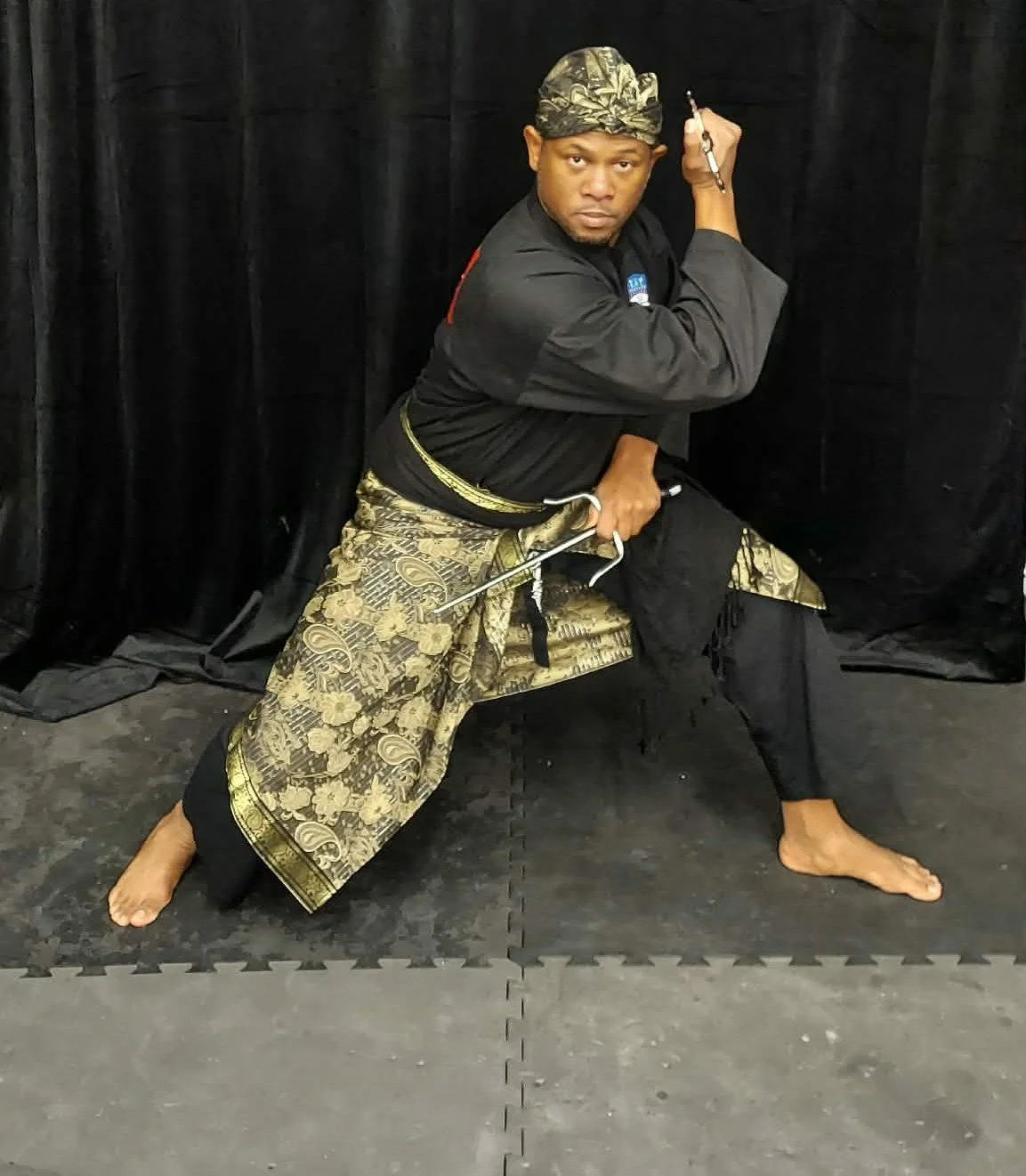
In this episode Jeremy chats with Silat practitioner Taqqee Khabir about his journey through martial arts, recovering from injury, and spreading joy and knowledge.
Taqqee Khabir - Episode 1116
SUMMARY
In this conversation, Taqqee Khabir shares his journey into martial arts, influenced by his father's background and his own experiences with competition and injury. He discusses the importance of personal growth, the challenges he faced, and the lessons learned through various martial arts disciplines. The conversation highlights the significance of mindset and adaptability in overcoming obstacles and pursuing one's passion for martial arts. He shares his transformative journey from chronic pain to healing through martial arts and yoga. He discusses the influence of his parents on his approach to natural healing and the importance of movement for health and longevity. Taqqee emphasizes the significance of teaching and sharing knowledge with others, highlighting the ripple effect of positive influence in the community. His story illustrates the power of resilience, personal growth, and the impact of martial arts on mental and physical well-being.
TAKEAWAYS
Taqqee's early exposure to martial arts came from watching kung fu movies with his father.
His father emphasized education over fighting, leading Taqqee to explore martial arts on his own.
Taqqee faced bullying in school, prompting his father to teach him self-defense techniques.
His first formal training was in Taekwondo and Hapkido, where he learned foundational skills.
A pivotal moment in Taqqee's journey was a cage fight that highlighted gaps in his training.
He adopted a growth mindset after realizing the need to learn grappling arts like judo and jiujitsu.
Taqqee's experiences in competition taught him the importance of strategy and adaptability.
Injury from training led to significant health challenges, prompting a reevaluation of his approach to martial arts.
Taqqee's resilience and determination to continue practicing martial arts define his journey.
He emphasizes the importance of seeking alternative solutions to health issues rather than rushing into surgery.
He found inspiration in martial arts and natural healing practices.
The importance of understanding pain as a messenger was emphasized.
Taqqee avoided opioids and focused on natural healing methods.
He discovered yoga and chiropractic care as effective treatments.
He experienced a shift from personal recovery to community impact.
He encourages others to let their passion shine and help others.
CHAPTERS
00:00 Introduction
02:56 The Journey into Martial Arts
05:52 Early Influences and Family Background
08:58 First Experiences in Martial Arts
11:56 Transition to Formal Training
15:10 Lessons from Competition
18:02 Injury and Its Impact
21:01 Navigating Health Challenges
23:59 Reflections on Martial Arts and Life
27:09 The Journey to Healing Through Martial Arts
34:35 Overcoming Pain and Finding Purpose
39:08 Transformative Experiences in Martial Arts
42:18 Teaching and Sharing Knowledge
49:37 The Ripple Effect of Influence
Join our EXCLUSIVE newsletter to get notified of each episode as it comes out!
Subscribe — whistlekick Martial Arts Radio
After listening to the episode, it would be exciting for us to know your thoughts about it.
✅Subscribe to whistlekick Martial Arts Radio on the following platforms:
🎧Apple Podcasts: https://apple.co/3mVnZmf
🎧Spotify: https://spoti.fi/3yHVdHQ
✅You can find whistlekick on all social media platforms using the handle @whistlekick or visit our website at https://www.whistlekick.com or https://www.whistlekickmartialartsradio.com
Show Transcript
Jeremy Lesniak (06:24.066)
Hey, what's going on everybody? Welcome or maybe welcome back to another episode of Whistlekick Commercial Arts Radio. I'm Jeremy, I'm stumbling over my own name, that's fun. I'm Jeremy Lesniak and I'm joined by Taki Kabir. I stumbled on my name when I had the chance to stumble on yours. See all that work we did beforehand. Yeah, see we don't do multiple takes here. This is authentic as you get here.
Taqqee Khabir (06:48.134)
I like it, I like it.
Jeremy Lesniak (06:49.97)
on martial arts radio. you're new to what we do, please check out whistlekickmartialartsradio.com. That is where we have every episode we've ever done, transcripts and links and all that good stuff. can go search and find what we have and see whose episode or what sort of episode you want to check out. And if you want to make the best use of your time, sign up for our newsletter. You can sign up on the website. You can sign up anywhere you find the show notes because that's going to get you an email.
twice a week, because we do two episodes a week, with the audio and the video versions right in your inbox. So you don't have to go anywhere and find it. just press play and you'll get it. And that's it. And with that, Taki, welcome to Martial Arts Radio.
Taqqee Khabir (07:36.04)
Thank you for having me. I'm super excited and grateful to be here.
Jeremy Lesniak (07:39.022)
I didn't change your excitement by stumbling over my own name.
Taqqee Khabir (07:45.042)
You know, I thought that was pretty hubris. I think that it's where those things were sometimes where we should focus, right? You know, you're so worried about not screwing up this thing, you screw everything else up.
Jeremy Lesniak (07:54.392)
Yeah.
I was so worried about not screwing up your name that I forgot who I was for a moment. That's, yeah. I don't know if I've done that before. That's, you know, there's always new stuff. There's always a new way to make an error.
Taqqee Khabir (08:08.093)
Yeah.
Yeah, that's true. But yeah, I feel like that's just a good thing about life, know? Good lesson there, right?
Jeremy Lesniak (08:20.203)
It sure is.
Given enough time, almost every ridiculous thing is bound to happen. When somebody says, what's the chance that's going to happen? Well, it's not zero. It's really small.
Taqqee Khabir (08:28.894)
Yeah.
Taqqee Khabir (08:34.918)
No.
but it just.
Jeremy Lesniak (08:38.744)
But eventually, if you do it enough times, something weird is gonna happen. And that's okay. That's what keeps life interesting,
Taqqee Khabir (08:45.319)
Yeah.
Yeah, it keeps life interesting. Learning point is just one of those things where you get to be, I guess, aware of your own consciousness, you know, when you see something like this happen.
Jeremy Lesniak (08:58.318)
Yeah, for sure. Well, we should we should talk about you. We should talk about martial arts and we should probably talk about how you started as a martial arts. Not always how we begin, but that that's late. I tend to go on these different kicks. You know, sometimes I start all the interviews with how do you get started as a martial artist? Other times I get I get annoyed at that and we start some other way. But lately I've been on the no, let's go chronologically.
Taqqee Khabir (09:03.282)
Okay.
Taqqee Khabir (09:10.288)
Okay.
Taqqee Khabir (09:25.851)
Okay.
Jeremy Lesniak (09:26.496)
So let's rewind the tape to episode one or issue number one. If you're a comic book nerd, know, whatever that first appearance of Taki is, what does that look like as a martial artist?
Taqqee Khabir (09:38.495)
Well, one of the first things that I can remember about martial arts in general was watching like kung fu movies with my dad.
My dad had been into martial arts when he was younger, went into the military, the Navy during Vietnam, and afterwards he went into karate for a bit. And then here I am, I was born in 83, so a little young talkie trying to watch Chinese Connection and the Shaw Brothers films and watching all that stuff and Bruce Lee and wanting to be able to emulate that stuff.
You know, my family was really in rural Virginia. I was born in Detroit, but then we moved to Virginia and there was nothing around there. And so it was just me in the yard trying to figure out stuff and running into the woods and trying to like make weapons and stuff like that. And so, yeah, so.
Jeremy Lesniak (10:33.166)
Sounds like my childhood, it's not Virginia.
Taqqee Khabir (10:37.756)
And then my dad would try and foster a little bit, but my dad wasn't really interested in making me into a fighter. He was more concerned about education and things like this, like academic stuff. And so he spent some time fostering that when I was younger, but as I got older, he really wanted me to pay more attention to my schoolwork.
Most of my childhood was kind of me experimenting, copying what I had seen on tape, and then, you know, trying to figure out how that fit together. And then I got into middle school and my family moved from Virginia to Detroit. And it was just a cultural shock for me. I didn't quite fit in. So I got bullied a lot. And my mom insisted that my dad start to teach me more then to kind of defend myself.
Jeremy Lesniak (11:25.358)
Yeah.
Taqqee Khabir (11:31.927)
And so that's when he really started teaching me like boxing and like how to fight more. And then from there into high school, it was predominantly my dad teaching me and then whatever friends I had that did martial arts learning from them. And then once I was an adult, my dad had passed away when I was younger. It's okay, life happens. But.
Jeremy Lesniak (11:54.861)
It does.
Taqqee Khabir (11:56.635)
Then I started taking lessons for myself, finding instructors and things like this. So the first formal school that I went to was the North American Taekwondo and Hapkido Association in Ypsilanti, Michigan. Master Jamie Johnson is amazing lady. And her husband had been in the Korean War and then married her and she came over and that's how the school kind of got started. But I did that Taekwondo and Hapkido.
for a while. was Hojimotsu, Hapkido. So I did that for a while and was starting to get pretty good. And I decided that me and one of my buddies was going to do a cage fight. We thought we had reached the pinnacle, you know. I was maybe in my early 20s, maybe like maybe 23 something. So I thought I was, know, all it is, right?
Jeremy Lesniak (12:40.706)
How old were you?
Jeremy Lesniak (12:44.471)
Okay.
Jeremy Lesniak (12:50.286)
UFC was starting to gain ground. You were probably aware of it if not watching every one of them.
Taqqee Khabir (12:53.318)
Yeah.
Yeah, I was watching then and for whatever reason, I thought that like just having the skills from Taekwondo and Hapkido were going to be enough. know, I punch and kick, I put somebody in the locker throw and that was going be great. Right. And it didn't go that way at all. We were stretching backstage and one of the other coaches saw us and saw us throwing high kicks and I found this out later, but he had told the fighter like, don't strike with them, close distance, take them down.
Jeremy Lesniak (13:12.856)
didn't go that way.
Taqqee Khabir (13:26.814)
So as soon as we touched gloves, he just tackled me. And that's where the fight was. And I rolled around, tried to do stuff, got to my feet for a split second, got taken back down, got choked out. And then I was just like, yeah, it's never happening again. I need to learn something else. So.
Jeremy Lesniak (13:41.422)
Hmm.
Was it?
What were your because by that point you'd had a good amount of training from multiple instructors, right? One being your dad. And I would imagine given that he had. Passed away, you probably thought very fondly of your time with him. And. Your training. I'm not going to say it didn't serve you, but at least in that moment in that at that time.
Taqqee Khabir (13:55.486)
Mm-hmm.
Taqqee Khabir (14:05.267)
Yeah.
Jeremy Lesniak (14:17.002)
it didn't serve you. Was that difficult to accept?
Taqqee Khabir (14:18.195)
Yeah.
You know, maybe if I was raised a little differently, would have been, obviously I was a bit embarrassed, right? Because I had my family come and everything. And at that time, I was married and my wife had came and all like this. So all bad, right? That way.
Jeremy Lesniak (14:29.166)
Yeah.
Jeremy Lesniak (14:40.736)
Everybody that loves you is there watching you getting stomped. Yeah, that's tough. Okay, that's good.
Taqqee Khabir (14:43.174)
Right. yeah, luckily I didn't get hurt. Right. So it wasn't like, I remember the guy who was hitting, I remember thinking that he didn't hit hard enough to hurt me. So I was like, this is great, but like, can't get up either. Right. And so my buddy was yelling at me saying like, you you got to get up and stop the fight. So I'm like, all right, I'm just going to stand up. I'm just to brute force it. And I turned around and exposed my neck and then got re-naked and choked.
Jeremy Lesniak (15:10.472)
yeah.
Taqqee Khabir (15:13.618)
But I remember thinking like, I need to train more. And I had this really like adaptive mindset where it wasn't like, like everything I learned was garbage. I realized there was a hole and I was like, I need to fill that hole. And that's came from the way that my parents taught me to think about life, right? They were really about this like growth mindset about improving yourself, accountability and.
Like I remember when I would get in trouble, my dad would sit me down and he would talk to me for like, know, 30, 40 minutes before I would ever have the punishment that I was going to get, right? To explain what was going on and how to make better choices. And so once I realized I had this hole, I was like, I got to learn to feel it. So then I started doing judo and jujitsu at Eastern Michigan University under my coach, Frank Gurlitz and his son, Christian Gurlitz. And that was eye opening.
I realized how uncomfortable I was with like personal contact real quick. We used to have this guy that we would call the carpet and we were all young. So maybe he like, it was his thing, but he was a really hairy guy and he would open his wound and as he would sweat, he would just rub his chest hair on you. And you're like, this is disgusting. would tap. But I remember I'm getting frustrated because I'm like, this is not a move. Why am I tapping? I'm just uncomfortable.
And so it was like these things where that way of understanding life has helped me in martial arts a lot of being able to see how can I look at this and not just, I'm not good enough, life is over, I gotta start over or something. It's always been about refining, these building blocks that stack on top of each other. But yeah, I did that for several years. That was really eye-opening.
Jeremy Lesniak (17:00.226)
Yeah.
Taqqee Khabir (17:07.502)
And there were so many people that came there that had different backgrounds of different martial arts that I got to understand a lot more flavors of things. So they would come in in between our drills or something. I'd be talking to somebody like, you know, I do this type of karate or do Kung Fu or do whatever, right? And,
that helped me to kind of start to understand there was more out there that I could look for. One of my friends that got me there was in the Filipino martial arts. And I remember the first time he showed me Huba and stuff, I'm like, this is like, what? This is magical. Like, what is this? And I thought that was really cool. I was interested in it, but I was still like so focused on the judo and stuff that I didn't really pick it up at first. And I did that.
and did some competitions and started to feel like I was understanding it. And then I hurt my back.
Jeremy Lesniak (18:02.402)
Were these competitions similar to your first one? know, sort of full contact.
Taqqee Khabir (18:07.198)
These were more judo or jujitsu competitions. So not full contact like in striking, but yeah, you're getting thrown around and choked out. you don't, you know, I've seen people get concussions from not taking a fall or throw right dislocations and stuff like that shoulders. But I was very fortunate that I was, you know, coming in as a white belt, didn't know anything, but my coach like had faith in me like, all right, I'm gonna work you through this.
Jeremy Lesniak (18:09.696)
Okay.
Jeremy Lesniak (18:16.589)
Yeah.
Taqqee Khabir (18:36.734)
do as I say, you and be all right. It was, you know, I remember one of my first matches, like I was like shaking. I was so nervous. And so they almost didn't let me compete because they thought something was wrong with me. And then I got on the mat and everything kind of like settled down and it was just like locked in. And first match, I pulled off like a sase that I never could do in training. Everybody was getting around my sase. Somehow I pulled it off. I'm like, that's amazing.
Jeremy Lesniak (18:36.952)
Mm-hmm.
Taqqee Khabir (19:06.596)
Second match, immediately got thrown, didn't realize what happened. I was like, okay, coming off the high, what do I do now, coach? Remember, he just walked me through it and like, all right, this guy's better than you, he's got some skill. This is how we're gonna strategize to make you be able to kind of persevere. And I remember that was the first time that I realized it's not just about attributes and technique.
Jeremy Lesniak (19:06.702)
Nice.
Jeremy Lesniak (19:16.014)
Yeah. Yeah.
Taqqee Khabir (19:32.895)
Because this guy was bigger than me, he stronger than me, he had more skill than me. But my coach understood the game. And so he walked me through like, you're gonna stall, they're gonna call you for stalling and everything else. Don't worry about that. You're gonna get points deducted, don't worry about that. He's going to get frustrated. And when he does, he's gonna force a move and we're gonna counter that move. Cuz you only need to get him to land on his back one time.
So be patient and I did and I'm out there and every once in a while I would try to like, I feel like I can get something and he would counter and I'm always will get thrown. He's a stiff arm him, stay back, stay back. And then finally, after him trying the whole match is getting down to the last minutes and everything else and he wants to win, right? So he goes for a big like hip toss and then I slide behind him and sacrifice throw, he falls down, I win.
I get up and I'm like, this is wild because I should have lost that. And yeah. And I remember that, that whole tournament. I, I remember coming back afterwards thinking like, I did really well, but not because of me. It was because of the coach. was able to listen, but if I didn't have him in my ear, I would have.
Jeremy Lesniak (20:37.134)
You played the game better.
Taqqee Khabir (21:01.566)
I would have lost, you know, and that understanding that strategy and thinking was a big part of your performance and being able to be functional. Like it was one of those things where I just had to learn that like, as I'm developing as a martial artist, having the ability to do something doesn't mean that you're going to be able to use it when the time comes. And so you have to be able to understand when to use it, how to use it. And that stuck with me.
end.
Jeremy Lesniak (21:33.228)
You mentioned that you hurt your back. Was that in competition?
Taqqee Khabir (21:36.559)
Yeah. Uh, I wish, I wish it was like in competition and I had got, uh, like this big thing and I got, you know, I won, but no, it was just during a random judo training day. Um, and, uh, I had this one guy, usually was my partner. He was like 20, 30 pounds, um, heavier than me. And, uh, he had this one sacrifice story, he catch my leg and he would like flip me over it. And, um,
Jeremy Lesniak (21:43.228)
There's no great story.
Taqqee Khabir (22:04.126)
I think I lost you.
Jeremy Lesniak (22:06.047)
Yeah, that was interesting. Am I back? Yeah, the record. Yeah, keep going. We've probably trimmed this part out, but.
Taqqee Khabir (22:08.252)
Yeah, you're back. All right.
All right. Okay. Yeah. All right. So, um, yeah, so I had this guy who was my usual training partner. He was about 20, 30 pounds heavier than me. He would do the sacrifice throw and, um, I would wind up going down. So finally, after a couple of months of this happening, I get frustrated. I coach, like, there's gotta be a counter to this. What do you do? And he's laughing at me. And he says, you know, I was wondering what you were going to ask.
Jeremy Lesniak (22:38.954)
Hahaha
Taqqee Khabir (22:40.71)
I've been just watching you just get taken down over and over again. It's really interesting, very entertaining. But yeah, just step over it. That's what you're just step over it. So when he kicks his leg out, step over it. so of course I do that and it works. He can't take me down and he's off balance. So get to throw him. And so next couple of weeks, I get to do that until he gets frustrated.
Jeremy Lesniak (22:49.857)
Hmm.
Jeremy Lesniak (23:03.19)
Mm-hmm.
Taqqee Khabir (23:07.326)
And he's like, well, I'm going to figure out a way to do this. And one particular day we're going and our training sessions usually were like several hours. And so by the end of the night, we're both getting tired, both getting like, I'm happy because I'm getting over his signature move. He's getting frustrated. And he decides that he's going to try and, know, force this last one. And I'm slow, so I don't quite get over, but I get enough ahead that I'm not falling down immediately. So he decides to twist the rest of the way.
And I remember my back, I just felt something pop. And you know, I was young, I, know, like, Ooh, that's a little twinge, but I'm okay. And then next day can't walk. I'm like, so he didn't mean to do it on purpose. He wasn't trying to be malicious or anything. Just as an accident. but that herniated two discs in my lower back, my L3, my L4. and they were protruding into my, my spinal column. So.
Jeremy Lesniak (23:59.583)
Wow. Wow.
Taqqee Khabir (24:07.262)
That was life-changing.
Jeremy Lesniak (24:11.083)
Yeah, what happens there?
Taqqee Khabir (24:15.85)
I didn't understand it. No, no, no. the, the first time that I realized that that was what was going on, it years later. I had to go through rounds of, of physical therapy and, know, my insurance was like, you know, you gotta go through physical therapy. If you're having back pain, you know, write this out. So I went through that.
Jeremy Lesniak (24:17.323)
Like that's not a couple of Tylenol and Wok at all.
Taqqee Khabir (24:43.23)
And you know, they do x-rays. don't see anything on the x-ray because it's a, you know, soft tissue as a disc. So they're like, all right, maybe it's just muscular. Go again through physical therapy. And after like two rounds of that, I'm starting to get worse. I can't walk. I'm having to take time off of work and everything like this. And it was the worst two years of my life of trying to sort this out. And I wasn't smart enough to know, to like look for other things at that time.
Finally, after the second round of physical therapy and everything and all these x-rays and stuff, my insurance okays me to get an MRI. I get this MRI and then on there they see the bulging, they say, my God, like we don't know how you're walking and this looks really bad. We need to do emergency surgery. We're gonna fuse your vertebrae together and we need to do this like next week.
Jeremy Lesniak (25:35.23)
Taqqee Khabir (25:43.103)
I was about 30, that was back in 2013 or so. I'm like, whoa, like, like this is like, there's gotta be another way. Right. And I remember my, my doctor at the time was mad at me. He starts like yelling at me, like, what are you talking about? Like, you're going to be paralyzed. You're not going to do martial arts ever again. And you know, if you keep doing this, you will be in a wheelchair. And so I'm like, I need to, like, I need to think about it, you know.
And.
Jeremy Lesniak (26:13.217)
And talk to us about what's going on in your head at that point, because for a doctor to have that much conviction, that they're yelling at you, right? And I imagine that, you know, maybe the doctor had, you know, stood to benefit in some way, but doctors don't usually yell at you regardless. So he really thought you were making the wrong choice, but you're, guessing, feeling like, whoa, this is really fast. I need a moment.
Taqqee Khabir (26:20.765)
Yeah.
Taqqee Khabir (26:31.603)
brain.
Taqqee Khabir (26:35.996)
Yes.
Taqqee Khabir (26:42.258)
Yeah. And, yeah. And I remember thinking like, there's gotta be some other way because everybody that I knew at that point who had any kind of back surgery was just miserable. And I'm like, I don't want that for myself. I want to keep doing martial arts. That's one of the things that, you know, was kind of like core to who I am, you know, and before I ever was teaching or anything, I just did it because it made me happy. Right.
And I was thinking about giving that up. I was like, what else am I going to do? And so I remember going home, and I'm thinking about it.
I watched a lot of martial arts movies and things. And my mom was really in a natural healing. And one of the movies that kind of made me think about this was, I don't know if you've ever seen like Tony Jaws movies, like the protector in that one movie where he gets crippled and he has to go into the woods and he rebuilds himself and he comes back. And I'm like, I don't know, like that's Hollywood, but maybe there's something like that. Right.
Jeremy Lesniak (27:48.321)
So you crawl out to the woods.
Taqqee Khabir (27:49.567)
So, that cloth was no, no, actually I got out of the internet and at that time my mom had already passed as well. And so I couldn't like talk to her, but I remember she was telling me about like the benefits of yoga and all of this and natural healing. So I'm like, I'm gonna just go research and see if I can't find something. And so I remember on Google, I'm typing in like martial arts yoga, right? Like something, and maybe I can use that to kind of heal myself.
And, um, when I did that, I found a lot of different stuff. saw this video from, I think, diamond Dallas page that he has this yoga thing and he had this like, uh, air trooper who had, you know, Damaged his knees and back doing a lot of hard drops. And then he had gained a lot of weight was in a wheelchair. And then he helped him recover and lose weight using yoga and stuff like this. And there's this whole montage of this guy training and falling down and being like 300 pounds to the end of the video where he's running. I'm like, Oh man.
I need to find something like that.
Jeremy Lesniak (28:47.361)
Yeah, for the audience, you don't know, Diamond Dallas Page was a pro wrestler and now like his second career in life is doing a lot of what you're talking about now. He's all over social media showing people like these healing modalities that kind of put himself back together after he's done wrestling.
Taqqee Khabir (28:59.836)
Yeah.
Taqqee Khabir (29:05.886)
Yeah. And so I was looking for something like that. And I remember I found this video of Satriya Yoga. And I was like, man, this is like interesting. So I'm watching some of these videos and it's like a C lot system that's based on yoga. And so while I'm looking at this.
And I saw, I'm like, this looks interesting. I think I can do this. And it was affordable at that time. Like I couldn't get ahold of Diamond Delich page, right? So I'm like, what am I going do next? So I ordered some of these DVDs and I'm doing that. And I'm noticing that they're starting to help some of the postures would relieve the pain. Cause at this point, like I was always in chronic pain. it's, you know, I nearly escaped, I guess the idea of like that opioid crisis, you know,
Jeremy Lesniak (29:55.017)
Yeah, I was just thinking that, like the timing of that. You were kind of prime for it. What was, why didn't you?
Taqqee Khabir (29:57.469)
Yeah.
and was primed for.
Taqqee Khabir (30:04.126)
And this is credit to both of my parents, I would say, with my mother teaching me about natural healing and my dad teaching me about martial arts. And I remember we used to do a lot of meditation as a family.
and breathing techniques. And he talked a lot about the benefit of that. And so that's what I would be doing literally every day, all day, even when I would try to go to work. And at that time I worked as a lab technician doing manufacturing stuff. So I would be having to go out and get samples and do lab tests and things. So I was standing on my feet all day. And I remember I would be trying to do these tests or whatever. And I'm just sitting there like kind of raising my diaphragm and breathe, not sneeze, not breathe because everything was painful.
I would have to lay down across the toilet sideways like this to go to the bathroom. Because sitting up on a toilet was just so painful. But I remember that my mom was teaching me like pain is a messenger. And if you just dampen the pain, then you don't have that messenger. And so I was really tuned in with like, even though this is really uncomfortable, I don't want to just try to run it from it and alleviate it.
I need to figure out what it's telling me. And so for years, I wouldn't take any of the higher stuff that they were trying to offer me. The only thing I ever really took was the prescription Tylenol. But they were trying to give me Oxycontin and Codone and stuff like that. And I just didn't feel comfortable taking it. What I wind up taking, I did one steroid injection one time.
to try and help get me over the hump. And I was taking like a full body, like kind of anti-inflammatory, meloxicam medication to kind of help with the inflammation, but that was still just barely cutting it. But what I wind up doing is I was doing these yoga postures and then I started getting chiropractic care and...
Taqqee Khabir (32:12.222)
the particular chiropractor that I had went to this time had this little device called a posture pump. And they have these air bladders that blow up like kind of like this and it separates the discs and you can lay on it. Yeah. And so I bought one of those and I would fall asleep on that. And then some of these yoga postures that I would do, I would sometimes fall asleep doing that. Cause that's the only way I could kind of get relief. Wasn't sleeping very well at that point in time. And so.
Over the years, they're starting to do this. You know, it was about a year or so of me trying to figure out what was wrong, going to physical therapy and, doing all these things. And then finally, when I got the MRI, that was, you know, toward the end of the first year. And then I figured out what was wrong, but then I was trying to rebuild myself for the rest of that year. And finally, I felt like I got over the hump of being in constant pain.
It would just flare up if I did the wrong thing or I moved wrong. And then I knew I was on the right path. And right around that time, I realized that the yoga postures also had this whole other like self-defense system that goes along with it. And I got really interested in C-Lot then. And I was like, all right, well, let me look more into this C-Lot, but I couldn't find anybody to teach me. And so I was going online and I bumped into...
Maumourney's stuff, if you're familiar with the SSBD, C-Lot, Sufi and Beladiri. Maumourney is a C-Lot master from Brunei, and his style is more upright. He's probably the most famous C-Lot practitioner on the internet. So people are interested in looking up what that is. It's SSBD, you can go on YouTube or Instagram, and he's all over the place. But I saw that, and...
They just happened to be an instructor in my area that was doing that style. And so I hobbled myself to one of their training sessions and I met all these other like underground backyard, C-Lock practitioners, Filipino practitioners and things like this. They were doing this stuff and I just got kind of got immersed in that world. And it was at the right time for me where I was getting to the point of recovery and
Jeremy Lesniak (34:32.833)
Yeah. I want to talk about this time period because you start off with this pretty horrible...
option given to you. The doctor says, we need to do this surgery that needs to happen immediately. And the people that you've known who have had this sort of procedure are all miserable. And so I imagine that that's, you know, we can we can come up with diagnosis that are worse, but it's not exactly good. It's it's it's pretty bad. And
Taqqee Khabir (35:10.642)
Yeah.
Jeremy Lesniak (35:15.419)
You invest the time and the energy, and whether direct or indirect, the money to work on this yourself.
And it works. And I imagine that there was a point where it was starting to work. Early on, you're probably thinking, I think this is working. But somewhere in there, maybe a couple months, maybe less.
There was a moment when he went, no, this is working. You had proof. And I'm curious what that felt.
Taqqee Khabir (35:53.718)
This is one of those things when I talk to a lot of my friends, you know, that they tell me and I never paid attention to. I guess I'm become aware of it now that I'm older, but when I was younger, I wasn't aware that this was important or special. But I've always had this real sense of identity in like who I was and what I was capable of. And I think that was instilled by my parents, right?
And so the confidence that I have in things sometimes doesn't always match up to what the evidence should point to. And so when I started to do this, I was like, I think this will work. And I started to go through the research to try and understand it and start doing these exercises. And once I realized that it was working, I could tell that like, if I do this for 20 minutes or so, I feel better the rest of the day. And then, you know, I just got to keep doing it.
And then slowly I became aware, you know, I didn't wake up one day and just be like, oh yeah, I feel awesome. But I would, I would realize that my pain was more manageable. It was, you know, the flare ups were less severe, less frequent. And then finally, to the point where like I'm mostly not in pain anymore.
And I remember that that feeling of like, found this, this is working. I need to stay with this. was very afraid that I would slide backwards. Right. And so I never really went back to judo after I had started to get better. And mostly it was because of the fear of, of getting re-injured. Right. And then,
Taqqee Khabir (37:44.095)
trying to make sure that that didn't happen. And so every day it became this mobility thing where I needed to like every day, I got to do this, I got to do this, I got to do this, right? And to the point where, you I wake up and then I wasn't in pain anymore. I'd go to sleep, wasn't in pain anymore. And then somewhere along the lines, that became less of an important thing of a daily structure. And it was never really this day where I was like, yeah, like I'm ready, you know.
Jeremy Lesniak (38:12.469)
Mm-hmm.
Taqqee Khabir (38:12.862)
It just became this gradual increase of moving back to my previous baseline. But what I did find is that it helped me understand my body and movement and the importance of alignment and everything before. Cause before I was just training, but I was trained for the function of, you know, doing this form or doing this technique. wasn't training for understanding my body or, or movement or mobility as a, as a.
natural part of being human. It was to serve some end goal, right? And this practice helped me to understand the importance of movement for my body as a being a human for health and longevity, not just to achieve this technique or this goal I'm looking for. That changed everything for me.
Jeremy Lesniak (39:08.395)
Did you ever have a conversation with the doctor?
Taqqee Khabir (39:10.682)
No, I never went back to that doctor. And it's one of those things where I wonder what it would look like now. I still have the MRI picture somewhere around of it where it's like you can see the disks are bulging and everything. And since then I've had x-rays and stuff and MRIs and there's no bulge. And this was before a lot of the more modern medicine coming out with longevity and healing came out where
Jeremy Lesniak (39:13.621)
Yeah.
Taqqee Khabir (39:41.142)
You know, they're telling you like you can rehabilitate these kind of injuries. I think back then they weren't really saying that that was possible.
But it was really interesting because this took me from, you know, trying to be a competitor and, know, and get back to being, you know, healthy enough to go compete again to changing the entire focus of my life. And, I went from thinking about that as the thing, like, I want to get back to competing to like, I want to be able to tell people about how to make sure they
keep themselves healthy and how important movement is. The Satriya yoga that I got into is one of the first things I ever saw before any of the modern mobility practices for fitness came out. You know, they were doing these motions that now people call animal flow or primal flow. Like there's all these labels on it, but all those movements I were seeing in this system that I was doing for probably like five or 10 years before I ever saw any of this stuff.
I was teaching everybody or talking to anybody that I could about this.
Jeremy Lesniak (40:52.683)
Yeah, I have to imagine that, I mean, just to be blunt, if this was my story, I wouldn't be able to shut up about it. Somebody would be like, my shoulder hurts. And I'd be like, hold on. Let me tell you. Let me tell you my story. Because if it can fix that, it can fix anything. least that would be my mindset.
Taqqee Khabir (40:55.304)
Thank
Taqqee Khabir (41:01.394)
Yeah.
Yeah.
Taqqee Khabir (41:08.104)
Yeah.
Taqqee Khabir (41:13.17)
Yeah, that that's been my mindset too. And that's been my experience. I've had other injuries and things that have happened since then. And I've applied that same mindset. Like I don't need to go get surgery once I understand what's wrong, right? Now I can address it. Right. And so it's really interesting. You know, I'm in my forties now and a lot of my friends that do martial arts and things like this.
know, they're starting to slow down, right? They're starting to, you know, do less and they've accumulated injuries, you know, and I'm like, you know, I want to make sure that I can keep moving and doing the things that I want to for as long as I can. So that part is really important to me of like, how do I stay mobile? How do I stay moving and not get tired or,
If I do suffer an injury, how do I rehab that so that I don't lose functionality?
Jeremy Lesniak (42:18.561)
Are you teaching this formally? Okay. How did that transition happen? because we didn't hear at any point prior that you started teaching, you were a student.
Taqqee Khabir (42:20.754)
Yes, now I teach full time. Yeah.
Yeah, it's an interesting thing because like I said, I did this for years for myself. And right around the time, the right when I was getting to the point where I was figuring out what was wrong and trying to heal. I went through a divorce and everything. wasn't in a good head space. And one of my friends from when I was younger kind of like pulled me aside and said, you're not doing okay.
We need to get you better. had this group that he was running that he invited me to come to. And one of the times we were there, we were kind of talking and some of the women who were in that group told me, you know, like they had this bad thing happen to them and asked me like, Hey, what do you think about this? Cause everybody knew that I did martial arts. And so I'm just sharing with friends, talking to them. And then they came back and said, that really helped. You you should share this. This is valuable. And I didn't want to.
I said, you know, is it just for me? I don't have enough skill. I don't have the right titles. I don't have this, that, and the other. And they kept urging me like, I think this would be good for you. It gives you a purpose, you know? And right now, like I didn't have one. I was not sure. I thought I had life figured out. I, you know, I had wife and kids and that's what I always wanted to do martial arts. That's what I want. Right. have a family do martial arts and that was it. And then when my family fell apart, kind of like, I'm like, I don't know what to do.
that I suffered this injury. Now I'm trying to like figure out how to go through this. And so at one point it did feel like everything in my life that was meaningful was taken away from me. And then when I started to heal and I got into this group and they were really urging me, so I listened and I, you know, looked for a group to kind of train with and I started to kind of just like do it informally. I still had a nine to five and stuff like that for years, but eventually
Taqqee Khabir (44:24.006)
I started to realize like, do enjoy teaching this. I do enjoy this. And I really had a lot of imposter syndrome. Cause I felt like I wasn't good enough. And I would just like, I can't charge for this, but you know, I want to keep doing this. And so I started my company, the Close Quarters Combat Academy. And I would just run like a weekly class, low, low fee and things like that, just to have, it accessible for people.
And then it gave me an outlet to teach and gave me this purpose. Right. and I did that, for years up until COVID and then COVID hit and I had got out of another long-term relationship and then everything shut down. I got laid off and then like, I'm at home and now I'm depressed. I'm miserable. And I'm like, all right, what do I do? And so I decided that I was just going to try to keep teaching, you know,
and they close all the gyms down and do this so.
There was this one particular day that I remember like, need to like switch over and think about doing this like full time. I had a phone call from this lady. She was really upset on the phone. Like if you've ever got a phone call from somebody, you can hear a tear in their voice. It's like, wow, like something's going on that I need to pay attention to. And she explains that her daughter is, you know, living with her.
And they are terrified that she's going to be killed. She had an ex-boyfriend that had tried to kill her previously, got sentenced to five years in prison for it, and vowed that he was going to come back and finish the job. And he's getting released in a few months and they don't know what to do. And so I was like, you know, I don't know if I can help you, but I will try to, you know? So I would meet with
Taqqee Khabir (46:19.326)
her daughter like every other day for like two hours in the park and we would just train. And I got so focused on doing that. It kind of got me out of my depression, gave me a purpose again and like watching the growth of this woman as she grew, know, grew in skill and competency, the confidence that everything happened. And I was like, yeah, I'm just going to keep doing this. And that's kind of how I switched from like it being a hobby to
being like, know, something I do part-time to being my full-time occupation. And then from that day since, I've just, you know, two feet in and, you know, I've somehow managed to keep students. Most of what I do now is private lessons. I have a small group class. I kept my group class, I'm still small, but...
And I just, teach, I didn't want to say that I wasn't going to teach one particular style on my thing. You know, I didn't want to say it was, you know, judo or whatever. So I just had close course comics. have this wide background of different things over the years that I've dabbled in. And, um, is a idea of a self-defense, not like learning a particular system. Um, but then as I was getting into it more, I got more into the C lot.
got to actually meet my instructor personally, because I was buying these things and signed up for online classes for a long time. And then I got to meeting finally. I had, at that point in time, I was trying to reorganize my life. And I had stopped doing the online classes. And he had asked me why after I went through this whole seminar. And like, I'm the youngest guy there at the time, so I get thrown around.
Jeremy Lesniak (47:47.669)
Yeah.
Taqqee Khabir (48:07.934)
picked on under the dummy right there. I'm like, oh, this sucks.
Jeremy Lesniak (48:11.413)
I've been there. I've been there.
Taqqee Khabir (48:14.814)
But at the end, he's giving out everybody these certificates and stuff. And then he's like, I want to talk to this person, this person, and you. And I'm like, Like, oh, shit, I've been in trouble. And so he takes me out and tells me he knows who I was and asks me why I didn't keep going on the thing. And I'm like, you're famous. You have students all around the world. You know who I am?
Jeremy Lesniak (48:28.609)
What did I do?
Taqqee Khabir (48:42.398)
And I remember just thinking like that, I was shocked first of all. but then also he was like, I think you have a lot of talent in this and you should keep going. And I was like, all right. Like, if you think this is something that I could be good at, like maybe I should listen. And so I kept training and I got my instructor ship, my first level of instructor ship underneath him for the style of select that I do. And, that's when I started to teach.
as a system as well. So I have like my self-defense curriculum and then I teach this Altria fighting arts, Silat style, which has been wonderful for me. That changed the way I move. It changed the way I look at things, helped me get in this idea of wellness as a way of life.
Jeremy Lesniak (49:37.333)
I've got to imagine that you've thought at some point that, you know, without this upbringing that you had, you might not have been as open-minded to go find the solution.
Taqqee Khabir (49:51.999)
Definitely. I am very, very grateful that I had the parents that I did so much of my childhood that I took for granted as a kid. And I'm looking back and going, wow, like, you know, I was lucky. I used to get really frustrated with my friends when they would come over. We would go to go do something and they want to talk to my parents for 20 minutes. And I'm like, like, come on. Like they're not that interested. Yeah. And.
Jeremy Lesniak (49:58.111)
Yeah.
Jeremy Lesniak (50:14.817)
Because they saw how special they were.
Taqqee Khabir (50:22.11)
Now looking back, you some of my friends didn't have, you know, both parents in the home where they were going through a divorce or something like that. And my parents stayed together until they passed away. And, you know, we didn't have a lot of physical things, but we had really strong familial structure and everything like this. And I was always supported in who I was and loved. And that stuff helped me in my adulthood in ways that I didn't even realize it was helping.
So that part, yeah, I am very grateful if I didn't have this ideal of, know, there could be a different way. Yeah, I probably would be in a wheelchair right now.
And so.
Jeremy Lesniak (51:01.985)
It's amazing to think how impactful things beyond our control are, right? Who we're born to. mean, if it wasn't for my mom, I don't know that I ever would have done martial arts. And if I had, it wouldn't have been as early. And I wouldn't have trained with those people, which means I wouldn't have had that sort of upbringing, which means I probably wouldn't have started Whistlekick, which means we would probably wouldn't be talking today.
Taqqee Khabir (51:07.347)
Yeah.
Taqqee Khabir (51:18.707)
Yeah.
Yeah.
Taqqee Khabir (51:29.65)
Yeah. I really like when I think about things like this and you kind of extrapolate that out, like the ripple effect, like the butterfly effect, you know, cause I'm sure this will be seen by some people and maybe that will inspire somebody some way. would really appreciate it. If anybody, whoever sees this, if you wind up being inspired and do something to help somebody to let me or Jeremy know that would be really awesome. but yeah, since I've been teaching.
Jeremy Lesniak (51:34.73)
Yeah.
Jeremy Lesniak (51:52.384)
Yeah.
Taqqee Khabir (51:57.671)
and things like this, I've been able to help people in ways that, you know, I didn't think about when I was younger. And when I was younger, I thought martial arts was so that you could do fancy, cool moves and, and express yourself, you know, and maybe the deepest I ever got was like, you know, it's my inner expression, you know, like, Bruce Lee, right. But outside of that, it was never about like, how can I impact like my community or the world or, or this individual, you know.
And I've had, you know, people who have been in, you know, bedridden, paralyzed, come out of a coma that I've trained and helped build up to being able to, you know, walk again. I've had people who have been fearful for their life, be able to find new purpose and meaning. I've had people who have suffered with, you know, trauma and all kinds of things like that. Anxiety, depression, come train with me. And then all of a sudden they're saying, Hey, you know, thank you for what you did. I'm able to do this now.
You know, I follow my dream. I've been able to stand up to my overbearing sister or ask for the raise I deserve or change jobs to get a better opportunity. You know, follow my dream. I had somebody literally leave and go start working to mine asteroids. And I'm like, I didn't know that was a thing. You know, so all kinds of stuff like that. And so that's really what drives me nowadays.
Jeremy Lesniak (53:22.049)
You're changing lives.
Taqqee Khabir (53:26.908)
Like the, tell people, yeah, I do martial arts. That's the vehicle. But what I really do is I help develop people, help them uncover their potential, you know.
Jeremy Lesniak (53:38.789)
I've said many times on this show and elsewhere, I know of no better engine for personal growth than martial arts. It forces you to face everything. If it's trained in a balanced way and it's trained in a traditional manner, you cannot help but become a better person.
Taqqee Khabir (53:46.525)
Yeah.
Taqqee Khabir (54:00.051)
Yeah. And I have been very fortunate that all of the people that I've trained underneath or trained with have been really supportive and helped me in different ways to grow. And I've heard horror stories about like the instructor who is manipulative and kind of locks their students into this way of thinking it's really closed and then
know somebody maybe breaks out and realizes they were misinformed or something. I've never experienced any of that. I've always had instructors that were like, you know, I have a way, not the way. I can show you what I know, but please look elsewhere as well. You know? And so I've been very fortunate that way. Yeah. Yeah.
Jeremy Lesniak (54:47.915)
Taki if people want to get a hold of you, where do they go?
Taqqee Khabir (54:51.352)
so you can contact me online. I have an Instagram page at CQC Academy. have a web page, CQC academy.com Facebook page, close quarters, combat Academy. so I'm around, I don't have the biggest social media presence, but I'm around. I have a YouTube page, close quarters, combat Academy. you can reach me through there. I have some videos up. I am not the most,
mindful about me being in front of the camera, but I always thought that it was more interesting for people to see like progress of students than just to see me doing things and if I'm doing things maybe I'm impressive, but maybe I'm an instructor I should be, right? But does that mean that you can do it?
Jeremy Lesniak (55:39.229)
Yeah, but showing your passion, I think, is important too. So I might challenge you a little bit on that because think of the story that we told here, right? You know, I would imagine that there aren't too many people who hear this or watch this that live somewhat near you that wouldn't say, hmm, you know what? I'd go train with this guy. If I'm hurt.
Taqqee Khabir (55:41.882)
I'm starting to learn. Yeah.
Taqqee Khabir (56:06.238)
Fair enough.
Jeremy Lesniak (56:08.821)
I might go see what he has to say. And it's not because of credentials or social media following. It's because of the passion with which you told your story. Like that's, it's powerful.
Taqqee Khabir (56:19.379)
Yeah.
Thank you. And you know, I've been listening because a lot of my friends have been telling me that it's good for you to have videos of you training your clients and everything, but like you need to be in front of the camera more.
Jeremy Lesniak (56:37.482)
You
Taqqee Khabir (56:38.354)
Yeah, thank you.
Jeremy Lesniak (56:40.001)
Cool, you're welcome. How do we close today? What do we want to wrap up with the folks?
Taqqee Khabir (56:46.154)
you know, I could go a lot of different ways and things, but I guess one of things I guess I would, I would talk about is like martial arts has helped me in so many ways to be a better person, to heal injuries, to affect change in what I consider a positive way in the world. and one of the things that I remember, my dad told me that stuck with me that I want to kind of pass along. he said one of the best ways to change the world.
is to teach your family. Right. And so I have, I have some kids, but beyond that, it's the community that you have influence with. Right. And so if you are in the ability or in a station in life where you can influence people in a positive way, let that light shine. Cause you don't know how that light might ripple to the next person and inspire that person for them to do change in the world. You it's us. The biggest thing that
I would say is, know, whether it's in martial arts, dance, music, or whatever you do, let your passion shine and help to enrich people's lives around you.