Episode 1120 - Morgan Kent
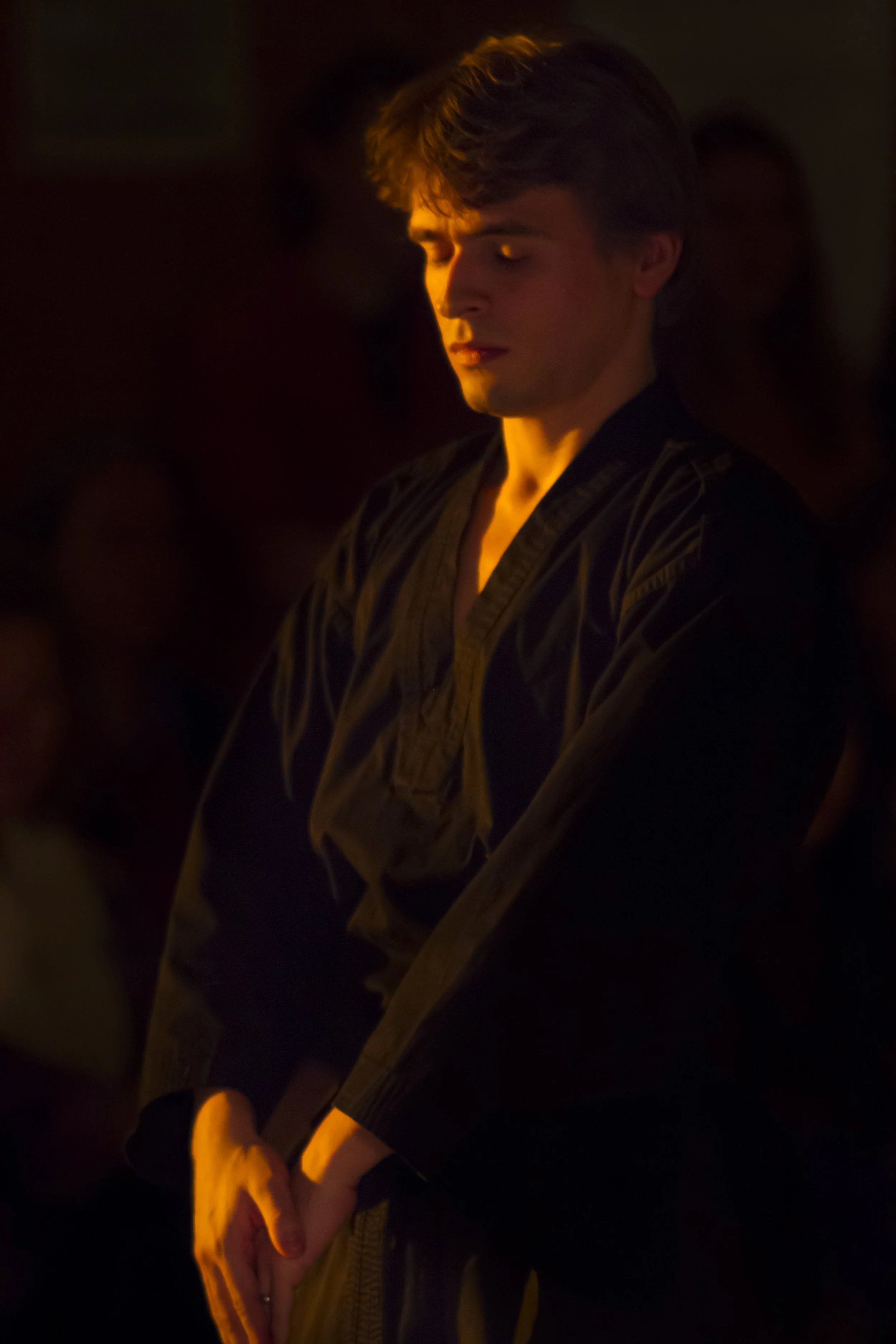
In this episode Jeremy chats with Silat practitioner Morgan Kent about his journey into martial arts from Karate - Tae Kwon Do - Silat and about building the culture around open sparring events he hosts.
Morgan Kent - Episode 1120
SUMMARY
In this episode, Morgan Kent shares his journey into martial arts, detailing how pop culture influenced his initial interest and the various martial arts he explored before finding his passion in Poekoelan Silat. He discusses the unique aspects of this Indonesian martial art, emphasizing the importance of self-expression and personal ownership in training. Morgan also reflects on the need to evolve traditional martial arts to remain relevant in modern contexts, advocating for a balance between respecting the past and innovating for the future. He discusses the importance of grit in martial arts training, the inception of open sparring events, and how these events foster a sense of community among martial artists. He also emphasizes the significance of communication and trust in sparring, the distinction between sparring and fighting, and the value of learning from one another in the martial arts community.
TAKEAWAYS
Morgan's interest in martial arts was sparked by pop culture.
He had early experiences in karate and taekwondo that didn't resonate with him.
Poekoelan Silat, the martial art he practices, emphasizes personal expression.
Training in Silat involves a mix of traditional and modern combat sport techniques.
Morgan's instructor focused on personal growth beyond just martial skills.
He believes in the importance of evolving martial arts for modern relevance.
Self-expression is a key philosophy in his martial art practice.
Morgan aims to elevate the art he practices for future generations.
He encourages students to take ownership of their martial arts journey.
Open sparring events were created to challenge martial artists outside their usual circles and foster a sense of community among different martial arts schools.
Communication and consent are crucial in sparring practices.
Trust between sparring partners enhances the training experience.
Sparring is distinct from fighting; it's about learning and growth.
The culture of open sparring has evolved over time, promoting inclusivity.
Participants adapt easily to the established culture of open sparring.
Trust in oneself and others is essential for effective sparring.
Continuous growth and development are vital in martial arts practice.
CHAPTERS
00:00 Introduction
02:00 Morgan's Journey into Martial Arts
07:10 Exploring the Unique Martial Art of Poekoelan Silat
13:24 The Philosophy of Self-Expression in Martial Arts
18:55 Elevating Traditional Martial Arts for Modern Contexts
25:28 The Grit of Martial Arts Training
28:36 The Birth of Open Sparring Events
33:36 Building a Community Through Sparring
37:21 The Importance of Communication in Sparring
40:34 Adapting to a New Sparring Culture
43:28 Trust in Sparring: The Key to Growth
46:20 The Distinction Between Sparring and Fighting
50:47 Learning from Each Other in Martial Arts
54:10 Acknowledging Support and Growth
55:07 Final Thoughts on Personal Growth and Training
Join our EXCLUSIVE newsletter to get notified of each episode as it comes out!
Subscribe — whistlekick Martial Arts Radio
After listening to the episode, it would be exciting for us to know your thoughts about it.
✅Subscribe to whistlekick Martial Arts Radio on the following platforms:
🎧Apple Podcasts: https://apple.co/3mVnZmf
🎧Spotify: https://spoti.fi/3yHVdHQ
✅You can find whistlekick on all social media platforms using the handle @whistlekick or visit our website at https://www.whistlekick.com or https://www.whistlekickmartialartsradio.com
Show Transcript
Jeremy Lesniak (06:17.912)
Hey, what's going on everybody? Welcome back to another episode of Whistlekick martial arts radio, the world's top traditional martial arts podcast. I'm Jeremy Lesniak joined by my guest today, Morgan Kent. Morgan, thanks for being here.
Morgan Kent (06:30.659)
Thanks for having me.
Jeremy Lesniak (06:32.11)
Looking forward to our conversation. But for those of you out there, maybe you're new. Maybe you don't know what we do. Well, you should check out whistlekickmartialartsradio.com because we have over 1,100 episodes now. And we've been going for over a decade. It's kind of crazy. But it's all for you. It's all to connect, educate, and entertain the traditional martial artists of the world. So if you like what we do, please.
consider signing up for the email list so you don't miss any episodes and we can send you some of the bonus stuff that we do sometimes. And it's free, helps us expand our reach, which helps us get more guests and helps everything else work really easy. You can sign up for the newsletter anywhere you find the show or at whistlekickmarshallartsradio.com. And with that, Morgan, thanks for being here on the show.
Morgan Kent (07:19.608)
Thanks for having me. Excited to be here.
Jeremy Lesniak (07:21.43)
Yeah, I'm excited we work through our technical challenges.
Morgan Kent (07:25.587)
there were many.
Jeremy Lesniak (07:26.734)
man, and to the audience, know, I don't know if this is going to look any different. I don't know if on the other side of the editing, this is going be any different, but we are using Zoom. It has been a long time since we've used Zoom because we've been using a platform called Riverside that's worked great until right now. I don't know how you did it, but that's impressive. had one before you and it had, we had no issues. And honestly, I don't think it's you.
Morgan Kent (07:46.028)
I jinxed you.
Jeremy Lesniak (07:56.706)
I don't even think it was, I thought it was me initially, but I don't, I think it's Riverside. But this is why we have backups, right? This is why we train more than one technique. This is why we have more than one strategy for problems because sometimes problems aren't as we expect them to be.
Morgan Kent (08:13.55)
Yeah, for sure.
Jeremy Lesniak (08:16.12)
So where should we start? Do we start in the obvious place of how did Morgan get started with martial arts or do we start somewhere else?
Morgan Kent (08:23.608)
We could start there, I suppose. how did I start? Well, I think like a lot of people my age, I'm a few years shy of 40. Pop culture and media was a big thing for me as far as realizing what I want to do martial arts. Like I can remember being five years old and watching an episode of Mighty Morphin Power Rangers and being like going to my mom and being like, this is cool. I want to do this. How can I?
flying sidekick of a guy in a rubber suit, you know, like, what do I have do to get that? So I ended up being brought to a local karate school in Western Massachusetts. And there were things I liked about it, but something just didn't mesh with me. I don't know what it exactly was, but something just didn't feel right. then five, yeah, something felt like it was, it was what I wanted, but it wasn't what I wanted.
Jeremy Lesniak (09:11.467)
Even at five. Even at five.
Jeremy Lesniak (09:18.87)
It was what I call it almost.
Morgan Kent (09:21.058)
Yeah, yeah, yeah. And then a few years later, I went to a local Taekwondo school and I had a similar experience.
Jeremy Lesniak (09:30.51)
How did you make it at the karate school?
Morgan Kent (09:33.598)
I don't think even, not even a year, probably. I mean, it's hard to say, you know, at that, that long ago, I'd have to, I'd have to check with my mother. and the Taekwondo school, same thing. Wasn't there very long. I ended up doing, when I'd visit my grandparents in New York city for summer camps, I would do, I would always pick the martial art class that was on offer. You know, they give you like a whole bunch of activities you do in the day, but I never really, it just didn't, it didn't connect the way I want it to connect, but something felt like I was drawn back to that space over and over.
so eventually, I'm at my elementary school. had a, private Montessori school out here and we didn't have a gym class to speak of. So our elementary school teacher asked the martial arts school down the street spirit of the heart, where I still train at and teach at and work at, if they would come and teach a martial art class as our physical education activity. and immediately.
something just felt really right to me about it. know, like we do the style that we do is very different in a lot of ways than a lot of other traditional martial arts, but I would still very much call it a traditional martial art. I think it just has like a lot of different mindsets and ideas and concepts and all of that stuff just really connected with me as a human being. I also, my instructor, I didn't realize it at the time, but she just has a way of
connecting with people and really authentically wanting them to grow as a human being, not just as a martial artist, not just as an athlete, but, you know, there's a deeper space that she tries to push people in, which I try to do myself now with other people. try to teach the way she teaches. ultimately though, if I'm being honest and I get a little silly about it, I wasn't sure if I wanted to stick with the class because I'd already tried martial arts many times. And though I was driven to it, I didn't get there all the way, but
Jeremy Lesniak (11:28.622)
How old were you when that class popped up at the school? Okay.
Morgan Kent (11:32.334)
Oh, 10, 11, 11. And the thing that actually pushed me to go is that I had a huge crush on this girl in my class. And I was like, the only way I can talk to this girl is if I do the class more because she had signed up to take the regular classes. Right. So that pulled me over there. Did I ever talk to this girl? No. I was 10 years old, 10, 12 years old, deeply afraid and not confident myself. But ultimately in a a fun
Jeremy Lesniak (11:50.646)
you were 10 years old.
Morgan Kent (12:01.784)
turn of irony, my future wife ended up training later on. And the thing that she noticed about me was like, he really is passionate about his martial art practice. I'm going to give this guy attention. So it ended up getting the girl. It's not the girl I was going for in the beginning. but what keeps me there, which I guess is maybe a question coming up is, you know, I think for me, I never felt like the strong person, the coordinated person, the
the leader, the, any of these things that we associate with being a martial artist. But I think something in me wanted to be that. And I really worked hard to change who I was and become the person I wanted to be. And I'm really passionate about helping people also achieve the same thing, right? Like try to have a path to become something greater than you are through this medium that I think is great for that.
Yeah, I think that's my answer, unless you have more there for that.
Jeremy Lesniak (13:05.326)
Well, I mean, I've got to ask you, what is the style?
Morgan Kent (13:10.008)
So what we do is we generally call it, we've called it many things over the years. My instructor back in the eighties and nineties, they originally called it Indonesian Kung Fu, which is a strange word because Kung Fu is neither, is not Indonesian and it's not necessarily Kung Fu. So what we say on our website is we do C lot, just broad category. Specifically, it's a martial art called Poekoelan and depending on who you talk to.
That has a bunch of other words at the end of it. Right. So Poekoelan was this martial art that this half Dutch half Indonesian guy brought to America. He learned from a person who taught Chinese martial arts and a person who taught Indonesian martial arts in Indonesia, who basically hung out in the jungle and were like, let's see what our best stuff is. And let's teach it to this kid who lives in the village. Right. So he ended up coming over here. and it sort of, spread from there.
Yeah, I think, and, it's had moments where it had like a, a bigger space, but it's had a lot to make it understand. It's had a lot of drama in it. There's been a lot of infighting and a lot of issues, with it. So it never really got super big. do maybe go into another story that'll lead somewhere. you know, my teacher was Nancy's renamed by the way, Nancy Rothenberg. She was.
one of the first ones to be like, I love what this art is, but the way that people are running it and treating people is not good. So she left and realized what I think a lot of people ultimately realized many years into their training, which is that she didn't need them anymore to keep progressing and keep getting better and to bring this to people. So I always have a lot of respect for how she, came from that space and reframe this practice that she had in such a positive way for other people. Yeah.
Jeremy Lesniak (15:04.35)
OK. So I I've observed a lot, right? Like I've never trained in it. Yeah. Other than, you know, bits and drabs here and there, various mixed seminars. When when you say Dutch, it makes me think kickboxing. Is that? The.
Morgan Kent (15:09.464)
Sure.
Morgan Kent (15:25.614)
Well, the influence is just because Indonesia was a colony of the Dutch at the time. So not necessarily. So I guess we'll talk about what the art kind of is. That's probably interesting to some people.
Jeremy Lesniak (15:40.47)
Here we are, 1100 plus episodes, a decade in. It is rare we get what I would call a new art on the show. And usually when people say, this is an art that nobody else does, it's really rare. It's usually not. It's usually because it's, you know, some sub sub sub style of karate or taekwondo or kung fu or right, or FMA.
but this sounds like it's actually different. to be honest, even if it wasn't, we've only had a few seal out practitioners on the show over the years. take it and run with it.
Morgan Kent (16:21.356)
Yeah. So I think if you, if you, if, if people look at our self-defense, they're like, you do crowd MacGyver. People look at our, some of our forms, they think we do Chinese martial arts. And if people look at our some, a lot of our techniques and our methodologies, they would say it's Indonesian. it's, we sort of fill an odd space where a lot of people see similarities in what we do and what we don't do. basic elevator pitch.
We are a four animal system. have a monkey, tiger, snake and crane style. But one piece that I always loved about it that makes it really distinct is that, you know, and a lot of animal systems that you find in Chinese martial arts, for example, there's like specific techniques with complicated fantasy names, you know, and that's like the move. But in, in our style, it's more concepts. It's like the cadence of the movement, the rhythm of the movement, the energy of the movement.
You know, we're asked to, in almost like a shamanistic way, invite the energy of that animal into our body, mind and spirit. And that will encourage you, motivate you to move in a different way. And the idea would be that we are constantly moving and shifting from one style to the other. Right. Depending on how, where the need is. So one way that we practice this is we do a lot of free movement where it's basically just.
You know, shadow boxing, but maybe with a more spiritual mindset, we're very focused on the idea of it's not that you do exactly what the teacher tells you to do or exactly what the move is, but you are finding your own way. Like here are the concepts here, the movements here, the strikes, you know, the take downs, whatever, but how you put it together is yours. Like it belongs to you. Right. so there's a lot of self-expression involved there. Like we have every single.
level that people go up, you know, they get into their belt, whatever they have to make up their own form every time, you know, and that's like a very important part of the practice is that there are all the forms that we teach, but there's also the forms that you make and those forms that you make, you have to also, choreograph with attackers. you show your application of what that is. And it's all, you know, from my take on it, one of my takes on it is all about giving you ownership of this thing, as opposed to you are, you are, you're, you're,
Morgan Kent (18:43.756)
As opposed to you borrowing it from somebody else. It's like, this is yours and it belongs to you, which I feel like is a powerful way to think about your training that I don't know if many traditional martial arts necessarily have, you know, they're often more interested in like, here's this old dude who said a thing back in the past. And we have to listen to everything that person says, as opposed to the idea that everybody is a caretaker of this thing that is powerful and important to them. and as a caretaker, they have the.
ability to evolve it and change it and that is equally valid. Yeah, so in that way it's very, you know, we have techniques but it's very, very concept based over anything else.
Jeremy Lesniak (19:24.896)
Interesting. Yeah. And and I want to kind of point out because I think this is fun. The the old dudes. Yes. Most of them said, don't just do what I did. Yeah. Take it and make it your own. There are a few exceptions, but most of the old dudes that are held up as infallible said it's not that they didn't say anything, it's that they said the exact opposite and people ignored them.
Morgan Kent (19:51.406)
Absolutely. think there's an odd thing in the traditional martial arts space in particular, where everybody knows that that is what was done, but nobody feels brave enough to say, I am a caretaker of this now. And therefore I need to be doing what this person would have done were they allowed to live 200, 300 years or 150 years. but there seems to be, this is getting into a broader issue of problems with the whole institution, but this feeling of
Too much reverence for the past and not enough reverence for what that person wanted to accomplish with it and what they could have accomplished with it.
Jeremy Lesniak (20:31.724)
Right. And, know, we brought it up a few times on the show. If you think about it from a logic perspective, which is something that a lot of people are not comfortable doing because they struggle with it. If if I'm a student and my goal is to only be exactly like my instructor, I'm never going to be exactly like that. I will be at best, you know, almost ninety nine point whatever percent. And then if my students
Morgan Kent (20:54.551)
Of
Jeremy Lesniak (21:02.058)
If their goal is to become me, martial arts continues to get worse with every generation. That's sad. Who wants that? You have to have that self-expression. You have to have, I mean, to me, this is where the art in martial art comes through. It's that personal expression part. And I think so many people miss the point of that.
Morgan Kent (21:24.27)
Yeah, and I think to your point, I'll give kind of an anecdote about what I'm doing now in my practice. Well, an anecdote and a connection to that. recently I've been well, I'll go back to this. So one funny thing about when this art came to America and I'm going to paraphrase the story because I didn't live it and I've just been told and read in a book. But I recently visited some of the original students of the guy who brought this martial art to America. His name was Willie Wetzel, who in all honesty,
I don't want to burn bridges and get people mad at me. Very problematic person. We don't necessarily have that much reverence for him at spirit of the heart where we train, but we acknowledge that he made this thing that we did, but he, famously for there weren't tournaments in Indonesia, right? So, but he came to America and was like, I'm starting to teach these classes for these people in the neighborhood. And it seems like tournaments are things that everyone else does. I'll show up and go to the tournament. So he goes to the tournament and they say to him.
You know, what division are your students? he's like division. What are you talking about? He's like, what, what rank are they? He's like, rank is what is rank. He's like belt, what belt are they? And he's like, I don't know. What's the best one. They're like black. He's like, Oh, they're all black belt. fine. Cause they didn't have, they didn't have belts. You know, he's like, I don't know. So his students go in and they do an incredibly good job. And he's like, all right, I guess that's that. So he adds belts in later after seeing belts at tournaments, but to get to where I was going to one thing that he commonly did was he would look at things that others.
styles did well or other students do well tournaments that his students didn't do yet. And he would say, we should learn that. So as an example, they didn't use to do high kicks. They would only kick low. This is common in a lot of Indonesian systems, but he saw the Taekwondo and karate people do these big head kicks. And he would send his students who would compete in the tournaments to ask them, how do you throw those techniques? And then he'd come back and say, okay, we're to start training this thing. So. You know, all the people I recently met.
some of these people out in Ohio, none of, no one from my side of the lineage tree had ever visited them before. Cause of all the drama and fighting. That's a whole long story. It could be three podcasts long, but I went and visited them. They told me the story and it occurred to me, this thing that we're talking about, that it seems like there's so much reverence for the past and what someone did, but not necessarily following through with that. So I've been training.
Morgan Kent (23:43.458)
grappling here and there. started because I had really bad plantar fasciitis after running nonstop for a long time. And someone was like, you can still do martial arts, but sit on your butt and choke people. And I was like, that's okay. Fine. I guess I'll do that. You know, my feet won't hurt. So I started doing that for fun, but I, these days I've had a very different, for the last year or so, a really different take on why I do it, which is that I think that like many traditional martial arts, which are striking focused.
We lack a good answer for the grappling. just do, right? Which is why MMA has become a big thing. It's why Jiu-Jitsu became a big thing. So I've been training grappling these days, not to call myself a mixed martial artist at the end of the day, which is not to say anything negative about that space at all. think those people deserve all the respect in the world, but I believe that the art that I practice, that I represent, deserves to be elevated in a modern context.
and to bring these techniques in without changing what it is at its core. Right. And I think that as a caretaker of what this is, it's my duty to not leave it the way I found it. Right. I should make it better and someone after me should make it better after that.
Jeremy Lesniak (24:55.48)
Yeah, mean, that's that's the goal, right? Or it should be. Yeah. Why wouldn't we want it to be that way? And the answer, if we don't, it always comes back to ego.
Morgan Kent (25:02.285)
Yeah.
Morgan Kent (25:06.018)
Yes. Right. I'm sure there's a lot of people in my space in this art who I've told this to and are nice to my face, but probably are like, who are you to say that this should be this way?
Jeremy Lesniak (25:18.05)
Right. it's, you know, in in order to to to be dismissive of that, you have to think, OK, so this person that gave us this art is the best at all aspects of it that could ever be. And in fact, when they taught, they were also perfect at teaching it. And had they lived longer, they never would have improved anything. That's a lot of bold assumptions.
Morgan Kent (25:41.719)
Right, it's crazy.
Tremendously and and especially like I know you're never supposed to say this but I've said this people they've given me a look like I shouldn't have said this but there's no reason why I or anybody else can't be better than the person that made yes the system right but you're not supposed to say that right but I that's what I fully believe I train every day of my life and teach every day of my life to be better than whoever put this together I don't train to be just a representative I want to you know elevate it all
Jeremy Lesniak (26:12.878)
I'll tell you a quick fun story.
I haven't told this in a very long time. I was at a tournament and a guy that I looked up to very, very much. In fact, I considered going, loved, I still have contact and train with my original instructors many years later, but they weren't big on tournaments. So we had talked about, I go over and spend some time training in this other school and for tournament purposes? And so got to know some of the students and got to know the instructor.
And one day his senior student beat him in forms competition in a tournament. And I was 12, 13, know, not old enough to really know that asking this question might not be appropriate. I, so I asked it, just, said that, you know, that just happened is how do you feel? he said,
That's the best compliment in the world. And you know who taught me that? The guy who was Master Ken, the real man's original instructor.
Morgan Kent (27:08.611)
Yeah.
Morgan Kent (27:13.422)
Who's that?
Morgan Kent (27:17.678)
Really? Yeah. that's fun.
Jeremy Lesniak (27:25.388)
And every great instructor, the people that I've truly loved learning from have all had that philosophy. They've all wanted their students to become better than them because that's why they did it. They wanted to pass on. And how do you know that you've done a, well, what better way to know you've done a great job than to elevate someone beyond you?
Morgan Kent (27:31.852)
Yeah.
Morgan Kent (27:46.198)
Yes, a hundred percent. Yeah. I, I, I hope I can get someone who's better than me at the end of the day. That'd be great.
Jeremy Lesniak (27:54.648)
So let's go back a little bit because you talked about karate and taekwondo, these things. I turn them almost. There was some resonance there, but I think you described it with the karate experience. There was something missing. was something. You couldn't define it at the time. But then you step into this new art a few years later and it felt right. It sounded like it felt right right away.
Morgan Kent (27:58.168)
Okay.
Jeremy Lesniak (28:24.524)
So when we look at it that way, are you able to kind of qualify? Yeah, what was missing?
Morgan Kent (28:28.11)
Yeah, I can. Yeah. Yeah. So a couple of things. One was even at like, you know, I remember very distinctly being in my Taekwondo class when I was eight, not the most. Physic fastest, strongest coordinated person. And I'm doing the routine. I'm sitting there. We're counting in Korean. I'm punching the air 10 times and you know, that kind of thing. And there was just a part of me that was like, I don't think this will help me if someone's
bigger and stronger. And I'm not saying that doesn't work for other people. I'm not downplaying that, but for me, it just didn't feel like that connection was there. and I think I also didn't like that every class was the same. It felt like we just did the same routine every day. And I understand that's really beneficial for developing those specific techniques, but it just didn't feel like reality to me. So what I liked about
This style, see a lot, pukul on Indonesian Kung Fu, whatever we're calling it this week, is that from day one, the class didn't start with, you know, the same 10 punches in the air, same 10 kicks in the air. We ran around, we skipped, we did side to side, we did all this kind of footwork to get our cardiovascular system moving and also develop the footwork skills you need in a fight to move around. We were not hitting the air. were immediately hitting pads. We were doing,
challenging conditioning exercises. You know, I often tell people that I didn't realize this until much later. We train as far as the fitness goes and as far as like pad work goes much more like an MMA school does, but we're very much a traditional martial arts school. We meditate, we talk about, you know, there's some Eastern philosophy in there. We are very focused on, um, confidence, personal development, all this other stuff we're not interested in.
getting a fight or practicing for a fight. We're very focused on self-defense, but just the method that we train in is more of that modern combat sport ideology. And it always has been.
Jeremy Lesniak (30:36.526)
Yeah.
So I'm just, I'm not sure where we go. Okay.
At some point, you started training through this, because you started at a time that a lot of people don't, know, adolescence, I don't know if you teach kids, but know, adolescence is a time that a lot of kids stop.
Morgan Kent (31:00.37)
yeah, they bounce and then they come back later and they're like.
Jeremy Lesniak (31:02.636)
Back later, but but you started there. Sounds like you stuck around. So at some point you started training or at least seeing what other people might be doing. Did you realize that the philosophies you were training were were different than peers in other arts?
Morgan Kent (31:22.134)
Yes. Yeah, I did. Yeah. I mean, I could tell because
It was like the method that we train, like the kind of, it was the grit that we were expected to have. Like I had friends who did other arts and they were very interested in like, have this form, I have this technique, I have this, this and this. But for us, it was like, things are hard and we're pushing each other really hard and you have to have a certain kind of grit, know, I'm sure we're to get to my open sparring events at some point, but one of the compliments that I often get from other teachers who spar with me and my students is that
Our people don't stop coming. Like we have a certain kind of like, even when it's hard, we just push and we just go and there's, you know, and that's always just the way we've been trained. We trained to like really get worn out and keep pushing and keep pushing. And, you know, this goes further into, um, um, when we do our tests for our, our, different, uh, belt levels, the test double in length and times, we have like a one and a half hour test, a three hour, a six hour, a 12 hour, 24, 48, a 72.
And we don't sleep during those long ones. like, we're very interested in you meditate all night and people keep you up, but we're very interested in this, like, I will push through challenges, right? Like I was like, even from the very beginning, we're, very much taught that, you know, you just keep pushing, right? And things are going to be hard and that's okay. That's part of life, right? But you just keep going. And I felt like that, that to me really resonated.
Um, it also really resonated to me that I remember sparring in other, um, classes that I'd done in the past, styles that are in the past. And something about that didn't resonate with me, but I remember being 13 years old and I was at a weekend long training retreat and I sparred with this older woman. And as a 13 year old boy, I was like, I could do anything. I could beat this lady up, whatever, you know, and she just beat the snot out of me. And I remember doing that round and I was like,
Morgan Kent (33:21.102)
And that was actually the moment where I was like, Oh, I'm going to do this the rest of my life. Like I can remember exactly where I was. It was that I was really shown that this stuff works and that she was really so much better than I was. And that's actually where it shifted from, you know, me being 12, 13 being like, I have a crush on this girl. I'm going to talk to this girl to. This is something I'm going to do for the rest of my life. I want to have this ability. I want to teach this ability. want to know this.
Jeremy Lesniak (33:27.374)
What was it about that experience?
Morgan Kent (33:50.69)
this is where I'm supposed to be, right? Yeah, that was a, can like very much remember that shift of like, is really for me and is gonna be a huge part of my life forever. I didn't know it'd be this much a part of my life, but yeah.
Jeremy Lesniak (34:07.33)
Wow. OK, right on. So you brought up your open sparring events, is how I first learned of you many years ago. And despite the fact that you're not that far away, have not been able to make it to a lot of them as much as they. mean, there was a time where it was recurring on my calendar. Like, that's the effort I was trying to put in. was like, no, not that. No, not this. People might infer a bit of what it is from the name, but talk about it.
Morgan Kent (34:36.482)
Sure. So, open sparring is an event that we started, gosh, almost 13 years ago. I think if you don't include the COVID years, I think about 12, 13 years ago. And we originally made it because I was at a point in my training where, you know, we don't do many tournaments at our school. We, we used to do them a long time ago. tournaments just aren't for me. And because they're not for me, maybe I'm not inspiring my students to care about them either. I had a lot of trophies. I threw them all away.
Um, it just never felt to me like I was getting what I wanted out of that experience was, which was I wanted to challenge myself outside of my circle. Right. And I never felt like I got that at a tournament. It's very, the time that I was very short, uh, you don't really get to, to, to stay with that partner and really feel what they're doing. anyway, um, my, my teacher, Nancy, she, um, I was talking to her about how I was, I wanted to challenge myself more and I was having a hard time doing it where I was because I was.
I, that point, even at my younger age had trained so long that every, you know, everyone else who was there just didn't know what I knew. You know, they didn't have the same experience level and they were not able to keep up in the same way. So I wanted a challenge that wasn't going to be the people I was teaching. Right. I teach them to do a move. I know a move they're going to do. You know what I mean? So, she came up with this idea that we could just invite, other martial artists from other schools in the area.
together and see if we would all just train. Right. So we went door to door and we visited people. Some people were like confused. like, so you want us to, for two hours just to get together and spar with each other. And we said, yeah. Then they said, is it a competition? like, no, no, it's not a competition. Oh, we're just, we're just training. And they were a little confused. Um, one guy, uh, uh, I came to him and we brought the idea and he said, will there be blood? And I was like, well,
The goal is that there isn't. not promising that there won't be, but I'm trying not to, you know, like I'm not trying to have to be blood. He of course never came, which is not too surprising. I think him saying, they be blood was his way of being like, I'm so tough. You don't want me there. But he's also not tough enough to show up, you know, like to come to open sparring as a teacher, you need to kind of drop your ego.
Jeremy Lesniak (36:43.694)
Was he wanted blood or because...
Morgan Kent (36:59.88)
and be willing to not look great in front of your students, which I often say is like a great quality for your teacher to have. So anyway, so we went door to door and we got about, there were about eight of us the first time, all instructors from other schools, basically. And we just trained for two hours. And after that, I thought it was relatively successful. And I just started going door to door to more places and handing out flyers and talking about it. And it went on and on for years like that. And
Here we are many years later, we often get about, 20, 25 people. The average couple of times a year, we'll get more like 40, 50 people in a room. and we just are training together. And I think what's really beautiful about this event is that it isn't a competition. Like nobody's there to show that their stuff is the best. We try to create an environment where everybody knows if you're practicing, there's a different way that you train with your teammates at your school than you do at a tournament. Right.
And what we have done is create an environment where these people aren't from your school, but you're training with them. Like you're there, your teammates, you're not training in a competition space. You're training in a, can experiment and try things. And so this other person, and they're going to throw techniques in a completely different rhythm, combination, whatever, than what you used to. Right. And what you should be doing when you're in that space is not thinking about how, what they do is better than you.
And I need what they have, but the better place to kind of take it is here is this great opportunity for me to make my techniques work under duress and challenge. How do I trust what I already have to deal with this different stimulus I'm getting from this other person? Right. And, anecdotally, the students that I have who do open sparring consistently, they, they tend to have a dramatically different skillset than those that don't. You know,
Jeremy Lesniak (38:53.366)
sure.
Morgan Kent (38:55.342)
but ultimately, they know what is open sparring become. You know, I like to say it's, it was this thing for me and I got a whole lot better from it and blah, blah, blah. Cause that's where it started. But I think what's more valuable to me is we've in Western Massachusetts and you know, it extends somewhere out to Vermont, New Hampshire. Sometimes too, we've created this much more interconnected martial art community. You know, like everybody now isn't like little schools that don't know each other. Everybody trains together. go to each other's events.
We talk more often, you know, it's really changed the culture of this space in a big way, which wasn't my intention at first, but I'm really proud of that.
Jeremy Lesniak (39:36.602)
As you should be in anybody who's been to one of our free training day events. And of course you came to Marshall Summit last year, which was the outgrowth of a very successful free training day over the years. It's similar, right? Why are we there? We're there to train. We're there to help each other get better. We're not there to prove ourselves. That is competition. Competition has a place, but that's not what this is. It's not what free training day is. It's not what Marshall Summit is.
Morgan Kent (40:02.818)
Right.
Jeremy Lesniak (40:03.892)
it does break down barriers and it does give you more more stuff because you know I always go back to how good can I get at martial arts by myself? best theory I can I can have the best you know you know sometime in the future somebody will be watching this and they'll have you know holographic recordings and motion capture to tell them no no move your hand in this way but that's still going to cap out.
Morgan Kent (40:14.711)
Right. Not there.
Jeremy Lesniak (40:32.878)
how far you can go in application unless you have a person.
Morgan Kent (40:37.858)
Yeah. I, I, as a person, and maybe this is like my inner child, still not being as confident as he needs to be or should be. I am very uncomfortable being the best in the room at anything. Like I really don't like it. You know, like I get really, if I feel like I'm like on top of the group, I get antsy, right? So like open sparring is really important to me so that I can get beat up and say like, this is, I need more, you know, I need to go back to the drawing board and work on this and work on this, you know?
Yeah, I love it. think it's like my favorite thing. It's my it's the thing. One of things I'm most proud of in this space is that that exists.
Jeremy Lesniak (41:11.254)
Nice. Weirded the like really what was what was the I what was the moment when you said I need this.
Morgan Kent (41:21.346)
I need open sparring.
Jeremy Lesniak (41:22.54)
Yeah. Did something happen? Were you sitting there with a, you a beers? It just like I was burning the same people over and over again. I'm stagnating like I'm guessing something sparked.
Morgan Kent (41:27.042)
good one
Morgan Kent (41:37.806)
It was stagnation. was feeling like, you know, I kind of, sort of remember even talking to my wife about this. Like I felt like I was still training and I was still developing. I'm always doing that, but it felt like things were stagnating and I was getting into a routine of just, go and teach my classes. I work on the same things over and over, and then I go home and I do it again. And I think I just needed something to push me. Right.
Push me not in terms of my own practice, but push me as a teacher too. Right? Like if I'm, if I'm the way I teach sparring is different now because of my experience working with people who practice different things, you know, and we've got people who come to open sparring who are of course like cry people, come through people, tie, Kwan Do people. have a one guy who's a former UFC fighter. We have other professional MMA athletes who come. There's a bunch of folks from, Whitley's boxing gym who come down. don't know if that name is known over there.
But, yeah, I think just, there's a lot of very high quality people who come through. had a guy who unfortunately, died in a motorcycle accident last year, but he, was, was a champion kickboxer in his fifties, beating up 20 year olds. You know what I mean? So we had like some, have some really great people there and, they all helped me get out of that stagnation and.
really feel like I can keep pushing myself. And I really hope that I do the same thing for them. I hope we've all inspired each other.
Jeremy Lesniak (43:08.762)
I think the biggest question most people would have, because everybody wants this, right? Whether they would actually participate, everybody wants this to exist. This is great thing. What's the level of contact?
Morgan Kent (43:21.656)
So that's an interesting question. So I have always done it this way. I tell people that the way that I like to train with my students is pretty light contact. know, I have to do this every day. So I don't want to be injured. I've got two kids that I want to play with and hang out with. So we at Spirit of the Heart, we do intense techniques as far as like how much volume that we throw and how intense we move with people. But we really try not to hit each other hard.
Right. We do take downs out of wooden floor, but we do take downs where we say, I will put this person down. I won't slam them down. Right. Right. But what I say at open sparring is it's up to you what you want to do. Right. So if you partner with someone who's a boxer and you don't want to get touched in the face at all, you need to practice communicating that. Right. And as long as, and then the other person has to agree, of course. Right. And then we're, doing that space. So I tell people.
If you and your partner both agree that you want to hit each other harder, that's a hundred percent fine with me. long as number one, I'm not hearing about your drama after the fact. Right. And number two, I'm not picking you off the floor. Right. But otherwise, if you want to hit harder, throw harder, that's a hundred percent your decision. And I want you to do it. You know, I sort of think about how I've really been pushing communication and in this way where, we're basically talking about.
consent based communication without viewing to where those topics usually go. Right. But open sparring is this outlet where a lot of adult men who maybe haven't thought about this topic are unknowingly practicing saying, I like this. I don't like this. Right. Which I think is very valuable just as a culture, as people that we all understand these things, you know, as it from a self-defense perspective, like I try, you know, we teach these things to kids with like saying, I like this, I don't like this, communicate these words to each other.
So I think there's something special about that. Oh, I'm veering off topic though, aren't I? Yeah, so it's. We don't. We just beer. Right. Right. I guess I'm doing the weave, although I don't want to necessarily connect with that person, but I'm doing the weave and I'm not without supporting that man, but I'll take his thing. Yeah. So.
Morgan Kent (45:44.8)
It's really up to the person. And I think that's what's really special about it is that I just, say you could do whatever you want. If you're, if you're with, if you partner up with a Jiu-Jitsu guy and you tell them, I don't want to grapple. Okay. That's your choice, but like, that's they're going to give you. So for me, I will, if I get with, one of the other instructors who I trust, we go harder on each other, but that's because I trust that person did not go harder to my skull. Right. Right. But do we throw harder body shots? Absolutely. Am I doing that with.
The 23 year old brown belt who like has something to prove because I run open sparring and I, know, my name's on this thing. I don't want to do that with him. You know what I mean? Like I, it's not that I think he's better than me, but like, just don't need that. You know, like it's not worth my time. I don't, I don't trust him there.
Jeremy Lesniak (46:30.146)
How easily do people adapt into this culture?
Morgan Kent (46:34.274)
Very easily. Yeah. that's a good question. So I think, well, before it was harder, we used to do it where, every, every time we had an open sparring event, it would travel from school to school and the school that was hosting it would have that person running it. And I think that worked fine, but the tone of what the event was, was not necessarily consistent. Right.
Jeremy Lesniak (46:36.536)
Why is that?
Morgan Kent (46:59.906)
But I always wanted to do it that way because I wanted to train more. So if I wasn't running it, I got to do every round. Right. So I selfishly was doing that for me instead of doing what I should have done, which is if I run it and I set the tone consistently, what can this group turn into? So once we shifted that, everything got a lot better. Right. So I think what helps people adapt to that at this point is that we've done it long enough that.
80 90 % of the room knows what the energy of the space is supposed to be and they know what we're trying to get and it's hard as humans to come into a group of other humans and not try to go with what the pack is doing right so you know i'd love to give you a magic answer if i did this and everybody got cool with each other it's just length of time
Jeremy Lesniak (47:49.1)
Honestly, that's what I expected your answer to be, that you hold those consistent boundaries and that once you build what I call institutionalized culture, when other people join because there was a critical mass of that culture, their whatever, whatever their energy they're bringing in isn't big enough to change it. So they either adapt or they leave. That sometimes you have people that join and they're like, this isn't for me and they don't come back.
Morgan Kent (48:08.322)
Yes. Yeah.
Morgan Kent (48:13.654)
Right. And I'm only, and one thing I feel really happy about is I've only told one or two people in 13 years not to come back. Right. It's very, very rare that people have been a problem and just, they don't understand what the event is. Right. But these days I can't, it's hard for me to imagine someone's going to come in and have an attitude about it. There's just too many people who understand what it's trying to be. Right. And, and what it's trying to provide people, you know, like if you are in a combat sport space,
There's plenty of opportunity for unsanctioned fights, know, not unsanctioned, I'm sorry, fights that are on record, like a smoker or something, right? But there isn't necessarily a space for this where experiment and try with people that you don't know and work it out.
Jeremy Lesniak (48:58.674)
But this carries with it the word you haven't used that I assume is there and is so significant is trust. Because when I think about when I spar strangers, we're either way over or way under our comfort level. It's really hard. The increments are big. It's like, OK, no, too OK, too hard because we don't know each other. So we can't trust each other.
Morgan Kent (49:04.738)
Mm-hmm. for sh-
Jeremy Lesniak (49:28.768)
So we're guarded, right? And different people respond to that in different ways. But when I trust somebody, they can beat the tar out of me, because I know they're not trying to hurt me. They're trying to help me. They're trying to help me get better. And we've, mean, anybody out there in the audience that's taken shots from people that they trust, especially people that they've trained with for years and love dearly, you know that when somebody hits you and they don't mean it, it doesn't feel the same.
Morgan Kent (49:57.581)
Yes.
Jeremy Lesniak (49:58.144)
It could be harder and it doesn't feel as bad as when someone pops you because they wanted to because they're trying to prove something or whatever.
Morgan Kent (50:09.134)
Well, I think what's interesting about that is that I can remember having that feeling about sparring with strangers. Like there would, you know, like there would be opportunities where someone would find out how to do martial arts and they would just want to like move around me a little bit, you know, everybody who's trained long enough has experienced, don't we? and I can remember that same feeling that you're describing, but what's interesting is that I never thought about this. You brought it up. I don't have that anymore after doing open sparring so long.
Like I've, I've sort of, think, is it that I trust the other person or have I learned to trust myself more, both in terms of my skillset and ability to move, but also my ability to communicate with this person if it becomes too much. Right. think open sparring has given me that confidence in myself and that trust in myself to be able to handle the situation in a safe way without getting upset or feeling out of place or whatever.
Jeremy Lesniak (51:08.546)
That's a point. Yeah, you almost get get inoculated to that novelty. Just you know, there are only there are only so many ways that people are going to move. They're only.
Morgan Kent (51:13.304)
Right.
Morgan Kent (51:18.402)
I it's of become that, you know, cause we get, even now we still get like three, four, five, six, you know, we'll get a handful of new people every time. Sometimes you get a lot of new people. and those new people, like, don't know what they're going to do, but I think I, yeah, I think I have, I think in my mind now I've developed a sense of trust in saying that this person says they're sparring with me, not fighting with me. Right. And as long as that is the agreement we've made, what do I, you know, I'm going to be fine, you know, and they're going to be fine. And I'm going to trust that.
And I'm trusting that if I give them a certain level of contact, that they're going to return in kind. Right? Yeah.
Jeremy Lesniak (51:55.069)
Yeah. Makes sense. I think it's an important distinction, the word spar versus the word fight. Absolutely. I get irritated at other tournament promoters when they refer to their sparring divisions as fights. know, it's one thing if it's, you know, if it is a fight, call it a fight. But most of what most of us are doing in open competition is some version of point sparring. That's not a fight.
Morgan Kent (52:06.978)
Yeah, it's fighting.
Morgan Kent (52:20.046)
Yeah. Not at all. I often tell people, you know, the funny thing about being in the, in the traditional martial art space is that unlike any other sport, if we're going to call what we do a sport for a moment, which I don't usually, but we'll play with that term. Sure. We're the only sport where you're always practicing different parts of playing the game, but you hopefully never play the game. Right. Right. Like we're always drilling, but we're never showing up to competition, like a real competition, like, like.
You know, in soccer, you'll practice kicking the ball on the goal, running up and down, pass the ball, whatever. But eventually you're going to play a whole game. Right. Like, and we're, and you know, like we hit the pads, but you're not going to hit a person the way you hit the pads. You just not. the way you. Right. We let you have to, so we never really, know, and this is the thing that, you know, I think the modern combat sports get right. If you want to do that.
Jeremy Lesniak (53:03.438)
You absolutely have to, right? Worst case.
Morgan Kent (53:15.778)
which is that they have an outlet to really see what happens if you want to do that. And from my experience, I actually in my twenties was going through a lot of the motions of getting a fight for myself. Like I was very interested in it. My wife wasn't very interested in me doing it, but I was like, I think I want to do this for me to prove that I could do it. Right. But what made me decide not to was that I looked inside my heart and I realized that I didn't feel like
I could honestly hurt somebody for a prize, which isn't to say that I wouldn't also get hurt. Sometimes I say that sentence and I don't want it to sound like I'm saying, of course I'd win and the other person would be killed. Right. I was not concerned about getting hurt because that was part of the process, but I didn't like the idea of hurting another person for a medal. Right. And that's what made me decide not to do it ultimately.
Jeremy Lesniak (54:09.068)
Yeah. Yeah, I had a similar self exploration in my, in my thirties. Cause I suddenly was around a lot of people who were kickboxing at a high level and I was like, okay. And I, I realized knowing myself, I would keep going until I got really hurt. And I was like, I don't, if that's the inevitable outcome, I'm not going to start.
Morgan Kent (54:27.341)
Mm-hmm.
Morgan Kent (54:33.602)
Right, Most likely are gonna be really hurt at the end of the day with all these stuff. sure.
Jeremy Lesniak (54:39.99)
Yeah, I mean, how often do people retire at the top when they're healthy and they're uninjured? I mean, it doesn't happen too often. Usually people are pretty banged up. I mean, we've had some folks on the show who
had incredibly successful careers. And the tail end of those careers didn't look so good.
Morgan Kent (55:00.376)
Yeah, I'm banged up enough just doing forums and sparring.
Jeremy Lesniak (55:04.588)
Yeah, no doubt. Same. Same. Now my...
I like your sport metaphor, the idea that we're practicing these different components because I think it's the easiest way to respond to that wouldn't work on the street, right? Well, no, it's not supposed to when it's in this instance, we're training this part of it here and this part of it there and this part of it there. And sometimes we put them all together slowly and sometimes we put them together fast and we hit that thing because
Jeremy Lesniak (55:38.392)
we do put it all together. How do you train 100 % for the street in a class? You don't. People die and the ones that don't, don't come back. Because who wants to live that way?
Morgan Kent (55:44.589)
you put it really.
Morgan Kent (55:50.838)
Right. I also, as far as the street thing goes, I, you know, I'm also of the opinion that, any technique can work if your timing is good. You know, I think even the most silly flowery thing probably can work functionally if your timing is really good and you've trained it. You know, I think that where that argument of this thing doesn't work on the street comes from is less an issue of the techniques that we.
often practice in a traditional martial arts space and more the methodology in which we train it. Right. I think that as, combat sports became a bigger thing, traditional martial arts, like to almost like, differentiate themselves, went further in the other direction. And we really have a lot to learn from each other that we're not necessarily noticing and acknowledging. And we probably on both ends of that martial arts spectrum, we need to kind of like find a middle space where we're taking things from each other and learning from each other.
Jeremy Lesniak (56:47.802)
And I think we're doing more of that now. Events like yours, events like what we do, content like this that encourages the breaking down of barriers leads to friendships, relationships, cross-training. we all become better as a result of it. not to say that there's anything wrong with going super deep on a single art. I still think people should do that. But rounding out some
Morgan Kent (56:49.902)
I think so for sure. think it's getting better,
Jeremy Lesniak (57:15.694)
some things make sense. I bet if you go in the best Italian kitchen, you're probably going to find some spices that you wouldn't typically expect to find there. Why? Because it, that little bit can create a lot of options and a lot of understanding or if we extend the metaphor in the cooking world, lot of variety.
Morgan Kent (57:37.966)
Mm-hmm. Yeah, for sure.
Jeremy Lesniak (57:41.442)
So we've got a lot of reach in the New England area. If someone wants to attend Open Sparring Group, where do they go for information?
Morgan Kent (57:49.806)
I have a Facebook page. can look up Western Mass Open Sparring Group. It's a Facebook group. do announcements there. I also have an email list that I have. You could also just check out our website, Spiritoftheheart.org, and you'll find a way to contact me, and I can let you know when it happens. We do it once a month, though the week that it is is inconsistent. It depends on where holidays fall and things like that.
Our next one is I'm gonna pull up my calendar really fast and not create dead air on the podcast
Jeremy Lesniak (58:22.444)
And ideally if you've got the next couple because of when this is going to drop, don't.
Morgan Kent (58:27.284)
I would love to the next couple. do it. I plan it when I'm done. April 26 from one to three at Spirit of the Heart in East Hampton. Is our next one.
Jeremy Lesniak (58:37.201)
And that's where your school is, East Hampton.
Jeremy Lesniak (58:41.87)
And yeah, you said if people want to find you they can find you a spirit of the heart
Morgan Kent (58:47.95)
I think I was finding on Facebook. I'm under Morgan Kent on Instagram. I'm at a C lot underscore guy. S I L A T underscore G Y. Yep. Yep. Another guy took Pooka on guys. I couldn't have that, but I know that guy.
Jeremy Lesniak (59:03.886)
I'm sure you know that guy. Yeah, right on.
Is there anything we haven't talked about that we should? Have we missed anything?
Morgan Kent (59:15.512)
Have we missed anything? I don't know. I mean, I guess I'm giving my life story. I guess I would be remiss to, I've mentioned my teacher before, but I'd be remiss to not just, you know, acknowledge that, you know, what she's done for this, not just my practice, but for this martial art that I, that I teach is so important to me. I think that, what's the way to put it? I think her version that we do is different than other versions. And I'm really proud to represent that version that is.
hers. And I hope that the version that I make, that I develop furthermore really acknowledges and, and, respects what she did while still becoming its own thing. and then, you know, I think also when we talk about life stories, it often gets really focused on, on you yourself, but, and your story, but, my wife, Amanda, she like really supported me in this.
practice like for so long and when I wasn't making much money teaching and I was like, I should get another job. She's like, you are on this planet to do this thing and to help people. And she wouldn't let me do anything else, but this and focus on this. So, you know, I just don't want to put my story out there and not acknowledge those people amongst many, many others who helped me and encouraged me to keep going and to practice what I believe in. Yeah.
Jeremy Lesniak (01:00:35.406)
That's awesome. Super cool. And to the audience, if you want to go deeper, we'll have the show notes, the transcript, and all that good stuff at whistlekickcommercialartsradio.com for this and every other episode we've done. Don't forget to sign up for the email list to make sure you get every episode sent to you right in your inbox. Click the Play button. Click for audio or video. It's right there. And you can sign up anywhere that you find the show.
And with that Morgan, I'm going to ask you to close this up. How do we, how do we put a bow on this thing?
Morgan Kent (01:01:07.468)
Well, if anything I've said resonates with you, would just encourage you to think outside the box of whatever you're practicing and to, you know, I think maybe the thesis of what we talked about today in a way is to not attach yourself to what you believe is the dogma of what you do and to really think for yourself and train the way you want to train while still respecting where you came from. you know, never stop growing and developing what you are and who you are.