Episode 1134 - Sensei Diane Ortenzio-Cooling
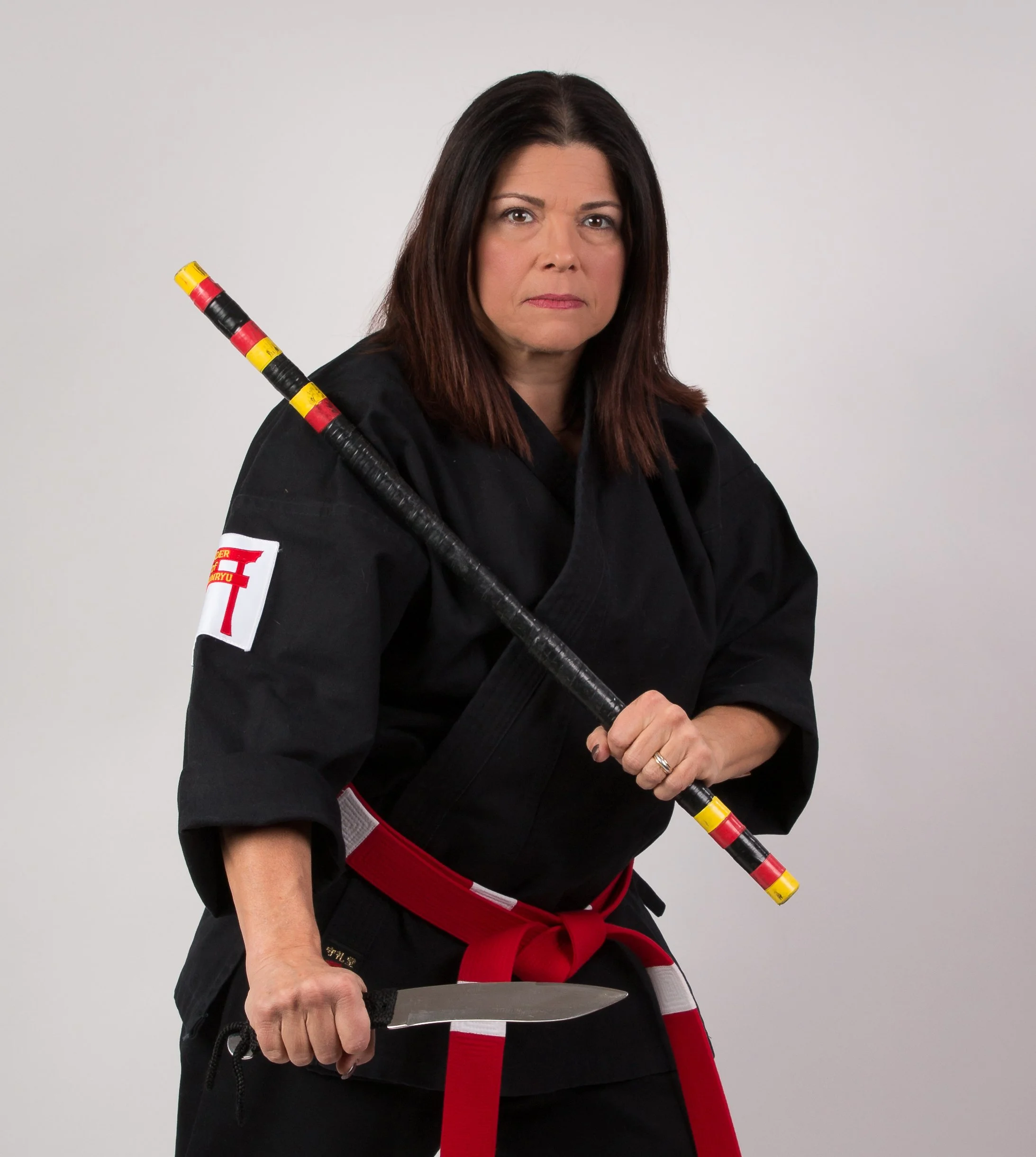
In this episode Andrew chats with Sensei Diane Ortenzio-Cooling, one of the directors of the Partnership of Women Martial Artists, about her journey and what it was like learning martial arts as a woman.
Sensei Diane Ortenzio-Cooling - Episode 1134
SUMMARY
In this episode, Sensei Diane shares her 47-year journey in martial arts, discussing the evolution of women's participation, the challenges faced in training, and the importance of consistency and motivation. She reflects on her transition from student to teacher and emphasizes the transformative power of martial arts in building self-esteem and community. She also shares her journey from martial arts practitioner to teacher, discussing her passion for joint locks and the importance of adapting training for aging bodies. She emphasizes the need for women in martial arts to have a platform and the lessons learned from organizing events. Sensei Diane reflects on how martial arts has been a lifeline during difficult times and the importance of sharing knowledge within the community. Looking to the future, she expresses her desire to make martial arts accessible for older individuals and the necessity of consistent training for self-defense.
TAKEAWAYS
Diane has been training in martial arts for 47 years.
She started martial arts for self-defense due to a rough job environment.
The dojo environment was welcoming, encouraging her to stay.
Training in the 80s was different, with fewer women involved.
Women often have to drop out of training due to family responsibilities.
Diane's motivation evolved from self-defense to helping others.
Consistency in training is crucial for mental and physical health.
The dojo serves as a place to leave troubles behind and recharge.
Diane emphasizes the importance of not quitting, even when motivation wanes.
Transitioning from student to teacher was a natural progression for Diane.
Learning multiple martial arts can enhance overall skills.
Ego should be left at the door in martial arts training.
Feedback from participants is crucial for event improvement.
Martial arts serves as a vital social network for practitioners.
Martial arts can be a lifeline during personal hardships.
Sharing knowledge is essential for growth in martial arts.
Adapting training for older individuals is a future goal.
Consistent training is necessary for effective self-defense.
CHAPTERS
00:00 Introduction
01:07 Diane's Journey in Martial Arts
02:47 The Evolution of Women's Participation
04:12 Challenges and Triumphs in Training
06:47 The Shift in Motivation and Purpose
09:58 The Importance of Consistency
12:54 Finding Identity in Martial Arts
16:06 Transitioning from Student to Teacher
21:11 Transitioning to Teaching Martial Arts
23:17 Adapting Martial Arts Training for Aging Bodies
25:57 Empowering Women in Martial Arts
31:47 Lessons from Organizing Martial Arts Events
33:10 Martial Arts as a Lifeline During Difficult Times
36:08 Sharing Knowledge and Experiences in Martial Arts
41:08 Future Aspirations in Martial Arts Training
45:51 Encouraging Consistent Training for Self-Defense
To connect with Sensei Diane:
www.thepowma.org
dianeoc@thepowma.org
Join our EXCLUSIVE newsletter to get notified of each episode as it comes out!
Subscribe — whistlekick Martial Arts Radio
After listening to the episode, it would be exciting for us to know your thoughts about it.
✅Subscribe to whistlekick Martial Arts Radio on the following platforms:
🎧Apple Podcasts: https://apple.co/3mVnZmf
🎧Spotify: https://spoti.fi/3yHVdHQ
✅You can find whistlekick on all social media platforms using the handle @whistlekick or visit our website at https://www.whistlekick.com or https://www.whistlekickmartialartsradio.com
Show Transcript
Andrew Adams (05:04.97)
Welcome, you're listening or watching another episode of Whistlekick martial arts radio. And today I'm excited to be joined by Sensei Diane. Sensei, how are you today?
Diane O-C (05:16.418)
Good, how are you?
Andrew Adams (05:17.366)
I'm doing great. I'm excited to chat with you. listeners of the show, regular listeners might recognize your name and face, uh, from a re episode we did recently, but we will get into that in just a second. want to make sure to let everybody know in case you're brand new that whistlekickmarshallarchradio.com is where you can go to find out about all of the episodes that we've done. have over 1100 there all for free. We don't put it behind a paywall because we think it should be available to everyone regardless of
financial ability. So go to whistlekickmarshallaltreato.com. Check out all the episodes we've done. You can find transcripts there. You can find all of the videos for every episode. Maybe you just want to listen to the audio that's there. You can also find us in all podcast players as well or on YouTube, but you can also join our newsletter. So you'll get notified of every episode when it comes out. So you won't miss any of them. So please feel free to go there and join that.
Also, whistlekick.com is where you can go to find out about all of the things that we do. Maybe you want to purchase a book, maybe you want to purchase some sparring gear, maybe some apparel, a training program. Maybe you want to attend one of the events that we host around the country. All of that stuff you can find at whistlekick.com. That was a mouthful. All right. So Diane, thank you so much for being here. I'm really excited to...
chat more about your story in martial arts. We had a great recording that came out a few weeks ago on empowering women. so I'm glad that we get to sit down just you and I now and chat about you.
Diane O-C (06:57.998)
It's my pleasure to be here and thank you so much.
Andrew Adams (07:02.686)
Yeah.
Diane O-C (07:06.834)
I've been in martial arts this year is my 47th year of training. I was 19 when I started and it was a something that.
Diane O-C (07:24.672)
At that time, women were not as present as they are now. But I wanted to learn some self-defense because I worked at a job that put me at, I worked shift work. And so it was in a rough section of town where no one wanted to, even the...
These security guards are like, we don't go outside. You're on your own when you leave the building. They're like, oh, great. Maybe I need to get out there and learn something. And so that was my intention was to go learn some self-defense. And the dojo I walked into was very, they were wonderfully nice people. That's why I stayed. And they said, well.
Andrew Adams (07:59.444)
Nice, all right.
Diane O-C (08:21.326)
we'll show you some things. But after a while they said, you you should, you should really try coming to our beginner class. And I'm okay, I'll come to one and see what it's like. I'm sure I won't like it, but that was 47 years ago. It was, it tweaked my interest and it was fun and different. And I've been there ever since. So.
Andrew Adams (08:45.204)
Wow. Wow. Now we're talking 47 years ago. So training back then was very different than it was today. You already mentioned the fact that you were one of very few women. Talk a little bit about what about that, about being in and I'm going to put this in air quotes for those that are only listening and not watching, but being in an old, old guy's club.
the good old boys club, Martial arts back then, a lot of people have described it like that. And what was it like for you in that type of environment?
Diane O-C (09:24.754)
it, it was not what I expected. again, everybody was very nice when I started because they were looking for new people and they wanted women to join. and the beginner class was, learning your fundamentals and there was no, there weren't any classes where you.
did any sparring or fighting with anybody. So I was a happy clam. Like this is great. And when they said, you know, it's time for you to go to the advanced class. I'm like, well, okay. Well, that's where they had it in the fighting, the sparring, the, okay, we're going to throw you on the ground. What are you going to do? It was a marked difference. And
On the one hand, they were excited to have people and women come into the class. But at the same time, it was, well, this is how it is. We train hard, you're going to get hit and you'll either hang with it or you'll quit. But this is how it's done. So if you wanted to learn, you hung in there regardless of what it took. And they didn't.
They didn't treat you any differently as a woman than the other male students. was like everybody has to, everybody's going to be here and you're going to be treated the same, which was fine with me. I came up in a generation where women were told outright, well, that you can't do that because you're a woman. Like, but what if I, what if I am able to make the grade and I can do everything?
Andrew Adams (11:14.357)
Mm-hmm.
Diane O-C (11:20.654)
like everybody else. Now, see you're a woman. Women don't do that. So for me being out there and as long as I could hang and that was important to me that I gained the respect that I didn't quit and I could do what they could do. And it was, it's just very, very different. It's just, hey.
Andrew Adams (11:47.53)
Yeah, I've heard people talk about training in the 80s because that's what we're talking about. We're talking late 70s, early 80s. It was a very different time. A lot of and I'm not going to say better or worse, just it was very different, right? You know, sparring back then was very different than it is today. Like you said, a lot less, a lot less women involved as well. Now, were you the only woman or were you the first and then others came after you when you started training?
Diane O-C (12:45.25)
No, there were women before me. There were probably four or five women who were involved before I got there and I was the newbie.
Some of the ladies were nurturing, others were not. But one of the things that always has been a handicap for women to stay involved is that in the family unit, we're the ones that usually have to drop out because of kids, elderly parents, and
that always came first. So if we got to train consistently, that was an achievement. And you really had to work to clear schedules and figure things out so that you had the time. So a lot of ladies by necessity had to drop out. I
I don't know if you would call it lucky, I didn't never had children. So I never had any gaps in my training except when my job transferred me around and I didn't have an opportunity to train. But for most women, that's why there never were as many women.
And there were plenty of great women who trained for years and then because their parents got elderly or their jobs shifted, they had to drop out. So it's just the way it was. And at times still is.
Andrew Adams (14:30.518)
Yeah, sure, sure. And starting your training at 19, 19, 20, 21, right, that really young adult time in your life, that can be really a difficult time for people. They're transitioning into adulthood. What was it that kept you coming back?
Diane O-C (14:58.456)
I it not only made me move my body and my body got to work out, but my brain did too. And it made me, I had to work harder than most people because my coordination was never as developed as other people. I was the person that they would have to say, you're other right, Diane, in class.
because that was difficult and I had to work harder. But that brain challenge, I think is a good thing. And nowadays, the neurologists are finding that things like dance, martial arts, where you challenge your body and your mind is what keeps you from dementia. So I'm very grateful for that.
Andrew Adams (15:54.551)
Sure. Is there like your, your ration, your, your why for starting your training was, you you just want some self-defense. Your why I'm sure has shifted since then. Let's talk like what those transitions may have been like. I have to imagine your why for training now is very different than it was when you were 19. So can we talk a little bit about.
where those transitions may have come for you in your life. Like if you go back and think about your why.
Diane O-C (16:31.214)
So at the beginning it was for self-defense and as that, as my training went on, it became more about I was one of those kids that was bullied when I was younger and it felt good to be able to
It felt good to punch somebody and kick somebody. Sorry. That was the fun part of it is being able to do that. it gives you a sense of it helps your self-esteem. So that became more and more something that I enjoyed doing. And then as time went on, it was like, well, this also helps other people.
So if I can bring other people, get them excited about this, about learning the mind and body connection and the self-defense aspect of it, we're helping other people along, other people that may have been bullied or had issues growing up or in their adult life. And now it's something that over the years is now...
I want other people to progress beyond one plus one. A lot of people, in my observation anyway, a great deal of people start martial arts and something causes them, male or female, they are totally dedicated for a year or so, maybe two years, and then they lose interest and they drop out.
And they never get to the advanced levels of learning how to make all of these things, all the synergy work and all of those things that your instructor has dropped on you that you couldn't pick up because you're a beginner. And there's so much, so much exciting things that are out there for people to learn that improves what you do. So that's kind of my quest now, bringing people together and going, look, you can.
Diane O-C (18:52.142)
Just keep at it. There's these wonderful things that bring everything together.
Andrew Adams (18:57.761)
So if you have a student like that, how do you help them through that? How do you get them past that hurdle for them?
Diane O-C (19:08.366)
The best thing you can do is tell them to just drag yourself to class. You may not feel like going. You may not want to take the time to go, but it's good for your psyche. It's good for your soul to get in there and do a workout and take your mind off of any other troubles in your life. Because once one of my instructors said to me many years ago, you you leave your troubles outside the dojo door. When you come in,
You're going to work out. You don't have to worry about anything else. You're just going to work out. And when you leave, you pick them back up at the door and go on. And the dojo can be a great place for people to re-energize, to forget about it, have a good time, enjoy what you're learning and challenging yourself. So it can be very transformative. I try to tell people just don't quit. Drag yourself in, go to class.
Even if you don't feel like it, you'll be better for it.
Andrew Adams (20:09.546)
Yeah, I've often said and I've felt myself and I'm sure you have as well. You know, I don't I'm just not feeling it today. I really don't want to go to class, but you go to class and you leave and you never have said, I really wish I hadn't gone to class. No, you always feel better after class. So even if you don't want to go, you know that when you're done, you're going to you're going to realize that you were happy to have.
Diane O-C (20:38.028)
Absolutely.
Andrew Adams (20:38.902)
now is there like, when you're starting out and this is for everybody, when you start out, you're, you're doing martial arts and you know, you're learning this and you're learning that and you're learning forms and you're doing all this other stuff. But at some point for most of us that are you and I, at least, and probably many of us talking, it stopped being a thing that we do and started becoming a thing that we are.
Do you have a pivotal moment in your training where you're like, this is just who I am or where you, some people call it where they got bit by the bug, right? And this is, this is just who I am. It's not just something that I do. It's, it's part of my life. Did that happen for you? And if so, do you remember how, how that came about?
Diane O-C (21:29.972)
it was a gradual thing for me because again, really had, was a, coming to class was a brain workout for me. I had to work really hard at understanding the concepts and making my body move correctly.
And it was, sometimes it was a chore. And I, when I would go home, I'd get in the car and I'd be drooling out of one side of my mouth because had brain overload. It still happens sometimes when I'm exposed to new things, but it was a gradual thing. I, it probably was when I hit about 15 years training because many people are like, well, are you done now?
You got your black belt. What more do you need to do? And it's like, well, that's not what it's about. It's about the continual learning. Well, most people don't get that. They figure that once you get black belt, you're an expert and well, you can be done now. And for those of us that see what's beyond that, it's like, no, it's just something we do. We like to learn and we like to, we're inquisitive about things like that. And what can I learn from other people?
Andrew Adams (22:43.063)
Hmm.
Diane O-C (22:43.786)
So it was gradual, but probably around year 15, it was like, yeah, I'm going to be doing this till they wheel me away into the nursing home.
Andrew Adams (22:54.999)
Ha
in those first 15 years or so, you don't have to be exact, but is there an aspect of training? Cause there's lots of aspects of training, whether it's doing specific techniques, doing self-defense drills or pad work or sparring or weapons or forms. Is there an aspect that you really, really gravitated towards in your early years of training?
Diane O-C (23:22.548)
probably doing Cata forms was what I gravitated to first because I didn't have to interact with anybody else. And I was a happy camper about that. I could do my own thing and get my corrections and work on them. And it was, it was enjoyable and a challenge and fun. and the first couple of times that after I moved to the advanced class and they said, well, it's time for.
Andrew Adams (23:31.468)
Mm.
Diane O-C (23:52.812)
we're sparring tonight. I made myself the smallest. could have been a shadow in the back of the room. I was trying to, cause that was not one the, anything I wanted to do. And I didn't want to, and so they, they're like, no, you're part of the class. You have to do this too. And it was, it was probably very ugly to watch me try at that juncture, but
After a while, it's like, well, hey, this isn't too bad. and so I worked on that more. That became fun too. And then I started going to competitions and, I don't, I don't like to lose. I don't like that. So it made me work really hard to try to beat, to excel.
and to represent and all of that stuff. So that was my next transition into that is I went to competitions. Nothing every weekend, never that far, but.
couple of, a few times a year, and that became the fun part. And then I transitioned into being more, into doing more teaching and to sharing the aha moments that I've learned. And that became the next passion. I think that as long as you're moving forward and transitioning and doing that, you'll always have something new to share and do.
Andrew Adams (25:28.631)
Now, how did that transition from student to teacher, how did that take place for you?
Diane O-C (25:36.786)
I, I aged out of the comp, I aged by age and I aged by rank at the competition base. so it's like, okay. at that time there, there, there were no masters divisions. There was nothing like that. So it's like, okay, now you're going to be doing more teaching and.
Andrew Adams (25:48.16)
You
Diane O-C (26:05.006)
At that point, had, I guess...
When I was a fourth degree black belt is when I opened my own dojo. And so the transition to teacher became complete in learning how to do that and getting better at being a teacher.
Andrew Adams (26:31.863)
Gotcha. Okay. And what is it about like all of these aspects that we talked about earlier when you first started out, it was forms. Is there an aspect of your training now that you really enjoy more than others?
Diane O-C (26:49.66)
Yes. So my base art is Ishinro Karate. So it's a stand up kicking and punching. My teacher also insisted that we learn grappling and some ground fighting so that we knew how to address that if it happened. Joint locks and other things. So now it's more the joint locks and
controls that way. That is my, that's my passion right now, as well as adding Arneese to the mix. That's so much fun for me now. It's different from a lot in many aspects and it's actually been a good synergy because it's improved.
my karate and my karate has improved what I do in Arnie's so it's been a wonderful mix.
Andrew Adams (27:54.336)
Yeah. And that was such a great segue because the next thing I was going to ask you about was weapons that, know, Isshinru does have a few weapons that they traditionally are learned, but some people don't get into it and are not interested in it. And some are really interested in it. So where do you fall in that camp? I'm guessing a little more towards the really enjoyed if you started doing some Arnis, but I'll let you answer.
Diane O-C (28:17.262)
Part of it is age. As your body ages, the things that you did when you were in your 20s and 30s, you go, yeah, not going to be doing that anymore. That hurts. Or my body can't take it anymore because we martial artists tend to wear our bodies out. Joints and things wear out faster than the general population.
So it's the transition has been to how can I adapt this to my aging body? Some things lend itself to that, others don't. The Arnis has been great as far as functionality for.
sticks, knives, and other things that everyday items that you can pick up and use as a weapon, which has been a blast because you are
There are some things that you're going to have in your hand that you have all the time, like your cell phone. Well, that's going to be my go-to when I have it in my hand, Little sticks, big sticks, things that pens, anything that you can pick up. And to me, that is the beauty of being able of learning multiple arts because things that you can pull out and put in your toolbox.
Many people use that terminology, but man, that fits so well.
Andrew Adams (29:52.803)
Yeah, for those that are only listening and not watching, for those that don't know, I'm a drummer. I teach drums for a living. So I always have drumsticks, like all the time. So I picked one up and held it because they're just always, they're always here. I always have them. So, and Arnie's lends itself so well.
Diane O-C (30:15.158)
And the beauty of that is that it's not a weapon. You can carry that anywhere. You can carry it on a plane. They'll go, what do you have that for? Well, I'm a drummer. And put it right in your carry-on bag. Nobody's going to question that. And that's the beauty of it.
Andrew Adams (30:23.69)
Yep. Yep. Yep. Good point.
Andrew Adams (30:30.676)
Yeah. We talked a few weeks ago about the organization that you helped create, that you created. Let's transition a little bit into that because some people may not have listened to that episode. And if you haven't, please, you should do so. But, you know, let's talk a little bit about the women's organization that you've created.
Diane O-C (30:57.582)
Well, the partnership of women martial artists was something that my friend Sensei D Holmes and I talked about for many years about two things. One is that the majority of seminars that we attend are 99.9 % men.
instructors. And again, for all the reasons we stated before, don't necessarily hang in there to the end, but there are a lot of women masters out there that are very good instructors. Women learn differently, we explain things differently, but we're not getting noticed for that or for the expertise.
our idea was to put together an annual
Diane O-C (32:05.002)
symposium, seminar, gathering, whatever you want to call it, and feature some of these women master instructors and give them an opportunity to share what they've learned over the years to a women audience, not only as a sharing of information, but also as an example of where you can go if you stay long enough and the knowledge you can gain. So that was part of it. And the second part was
a very selfish reason because I want to keep learning and I want an opportunity to go and learn from these women and go to these events and pick their brain over how and why and learn from them. So that's the twofold reason of why we started this group. And we've been doing these seminars now.
The symposium, we just finished our seventh. And it was all very small to begin with. think the first couple years it was maybe 20 people. But now people are finding us and are enjoying this because we really discourage having any egos.
You have to leave your ego at the door when you come in, be positive, and you're gonna work with a variety of different people. You don't get to keep working with the same person from your dojo. You have to move around and work with different people. And in general, we don't wear belts. We leave it very casual because...
You have to be at least a brown belt level to come to this event. you're past your basics and the fundamentals of whatever art you do so that you can absorb the concepts that are being trying to be shown to you. So that's also leaving the ego. Everybody's considered equal and we're just gonna work out. So it's very, very different from almost every other event people go to.
Diane O-C (34:27.36)
And the first time that we tried, you know, leaving the belts, leave it in your bag, everybody's like, this is great. What a great idea. And so it's become kind of our thing now.
Andrew Adams (34:43.241)
Yeah, that's.
Diane O-C (34:43.896)
We're dispensing of, and besides that, I can never remember what people, everybody's, every style has their own nomenclature for rank and titles. I can't remember them. So they ask me and they go, what would you like? I said, to me, as my sensei used to say, the highest compliment somebody can call you is sensei. So sensei or Diane works or HeyU works, we're not here about.
that we're here about learning. So it's all good and it's just different and they enjoy it.
Andrew Adams (35:24.283)
And your event moves throughout the US. And I know this last one was in Vermont. The next one. So for 2026, it was in Vermont. People might listen to this before the next one. just when's the next one and where?
Diane O-C (35:46.508)
The next one is going to be out my way in Reno, Nevada, and it's going to be probably the second or third weekend of September in 2027. we're giving pretty much, we have been Midwest and the East coast almost exclusively. So we're moving in farther West. We've had some of our West coast folks say, well, when are you coming out here?
next year. Next year will be the first one out here and again every time we move it it becomes we meet different people, different arts, join in and it's been a really fun exploration for everybody.
Andrew Adams (36:35.831)
What if there's what's the biggest thing you've learned since starting hosting this event seven years ago?
Diane O-C (36:46.638)
You can't please everybody. We do an exit survey to everyone to get their feedback. It's anonymous. Like, look, just tell us what you think. What can we improve upon? would you end? And it's like this, it's...
Every year it's sometimes the same thing. It's like, we want more of this. We don't like that. We like that. We don't want more of that. And it's like, okay, we try for a mix every year. But no matter what we have, people enjoy it. And if you're enjoying yourself and you're learning, that's what it's all about. So when people tell us I had a great time,
Here's how I would tweak it. We take all of that into consideration and see if we can make it happen.
Andrew Adams (37:44.056)
I want to shift gears a little bit here. One of the things that we as martial artists always talk about is that learning martial arts really helps us be able to pivot and shift and like, you know, do different things. But I think something, sometimes the thing that's not often talked about as much is that it can help us through
dark times when something bad has happened to us or around us. And I'm wondering if you have a story of how your martial arts may have helped you through a difficult time in your life.
Diane O-C (38:22.99)
There have been a number of times where if it weren't for martial arts, I would have been a statistic of some kind. It has always been my social network of people. I have way more...
friends and acquaintances in martial arts than I have at than I had when I worked or out and about. It's been my mainstay. I can always find somebody to work out with when I need to and sometimes it's just letting like I said before it's letting the troubles sit somewhere while you go work out and that allows you it releases the pressure.
and lets you decompress. And then you go back and it gives you a fresh approach to whatever you need to work on. Four years ago, my husband passed away. My husband was, we met through martial arts. He was the grand master of the organization I belonged to.
He passed away after several long illnesses. And if it weren't for martial arts, again, statistic, I wouldn't be here now because it was such a great loss. so other folks have other things that they use to overcome stress and hard times. But for those of us that have
This is our life. This is what we do. It's also in many ways our life preserver.
Andrew Adams (40:24.535)
Yeah, I can see that. And I think a lot of people will be able to resonate with that. And with much of what you said, friends being other martial artists. mean, if I go to a wedding where I don't know anybody, if there's one person in the room that's trained martial arts, I generally will find them. And we end up talking about just martial arts because it's a big family. So I totally get that.
Diane O-C (40:54.06)
Mm-hmm. Absolutely.
Andrew Adams (40:55.407)
now do you, do you currently travel around to do teaching lots of seminars other than the partnership for women martial artists?
Diane O-C (41:08.438)
Yes. I have, again, through the friendships that have been built up over the years, I have several events, venues that I go to every year that sometimes I get to just be a student and other times I get to share. And to me, it's not about
It's not about me, it's about sharing the stuff that I've picked up from my teachers, from the other instructors that I've gone to seminars and picked up some great ideas. It's my job to share that with people that might not be able to get out to see those instructors and just sharing. My goal is to help you and anybody along their way in learning more martial arts.
if you can use it, fantastic. If not, maybe you can share an adjustment with me that I didn't think of or that I wasn't exposed to. So it's a give and take.
Andrew Adams (42:19.477)
Hmm. Yeah, absolutely. It's all about taking what works for you or modifying what'll work. This will come as no shock or surprise to anyone. We're not all built the same.
Diane O-C (42:37.524)
Absolutely.
Andrew Adams (42:38.465)
So no, I totally get that. And do you have, you're heading around to teaching seminars. Do you have a regular school that you teach at normally as well, or is it just seminars at this point?
Diane O-C (42:55.218)
I have, my friends, in Texas, in the Dallas area, the Texas Cishner Karate Kai have me down there usually every October, November, and they just let me, they let me do my thing. So it's a challenge for me because I don't want to be boring. So every year I got to, I've got to find something new and interesting to show people.
Andrew Adams (43:10.199)
Mm-hmm.
Andrew Adams (43:13.909)
You
Diane O-C (43:22.606)
But they let me do my thing every year and I'm thankful that they keep me busy that way.
Andrew Adams (43:30.231)
Luckily, there's a lot to there's a lot of stuff to choose from. There's a breadth of information, I suspect in your head that the difficult thing must be trying to figure out what it is you want to show them. I get it.
Diane O-C (43:40.622)
Thank
Diane O-C (43:45.844)
Exactly. It's a matter of, I have to, I have watched some people that will walk in a room and just go and they're good at it. And that's how their brain works. And they can pull things and go, okay, how about this? And they'll just roll with it. And it's always exciting and interesting. I have to go to the back to the fundamentals of figuring out a topic and doing
sitting down and doing an outline and figuring out what I want to talk about so I don't forget anything. And that's just, I'm old school about that.
Andrew Adams (44:25.239)
There's something nothing wrong with that it kind of mimics on the same vein of Not we don't all look the same and our bodies don't all move the same our brains don't all work the same either, right? There are lots of different ways to learn how to Learn how to do the same thing But you can learn it in different ways because some ways work for other people and some others for other people
Diane O-C (44:42.029)
Mm-hmm.
Diane O-C (44:53.718)
Absolutely. You're always going to have somebody in the crowd that goes, yeah, I can't make that work. And you go over and you spend some time and you watch what they're doing. Like, yeah, it doesn't. So the challenge is being able to explain it in a different way to make the light bulb go off or to adjust a little bit for their size.
Andrew Adams (45:11.383)
Hmm.
Diane O-C (45:16.074)
to make it work better for them. And that's always the challenge for the teacher because you don't want anybody to walk away and go, I didn't learn anything there. That was a waste of my time. So you have to be, you have to be able to go in there and go, so let's look at this differently and see what we can do.
Andrew Adams (45:38.807)
Yeah. So we're recording this in 2026. If we were to schedule another recording in 2036, 10 years from now, what do you hope we would be talking about? What do you want to do in regards to martial arts between now and 2036? What would we be talking about 10 years from now?
Diane O-C (46:08.93)
hoping that we're going to be talking about how I transitioned from what I'm talking about today into.
more and better street applications for older people. And how to get this, how do we teach somebody? And this is my challenge right now because in 10 years, I'll be transitioning into the little old lady from Nevada, probably organizing a self-defense class in the nursing home or the assisted living care somewhere, but.
Andrew Adams (46:28.695)
Mm.
Diane O-C (46:52.298)
How do we get the point across to people that they use a cane because they can't stand on two feet? They need the third, they need the cane. How do we get them to transition and be able to defend themselves somehow? Some fundamental things or how do we get them to reach that point that they aren't as afraid to be by themselves? And I'm hoping I have solutions for that and an easier way to make that happen
and that more people will take an interest in that. Martial arts for not just elderly people, but middle-aged and older. We have a huge number of children, teenagers, and 20-somethings that are involved in martial arts, but then there's a huge drop-off of people that are in their 40s, 50s, and 60s because they can't do what a 20-year-old can do.
So how do we adjust to make that palatable and something that they're going to enjoy learning how to do as an older person? That to me is always going to be a challenge for us. And I hope I have answers in 10 years.
Andrew Adams (47:57.719)
Mmm.
Andrew Adams (48:03.127)
Well, I certainly hope you do as well because the more people that train the better. We often say here at Whistlekick that if everyone in the world trained martial arts for six months, the world would be a better place. But there's a lot of middle-aged people that are not training, so we need to get them in the doors.
Diane O-C (48:22.09)
Absolutely. So on that, just another note on that, one of my challenges has always been
Diane O-C (48:34.464)
I have a number of...
I'm asked by women who are older, like, well, I want you to teach me self-defense. I want to be able to kick ass and take names. I want to do this. Like, well, I can't teach you that in five easy lessons or one easy lesson. It's conglomeration of training consistently over a long period of time.
I can teach you some very fundamental things on how to mitigate something that you're confronted with and get away. And that's my goal. But if you want to really learn how to do this and how to functionally be able to do all of this, well, you need to find a martial art training and go to that and get proficient in it.
Andrew Adams (49:30.764)
Mm-hmm.
Diane O-C (49:34.314)
and they look at me like I've got two heads. But it's that consistent training with some martial art that makes the difference. And maybe someday we'll get them to do that.
Andrew Adams (49:49.132)
Fingers crossed, crossing our fingers, for sure. If someone wants to reach out to you, if something you said resonates with them and they want to reach out, how can people contact you?
Diane O-C (49:51.298)
Yes. Yes.
Diane O-C (50:04.666)
easiest way is to reach me through the, partnership website and, there's, or my email address there. the website is, the POWMA.org and my email address there is D I A N E O C at the Palma.
And send me a question. I'll be happy to help any way I can, or I'll connect you with somebody. If I don't have the answer, I'll connect you with somebody who does.
Andrew Adams (50:39.776)
Awesome,
Andrew Adams (50:44.535)
So there's, I've often said that's the true sign of a very gifted instructor, someone who's willing to say, I don't know. But we will be sure to put all that in the show notes so that you, the listener or viewer can go there to click a link to get directly there. Sensei Diane, I want to thank you for being here today and sharing your time and knowledge with us.
I'm going to throw it to you here in just a second to close us out with whatever words you want. I'll give you some time to think about that while I let the listeners know. Just remind you guys, whistlekickmarshallartsradio.com. Go there to find out about everything, about all the episodes we've done. You can sign up for our newsletter so you hear about all the episodes as they come out. Whistlekick.com is where you go to find out about all of the things that we do, the events that we host, the...
training programs that we offer, the books that you can purchase, all of that stuff you'll find there. And a bit of a plea to you, the listener or viewer, if you like this, if you enjoy this episode, one of the best things you can do is share it with someone. Or maybe there's another episode you listen to that you really like, share it with someone. It costs nothing and it really can help us spread the word of traditional martial arts.
Um, and if you have the ability to, to throw a couple of dollars our way, this podcast is always going to be free for you, the listener, but it's not free to make. And so if you can, uh, go to patreon.com forward slash whistle kick and as little as $5 a month, which is less than the cost of a coffee at these days. Uh, it really would go a long way to help us out. And we would really appreciate that. But
Since I Diane, how do you want to close us out today? What do you want to leave our audience with today?
Diane O-C (52:37.89)
Well, first of all, I appreciate Andrew, you having me on here and Whistlekick Martial Arts. You guys are filling a niche that that really, really needs people need to know about. But in closing out, two things that we kind of talked about already is if you're in martial arts, just don't quit. Keep at it, even if you don't feel like it.
There are bigger and better things to learn and more fun to be had. And the second thing is, if you are in, you've been training, I don't care how long you've been training, look around and share and ask people that don't do what you do to share with you. There's so much, it'll, it'll, the light bulbs will go off and you will find that it's not a, it's not a
Diane O-C (53:36.054)
It's not blowing off the art you do. In fact, it will help that you understand the art you do better and throw some extra things in there that are really exciting. So that's my words of wisdom to pass on.
Andrew Adams (53:56.596)
Excellent. Thank you so much, Diane.
Diane O-C (53:58.894)
Thank you.