Episode 1140 - Shihan Michael Cote
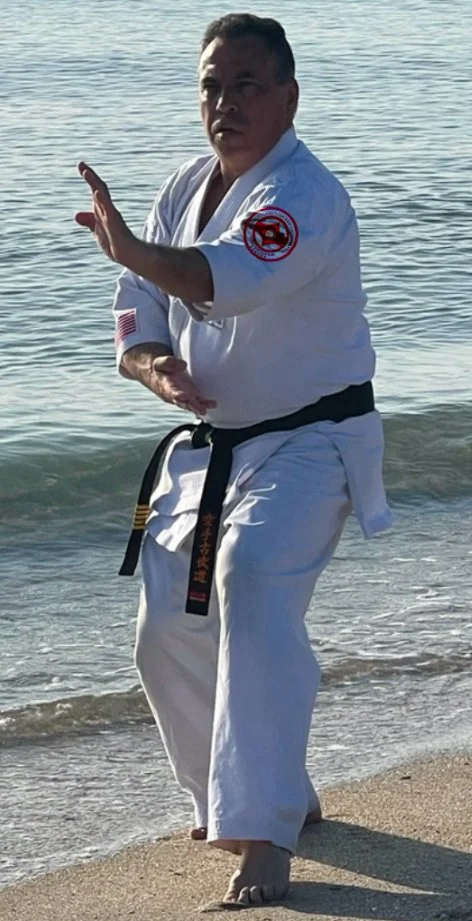
In this episode Andrew chats with Shihan Michael Cote about his training in Kyokushin Karate in Canada, in Japan (with founder Mas Oyama) and then coming to the US to teach in New England.
Shihan Michael Cote - Episode 1140
SUMMARY
In this episode of Whistlekick Martial Arts Radio, Andrew Adams speaks with Shihan Michael Cote about his extensive journey in martial arts, particularly in Kyokushin karate. Shihan Cote shares his early experiences with bullying that led him to karate, his transition from student to teacher, and the challenges and rewards of running martial arts schools. He emphasizes the importance of passion in martial arts and how it has shaped his life and family dynamics.
In this conversation, he shares his extensive experience in Kyokushin karate, detailing his training in Japan, the differences in martial arts culture between Japan and North America, and the challenges he faced transitioning to teaching in the United States. He emphasizes the importance of traditional training methods, the role of martial arts in self-control, and the growth of his karate schools. Cote also reflects on the evolution of tournaments and the community aspect of martial arts, encouraging continuous learning and collaboration among practitioners.
TAKEAWAYS
Shihan Cote started karate at 11 to defend himself.
He has been practicing karate for over 40 years.
He opened multiple dojos in Canada and the US.
His wife shares his passion for martial arts.
Karate is a family affair for Michael and his children.
He values the traditional aspects of Kyokushin karate.
He enjoys the full-contact nature of Kyokushin.
He believes in teaching self-control through martial arts.
His journey reflects the importance of community in martial arts.
Training with Mas Oyama was a transformative experience.
Kyokushin karate emphasizes traditional methods and intensity.
Training in Japan is significantly tougher than in North America.
Preparation is key before training in Japan.
Tournaments have grown significantly in size and participation.
Transitioning to the U.S. involved overcoming economic challenges.
Continuous learning and sharing knowledge is essential in martial arts.
CHAPTERS
00:00 Introduction
12:23 Teaching and School Ownership
19:04 Passion for Kyokushin Karate
21:52 The Essence of Kyokushin Training
28:01 Training in Japan vs. North America
35:34 Transitioning to the United States
42:41 Martial Arts as a Tool for Self-Control
48:13 Looking Ahead: The Future of Martial Arts
To connect with Shihan Cote: Traditional Karate and Self-Defense Training in Nashua, NH
Join our EXCLUSIVE newsletter to get notified of each episode as it comes out!
Subscribe — whistlekick Martial Arts Radio
After listening to the episode, it would be exciting for us to know your thoughts about it.
✅Subscribe to whistlekick Martial Arts Radio on the following platforms:
🎧Apple Podcasts: https://apple.co/3mVnZmf
🎧Spotify: https://spoti.fi/3yHVdHQ
✅You can find whistlekick on all social media platforms using the handle @whistlekick or visit our website at https://www.whistlekick.com or https://www.whistlekickmartialartsradio.com
Show Transcript
Andrew Adams (06:08.787)
Welcome. You're listening, or maybe you're watching on YouTube another episode of Whistlekick Martial Arts Radio. And today I'm excited to chat with Shehan Michael Cody. Sh Michael, how are you today?
Michael Cote (06:20.046)
doing very good. Thank you.
Andrew Adams (06:21.873)
Excellent. We're gonna get into some stuff here, but before we do, just in case there's maybe a brand new listener, first off, thank you for being here. You can go to Whistlekick Martial Arts Radio to find out more info on this particular episode. You can find transcripts, you can find photos, you can find contact information. And not just for this episode, every episode we've done, over eleven hundred episodes you can find there, all completely for free. You can find also the video links, everything is there. Whistlekickmartialarts radio.com. You can also sign up for our exclusive newsletter, which
I know you're thinking out there, newsletter, they're gonna send me 12,000 spam emails. No, no, no, no. We're only gonna email you when a new episode comes out. That way you won't miss any of them. And you can also go to whistlekick.com to find out about all of the other things we do. Maybe you want to purchase some sparring gear. Maybe you want to purchase uniform, maybe you want to purchase some apparel, maybe you want to attend one of the events that we host around the country. All of that information you can find at whistlekick.com.
All right, that was a mouthful. Michael, I'm excited that we're here to chat. I've heard some good things about you from s from some friends. my gosh, I can't talk today. how are you? You doing good today?
Michael Cote (07:33.539)
I'm doing very good, very awesome. Yeah, I got big busy weeks and karate and work but I always have time you know to do I love talking to people and telling what's going on in martial arts and any questions.
Andrew Adams (07:50.697)
Yeah, you know, we we always seem to find time to talk like I can be as busy as heck, but if somebody wants to hang out and talk about martial arts, I'm always like, No problem.
Michael Cote (08:01.176)
Part of our life, right?
Andrew Adams (08:02.663)
Absolutely. Actually, a a f a good friend of mine has often said that he can go to a wedding where he knows not one single person other than the people getting married, but he will end up gravitating towards the one person in the room that trains martial arts. We always seem to find each other.
Michael Cote (08:18.286)
Yes, when you go into a place like that, like you say in weddings and all that, and people know you, it's all about karate. And it keeps it interesting because a lot of people, you can still see people that love martial arts. could be karate, any martial arts around.
Andrew Adams (08:34.793)
Yeah, absolutely. Absolutely. now let's get into your story. If your life were a comic book, if your martial art journey was a comic book, what would issue one be? Where does your martial arts journey start?
Michael Cote (08:52.108)
My martial art journey started when I was 11 years old. And I was getting bullied a lot at school. I was very shy, small kid. My sister had to defend myself. I was not confident at all. I was crying all the time. And one day I came back home and I had a busted nose. And my dad said, this is enough.
So what happened is that we had to travel like 60 miles twice a week, sometimes three times a week to be able to go to the martial arts because that's in the 1979 that I started karate. And we didn't have a lot of karate schools at that time. And I started karate either, I started karate I would say for maybe a month and then I wanted to quit because I wanted to try boxing.
And then I decide, no, boxing is not for me. And I end up going back to karate and I stayed in karate since today. I'm still in karate. I never quit. I always been there. And that was in Canada. So I was 24 years in Canada where I met my wife. My journey started in Canada, Montreal with people know Sheyenne Audrey Gilbert, Sheyenne Audrey Cologne.
all these these shians say that I was able to learn from them and then I did a lie I say like almost 20 23 24 years in the United States but I'm born here so I came back to the United States so so actually 23 years in Canada and then I came back to the United States to be able to
Andrew Adams (10:41.717)
Gotcha. Now it it was a long time ago when you started. You've been doing karate a month. What made you decide after at that young age, you know what, I don't want to do karate? Boxing is the thing for me.
Michael Cote (10:55.254)
Well, what happened is before I was 11 years old, I had my friend that was doing boxing and his brother was teaching us how to box. We didn't have nothing. That was a little town that we had. No karate was around. And so he started hitting me and all that. And he was bigger than me. So he liked to have a smaller kid. And then we were just hitting. And every time he was asking me to go boxing.
I always said, no I don't want to go back, but then my thoughts were, I'm going to get a revenge here, I want to be good, I want to learn how to defend myself. So that's what started, the boxing started to do that. And that was not enough. Go ahead, yep.
Andrew Adams (11:28.683)
Yeah
Andrew Adams (11:33.716)
And then
No, no, no, go please, please.
Michael Cote (11:38.094)
So that was not enough to be able to defend myself because I was just a beginner. And then my father, like I said, he brought me back, he brought me to what's called Shebrook in Quebec, Quebec, Canada. I had a dojo over there that Sensei was teaching me for a few years. And then across the street of that dojo, there was boxing. But because I did boxing, I said, let me go try boxing.
So I end up crossing the street, go register for boxing. But every week I was looking at the other side of the street, looking at the karate. I was like, there was karate there for me, I can feel it. said, I had more experience in boxing. And I ended up stopping boxing and stayed in karate.
Andrew Adams (12:21.215)
Hmm. Now what kind of what kind of karate was it that you started with initially?
Michael Cote (12:26.926)
So I always been in Kyokushin karate. Kyokushin is a popular style known for full contact karate. I always been in Kyokushin. So I was doing it at the age of, I would say about 17, no 16, I became a brown belt. And then I start teaching. So I start opening a dojo here and then I open another dojo 15, 20 miles away.
So we were running two dojos until I decided to come and come back to the United States because I'm born here. And that's why we stayed there like 20 something years over there. And then I told my wife, I'm moving back to the States. You want to come? I'm going to be going back to the States. And she followed me. And we opened our studios here. I had one in Riviere, Boston. And with the COVID, when it hit,
Andrew Adams (13:08.907)
Mm.
Michael Cote (13:22.998)
I decided to close it down and then I opened one directly at my residence that we did in addition to the side of the house. It's 16, 100 square feet. So we got like, yeah, it's pretty big with 12 foot ceilings and we've been teaching here and in schools and doing seminars everywhere since then.
Andrew Adams (13:48.489)
Mm-hmm. Now at sixteen you said you started teaching as a brown belt. Was there I'm I'm curious to know because every school does it differently, handles students who are going to start teaching. What was the transition like for you? Was it fairly instantaneous? Here's your brown belt and here's a class to start teaching. Like how do they work with you to get you ready for teaching?
Michael Cote (14:11.97)
Okay, so when I was a brown belt, that's not when I opened my dojo. I was an assistant instructor with my sensei. I didn't have no money to pay for my classes. I was going to school. I was trying to be an architect. That's why I do construction today. The thing is, my sensei told me, listen, if you wanna help me out teaching the kids.
and all that and do some classes, help me out. He said that will compensate for your classes. And I had no knowledge of teaching and that's how I start learning with the kids and then start teaching the kids and then whoop, okay, now I'm teaching the teens. And then as soon as got my first down in black belt, then I was teaching adults. And that's how it started. Then I got a instructor certificate.
I moved from there like 65, 80 miles from that dojo and that's when I opened my two studios, my two karate schools.
Andrew Adams (15:10.313)
Mm-hmm. And how old were you at that point?
Michael Cote (15:14.03)
I was about 20, 2021. About 20. Yes. Yeah.
Andrew Adams (15:18.281)
Okay, so pretty pretty pretty young t to to start up a school. What was it like for you as a a a younger martial arts school owner?
Michael Cote (15:29.102)
It was stressful, but the thing is, you know, when you do karate, people see you do it and all that. I always had the passion of martial arts and teaching. I always been patient, especially with kids, kids and teens. I have a lot of patience. It takes a lot of patience to do that. So I actually started to rent the...
gymnasium in the school. That's how they were doing in school. Nobody was opening a school directly. And then I started having one, two, three students staying after school. And they were doing 3.30, three o'clock to four o'clock doing karate. And then the parents say, can I learn? And then I end up building a group like that. When I got up to about 16, 18 students, I start looking for a place to rent.
Andrew Adams (15:58.567)
Mm.
Andrew Adams (16:20.064)
Mm.
Michael Cote (16:20.574)
that's a special another place and that's how I end up doing it so that's when I was about 21.
Andrew Adams (16:27.955)
Hmm. Yeah, that that's a lot. difficult to do, but start starting small is a smart way to go for sure. And then you ended up opening two locations, you said?
Michael Cote (16:41.036)
Yes, so I had a place that's called Lake McGannock, that's in Quebec. That's across, it's in Vermont border. When you cross the border, I would say it's about three hours from there, Sherbrooke. I opened one school there. I had somebody that helped me say, hey listen, I'm gonna charge you. I was paying $175 a month for that place, just to give me a chance. And I had his three kids learning from me. So he helped me build that out.
Andrew Adams (17:03.723)
Mm.
Michael Cote (17:09.262)
And then I had people traveling almost 25 miles to come to the karate. So I end up saying, okay, let me rent another place in that area 25 miles further so that that acclimates people that have to travel 30 miles. And I ended up having that place for free for I would say another nine months. And that's how I started because you don't have money when you start a dojo. And even if you're 30 or 40 years old and you need students to be able to pay for that.
You know, it's all about, it's not about making money when you teach, but you have to have enough money to be able to pay rent, right? So people were helping us a lot for that. That was, so that was still in the 80s, 84, 85, 86, those years.
Andrew Adams (17:58.709)
Yeah. Now it's often said that people that have been training martial arts for as long as you and I and a lot of our listeners have, that at some point you get and I'm using air quotes for those people not watching on YouTube, th for those people to get bit by the bug. Do you remember what it was like? Do you remember that moment where you're like, I don't just do martial arts, martial arts is my life.
Michael Cote (18:23.182)
Yes, yes I do. So actually when I was teaching karate, that's when I met my wife. My wife came in, she was not in shape at all, she started looking at the classroom. I had a storefront, people were parking in front of the storefront to see karate stuff. We didn't have a lot of competition in the 80s.
There was like a school every 60 miles, 800 miles. There was not a lot of competition. So she ended up coming in. And then I taught her and she started teaching. And then that's when it started becoming my life because she enjoyed it as much as me. And me and her, we made it our life. We work, we eat, karate, and that we're back to work the next day. This is how, but you really have to have
If you live with somebody, you really have to have somebody that has the same passion as you because a lot of people out there, say, okay, it's even Karate or it's me, but I was able to have that chance of having a wonderful wife and my kids as well, following us in Karate for these past years since today. All my kids are black belts too. So it's a family. It's a life.
So you always, this is the thing, you're always thinking about karate and it's very hard to, you can feel that you got the passion for it, but you're watching TV and you're thinking about karate. So it's nice. You know exactly what I'm talking about. It's a passion and it's part of your life. And that's what makes you strong as well too. You you learn a lot from karate. You learn a lot, respect people.
Andrew Adams (20:00.341)
Yeah. Yeah, absolutely. Absolutely.
Michael Cote (20:13.506)
be polite and make friends and learn how to defend yourself. A lot of people out there, they'll use their karate just to start fights and that's not what we, I'm completely different of that. I like to teach to control self-control and teach what I learned and the way I learned it as well. I had a good opportunity, have good instructors behind me for martial arts.
Andrew Adams (20:41.6)
Mm-hmm.
Andrew Adams (20:45.011)
Now we have talked to a lot of school owners on the show who run the school with their with their partner. and you know, they open their school together. but most of the time, not all the time, but most of the time, the it is usually two martial two existing martial artists who met and they opened up a school. How what was it like? how was it differentiating your personal life from your dojo life when you were
When you had your significant other training in the school underneath you.
Michael Cote (21:19.758)
Well, the training underneath me, well, that's the thing. So to separate the karate from my life is I was always training in the morning. First thing I was doing, getting out of bed, and then I would start to train at least a half an hour, then jump in the shower, go to work. And then after I come back from work, I was doing so it actually kind of never separated. I've said martial arts been like 50 % of my life and then the other 50 % is work.
Now it's moved up to 70 % and then 30 % of it works. So the transition is bounded together.
Andrew Adams (21:56.767)
Yeah I
Andrew Adams (22:01.705)
Yeah, I guess I I apologize. I didn't I didn't phrase my question well. How was it differentiating your like dating this person but also being their instructor? Like separating your dojo life of like I'm your teacher, you're learning from me, but then you're also dating.
Michael Cote (22:14.254)
So.
Michael Cote (22:20.782)
Okay, well, okay, so that's a good question. I'm happy that you are, because a lot of people ask me that. So, when my wife started coming to martial arts, I was very strict with her like everybody else, and I didn't even think that, I'm just gonna tell you the beginning so you'll understand how far it went. Actually, I didn't even think she would last doing karate.
and end up doing karate and all that and then she started saying, okay, so I'm gonna help you when she started getting like a blue belt, brown belt, I'll help you with the kids. So then I saw that she was like really enjoying teaching the kids and she's very good at it right now too. And then I told her, listen, I said, you know what? I said, you know I'm in karate a lot, 14 classes a week that I was teaching.
That's a lot of class, 14 classes a week. said, I'm gonna be home only at seven o'clock, eight o'clock. And she said, that's okay, that's okay. And she ended up adjusting to me as much as she loved me. She said, I choose that life too. I wanna be with you, I like doing it. But having a life, we had to have days off, like Wednesdays and not doing karate on Fridays and the weekend that.
Andrew Adams (23:25.299)
Mm.
Michael Cote (23:42.562)
That's when we don't talk about karate on Sundays and those days as well, but it's always been like separating karate and Having a life you have to have a couple of days out there and when the class is over That's when you go up for dinner and that's when you Yeah, it's pretty much what it is. Like everybody else that does karate and I know they understand exactly where we're at you see karate and some people think it's a business for me, it's
It is a business, but it's more like a life, you know, so when my karate is done We're done. Let's let's talk. Let's talk about something else and that's how I think she's been with me 40 44 years So that way that's I think she's patient and she she enjoys she's it enjoys it as much as me Having somebody that would not like karate. I don't think that would work
Andrew Adams (24:32.565)
That's great.
Michael Cote (24:37.678)
If you have somebody that lives with you and doesn't enjoy the same passion you're doing, if it's racing, cars, or whatever, it's not gonna last because you're never home. But my dojo was always close to my home. So even if it was in my basement or it was in my house, so I just have to open the door and my wife's there. Or she's teaching, I'm there. So we've always been close. So that's pretty much what.
Andrew Adams (24:47.595)
Mm-hmm.
Michael Cote (25:04.174)
And we go to every championships together. We do seminars together. So we're always we're always together.
Andrew Adams (25:10.261)
That's great. That's great. Now you mentioned when you first started you were doing Kyukushin. did you diverge at all or dabble in anything else other than or have you only been Kyukushin your whole career?
Michael Cote (25:22.776)
So when I was, when my dad passed away in the 80s, we ended up moving in Calgary, in Alberta. They had no Kyokushin at that time, so I ended up going to do a little bit Shotokan, about six months. And I was a brown belt at that time, and I ended up going to the YMCA there, I show up there with my brown belt.
Andrew Adams (25:31.947)
Mm.
Michael Cote (25:48.446)
And people will say, well, you can't wear your brown belt here. You don't know Shotokan. But we're to see what you're worth. And they tried me. And yeah, so I did a little bit of Shotokan Muay Thai. Learned Muay Thai and boxing as well, like I was younger. But I always stuck to Kyokushen. I would say I got about six months of Shotokan. The rest is all Kyokushen. Traditional, old school Kyokushen.
Andrew Adams (26:07.755)
Mm.
Andrew Adams (26:13.119)
Hmm. Yep. And what is it about Kyokushin that resonates with you so much?
Michael Cote (26:23.788)
Well, I love traveling to Japan. I I went to like quite a few times to Japan. I love a karate that is traditional, old school. And at that time, at that time, that's what I start learning. And I really like Kyokushin because I I love phone contact. We do yearly championships like we just, we just finished the fourth New Hampshire USA karate championship in national New Hampshire about last week.
And it was full contact as well. So I always been in tough karate, like tough training. I have to sweat when I do karate, not saying that the other styles are no good. But for me, Kyokushin, I like to get kicked. I really like to get kicked and punched. I got a broken nose and ribs. I got a hip that they had. I got that hit when I went to Japan as well.
Andrew Adams (27:10.164)
Yeah.
Michael Cote (27:23.32)
So I like to get hit and I like to hit as well. The training of Kyu-Kyushin for me is, that's what I feel. Shotakan too, I tried it, I enjoyed it. That was the part that we had over there. We didn't have Kyu-Kyushin. I think every martial arts is wonderful, but for me, Kyu-Kyushin, I had the chance to,
to meet Sasai Masoyama in Japan as well before he passed away. That was in 89 and then he passed away in 93 and directly with him. And when you train with Sasai Masoyama, you can see that the Kyokushin, you can feel it. So when you're doing a martial arts and you feel it, every movement you do, you feel power, you feel something that it's there. I think that's where you wanna be.
Andrew Adams (28:15.232)
Mm.
Michael Cote (28:21.646)
And I like a karate that is not mixed. Like example, it stays traditional old school. So the way I train the kids and the adults is I always stay old school. I don't modify the katas. It's what I learned in the 80s. That's what they're learning today. I think it's the intensity of the Kyokushin that kept me going.
Andrew Adams (28:41.088)
Mm-hmm.
Andrew Adams (28:47.327)
Yeah. Now we've had a lot of people on the show recently that have talked about their experiences training in Japan and in relation to training here in the States or in Canada. setting aside s training with Masoyama, because I I w I'll want to get into that separately, but you what is tr what was training like for you in Japan compared to what what you learned as a as a kid in Canada, the training there?
Michael Cote (29:16.898)
Well, when I learned as a kid, the kids were training as hard as the adults do today. Okay, so today you can't really do what you were doing in the 80s. So we're talking about a chinai, you know, a chinai that stick with the bamboo and all that. Me, when I was a kid, I was getting hit with that in the legs. You want to cry, I'll hit you again. You have to kick higher. That's how it was in the old days. Japan, the same way is that they're tough over there. You don't give up in all this.
The training is more, I think, it's more like when you're there, you wanna make sure that you are following everybody and you wanna show that, because the Japanese are good. They're very good and they're gonna see if you don't train. So you're pushing your limits 100 % when you're over there. it's tough training hours over there versus here, you still train as hard as you can.
Nobody gives up and everybody's sweating and when they leave my dojo they're wet. They face everything. But I would say Japan is very tough. Depending how many days you go. If you go there you're burnt out when you come back.
Andrew Adams (30:34.899)
Yeah. Yeah. I I've and I've heard that as well from others. Now what was the training like specifically when you were training with with Masoyama?
Michael Cote (30:38.253)
Yes.
Michael Cote (30:45.26)
Well, the training over there was, it's nonstop. You have to be good. It's tapping you in the stomach and go and go and go. And the dojo, the humbu over there, it's not a big humbu. And a lot of place in Japan, they didn't have AC, right? So a class over there that you're doing with society, okay, because you enjoy, it's very tough.
It feels like it's a two hour class, not that it's boring versus what you would do in half an hour here because you're so concentrated, you don't want to do no mistakes, And you're going there to make sure that you're learning stuff. You're flying over there and you have all these these shans around you and the sensei. So the training over there is more like, okay, I'm here to Japan. You're there for learning.
You're scared of making mistakes. That's what I'm trying to explain. You don't want to look bad. Not that you want to think you're the best when you go there. But if you're not, they'll correct you. They're going to make sure that you're doing it right. yeah, so it's a harder training. You run outside. It's early in the morning.
It can last eight hours and can last six hours dependable if you go there for training it can be four hour intense and When you when you're fighting over there, you're not fighting somebody you know, and he doesn't know you neither So you he's kicking you as hard as he can and I'm kicking him as hard as can Versus in a dojo here. You're still kicking hard, but he's still somebody you know, you know, he has to go to work tomorrow, right?
Andrew Adams (32:34.036)
Mm, sure.
Michael Cote (32:34.062)
And you don't want to get sued neither. So I'm not saying that you're not hitting hard. You are hitting hard in the dojo here. But over there, a lot of people get knocked out. Hospital, you're going there to making sure that you're tough. But you have to prepare before you go there. You don't just go off the plane and get off the plane and start showing up at the dojo. OK, I'm ready. Because these people are pretty tough over there.
The cardio over there you have you really have to have good cardio when you making sure that you prep It's you have to prep at least a year. I would say nine months before you go to to Japan Because it's a non-stop fighting you can be like three hours two and a half hours Okay, next next like 50 men committee 100 men committee I didn't I never did the hundred men community, but I did the 30 men committee and and for me that was I was pretty tough and I
I have high respect for the people that did the 100 Minutes directly with society. I can imagine how tough that was. But the training over there is very, very different from here. Because you're looking at the master like he is like, okay, you're just paying attention. You want to make sure you don't do mistakes, right? So that's pretty much what it is.
Andrew Adams (34:01.355)
Hmm.
Michael Cote (34:01.362)
Society was very very humble speak a little bit of English Yeah, and it's a lot of us, you know a strong man If your hand was not tight, he was tightening it if your block was if your block was done wrong He was correcting you he was walking and making sure Very very tapping on your shoulders strong man. You can feel the hands of society. It's
Andrew Adams (34:31.945)
Wow. And you eventually you move f you emigrate back into the United States and start your schools here. What talk a little bit about that transition, right? It's it's Canada and the US, obviously we're it's not like it's that far. I mean it could be, but I know that you're in the Boston, Nashua area, correct? And you know, can Canada is only, you know, three, four hour drive. You get to Montreal in five hours, right? So it's not like we're really far apart, but it's definitely different.
Michael Cote (34:49.827)
Yes.
Andrew Adams (34:59.541)
So talk a little bit about that transition for when you moved to the US again and started opening your dojos here.
Michael Cote (35:07.246)
Okay, so I was working in construction over there as well. I was not just living out of karate. So karate I was teaching like we do here, like 5 p.m. to 9 o'clock at night. Okay, so it was, so I was actually in the flooring business. I was a flooring installer. did tile, carpet, hardwood floors and all that. And I did that for 15 years in Canada. And...
Me and my wife, we end up opening a flooring store. And across the street was our dojo. So I was selling flooring and I would say, okay, that's yours on the other side too? Yeah, you guys want to bring your kids to karate? And I was lucky enough that it was right across the street. So funny as it sounds, that's what it was. And I was able to do that. a lot of time my wife was working at the store to mine. And...
Andrew Adams (35:50.112)
Ha ha.
Michael Cote (36:05.226)
and I was teaching, but we got a recession over there too as well. We did get hit with a big recession over there. So I end up telling my wife, listen, we're not making enough money for karate. You're gonna keep the school here. You're gonna keep on teaching. Close the store at six, go teach the class. I'm gonna move to Nashville, New Hampshire, because I'm born here in Nashville, New Hampshire, and I'm gonna go do construction. So I do drywall.
the drywall and construction management here. And I told him I'm gonna go do it for a year and then if I like, if I love it, I said we're gonna sell the store, you're gonna come and you're gonna come. So she stayed a whole year in Canada and I was traveling every two weeks, come back and visit my wife. How's the store going? How's the karate going? And she was keep on going and keep on doing that.
I said, okay. So I said, well, how do you feel to come in the United States and come live with me? And we're just gonna shut the store. The recession hit, we're not making money with the store neither, just enough to survive. That's not a life. And she said, okay, let me go try. So she ended up coming here on vacation for a month. And we had our house in Canada. And I told her, you're gonna have to try it. But the third time she came, I said, you're not going back to Canada.
You're staying here. said, don't want you to cross the border because she didn't have no papers, right? She didn't have no papers. So I said, if you cross the border, they're not gonna let you come back. So you're gonna stay here. I'll go sell the house in Canada. And she couldn't even speak English. She was crying. She couldn't even order her own food. Very minimal, like yes and no, that was it. And then she start...
Andrew Adams (37:30.677)
You kidnapped her.
Michael Cote (37:55.342)
having her papers and start working. And then I said, okay, we're gonna open karate schools, because that's part of my life, right? So after a year that I moved here, I would say, so I did stop about nine, about a year of karate, the transition. I was still training by myself, but, and then after that I said, okay, let's open a school. And that was the transition. And then since then, she doesn't wanna go back. And not that she doesn't love Canada.
Andrew Adams (38:10.962)
Mm-hmm.
Michael Cote (38:22.638)
But now she speaks better English than me now. And she teaches with me. And so that was the transition of recession. Didn't have enough work. Coming back to United States.
Andrew Adams (38:34.56)
Mm-hmm.
Andrew Adams (38:39.731)
And then when you open your school, how did that look? The the fur you know, you're in the US, your your wife comes down, we're gonna open a martial arts school, we're gonna teach Kyokushin. How d how did that come about?
Michael Cote (38:52.654)
Okay, so that's a funny question and that's good that you because I wanted to talk about that Okay, so when you believe in yourself, right and you believe in your family and your martial arts and people start knowing you in karate and the way you teach Sometimes it makes a big difference So when we start here When I moved my wife here, we had an apartment and I told her the apartments were very expensive They were like fifteen hundred dollars at that time. That was in 2000. Yeah in 2000
I said I'm not gonna throw $1,500 for an apartment, I'd rather buy a house. So I visited house and I said okay, I'm gonna visit a house that has a big, big basement. My plans were already done. Directly at my house, I'm not paying $5,000 rents for starting, I had like six students. So I end up renting, not renting, doing my dojo in my basement. I had a...
very low ceilings, I had seven ceilings, but the place was kind of big. So I said, okay, let's start advertising, having signs on the grass, starting to have problems with the city of Nashville, saying, hey, you can't teach, this is residential, you're not doing that. So it was just, I was not charging nobody, I was just trying to get students.
So we started to have three, four, five students. The other student tells the other kid, the kid comes back. So it's always like, okay, they were doing mine. They were getting people. Then I start renting a gym at the Boys and Girls Club. I start renting a gym there. She was teaching with me and that's how it started. So when it grew, then I told my wife, okay, now we got a lot of people. I had people come from Boston. That's 45 miles away from here, from Nashville.
coming to, as they wanted to learn Kiyokishin, there was no Kiyokishin in national New Hampshire. A lot of Kempo, a lot of stuff, people wanted to learn Kiyokishin. So I opened a school in Riviere College, Riviere, Massachusetts, close to the college. And we had that for, I would say, seven years. Again, I would say no, nine years, nine years. Then COVID hit.
Michael Cote (41:09.486)
Now students were not showing up. And at the time I was teaching in a little gym in the school as well. And same thing, they were not showing up. Oh, you can't operate, you can't operate. Gyms were all closed and all that. So we could not afford paying the $4,300 rent. I said, okay, so what we're gonna do is we're gonna build the dojo at my residence.
Andrew Adams (41:27.722)
Mm-hmm.
Michael Cote (41:34.414)
So I end up going to the city of Nashua and saying, okay, listen, I need to be zoned for commercial and all that. And yeah, we built a nice brand new studio. been three years now that we have our studio directly at our residence. And yeah, so that's pretty much what it is for martial arts. We had 168 students and right now we're up to maybe 83 right here at our
residents plus when we teach at the Boys and Girls Club too we have another group there. It keeps us busy. It's 14, we teach 14 classes a week. Plus I work 55 hours a week on construction and all that. So if you do the math, me and my wife we have a bit minimum time to...
Andrew Adams (42:10.665)
Mm-hmm.
Michael Cote (42:30.568)
to be together but the thing is we still I still probably have two more years of construction to do and after that's going to be full-time karate we're going to do what we love doing
Andrew Adams (42:41.213)
Yeah, that's great. you mentioned earlier when we were chatting about the tournament last weekend. how big were tournaments for you when you first started in relation to how the how big they are for you now?
Michael Cote (42:57.39)
Okay, so my first championship we did was in Canada. We did some small championships and so we used to have what, 100 participants come in, 80 participants, we had schools come in, were inviting, so it was about 80, 60. Now championships these days are three, 400 people sometimes, depends on the size of the venue. We...
We have to refuse people our championships because what happens you have a fire the the fire department puts codes for how many people can attend. So the venue that we had this year was the Sheraton Hotel in National New Hampshire. The maximum people you could have in there was was 400 people and we we we end up having it was packed. Even people were leaving and then we had to wait to come in before they give the room to people.
But championships these days can go up to seven, 800 people. But you have to have a big, jump for that. So versus, I would say 80 people to now 300, participants. And that's not including the spectators and officials. So that's a lot of people in the event.
Andrew Adams (44:12.275)
Yeah. Now now did you do a lot of tournaments as a kid? Or when you f not even kid, but like as you were growing up?
Michael Cote (44:16.065)
I
Well, yes, in Canada, we probably did 12 of them. But what I do too is I travel a lot and I go support a lot of championships because I have a lot of friends in martial arts. So I go to the IFKs. I go every place. I won the Montreal. I'm going next week for another one. So we support each other. So what happens is we go to theirs, they come to ours, and we support each other. I'm not scared of sitting on the chair and referee.
It's hard for me to referee my championship, because it would not be fair. So I'm there to make sure the security safety is there and all that. But when I go over there, guys, hey, first thing I ask, hey, you need help? I'll be the, I'll help you out. I'll be the center referee. I'll be the, the sushi and I'll be the, I'll be the helping you guys at the table. I love, I love helping people. And when I go there, the first question I do is, but yeah, we did about 12 in, in Canada. And right now we're up to our.
We're going to do number five on March 13, 2027. That's even going to be bigger than the one this year.
Andrew Adams (45:21.279)
Mm-hmm. That's great. Yeah. And then what about competing yourself?
Michael Cote (45:29.022)
I stopped competing I would say probably seven years ago. Yeah, I can still compete in Katas, but I don't fight anymore. Yeah, I don't fight. I could probably fight again, but you know, I would just have to get back and training a lot and doing full contact and all that. you know, I'm 59 years old right now. So sometimes you just have to slow down a little bit.
Andrew Adams (45:33.579)
Okay. Fairly recently.
Andrew Adams (45:38.377)
Yeah.
Michael Cote (45:54.872)
but I still compete in a lot of Kobudo. I do a lot of Kobudo. That's one of my big passions. I've been doing Kobudo since I'm 11 and the Kobudo always followed me as I'm doing karate as well. Kata is breaking. I compete in breaking. Fighting, I'll throw some pads on if I do, but full contact, I retired from that.
Andrew Adams (46:18.251)
Sure. So la I asked this question last week of our guest who is also a a r really big Kobudo guy, does a lot of weapons. Do you have a favorite weapon?
Michael Cote (46:31.662)
I love them all. I see the thing is when I had a great instruction when I was a kid that was very, he's very well known in weapons and I'm not afraid of telling his name is Shian Andre Colon. He was one of the best in Canada that we had for weapons. learned a lot from him. But I went to Okinawa as well.
Andrew Adams (46:33.971)
Yeah, okay.
Michael Cote (46:57.93)
And I had the opportunity to learn with the masters over there. I was going like twice a year in Okinawa. I learned how to do it. And Oshiro, Master Oshiro from France. One of the best one with the bow. I had the opportunity to be certified from him and doing all these weapons. I would say I love katana. I really love katana. Boat, everybody loves boat.
Noon Chucks, I enjoy Noon Chucks. It's not my favorite one because I teach the kids that. That was when I was younger, but now I like more like, I love commas as well. A lot of commas. Psy. So I do them pretty much all. My favorite, really, pretty much all the same because I practice them all.
Andrew Adams (47:45.129)
Yeah. So th y all of are up here except maybe Nunchuku, a little bit lower.
Michael Cote (47:50.539)
Yeah, yeah exactly Yeah, so I would say both that's the top one. I love both the bow is the speed right and then I would say comma and then sigh and then tonfa
Andrew Adams (48:04.233)
Yeah. Awesome. so here's a question that can get some really interesting answers. We often talk about how martial arts makes us better people and helps us cope and react to things. And we always in our lives, at times, we go through dark times. Something bad is happening in our life.
Michael Cote (48:05.996)
That's what I
Andrew Adams (48:30.109)
Have you had an instance where you've been in a situation like that, where you've been in a really dark place, but martial arts has been able to help you out of it? And if so, how did that manifest for you?
Michael Cote (48:41.582)
Well, I got into a couple of fights, that's for sure. But I did have some situation that, the karate was able to get me out because here in the area of Nashua and Boston and construction, people know me as well. So this is gonna sound funny, but a lot of people, when somebody starts yelling at me, the other guy said, hey buddy, I would not do that to this guy. You don't know who this guy is. Oh, I don't care about his kung fu stuff and all that, but then they realized, okay.
Google his name on Google his name. okay. Okay, buddy. Okay, so not that we think we're stronger It doesn't make you stronger karate doesn't make you stronger But then when they know that hook up this guy's he's really what he knows martial arts I'm not gonna versus somebody that you know, you walk on the sidewalk everybody says they're black belts, right? How many times somebody told you they were black?
And the people are starting to think, oh yeah, he's just saying that to get out of the situation of fight, right? But I did, karate got me a lot of making the person in front of me think about it. But you really want to go there? I say, you really want to go there? Look, you're going to go to jail, you're going to hit me? Will both go to jail? Is it worth it? I said, control yourself. And a lot talking, making them calm down, making sure that you're not, because if you don't learn karate and you're an aggressive person,
You don't know how to control yourself. You are more dangerous. You become like you just see black, right? Versus when you do karate, you learn how to control yourself. You see yourself, okay, let's calm down the person in front of you. Because they get in third gear right away. They're ready to punch you. Versus, so when you're able to talk to the person, they say, okay, you really want to go there? What is that going to give you to punch me? It's going to give me satisfaction.
But then they do that in front of people, their friends and all that. And then a lot of times, yeah man, come on, don't do that. And then they see that. But you have to kind of show them that you're not talking them out, that you're scared. If it really needs to go there, you will defend yourself. Versus just yapping and saying, okay, hey, you tell me you're gonna punch me and I'm gonna punch you. That's just gonna keep on going, right?
Andrew Adams (50:44.949)
Hmm. Yeah.
Michael Cote (51:00.632)
So that's why martial art teaches a lot of self control. A lot. It's a good thing. And getting fights, I did get in a couple of fights that I didn't really like. But sometimes you just have to defend yourself, right? Not easy.
Andrew Adams (51:19.815)
Mm. Mm. yeah, no, I totally get it. And that talking aspect is something is a I think an often overlooked aspect of martial arts that, you know, we we learn to kick and punch and and that's important. I'm not saying it's not important, but I think just as important as learning how to de escalate and being able to talk out of situations that could result in violence.
Michael Cote (51:44.152)
Well, the thing is you never know if the guy's gonna pull a knife out of you. It can go as far as a gun too. So that's the thing. you want to discuss. It depends on the situation. If he's really pumped up like a road rage, a road rage and he's already coming with a pipe, he's out of his car and he's coming to you with a pipe, then you have no choice. You're gonna have to defend yourself. Yeah, he's already pumped up and all that. Even if you talk to him, he has a pipe in his hand. He's willing to knock you out. There's really nothing you can do there.
But if the person is in front of you and you can see that he wants to punch you, but he's not sure that he's who you are, you got, and you talk about it, yeah, really, man. And then a lot of times it ends up shaking hands, say thank you,
Man, I probably went to jail. I was so mad at you, but right now you're making me realize what is it worth. Some people, common sense, you can't do this these days. We're not in the 80s. 80s, where everybody was swinging at each other in construction sites. Everybody was throwing themselves on the walls and start beating each other. Today, you just raise up your hand and you're gonna be handcuffed and you're gonna have a criminal record. So people think twice now.
depending of which area of United States you are in. Some places still a lot.
Andrew Adams (53:01.419)
Well, I think the cell phone has changed that a lot as well because people realize there's more accountability now than there was then.
Michael Cote (53:10.582)
Yes, yeah, exactly. You can lose everything. You know, go to jail, you spend 25 years in jail or whatever you did, or you lose a lot. It makes you think twice sometimes, just swinging it. So it's all about that.
Andrew Adams (53:26.089)
Yep. Now, if we're we're recording this in 2026, let's say you and I we we get our calendars out and we say, you know what, let's get Michael, let's get back together in in five years. Let's have another podcast in five years. Okay. It's two thousand thirty-one. What are we gonna be talking about in two thousand thirty-one? What do you hope to be working on that we could talk about in five years from now?
Michael Cote (53:53.262)
I think what we could talk about is exactly what we talked about at the beginning. What is your karate life? During 11 years old to in five years from today, I'm gonna be 65, right? In five years, there's a lot of stuff. So that's gonna be the retirement.
Andrew Adams (54:00.588)
Mm.
Michael Cote (54:13.614)
two years of construction and then then what changed from there to there what is what is your karate now what what does it look like versus what it was when we talked about because right now my my intensity of karate
Andrew Adams (54:18.219)
Mm-hmm.
Michael Cote (54:29.644)
My best time of karate, and everybody knows that if they're listening to this, is always between 30 years old and 45 years old. That's when you're in your best shape and you do it and all that, right? That's when you're realizing that, okay, you're competing everywhere and you wanna win all the trophies and all that. But then when you hit 58, 59, you start slowing down. Not slowing down teaching. You teach more, but you teach people.
that you want them to compete and keep on reflecting you and replace you too when you're not there anymore. So it continues, right? So I think that would be a good talk that we could talk about.
Andrew Adams (55:05.643)
Hm. Yeah.
Yeah. N now you mentioned you've got two more years though that you're gonna be doing construction and then it'll be martial arts full time. How is that going to change your martial arts? Like what do you envision changing?
Michael Cote (55:20.653)
Well.
Well, what I'm gonna do is I'll be able to teach in the daytime. So I'll be able to release more nighttime after dinner. I'll be able to teach twice a week versus six days a week, seven days. So my schedule is gonna be better because I'll be able to say I'll have classes for people that's not working those days in the morning. So I'll be able to shift some time. I'll have more time.
spend with my wife and take some vacation and all that because the only vacation we take right now me and my wife is going for karate it's very very rare that we'll take a week and go okay well let's go to Vegas or go somewhere else we did last year but I think it was five years we didn't do it so we'll have more time for ourselves than for sure
Andrew Adams (56:00.812)
Mm.
Andrew Adams (56:16.691)
Yeah. Now if people want to get a hold of you if they're listening or watching on YouTube and if you are watching on YouTube, please hit that like and subscribe button. It really makes a big difference. Thank you. but if people want to reach out to you, how can people connect with you?
Michael Cote (56:32.91)
Well, they can go at cotekarate.com. So cotekarate.com. So that's our website. They can connect or they can send me a message on Facebook. So it's Michael Cody and they can send me a message directly or they can call me at 603-921-4904. That's my direct cell phone.
Andrew Adams (56:56.861)
Excellent. And I I'll put that in the in the show notes so people can have easy access to that. If you if you're listening to this while you're driving, don't try and write it down right now. Wait till you're done. Then go look at the show notes. So Michael, thank you so much for being here. This has been great. I'm gonna throw it to you in just a second to kind of close us out, but I just want a a message to everyone listening and watching. Again, thank you for being here. If you've made it all the way to the end, we appreciate that.
You can go to whistlekickmartial arts radio.com to find out about all of the episodes that we've done and everything you can possibly want to know about our guests, you can find there. you can also sign up for our newsletter. You're only going to get an email every time we release a new episode. We don't send it to, you know, we don't sell your email anywhere. It's only going to be for us to send you so you know when episodes come out. And whistlekick.com is where you can find out about all of the other things that we do.
Maybe you want to purchase a training program to get stronger or more flexible or faster. maybe you want to purchase some books from our book division or some sparring gear. We still sell the best sparring gear on the planet. All of that you can find there at whistlekick.com. And the last thing I'd ask you to check out there is all of the events that we host around the country. Come train with us or some of the events that we do. We'd love to see you there. and the very last thing I'll say is if you
Like and support what we do. We at Whistlekick, our goal is to connect, educate, and entertain traditional martial artists of the world. We believe that the world would be a better place if everyone trained martial arts for six months. If you believe that true as well, help us out. The easiest way you can do it costs you nothing at all. Share our podcast with your friends. Tell your martial arts buddies, hey, check out this show. I guarantee you we've interviewed someone you probably know and personally.
We've that you know them personally, or if not, I guarantee we've interviewed people that you know of. So go check it out there. Again, Michael, thank you so much for being here. How do you want to close us out today? What what you want to leave our audience with today?
Michael Cote (58:57.452)
Welcome.
Michael Cote (59:02.562)
Well, I think what I would like to tell everybody that, you know, it doesn't matter what martial arts you do, keep on training, never give up. It's good to, I think what happens is when there's championships out there, explore, go see what's going on. Don't just think, okay, I'm doing Kyokushin. See, I don't do that. Personally, it's Shotokan and it's a championship, I'll be there.
If everybody gets together and look at how they do competitions here and everybody helps each other, I think that would be a better way to team up and have all these great events together and learn from seminars to another seminar. Don't be shy of inviting people to seminars and going to other people's seminars. So if you're expecting to do events,
Go to their events too and yeah, you'll learn from it. You always have something to learn. That's what I'm saying. You always learn from each other. That what makes you a better person in arts. Don't be afraid sharing what you learn and don't be afraid of going to learn.